




Abstract
Airspace is increasingly emerging as a relevant dimension for urban mobility. Urban cable cars, a prime example of airborne modes, have already succeeded in emerging and developing countries, supplementing conventional public transit. However, aerial cable cars are less prevalent in industrialized nations, and integration with high-quality transit in such countries requires careful consideration. Therefore, this study identifies impacts, challenges, and stakeholders associated with cable cars, determines common challenges, and suggests appropriate use cases. An online consensus-based two-wave expert survey involving 63 high-caliber participants from engineering and consulting companies, public authorities, transit agencies, research institutions and cable car manufacturers yielded more than 4,700 answers. Key findings from consolidated expert knowledge indicated that cable cars could effectively supplement transit in industrialized countries. Positive impacts include connectivity to transit, reliability owing to minimal road-level competition, direct connections over obstacles, and being an attractive transit option. Negative impacts include privacy concerns, property ownership interference, limited access to adjacent sites along routes owing to aerial routing, lower capacity compared with conventional transit, and knowledge gaps. Handling passenger transfers between cable cars and other transit modes owing to height differences and passenger volumes poses service challenges. Transparent communication with stakeholders is crucial for project acceptance. Municipalities, operators/planners, politicians, and manufacturers are key stakeholders. Cable cars are considered a suitable aerial transit mode, with accessibility and safety levels similar to those of traditional transit modes. High demand is anticipated, especially when bridging barriers. In conclusion, cable cars can complement transit and this study provides valuable consensus-proven planning guidance for policy makers and practitioners.
Introduction
Public transit (PT) is essential for ensuring urban mobility across diverse user groups. With the ongoing fast-paced urbanization, strengthening existing PT systems and integrating complementary services becomes increasingly important ( 1 ). Although PT traditionally operates at street level or underground, both options face growing constraints: limited surface space and high costs for subterranean infrastructure. In contrast, urban airspace, which remains largely untapped, has recently received growing attention as a potential PT solution ( 2 ). One example is urban air mobility (UAM), which is driven by advances in automated and connected technologies. Although UAM holds long-term promise, its implementation is subject to significant uncertainty. A key issue is its limited added value in cities with established PT and road networks, as recent studies show minimal effects on travel time or car use through modal shift ( 3 ). As a near-term alternative for aerial right-of-way, aerial cable cars (ACCs) offer a proven technology, long used in mountainous regions. Beyond tourism, ACCs have already been integrated into urban transit systems in several global cities ( 4 ).
UAM refers to on-demand or scheduled aerial transport services typically operated by small-capacity electric vertical take-off and landing (eVTOL) aircraft in open airspace. In contrast, ACCs are cable-guided, fixed-guideway systems operating with small cabins along predefined routes. Whereas UAM relies on free-flight operations and advanced air traffic management, ACC systems are mechanically guided, continuously circulating systems with short headways and fixed infrastructure. Despite their relatively small carrier units, ACC systems can achieve transport capacities comparable to many PT systems, owing to the operation of cabins at very short headways. This continuous, small-unit circulation fundamentally distinguishes ACCs from conventional PT modes. Despite their conceptual differences, ACCs and UAM face overlapping challenges, especially in relation to airspace governance and operations, enabling mutual learning between the two systems.
However, ACCs remain far from standard practice in PT planning, particularly in industrialized countries. This study therefore investigates the specific conditions under which ACCs could contribute to urban transit networks.
The global deployment of urban ACCs as a supplement to ground-based transit has been particularly successful in emerging and developing countries ( 5 ). Flagship systems in cities like Bogotá, Medellín (Colombia), and La Paz (Bolivia) demonstrate this potential ( 4 , 6 ). Evidence from Bogotá’s large-scale implementation shows improvements in life satisfaction and travel experience, especially among low-income communities ( 7 ). Key perceived benefits include in-vehicle safety, enhanced comfort, and reduced travel times( 8 ). In several Latin American cities, ACCs primarily aim to connect isolated, low-income hillside neighborhoods with central urban areas, improving PT access where conventional modes fall short ( 9 ). Moreover, integrating historically under-served areas plays a central role in planning and policy decisions ( 10 ). Beyond existing systems, further ACC expansion is planned. For instance, the Indian government is seeking to initiate over 200 ACC projects in the near future to enhance PT services ( 11 ).
In industrialized contexts, ACCs have been implemented in select locations for targeted transit needs. Examples include the Roosevelt Island Tramway in New York City, NY; the Portland Aerial Tram, OR; Téléo in Toulouse (France); and Seilbahn Koblenz Cable Car (Germany). Beyond the systems in operation, new projects are under development. In Paris, a five-station ACC line is currently being built to connect an existing metro corridor with suburban districts in the city’s outskirts ( 12 ). Further, a system for the Olympic games in Los Angeles, CA is planned. However, the rationale for implementing ACCs varies by region, geography, and market context. The literature distinguishes two primary markets for ACCs: tourism and PT ( 13 ). Although ACCs are well established in mountain tourism, their role in PT remains underexplored. Increasing research from emerging and developing countries has begun to define suitable conditions for PT integration ( 7 , 8 , 14 ). In contrast, knowledge on ACC implementation in industrialized nations is still limited ( 15 ). Although the technology itself is not considered a major barrier, practical planning guidance for integrating ACCs into established PT systems is lacking ( 16 ). This gap stems from the absence of relevant guidelines or integration frameworks ( 17 ), underscoring the dire need to inform ACC planning efforts and potential stakeholders in industrialized countries.
For instance, a survey from Munich, Germany, shows positive attitudes toward ACCs in urban contexts ( 18 ). Similarly, a study from Graz, Austria, indicates interest among users, though skepticism and openness appear balanced ( 19 ). As ACCs are increasingly considered a viable addition to urban PT in industrialized contexts, transit planners must address integration challenges. Given the scarcity of appropriate guidance ( 17 ), this study sets out to achieve the following consensus-proven objectives:
Specify the major positive and negative impacts, challenges, and stakeholders associated with ACCs in urban PT in industrialized countries.
Determine the degree of common challenges urban ACCs in industrialized countries are associated with.
Identify use cases of urban ACCs and their tendency toward appropriate integration with transit networks in industrialized countries.
By targeting the above objectives, the study fills an open research gap by consolidating knowledge from high-caliber experts and achieving consensus to investigate the role of urban airspace for PT in general and ACCs in particular. To accomplish this, the study follows a systematic online survey logic.
Other synonyms for ACCs in the academic literature include “aerial ropeway transit,”“cableway,”“ropeway,”“public gondola,”“cable-propelled people mover,” and “cable-propelled transit.” In this work, the term ACC refers explicitly to their urban use as a supplement to PT with traffic, spatial, and fare integration and excludes systems with rail guideway on the ground.
Methods
In transportation planning, expert studies are commonly used to anticipate future developments in specific domains, such as technological or societal change. These studies typically aim to generate qualitative rather than quantitative insights. Previous examples include forecasting carbon emissions from road freight transport ( 20 ) or integrating on-demand transit into conventional networks, in which expert feedback complemented literature-based findings ( 21 ). The method of incorporating expert opinion varies depending on the study’s objective.
This study involved the design of a two-stage expert survey using structured questionnaires targeted at selected domain experts. The survey was launched in June 2024 with official invitations and cover letters. The second round concluded in May 2025. Between rounds, nonrespondents received reminders, and follow-up communication was conducted as needed.
Survey Design
The survey design is based on the Delphi technique methodology. Therefore, the aim of the survey is to reach a consensus on the objectives among an expert’s panel. Consensus is achieved through multiple rounds of questioning and evaluated by the variation in responses. The process ends when sufficient consensus is reached or the survey is terminated for other reasons. The stopping criterion for the process was predefined as achieving a good level of consensus (coefficient of variation [CV] ≤ 0.5) for at least 80% of the questions.
In this study, the survey was successfully concluded after two rounds because of strong and consistently good consensus (See the section covering survey evaluation). By that point nearly all items had reached at least a good level of consensus (i.e., >95% of items with CV ≤ 0.5), and most of them even achieved a very good consensus (i.e., >50% of items with CV ≤ 0.25). To capture a comprehensive understanding of the expert knowledge, different elicitation methods were intentionally employed across the survey rounds.
LimeSurvey was used as a suitable platform to design and administer the two-wave web-based expert survey. Before both survey rounds, pilot testing was conducted with five independent individuals to ensure functional integrity and clarity of questionnaire design. The survey was available in both English and German. Anonymity among participants and toward the public was maintained to support unbiased responses. Each questionnaire was structured into multiple parts, varying in required expertise and response format. To prevent later questions from influencing earlier responses, backward navigation between parts was disabled.
To ensure all questions were addressed by the experts, providing a response for each item was mandatory. However, to avoid incorrect responses, the option to select “no answer” was provided. This option was chosen only negligibly throughout the survey. Each part was introduced with a start page and introductory section and concluded with a closing page. Figure 1 provides an overview of the survey structure and process; the following subsections outline the individual parts in greater detail.
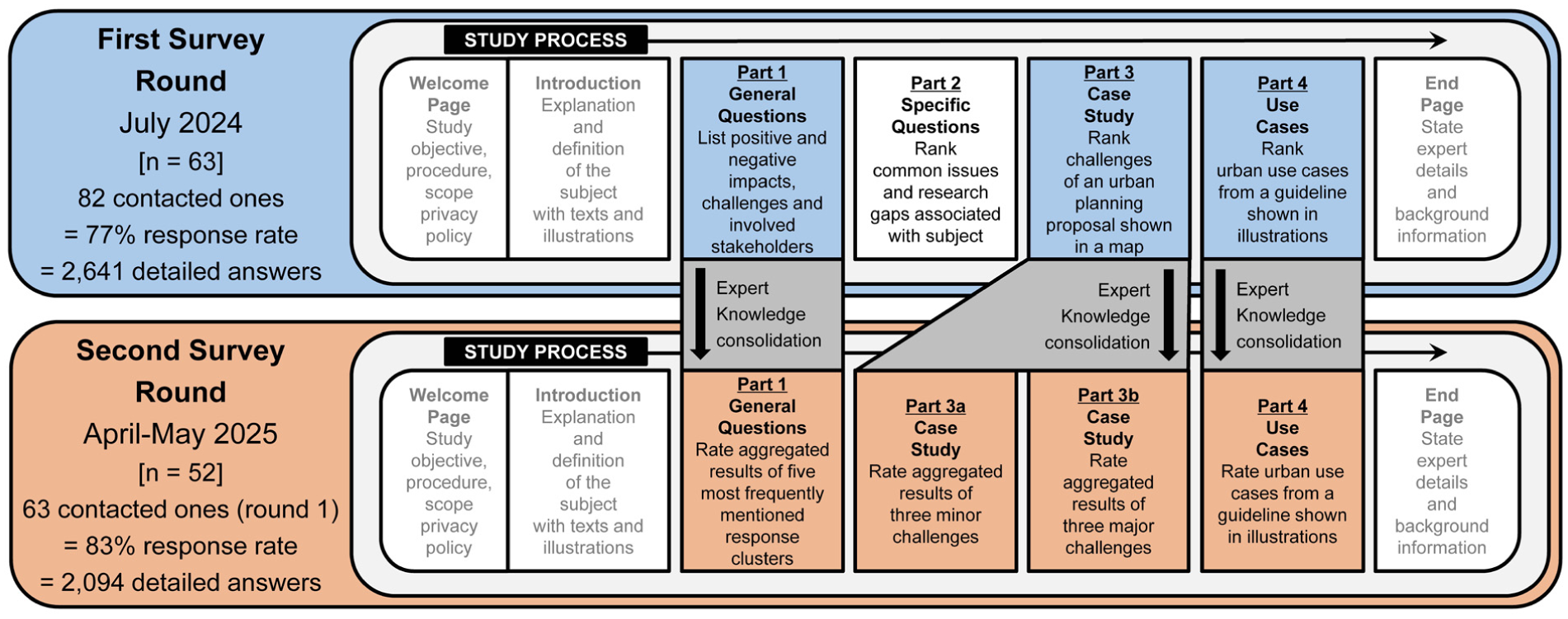
Study process of two-wave web-based expert survey.
Survey Start (Welcome Page and Introduction)
The landing page of each survey part contained a general description of the study’s objective, procedure, and scope. In addition, instructions about participating and information on the privacy policy were provided. On transitioning to the first part of each survey round, a subsequent page (re)introduced the subject of the study, supplemented by illustrations. The page also emphasized, among other things, that the study was focused on the use of ACCs and their integration into urban transit networks of industrialized countries. The introductions ended with a query and mandatory confirmation of whether the given definition of ACC was adequately understood.
General Questions (Part 1)
As is common in qualitative expert surveys ( 22 ), the first part of the first survey round began with general questions, eliciting expert opinions through brainstorming without being constrained by survey instructions. Experts were asked to provide their assessment of positive and negative impacts when integrating ACCs in existing urban and transport conditions, related challenges that can occur, and the stakeholders involved. The questions were designed as open-ended, and a minimum of three (maximum seven) answers were mandatory for each in the first survey round.
The results of the first part of the first survey round were aggregated and clustered. Open-text responses were exported from the survey software and manually coded in a tabular format in Microsoft Excel. The first author performed the initial coding and clustering. The derived categories were then reviewed and refined in discussion among the authors to ensure consistency and conceptual coherence.
Across the four areas (positive/negative impacts, challenges, stakeholders) the five most frequently mentioned response clusters were listed to be rated by the experts in the second survey round.
Specific Questions (Part 2; Only First Survey Round)
In the second part of the first survey round, each respondent was shown specific statements about common issues when implementing ACCs. The eight given statements focused on the urban airspace in general as a medium for transit, ACCs as a suitable mode, accessibility, multimodality and transit quality, overcoming physical barriers as a use case for ACCs, high expected demand, privacy concerns, and safety. The respondents were asked to rate each statement on a five-point Likert scale, and the option of no answer was additionally given. Given the consensus that was mostly reached during the first survey round and the excessive granularity of subsequent questions, this section was only included in the initial round.
Case Study (Part 3)
In the first survey round, the participants were presented with a case study in the third part. A map supplemented with 11 typical urban ACC challenges and characteristics was shown (Figure 5).The case study represents an urban ACC proposal from Western Germany. However, the location was made unrecognizable for the independent assessment of the experts (e.g., blurred map). Given the 11 challenges and characteristics, the experts were asked to rank these from the highest to the lowest.
The results of the third part of the first survey round were aggregated. In the second survey round the three highest-rated (major) and three lowest-rated (minor) challenges ranked by the experts were listed to be rated by the experts.
Use Cases (Part 4)
In the next part, the experts were shown six use cases (Figure 7), which are typical for ACCs and were recently prepared similarly in a guideline from the German Federal Ministry for Digital and Transport ( 23 ). The use cases comprised bridging, closing gaps, connecting, creating transport networks, extending, and relieving. Given the six use cases, the experts were asked to rank these from the highest to the lowest possible use case.
In the second survey round, the experts were asked to rank the use cases so as to compare the consistency and consensus of experts’ judgments.
Survey End and Expert Details (End Page)
In the last part of each survey round, the experts were asked to provide personal information. In the first round this included information about their background (e.g., field of educational discipline, educational degree, place of work), field of work (e.g., public authorities), work experience, information on the study topic, and their contact details. In the second round, they were also asked about their contact details and further concerns.
Survey Participants
As survey results are highly dependent on the level of expertise, motivation, and continued commitment of the responding experts, it is crucial to select them carefully ( 24 ). In line with similar studies, the selection process aimed to find participants with a high level of knowledge and who were also willing to participate ( 25 ). Accordingly, 82 potential participants were contacted by email and invited to participate in the first round. The invitation was sent with a personal message, the invitation link, and a cover letter to emphasize the study’s importance and avoid nonresponses, which often occur in similar expert surveys ( 26 ). Participants were selected based on their recognized expertise in transit planning and/or urban ACC implementation within industrialized countries. Experts were identified through membership of the German Road and Transportation Research Association (FGSV; the German equivalent to TRB), leading ACC manufacturers, consulting firms, scientific publications, relevant conference participations, and targeted web searches. This resulted in a heterogeneous group of experts from engineering and consulting firms, public authorities and transit agencies, scientific institutions, manufacturing companies, and other relevant stakeholders (e.g., transport associations). Of the 82 invitations sent, 63 fully completed responses were received, yielding a response rate of approximately 77%. In the second survey round, all 63 initial participants were recontacted. A total of 52 responses were submitted, corresponding to an 83% response rate (and to an attrition of 11 participants between Survey Rounds 1 and 2).
Although attrition between the survey rounds was generally limited, a comparatively higher proportion of dropouts was observed among German participants with more than 10 years of professional experience, especially from engineering and/or consulting companies and public authorities and/or transit agencies. Nevertheless, no further systematic differences were observed that would indicate a structured attrition bias.
Both rounds demonstrated a high level of participation. Comparable qualitative expert studies (e.g., Delphi panels) typically involve 10 to 18 participants and rarely exceed 30, even in cases of high complexity or stakeholder diversity ( 27 ). Nonresponse may be attributed to self-assessed lack of subject expertise ( 28 ) or external factors such as absence or limited survey time. Key demographic characteristics and participant profiles are presented in Table 1.
Main Demographic Characteristics and Information of Respondents
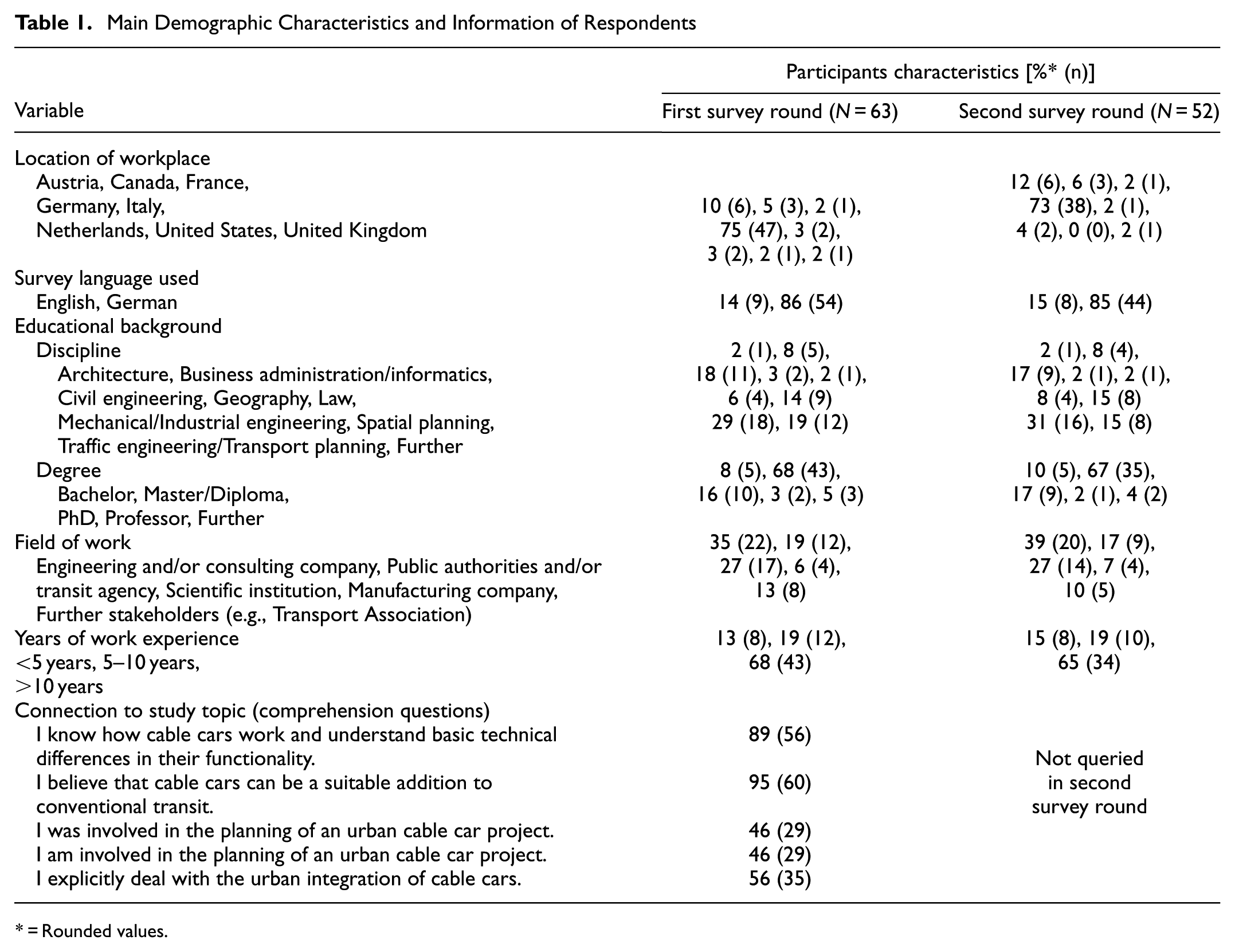
* = Rounded values.
The table presents the surveyed variables in the first column, the relative shares (and absolute numbers) from the first survey round in the second column, and the corresponding results from the second survey round in the third column. Most participants worked in Europe, and a few worked in North America.
The educational background covered various disciplines, including law and transport engineering, whereas the educational degrees ranged from bachelor’s to professorship. However, regardless of their educational background, all participants demonstrated a high level of knowledge in transit planning and/or the ACC field, enabling them to be employed in different fields of work for many years.
The final row of Table 1 contains several additional comprehension questions for interpretation of any possible outliers or erroneous answers.
Survey Evaluation
Given that the study aimed to attain its objectives by achieving a consensus among the survey participants, approaches from the Delphi methodology were suitable ( 29 ). Consensus can be established through several methodological pathways, many of which are comprehensively described in the relevant academic literature. But there is an absence of a general standard for quantifying consensus in Delphi studies as different statistical approaches have been proposed ( 30 ). In line with one approach, the CV was selected as the primary statistical measure to assess consensus among participants. In addition, the interquartile ranges of the responses were illustrated to provide further insight into the distribution of opinions. Equation 1 presents the categorization of the CV used to assess consensus.
Equation 1: Consensus measured by CV (adapted and supplemented according to Von Der Gracht [ 30 ])

where
x i denotes each individual answer,
n represents total number of answers.
The numerator of the equation corresponds to the sample standard deviation (SD), which quantifies the average deviation of each value from the mean. The denominator represents the arithmetic mean, serving as a reference point for the relative scale of the data. Whereas the existing literature generally considers a CV ≤ 0.5 as evidence of good consensus, this study introduced a more differentiated threshold, defining a CV ≤ 0.25 as indicative of very good consensus. The CV is given in all four survey parts (compare Figures 3, 4, 6, and 8) as an indicator of consensus and will be discussed in the subsequent chapter.
Results
A total of 4,735 detailed answers were collected from the experts. Given the different parts of the two-wave expert survey, the results were divided into these four parts: general questions (Part 1), specific questions (Part 2), case study (Part 3) and use cases (Part 4). As the survey methodology of the parts differed, the evaluation and interpretation also varied, which are explained in further detail in the following sections.
General Questions (Part 1)
The first part of the survey comprised open-ended questions, which were clustered in the evaluation using textual and frequency analysis. Figure 2 shows the results of the four areas (positive/negative impacts, challenges, stakeholders) the experts were asked to assessment.

Results of first survey round—aggregated and clustered general open questions (the five most frequent clusters marked in red) as word clouds: (a) positive impacts, (b) negative impacts, (c) challenges, and (d) stakeholders.
The five most frequently mentioned clustered responses in each of the four areas are highlighted in red. As an example, “connection/integration” was frequently cited among the positive impacts, as ACCs—through their short-headway operations—demonstrate high availability and can be effectively integrated into PT network expansions, thus offering relief. In contrast, the identically named cluster under challenges emphasizes the difficulties associated with integrating ACCs into PT systems, particularly with regard to transfers, fare integration, and the identification of suitable transport gaps. Figure 3 presents the results of the second survey round, in which the five most frequently mentioned response clusters (phrased as detailed questions) from Figure 2 were given to the experts for assessment.
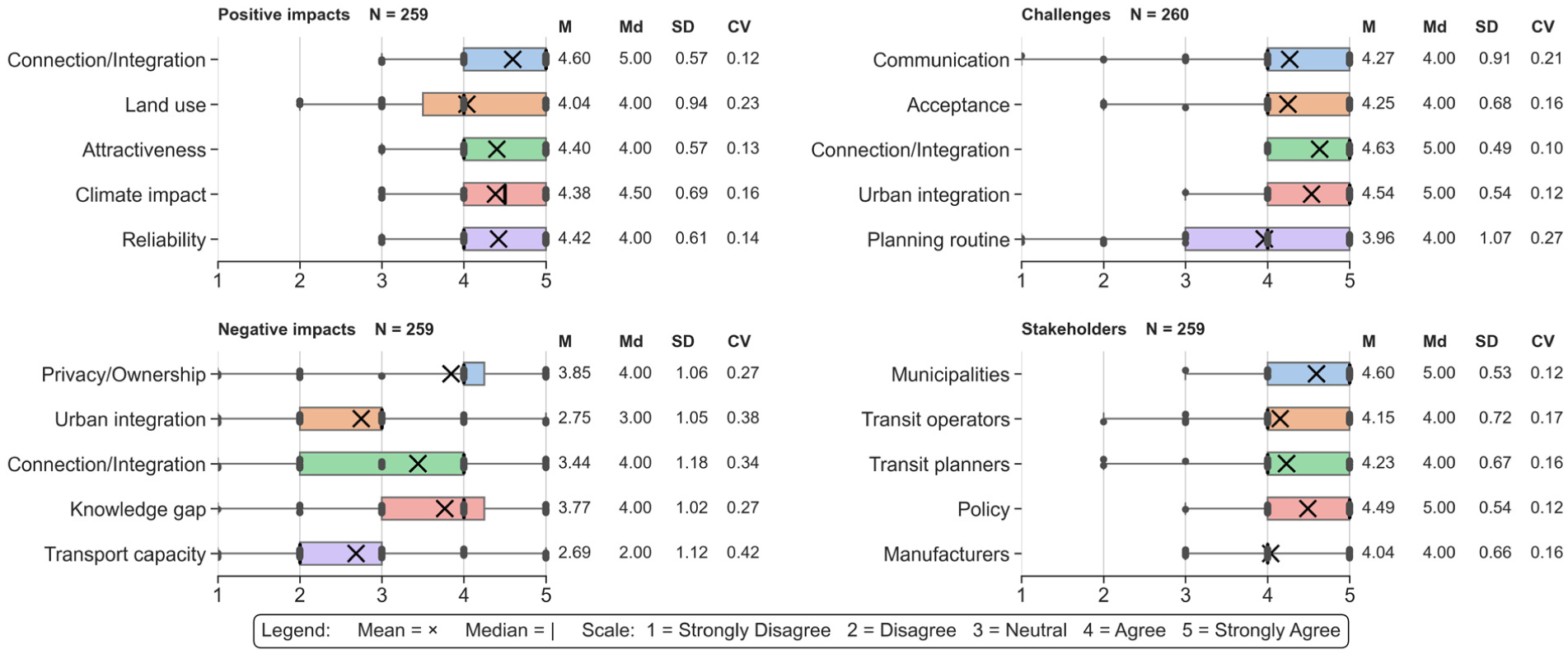
Results of second survey round: consolidated results with input of findings from first survey round as whisker boxplots.
Each of the five aspects was rated across four clusters, employing a five-point Likert scale for assessment. For each aspect, statistics are provided, including the mean (M), median (Md), SD, and CV for consensus assessment.
In the category of positive impacts, it became evident that all of the assessed impacts exhibited a very high level of consensus (CV ≤ 0.25) among participants. ACCs usually operate with short headways, offer high availability, and can effectively supplement and relieve existing PT networks when connected. They represent an attractive PT option for both users and municipalities and the cityscape, are environmentally friendly owing to their energy efficiency, low pollutant emissions, and potential for reuse in temporary applications, and are perceived as reliable. Land use received less approval despite a very high consensus, indicating that the low spatial footprint via aerial routing was viewed more critically.
Assessments of negative impacts were more ambivalent, reaching only good consensus levels (CV ≤ 0.50) across all five areas. Agreement was found particularly in regard to concerns about passenger views being intrusive over private property owing to aerial routing, as well as knowledge gaps in ACC use (and associated fears), and operation as a PT mode.
The highest observed variation was in the concern over connection and integration, that is, that ACCs operate in the air, limiting last-mile connectivity and site access benefits. Expert consensus on this issue was comparatively weak. Although previously identified as major negative impacts in the first survey round, interference with the cityscape in relation to urban integration and limitations in transport capacity compared with conventional systems were now perceived as less problematic.
Challenges occur when transparent stakeholder communication is insufficient, leading to low acceptance from the public and PT agencies. At the same time, some challenges could be mitigated by connecting and integrating ACC systems into existing networks in a way that ensures convenient transfers, unified fare structures, and sensitivity to land use constraints during urban integration.
Although planning routines pose potential challenges owing to the novelty of ACCs within PT systems, this aspect was rated less critically, as indicated by the limited consensus and higher response variability.
Consensus was most pronounced among the stakeholder-related aspects. The most crucial factors for the successful implementation of ACC systems were the support of municipalities as regulatory authorities, and political actors providing funding and broader institutional backing. In contrast, technical concerns related to planning, operations, or manufacturing were considered to be of lower priority.
Specific Questions (Part 2; Only First Survey Round)
After the initial open-ended brainstorming phase with experts, the second part of the first survey round addressed more targeted, topic-specific questions. Figure 4 presents the results of the questions in the same format as used previously.
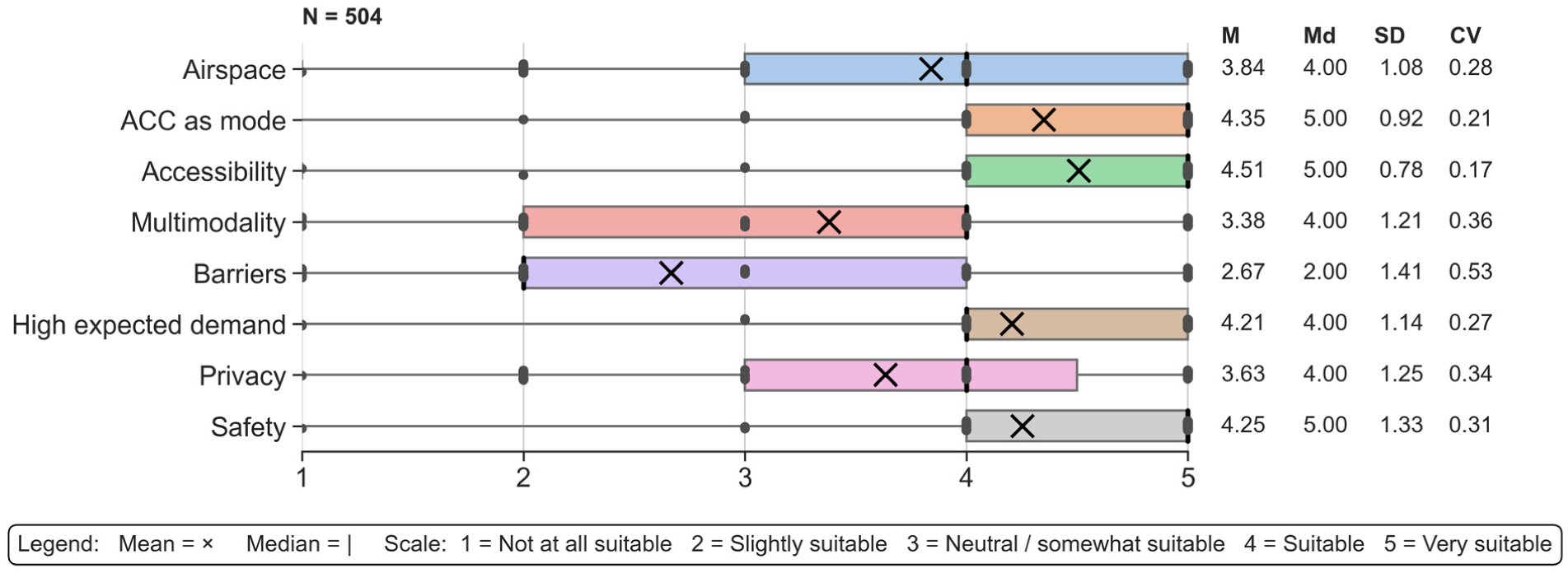
Results of first survey round: consolidated results of specific questions as whisker boxplots.
Four of the eight questions were answered with a group tendency ranging from suitable to very suitable, showing only a few deviations and a very good (CV ≤ 0.25) to good (CV ≤ 0.50) consensus. ACCs were seen as a suitable mode to access urban airspace and to supplement conventional PT (ACC as mode), the accessibility of ACCs for transit users was similar to standard PT (Accessibility), ACC represented an attractive transport solution (both for commuters and tourists) and high demand for the systems can be expected (high expected demand) and similar to conventional PT, ACCs were considered a safe mode to travel with (Safety).
Nevertheless, there were more ambivalent answers (given by ratings below suitable) about specific issues when integrating ACCs in urban PT. Excessively large crowds arriving at an ACC station (e.g., from a subway) could pose a potential challenge in relation to queues and waiting times (Multimodality), as high passenger volumes meet small-capacity cabins operating at short headways, but seen as less of a problem when systems are integrated appropriately. In addition, attention to project planning should be given to minimize views of ACC passengers into private properties along the route of an ACC (Privacy); technical solutions such as temporarily opaque cabin glass (i.e., smart glass) may offer a suitable remedy. The deployment of ACCs in PT was not exclusively tied to overcoming barriers (Barriers). Further potential applications were examined in the next two survey sections. Finally, although ACCs were generally considered a suitable mode of transport, the use of airspace itself—for example, for air taxis—was not strongly supported by the experts as playing a major or highly suitable role.
Case Study (Part 3)
The third part of the survey comprised a case study with 11 challenges or characteristics typical of urban ACC integration. The blurred map (Figure 5) pertains to a new ACC project proposal from Western Germany and some of the challenges or characteristics reflect real-world issues.

Map-based visualization of challenges in case study of first survey round.
Given the 11 challenges or characteristics, the experts were asked to rank the three lowest (minor) to highest (major) challenge items in the first survey round. During the second survey round, the consolidated results from the initial round were fed back to the experts. Specifically, the three lowest-rated (minor) and the three most highly rated (major) challenges were highlighted for renewed evaluation. Figure 6 displays the second-round ratings, derived from the rankings identified during the first survey round.
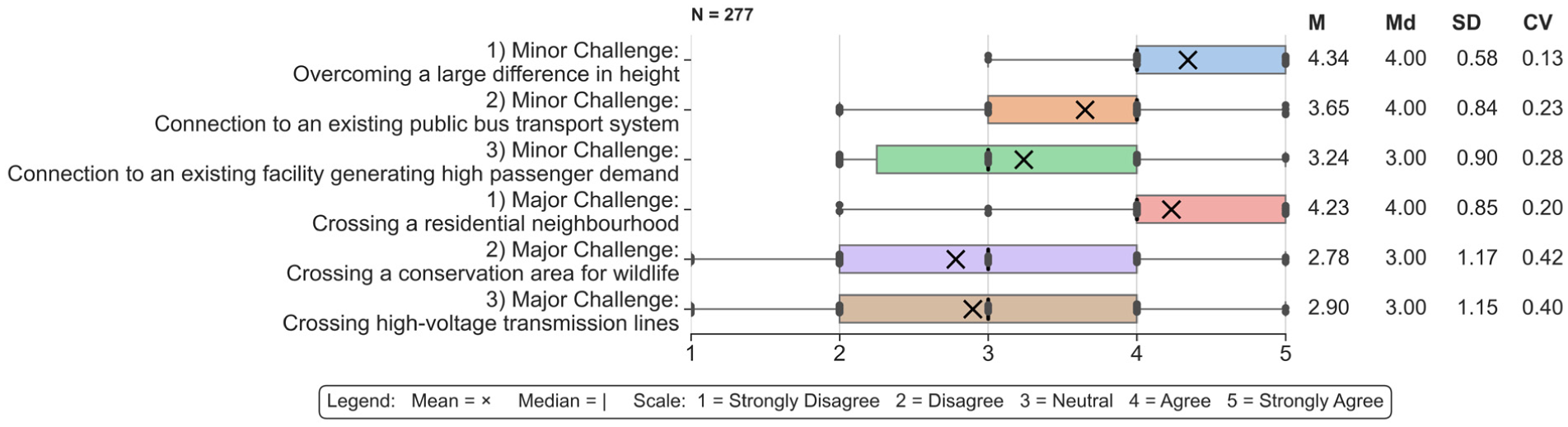
Results of first second round: consolidated results of specific questions as whisker boxplots.
The responses were adjusted based on the individual justifications given. If experts interpreted minor or major challenges as no challenges and thus selected at least “disagree,” such responses were excluded from the analysis. In the case of minor challenges, overcoming differences in height was widely regarded as unproblematic owing to the inherent operational characteristics of ACCs, especially in mountainous regions. In contrast, challenges related to transport capacity were assessed more critically.
Particular caution is advised when linking ACCs even to low-capacity modes such as buses. This issue intensifies in high-demand contexts, where seemingly minor challenges may raise broader operational concerns. In both survey rounds, crossing a residential neighborhood was consistently confirmed as a major challenge. In contrast, expert opinions diverged (CV ≥ 0.4) with regard to the crossing of wildlife areas and high-voltage transmission lines. Although initially ranked as major challenges in the first round, both aspects showed lower relevance and weaker consensus in the second round.
Use Cases (Part 4)
The fourth and final part of the survey comprised an illustration with six use cases for ACCs outlined by a recent guideline for urban ACCs ( 23 ). A similar version of the illustration is given in Figure 7.
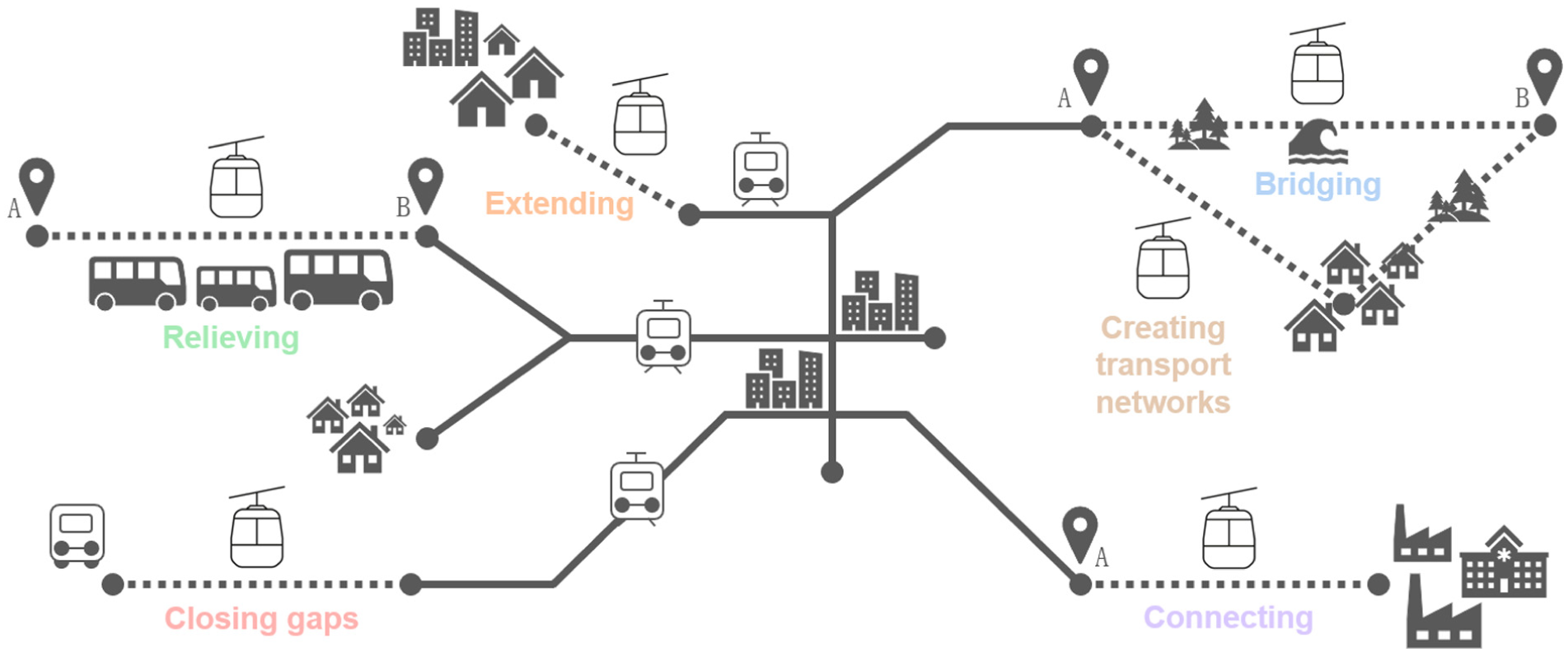
Use cases for urban aerial cable cars.
Six use cases for ACC systems were identified. Bridging refers to direct connections between two locations to cross barriers such as rivers or motorways. Extending involves expanding existing PT routes. Relieving describes bypassing congested infrastructure by overflying it. Closing gaps addresses missing links, for example tangential connections in urban transit networks. Connecting refers to linking geographically isolated traffic generators, such as airports, with other locations. Creating transport networks involves connecting individual ACC lines into a cohesive system.
In the first survey round, the illustration was divided into six subillustrations with explanatory texts for the use cases, and the experts were asked to rank these use cases from the ideal use case to the least possible use case. Subsequently in the second survey round, the experts were asked to rate the uses cases. The results of both survey parts are given in Figure 8.
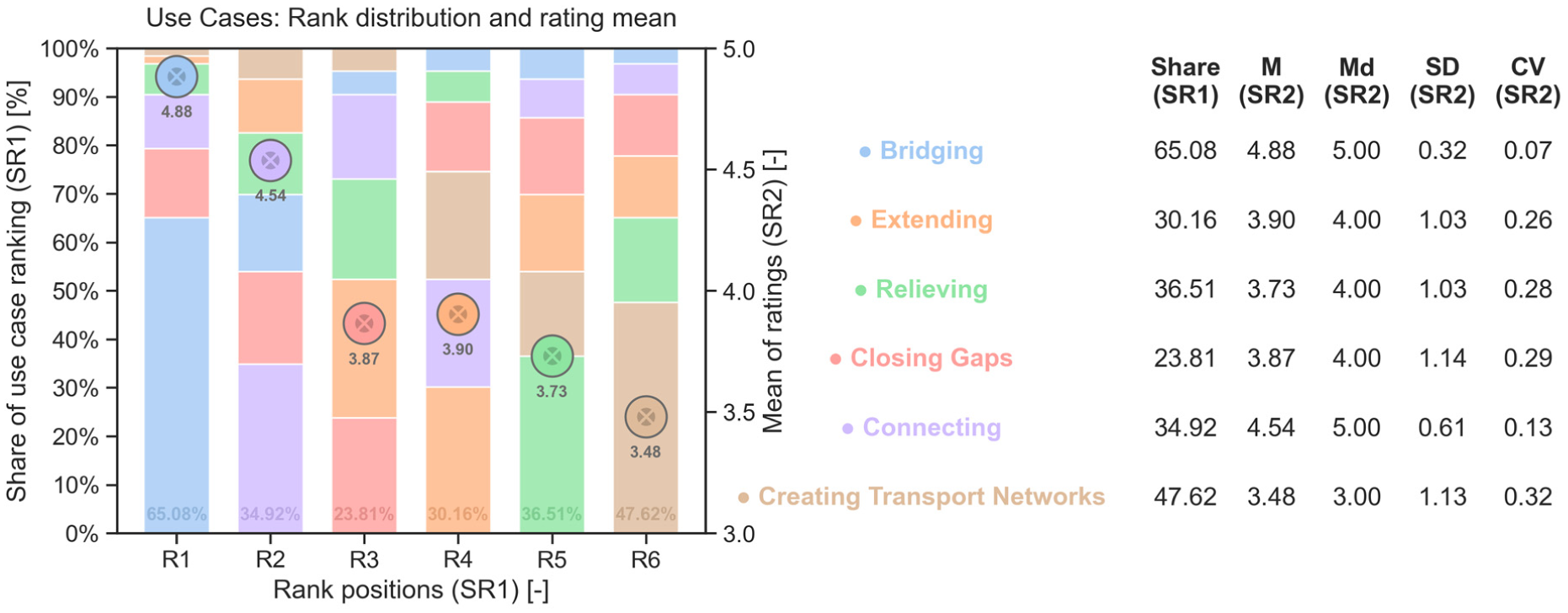
Results of first and second survey round (SR): consolidated results combining rankings of SR1 as a bar chart and ratings of SR2 as a dot plot.
The bar chart displays the rankings from the first survey round. For example, the use case of relieving ranked second to last, receiving 36.51% of the votes. The circles within the bars indicate the average ratings using again a five-point Likert scale from the second survey round. Again, taking the use case of relieving as an example, its mean suitability rating in the urban context was 3.73.
Across both survey rounds, two use cases emerged as particularly suitable. First, the use case of bridging (i.e., overcoming physical barriers such as motorways or rivers) was rated very highly, with 65.08% of participants selecting it in the first round and a mean suitability score of 4.88 (CV = 0.07) in the second round. Second, the use case of connecting (i.e., the connection of geographically isolated traffic generators with high demand, such as airports on the outskirts of cities) also performed well, receiving 34.92% in the first round and a mean score of 4.54 (CV = 0.13) in the second round.
The use case of creating transport networks consistently ranked last in both rounds, indicating that such an application was perceived as only marginally relevant for urban settings in industrialized countries, where high-capacity and well-integrated PT systems already exist. However, owing to the higher CV of 0.32 the experts somehow differed in their opinions. The three use cases of closing gaps, extending, and relieving were positioned mid-range, with similar rankings and ratings between neutral ( 3 ) and suitable ( 4 ) and consensus, indicating comparable levels of perceived applicability.
Discussion
ACCs accessing urban airspace are increasingly considered an appropriate mode to supplement PT. Although systems for this purpose are widely recognized in developing and emerging countries, they are less prevalent in industrialized nations ( 15 ). Major barriers to appropriately integrating ACCs into urban PT systems result from the lack of adequate planning practices and experience ( 16 ), as appropriate guidelines and clear concepts are missing ( 17 ).
The study’s findings specifically address these research gaps and provide useful consensus-based guidance on what should be considered when integrating ACCs into PT. The study’s results revealed that it could be highly beneficial to utilize the unique technical features of ACCs to ensure that it operates effectively in the competitive urban environment. One of the unique features of ACCs is overcoming obstacles directly (see Figure 8). Although a bridging use case is not essential for ACCs’ success (See Figure 4), it improves the chances of implementation. In addition, as space in the built environment is increasingly scarce, the aerial routing of ACCs provides advantages, such as quick implementation with comparatively low costs, which cannot be offered by underground systems (i.e., subways). Further, appropriate urban transport system deficiencies must be located for seamless urban integration (see Figure 3). Additional impacts, challenges, relevant stakeholders, and suitable use cases that provide useful knowledge for project planning are outlined (see Figure 3). The presented findings align well with the existing literature. For decades, ACCs have not been considered a standard option for transit planners but instead a special-purpose transit technology, similar to automated people movers ( 32 ). For better integration with transit networks, transit planning must ensure that ACCs are correctly implemented with respect to transfer movements. In PT systems, two key service-quality attributes are service frequency and overcrowding ( 33 ). Whereas ACCs, serving as nearly continuous conveyors, could provide high-frequency service, caution must be exercised to avoid overcrowding from large batches of transfer passengers arriving at stations ( 34 , 35 ). In addition, proper urban integration and routing of ACCs are essential. UAM, as another aerial mode, faces challenges from NIMBYism (“Not In My BackYard”) as privacy invasion is a concern ( 36 ), which aligns well with concerns of ACC aerial routing (See Figure 4). Apart from the invasion of privacy, the adjacent property values may also be affected, which could be positive or negative depending on the urban context ( 37 ). Furthermore, the use case for ACCs in urban settings needs to be justified appropriately; some use cases are already highlighted in the literature ( 23 ). Although bridging was the best use case, relieving congested infrastructure by overflying did not seem to possess much potential (see Figure 8). This coincides closely with the results of other studies, which also attribute little value to UAM in relieving congestion ( 3 ). Similar challenges of community acceptance comprise issues such as visual pollution, considering UAM ( 3 ) aligns with these challenges, and the negative impacts of ACCs.
In summary, this study synthesizes and consolidates expert knowledge on ACC systems and their integration into urban environments in industrialized countries. The panel comprised 63 carefully selected experts from academia, leading ACC manufacturers, consultancies, and participants in relevant scientific discourse. Whereas approximately half of the participants had direct experience with urban ACC projects—ensuring a high level of domain expertise—selection was based on investigator discretion, as is common in qualitative research. As such, the findings may reflect certain biases and limitations. A possible geographic bias stems from the composition of the expert panel, as most participants were from Germany and may share perspectives on ACCs in PT that are different but broadly comparable to those of experts from other industrialized countries. Accordingly, the transferability of the findings to other geographic contexts may be limited.
To enhance validity, future research should include nonexpert perspectives to compare and complement expert evaluations. Addressing a gap identified in the literature ( 15 – 17 ), the study provides policy-relevant insights for practitioners and policy makers seeking to integrate ACCs with conventional PT and urban systems. The presented figures, tables, and annotations serve as practical guidance for assessing ACCs’ potential role, while also supporting more detailed, case-specific planning where appropriate.
Conclusions
Given that ACCs are not a standard mode considered by PT planners, their integration in urban settings must be done based on sufficient findings in the literature. Whereas ACCs have already proven their success in emerging and developing countries, boundary conditions in industrialized countries with high-quality PT are different. In particular, the scarcity of land use in urban areas of industrialized countries is pronounced, and ACCs could be one option for consideration in PT systems if its area of operation is further researched.
Therefore, the study’s objectives were to specify the major positive and negative impacts, challenges, and stakeholders associated with ACC implementation in urban PT of industrialized countries, to determine the degree of common challenges and identify use cases of urban ACCs with the potential for appropriate integration.
A consensus-based two-wave expert survey conducted online was used, comprising several parts to consolidate new knowledge. The 63 high-caliber expert panel comprised participants from research institutions, renowned ACC manufacturers, consultancies, scientists with associated publications, participants of related congresses among others. The gathered data from the consulted panel comprised over 4,700 valid answers. However, the results reflected the consensus-based assessments of an expert panel and do not represent the views of end users of ACCs. Accordingly, the findings should be interpreted in light of this expert-centered perspective. A study focusing on end-user acceptance would therefore constitute a valuable direction for future research, particularly with regard to issues such as public acceptance, privacy concerns, and perceived safety at the community level.
The findings revealed detailed planning guidance. One key lesson learned is that ACCs are a useful mode to supplement PT in industrialized countries if integrated correctly. Relevant positive impacts were that ACCs, as nearly continuous conveyors, are easy to connect to conventional PT. In addition, they offer a high level of reliability because of less interference with other modes, can create direct connections over obstacles, and offer transit users an attractive way of getting around. In addition, ACCs can be realized quickly with comparatively low costs.
Despite their benefits, ACC systems pose several negative impacts. These include privacy disturbance and potential encroachment on adjacent properties along routes and station areas. Site access planning is often limited owing to aerial routing, and the overall system capacity remains lower than that of conventional PT. Furthermore, visual intrusion on the urban landscape could negatively affect the cityscape.
Key operational challenges involve managing passenger transfers to and from ACC systems, particularly given the elevation differences and high passenger volumes. Even when integrated with lower-capacity feeder modes, capacity constraints must be considered. Transparent stakeholder communication throughout all project phases is critical for public and institutional acceptance.
A major challenge lies in routing ACCs through residential areas, whereas overcoming large elevation changes—an intended application of the technology—is generally unproblematic. Stakeholders include municipalities as regulators, and political bodies providing funding and institutional support, whereas technical issues related to planning, operation, or manufacturing are typically of secondary concern.
The following results are quantified and consensus-proven: ACCs are seen as a suitable mode to access urban airspace and to supplement conventional PT; the accessibility of ACCs by transit users is similar to standard PT; ACCs represent an attractive transport solution (both for commuters and tourists) and high demand for the systems can be expected and similar to conventional PT; and ACCs are a safe mode to travel with. As the best use case for ACCs, bridging as a direct connection to cross physical barriers between two locations received the highest rating, whereas creating transport networks when connecting single lines of ACC was rated the lowest.
In conclusion, ACCs provide a suitable mobility service to complement conventional PT networks in certain contexts of industrialized countries when implemented correctly. Therefore, the study’s findings contribute to policy makers and practitioners by offering consensus-proven planning guidance by a high-caliber expert panel to consider ACCs’ transport and urban integration appropriately.
Footnotes
Acknowledgements
The authors thank the Research Training Group (GRK 1931) of the Deutsche Forschungsgemeinschaft (German Research Foundation: 227198829), which funded and enabled this research. Additional acknowledgment is given to the University of Toronto and its International Visiting Graduate Student program, which supported the research cooperation between the University of Toronto and Technische Universität Braunschweig. The greatest gratitude is owed to the study participants, as this study was only possible through their commitment.
Author’s Note
LLM/ChatGPT and Grammarly as a language model were used to improve the manuscript’s readability (only for language improvement, not for content generation).
Author Contributions
The authors confirm contribution to the paper as follows: study conception and design: M. Flesser, A. Shalaby, B. Friedrich; data collection: M. Flesser; analysis and interpretation of results: M. Flesser, A. Shalaby, B. Friedrich; draft manuscript preparation: M. Flesser, A. Shalaby, B. Friedrich. All authors reviewed the results and approved the final version of the manuscript.
Declaration of Conflicting Interests
The authors declared no potential conflicts of interest with respect to the research, authorship, and/or publication of this article.
Funding
The authors disclosed receipt of the following financial support for the research, authorship, and/or publication of this article: This research was funded by the Research Training Group (GRK 1931) of the Deutsche Forschungsgemeinschaft (German Research Foundation: 227198829).
