



Abstract
Weathering steel is a low maintenance and cost-effective corrosion-resistant material that is widely used in bridge construction. The corrosion rate of weathering steel is known to be lower than carbon steel in a low- and medium-corrosive environment. This is because of the inherent corrosion resistance of the patina layer, which adheres to the substrate and protects the weathering steel from further corrosion. There are multiple guidelines to evaluate the protective performance of the rust layer that mainly emphasize visual inspection of the color and texture of the patina. However, these standards are, in general, qualitative and subject to observer bias. The tape adhesion test is one of the examinations proposed in the past that is less subjective, and it can be used to assess the functionality of patina to ensure the layer protects the underlying steel. The interpretation of the test results still relies on a partially qualitative judgment rather than a limited quantitative analysis. The objective of this research is to develop a reliable framework that can be used alongside visual inspections to increase accuracy in measurements. A Quantitative Patina Rating Index has been introduced in this paper, which was built on image analysis of 444 tape adhesion test samples, obtained from various macro and micro environmental conditions. The rating accounts for the size and the areal density of rust particles recorded on the tape samples and classifies patina in different categories. This classification will aid bridge owners and stakeholders in making more informed maintenance and inspection decisions.
Introduction
The use of weathering steel in bridge construction is well-known to be a cost-effective approach for departments of transportation (DOTs) or bridge owners, because the metal requires low maintenance and resists atmospheric corrosion (
1
–
3
). Modern weathering steel is composed of copper, chromium, nickel, and small fractions of other metals such as silicon and phosphorus alloyed with steel (
4
). A dark-brown protective oxide rust layer, known as “patina,” forms on steel over time and adheres to the substrate, protecting the metal from further corrosion (
5
,
6
). Patina is a composition of iron oxides, hydroxides, and oxyhydroxides that can form in both crystalline and amorphous phases. Major components of a protective patina are goethite (
A main parameter controlling atmospheric corrosion in weathering steel structures is the duration of moisture films on the steel surface ( 11 – 13 ). Several definitions have been proposed in the literature for time of wetness (TOW), yet the more prevailing description is recommended by ISO-9223, defined based on relative humidity (RH) higher than 80% and temperature greater than 0°C ( 14 – 16 ). The rate of atmospheric corrosion will be considerably lower in rural areas with a lower level of pollutants in the air, but it becomes significant when RH exceeds 70%. The rate will be even more noticeable for structures located in polluted industrial climates with RH higher than 60% ( 11 , 17 ).
In general, weathering steel is not recommended for steel bridges in the industrial environment since contaminants, such as sulfur dioxide, carbon dioxide, and nitrogen oxides, deposited on steel over time, create a local acidic environment and cause breaking of the patina ( 6 ). In addition, weathering steel should not be deployed for bridge structures in marine environments because salt particles in the air degrade the protective layer and increase the rate of corrosion ( 6 ). Bridges located on heavily salted highways (particularly those with poor drainage systems) are more susceptible to member deterioration because of corrosive environments ( 1 , 18 ).
Ensuring the durability of in-service structures, bridge owners may decide to adopt repairing techniques, including sandblasting and painting the corroded steel, replacing the damaged part, or, in some extreme cases, replacing the entire girder ( 1 , 17 , 19 , 20 ). Adopting repair and maintenance strategies imposes costs on bridge owners; also, identifying a well-formed protective patina is not an easy task and requires trained expertise.
In the late 1980s, Albrecht et al. ( 17 ) recommended a guideline that can be used to assess the quality of patina formed on weathering steel girders, based on the color and texture of the oxide layer. The color of patina was observed to be light brown in the early stage of exposure to the air, and it turned to dark brown (or purplish brown) over time. If the oxide layer was not protective, the color of the patina would turn black. However, along with visual inspection, they also recommended additional techniques such as hammer tapping or wire brushing to maintain the validity of inspections.
The guideline proposed by Albrecht et al. ( 17 ) is relatively subjective; not to mention, the texture and color of the patina layer are also not uniform throughout a bridge member ( 21 ). Therefore, Hara et al. ( 22 )developed the Protective Ability Index based on analyzing the composition of patina formed on steel bridges over time ( 22 – 27 ). The focus was to modify the existing Japanese standards according to the patina appearance by identifying the crystal structure of the protective layer in different phases of the rust formation. Although the standard proposed provides a more reasonable conclusion of the status of the patina, the process of identifying the quality of the oxide film during the field inspection is dependent on the appearance of the patina, which is subject to observer bias during the visual inspection. Dirt and debris on the steel surface can lead to classifying the patina in the wrong category. Additionally, determining the actual color of the oxide layer for structures located in an environment with insufficient natural light, such as interior girders, is a practical challenge for inspectors. Ebrahimi et al. ( 28 ) studied the atmospheric corrosion resistance of seven different alloys of steel exposed to atmospheric conditions. The specimens were installed at the bottom flange of a bridge girder in Ontario, Canada, for over 10 years. After performing a deep analysis and conducting a series of metallographic techniques and corrosion-related examinations, such as Electrochemical Impedance Spectroscopy (EIS), the authors reported that visual inspection does not provide a valuable assessment of the rust layer condition.
Yamaguchi ( 29 ) adopted a different approach and performed the adhesion tape test to determine the quality of the patina layer. The technique used provides a more reliable assessment of the actual quality of the rust than traditional visual inspections because it measures the bond between the rust particles and steel substrate. Yamaguchi reported five categories of corrosion state level based on the average size of rust particles as well as the thickness of the rust layer.
Crampton et al. ( 30 ) used the tape adhesion test to estimate the quality of the patina on in-service weathering steel bridges in Iowa, U.S. After inspecting multiple superstructures, they proposed a rating scale that can be used to visually categorize the patina on a scale from 3 to 8 ( 19 ). They considered several factors, such as color, texture, and rust flake size, to develop the Patina Evaluation Rating Scale. However, the approach is dependent on the inspector’s judgment, and it is subjective to some extent. Additionally, it requires significant effort to manually measure particle size for each individual sample.
Krivy et al. ( 31 ) also adopted this technique to evaluate the condition of the patina of eight different weathering steel bridges located in a medium corrosive environment. They performed statistical analysis on the rust particles recorded on tapes and reported that a protective patina consists of particles with a range of sizes of 40 mil (1 mm) or less. However, particles greater than 200 mil (5 mm) in diameter represent patina with a limited protective ability. Li et al. ( 32 ) used the adhesion tape test on corrugated steel superstructures and concluded that the diameter of the flakes that were not taken from leaking expansion joints was typically lower than 40 mil (1 mm). Guo et al. ( 33 ) studied the adhesion capability of the patina layer in a simulated marine environment by conducting a series of tests, including the adhesion tape test. They stated that uniformly distributed particles with a diameter less than 20 mil (0.5 mm) exhibited a stronger bond to the steel substrate.
Despite ongoing efforts to assess the quality of patina on weathering steel bridges, current practices—ranging from visual inspections to a more quantitative approach such as the tape adhesion test—remain limited by subjectivity, observer bias, and a lack of standardized quantification. Visual inspection methods are inconsistent because of environmental lighting conditions and surface contaminants, while existing rating scales derived from adhesion tests still require manual effort and often rely on qualitative judgment. These limitations highlight a need for a more objective, reproducible, and scalable method for evaluating patina quality across diverse environmental conditions. To address this, a new Quantitative Patina Rating Index (QPRI) has been introduced in this paper by considering the guidelines proposed in the literature to validate and extend the applicability of the tape adhesion test for a quick quality assessment of patina. This technique can be applied to samples obtained from weathering steel in any environment, and it is time-efficient. The results will be reproducible and reduce human bias with the help of image analysis of tape test samples.
The key contribution of this paper is that the suggested rating index was developed based on a sufficiently large dataset from structures located in diverse environmental conditions within Texas, U.S. Multiple weathering steel girders were inspected across the state, and 444 samples of patina were collected from different faces of girders to validate the proposed standard. Moreover, in addition to the flake size, the areal density of the recorded rust particles on tape samples was also considered in a quality evaluation of patina.
Methodology
The state of corrosion of 25 weathering steel bridges across Texas was studied to determine if the patina formed on the steel substrate is protective or not. Structures located in different atmospheres were selected for the field inspection. Having a diversity in inspection results, environmental factors such as temperature, RH, and chloride concentration (e.g., airborne chloride and deicing salt) were also considered in the selection process of weathering steel girders. Other micro-environmental factors viewed in the selection process are the deck layout, orientation of the girders relative to runoff, and whether or not the steel was protected from direct sunlight.
ISO-9223 defines classifications for atmospheric corrosivity and corresponding environments suitable for corrosion studies, including rural, urban, industrial, marine, and chemical atmospheres ( 16 ). Because of the limited number of weathering steel bridges in chemical environments and the difficulty in accessing them, this category was excluded from the present study. Texas DOT (TxDOT) recommends an environmental classification map for Texas with mild, moderate, aggressive, and marine environments ( 34 ). Moreover, Hurlebaus et al. ( 1 ) also identified regions in Texas with low, medium, and high corrosive potential, based on parameters such as TOW, airborne chloride, deicing salts, sulfur dioxide, and temperature. They concluded that bridges located in coastal regions and areas with deicing salt application are more susceptible to corrosion-related damage, and developed a methodology to predict the severity of corrosion in these regions ( 35 ). Construction of weathering steel bridges on coastlines with high airborne chloride deposition and in northern areas with high usage of deicing salt is not common in Texas, yet curved steel girders are preferred for highway intersections because of simpler construction than reinforced concrete ( 2 , 36 ).
Figure 1 shows the location of structures that were inspected in this study, and Table 1 summarizes the exact location of the inspected structures, including rolled beams, plate girders, and tub girders. As of 2025, for transportation planning purposes, TxDOT defines “urban” atmosphere as areas with a population over 5,000, while areas with a population over 200,000 are classified as “large-urbanized” areas ( 37 ). Areas with a population lower than 5,000 are categorized as “rural.” These definitions are used in atmosphere classification in Table 1. Some of the weathering steel bridges selected in this study were close to industrial facilities that were also located in an urban atmosphere, yet those bridges were classified in urban-industrial environments in this study.
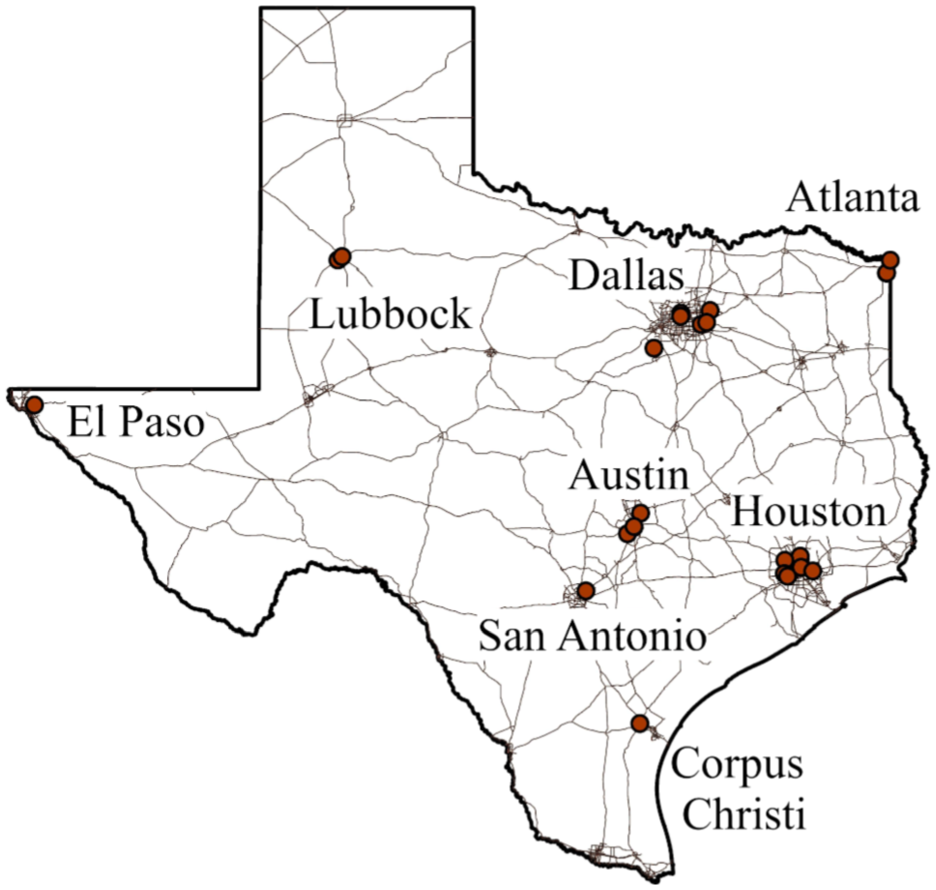
Locations of inspected weathering steel bridges.
Selected Weathering Steel Bridge Girders Evaluated for Patina Quality
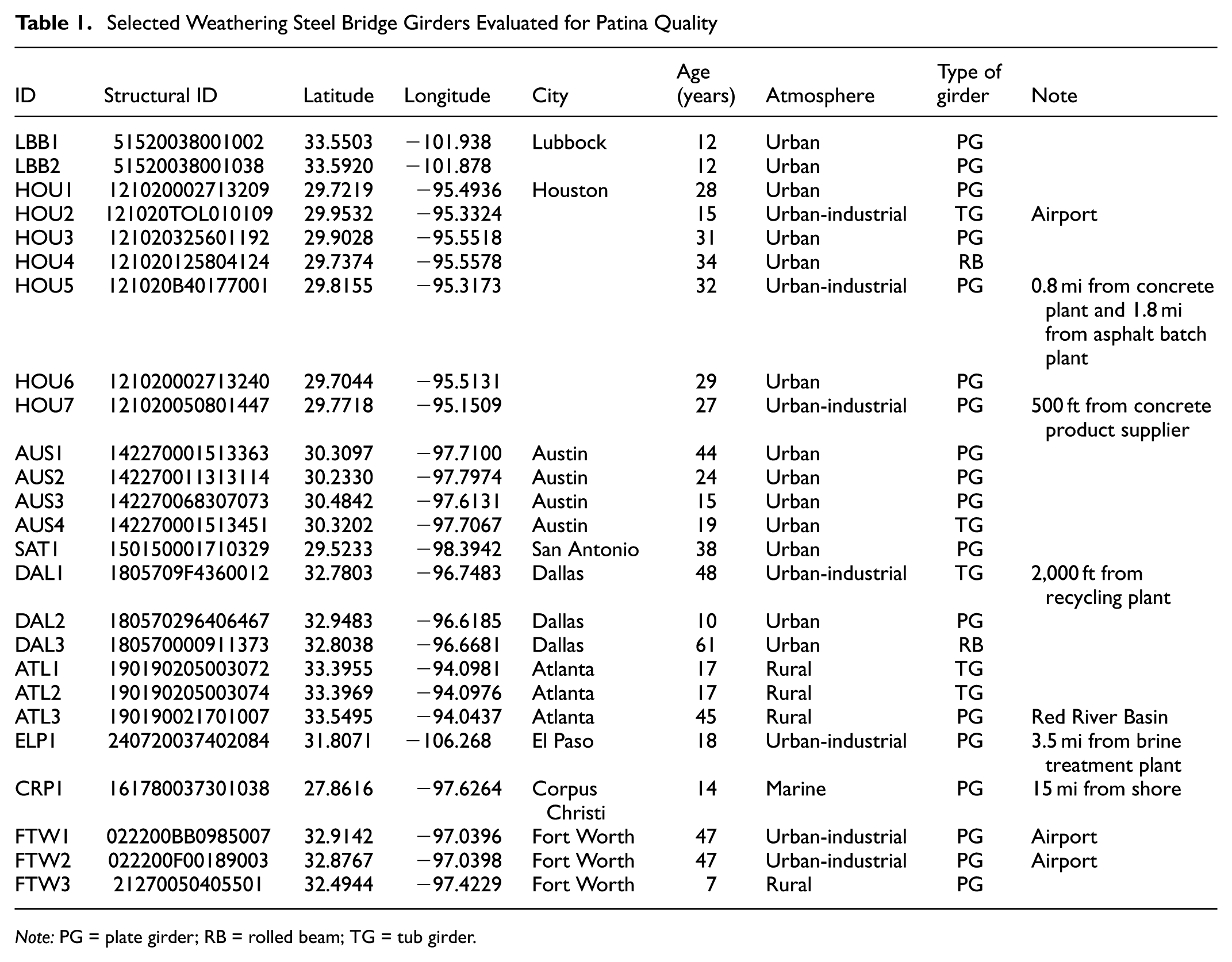
Note: PG = plate girder; RB = rolled beam; TG = tub girder.
A weathering steel bridge was selected in a marine-influenced environment in Corpus Christi (approximately 15 mi from the coastline), and multiple bridges were chosen in Lubbock and Dallas, with the potential of applying deicing salt on the bridge deck during freezing. Two bridges in Houston, one in Dallas, and another in El Paso were selected to investigate the effect of the urban-industrial environment on weathering steel girders. Among the inspected superstructures in Houston, one of the bridges was selected over Union Pacific Englewood Yard railway lines located less than 1 mi from a concrete batching plant, and another was 500 ft from a concrete supplier adjacent to the Interstate 10 East Freeway. The overpass in Dallas was 2,000 ft from a recycling plant, and the one in El Paso was situated about 3 mi from the El Paso brine treatment plant. In addition, three bridges were inspected in airfield environments in Houston and Fort Worth that were classified as structures located in the urban-industrial environment.
Three bridge girders were chosen in rural areas in Atlanta, Texas, and one in the south of Fort Worth, with the potential of a low-risk corrosion environment. However, one of the bridges in Atlanta was in the Red River Basin in the northeast of Texas, where corrosion problems of pipelines have been reported in multiple documents in the past ( 38 , 39 ). The rest of the steel girders were from urban areas with a medium-corrosive risk environment.
A broad range of exposure times, from 7 to 61 years, was considered for inspection in this study. By the time of inspection, the bridge in a rural area near Fort Worth had been in service for 7 years, while a bridge in the urban area of Dallas had been in service for 10 years, and one in Lubbock for 12 years. The remaining structures had been in service for 15 years or more. Among the selected structures, two bridges were constructed with rolled beams: a bridge in Houston with 34 years of exposure and another in Dallas with 61 years. Five bridges were made of weathering steel tub girders, located in Houston, Austin, Dallas, and Atlanta, as given in Table 1. The rest of the targeted structures were plate girders with different years of exposure.
The selected bridges were examined on-site to evaluate the quality of the patina layer and extract samples that were used in developing QPRI. Figure 2 shows the location of visual inspections and sample collections on weathering steel girders. Visual inspection included recording corrosion-related issues at the web, top, and bottom flanges and stiffeners. The location of leaking joints, debris accumulation, and bird nests was also documented to later report to TxDOT. In addition, delamination of the rust layers, as well as poultices and pitting corrosion, were also recorded and reported to the agency.
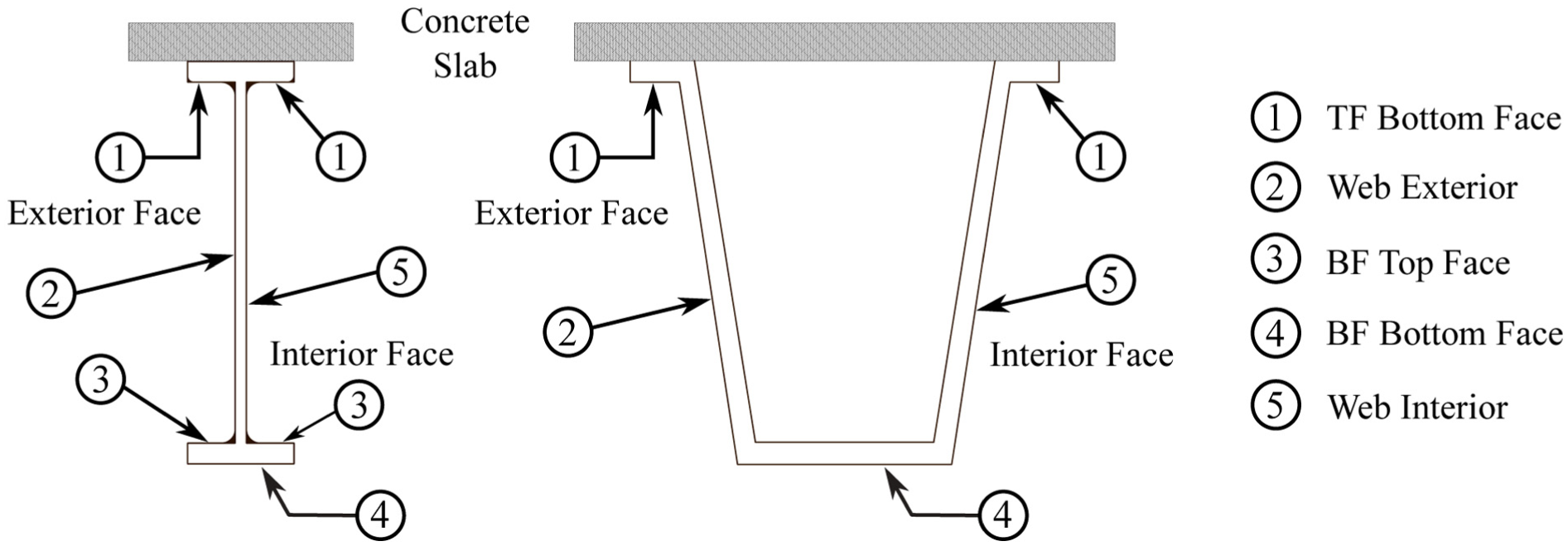
Schematic of sampling locations on weathering steel girders: rolled beam or plate girder (left), and tub girder (right).
The rust samples were collected from both the exterior and interior girders, in proximity to the abutments, at the same locations shown in Figure 2. Rust flakes were extracted from the web and the top and bottom flanges of rolled beams, plate girders, and tub girders. A few rust samples were also extracted from the middle area of the stiffeners.
The QPRI proposed in this study was developed based on many tape samples that were collected from the selected bridges in Table 1. The atmospheric conditions and environmental corrosivity were not used in the classification and ranking process; environmental conditions were used only to ensure a diverse dataset that could support the classification process. After developing QPRI, the performance of the rust layer formed on the weathering steel girders was analyzed to determine whether the condition of the patina was correlated with the surrounding environment.
Figure 3 illustrates the procedure taken in the tape adhesion test that conformed with ASTM D3359 ( 40 ). Analyzing the bond between the patina and steel, as well as the size and distribution of rust flakes, a length of Elcometer 99 crosshatch tape (about 1 ft long) was used to strip out the rust particles from different locations of the bridge girders. After peeling the adhesive tapes, the samples were preserved by using transparent tape, labeled, and stored in sealed bags, and later scanned for image analysis. The rust particles recorded on tape samples are expected to be from the outer layer of the patina. Honzák ( 41 ) identified three separate layers of rust: a highly adherent innermost layer, a modestly-to-strongly adherent intermediate layer, and non-adherent rust. The outer layer is loosely bonded and can be easily removed by scraping (or using tape), but the intermediate and innermost layers consist of stronger bonds between rust particles and cannot be easily eliminated. Therefore, a more advanced approach is required (e.g., hammering, pickling, and brush-off blast cleaning) to remove the adherent rust particles ( 7 ).
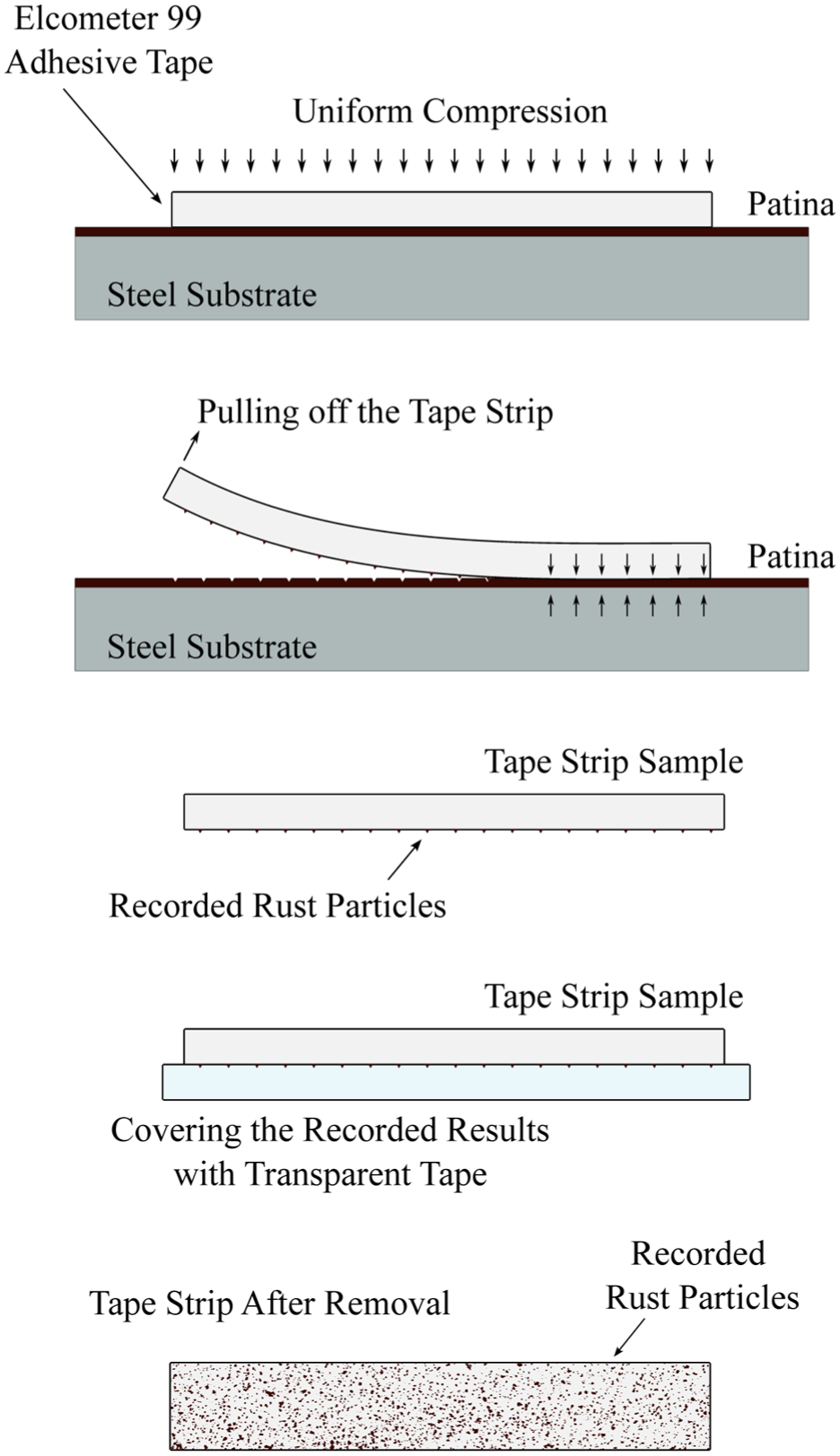
Schematic of the procedure for the tape adhesion test.
In a separate test series, scanning electron microscopy/energy dispersive spectroscopy (SEM/EDS) analysis was conducted on rust samples using a JEOL JSM-7500F to investigate potential correlations between the protectivity of the patina, its adherence to the steel substrate, and the presence of chloride and sulfur elements in the outer patina layer. Therefore, additional patina samples were scraped from the surfaces of weathering steel girders at the same locations where tape adhesion tests had been performed. These samples were extracted using a knife and immediately stored in sealed plastic bags to preserve their condition.
Image Analysis
The tape samples were analyzed using image processing and statistical analysis to determine the particle size and rust distribution of individual test strips. The goal was to create a grayscale of a raw image and mask the results with Yen’s thresholding to isolate rust particles ( 42 ). A series of image processing was implemented to eliminate noise from the tape images and produce clean results before employing a threshold-based binary that was used to remove the particles from the background. Finally, the particle size and the particle-covered area were recorded and studied with the aid of quantitative analysis. Areal density for individual test strips was also calculated based on the fraction of the particle-covered area to the total area of the test strip. The findings of the tape image processing were documented in separate files for further statistical analysis to classify patina in different categories.
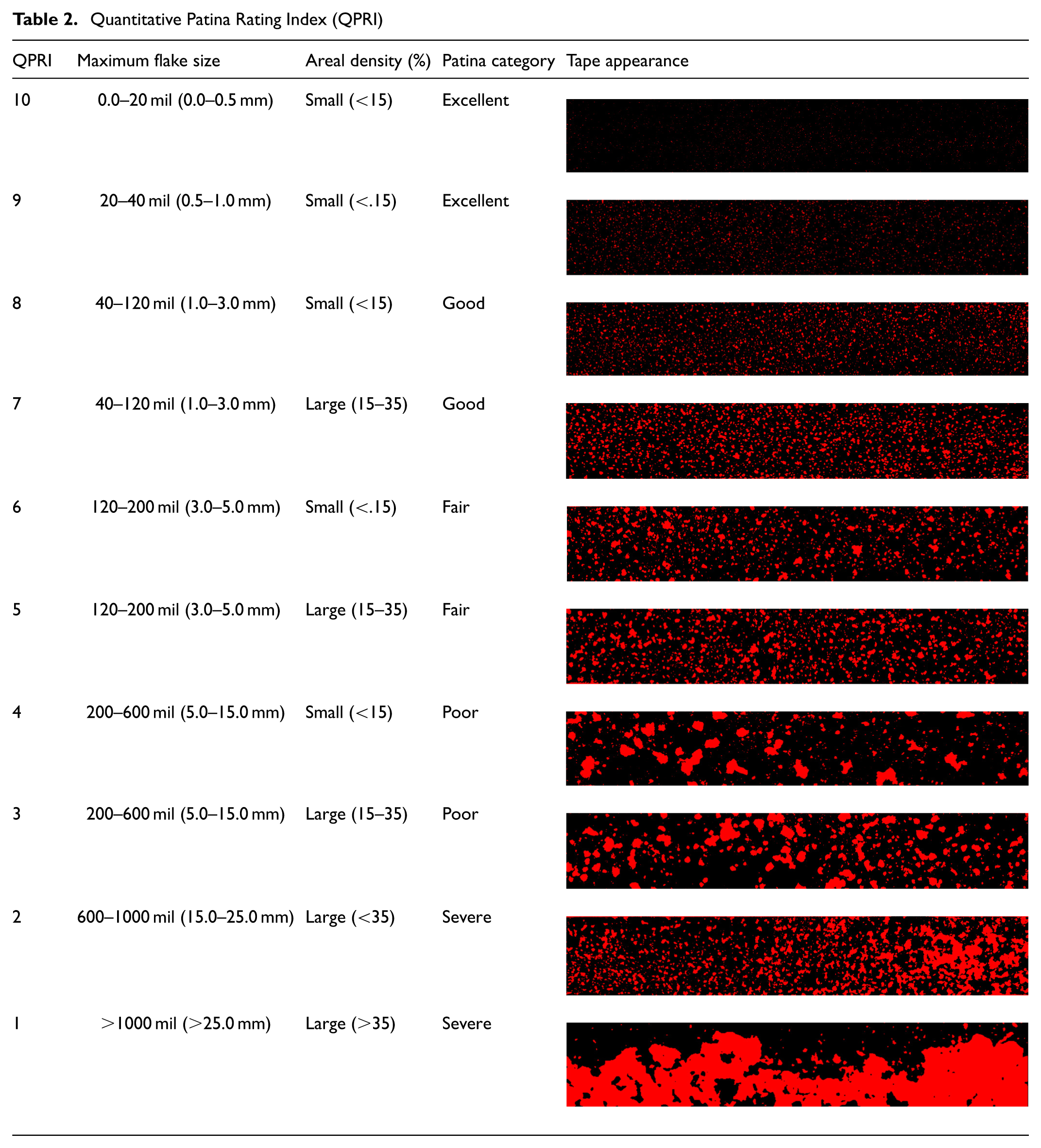
The image analysis was carried out on 1 in. wide Elcometer 99 crosshatch tape with recorded patina. The samples obtained from the weathering steel girders were cut into 6 in. lengths for the sake of consistency in analysis. Then, the samples were scanned, and a Python script was used to determine the size of flakes and the areal density of rust particles recorded on tapes. A raw image of the sample patina was used as input, then Yen’s thresholding was applied to convert the input into a binary image by using the image histogram data and optimal threshold values. Scikit-image library was used to isolate rust particles from noise imagery and differentiate them from the background by maximizing the sum of entropies to select a threshold value ( 43 ). The detailed mathematical procedure of Yen’s thresholding is given in Yen et al. ( 42 ). The final masking results were used to calculate the size and distribution of rust particles. A few examples of such results are given in Table 2, and sample datasets used for analysis in this study are publicly available in Shivechchhu’s work ( 44 ).
Quantitative Patina Rating Index (QPRI)
Results and Discussion
The proposed QPRI given in Table 2 was developed based on the image analysis of a total of 444 tape samples. Because a large-diameter particle on tapes indicates delamination of patina, the maximum size of flakes was considered as the main factor in developing QPRI. The quality of the patina layer was divided into five different categories: severe, poor, fair, good, and excellent condition. The area of the rust particles recorded on testing strips was also considered as a secondary factor. Based on these two factors, a rating ranging from “1” to “10” was introduced that can be used as a metric for the evaluation of the patina layer. Details of the particle sizes and sample of masking results associated with each category are given in Table 2. The tape appearance given in this table for QPRI equal to “1” is not derived from the actual test samples collected in this study because the data conforms with the index did not exist in the inventory. Image analysis (i.e., thresholding and masking in addition to statistical analysis) was performed on one of the severe cases reported by Crampton et al. ( 30 ), and the results are given in Table 2 for QPRI equal to “1” as an illustration of such a significant patina degradation. This category represents the most severe condition where particles with a diameter greater than 1,000 mil (25 mm) are marked on the tape (large flakes), and it is also indicative of non-adherent patina because of large areal density (over 35%). Moreover, in the absence of a patina—either because the protective layer had not yet formed or had been washed off by rainfall or maintenance cleaning—the patina was subjectively evaluated as “no patina” (NP).
The status of the patina can be classified as “good” condition where the maximum diameter of the flakes recorded on tape samples is lower than 120 mil (3 mm). A test strip with fewer flakes indicates “excellent” condition where the maximum diameter particles are 40 mil (1 mm) or less. At this level, the patina is stable and protects the steel substrate from further corrosion. This was evident during the visual inspections for the sites away from the leaking expansion joints. Figure 4a shows corrosion damage at abutment areas of an overpass in Dallas (DAL1) because of water leakage through improper sealing of manholes. Another example of corrosion damage is the steel components of the cross frame in Atlanta (ATL3) because of the breaking of the strip seal expansion joint along a longitudinal axis that caused the water leakage and corrosion damage over time (Figure 4b).
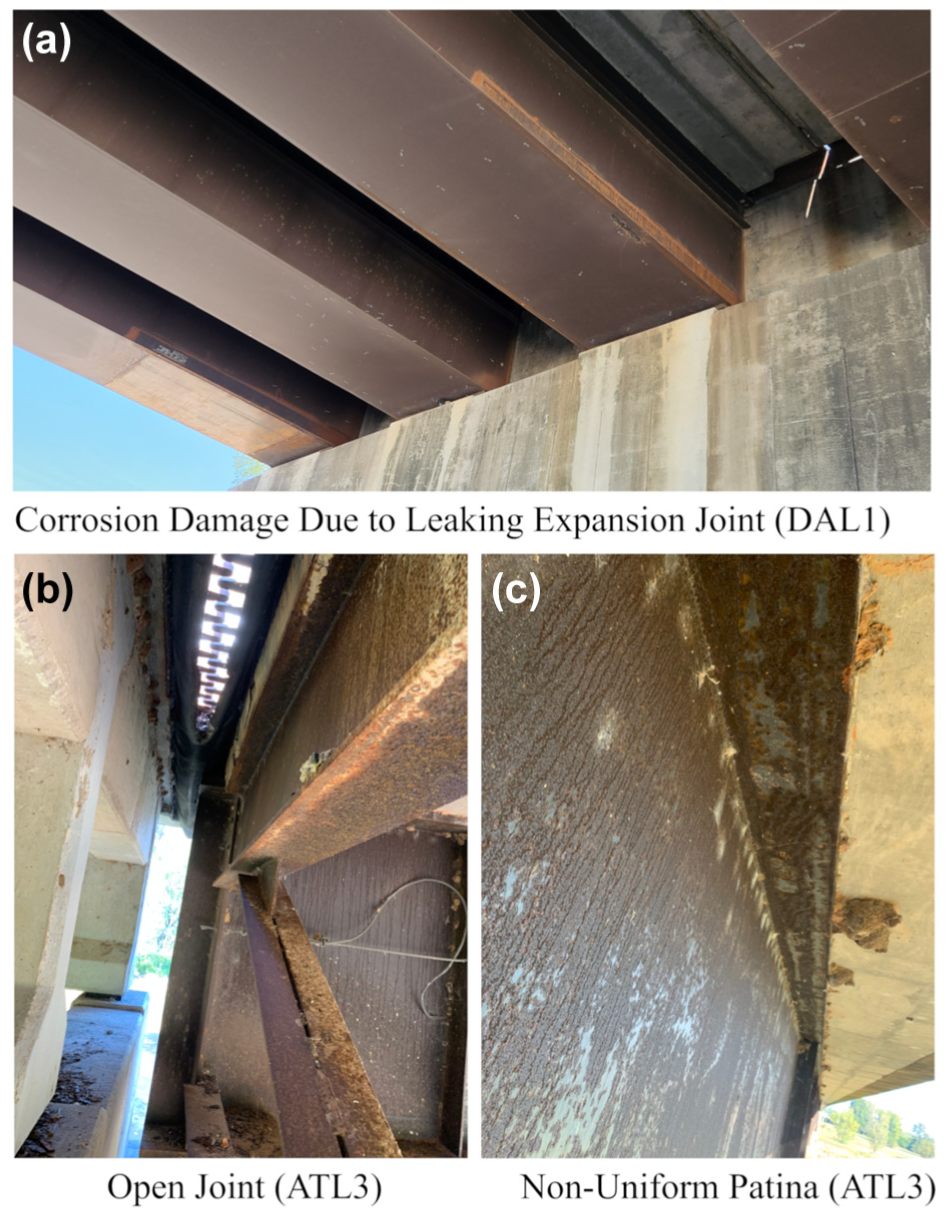
“Poor” patina developed on weathering steel girders: (a) corrosion damage due to improperly sealed manholes, (b) corrosion damage due to open joint, and (c) non-uniform patina.
Developing the classification in Table 2, a probability distribution function was used to map the calculated areal density distribution of rust particles from image analysis. Normal distribution was applied to determine the best fit curve to the areal density of rust particles with a mean of 8.37 and ±5.36 standard deviation. The maximum area of rust recorded on sample strips was 32% of the total area of the examination tapes for the data collected in this study. The image analysis was also carried out on the data reported by Crampton and Holloway ( 19 ), and the maximum areal density of rust recorded on tapes was found to be 52%. Note that this is a severe condition where a patina can be easily removed from the substrate where the flake size is greater than 1,000 mil (25 mm) with a swelling and laminated patina ( 22 ). Therefore, the status of the patina in this condition can be classified as “severe” (index 1) during the visual inspection, and no further analysis is needed. This severe condition was not seen in inspected weathering steel girders in Texas. The second-highest area of rust particles in the dataset reported by Crampton and Holloway ( 19 ) was 35% of the total area of the tape, which was close to 32% areal density observed in this study. Therefore, the areal density of 35% and higher was considered as a severe condition regardless of the diameter of the rust particles, so that the QPRI proposed in Table 2 is more representative of the patina condition. Thus, the rating system given in Table 2 is an updated version of the PRI proposed by Hurlebaus et al. ( 1 ), where 30% of the areal density was considered as a limit in the classification process. After analyzing the data recorded on tapes, it was determined that one-third of the samples had an areal density of greater than 15% or “large areal density,” indicating more loose particles recorded on tapes. The remaining two-thirds is considered as “small areal density.”
Conducting the adhesion test in multiple locations of bridge girders proved to be an effective practice in the evaluation of patina because the average QPRI will better reflect the in-service condition of the protection layer. Although a higher index of QPRI can be read as protective patina, care must be taken when classifying a sample in “good” or “excellent” condition because it can be the case that patina has not yet formed properly or may have been washed out by rainfall or during maintenance when salts are removed after spring cleaning of the girders. No or only a few traces of rust particles recorded on tape samples should not be immediately interpreted as a protective patina, and the tape adhesion test is recommended alongside visual inspections. It is evident that, if the patina has not developed or has been washed out by rainfall, there is no patina to be evaluated using QPRI. When the patina has properly formed and is visible during inspections, a stable and uniform rust layer will result in few-to-no rust particles being transferred onto the tape samples. For example, Figure 4c shows a nonuniform patina developed in some areas and washed out in others. The overall rating for the exterior face of the web was reported “6,” highlighting the absence of patina in several places.
Figure 5 illustrates the average QPRI calculated for samples obtained from the girders’ web, stiffener, both top and bottom surfaces of the girders’ bottom flange, and bottom surface of the girders’ top flange. The error bars represent the range between the minimum and maximum QPRI values, while the marker indicates the average QPRI calculated for various locations on the exterior and interior faces of the steel girders, shown in Figure 2. In total, 221 samples were collected from structures in urban areas, 67 from steel girders in rural areas, 136 from urban-industrial areas, and 20 from a bridge exposed to the marine-influenced environment of Corpus Christi. Sampling focused on the web and bottom flange, which accounted for 202 of the collected tape samples from both top and bottom faces. Moreover, 119 samples were obtained from the girders’ web, and 82 test specimens were extracted from the top flanges. The remaining samples were collected from stiffeners.
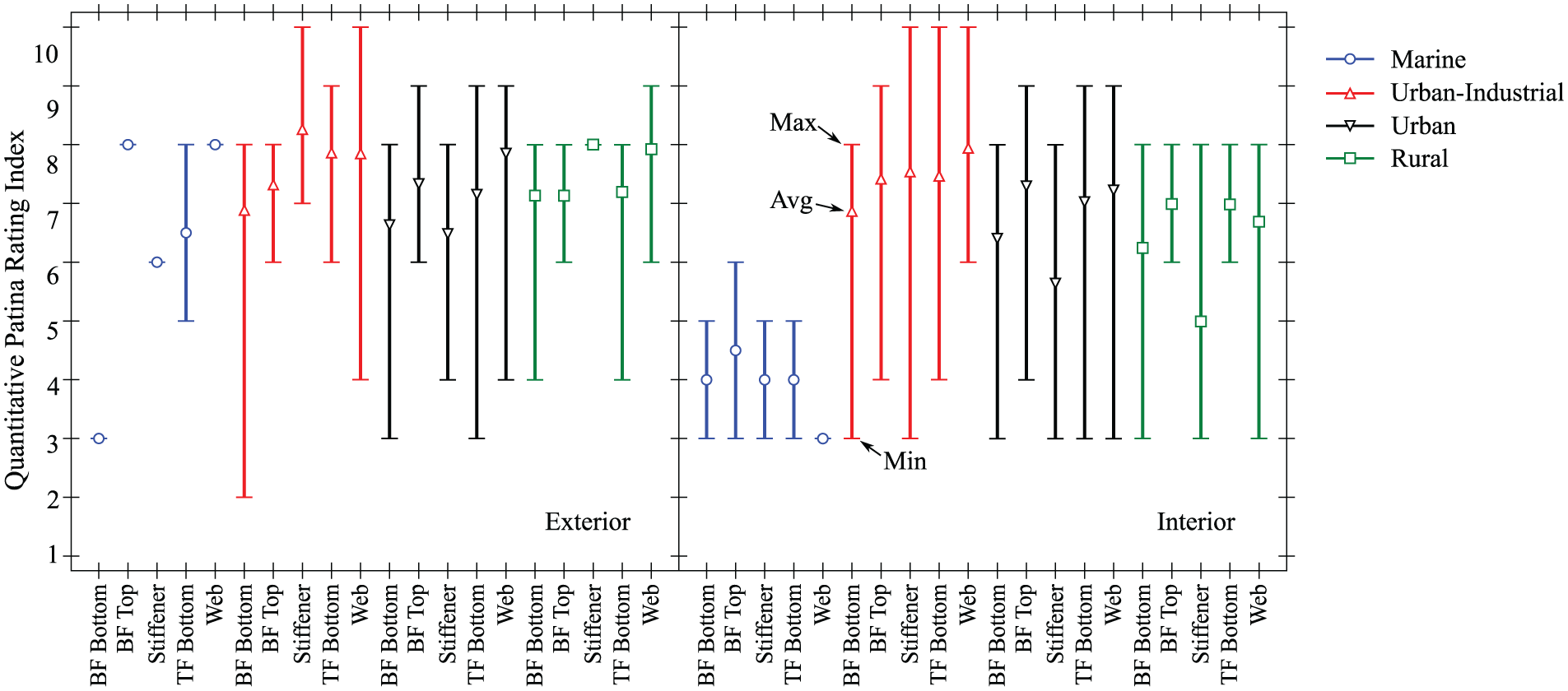
Quantitative patina rating index for all inspected bridge girders, highlighting the maximum (Max), minimum (Min), and average (Avg) values: exterior (left) and interior (right).
The average QPRI was found to be almost the same for the patina samples obtained in the urban-industrial, urban, and rural environments, but the average index decreases in the marine-influenced environment. The lower QPRI that sometimes occurred for the patina taken from the bottom surface of both top and bottom flanges shows a loose layer of iron oxide and oxyhydroxides developed on the steel substrate; thus, the patina should not be classified as protective. In general, the extent of corrosion was found to be worse at the bottom flange area, regardless of the atmosphere in which the bridge was located.
A conclusion that can be drawn from the findings shown in Figure 5 is that the interior face of steel girders, particularly in a marine-influenced environment, exhibits a lower index than the exterior face. This aligns with the suggestion by Albrecht et al. that poor air circulation in a condensed humid environment of the interior girders can cause degradation of patina ( 17 ). Therefore, it is essential to inspect both interior and exterior faces during field investigation, and it should not rely on the results obtained only from the exterior faces. Since only one weathering steel bridge was inspected in the marine-influenced environment, the results shown in Figure 5 for this environment represent observations made during the inspection of CRP1, which is located 15 mi from shore. Loose patina layers were recorded in different locations of interior faces, while more stable and protective layers were identified on the exterior faces of the girders.
Figure 6 shows QPRI calculated for patina developed on steel substrate over different exposure times. A QPRI value lower than “5” classifies the patina as being in an unsatisfactory condition, indicating that the rust is not protective and adherent to the steel substrate. This category includes patina in poor or severe condition in Table 2, where particles with a flake size over 200 mil (5 mm) collected on tape samples, as suggested in Hara et al. ( 22 ) and Krivy et al. ( 31 ). Consequently, there were multiple examples documented in Figure 6 that the rust layer was not sufficiently adherent to the steel substrate if the index lower than “5” is considered an unsatisfactory patina performance. A comparison between QPRI calculated for interior and exterior faces in this figure shows a poor patina often found on both faces of the bottom flange, web, and top flange, while adherent patina was recorded both at the top flange and stiffeners of the exterior faces. Overall, non-protective patina was observed more frequently on the bottom face of bottom flanges than other locations.
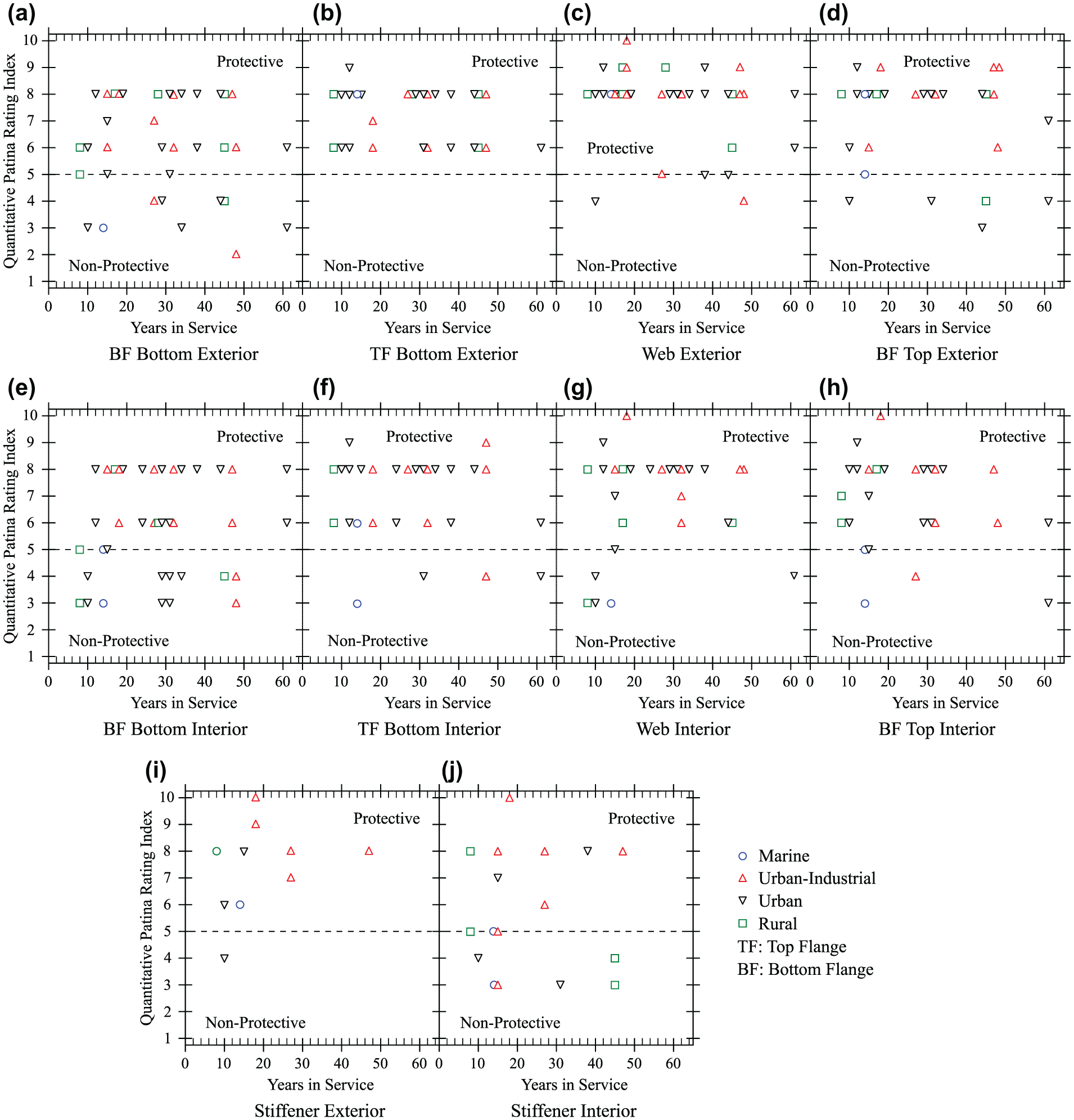
Quantitative patina rating index (QPRI) calculated for all samples obtained from inspected bridge girders with different exposure time: (a) BF Bottom Exterior, (b) TF Bottom Exterior, (c) Web Exterior, (d) BF Top Exterior, (e) BF Bottom Interior, (f) TF Bottom Interior, (g) Web Interior, (h) BF Top Interior, (i) Stiffener Exterior, and (j) Stiffener Interior.
Studying findings in Figures 5 and 6 reveals that the performance of patina is highly dependent on micro-environmental conditions. No clear trend was observed in the results of tape adhesion tests for inspected structures, indicating patina may fail in any macro-environment if adverse micro-environmental characteristics are present. Patina on a weathering steel girder may appear to be in acceptable condition across the entire web, while localized degradation can occur near expansion joints because of leakage. The presence of bird nests and feces can create localized acidic environments, accelerating corrosion and the breakdown of the patina. Similarly, debris accumulation can trap and retain moisture, leading to patina degradation over time. This was evident during field inspections, particularly on the top face of the bottom flange and the lower regions of the web. These localized effects can occur in any macro-environment, including rural, urban, industrial, and marine.
Figure 7 demonstrates common problems that can cause localized failure of the patina layer. For example, the leakage of water because of improper sealing was a frequent problem observed during visual inspections. This resulted in significant degradation of the patina at leaking expansion joints. In addition to the cases shown in Figure 4, an unstable adherent patina was recorded at the bearing supports as well as the girder web and bottom flange of the overpass in Dallas (Figure 7a). A trace of water leakage was also documented for the bridge in El Paso (Figure 7d) and Houston (Figure 7e). The problem associated with leaking expansion joints can be avoided by maintaining proper sealing at expansion joints. Figure 7c illustrates an improper sealing that did not stop the degradation of patina at the top flange.
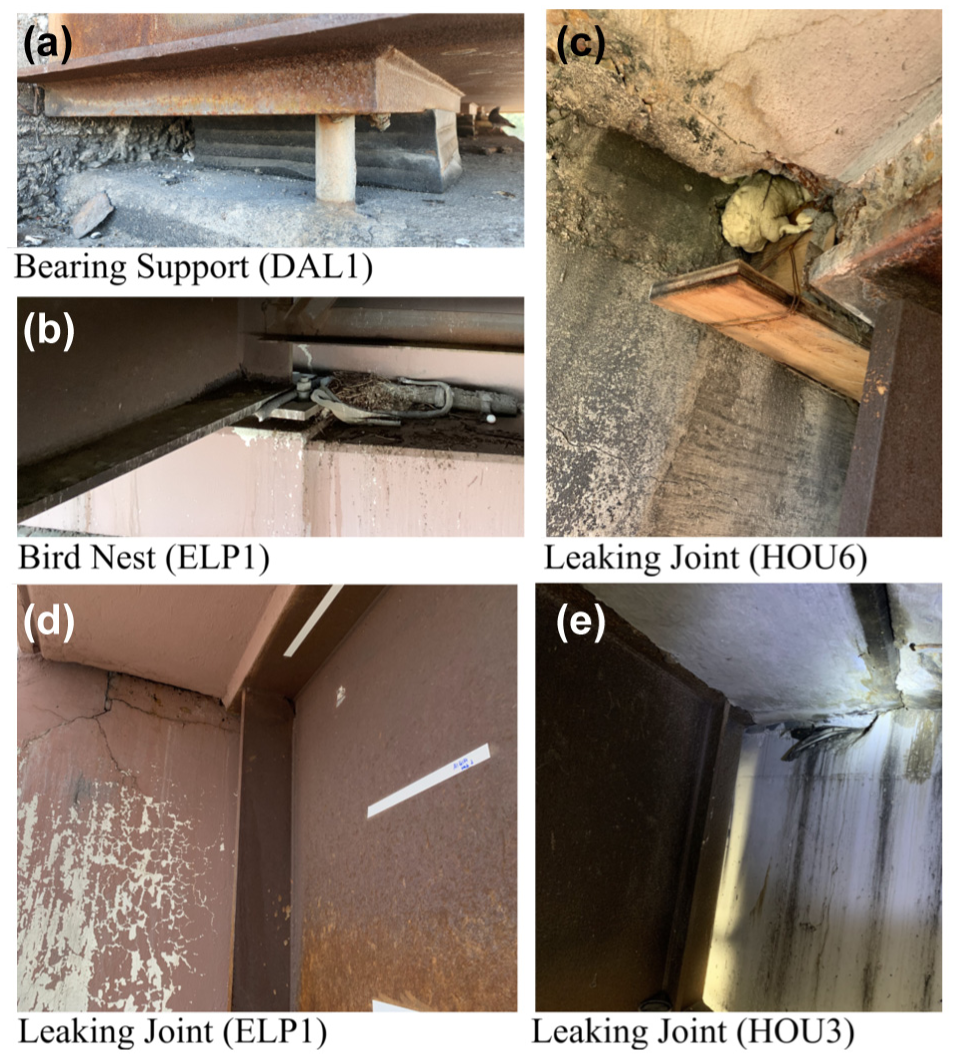
Parameters contributing to patina degradation: (a) leakage at bearing support, (b) accumulation of bird nest, (c) improper sealing and leakage, (d) leakage at the bottom of the web causing patina degradation, and (e) leaking joint initated corrosion damage on the interior girder.
The other common problem observed during inspections was the accumulation of sludge and debris, as well as bird droppings, on the top surface of the girders’ bottom flange. Dirt can trap salt and retain moisture for longer periods, which causes poultice corrosion ( 30 ). Bird droppings lead to pitting corrosion and even microbiologically influenced corrosion in a humid environment because of fungi and bacteria species in bird feces ( 45 , 46 ). Figure 7b illustrates the remaining bird droppings accumulated over time on the bottom flange of interior girders in El Paso.
Figure 8 exemplifies the texture and status of the patina recorded during inspection of bridge girders in four different environments. The indices assigned to the patina samples in Figure 8 are based on the QPRI determined for the samples obtained from individual girders on different faces. The scores show the adherence of rust flakes to the steel substrate regardless of the color and texture of the patina. For example, the index “8” was assigned to both the exterior and interior faces of the web for the bridge located in Houston. In addition, the top flange of the same bridge girder was classified as “NP,” without performing further analysis.
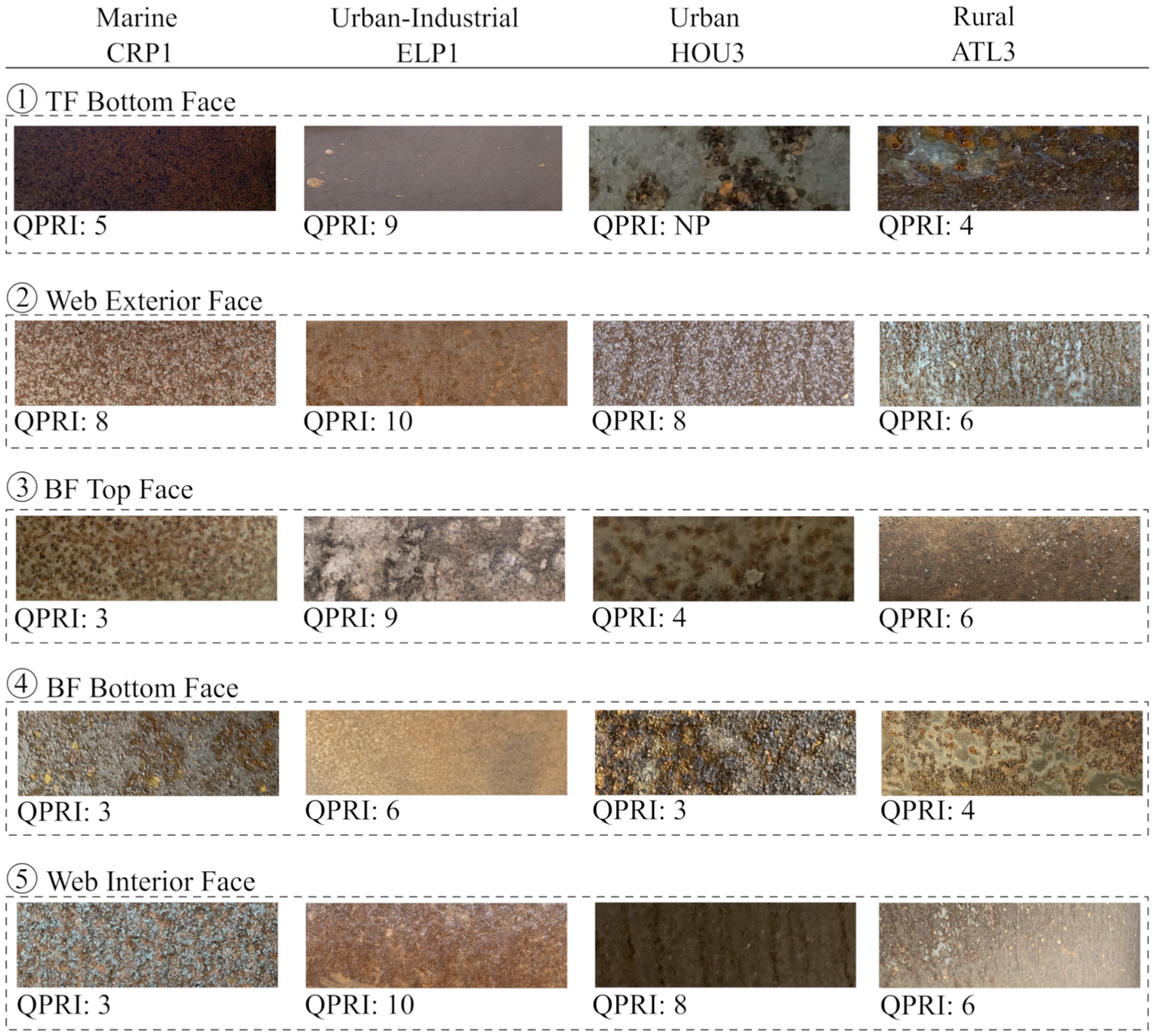
Sample patina textures on different faces of bridge girders (sampling locations shown in Figure 2).
The results of the tape adhesion test can be a false positive if the patina has not uniformly developed on the entire steel face. This was observed at the top flanges of several girders where a stable adherent patina had partially formed, and steel with no protective layer was clearly visible at many places. This can be avoided when the label “NP” is assigned to the steel without a patina layer detected during the visual inspection. The sample shown for the top flange of the plate girder bridge in Houston illustrates this scenario, which the QPRI was discerned to be “NP.”Figure 9 shows a leaking expansion joint at the abutment of this bridge, with a close-up image illustrating the undeveloped patina on the bottom face of the top flange in the interior girders. Metallic gray areas represent the weathering steel surface without any protective patina, while rust has developed non-uniformly, concentrated in a few small locations. Therefore, this surface was classified as an example of undeveloped patina in comparison to the sample from the top flange of ATL3, where the patina was developed over most areas and received a score of “4.”
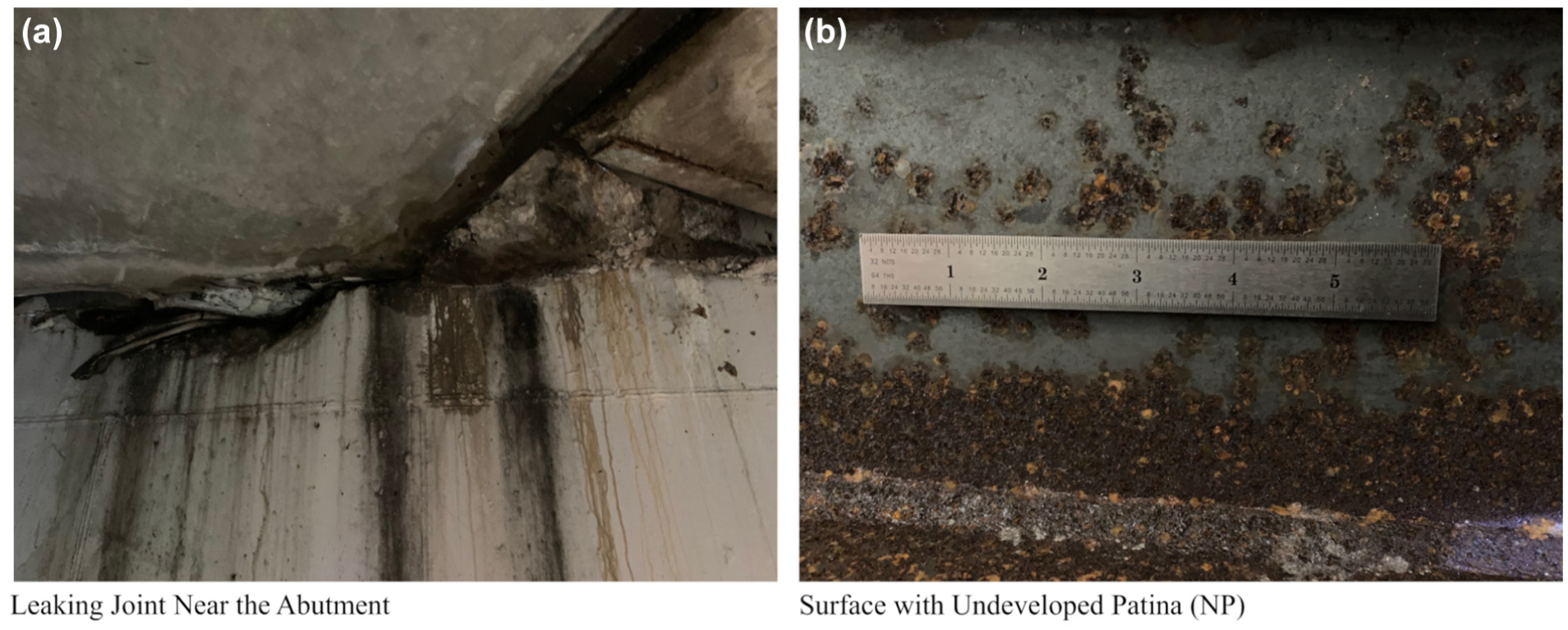
Leaking joint at HOU3, with light gray areas showing no patina (NP) development on the top flange of the interior girders.
A loose and non-adherent patina may suggest the presence of lepidocrocite, akaganeite, or spinel iron oxides in the rust. Yet, the results developed from the tape adhesion test do not represent the composition of the patina layer. While QPRI only evaluates the adhesion quality of the protection layer, a poor QPRI should not be interpreted as active corrosion and extensive metal loss, based on observations made in this study. Figure 10 shows the texture and color of stable patina in excellent, good, and fair conditions when QPRI is greater than “6.”
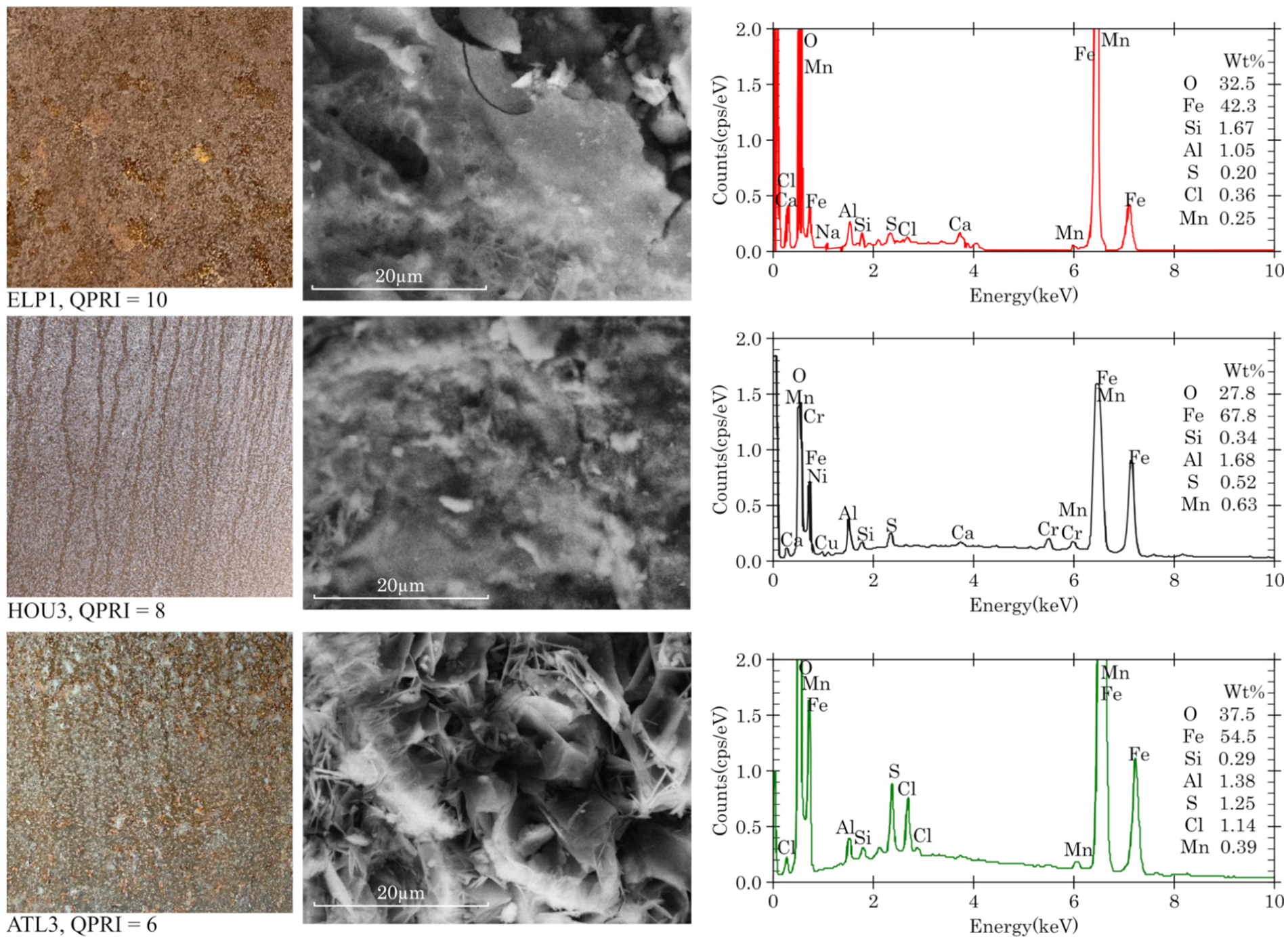
Scanning electron microscopy/energy dispersive spectroscopy and patina texture on weathering steel in different environments with associated quantitative patina rating index.
EDS results revealed the existence of pollutants such as sulfur and chloride ions in patina collected from ATL3. However, these ions were also detected in the patina samples taken from ELP1 and HOU3, but in a lower amount. Moreover, SEM images given in Figure 10 illustrate the existence of oxyhydroxides. The progression of corrosion products over time can be seen in this figure, since the samples used in SEM/EDS analysis were collected from weathering steel girders in El Paso, Houston, and Atlanta after 20, 33, and 47 years of exposure, respectively.
Figure 11 shows the average QPRI calculated for all the bridges inspected in this study with different exposure times. The average atomic concentration of chloride relative to oxygen (Cl/O) and sulfur relative to iron (Fe/S) is also integrated into diagrams in Figure 11. The Cl2212 ion in patina can cause the formation of akaganeite (
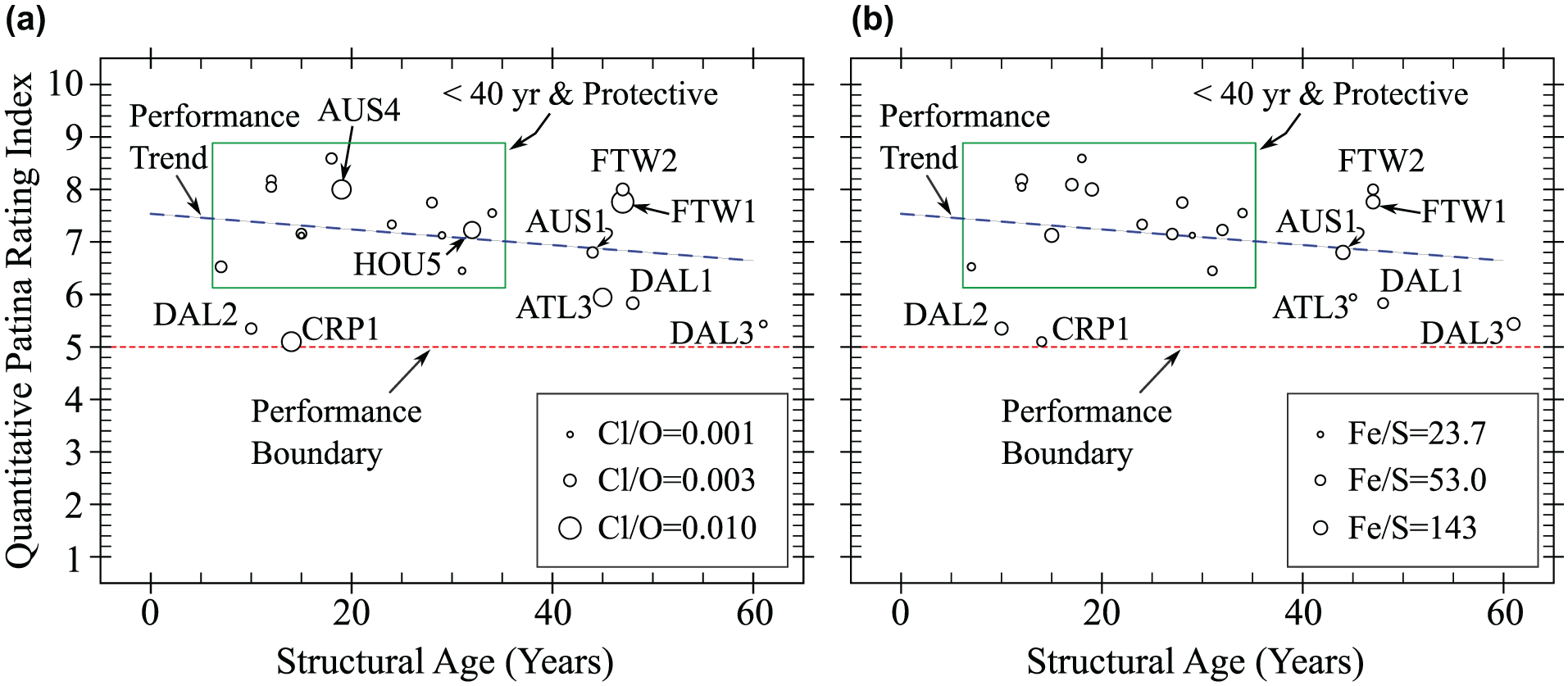
Patina performance with varying exposure time: (a) chloride atomic concentration (Cl/O) and (b) sulfur atomic concentration (Fe/S).
While sulfate-rich corrosion products develop in a rust layer with a low value of Fe/S ratio, the average Fe/S calculated for each individual bridge was found to be significant after analyzing the results of EDS, where the ratio was over 10 for all the analyzed samples in this study ( 51 ). A high Fe/S ratio indicates a low concentration of sulfur ions within patina and a low risk of sulfur-related corrosion in the inspected steel girders.
Because the average QPRI was over “5” for all inspected weathering steel bridges, the overall condition of the patina was concluded acceptable. The performance boundary shown in Figure 11 represents the threshold between “poor” and “fair” conditions where QPRI is “5.” A performance trend was also observed in Figure 11, indicating the average QPRI decreasing over time. This finding contrasts with the common expectation that patina performance should improve with time, given that the volume fraction of goethite generally increases during long-term exposure. The weathering steel samples analyzed in this study were taken from areas especially susceptible to corrosion problems, such as near abutments and leaking expansion joints. Therefore, the observed trend reflects the overall condition of weathering steel in these critical sections. However, the average QPRI remained above a value of “5” for all samples, while localized corrosion issues were also identified, as some tape samples showed results in the “poor” condition, and others indicated “good” or “excellent” performance.
Non-adherent patina was most identified on weathering steel of DAL2 and CRP1, where the average QPRI was calculated slightly over “5.” The bridge in Dallas is a plate girder bridge located in an urban environment, and the structure in Corpus Christi is built 15 mi from the shore. Both structures have been exposed to the environment for less than 20 years. Among the bridges with more than 20 years of exposure, the plate girder bridge in Atlanta (ATL3) had a patina with an average QPRI value “5.9.” Although the condition of patina extracted from this overpass was classified “fair,” there are several cases of nonuniform patina recorded for this structure, as shown in Figure 4c. The status of patina developed on two other weathering steel bridges in Dallas was also classified “fair.” These structures include DAL1 with multiple locations of metal loss because of drainage problems and DAL3 located in an urban environment. The average QPRI values calculated for the rust layers collected from the remaining inspected steel bridges were over “6,” indicating protective and adherent patina to the steel substrate. Structures with time exposure of less than 40 years and with protective patina are enclosed in a green box in Figure 11.
Yamashita et al. (
25
) studied the long-term progress of a stable and protective patina on weathering steel. The authors analyzed rust particles formed during the early stage (0.5, 1, and 2.5 years), the middle phase (7 and 8 years), and the aging stage (over 24 years) of exposure and concluded
A comparison was made between the National Bridge Inventory (NBI) superstructure ratings and the average QPRI values calculated for the inspected bridges, and the results are given in Figure 12, which is based on the maximum, minimum, and average QPRI values determined for each inspected bridge. QPRI values were estimated using samples obtained from weathering steel girders in areas near the abutments and are representative of the localized condition of the patina, whether adherent or loose to the steel substrate. The NBI rating, however, evaluates the overall superstructure condition and can also be affected by factors other than corrosion, such as section loss, fatigue cracking, missing connection bolts, frozen bearings, or flange distortion caused by impact. NBI ratings do not explicitly evaluate the protectiveness of the patina on weathering steel structures but, rather, only subjectively as part of the visual condition assessment. To address this gap, QPRI can be adopted as an additional factor within the NBI framework so that the adjusted NBI rating can be determined as the lower value between the NBI rating (based on structural and mechanical conditions) and the average QPRI calculated for the girders. The modified NBI rating shown in Figure 12 would allow the NBI rating to more accurately reflect both the structural integrity and corrosion protection state of weathering steel bridges. For example, the results in Figure 12 show a significant deviation between the scores calculated for superstructures DAL2, DAL3, and CRP1. QPRI classifies the patina developed on the steel girders as “fair” but close to “poor” condition (loose and nonadherent), while the NBI rating places these structures in “very good” condition with no problems noted. In contrast, there are multiple examples with a low NBI rating, but the patina was overall in reasonable condition based on QPRI. DAL1 exemplifies this case, where the NBI rating is “4” because of localized metal loss of the bottom flanges at the expansion joints (Figure 4a), but the average QPRI classifies the overall status of the patina as “fair.” Notably, the lowest QPRI in the entire study (“2”) was calculated for the samples taken from the bottom face of the bottom flange of this steel tub girder.
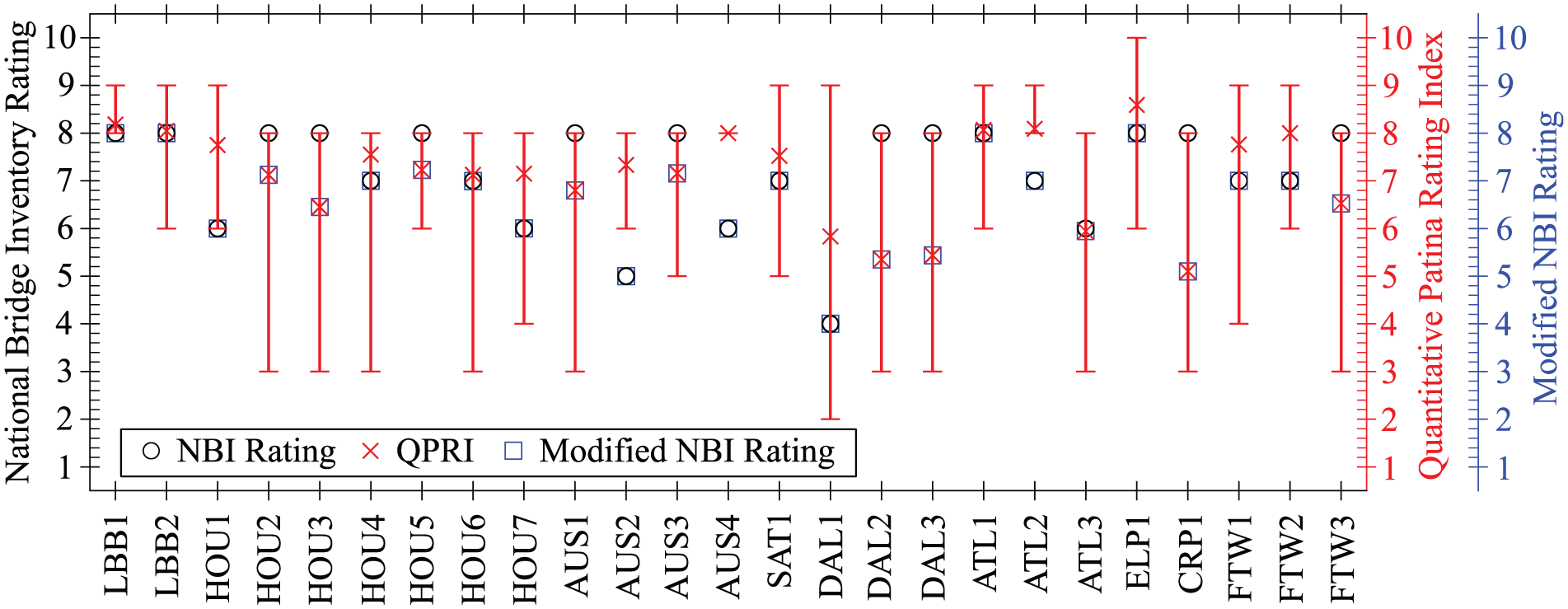
Comparison of National Bridge Inventory (NBI) ratings and average quantitative patina rating index for inspected weathering steel bridges.
Conclusion
A QPRI was developed in this study to evaluate the quality of the patina layer developing on weathering steel. This rating index can be adopted as an effective tool to assess the adherent ability of the patina to the steel substrate, instead of relying solely on traditional visual inspections that are subjective and depend only on the color and texture of the weathering steel. To this end, 25 bridge girders were visited across Texas, and 444 tape samples were collected from patina that had formed over the years. After conducting image analysis on the test samples, the proposed rating index was developed on a scale of “1” to “10,” where “1” indicates a loose patina and “10” denotes a uniform adherent patina. A score of “5” serves as the threshold between fair and poor condition; scores below “5” indicate that the patina is not protective. This rating was also used to assess the adhesion quality of the patina in different locations of the inspected bridge girders, and the following conclusions were drawn:
The tape adhesion results revealed that aggressive micro-environments can cause a patina to fail. This is evident based on multiple cases documented during field observations and findings in Figure 6. In general, patina degradation was recorded near leaking expansion joints and at or near the bottom flange of the girders in proximity to the abutments, primarily because of sealing failure, drainage problems, and moisture and accumulation of dirt. Additionally, localized corrosion was often observed in confined areas containing bird nests and feces, typically located between interior girders near the abutments.
Although only one weathering steel bridge was inspected in a marine-influenced environment, lower QPRI values were calculated for the patina samples obtained from the interior face of girders in this environment compared with indices determined for patina in other environments based on the results given in Figure 5. Moreover, the index values calculated for the interior face of girders’ bottom flange and stiffeners were found to be relatively lower, as shown in Figure 6, while this cannot be generalized to the girders’ web and top flange, where losing patina was frequently observed on both faces.
If the protective layer has not formed uniformly or has been washed away by rainfall and maintenance cleaning, the results of the tape adhesion test may produce false positives. This is because no rust particles are present to be recorded on the tape samples. Therefore, it is recommended that the rating index be used in conjunction with visual inspections to ensure that the patina has formed on the steel surface.
When inspectors use the tape adhesion test to evaluate whether the patina layer is protective, the number of samples collected per bridge should increase with the quantity of steel and the span length. Where lane closures and traffic control are permitted, it is recommended to obtain samples from different areas of the steel. However, the primary goal is to identify and target locations vulnerable to localized corrosion, since the patina may appear to be in good condition across an entire girder but can fail locally at specific points because of drainage issues, water leakage, debris accumulation, or other factors. Consequently, the QPRI should not be determined solely from the patina condition at the abutments. To achieve a comprehensive assessment of patina conditions on single-span and multi-span weathering steel bridges, the tape adhesion test should be performed on all girders (as shown in Figure 2 for both exterior and interior faces) at locations near the abutments and mid-span, including the top flange, bottom flange, web, and other steel components.
An average QPRI lower than “5” represents particles with maximum flake size over 200 mil (5 mm), which implies “poor” condition or “severe” patina degradation. Patina adherence to the steel substrate is also considered low when the areal density recorded on the tape samples exceeds 35%.
Concentration of sulfur ions in patina samples extracted from the inspected bridges was low, where Fe/S ratio was calculated over 10 for all samples. Chloride concentrations were low in most samples and moderate in a few. The concentration of chloride for samples collected from structures in Corpus Christi (CRP1) and Atlanta (ATL3) was expected to be higher than the bridges in other locations because of the environment. However, Cl/O ratio also increased in the rust samples obtained from FTW1, HOU5, and AUS4, with a well-developed and protective patina.
A comparison between the NBI rating and the calculated average QPRI for inspected structures showed that the two metrics were sometimes in agreement, but at other times differed significantly. While NBI ratings are assigned based on visible structural or material deficiencies, QPRI reflects the degree of patina adherence to the steel surface.
Footnotes
Acknowledgements
The authors acknowledge the characterization part of this work was performed in Texas A&M University Materials Characterization Core Facility (RRID:SCR_022202).
Author Contributions
The authors confirm contribution to the paper as follows: study conception and design: P. Shivechchhu; data collection: P. Shivechchhu, S. Yoon, Z. Zhang, S. Hurlebaus; analysis and interpretation of results: P. Shivechchhu, A. Rockey; draft manuscript preparation: P. Shivechchhu, A. Rockey. All authors reviewed the results and approved the final version of the manuscript.
Declaration of Conflicting Interests
The authors declared no potential conflicts of interest with respect to the research, authorship, and/or publication of this article.
Funding
The authors disclosed receipt of the following financial support for the research, authorship, and/or publication of this article: This paper is part of a TxDOT Research Project 0-7040, sponsored by TxDOT.
ORCID iDs

Data Accessibility Statement
The views expressed in this paper are those of the authors and not necessarily those of TxDOT.