




Abstract
As the global demand for renewable energy intensifies, piezoelectric energy harvesting from roadways has emerged as a promising avenue for sustainable power generation. This systematic literature review analyzes 61 peer-reviewed studies to assess the feasibility, performance, and potential of integrating piezoelectric systems into roadway infrastructure. While technology faces challenges, such as high installation costs, limited energy output, and a scarcity of thorough economic evaluations, findings suggest it holds considerable promise as a supplementary renewable energy source. The review analyzes the operational characteristics and efficiencies of various piezoelectric transducers, identifies key factors influencing system performance, and evaluates recent technological advances. It further considers the broader socioenvironmental implications of deploying such systems, including potential benefits for green infrastructure development and urban sustainability. Spanning two decades of research, this study highlights the transformative potential of piezoelectric technology in reshaping energy infrastructure. It emphasizes the need for continued interdisciplinary research, particularly in improving system efficiency, reducing costs, and evaluating long-term economic and environmental impacts. By identifying critical research gaps and proposing future directions, this review provides a foundational reference for engineers, policymakers, and researchers focused on sustainable infrastructure and innovative energy solutions.
Keywords
Energy harvesting is the process of capturing ambient energy and converting it into usable electrical power, offering an environmentally friendly alternative to traditional energy sources. This approach contributes to sustainability by efficiently using otherwise wasted resources. Over recent decades, significant advances have been made in harnessing renewable energy from unconventional sources in different fields. Research on microbial energy production, for instance, has highlighted how certain microorganisms, known as electricigens, efficiently convert organic compounds to electricity, as demonstrated by Lovely et al. ( 1 ). Additionally, Rasouli et al. ( 2 ) developed an aerobic microbial fuel digester capable of stabilizing waste-activated sludge while generating electrical energy. In the construction materials field, energy-harvesting concrete has emerged as a transformative technology with smart and functional properties that allow it to convert ambient energy into usable forms without environmental harm. Wang et al. ( 3 ) explored the potential and challenges of implementing energy-harvesting concrete in sustainable infrastructure. Lee et al. ( 4 ) investigated thermoelectric technology in road concrete, where energy is harvested from the temperature difference between a structure’s surface and interior. Similarly, Wei et al. ( 5 ) examined carbon fiber-reinforced cement composites, which capture thermal energy from outdoor surfaces, yielding a maximum energy of 8.4106 J per m2 over 420 min of solar irradiation. In addition, Abdel-Raheem et al. ( 6 ) expanded the scope of energy harvesting from concrete by presenting an experimental study on energy generation from the heat of hydration in mass concrete structures. Their research demonstrated the capacity of hydration heat to produce substantial electrical power, highlighting another innovative application of energy-harvesting technology within the construction industry.
A significant number of research studies on energy harvesting have focused on the transportation sector, with numerous studies dedicated to developing renewable and sustainable electricity generation systems within this field. For instance, energy harvesting within railways has shown promise with the use of various technologies, such as piezoelectric harvesters and electromagnetic systems, which convert mechanical vibrations from train movements into electric power ( 7 , 8 ). Additionally, wind energy generated from passing trains has been explored as a viable source, using turbine systems positioned alongside rail tracks. Chaitanya and Gowtham ( 8 ) estimated that a deployment along the Mumbai Western Railway could yield around 6,664 watts a day, potentially reaching 200 kW a month across 28 stations. Similarly, ( 9 ) developed a system to harness electricity from train wheel axles, generating AC power with minimal fuel use, making it both cost-effective and environmentally friendly. Further advances in urban transport systems include an initiative by Transport for London, where a braking-energy recycling system was tested on the Underground. This system converted the kinetic energy from braking into electrical power, which could power nearby stations for extended periods, with potential energy savings of up to 5%, estimated at £6 million annually ( 10 ).
In the field of human-centered applications, researchers have also examined piezoelectric materials—materials that generate an electric charge in response to applied mechanical stress—for energy harvesting from human movement. For instance, Kuang et al. ( 11 ) developed a sandwiched piezoelectric transducer (SPT) prototype, a device that converts mechanical energy into electrical energy, capable of producing 4.68 mW under mechanical stress, which showed potential as a wearable power source when tested within a boot on a treadmill. Additionally, in the construction sector, piezoelectric technology has been embedded in roads to capture mechanical energy from vehicle-induced stress and vibrations, with studies by Guo and Lu ( 8 ) and Innowattech ( 12 ) reporting that roads with embedded piezoelectric elements could generate significant energy outputs for local infrastructure, street lighting, and community needs.
This paper provides a comprehensive review of recent research into piezoelectric energy harvesting from roadways, with a focus on the characteristics and efficiencies of various transducers, key factors influencing performance, and the progression of technological advances in the field. It also examines the socioenvironmental impacts of piezoelectric applications, highlights research gaps, and suggests future directions. This review aims to serve as a valuable reference for those exploring interdisciplinary sustainable energy solutions and the expanding role of renewable technologies in infrastructure.
Sustainability Impacts
The United Nations (UN) 2030 Sustainable Development Goals (SDGs) outline key areas where innovative energy solutions, such as piezoelectric energy-harvesting systems, can contribute substantially to global sustainability efforts, especially within the transportation and infrastructure sectors. Piezoelectric technology aligns closely with five of the 17 SDGs: enhancing public health (Goal 3), expanding access to affordable and clean energy (Goal 7), promoting sustainable urban development (Goal 11), encouraging responsible consumption and resource management (Goal 12), and advancing climate action through greenhouse gas emissions reduction and environmental impact mitigation (Goal 13), as outlined by The United Nations ( 13 ).
Piezoelectric technology offers several technical advantages compared with other energy-harvesting methods, such as electromagnetic and electrostatic systems, including higher power density, simpler architecture, and greater scalability, while providing a clean and sustainable energy source ( 14 ). Socially, piezoelectric systems can advance community development, particularly by supplying renewable power to remote areas where conventional grid access is limited (Goal 7). In smart city applications, piezoelectric sensors embedded in roadways could enhance public safety by monitoring infrastructure conditions and traffic patterns, reducing accidents, and contributing to more sustainable urban planning (Goal 11).
Additionally, piezoelectric technology supports climate adaptation strategies by generating electricity without direct greenhouse gas (GHG) emissions during operation, providing a sustainable alternative to fossil fuel–based systems associated with public health risks and global emissions ( 15 , 16 ). For example, it is estimated that installing piezoelectric cymbals on 16.3 km of Madrid’s roads, covering just 0.53% of the total km of roads region could generate 10% of the area’s total energy needs, reducing reliance on traditional energy sources and supporting sustainable resource use (Goal 12) ( 17 ).
Work Methodology
This paper conducts a comprehensive analysis of advances in piezoelectric energy harvesting from roadways, as depicted in Figure 1, encompassing laboratory experiments, simulation studies, and field applications of piezoelectric transducers as energy harvesters. The analysis builds on prior work selected based on key criteria, including alignment with the study’s objectives, clarity in experimental methodologies and results, publication in reputable journals or proceedings, and accessibility in English-language databases. Non-peer-reviewed articles were excluded to ensure the rigor and reliability of the evaluation.

Research methodology.
A comprehensive search strategy was employed across multiple indexed databases, including Google Scholar, Web of Science, INSPEC, and Transportation Research Information Database (TRID) (87–90), as well as other relevant electronic journals and digital repositories. Search terms were developed to capture a range of relevant studies, including but not limited to “piezoelectricity,”“piezoelectric harvesters,”“piezoelectric transducer,”“energy harvesting with piezoelectric transducers,”“economic feasibility of piezoelectric roadways,” and “piezoelectric materials in sustainable cities.” Searches targeted the “title” and “abstract” fields to optimize the relevance and specificity of results.
The search yielded 61 peer-reviewed studies meeting all the aforementioned selection criteria. These studies were classified into nine categories: Economic, Field, Lab, Lab & Field, Lab & Simulation, Lab & Theoretical & Simulation, Review, Simulation, and Theoretical. This classification reflects the diverse methodologies and focus areas within the literature, providing a structured understanding of the research landscape and highlighting the balance between experimental, theoretical, and economic analyses in the field.
Of the 61 studies, three focused on economic analysis (5%), five were field studies conducted on open roads (8%), and 20 were laboratory based (33%). Five studies combined laboratory work with field experiments (8%), while six compared laboratory and simulation results (10%). One study integrated theoretical, experimental, and simulation methods to optimize energy output (2%). Eight studies were review articles (13%), 12 were simulation-based studies (20%), and one was purely theoretical (2%), as shown in Figure 2. The review articles were included to provide broader insights by synthesizing trends and identifying research gaps. Their inclusion as a distinct category ensures a more comprehensive understanding of the field and helps illustrate the progression of primary research. Furthermore, among the 61 studies, 51 focused on piezoelectric materials or transducer types (84%), and 10 examined factors affecting piezoelectric device efficiency (16%).
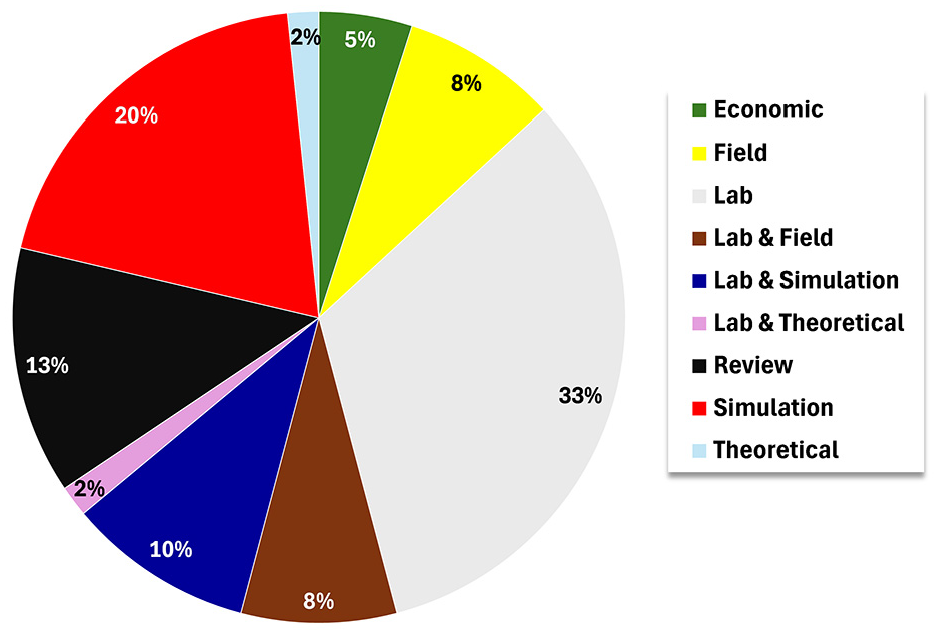
Categorization of study areas in piezoelectric energy harvesting.
Piezoelectricity: Concept, Materials, and Applications
Derived from the Greek word “piezo,” meaning “to press” or “apply pressure,” piezoelectricity refers to the phenomenon where applied mechanical stress on a material generates an electric charge ( 18 ). This principle of energy conversion was first identified by Pierre and Jacques Curie in 1880, who demonstrated the transformation of applied pressure into electrical potential in certain materials ( 19 ). The fundamental mechanism relies on generating voltage in a piezoelectric material subjected to either compressive or tensile stress, as illustrated in Figure 3.
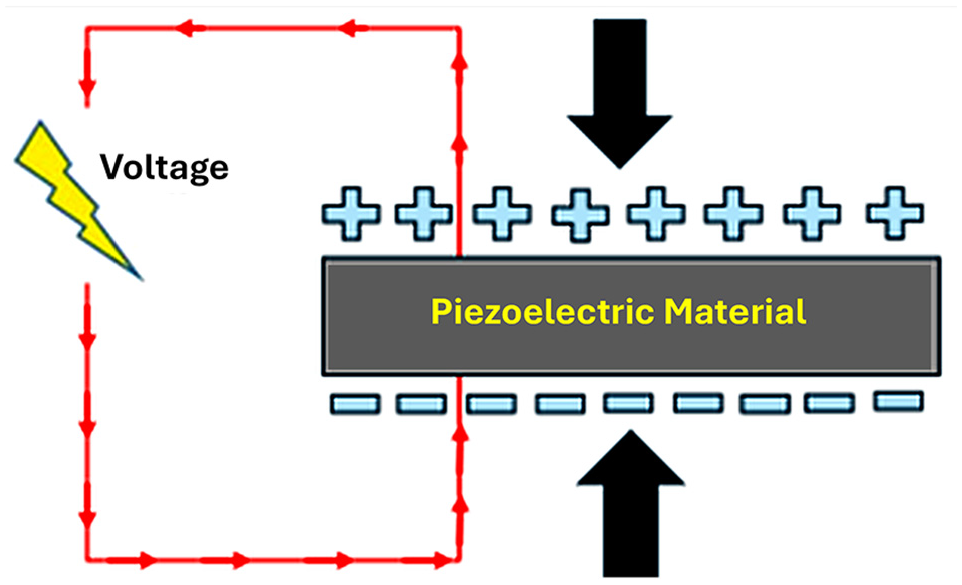
Concept of piezoelectricity.
This section synthesizes key findings in piezoelectric technology, including core operating principles, criteria for material selection, and types of transducers, operational modes, and device configurations. Equations 1 and 2 outline the piezoelectric coupling process, describing how mechanical stress is converted into electrical charge ( 20 ).


Specifically, T denotes the stress applied to the material, and S represents the resulting strain. The electric field within the material is indicated by E, while D corresponds to electric displacement, which captures the material’s response to both mechanical and electrical influences. The term s reflects the elastic compliance at a constant electric field (E), illustrating how the material deforms under stress. The parameter d encompasses the direct and converse piezoelectric effects, which refer to the material’s capability to either generate an electric field when stressed or deform when subjected to an electric field. Lastly, ε signifies the dielectric permittivity under constant stress, an essential factor in determining the material’s response to electrical fields. These parameters collectively outline the material characteristics critical to efficient piezoelectric energy conversion.
The Basics of Piezoelectric Materials
Piezoelectric materials are found both naturally, as single crystals such as quartz, and in a range of synthetic forms including crystals similar to quartz, ceramics, polymers, and composites ( 21 ). These materials are categorized into several types based on their structural and functional properties, such as single-crystalline materials, piezoceramics (e.g., lead zirconate titanate [PZT]), piezoelectric semiconductors, polymers, piezoelectric composites, and glass ceramics ( 61 ).
Piezoelectric materials operate in two primary coupling modes, denoted as d33 and d31, which differ based on the directional relationship between stress and polarity. In d31 mode, the stress and electric polarization are perpendicular, while in d33 mode, they are parallel, allowing for more efficient energy conversion. Studies have shown that d33 mode generally outperforms d31 mode in applications that capture mechanical energy from vehicle stress on roadways (22–24).
The most common piezoelectric materials used in energy-harvesting systems are lead zirconate titanate (PZT) and polyvinylidene fluoride (PVDF), each offering distinct advantages. PZT, widely applied in pavement engineering, is rigid, brittle, and cost effective, with a high piezoelectric strain constant (d33), voltage constant (g33), electromechanical coupling coefficient (k), high dielectric constant, and low dielectric loss ( 64 ). Conversely, PVDF is softer, more flexible, and better suited to endure larger strains, with excellent thermal stability, chemical resistance, and durability, though its piezoelectric coefficient is considerably lower than that of PZT ( 24 , 25 ).
Research on these materials has led to the development of diverse piezoelectric energy harvesters. For example, Shin et al. ( 26 ) found that PVDF could produce 620.2 mW of power under actual traffic conditions over a small surface area (15 × 30 cm) at a vehicle speed of 80 km/h. Similarly, Rui et al. ( 27 ) demonstrated that MFC-M8514-P2 cantilever beams, when tested under controlled conditions with a shaker, signal generator, and power amplifier, exhibited high output power across a broad frequency range, underscoring the adaptability of piezoelectric materials to various applications.
Piezoelectric Transducers
The term “piezoelectric transducer” refers to a piezoelectric material combined with a metal cap ( 28 ). These transducers are widely employed in industrial applications and are increasingly being explored for energy harvesting from ambient sources. Various transducers, including Multilayer, Moonie, Cymbal, Bridge, RAINBOW (reduced and internally biased oxide wafer), Cantilever Beam, Bimorph, THUNDER (thin layer unimorph ferroelectric driver and sensor), Macro Fiber Composite (MFC), PZT Piles, and others, offer potential in this domain, although none has been specifically optimized for asphalt pavements ( 28 ). Figure 4 illustrates some of the different piezoelectric transducers.
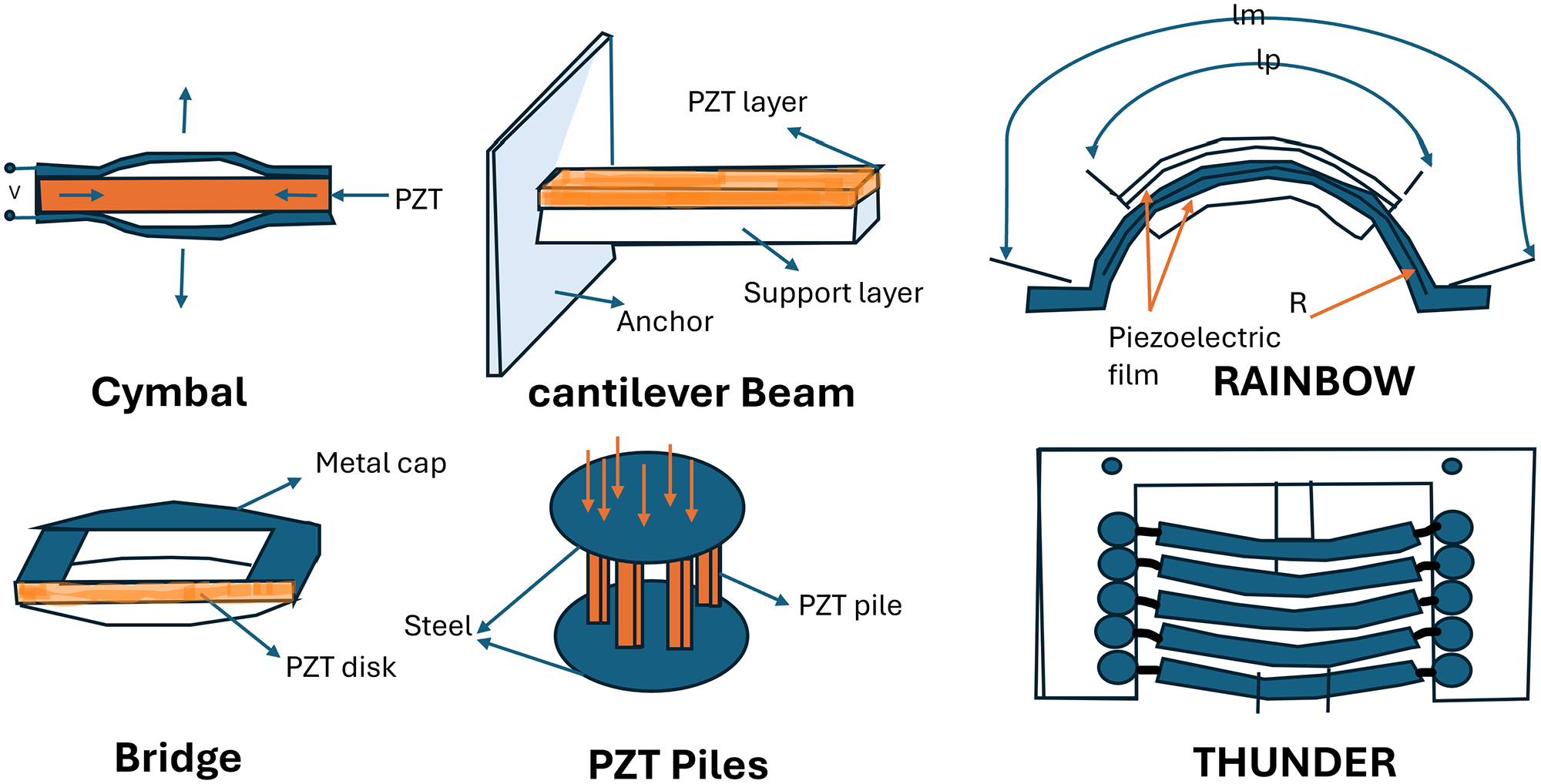
Different types of piezoelectric transducers.
The application of piezoelectric technology to roadways began in 2004, with Kim et al. ( 29 ) studying the feasibility of integrating piezoelectric transducers into asphalt. These transducers harness energy from the stress, vibrations, and kinetic forces generated by vehicle traffic, converting these mechanical inputs into electrical energy. This harvested energy can then power roadway infrastructure, such as traffic signals, lights, signage, and environmental monitoring devices, as well as supply nearby communities.
Piezoelectric transducer performance varies significantly with mechanical stress, affecting both fatigue life and power output ( 30 ). Diverse piezoelectric transducer designs have been evaluated for roadway applications. For instance, Kim et al. ( 31 ) demonstrated the efficacy of the cymbal transducer for energy harvesting, with finite element method (FEM) results showing compatibility with experimental outcomes. Similarly, Zhao et al. ( 32 ) found that cymbal transducers were optimal for energy collection in asphalt pavements based on FEM simulations. Zhao et al. ( 33 ) compared multiple transducers—including Multilayer, MFC, Moonie, Cymbal, Bridge, and THUNDER—using the electromechanical coupling factor (k) and energy transmission coefficient (λ_max) to assess efficiency. Their analysis identified the Multilayer transducer as the most efficient, followed by THUNDER and MFC, while Bridge and Cymbal configurations offered moderate efficiency with stiffness properties compatible with asphalt pavements.
Further experimental studies have explored specific transducer configurations. Yao et al. ( 34 ) observed that Arc Bridge transducers had superior energy conversion efficiency over trapezoidal bridge types in asphalt pavements. Zhao et al. ( 28 ) investigated the influence of PZT pile shape, finding that circular cross sections generated higher voltage output than square or hexagonal shapes. Their prototype generator, equipped with multiple PZT piles, demonstrated that an arrangement of 8–16 circular piles could yield over 50 kWh under high-traffic conditions.
Later studies continued this line of research, examining various transducer properties. Li et al. ( 35 ) conducted both FEM and laboratory tests on arc and rectangular bridge configurations, concluding that rectangular transducers could endure higher stress. In 2017, Hou et al. tested PZT Bimorph Cantilever Beams, achieving an output of 1.68 mW in laboratory settings. In a similar vein, Hongduo et al. ( 36 ) determined that arch bridge transducers outperformed trapezoidal designs, producing 286 V under stress of 0.7 MPa, while trapezoidal transducers exhibited greater mechanical resilience. More recently, Wang et al. ( 37 ) demonstrated the durability and stability of PZT Multilayer transducers, yielding an output of 22.8 mW under 0.7 MPa at 10 Hz in controlled laboratory conditions.
These studies collectively illustrate the promise of piezoelectric transducers for sustainable energy harvesting in roadway applications, offering diverse options with varying efficiencies, durability, and compatibility with asphalt pavements.
Piezoelectric-Based Energy Harvesting from Roadways
Although piezoelectric energy harvesting has been well established across multiple industries, its application in pavements and roadways is relatively recent, beginning in the late 2000s. Over the past two decades, numerous studies have explored the feasibility of embedding piezoelectric transducers within pavement structures to harness mechanical energy from traffic-induced vibrations as shown in Figure 5. In an early influential study, Kim et al. ( 29 ) investigated the use of “cymbal” piezoelectric transducers for generating electrical power from mechanical vibrations under dynamic load conditions. The experiment produced 39 mW across a 400 kΩ resistor at a frequency of 100 Hz, using a cymbal transducer with a 29 mm diameter and 1 mm thickness under a 7.8 N force. This promising outcome marked a critical step forward for piezoelectric applications in roadways, sparking further research in the field.
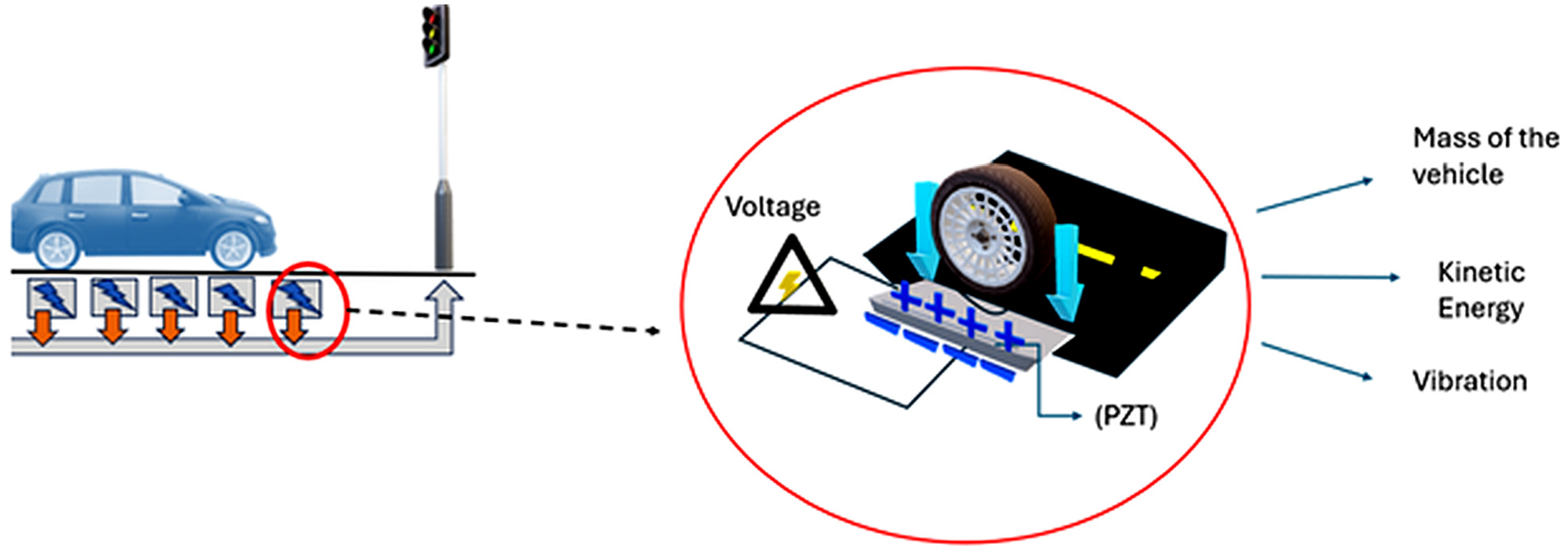
Piezoelectric-based energy harvesting from roadways.
Following Kim et al. ( 29 ) a significant body of research has emerged, aiming to optimize power output and improve the design of piezoelectric harvesters for practical roadway applications. Notably, these studies often reveal considerable discrepancies between laboratory and simulated conditions and the real-world performance of piezoelectric harvesters under actual traffic loads. To address these differences, the present review categorizes relevant studies into three main methodological groups: laboratory experiments, field experiments, and simulations or theoretical analyses. A structured chronological overview of previous research efforts is provided in Table 1.
Summary of Piezoelectric Energy Harvesters in Roadway Studies
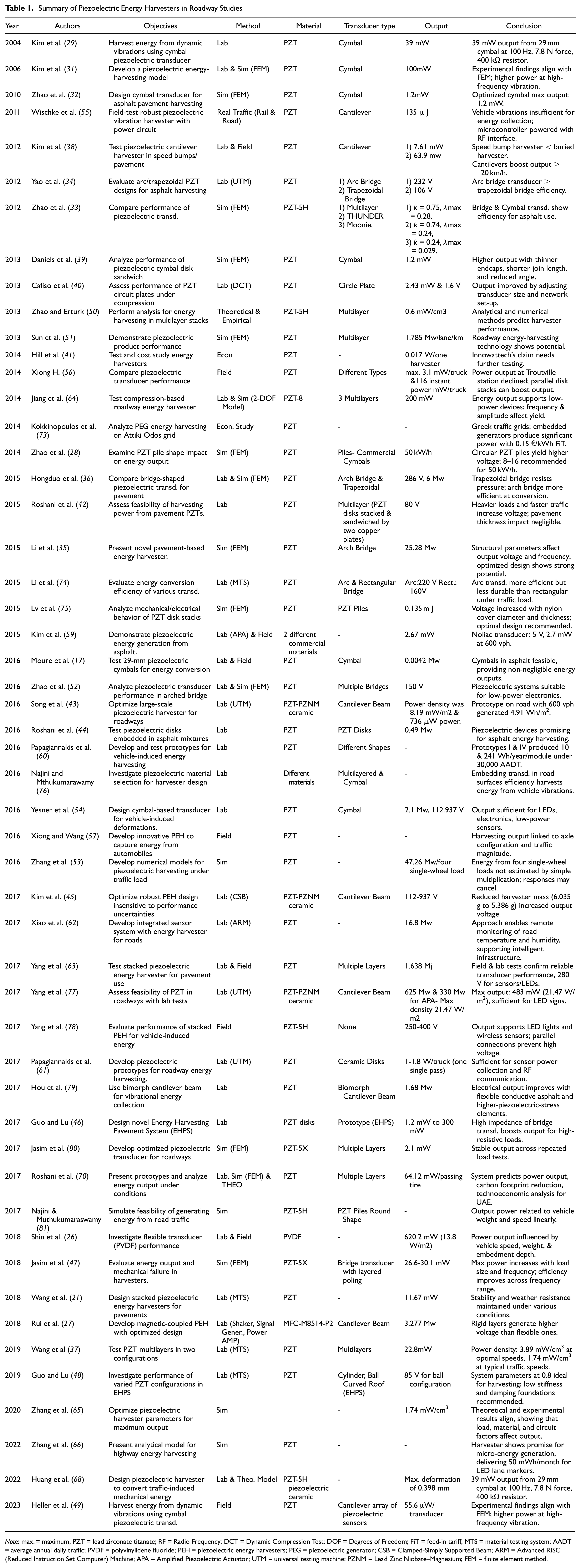
Note: max. = maximum; PZT = lead zirconate titanate; RF = Radio Frequency; DCT = Dynamic Compression Test; DOF = Degrees of Freedom; FiT = feed-in tariff; MTS = material testing system; AADT = average annual daily traffic; PVDF = polyvinylidene fluoride; PEH = piezoelectric energy harvesters; PEG = piezoelectric generator; CSB = Clamped-Simply Supported Beam; ARM = Advanced RISC (Reduced Instruction Set Computer) Machine; APA = Amplified Piezoelectric Actuator; UTM = universal testing machine; PZNM = Lead Zinc Niobate–Magnesium; FEM = finite element method.
Laboratory Experiment Studies
Laboratory studies present a substantial portion of research on piezoelectric energy harvesting from pavements, examining the feasibility and optimization of these systems under controlled conditions. In 2012, Kim et al. ( 38 ) developed an energy harvester using piezoelectric cantilevers installed in both speed bumps and under pavement surfaces. Their findings revealed that cantilevers embedded under pavement generated more electricity than those in speed bumps. They also found that increasing the number of cantilevers had only a slight effect on output, especially at vehicle speeds above 20 km/h. Daniels et al. ( 39 ) evaluated a piezoelectric cymbal disk with dimensions of 30 × 4.6 mm and an endcap thickness of 0.33 mm, which produced 1.2 mW of power under a 50 N force at 2 Hz. Similarly, Cafiso et al. ( 40 ) used direct compression tests on a circular PZT plate, resulting in 2.43 mW and 1.6 V.
In 2014, Hill et al. ( 41 ) investigated the output of Innowattech harvesters, finding that under a traffic volume of 600 vehicles, each unit produced 0.017 W. However, they suggested that further validation of the company’s reported yield of 150 kWh per kilometer was necessary, given discrepancies noted in laboratory and field tests. Roshani et al. ( 42 ) explored a multilayer PZT set-up sandwiched between copper plates, demonstrating that a heavier load, faster loading times, and higher traffic speeds could significantly boost voltage output. In 2016, Song et al. ( 43 ) tested the performance of PZT-PZNM ceramic cantilever beams under varied loads and frequencies with a universal testing machine (UTM), estimating that a 600-vph traffic rate could generate 4.91 Wh/m2 of power. Similarly, ( 44 ) achieved 0.45 mW from PZT piles under a 1 kN load at 10 Hz.
Subsequent studies explored variations in piezoelectric materials and configurations. Kim et al. ( 45 ) demonstrated an increase in output voltage from 92.3 V to 112.9 V by reducing the mass of a PZT-PZNM cantilever beam. Guo and Lu ( 46 ) introduced a novel energy-harvesting pavement system (EHPS) comprising conductive asphalt layers surrounding a piezoelectric layer. Their optimized prototype achieved up to 300 mW output under a high-frequency external vibration of 30 Hz. Jasim et al. ( 47 ) used a four-layer PZT-5X assembly measuring 17.8 × 17.8 × 7.6 cm to achieve an output of 26.6 to 30.1 mW under 0.7 MPa at 5 Hz. ( 21 ) tested PZT layers at 0.7 MPa and 15 Hz with a material testing system (MTS), achieving 11.67 mW.
In 2018, Rui et al. ( 27 ) conducted a laboratory study using a shaker, signal generator, and power amplifier to test the MFC-M8514-P2 cantilever beam. This piezoelectric energy harvester demonstrated robust performance, with enhanced output power across a wide operational frequency range. Similarly, Guo and Lu ( 48 ) investigated the impact of various PZT element configurations within their EHPS prototypes, comparing cylindrical, ball, and curved roof designs. Their results indicated that a rigid piezoelectric layer containing ball-shaped elements produced higher voltage output than the more flexible configurations. Expanding on these findings, Heller et al. ( 49 ) explored the effects of traffic-induced shockwave vibrations, employing a piezoelectric harvester with a cantilever array. This set-up generated approximately 50 mWh a month with 16 installed cantilevers under a commercial traffic volume of 1,500 vpd. This output was sufficient to power a 200-m LED strip for lane guidance, providing a practical demonstration of piezoelectric energy harvesting for roadway applications.
These laboratory findings underscore the significance of optimizing transducer placement, material composition, and configuration to enhance energy capture in practical roadway applications.
Simulation Studies
Simulation-based studies have been instrumental in assessing the performance of piezoelectric transducers under varied parameters, allowing researchers to model output responses to diverse inputs. Kim et al. ( 31 ) employed the finite element method (FEM) to model the power generation of a cymbal transducer, confirming experimental results that showed power increase as frequency rose from 100 to 200 Hz. Their work indicated that cymbal transducers, designed with metal-ceramic composites, were optimal for harvesting electrical energy from engine vibrations. These findings were supported by Zhao et al. ( 32 ), who used FEM to design a cymbal transducer for energy harvesting from asphalt pavements. With specific structural dimensions (32 mm total diameter, 22 mm cavity base, 10 mm end cap, 0.3 mm steel cap thickness, and 2 mm PZT thickness), their design generated a maximum electric potential of 97.33 V, storing approximately 0.06 J of energy and delivering a peak output of 1.2 mW at 20 Hz under vehicle loads.
Simulation studies have contributed significantly to evaluating the efficiency of various piezoelectric transducers by comparing key parameters. Zhao et al. ( 33 ) conducted a comparative analysis on several popular transducers, assessing their electromechanical coupling factor k and energy transmission coefficient λmax . Their findings revealed that the multilayer transducer exhibited the highest efficiency, with values of k = 0.7 and λmax = 0.28. The Thunder transducer demonstrated comparable efficiency (k = 0.74, λmax = 0.24), while the MFC transducer showed both a flexible shape and an acceptable efficiency (k = 0.24, λmax = 0.029). The FEM analysis suggested that Bridge and Cymbal transducers are well-suited for harvesting energy from asphalt pavements because of their moderate stiffness, closely aligned with the mechanical properties of pavement, and reasonable efficiency for such applications.
Zhao and Erturk ( 50 ) extended this work to explore deterministic and stochastic energy harvesting from civil infrastructure systems using a multilayer stack transducer. They introduced analytical and numerical approaches to predict piezoelectric harvester performance. Sun et al. ( 51 ) used FEM to demonstrate the potential of a multilayer PZT model with dimensions of 280 × 280 × 20 mm, yielding 1.785 mW per lane per kilometer. Further work by Zhao et al. ( 28 ) examined several sensor designs, combining cymbal- and bridge-shaped elements with PZT piles of various cross sections (circular, square, and hexagonal) using FEM. Circular cross sections produced higher voltage outputs than other shapes, leading to the development of a small-scale pavement generator prototype. The study suggested employing eight to 16 circular PZT piles per generator to harvest over 50 kW/h under heavy traffic. In 2016, Zhao et al. ( 52 ) compared arch and trapezoidal transducer configurations in both FEM and laboratory studies, finding the arch design more efficient for energy conversion while the trapezoidal design offered greater resistance to pressure. Also in 2016, Zhang et al. ( 53 ) used numerical modeling to simulate piezoelectric harvesting under traffic loads. Their model, with dimensions of 100 × 100 × 10 mm, estimated a maximum output of 47.26 mW for a configuration with four wheels traveling at speeds of 30, 60, and 120 m/s, demonstrating the promising potential of piezoelectric systems for roadway energy harvesting.
In 2016, Yesner et al. ( 54 ) simulated a load application using a pneumatic piston delivering an impact force of 2,610 N at a frequency of 5 Hz. This experimental set-up generated 0.83 mJ of energy per load impact, demonstrating sufficient energy output to power LEDs, electronic circuits, and other low-power sensors. The study’s findings suggested that this level of output could support various small-scale applications, confirming the viability of piezoelectric transducers in infrastructure-based energy-harvesting systems.
Field Experiment Studies
Field experiments have extensively investigated the real-world output of various transducers and fabricated harvesters under actual traffic conditions. In 2011, Wichke et al. ( 55 ) examined vibration levels in railway and road tunnels as a potential energy source for embedded sensors. They designed and conducted field tests on a robust piezoelectric vibration harvester equipped with a power interface circuit. Although vehicle-induced vibrations within the pavement and tunnel walls were insufficient for significant energy harvesting, the harvester generated enough energy to power a microcontroller with an RF interface. In 2014, Xiong H. ( 56 ) conducted field tests at a weigh station using six different harvester designs, yielding maximum outputs of 3.1 mW/truck and 116 mW/truck in peak power.
Further investigations in 2016 by Xiong and Wang ( 57 ) involved installing six piezoelectric energy harvester prototypes (PEHs) in pavement to assess their feasibility. Results showed that electrical output was highly correlated with vehicle axle configuration and load. At a weigh station, the harvester output notably decreased over a year, though a parallel stack of disks could enhance output. In combined lab-simulation studies, ( 58 ) tested a 2-DOF model on PZT-8 with a shake table, producing 200 mW under a load of 1,360 N at 6 Hz—sufficient for low-power machinery. Kim et al. ( 59 ) demonstrated piezoelectric technology’s viability for road energy harvesting, using an asphalt pavement analyzer (APA) to test products from Kinetic and Noliac under 50, 100, and 200-lb loads, yielding up to 20 V and 2.7 mW at 45 mph and 600 vph.
Papagiannakis et al. ( 60 , 61 ) conducted lab and FEM tests on HiSEC modules designed for highway energy harvesting, producing approximately 10 to 241 watt-hours annually per module with an AADT of 30,000—sufficient for powering wireless pavement sensors and LED lights. Moure et al. ( 17 ) performed both lab and field tests on cymbal PZT harvesters, achieving energy densities of 40–50 MWh/m2 over 100 m, potentially producing over 65 MWh per year using 30,000 cymbals, at an initial cost of 1.98 €/kWh over a 15-year amortization period.
Additional lab experiments were conducted by Zhao et al. ( 52 ) who recorded 150 volts from a PZT multiple-bridge transducer under 0.7 MPa stress at 10 Hz. In 2017, Xiao et al. ( 62 ) used an automatic rutting machine to develop an integrated sensor system and optimized harvester for roadways. Yang et al. ( 63 ) executed a combination of lab and field experiments on piezoelectric transducers, reporting outputs between 250 and 400 V at vehicle speeds of 20–80 km/h, with peak open-circuit voltages reaching 280 V—sufficient to power pavement sensors and LED displays. Their prototype demonstrated strong wear as well as resistance to water, corrosion, and fatigue, with stable performance after 100,000 loading cycles.
Factors Affecting Output Efficiency in Pavement Applications
The literature identifies numerous factors influencing the efficiency of piezoelectric energy-harvesting systems. Research has explored how variations in materials, configurations, and operational parameters affect the energy output of piezoelectric devices. For instance, Cafiso et al. ( 40 ) demonstrated that adjustments to transducer size and network connections can significantly enhance energy production. Jiang et al. ( 64 ) determined that both excitation frequency and force amplitude directly affect the energy output of vibration harvesters. Roshani et al. ( 42 ) reported that heavier loads, higher traffic speeds, and increased vehicle density on a given roadway section can substantially elevate voltage output. Zhang et al. ( 53 ) found that pavement thickness exerts minimal influence on electricity generation compared with traffic load, specifically when multilayer PZT disks are embedded within pavement structures.
Further refinements to conductive asphalt mixtures, such as incorporating piezoelectric elements with higher stress constants, were proposed by Guo and Lu ( 46 ), who achieved an increase in generated power from 1.2 mW to 300 mW at high-frequency excitation. Wang et al. ( 21 ) emphasized that material selection, transducer geometry, and loading conditions are critical to the energy-harvesting performance of piezoelectric transducers. Shin et al. ( 26 ) observed a linear relationship between output power, vehicle speed, and weight in both laboratory and field studies involving PVDF. Similarly, studies by Jasim et al. ( 47 ) and Zhang et al. ( 65 ) revealed that traffic conditions—including speed, density, and vehicle load—correlate with power output.
Recent studies also examined system optimizations. Zhang et al. ( 66 ) further extended the understanding of factors influencing piezoelectric energy harvesting by identifying an optimal intrinsic parameter of approximately 0.8 for maximum energy capture. Additionally, they determined that an energy-harvesting system benefits from a foundation with low stiffness and a minimal damping coefficient, as these characteristics are better suited for converting mechanical stress into electrical energy. For pavements specifically, their analysis suggested that lower bending stiffness and a higher linear density are ideal, enabling greater energy-harvesting effectiveness by improving the system’s ability to absorb and convert vibrational energy from traffic loads efficiently. This finding aligns with other studies highlighting that structural characteristics, such as material geometry and elasticity, are critical to optimizing piezoelectric performance under varying load conditions ( 21 , 26 ). Gaber and Raheem ( 67 ) made an economic feasibility framework study of implementing this technology through applying life-cycle cost analysis (LCCA) and comprehensive economic evaluations. By examining a real-life hypothetical scenario, this study demonstrated that this system would incur higher costs over the study period. However, sensitivity analysis reveals that modifying certain factors, such as reducing the prototype cost, would result in a positive net saving. Huang et al. ( 68 ) introduced a piezoelectric energy harvester prototype using piezoelectric ceramics encapsulated in epoxy resin filler between the MC nylon protective plates, showing how load, material properties, and circuit parameters collectively influence energy output.
Collectively, these studies underscore the complexity of factors affecting piezoelectric device performance, highlighting both material and operational elements essential for maximizing output in roadway energy-harvesting applications.
Installation and Implementation
The efficiency of energy harvesters embedded in pavement depends significantly on implementation parameters such as depth, spacing relative to vehicle wheels, and spacing between individual devices. The vertical stress profile diminishes with depth, so devices located closer to the pavement surface collect higher levels of mechanical energy ( 69 ). Zhao et al. ( 32 ) and Sun et al. ( 51 ) suggest embedding devices at a depth of approximately 40 mm (1.5 in.), whereas Roshani et al. ( 70 ) confirmed that 90% of surface-applied stress can reach the devices placed at this depth. Zhang et al. ( 53 ) implemented devices at a depth of 5 cm (1.97 in.), supporting this general range for optimal energy capture. Roshani et al. ( 42 ) further evaluated the influence of embedding depth, testing both 1.5-in. and 5-in. depths, and concluded that traffic load effects far outweigh the impact of pavement thickness on power generation. However, research also suggested that increasing the embedding depth to over 2 in. may be preferable, as this range avoids frequent surface rehabilitations on the topmost layers ( 24 ).
Additionally, device placement relative to the lane edge is crucial. Moure et al. ( 17 ) embedded devices with a width of 20 cm (7.87 in.), chosen based on standard wheel widths to ensure optimal placement along two paths per lane. Zhang et al. ( 53 ) concluded that distances exceeding 400 cm between a device and vehicle wheels reduce output to zero. To maximize energy capture, the literature recommends placing devices 45 to 60 cm (17.72 to 23.62 in.) from the lane edge ( 24 ).
Storing Methods for Harvested Energy
Energy storage remains a primary challenge for pavement-based energy-harvesting systems, as energy generated from piezoelectric harvesters must be stored effectively, either in capacitors or batteries. Sodano et al. ( 71 ) demonstrated that rechargeable batteries exhibit superior energy storage performance over capacitors by quantifying energy generated by a piezoelectric plate and comparing storage methods, specifically capacitors versus rechargeable nickel-metal hydride batteries. The results showed that batteries provided better power-harvesting efficiency, with a 40 mAh battery reaching a full charge in under 30 min at resonant conditions.
Supercapacitors are now increasingly considered as a storage solution because of their high energy densities, long lifespans, and low self-discharge rates, as highlighted in recent work by Gholikhani et al. ( 24 ). In further advancement, Wang et al. ( 72 ) introduced a road-integrated piezoelectric micro-energy collection and storage system designed to enhance reliability and efficiency under complex traffic conditions. This system demonstrated a significant energy collection-storage performance, with a full charge achieved in as little as 2 to 6 min (73–90). The system yielded a 180% improvement in accuracy compared with traditional methods, with an on-site power-to-electricity conversion efficiency of 26.8% and overall efficiency ranging from 0.74% to 1.38% under open traffic conditions.
Discussion and Future Work
Previous studies have examined several factors affecting the performance of energy harvesters, including material composition, transducer types, number of elements, traffic volume, vehicle weight and speed, operational frequency, and embedding conditions ( 24 , 69 ). To maximize energy output, various prototype materials and designs have been tested, revealing that increasing the number of harvesters, traffic density, and vehicle speed can significantly boost energy generation ( 17 , 70 ). Additionally, combining simulation techniques with real-world field testing under actual traffic conditions has improved the accuracy and realism of the results, demonstrating the feasibility of these systems ( 53 ). However, there are still key areas that require further exploration, particularly in optimizing system parameters to enhance energy output.
One notable gap in current research is the lack of focus on the economic feasibility of these systems. While much attention is given to the performance of various prototypes, it is equally important to reduce the cost of these systems and conduct detailed life-cycle cost analyses. Such analyses would consider all relevant economic factors, offering a more comprehensive understanding of the viability of piezoelectric energy harvesting. Additionally, ( 53 ) highlighted a significant issue in current energy output estimations, specifically in relation to the four single-wheel loads. The common practice of simple multiplication may not accurately reflect the true energy output, as the induced responses from the wheels can sometimes cancel each other out. This suggests a need for a more comprehensive and nuanced approach to energy estimation. Furthermore, research has shown that the power output of piezoelectric harvesters significantly decreases about a year after installation ( 57 ), pointing to potential long-term performance challenges.
It is widely accepted that a combination of laboratory experiments, simulations, and field testing is essential for obtaining more realistic estimates of energy output (73–90). To improve the reliability and comparability of energy output claims, a standardized reporting method is necessary. Hill et al. ( 82 ) recommended such standardization to enhance the consistency of evaluations. Their study of three commercially available systems—Treevold, Genziko, and Innowattech—revealed considerable discrepancies in energy output claims, particularly in relation to assumptions about sensor performance and traffic levels. For example, Treevold claimed 720 kW for a 1.0 km stretch of roadway, while Genziko reported 13,600 kW, and Innowattech claimed only 200 kW. These discrepancies highlight the urgent need for consistent evaluation criteria within the industry.
A promising way to address the limitations of piezoelectric harvesters is through the development of hybrid systems that combine multiple energy-harvesting technologies. Ciupageanu et al. ( 83 ) emphasized the potential of hybrid energy harvester structures, using multifunctional materials that can harvest energy from various sources, thus increasing conversion efficiency. Despite existing challenges, piezoelectric energy harvesting from roadways remains a viable method for micro-generation, though continued research is required to optimize its performance and address economic considerations.
Cost Considerations and Economic Assessments
Many studies on piezoelectric materials for roadway energy harvesting have prioritized technical performance metrics, often overlooking economic viability. While performance data highlight the potential of piezoelectric systems, few studies thoroughly assess financial feasibility. Among the limited economic analyses, the levelized cost of energy (LCOE) is the most widely used metric, offering insight into the average cost per unit of energy generated. This metric helps determine whether the initial and operational expenses can be balanced by energy output, particularly in high-traffic scenarios where energy capture is most efficient. Calculations within the LCOE framework ( 20 ) are crucial for evaluating the cost effectiveness of deploying piezoelectric systems on a larger scale in transportation infrastructure, underscoring the need for a robust economic assessment to support large-scale applications.

where
Cp is the cost of PZT elements per unit ($),
Ci is the cost of installation per unit ($),
Cc is the additional cost from conductive asphalt mixture per unit ($),
Wp is the energy output from one unit of per vehicle (kWh),
N is the number of vehicles per day, and
Y is the service life (year).
For instance, ( 46 ) developed an EHPS prototype with two asphalt layers and embedded transducers, estimating the LCOE between $19.5 and $57.46 per kWh based on traffic conditions and a prototype lifespan of 10–15 years. This estimate assumed a prototype price of $18.6 but did not include installation costs. In a more comprehensive approach, Moure et al. ( 17 ) evaluated a cymbal-shaped harvester under actual traffic conditions, accounting for prototype price, installation, and maintenance. They determined an LCOE of 1.98 €/kWh for a 15-year lifespan, suggesting that covering only 0.6% of Madrid’s roads with this technology could meet 10% of the city’s electricity demand. Roshani et al. ( 44 ) calculated an LCOE of $10.78 per kWh for their prototype with a 10-year lifespan, though installation costs were again excluded. In 2017, Papagiannakis et al. ( 61 ) reported LCOE values for two promising prototypes, Prototype III ($8.7 to $34.7 per kWh) and Prototype IV ($4.8 to $19.4 per kWh) over a 20-year lifespan. For consistency and comparison, the reported LCOE values have been adjusted to 2023 US dollars, as summarized in Table 2.
Reported and 2023 US Dollar–Adjusted LCOE Estimates for Selected Piezoelectric Systems
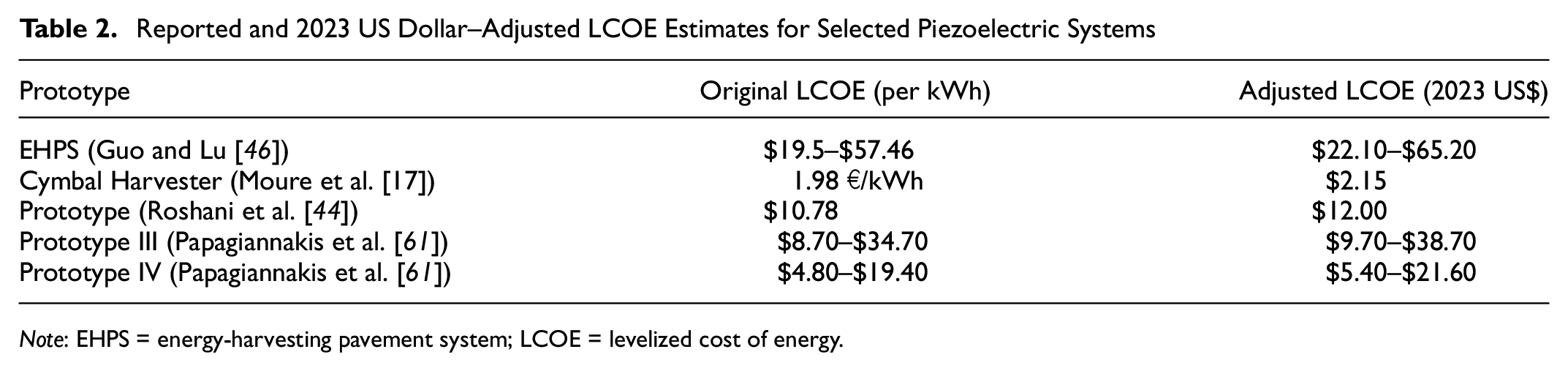
Note: EHPS = energy-harvesting pavement system; LCOE = levelized cost of energy.
For instance, ( 46 ) developed an EHPS prototype with two asphalt layers and embedded transducers, estimating the LCOE to be between $19.5 and $57.46 per kWh (equivalent to $22.10–$65.20 in 2023 US dollars), based on traffic conditions and a prototype lifespan of 10–15 years. This estimate assumed a prototype price of $18.60 (equivalent to $21.15 in 2023 US dollars) but did not include installation costs. In a more comprehensive approach, Moure et al. ( 17 ) evaluated a cymbal-shaped harvester under actual traffic conditions, accounting for prototype price, installation, and maintenance. They determined an LCOE of 1.98 €/kWh (equivalent to $2.15 in 2023 US dollars) for a 15-year lifespan, suggesting that covering only 0.6% of Madrid’s roads with this technology could meet 10% of the city’s electricity demand. Roshani et al. ( 44 ) calculated an LCOE of $10.78 per kWh (equivalent to $12.00 in 2023 US dollars) for their prototype with a 10-year lifespan, although installation costs were again excluded. In 2017, Papagiannakis et al. ( 61 ) reported LCOE values for two promising prototypes: Prototype III ($8.70–$34.70 per kWh, equivalent to $9.70–$38.70 in 2023 US dollars) and Prototype IV ($4.80–$19.40 per kWh, equivalent to $5.40–$21.60 in 2023 US dollars), both evaluated over a 20-year lifespan.
Expanding on these findings, Najini et al. ( 81 ) used a real-world simulation platform to validate economic predictions for energy generation from road traffic with piezoelectric materials, including implementation costs and payback periods. Similarly, Kokkinopoulos et al. ( 73 ) explored the economic benefits of piezoelectric generators in Greece’s Attiki Odos traffic grid. They calculated energy yield using Innowattech’s technology, which claims high production potential, concluding that with a feed-in tariff (FiT) of 0.15 €/kWh, embedded piezoelectric systems could offer both income and environmental benefits in high-traffic areas.
Despite these promising results, piezoelectric road systems remain financially uncompetitive with traditional electric grid power ( 24 ). Research indicates two pathways to improve economic feasibility: increasing energy output while lowering harvester costs or conducting a comprehensive life-cycle cost analysis (LCCA) to clarify long-term financial viability. LCCA should address upfront costs, installation, maintenance, repairs, and operating expenses over the service life of the system ( 14 , 25 ).
Comparison between Piezoelectric Technology and Other Renewable Energy Technologies
In comparing piezoelectric technology with other renewable energy-harvesting technologies, the technology readiness level (TRL) provides an index of technological maturity, with levels ranging from 1 (basic research) to 9 (fully integrated into existing systems) ( 25 , 84 ). Piezoelectric technology has reached TRL 4, comparable to electromagnetic and solar collectors, while thermoelectric technology lags slightly, and photovoltaic and geothermal technologies have achieved TRL 9, indicating full market integration ( 25 ).
Cost effectiveness remains a significant challenge for piezoelectric systems. Their LCOE is still higher than that of photovoltaic and geothermal systems but lower than electromagnetic and nearly comparable to thermoelectric systems ( 18 , 25 ). Additionally, output from piezoelectric technology falls short when compared with photovoltaic, geothermal, and solar collectors but outperforms thermoelectric systems in energy production ( 18 ). Piezoelectric roadways, however, offer unique dual functionality as both energy harvesters and sensors, despite high costs for large-scale output ( 18 ).
An alternative industry-backed metric introduced by Wang et al. ( 25 ) categorizes support levels for various energy-harvesting technologies based on input from government and industry stakeholders. According to this scale, piezoelectric technology garners low to medium support, comparable to photovoltaic systems, and surpasses thermoelectric and electromagnetic technologies, which rank lower. Such government and industry backing is critical for advancing piezoelectric technology, particularly through university-based research initiatives that can establish testing sites. Like photovoltaic systems, where costs decreased significantly over time, similar large-scale implementation and optimization could lead to substantial reductions in production costs for piezoelectric systems as they mature.
Most energy harvesters currently available focus on capturing energy from a single source. For example, photovoltaic (PV) cells harvest only solar energy, piezoelectric energy harvesters (PEH) capture only mechanical energy, electromagnetic harvesters (EM), triboelectric nanogenerators (TENG), and thermoelectric generators (TEG), and geothermal energy harvesters (GEH) harvest only thermal energy ( 85 ). To overcome the limitations of single-source harvesters, such as inconsistent or insufficient power supply, “hybrid systems” have been proposed, combining multiple energy-harvesting technologies. In pavement applications, piezoelectric devices can be combined with thermoelectric systems, solar collectors, and other sources to diversify energy inputs and enhance reliability.
Recent studies underscore the potential of hybrid energy systems in pavement. For instance, Randrianttoa et al. ( 86 ) reviewed recent developments in hybrid systems, specifically combining thermal and mechanical vibration energy harvesting. Their findings suggest that such integrated systems could effectively support the generation of clean, renewable, and sustainable energy for infrastructure applications, showing promise for broader implementation in road energy harvesting.
Key Insights
This review highlights the critical factors influencing the performance, feasibility, and long-term viability of piezoelectric energy harvesting in roadways. Traffic conditions and harvester design significantly impact energy output, with higher traffic density, vehicle speed, and an increased number of harvesters leading to greater energy generation. To ensure realistic and reliable assessments, combining numerical simulations with real-world field testing is essential, as field validation confirms the feasibility and efficiency of these systems. Economic feasibility also plays a crucial role in determining the broader viability of piezoelectric energy harvesting, emphasizing the need to reduce prototype costs and conduct life-cycle cost analyses. However, existing energy output calculations may not always be accurate, as simple estimation methods fail to account for the cancellation effects of induced responses from vehicle wheels, highlighting the need for more comprehensive estimation approaches. Additionally, long-term performance remains a challenge, with power output often declining significantly within a year of installation. Standardizing reporting methods is vital to ensure consistency and comparability, as discrepancies in energy output claims from commercial systems have been observed.
Beyond energy generation, one of the main concerns with regard to the integration of piezoelectric transducers in roadways is their potential impact on pavement properties, including structural integrity, durability, and long-term performance. The embedding process may alter load distribution, induce stress concentrations, or affect material fatigue, which could influence the overall lifespan of the pavement. Further research is needed to comprehensively assess how different transducer designs and installation methods affect pavement performance under real-world conditions. Lastly, integrating multiple energy-harvesting technologies into hybrid systems presents an opportunity to enhance overall efficiency and effectiveness, maximizing the potential of piezoelectric harvesters in roadway applications.
Conclusion
Extensive research has been conducted to explore the feasibility of piezoelectric materials for harvesting vibrational energy from roadways, with studies focusing on the influence of various factors on energy output. A predominant approach involves fabricating prototypes and testing them in controlled laboratory environments, simulation programs, or under real traffic conditions, with results analyzed to evaluate performance. While previous tests have effectively characterized the energy output ranges, a more comprehensive approach is necessary to account for all factors affecting energy efficiency. Various models, incorporating different materials, transducers, and configurations, have demonstrated the viability of this technology; however, future research should prioritize economic feasibility and cost optimization to improve the practicality of these systems for large-scale implementation. This review provides a concise reference and synthesis of current best practices in roadway piezoelectric harvesting, offering insights and considerations for future researchers seeking to advance this field.
Footnotes
Author Contributions
The authors confirm contribution to the paper as follows: study conception and design: H. Gaber and M. Raheem; data collection: H. Gaber and M. Raheem; analysis and interpretation of results: H. Gaber and M. Raheem; draft manuscript preparation: H. Gaber and M. Raheem. All authors reviewed the results and approved the final version of the manuscript.
Declaration of Conflicting Interests
The author(s) declared no potential conflicts of interest with respect to the research, authorship, and/or publication of this article.
Funding
The author(s) received no financial support for the research, authorship, and/or publication of this article.

The views expressed are those of the authors and do not reflect the official guidance or position of the United States Government, the Department of Defense, the United States Air Force or the United States Space Force.