



Abstract
This study assesses the thermal stability, thermoregulation ability, and performance of microencapsulated phase change materials (MPCMs) in asphalt binders considering different aging levels. Three MPCMs having melting points of 6°C, 28°C, and 37°C (namely M6, M28, and M37) were incorporated into PG 58-28 and PG 64-22 binders. After that, each binder was aged using rolling thin film oven (RTFO) and pressure aging vessel (PAV). The thermal stability of MPCM-modified binders was assessed by measuring enthalpy at different aging levels, and respective performance was evaluated using complex shear modulus (G*) and Glover–Rowe (G-R) parameters. The performance within the thermoregulation range was assessed using percentage change in G* and Superpave fatigue parameter (G*·Sin[δ]) from temperature ramp tests (TRT). Results showed that aging reduced the enthalpy of MPCM binders, but M6 and M28 exhibited good thermal stability in both binders compared with M37. In addition, stiff binders and lower dosages tend to have less enthalpy. At RTFO level, all dosages of M6 and M28 in PG 58-28 demonstrated improved rutting resistance, whereas only M28-20% in PG 64-22 showed enhanced rutting resistance. At PAV level, all samples (except M28-20% in PG 64-22) showed improved cracking resistance compared with the control binders. TRT confirmed that surviving M6 and M28 particles enhanced G*·Sin(δ) at the PAV level within the thermoregulation range. M37 showed thermal instability in both binders at RTFO and PAV levels. In summary, M6 and M28 in PG 58-28 binders demonstrated high thermal stability and enhanced cracking resistance, making this combination suitable for practical asphalt applications.
Keywords
Heavy traffic and extreme environmental conditions are some of the primary reasons behind distress such as rutting, fatigue, and low-temperature cracking in asphalt pavements. During hot weather seasons, pavements’ temperatures rise, making them more susceptible to early-life pavement failure as a result of rutting ( 1 ). Likewise, fatigue and thermal cracks occur in asphalt pavements at intermediate and low temperatures, respectively, later in their service lives ( 1 ). These failures can result in high rehabilitation/maintenance costs for highway agencies ( 2 ). This creates a considerable challenge for the pavement industry in the way of economical and sustainable pavement construction. To address these issues, researchers are exploring the use of microencapsulated phase change materials (MPCMs) in asphalt binders to develop temperature control and mechanical resistance against these pavement distresses ( 3 ).
MPCMs are an innovative material that controls environmental temperature by absorbing heat at their melting point and releasing it at the crystallization point. This is referred to as the thermoregulation property of MPCMs. Generally, MPCMs consist of core material or phase change material (PCM) and an outer shell that encapsulates PCM. PCMs, for instance, polyethylene glycol (PEG) ( 4 ), paraffin wax ( 2 ), and fatty acids ( 5 ), are principally responsible for the thermoregulation property of an MPCM. During the melting cycle, with increasing surrounding temperature, the PCM converts to a liquid state by absorbing heat at its melting point ( 6 ).
Conversely, when the surrounding temperature cools down, the PCM releases stored heat, and crystallization happens, which is known as the crystallization cycle ( 6 ). In parallel, encapsulation plays a crucial role in preventing direct interaction of the PCM, particularly in its liquid state, with the surrounding medium. In this study, binder is the surrounding medium. Direct interaction of the PCM with the binder can significantly affect its stiffness property, as observed in a literature study ( 7 ). Depending on melting points, MPCMs with good encapsulation can control asphalt temperature. For instance, Saberi Kerahroudi et al. achieved a 6.3°C temperature reduction using diatomite-supported PEG in asphalt mastic ( 4 ), and Dai et al. noted 13.1°C and 10.7°C reductions with composite PCMs in Styrene Butadiene Styrene (SBS)-modified binder ( 8 ). Other studies reported similar cooling effects of MPCMs with high melting points (above 40°C), with temperature reductions of 5–10°C in asphalt ( 9 – 11 ). The urban heat island effect can be countered by introducing these cooling effects in asphalt. Similarly, MPCMs having low melting points (near 0°C) were reported to increase asphalt temperatures by 2°C to 8.6°C ( 12 – 14 ), which can assist in delaying cold climate challenges like the formation of black ice ( 13 ).
In addition to these benefits, the literature also suggests MPCMs’ ability to enhance performance in improved resistance to distresses such as rutting and cracking. For example, Wang et al. found that incorporating SiO2-supported paraffin PCM into a binder increased rutting resistance at 8% and 10% dosages, within the range of 42–76°C ( 15 ). In another study, Fu et al. used microencapsulated n-tetradecane/octanoic acid in unmodified and SBS-modified binders at 4% to 13% concentrations ( 16 ). Bending beam rheometer (BBR) tests indicated improved low-temperature cracking resistance, with decreased creep stiffness (S value) and increased creep slope (m value). Wang et al. found that solid–solid polyurethanes at 3% to 9% dosages did not affect the low-temperature cracking resistance of MPCM-modified binders compared with the control ( 17 ). The binders still showed improved anti-aging and high-temperature performance as assessed through basic consistency tests (i.e., penetration and softening point). Nevertheless, these studies did not analyze rheological performance under non-steady-state conditions, which is essential for assessing performance related to the thermoregulation properties of MPCMs ( 3 , 18 ). Phan et al. used a temperature sweep test (non-steady-state conditions) to evaluate the performance of two different MPCMs in asphalt at dosages of 2.5% and 7.5% ( 19 ). They found that their addition resulted in lower stiffness and higher elasticity at low temperatures, indicating improved low-temperature cracking resistance ( 19 ).
In addition, a few studies have also reported their performance and encapsulation integrity at different aging levels. For instance, Yılmaz et al. utilized fatty acid-based PCMs at concentrations of 0.5% to 2% by binder weight ( 20 ). The binders were aged using the rolling thin film oven (RTFO) and pressure aging vessel (PAV) methods. It was reported that the rutting and fatigue performances were positively affected as determined by Dynamic Shear Rheometer (DSR) (under steady-state test conditions) ( 20 ). Kakar et al. used two MPCMs with the same core material (i.e., tetradecane) but different particle sizes (7 μm and 21 μm) in three binders (penetration grades: 10/20, 70/100, and 160/200) ( 21 ). After aging with RTFO and PAV, differential scanning calorimetry (DSC) comparison showed aging reduced enthalpy change, with the 21 μm MPCM showing the highest capsule survival. After that, the thermal effect of unaged 21 μm MPCM-modified mastics was confirmed using temperature sweep (non-steady-state condition) ( 21 ).
In summary, although numerous studies have reported the beneficial use of MPCMs in binders, there is limited research on testing of aged MPCM-modified binders under non-steady-state test conditions, which is essential to confirm their performance in relation to thermoregulation ability in the long run. The steady-state conditions may not accurately reflect actual behavior owing to thermal equilibrium at test temperatures. To address this, a non-steady-state test, such as temperature ramp test in DSR with specific heating or cooling rates, is required. In the previous study ( 22 ), the authors found that non-steady-state tests, such as the frequency sweep test and BBR test, might not provide accurate information about the impact of thermoregulation on MPCMs. Therefore, the thermoregulation impact of MPCMs in unaged asphalt binder was evaluated using the temperature ramp test to obtain comprehensive information without compromising encapsulation integrity.
To have a robust evaluation, it is essential to quantify the impact of aging on the thermoregulation performance of MPCM-modified asphalt and the encapsulation integrity of MPCMs at different aging levels. In this study, this approach was followed to evaluate the performance of aged MPCM-modified binders using both steady and non-steady-state tests. In addition, most studies have determined Superpave rutting and fatigue factors for assessing the performance of aged binders. Also, the evaluation of enthalpy change after aging has been limited to fixed dosages. This necessitates a comprehensive assessment to fully understand the impacts of aging, particularly concerning the performance of MPCM-modified binders and the survivability of MPCM capsules after aging and at different dosages. This includes measurements of advanced fatigue parameters, such as the Glover–Rowe (G-R) parameter, and linking enthalpy changes at different MPCM dosages after aging to binder performance and grade change.
Goal and Objectives
The goal is to identify suitable MPCMs and respective optimum dosages for asphalt applications by examining their thermal stability and short- and long-term performance. The specific objectives of the study include:
1) Use thermal measurements to evaluate the impact of aging on the thermal stability of selected MPCMs and MPCM-modified binders.
2) Assess thermoregulation capability and high and intermediate temperature performance of MPCM-modified binders at RTFO and PAV aging levels; and,
3) Examine the influence of dosage on the high and low-temperature binder performance grade (PG) and optimization of MPCM dosage.
Significance
Considering different aging conditions, this study evaluates the performance of MPCMs, which highlights their potential for long-term efficacy in real-world pavement applications, especially for state departments of transportation. The methodology used in this study offers a robust evaluation of MPCMs’ performance with regard to their thermoregulation capabilities, which practitioners or researchers can use to evaluate newly developed, more robust MPCMs. These advancements may be advantageous for the rapid adoption of MPCMs in pavement applications and, in addition, would address the limited availability of commercial MPCMs.
Materials and Methods
Materials and Preparation
In this research, three different commercially available MPCMs with melting points of 6°C, 28°C, and 37°C (referred to as M6, M28, and M37) were selected for testing. Each MPCM was in dry powdered form with a mean particle size of 15–30 microns and a moisture content of less than 3%. Enthalpy change values, determined through DSC, were recorded at 182 J/g, 162 J/g, and 185 J/g, respectively. Furthermore, M6 comprised tetradecane as its core material, whereas M28 and M37 contained paraffin wax. Each MPCM was encapsulated with melamine formaldehyde.
Two control binders (i.e., binders without modifiers), PG 58-28 and PG 64-22, were procured for this research. In total, twenty binder samples were used in this study, including two control binders and eighteen modified binders. The modified binders were prepared by blending three MPCMs with each control binder at three dosage levels. For modified binders, dosages of 5%, 10%, and 20% by weight of binder were used ( 19 ). In addition, all binders underwent aging through RTFO and PAV. The terminology was designated by appending extensions such as Original, RTFO, or PAV. For instance, M6, formulated with a 5% dosage and subjected to RTFO aging, is designated M6-5% RTFO.
Modified Binders’ Preparation
Modified binders were prepared using a low-shear mixture following the method employed in a previous study. This method, as reported in an earlier literature study ( 18 ), ensures the effective transfer of MPCMs’ thermoregulatory properties into the binder with minimal breakage. Consequently, modified binders were formulated at dosages of 5%, 10%, and 20% by adding MPCMs gradually through a strainer, following specific blending parameters: mixing speed set at 1000 RPM, blending time ranging from 15 to 30 min (dependent on dosages), and blending temperatures maintained at 125 ± 5°C for PG 58-28 binders and 140 ± 5°C for PG 64-22 binders.
Short- and Long-term Aging
RTFO and PAV were used for short-term aging and long-term aging, respectively. For RTFO aging, each binder bottle (35 ± 0.5 g) was placed in a RTFO for 85 min at 163 ± 1°C, following AASHTO T 240. RTFO residues were then aged in a PAV for 20 h at 2.1 MPa and 100°C, followed by the removal of air bubbles using a degassing chamber (temperature: 170°C, time: 30 min), according to AASHTO R 28.
Laboratory Testing
A comprehensive laboratory program (see Figure 1) was designed to achieve the objectives of this study. Firstly, the encapsulation integrity/thermal stability was assessed by estimating the %weight loss of pure MPCMs with respect to time at simulated aging temperatures. The impacts of aging on thermal stability were determined using each binder’s enthalpy at an unaged level and then compared with that of the binder at RTFO and PAV. In addition, enthalpies for both binder types and varying dosages were compared to assess the impact of dosage and binder type on encapsulation integrity. The effect of aging on stiffness properties was evaluated by comparing changes in shear modulus (G*) at 10 rad/s for each binder across all aging levels. Cracking performance related to MPCMs-binder interaction was then validated using the G-R parameter at the PAV level. For each binder, the percentage change in G* at all aging levels was evaluated to validate the impact of thermoregulation. For thermally stable MPCMs, fatigue factors were assessed to relate performance with the effects of thermoregulation. Performance grading was then done on the same materials to optimize dosage and low-temperature cracking performance was compared using ΔTc parameter. The details of each test used to assess the properties above are provided in the following subsections.
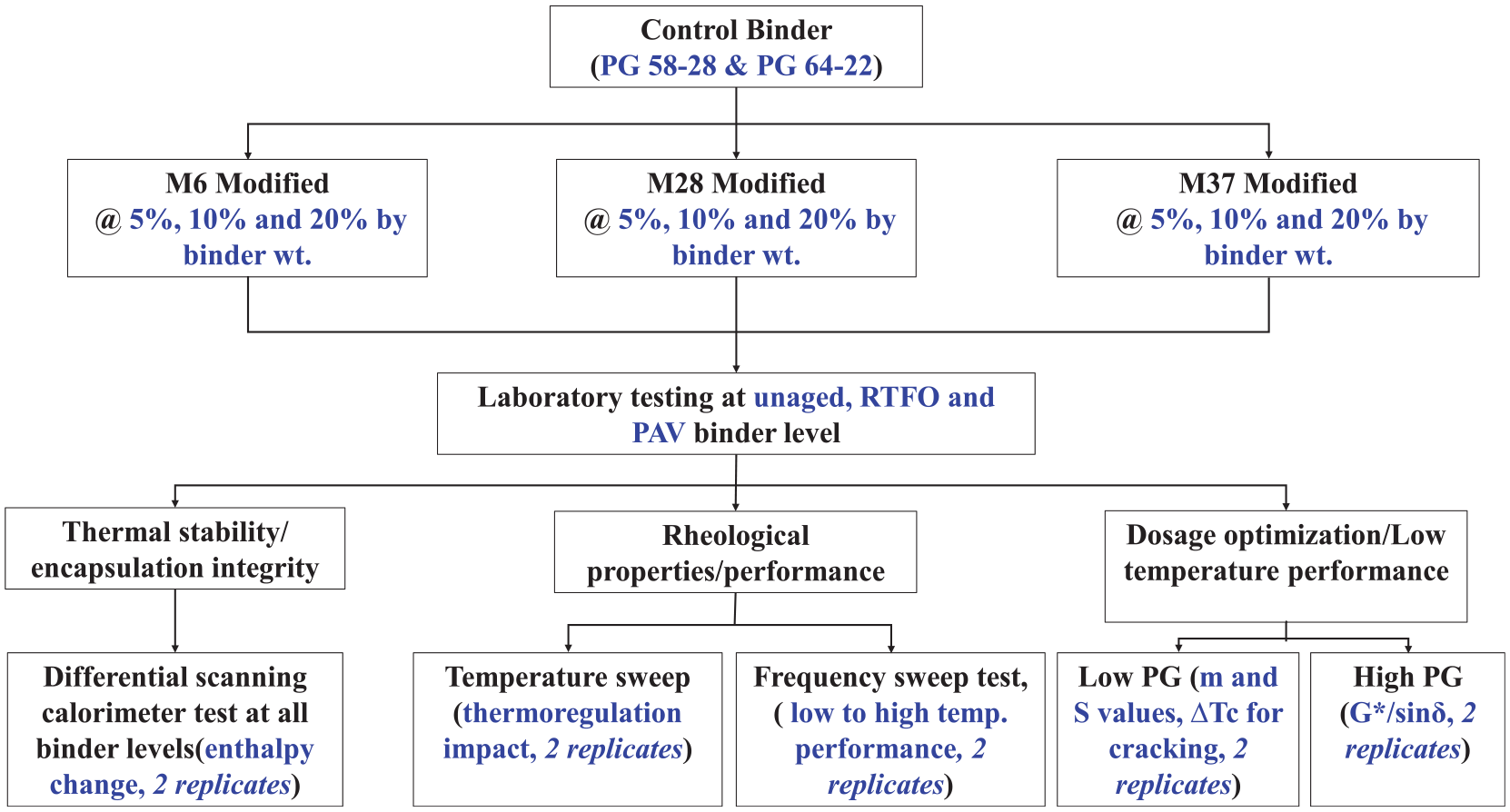
Experimental program.
Thermogravimetric Analysis
Thermogravimetric analysis (TGA) was used to determine MPCMs’ thermal stability (or encapsulation integrity at higher temperatures) by measuring weight loss under tough conditions simulating asphalt working temperatures and aging conditions. Under airflow, at 10°C/min, 200°C temperature was achieved and then maintained for 120 min. Despite RTFO’s 163°C (for 85 min), 200°C was chosen for TGA to simulate potential adverse temperature conditions during construction, and PAV and degassing temperatures, which were 100°C and 170°C, respectively. Each MPCM (approximately 10 mg [ 12 ]) was placed on a platinum plate, transferred to an autosampler, and then tested.
Differential Scanning Calorimeter
DSC was employed to determine the enthalpy change of MPCM-modified binders to assess thermal stability under different aging conditions. The enthalpy change of an MPCM-modified binder was determined by integrating the area under the peak ( 23 ) observed near the melting point of an MPCM in a heat flow versus temperature graph, as provided in an earlier publication ( 22 ). Higher enthalpy values indicate greater thermal stability of MPCMs. Around 10 g of each sample in aluminum tins were tested under nitrogen gas flow ( 24 ). Temperature was raised from −50°C to+50°C and vice versa for melting and cooling cycles at 3°C/min, with a three-minute isothermal condition to remove thermal history ( 25 ) before each cycle.
Temperature–Frequency Sweep Test
The performance of MPCM-modified binders at different aging levels was evaluated using a temperature–frequency sweep test. The impact of aging on stiffness properties was determined by measuring the complex shear modulus (G*) across temperatures and frequencies in accordance with AASHTO T 315 ( 26 ) and comparing them at 10 rad/s. In addition, the G-R parameter was assessed at 15°C and 0.005 rad/s to predict the binder’s cracking potential ( 27 , 28 ). The test was performed on a customized temperature range (0°C, 6°C, 12°C, 24°C, 36°C, 42°C, 46°C, 58°C, 70°C, and 82°C) and frequencies (0.1, 0.2, 0.5, 1, 2, 5, and 10 rad/s). An 8 mm plate geometry with a 2 mm gap was used for temperatures below 46°C, whereas a 25 mm plate geometry with a 1 mm gap was used for temperatures at 46°C and above. Testing was conducted under strain-controlled mode with a 1% strain level.
Temperature Ramp Test
A temperature ramp test was conducted to validate performance attributable to the thermoregulation ability of MPCMs in binders at different aging levels by assessing percentage change in G* and fatigue factor (G*·Sin[δ]). The test procedure included using an 8 mm plate geometry with a 2 mm gap, heating the binder sample from −0.5°C to 46°C, and cooling it in reverse, at a rate of 3°C/min, 1% strain, and 10 rad/s frequency. This heating/cooling rate matched the DSC test for consistent conditions. A 5 min isothermal period at the start of each cycle was introduced to eliminate thermal history interference ( 29 ).
Performance Grading of Binders and Low-Temperature Cracking Performance
To optimize the dosage, the PG of control and MPCM-modified samples were determined and compared. The high-temperature continuous grade was determined on original and RTFO-aged MPCM-modified binders through DSR as per AASHTO M 320 ( 30 ). The G* and δ were measured at 10 rad/s as per AASHTO T 315, using 25 mm plate geometry with 1 mm gap. Failure temperature was recorded where G*/sin(δ) was below 1 kPa for original and 2.2 kPa for RTFO-aged binders. The low-temperature continuous grade was determined using BBR per AASHTO T 313 on PAV-aged binders. Failure temperature was reported where S exceeded 300 MPa, or m fell below 0.3 ( 31 , 32 ). In addition, the ΔTc parameter was used to assess the low-temperature cracking performance of the binders. ΔTc can be calculated using creep stiffness and creep slope values obtained from BBR. It is the difference between critical PG limiting temperatures. Generally, if ΔTc is negative, the low-temperature PG is controlled by the creep slope, whereas if it is positive, the low-temperature PG is stiffness controlled ( 33 ). The more negative the value is, the worse it is, as it indicates the binder’s inability to dissipate thermal stresses. The value of −2.5°C is considered a warning limit (low-severity threshold), whereas −5°C is considered a failure limit (high-severity threshold) ( 33 ).
Results and Discussions
Thermal Stability of MPCMs Based on TGA Test Results
This section evaluates the thermal stability of MPCMs determined from TGA in the temperature range of 20°C to 200°C. The percentage weight versus time and temperature are presented in Figure 2. It is observed that the weight of all pure MPCMs decreased over time and with increasing temperature. The weight loss was approximately 3.7%, 3.6%, and 2.7% for M6, M28, and M37, respectively. This decrease in weight may be attributed to the evaporation of moisture (i.e., <3%) and the presence of imperfectly coated MPCM particles ( 10 ). This is evident from the sharp peaks observed in Figure 2a within the first 20 min after initiating the test. This can be further validated by Figure 2b, where a broadened peak was observed for M28 as soon as the temperature reached 100°C and above, likely because of the higher moisture content in M28 samples as compared with M6 and M37.
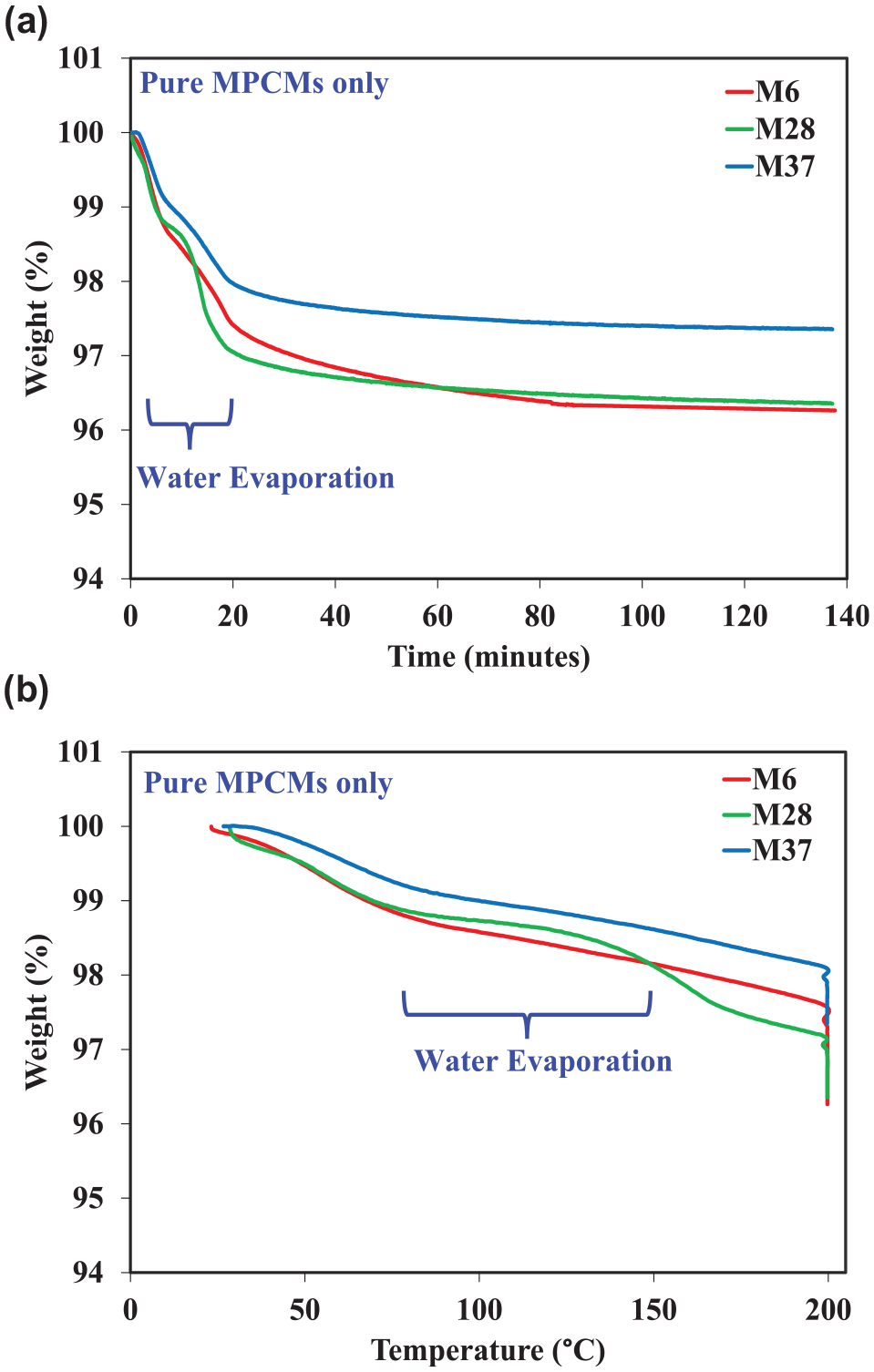
Thermal stability analysis of pure microencapsulated phase change materials (MPCMs); (a) weight versus time and (b) weight versus temperature.
Overall, the weight loss of each MPCM was less than 4% at 200°C, which indicates good thermal stability. However, TGA testing was done on pure MPCM powder, excluding binder and aging conditions, which might influence the results. Therefore, DSC analysis was performed on modified binders to assess their stability under aging conditions.
Stability of MPCMs under Different Aging Conditions Based on DSC Test Results
Under short- and long-term aging conditions, the thermal stability of MPCMs was assessed using enthalpy values obtained from DSC, which are presented in Figure 3. Generally, the enthalpy values increased with a dosage of MPCMs in modified binders compared with PG 58-28 and PG 64-22 control binders at unaged binder level. The enthalpy values for both control binders were very close to zero. Moreover, both short and long-term aging conditions led to a decrease in enthalpy.
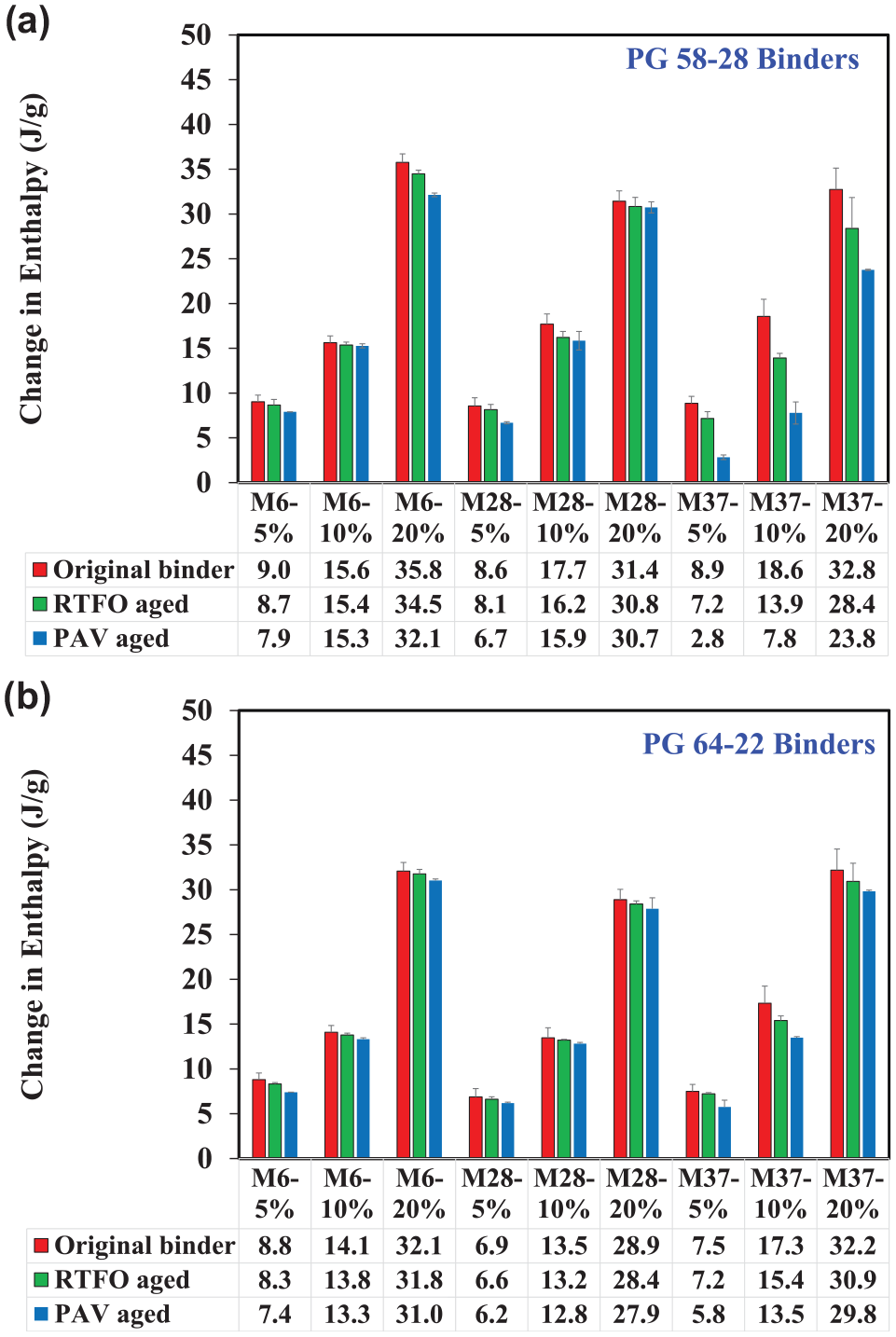
Differential scanning calorimetry analysis on control and modified microencapsulated phase change materials (a) PG 58-28 (b) PG 64-22.
In comparison with unaged PG 58-28 binder, the percentage decrease in enthalpy values was 1.7–4.0%, 1.8–4.8%, and 13.3–19.0% for different dosages of RTFO-aged M6, M28, and M37, respectively. Similarly, PAV-aged M6, M28, M37 binders showed percentage decreases of 2.29–12.4%, 2.2–21.9%, and 27.4–68.0%. Among modifiers, the highest percentage decrement was observed in M37 binders, suggesting that M6 and M28 are more thermally stable than M37 under both short- and long-term aging conditions.
Comparison of PG 58-28 and PG 64-22 binders under different aging conditions revealed that, except for M37, enthalpy values for PG 64-22 binders are, on average, 8.8% and 6.8% lower than those for PG 58-28 binders at RTFO and PAV levels, respectively. This indicates that using a stiffer binder might lower the enthalpy values, translating into a lower temperature difference in the binder. This finding aligns with a previous study in the literature ( 21 ). Conversely, M37 binders prepared using PG 64-22 had higher enthalpy values compared with PG 58-28 binders. The maximum percentage reduction was observed in M37-5% binders prepared with PG 64-22, which showed a 23.1% reduction at the PAV level compared with the unaged binder level. This highlights that other factors may influence MPCM thermal stability. Manufacturing or inherent production issues might be a concern, as both control binder types exhibited maximum reductions in enthalpy values for M37 compared with other modifiers at the PAV level. In addition, all MPCMs were prepared using the same outer shell (melamine formaldehyde), so changes in core material might also influence the thermal stability of MPCMs, which can be investigated in future research.
Interestingly, further analysis of results reveals that in most binder types, maximum reduction in enthalpy was observed at lower dosages compared with higher dosages. For instance, the percentage change of enthalpy for M6 modified with PG 64-22 at PAV level was 15.9%, 5.6%, and 3.3% at 5%, 10%, and 20% dosages, respectively, compared with the respective unaged binders. This suggests that using higher dosages might help improve the thermal stability of MPCMs in binders.
Overall, M6 and M28 modified binders showed greater thermal stability (better survivability) compared with M37 modified binders. In addition, the use of softer binder (PG 58-28) and higher dosages may result in improved thermal stability of MPCM-modified asphalt. Other factors that may influence the thermal stability of MPCMs include the manufacturing process and core PCM material.
Aging Impact on Stiffness Properties of MPCM-Modified Binders
The G* values at 10 rad/s for MPCM-modified binders at different aging levels, as determined from the temperature–frequency sweep test, are presented in Figure 4. Generally, an increase in G* (i.e., stiffness) with higher dosages of MPCMs compared with control binders was observed for all MPCMs at the unaged binder level. This behavior is attributable to the physical interaction of MPCMs with binders.
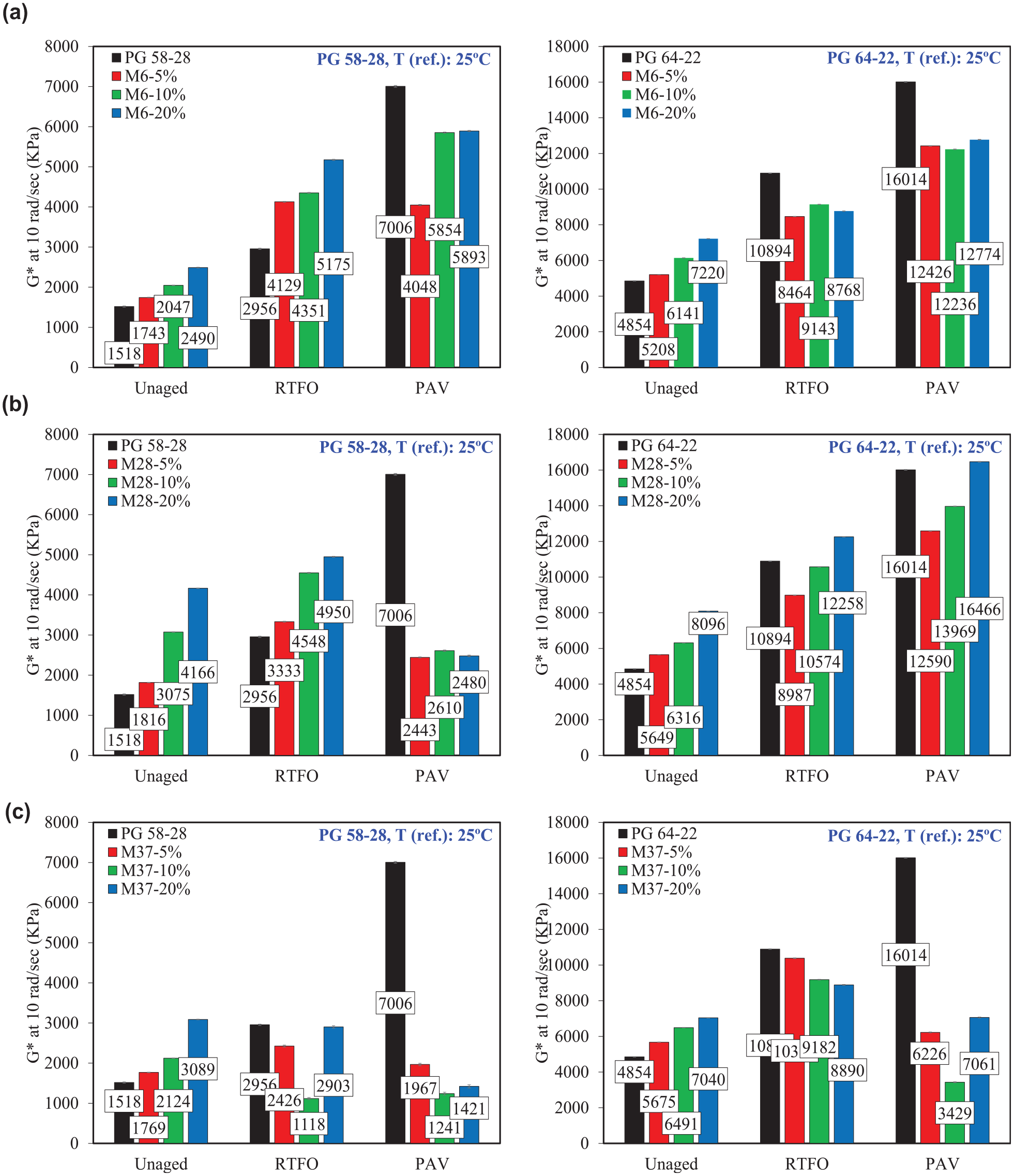
G* values at 10 rad/s (a) M6 (b) M28 (c) M37.
At the RTFO level, a similar trend continued for M6 and M28 modified binders compared with the PG 58-28 control binder, with the maximum increases in G* of 75.1% and 67.5%, respectively. This increase in stiffness at the RTFO level indicates that M6 and M28 binders modified with PG 58-28 could enhance resistance to deformation, a significant concern at the early stage of pavement service life. This behavior can be mainly attributed to the physical interaction of surviving MPCM particles with binder, in addition to possible direct interaction of non-surviving particles (wax released from a small number of broken MPCMs) as a result of aging, as minor changes in enthalpy were observed for these binders. In the case of M37-modified binders at the RTFO level, a softening of binder was observed compared with PG 58-28, with a 17.9% and 62.2% decrease in G* at 5% and 10% dosages of M37, respectively. This can be correlated to corresponding DSC enthalpy values where the highest decreases were observed at 5% and 10% dosages. However, M37-20% showed only a 1.8% increase in stiffness, as enthalpy in this case was higher compared with M37-5% and M37-10%. Thus, M37 in PG 58-28 reduced the deformation resistance of the binder at 5%–10% content.
For PG 64-22 control binder at RTFO level, G* decreased by a maximum of 22.3% and 18.4% for M6 and M37 binders, respectively. For M28-modified binders at the RTFO level, G* decreased by 17.5% and 2.9% for M28-5% and M28-10%, respectively, whereas it improved by 12.5% for M28-20%. This behavior, which contrasts with what was observed for PG 58-28 modified with M6 and M28 at RTFO level, may be caused by changes in the behavior of pure wax with different binders and dosages, as noted in previous studies ( 34 – 36 ). Thus, even minor breakage of MPCMs in PG 64-22 binders reduced stiffness of M6 and M28 modified binders at RTFO level, as a higher survival rate of these binders was observed. In addition, M37 did not exhibit a reasonable survival rate, affecting its stiffness behavior. This reduction in stiffness for PG 64-22 samples modified with MPCMs (except for the M28-20% sample, which showed slight improvement) translates to a decrease in deformation resistance.
At the PAV level, in comparison with control PG 58-28, the softening impact has been observed in all MPCMs modified binders. The maximum decrease in G* was 42.2%, 65.1%, and 82.3% for different dosages of M6, M28, and M37 samples in contrast to the control binder. This can be explained by a further decrease in enthalpy change at the PAV level, as observed in DSC. This decrease in stiffness is a good indicator with regard to improved resistance to aging-induced cracking. The same trend has been observed for MPCM-modified binders (except M28-20%) prepared using PG 64-22. The highest decrease in G* was 23.6% and 78.6% for M6 and M37. In the case of M28 binders, G* was reduced by 21.4% and 12.8% at 5% and 10% dosages, respectively, whereas there was a very slight increase of 2.8% at 20% dosage in comparison with the control binder at PAV level. Thus, MPCM-modified binders show improved cracking resistance in both PG 58-28 and PG 64-22. However, the primary concern is whether this improvement is associated with the maximum number of surviving MPCM particles.
For this reason, this analysis was correlated with DSC results, which depicted that the M6 and M28 showed greater stability at all aging levels, whereas M37 did not show good thermal stability at RTFO and PAV levels in both control binder types. Thus, PG 58-28 binders modified with M6 and M28 appear to be more suitable combinations, as they showed enhanced rutting and cracking resistance in addition to greater thermal stability as compared with PG 64-22 modified binders. To further affirm this statement, cracking resistance was analyzed using the G-R parameter, and performance related to thermoregulation ability was assessed through a temperature ramp test. The analysis of these test results is presented in upcoming sections.
G-R Parameter Analysis
This section further validates the cracking performance of all modified binders at the PAV aging level. The G-R parameter for each binder is presented in Figure 5. Generally, the G-R parameter shifts toward the top left corner with increased aging conditions. A lower G-R parameter, situated away from the damage zone, indicates improved cracking resistance ( 37 ).
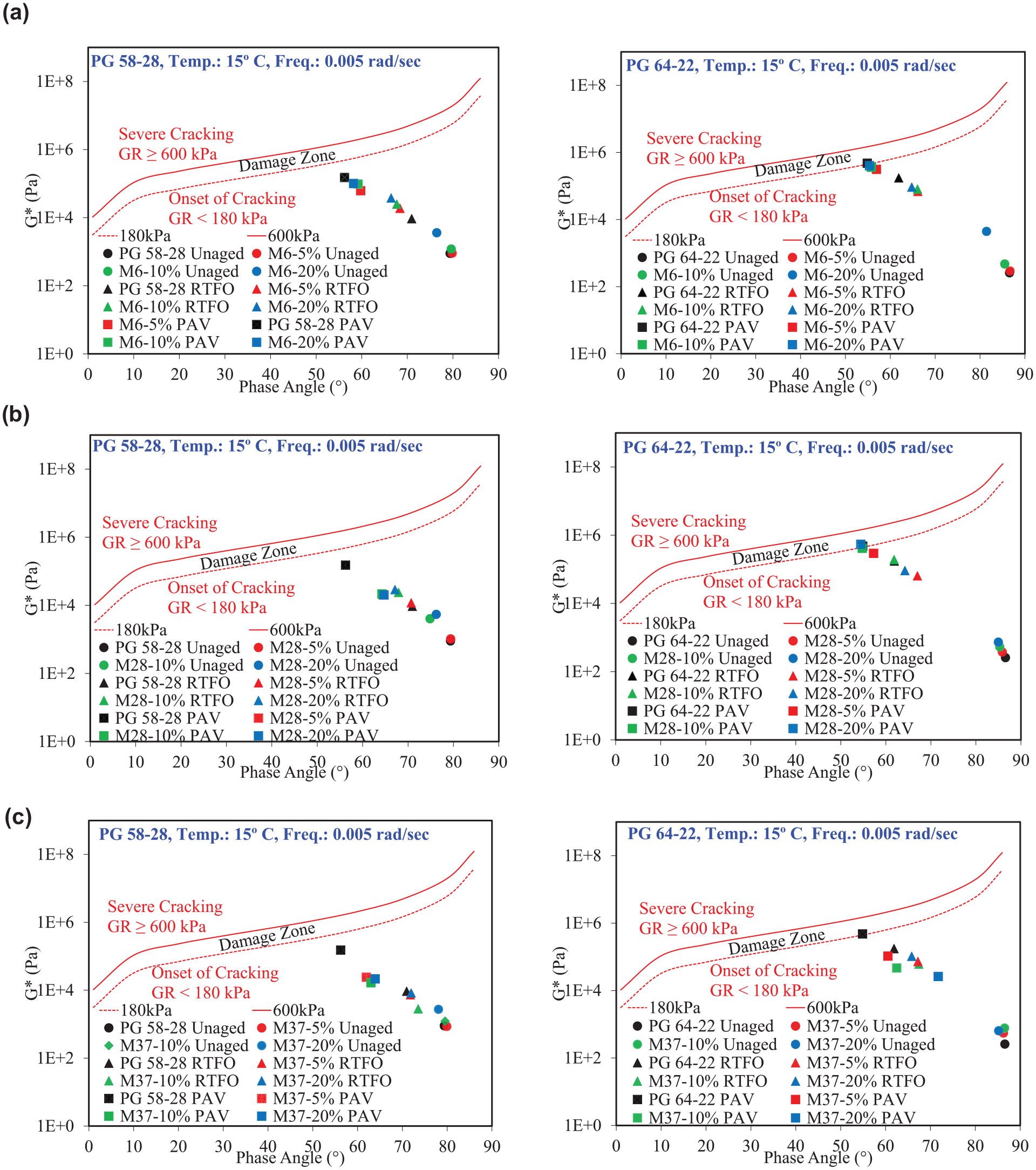
G-R parameters of pressure aging vessel-aged binders; (a) M6, (b) M28, and (c) M37.
For PAV-aged M6 binders (PG 58-28), the G-R parameter moves toward the bottom right corner, indicating a reduction at PAV levels. The decrease ranged from 59.1% to 33.4% at different dosages compared with the PAV-aged PG 58-28 control binder. Similar behavior is observed for other modifiers at PAV levels, with maximum decreases of 86.5% and 89.0% for M28 and M37 modified binders, respectively. A decrease in the G-R parameter signifies an increase in cracking resistance.
For PG 64-22 binders (except M28-20%), the G-R parameter was also reduced at PAV levels compared with PAV-aged PG 64-22 control binder. The percentage change ranged from 15.6% to 34.5% and 78.0% to 94.5% for different dosages of M6 and M37, respectively. However, for PAV-aged M28 binders, the G-R parameter increased by 13.7% for M28-20% but decreased by 38.4% and 13.2% at 5% and 10% dosages, respectively. This indicates that, except for M28-20%, other binders showed improved cracking resistance. These results corroborate previous findings that MPCM-modified binders enhance cracking resistance. However, as stated earlier, this improvement needs to be accompanied by a high survival rate of the capsules. To verify, an analysis using a temperature ramp test was conducted and is presented in an upcoming section.
Validation of Performance Related to MPCMs’ Thermoregulation Property
This section analyzes the capacity of MPCMs to improve performance through thermoregulation over the long term using a temperature ramp test. The percentage change in G* was plotted against temperature and presented in Figure 6. The percentage change G* rate should remain relatively constant with temperature changes. The sudden variations in percentage change in G*, whether a drop or rise, can suggest the presence of heat release or absorption phenomenon, that is, thermoregulation resulting from phase change of MPCM ( 18 , 38 ).
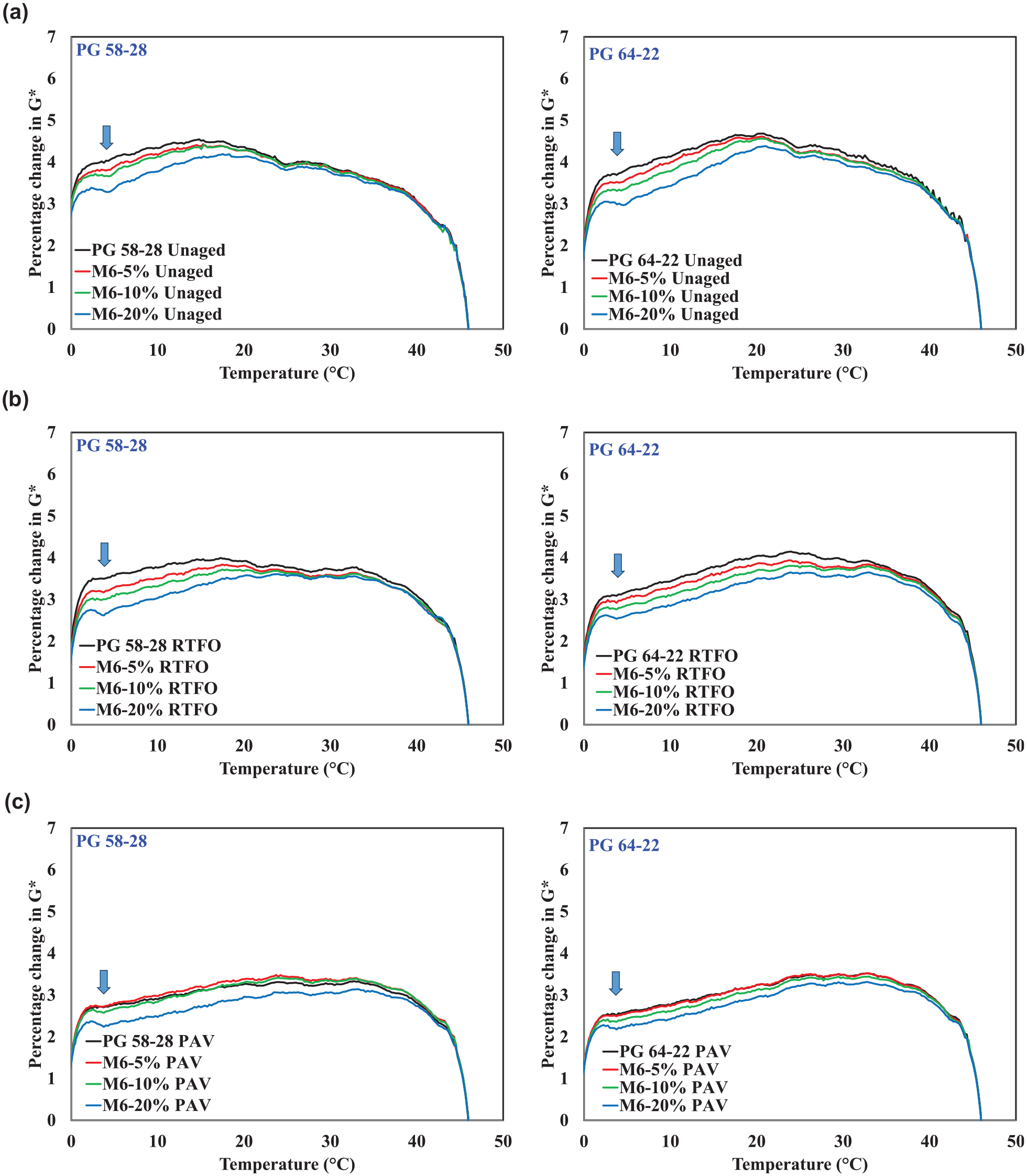
Percentage change in G* for M6 binders at binder level (a) unaged, (b) RTFO, and (c) PAV.
From Figure 6, it is evident that for M6 modified binders, the percentage change in G* is not constant at the crystallization point of MPCM, showing a noticeable peak at different dosages compared with both control binders. This indicates the ability of MPCMs to release heat around their crystallization point, thus controlling the G* property of the binder. Consequently, the profile of percentage change in G* was altered in the temperature range of 0°C to 20°C. Moreover, compared with the control binder, the percentage change in G* of MPCM binders is lower, suggesting that the temperature sensitivity of G* is reduced because of the addition of MPCMs in the binder. This trend remains consistent at RTFO and PAV-aged levels, indicating that MPCMs retain this property of thermoregulation in both the short term and long term.
Similarly, peaks are observed (see Figure 7) within the crystallization temperature range (approximately 8–25°C) for M28 modified binders at all aging levels—unaged, RTFO, and PAV—compared with both control binders. This consistent thermoregulation effect at all aging levels is anticipated to control the stiffness property of the binder, thereby enhancing the cracking resistance of the modified binders. These trends correlate well with DSC enthalpy values, validating the survival of particles at different aging levels because of the better thermal stability of MPCMs in both short-term and long-term aging levels.
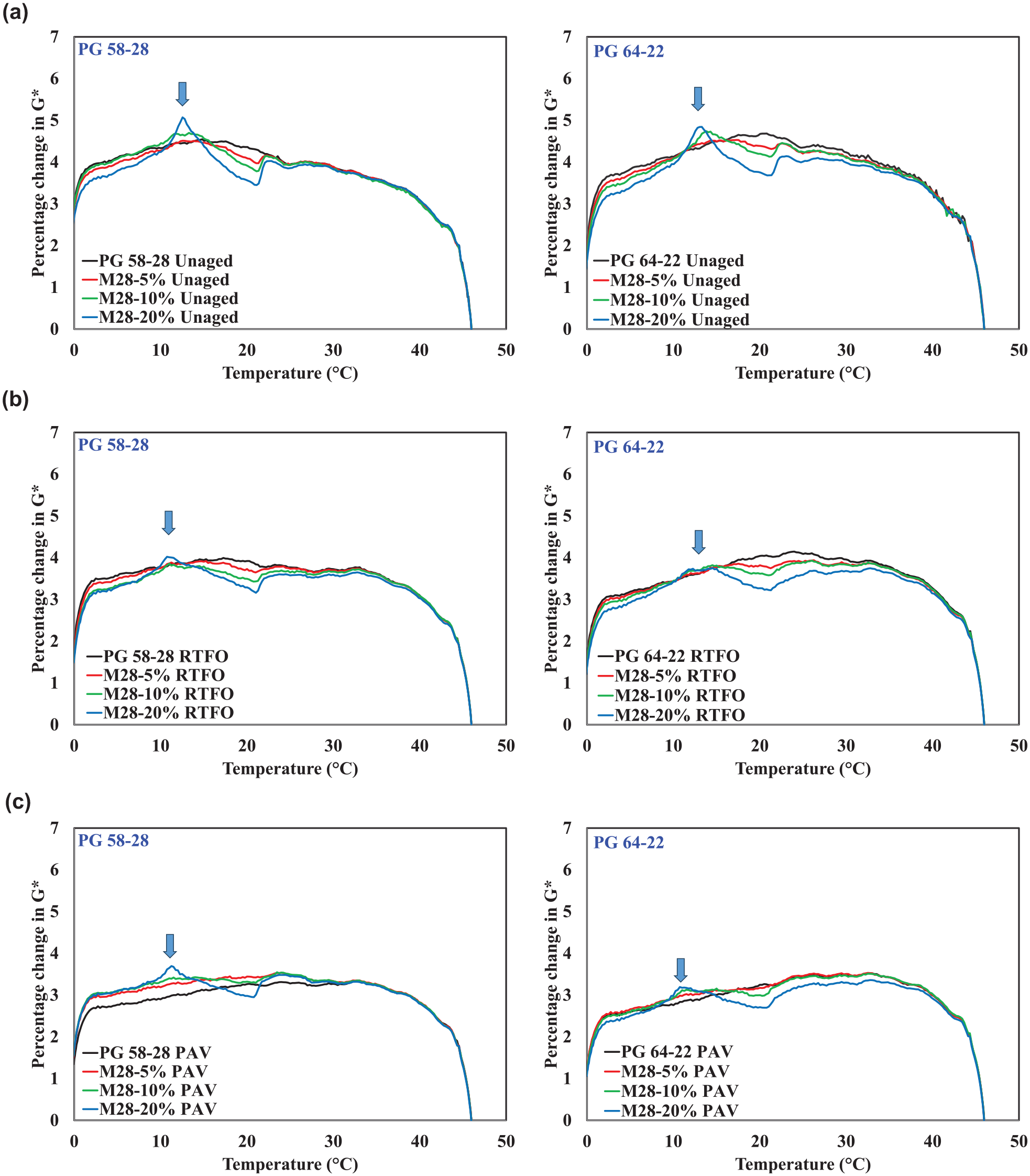
Percentage change in G* for M28 binders at binder level (a) unaged, (b) RTFO, and (c) PAV.
For M37 modified binders at unaged binder level, sharp peaks are observed (see Figure 8) within the range of approximately 30°C–46°C, which are absent in both control binders. This is because of the surviving particles’ ability to absorb heat during the melting cycle. However, at the RTFO aging level, two new broad peaks appear specifically for M37-5% and M37-10% within the temperature range of 6–25°C, in comparison with the PG 58-28 control binder, which lacks these peaks. These peaks could be attributable to direct interaction between the core materials and the binder, as core material can be made from a combination of two or more PCMs to achieve the required enthalpy at the desired melting point, as stated in the literature ( 10 ). This confirms previous analyses that M37 is thermally unstable, particularly at 5% and 10% dosages at RTFO level, specifically in the case of PG 58-28 binders. These new peaks are less apparent at the RTFO level for M37 in PG 64-22. At PAV levels, these new peaks become more pronounced, even at a 20% dosage of M37 in both control binder types, in addition to peaks within the melting point range.
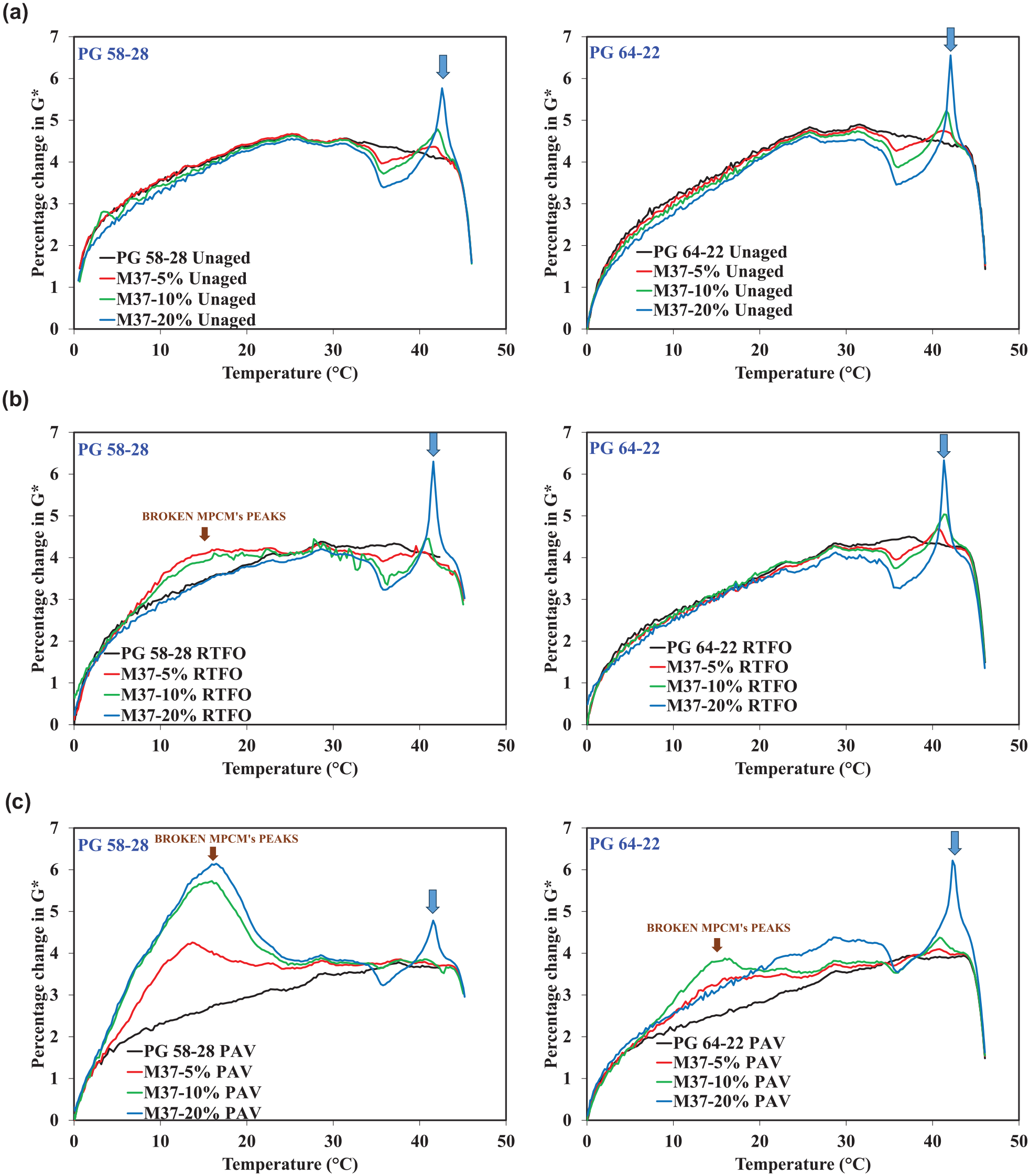
Percentage change in G* for M37 binders at binder levels (a) unaged, (b) RTFO, and (c) PAV.
The next step is to verify the performance of M6 and M28 particles in both control binder types with regard to improved cracking resistance attributable to their ability to control the G* change rate. As M37 did not demonstrate thermal stability, its performance is not addressed in this section. The fatigue factor (G*·Sin[δ]) has been calculated using data from the temperature ramp test and is presented in Figure 9. For PAV-aged M6 modified binders, in comparison with both control binders, G*·Sin(δ) was observed to be lower within the temperature range of 0–15°C. This reduction in the G*·Sin(δ) is caused by both thermoregulation and the softening impact caused by minor broken particles of MPCM. The G*·Sin(δ) decreased by 5.0%–26.7% and 19.7%–35.4% around the respective crystallization points at different dosages of M6 modified binders, compared with PG 58-28 and PG 64-22 binders, respectively. This reduction in G*·Sin(δ) around the crystallization point range signifies an improvement in the cracking resistance.
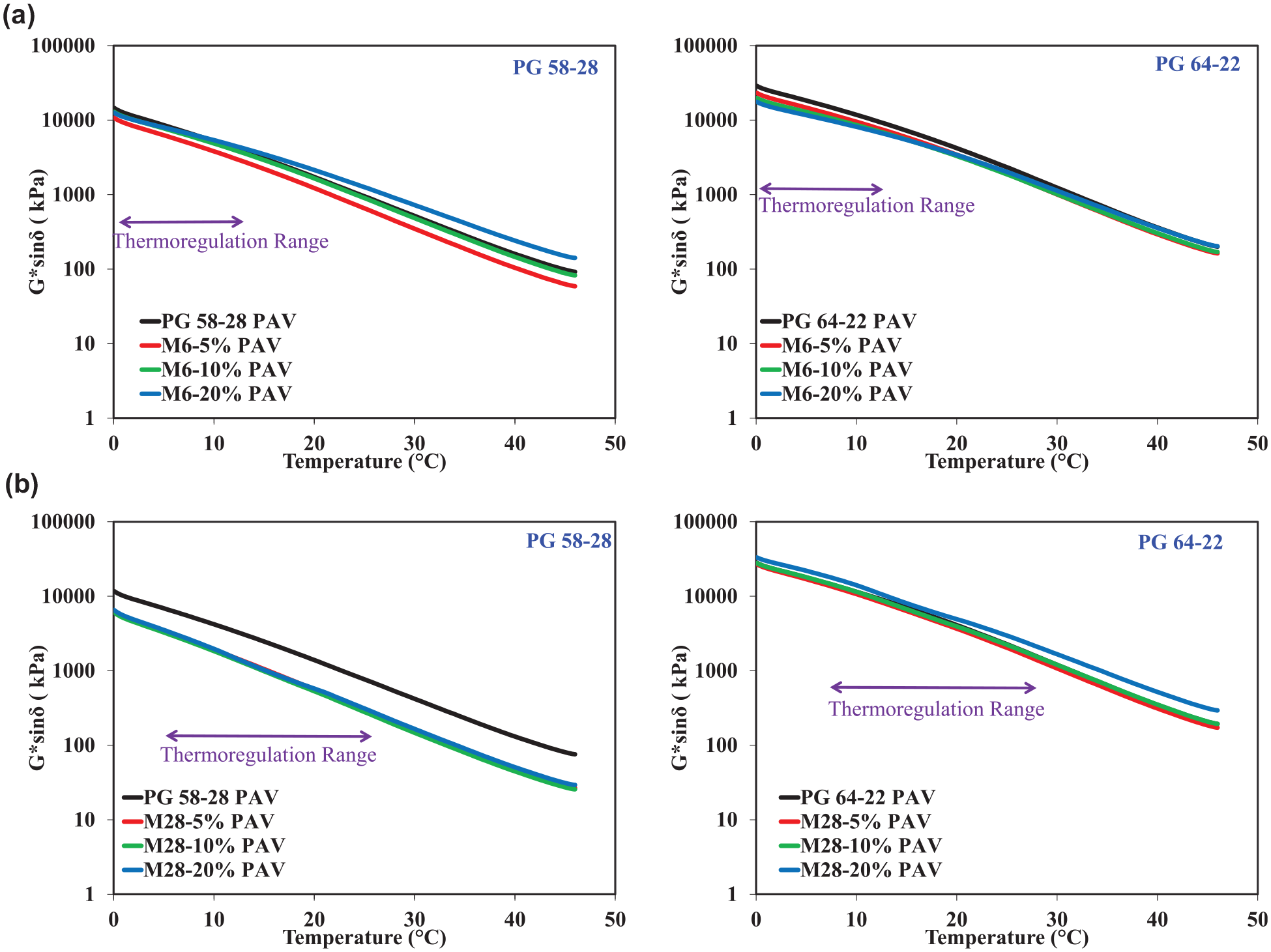
Fatigue factor at pressure aging vessel (PAV) level; (a) M6 and (b) M28.
At PAV level, for M28 modified binders, G*·Sin(δ) was observed to be controlled as a result of the addition of MPCM (as marked in the graph) around the crystallization point. This effect is more distinct for M28-20% in the PG 64-22 binder. Compared with PAV-aged PG 58-28 control binder, G*·Sin(δ) was reduced by a maximum of 60.6% around the crystallization point, whereas the reductions were 10.2% and 5.1% for M28-5% and M28-10%, respectively, compared with the PG 64-22 control binder. However, for M28-20%, G*·Sin(δ) increased by 14.4% at the crystallization point compared with the PG 64-22 control binder. This indicates that M28-5% and M28-10% in PG 64-22 also have the potential to enhance long-term performance, particularly with regard to cracking resistance, through the thermoregulation properties of these MPCMs.
Overall, in comparison with MPCMs modified with the stiffer binder (PG 64-22), the incorporation of M6 and M28 modifiers with the softer binder (PG 58-28) exhibited improved thermal stability in DSC enthalpies, enhanced deformation resistance indicated by G* values at 10 rad/s at RTFO level, and superior cracking resistance both within and outside the thermoregulation range. However, in the case of PG 64-22 binders, except for M28-20%, lower enthalpy values and reduced rutting resistance were observed. This underscores the suitability of combining M6 and M28 MPCMs with a softer control binder (PG 58-28) for extended thermoregulation and improved performance.
Dosage Optimization using PG Grading and Cracking Resistance
The standard and continuous PG grading results are illustrated in Figure 10. Based on the results, for PG 58-28 binders, the high PG grade for M6 and M28 remained unchanged up to a 10% dosage but increased at a 20% dosage. Similarly, the low-temperature PG grade did not improve for 5% and 10% dosages of M6 and M28, but it increased by one grade at a 20% dosage. For PG 64-22 binders, the low PG grade remained unchanged regardless of dosage and MPCM type. Further, the high PG increased by one grade only at a 20% dosage of M6 and M28 modified binders.
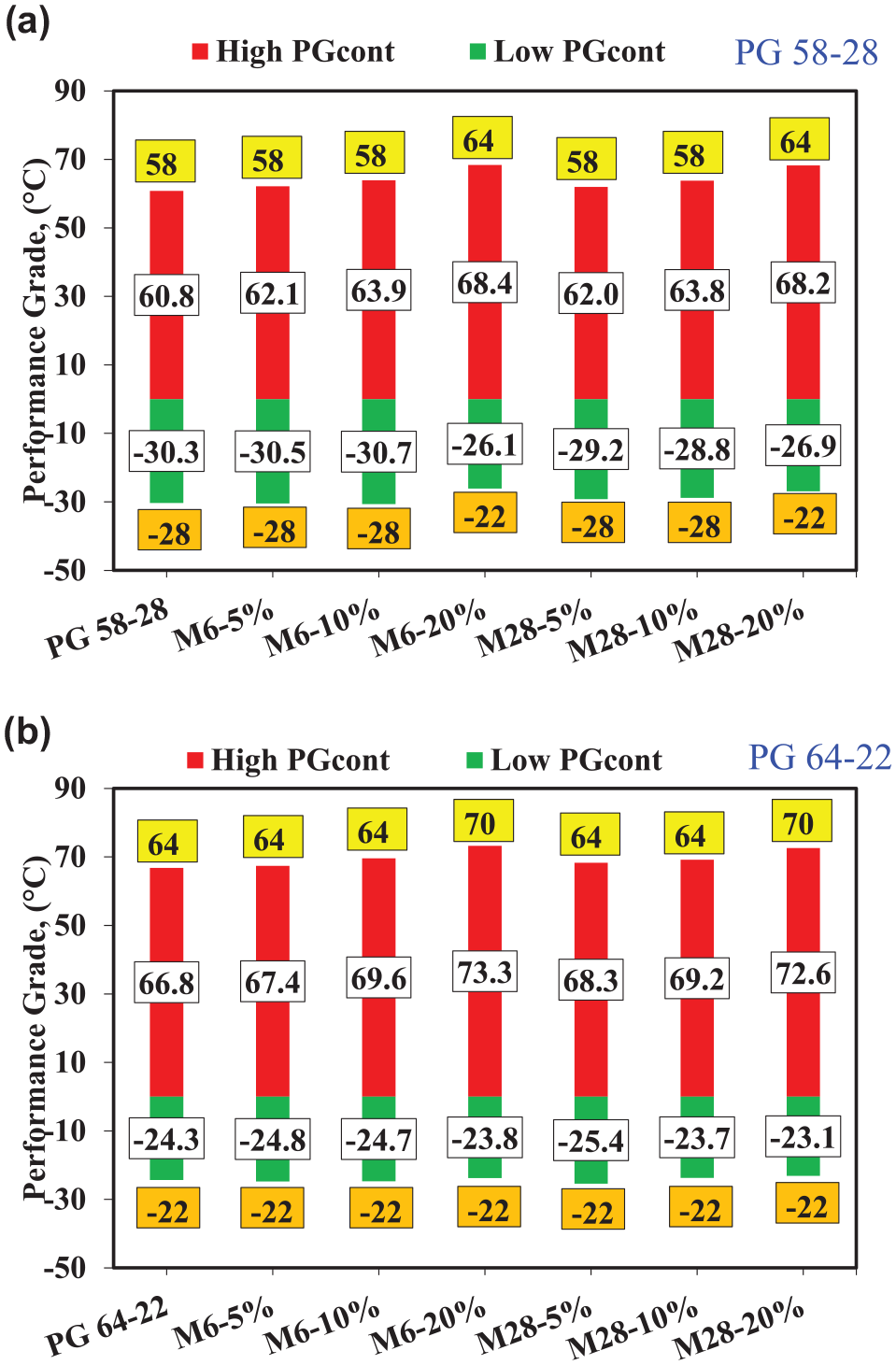
Low and high continuous performance grade (PG) grading (a) PG 58-28 and (b) PG 64-22.
Based on the modifiers used in the present study, the optimum dosage is 10% for M6 and M28 when used in the PG 58-28 binders and 20% for the respective binders in the case of the PG 64-22 binders. This optimum dosage is based on low-temperature grade performance, as cracking is a major concern in the long term (i.e., at the PAV level). However, it is important to exercise caution when determining the optimum dosage by comparing it with control binders, as thermal stability issues with MPCMs may arise. For instance, in this study, M37 was found to be thermally unstable.
Furthermore, the ΔTc parameter was calculated to gain insight into the low-temperature cracking performance of modified binders in comparison with control binders, as presented in Figure 11. Generally, a more negative ΔTc indicates that the binder is more prone to failure in stress dissipation capacity than in the stiffness of the binder ( 39 ). It can be observed from Figure 11 that, in comparison with the PG 58-28 control binder, all the binders failed in stress relaxation, as the values are more negative except for M6-10%. Likewise, in PG 64-22 binders, M6-modified binders resulted in more negative values compared with the PG 64-22 control binder, whereas M28-modified binders showed either comparable or positive ΔTc values. This indicates that the addition of MPCMs in asphalt binder would mostly result in increased susceptibility to low-temperature cracking because of a loss of thermal stress dissipation capacity caused by aging rather than an increase in stiffness.
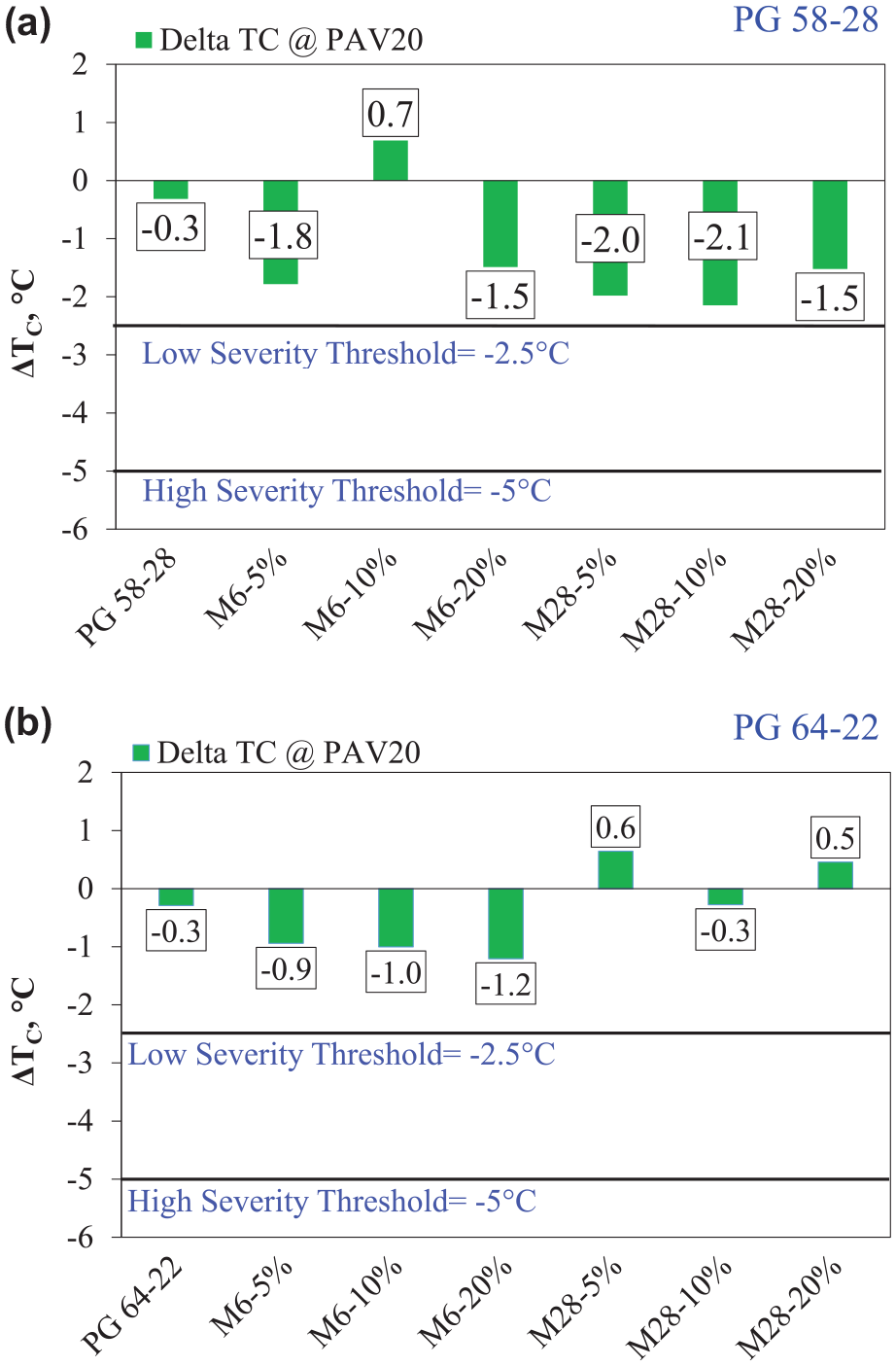
ΔTc values of microencapsulated phase change material-modified binders; (a) PG 58-28 and (b) PG 64-22.
However, it should be noted that none of the binders at 20 h of PAV aging exceeded the low or high severity levels (−2.5°C and 5°C respectively [ 33 ]), which indicates that M6 and M28 are suitable to be used as an additive in binders without significantly affecting the low-temperature cracking resistance of asphalt binder. Also, it should be reiterated that this behavior may entirely be dependent on the interaction of surviving MPCM particles as well as wax from the broken particles with the asphalt binder. Therefore, the results might differ if a higher survival rate can be achieved by using more robust MPCMs.
Conclusions
This research evaluates the performance and thermal stability of MPCMs at different aging levels (RTFO and PAV). Three MPCMs with melting points of 6°C, 28°C, and 37°C (M6, M28, and M37) were blended with PG 58-28 and PG 64-22 binders at 5%, 10%, and 20% dosages. The samples underwent short-term and long-term aging using RTFO and PAV. Thermal stability was assessed using TGA and DSC, and performance was evaluated using temperature–frequency sweep, G-R parameter, and temperature ramp tests. The dosage of thermally stable MPCMs was optimized through PG grading. Based on the results, the conclusions are as follows:
M6 and M28 demonstrated greater thermal stability compared with M37. The thermal stability of MPCMs can be enhanced by using PG 58-28 binder and higher dosages, as MPCMs with PG 64-22 binder and lower dosages exhibited greater enthalpy reduction.
The use of MPCMs with PG 58-28 binders improved deformation resistance, as reflected by increased G* values for M6 and M28 in PG 58-28 binders at the RTFO level.
The cracking resistance of asphalt binders improved at the PAV level with the incorporation of MPCMs, as indicated by G-R parameter analysis. However, this improvement in cracking performance may be attributable to surviving MPCM particles.
The G*·Sin(δ) analysis from temperature ramp tests revealed enhanced cracking performance for M6 and M28 binders (in both PG 64-22 and PG 58-28) at the PAV level, highlighting effective thermoregulation by surviving particles. Notably, M6 and M28 in PG 58-28 binders showed greater improvement compared with their incorporation in PG 64-22 binders.
Based on the low PG of M6 and M28 binders, the optimal dosage is 10% for use in PG 58-28 binders and 20% for use in PG 64-22 binders. Further, it can also be inferred using ΔTc that most of the binders were prone to low-temperature cracking resulting from a failure in stress dissipation capacity. However, the ΔTc remained within the warning limit of −2.5°C and the failure limit of −5°C, which suggests that M6 and M28 are still suitable to be used as additives in binders without significantly impacting low-temperature cracking resistance.
Recommendations
Overall, M6 and M28 have proved to be a beneficial combination with PG 58-28 binders because of their good thermal stability, enhanced rutting resistance, and improved cracking resistance within and outside the thermoregulation range. Further research is needed to apply this combination at the mixture level, identify suitable methods for incorporating them into mixtures, and study cracking performance related to the thermoregulation effect of MPCMs in mixtures. For mixture studies, the impact of compaction and mixing processes on encapsulation integrity can also be explored. In addition, the thermal stability of MPCMs can be enhanced by utilizing strong coating materials, allowing them to withstand various aging conditions.
Footnotes
Author Contributions
The authors confirm their contribution to the paper as follows: study conception and design: Ayyaz Fareed; data collection, analysis, and interpretation of results: Ayyaz Fareed, Ping Lu, Anil Kumar Baditha, Ayman Ali, Yusuf Mehta; draft manuscript preparation: Ayyaz Fareed, Anil Kumar Baditha, Ayman Ali, Yusuf Mehta, Ping Lu, Melisa Nallar. All authors reviewed the results and approved the final version of the manuscript.
Declaration of Conflicting Interests
The author(s) declared no potential conflicts of interest with respect to the research, authorship, and/or publication of this article.
Funding
The author(s) disclosed receipt of the following financial support for the research, authorship, and/or publication of this article: This material is based on work supported by the Broad Agency Announcement Program and the U.S. Army Engineer Research and Development Center (ERDC) under Contract No. W913E523C0007.

Data Accessibility Statement
The data presented in this manuscript can be accessed on request from and approval of the corresponding author.
Any opinions, findings, conclusions, or recommendations expressed in this material are those of the author(s) and do not necessarily reflect the views of the Broad Agency Announcement Program and the U.S. Army Engineer Research and Development Center (ERDC).