



Abstract
This research investigates current transit design practices and agency policies through the lens of gender-inclusivity, identifying the disparities between men and women. Women typically engage in shorter, more complex trips owing to caregiving and household responsibilities, and thus face additional challenges like unsafe transit settings and inadequate accommodations for strollers and belongings. This study employs a qualitative case study approach, including interviews with staff from nine transit agencies to learn about their present and future practices, and an analysis of five transit design and operations manuals to study their recommendations and standards. Key findings revealed progress in gender-sensitive data collection and design, but barriers like resource constraints and a lack of priority still remained. Agencies like Los Angeles Metro, Southeastern Pennsylvania Transportation Authority, and Washington Metropolitan Area Transit Authority have made notable advancements, with several others following suit. However, the explicit incorporation of gender-sensitive principles in widely used transit design manuals is often lacking. The study concludes that continued commitment coupled with innovative approaches could overcome existing barriers and enhance gender-inclusivity in transit systems.
Public transit is the lifeblood of cities, carrying millions of people daily and providing essential mobility. Its diverse objectives include providing accessibility to services and opportunities, fostering social inclusion, reducing traffic congestion, and lowering carbon emissions ( 1 ). However, these benefits remain unaccomplished when transit planning follows standard gender-inclusive practices, leaving women and girls—half of the population—marginalized, by overlooking their specific needs, leaving them vulnerable and unable to fully access their mobility rights.
Women and men typically exhibit different mobility patterns and travel behavior, reflecting their varying roles and responsibilities. Women tend to have more frequent and complex travel patterns than men, as they often bear the brunt of unpaid work, including caregiving for the young, elderly, or ailing ( 2 ). They often navigate public transportation while escorting vulnerable individuals, facing the pressures of moving quickly to balance work and caregiving duties while bearing the burdens of cost, time, and effort. Gender-responsive public transit systems that are safe, reliable, and affordable are crucial in ensuring women’s access to education, economic security, childcare, and health services, thereby contributing to gender equality ( 3 ).
Historically, women’s perspectives have been ignored in transport planning and design ( 4 ), even though women tend to walk or use transit more than men, travel during off-peak hours, and suffer harassment on public transit ( 3 ). This neglect limits women’s mobility and accessibility, perpetuating the existing gender inequality. In recent years, gender-inclusive transport policy has been recognized as key to creating sustainable and inclusive transit systems. Yet, systematic gender inclusion—from hiring practices to system design and planning—remains rare. Most of the existing research focuses on the safety of female transit riders, rather than on design and operational practices that could make transit more accessible for women.
This study aimed to assess the current practice of transit design and operations through the lens of gender-inclusivity. It began by conducting a thorough review of previous studies on gender-inclusive transit design and planning, followed by an exploratory analysis of the current condition of the practical and recommended application of gender-inclusive transit design and planning. It adopted a qualitative case study approach with two key components: first, interviews with representatives from nine leading U.S. transit agencies, including Southeastern Pennsylvania Transportation Authority (SEPTA), Bay Area Rapid Transit (BART), and Los Angeles (LA) Metro, to explore their gender-sensitive design practices and data collection methods; and second, a comprehensive analysis of nationally used transit design and operations manuals, such as National Association of City Transportation Officials’ (NACTO) Transit Street Design Guide and the Transit Capacity and Quality of Service Manual (TCQSM), alongside local guidelines like BART’s and Sound Transit’s Station Experience Design Guidelines to assess the gender-sensitivity of their design recommendations. Using this two-pronged approach, the research aimed to assess current efforts, and identify gaps in promoting gender-inclusivity in transit systems, thus offering a foundation for advancing inclusive and responsive transit environments.
Literature Review
The following literature review aims to define the research question and scope and is guided by a set of questions that investigates the importance of studying the nuances of women’s travel behavior, and ways to improve their transit experience.
Why is it Important to Study Female Transit Riders?
Most women in the United States rely on cars for transportation, with working women being more likely to commute by car than men ( 5 ). They are more inclined to carpool, particularly with family members, as part of their work commute ( 6 , 7 ). Also mothers often prefer the private car owing to its flexibility in balancing work-, household-, and caregiving responsibilities ( 8 ). Yet, studies have consistently revealed that in many cities, women constitute more than half of all transit-dependent riders ( 9 ), indicating a significant reliance on public transit, making it crucial to study their experiences and needs, and design transit systems to support their mobility effectively.
How is Female Travel Behavior Different from their Male Counterparts?
Numerous studies have explored the disparities in travel behaviors between men and women, highlighting that women typically undertake shorter trips both in length and duration, and navigate more intricate travel patterns because of the need to juggle work responsibilities, caregiving duties, and household obligations ( 2 , 10 – 15 ).
Studies show that women have a smaller spatial range of daily travel than men ( 16 ). Despite narrowing gender gaps in commute distances over recent decades, women still generally commute shorter distances and spend less time traveling per trip compared with men, even after controlling for other factors affecting travel behavior ( 10 , 17 – 20 ). Women also travel more during off-peak hours than men, reflecting diverse work schedules and caregiving responsibilities necessitating travel outside traditional peak hours ( 21 ).
Women in the United States typically shoulder a larger portion of caregiving responsibilities for children and elderly family members compared with men ( 22 ). This caregiving-related travel, termed “mobility-of-care,” was first conceptualized by Inés Sánchez de Madariaga in 2013 ( 23 ). Recent work by de Madariaga and Zucchini has further refined the understanding of caregiving trips, utilizing gender-sensitive data and enhanced survey methodologies to capture the nuances of caregiving-related travel patterns ( 23 ). Newly published research by collaborators at the Washington Metropolitan Area Transit Authority and Massachusetts Institute of Technology identified mobility-of-care trips and trip-chaining behaviors using transit smart card data from Washington, D.C. ( 24 ). Their findings suggest a higher propensity for trip chaining among women, especially during peak hours, with notable overlaps between caregiving trips and trips accompanied by dependents ( 24 ). Another study by Fong and Shaw reveals that caregiving travel affects the subjective well-being of men and women differently. Women experience more stress and less happiness and meaning in such travel since they spend more time engaged in caregiving travel ( 25 ).
Women frequently carry large shopping bags or push strollers while traveling, a behavior less common among men ( 26 ). Although some European transit operators, like Transport for London, allocate space for strollers within their vehicles, such accommodations are lacking in most U.S. public transit systems, leading women to seek alternative transportation modes ( 27 ). Many U.S. transit agencies, including New York City’s Metropolitan Transport Authority, only permit strollers on buses if they are folded, necessitating that parents manage their children and belongings while folding strollers, a challenging and precarious task, particularly on crowded buses ( 28 ). A Washington, D.C. case study highlights that a ban on open strollers on its Metrobuses created significant barriers for caregivers. This policy was lifted in May 2023, reflecting a shift toward more inclusive transportation policies that consider caregivers’ needs ( 29 ).
Women often tend to trip chain as they balance multiple responsibilities in their daily lives because of societal gender roles ( 13 , 30 ). Such “hypermobility” imposes constraints on their time and resources, making it challenging for transit systems to accommodate their need to make multiple stops during their commute ( 31 ). These burdens are compounded by safety concerns, including experiences of sexual harassment in transit settings ( 32 ), necessitating modification of travel behavior and adoption of precautions, such as avoiding traveling alone or at night ( 33 ).
Perception of safety among women is strongly influenced by the design, layout, and elements of their surrounding physical environment ( 34 , 35 ). Women often express unease about traveling to-and-from or waiting at poorly illuminated or isolated transit stops as they induce fear of crime or lack of assistance in the event of a crime ( 33 , 36 ). Studies have found women to be more attuned than men to potential dangers and signs of social disorder, such as graffiti, malodor, garbage, and neglected or abandoned buildings ( 21 , 37 ), which are frequently found near transit stops, particularly in low-income areas. A Minnesota study explored how gender influences activity-travel patterns ( 38 ), highlighting gender-specific barriers in transit usage, with females and non-binary individuals expressing greater feelings of unsafety and encountering difficulties owing to the need for multiple stops or carrying strollers/carts ( 38 ).
Are Current Transit Design and Practices Addressing the Travel Needs of Women?
In recent years, there has been growing interest in comprehending and addressing the specific needs of women using public transit. This surge was sparked by LA Metro’s groundbreaking study in 2019 titled “Understanding How Women Travel (UHWT)” ( 21 , 39 , 40 ). The study, grounded in social justice principles, employed a multifaceted approach that involved analysis of gender-disaggregated data—both quantitative and qualitative—collected through surveys, focus group discussions, ride-alongs, and participatory workshops to provide nuanced understanding of women’s transit travel experiences, resulting in the “Gender Action Plan” that targeted four key themes—safety, design, fare policy, and service frequency and reliability—to enhance the transit experience for women riders ( 21 , 40 ).
Another study in Canada aimed to understand the needs of female transit users, highlighting how “gender blindness” in current transit planning and design prioritizes able-bodied men, neglecting women’s diverse needs, leading to inequitable outcomes like higher burden of cost and time for choosing perceived safer routes or traveling with companions ( 2 ). It also identified the lack of gender-disaggregated data collection as a major barrier to inclusive transit planning ( 2 ).
How Else Can Female Travel Experience Be Improved?
A modest yet expanding body of literature focuses on women’s experience with public transit and ways to improve it. Despite these commendable efforts, exemplified by LA Metro’s UHWT study, a lack in policy and design guidance is observed that would enable transit agencies to accommodate women’s specialized needs. This led to the overarching research question of this study: What steps are policy makers and service providers taking to improve female travel experience in relation to transit design and operations?
Research Design and Methods
This research follows a qualitative case study approach, as described by Corbin and Strauss, to investigate current design recommendations and practices through a gender-inclusive lens ( 41 ). The study is divided into two parts: first, interviews with staff from leading transit agencies across the United States, exploring their gender-inclusive design practices and policies; second, a review of transit design and operations manuals to evaluate their design recommendations. The focus was on two widely used manuals—NACTO’s Transit Street Design Guide, and the TCQSM—as well as three local agency guides: BART Station Experience Design Guidelines, Sound Transit Station Experience Design Guidelines, and Metrolink Southern California Regional Rail Authority’s (SCARRA) design criteria manual.
Research Questions
As stated, the overarching research question for this study was: What steps are policy makers and service providers taking to improve female travel experience in relation to transit design and operations?
The study was further guided by the following questions:
What specific initiatives have transit agencies undertaken to promote gender equity in transit design?
To what extent do current transit design manuals incorporate gender-sensitive guidelines?
Data Collection
The study used purposive and snowball sampling methods to select potential interviewee agencies. Staff from the design, planning, or equity departments within these agencies were invited to participate in online, semistructured interviews to discuss their agency’s gender-sensitive design and planning initiatives, the challenges they faced in implementing these initiatives, and their methods for collecting gender-specific data. Twelve agencies were contacted for interviews and nine agreed to the 1-h phone interview with one or more staff members. In each case, the people who work most closely with programs tied to women on transit were interviewed, often in planning, but sometimes in customer outreach, customer security, equity, or design. The agencies that participated were SEPTA, BART, San Francisco Municipal Transportation Agency (SFMTA), LA Metro, Sound Transit, Washington Metropolitan Area Transit Authority (WMATA), Massachusetts Bay Transportation Authority (MBTA), Central Ohio Transit Authority (COTA), and Minneapolis–St Paul Metro Transit (Metro).
Data Analysis
The interviews followed Institutional Review Board protocols to ensure confidentiality. They were conducted and recorded via Zoom, transcribed using OtterAI, then quality checked. Interviewees’ names were redacted from all the files, which were stored anonymously. Then the transcripts were imported into NVivo, a qualitative data analysis software, where both automatic and manual coding methods were used to analyze the semistructured interview transcripts to identify themes, patterns, and relationships. Its autocoding function was used to automatically identify and tag segments of text relating to particular topics or interview questions. Then the transcripts were manually analyzed to capture the themes of the interview answers. For example, one interview question focused on data collection. Autocoding tagged keywords like “data,”“survey,” and “focus group,” and these sections were manually reviewed for insights on each agency’s methods. Note that the findings reflect the interviewees’ knowledge and perceptions of their agencies’ design initiatives.
For the document review, a comprehensive search of the manuals (excluding the appendices) was conducted using gender-related keywords such as “female,”“women,”“pregnant,”“gender,”“children,”“family,”“LGBTQ,”“non-binary,”“equity,”“stroller,”“fare” or “fare capping/discount,”“surveillance,”“camera,” and “lighting,” including various iterations of these terms. Then specific sections like station and vehicle design guidelines or fare policies were reviewed in depth to identify gender-inclusive recommendations that might not be explicitly labeled as such.
Findings
Transit Agency Practices
The interviews broadly focused on: (1) data collection practices, (2) vehicle and station design, (3) operational practices and policies, and (4) challenges and barriers in implementing gender-inclusive policies. The findings are discussed below.
Data Collection Practices
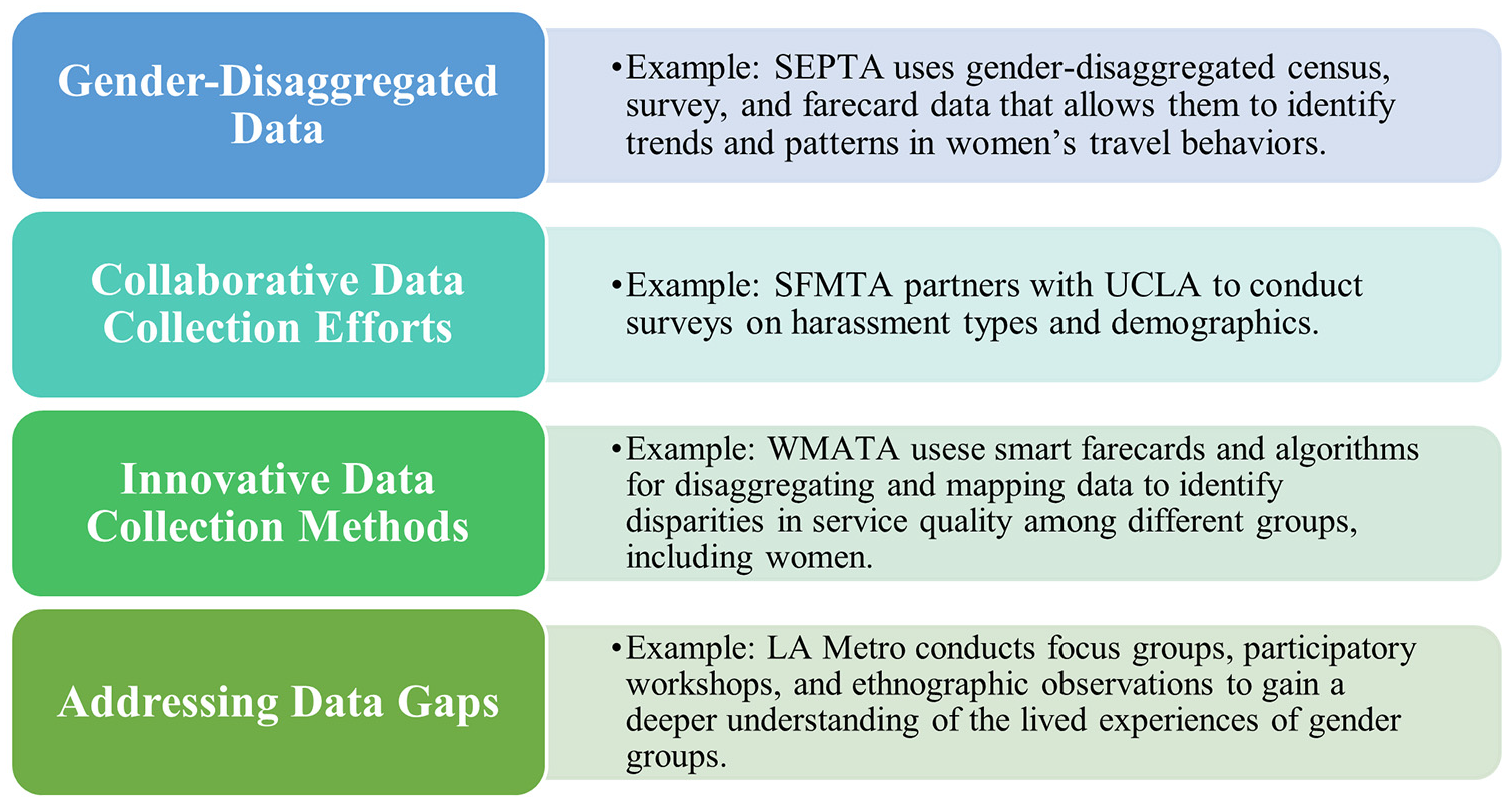
Effective data collection is crucial for gender-inclusive transit systems, providing foundational insights for informed decision-making and policy development. This section discusses how different transit agencies approach data collection to address gender diversity, the methods they use, and the challenges they face. Figure 1 highlights examples of these practices, which are discussed in the following paragraphs.
Examples of data collection practices to address gender.
Gender-Disaggregated Data
All the agencies agreed on the importance of collecting gender-disaggregated data to better understand female travel behavior. Unfortunately, less than half of them actually collect such data, citing funding and staffing limitations, and a desire to maintain a gender-inclusive and unbiased approach. Only a few agencies like SEPTA and LA Metro have successfully collected and analyzed gender-specific data to inform their transit planning and policy decisions. SEPTA uses gender-disaggregated data from census, survey, and farecards to identify women’s travel behavior, leading to targeted improvements like increased late-night service, enhancing safety. Similarly, LA Metro, through the development of their Gender Action Plan, incorporated gender analysis tools to evaluate their initiatives and projects under the lens of gender-inclusivity.
Collaborative Data Collection Efforts
Several agencies collaborate with external organizations to enhance their data collection efforts. SFMTA partners with University of California, Los Angeles to conduct surveys on harassment, gaining insights into the safety concerns of different gender groups, which informs their antiharassment strategies. According to SFMTA, “this helped address complex issues by combining internal data collection with external expertise and perspective.”
Similarly, BART collaborates with the Alliance for Girls—an organization focused on gender equity—on the #NotOneMoreGirl framework, focusing on gender equity. This partnership has provided BART with valuable insights into the needs of girls and gender-expansive youth, allowing them to reflect these needs in their transit design and safety plans.
Innovative Data Collection Methods
Some agencies employ innovative and unconventional methods to gather feedback and data on gender-specific issues. LA Metro uses a combination of quantitative and qualitative data collection methods, including surveys, community engagement, and focus groups. Their data specialists ensure that the survey questions are equitable and inclusive. This exemplary approach has helped them capture diverse experiences and perspectives, particularly related to gender.
SEPTA also uses qualitative data collection methods with notably positive outcomes. They emphasize, “It’s not just enough to survey women, you need qualitative research; and, when it comes to capturing those voices, you need to give people enough time to respond.”
Similarly, MBTA employs a unique approach, where their consultants conduct intercept surveys and audio record the sessions, analyzing both the content and the intonation of the responses. An MBTA representative noted, “It helps you better understand the community being impacted by a project, when you hear it in their own voices and tones, rather than me trying to explain a woman’s experience while crossing the street with her four-year-olds.”
WMATA uses technology like smart farecards to collect and analyze data on fare usage patterns, demonstrating a fresher approach. These data are later disaggregated by gender using an algorithm based on the gender associations of riders’ names, and then used to map mobility patterns and disparities in service quality across demographic groups, including women. WMATA finds this method highly efficient. However, they acknowledge that it requires further refinement.
Addressing Data Gaps
To address data gaps and improve gender-inclusivity, several transit agencies are exploring alternative strategies. LA Metro believes public engagement to supplement quantitative data with qualitative insights through focus groups, participatory workshops, and ethnographic observations will deepen their understanding of the experiences of diverse gender groups. Similarly, COTA is complementing their conventional data collection methodologies by gathering feedback through community partnerships and risk assessment specialists to address gender-sensitive concerns and improve service quality.
Vehicle and Station Design
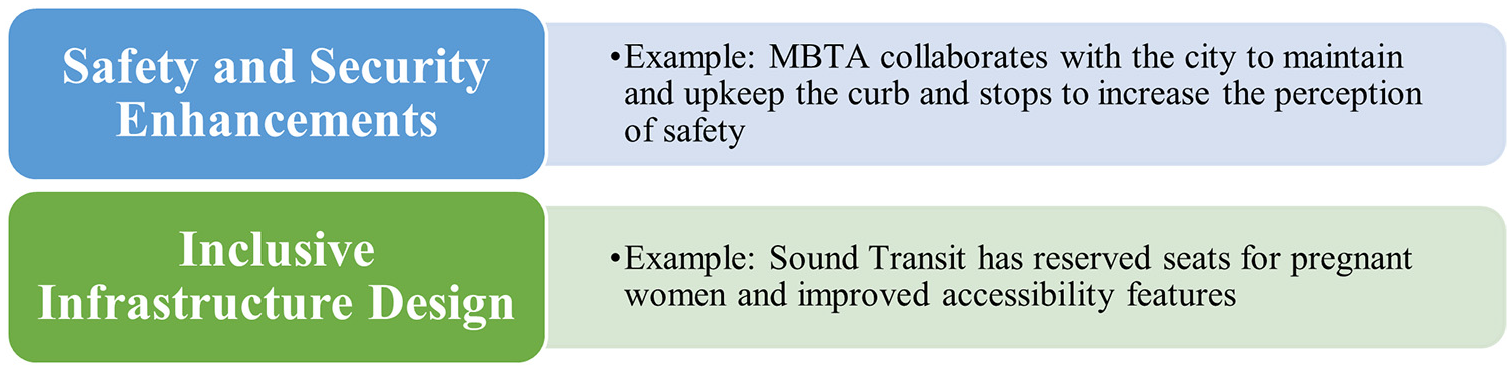
Transit agencies are increasingly recognizing the importance of incorporating gender-inclusive design principles into their planning and design practices to address the diverse needs of different gender groups, enhancing safety, accessibility, and overall experience. This section examines their approach to gender-inclusive design, highlighting successful approaches, and areas needing improvement based on the interview findings. The examples are illustrated in Figure 2 and discussed afterwards.
Examples of gender-sensitive design practices.
Safety and Security Enhancements
The foremost priority for all the agencies has been safety and security, a core element of gender-sensitive design. For instance, SEPTA’s revised bus stop design guidelines are a direct result of their focus group discussions, where women suggested implementing better lighting, visible bus stops, and increased nighttime services to address safety issues. MBTA also emphasized the importance of lighting, visibility and surveillance in creating a sense of safety.
All the agencies acknowledged that clean, well-lit, and well-maintained bus stops or stations without graffiti, broken glass, or garbage enhance the perception of safety and comfort of travel. However, only half of them can perform regular maintenance since city agencies usually own the curb and the stops and are responsible for their upkeep. Sometimes agencies like MBTA collaborate with the city about maintenance; however, this is not always possible. Most agencies also have transit ambassador programs consisting of agency representatives, security personnel and/or mental health counselors, underscoring their commitment to address women’s safety concerns.
Inclusive Infrastructure Design
Inclusive infrastructure design, including station and vehicular design, is crucial for gender-sensitive transit planning. Agencies like Sound Transit and BART have implemented innovative design features to accommodate the diverse user needs. Sound Transit has reserved seats for pregnant women and enhanced accessibility features, whereas BART’s train station design manual includes accessibility guidelines and ergonomic considerations to create an inclusive environment for all passengers. LA Metro, BART, Sound Transit, Metro Transit, and SEPTA are either procuring new vehicles or retrofitting their legacy fleets to include dedicated stroller parking space. Additionally, although not specifically mentioned in documentation, design innovations like low bus straps/handles, low seats, and accessible, on-vehicle bike racks frequently came up in these conversations as desirable elements for future vehicle designs.
Operational Practices and Service Policies
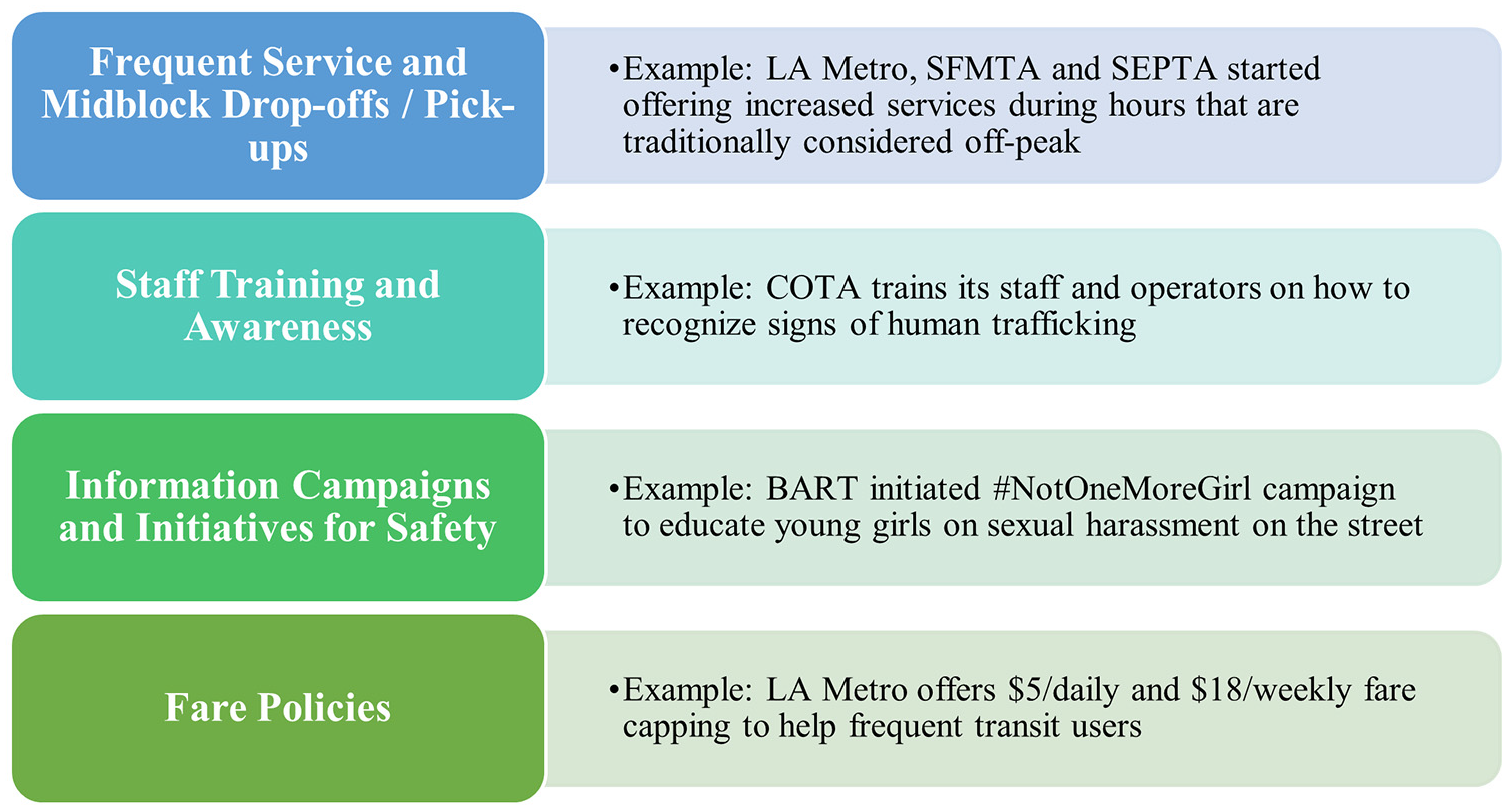
Operational practices and service policies are crucial in implementing and sustaining gender-sensitive transit systems. Effective operations and policies can enhance overall user experience by ensuring that services are responsive to the needs of diverse gender groups. Figure 3 highlights a few examples, which are discussed broadly below.
Examples of gender-sensitive operational and service practices.
Frequent services and Midblock Dropoff/Pickup services
LA Metro has increased their midday service frequency, recognizing that many of their female customers travel more during the middle of the day than traditional peak times. SEPTA has also increased their nighttime services on certain lines based on female ridership patterns. Similarly, WMATA has increased night services on select routes used by night shift workers. A WMATA representative noted, “We recently made select bus routes in DC run 24/7, particularly those serving hospitals where a major portion of night shift workers are women.”
SFMTA, WMATA, and MBTA mentioned offering nighttime midblock courtesy stops for women to ensure safety by reducing exposure to risk. However, MBTA expressed concerns about whether this service should be exclusive to women, since men traveling with children might also need it.
Staff Training and Awareness
Staff training and awareness are essential for successful implementation of gender-sensitive policies. Agencies like BART and COTA emphasize the importance of training staff to recognize and address gender-specific issues. BART’s efforts to combat discrimination and violence against female staff further underscore the importance of such education.
COTA’s training on recognizing signs of human trafficking further underscores the role of staff in maintaining a safe and inclusive transit environment. According to them, “our operators are on the front lines, they are the face of our agency; we want them recognize the signs of human trafficking, because what they see on televisions is different from real-life situations.”
Campaigns and Initiatives for Safety
BART’s #NotOneMoreGirl initiative—in collaboration with Alliance for Girls—sets a precedent by focusing on the unique challenges faced by girls and gender-expansive youth riding their light rail system and responding directly to their feedback, “One of our safety initiatives—shortening the train cars to create a safer, cozier and easily supervised environment—was a direct outcome of #NotOneMoreGirl.” This program includes enhanced security measures, community engagement, educational campaigns, and development of specific policies to address harassment against youth.
SEPTA’s Women’s Safety Strategy Committee and SFMTA’s Safety and Equity Initiative both aim to ensure the safety of women on transit. Additionally, SFMTA collaborates with San Francisco Police Department to encourage reporting of incidents of harassment by offering an online portal to report harassment, anonymously or otherwise.
Fare Policies for Families
Designing for families and caregivers is essential in gender-sensitive transit design, as women travel with children or seniors more than men do, leading to greater financial burden on them. This is one of the reasons several agencies offer fare capping or discounted fares. For example, SEPTA allows children under 12 to ride for free, whereas on BART, children under 4 ride free. LA Metro has a fare capping system that limits charges to $5/day or $18/week, even if they travel more than that. They also offer free one-way transfers for 2 h. This helps frequent riders and individuals who trip chain. Similarly, MBTA, WMATA, and SFMTA also have discounted or free fare policies for children, seniors, and low-income individuals.
Challenges and Barriers to Implementing Gender-Sensitive Transit Policies
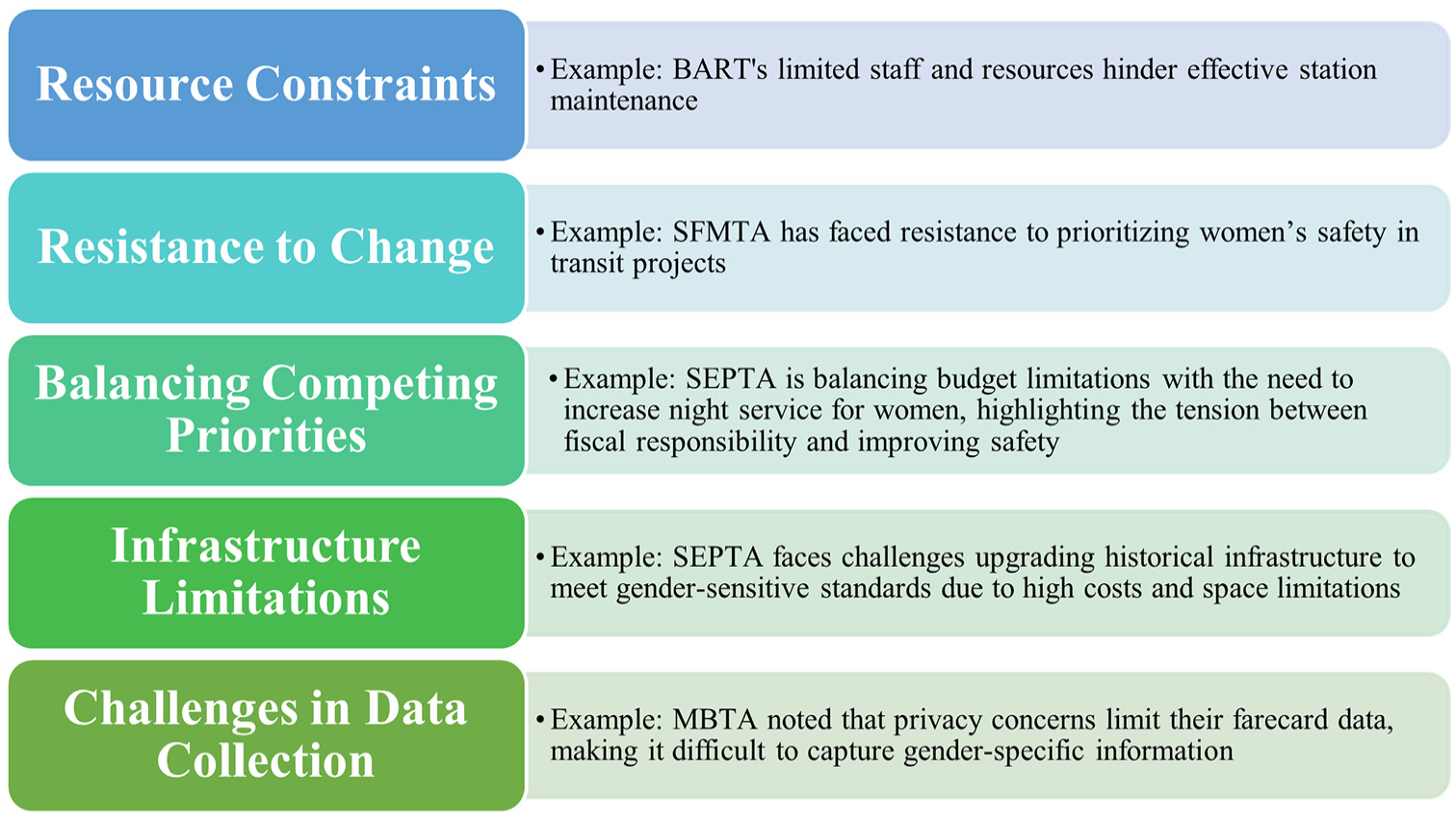
Implementing gender-sensitive policies in transit systems presents various challenges that affect the effectiveness and sustainability of such initiatives. This section explores the key obstacles transit agencies face, including resource constraints, resistance to change, balancing priorities, infrastructure and staff training issues, and challenges in data collection. Figure 4 highlights a few examples, which are discussed broadly below.
Examples of challenges and barriers to implementing gender-sensitive transit policies.
Resource Constraints
The most significant challenge for transit agencies is resource constraints, impeding their ability to effectively design, implement, and maintain gender-sensitive practices. For example, Sound Transit struggles with allocating the limited resources available toward essential operational needs, leaving insufficient funds for testing and integrating new gender-inclusive features. Similarly, WMATA struggles with conducting comprehensive data collection and making policy adjustments because of financial challenges. BART’s limited staff and resources make station maintenance difficult, hindering the implementation and upkeep of gender-sensitive design features.
Resistance to Change
Another significant barrier to gender-inclusive transit planning is resistance to change, which might come from various stakeholders, including staff, management, or the public. Several agencies reported that having women in decision-making positions has helped tremendously while advocating for gender-inclusive innovations. However, some, like SFMTA, have encountered pushback against prioritizing women’s safety in transit projects. This resistance may stem from a lack of awareness, perceived increased costs, or the challenge of altering established practices.
A recurring theme of these discussions was how gender-inclusive approaches benefit both women and men. For example, a father traveling with a stroller also benefits from an open-stroller policy. This broader understanding could help policy makers and planners overcome resistance to implementing gender-inclusive strategies.
Balancing Competing Priorities
Most transit agencies struggle to balance competing priorities like budget limits, service demands, and the need for gender-sensitive improvements, which complicates integrating gender-sensitive policies into transit planning and operations. For instance, SEPTA is trying to balance fiscal responsibility with the need to increase service frequency for women traveling at night, illustrating the tension between budget limitations and the goal of improving safety and accessibility. They recognize that addressing gender-specific issues must be weighed against available resources and broader service demands. Similarly, COTA’s focus on family-oriented design like stroller storage requires balancing practical constraints with the goal of enhancing accessibility and equity. According to the COTA representative, “This balancing act involves addressing immediate needs while planning for long-term sustainability.”
Infrastructure Limitations
Many interviewees mentioned infrastructure limitations as a significant barrier, since operating within the constraints of existing infrastructure limits their ability to introduce new gender-sensitive design features. SEPTA often faces such challenges with older infrastructure in Philadelphia, as upgrading historical infrastructure to meet contemporary gender-sensitive standards requires substantial investment and can be constrained by design limitations and physical space restrictions. MBTA faces similar obstacles with inadequate women’s restrooms and accessibility issues, highlighting the difficulties in modifying existing infrastructure. Addressing these limitations requires careful and long-term planning, and significant investment to ensure feasibility and effectiveness.
Challenges in Data Collection
Most of the agencies mentioned limited budget and staffing as the biggest constraints affecting their ability to conduct extensive data collection and analysis. MBTA also noted privacy concerns as a notable obstacle, as their farecard captures the bare minimum of information to ensure client privacy, making it difficult to capture gender-specific data. Similarly, Metro (Minneapolis) struggles with analyzing customer feedback comprehensively owing to a lack of centralized data repositories and difficulties in designing survey templates that specifically address bus-design-related experiences.
Document Analysis
Following the interviews, we conducted a review of the design manuals. A keyword search followed by a more in-depth review yielded the following results.
NACTO Transit Street Design Guide
A keyword search of the NACTO Transit Street Design Guide ( 42 ) found no references to women, gender, or family. It briefly addresses universal design elements like lighting and ADA (Americans with Disabilities Act) ramps, which benefit all users, including women. However, its primary focus is optimizing transit flow in relation to speed, volume, and comfort, without addressing diverse demographic needs. Although it acknowledges the importance of ADA compliance for accessibility, it does not explicitly consider how travel experiences might differ between men and women or between single riders and families. Overall, while the guide effectively addresses transit flow, there is significant opportunity to integrate considerations of gender, accessibility, comfort, and safety into its recommendations.
Transit Capacity and Quality of Service Manual, 3rd Edition
A word search of the TCQSM ( 43 ) yielded the following results: “female” came up in the context of pedestrian safety and walking speed for crosswalk design; “children” came up in the context of human service transportation; “equity” in the context of service equity for communities served; “fare” in the context of fare collection method; “stroller” in the context of boarding time, passenger area calculation, and stroller storage.
It offers design recommendations to enhance transit system capacity, efficiency, and passenger experience. It emphasizes effective passenger flow management through optimizing vehicle space, and station and platform layouts to minimize congestion and increase service frequency. It advocates for ADA-compliant, universal design principles, ensuring facilities and vehicles are accessible to all passengers, including those with disabilities and parents with strollers. It also recommends real-time information updates and clear signage to aid navigation; safety measures like adequate lighting, surveillance, and emergency systems; increasing passenger comfort through ample seating, shelter, and regular maintenance; and lastly, community engagement through stakeholder involvement and feedback mechanisms to ensure the transit system meets diverse community needs. Although these recommendations generally support women’s travel needs by enhancing overall safety, accessibility, and comfort, the manual lacks intention and explicit instructions with regard to gender equity. Hopefully, the upcoming revision (currently under preparation) will include more specific recommendations for gender inclusiveness.
BART Station Experience Design Guidelines
A keyword search of the BART Station Experience Design Guidelines revealed only a sparse mention of certain keywords like “children,”“family,”“stroller,”“surveillance,” and “lighting.” However, a thorough review yielded some interesting results. In the manual, BART introduces the idea of “customer journey” and “customer segments” ( 44 ). First, BART divided the station area into zones—station approach, station entrance/exit, unpaid area circulation, ticketing/fare gates, paid area circulation, vertical circulations, and platform—based on how a customer would “journey” through the system. Then they classified different customer groups into “segments.” The primary segments—regular riders, occasional riders, and new riders—were created based on how familiar the riders are with BART’s system. The secondary segments focused on specific needs, and included foreign language speakers, seniors and persons with disabilities, families and children, luggage-toters, technology literate, and cyclists. By marrying these two concepts, BART tried to understand the needs and emotions of each “segment” as they “journeyed” through BART’s system. This helped them to design safe, accessible, easily navigated, and inclusive transit stations by ensuring that amenities, signage, and services cater to the specific needs of each group. For instance, new riders might feel anxious about getting lost and would benefit from clear wayfinding and simple instructions, whereas regular riders would appreciate efficient navigation and real-time information ( 44 ).
Although the guide does not specifically mention women or their unique travel needs, it goes into detail on the needs of different customer segments, emphasizing design features that provide enhanced safety, accessibility, and convenience. These features are transferable to women’s travel needs as well. For instance, staff assistance can offer immediate help in cases of harassment or safety concerns, whereas priority seating benefits pregnant women and those with young children. The safety features and emergency procedures create a secure environment, addressing the specific concerns of women traveling alone or with dependents. Overall, these features collectively enhance the comfort, safety, and inclusivity of the transit system for female passengers, albeit not explicitly.
Sound Transit Station Experience Design Guidelines
Sound Transit’s Station Experience Design Guidelines stands out for its commitment to gender and overall inclusivity. During a keyword search for terms like “female,”“women,”“pregnant,”“gender,”“children,” and “family,” we came across the concept of personas, similar to BART’s “customer segments,” but more detailed. The persona exercise is a method that Sound Transit uses to gain insights into the diverse characteristics and needs of passengers who use the Link light rail system. It involves creating fictional characters, or “personas,” that represent various passenger types based on their frequency of travel and specific abilities or needs, helping design teams to better understand the needs and challenges of different users. By role-playing these personas during the design phase, they can identify potential issues and improve the overall passenger experience, ensuring usability and satisfaction across the transit system ( 45 ).
A detailed review showed that the manual explicitly addresses women’s travel needs and the unique challenges they face using the transit system, highlighting how women often make multiple trips throughout the day and engage in trip chaining. This understanding is crucial for designing systems that accommodate these travel patterns. It also considers the needs of pregnant women, noting they may require more space, frequent access to restrooms, and places to sit and rest, and may need more time to navigate the transit environment. Safety concerns are addressed by prioritizing features such as well-lit areas and clear sightlines, and natural surveillance by using glass facades, enhancing the sense of security for female passengers. It encourages designers to consider gender as a critical factor in the planning and design process, promoting a safe, accessible, and comfortable experience. Other key features recommended include emergency phones, unisex restrooms, ADA-compliant pathways, and well-lit environments, all contributing to safer and more convenient travel for women.
Metrolink SCARRA Design Criteria Manual
A keyword search of the Metrolink SCARRA Design Criteria Manual revealed mentions of terms such as “women” (in the context of “women’s bathroom”), “female” (in the context of “lockers for female workers”), and “lighting” and “camera/surveillance” (in the context of “safety and visibility”). Further review showed that the manual prioritizes accessibility, ensuring that all users, including those with disabilities, can navigate stations safely and comfortably. The document demonstrates an explicit commitment to inclusivity in its design criteria, explicitly addressing the needs of different genders through the inclusion of unisex restrooms and facilities that cater to both men and women ( 46 ).
The manual specifies the design of men’s and women’s restrooms, ensuring these facilities are accessible and compliant with applicable codes. Additionally, it includes unisex restrooms, accommodating individuals regardless of gender identity, thereby promoting inclusivity. The provision of locker areas accessible to both male and female employees, with well-ventilated lockers and built-in benches in restrooms, reflects an understanding of diverse needs in workplace environments ( 46 ).
Although the document does not delve deeply into specific travel needs based on gender, its design recommendations inherently support gender-inclusivity by ensuring facilities are accessible and accommodating for all users. Key features include emergency telephones with alternate power sources, accessible restroom facilities, and unisex restrooms for security personnel. Walkways and ramps to platforms must comply with ADA standards, and signage must have nonglare finishes, appropriate contrast, and Braille for critical areas. Visibility at crossings is emphasized, with measures to prevent obstructions, and adequate lighting and surveillance are required for safety. Collaboration with local agencies and community organizations, public meetings, and workshops gather community input, ensuring projects meet community needs. Feedback mechanisms and postproject evaluations help refine future engagement strategies. Vehicles must accommodate all passengers, featuring low-floor designs, ramps, designated spaces for mobility devices, and modern amenities, with mandatory ADA compliance and advanced safety features ( 46 ).
These design features are particularly beneficial for women’s travel needs by enhancing safety, accessibility, and convenience. Staff assistance and emergency telephones provide immediate help in unsafe situations, while accessible walkways, ramps, and elevators ease navigation for women with strollers or heavy bags. Clear signage and good lighting improve safety, especially during nighttime travel, and collaborative efforts with community organizations ensure that women’s specific needs are addressed in transit planning.
Conclusion
This study highlights significant progress in incorporating gender-inclusivity into transit planning, while also revealing ongoing challenges. For more detail on the methods, data collection, and results, please see the thesis of one of our authors, Jahan ( 47 ). The key takeaways from this study include:
Data collection practices: Gender-disaggregated data collection and analysis are pivotal in understanding and addressing diverse transit needs. Although agencies like SEPTA and LA Metro have successfully implemented robust data collection methodologies to inform their policies and design decisions, several are still lacking in the comprehensive collection of gender-specific data, especially with regard to design-specific issues. However, inventive approaches, as demonstrated by WMATA and MBTA, provide valuable insights into the future possibilities for comprehensive data collection.
Gender-sensitive design: Agencies like LA Metro, Sound Transit, and SEPTA have pioneered design features that address diverse gender needs, such as improved lighting, stroller storage, and natural surveillance. However, further research is needed to ascertain what design considerations women prioritize and how to sustainably and economically incorporate them.
Operational practices and service policies: Customized service frequency that reflects non-peak-hour travel demand or provision of courtesy stops during nighttime services provides sophisticated and nuanced solutions to the uniqueness of female travel behavior. Other policies like family-fare accommodations and staff training programs highlight the importance of addressing the practical needs of passengers.
Challenges and barriers: Transit agencies face substantial challenges in implementing gender-sensitive policies, including limited resources, resistance to change, and infrastructure constraints. Addressing these barriers requires a concerted effort to align priorities, allocate resources effectively, and foster a culture of inclusivity within the organization.
Guidelines and manuals: Several of the transit design guidelines lack explicit gender-inclusive language. Whereas some, like the Sound Transit Station Experience Design Guidelines and the Metrolink SCARRA Design Criteria Manual, incorporate gender-inclusive features, others fall short in addressing gender-specific needs. Although the TCQSM 3rd Edition promotes universal design and accessibility, it does not fully account for gender differences. BART, while incorporating gender-inclusive practices in operations, offers only practical guidance in its Station Experience Design Guidelines without focusing on gender-specific considerations, though some features inadvertently benefit women. In contrast, the Sound Transit Station Experience Design Guidelines stand out for their explicit attention to gender-inclusivity, offering detailed recommendations based on diverse passenger needs, including women and families. The Metrolink SCARRA manual, though less focused on gender-based travel needs, promotes equity through features like unisex restrooms and accessible facilities.
Though the qualitative method of semistructured interviews was an appropriate methodology for this initial study on design and operations guidance related to women on transit, this study is only a first look at best practices in the industry. The semistructured interview format limited the ability of agencies to comment on all aspects of their business, and only nine agencies were interviewed for this work. In future work, the study team recommends a survey of agencies throughout the country to understand how widespread certain practices are among transit agencies.
In summary, although progress is being made, there is a clear need for more comprehensive and explicit integration of gender-sensitive principles. Future revisions of design guidelines should better address gender disparities and improve the overall passenger experience, ensuring transit systems are genuinely inclusive and supportive of all users. This should include gender-disaggregated data collection and analysis to inform policies and design. In addition, operational practices should provide more non-peak-hour trips and family-fare accommodations. Most importantly, design guidelines and manuals should explicitly state the need for features that address gender needs (lighting, stroller storage, etc.) both at the agency and national level, and future research should guide agencies to understand what design features are necessary to improve women’s transit experience.
Footnotes
Acknowledgements
The authors thank the staff from the nine transit agencies for sharing their knowledge, and Madeline Brozen, Evelyn Blumenberg, and Anastasia Loukaitou-Sideris of University of California, Los Angeles for their early inspiration.
Author Contributions
The authors confirm contribution to the paper as follows: study conception and design: C. Brakewood, S. Pike, K. Watkins; data collection: M. Jahan, K. Watkins; analysis and interpretation of results: M. Jahan; draft manuscript preparation: M. Jahan, K. Watkins, C. Brakewood, S. Pike. All authors reviewed the results and approved the final version of the manuscript.
Declaration of Conflicting Interests
The authors declared the following potential conflicts of interest with respect to the research, authorship, and/or publication of this article: Kari Watkins is a member of the Transportation Research Board’s Editorial Board.
Funding
The authors received no financial support for the research, authorship, and/or publication of this article.
