



Abstract
Investment in light-rail transit (LRT) has been one of the main strategies of large metropolitan areas in the last decade to tackle environmental, economic, and social issues. In Montreal, Canada, a C$7 billion LRT system is currently under construction and is expected to significantly affect mobility patterns across the metropolitan region. It is crucial to identify how the impacts of such large public investments vary across societal groups to assess whether the distribution of benefits is fair and equitable. Using data from an online survey and a binary logistic modeling approach, we investigated the ways in which intentions to use this new LRT system differ across gender identities. First, we found that women are less likely than men to have an intention to use LRT. Our modeling results show that there are statistically significant differences across gender identities in the effect of certain sociodemographic and travel-behavior characteristics that explain the intention to use the LRT system. In respect of trip purpose, while women and men intend to use LRT for work trips to the same extent, men intend to use LRT for leisure and discretionary travel more than women. Our findings can help in guiding further research into gender gaps in transport studies and inform practitioners on how gender can be considered in LRT policy decisions so that the benefits of major public-transit investments are more equitably distributed.
Keywords
Given the pressing need for sustainable-transport transitions ( 1 ), policy makers are increasingly working to invest in light-rail transit (LRT). The Réseau express métropolitain (REM), a C$7 billion, 67 km LRT system currently under construction in Montreal, Canada, is one of the largest infrastructural interventions currently being built in North America. As a monumental public-transit investment, the REM aims to significantly alter the way that people move within the metropolitan area by reducing car dependency and increasing public-transit ridership ( 2 ). In addition to delivering environmental benefits, transport-infrastructure projects of this scale also promise to significantly enhance local neighborhoods and provide substantial economic benefits to residents through increased access to opportunities ( 3 ).
Beyond these environmental and economic goals, LRT projects should also strive to foster equitable transport systems, which means ensuring that the social and economic benefits of major infrastructure investments are fairly distributed across society ( 4 – 7 ). There are major gaps, however, in knowledge about how these public-transit investments serve the wants and needs of different segments of society, particularly with regards to LRT and gender ( 8 ). While gender-disaggregated information on LRT ridership remains scarce, some studies have found that women have less propensity to use LRT than men ( 9 ). Additional research is needed to understand how gender differences in intended LRT ridership change across diverse geographical contexts as well as to characterize the phenomena that generate these gender differences.
To address this gap, this research draws from survey data from Montreal to examine residents’ intentions to use the REM, how these intentions vary across genders, as well as factors that generate gaps in perceived utility. Our study poses the following research question: to what extent and in what ways do women’s intentions to use LRT vary from men’s?
Literature Review
Studies on gendered mobilities have long revealed that transport systems are not gender neutral ( 10 – 14 ). For example, urban-planning decisions that prioritize infrastructure for car travel, or that relate to bus routes and street lighting, often have immense gender consequences ( 15 , 16 ). Feminist research has revealed that men tend to travel at a faster pace (relying more on car travel) than do women, whose mobilities have often been restricted to slower speeds, especially when traveling with children ( 17 ). Because gender-differentiated roles place a higher burden on women for family-care activities ( 18 – 21 ), women’s mobilities tend to be much more complex, often encompassing multiple travel modes ( 17 , 22 , 23 ). Although women’s trips are often shorter than men’s ( 12 ), on average, women make significantly more trips ( 24 , 25 ), and engage in more non-work-related travel ( 24 ). As for travel patterns, the literature finds that women tend to walk more than men do ( 24 ) and that they rely more heavily on public transit ( 25 , 26 ).
While the literature on LRT has vastly increased in recent years ( 3 , 27 , 28 ), discussions on the gendered dimensions of LRT ridership remain limited, and at times lack consensus. For example, a study from Flanders, Belgium ( 9 ) found that women were less inclined than men to use LRT, whereas a study from Huston, Texas ( 29 ) found that gender was not associated with more or less intention to use LRT when controlling for other variables. In their research on how gender-specific factors mediate different mode choices, Hsu et al. ( 30 ) found that safety concerns were more negatively associated with the number of LRT trips for women than for men.
The limited reach of studies on gender and LRT is of course reflective of wider trends in transport studies and planning, which often neglect to incorporate discussions on gender, or which engage with these questions in only limited ways ( 11 , 16 , 31 ). Although feminist research has brought attention to women’s and girls’ unique travel patterns and safety concerns, these considerations have only been sparsely integrated in urban transport planning ( 15 , 32 ). While this neglect can be related to such issues as gender-based barriers in urban-planning professions and wider power relations ( 16 ), there is also a great need for more comprehensive data about women’s lives, mobilities, and travel preferences ( 15 ). With the rapid implementation and expansion of LRT in cities across the globe, this paper addresses the urgent need for more detailed research on the gendered dimensions of light rail and those who are underserved by major transport investments.
Study Context
The REM is an automated LRT system currently under construction in Montreal, Canada that is expected to begin operations progressively in phases between 2022 and 2024. When complete, the REM will connect Montreal’s downtown, its international airport, and suburban destinations with high-frequency service (Figure 1). With a predicted initial ridership of 190,000 passengers per day ( 33 ), the REM has the potential to radically alter mobility and land-use and transport patterns across the Greater Montreal Area, as LRT projects have done elsewhere ( 34 ). The impacts of the REM on social wellbeing are potentially significant as well, as the project may have broad public health, environmental, and economic impacts within the metropolitan area ( 35 , 36 ).
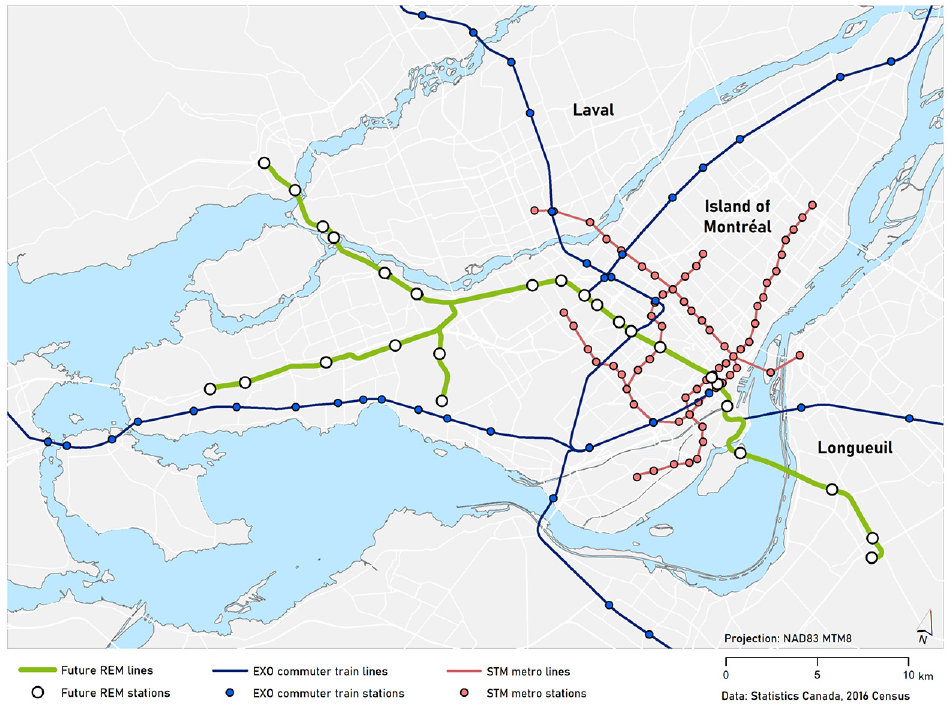
Map of Montreal’s rapid transit and commuter rail system, including the REM.
At the same time, LRT investments of this scale will need to pay careful attention to local household realities and gender dynamics if they are to support social-equity goals. For example, recent quantitative research on travel patterns in Montreal has found that women disproportionately bear the burden for care mobilities, including such activities as grocery shopping, escorting children, and other forms of travel associated with unpaid care labor ( 19 ). Other studies have revealed that single-parent households and elderly individuals in Montreal have more geographically limited travel patterns ( 37 , 38 ). Low-income groups in Montreal have also been found to travel less than higher income groups ( 39 ). These findings underscore the importance of accounting for sociodemographic differences in sustainable-transport planning, including gender. In this context, it is highly relevant to study the differing perceptions and intended uses of the REM between genders, both for this LRT project in Montreal and for future LRT projects elsewhere.
Data and Methods
This study’s primary data source is an online bilingual (English–French) survey conducted between October and November 2019. This survey was administered in the Greater Montreal Area to participants of 18 years of age and older to collect data on people’s intention to use the REM for different purposes as well as to study the project’s potential impact on travel patterns and wellbeing. The survey collected data on respondents’ sociodemographic characteristics, attitudes toward the REM and transit in general, current and past travel behavior, and physical activity levels. Additionally, the survey collected residential choice factors, which allow us to control for residential self-selection.
To ensure the representativeness of the sample, we employed various recruitment techniques recommended by Dillman et al. ( 40 ), including the distribution of flyers at various residences and downtown transport hubs, as well as targeted online recruitment through paid and unpaid advertisements on various social media platforms. Incentives were included in the survey such as the possibility of winning a prize based on a draw. A public opinion survey company was also hired to help in recruiting part of the sample.
We collected a total of 4148 complete answers, to which we applied a thorough filtering validation process. We removed responses that were filled too quickly to be considered reliable, excluding the fastest 10% from the sample depending on the number of questions answered. It must be noted that different groups of respondents, depending on their answers, were presented with different sets of questions. Each of these groups were validated according to their own respective top 10% speed. We also filtered out unrealistic responses, including birth years before 1920 and those who reported spending more than 200 min per day commuting by walking or cycling. Furthermore, respondents who had not heard about the REM project before were not asked whether they intended to use the REM and were therefore excluded. We also excluded survey responses if more than one response was provided by the same email or IP address, or if the home location the respondent provided was outside the Montreal Census Metropolitan Area (CMA). Following this exclusion process, we retained a sample of 2778 responses for our analysis. To calculate regional accessibility to jobs by transit, and travel distance to REM stations, we used the r5r package in R ( 41 ). Travel distances to REM stations were calculated as the shortest distance through the pedestrian network from the home location, which the respondent provided by placing a pin on a map or as their home postal code. For respondents that provided their postal code, distances were calculated from the postal code’s centroid. Since Canadian postal code is defined at the block-level, centroids are generally precise to within 100 m of the true home location. Job location data was acquired through Statistics Canada, from the 2016 census, in the form of commute trips for the Montreal CMA. Using the projected travel times for the REM, we calculated the improvement in job accessibility that will be brought by the project. To account for local accessibility, we used WalkScore data, which focuses on the number and diversity of activities that can be reached within walking distance. This measure has been tested repeatedly in the land-use and transport literature ( 42 ), showing reliability as a walkability indicator ( 43 ).
To analyze this dataset and achieve this work’s goal, we estimated a weighted multilevel binary logistic regression model using the lme4 R package ( 44 ). Using this model, we estimated the probability of intending to use the REM as a function of several independent variables that may affect this intention. These variables include a series of sociodemographic characteristics, distance to the nearest REM station, local and regional accessibility levels, current physical activity levels, past and current transit use, and current access to different transport modes. Additionally, we controlled by attitudes toward the REM and transit in general, as well as for residential self-selection. Other independent variables tested for the model included the respondent’s education level, ethnicity, and household composition in respect of presence of children and household size. However, these variables were not included in the model as they did not show a significant effect of intending to use the REM.
The model’s dependent variable, intention to use the REM, was determined based on the answer to the question “How likely are you to use the REM when it is complete and operational?” This data was converted into a binary variable in which respondents indicating that they were “Very likely” or “Likely” to use the REM were coded as 1, and all other individuals (responding “Neutral,”“Unlikely,” or “Very unlikely”) were coded as 0.
To investigate the gendered effects that our studied factors have on the probability of using the REM, we tested interactions between the independent variables and gender, and included those that were statistically significant in the final model. Finally, to inquire into gendered differences in the intention to use the REM depending on trip purpose, we conducted three Welch two-sample t-tests. The three tested trip purposes were going to work, leisure, and going to the airport. For this, we only considered the sample of respondents identifying as women (n = 699) and men (n = 791) who indicated that they intended to use the REM in general.
For the multilevel model, we considered the census tract of the home location as the higher level to control for shared characteristics in a neighborhood that are otherwise unaccounted for. The weightings in the model were calculated for all valid responses using the anesrake R package ( 45 ). The weights were calculated to match our sample to census tract information of age, income, and gender from Statistics Canada 2016 census data ( 46 ), retrieved through the cancensus R package ( 47 ). This weighting process is key to ensure that model results are not affected by biases from the survey sampling.
Results and Discussion
Descriptive Statistics
The descriptive statistics of the cleaned and validated sample that we retained for our analysis (n = 2778) is presented in Table 1. Around 54.2% of this sample indicated that they intended to use the REM. While 50.2% of respondents in this sample identified as a man, 48.4% identified as a woman, and 1.4% (38 individuals) identified as gender nonconforming or nonbinary. A smaller proportion of women than men indicated that they intended to use the REM: 50.1% of women compared with 58.8% of men. A two-sample Welch t-test confirms that this difference is statistically significant (p < 0.001).
Descriptive Statistics of the Sample
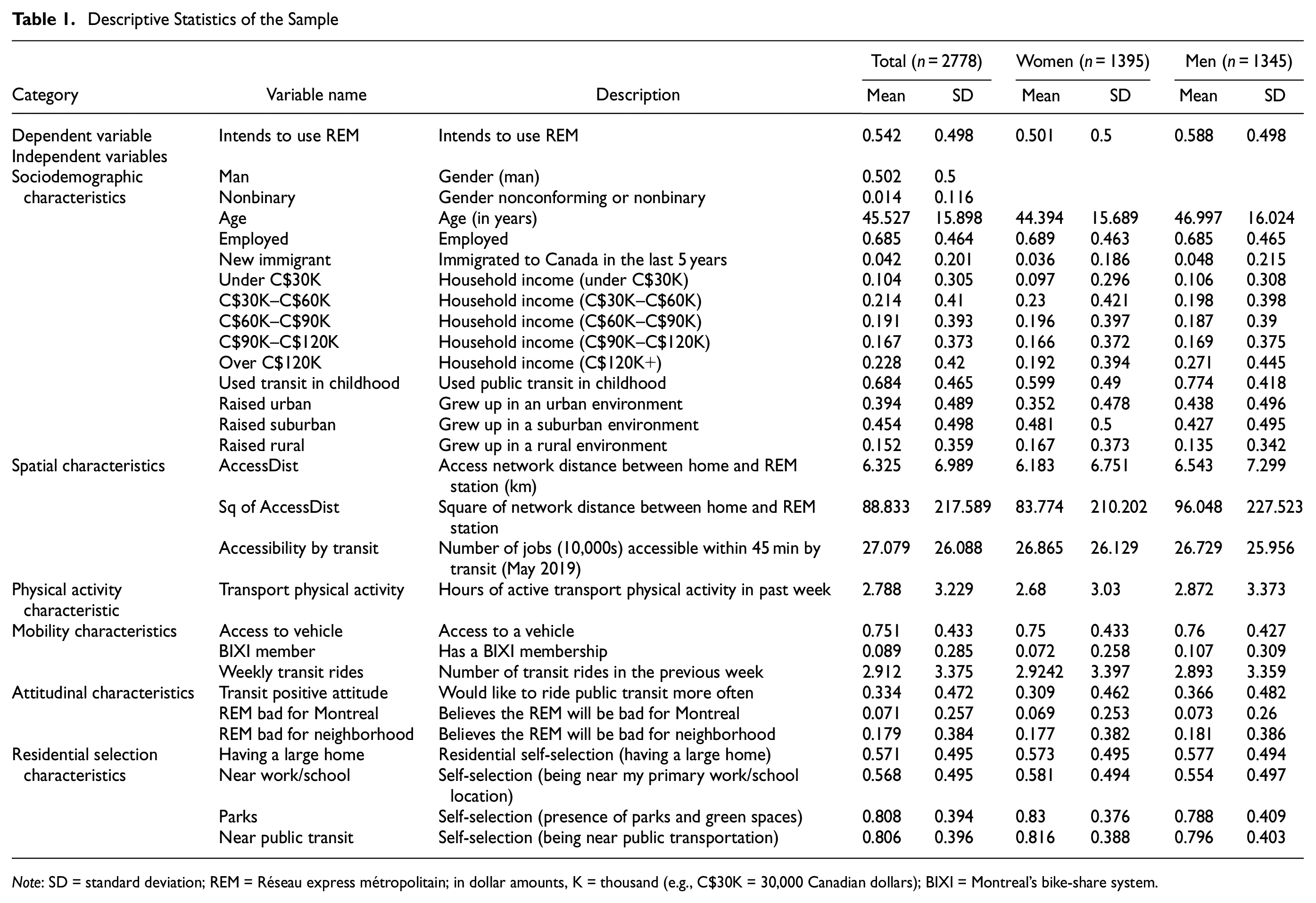
Note: SD = standard deviation; REM = Réseau express métropolitain; in dollar amounts, K = thousand (e.g., C$30K = 30,000 Canadian dollars); BIXI = Montreal’s bike-share system.
Gendered Factors Influencing Intention to Use LRT
The results of our model estimating the probability of intending to use the REM are presented in Table 2. We found several factors that have a significantly different effect for women than for men by identifying statistically significant interactions between gender and other independent variables. First, we found that intention to use the REM for women is less negatively affected by increased age than men. While men’s probability of intending to use the REM is reduced by 2% for each additional year of age, for women this effect is less than 1%. In other words, women’s intention to use the LRT declines less with age, and the gender gap between intended use is narrower for older individuals than for younger individuals.
Model for Intention to Use the REM Including Interactions with Gender
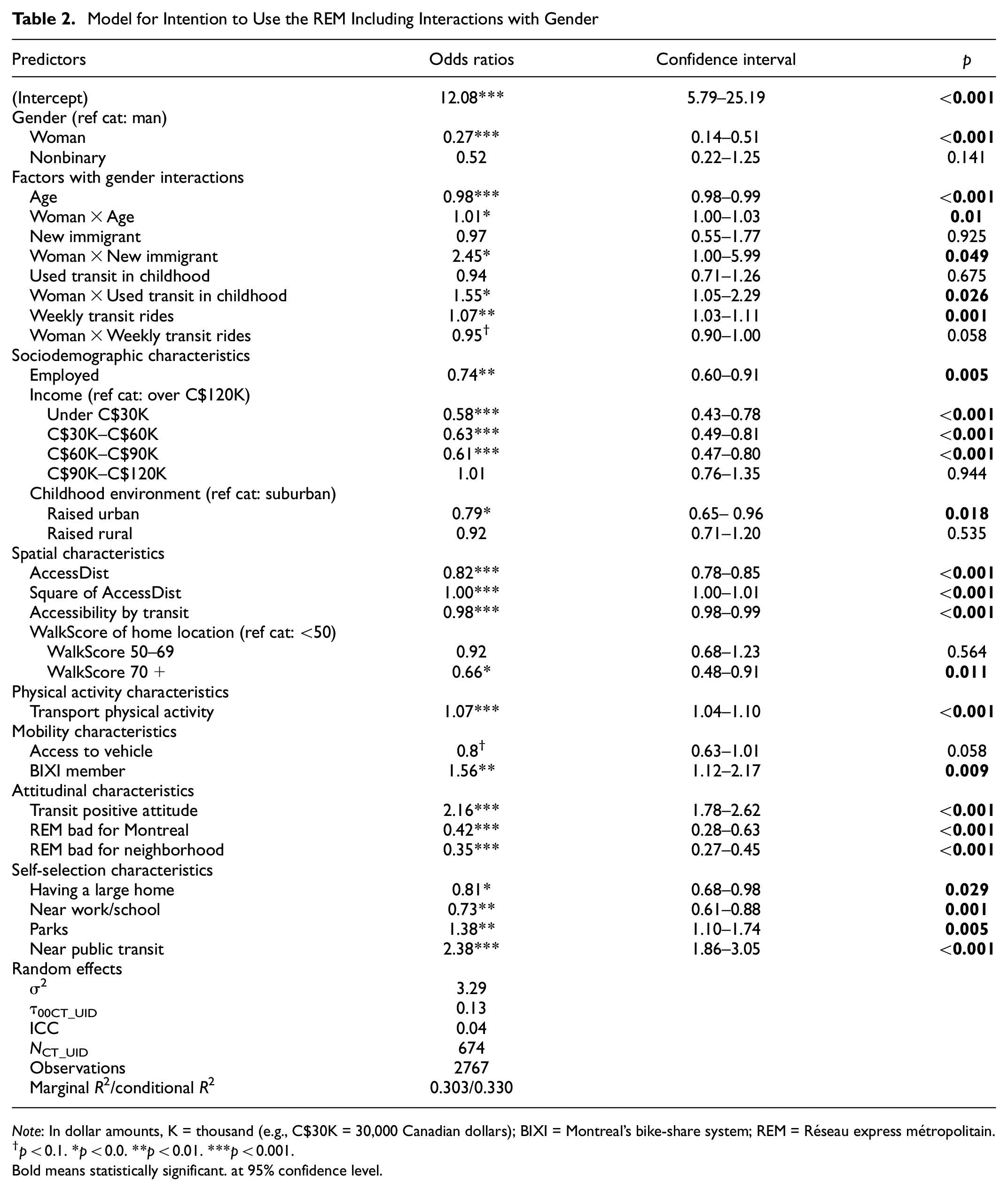
Note: In dollar amounts, K = thousand (e.g., C$30K = 30,000 Canadian dollars); BIXI = Montreal’s bike-share system; REM = Réseau express métropolitain.
p < 0.1. *p < 0.0. **p < 0.01. ***p < 0.001.Bold means statistically significant. at 95% confidence level.
Second, immigrating to Canada within the last 5 years has a strongly positive effect on intention to use the REM for women, but does not have this effect for men and other respondents. All else held equal, recent immigrant women are 2.4 times more likely to intend to use the REM than are women who are not recent immigrants. This effect could be partially explained by higher public-transit use by women in other countries ( 48 ), but merits further research.
Third, according to our results, experience of having used public transit regularly in childhood had a positive and statistically significant association with intended use of LRT for women but did not have an effect on intended use for men. All else held equal, women who used public transit regularly in childhood had 55% greater odds of intending to use the REM than women who did not have this experience in childhood. This finding points to a gendered effect of life course on mode choice and builds on an emerging understanding of how life events affect individuals’ travel patterns differentially by gender ( 49 ). A potential explanation for the lack of effect of men’s childhood transit use may be related to differences in travel socialization across gender identities while growing up ( 50 ).
If women’s mode choice is distinctly more affected by personal childhood mobility experiences, as our model results suggest, there could be a case for prioritizing exposure to public transit in childhood, for example through public education, to contribute to reducing gender gaps in LRT use and better understanding women’s unique travel needs. However, given that women already depend more heavily on public transit, a case could be made for finding other strategies to better foster public-transit use for boys and men, such as programs that help to discourage car use.
Finally, we found differences in how existing transit use affects intention to use the REM differently for women. Overall, our model results suggest that more frequent current transit use is positively associated with intended use of LRT, which is supported by previous research ( 29 , 51 ). For men and gender nonconforming or nonbinary respondents, every additional transit ride in the previous week contributes to a 7% increase in the probability of intending to use the REM. Multiplying the odds ratio of the interaction term and the non-interaction term gives us the contribution to odds of intending to use the REM for women, which is around a 2% increase. Thus, intended use of the REM is far less sensitive to additional current transit use for women than it is for men. In other words, while childhood use of transit is more deterministic of future LRT use for women, their current use of public transit predicts their future LRT use less.
The coefficient associated to the gender nonconforming or nonbinary people’s dummy variable indicates that their intention to use the REM is not significantly different from people who identify as men. Since the model includes several interaction effects for women, the coefficient associated with the women’s dummy variable cannot be interpreted on its own. To integrally understand the gendered results from our logit model, Figure 2 presents two sensitivity analyses. In these analyses, we calculated the probability of intending to use the REM for men and women by fixing every independent variable to the sample’s mean, except for key variables which were sensitized. In the case of the first sensitivity analysis, shown in Figure 2a, the probability for intending to use the REM was calculated for men and women as a function of varying age. Additionally, for women, the analysis was subdivided into women who are new immigrants and those who are not. Since for men, immigration status was not a significant factor, this subdivision was not calculated for them.
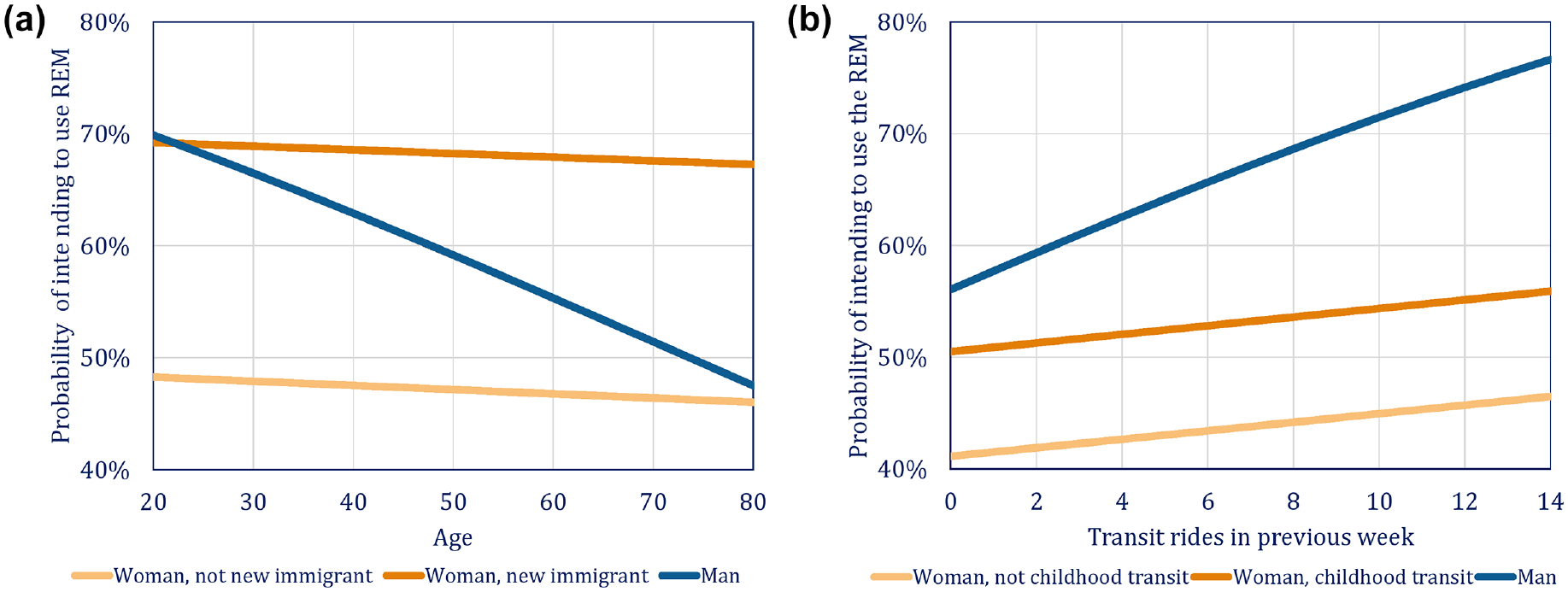
Sensitivity analysis of (a) age and immigrant status, and (b) current and childhood transit use.
Figure 2a shows the significant difference between recent immigrant women and other women in their intention to use the REM. When keeping every other variable fixed at its mean, women that are not new immigrants have a probability of 45% to 48% of using the REM, while new-immigrant women have a probability between 68% and 70%. Additionally, Figure 2a shows that age has a considerably smaller effect on women than men. When keeping all else constant, women of 80 years of age have less than a 2% reduction in probability of using the REM compared with women of 20 years of age, regardless of immigration status. On the other hand, older men are considerably less likely to use the REM when compared with their younger counterparts. While men of 20 years of age have a 69% likelihood of using the REM, for 80-year-old men this likelihood decreases to 48%, when keeping all other variables constant. This figure demonstrates how the gender gap in intention to use the REM is greatest among younger individuals.
For the second sensitivity analysis (Figure 2b), similarly to the first analysis, the probability for intending to use the REM was calculated for men and women while sensitizing key variables. In this case, the probability was calculated while varying the number of current weekly transit rides. Additionally, we subdivided women into those who regularly used transit during their childhood and those who did not. We did not apply this distinction for men, as this variable was not significant for them.
This analysis shows that, when keeping all else fixed at its mean, women who used transit regularly during their childhood have a probability of using the REM approximately 9% larger than women who did not, regardless of current transit use. Additionally, women who have a current transit use of two daily trips have a 5% increase in probability to use the REM compared with those who currently do not use transit, when keeping all else constant. This effect is small when compared with men. For men who currently use transit twice a day, their probability of using the REM is 21% more than for men who have no current transit use, when fixing all other variables.
Non-Gendered Factors
Our model of intention to use the REM included several independent variables that showed themselves not to have a significantly different effect depending on the person’s gender. These include sociodemographic, life-history, spatial, mobility, attitudinal, and residential self-selection independent variables. According to the model results, employed people are 26% less likely to intend to use LRT than those who are not, all else held equal. The effect of income on intention to use the REM is measured with respect to the highest income group: over C$120,000 per year. Individuals in yearly-income groups of less than C$90,000 are 39% to 42% less likely to use the new LRT than those in higher income groups, which is in line with previous research ( 30 ). Respondents raised in rural environments had a 21% lower probability for intending to use the REM, in comparison with individuals who were raised in a suburban environment, who have a higher probability of using the REM.
As expected, increasing the access distance to the closest REM station reduces the odds of intending to use the REM. The statistical significance and positive odds ratio of the square term indicates that there is a non-linear effect of access distance on the intention to use the REM, which is illustrated in Figure 3. The probability that a person living at a distance of 3.7 km from their closest REM station intends to use the REM is half that for a person living in the immediate vicinity of the REM. While previous research has found that the effect of access distance to the closest LRT station on realized use differed significantly between men and women ( 30 ), we did not find a significant gendered difference in this relationship. Higher existing transit accessibility at the respondent’s home location generates less intention to use the REM. Similarly, higher local accessibility, as measured through WalkScore, also results in lower intention to use the REM. These results indicate that the REM caters to individuals who live in areas where there are currently fewer mobility and destination options, and thus the project may fill important gaps in the transport system and change behavior.
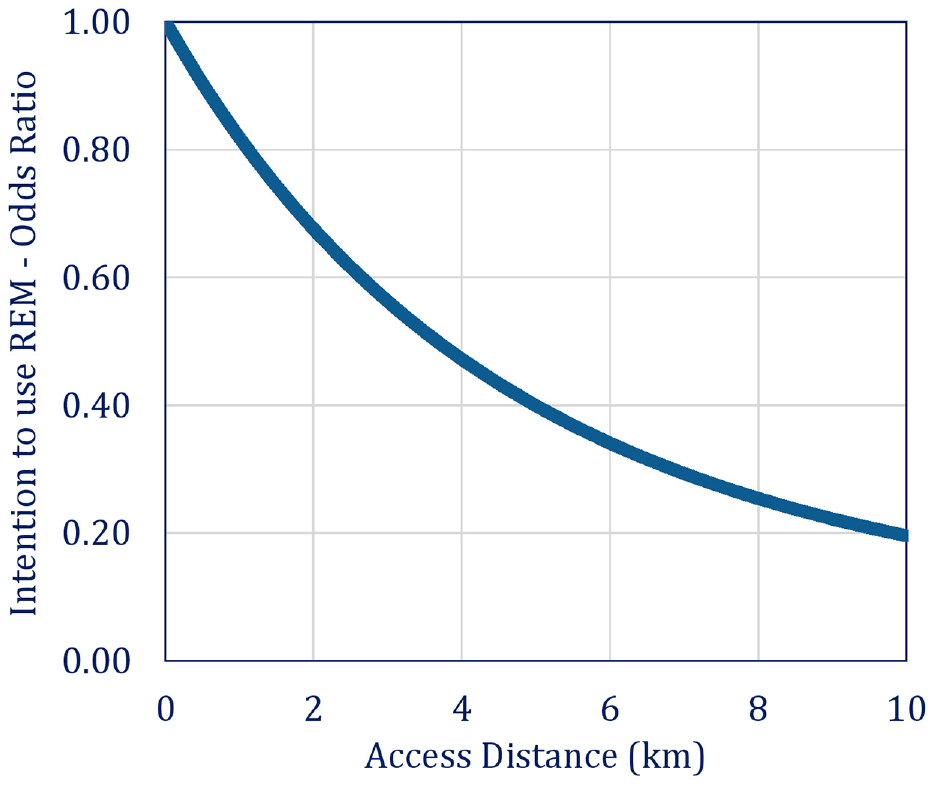
Effect of access distance on intention to use the REM odds.
Corroborating findings by Sener et al. ( 29 ), we found that individuals who reported doing more physical activity for transport in the previous week were more likely to intend to use the REM than were those who reported doing less. Each additional hour of transport physical activity per week increases the likelihood of intending to ride the REM by 7%. Respondents with access to a car are 20% less likely to intend to use LRT, all else held equal. This finding is consistent with findings in previous research ( 29 , 51 ). Members of Montreal’s public bike-share system, BIXI, have higher odds of intending to use the REM. We understand this as a proxy for willingness or openness to adopting new behaviors in general. Consistent with other studies on the determinants of LRT and rail use, we found that attitudes were very strongly deterministic, even when accounting for sociodemographic, environmental, and mobility characteristics ( 29 , 52–54). Pro-transit attitudes, indicated by desire to use public transit more often, had a strongly positive association on intention to use the REM, while negative attitudes toward the impact of the REM on the respondent’s neighborhood and on the city had a strongly negative association.
Use of REM by Gender and Trip Purpose
By analyzing intended use of the REM for specific purposes, we further inquire into other important ways in which use of LRT differs for women. Considering the subset of respondents who indicated that they intended to use the REM (n = 1490), we compared intended use for three specific trip purposes between people who identify as women and those who identify as men (Table 3), while people who identify as gender nonconforming or nonbinary were excluded from the analysis because of small sample size. The results of this analysis show that there is no statistically significant gender gap for travel to work by LRT. In contrast, there is a statistically significant gender gap for intention to use the REM for leisure activities and for going to the airport. These results suggest that the REM is less useful to women than it is to men, as it does not fill women’s travel needs for discretionary travel. We propose two explanations for this that could be investigated in future research. The first is that women may conduct different activities to fulfill leisure needs, ones that require LRT less. This could be the case if, for example, leisure activities are conducted closer to the household for women than for men, which could be partially explained by the greater burden placed on women for household responsibilities, hindering the possibility of long-distance leisure activities. The second explanation would be that women generally have fewer opportunities to conduct discretionary trips, because of enduring gender inequities, such as the uneven distribution of care mobilities ( 19 , 20 , 22 ).
Intended Trip Purpose Using the REM by Gender, and t-Test Results, for Respondents Who Intend to Use the REM
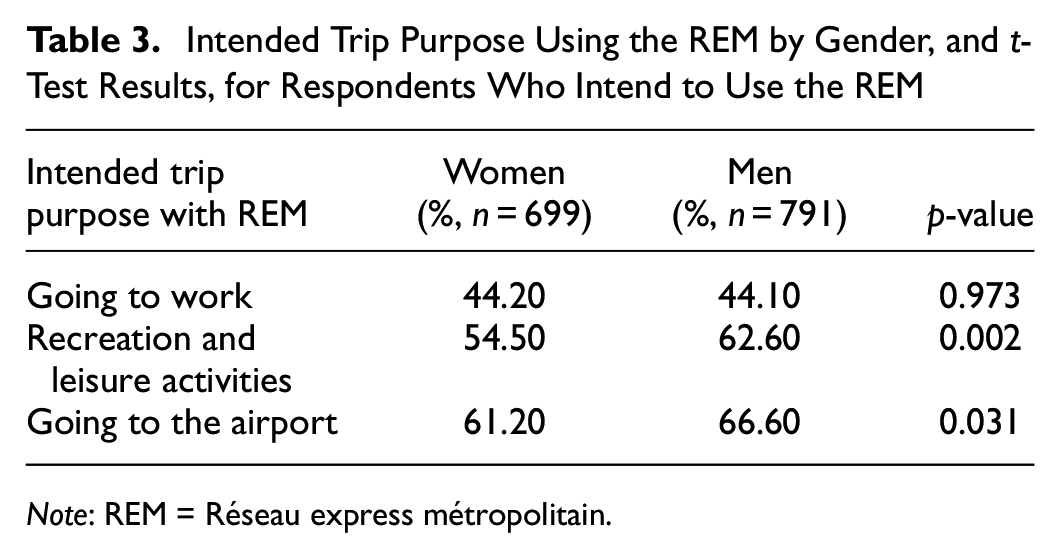
Note: REM = Réseau express métropolitain.
Conclusions
Large public-transit infrastructure, such as LRT, has the potential to make transformative impacts on urban environments and the wellbeing of local populations. It is crucial to identify the ways in which these impacts vary across society, to examine whose needs are being fulfilled by LRT, and to assess whether the distribution of benefit across groups is fair and equitable. Our study examining how intended use of LRT in Montreal differs across gender builds on previous research that has illuminated gender differences in travel behavior and public-transit use in general ( 10 , 26 , 30 ). Studies on realized and intended LRT use in other context have found differences across gender categories ( 9 , 29 ), but require greater attention to the causes of gender gaps, which our paper has tried to explain.
Using a weighted multilevel logistic regression, we analyzed a survey conducted in Montreal, Canada, to understand the gender differences in factors affecting the intention to use the REM, an LRT system currently under construction in the metropolitan area. We found five major ways in which intention to use the REM differs across gender. First, and most broadly, is that women intend to use the REM significantly less than men. Second, intention to use the REM for women declines more slowly with their age relative to men, and thus the gap in intended LRT use is greater among young people. Third, women who recently immigrated to Canada intend to use the REM far more than non-immigrant women, whereas there is no effect of being a new immigrant on men’s intention to use the REM. Thus, the gap in intended REM use is greater among people who are not recent immigrants. Fourth, increased current use of public transit contributes less to intention to use the REM for women, whereas use of public transit in childhood contributes positively to intention to use the REM for women, but not for men.
Finally, among future REM users’ intention, there is no discernible gap in intention to use the REM for work, the less discretionary travel purpose. However, there are large and statistically significant gaps in intention to use the REM for leisure, with women intending to use the REM far less for this purpose. These differential intentions for leisure and discretionary travel could be attributed to a variety of gender dynamics discussed in the mobilities literature, from the feminization of household labor, to differential care mobilities, to issues of unequal pay ( 11 , 13 , 15 , 19 , 22 ). Our study brings greater attention to the potential impact of these gender inequities on travel for leisure, meriting further research and analysis.
Particularly in light of the COVID-19 pandemic, which widened the income gap and led to an increase in women’s household care responsibilities ( 55 ), greater attention is needed to how these dynamics affect women’s access to leisure activities and other benefits associated with major public-transit investments. These inequities also underscore the need for transport planning to not only be gender responsive, but also work in alignment with calls for gender-transformative planning processes that support women and other underrepresented groups in challenging oppressive gender roles and inequities ( 23 , 56–58). To design transport systems that include LRT and serve people with diverse gender identities, policy makers can target their efforts on specific subgroups and travel purposes where the gender gaps in intended LRT use are widest: younger individuals, non-immigrants, and for non-work travel purposes. The findings of our study can also be used to support the development of equitable public-transit infrastructure by prioritizing gender-transformative planning, requiring increased opportunities for participation from underrepresented groups.
Our study is limited in that we were not able to control for or investigate how varying perceptions of light-rail transit in general, especially in relation to personal safety on LRT, affect intention to use the REM, as our survey dataset lacked questions on this point. Another limitation is that our study does not account for variation in employment type or occupation. This is potentially relevant given that this might be a significant component in determining employees’ mobility needs and explaining gender differences. Additionally, as our survey dataset only included 38 gender nonconforming or nonbinary individuals, we were not able to make any conclusive remarks about how the intention to use LRT for gender nonconforming or nonbinary individuals might vary relative to people who identify as men and women.
Our study suggests that the intersectionality between gender identities and certain sociodemographic and life-history characteristics can lead to differences in travel patterns and preferences. Future research could inquire deeper into the social and economic phenomena that create the specific patterns that we identified with women’s intentions to use LRT. Specifically, further studies can investigate how perceived barriers, attitudes, specific travel intentions, and other factors vary for women by age cohort and immigration status. What our study revealed about how childhood experience affects intended mode choice in adulthood merits further investigation as part of a broader effort to understand how life-course events have gendered effects on mode choice ( 49 ). In particular, we suggest research on the role of gender-differentiated socialization on travel behavior. Future research can build on our study by applying qualitative approaches, such as in-depth interviews, that can triangulate and detail the phenomena that generate the gender gaps in mode choice that we identified, while further exploring the diverse transport needs and wants of women, girls, gender-diverse people, and other underserved groups. Future research could help to formulate gender-transformative policy interventions such as leisure-travel subsidies for primary caregivers, public-education campaigns to promote men assuming greater responsibility for care mobilities, as well as interventions in the education of urban planners to generate greater awareness and experience with mobilities of care. Eventually, we hope that improved understandings of the interactions between gender and public-transit technology, including LRT, will guide interventions that target the design of gender-transformative transport infrastructure to realize transport systems that advance social wellbeing equitably.
Footnotes
Acknowledgements
The authors would like to thank James DeWeese, Rania Wasfi, Boer Cui, Lea Ravensbergen, and Manuel Santana Palacios for their help in designing, building, and cleaning the survey data.
Author Contributions
The authors confirm contribution to the paper as follows: study conception and design: Villafuerte-Diaz, Victoriano-Habit, Soliz, and El-Geneidy; data collection: El-Geneidy; analysis and interpretation of results: Villafuerte-Diaz, Victoriano-Habit, Soliz, and El-Geneidy; draft manuscript preparation: Villafuerte-Diaz, Victoriano-Habit, Soliz, and El-Geneidy. All authors reviewed the results and approved the final version of the manuscript.
Declaration of Conflicting Interests
The author(s) declared no potential conflicts of interest with respect to the research, authorship, and/or publication of this article.
Funding
The author(s) disclosed receipt of the following financial support for the research, authorship, and/or publication of this article: This research was funded by The Canadian Institutes of Health Research (CIHR) and The Natural Sciences and Engineering Research Council of Canada (NSERC) Collaborative Health Research Projects (CHRP) Program (CIHR CPG-170602 and CPG-170602 X-253156, NSERC CHRPJ 549576-20). It was also funded by the Social Sciences and Humanities Research Council of Canada (SSHRC) Master’s Scholarship Program, and the Fonds de Recherche du Québec–Société et Culture (FRQSC) Postdoctoral Fellowship Program.
