



Abstract
Ensuring an inclusive and equitable public transport system remains a major challenge for many cities. Spaces in crowded terminals and vehicles can compel riders to interact close to each other. Some evidence shows that public transport users from racial- or ethnic-minority groups, especially individuals who wear religious attire, often encounter higher rates of discrimination and harassment. The present study contributes to the limited knowledge on their travel experiences by providing insights into perceived personal security and ridership frequency, specifically focusing on riders who wear religious attire. This study uses data involving 524 participants from an online survey administered in Auckland, New Zealand. Results showed that racial and ethnic groups are dependent on public transport in their daily lives, and those who wear religious attire are often frequent riders. Findings show statistically significant differences in perceived personal security between those who wear religious attire and others. Individuals with a religious appearance express greater concern about their personal security while riding public transport and are found to avoid using it during off-peak hours. These findings provide evidence that such groups are marginalized because of their appearance. Othering behaviors do not go unnoticed and can create a hostile environment for public transport users who wear religious attire. Findings from this study add to the growing evidence that an inclusive environment is necessary for all riders to feel safe, particularly those who are dependent on public transport. Service providers have an ethical responsibility to ensure a no-tolerance culture for discrimination toward riders that explicitly protects those of marginalized identities, including those who wear religious attire.
The experience of using public transport involves the interplay of two key dynamics: societal norms, which influence how people interact with one another, and operational service quality (journey times, waiting times, access, etc.). Within public transport terminals and vehicles, riders must make quick decisions on how to interact with each other. The focus of the present study is to examine the ridership frequency of marginalized population groups and their perceptions of personal security, with a special focus on users who wear religious attire (e.g., hijab, turban, sindoor, etc.). Societal norms dictate inclusion and exclusion in public settings. Othering is defined as creating divisions between individuals and groups to foster exclusion, discrimination, and marginalization of those with less power ( 1 ). Unconscious bias, prejudice, and racism can create a hostile environment in the public space. This challenge is magnified within the context of public transport, where strangers share limited space and are often obliged to interact.
There is a very limited number of studies which investigate public transport ridership experience and harassment in relation to ethnic-minority groups and users who wear religious attire. Shaker ( 2 ) showed that many public transport riders who identify as Muslims, such as women wearing hijabs and men with a beard, experience a high level of othering and discrimination. The study emphasized that Islamophobia has normalized discrimination toward Muslims, particularly those with a visible Islamic appearance. Many Muslim public transport riders experience behaviors from other riders with racial undertones that can range from avoidance to threats and physical violence, creating a sense of unwantedness. Chowdhury et al. ( 3 ) provided lived experiences of young women from ethnic-minority population groups and examined how they navigate discrimination in their daily public transport journeys. The participants said they felt acutely aware of othering behavior from co-passengers and being in a state of hyper-vigilance throughout their whole journeys. These personal accounts of public transport rider experiences formed the motivation for the present study. Sociodemographic characteristics and perceived personal security are examined to provide insights into ridership experiences of marginalized population groups.
The primary research question of this study is: How safe do public transport users who wear religious attire feel when riding public transport? The present study contributes by examining these riders’ perception of security, evaluated through statements of self-efficacy and expectations from others (co-passengers and transport company personnel) during a harassment incident. In addition, we look at the ridership frequency of public transport users from different marginalized population groups (gender, income, and racial or ethnic minority). We conducted an online survey in Auckland, New Zealand, a country celebrated for its inclusive culture that embraces people from all over the world. Auckland, one of the most ethnically and culturally diverse cities in New Zealand, serves as an ideal city for this study. The Christchurch Mosque attack in 2019 significantly altered the perception of the Muslim community in New Zealand. Following the attack, newspaper articles reported stories of discrimination against women wearing hijabs using public transport ( 4 , 5 ). The findings of this study highlight that more work for marginalized population groups is required before public transport systems can be considered equitable. There may be no simple solutions. Identification is the first step, and this is where the present study contributes.
Literature Review
Literature on individuals who wear religious attire is sparse. Only two identified studies ( 2 , 6 ) discuss the travel experience of such people when using public transport. This literature review includes relevant literature that discusses aspects of inequity in public transport systems related to race, ethnicity, and gender. The two sections delve into the complexities of societal norms and their impact on travel experience for marginalized public transport users.
Racial Inequity in Public Transport
Public transport systems are essential to engagement in activities associated with different aspects of human life. As such, inequity in the system in relation to access, fares, reliability, comfort, safety, and security disconnects certain population groups, while benefiting others. Studies ( 7 , 8 ) have attempted to resolve inequity issues by examining fare structures and accessibility measures. A global study by Bittencourt and Giannotti ( 9 ), which included New York City and London, showed evidence of socio-spatial inequalities among ethnic-minority population groups. Residential locations of ethnically diverse communities were seen to be poorly connected with economic opportunities via public transport services. In most American cities, the remnants of highly segregated Black and Asian communities from the 20th century still produce inequities based on race regardless of social class. The bulk of the studies from the United States on accessibility levels and the effects on racial groups have focused on Black communities ( 10 ). People of color from lower, middle, and upper classes are worse off than their White counterparts. Low-income workers have the lowest access to economic opportunities, health care, and education ( 10 ). Similar to Black communities, ethnic-minority communities tend to live close to each other, despite social class, and therefore experience similar levels of accessibility via public transport. In Canada, immigrants are often transit-dependent and live in areas which are often poorly served by public transport ( 11 ). These mobility barriers increase the unemployment rate among new immigrants and limit access to health care and education. Wang and Chen ( 12 ) found that Asian immigrants in the midwestern United States often live in residential areas that are spatially further away from employment and other basic opportunities. They found that these residential areas are poorly served by public transport, making it difficult to access jobs.
More recently, transport scholars have been investigating rider interactions and the resulting impact on the perceived security of riding public transport. Narrow aisles in vehicles, closely set seats, and over-crowded platforms and vehicles can blur the lines that cultural and societal norms set for racial and ethnic boundaries. Such close interaction can create social discomfort between riders who, when not in the public transport environment, are often racially, economically, and physically distanced. Wilson ( 13 ) called this a “dynamic of unease” in which unspoken codes of conduct merge with racial segregation, class conflicts, and community sentiments. Research on this topic is very limited. Internalized racism remains a taboo topic, but it is one that underpins much of society’s behavior, acceptance, and prejudice. Pyke ( 14 ) emphasized that all systems of inequality are maintained and reproduced through internalized racial views and opinions. Several terms have been developed to conceptualize racialized social interaction in public transport systems. Purifoye ( 1 ) defined nice-nastiness as an individual expression that masks disdain and distancing with politeness. Shaker ( 2 ) discussed how unconscious bias and prejudice can lead to othering and, more consciously, create incidents of harassment for riders who are perceived to belong to ethnic-minority population groups. Such social interactions, small and large, leave a strong emotional imprint on the victim.
Purifoye’s ( 1 ) study examined nice-nastiness interactions on buses and trains in Chicago by using ethnographic observations. Norms of politeness in the form of gestures, moving one’s body and material things, and facial expressions are quick “gut” decisions that can be based on biases. Conventions of politeness such as avoiding eye contact, allowing others to have room, and lowering one’s voice were observed as tactics used to create distance with Black riders. Norms of physical interaction such as avoiding contact through standing, sitting, and moving away were common interaction forms experienced by people of color. These expressions do not go unnoticed and can often impact feelings of safety within racial-ethnic groups. In a study by Chowdhury et al. ( 3 ), young women belonging to ethnic-minority groups discussed how they noticed the othering behaviors from co-riders. They also discussed that these behaviors, along with personal experiences and stories shared by friends on racially motivated harassment, have influenced their travel habits and tendency to act more vigilantly to keep themselves safe when riding public transport, particularly when walking home at night. Common tactics these young ethnic-minority women employed when using public transport included maintaining constant communication with a friend or family member throughout the journey, walking briskly, positioning themselves near exits, and projecting confidence. Despite their efforts to remain hyper-vigilant, some still experienced verbal harassment from other passengers.
Only two studies could be found that specifically examine the experiences of Muslims as victims of racial harassment in public transport. Shaker et al. ( 6 ) explained how Islamophobia propaganda has changed the image of Muslims who are perceived as violent, unfaithful, suspect citizens who refuse modernity, and of hijab-wearing women as victims. The study discussed interviews with 74 young Muslims that delved into their experiences using public transport in European cities. The majority of the participants reported instances of verbal harassment and racial comments, including derogatory labels such as “terrorist” and “crappy foreigners.” Women wearing hijabs shared accounts of being subjected to distressing incidents, including being spat on, physically assaulted, and targeted by attempts to forcibly remove their headscarves ( 2 ). These encounters instill a sense of anxiety and fear as the hijab-wearing women navigate the social landscape of the public transport environment with an acute awareness that others associate their racialized appearance with heightened risk and a feeling of insecurity.
The presence of inequity within a public transport system and its design, compounded by societal norms and systemic biases, can give rise to a complex and potentially unsafe environment for ethnic-minority groups during their public transport trips. Research has revealed that in the struggle to address systemic inequity, travel behavior and ridership are significantly shaped by individuals’ sense of belonging ( 2 , 3 ).
Intersectionality and Gender-Based Violence in Public Transport
Crenshaw ( 15 ) established the limitations of assessing discrimination and public policy along a single categorical axis on which identities such as race and gender produce mutually exclusive experiences. The author argues that the exposure of Black women to both racism and sexism is greater than the sum of these experiences independent of each other. The author concludes that an intersectional analysis is required to sufficiently address the specific ways Black women can be subordinated. Since Crenshaw ( 15 ) demonstrated intersectionality as a framework in the context of Black women’s legal standings and protections, the framework has since been adapted to consider other intersecting identities that can also produce impacts which are “greater than the sum of the parts.” While studies have consistently shown gender to be the most significant factor for both experience of and fear of sexual violence on public transport ( 16 , 17 ), many studies also found that other identities such as age, ethnicity, and social class also matter ( 18 , 19 ). On public transport, the impacts of intersectional discrimination can, for example, take the form of a woman wearing a hijab being subjected to harassment based on both her gender and her religious identity linked to race or ethnicity. Najib and Hopkins ( 20 ) found that victims of Islamophobia are mostly likely to be veiled young women. The image of a veiled Muslim woman has come to symbolize post-9/11 Islamophobia and everything against “western values” of modernism, citizenship, and inclusivity ( 21 ).
Ceccato et al. ( 17 ) found that not only are women far more likely to experience sexual violence on public transport than men, but their compounding intersectional identities including younger age groups, native-born riders, frequent riders, riders taking long trips, and riders previously victimized by property crime can drastically increase the likelihood of harassment. Lubitow et al. ( 22 ) considered how intersectional dynamics affect the experience of gender-based harassment and violence on public transport, and found that the most common source of harassment and violence included other passengers, public transport employees and staff, and members of the public passing by waiting areas. Freire Santoro et al. ( 23 ) emphasize that while women are the most common target of sexual violence, there are significant variations in victimization and perceptions of safety across women whose experience is affected by the intersection of their various identities including age, disability, and cultural background.
The findings from these studies all allude to women’s ridership of public transport not being able to be measured exclusively by gender and that an intersectional lens is required to determine barriers faced by the most vulnerable groups of riders. We must embrace public transport’s position at a conspicuous overlap of urban space and daily activity. This can make traveling by public transport an anxious daily activity for the most vulnerable population groups. Two studies in Auckland, New Zealand, examined coping strategies and found that women either make an attempt to appear confident by their body language ( 24 ) or try to make themselves as discrete as possible by making themselves small ( 3 ). Another study in Auckland found that many women also avoid empty stations at night and will go out of their way to take main roads to access public transport ( 25 ). Day-to-day interaction among passengers and the level at which bystanders determine sexist comments and jokes to be harmless can generate a social environment that enables more aggressive or assaultive behavior ( 26 ). Studies have found that exposure to sexist jokes can activate or prime higher reported rape proclivity by men ( 27 ). In addition, such exposure can generate a greater tolerance for sexist discrimination and can serve as tacit permission to express and act on racial and sexist beliefs ( 28 ).
To establish an equitable public transportation system, it is essential that all riders are respected and feel safe regardless of their diverse identities. In this vein, the present study aims to examine the perceived security of riders who wear religious attire. There is very limited knowledge on this group of riders, and this study contributes to the knowledge gap.
Data Collection
Background
We collected data for this study in Auckland, New Zealand. Auckland is ethnically diverse, with around 16% of the population from the Pacific Islands, nearly 28% identifying as Asian, and 12% as Māori, New Zealand’s indigenous population group ( 29 ). Around 38% of Auckland’s population identify as Christian, followed by approximately 5% showing affiliation with Hinduism, and around 3% with Islam. A large proportion (42%) of the population were born overseas. The city has a population of 1.6 million and a median age of 35 years. The median personal income in Auckland is $34,400 per annum, which is the second highest in the country after the city of Wellington ( 30 ). Auckland Transport (AT), a government authority, provides public transport to the region with bus, train, and ferry services. AT collaborates with the non-profit organization Crime Stoppers to encourage riders to report observed crime and antisocial behavior. Reporting can be done easily through text, call, or e-mail and can be done anonymously.
On March 15, 2019, an attack on the Muslim community marked a defining moment in New Zealand’s history. The attack occurred in two mosques in Christchurch, New Zealand, during the Friday Juma’a (congregational) prayer. The scale of violence was unprecedented in modern day New Zealand. A study by Sulaiman-Hill et al. ( 31 ) began to investigate the psychological trauma and distress on the Christchurch Muslim community in the aftermath. The incident revealed a discriminating side to a country otherwise known as peaceful and accepting. Parents of children in the attack have shared stories of harassment their children had faced before the attack, hinting at the largely unacknowledged integration of such discriminatory acts in the fabric of New Zealand society ( 32 ).
Survey Design
We distributed an online survey through an independent survey company to an extensive panel of potential participants. The survey company ensured that factors including gender, ethnicity, and age were representative of Auckland’s population from the census data. Survey participants were required to be at least 16 years old and be current users of public transport. Approximately 71% of survey participants reported using public transport at least monthly; 57% used it weekly or daily. Nearly all participants (90%) indicated that they have lived in New Zealand for more than five years. We adopted the survey response categories for age, gender, income, and ethnicity from the most recent national census questionnaire (2018) available at the time of survey development.
We distributed the online survey in February 2023 to potential participants, of which 524 eligible participants completed the survey. The first survey question screened users for use of public transport. Only those who had used public transport in the last five years were invited to complete the survey. The questionnaire had two sections. The first section included a series of five-point Likert scale statements designed to identify factors that influence expectations of their personal safety while riding public transport. The second section included questions on sociodemographic characteristics (age, gender, income, religious attire, etc.) and typical journeys (frequency, transfer, waiting time, mode of public transport). This paper discusses data from a subset of a larger study designed to evaluate expectations for bystander intervention. Table 1 provides a summary of participant demographics and frequency of public transport use.
Participant Demographics
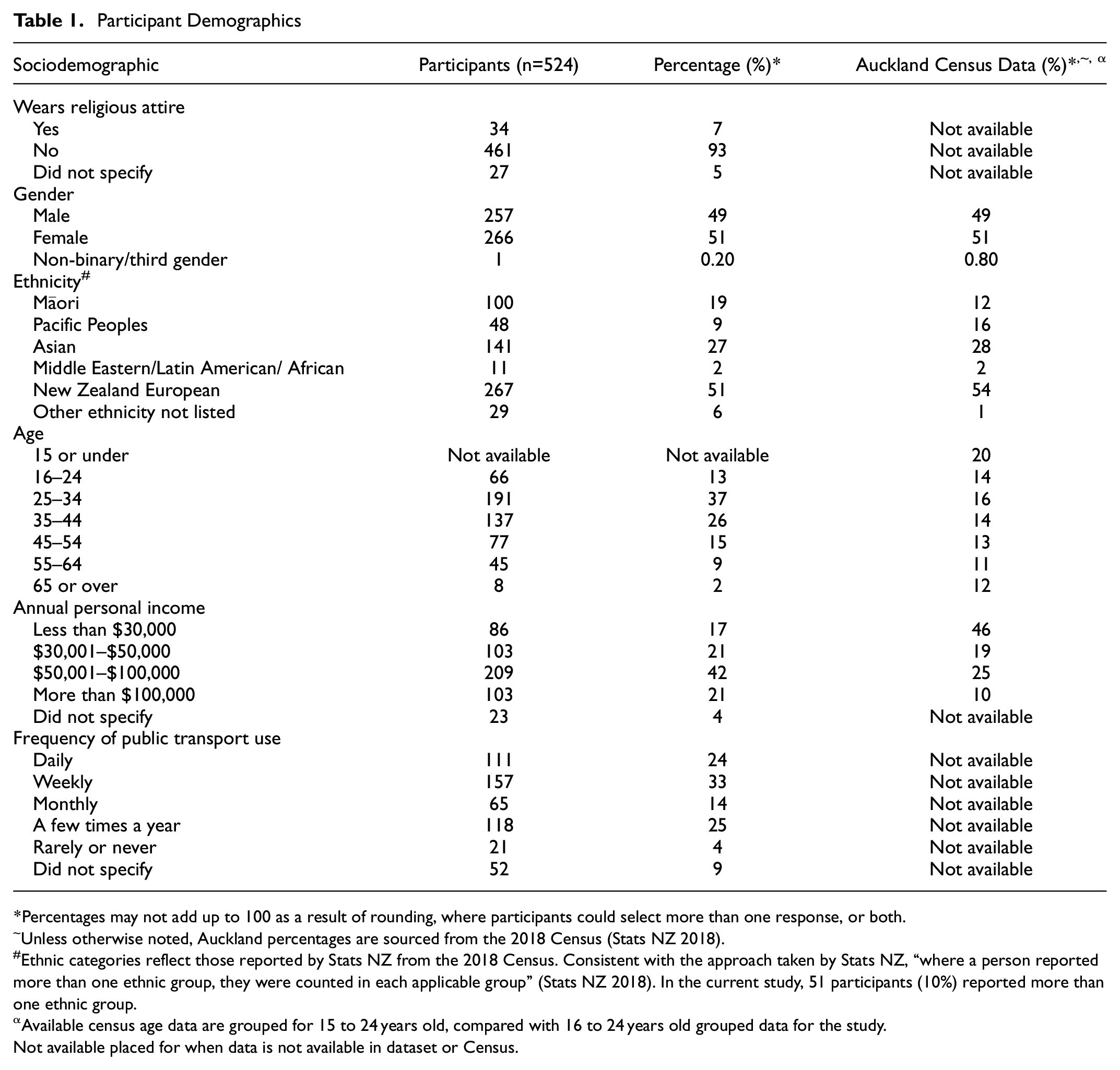
*Percentages may not add up to 100 as a result of rounding, where participants could select more than one response, or both.
Unless otherwise noted, Auckland percentages are sourced from the 2018 Census (Stats NZ 2018).
Ethnic categories reflect those reported by Stats NZ from the 2018 Census. Consistent with the approach taken by Stats NZ, “where a person reported more than one ethnic group, they were counted in each applicable group” (Stats NZ 2018). In the current study, 51 participants (10%) reported more than one ethnic group.
Available census age data are grouped for 15 to 24 years old, compared with 16 to 24 years old grouped data for the study.Not available placed for when data is not available in dataset or Census.
The sample is compared with the Auckland Census data based on some of the key demographic attributes such as gender, ethnicity, age, and income. The distribution of men and women in the sample is 49% and 51% respectively, which is very similar to the Auckland population. The sample reasonably represents the New Zealand European and Asian populations, where the difference in sample and census distribution is 3% and 1%, respectively. However, the Māori population is over-represented in the sample by seven percentage points, whereas the Pacific population is under-represented by the same margin. The sample represents participants aged 16 to 24 and 45 to 64. Participants aged 25 to 44 are highly over-represented in the sample, and participants aged 65 or more are under-represented.
Results
Description of Participants
Of the 524 participants, 36 participants (7%) reported wearing religious attire (e.g., hijab, turban, sindoor). Although the number of riders who wear religious attire is small, this population group is difficult to capture and thus this section examines their perception of safety in detail. Seven of the 34 participants identify as women, and 27 identify as men. Respondents were asked about being the main income earner of the household. Only one woman and all 27 men responded “Yes” to the question. The majority of participants fall within the age group of 25 to 44 (79%), with fewer belonging to older age groups. Among the participants, 14 reported their annual income to be less than NZD 50,000 while the rest earn more than NZD 50,000 annually. Additionally, these participants belong to diverse ethnic groups, with the majority being Māori (33%), New Zealand European (30%), and Indian (20%).
Security Perceptions of Participants Who Wear Religious Attire
We conducted pairwise t-tests to determine any statistically significant differences between those who wear religious attire (Group 1) and those who do not (Group 2). Perceptions of personal security were explored based on eight statements as given in Table 2. The statements are based on their self-efficacy, expectations from community and authority personnel, and built-environment characteristics. The results show statistically significant differences among “self,”“community,” and “authority” statements. However, the t-tests revealed that safety perceptions related to the built environment show no significant variation based on whether or not an individual wears religious attire. The t-test results for the safety statements by the two groups are shown in Table 2.
T-test Results of Security Statements Between Groups Categorized by Wearing Religious Attire
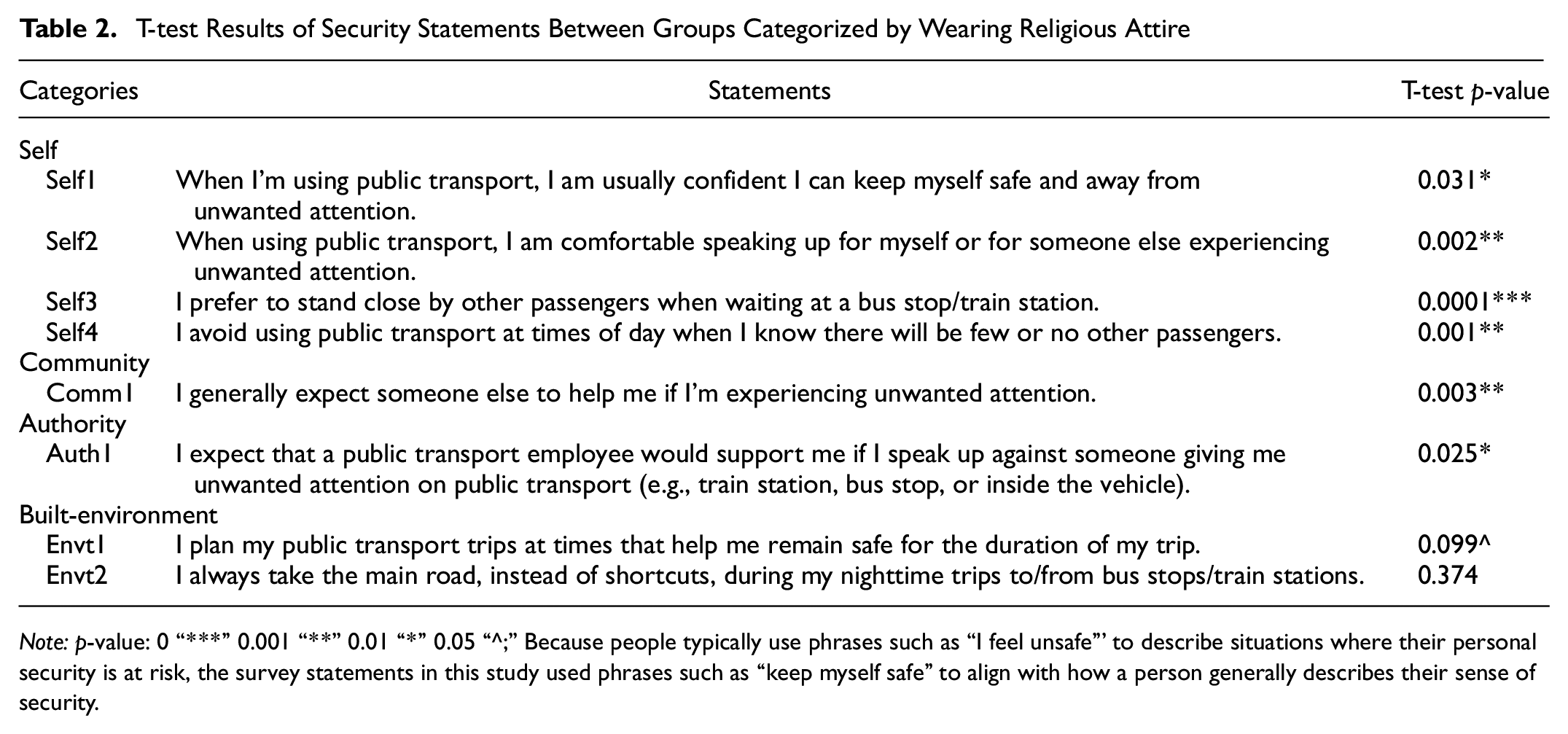
Note: p-value: 0 “***” 0.001 “**” 0.01 “*” 0.05 “^;” Because people typically use phrases such as “I feel unsafe”’ to describe situations where their personal security is at risk, the survey statements in this study used phrases such as “keep myself safe” to align with how a person generally describes their sense of security.
After confirming the statistical differences between the two groups, we undertook a descriptive analysis of their distribution of perceptions. Figure 1 provides a comparison of safety perceptions between the participants who wear religious attire and those who do not. Overall, riders who wear religious attire are found to express greater concern about their safety while using public transport and they tend to place some reliance on others including other passengers, community, and authority for their personal security.
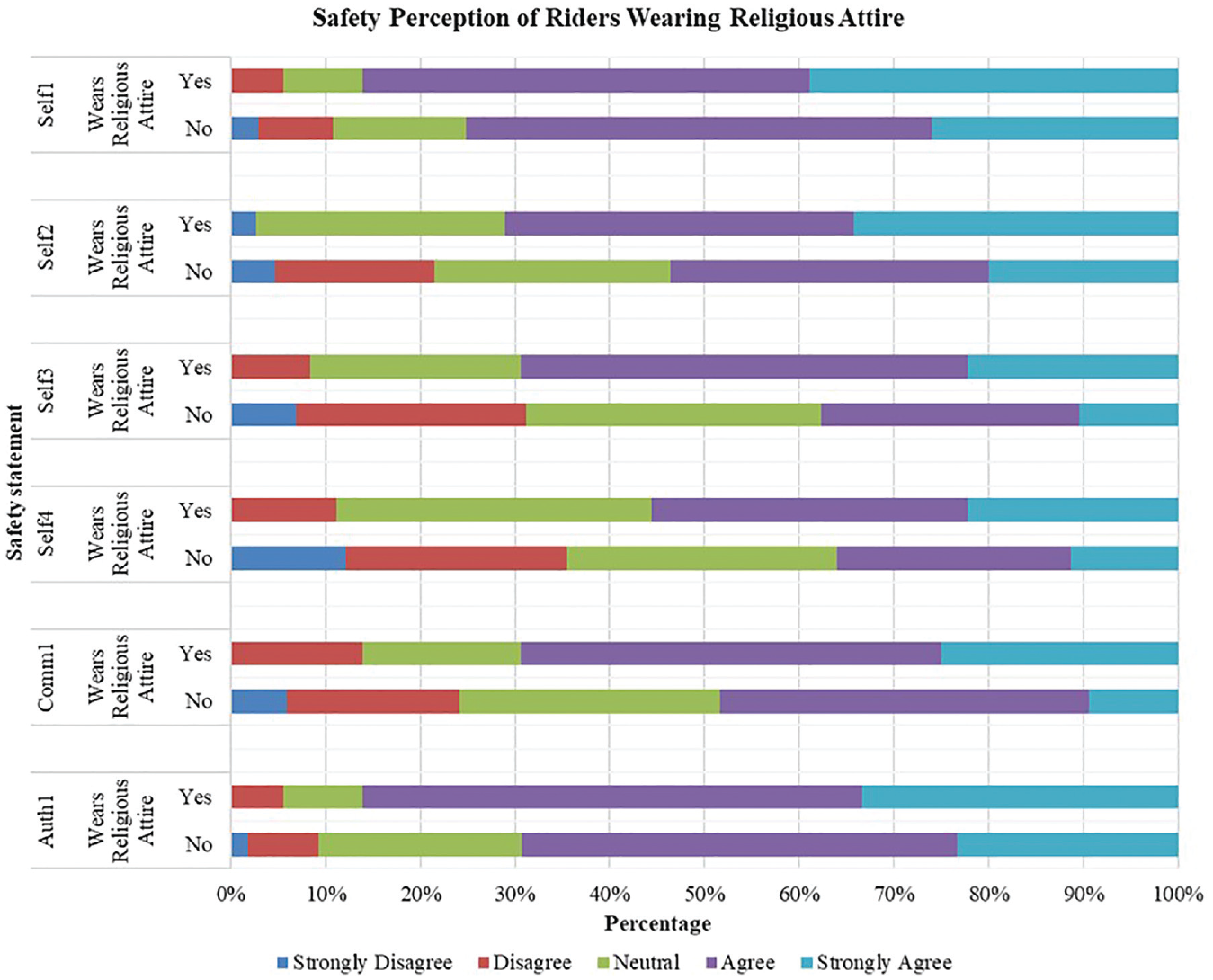
Safety perception toward public transport usage among the riders who wear religious attire.
A significant difference in the perceptions of safety is found to relate to proximity to other passengers between the two groups. The majority (about 70%) of the riders who wear religious attire agreed and strongly agreed that they prefer to stand close by other passengers waiting at bus shelters and train stations, compared with only about 35% of those who do not wear religious attire (Self3). Further, the riders who wear religious attire adjust their travel schedule to ensure their personal security. While the majority of riders (about 55%) who wear religious attire tend to avoid using public transport during off-peak hours with few or no passengers, the other group is largely (about 65%) neutral or does not make changes in their travel times (Self4). Expectations for getting help from other passengers and authority personnel are higher among riders who wear religious attire (Comm1 and Auth1). As such, about 70% of the riders with religious appearance expect someone else to help them in case of an incident, compared with less than 50% of riders who do not wear any religious attire. Further, most of the riders (85%) who wear religious attire expect that a public transport employee would support them when needed. An interesting finding is that riders who wear religious attire, despite potentially relying on others for their personal safety, exhibit comparable self-confidence in their ability to ensure their own safety compared with those who do not wear religious attire (Self1 and 2). About 40% of the riders with religious appearances strongly agreed to be able to speak up for themselves to protect themselves in safety-related incidents.
Public Transport Usage Patterns Among Marginalized Population Groups
Of the 524 participants, 472 responded to the questions on ridership. The ridership frequency of the sample (n = 472) was analyzed to determine whether usage varies across different socioeconomic groups. The ethnic-minority group (n = 240) include all those who identified themselves as belonging to an ethnic group other than New Zealand European and European. This group includes the indigenous group, Māori.
The chi-squared analysis results presented in Table 3 demonstrate how public transport ridership varies significantly across different groups based on their gender and ethnic identities, and for riders who wear religious attire. Survey respondents indicated their public transport ridership as daily, weekly, monthly, a few times a year, rarely, or never. Survey results reveal that statistically significant differences in usage exist between women and men. Similarly, the difference in public transport usage was found to be significant between individuals who wear and who do not wear religious attire.
Chi-Squared Analysis Results for the Differences in Public Transport Usage within Groups

** and *** represent the variables significant at 90% and 95% confidence intervals respectively.
Table 4 presents the ridership frequency across socioeconomic groups, revealing key patterns. Women exhibit lower public transport usage compared with men, with only 47% riding at least once a week, in contrast to 65% of men. For ethnicity, the proportion of frequent users is similar between individuals of European descent and ethnic minorities. However, a higher percentage of people of European descent report using public transport infrequently (a few times a year or rarely/never) compared with ethnic-minority groups, indicating potential disparities in transport accessibility or usage patterns. Moreover, ridership shows an inverse relationship with income; those in lower income brackets are more frequent users, with usage decreasing as income increases.
Public Transport Usage Frequency across Different Socioeconomic Groups
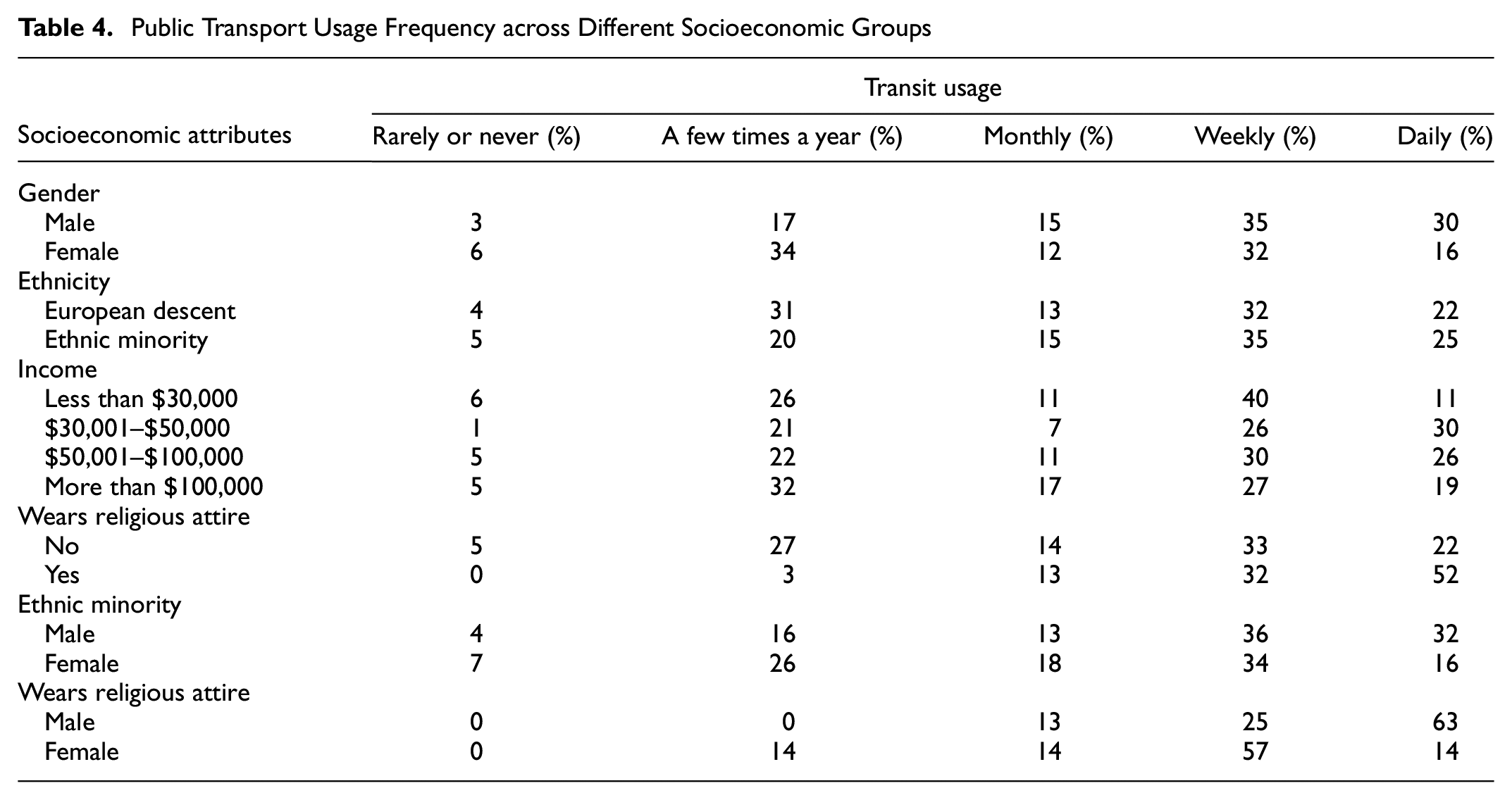
More than half of individuals who wear religious attire use public transport daily, a rate significantly higher than that of those who do not wear religious attire. An examination of ridership patterns through the lens of intersectional identities—specifically gender and ethnicity, as well as gender and religious appearance—reveals significant disparities. A significantly lower percentage of women from ethnic-minority groups are daily riders compared with their male counterparts. Similarly, the frequency of ridership for women who wear religious attire (14%) is considerably lower compared with men, with around 63% of men in religious attire riding public transport daily. These observations underscore the complex dynamics of gender, ethnicity, and religious identity in shaping public transport usage.
Discussion
People from diverse racial and ethnic backgrounds seeking better employment and living standards often emigrate to higher-income countries. They can become transit-dependent, as evident from the findings from this study and previous studies ( 9 , 12 ). As discussed by Shaker ( 2 ), individuals whose appearance identifies their religion can encounter varying degrees of harassment from physical assault to “othering” behavior. The present study’s findings contribute to this very limited knowledge on the travel experience of such transport users by examining their perceptions of personal security.
Findings from this study highlight that public transport users who wear religious attire are more concerned for their personal security than those who do not. Individuals who wear religious attire expressed expectations from other passengers and a reliance on authority personnel to safeguard them throughout their public transport journeys. Transport users wearing religious attire also exercise greater caution by avoiding traveling during off-peak hours with fewer passengers around.
Additionally, a very small share of ethnic-minority women and women with religious attire are found to be daily users of public transport. This aligns with findings from other studies across the globe suggesting that the perception of safety is a major factor in the frequency of women’s public transport ridership ( 33 ). Another explanation is their need to use public transport, as only one woman with religious attire indicated they are the main income earner of their household. The compounding effect of needing to make fewer trips and feeling unsafe when doing so can result in women wearing religious attire being less inclined to use public transport.
In addition, results revealed a statistically significant difference in public transport ridership between the ethnic-minority participants and others. Individuals from ethnic-minority groups are found to use public transport more frequently. This indicates the dependency of ethnic-minority groups on public transport. A probable reason for their higher dependency is the lower affordability of private vehicles, as evident in other studies ( 34 , 35 ). Furthermore, income plays a significant role in determining public transport usage, with lower-income riders showing greater transit dependency.
A limitation of the present study is the very small sample size of individuals who wear religious attire. The findings provide evidence that this group of riders have greater safety concerns and are transit-dependent. This study calls for more disaggregated data on riders who wear religious attire to create evidence-based findings to inform transport policies.
Lastly, two important suggestions for policy and practice are provided. First, inclusive transport policies need to be evidence-based by collecting extensive travel data of all intersectional socioeconomic groups. Efforts must be made to capture the travel experience of groups who may be difficult capture from standard data collection practice. Secondly, transport policies need to meet user expectations of authority, particularly by marginalized population groups. Public policies, in general, should also aim to foster community tolerance and awareness. This is essential to ensure an equitable transport system without prejudice for all riders. It is expected that the findings of the study will help inform transport policymakers on the differential needs and experiences of intersectional socioeconomic user groups. Establishing an inclusive transport system is particularly critical in higher-income economies where individuals from diverse ethnic backgrounds emigrate in search of improved livelihood.
Conclusion
An equitable public transport system aims to provide safe and easy access to opportunities. As many cities aspire to create an equitable public transport system, they grapple with the differential experiences of marginalized population groups. Differential experiences can stem from both equity issues related to services provided along with identity-based discrimination. This is particularly true for those who wear religious attire. The present study contributes to the very limited research on riders who wear religious attire and their public transport travel experience.
Findings underscore the increased concern for personal security among riders who wear religious attire. These riders have some reliance and expectations from other passengers and authority personnel to safeguard them during public transport journeys. They exhibit heightened vigilance, often avoiding off-peak hours when passenger numbers are low. Overall, ethnic-minority people are likely to be frequent public transport users. However, ethnic-minority women and women who wear religious attire are notably less frequent users of public transport compared with their male counterparts, highlighting their safety concerns as a deterrent factor for public transport use.
In high-income economies, establishing an inclusive transport system holds particular importance as individuals from diverse ethnic backgrounds arrive in search of improved living conditions. Yet, while these transportation systems aim to provide access to various services, they often fall short of enabling individuals to attain their desired standard of living. Population groups, especially women from racial- or ethnic-minority groups and with religious appearance, are deemed to be marginalized public transport user groups by their community and authorities given the underlying societal norms of “othering” toward these riders. With limited understanding of their travel experiences, they continue to suffer from transport poverty through inequitable access and mobility along with harassment.
To achieve an equitable public transport system, we must pay attention not only to service quality but also to how riders are treated and ensure they are respected for their differences. Empowering people in authority to take the right action would positively affect the ridership experience of marginalized population groups, thereby increasing their ridership. It is of utmost importance for transport authorities to provide public transportation systems in which riders feel safe and of equal significance.
Footnotes
Author Contributions
The authors confirm contribution to the paper as follows: study conception and design: Subeh Chowdhury; data collection: Kirsten Tilleman; analysis and interpretation of results: Subeh Chowdhury, Ankita Sil, Md Shahadat Hossain; draft manuscript preparation: Subeh Chowdhury, Ankita Sil, Kirsten Tilleman, Md Shahadat Hossain. All authors reviewed the results and approved the final version of the manuscript.
Declaration of Conflicting Interests
The author(s) declared no potential conflicts of interest with respect to the research, authorship, and/or publication of this article.
Funding
The author(s) received no financial support for the research, authorship, and/or publication of this article.
