



Abstract
Damage caused by snow and ice to airport pavements in colder regions of the United States presents a persistent and economically significant challenge. This research explores an innovative construction method using an electrically conductive composite (ECC) composed of waterborne polyurethane and graphite powder (Gp). The ECC is applied to a Portland cement concrete substrate through a parallel stripe technique, using two types of “exposed” specimen. The study thoroughly examines the resistive heating performance of these specimens under various conditions, focusing on critical factors such as Gp concentrations in ECC, stripe thickness, spacing, and applied voltages. ECC was prepared with varying Gp concentrations (17.5% to 25%), and applied in strips of different thicknesses (1 mm, 2 mm, and 3 mm), with spacings of 15 cm and 20 cm. The specimens were subjected to alternating current voltages of 40, 50, and 60 V to measure surface heating performance. Tests were performed at room temperature (23.6°C) and a controlled sub-freezing temperature (−17°C), monitoring the surface temperature over 60 min to evaluate heating capacity and distribution. The time required for the specimens’ surface temperature to rise from −17°C to 0°C was recorded. Results indicated that ECC with 22.5% Gp content was the most effective, with exposed specimens showing a surface temperature increase of 19.94°C/h and sandwiched specimens showing 15.46°C/h. These findings suggest a promising sustainable alternative to traditional pavement heating methods, offering a viable and enduring solution for winter weather challenges on airport runways.
Keywords
Airport pavements in the United States are susceptible to sub-freezing temperatures and heavy winter precipitation, leading to the accumulation of ice and snow on runways. This reduces the friction between aircraft tires and pavement, resulting in delayed flight operations and significant hazards ( 1 ). Consequently, flight operations experience interruptions, affecting local and global air travel, with potential economic losses and an increased risk of crashes. Aviation organizations allocate significant budgets to address these concerns to ensure ice- and snow-free runways for uninterrupted flight operations.
Common methods to prevent ice and snow accumulation include deicing chemicals ( 2 ), snowplows ( 3 ), and mechanical snow removal. Nevertheless, these approaches face challenges such as labor-intensiveness, sluggishness, high costs ( 4 ), and potential pavement damage ( 5 – 10 ). Traditional deicing procedures must be more effective in adverse weather conditions. For example, the majority of deicing salts have been found to be ineffective in dissolving snow when temperatures fall below −10°C ( 11 ). Although deicing agents such as calcium chloride are highly effective at temperatures as low as −17°C, they increase the likelihood of steel corrosion causing damage to rigid pavement ( 12 ). Additionally, in frigid temperatures, machines may have trouble functioning ( 12 ). Many sustainable techniques have been used over time to address these issues with runway snow removal. These methods progressively transition toward using clean energy technologies instead of conventional methods, which have adverse environmental consequences and contribute significantly to pollution levels ( 13 , 14 ).
Sustainable methods, including heated pavement systems (HPS), have been explored for their environmental friendliness, cost-effectiveness, long-term durability, and ease of maintenance ( 15 ). Currently HPS technologies such as infrared heating methods ( 16 ), hydronic heated pavement systems ( 17 – 19 ), carbon fiber grills ( 20 ), embedded resistive heating elements ( 21 ), and electrically conductive concrete (ECON) ( 12 , 22–25) are in use. However, practical limitations, especially high capital and operational costs, persist, necessitating the development of more sustainable deicing methods ( 26 ). Consequently, the development of an environmentally friendly deicing technique remains necessary and has been a major problem recently.
The literature primarily focuses on enhancing the electrical conductivity of rigid pavement materials, but alternative construction methods for conductivity enhancement remain underexplored. A comprehensive exploration of HPS currently exists for potential application on airport runways, with various strategies being tested to prevent ice accumulation. Over time, several electrical HPSs have been implemented. These include the ECON ( 27 – 29 ), embedded heating elements ( 21 , 30 ), and the sandwich conductive layer ( 31 ). Each heating technique underwent extensive assessment with regard to its foundational principles, installation, operation costs, and the overall effectiveness of the projects being considered. Some more recent approaches to achieve this objective involve applying superhydrophobic ( 32 – 34 ) and electrically conductive composite (ECC) coatings to the pavement ( 35 – 39 ).
ECC, being a pliable material, has found applications in constructing electrical circuit diagrams ( 40 ), automated sensor systems ( 41 ), and electromagnetic interference (EMI) shielding ( 42 ). Given its exceptional thermal management capabilities, ECC and various other applications are frequently employed for this purpose ( 43 ). In recent years, ECC has garnered increased attention in constructing HPS, primarily a result of its potential to achieve temperature control ( 39 ). Applying ECC on a standard concrete surface to create HPS represents a novel approach ( 39 ). This method effectively warms the pavement surface and stands as one of the most advanced technologies in the realm of HPS. It involves incorporating conductive elements into a polymer matrix. When an electrical current passes through a resistor, in accordance with the principles of Joule heating, the resistance generates heat. Consequently, by adjusting the desired resistivity of the conductive coating composite, heat can be generated on the pavement surface, melting ice and snow.
The formulation of ECC often involves dispersing conductive elements such as graphene ( 44 ), carbon black ( 45 ), and carbon nanotubes/nanofibers ( 42 , 46 ) within a polymer matrix, with extensive use in construction materials ( 39 ). Their conductive properties have led to an expanded application in ECC. However, it is worth noting that the nano-sized conductive substances employed in ECC for pavement coatings present challenges, including difficulties in dispersion, potential toxicity, and high cost ( 11 ). Micro-sized graphite powder (Gp) is considered the optimal choice for the conductive material because of its compatibility, superior heat conductivity along its plane direction ( 47 ), and cost effectiveness compared with other carbonaceous resources. Micrometer-sized Gp particles can enhance the network micro-structure channels, facilitating proper current flow through the composite.
To function effectively, ECC necessitates the production and dissipation of heat through an external power source. Achieving this requires a suitable ECC, which can be attained by introducing a conductive element capable of forming a solid bond with the binder. It was crucial to employ a suitable fabrication method and an adhesive that effectively adheres to the Gp without impeding heat dissipation to reinforce the binder. In the case of Portland cement concrete (PCC) ( 48 ) and asphalt concrete pavement ( 33 , 49 ) surface, epoxy resin has been applied as a binder to a variety of substrates. Also, Polyvinylidene fluoride (PVDF) was chosen as a binder to create a superhydrophobic coating on the substrate ( 46 , 50 , 51 ) despite its relatively low strength and limited bonding capabilities.
Polyurethane (PU), a solvent-based polymer, is frequently used for coatings that require resistance to oil, water, chemicals, weather, and abrasion ( 52 ). With regard to environmental safety, waterborne polyurethane (WPU) is gaining popularity over solvent-based PU. WPU also offers appealing attributes such as flexibility, abrasion resistance, adaptability, and suitability for various substrates ( 53 – 55 ). WPU adhesives have been applied to various substrates, including plastic, leather, textiles, paper, rubber, and wood ( 56 , 57 ). To enhance the thermal stability, mechanical toughness, and electrical conductivity of polyurethane-based compounds, various conductive fillers such as glass fiber, carbon nanotubes, carbon fiber, carbon black, and Gp have been incorporated into the polyurethane material either individually or in combination.
Despite the literature’s focus on snow and ice melting effectiveness, many studies overlook production expenses and environmental impacts, deeming certain approaches unviable because of their substantial costs ( 58 ). In response to this gap, our study aims to develop an economically sustainable approach for constructing HPS, innovatively coating the surface of PCC specimens with ECC strips composed of WPU and micrometer-sized Gp. This novel method ensures adequate snow and ice removal while significantly reducing production costs, addressing a longstanding problem in winter maintenance practices.
Furthermore, our study aims to safeguard the long-term durability of applied ECC against wear and tear by adding a thick layer of concrete over the coated surface. A comparison of surface temperature efficiency between exposed and sandwiched specimens is deemed essential.
In conclusion, our results, meticulously scrutinized through statistical analysis, provide strong evidence for the efficacy and sustainability of this innovative approach to snow and ice removal from rigid pavement surfaces. The recommended optimal coating configuration has the potential to revolutionize winter maintenance practices, offering a cost-effective, environment-friendly solution.
Methodology
Conceptualizations
Since the introduction of ECON pavement by Yehia and Tuan ( 59 ), the exploration of modifying the properties of paving materials, specifically ECON, has been underway. However, given the potential implications for the pavement’s structural integrity over time, its implementation has remained distant from practical application. Subsequently, attention turned toward capital cost constraints, initially considered insignificant in HPS construction. This led researchers to explore more sustainable alternatives, driven by the potential for cost-effective snow removal from runways. This study draws inspiration from the evaporation of condensed water vapor from car windshields using thin conductive thermal paint when an electric current is applied.
Consequently, our research is focused on adapting this approach to create an innovative construction method for deicing pavements, incorporating ECC stripes. Taking into account aspects such as cost-effectiveness, minimum impact on the pavement, and environmental friendliness, this technology is thought to be a more environmentally friendly construction option for safely and effectively removing ice and snow from the pavement. To be effective, this strategy must consider several factors, such as material conductivity for producing adequate heat and any potential issues with ride smoothness.
Materials Selections
The inspiration for this study’s materials stemmed from the widespread use of thermoplastic marking on pavement surfaces. Thermoplastic is an excellent striping material because of its durability, efficiency, and non-invasive effect on the pavement’s structural integrity. The study aimed to modify thermoplastic’s characteristics to enhance its electrical conductivity while considering the cost constraints. It was necessary to blend the thermoplastic with a highly conductive, robust, and effective dispersion-property substance to increase its electrical conductivity. Carbonaceous materials were initially considered for their conductivity. Still, it was subsequently determined that the combination of the thermoplastic adhesive components (resin and conductive materials) exhibited more excellent conductivity than the thermoplastic alone. Ultimately, the study explored resin and conductive materials as the prime candidates for creating ECC strips.
Conductive Materials
ECC preparation requires taking into account the electrical resistivity and thermal conductivity of the conductive phase material. Table 1 lists common conductive materials, where carbonaceous materials have the best thermal conductivity and lowest resistivity among these materials. Compared with alternative fillers, Gp was deemed a more cost-effective option, offering exceptional performance in conductivity and durability. In particular, micrometer-sized particles and Gp with a carbon content of more than 90% have the ability to improve the microstructural network and enable the composite to conduct current smoothly.
Features of Different Conductive Fillers (Electrical and Thermal Properties)
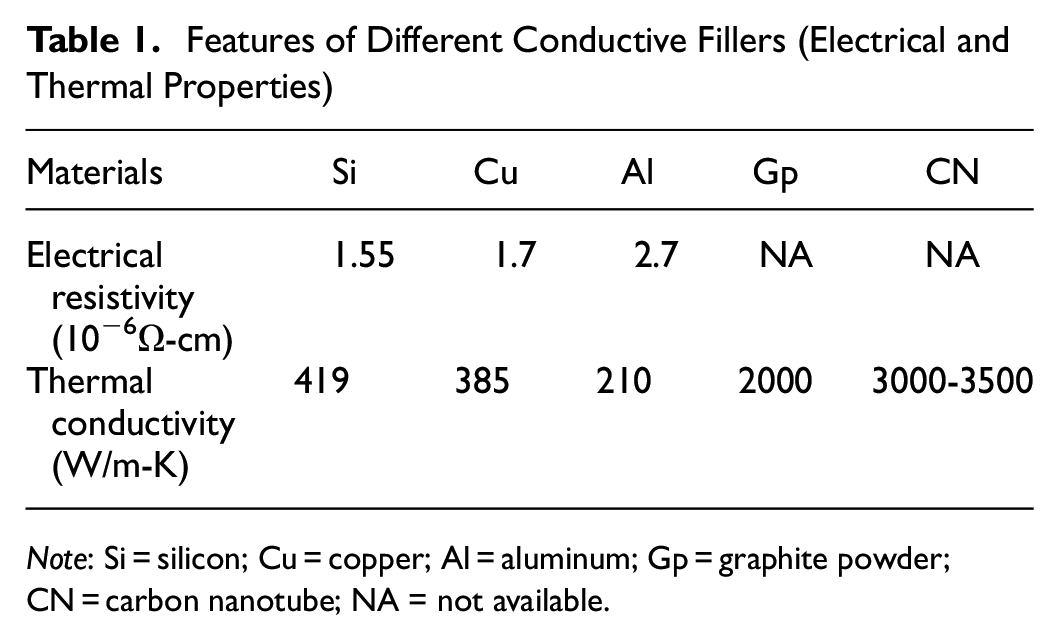
Note: Si = silicon; Cu = copper; Al = aluminum; Gp = graphite powder; CN = carbon nanotube; NA = not available.
Gp possesses a range of valuable properties, including high-temperature resistance, friction resistance, corrosion resistance, excellent chemical stability, effective heat conduction, and electrical conductivity. Consequently, this study selected micrometer-sized Gp for use; its specific properties are detailed in Table 2.
Electrical and Thermal Characteristics of Gp

Note: Gp = graphite powder; D = diameter; SG = specific gravity; CC = carbon content; EC = electrical conductivity.
Adhesive Materials
The goal of coating PCC pavement surfaces is to reduce the amount of time needed for curing. Thus, traffic movement on the surface can have less downtime. Instead of using solvents, the study chose a water-based, fast-drying polyurethane (WPU) to accomplish this. This WPU variant, sourced from SureCrete, boasts a low volatile organic compound (VOC) content and eliminates the need for solvent evaporation to set the composite. The key specifications of the WPU are outlined in Table 3. To obtain the appropriate conductivity, the conductive phase materials were mixed with the water-soluble polyurethane and curing agent (CA) in a 3:1 ratio. This process was repeated to make the conductive composite.
The Fundamental Characteristics of WPU

Note: WPU = water-based polyurethane; VOC = volatile organic compounds.
Properties of ECC
Two crucial metrics of WPU-Gp (referred to as ECC) were evaluated to verify the effectiveness of the materials used in this study: surface resistivity and surface heating capability. The methods used to look into these attributes are briefly described in the section that follows.
Surface Resistivity Measurement
A well-known technique for explaining the electrical behavior of composites is the percolation threshold approach, which was used to estimate the ideal dosage of conductive filler with polymer content ( 60 ). Given that the polymer in the mixture serves as an insulator, a higher electrical conductivity can only be achieved by having the content of conductive materials equal to or in excess of the percolation threshold ( 46 , 61 , 62 ). This ensures the establishment of continuous conducting channels within the matrix. The term “percolation transition zone” refers to the concentration of conductive materials within the solution where the electrical conductivity increases sharply ( 60 ). Within this transition zone, increasing the volume percentage of conductive additives lowers the electrical resistivity of the composite. However, beyond the percolation threshold zone, the drop in resistivity occurs more slowly as a result of the saturation of the composite’s conductive network ( 60 ). As the dosage of conductive filler increases, the mixture’s viscosity also rises, posing challenges for application onto the sample surface. The percolation phase of the WPU-Gp composite needs to be determined using various volume percentages of Gp in the mixture.
Measurement of Surface Heating
The coated substrate specimens underwent the surface heating test to determine a relationship between surface resistivity and percolation results. This was achieved by measuring the surface temperature of the specimens using an infrared thermometer while simultaneously applying an AC voltage through a variable voltage source. Since rigid pavement is the planned application for this construction technology, the performance of ECC on a PCC substrate was explicitly evaluated by examining the coating’s resistive heating capabilities on a concrete substrate at controlled doses.
Experimental Set-Up
The experimental set-up comprises two separate portions: the preparation and construction of the pavement samples using the prepared materials.
Preparation of ECC
A simple yet effective process was followed to create the ECC used in this study. First, GP and WPU that had been oven-dried were stirred for 3 min at 250 rpm in a vessel. To ensure a thorough blend, increase the stirring speed to high (300 rpm) for an additional minute. Next, the CA was added to the mix, stirring vigorously at 250 rpm for 4 min. Rectangular plastic molds were used to shape the specimen to maintain accurate coating measurements on the specimen surface. To connect to a current source through the composite surface, two copper tapes (20 mm × 50 mm) were placed in the coating. Then, the blended substance was progressively added to the mold. Figure 1 illustrates the ECC fabrication process.
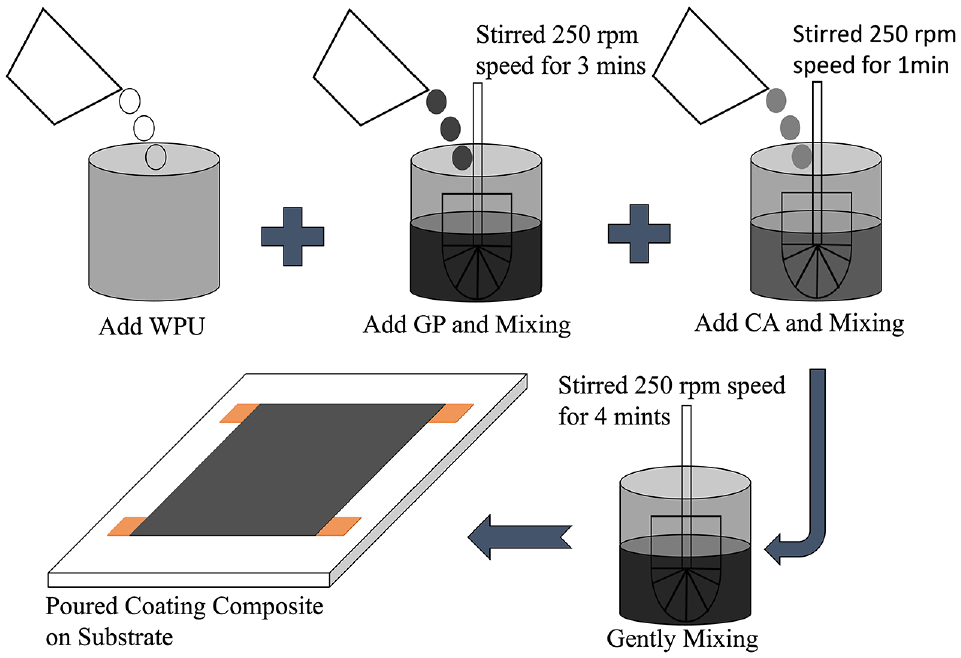
The ECC fabrication processes.
Pavement Construction
As mentioned earlier, this study systematically implements essential procedures in constructing a laboratory-scale pavement to assess the effectiveness of the ECC prepared. These procedures involve determining the ECC material composition for creating a highly conductive composite, establishing optimal spacing between parallel ECC strips, and evaluating the heating performance of the specimens. Critical insights from surface resistivity and heating tests played a pivotal role in refining the ECC’s material composition. In-depth composite thickness and spacing examinations were conducted to gauge their impact on heating efficiency during power supply.
To achieve these objectives, two distinct specimens are introduced: “exposed” specimens, where ECC is directly applied to the PCC substrate, and “sandwiched” specimens, incorporating an additional layer of PCC over the exposed specimens to endure tire-induced friction (Figure 2). While this sandwich configuration shields the composite from potential damage resulting from water runoff, chemical exposure, and tire abrasion, it is noteworthy that, for laboratory-scale experiments, sandwiched specimens are created by adding another concrete layer to the exposed specimen. In practical applications, pavement requires an embedded ECC sheet, which does not modify pavement materials and will not be subject to water runoff or chemical exposure.
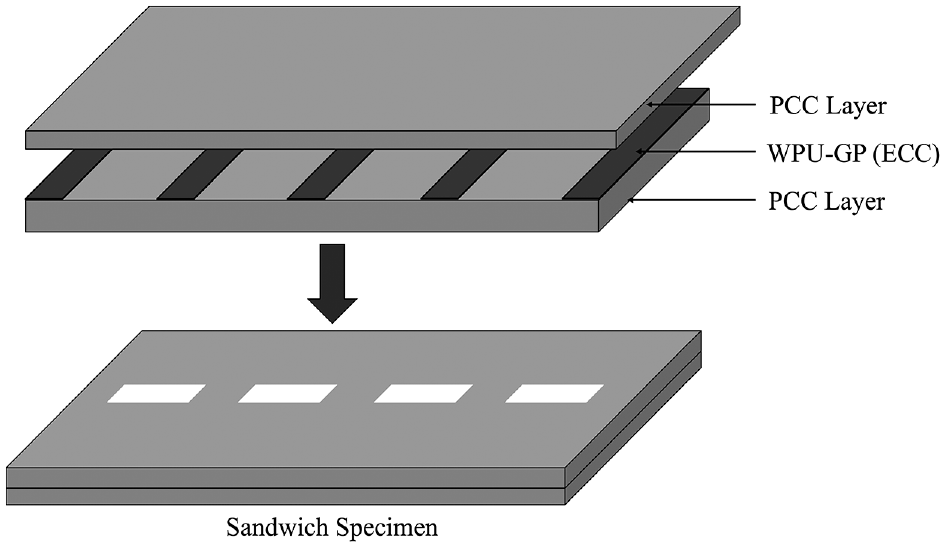
The graphical representation of constructing HPS applying ECC.
Subsequently, specific voltage levels were applied to investigate the surface heating performance of both specimens under varying conditions, including room temperature and sub-freezing conditions.
HPS System Components
The HPS system consists of several crucial components, including the ECC (which serves as the heat generation element), copper tapes, a Keithley 2400, an infrared thermometer for temperature measurement, a multimeter, electrical wiring, an AC voltage variable power source, and a freezer. The experimental set-up is monitored by infrared thermometers and a digital multimeter, providing real-time surface temperature readings during specimen tests conducted below freezing (−17°C/1.4°F). This set-up prevents overheating and allows for more efficient energy consumption as the pavement surface temperature reaches the desired level. The digital multimeter governs the power supply, enabling the analysis of the HPS’s heating performance across different power ranges.
The proposed construction method can be applied as a surface layer on newly constructed pavements or as an overlay on existing pavement surfaces after appropriate surface preparation. This approach can save costs by eliminating the need for new construction and installing thick ECON layers for snow melting. Consequently, it offers advantages, including cost-effectiveness; preservation of pavement structural integrity; resistance to chemicals, weather, and UV exposure; and a straightforward operational set-up.
Experimentation
The experiment involved two main tasks: initially, assessing the surface resistivity and distribution of heating capacity in the materials, and then evaluating the construction method’s effectiveness. Subsequently, the final set of experiments focused on analyzing how parameters such as strip thickness and spacing on pavements, the supplied voltage, and the percentage of Gp influenced the outcomes.
Initial Experiments
Two types of substrate were employed to assess the resistance of an ECC-coated surface: wood and PCC. A dry wood substrate was chosen for testing the electrical resistance of the coated surface because of its low conductivity, ensuring it did not interfere with the resistance measurements ( 39 ). Coating specimens were applied to air-dried PCC surfaces to replicate the conditions they would encounter when used on concrete pavements, aligning with the study’s objectives. Two-sided conductive copper tape was affixed to the ends of the coating specimens to gauge the resistance. This precaution was taken because lower dosages of Gp, especially in the composite, might not be evenly exposed and fail to contact the electrode. The copper tape was embedded within the coating to address this, aiding voltage application during resistance measurements. The prepared substrate samples, wood, and PCC were then subjected to surface resistance measurements, as depicted in Figure 3. To capture variations, surface resistivity was measured using a digital multimeter using two probe methods along two copper stripes. Multiple batches of the same composite mixture were prepared and tested to determine the variation in surface resistivity resulting from manual mixing. The resistivity measurements were compared across batches to identify any inconsistencies. Different operators, as shown in Figure 3c, performed the manual mixing to evaluate the impact of operator variability. A statistical analysis of the resistivity data was conducted to quantify the variability introduced by manual mixing, calculating the standard deviation. Despite the inherent variability in manual mixing, the overall variation was within acceptable limits for practical applications and consistency measures such as standardized mixing times and speeds.
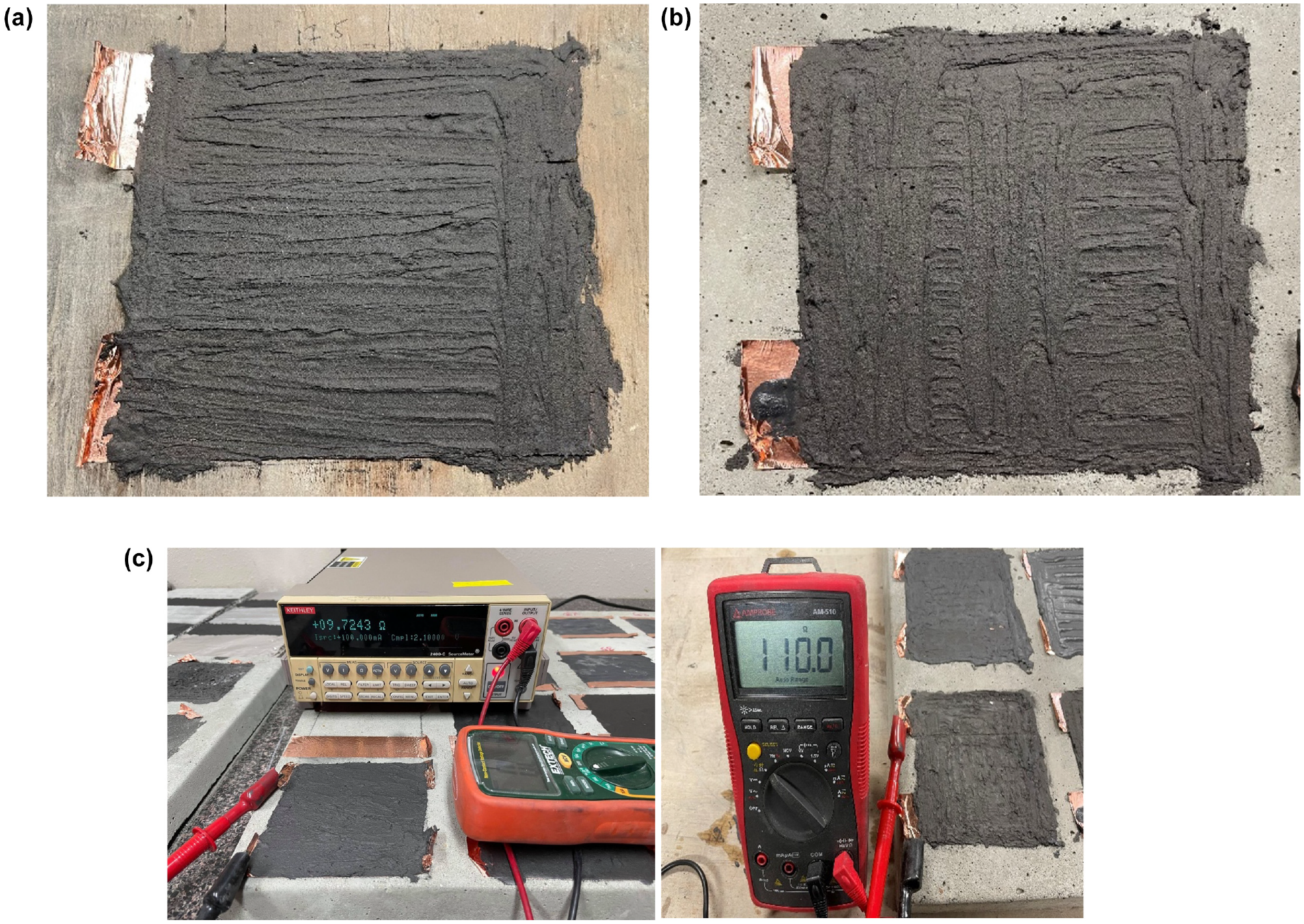
Coating application and measurements: (a) wood substrate; (b) concrete substrate; and (c) two probe surface resistance measurement.
The Gp dosage was varied at 2.5%, 5%, 7.5%, 10%, 12.5%, 15%, 17.5%, 20%, 22.5%, 25%, and 27.5% of ECC volume, based on percolation threshold zone test results. Each dosage level was tested with triplicate specimens. In Figure 4e, the AC power supplied through copper tape at voltages of 10 V, 20 V, and 30 V with a frequency of 60 Hz is shown, along with the recorded temperature increases measured by an active infrared thermometer. Surface temperatures were monitored for 30 min for each specimen using AC power supplies ranging from 10 V to 30 V. To mimic field conditions with sub-freezing temperatures, samples were refrigerated for 24 h, reaching −17°C before undergoing the surface heating test, as illustrated in Figure 4, c and d.
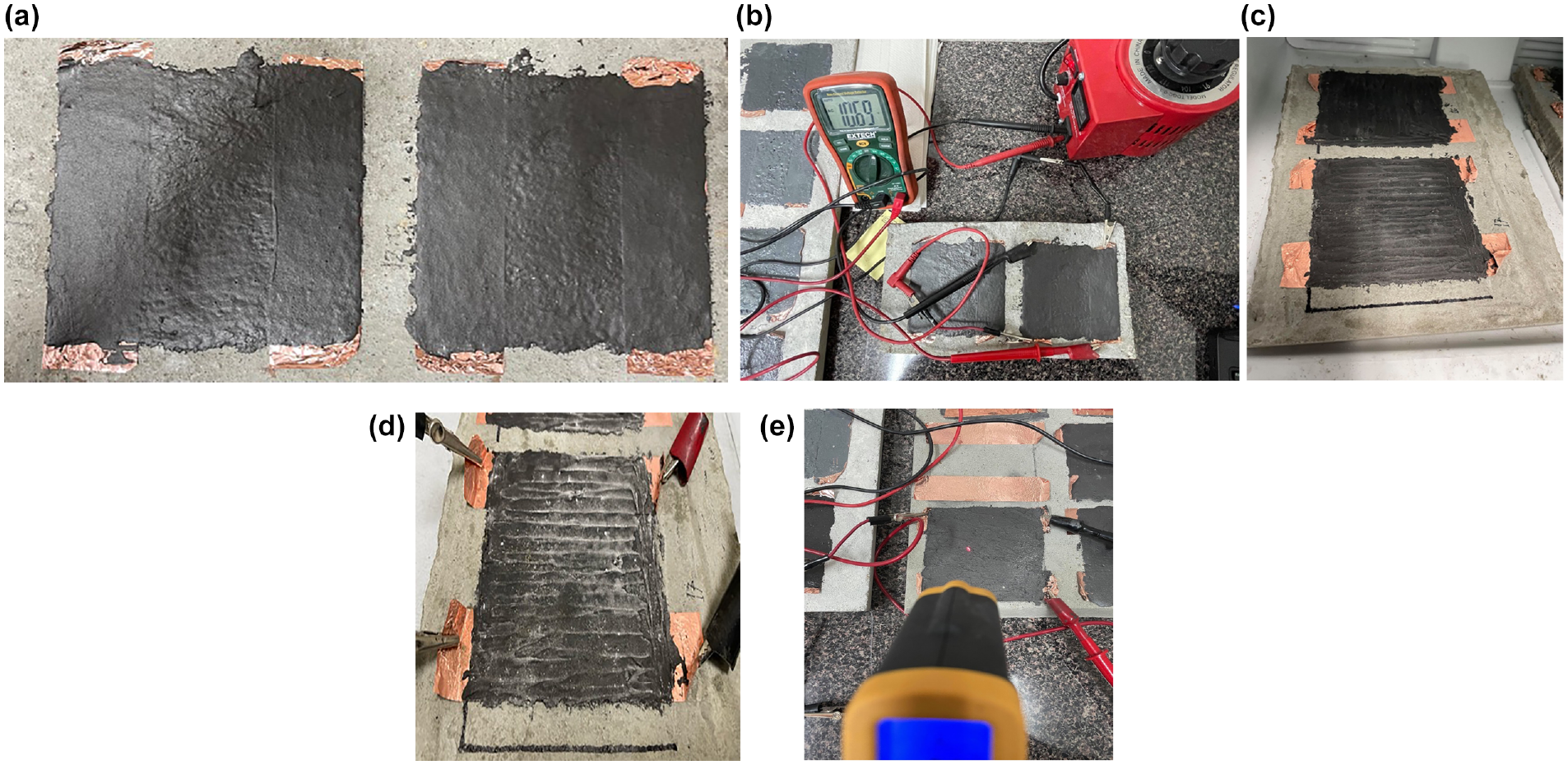
(a) Composite coating on testing specimens; (b) power supply set-up; (c) prepared sub-freezing specimens; (d) frozen specimen; and (e) recorded temperature by thermometer.
Construction Method Functional Test
To rigorously assess the effectiveness of the construction method under various ambient temperature conditions, a laboratory-scale HPS was prepared. Test specimens measuring 30 cm × 15 cm × 3 cm and 40 cm × 15 cm × 3 cm were coated with ECC to validate the viability of this construction approach. ECC was strategically applied in strips to optimize coating costs instead of covering the entire surface. This method was chosen because the applied coating, functioning as a heating element, contacts its surroundings and facilitates heat conduction to the uncoated areas. Critical measurements were taken to determine the optimal strip spacing for the final experimental set-up. A single strip of ECC was carefully applied to the concrete mat, and its efficient heating distance was gauged. These measurements provided essential guidance for the coating configuration in the final experimental set-up. ECC was applied to the specimen’s surface in a 15 cm × 5 cm strip, termed the “exposed” specimen, and compared with another specimen type, the “sandwiched.” Remarkably, the performance of the exposed specimen was superior, underscoring the effectiveness of this construction method.
We diligently examined two mats during the heating test, where a 50 V voltage supply was maintained for 90 min at approximately 23.6°C. The purpose was to assess the heat conduction effect of a single strip. Notably, it is essential to acknowledge that external heat sources could interfere with the test, and any generated heat could escape from the testing specimens. To mitigate this potential issue, we insulated all sides of the concrete mats except for the top surface specimen.
The heating behavior of the specimen’s surface at various distances from the applied coating under room temperature conditions was analyzed thoroughly. When sufficient energy was supplied to the test section, noticeable increases in surface temperature were observed at different distances. The differences in surface temperature between the control mat and the coated concrete mats clearly illustrate the substantial heating effectiveness of the construction method. The temperature distribution across the mats’ surface indicated that the heating effect from the coating was significant up to a distance of 12.5 cm c/c (center to center). This observation confirmed the success of heating both exposed and sandwich specimens at room temperature, highlighting the importance of strip spacing in preparing testing specimens for the final experimental set-up, as shown in Figure 5.
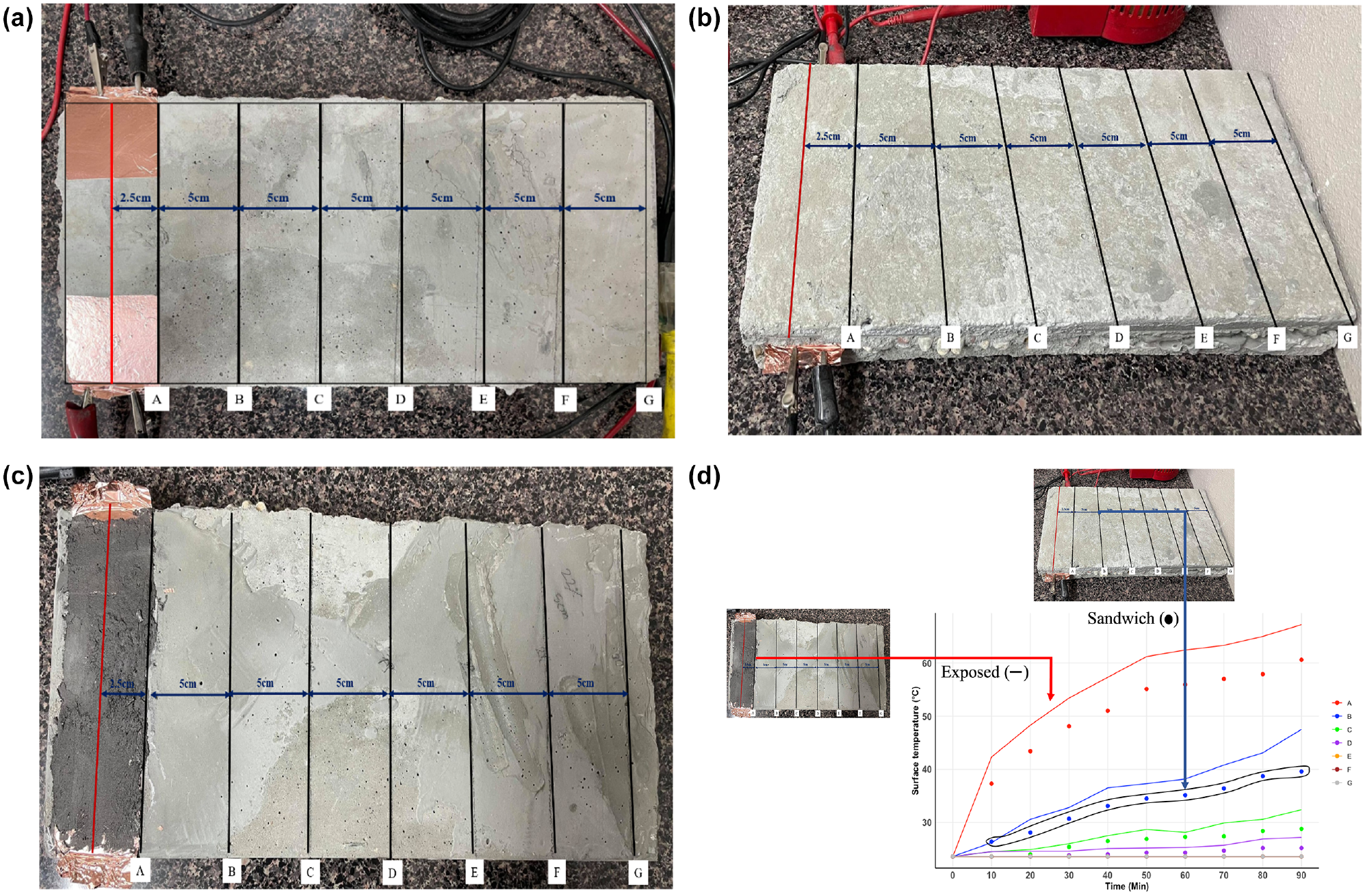
Determination of coating distance for parallel strip application: (a) control mat; (b) exposed mat; (c) sandwiched sample; and (d) initial results of each specimen.
In subsequent investigations, we used parallel strip distances of 15 and 20 cm (c/c) to rigorously validate the proposed method. Various coating thicknesses of 1 mm, 2 mm, and 3 mm were applied throughout the study. The conductive coating was optimized with Gp contents of 17.5%, 20%, 22.5%, and 25%, determined based on the heating capacity of ECC. AC energy at 40 V, 50 V, and 60 V was supplied to the testing mat from a variable voltage power supply. Figure 6, a and b , shows the final experimental test’s coating configuration and the surface heating set-up for the prepared specimens. Additionally, the evaluation included the time it took for preconditioned specimens at −17°C to reach 0°C when exposed to sub-freezing temperatures, as shown in Figure 6, c and d . The methodology steps are illustrated in Figure 7.
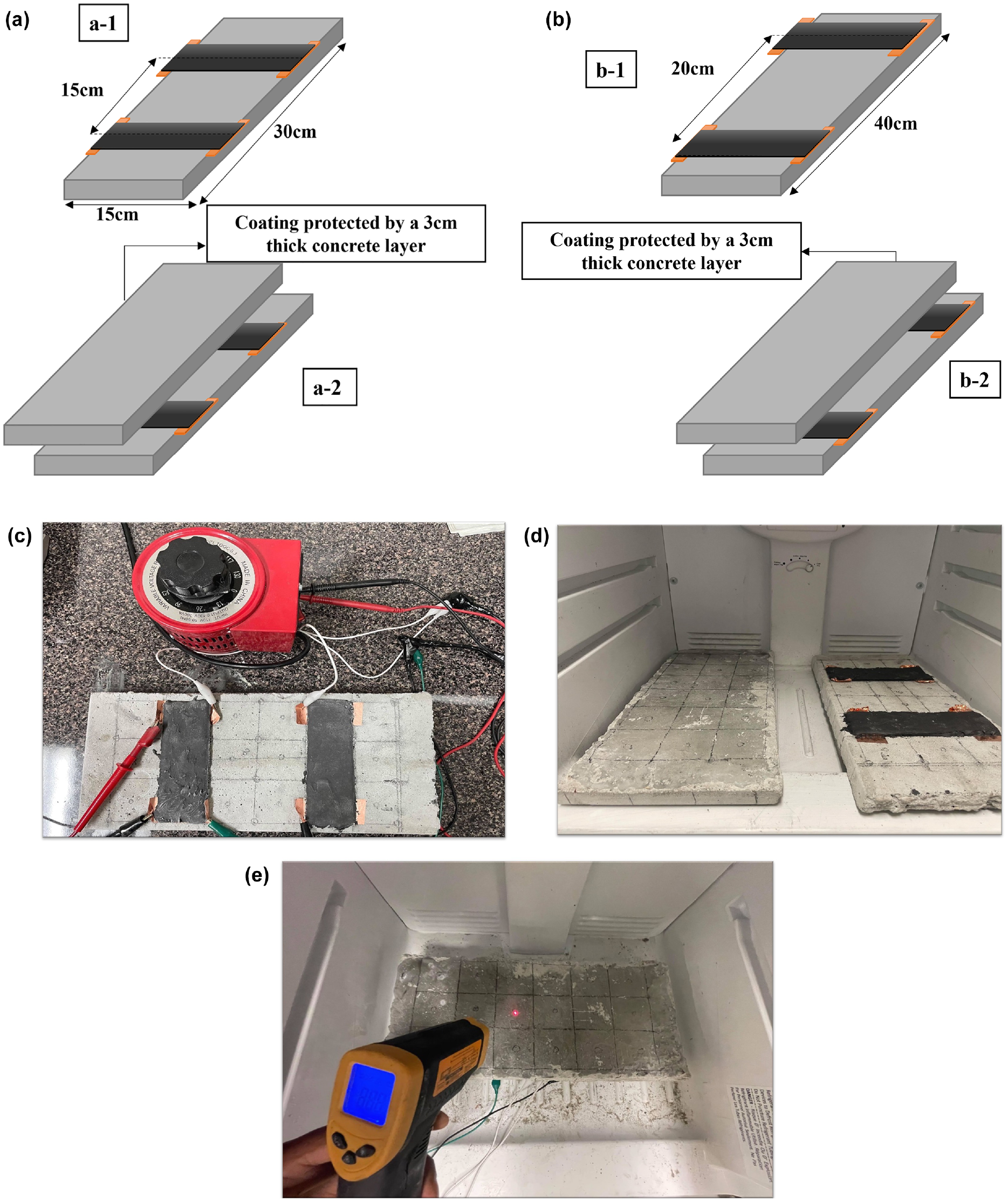
Prepared specimens: (a) 15cm c/c; (b) 20cm c/c; (c) temperature increase at room temperature; (d) sample stored in the fridge for 24 h; and (e) surface temperature measure at −17°C.
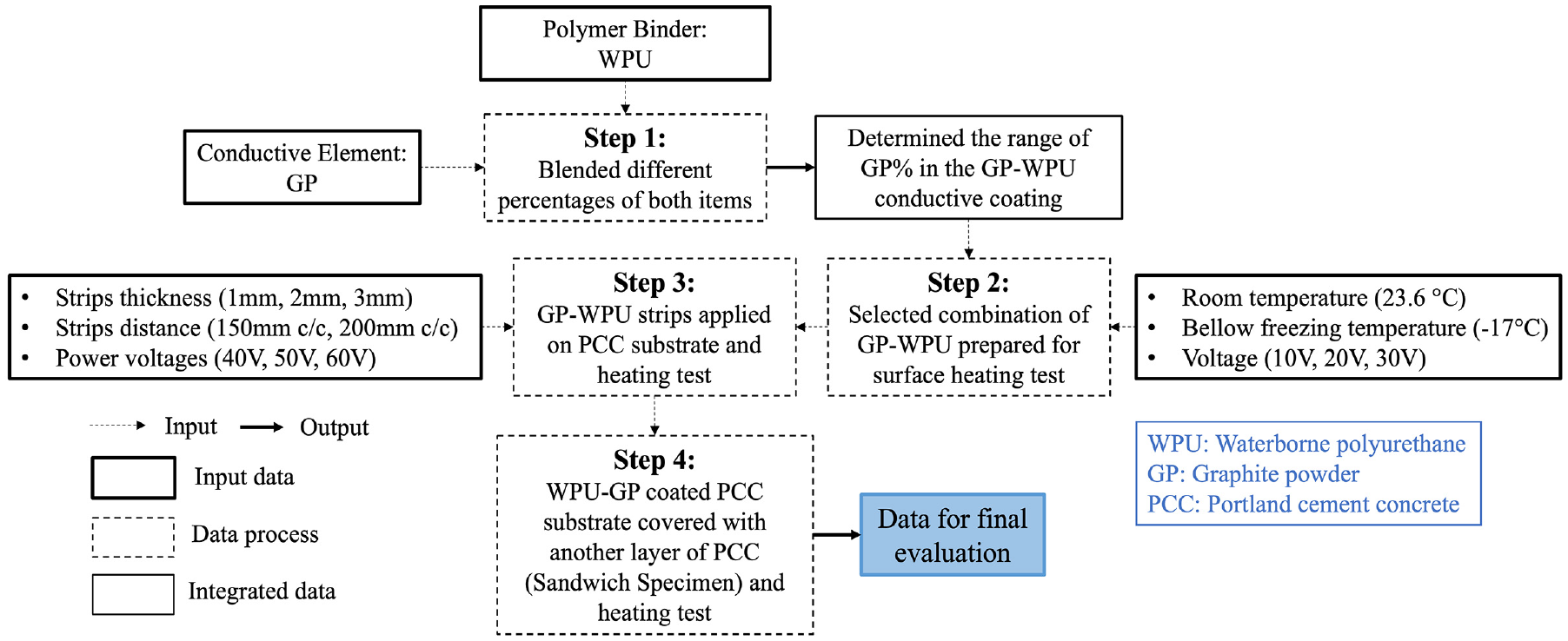
Flowchart of the study process.
Results and Discussion
Surface Resistivity
The investigation of the surface resistivity of the specimens involved a thorough analysis. We diligently averaged the data from multiple replicates for each specimen to arrive at meaningful results. Figure 8 presents a visual representation illustrating the dynamic changes of surface resistivity for ECC specimens at varying fractions of Gp volume. An in-depth examination of Figure 8 reveals three distinctive regions: the insulator, semi-conductive, and conductor.
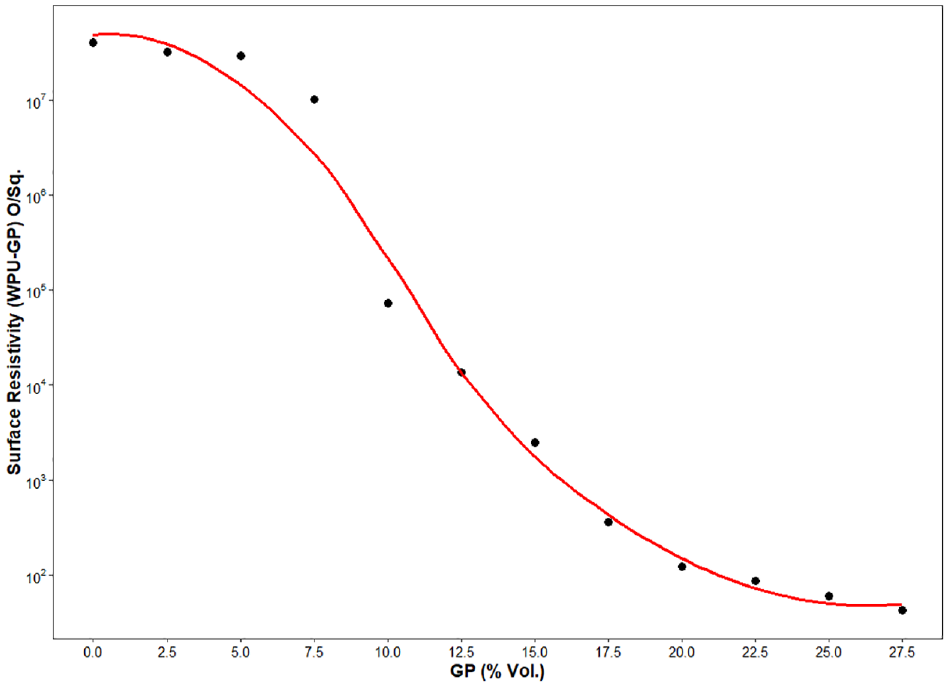
Relation between surface resistivity and Gp content in WPU-Gp composites.
Percolative behavior, defined as a sudden change of surface resistivity caused by the introduction of conductive elements, can also be observed in this study. For instance, Figure 8 illustrates the point at which the WPU-Gp composite shifts from exhibiting insulating properties to becoming conductive at a specific dosage rate.
The insulating property remains significant until the Gp volume fraction reaches 7.5%. Beyond this threshold, a marked and rapid decrease in surface resistivity occurs, diminishing substantially when the Gp volume reaches 10%. At this concentration, the material transitions from an insulating to a conductive composite, as evidenced by the emergence of conductive pathways. We observe a consistent decrease in surface resistivity with each incremental increase in Gp content. The Gp content reaches 22.5%, the composite transitions from semi-conductivity to complete conductivity.
However, once the Gp content exceeds 22.5%, the degree of reduction experiences a less gradual decline. This critical juncture signifies that the Gp volume content has attained the percolation threshold, allowing for the establishment of continuous conductive pathways. Consequently, this enhances the ability of the WPU-Gp composite to conduct electric current.
Heating Capacity and Surface Temperature Distribution
The heating capacity of WPU-Gp specimens was assessed at room temperature, with data collection extending over a 30-min timeframe. Preliminary investigations involved the investigation of coated wood specimens subjected to a 30 V power supply to determine the optimal Gp content (% vol). Notably, the temperature increase was negligible until the Gp content reached 12.5%. However, a distinct transition occurred as the Gp content increased, as depicted in Figure 9, which provides the average records corresponding to the duration of heating for each WPU-Gp coated PCC specimen.
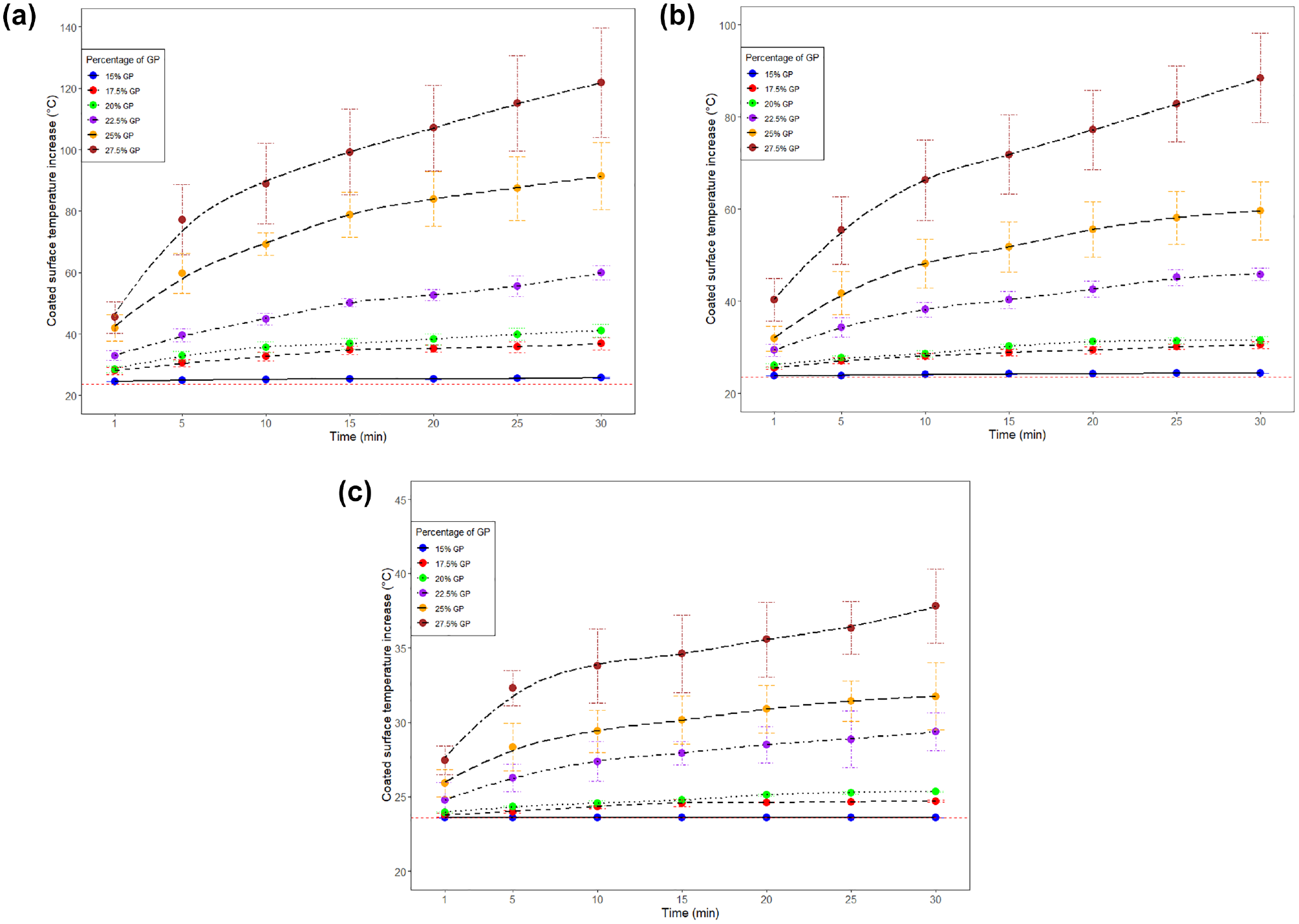
Temperature increases on the coated surface were monitored over time with varying Gp content (% vol) at power supplies of: (a) 10 V, (b) 20 V, and (c) 30 V.
A corresponding elevation in the average surface temperature was observed with the augmentation of Gp content in the composite and the increment in applied voltage. Surface heating remained minimal even at 10 V, 20 V, and 30 V for Gp contents up to 17.5%. Figure 9 presents a detailed analysis of the performance across varying Gp volume contents from 15% to 27.5%. Notably, at voltage levels of 10, 20, and 30 V, a continuous increase in the average surface temperature was observed once the Gp content reached 20%. However, significant surface heating occurred beyond the 22.5% Gp content threshold. Subsequently, to replicate real-world field conditions, frozen specimens were subjected to examination.
This entailed exposing WPU-Gp specimens to sub-freezing temperatures (−17°C), with voltage settings at 20 V and 30 V, while varying Gp content levels encompassed 15%, 17.5%, 20%, 22.5%, and 25%. After 30 min, surface temperature measurements were recorded, graphically illustrated in Figure 10.
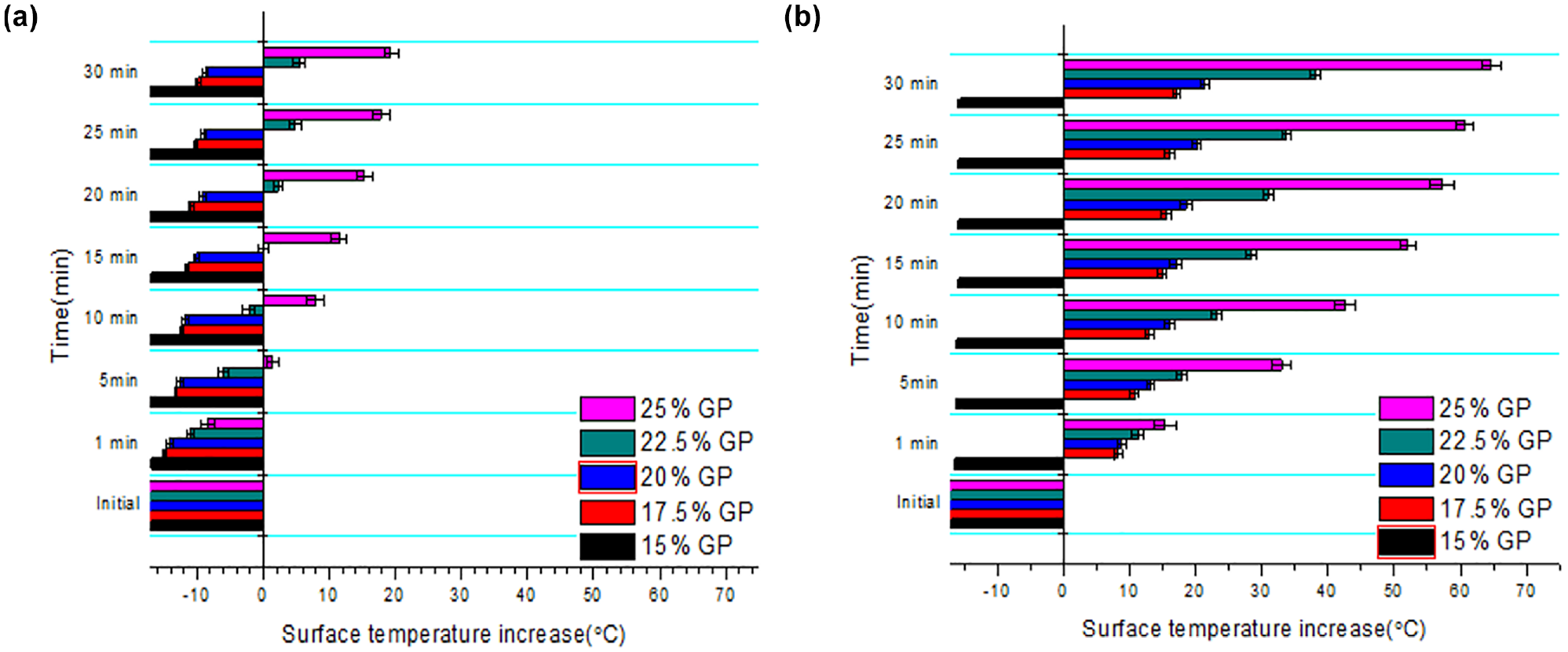
Mean temperature increases were recorded at voltages: (a) 20 V; and (b) 30 V.
The data acquired underscore the impressive surface heating capacity exhibited by Gp dosage rates exceeding 17.5%. Nevertheless, examining temperature distribution between the two electrodes up to a 22.5% Gp content indicated a uniformity that lacked highly localized heating. Beyond the 22.5% Gp content threshold, a diminishing conversion of electrical energy into heat energy was observed, resulting in the concentration of heat in specific areas while leaving other regions unheated. This behavior is attributed to the propensity of graphite powder to agglomerate when unevenly dispersed within the composite, a phenomenon manifesting primarily at Gp contents exceeding 22.5%. The variances in heating performance on coated surfaces can be attributed to the application of higher Gp dosages, resulting in non-uniform surface resistivity. Consequently, the optimal Gp content for achieving effective surface heating and uniform distribution is 17.5% to 22.5%.
The surface resistivity and heating capacity experiments were conducted to verify the uniform dispersion of Gp in the ECC. Consistent resistivity and heating performance across numerous samples support the uniform distribution of graphite particles within the composite matrix. Greater variance in results indicates non-uniform Gp distribution and agglomeration points. This validation is crucial as it ensures the formation of effective conductive pathways within the composite, enhancing its electrical and thermal properties. For deeper understanding, the authors suggest exploring the sample’s scanning electron microscope (SEM) analysis, which will elaborate on creating more effective electric channels and enhancing the overall electrical conductivity of the composite.
Experimental Results
To evaluate the heating performance of the ECC, measurements were taken across the entire test stretch of the pavement surface, as shown in Figure 6, d and e . This comprehensive approach ensured that the data covered the complete stretch, providing a full assessment of the temperature distribution and uniformity of the heating system. The data were collected from different points of the test stretch, and their averages were reported. Figures 11 to 14 depict the temperature data collected from the entire pavement surface, ensuring that the performance evaluation is thorough and representative of the ECC’s overall effectiveness.
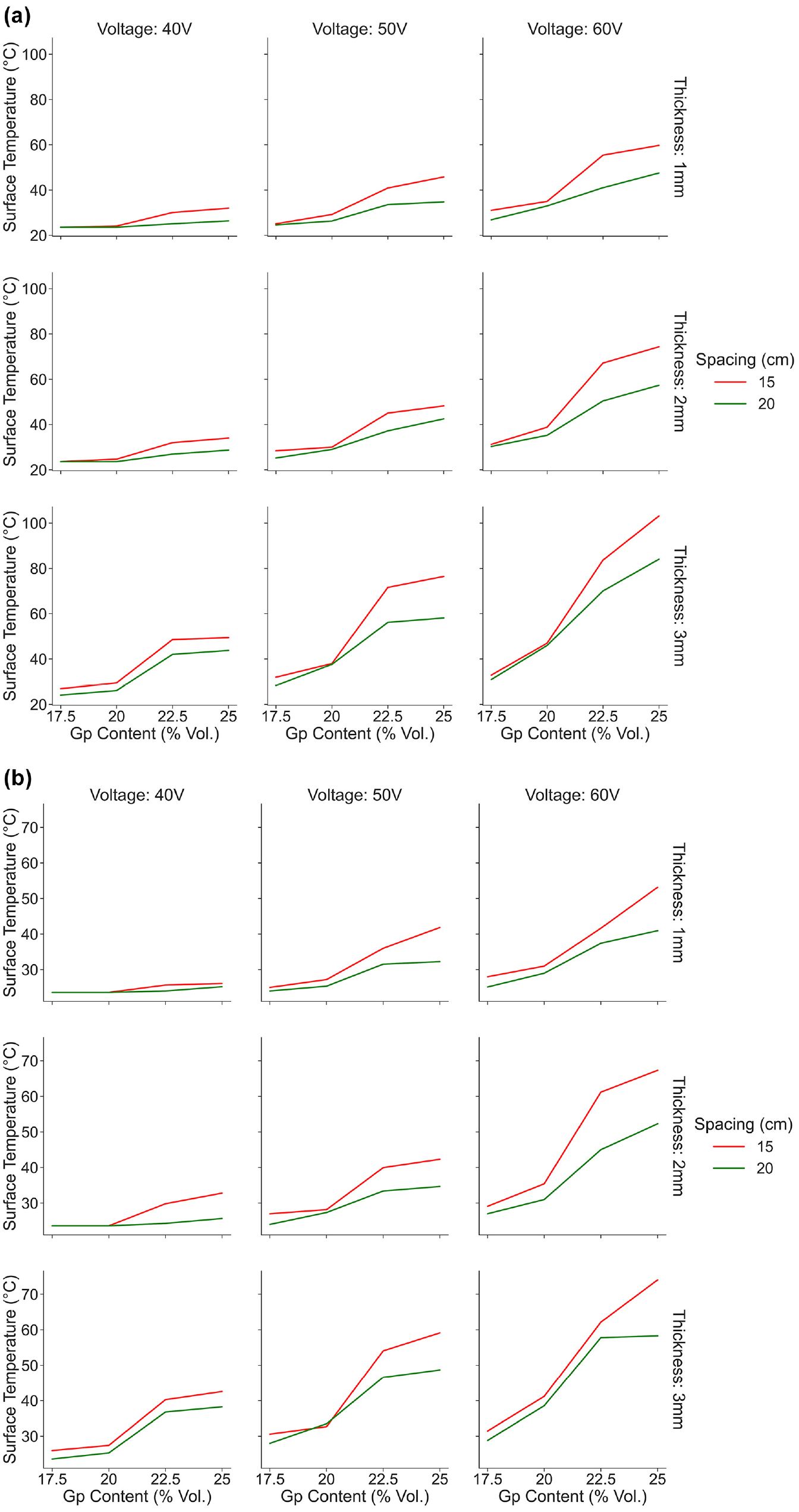
Performance of proposed construction method: (a) exposed; and (b) sandwiched.
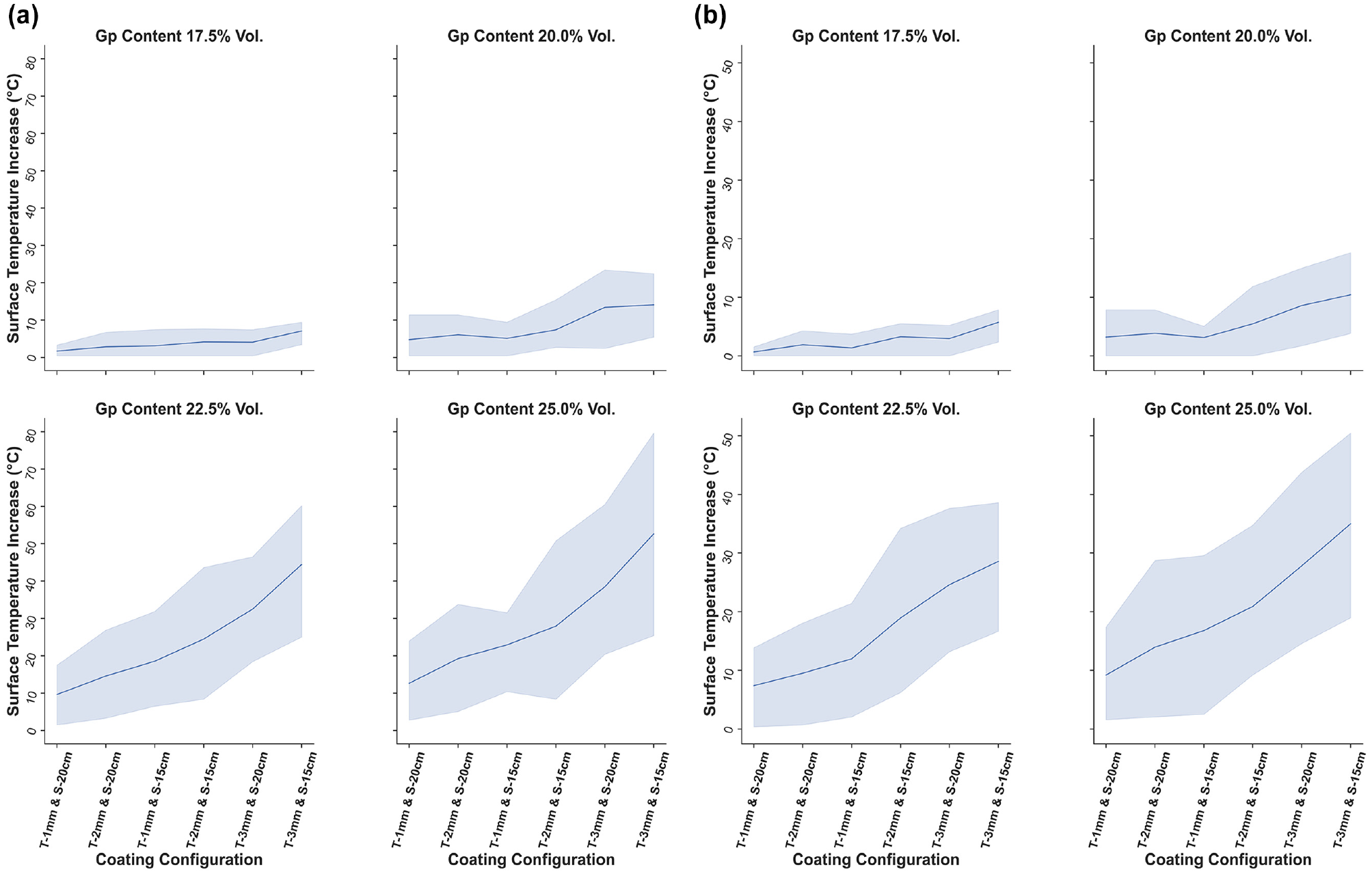
The heating performance of most minor to most expensive specimens: (a) exposed; and (b) sandwiched.
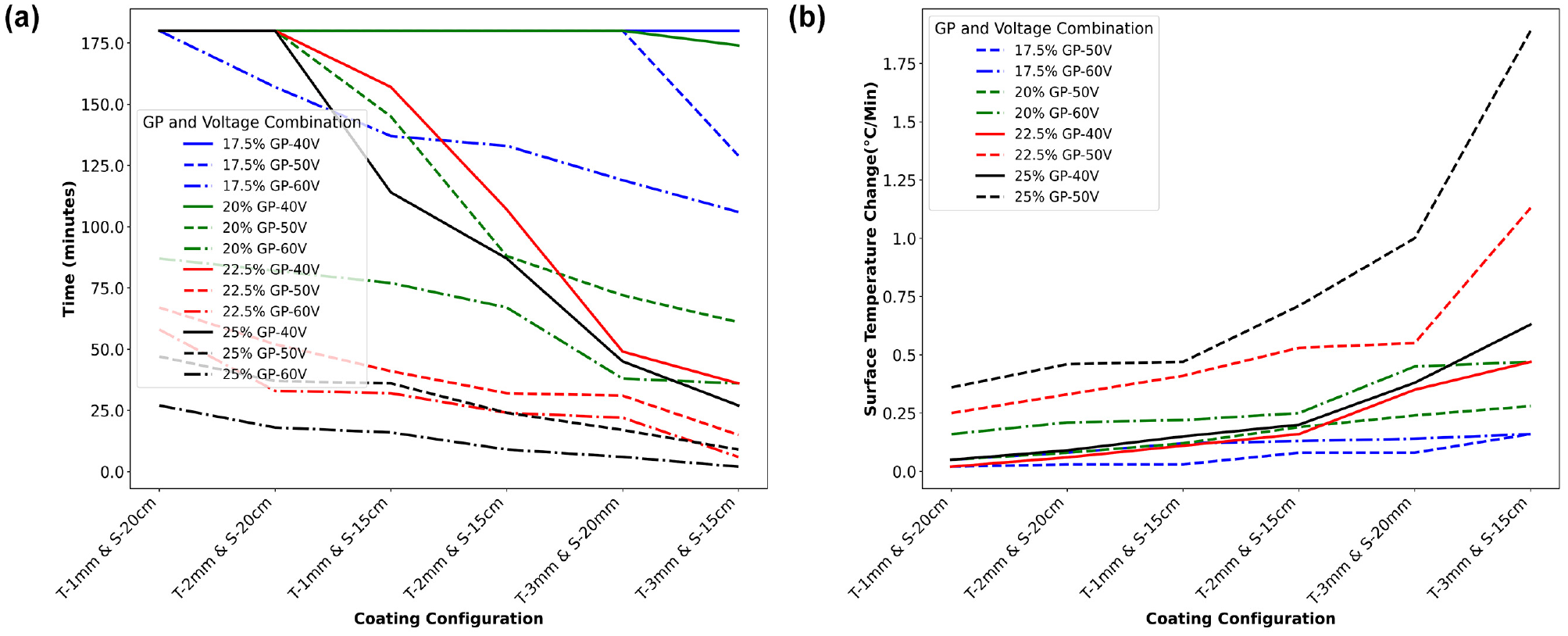
Performance of the exposed specimen at −17°C (a) time required to reach 0°C; and (b) surface temperature increase (°C/min).
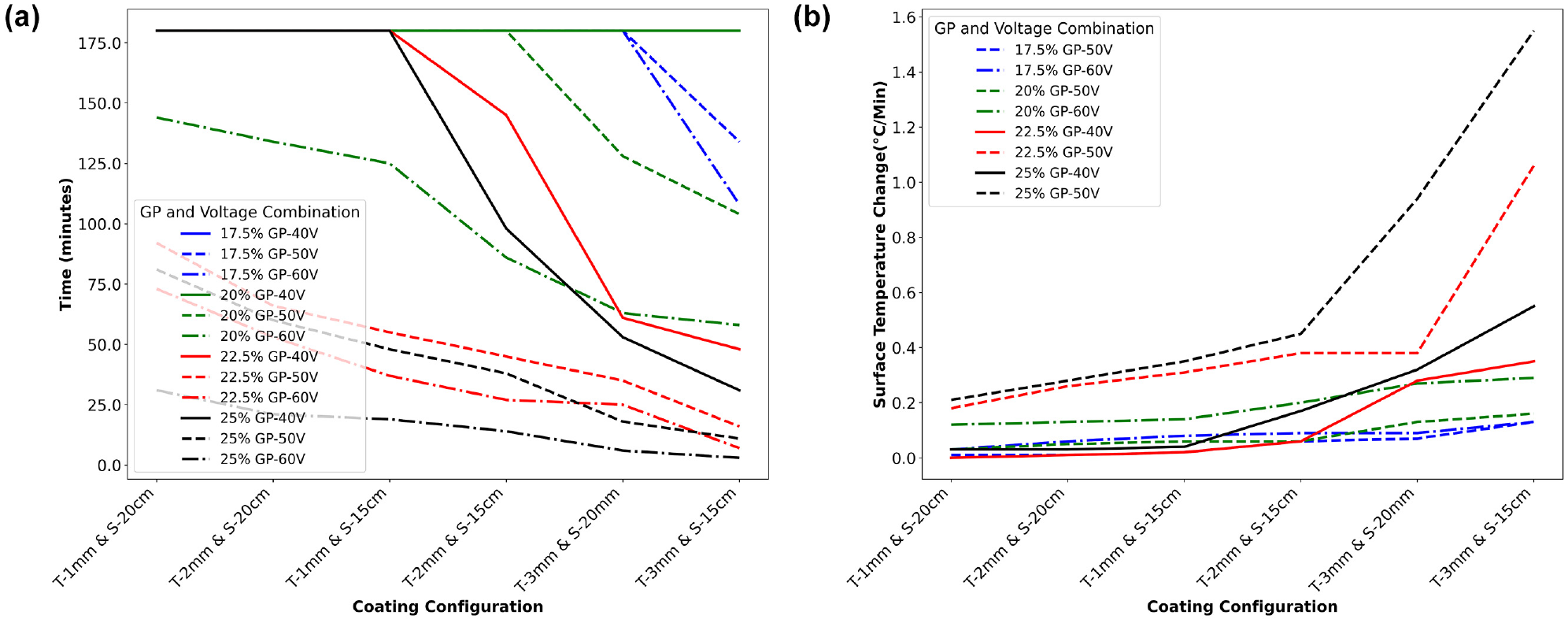
Performance of sandwiched specimens at −17°C (a) time required to reach 0°C; and (b) surface temperature increase (°C/min).
The results of the heating performance at 23.6°C ambient temperature are presented in Figure 11, a and b . Figure 11 illustrates the changes in PCC surface temperature based on the Gp content volume (%) in ECC, with data recorded over a 60-min period. The average temperature increase from the baseline condition to the observed heating phase is well documented and visually represented for all prepared ECC specimens in both exposed and sandwich set-ups, as shown in Figure 11. This study assessed three key factors influencing the surface temperature increase of the prepared specimens under ambient test conditions: applied voltage, coating thickness, and spacing between the coatings. The maximum temperature changes observed for Gp contents of 17.5%, 20%, 22.5%, and 25% were approximately 9.26°C, 23°C, 60.11°C, and 79.57°C for the exposed specimens, and 7.84°C, 17.6°C, 38.57°C, and 50.43°C for the sandwiched specimens.
The research meticulously documented a consistent increase in surface temperatures for exposed and sandwiched specimens, with temperature variations closely linked to several controlled variables. Principal factors influencing these variations included the Gp volume fraction in the ECC, coating thickness, applied voltages, and the proximity of consecutive coatings. The data were methodically categorized into economically viable groups based on the cost implications of sample preparation. This classification highlighted distinctions between more cost-effective configurations, which used thinner coatings and wider spacings, versus more expensive alternatives characterized by thicker and narrower spacings. Consequently, six distinct groups were identified for in-depth analysis: T-1mm and S-20cm, T-2mm and S-20cm, T-1mm and S-15cm, T-2mm and S-15cm, T-3mm and S-20cm, and T-3mm and S-15cm, where “T” indicates coating thickness and “S” represents the spacing between ECC strips. These configurations are meticulously illustrated in Figure 6, a and b .
This study introduces an innovative construction method that applies ECC to PCC, avoiding modifications to the existing pavement materials. Therefore, the economic analysis focused exclusively on the construction costs associated with ECC, excluding the overall pavement system costs since the ECC was applied over standard concrete pavements. The effectiveness of ECC’s heating capabilities was evaluated across the entire test stretch, as depicted in Figure 6, d and e . This comprehensive approach ensured full coverage, facilitating a thorough examination of the temperature distribution and the uniformity of the heating system.
Cost estimations were based strictly on the ECC preparation at a laboratory scale for two specific test stretches: 450 cm2 and 600 cm2, as previously detailed. Construction costs were calculated considering the total material costs of WPU and Gp for the six groups, where Gp cost was 0.475 $/kg and WPU provided by SureCrete Company at 1.44 $/kg. This analytical approach provided a transparent perspective on the financial impact of varying ECC configurations. The cost for preparing the six ECC samples ranged from 1.83 $/m2 to 2.26 $/m2, demonstrating that thinner coatings and wider spacings not only reduce material usage but also enhance cost efficiency, thereby establishing a clear link between material dimensions, spacing, and financial viability. These categories of prepared specimens have demonstrated an improved heating performance concomitant with an escalation in the power consumption of the ECC specimens, as depicted in Figure 12, a and b .
According to the extant literature, the continued power supply to ECC activates the conductive pathways established by Gp contents, thereby augmenting electrical conduction. This phenomenon results in a proportional increase in resistive heating power, as noted by ( 59 ). Substantive temperature elevations were observed in both exposed and sandwiched ECC specimens after 60 min, particularly at Gp contents of 20% and 22.5%, when subjected to 40 V, 50 V, and 60 V. In contrast, the temperature rise was negligible at a Gp content of 17.5%, and the heat conduction effect remained indistinct. An escalation in Gp content to 25% induced even higher surface temperatures for both exposed and sandwiched specimens, as elucidated in Figure 12.
It was evident from these observations that as voltage and Gp contents increased, surface temperature exhibited a gradual rise. The most increased temperatures were recorded at 60 V and 25% Gp content. However, it is noteworthy that at 25% Gp content, higher temperatures were also associated with a risk of ECC melting and combustion, particularly evident in the most costly specimens (T-3 and 20cm, and T-3 and 15cm) subjected to 60 V. Therefore, it was concluded that Gp contents between 20% and 22.5% achieve an optimal balance between heat transfer efficacy and the viability of specimen preparation economically. As a result, the preferred volume fraction of Gp content is 22.5%, which provides the desired temperature levels while minimizing construction costs.
For selecting ECC specimens suitable for subsequent evaluation of ice and snow melting capabilities, 40 V, 50 V, and 60 V were applied to both exposed and sandwiched specimens, with the specimens remaining connected to the power supply for 180 min. This experiment encompassed specimens containing Gp contents of 17%, 20%, 22.5%, and 25%, all placed within a freezer to maintain an ambient sub-freezing temperature of −17°C. The experiment continued until the surface temperature of the specimens reached 0°C, as depicted in Figure 6, d and e . Temperature measurements were recorded at various points using a gradient method within the ECC specimens on the PCC surface.
The average time required to attain a surface temperature of 0°C during the experiment is illustrated in Figure 13, a and b , notably the 25% volume Gp specimens exhibited the swiftest temperature increase, with a remarkable rise of 17°C in just 2 min, achieving the desirable surface temperature of 0°C at an impressive heating rate of 8.5°C per min. The 22.5% Vol. Gp specimens followed closely, attaining a 17°C temperature increase in 6 min with a heating rate of 2.83°C per min. It is pertinent to note that both exhibited high heating rates, albeit with the caveat of a potential risk of combustion resulting from the rapid temperature rise, leading to their exclusion from the experimental roster (see Figure 13b).
Subsequently, the 20% volume Gp specimens demonstrated an increase of 17°C in 36 min, corresponding to a heating rate of 0.47°C per min, while the 17.5% volume Gp specimens exhibited commendable heating efficiency, with a 17°C temperature increase in 106 min at a heating rate of 0.16°C per min.
Figure 14, a and b , presents the results of the computed heating test conducted under sub-freezing temperature conditions for each sandwiched specimen, following the methodology detailed earlier in this section. As illustrated in Figure 14a, it is evident that the time required to attain a surface temperature of 0°C decreased with higher voltage settings and cost considerations, mirroring the trends observed in the exposed specimens.
A notable observation from Figure 14b is the discernible variation in heating efficiency among the different Gp contents. Specifically, the 17.5% volume Gp content exhibited the lowest heating efficiency, with subsequent content percentages of 20%, 22.5%, and 25% volume Gp demonstrating progressively enhanced heating efficiencies.
As illustrated in both Figures 13 and 14, a noteworthy reduction in the time required to achieve the desired temperature was observed, particularly at Gp volume fractions of 22.5% and 25% when subjected to power supplies of 40 V, 50 V, and 60 V, which correspond to the higher construction costs. Notably, only a few samples with Gp volume fractions of 17% and 20% demonstrated the ability to reach 0°C.
In contrast, when the Gp dosage rates were elevated to 22.5% and 25%, regardless of whether the specimens were of the exposed or sandwiched type, all specimens exhibited a substantial reduction in the time required to transition from −17°C to 0°C, ranging from 2 to 157 min. This outcome underscores a vital finding of the study. When contemplating the most cost-effective construction method, it is evident that none of the specimens with 17.5% GP content reached 0°C at power supplies of 40 V, 50 V, or 60 V. For specimens with 20% GP content, the time requirement ranged from 36 to 174 min.
Conversely, a conspicuous reduction in the duration of all tests was observed for specimens with a Gp content range of 22.5% to 25%. This finding underscores the critical importance of higher Gp content and increased coating thickness, which collaboratively enhance the conductive composite’s ability to generate heat under higher electrical inputs. Consequently, this combined effect notably decreases the time requirement for specimens when exposed to an ambient temperature of −17°C.
Selecting ECC specimens with a Gp content of 22.5% is a promising choice, demonstrating efficient heating performance and a balanced cost-efficiency profile in our experimental observations. While further statistical tests are necessary to confirm the significance of these trends, the 22.5% Gp content ECC specimens consistently exhibited rapid temperature increases under various voltage settings while maintaining stability and safety. This Gp content configuration shows potential as a practical solution for applications such as ice and snow melting, pending further rigorous analysis to validate its performance.
Optimal Selection
The optimization of ECC usage for resource savings and effective heating for environmentally friendly snow and ice removal from pavements is the study’s secondary goal. A thorough analysis was carried out to evaluate the impact of Gp content on heat conduction. This was done at different concentrations of 17.5%, 20%, 22.5%, and 25%, along with varying thicknesses of 1 mm, 2 mm, and 3 mm. Additionally, varying AC voltages of 40 V, 50 V, and 60 V were supplied. The study compared outcomes from specimens with coating spacings ranging between 15 cm and 20 cm c/c, considering both exposed and sandwiched configurations.
This analysis approach focused on two primary aspects: evaluating surface temperature rise to 23.6°C and determining the time requirement to reach 0°C from −17°C. This analysis involved a total of 288 specimens, with 144 tested at 23.6°C and another 144 tested at −17°C. ANOVA tests were conducted to assess differences in Gp content, voltage, and coating thickness for both types of specimens, which had 15 and 20 cm c/c as coating spacing. To assess parameters concerning PCC surface temperature rising at room temperature, a p-value less than 0.05 was considered statistically significant. Table 4 illustrates the variation in final surface temperatures among the test specimens and each condition tested on 36 specimens.
Descriptive Statistics for Surface Temperature Rising at 23.6°C
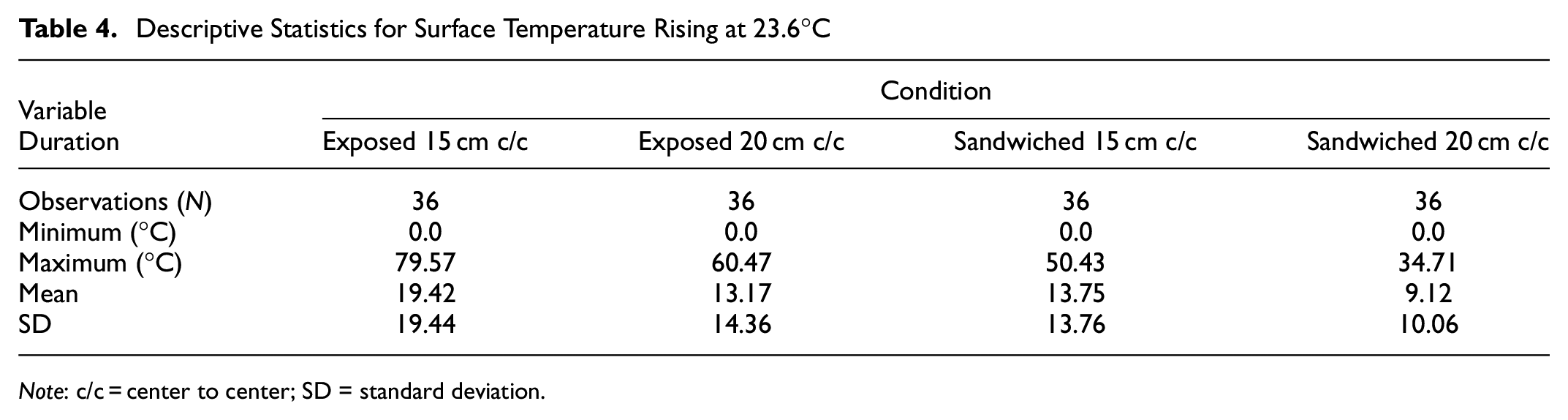
Note: c/c = center to center; SD = standard deviation.
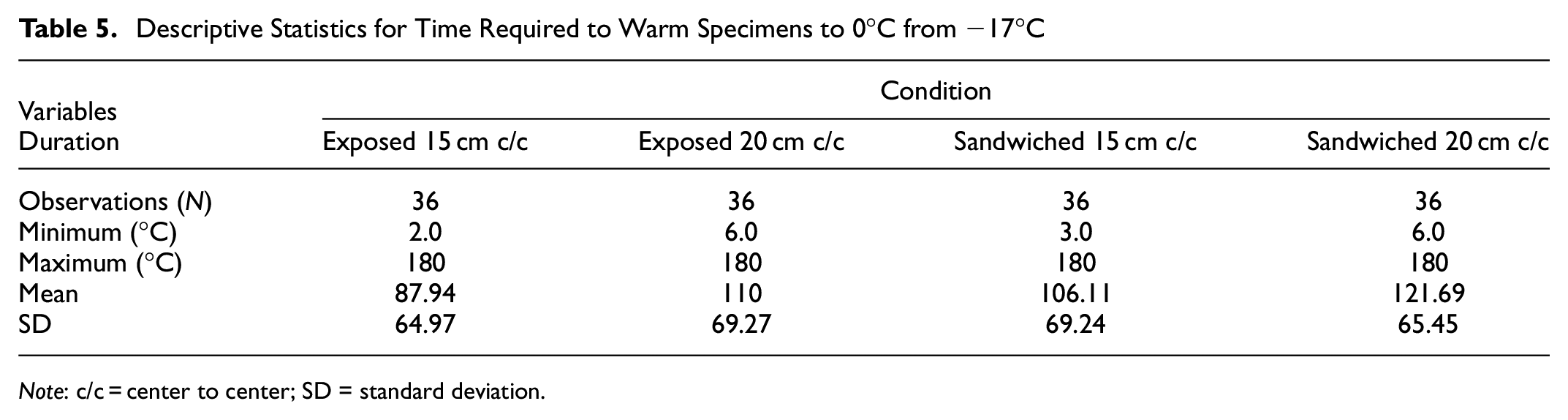
The mean surface temperatures recorded were 19.42°C, 13.17°C, 13.75°C, and 9.12°C, respectively. Among these, the specimen exposed with a strip 15 cm c/c spacing exhibited the maximum surface temperature. Table 5 illustrates the average time needed under various conditions, with the shortest mean duration being 87.94 min for specimens coated at 15 cm c/c and exposed.
Descriptive Statistics for Time Required to Warm Specimens to 0°C from −17°C
Note: c/c = center to center; SD = standard deviation.
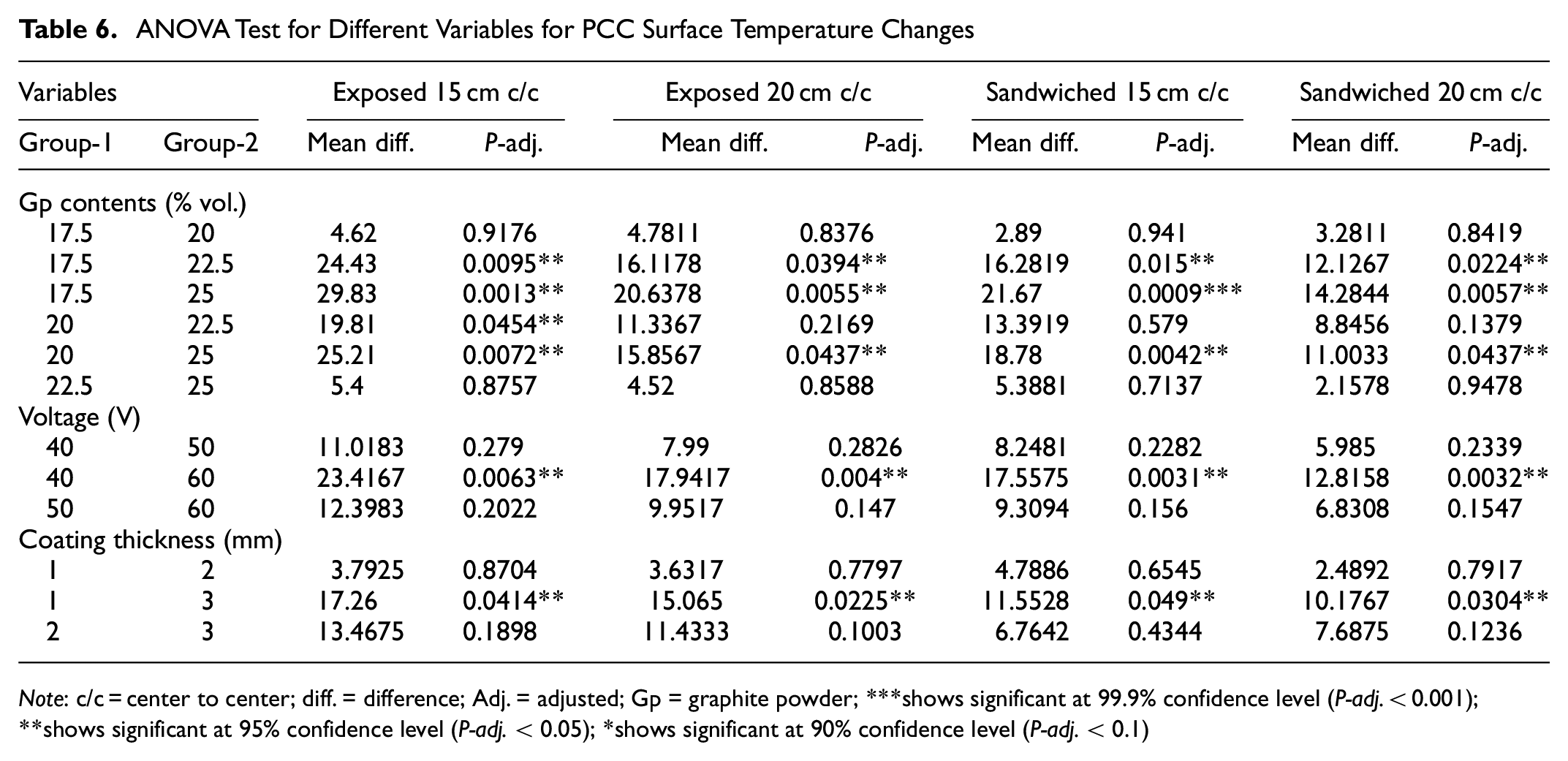
The study investigated the effect of four Gp fraction contents, three voltages, and three coating thicknesses on the temperature increase to identify the most influential variable of each variable using the ANOVA test, as detailed in Table 6. The experimental results indicated that an increase in Gp content from 17.5% to 20% by volume in ECC led to a more pronounced rise in surface temperature. Furthermore, increasing from 20% to 22.5% significantly enhanced surface temperature. However, a subsequent increase from 22.5% to 25% did not yield a discernible elevation of the mean surface temperature. Therefore, it recommends that the Gp content be between 20% and 22.5% to get the maximum achievable surface temperature. When comparing the different voltages (40, 50, and 60 V), it was observed that at 60 V, the rise in surface temperature was the most significant compared with the other two voltage levels. The analysis considered three coating thicknesses: 1 mm, 2 mm, and 3 mm. While the mean temperature increase was consistent across the thicknesses, a substantial enhancement in surface temperature was observed as the coating thickness increased to 3 mm. This effect can be attributed to higher GP content in thicker coatings, which reduces surface resistivity, improving electrical conductivity and enhancing heating performance. This correlation also influenced the time required to elevate surface temperatures from sub-freezing to 0°C.
ANOVA Test for Different Variables for PCC Surface Temperature Changes
Note: c/c = center to center; diff. = difference; Adj. = adjusted; Gp = graphite powder; ***shows significant at 99.9% confidence level (P-adj. < 0.001); **shows significant at 95% confidence level (P-adj. < 0.05); *shows significant at 90% confidence level (P-adj. < 0.1)
Economic Benefits
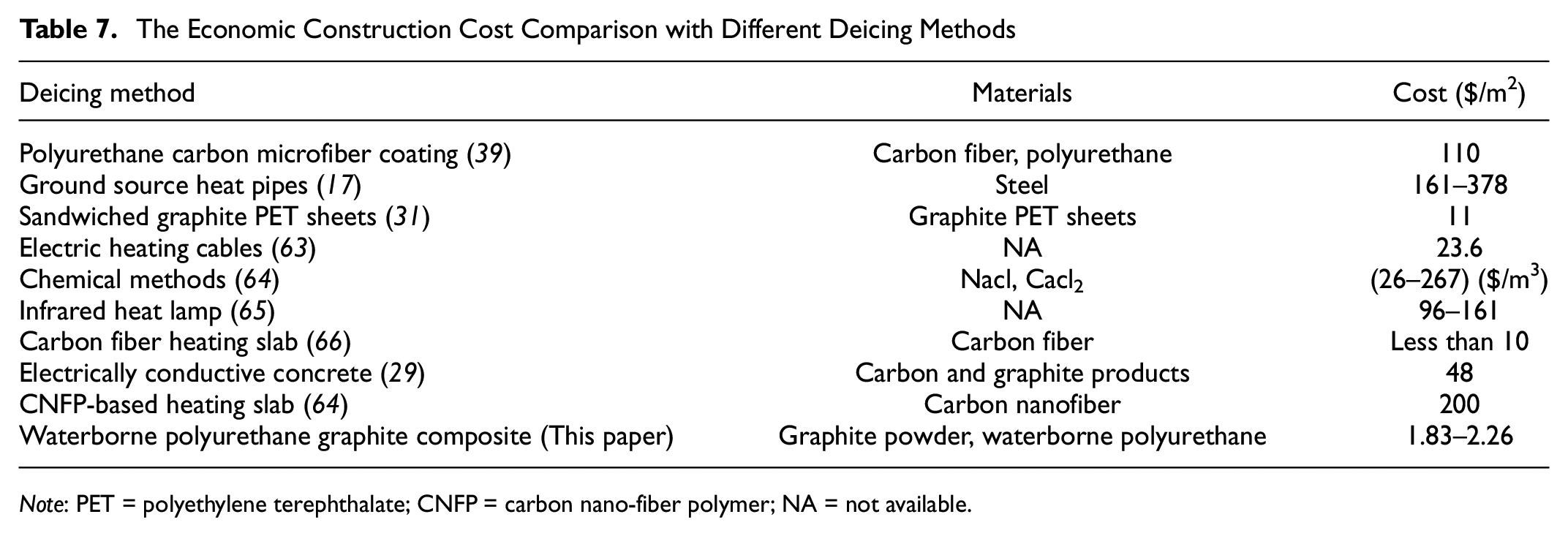
This section highlights the economic benefits of the proposed method compared with other existing deicing methods, both cost-specific and functional efficiency. Table 7 presents a comparative analysis of the economic costs of various deicing methods used in HPS construction. This table underscores the cost-effectiveness of using a WPU-Gp composite, as highlighted in the current study. The table elucidates the substantial cost advantage of the WPU-Gp composite, with costs ranging from $1.83 to $2.26/m2, significantly lower than other conventional deicing methods listed. For instance, the polyurethane carbon microfiber coating is considerably more expensive at $110/m2, and the ground source heat pipes vary between $161 and $378 /m2, illustrating a stark contrast in material costs. Even electric heating cables, which are among the less expensive alternatives, cost $23.6 /m2. Similarly, chemical methods using NaCl and CaCl2 range widely from $26 to $267 /m3, and infrared heat lamps also show considerable expense, ranging from $96 to $161 /m2. Notably, carbon fiber heating slabs are highlighted for their low cost, less than $10 /m2, and the sandwiched graphite polyethylene terephthalate (PET) sheets-based deicing method at $11/m2, offering an economical alternative. However, electrically conductive concrete and carbon nano-fiber polymer-based (CNFP) heating slabs also demonstrate higher costs at $48 and $200/m2, respectively.
The Economic Construction Cost Comparison with Different Deicing Methods
Note: PET = polyethylene terephthalate; CNFP = carbon nano-fiber polymer; NA = not available.
The comprehensive cost assessment in Table 7 convincingly supports adopting the WPU-Gp composite configuration. By adopting this approach, substantial economic savings can be realized in constructing HPS, making it a viable and sustainable alternative. The recommended use of a 22.5% Gp content in the ECC optimizes economic efficiency and ensures effective material usage, aligning with sustainable construction practices. This data compellingly advocates for integrating the WPU-Gp composite in modern deicing applications, significantly reducing costs while maintaining high performance.
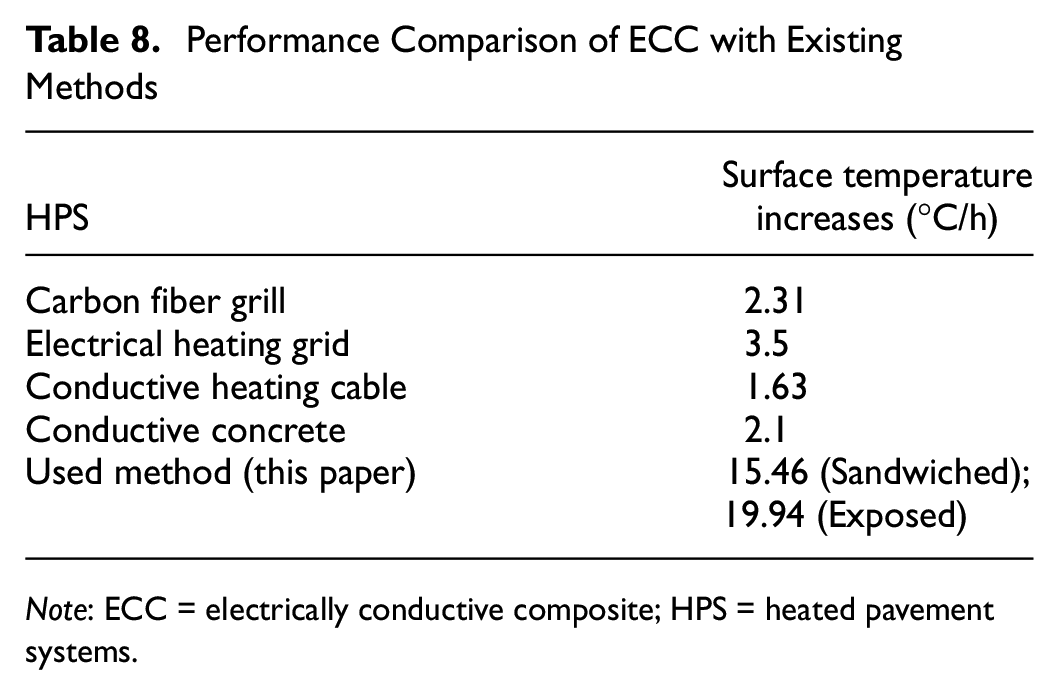
In addition, Table 8 highlights a notable technical advantage of the proposed construction method, underscoring its benefits. The experimental results obtained using this construction method are presented in Table 8 compared with other established deicing technologies ( 21 ). Table 8 has been included to illustrate the superior performance of the proposed construction method clearly. As demonstrated, the ECC method’s heating efficiency greatly surpasses that of other well-known deicing solutions, such as conductive concrete, electrical heating grids, carbon fiber grills, and conductive heating cables. Specifically, Table 8 shows that the increasing surface temperature hourly rate for ECC, both in sandwiched and exposed configurations (15.46°C/h and 19.94°C/h, respectively), are markedly higher compared with the maximum of 3.5°C/h achieved by the next best technology, the electrical heating grid. This distinct advantage substantiates the ECC method’s enhanced functional efficiency and underscores its potential applicability in HPS construction, offering a compelling argument for its adoption over existing methods.
Performance Comparison of ECC with Existing Methods
Note: ECC = electrically conductive composite; HPS = heated pavement systems.
Future Research
This study demonstrates the potential of using an ECC for snow and ice removal on airport pavements. However, several areas require further exploration to ensure the technology’s long-term viability and practical application.
The study identified variability in surface resistivity caused by manual mixing. Future research should investigate standardized or automated mixing processes, such as mechanical stirring and ultrasonic dispersion, to achieve consistency. Using a standardized four-point probe method for surface resistivity measurements can ensure accuracy and repeatability. Comparing manual and mechanical mixing methods will help quantify resistivity variation.
Future research may explore the long-term durability of ECC-coated pavements, addressing potential issues such as cracking, spalling, and faulting resulting from temperature fluctuations. Evaluating wear resistance under various environmental conditions and traffic loads is crucial. Field trials will assess performance in real-world scenarios, including freeze-thaw cycles, UV radiation, and abrasion.
Scaling up ECC applications in airport settings presents logistical challenges, such as uniform coating over large areas, ensuring adhesion to the PCC substrate, and maintaining heating efficiency under heavy aircraft traffic. Future studies may develop and test scalable application methods.
Conducting a detailed life cycle cost analysis (LCCA) of ECC-coated pavement is essential to evaluate economic feasibility. This analysis will consider initial construction costs, long-term maintenance, and operational savings from reduced snow removal needs, providing insights into the cost-effectiveness of traditional methods.
Future research may include thermogravimetric analysis (TGA) to understand better the thermal stability and composition of sandwiched and coated ECC samples. This analysis will help assess the thermal degradation properties of the composites, providing insights into their performance and durability under various time and temperature conditions.
The environmental impact of using ECC coatings is also necessary. This includes assessing the sustainability of the materials used, the energy consumption of the heating system, and the potential environmental benefits of reducing chemical deicers. Future research should aim to quantify these impacts and explore ways to minimize any adverse environmental effects.
It is vital to investigate ECC’s performance on asphalt mixtures. The proposed ECC, made of WPU, may enhance deicing efficiency on asphalt pavements. Rigorous testing will evaluate factors like adhesion and durability, determining the suitability of ECC for asphalt surfaces.
Heating systems can significantly impact rigid pavements, which, despite their inherent stiffness, are prone to various distresses caused by load and temperature variations ( 67 ). Thermal gradients and wheel loads can further induce warping and flexural stresses, leading to cracks and pavement failure, shortening pavement lifespan, and causing traffic disruptions ( 68 , 69 ). Additionally, increased traffic and changing environmental conditions, compounded by heating systems, intensify these failures. Thermal ratcheting, a cumulative deformation exacerbated by heating systems, along with the thermal properties of pavement materials and potential temperature differences during construction, are critical factors that need a thorough investigation in future studies to mitigate such failures using this proposed construction method.
By addressing these areas, future studies can build on this research’s findings to develop a robust, reliable, and economically viable solution for managing snow and ice on airport pavements.
Conclusion
The study successfully introduces a sustainable HPS construction method using ECC for pavement heating. This approach uses WPU and Gp to create an ECC applied with a specific striping technique, which has undergone rigorous evaluation, encompassing its heating performance and construction costs.
The findings of this study unequivocally demonstrate the effectiveness of the HPS construction method in providing reliable resistive heating and ensuring that specimen surface temperatures remain above freezing. This holds true even when subjected to varying ambient conditions. Both “exposed” and “sandwiched” specimens have exhibited significant performance. “Exposed” specimens, electrified at different voltage levels, have consistently maintained an average surface temperature within the range of 13.17°C to 19.42°C. Simultaneously, “sandwiched” specimens have showcased surface temperatures in the range of 9.12°C to 13.75°C when tested under a controlled room temperature of 23.6°C.
In the context of preconditioned specimens at a challenging −17°C, the research has illuminated variable timeframes for reaching 0°C under a continuous power supply. The “exposed” specimens achieved this in times ranging from 87.94 to 110 min, while the “sandwiched” specimens exhibited timeframes of 106.11 to 121.69 min. These timescales have provided valuable insights, indicating that surface temperatures increase with higher Gp concentrations, elevated voltage levels, thicker ECC coatings, and reduced distances between ECC stripes. Under room temperature settings, the ideal Gp 22.5% volume concentration is the most effective ECC heating material, increasing the temperature by 15.46°C/h for “sandwiched” specimens and 19.94°C/h for “exposed” specimens.
It is essential to note the limitations inherent in this study. While the “sandwiched” specimens have shown promising results in heating performance, the impact of the structure of these specimens on pavement compression performance, pavement stability, and other pavement properties was not studied. This represents a noteworthy direction that should be addressed in future research. This research relies primarily on controlled laboratory testing. While these controlled conditions allow for rigorous examination, field trials are imperative to validate the method’s real-world performance, especially considering various environmental conditions and long-term durability. Furthermore, the cost analysis, while informative, is based on sample preparations and estimations. It may not fully encapsulate complexities and variations that may arise in actual construction projects. Moreover, this innovative construction method’s environmental impact and sustainability aspects warrant further examination and evaluation.
In conclusion, this research offers an innovative and sustainable solution for pavement heating. The findings highlight its remarkable heating performance and economic viability, positioning it as a promising candidate for applications beyond laboratory conditions. With an unwavering commitment to addressing the study’s limitations and further advancing research in this area, we are poised to realize the full benefits of this HPS construction method. By applying this approach to runway and apron areas, we can anticipate more effective winter maintenance while minimizing the annual snow removal costs from the critical pavement. Field trials, extensive environmental impact assessments, detailed cost analyses (including capital and operating costs), investigation of ECC placement techniques, optimization of strip positioning, rigorous life cycle cost analysis, and extensive material durability testing are all part of the research that will lead to sustainable pavement heating in the future.
Footnotes
Author Contributions
The authors confirm contribution to the paper as follows: study conception and design: M. Anis, M. Abdel-Raheem; data collection: M. Anis; analysis and interpretation of results: M. Anis; draft manuscript preparation: M. Anis, M. Abdel-Raheem. All authors reviewed the results and approved the final version of the manuscript.
Declaration of Conflicting Interests
The author(s) declared no potential conflicts of interest with respect to the research, authorship, and/or publication of this article.
Funding
The author(s) received no financial support for the research, authorship, and/or publication of this article.
