



Abstract
Yearly, approximately 1.35 million people die in road collisions worldwide, and 28% of these fatalities are among motorcyclists, comprising both riders and passengers. Tailored post-licensed interventions, defined as educational programs, training sessions, or initiatives that are designed to enhance the safety skills and awareness of individuals who have already obtained their motorcycle licenses, have been proposed as solutions to increase motorcyclist safety. This study aims to summarize the evidence on the effectiveness of post-license interventions for the safety of motorcyclists. Effectiveness is defined as the observed changes in collision statistics, violation rates, riders’ performance, and self-reported attitudes. We conducted a systematic literature review using two databases, PubMed and Scopus, with a focus on post-license interventions among licensed motorcyclists. We excluded helmet-use-related interventions. Out of 1,263 studies reviewed, 11 were selected for inclusion. Results were mixed, with five articles finding that a post-license intervention was effective, five papers reporting mixed results, and one study stating the intervention was ineffective. While some interventions were effective in the short term, their impact diminished over time, suggesting the need for refresher sessions to maintain long-term benefits. As for the methodology, theoretical training sessions focused on safety and riding techniques appear to be more effective, while practical training and public campaigns showed mixed results. Our conclusion is that to positively influence motorcycle road safety, post-license interventions should emphasize safety and adherence to road laws over tailored interventions on skill improvement, prioritize long-term effects, and use on-road data.
Keywords
Road collisions are among the top 10 causes of death in low-income countries ( 1 ). Every year, there are 1.35 million deaths resulting from road traffic collisions. This issue disproportionately affects motorcycle riders and pillion passengers, who make up 28% of the deaths ( 1 ) despite more legislation (e.g., mandatory helmet usage), improved policy implementation, and a higher presence of law enforcement. Motorcycle injuries are documented as more frequent, considering crash rates per vehicle and crash rates per 1,000,000 km, even in high-income countries ( 2 ). In 2020,13.9% of road traffic fatalities were among motorcyclists in Canada, an increase of 3.3% when compared with 2019. Importantly, while the number of traffic fatalities in Canada decreased from 2019 to 2020, the number of motorcyclist fatalities increased significantly ( 3 ). In Québec province, the Société de l’assurance automobile du Québec (SAAQ) reported 67 motorcyclist deaths in 2020, a 49% increase in 2020 compared with 2019 ( 4 ). These statistics indicate a gap in effective interventions for motorcyclists. In the next sections, we summarize the literature on law enforcement and pre- and post-licensure interventions for motorcycle drivers and pillion passengers.
Literature Summary
Law Enforcement
Despite the improvements in traffic legislation around the world, there are still discussions going on around motorcyclists’ obligations and responsibilities. Road-traffic law enforcement is one of the key approaches to improve road safety globally. Typically, road-traffic legislation and regulations target all road users (e.g., speed limit policies), whereas governments have introduced helmet-use legislation and enforcement to improve the safety of motorcycle riders and pillion passengers. Many studies have evaluated the effectiveness of law enforcement in encouraging helmet use. Several studies have shown that helmets can prevent serious injuries in a collision ( 5 – 14 ). Relatedly, motorcyclists are convinced of the benefits of their use ( 15 ). Other studies have indicated that a combination of law enforcement with voluntary campaigns and education programs has successfully improved helmet use and speed measures among motorcyclists ( 16 , 17 ). The regulations in respect of helmet use are one of the sole traffic interventions targeting the safety of motorcyclists as a distinct group of riders. Despite all the benefits of using helmets, it is not a comprehensive act to assure the safety of motorcyclists in all situations.
Pre- and Post-License Training
Since the 1990s, pre-license training courses for motorcyclists have been mandatory in many countries ( 18 ). Despite this, the rate of motorcycle injuries worldwide remains high ( 1 ). This suggests that although pre-license training is necessary, it is not enough to completely tackle the problem of motorcycle safety. Some researchers have suggested that motorcycle-riding simulators could be a way for beginners to gain experience while avoiding the hazards they may encounter in real riding situations ( 19 ).
Other studies have proposed and evaluated post-license training to refresh the skills and knowledge of riders who already own a motorcycle license ( 15 , 20 , 21 ). The researchers believe that training could stabilize and improve riding performance. Some argue that this is necessary because pre-license training, while the trainee has yet to have any riding experience, may lead to information overload and inappropriate acquisition of riding skills. In this case, the learner may miss some vital information and cues on safe riding as a result of the high burden of cognitive resources required initially to handle the motorcycle ( 22 ).
Some studies show a correlation between advanced training and safe riders’ behaviors ( 23 , 24 ), such as gazing and visual-tracking skills, which could be helpful for motorcyclists ( 25 ). Other studies indicate that encouraging motorcyclists to use safety equipment and improve risk perception ( 26 ) could have an adverse effect by increasing the motorcyclists’ willingness to perform risky maneuvers. This could, in turn, lead to more hazardous riding practices and adverse outcomes. This negative consequence could outweigh the potential benefits of participating in such programs. For example, a few studies have shown higher odds of crashing for the trained riders’ group than for the untrained group ( 27 ), especially in the case of non-compulsory training ( 5 ). Given the mixed findings across studies, it is important to document the impact of these post-license programs and their implications for the riding safety of motorcyclists.
Objective
There is a gap in knowledge of the effectiveness of post-license programs for motorcyclists. The aim of this study is to address this gap by conducting a systematic literature review (SLR) on the effect of recent post-license interventions (i.e., between January 2000 and May 2021) for motorcyclists. To our knowledge, no syntheses or SLRs exist on this specific topic, although numerous reviews have been produced on other interventions, such as helmet regulations ( 5 – 14 ). Therefore, we excluded the studies in which the intervention was focused on improving helmet use and instead focused on all other post-license interventions for motorcycle riders. Furthermore, details are given of how and when the effectiveness of interventions is measured in the included studies. Outcomes were categorized based on short- and long-term effects and various road safety metrics were utilized.
Method
Question Formulation
The population, intervention, control, and outcome (PICO) framework is used to define our research question ( 28 ). This framework was developed to help researchers gather detailed information on studies and is widely used in SLR studies ( 29 – 32 ). Each component of the PICO framework is described below: population, intervention, control, and outcome. First, on population, the focus of our study pertains to motorcyclists who participated in post-license interventions. We excluded moped, scooter, and bicycle riders, the latter including riders of electronically powered bicycles, commonly known as e-bicycles, as people start riding them at a younger age and their license procedures and training programs are different from motorcycle licenses and vary substantially between countries. As such, post-licensure interventions may not be relevant. For the interventions component, we included interventions aimed at improving the safety of riders who have already received their riding licenses, interventions such as voluntary training courses, safety campaigns, motorcycle equipment allocation, and skills improvement. Helmet use, law-enforcement-related entities, and penalty increases are excluded from the current review since they have been widely documented in the literature. Moreover, the focus of this review is to gather information related to the improvement of a road user’s ability to ride safely and adopt proper behaviors on the road on their own. This is in contrast to regulations, enforcement, and external interventions such as a financial penalty. The control group can be a group of motorcyclists with the same age, gender proportion, and experience at the same time and place. If the control group is unavailable, a pre-post study design was deemed to be acceptable. The outcome aspects of this study are the intervention impacts on road-traffic collision frequency, deaths, injuries, near misses, violations, speed management, subjective measures, and riding performance. All these outcomes were admissible if they were quantitatively measured.
Identification
We identified relevant studies in PubMed and Scopus. These two databases were chosen for their wide range of qualified papers ( 33 ). Articles were initially searched for by their keywords, title, and abstract with search terms: “Motorcyclists” OR “Motorcycles” OR “Motorcyclist” OR “Motorcycle” AND “Intervention” OR “Interventions” OR “Training” OR “Trainings” ANDNOT “helmet” or “helmets.” We included only studies published between January 2000 and May 2021. This search initially contained 407 articles written in English in PubMed and 856 papers in English in Scopus. The procedure for finding and screening documents is described in the following sections. We present the methods for identification, screening, and selection as a flowchart, as recommended by the PRISMA (preferred reporting items for systematic reviews and meta-analyses) guidelines ( 34 ) (see Figure 1 for the flowchart of the review).
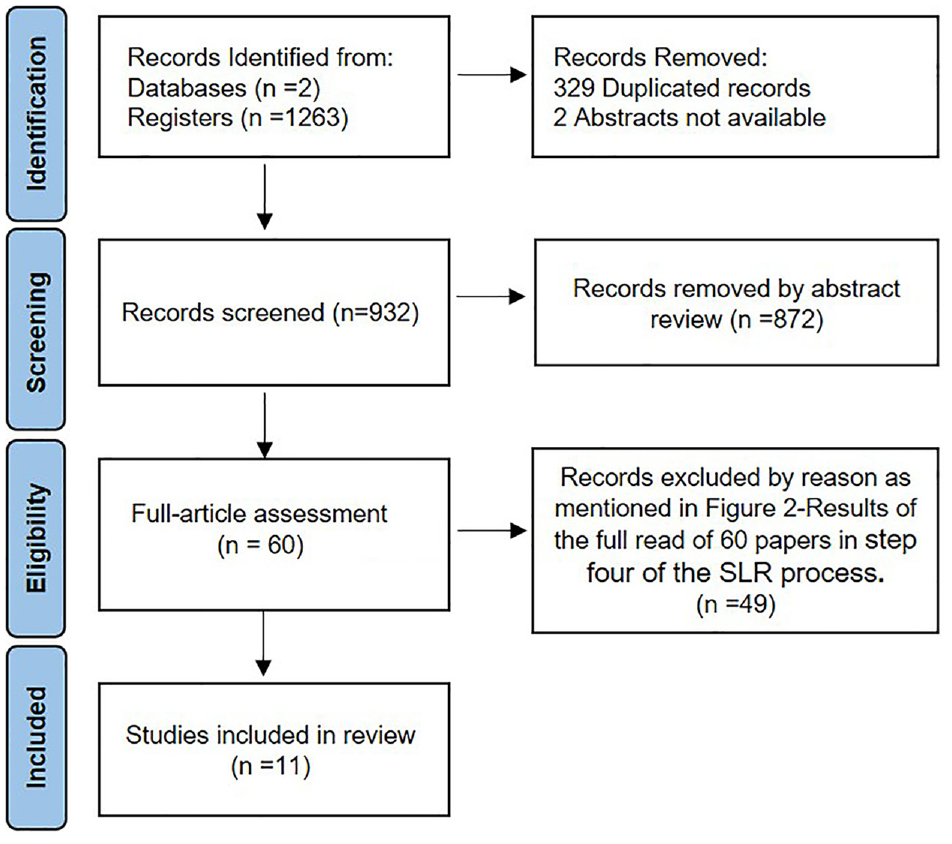
PRISMA flowchart ( 34 ) of this systematic literature review.
Screening
For all publications, two blind reviewers reviewed abstracts to assess relevance. Our exclusion criteria are listed in the following bullet points. Of note, if a study contains multiple components, such as two different interventions concurrently implemented (e.g., one involving law enforcement and the other a training program), the paper was included in our analysis. However, we investigate only the intervention details and the results that are in line with this review’s scope,
Studies on post-crash interventions, including emergency responses or clinical operations.
Articles investigating consequences of penalties or law enforcement.
Studies mainly focused on the effectiveness of law enforcement and training efficiency of helmet use.
Papers with target populations other than motorcyclists (such as car drivers, pedestrians, etc.)
Qualitative studies and narrative reviews.
Literature reviews, systematic literature reviews, and commentaries.
Eligibility
After finalizing decisions on relevance based on the abstracts, we selected 60 distinct studies for a full read. Two researchers read each article and extracted the main objective, type of intervention, methods used for data collection, the gap between training and effectiveness measurements (if applicable), sample group characteristics, statistical analysis methods, results, limitations, and conclusions. In a comment, each reviewer could explain their thoughts on whether the paper should be excluded (i.e., if exclusion criteria were found during the full read).
Included Papers
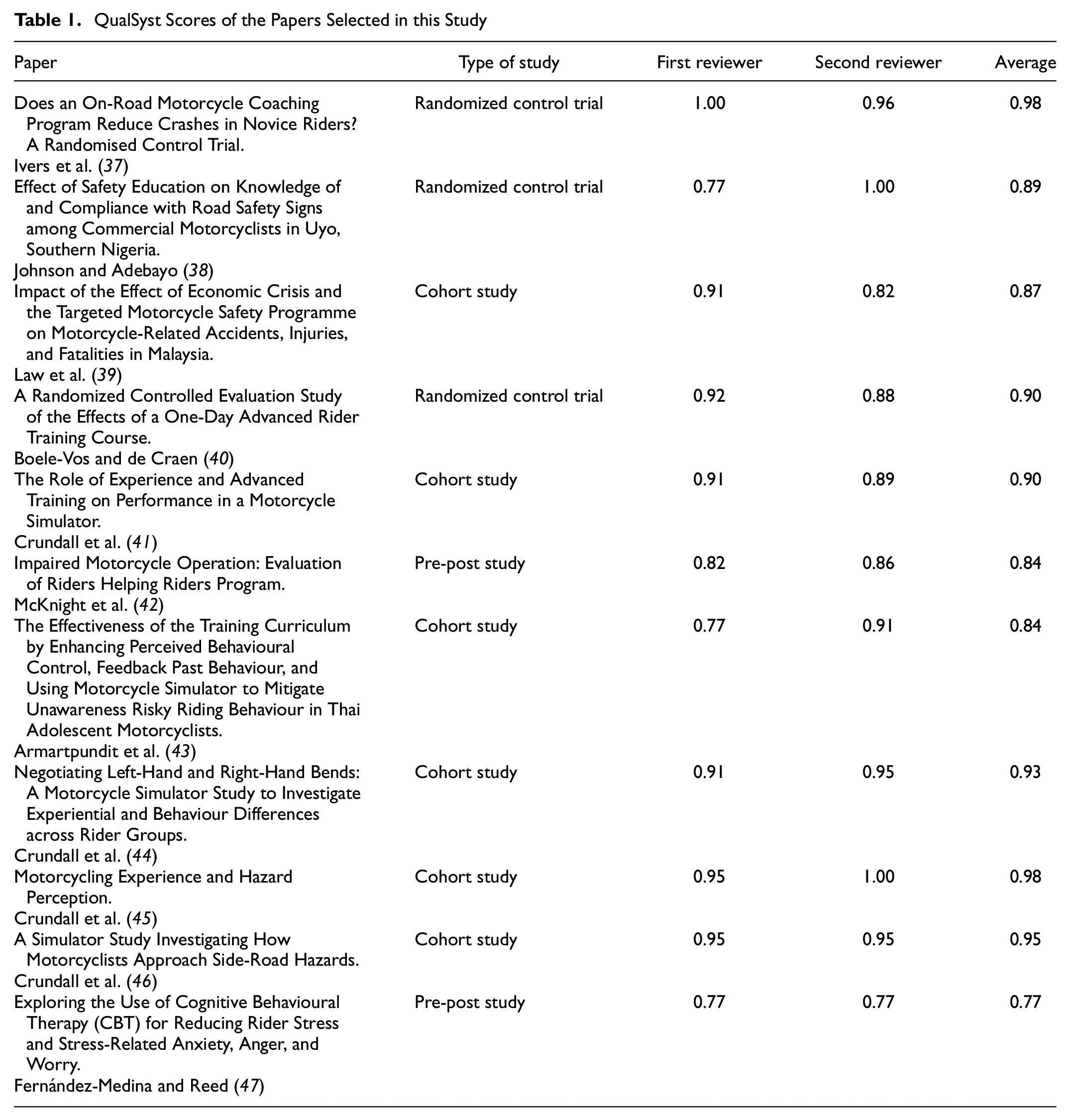
After the eligibility process, we included 11 publications in this review. The papers were also evaluated by the QualSyst score procedure as described in Kmet et al. ( 35 ). The authors of this approach have introduced a set of standard quality-assessment criteria that are widely used in SLRs and meta-analyses to evaluate the methodological quality of primary research studies. The criteria consider six main domains: study design, selection bias, confounders, data collection, analysis, and consistency of the result and conclusion. Each part consists of specific items that are assessed based on whether they meet the standard criteria for methodological quality. The reviewers answered 14 questions related to these criteria using a scale of 0 (not defined), 1 (partially defined), or 2 (well defined) to determine the extent to which the study satisfies each criterion. Next, we calculated a normalized average of all the answers resulting in a score between 0 (certainly unqualified) and 1 (certainly qualified) termed the QualSyst score for each article. The QualSyst scores given by two reviewers are reported in Table 1. After QualSyst evaluation, all papers were determined to have good scores that show their high quality and relevance to this literature review at the same time. In Table 1, you can also see the type of each study. Studies on the effectiveness of intervention were conducted using one of five approaches ( 36 ): randomized control trials (level 1), case-control studies or cohort studies (level 2), pre-post studies (level 3), case series or descriptive studies (level 4), and narrative reviews (level 5). This SLR study utilized the level 1 to level 4 methods, and level 5 was not considered.
QualSyst Scores of the Papers Selected in this Study
After a full read, 49 papers were excluded; the details of the papers reviewed in this step and the details of the exclusion are demonstrated in Figure 2. We used the same inclusion/exclusion criteria during the abstract review (termed screening level) and the full-text review (termed eligibility level). Exclusion at the eligibility level is the same as the screening level. However, at the screening level, we only reviewed the abstracts, which provided limited information. At the eligibility level, all the screened studies were fully assessed again, and the reasons for the exclusion of these 60 papers are mentioned in Figure 2. For example, the papers with interventions such as road design modification or law enforcement are considered as “Intervention was out of the scope of this study” in this figure. Finally, 11 papers ( 37 – 47 ) satisfied all criteria and were selected to be summarized and presented in the results section.
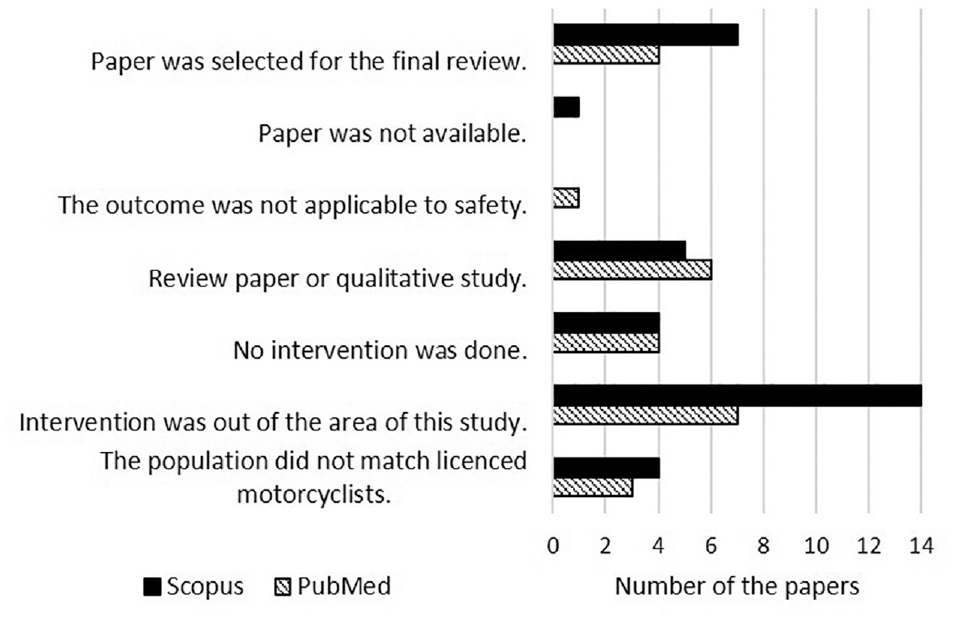
Results of the full read of 60 papers in step four of the SLR process.
Result and Discussion
This study reviewed and compared the results of 11 papers on the effectiveness of post-license interventions for motorcyclists. Compared with two SLRs on similar subjects (e.g., older riders’ safety interventions [ 29 ] and the initial training aimed at motorcyclists’ safety [ 14 ]) we identified fewer related publications (25 and 23 papers versus 11 papers). It may not be feasible to propose a dependable framework for conducting post-license interventions at this stage because of the insufficient availability of papers or documents that provide a detailed description of these interventions and the possibility of replication bias. Nonetheless, some key findings arise from such results by addressing the common points of the 11 selected papers.
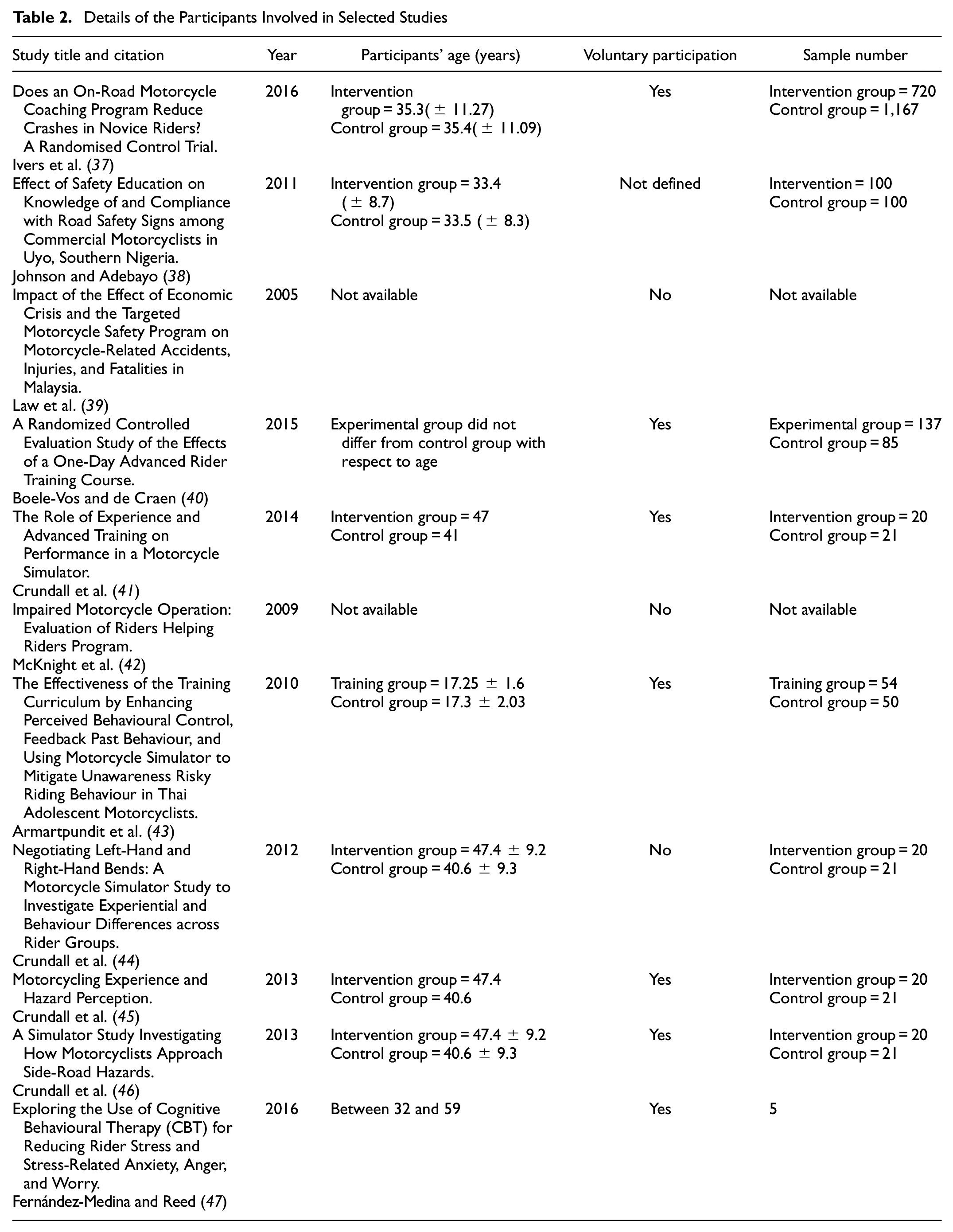
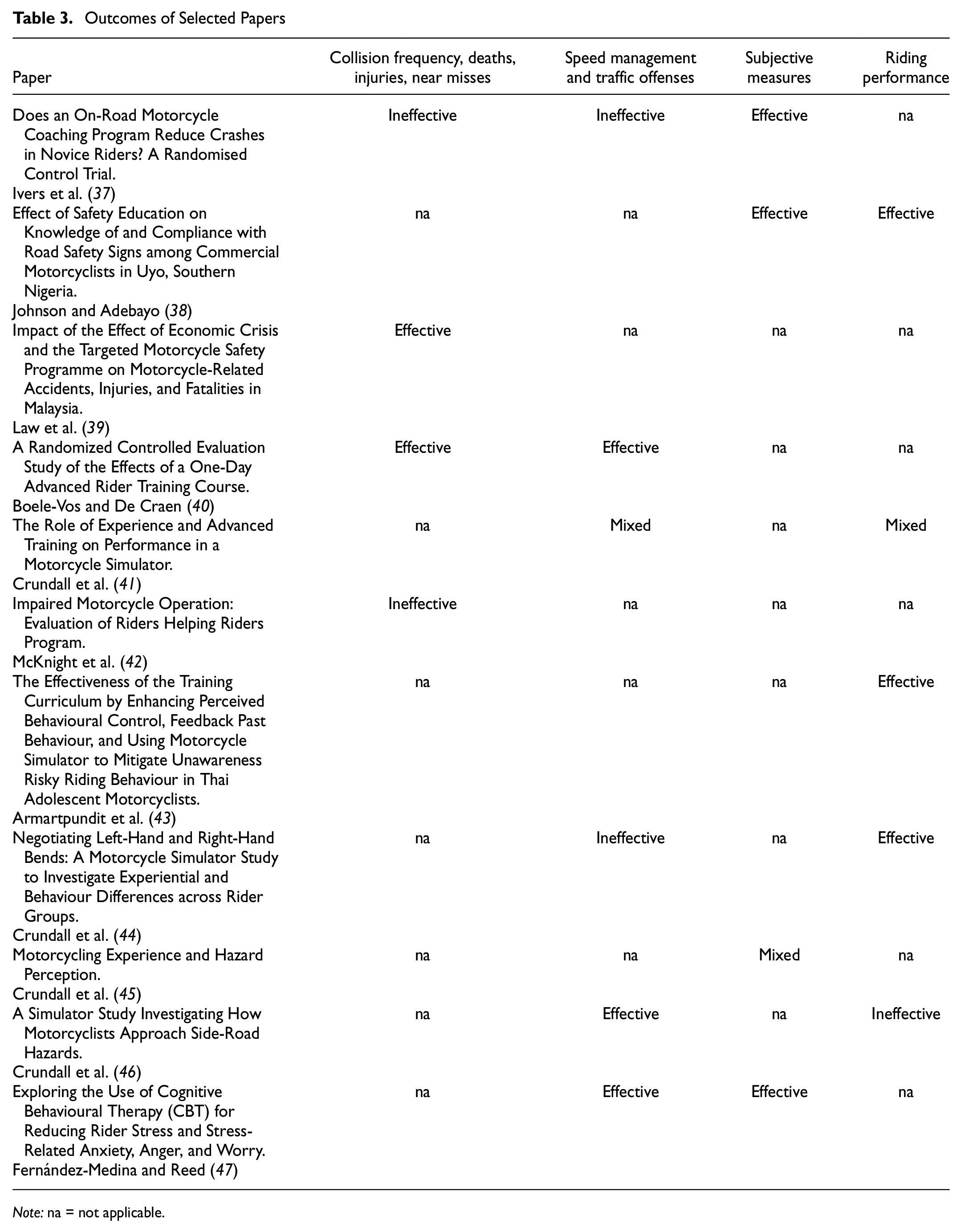
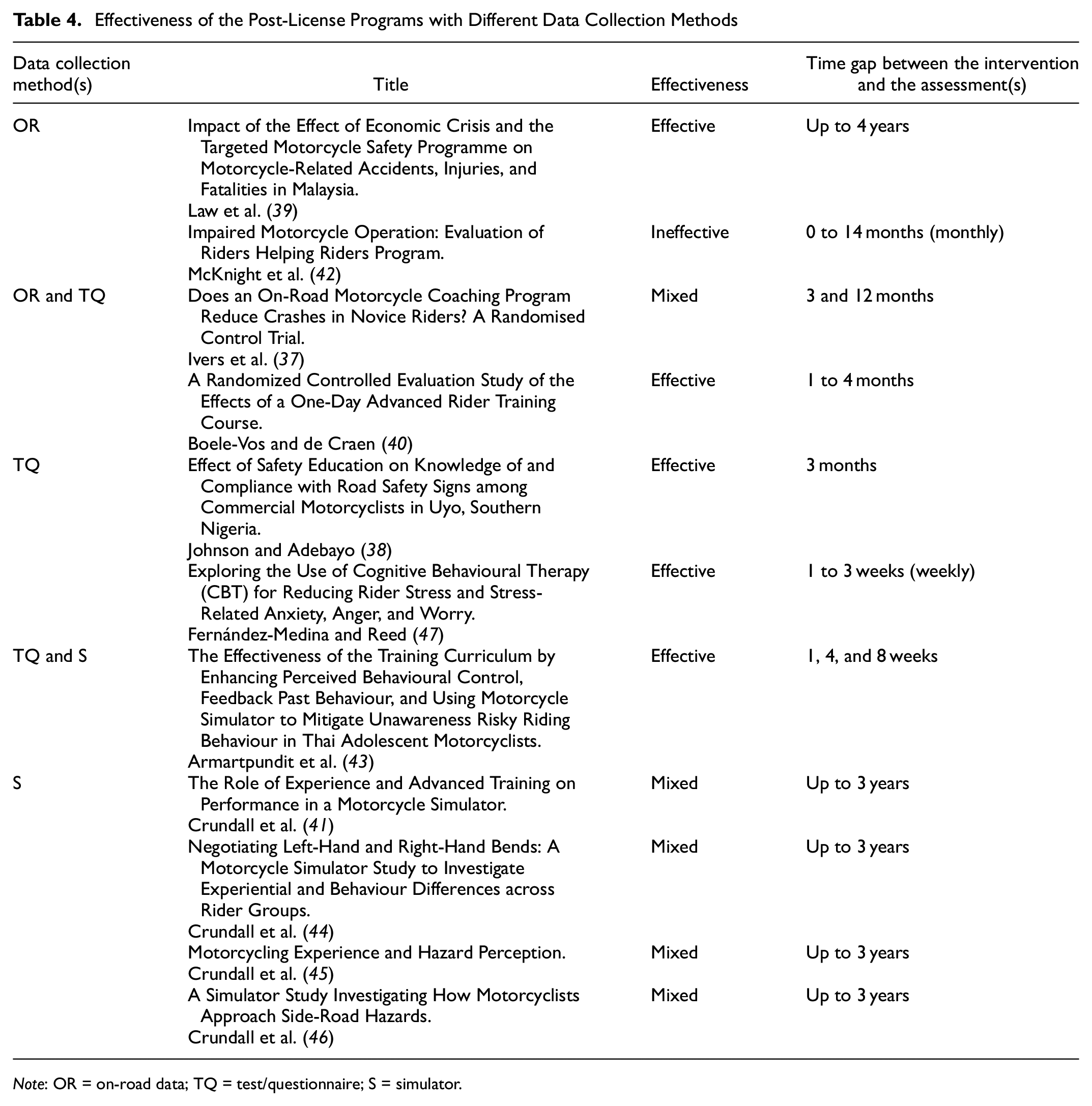
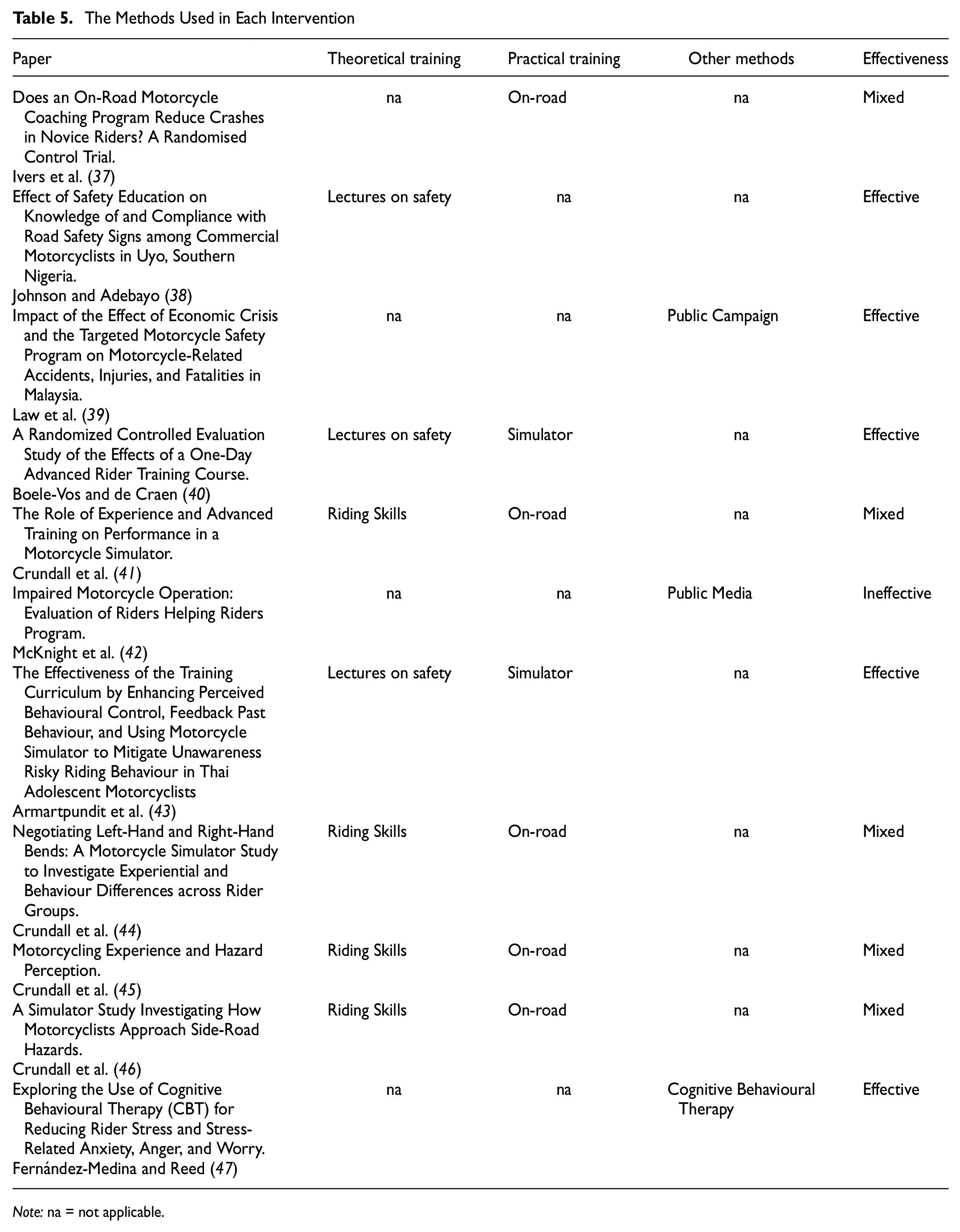
We present an overview of the participants’ demographics in Table 2. Then, we present the effects of all interventions in Table 3 as discussed in the preceding section. Subsequently, the selected papers are categorized based on the methods and timing used for data collection in Table 4. The materials used in each intervention are also presented in Table 5. We present the results in this manner to facilitate the uptake of findings among policymakers and researchers who may want to know the intervention’s materials, timing, and method of assessment before they implement the interventions and when they are conducting the evaluation process.
Details of the Participants Involved in Selected Studies
Outcomes of Selected Papers
Note: na = not applicable.
Effectiveness of the Post-License Programs with Different Data Collection Methods
Note: OR = on-road data; TQ = test/questionnaire; S = simulator.
The Methods Used in Each Intervention
Note: na = not applicable.
Details of the Participants of the Selected Papers
As presented in Table 2, selected papers were published between 2005 and 2016. In nine papers, the number of participants was reported in both intervention and control groups. In the two other studies, the researchers do not define the number of participants. Since these two studies evaluated the interventions aimed at all motorcyclists of a country or a state, it is difficult to determine the exact number of people affected by the intervention. The motorcyclist population in the study by Law et al. ( 39 ) was reported to be 5,550,000. However, the study did not estimate the percentage of this population that received the intervention. The study by McKnight et al. ( 42 ) consists of two distinct parts: a descriptive study of questionnaire results and a time-series analysis of crash data. In this review, we only extracted the result for the time-series analysis of the crash data. The reason is that the questionnaires were distributed among students rather than motorcyclists. While the time-series analysis considered all motorcyclists in the state of Georgia, the number of riders who were affected by the intervention was not measured.
Of note were four papers ( 41 , 44–46) that were based on a program by the Institution of Advanced Motorists (IAM) in the United Kingdom. In these papers, participants were divided into three groups: novice riders, experienced riders, and advanced riders. An advanced rider is a volunteer who registers for the courses and then receives practical training on the five main factors—information, position, speed, gear, and acceleration—from another advanced rider (who has already passed the training and the test). The chance to discuss the training and skills is also available for the riders. Ultimately, the candidate has to pass a test to become an advanced rider ( 48 ). In these four studies, the group of advanced riders was comparable to experienced riders in age and experience. Therefore, in this review, we considered the advanced riders as the intervention group (or trained group), and the experienced riders were considered a control group. Details of the materials of all interventions are explained in the appendix.
Intervention Effectiveness through Different Measurements of Road Safety
Our primary outcome of interest is the reduction of road traffic collision frequency, deaths, injuries, and near misses. However, in many of the documented studies, the number of people who joined the program was minimal (i.e., less than a significant portion of the riders’ population), and the observation periods were relatively short, indicating that discussions of the number of collisions or traffic injuries (known to be rare events) should be taken with caution. Near misses, on the other hand, are not as rare as collisions but may need a detailed database of cameras, embedded systems on the motorcycles ( 49 ), automated enforcement systems, or trustworthy self-reported data ( 50 ) to capture, which are both difficult to achieve and obtain ( 51 , 52 ).
Three papers out of 11 reported the outcome of collisions. Ivers et al. did not report any significant change ( 37 ). They also followed up on the rate of near misses in their intervention and control groups after 3 and 12 months. They showed that the intervention group only claimed to have fewer near misses in the 3 months after the intervention. This reduction was not observed after 12 months following the program. The training/interventions studied by Law et al. also demonstrated effectiveness in reducing motorcycle-related collisions, casualties, and fatalities ( 39 ). Conflicting with this study, McKnight et al. ( 42 ) found no improvement in 14 months of monitoring the crash data after the beginning of the intervention.
Five papers discussed the effectiveness of the intervention through the measurement of speed. Two studies show that trained riders reduced their speed more than non-trained individuals after attending the post-license program ( 40 , 46 ). In contrast, trained riders in the study of Ivers et al. reported more speeding behaviors than the control group ( 37 ). However, their results should be taken cautiously since they are based on self-reported data. At the same time, the two studies that showed a positive impact of the post-license training were documented using both questionnaire and on-road evaluation data. The study by Crundall et al. in low-speed zones (65 km/h) shows that trained riders have a lower average speed than do untrained riders ( 41 ). However, both groups behave similarly in high-speed zones (100 km/h). Another publication showed that while approaching risky situations on the road, the rider speed of the intervention and control group had the same average ( 44 ). The study of Fernández-Medina and Reed showed the intervention effectively reduced self-reported violations (e.g., speeding, overtaking when unsafe, and riding under conditions you would not typically ride under) ( 47 ). On the other hand, the program assessed by Ivers et al. shows a lack of change between the trained and the control groups in respect of the period until the first police-recorded offense ( 37 ).
The third result category consists of subjective measures, mainly hazard perceptions and knowledge of traffic signs. Johnson and Adebayo found that the intervention had remarkably affected the riders’ behavior with respect to traffic signs ( 38 ). The post-license program substantially improved riders’ knowledge of traffic signs, and the effect was sustained after 3 months in the intervention group ( 38 ). The same result was observed in the study by Boele-Vos and de Craen ( 40 ). In addition, the trained group responded more accurately when they came up against a potential hazard. Participants’ perception of crash liability seemed to have been modified by the post-license program, and the result remained after 12 months ( 37 ). Subjects reported that there were improvements in stress and anger during riding and in hazard avoidance in a short-term assessment after 1 to 3 weeks in the Fernández-Medina and Reed ( 47 ) study. However, Crundall et al. show that although the post-license intervention improved the riders’ reaction time for recognizing the risks on the road, the accuracy of these identifications (i.e., the rate at which they identified risks correctly) was lower than that of the control group ( 45 ). Therefore, it is hard to draw clear benefits from such an intervention.
The last category is the modifications in riding behaviors, such as braking, lane positioning, adjusting to the curves or any changes on the road, and respecting regulations. Crundall et al. ( 41 ) studied the lane positioning of riders on the road and reported no significant difference between trained and untrained riders’ positions. However, they found the variance in the number of lane changes was higher for the trained group than for the control group. In low-speed zones, trained groups used brakes more often than control ones, though they showed similar behaviors in the high-speed zones. Boele-Vos and de Craen did not observe any improvement in skilled and smooth riding in the motorcyclists after the post-license program ( 40 ). The scores were on a scale of 0 to 10 to assess their ability to ride smoothly, skillfully, and safely through traffic. This absence of difference between the trained group and the control group might be because both the intervention- and the control-group assessment showed improvement in their riding at post-tests. Moreover, the scale used for such an assessment has never been validated before in other studies on motorcyclists. Armartpundit et al. show that in a short time after the intervention (i.e., 1, 4, and 8 weeks), the control on unawareness of risky riding was improved, although they did not follow up on the result for more than 8 weeks ( 43 ). Two studies that evaluated the effectiveness of the same intervention (i.e., IAM) after less than 3 years have conflicting results. The first study was published in 2012 and concluded that the positioning of the study group was safer than that of the control group during curves ( 44 ). In contrast, the other study, published in 2013, found no difference between the study and control groups in respect of the mean lateral position ( 46 ).
Effectiveness of the Interventions through On-Road Data
As shown in Table 4, four studies used on-road data to evaluate the success of the intervention. Two studies using both on-road and questionnaire data produced contrasting results ( 37 , 40 ). Meanwhile, two studies that used only on-road data showed differing outcomes, with one study reporting that the intervention was ineffective ( 42 ), while the other study found that it was effective ( 39 ). Comparing these results with those obtained in the studies that used a test/questionnaire or simulator for data collection implies that the rate of effectiveness in on-road data is lower and shows more variability in efficacy. This may indicate that evaluations of the interventions in a laboratory environment may find effective and positive results, whereas the real data (on-road) may show less effective safety interventions in the real world. This underscores a key strength of on-road data to reveal the consequences we may not be able to observe during controlled environments for conducting post-license evaluations.
Effectiveness of the Interventions through Long-Term Data
Seven studies followed up on the changes at least 1 year after the beginning of the post-license intervention. The result of the study by Ivers et al. shows the same intervention was assessed as ineffective 12 months after the intervention ( 37 ), although it was effective 3 months after the intervention. In one study that followed up the results in different steps, it was concluded that there is a peak for the impacts of the intervention, and after that, they get reduced ( 47 ). It is probable that the impacts of many interventions vanish over time, and that riders might have to receive refresher sessions to maintain the benefits obtained by the initial post-license intervention. In the study of Armartpundit et al., the time gap between the intervention and the participants’ obtaining of their motorcycle rider’s license is probably around 1 year, which is very short compared with other studies identified in the current review ( 43 ). Therefore, it is complicated to distinguish for these results between the pure intervention effect and the riding experience obtained in the first year of riding.
Effectiveness of the Interventions through Different Methods
We aimed to identify the types of interventions that have the most significant impact on motorcyclist safety. For categorizing the methods of these 11 papers, we undertook a careful review of the existing methods in these studies. As shown in Table 5, the interventions in these papers are categorized into three main groups, including theoretical training, practical training, and other methods. The theory sessions are separated by their subject. The two topics focused on theory sessions are the importance of safety and the techniques and suggestions for smooth riding. The second type of intervention is practicing sessions that are either on-road practicing or riding simulation sessions. Other methods are public campaigns to raise the importance of motorcyclists’ safety, modifying riding behavior, and therapy sessions to reduce rider stress.
Lectures on safety aim to persuade riders to abide by safety regulations and increase hazard perception. Three studies employed this approach, proving it effective ( 38 , 40 , 43 ). Despite its straightforward nature, this method has demonstrated notable effectiveness, usefulness, and practicality compared with other strategies. The additional training session material is to improve the riding skills to help riders handle risks when they face them. As is presented in Table 5, all four studies that contain riding skills improvement have mixed results ( 41 , 44–46). This implies that although practical training may be useful, the side effect of overconfidence in riding skills might need to be carefully avoided. This is in line with the findings of the study by Katila et al. ( 53 ), which prioritizes anticipation skills versus maneuvering skills for riders. Another study focused on post-license training indicates that safe riding requires scanning and observation to avoid hazardous situations rather than other riding skills, especially in a traffic context ( 54 ).
The second category is the practice on roads and simulators and giving feedback to riders on their riding behavior. This method is used in seven papers, of which five used on-road sessions and none were fully effective ( 37 , 41 , 44–46). In contrast, two articles that used simulation practice were fully effective ( 40 , 43 ). We are very cautious about drawing any conclusion in this category because we found that the data collection method also affects the result. There is a consistency between tools for practicing riding and tools for evaluating riding in all these papers.
Two papers assessed interventions intended for a wider spectrum of audiences; the study by McKnight et al. ( 42 ) proved ineffective, while the research conducted by Law et al. ( 39 ) demonstrated effectiveness. Law et al. ( 39 ) worked on a Malaysian Motorcycle Safety Programme (MSP) which is designed to address motorcycle-linked collisions by shifting behavior and incorporating strategies like road enhancements, rigorous traffic regulation, and tackling vital issues such as helmet adherence, visibility, and speeding behavior. Both studies pointed out the public awareness of the importance of safety of the motorcyclists. However, the materials offered through each intervention differed. In the first study by McKnight et al. ( 42 ), persuading riders to intervene when they see impaired riders increased the rider’s knowledge around impairment as well as the limitations of an impaired person as a rider, using TV and online media. The study of Law et al. ( 39 ), on the other hand, focused on the importance of safe riding and changing the rider’s attitude on speeding and visibility. At this stage, it is difficult to generalize, and yet the difference in these two studies implies that focusing on the importance of safety through a straightforward method is more efficient than inventive methods that may confuse the audience. Finally, only one study intervened on the riders’ stress level, and this study is reported to have been effective ( 47 ).
Limitations
Our study is subject to some limitations. The main limitation of this SLR is the limited number of publications about post-license motorcycle training interventions. Despite our intention to include studies spanning over a period of 20 years, only 11 papers were identified in two databases. Although all of the studies used in this SLR were of good quality based on our measures, and had some promising results, we found that some details and information on the intervention’s materials were missing. This renders reproductions of the studies and results more difficult.
The second limitation is the nature of the data of these 11 studies. Ideally, the data should be collected or calibrated with real-world data. The data issues restrict many items, such as the time gap between intervention and assessments and the number of evaluations. Relatedly, it was difficult to understand the reach of the programs (i.e., how many people were involved) or the demographic characteristics of the participants in the programs performed through public media or campaigns, which may affect the results.
Third, the decision to utilize only two databases was influenced by time constraints. The inclusion of additional databases for review would have considerably prolonged the identification, screening, and writing process.
Finally, concerning the selection of search terms, it is recognized that the adoption of broader terms could potentially yield a greater number of publications. However, it should be noted that this study exclusively concentrated on licensed motorcyclists. Consequently, the study’s scope intentionally excludes other types of powered two-wheelers such as e-scooters, e-bicycles, and mopeds, given their operation does not necessitate a license.
Conclusions
To our knowledge, this is the first literature review conducted on post-license interventions aimed at improving motorcyclist safety. Although the importance of these interventions is widely acknowledged, an understanding of the criteria for a successful intervention and implementation is not yet fully formulated. We addressed this gap by summarizing the existing literature on effectiveness.
In summary, this study highlights several important findings. First, we find that emphasizing safety and adherence to road laws proves to be more effective than only focusing on skills improvement in intervention programs. Second, we find that on-road data is more informative than self-reported data in reflecting the outcomes of interventions. Finally, we find differing effects for long-term outcome, indicating that future evaluations should prioritize long-term effects rather than short-term assessments.
Overall, we conclude that more research is needed to document post-licensure interventions and their impacts on the road safety of motorcyclists. An appropriate method for data collection should be defined based on the nature of the expected results. Finally, there should be proper timing in the implementation and evaluation of the intervention. Without thoughtful consideration of these factors, there is a risk of biased results informing road safety policies and programs.
Supplemental Material
sj-docx-1-trr-10.1177_03611981241271594 – Supplemental material for Post-License Safety Interventions for Motorcyclists: A Systematic Literature Review
Supplemental material, sj-docx-1-trr-10.1177_03611981241271594 for Post-License Safety Interventions for Motorcyclists: A Systematic Literature Review by Zahra Ghayeninezhad, Jerome Range, Milad Delavary, Hector Ignacio Castellucci and Martin Lavallière in Transportation Research Record
Footnotes
Author Contributions
The authors confirm contribution to the paper as follows: study conception and design: Z. Ghayeninezhad, M. Delavary, H. I. Castelluci, M. Lavallière; data collection: Z. Ghayeninezhad, J. Range, M. Delavary; analysis and interpretation of results: Z. Ghayeninezhad, J. Range, M. Delavary, H. I. Castelluci, M. Lavallière; draft manuscript preparation: Z. Ghayeninezhad, J. Range, M. Delavary, H. I. Castelluci, M. Lavallière. All authors reviewed the results and approved the final version of the manuscript.
Declaration of Conflicting Interests
The author(s) declared no potential conflicts of interest with respect to the research, authorship, and/or publication of this article.
Funding
The author(s) disclosed receipt of the following financial support for the research, authorship, and/or publication of this article: This study was funded by the Société de l’assurance automobile du Québec (SAAQ) through the project “Évaluation de la formation de rafraichissement pour les motocyclistes et de la mesure incitative financière.”

Supplemental Material
Supplemental material for this article is available online.
References
Supplementary Material
Please find the following supplemental material available below.
For Open Access articles published under a Creative Commons License, all supplemental material carries the same license as the article it is associated with.
For non-Open Access articles published, all supplemental material carries a non-exclusive license, and permission requests for re-use of supplemental material or any part of supplemental material shall be sent directly to the copyright owner as specified in the copyright notice associated with the article.
