




Abstract
Infrastructure systems play important roles in economic development and the social quality of life. Interdependencies exist between infrastructure systems: a functional disruption in one system can affect dependent systems, thereby escalating the impacts. It is vital to properly model interdependencies to understand the full impacts of disruptive events on infrastructure systems. Quantitative data on infrastructure interdependency is often difficult to obtain or unavailable for a variety of reasons. To overcome quantitative data scarcity issues, qualitative subject expert knowledge has been used in interdependency analysis, primarily in the form of linguistic responses. Linguistic data is susceptible to uncertainties arising from variations in intended meanings, which may yield inaccurate results. This paper proposes a framework to address this problem using two fuzzy inference systems to model event-specific, network-wide infrastructure failures. The first fuzzy inference system models the damage induced by interdependencies using verbal descriptions. The second fuzzy inference system accounts for synergistic, compounding effects of multiple incidences of indirect damage caused by interdependencies. A case study is conducted to demonstrate the applicability of the proposed methodology using electric and gas distribution networks in the United Kingdom. Sensitivity analyses are performed to show the flexibility of the fuzzy inference systems. The results show that the proposed method can model the interdependency and vulnerability of infrastructure systems using fuzzy inference systems to handle imprecise input. The proposed framework may assist practitioners in better understanding the interdependency and vulnerability of infrastructure systems, and in making more informed decisions to reduce losses resulting from disruptive events.
Keywords
Infrastructure systems provide services needed for the basic functions of a society and economy. Their incapacity or destruction may result in significant economic loss and public safety concerns. Modern infrastructure systems are highly interconnected and form a complex network from underlying dependencies and interdependencies. The interconnections among these infrastructure systems are essential for their proper functioning. For example, the electric grid system relies on natural gas for its operation and the gas distribution system also depends on electricity for its functioning. However, these interdependencies may also expose them to an increased susceptibility to disruptive events such as natural hazards or terrorist attacks. The extent of infrastructure failure caused by such external events can be measured with the concept of infrastructure vulnerability ( 1 , 2 ). While the direct physical damage or functionality loss of an infrastructure network is determined primarily by the characteristics of the disruption (such as type and intensity), the interdependencies between the individual systems of the network can induce additional indirect damage or functionality losses. Additionally, in large-scale infrastructure systems, multiple indirect forms of damage may have synergistic effects which make the damage mechanism more complex. Understanding interdependent effects and potential synergistic phenomena is important to properly model infrastructure network vulnerability as well as to develop corresponding adaptation and mitigation countermeasures during disruptive events.
To create a comprehensive, system-level vulnerability model that incorporates both interdependencies and synergistic phenomena, a substantial amount of data is required, such as infrastructure type, performance indicators, location, physical connections, type and level of interdependency, and so forth. While certain data are publicly available for some infrastructure systems, many other critical data, such as interdependency or demand volume for certain resources, may not be easily accessible. This inaccessibility can be attributed to various factors, including privacy, trade secrets, liability, security concerns, or to such data simply not existing. Because quantitative data is not available in many cases, expert judgments are often used as an alternative. Such experience-based knowledge is subjective in nature and can introduce epistemic uncertainties in the modeling process. While traditional probability theory is more suitable for stochastic uncertainties for repetitive experiments, fuzzy logic is better for epistemic uncertainties ( 3 ). Therefore, this study develops a simulation model with two fuzzy inference systems to model vulnerabilities of large-scale interdependent infrastructure systems.
More specifically, the objectives of this paper are: (a) to develop a vulnerability assessment model that is capable of incorporating imprecise information or knowledge about infrastructure interdependencies and synergistic effects; (b) to implement the proposed model with a simulation framework to demonstrate its applicability to disruptive events; and (c) to perform sensitivity analyses to present the model’s ability to adequately accommodate epistemic uncertainties, which is important in real-world scenarios.
Literature Review
Infrastructure systems are exposed to various types of disruptive hazards. Evaluating infrastructure system vulnerability to these hazards is an important topic for researchers and stakeholders involved in infrastructure policymaking, engineering, and management. Infrastructure vulnerabilities have been evaluated from many different perspectives using various models, which can be categorized into two general groups: 1) direct vulnerability models modeling the direct impact of a hazard; and 2) indirect vulnerability models that incorporate interdependencies between infrastructure systems. Direct vulnerability models emphasize the direct damage an infrastructure system experiences from a disruptive event, while indirect vulnerability models emphasize the interactions between and within infrastructure systems resulting from interdependencies ( 4 ). In recent years, more factors, such as synergistic effects and infrastructure robustness, have been investigated to better capture the complex nature of infrastructure network systems.
Disruptive Events Models
To quantify the impact of a hazard on interdependent infrastructure systems, both real-world hazard simulation models and simplified general disruption models have been developed ( 4 ). The real-world models typically include many realistic and hazard-specific parameters to model the coverage, intensity, duration, frequency, and other characteristics of a specific hazard, whereas the general disruption models use operational assumptions to simulate a disruption caused by a generic hazard, such as assuming a set percentage reduction in the function of a given infrastructure system. Both types of model have been applied to study infrastructure system networks considering interdependencies. Real-world models include more details of disruptive events, which allows for a realistic disaster scenario, while simplified models are easy to model and may also represent sudden disruptive events, random failures, and cyber-attacks well.
Infrastructure Vulnerability Models Considering Indirect Impacts
Infrastructure vulnerability models have been widely used by researchers. A common definition of infrastructure vulnerability is the maximum system inoperability during a disruptive event ( 1 , 2 ). As interconnectivity is an inherent property of modern infrastructure systems, they are increasingly demonstrating the characteristics of a complex “system of systems.” ( 2 , 4 ). To understand the performance, response, and vulnerability of these “system of systems,” the concept of interdependencies in infrastructure systems was first introduced by Rinaldi et al. ( 5 ). The authors categorized interdependencies into four categories: physical, geographic, cyber, and logical. Since then, researchers have developed various models to study infrastructure systems considering interdependencies. Ouyang ( 6 ) evaluated the type and evidence of interconnected infrastructure systems models and categorized the modeling approaches into the following categories: empirical, agent-based, system dynamics-based, economic theory-based, network-based, and others. Empirical approaches study interdependency using data sets collected from past disruptive events. Agent-based approaches adopt a bottom-up methodology that models the infrastructure system at a component level, assuming each component interacts with others as well as the environment following a set of rules. System dynamics-based approaches are top-down methods at the system level, which consist of feedback loops, stocks, and flows to capture the relationship and model the resource flow in the systems. Economic theory-based models are mostly system-level input-output models and their variations, which adopt the Leontief input-output model based on the sales between sectors of the economy and extend it using the concept of inoperability. Network-based approaches model interdependent infrastructure systems or components using graph theory ( 7 – 9 ). The network links and nodes allow researchers to model physical and logical interdependency as well as some geographical properties.
Quantification of Interdependency and Indirect Impacts
Properly modeling the vulnerability of interdependent infrastructure systems necessitates a comprehensive understanding of interdependency and indirect impacts. Among existing models, a few types of numerical evaluation of interdependencies have been used: a) empirical values from past disruptive events, which could be obtained from the ratio of number of failures between two infrastructures ( 10 ), correlation of failed infrastructure pairs ( 11 ), or time series analysis ( 12 ); b) field specific knowledge of mechanisms, for instance, Thompson et al. ( 13 ) developed an agent-based model for the water-power infrastructure pair considering the mechanics; c) economic indicators, which are widely used in macroscope input-output inoperability models ( 14 ); d) expert knowledge, which could be processed into either crisp value ( 15 ) or fuzzy numbers ( 16 ); and e) synthetic values or values developed using network properties and graph theory, which have been used in some agent-based models and network-based approaches when data is less available ( 17 – 19 ), for instance, Kays et al. ( 19 ) developed a muti-layer network analysis using spatial correlation and graph theory to emphasize the importance of interdependencies between transportation and stormwater systems in urban planning. With interdependency values well defined, researchers are able to model indirect impact mechanisms. For models at higher levels, Leontief models ( 14 , 16 ) and system dynamics models have been applied. For models at component level, system-specific models ( 13 , 17 ), Leontief models ( 2 ), and assumptions based on topology and common sense ( 2 , 18 , 20 ) have been used. Time-dependent and distance-dependent adjustment factors ( 18 , 20 ) have also been used to consider topological and mitigation efforts more realistically.
Synergistic Effect of Multiple Indirect Impacts
Synergy is defined as the interaction of multiple entities that produce a combined effect greater than the sum of their individual effects, also represented as the “1 + 1 > 2” effect. Concepts of synergy have been widely used in science and engineering fields including biology ( 21 ), climate study ( 22 ), and material science ( 23 ). Rinaldi et al. ( 5 ) investigated synergy between interconnected infrastructure systems and the positive effect of infrastructure interconnectivity. However, synergy has rarely been used in studies on infrastructure vulnerabilities. Rehak et al. ( 24 ) stated that the Fukushima Daiichi nuclear disaster is a classic example of massive synergistic effects. The authors developed and applied the SYNEFIA methodology to quantitatively evaluate the synergistic effects of critical infrastructure failures, focusing on the interactions and compounded impacts at the sector level when multiple infrastructures are disrupted. Since the indirect impact from multiple infrastructure components may not be independent, it is necessary to study the synergistic effects of these systems during disruptive events.
Infrastructure Robustness
Robustness is defined as the ability of an infrastructure system to resist specified disturbances (
25
). Infrastructures with different robustness levels may respond to the same amount of damage differently. Many researchers reviewed and evaluated infrastructure robustness at various levels. Wang and Reed (
1
) defined robustness as
Modeling Infrastructure Vulnerability with Imprecise Data Inputs
As more sophisticated models emerge, one of the challenges is the limited availability of data sets with regard to interdependent infrastructure networks. In addition, researchers have found it challenging to simulate the operation of a large-scale, real-world interconnected infrastructure network system. To overcome these challenges, past studies have applied methods that use subject experts’ judgment as data inputs ( 2 , 4 , 14 ). Compared with accurate interdependency information, subjective expert opinions are easy to obtain, but they are prone to epistemic uncertainties. Methodologies that address epistemic uncertainties include probability theory, probability bound analysis, and fuzzy set theory ( 28 ). Compared with other methodologies, fuzzy set theory possesses a distinct advantage in effectively addressing impreciseness in subjectivity and uncertainty found in natural language. While probability theory is more appropriate for repeated randomness and objective uncertainty, fuzzy set theory is more suitable with uncertainties in human recognition ( 3 ). Therefore, this paper adopted fuzzy set theory to model the vulnerability of infrastructure systems based on expert knowledge.
Fuzzy Set Theory and Its Application in Infrastructure Network Modeling
Fuzzy set theory, first introduced by Zadeh (
29
), is an extension of classical set theory which is capable of assessing linguistic or qualitative expert knowledge. In classic set theory, an element’s membership to a set is binary, while fuzzy set theory uses a membership function (MF) ranging in the interval of [0, 1] to allow partial membership of elements to multiple sets. For example, if an MF
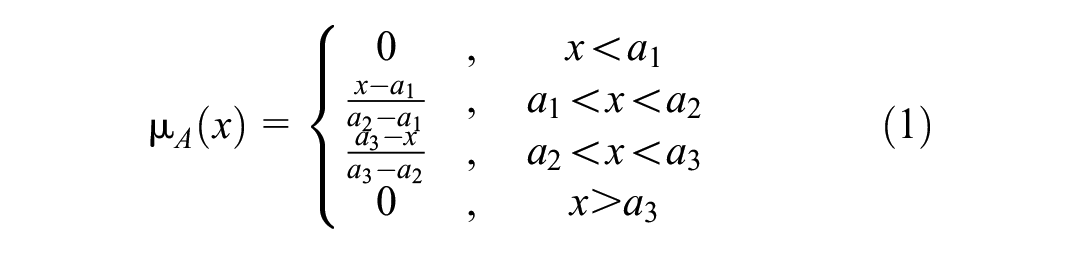
As some infrastructure risk assessments and interdependency evaluations may rely on imprecise expert judgment, many researchers have used fuzzy set theory to assist with their model development. Lam and Tai ( 34 ) modeled infrastructure interdependency using fuzzy set theory by assuming full connectivity within the network. Oliva et al. ( 14 ) used fuzzy numbers to model the inoperability and dependency coefficients in their fuzzy-dynamic input-output inoperability model.
Fuzzy Inference System
Fuzzy set theory can handle uncertainties and imprecise reasoning processes, particularly when linguistic inputs are involved. A fuzzy inference system (FIS) is a non-linear mapping technique that maps inputs and outputs by using a set of “if-then” rules ( 17 ). A typical FIS includes four components: fuzzifier, knowledge base, inference unit, and defuzzifier. Figure 1 demonstrates the workflow of the four FIS components.
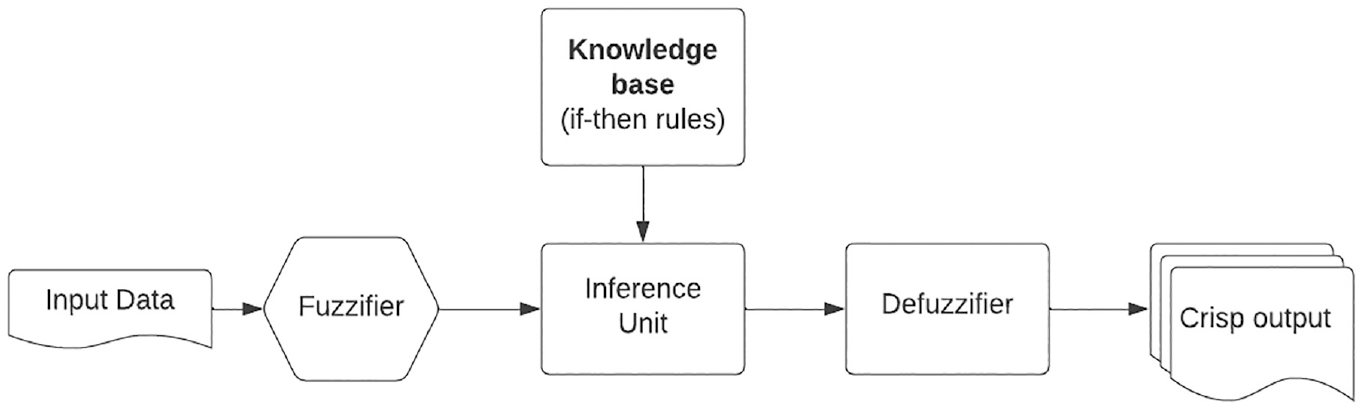
A conceptual illustration of the four fuzzy inference system (FIS) components workflow.
In the fuzzification process, the input vectors are mapped to the membership functions and become linguistic variables such as low, medium, and high. The knowledge base characterizes the behavior of a fuzzy system, and experts’ knowledge controls the rule base (
19
). An example of a typical if-then linguistic rule is stated as follows: If (condition or set of conditions is met), then (inferred consequences)
In the fuzzy inference unit, “if-then” rules from the fuzzy knowledge base are applied to map fuzzified inputs to fuzzy outputs based on fuzzy composition rules ( 27 ). In the defuzzification process, the output of the fuzzy inference engine is defuzzified into a crisp value.
The FIS is suitable to incorporate expert knowledge as inputs to create models to deal with uncertainties and variation in responses. Jamshidi et al. ( 35 ) evaluated pipeline risks and Azimi et al. ( 36 ) assessed landslide risks. Razani et al. ( 32 ) combined FIS and an artificial neural network to predict the roof fall rate of underground coal mines.
Gaps in Literature
Although some studies have developed system-specific models that represent interdependent or synergistic effects, most existing models use either conceptual infrastructure networks or model functions at the system level. Such models lack the capability to offer a more detailed, component-level view of system operations. Most existing component-level models use system-specific knowledge and are only applicable for specified infrastructures. Past studies that model general infrastructure systems defined interdependencies and indirect damage using specific topological assumptions or probability-based input-output inoperability models incorporating expert judgments ( 2 , 20 ). Relying solely on topological assumptions may not adequately reflect the differences between infrastructure systems, particularly those with logical or non-physical interdependencies. Probability theory is less suitable than fuzzy logic when handling imprecise judgments ( 3 ), and a homogenous interdependency assumed by the input-output inoperability model may also overlook localized issues. Furthermore, the assumptions made in simulation models and economic models with regard to the independence of multiple indirect forms of damage may overlook synergistic effects of multiple impacts from infrastructure components and produce unrealistic results. To overcome these limitations and develop an infrastructure vulnerability model that handles imprecise inputs in infrastructure interdependencies, this paper uses fuzzy inference methods, taking full advantage of fuzzy number modeling to address linguistic uncertainties in expert judgments. This approach offers benefits over existing interdependency modeling methods as it is relatively robust and does not require high accuracy in expert input. Additionally, this paper accounts for synergistic effects between infrastructure systems, thus providing more reasonable and realistic results.
Method
The proposed framework with two FISs is illustrated in Figure 2. The infrastructure network is modeled as a graph with nodes representing components of infrastructure systems and links representing the dependencies and interdependencies between the nodes. Properties of infrastructure components and physical connection information can be obtained from public data sources, and non-physical interdependency information is obtained from expert opinion and professional judgment. A graph-based simulation model is executed by initiating a hypothetical hazard in the network and the infrastructure vulnerability is assessed using two fuzzy inference systems.
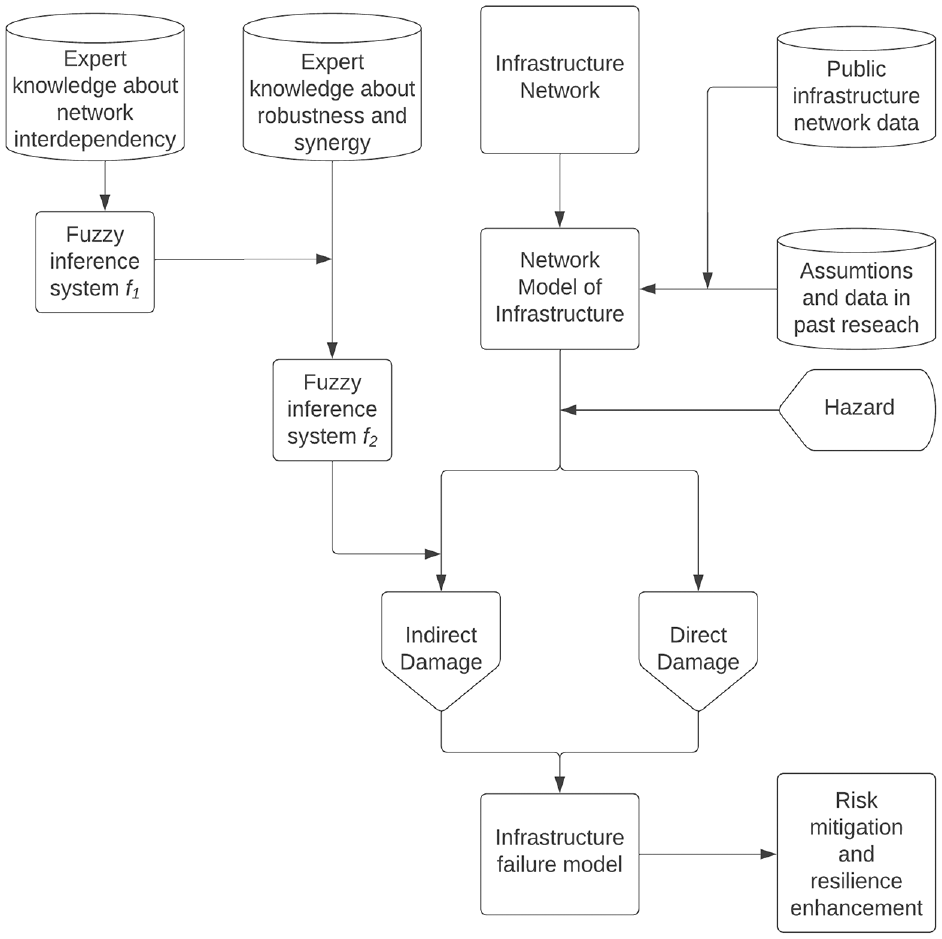
Proposed modeling framework with two fuzzy inference systems.
Modeling Infrastructure Networks
The network of infrastructure systems is modeled as a graph G, where V is the set of nodes representing the components of the critical infrastructure system and E is the set of links that represent the dependencies and interdependencies between the nodes. The node set
Modeling Infrastructure System Impact Resulting from Disruptive Events
During disruptive events, infrastructure components are affected and operate at reduced performance levels or even fail. The total performance reduction or degree of failure of any specific infrastructure component includes both direct damage caused by the disruptive event and the indirect damage induced by the dependencies and interdependencies. The general form of the combined effect is modeled as


where
Modeling Hazards and Direct Impact
This paper models the effects of hazards as a reduction in performance levels in the affected area with a set of infrastructure nodes. The direct impact caused by hazard H on network G at time t is modeled as

where
i is the node in the affected area,
t is time,
g is the intensity-damage function that calculates the performance loss to node i caused by hazard H at time t.
Modeling Indirect Impact
Damaged nodes will cause indirect impact on the performance of other nodes that depend on them. Typically, the shorter the distance between the nodes, the stronger their interdependency is. Since this paper models the indirect impact at the infrastructure component level, the adjusted interdependency is adopted by applying a distance factor to calibrate the interdependency value. A geographic boundary may be set on the interdependency impact area such that the interdependency effect is ignored if the nodes are too far apart ( 2 , 20 ). As physical distance may not affect all interdependencies between infrastructure components, this specific function may need to be calibrated for different types of infrastructure and for different model set-up and scenarios. Mathematically,


where
C is the adjustment function, and
f is the function that defines
As shown in Equation 6, the indirect impact from node j to i,

where K is the function that quantifies
Fuzzy Inference Process for Indirect Impact
Fuzzy Inference of Indirect Impact
Indirect impacts come from nodal dependency in the graphic network. As previously mentioned, such interdependency can be modeled by a pair of dependency values
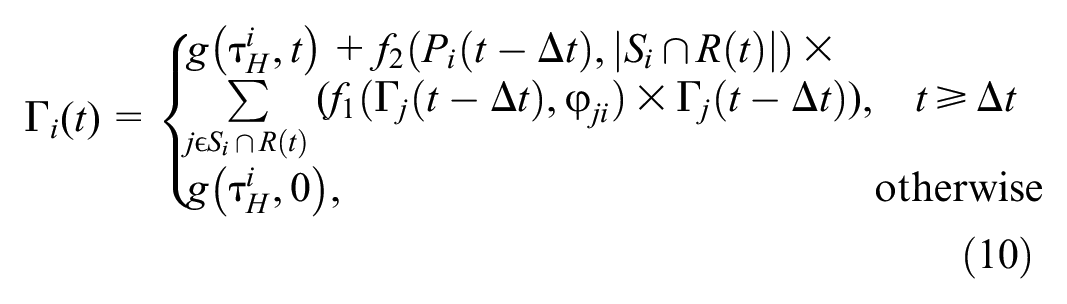
In a disruptive event, considering that the indirect impacts propagate to all dependent nodes in a very short period, the indirect impact to node j induced by the performance loss of node i at time t can be modeled as:

where
Fuzzy Inference of Indirect Impact Considering Synergistic Effects
In practice, synergistic effects of multiple impacts exist but are often ignored. This paper evaluates the synergistic effects and the node robustness by applying a factor to the total impact. Given limited data on operations and resource flows between systems, this factor is also assessed using an FIS with subjective expert knowledge as inputs. Similarly, three triangular fuzzy numbers are applied for the inputs and outputs, that is, low, medium, and high. At time t, the set of nodes that experiences any performance loss at
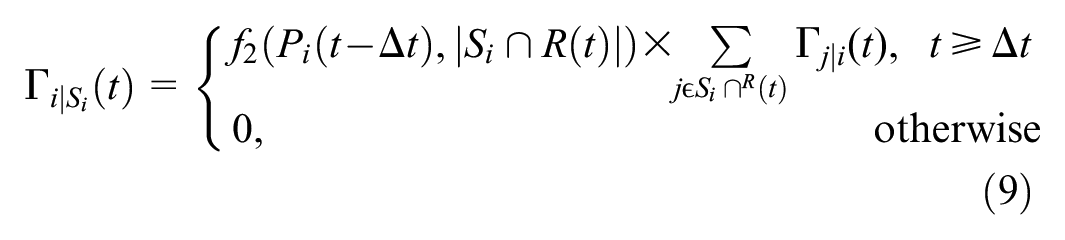
where
Therefore, the total impact function of node i can be formulized by adding direct impact (Equation 4) and the indirect impact (Equations 8 and 9), which is denoted as:
Case Study and Results
To demonstrate the applicability of the proposed methodological framework, a case study is conducted to model the vulnerability of the Great Britain (GB) gas and electricity network using a similar hypothetical disruptive event used by Balakrishnan and Zhang ( 2 ) using Matlab version R2020b.
Case Study Network
Figure 3 shows the locations and node types of the simplified GB electric and gas network components ( 2 , 37 , 38 ). The infrastructure components include bus bars, storage/terminals, gas compressors, and gas nodes. The nodes represent the infrastructure nodes used in the simulation and the edges represent the interdependencies and dependencies via which indirect impacts propagate.
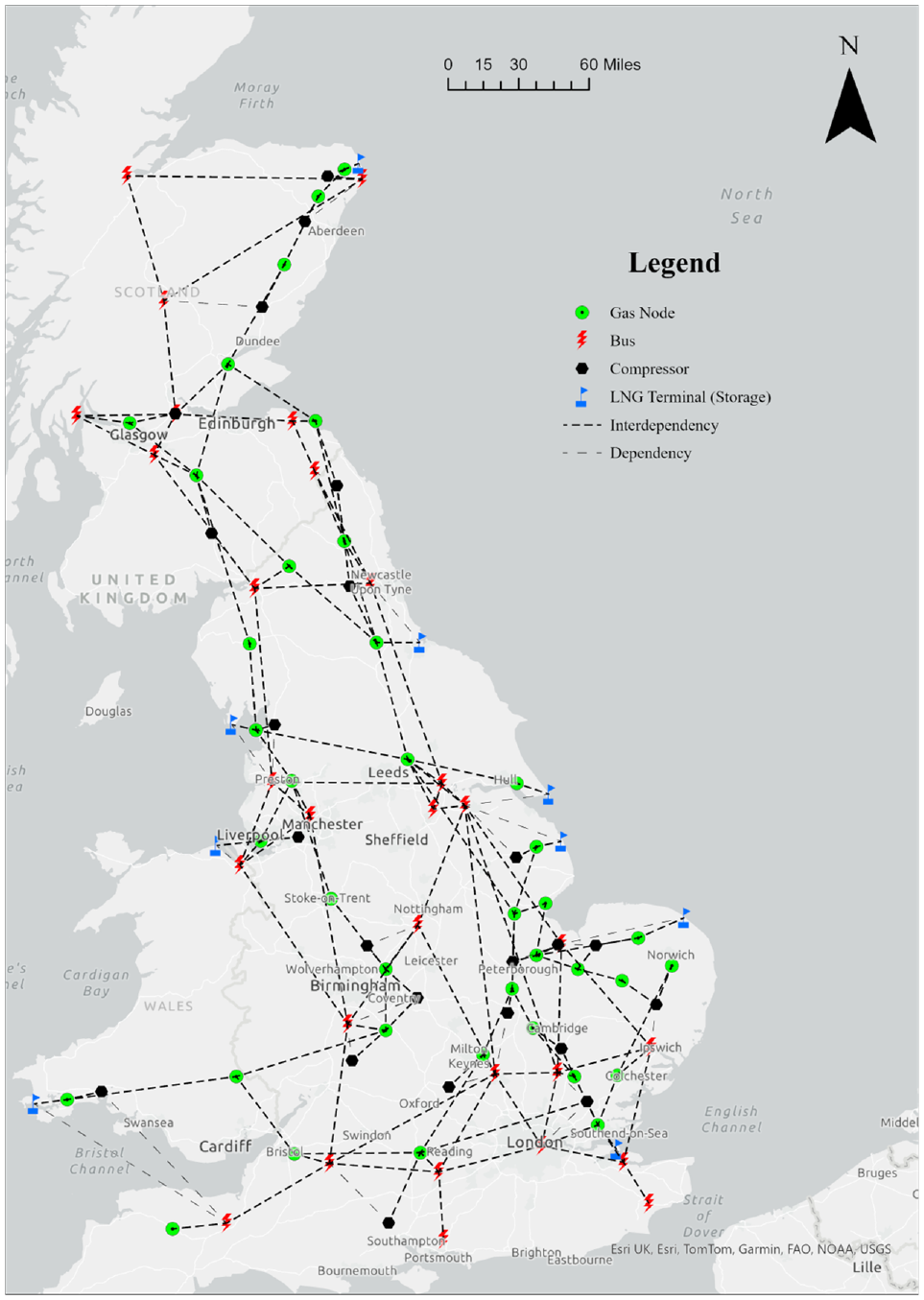
Simplified Great Britain electric and gas network model.
Modeling Infrastructure Network Components
This paper adopts and improves the simplified GB gas network used in previous published papers ( 2 ) by updating the latest data released by the official records ( 37 – 39 ). The modified network contains 29 bus bars, 25 compressors, 38 pipeline nodes, and nine terminal facilities. Each bus bar receives energy from various sources, and the transmission lines and connections are modeled based on the latest data released by the GB National Grid.
Modeling Interconnections Between Infrastructure Network Components
The electric power could be transmitted in both directions as demand changes, and the gas flow could be reversed by the compressor. This paper enhances the network used by Balakrishnan and Zhang ( 2 ) by applying the latest official information to model two-way interdependencies for the connected electric bus bars and pipeline nodes.
In this case study, it is assumed that the pipelines, gas compressors, and gas terminals depend on the bus bars for electricity, and the bus bars depend on the nearest pipeline node for fuel as power plants receive fuel from the gas distribution system. Therefore, interconnections between the bus bar nodes and the pipelines, compressors, and terminals are modeled, and a bi-directional relationship exists between some pipeline nodes and the bus bars.
Simulation Model Set-Up
To simulate the interdependent effect on the infrastructure system vulnerability, this paper develops a simulation model, where each bus node, gas node, gas compressor, and gas storage facility is considered as a node, and the performance level of each node ranges between 0 and 1. The disruptive event, which induces the direct impact
Interdependency Model
This paper adopts the well-defined initial degree of interdependency from previous studies by Oliva et al. (
14
), Setola et al. (
16
), and Balakrishnan and Zhang (
2
). Linguistic variables were converted into numerical values using reference tables developed by Setola et al. (
16
) and used by Balakrishnan and Zhang (
2
). Table 1 shows the initial value of interdependencies,
Initial Interdependency between Systems

As shown in Equation 5, a distance function is used to determine the adjusted value of interdependency. For illustration purposes, this paper assumes that the distance function follows a linear relationship and adjusts the interdependency by no more than 50%. Therefore, the adjusted interdependency value ranges from 0.5

Fuzzy Inference Systems Set-Up
As stated in Equation 9, two FISs are used to model the indirect impact, where there are three triangular membership functions for each variable. The fuzzy inputs of the performance level and performance loss range from 0 to 1. The number of indirect impact variables has a maximum value of 8 as the maximum degree of a node in Figure 3 is 8. It is also determined that the synergy and robustness factor,
Fuzzy Numbers Used in the Proposed Simulation Model
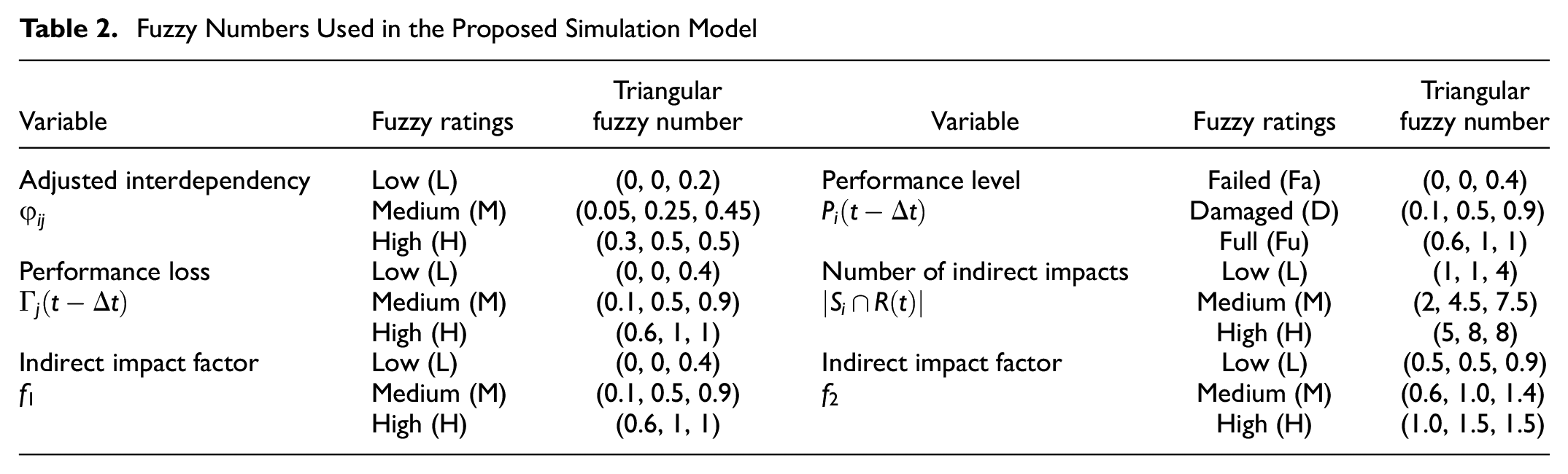
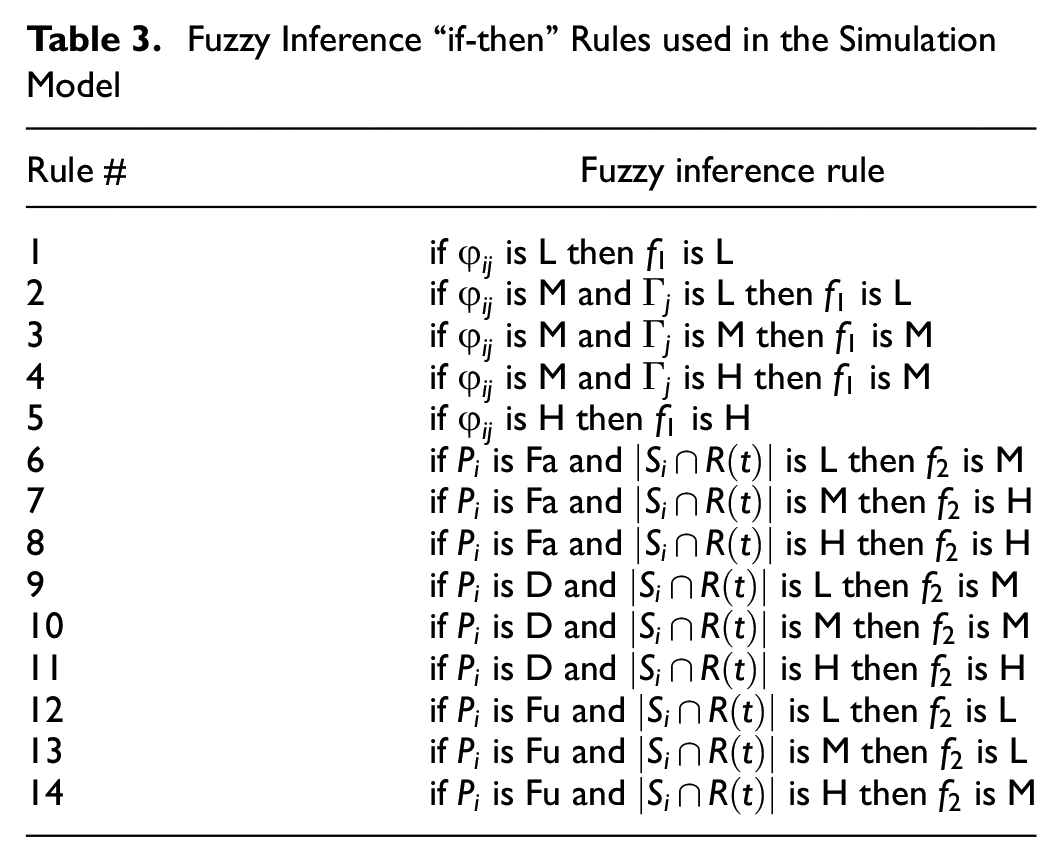
Table 3 summarizes the fuzzy “if-then” rules based on expert knowledge sets. For FIS
Fuzzy Inference “if-then” Rules used in the Simulation Model
Results and Discussions
With all inputs well defined, the simulation model is run, and the results are obtained. Figure 4 presents the mean system performance of each infrastructure system in Figure 3.
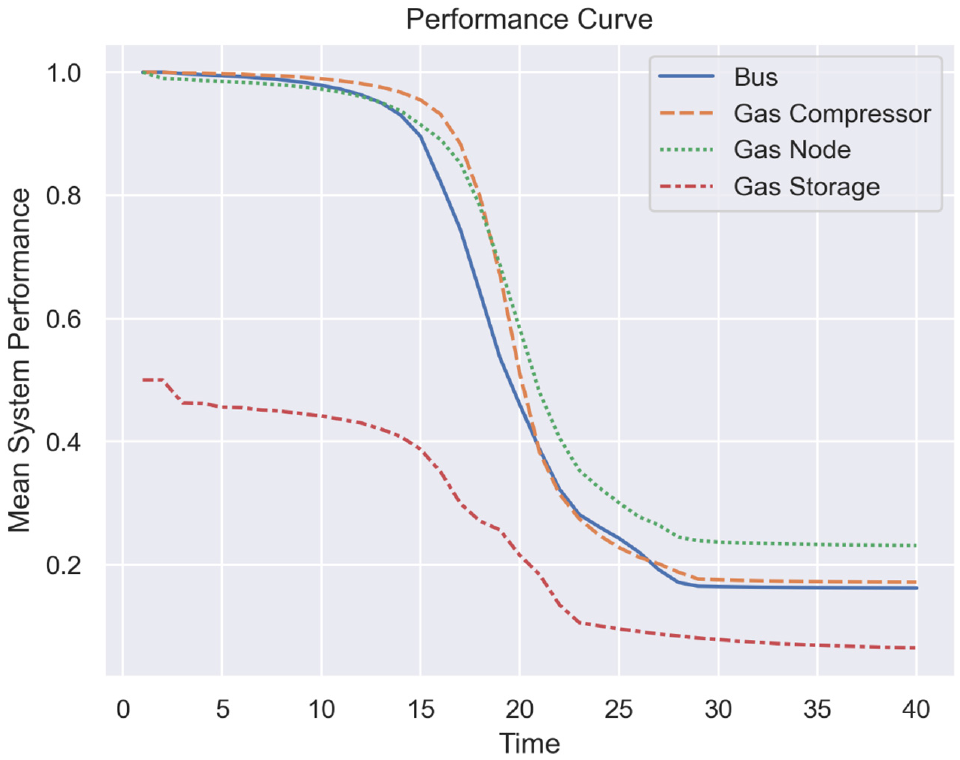
Performance levels over time for each infrastructure system.
As can be observed from Figure 4, the storage facility experiences a performance loss of 50% at the very beginning of the disruptive event. For other three infrastructure systems (i.e., bus bar, gas compressor, and gas node), the mean performance over time forms a reverse “S” curve, indicating that these infrastructure systems initially encounter small performance loss resulting from indirect impacts from the gas terminals. However, as the indirect impacts propagate over time and throughout the network, the interdependencies cause a significant loss in the system performance, which results in a very low system performance level at the end of simulation. This indicates that the vulnerability of the interconnected system as a whole is very high.
Sensitivity Analysis
Three sensitivity analyses are performed to gain insight into how the following factors will affect the proposed model performance: a) high interdependent effects; b) epistemic uncertainties of expert judgment; and c) synergy impact and system robustness.
The Effect of High Interdependency
To investigate the effect of high interdependency, the adjusted interdependency is set as a fixed value of 0.5 (
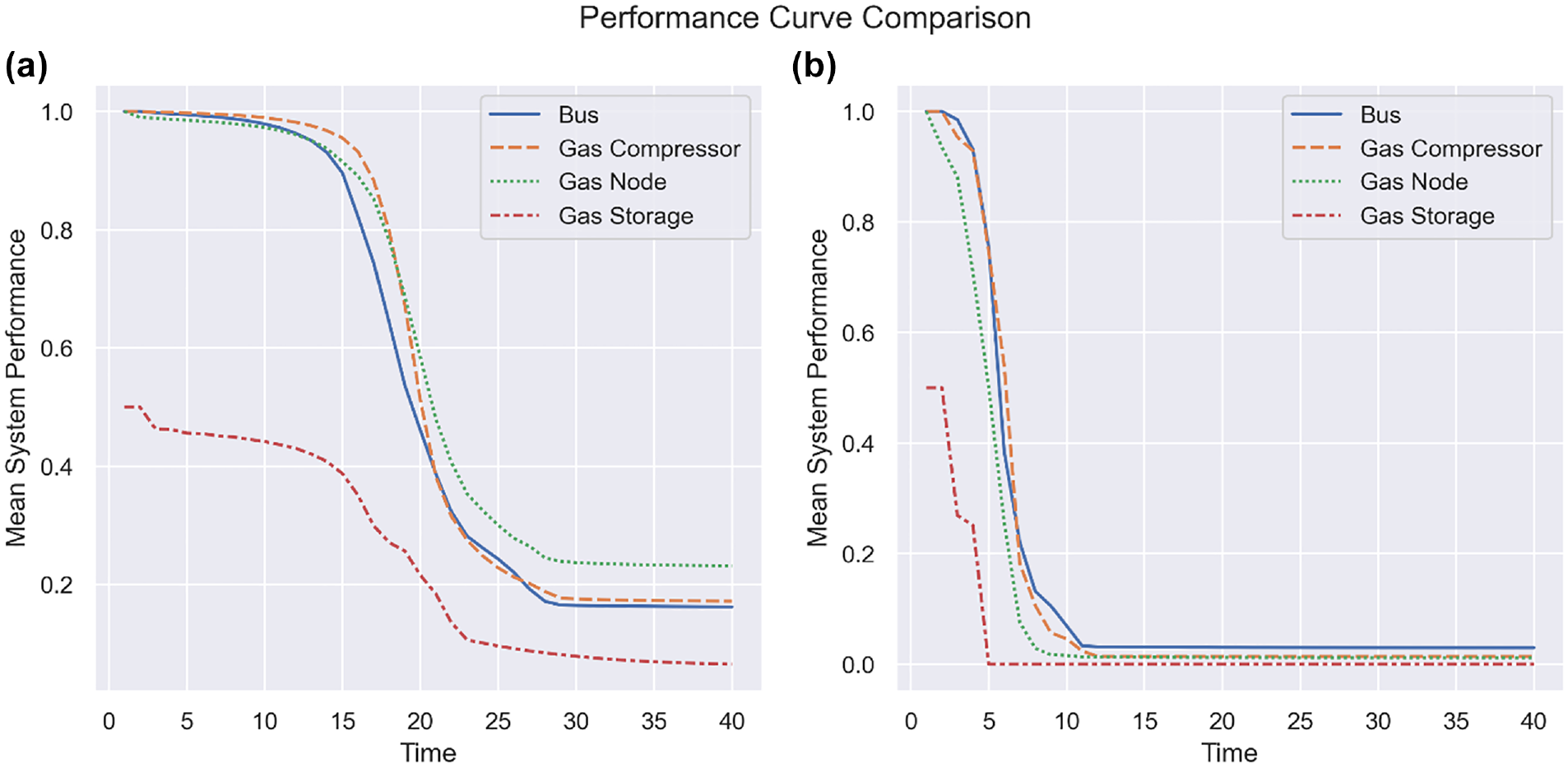
Sensitivity analysis on the effect of high interdependency: (a) base; (b) sensitivity #1.
The Effect of Epistemic Uncertainties
Since different experts may have different low, medium, and/or high standards for interdependency, the effect of epistemic uncertainties is modeled by applying a different set of fuzzy numbers while other inputs remain the same. In this sensitivity analysis, the new fuzzy number is set as low = (0, 0, 0.25), medium = (0.05, 0.25, 0.45), and high = (0.25, 0.5, 0.5), respectively. The comparison results are shown in Figure 6.
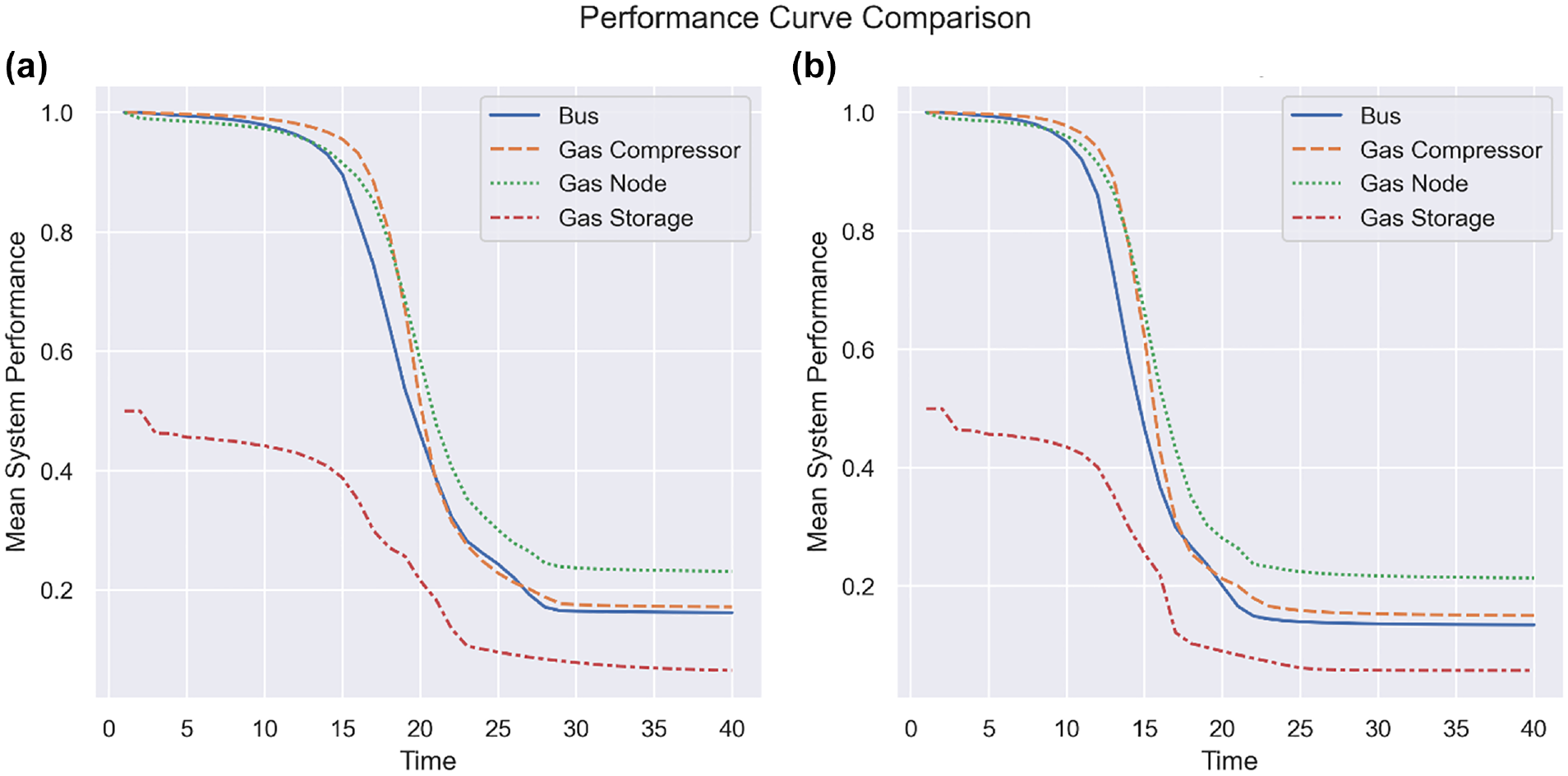
Sensitivity analysis on the effect of epistemic uncertainties: (a) base; (b) sensitivity #2.
As can be seen from Figure 6 and Table 2, the mean infrastructure system performance drops faster as “high = (0.25, 0.5, 0.5)” now covers a portion of the area that was originally not “high = (0.3, 0.5, 0.5).” However, the impact is relatively small. The same level of failure occurred about five timesteps earlier than the base, indicating that the proposed model is robust against small changes in the knowledge base.
The Effect of Synergy Impact and System Robustness
To explore the effect of synergy impact and infrastructure robustness, a system robustness of 1.0 (
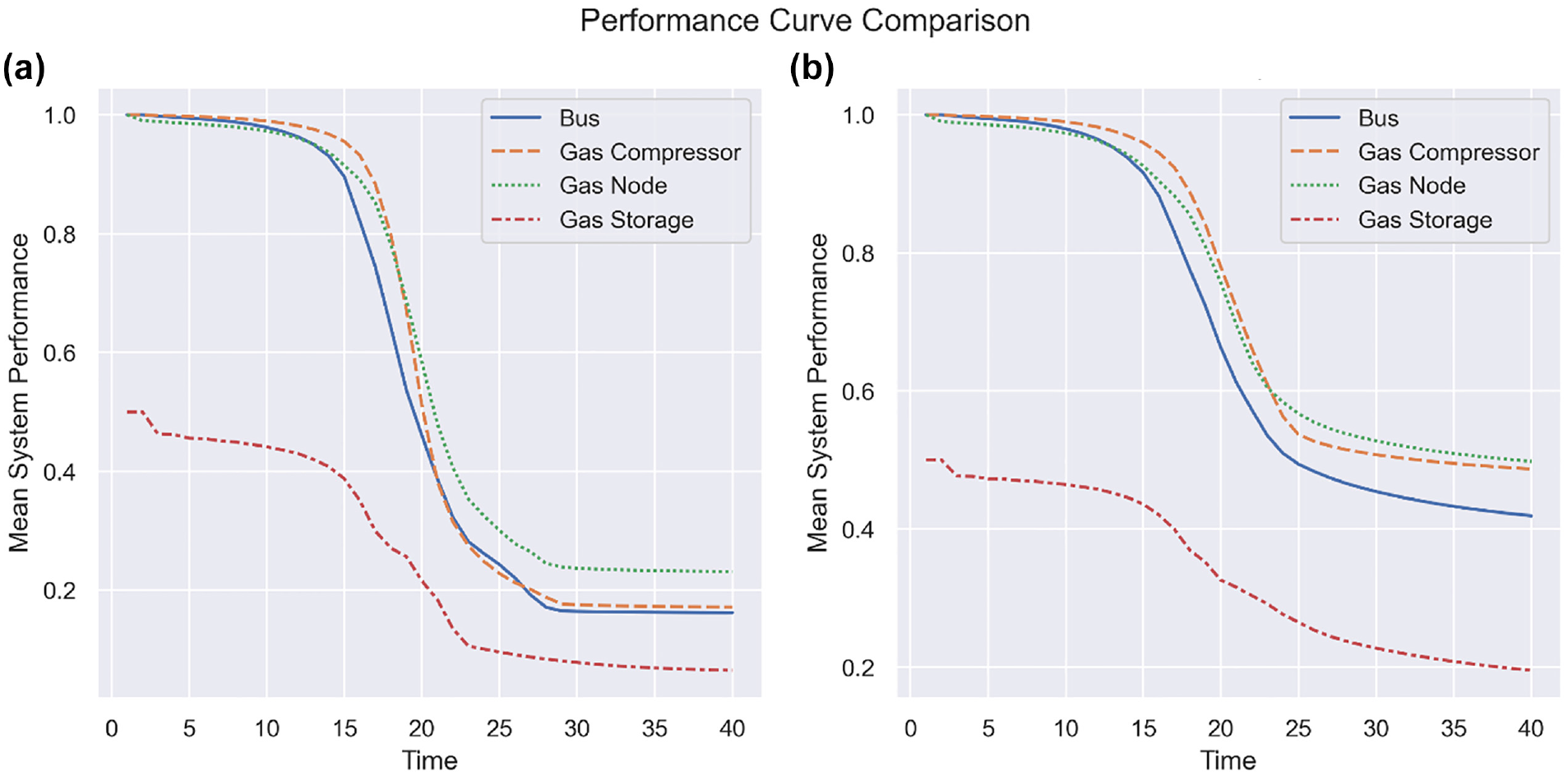
Sensitivity analysis on the effect of impact synergy and system robustness: (a) base; (b) sensitivity #3.
The sensitivity analyses provide additional insights into how system performance (vulnerability) is affected by various factors and allow stakeholders to better understand the mechanisms among interdependent infrastructure systems.
Conclusions
Expert knowledge on interdependency, robustness, and synergy information is comparatively easier to obtain than empirical data sets but is more susceptible to issues with accuracy and epistemic uncertainties. This paper presents a graph-based modeling framework with two fuzzy inference systems to model infrastructure system vulnerability considering the effect of interdependencies, infrastructure robustness, and synergistic effects. The proposed method addresses epistemic uncertainties using the fuzzy inference system and is not sensitive to minor differences in subjective inputs. The applicability of the proposed method is demonstrated through a case study of the GB electric and gas network. Simulations are performed, and the sensitivity analyses provide additional insights into the vulnerability of infrastructure systems with interdependency and synergistic effects. The proposed model is capable of modeling infrastructure vulnerability at component level, which may provide decision-makers with a comprehensive understanding of infrastructure vulnerability. It may also assist decision makers in better using expert judgments and adopting more appropriate countermeasures during disruptive events. Additionally, the proposed framework is flexible and can be applied to any other infrastructure system networks with inputs well-defined such as timestep, fuzzy rules, and so forth.
There are a few directions on which future research could embark and improve the presented method and corresponding results, including incorporating flow information into the analysis to obtain better synergistic information and adopting more accurately calibrated fuzzy membership functions. Additionally, further exploring the most suitable infrastructure systems, using scenarios of adjusted interdependency, and further tailoring the adjustment function may be a good research opportunity. Future work could extend this research to include additional resilience factors by modeling mitigation designs and efforts, such as responsive actions, reconfiguration, and repairs, as well as by conducting post-disaster recovery simulations and optimizing resource allocation.
Footnotes
Acknowledgements
The authors would like to express their sincere gratitude to Stephen Boyles for his invaluable comments and insightful feedback on this paper and Srijith Balakrishnan for his help with input-output inoperability model.
Author Contributions
The authors confirm contribution to the paper as follows: study conception and design: Shidong Pan; data collection: Shidong Pan; analysis and interpretation of results: Shidong Pan, Jingran Sun, and Zhe Han; draft manuscript preparation: Shidong Pan, Kyle Bathgate, Zhe Han, Jingran Sun, and Zhanmin Zhang. All authors (except Zhanmin Zhang who passed away in December 2022) reviewed the results and approved the final version of the manuscript.
Declaration of Conflicting Interests
The author(s) declared no potential conflicts of interest with respect to the research, authorship, and/or publication of this article.
Funding
The author(s) received no financial support for the research, authorship, and/or publication of this article.
