




Abstract
Women frequently face gender-based harassment when using public transport and adjust their travel behavior as a result. The present study focuses on how the presence of bystanders influences women’s sense of security and self-efficacy while using public transport. The study assesses the impact community support and social norms, perceived responsibilities of authority, and environmental factors have on women’s perception of security in the context of harassment. We conducted an online survey in Auckland, New Zealand (n = 524). We analyzed results for differences in responses by gender and intersectional identities such as ethnicity and LGBTQ+. We used common factor analysis to uncover hypothesized latent variables that affect women’s perceptions of security and expectations of bystanders. The analysis produced a four-factor model for women+. The strongest factor in the women+ model was Community, followed by Authority, Confidence, then Vigilance. The women+ model suggests bystander and community support is an important expectation for women using public transport, affecting their perception of security and self-efficacy. For comparison and to gain insight into the role men may have as bystanders, we performed factor analysis on responses from men. The resulting three-factor model included factors for Confidence, Authority, and Vigilance. The strength of the Confidence factor for men suggests there is space for calling men in as bystanders who are informed and willing to act. Overall, study findings indicate that anti-harassment strategies can be strengthened by building an active bystander community, bolstering support for vulnerable riders, and helping establish harassment as an unacceptable form of passenger behavior.
The ability to move between home and essentials such as school, markets, health care, and community centers is fundamental to our lives and livelihoods. Public transport provides that connection for many people via modes such as bus, rail, and ferry. However, a rider’s experience of security on public transport often varies based on their gender and intersecting identities such as ethnicity and LGBTQ+. Fear of victimization and the impact of experiencing harassment, including sexual harassment, on women’s ridership of public transport is a progressively studied topic ( 1 – 3 ). The topic has been gaining more interest in the past decade, alongside public awareness and survivor support movements such as #MeToo ( 4 – 6 ).
Inappropriate, anti-social behavior and non-confrontational forms of harassment are commonplace in public transport. Various factors, such as time of day and crowdedness, can influence the type of harassment and its likelihood of occurrence in public transport. Social norms and limited reporting mechanisms can leave women uncertain about what to do besides “just shake it off” ( 7 , 8 ). For witnesses, it can be unclear when it is appropriate to intervene. Yet, a considerable amount of research has shown that harassment experiences of all forms can contribute to women feeling uneasy and sometimes unsafe while using public transport. This includes forms of non-physical harassment such as gender-based lewd comments and leering. Feeling anxious often can have physiological impacts and can contribute to a woman changing her travel behavior ( 9 – 11 ). Studies have found that the pervasiveness of sexual harassment can create a societal norm where harassment becomes accepted as a regular part of being in public spaces ( 12 ). Societal norms and gender roles can contribute to various forms of harassment being viewed as acceptable and to victim-blaming that places the responsibility on women to keep themselves secure ( 13 ).
It is well established that harassment and gender-based violence exist on public transport. However, less attention has been given to women’s expectations of bystanders and the resulting impact on their sense of security and self-efficacy to keep themselves secure. Some studies have suggested active bystander strategies to help mitigate unwanted behavior directed toward women through prevention, intervention, or reporting ( 14 , 15 ). Few previous studies have focused explicitly on the expected role of bystanders in public transport settings ( 13 , 16 ). It remains unclear to what extent women rely on bystanders to help during a harassment incident and how the presence of bystanders influences women’s perception of security and self-efficacy to act when riding public transport.
The present study’s main research aim is to determine how the presence of different types of bystander—including other riders, public transport personnel, and law enforcement—affects women’s perception of personal security and self-efficacy while riding public transport. To support this aim, we consider what role(s) men might have as other riders in supporting women’s security on public transport. The study’s secondary aim is to explore the effects of intersectional identities on women’s sense of self-efficacy and knowing what to do in a harassment situation. Findings have implications for strategies to combat harassment in a public transport environment.
Research Context
Terminology
This paper uses related, but not synonymous, terms to accurately reflect terms used in prior research.
The present study focuses on bystanders in situations of harassment and other forms of violence, including sexual.
Language around gender continually evolves to better represent the nuances and diversity of gender identities; we do our best to use current terminology and acknowledge that terminology will evolve over time.
Data collected for the present study focus on harassment broadly, including sexual harassment and harassment based on characteristics such as gender and ethnicity.
The authors recognize that non-binary/third gender people are not women; we included the one non-binary/third gender response we received in our analysis rather than removing the response.
“Security” and “safety” are often used interchangeably, though they have important distinctions around the intent (or not) to do harm. This study concerns itself with perceptions of personal security and harassment. When referencing previous studies that use the term “safety” in this context, we use “safety” to reflect the source material. Further, because people typically use phrases such as “I feel unsafe” to describe situations where their personal security is at risk, the survey statements in this study used phrases such as “keep myself safe” to align with how a person generally describes their sense of security.
Harassment, Gender, and Public Transport
Scholarly research on the prevalence of harassment on public transport dates back to at least the 1980s ( 25 ). Both past and recent work show that public transport is a frequent venue for harassment ( 7 , 8 , 26 , 27 ). Different public transport environments tend to be more vulnerable to various types of sexual crime, such as groping on a crowded bus and sexual assault at an empty train station ( 28 ). The focus on women and their experiences of harassment on public transport emerged in the late 2000s. Most studies investigate harassment that is sexual in nature and experienced by women who do not explicitly fall outside societal norms (e.g., cisgender, heterosexual, able-bodied); the occurrence of harassment in public transport can be considered firmly established today ( 2 , 10 , 15 , 22 , 25 , 26 , 29 , 30 ).
Factors such as level of crowding, design, and policing strategy may influence the likelihood of sexual harassment in specific spaces along the public transport system (e.g., onboard vehicles versus at stations) ( 15 ). Further, studies consistently show that women and people who expand beyond the gender binary (e.g., non-binary, gender fluid, third gender) experience gender-based violence, including harassment, in public space at higher rates than men ( 7 , 27 , 31–33). Studies have documented a range of ways harassment can affect women and their use of public transport. Both non-physical and physical forms of harassment can cause impacts as severe as women changing their travel route, time, or mode, or avoiding riding public transport altogether ( 9 , 10 , 13 , 26 , 34 ). Harassment can affect the physical and psychological wellbeing of women, as well as have financial and emotional repercussions ( 35 ).
Recent studies found harassment can be more frequent and severe toward vulnerable groups of women, such as women of color, low-income women, women with a disability, and other intersecting identities. These experiences can cause a greater negative impact on women’s access to and use of public transport and cause feelings of vulnerability to future harassment and violence ( 1 , 3 , 36 ). A recent study that focused on the experiences of women of color in the U.S. who ride public transport demonstrated how women with intersectional identities can also feel targeted based on their race or ethnicity in addition to gender ( 3 ). Similarly, another recent study of women and gender-diverse people in Australia found participant’s experience of sexual violence included racist and homophobic verbal assaults ( 27 ). These studies underscore the compounding effects multiple marginalized identities (e.g., gender and ethnicity) can have on women and transgender people’s risk and experience of harassment on public transport.
Previous studies have also evaluated what affects women’s perceptions of safety and security. Perception on its own (i.e., independent of a specific incident) can lead to women fearing certain public transport environments and adjusting their travel behavior to avoid those environments. Fear limits mobility and a woman’s “ability to move carefree from origin to destination without worrying that a ‘wrong choice’ of mode, [public transport] setting or time of travel might have consequences for their safety” ( 10 ). Some studies have evaluated perception of safety specifically for transgender people. Recent work by Marques in the UK and Portugal found that transgender people’s perception of a place as safe or unsafe can change based on the presence of other people who are supportive of their gender identity ( 37 ). Additional studies have evaluated how perception of safety is affected by individual, travel, and public transport system characteristics (e.g., bus shelter design, natural surveillance, and reliable real-time information) and by a rider’s frequency of public transport use and duration of trip ( 8 , 38 ).
Primary factors influencing perception of security on public transport typically differ for women and men. A study in Sweden found that women’s previous experience of crime is the primary factor affecting their security perceptions, followed by police presence, service reliability, and CCTV cameras ( 38 ). In contrast, men’s security perception is primarily affected by reliability of service, followed by police presence and then their previous experience of crime. This is not surprising, considering women experience far higher rates of gender-based violence than men, though some men also experience gender-based violence ( 25 ).
Underreporting incidents of harassment and gender-based violence is a major challenge for fully grasping the frequency, severity, and impact of such incidents on women and ridership. Large-scale, systematic, and consistent harassment data are still mostly absent, especially in the public transport setting ( 26 ). Sexual violence is particularly underreported. Some empirical evidence finds reporting as low as 4% of sexual harassment and 14% of sexual assault incidents ( 39 ). While reporting rates vary by city/country, they are consistently low across differing cultures and contexts worldwide. For example, a recent study compared victim reporting rates between four major cities: Melbourne, Australia (6%); Rio Claro, Brazil (4%); Milan, Italy (3%); and Tokyo, Japan (17%) ( 40 ).
On the other hand, the growth of social movements such as #MeToo is mainstreaming and globalizing awareness around women’s experience of sexual violence ( 4 ). Though the extent varies by country and culture, there is a general shift in societal norms from victim-blaming, shaming, and silencing toward supporting victims reclaiming their narrative, speaking out against their perpetrators, and demanding systemic, widespread action. The #MeToo movement is helping change the culture around sexual violence, particularly in high-income countries, by normalizing talking about the topic of sexual violence and supporting women and girls who speak up. The #MeToo movement is also facilitating more representative data collection because victims and bystanders are increasingly more likely to report experiencing or witnessing sexual violence ( 4 , 41 ). Victim blaming continues to be widely documented in countries of all development levels among public transport riders, agency personnel, and law enforcement alike ( 42 ). However, more and more social movements are pushing back to change problematic social norms.
Active Bystander Barriers and Facilitators
Bystanders are third-party witnesses to situations or events. In situations involving personal security issues such as harassment and assault, bystanders “have the ability to do nothing, to make the situation worse by supporting or ignoring the perpetrator behavior, or to make the situation better by intervening in prosocial ways” ( 18 ). Bystander behavior can be proactive (i.e., promoting social norms that do not accept violence and sexist behavior) and reactive (i.e., intervening, reporting). Harassment and assault prevention efforts increasingly focus on encouraging both proactive and reactive bystander behavior; bystanders can contribute to an environment that does not tolerate violence and act in prosocial ways when problematic and risky situations do occur. These efforts shift the focus of prevention programs from reducing risk among potential victims to a focus on bystander action by peers and community members ( 18 ).
Pedersen describes bystander intervention as an example of a foundational approach that is proactive, builds community between different social groups, and helps break down societal norms that facilitate sexual violence through underpinnings of sexism, racism, homophobia, and so forth ( 43 ). Bystander intervention has been demonstrated as an effective strategy for reducing incidents of harassment ( 44 – 46 ). The barriers and facilitators that affect a bystander’s likelihood to act using direct or indirect intervention can vary based on their identities (e.g., gender) and the context (e.g., the presence of other bystanders). One recent study of university students in the U.S. focused on students who had experienced bystander intervention situations in public spaces. Researchers found gender differences in reported reasons for not intervening. Women more often reported skills deficit as a reason for not intervening. Men more often reported perceived responsibility as a reason for not intervening. Self-efficacy increased the likelihood of intervening regardless of gender ( 47 ).
There is limited research on bystander intervention in the public transport setting; however, the body of research is growing. A survey of university students in the UK found that passenger density on public transport and the severity of unwanted sexual behavior influenced the perception of blame (e.g., perpetrator versus victim), the likelihood of bystander intervention, and the likelihood of reporting the incident. Their study suggests that anti-harassment bystander intervention campaigns may be more effective when they focus on the bystander rather than the victim because they remove the onus for acting and reporting from the victim ( 16 ). Active bystanders can also help a victim feel supported and seen. Alternatively, victims can be left feeling helpless and disappointed when bystanders do not help. An Australian study documented this effect in accounts from victim-survivors of sexual violence on public transport ( 27 ).
Additional evidence from around the world suggests environmental factors that facilitate security and discourage crime include good lighting, visibility and lines of sight, maintenance and cleanliness, mechanical surveillance such as closed circuit television (CCTV), and natural surveillance via the presence of other people who can be active bystanders ( 26 , 48 , 49 ). Another recent study examined a pilot project in Mexico City to combat sexual harassment on public transport ( 13 ). The study found that women with a history of sexual assault have a higher perception of risk in places where victim-blaming beliefs are present. Results suggest that self-efficacy and outcome expectations facilitated the desire to help as a bystander. Descriptive norms (e.g., victim blaming) served as a barrier for men but a facilitator for women to help ( 13 ).
Fairbairn considers social media-based efforts such as #MeToo to be a form of online bystander intervention ( 4 ). The study occurred in Canada and the US and found that social media efforts such as #MeToo effectively extend past individual-level risk factors to affect hard-to-reach community- and society-level risk factors such as harmful social norms that can otherwise be spread and reinforced by social media. Strategies such as #MeToo are classified as primary prevention that intercepts violence before it occurs. Secondary prevention (immediate response) and tertiary prevention (long-term care) have historically been more common avenues for efforts targeting violence against women ( 4 ).
Background and Methods
Study participants reside in Tāmaki Makaurau Auckland, Aotearoa New Zealand. Auckland is the country’s most ethnically diverse and metropolitan city with a population of 1.6 million and median age of 35 years. The median personal income in Auckland is $34,400 per annum, which is the second highest in the country behind Wellington ( 50 ). Auckland Transport (AT), a government authority, provides public transport to the region via bus, train, and ferry services. To help manage crime and harassment on its public transport system, AT collaborates with the non-profit organization Crime Stoppers to collect reports of crime, fare evasion, and antisocial behavior. The campaign uses images such as the super-hero themed sign shown in Figure 1 to encourage riders to report when they witness a crime or antisocial behavior such as harassment while using the AT public transport system. Reports can be made anonymously through Crime Stoppers via text, call, or email.
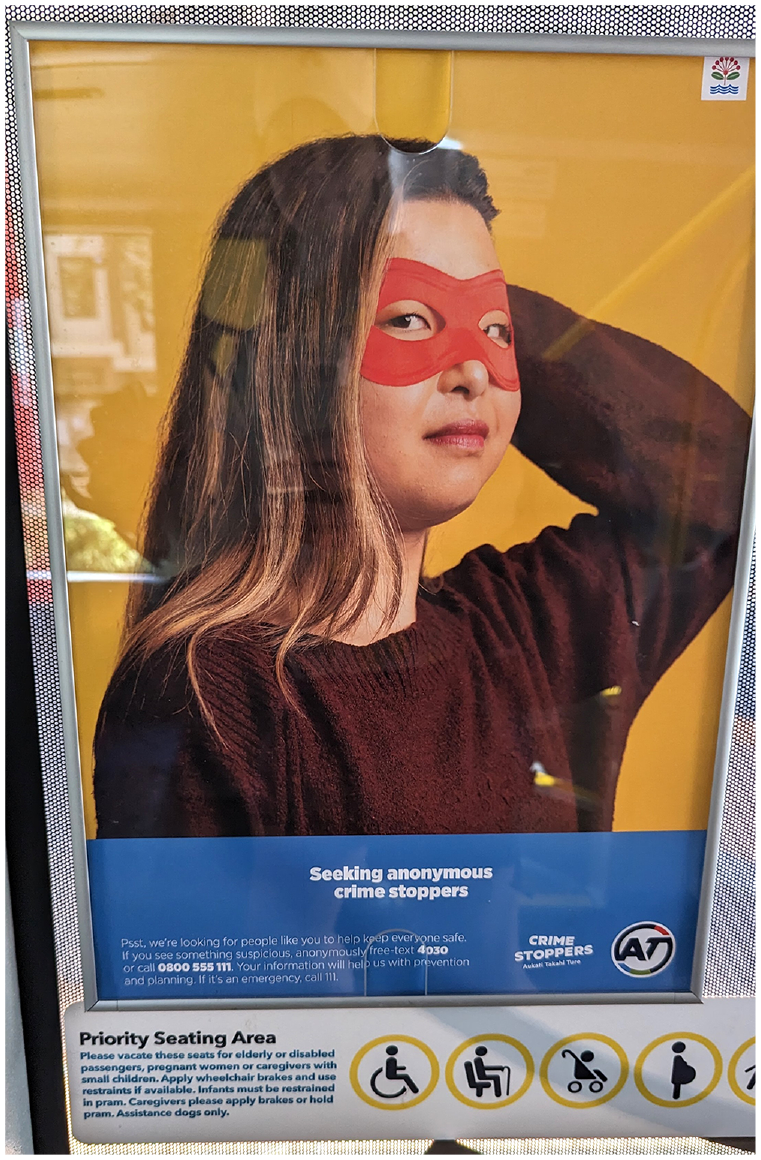
“Seeking anonymous crime stoppers” on an Auckland Transport bus vehicle.
Data Collection and Survey Design
We collected data using an online survey distributed through an independent survey company to an extensive panel of potential participants. To participate, people needed to currently use public transport in the Auckland region or have used it within the last 5 years. Approximately 71% of survey participants reported using public transport at least monthly; 57% reported riding weekly or daily. A total of 90% of participants indicated they have lived in New Zealand more than 5 years. All participants are at least 16 years old, which is the minimum age to apply for a driver’s license in New Zealand. We adopted the survey response categories for age, gender, income, and ethnicity from the most recent national census questionnaire (2018) available at the time of survey development.
We distributed the online survey in February 2023 to potential participants. A total of 524 eligible participants completed the survey (n = 524). Overall, the survey company provided a sample representative of Auckland’s general population sociodemographic profile. Table 1 breaks down select participant demographics. We included men in the survey population to enable a comparison with women’s responses and gain insight into the role(s) men may have as bystanders in supporting women’s security when riding public transport. Because of this study’s focus on gender, we prioritized achieving a gender composition for the sample that aligns with Auckland’s gender composition of approximately 51% female and 49% male ( 50 ). Only one survey participant (0.2%) identified as non-binary/third gender, and no one chose to self-describe, despite attempts to increase response rates of participants who represent the estimated 0.8% of New Zealand’s adult population who are transgender or non-binary ( 51 ). To include the non-binary/third gender response in the analysis, we combined their response with the responses from women as populations that face higher rates of gender-based violence. For brevity, we use the term “women+” to refer to this combined dataset when discussing results. Because there is only one non-binary/third gender response, our discussion focuses on our findings’ implications for women, who comprise the majority of the dataset.
Participant Demographics
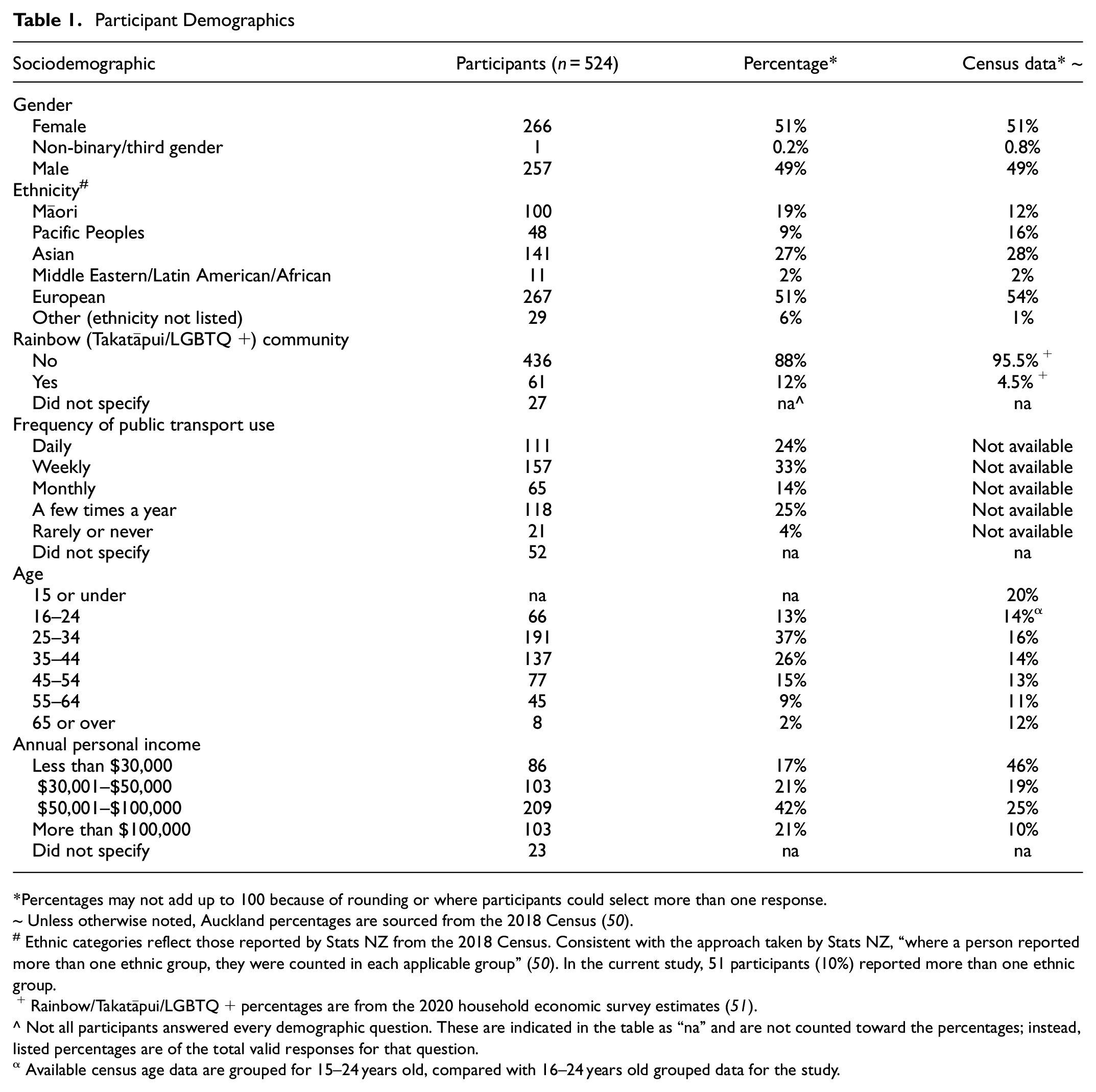
Percentages may not add up to 100 because of rounding or where participants could select more than one response.
~ Unless otherwise noted, Auckland percentages are sourced from the 2018 Census ( 50 ).
Ethnic categories reflect those reported by Stats NZ from the 2018 Census. Consistent with the approach taken by Stats NZ, “where a person reported more than one ethnic group, they were counted in each applicable group” ( 50 ). In the current study, 51 participants (10%) reported more than one ethnic group.
Rainbow/Takatāpui/LGBTQ+ percentages are from the 2020 household economic survey estimates ( 51 ).
^ Not all participants answered every demographic question. These are indicated in the table as “na” and are not counted toward the percentages; instead, listed percentages are of the total valid responses for that question.
Available census age data are grouped for 15–24 years old, compared with 16–24 years old grouped data for the study.
The survey began with one screening question for use of public transport. The survey then presented participants who currently use public transport or have in the past 5 years with a series of five-point Likert scale statements designed to identify factors that influence women’s expectations from other riders, public transport personnel, and law enforcement in a harassment incident while riding public transport. The Likert scale statements were followed by sociodemographic questions reflected in Table 1, as well as questions about travel behavior (e.g., frequency of public transport use and mode of public transport) and familiarity with strategies for bystander intervention (e.g., creating a distraction, documenting what is happening, calling for help, interrupting what is happening with a diversion, de-escalating the situation). Table 2 provides example Likert scale statements focused around four themes we hypothesized to affect a person’s expectation for security and bystander support when using public transport.
Survey Themes and Example Survey Statements
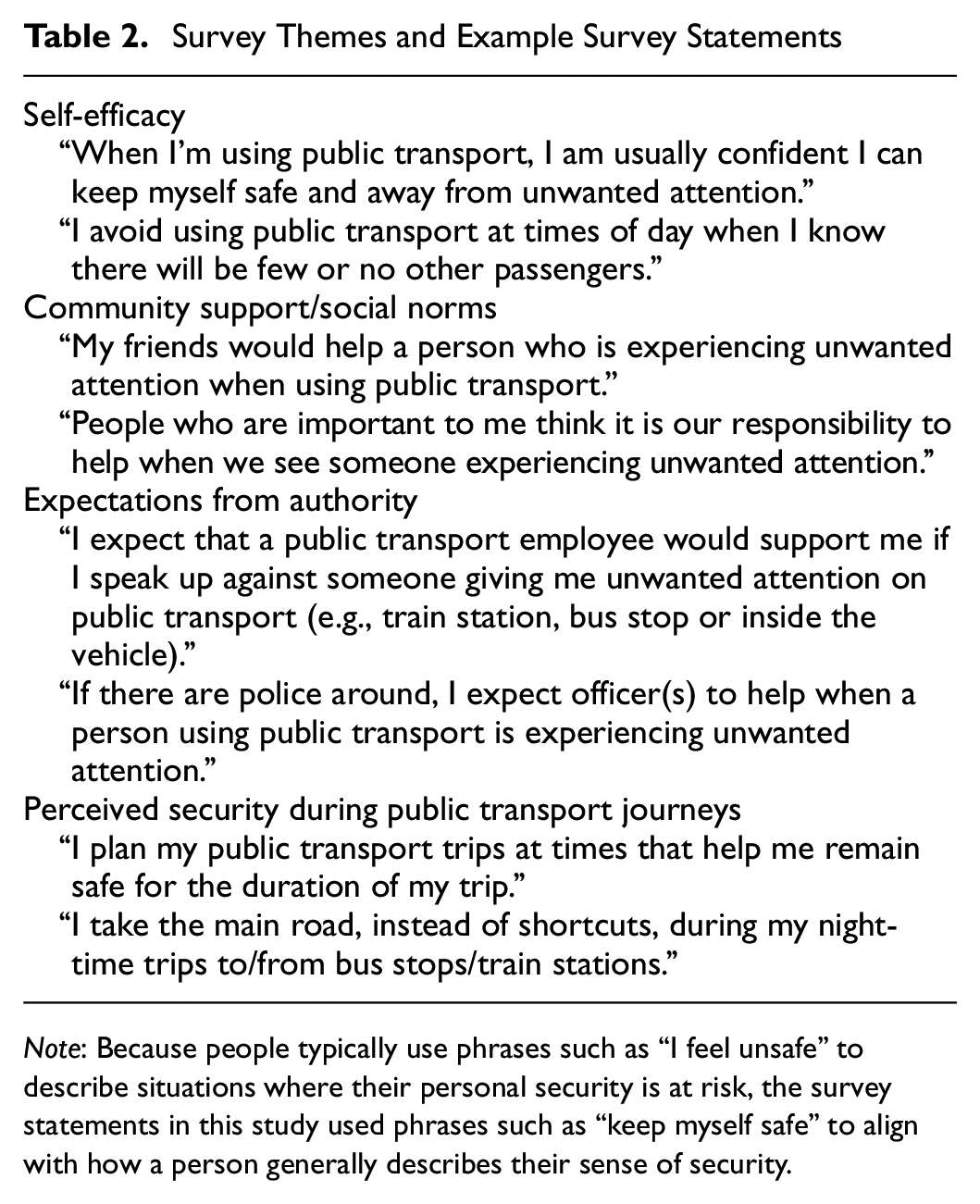
Note: Because people typically use phrases such as “I feel unsafe” to describe situations where their personal security is at risk, the survey statements in this study used phrases such as “keep myself safe” to align with how a person generally describes their sense of security.
Statistical Method
Latent variables, also called “factors,” are unobservable characteristics of people that can manifest in the differences in their responses to more than one measurable variable. Exploratory factor analysis (EFA) attempts to identify those factors that explain the order and structure of measured variables ( 52 ). We developed the Likert scale statements in our survey as measurable variables that could uncover hypothesized latent variables that affect people’s perceptions of security and expectations of bystanders while using public transport. As a result, we selected common factor analysis as the EFA statistical method over principal components analysis. We used the principal axis factoring (PAF) estimation method to leverage its tolerance to non-normality and established ability to recover weak factors. In anticipation of correlation between the factors arising from the nature of the variables, we applied Promax oblique rotation. We used a Bartlett’s test of sphericity below 0.05 to indicate that the correlation matrix was not random ( 52 ). To assess correlation matrix suitability for factor analysis, we considered Kaiser-Meyer-Olkin (KMO) values of at least 0.70 ( 53 ). The minimum standard for factor analysis is a KMO value of 0.50. Together, Bartlett’s test of sphericity and the KMO value indicated when a correlation matrix was appropriate for factor analysis. We then used visual scree tests to determine the appropriate number of factors to retain. We considered factors to be adequate when they had at least three salient pattern coefficients, internal consistency reliability measured by Cronbach’s alpha above 0.70, and were theoretically meaningful ( 52 , 54 ).
We sought a balance of parsimony and comprehensiveness by focusing on models that contain just enough factors to account for the important covariation among measured variables while providing theoretically meaningful solutions. We included all Likert scale variables in the initial models. We then refined models by removing variables and testing different combinations of variables until achieving the strongest identified combination of KMO value and cumulative extraction sums of squared loadings.
Results
This section focuses on responses from women+ participants (n = 266) to align with established literature on women’s frequent experience of and fear of harassment while riding public transport, particularly when compared with that of men. It is understood that, when public transport can enhance its system’s security for its most vulnerable riders, all riders benefit. After a general description of survey responses from women+, we provide a factor analysis for women+’s security perceptions of and expectations from bystanders based on their responses to the Likert scale questions. The factor analysis is then followed by a comparison of the women+ model to a model for men (n = 257). The comparison evaluates key differences in perceptions and expectations across genders and considers the role men may play as bystanders in supporting women’s personal security. This gender comparison provides some insights into how findings can be applied to assist practitioners in justifying and developing more effective active bystander strategies.
General Description
In the survey, most women+ reported somewhat or strongly agreeing with statements that they usually feel confident in being able to keep themselves secure (76%) and knowing what to do if they witness someone experiencing unwanted attention when riding public transport (67%). Some women+ also reported that it is somewhat or highly likely for other riders to help them (50%) and to help others (43%) if someone using public transport is experiencing unwanted attention. Most women+ reported that their friends would help others experiencing unwanted attention on public transport (72%). Most women+ also reported expecting that public transport employees (74%), operators (71%), and police (88%) would probably or definitely help. Further, most women+ reported that it is our responsibility to help when we see people experiencing unwanted attention (70%) and that public transport agencies have a responsibility for keeping riders secure from unwanted attention while using their system (72%). While most women+ (73%) reported feeling secure in their neighborhoods most of the time or always, they also reported not feeling comfortable waiting at bus stops/train stations when it is dark outside (64%) and reported planning public transport trips at more secure times of day (69%) and along main roads at nighttime (83%) to help remain secure. Few women+ reported having previously been in a bystander intervention training as a student or teacher (7%). As demonstrated in Figure 2, when responses from women+ are compared with men, it is clear that gender heavily influenced responses (p < 0.001). This finding is consistent with existing literature and provides assurance for the validity of our dataset.

Responses disaggregated by gender.
In addition to gender, we disaggregated survey data by intersectional identities such as ethnicity, LGBTQ+, and age to explore additional factors that may influence a participant’s response. While gender consistently provided the most decisive influence on participant responses across all four themes (self-efficacy, community, authority, environment), intersectional identities did result in additional differences in responses. This impact of intersectional identities is consistent with existing literature. After gender, ethnicity showed the strongest impact on participant responses. As shown in Figure 3, the gap between participant responses tended to widen in some ethnicity groups and shrink in others when we disaggregated responses by ethnicity and gender. For example, the smallest response gap between genders of the same ethnicity was for women+ and men of Asian ethnicity. There are also subtle differences between different ethnicities of the same gender, though gender remained the most decisive influence across responses. For example, more women+ of Asian ethnicity reported strongly disagreeing with feeling comfortable waiting at night at empty or nearly empty bus stops/train stations compared with women+of other ethnicities; however, more women+ of New Zealand European and Australian ethnicity reported a combination of strong and somewhat disagreement with the statement.
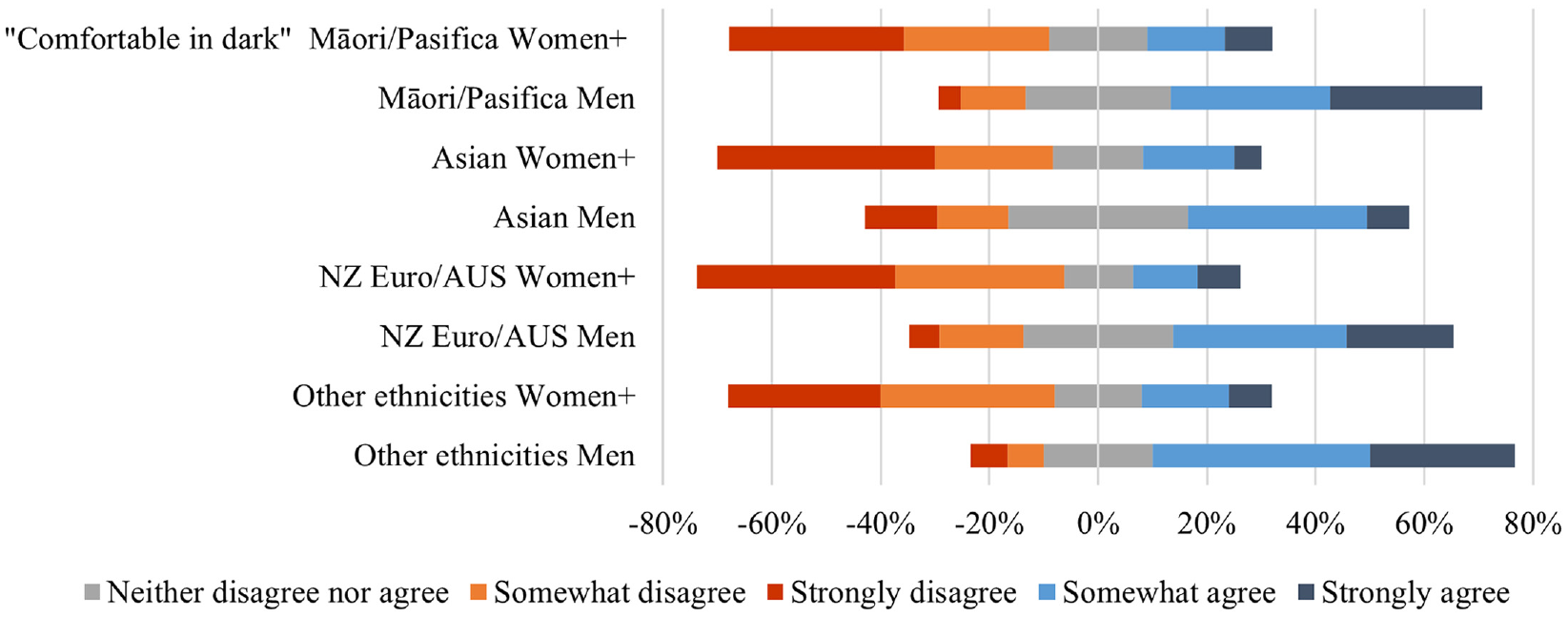
Responses disaggregated by ethnicity and gender (comfortable in the dark).
Another subtle distinction between responses from participants of different ethnicities emerged around the expectation that others would help in harassment situations. As illustrated in Figure 4, both women+ and men of Māori/Pasifica and Asian ethnicities expressed stronger agreement that others would help compared with participants of New Zealand European, Australian, and other ethnicities. This is the one instance where ethnicity appeared to play a slightly more substantial role in responses than gender.
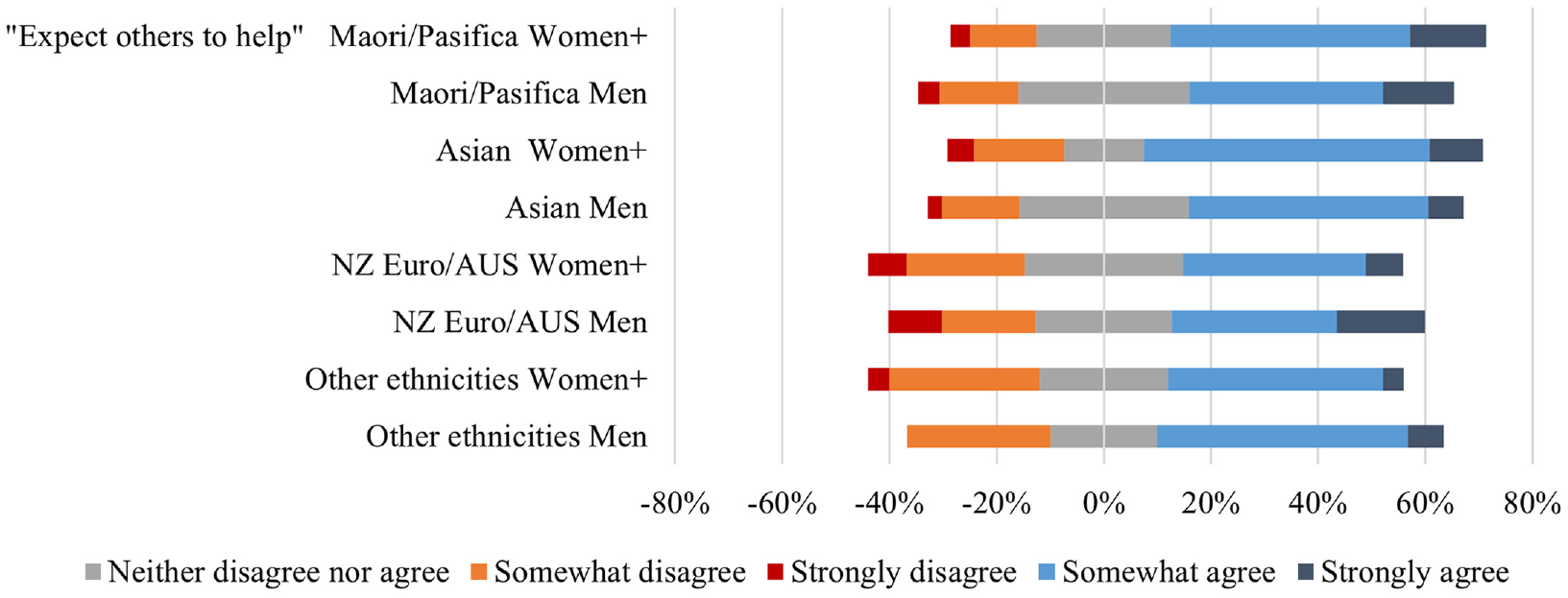
Responses disaggregated by ethnicity and gender (expect others to help).
Similarly, when we disaggregated by age and gender, gender remained the most decisive influence even though there are differences between age groups of the same gender, as shown in Figure 5. For example, both women+ and men 55 years old or over reported lower agreement with feeling comfortable at night than younger participants of their same gender; however, men 55 and over still reported more agreement with feeling comfortable at night than even the most comfortable age group of women+ (35–54 years old).
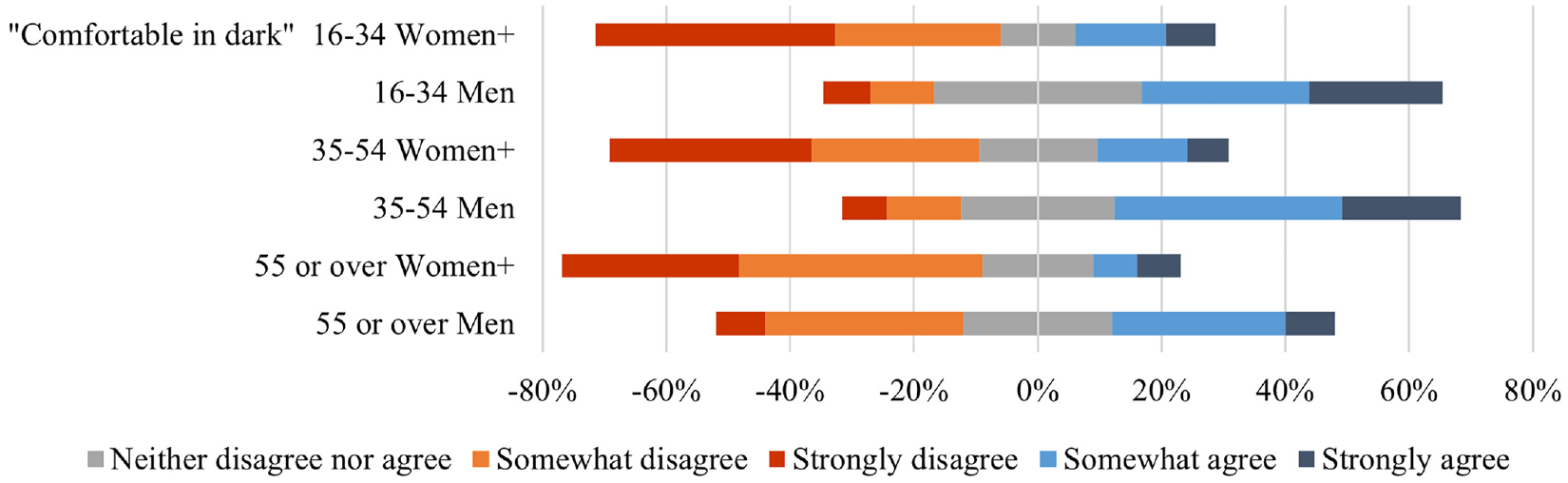
Responses disaggregated by age and gender.
Of the study’s 524 participants, 61 (12%) identified as part of the Rainbow (takatāpui/LGBTQ+) community. Rainbow women+ generally reported feeling more secure than non-Rainbow women, which can be seen in Figure 6. More than twice the percentage of Rainbow women+ (41%) than non-Rainbow women+ (17%) somewhat or strongly agreed with feeling comfortable waiting at night at empty or nearly empty bus stops/train stations. Approximately 10% more Rainbow women+ (78%) than non-Rainbow women+ (67%)—and Rainbow men (67%) and non-Rainbow men (69%)—reported knowing what to do if they witness someone receiving unwanted attention.
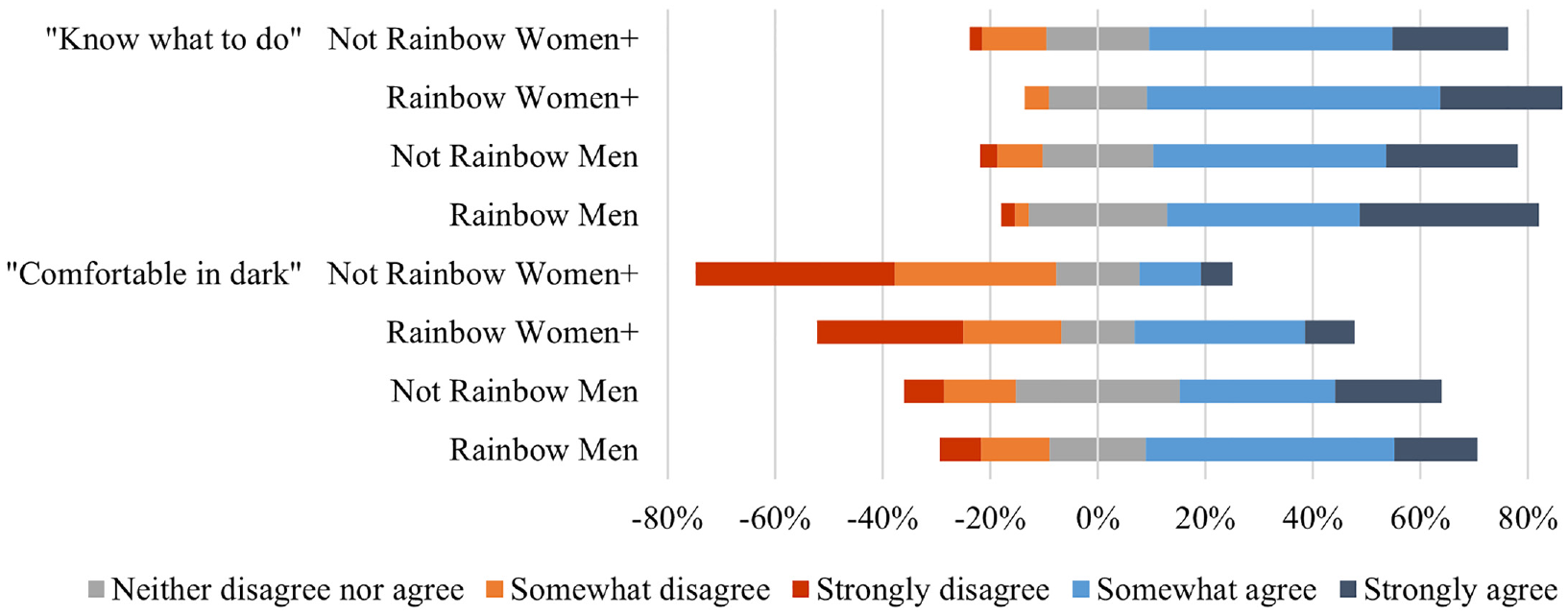
Responses disaggregated by Rainbow identity and gender.
Factor Analysis
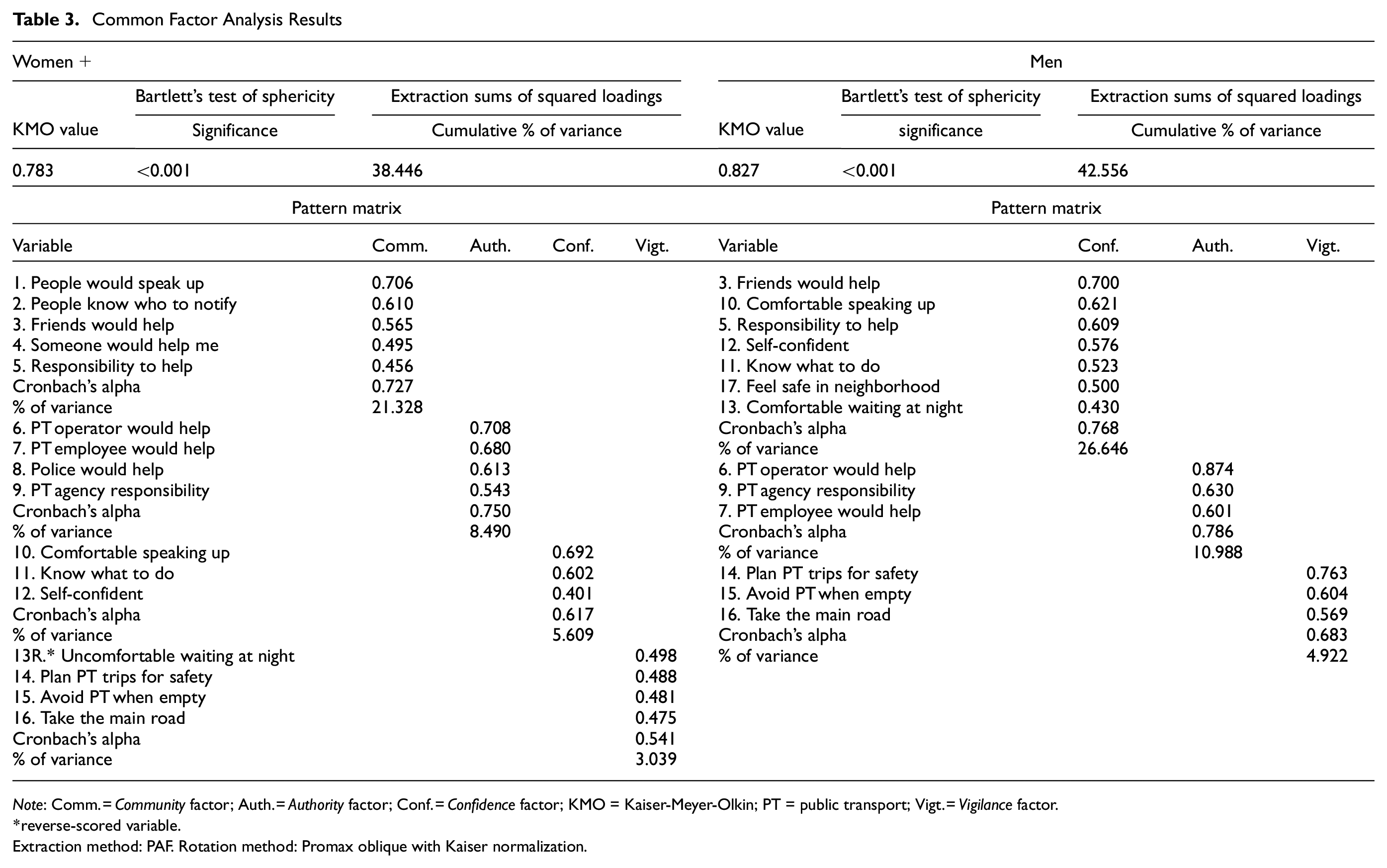
Exploration of data frequencies confirmed gender as consistently the most decisive influence on responses compared with other identities. As such, we performed common factor analysis PAF for women+ to identify latent variables that explain the covariation observed among the Likert scale responses. A four-factor PAF model most concisely and clearly represented the survey data. The model produced a KMO value of 0.783 and Bartlett’s test value of less than 0.001. Together, the four factors accounted for approximately 38% of the variance in the survey data for women+. Table 3 provides the factor loadings for the four-factor solution, showing that all factor loadings were at least greater than 0.40 and indicating convergent validity. Correlations between factors were equal to or below 0.60. A slight negative correlation (−.094) emerged between the Community and Vigilance factors. This negative correlation suggests that participants who strongly agreed with Community factor variables were slightly less likely to strongly agree on Vigilance factor variables and vice versa. The first two factors, Community and Authority, had a Cronbach’s alpha above 0.70. The third and fourth factors, Confidence and Vigilance, had a Cronbach’s alpha of 0.617 and 0.541, respectively, suggesting that the factors had moderate internal consistency. The Confidence and Vigilance factors were retained because the Cronbach’s alphas were still near 0.60 and for the theoretical significance of the factors’ consistency with previous research on behavior change by women to feel more secure during their public transport journey ( 2 , 9 , 10 ).
Common Factor Analysis Results
Note: Comm. = Community factor; Auth. = Authority factor; Conf. = Confidence factor; KMO = Kaiser-Meyer-Olkin; PT = public transport; Vigt. = Vigilance factor.
reverse-scored variable.
Extraction method: PAF. Rotation method: Promax oblique with Kaiser normalization.
Factor 1, Community, comprised the most variables (n = 5) and provided the highest percentage (25%) of variance that can be explained by one of the four factors. The factor converged around a sense of expectation for others to help in a harassment situation, including the expectation that someone would help them—the survey participant—specifically. Variable 1 (“People would speak up”) had the highest loading (0.706) on the Community factor, indicating an expectation that most riders would speak up for someone else being harassed. Variable 5 (“Responsibility to help”) had the lowest loading (0.456) on the Community factor.
Factor 2, Authority, included all variables (n = 4) hypothesized around expectations for authority to help a harassment situation. This includes the expectation that operators, agency employees, and police would help and that it is the agency’s responsibility to help. Variable 6 (“PT operator would help”) provided the highest loading (0.708) on the Authority factor. Variable 9 (“PT agency responsibility”) had the lowest loading (0.543) on the Authority factor.
Factor 3, Confidence, included variables (n = 3) hypothesized for self-efficacy in a harassment situation through confidence in speaking up, knowing what to do, and keeping secure. Variable 10 (“Comfort speaking up”) had the highest loading (0.692) on the Confidence factor. Variable 12 (“Self-confident”) had the lowest loading (0.401) on the Confidence factor.
The final factor that loaded for women+, Vigilance, converged around variables (n = 4) describing behaviors where a rider pre-plans their journey around public transport routes and times of day to help them remain secure. The reversed-score variable 13R (“Uncomfortable waiting at night”) had the highest loading (0.498) on the Vigilance factor and is based on the reverse-scored statement, “When it is dark outside (e.g., nighttime), I am comfortable waiting at bus stops/train stations that are empty or nearly empty of other passengers.” When the original Variable 13 (“Comfort waiting at night”) did not load on the women+ model, we reverse-scored the variable so that high agreement with the statement indicated discomfort waiting when it is dark outside at empty bus stops/train stations. When reverse-scored, the variable loaded for the women+ model. Variable 16 (“Take the main road”) had the lowest loading (0.475) on the Vigilance factor.
Gender Comparison of Factors
To compare with the factors that coalesced for women+ and gain insight into the role men may have as bystanders supporting women’s security, we also performed common factor analysis PAF for men. A three-factor PAF model most concisely and clearly represented survey data for men. The model produced a KMO value of 0.827 and Bartlett’s test value of less than 0.001, indicating that the correlation matrix was appropriate for factor analysis. Table 3 provides the factor loadings for the three-factor solution. All factor loadings were at least above 0.40, thus achieving convergent validity. Additionally, all correlations between factors are less than 0.60, showing discriminant validity. The first two factors, Confidence and Authority, had a Cronbach’s alpha above 0.70. The third factor, Vigilance, had a Cronbach’s alpha of 0.683. We retained this factor because the Cronbach’s alpha was still above 0.60 and significant theoretically with regard to riders’ travel behavior ( 2 , 9 , 10 ).
As shown in Table 3, key differences are evident between the models for women+ and men. These differences have implications for anti-harassment programs. While a Confidence factor did coalesce for women+, the factor was weaker with a Cronbach’s alpha of 0.617, accounted for only 6% of variance, and comprised only three variables. In contrast, the Confidence factor was the strongest factor for men with a Cronbach’s alpha of 0.768, percent variance of 27%, and comprising of seven variables. Variable 12 (“Self-confident”) had the lowest loading (0.401) on the Confidence factor for women+ compared with a greater loading (0.576) for men. In contrast, the main factor for women+, Community, had a Cronbach’s alpha (0.727) and percent of variance (21%) more similar to that of the men’s Confidence factor. The Community variable for women+ represents a sense of expectation for others to help in a harassment situation and included Variable 4 (“Someone would help me”), a variable that was only statistically significant for the women+ model. The model for men did not produce a Community factor.
Variable 8 (“Police would help”) loaded on the Authority factor for the women+ model but did not load for men. The remainder of the Authority factor structure was similar between both models. Variable 6 (“PT operator would help”) was the strongest for both women+ and men Authority factors, indicating an expectation for an operator (e.g., bus driver, train operator) to help when a rider on their vehicle is experiencing harassment. The Vigilance factor structure was also similar between both models except for Variable 13 (“Comfortable waiting at night”), which was the most divisive variable across all factors. Variable 13 (“Comfortable waiting at night”) loaded for men onto the Confidence factor; however, the variable did not load for women+ until we reverse-scored responses, resulting in agreement with the statement indicating discomfort waiting in the dark at deserted stations. This reverse-scored variable 13R (“Uncomfortable waiting at night”) loaded for women+ onto the Vigilance factor and did not load to any of the factors for men.
Discussion
Our motivation for the present study was to delve deeper into the efficacy of public transport agencies fostering an active bystander community to enhance proactive (e.g., culture shift) and reactive (e.g., reporting, intervening) measures against harassment. The present study findings align with results from previous work and contribute to the limited number of research studies on expectations from bystanders, public transport authorities, and law enforcement in a harassment incident. Findings touch on the impacts to perception of security, influences of intersectional identities, and implications for active bystander strategies. Study outcomes have implications for programs meant to increase women’s real and perceived security and, by extension, all public transport riders. The remainder of this section discusses the present study findings in more depth. The findings add justification for public transport agencies to consider active bystander strategies as one piece of a multi-layered strategy for addressing harassment on their systems.
Perception of Security
The present study focuses on women’s perception of security because previous studies firmly establish women as more likely than men to experience harassment and show that the perception of security risk in the absence of an actual security incident can be enough to change behavior ( 10 , 37 ). Women reported feeling uncomfortable waiting at night at stations with few or no other people, which is consistent with previous research findings that reported women feel less secure in lower lighting ( 10 , 38 ). The present study contributes to existing literature by providing evidence of women expecting people from their community and people in positions of authority to help in harassment incidents while using public transport. While self-efficacy indicators were present for women, the Confidence factor was weaker and suggests that women more strongly rely on support from others for their perception of safety. In contrast, Community was not a factor for men while Confidence was the strongest factor for men. These findings provide evidence that active bystander strategies benefit women by improving their perception of security on public transport, complementing the existing evidence that such programs can reduce incidents of harassment ( 44 ).
When study results were compared across intersecting identities, gender consistently provided the most decisive influence on participant responses across all four hypothesized themes (self-efficacy, community, authority, environment). This finding aligns with previous research that found gender more likely to influence a person’s sense of security than other identities such as ethnicity and LGBTQ+ ( 8 ). The study did find that ethnicity may have a slightly stronger influence on the topic of expectation that others would help in harassment situations: regardless of gender, generally more participants from traditionally communal cultures (Māori/Pacifica, Asian) reported agreeing that people would help than participants from traditionally individualist cultures (New Zealand European, Australian, and other ethnicities).
Surprisingly, the study found that women with intersectional identities across certain ethnicities and Rainbow (takatāpui/LGBTQ+) felt more secure than other women despite that harassment experienced by these groups can be more frequent and severe ( 1 , 3 , 33 , 36 ). Specifically, women who also identified as Rainbow (takatāpui/LGBTQ+) or Māori tended to report higher self-efficacy through stronger agreement on variables such as knowing what to do if they witness harassment (Variable 11) and report higher expectations for police to help (Variable 8). One potential explanation for this could be that, because women with these intersectional identities are more used to seeing and experiencing harassment, they are more practiced with acting confident to blend in with dominant identities, knowing what to do when harassment occurs, and relying on police to support them. Larger sample sizes of women with intersectional identities are needed to further analyze and confirm these differences.
Application for Active Bystander Strategies
Building an active bystander community requires cultural competence and considering potential unintended consequences. Jane Jacobs introduced the term “eyes on the street” to describe how a neighborhood can support a more secure environment by people looking out for each other ( 55 ). Active bystanders are a form of “eyes on the street.” However, a just application of “eyes on the street” distinguishes between watching your neighbors suspiciously and seeing your neighbors in a way that builds community. The former can feed off bias (unconscious or not) and lead people to perceive threats based on a person’s appearance and stereotypes, disproportionately endangering people marginalized by their society, such as low-income people and people of color ( 56 ). When “eyes on the street” is applied to build community, the resulting ownership of space can discourage crime while engendering trust and willingness to assist ( 57 ). The same holds true within the public transport environment.
For example, the present study found that many women rely on people in positions of authority (vehicle operators and other agency employees, law enforcement officers) to help in harassment situations and that people in positions of authority have a responsibility to do so. This finding complements existing literature that found women feel safer with the presence of public transport staff and security ( 15 , 58 ). However, in a study with transgender public transport riders in the U.S., participants expressed that additional police on public transport would not increase their feelings of security ( 31 ). Instead, in places where police may disproportionately target and harm marginalized groups such as transgender people and men of color, a just application of “eyes on the street” might put response procedures in place that leverage crisis intervention teams and community support organizations.
Clear direction and coordination are also needed to effectively mobilize people in positions of authority against harassment. For example, while their primary responsibility is to operate a bus safely, a bus operator can act as a critical source of support for a rider experiencing harassment occurring on their vehicle. To do so, the operator needs to know what actions are within their power to do safely, such as when (if at all) and where (e.g., at an established stop) it is appropriate to stop the bus. It is also essential for people in positions of authority to recognize gender-based violence as a problem on public transport and understand how to receive and respond to reports of harassment without shaming, gaslighting, or re-traumatizing the victim ( 42 ). Public transport agency employees and law enforcement officers cannot be everywhere on the system; an active bystander community can provide another layer of security for public transport.
The present study adds insights for designing effective bystander programs that align with and add to existing research. Our finding that many women rely on fellow riders for support in harassment situations suggests that it is worth investing in active bystander strategies. Active bystander strategies can be proactive (promoting social change) and reactive (intervention and reporting) ( 18 ). Most options for reactive bystander actions do not involve confronting the harasser (e.g., documenting the harassment, offering support to the victim, providing a distraction, and getting help from someone else). Our study results present a range of riders’ expectations for others and themselves. Active bystander strategies can be designed to provide options that align with people’s varying levels of confidence and ability. For example, our finding that many men feel confident they themselves and their friends would help in harassment situations suggests there is space for calling men in as bystanders who are informed and willing to act. Developing active bystanders helps build a prosocial ridership community rooted in upholding behavior that rejects gender-based and sexual violence and its enablers of sexism, racism, homophobia, ableism, and so forth ( 43 ).
It is important to note that not all active bystander strategies are the same. Previous studies found the importance of people with marginalized identities, such as the transgender community, seeing themselves reflected in communication materials ( 59 ). It follows that, for women and transgender people to feel more secure from active bystander strategies, communication materials must reflect their identities and the diversity of ridership. This is especially true for riders with intersectional identities. Riders need to know that they are included in the protections of anti-harassment programs and that there is no “fine print” listing their identities as an exception to people who can expect other riders, employees, and law enforcement to support them in a harassment incident. Otherwise, the improvements to perceptions of security are likely to be limited to people who more closely fit societal norms and not be realized by people most marginalized in a society.
Limitations and Future Research
A limitation of this study is the minimal representation of transgender people, including gender expansive people (e.g., non-binary, third gender). We attempted to collect a representative sample of people who are transgender. However, the survey panel company’s participant pool was only grouped by women and men, so the survey could not be specifically distributed to transgender participants. More progress is needed around gender-diverse data collection by researchers and support services such as survey panels. Similarly, most studies to date have used a narrow definition of women, and data beyond the binary are limited. Data disaggregated for cisgender and transgender women are also limited. Additional research is needed that is inclusive of transgender people. Further data are also required to better describe the experiences and needs of people with intersectional identities (e.g., low-income non-binary people, transgender women of color).
The present study also collected data in the largest city of a high-income country ( 60 ). Study findings must be evaluated for applicability to other contexts, including level of urbanization and development. Women, transgender people, and other marginalized identities are subject to elevated rates of harassment around the world regardless of their place of residence’s level of urbanization and development; however, the threshold of severity at which a society treats harassment as a part of everyday life can vary across social norms and contexts. Further research in different cultural contexts is needed to expand the applicability of findings. Culture not only shapes societal problems but also shapes the effectiveness of solutions and the willingness to act of people in a position to help.
Conclusion
This study contributes to an existing knowledge gap in understanding to what extent women using public transport rely on others for help during a harassment incident, how the presence of others affects women’s perception of personal security and self-efficacy, and the implications for developing active bystander strategies. We created an online survey around four themes (self-efficacy, community, authority, and environment) and distributed the survey to public transport riders in Auckland, New Zealand. Responses from 524 participants were usable for statistical analysis. Results from this study provide evidence that:
Many women perceive public transport as more secure when others are present as potential active bystanders. This finding suggests that active bystander strategies may positively affect women’s perception of security on public transport because many women rely on other riders and on authority (e.g., public transport personnel, law enforcement) to help during a harassment incident.
Active bystander strategies can provide options to riders that align with people’s varying levels of confidence and ability. This includes harnessing the self-confidence of many men and a subset of women to help develop a community of riders who know their options for acting in a harassment situation on public transport.
A subset of women, including some with intersectional identities such as Rainbow (takatāpui/LGBTQ+), are confident speaking up and knowing what to do in a harassment incident. Additional data are needed to draw conclusions.
Public transport agencies can be more responsive to the security needs of women riders by investing in active bystander strategies focused on educating and empowering riders and employees to act in harassment situations. Active bystanders help build a supportive ridership community that rejects gender-based violence on public transport.
These findings offer practitioners additional justification and insight for developing more effective measures against harassment that occurs on public transport. Findings suggest that the presence of active bystanders can improve women’s perception of security on public transport, adding justification for practitioners to implement active bystander strategies. Active bystander strategies should be widely communicated and visibly inclusive of marginalized identities such as the transgender community so that riders know they are included in the protections of the anti-harassment program. Through such efforts, public transport can function as a critical setting for building a prosocial culture that rejects, prevents, and effectively responds to harassment. Building an active bystander community provides one piece of a multi-layered strategy for addressing harassment and improving the security of public transport riders. The roots and enablers of gender-based violence are not limited to a single source or dimension; nor can our solutions be one-dimensional.
Footnotes
Author Contributions
The authors confirm contribution to the paper as follows: study conception and design: Tilleman, and Chowdhury; data collection: Tilleman; analysis and interpretation of results: Tilleman; draft manuscript preparation: Tilleman and Chowdhury. All authors reviewed the results and approved the final version of the manuscript.
Declaration of Conflicting Interests
The author(s) declared no potential conflicts of interest with respect to the research, authorship, and/or publication of this article.
Funding
The author(s) received no financial support for the research, authorship, and/or publication of this article.
