




Abstract
Natural sands improve the sustainability of asphalt mixtures by enhancing workability and lowering the required asphalt binder and manufactured fine aggregates. One of the primary concerns with incorporating natural sands in a mixture is the potential for clay contamination. Harmful active clays swell when in contact with moisture and diminish the bonding between the aggregate and asphalt binder. This paper investigates the impact of clay contamination on the performance of asphalt mixtures with respect to rutting and moisture susceptibility. Twenty-one combinations of passing no. 200 sieve (minus 0.075 mm) material with various contamination levels were prepared using inactive (i.e., calcium carbonate and dolomite) and active (i.e., bentonite and natural) clays. The methylene blue value (MBV) was used to classify the level of chemical activity of those combinations. Each of the 21 permutations was added to a reference Superpave mixture to produce asphalt mixture specimens. The rutting and moisture susceptibility of each mix were then evaluated by subjecting them to Hamburg wheel tracking tests. X-ray diffraction (XRD) was also used to characterize the mineral composition of the inactive and active clay materials used for this study. The experimental results showed that mixtures having a MBV above 6 mg/g are most likely to suffer rutting and moisture damage. Moreover, XRD testing corroborated that the active clays used in this study contained detrimental minerals to asphalt mixture performance, such as sulfuric acid, quartz low, and microline.
Fine aggregates are primarily used to fill the voids between coarse particles, increase the mix density, and provide support to transfer load among the larger particles ( 1 , 2 ). These properties of fine materials play an essential role in the overall strength and workability of the mix ( 3 ). Manufactured or crushed sands and natural or field sands are the main fine aggregates used in asphalt mixtures ( 4 ). Manufactured sand is made by crushing quarry rock and sifting it to simulate the desired properties ( 3 ). Natural sand, conversely, is either mined from natural deposits or obtained by dredging rivers.
Current specifications limit the amount of natural sand or other uncrushed fine aggregates in the blend, as natural sand tends to have more round particles and impurities. Existing practices mainly help to ensure a good interlock between the aggregate but typically come short of mitigating clay contamination, one of the most critical characteristics of natural sands that could significantly affect the asphalt mixture performance ( 5 ). Natural sands typically contain extensive sedimentary geomaterials or clay particles, which could harm pavement performance ( 6 ).
Clay particles comprise materials passing a 0.075 mm (no. 200) sieve that coat the surface of larger coarse and fine aggregate particles ( 7 ). Depending on their source, clay particles could negatively affect the performance of asphalt mixtures. Harmful clays tend to swell when exposed to water ( 5 , 8 ). Expansive clays attract slightly polarized water molecules because of their minor, negatively charged plate structure. The clay interlayers absorb water until the bond between the layers of the clay particle ruptures, causing swelling ( 5 , 9 ). The clay expansion can trigger the loss of bonds between aggregates and binders ( 10 ).
Clay contamination in asphalt mixtures is an aspect that could lead to asphalt mixture premature failure in rutting or stripping ( 5 , 6 ). Thus, it is necessary to understand the level of contamination and the reactiveness of clay particles in natural sands. The plasticity index (per ASTM D4318) or linear shrinkage (per ASTM D4943) are frequently used to identify and classify swelling soils ( 11 ). The sand equivalent (SE) test (per ASTM D2419) has also been used to estimate the level of clay contamination of fine aggregates. The main issue with these tests is that they cannot differentiate in a refined manner between particles that resemble clay and active clay minerals. Fine dust or clay-like materials in fine aggregate are quantified, but no information is provided about their chemical activity level.
The methylene blue (MB) test (per AASHTO T330) is a rapid and simple test that can assist in determining clay activity or contamination ( 12 , 13 ). Numerous researchers ( 8 , 12 , 14 , 15 ) concur that the MB test can accurately detect the presence of active clay particles in aggregate fines. The French-created MB test was initially employed to measure the clay content of granular materials and assess their suitability for use in the production of concrete. The test is based on the idea that a clay mineral’s surface area and a negative charge can be recognized by ion exchange between clay ions and MB cations. As a result, negatively charged clay surfaces can absorb the MB solution ( 16 ).
The MB test aims to identify the presence of harmful clays by determining the amount of MB solution in mg absorbed per g of clay (mg/g), referred to as the methylene blue value (MBV). A low MBV indicates that the clay concentration and properties may not significantly affect the performance of the asphalt mixture ( 14 ). AASHTO T330 suggests that the expected performance of the asphalt mixture should be excellent if the MBV of the minus 0.075 mm material is below 6 mg/g; a marginally acceptable performance is expected when the MBV is between 7 and 12 mg/g; problems or possible failures shall be anticipated if the MBV ranges from 13 to 19 mg/g; and the mixture should be considered extremely moisture susceptible when the MBV is above 20 mg/g.
Asphalt mixture testing can also help to identify clay contamination. The Hamburg wheel tracking test (HWTT), as per AASHTO T324, is commonly used for evaluating the rutting potential and moisture susceptibility of asphalt mixtures. Two typical characteristics obtained from the test are the rut depth at a specific number of load cycles and the stripping inflection point (SIP), as discussed below.
The X-ray diffraction (XRD) test is emerging as a tool to identify and determine the mineral composition of clays ( 5 ). This test method is quick and convenient but requires sophisticated equipment that is sometimes not readily available. Nevertheless, past studies have detected that certain minerals found in natural clays could significantly affect asphalt mixture performance.
The main objective of this paper is to study how clay contamination can affect the performance of asphalt mixtures. This study also aims to corroborate the tolerance limits of clay activity, as measured by MB testing, to ensure that natural sand is suitable for use in asphalt mixtures. Various sources of inactive and active clay were combined at different percentages and incorporated into compacted asphalt mixture specimens. The trends associated with the change in the MB results supplemented with rutting performance indicators were used to validate limits on the activity of clays in Superpave mixtures. The MBV was demonstrated to be a pragmatic parameter for characterizing the minus 0.075 mm material; however, it provides little information about the clay mineral composition. Thus, consideration was given to XRD testing of the fine particles to identify clay contamination.
Methods
Clay Combinations
Table 1 shows how the clay combinations were explored for this study. As signified by an “X” in Table 1, inactive clays were combined with active clays to control and simulate different levels of clay contamination. Calcium carbonate (CaCO3) and dolomite dust were used as inactive clays, and commercially available bentonite and natural clays obtained from natural sands were employed as active clays. CaCO3 fines exhibit little to no chemical activity and are regarded as a very stable material. Compared to active clays, CaCO3 fines have shown considerable potential for improving the rutting performance and fatigue life of asphalt mixtures and lowering their sensitivity to moisture damage ( 17 ). Even though it is proven that CaCO3 has hardly any reactivity in a mixture, an alternative inactive filler was used to analyze the impact of clay with a different inert fine material. Dolomite clay was sourced from a dolomite fine screening material by washing out the minus 0.075 mm particles according to ASTM C117. The MBV was 1.6 mg/g for CaCO3 and 1.9 mg/g for dolomite dust. These values indicate the resemblance of both minus 0.075 mm materials, which are expected to have similar outcomes when separately combined with bentonite clays.
Clay Combinations used in this Study
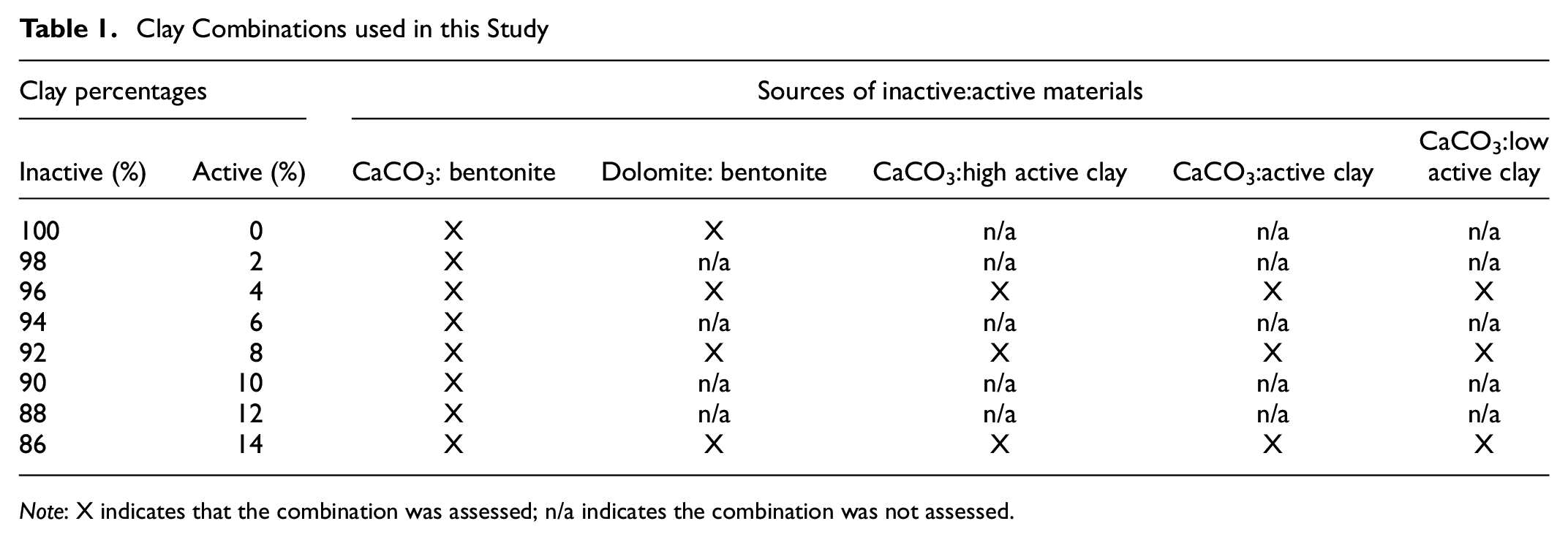
Note: X indicates that the combination was assessed; n/a indicates the combination was not assessed.
Bentonite is a very active swelling clay with a MBV of 205 mg/g. Bentonite belongs to the nano clay family and can absorb several times its dry mass in water ( 18 ). A commercially available sodium bentonite was used for this study. The material was first dry sieved according to AASHTO T27 to separate fines passing the 0.075 mm (no. 200) sieve. Apart from bentonite, three natural clays were combined with CaCO3. Three natural sand sources from different Texas locations and varying levels of clay contamination were selected: high active, active, and low active clays. After the natural sands were soaked in water for 24 h to loosen the clay from the sand particles, the sands were washed using a mechanical agitator to separate material passing the 0.075 mm sieve, according to ASTM C117. The water and fines that passed the 0.075 mm sieve were captured and dried to get natural clay fines. The MBVs for high active clay, active clay, and low active clay were 37.8, 17.6, and 6.0 mg/g, respectively.
The inactive and active clay percentages were selected to test clay contamination exhibiting MBVs between 1.6 and 20.0 mg/g. The percentages represent the ratios applied to manufacture the clay combinations. For example, to prepare 10 g of 98% CaCO3:2% bentonite clay for MB testing, 9.8 g of CaCO3 and 0.2 g of bentonite were mixed. Because of material availability, more permutations were evaluated for the CaCO3:bentonite clay combination. As previously mentioned, for dolomite and natural clays, dolomite fine screening and natural sands were processed to obtain minus 0.075 mm fines corresponding to these sources, limiting the available material.
Test Methods
Duplicate specimens were subjected to the MB test, followed by one set of HWTTs for each clay combination. The testing protocol was designed to explore the correlation between MB and rutting performance in the presence of different clay levels (i.e., chemical activity). XRD testing was then conducted on CaCO3, dolomite, bentonite, high active clay, active clay, and low active clay to understand the impacts of their mineral compositions on asphalt mixture performance results.
MB tests were carried out following AASHTO T330, where 10 g of dry fines for each clay combination were mixed with 30 ml of distilled water. The MB solution was poured into a beaker containing the clay at 0.5 ml increments. The prescribed MB solution (0.5 ml) was poured into the beaker using a burette, and the contents were mixed for 1 min. A drop of slurry was placed on filter paper. This process was repeated until a halo around the drop of the slurry appeared. After that, the mix was agitated for another 5 min, and the drop was again placed on the filter paper. If the halo was still observed, the test was stopped, and the MBV was estimated using Equation 1:

where C is the concentration of MB in the solution (mg/mL), V is the volume of MB solution required for titration (mL), and W is the weight of dry material (g).
HWTTs were conducted as per AASHTO T324. A 705 ± 22 N (158 ± 5 lb) load was applied through a steel wheel across the specimen at 52 passes/min. A water bath with a temperature of 50 ± 1°C (122 ± 2ºF) was used to condition the specimens and to evaluate the specimen for moisture susceptibility. The specimens were nominally 150 mm (6 in.) in diameter and 62 mm (2.5 in.) in height. The main output parameters from the HWTT were the number of passes, rut depth associated with the number of passes, and SIP. Wu et al. ( 19 ) recommended the rutting resistance index (RRI) for evaluating the HWTT results using Equation 2:

where N is the number of cycles, which is fixed as per the binder grade, and RD is the rut depth (in.) at N. The test is considered complete when 20,000 cycles finish or a rut depth of 12.5 mm is obtained, whichever comes first. If the test reaches 12.5 mm rut depth, then N is the number of cycles completed to reach this rut depth. The RRI is normalized with respect to the minimum RRI for comparing mixes with different performance grade (PG) binders. The normalized RRI (NRRI) is calculated using Equation 3. The NRRI of unity or greater means an acceptable mixture with respect to rutting:

The SIP is calculated based on the creep slope and stripping slope of the curve, which is generated when the rut depth is plotted against the number of passes, as shown in Figure 1 ( 10 ). This number was obtained directly from the HWTT software.
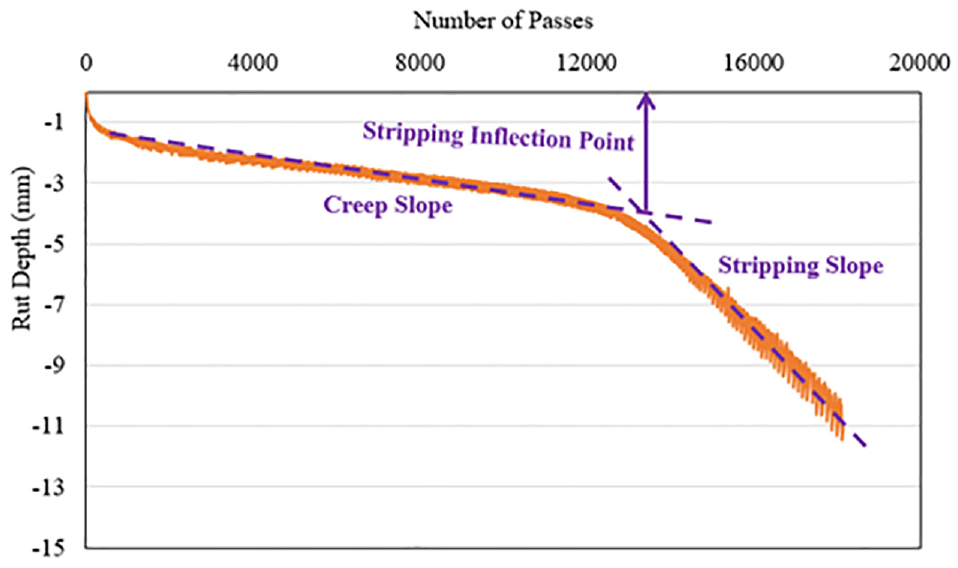
Determination of the stripping inflection point.
The XRD test is used in material science to estimate the atomic and molecular structure of a substance. Identifying materials based on their diffraction pattern is one of the main applications of XRD analysis ( 20 ). The XRD device has an X-ray tube and detector. From the tube, the X-ray beam is inserted into the sample. The machine’s detector revolves around the sample to count the number of X-rays seen at each angle 2θ. The sample also rotates at the same time to keep the X-ray beam appropriately focused. The tests take a few minutes to finish. After placing the sample in a mold, the mold was positioned in the machine for XRD evaluation. Every test yielded a diffraction pattern, which is the simple sum of each phase (or mineral composition). A phase is a particular chemistry and atomic configuration.
Mixture Design
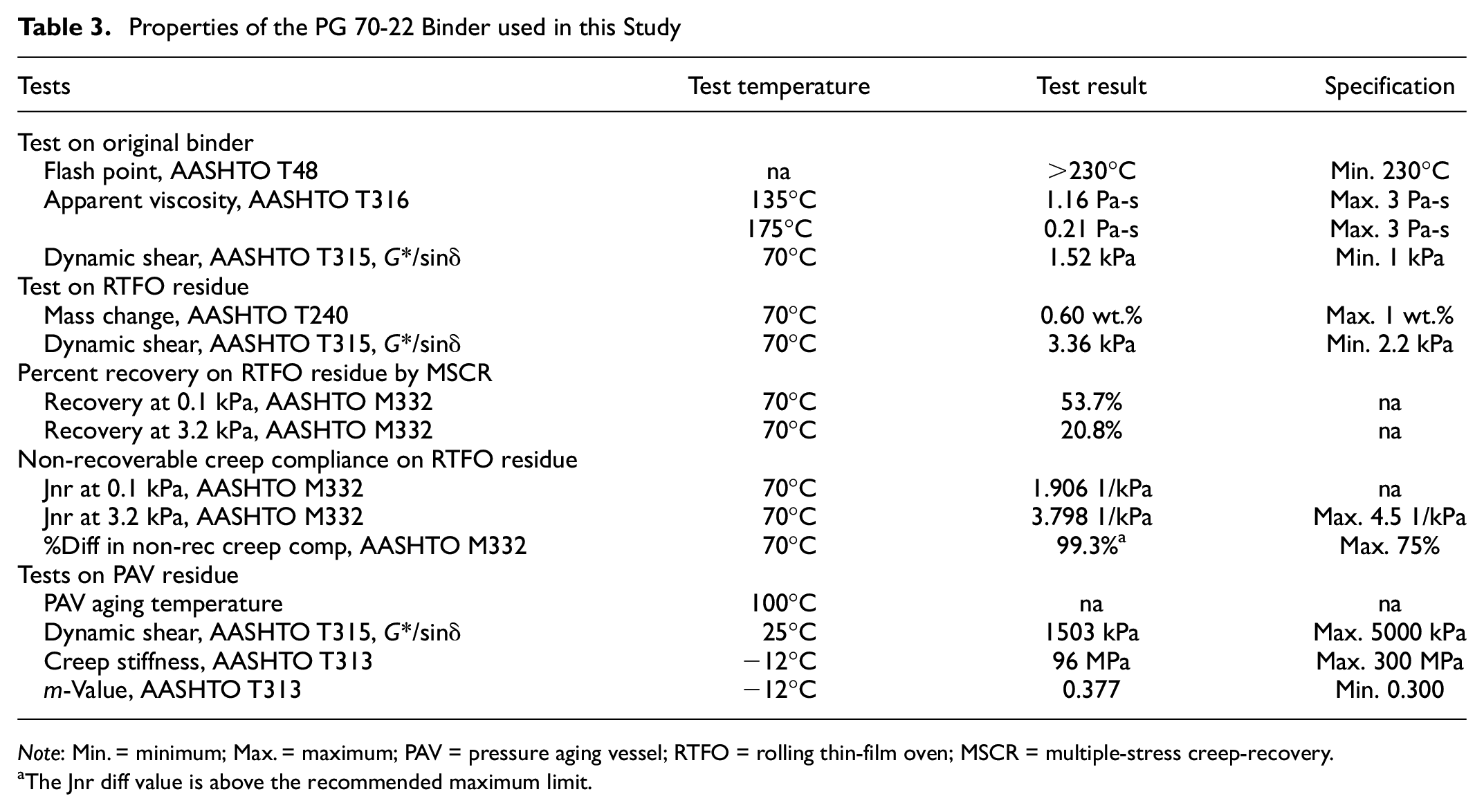
Figure 2 shows the combined aggregate gradation for the 12.5-mm nominal maximum aggregate size Superpave mixtures used in this study. The figure also shows the lower and upper gradation limits set by the Texas Department of Transportation (TxDOT) for such a mixture. As shown in Table 2, the aggregate blend consisted of igneous coarse aggregate with an average size from 9.5 mm (3/8 in.) to 19.0 mm (3/4 in.), dolomite intermediate aggregate with an average size from 4.75 mm (no. 4) to 9.5 mm (3/8 in.), dolomite fine screenings, silica sand, and clay combinations, which represent the minus 0.075 mm material for all mixtures. To prepare the asphalt mixture specimens, the coarse, intermediate, and fine aggregate materials were washed following ASTM C117, which permitted the removal of all materials passing the 0.075 mm sieve. This process allowed for the inclusion of clay combinations at a specific percentage of 5% by total aggregate blend mass and neglected the presence of other minus 0.075 mm materials in the mixtures. All mixtures evaluated were prepared using a PG 70-22 binder and a constant optimum binder content of 4.7%. Table 3 shows the rheological properties of the PG 70-22 binder used for this study.
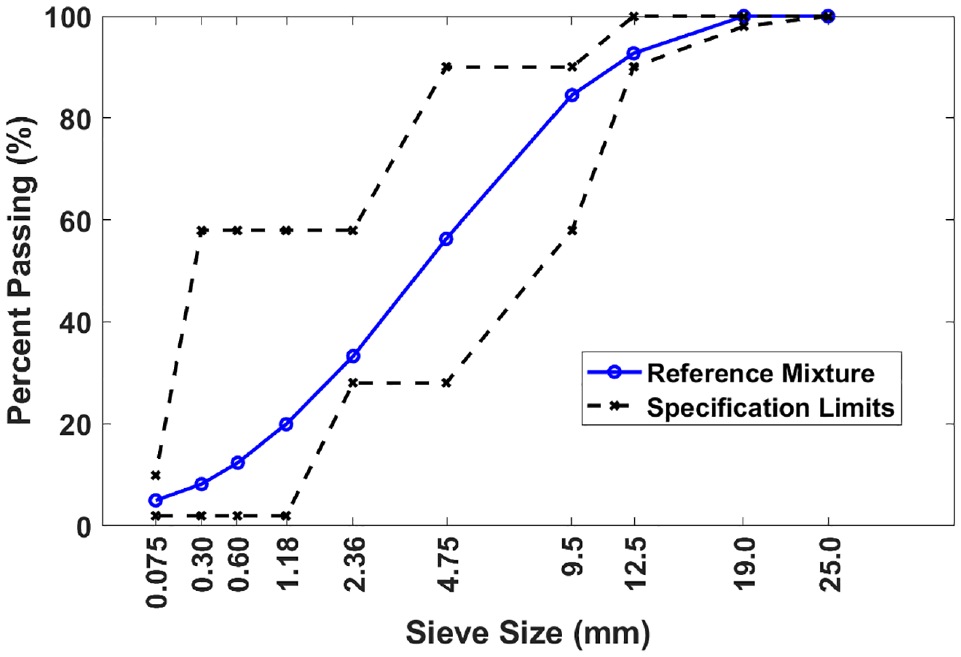
Aggregate gradation used in this study.
Mixture Design
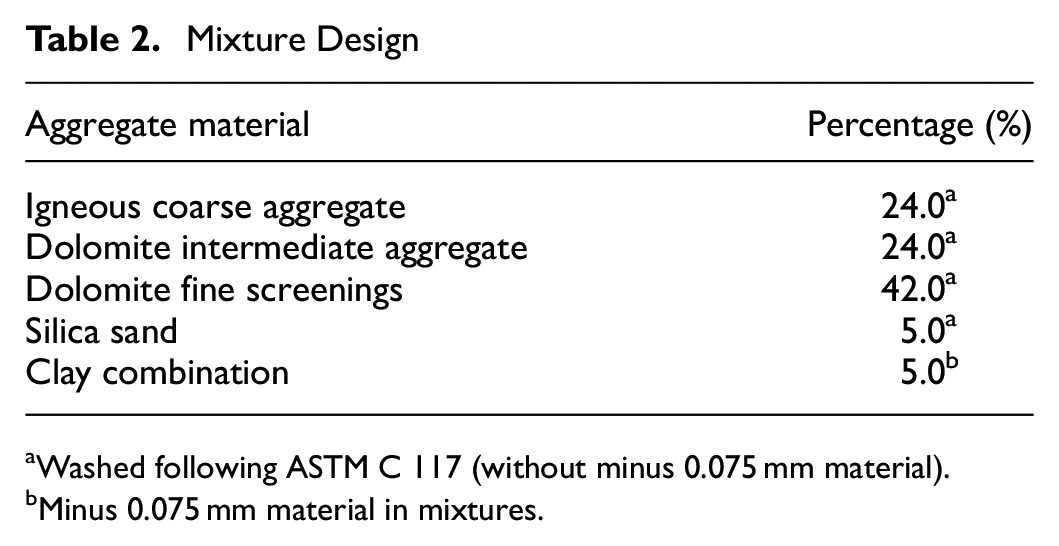
Washed following ASTM C 117 (without minus 0.075 mm material).
Minus 0.075 mm material in mixtures.
Properties of the PG 70-22 Binder used in this Study
Note: Min. = minimum; Max. = maximum; PAV = pressure aging vessel; RTFO = rolling thin-film oven; MSCR = multiple-stress creep-recovery.
The Jnr diff value is above the recommended maximum limit.
Results and Discussion
Table 4 shows the MBVs for the 21 different inactive and active clay combinations explored for this study. The expected performance for each variation per AASHTO T330 is also reported. Combining inactive clays with active clays demonstrated a wide range of MBVs. Twelve combinations yielded MBVs of 6 mg/g or less, which means they are likely not to affect the performance of the asphalt mixture negatively. Three of the 21 are marginally acceptable; four might have problems/possible failures, and two failed the AASHTO-recommended criterion. The 100% CaCO3 and the 96% CaCO3 with 4% low active clay combinations displayed the lowest MBV (i.e., 1.6 mg/g). In contrast, 86% dolomite with 14% bentonite had the highest value (i.e., 26.7 mg/g).
Methylene Blue Test Results with Expected Performance as per AASHTO T330
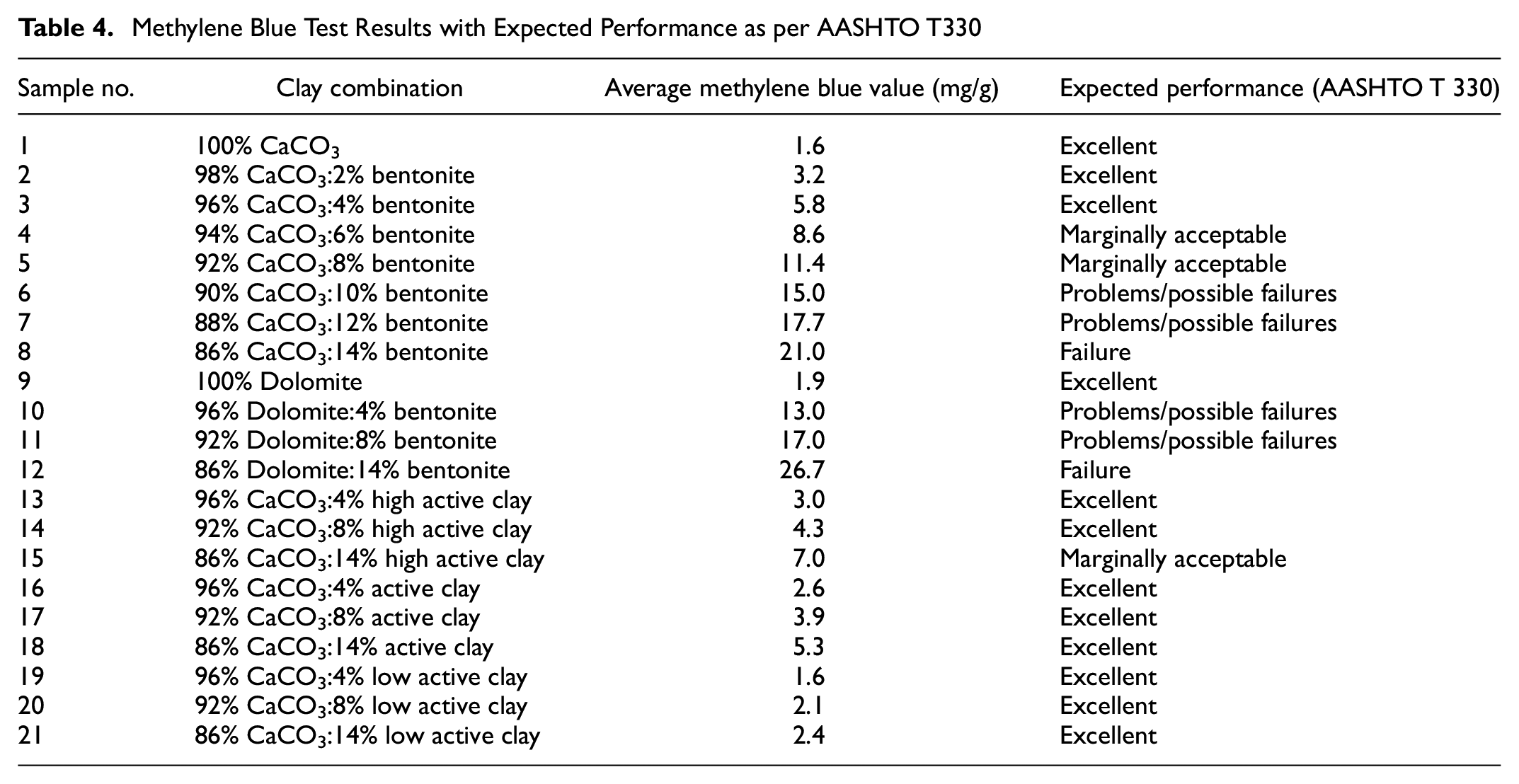
Figure 3 shows the variations in MBVs with the percentage of different active clays. For each of the five combinations of inactive and active fines, the MBV increases linearly with the increase in the active clay component. The MBVs of the combinations with bentonite are most sensitive to the active clay percentage, as evident from the slopes of the lines in Figure 3. Based on the AASHTO criterion, the mixtures containing 4% or less bentonite should perform well. When the inactive clay component was changed from CaCO3 to dolomite, the MBV became less sensitive to the percentage of bentonite. This outcome indicates that the combination type and the clay contamination proportion, in this case bentonite, control the MBV. From Table 4, CaCO3 with natural clay combinations did not have an extended range of MB values like bentonite clay. Bentonite has a larger surface area, negative charge, and ion exchange capacity than natural clays. This is why the absorption of chloride ions from MB solution is much more intense when a higher percentage of clay is present, resulting in a high MBV.
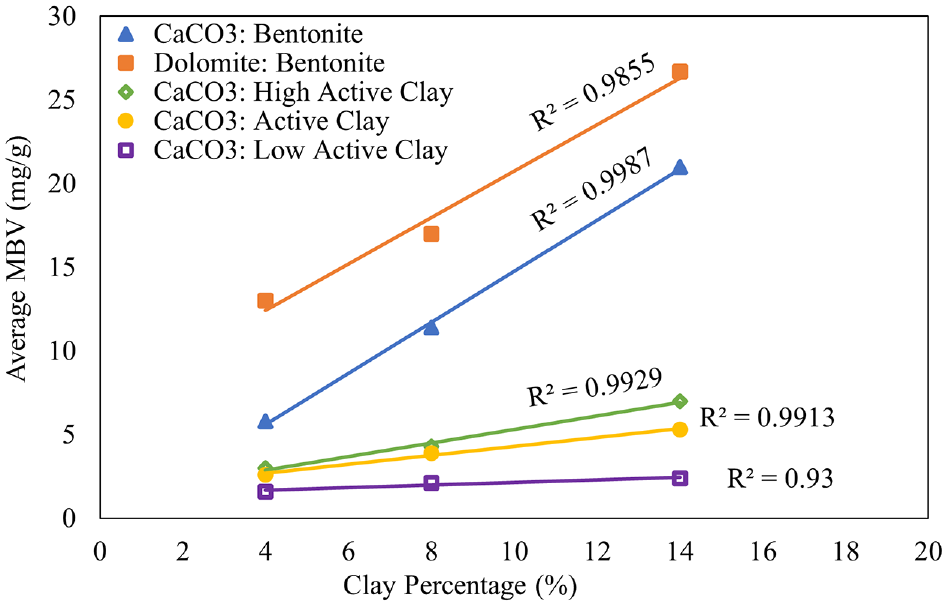
Relationship between active clay percentage and methylene blue value (MBV).
The CaCO3 with natural clay combinations demonstrated MBVs between 1.6 and 7.0 mg/g. The natural clays were selected based on their MBVs. As mentioned, the MBVs for pure high active clay, active clay, and low active clay were 37.8, 17.6, and 6.0 mg/g, respectively. Based on past research ( 21 – 23 ), these MBVs represent high, intermediate, and low clay activity for natural sand sources used for paving purposes. However, despite exhibiting different chemical activity levels, small variations in their MBVs were observed because of the low percentages of natural clay applied in the combinations. Most natural clay combinations yield MBVs of 6 mg/g or less, except for 86% CaCO3 with 14% high active clay.
Hamburg Wheel Tracking Test Results
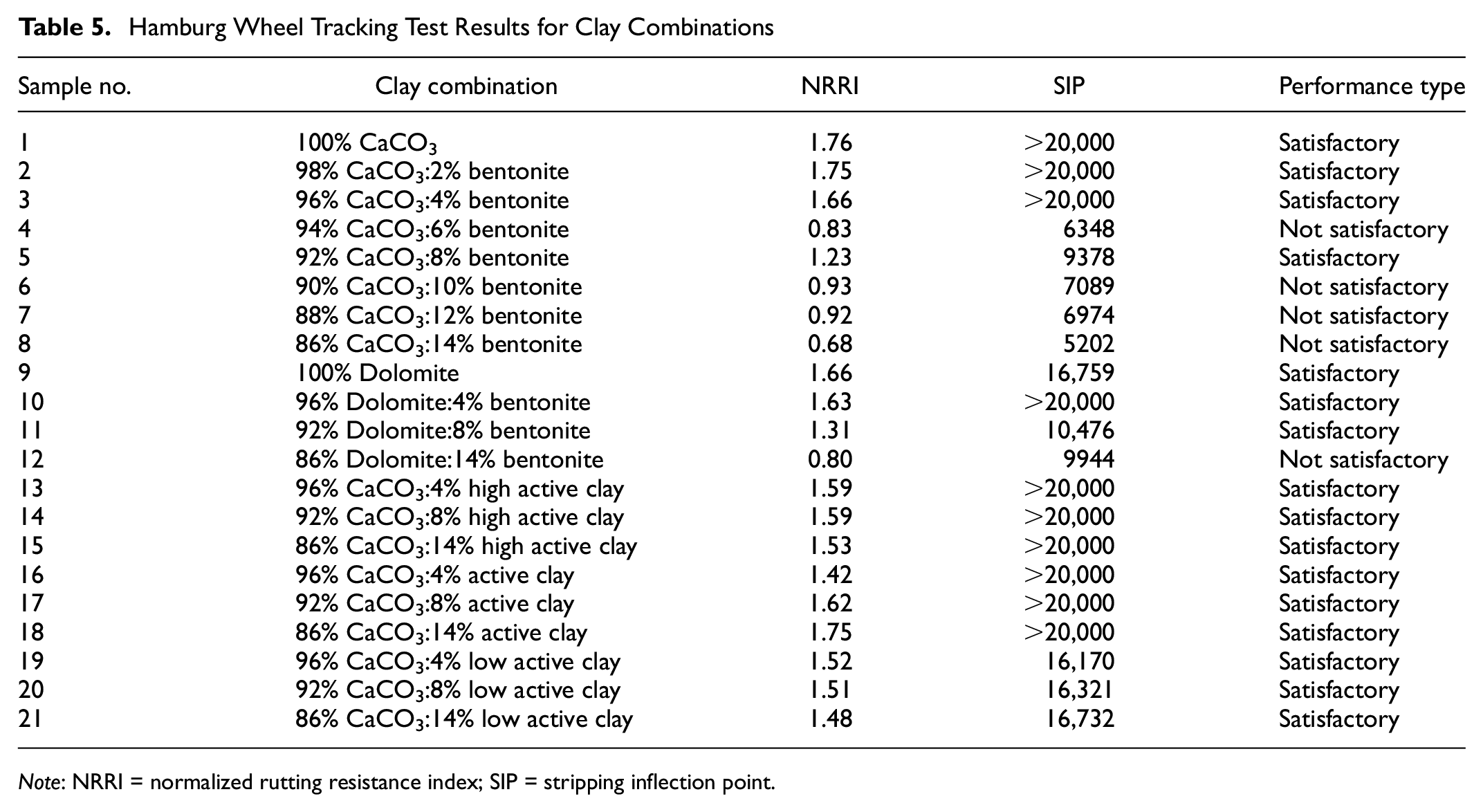
Table 5 contains the NRRI and SIP values for all combinations of fines. The perceived performance of each mix based on their reported NRRI and SIP are also reported. A NRRI greater than 1 corresponds to a satisfactory mix in rutting. The higher the SIP is, the higher the mix resistance to moisture susceptibility will be. A SIP of less than 9000 corresponds to a mix susceptible to moisture distress ( 24 ). The mix with 100% CaCO3 exhibits the highest NRRI (1.76) with no sign of stripping up to 20,000 cycles. This indicates that the presence of CaCO3 does not negatively affect the rutting performance of the mix. With highly active bentonite, resistance to rutting is dropped from NRRI 1.75 to 0.68 for the mix with the 86% CaCO3 and 14% bentonite combination.
Hamburg Wheel Tracking Test Results for Clay Combinations
Note: NRRI = normalized rutting resistance index; SIP = stripping inflection point.
As shown in Figure 4, a noticeable decrease in the NRRI and SIP is observed as soon as the MBV exceeds 6.0 mg/g. These results corroborate a marginal performance region between 7 and 12 mg/g MBV based on AASHTO T330 criteria. With respect to stripping, until 96% CaCO3:4% bentonite, no stripping is noticed, but after that, the specimens show signs of stripping, meaning that the clay activity becomes a determinant factor on mixture performance.
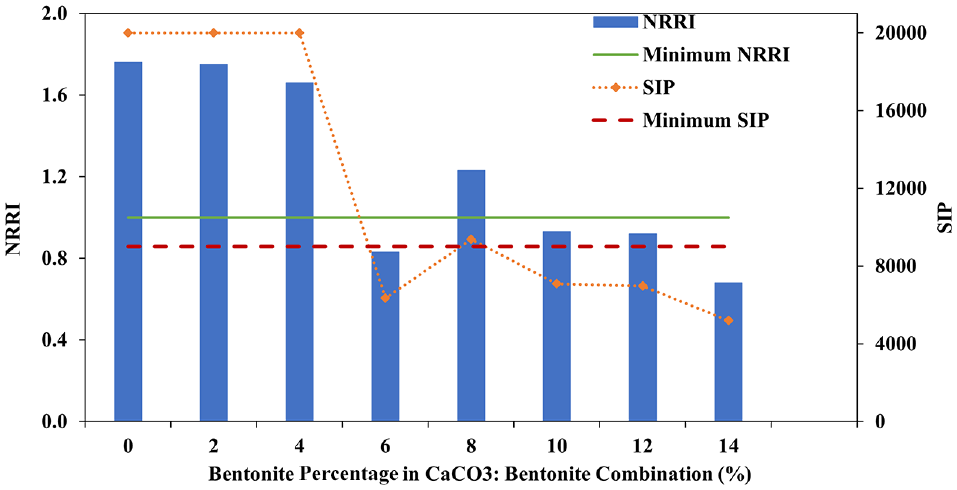
Mixture performance for calcium carbonate:bentonite combinations.
The effect of expansive bentonite when the CaCO3 was replaced with dolomite dust is shown in Figure 5. The trends for these mixes are like the trends observed for the CaCO3 combinations in Figure 4. As expected, the mix with 100% dolomite yielded the highest NRRI of 1.66. The NRRI fell below 1 when more than 8% bentonite was used. As judged by the reported SIPs, these mixes do not show as drastic moisture susceptibility as the CaCO3 mixes. The SIP value becomes borderline below 9000 when the bentonite percentage exceeds 8%.
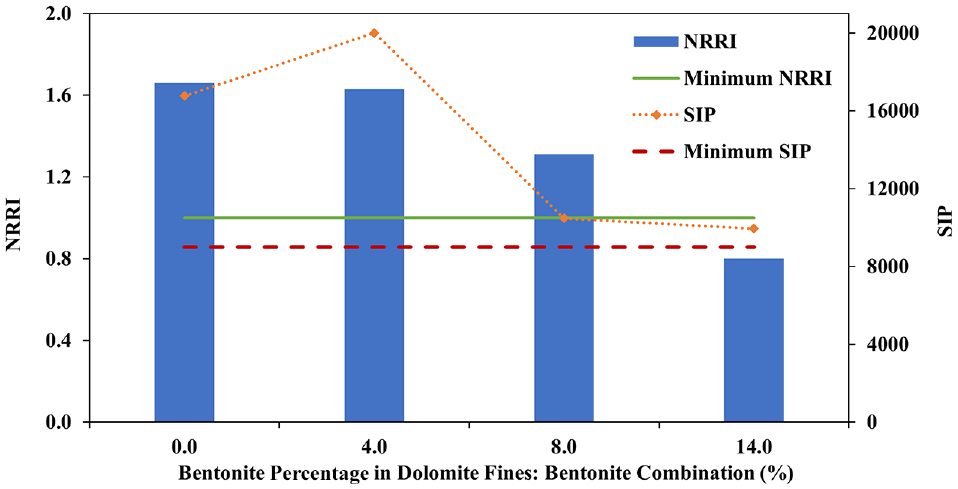
Mixture performance for dolomite fines:bentonite combinations.
Since the mixtures with CaCO3 showed more sensitivity to rutting, the three natural clays with different levels of sensitivity were added to the mixture, replacing bentonite, and were not tested with dolomite dust. According to Table 5, the combinations of CaCO3 with up to 14% of the three natural clays yield MBVs of less than 6 mg/g except in one case (CaCO3 with 14% high active clay), where the MBV is close to 7 mg/g. As shown in Figure 6, all permutations of the mixes performed satisfactorily, indicating that the threshold of 6 mg/g is reasonable, if not conservative.
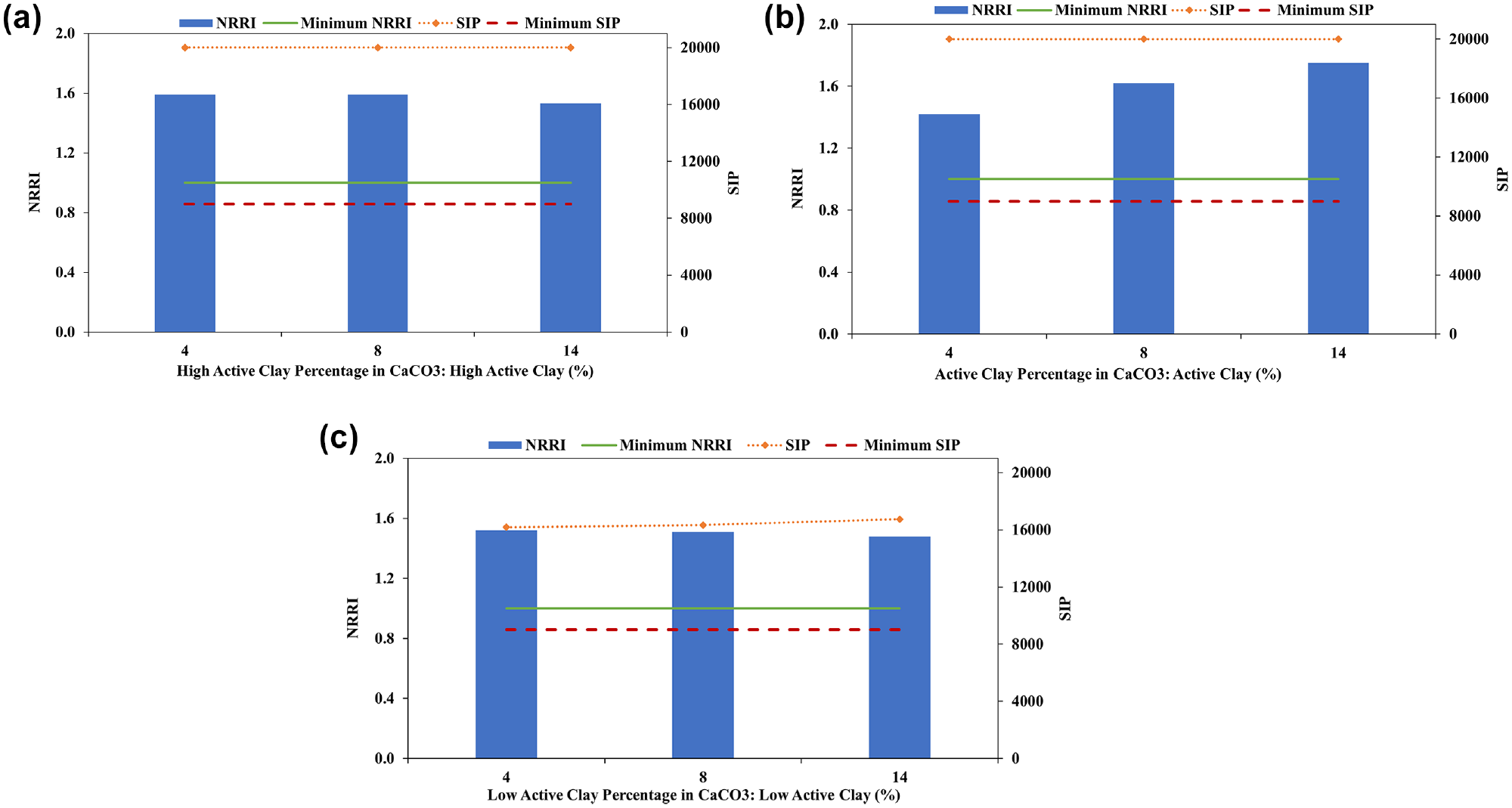
Relationship among the percentage, normalized rutting resistance index (NRRI), and stripping inflection point (SIP): (a) CaCO3:high active clay, (b) CaCO3:active clay, and (c) CaCO3:low active clay.
Performance of the Mixes as a Function of the MBV
Figure 7, a and b, demonstrates the variations in the NRRI and SIP with MBVs, respectively. Mixture combinations with MBVs of 6 mg/g or less showed satisfactory performance with respect to the NRRI and SIP. The mixes with MBV values of between 6 and 20 mg/g show marginal performance with respect to the NRRI and SIP when compared with the results from mixes with MBV values of less than 6 mg/g. When the MBV value exceeds 20 mg/g, the mixes exhibit poor performance with respect to rutting and stripping. However, some anomalous data points in the two figures indicate that the MBV alone may not be able to delineate the rut or stripping susceptibility of the mixes. To that end, the clays were chemically characterized using XRD tests.
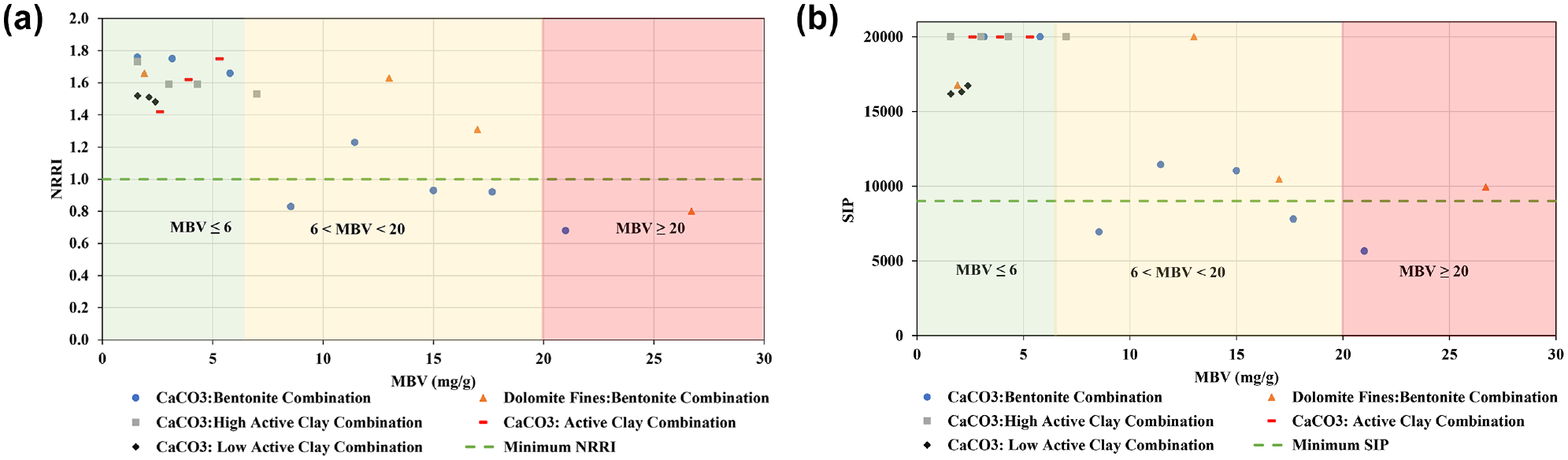
Variations in rutting parameters with methylene blue values (MBVs): (a) normalized rutting resistance index (NRRI) versus MBV and (b) stripping inflection point (SIP) versus MBV.
XRD Test Results
Table 6 presents the results of the XRD tests performed on CaCO3, dolomite dust, bentonite, high active clay, active clay, and low active clay to better explain the performance of the mixtures with different clay combinations. The CaCO3 contained about 67% calcite and 33% dolomite. Calcite and dolomite are categorized as materials that do not negatively affect the performance of mixes ( 25 ). Because of that, the mixture with 100% CaCO3 showed no stripping. The dolomite dust mainly comprised 85% calcite and 14% dolomite, minimally contributing to the performance of the mixture containing 100% dolomite. Commercial bentonite consisted of about 37% alunogen and surprisingly only 8% pure bentonite. The alunogen compound contains sulfuric acid, which can decrease the adhesion between the aggregate and binder and result in the stripping of the mix ( 26 ).
X-Ray Diffraction Test Results
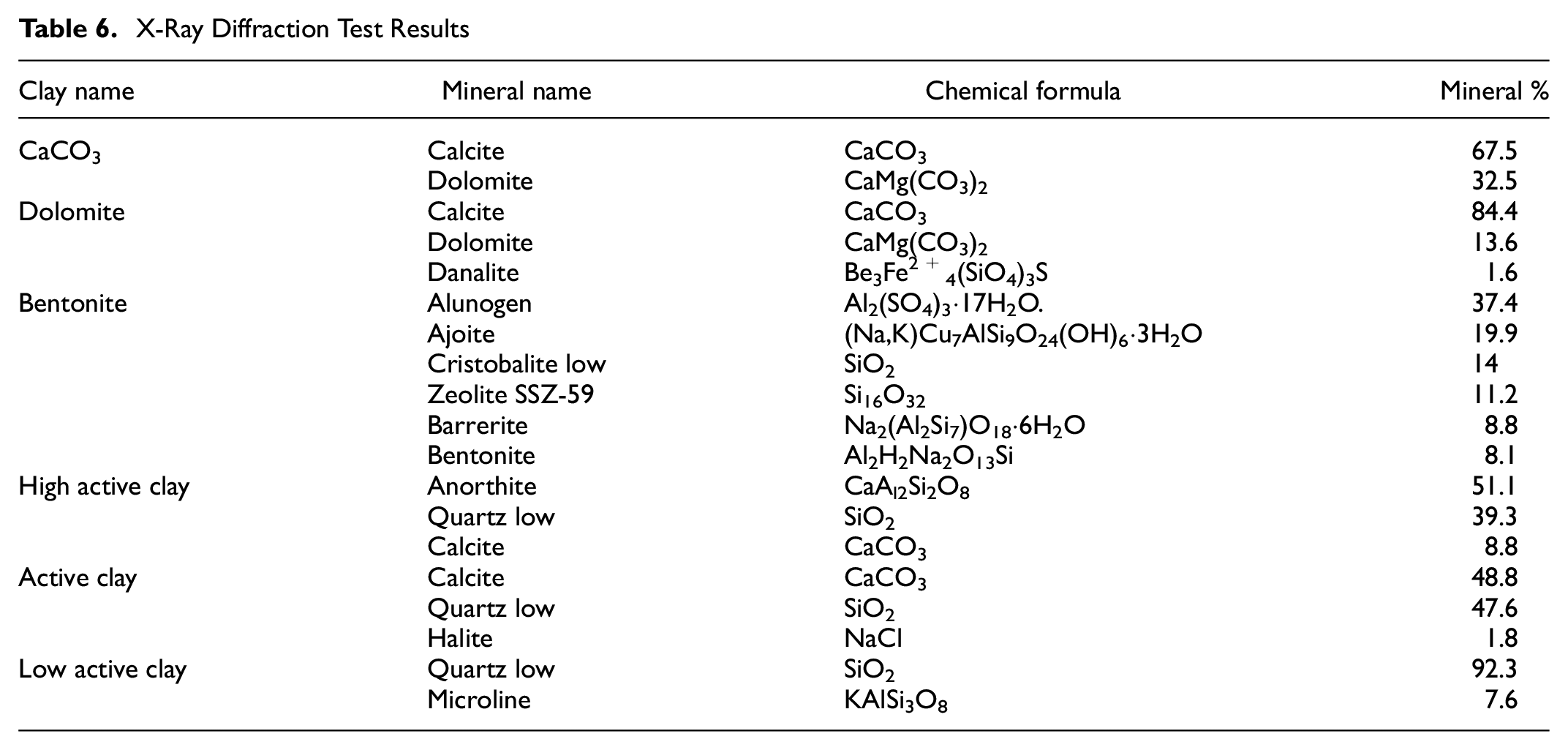
High active clay had about 51% anorthite, 39% quartz low, and 9% calcite. Previous research ( 25 ) indicates that anorthite can cause slight to moderate stripping, and calcite can cause little to no stripping. Active clay comprises 49% calcite, 48% quartz low, and 2% halite. This clay has a significant amount of calcite minerals. However, quartz low is almost equal to calcite. The high calcite percentage in this clay may contribute to its satisfactory performance. Finally, low active clay has a 92% quartz low and 8% microline. Compared to other natural clays, and unexpectedly, this clay has the highest rate of quartz low. Not only that, but it is also the only clay with microline minerals. Both minerals can cause severe stripping ( 23 ). Overall, the XRD results corroborate that natural clays and clay combinations were contaminated with impurities. Still, their impact could be mitigated if AASHTO T330 specifications or similar procedures are followed to restrict clay activity.
Conclusion and Recommendations
This study investigated the effect of harmful clays of different activity levels on the rutting performance of asphalt mixtures. MB testing was used to determine clay contamination levels, the HWTT was conducted to measure the rutting and moisture susceptibility of mixtures with different clay combinations, and XRD was employed to evaluate the mineral composition of clays. The following conclusions can be drawn from this paper.
The impact of swelling clay in rutting is more significant than that of not-so-active clay. The MB test is a quick test to understand the expansive characteristics of clay. The MBV criteria, as established by AASHTO T330, can be implemented to prevent the effect of harmful clay particles on the rutting performance of asphalt mixtures. If the MBV of minus 0.075 mm in the mixture is below 6.0 mg/g, the rutting and moisture susceptibility should be acceptable.
A mix can show potential stripping even when showing good resistance to ruts or permanent deformation because of the chemistry between clay minerals with the binder, especially when in contact with moisture. The presence of quartz low, sulfuric acid, microline, or another form of clay contamination could increase the stripping potential of the mixture. It is recommended to test the elemental and mineral composition of clay to avoid stripping.
Clay contamination can be challenging to address as sometimes it can be undetectable ( 27 ). Although natural sands or other types of fine aggregate can provide several benefits from the workability, environmental, and economic standpoints, they should be used cautiously. The scope of this study was limited with respect to asphalt mixture design and materials, including the type of mixture, aggregate materials and gradation, optimum binder content, asphalt binder grade, and field sand sources. Expansion of the XRD analysis to relate mineral components to asphalt mixture performance is recommended. Further studies are required to understand clay properties, better detect contamination, and implement the developed criteria.
Footnotes
Author Contributions
The authors confirm contribution to the paper as follows: study conception and design: I. Abdallah, S. Nazarian; data collection: S. Afsha, S. Vaid; analysis and interpretation of results: S. Afsha, S. Vaid; draft manuscript preparation: S. Afsha, S. Vaid, M. Montoya, I. Abdallah, S. Nazarian. All authors reviewed the results and approved the final version of the manuscript.
Declaration of Conflicting Interests
The author(s) declared no potential conflicts of interest with respect to the research, authorship, and/or publication of this article.
Funding
The author(s) disclosed receipt of the following financial support for the research, authorship, and/or publication of this article: This study was carried out as part of the TxDOT 0-7111 research project, “Determine Impact of Field Sands on Workability and Engineering Properties of Superpave Mixtures in Texas.” The authors are grateful to the Texas Department of Transportation (TxDOT) and the Federal Highway Administration for the continuous financial support provided.
