



Abstract
Despite its contribution to climate change, holiday travel has received less attention in research than daily travel. Research has revealed that individuals residing in dense and large settlements tend to travel more frequently and over longer distances. Whether this is attributable to compensation for shortcomings of dense cities or a reflection of lifestyle is still inconclusive, yet important to uncover for formulating mitigation strategies for the environmental impact. To advance this discussion, we analyze the 2019 Norwegian holiday travel survey to determine to what extent settlement size and regional density in Norway are associated with different holiday types that reflect different lifestyles and motivations. Using negative binomial and logistic regression while controlling for socioeconomic factors, we find that (1) it is not settlement size that influences the number of holiday trips, but whether a settlement lies in a dense county; (2) making nature getaways in Scandinavia and intercontinental trips are both positively associated with county density; (3) making city trips does not show a consistent link with spatial characteristics; (4) Mediterranean seaside holidays are typical for all Norwegians, no matter the place of residence. Our results indicate compensatory motivation behind nature getaways. However, dense everyday surroundings are not detrimental to visiting other densely populated areas on city vacations. The increased likelihood of intercontinental trips among people in dense areas may be explained by lifestyle and cosmopolitan attitudes rather than being a result of compensation.
Keywords
Long-distance travel, including holiday travel, has received less attention in transportation studies than daily mobility ( 1 ). However, understanding holiday travel patterns is important as it is a significant contributor to climate change. According to the World Tourism Organization UNWTO, tourism-related transport generated 22% of overall transport emissions in 2016 and the emissions continue to grow ( 2 ). Holiday trips of Norwegians account for about 4,000 kt of CO2 emissions annually ( 3 ).
Several factors play a role in shaping travel behavior, both for everyday travel and holiday travel. Socioeconomic variables have been found to affect daily and long-distance trips in largely the same directions. The amount of travel and related emissions increases for instance with the level of education, employment status, and particularly with income ( 4 – 6 ). However, spatial characteristics seem to have opposing effects on everyday and holiday travel: Inhabitants of denser and bigger settlements travel shorter distances daily, but they travel further and more often on long-distance trips including holiday trips ( 7 , 8 ).
Two of the explanations for increased holiday travel of city residents offered in existing research stand out by taking differing views concerning causality, namely the compensation hypothesis and the lifestyle hypothesis ( 9 ). The former argues that city residents compensate for a lack of open space in their everyday life with more holiday trips. Thus, the difference in built environment causes the differing travel behavior (e.g., 10, 11). The lifestyle hypothesis states that the preference for living in a city and the preference for frequent holiday trips are both caused by the tendency for a certain lifestyle ( 12 , 13 ). Thus, holiday travel and the residential built environment have the same predictor. Which of the two hypotheses is more applicable is important to determine as they would have different policy implications. If the correlation is attributable to compensatory behavior of city residents, then the concept of compact urban form being most sustainable owing to reduced travel should be challenged. If the increased number of holiday trips is a lifestyle choice, mitigation strategies need to target individual preferences. Studies examining which of those hypotheses is more valid come to inconclusive answers (see review in second section). One possible reason for this is that most studies do not differentiate between different trip types. Holiday trips to nature destinations received special attention concerning the compensation hypothesis, while other distinct types like southern seaside holidays or city trips remain unexplored disregarding their potential to reflect on lifestyle and trip motivation.
Therefore, using the Norwegian holiday travel survey ( 14 ), we analyze to which extent the built environment (settlement size and regional density) is associated with holiday travel (nature getaways in Scandinavia, trips to the Mediterranean Sea, city trips in Europe and intercontinental trips) while controlling for socioeconomic variables. We hypothesize that (1) if holiday travel is a compensation for living in a dense city, settlement size and density should correspond with an increased number of nature getaways, whereas other trip types like city trips are less affected or even affected in the opposite way; (2) if the lifestyle hypothesis is applicable, settlement size and density should be significantly related to an increased frequency or likelihood of all holiday types.
Literature Review
This section provides a review of studies that investigate the factors influencing holiday travel among city residents divided by whether they support the compensation or lifestyle hypothesis.
Compensation Hypothesis
Several studies have provided evidence supporting the hypothesis that city residents compensate for unsatisfactory everyday surroundings with extensive holiday travel. One of the early proponents were Holden and Norland (2005) who reported a correlation between a lack of a private garden and increased energy consumption for long-distance trips in the Greater Oslo region ( 10 ). Similarly, a series of studies on Copenhagen, Oslo, and Stavanger revealed that a lack of local greenery was associated with a greater number of weekend trips and domestic trips ( 15 , 16 ). Other research has explored the role of second home ownership and use as a possible compensatory behavior of city residents. Dijst et al. (2005) observed a correlation between dissatisfaction with local greenery and second home ownership in the Netherlands, as well as allotment ownership in Germany ( 17 ). Similar findings were reported for Finland ( 11 ) and Greater Copenhagen ( 18 ). Furthermore, a qualitative study on Reykjavik provided evidence that escape trips were taken not only owing to lacking greenery but also because of other shortcomings typical of cities, such as noise, crowding, pollution, or local factors such as lack of sun, harsh weather, or a lack of cultural diversity (19).
Not all studies support the compensation hypothesis. Maat and de Vries (2006) conducted a study in the Netherlands and found no significant correlation between access to local green spaces or garden ownership and trips to parks or nature reserves (12). Instead, they discovered that individuals who desired to live in a greener neighborhood chose to relocate to suburban or rural areas rather than compensate by taking more trips to nature destinations. Furthermore, Raudsepp et al. (2021) found qualitative evidence for a reversed effect, indicating that residents of green neighborhoods also preferred domestic travel to nature (19). Nevertheless, most studies on weekend trips, domestic trips, or trips to second homes report some compensatory behavior. However, higher frequencies of trips like international trips and flights were unrelated to dissatisfaction with local conditions, suggesting that compensation cannot solely explain the overall tendency of city residents for more holiday travel ( 15 , 16 ).
Lifestyle Hypothesis
Multiple studies support the hypothesis that holiday and leisure trips are foremost a lifestyle choice of city residents. Studies conducted in the German city of Cologne and in Switzerland found that specific lifestyles characterized by a preference for driving, engaging in out-of-home activities, and a desire for holidays in distant countries were strong predictors of leisure trips ( 20 – 22 ). A mixed-method study series on the capitals Helsinki and Reykjavik reported that a higher frequency of international leisure trips was correlated with cosmopolitan attitudes, which were clustered in the city centers, pointing out a self-selection mechanism ( 19 , 23 , 24 ). Income as a lifestyle facilitator can also explain both inner-city living and increased holiday travel. Studies focusing on household expenditure and emissions reported that living in inner-urban areas supports a low-emission, car-free everyday life. However, this effect rebounds in more plane trips, long-distance vacations, and other expenditure categories with high emission factors. This effect is found to be connected to a higher average income of inner-city households ( 13 , 25 , 26 ). Additionally, a more dispersed social network of city residents has been found to partly explain increased air travel ( 27 ).
Moreover, studies that found evidence for compensatory effects for certain trip types, such as weekend or cabin trips, found lifestyle preferences of city residents to be a better explanation for increased flight frequency ( 15 ), more international trips ( 16 ), and holiday trips in general ( 18 ). In summary, lifestyle-related factors like cosmopolitan attitudes, higher income, dispersed social networks, and general preferences, that are clustered in cities, can explain a great part of the increased holiday travel volume of city residents.
Examination of Distinct Holiday Types
Distinct holiday types such as domestic weekend, caravan, and cabin trips have been linked to compensatory behavior in several studies ( 11 , 12 , 17 ). Particularly the comparison to international trips and air travel emphasized a difference in motivation for different trip types ( 15 , 16 , 18 ). However, the types of trips examined in relation to the lifestyle hypothesis, such as holiday and leisure trips, international trips, and air travel, remain very general compared with those examined in the context of the compensation hypothesis. Yet, other distinct holiday types, such as city trips, summer trips to the southern sea, and intercontinental trips, have received limited exploration despite their potential reflection of certain lifestyles and different motivations. The Norwegian holiday travel survey provides the opportunity to further explore these ideas, as it offers detailed information about trip purposes and destinations. By analyzing to which degree settlement size and regional density are associated with the number and likelihood of different holiday types, we aim to find evidence for which trip types are significantly linked to the built environment and are thus a potential compensatory behavior or lifestyle expression of city residents.
Methods
Data
Data used for this analysis are five consecutive years of the Reise- og ferievaneundersøkelsen (English: holiday travel survey) conducted by Statistics Norway. This quarterly survey collects data on Norwegians’ travel behavior on trips with at least one overnight stay including holiday trips that have been made in the quarter before the survey. Information about each trip includes trip type, destination, and accommodation. We use 20 datasets from quarter one 2015 to quarter four 2019, which cover trips from quarter four 2014 to quarter three 2019. Each quarter, the survey invites 2,000 people between 16 and 79 years, drawn from Statistics Norway’s central population database representatively. People between 25 and 44 years old, with lower education, and with a non-Norwegian background are less likely to participate and are thus slightly underrepresented ( 28 ).
Our main analysis focusses on the four surveys of 2019, which is the most recent available data not affected by the global pandemic. Data of previous years are used to examine potential trends and outliers. The four samples of 2019 include 4,323 respondents in total. We deleted eight entries with impossible combinations of settlement size and county of residence. The resulting full sample is used for descriptive analysis, while for the regression models, missing data in the selected variables were handled using listwise deletion, resulting in a final sample of 4,237 individuals for models including only spatial variables and 3,336 individuals for the full models.
Dependent Variables
Our main analysis focuses on the reported holiday trips in the 2019 surveys. The survey differentiates between different trip types: seaside holidays, city trips, countryside trips, mountain trips, and cruises. We further use the country of destination and the type of accommodation to identify four typical holiday types (Table 1). We create two variables for each trip type representing whether a respondent reported at least one trip in the category as a binary variable and the number of trips per category as a count variable.
Identified Holiday Types, Characteristics and Distribution of Responses
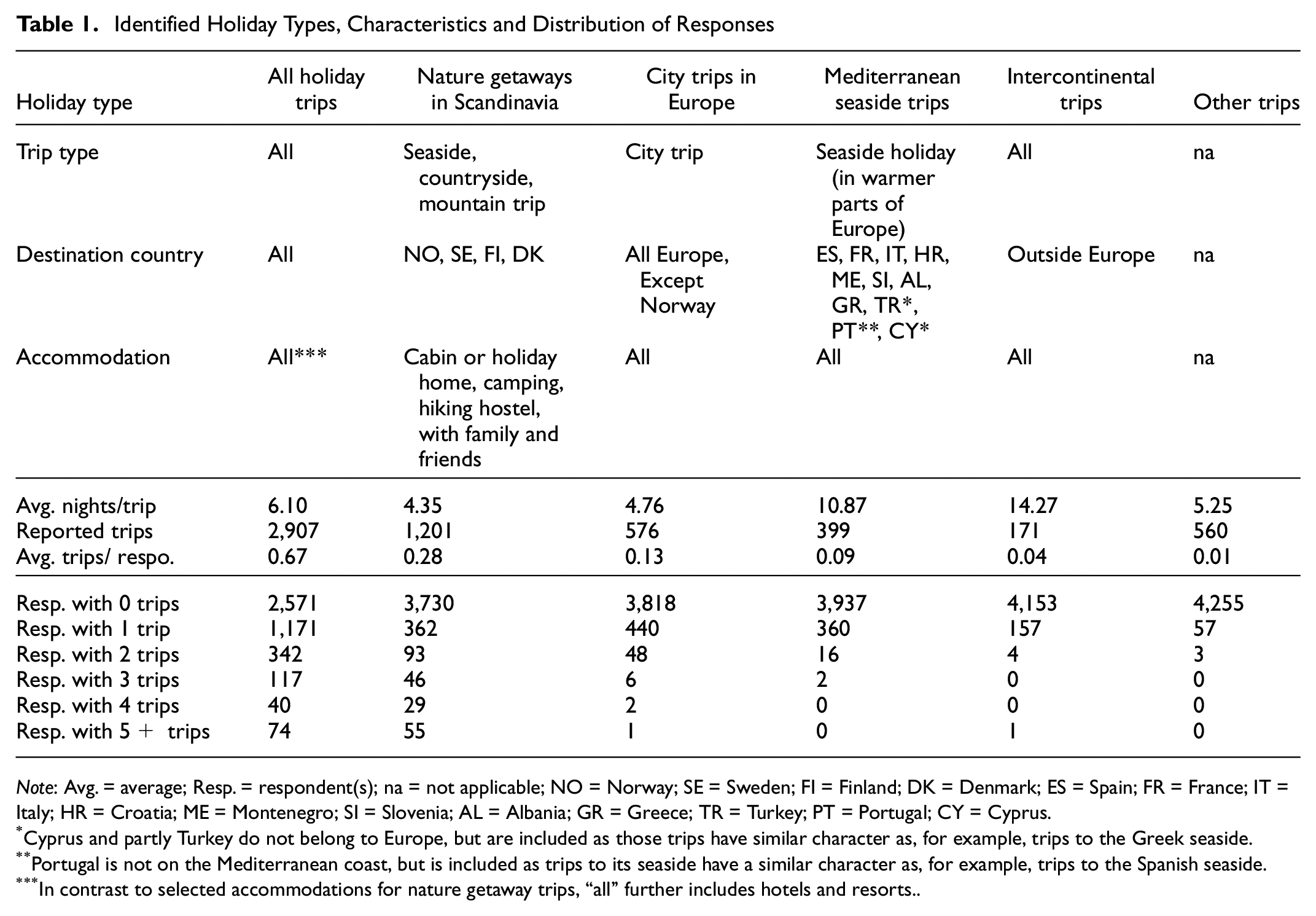
Note: Avg. = average; Resp. = respondent(s); na = not applicable; NO = Norway; SE = Sweden; FI = Finland; DK = Denmark; ES = Spain; FR = France; IT = Italy; HR = Croatia; ME = Montenegro; SI = Slovenia; AL = Albania; GR = Greece; TR = Turkey; PT = Portugal; CY = Cyprus.
Cyprus and partly Turkey do not belong to Europe, but are included as those trips have similar character as, for example, trips to the Greek seaside.
Portugal is not on the Mediterranean coast, but is included as trips to its seaside have a similar character as, for example, trips to the Spanish seaside.
In contrast to selected accommodations for nature getaway trips, “all” further includes hotels and resorts..
Independent Variables
We consider three categories of independent variables: spatial characteristics, socioeconomic characteristics, and the survey quarter. Cutoffs for all categorical variables, except county density, are taken from the original survey. Adjustments in form of combining levels were made, if necessary, to avoid too small levels.
Spatial Characteristics
Settlement size is measured in four levels (<2,000, between 2,000 and 20,000, between 20,000 and 100,000, and >100,000 inhabitants). Respondents who live in places that are not categorized as a settlement (<200 inhabitants or distance between the houses > 50 m) are placed in the category ‘under 2,000’. The dataset includes only the county of residence (not the settlement), so only an approximate location is known. We use the county population density (low density: under 10 inh./km2, medium density: between 10 and 50 inh./km2, high density: at least 50 inh./km2) to approximate whether respondents live in an agglomeration of settlements or in a more remote area (Figure 1). It is calculated based on official population and areal data ( 29 , 30 ) and included as an interaction with settlement size in the statistical models as a proxy for distinguishing between settlements in agglomerations and those in more remote areas.
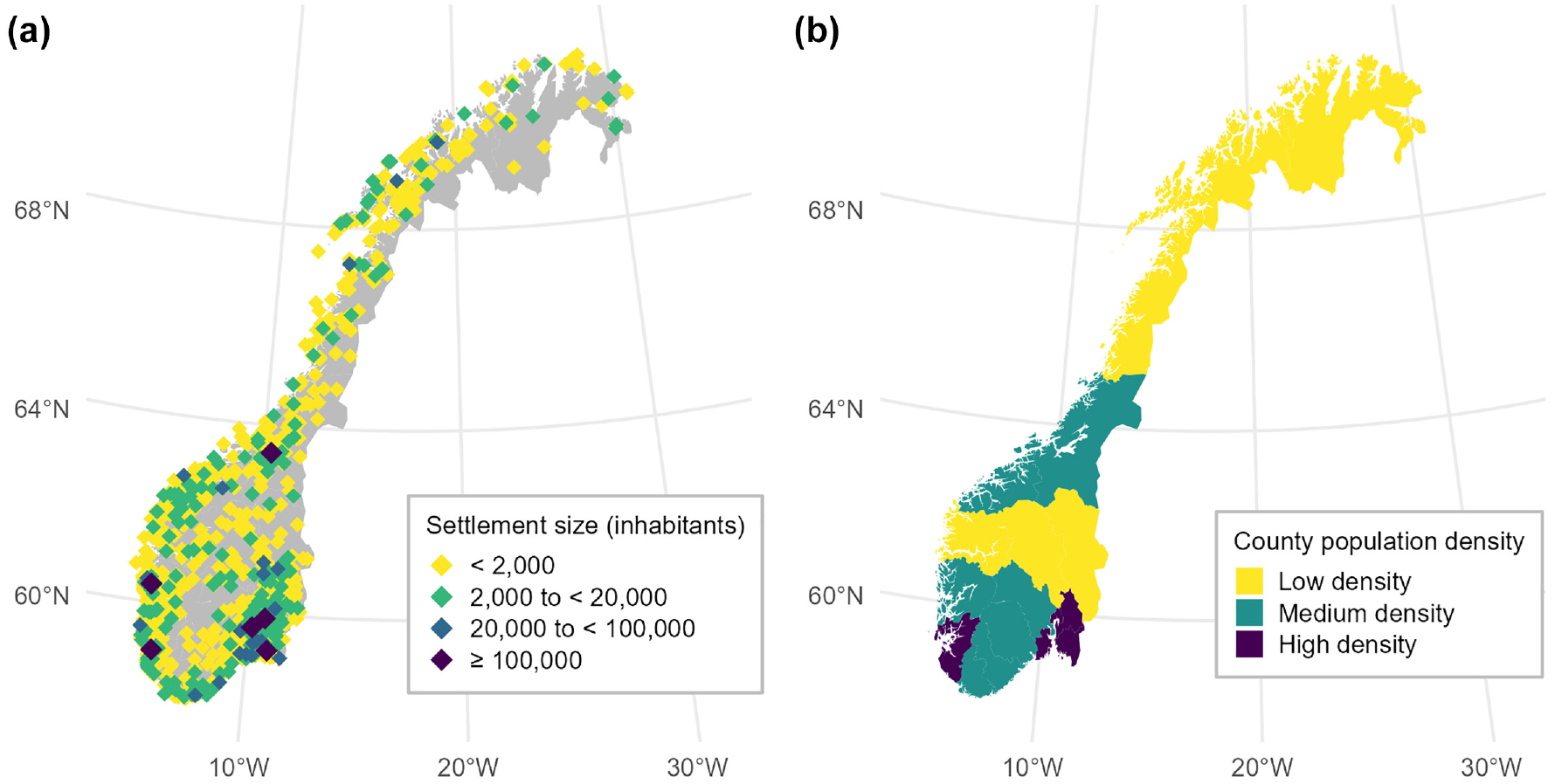
Settlement size (a) and county population density (b) in Norway (2020).
Socioeconomic Characteristics
We include age in groups with four levels (16–24 years, 25–44 years, 45–66 years, and 67 years or older), gender (male, female), employment status (non-employed, part-time, and full-time), and educational level (junior secondary school or lower, senior secondary school, university degree or higher). We further include household type (single, partners without children, single parents, partners with children) and household income group before tax (low: below 500,000 NOK, middle: 500,000 NOK–1,000,000 NOK, and high: 1,000,000 NOK and more). 1 NOK equals 0.1134 USD as of 2019-12-31 ( 31 ).
Survey Quarter
For the analysis, we combine data of the four consecutive travel surveys of 2019. In each of the surveys, respondents were asked to report trips in the last quarter. Owing to seasonal effects, the total number of reported trips varies between 540 in October–December and 1013 in July–September. We also expect that season affects the chosen holiday type and therefore add the quarter for which the trips are reported as a control variable.
Statistical Analysis
To analyze the predictors of the number of all holiday trips and the odds of undertaking at least one trip of the distinct types, we use negative binomial and logistic regression models, respectively. Poisson regression was considered as an alternative to negative binomial. However, based on an analysis of standardized residuals, which were much wider spread out for the Poisson regression model than the negative binomial, and a likelihood ratio test (p = <0.001), we opted for the negative binomial regression model.
We develop three negative binomial regression models to examine the reported number of holiday trips, regardless of the holiday type. Models 1 and 2 contain only the spatial characteristics as predictors to examine how to model the interaction between settlement size and county density. While model 1 contains both settlement size and county density as predictors, in model 2, the main effect of settlement size and the interaction with county density is reported, omitting the main effect of county density. Consequently, the incident rate ratios of the interaction represent the simple effect of county density within each settlement size category. In model 3, we introduce socioeconomic factors and the survey quarter as additional predictors.
For the analysis of the four distinct holiday types, we apply logistic regression analysis to assess whether at least one trip is reported in each of the four holiday type categories. Since respondents may have made multiple holiday trips of different types, separate regression models for each holiday type category are employed, instead of using multinominal regression. Count models were not used for the holiday types owing to insufficient dispersion of counts for each type.
Furthermore, we analyze the development of trip numbers per holiday type over five consecutive years. This is done to explore possible trends in the examined holiday types as well as to detect possible outliers. Detected outliers of all holiday trips, nature getaways, and city trips in summer 2018 are compared with typical numbers in summer 2019. We examine differences in the impact of spatial characteristics and income on the trip numbers of the two seasons. We apply negative binomial regression with the year as a predictor and interactions with settlement size, county density, and household income. The effects are reported without the main effects of the interacted variables and therefore represent simple effects within each year. Models including the main effects were analyzed in the process to identify whether the interaction itself is significant.
Results
Descriptive Analysis
In total, 4,315 respondents reported 2,907 holiday trips, averaging 0.67 trips per quarter or 2.68 trips per year per respondent; 2,571 respondents (60%) did not go on a trip at all; 1,171 respondents made one trip; and 573 made multiple trips per quarter (Table 1). The most frequently reported trip type is nature getaways in Scandinavia (41%), followed by city trips in Europe (20%), trips to the Mediterranean Seaside (14%), and intercontinental trips (6%). 19% of trips do not fall into these categories. Cabin ownership and thus trips to the country-, mountain- and seaside are common for Norwegians ( 32 ). The high number of nature getaways is therefore not surprising. Furthermore, the commitment involved in those trips, is lower than for the other examined holiday types, which usually require more planning. Also, the average number of nights spent per trip is lowest for nature getaways, allowing for several trips per quarter.
Figure 2 displays the average number of holiday trips per quarter by settlement size and county density. The results indicate that the average number of trips increases with settlement size. However, inhabitants of cities with 20,000–100,000 inhabitants (group 3 of 4) have the highest average number of holiday trips with 0.78 trips per quarter or 3.12 trips per year respectively. Inhabitants of cities with 20,000–100,000 inhabitants also have the highest average trip count across all holiday types. The increase in holiday trip numbers with county density is more pronounced. Inhabitants of counties with high population density have the highest average number of holiday trips with 0.8 trips per quarter or 3.20 trips per year respectively. Figure 2 also reveals, that these effects can partly be explained by income, that has a similar distribution among the spatial characteristics as the number of trips, which is in line with former research ( 13 , 33 , 34 ).
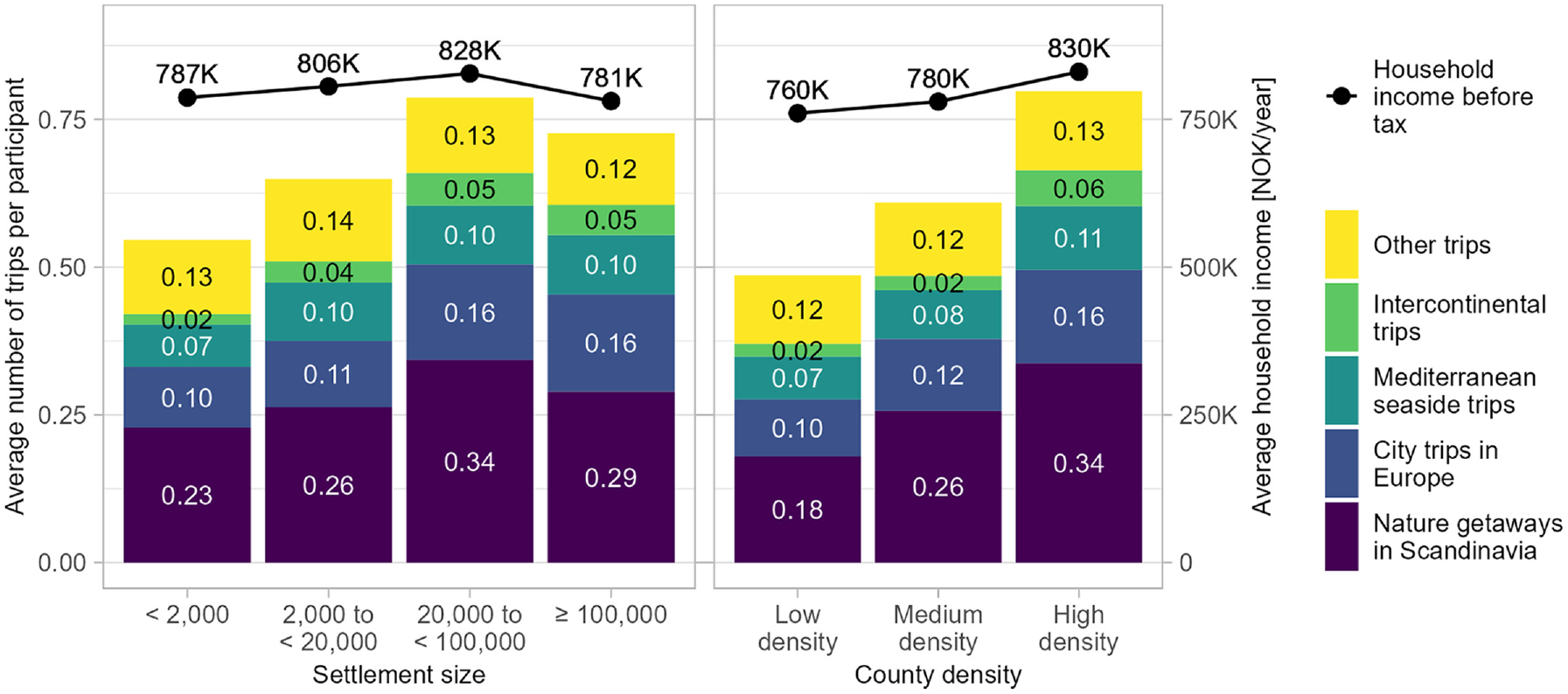
Average number of trips and income by settlement size and county density.
Negative Binomial Regression of Holiday Trips
The multivariate negative binomial regression model shows that, while significant before adjustment (Table 2, model 2), the effect of settlement size on the holiday trip rate is not significant after controlling for socioeconomic and seasonal effects (Table 2, model 3). Including the interaction term between settlement size and county density improved the model fit compared with the model with only main effects. A likelihood ratio test of models 1 and 2 showed that the p-value associated with the likelihood ratio statistics (LRS) is 0.018. The effect of county density on several settlement size categories remains significant but attenuates in the maximally adjusted model. This can be explained by the uneven distribution of household income and education level among the settlement size and county density categories, as both are positively associated with trip numbers. For all settlement size categories except those with populations from 20,000 to 100,000 inhabitants, trip rates significantly decrease with lower county population density. The strongest effect is observed for settlements with populations between 2,000 and 20,000. Compared with high-density counties, the trip rate is reduced by about 25% for medium-density counties and 40% for low-density counties.
Negative Binomial Regression of the Number of Holiday Trips (Incident Rate Ratio)
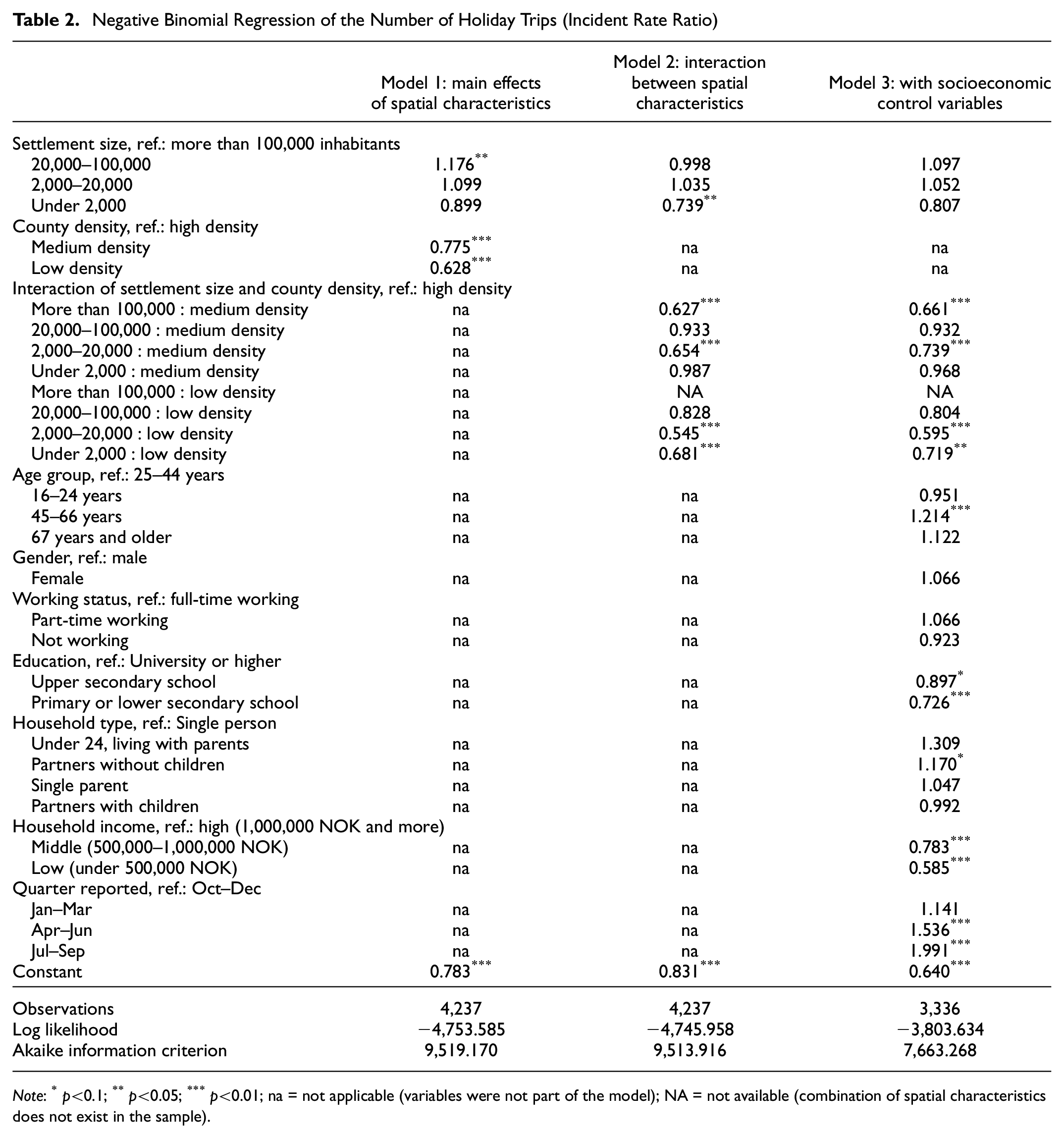
Note: *p<0.1; **p<0.05; ***p<0.01; na = not applicable (variables were not part of the model); NA = not available (combination of spatial characteristics does not exist in the sample).
Furthermore, respondents in the age group of 45–66 years are more likely to undertake more holiday trips. We do not observe significant effects of gender or working status. The latter can be attributed to correlation with the strong predictors household income and education. There are almost no significant differences between household types, except partners without children having a slightly higher trip rate than singles. Finally, the analysis identifies expected seasonal effects. Survey respondents are more likely to make more trips in April–June and July–September than in winter months.
Logistic Regression of Holiday Type Participation
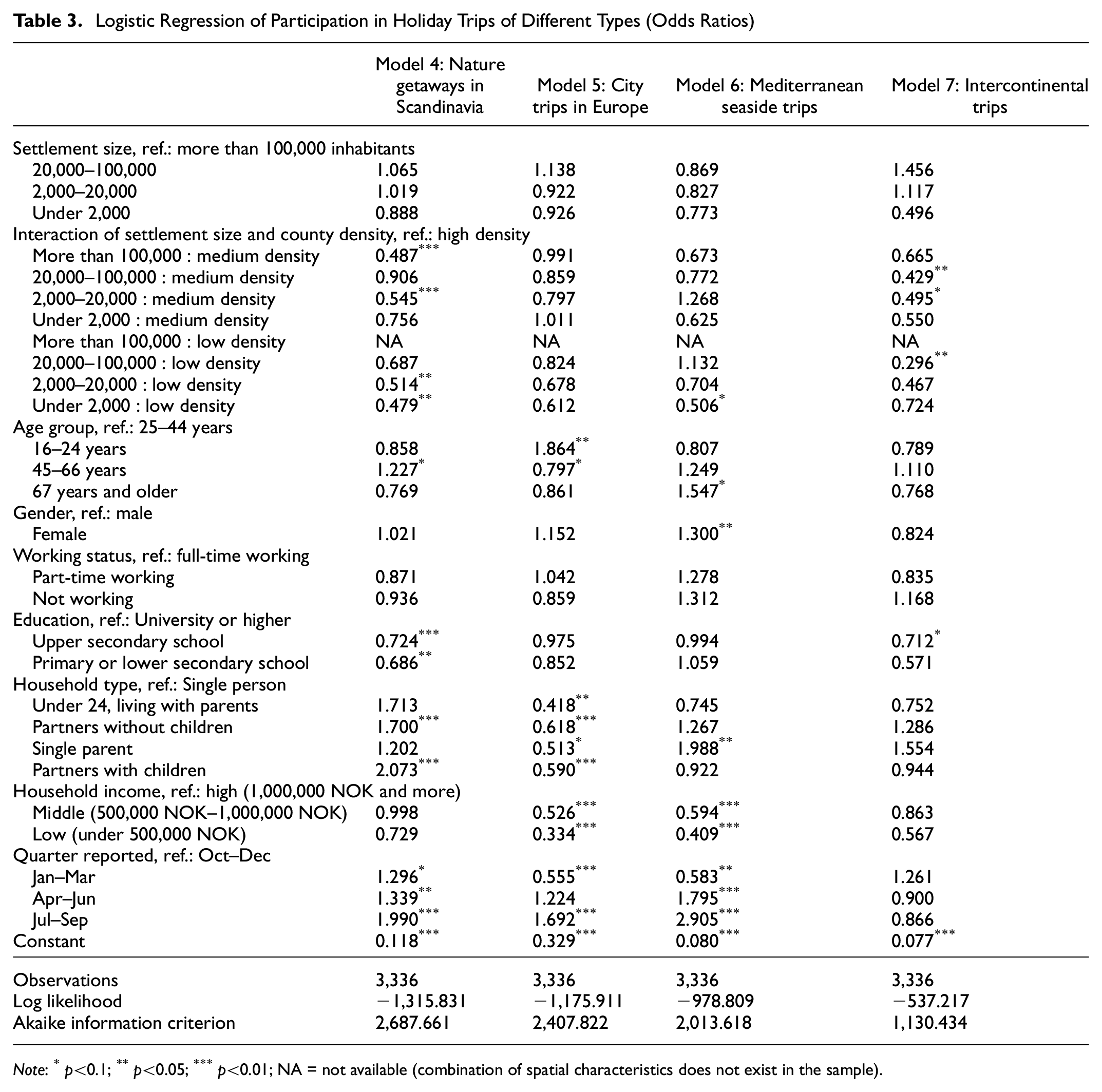
The logistic regression analysis, stratified by holiday types (Table 3), shows that in counties with high population density smaller settlement size has a negative association with participation in all holiday types, although the effect is not statistically significant. By changing the reference level of county density, we observe similar effects of settlement size in counties with medium and low population density. City trips in Europe are the trip category least affected by settlement size across all county density categories. Additionally, when applying different reference levels of settlement size, only some significant effects emerge, all applying to individuals living in settlements with 20,000–100,000 inhabitants: In high-density counties, they are almost three times more likely to go on an intercontinental trip compared with those residing in settlements with a population of under 2,000. In medium density counties, they are about two times more likely to go on a nature getaway than residents of settlements between 2,000 and 20,000 and more than 100,000 inhabitants. Lastly, in low-density counties they are about 2.5 times more likely to go on a Mediterranean seaside holiday compared with settlements with less than 2,000 inhabitants. We consider this an overall reflection of individuals living in settlements between 20,000 and 100,000 inhabitants being the group with the highest trip numbers overall (see Figure 2).
Logistic Regression of Participation in Holiday Trips of Different Types (Odds Ratios)
Note: *p<0.1; **p<0.05; ***p<0.01; NA = not available (combination of spatial characteristics does not exist in the sample).
County density strongly affects the likelihood of nature getaways in Scandinavia. Specifically, inhabitants of the two smallest settlement size groups are about two times more likely to go on a nature getaway, when the settlement is located in a densely populated county rather than a sparsely populated one. This suggests that it is not settlement size itself that triggers escape trips to nature, but rather the location of the settlement in a densely populated region. Nature getaways also include trips with accommodation at family and friends or their cabin (Table 1). This suggests an additional motivation for these trips, particularly among individuals living in larger settlements and denser counties, who may have a broader social network with connections to remote areas. Because these trips might not be considered true “escape trips,” we conducted a sensitivity analysis on logistic regression model 4, excluding accommodations at family and friends. The results revealed that the observed associations between spatial characteristics and the likelihood of nature getaways in Scandinavia remains, albeit less pronounced.
Concerning city trips, there is a slight tendency for location in a low-density county to negatively affect trip participation, but this effect did not reach statistical significance. Therefore, the hypothesis that density might negatively influence the likelihood of city trips, as people seek to rather escape dense everyday surroundings, was not supported. It seems more likely that higher regional density leads to additional trips, particularly to nature destinations. However, also intercontinental trips show an association with county density for some settlement size categories. For instance, residents of settlements with a population between 20,000 and 100,000 are three times more likely to undertake an intercontinental trip when residing in a high-density county compared with low-density counties. Based on existing literature ( 15 , 16 , 18 ), this can be seen more as an expression of a cosmopolitan attitude than a form of compensation. Finally, trips to the Mediterranean seaside seem the least affected by spatial characteristics, evidence for them being a common holiday for Norwegians no matter the place of residence.
Furthermore, the results indicate that age group, gender, and household income are significant predictors of participation in certain types of holiday trips. For instance, individuals aged 16–24 years have 86% higher odds of participating in a city trip in Europe compared with those aged 25–44 years. Females have higher odds of participating in all holiday types, particularly for Mediterranean seaside holidays, except for intercontinental trips. Lower household income is associated with statistically significantly lower odds of participating in city trips and Mediterranean seaside holidays, while nature getaways in Scandinavia are affected the least. Education level only affects nature getaways in Scandinavia and intercontinental trips significantly, with those with a lower level of education being less likely to go on a trip. Concerning household types, partners with children are most likely to go on a nature getaway in Scandinavia, singles on city trips in Europe, and single parents on a Mediterranean seaside holiday. Working status is not a significant predictor. This is assumed to be attributable to correlation with household income and education level.
Finally, the results show different seasonal associations with the different holiday types. Nature getaways, city trips, and mediterranean seaside trips can be more observed for July–September, while intercontinental trips are most likely undertaken in January–March.
Trends and Outliers
The analysis over five years shows no clear increasing or decreasing trend for any of the trip types other than seasonal fluctuation. Trip numbers of the surveys used in the above analyses (quarter 4, 2018–quarter 3, 2019) are similar to the years 2015–2017. However, we observe a noticeably increased number of trips in quarters 2 and 3 of 2018, especially in the category of nature getaways in Scandinavia. City trips on the other hand were less frequently reported than in the previous or following summers. Intercontinental trips and trips to the Mediterranean seaside remain relatively stable compared with other years (Figure 3).
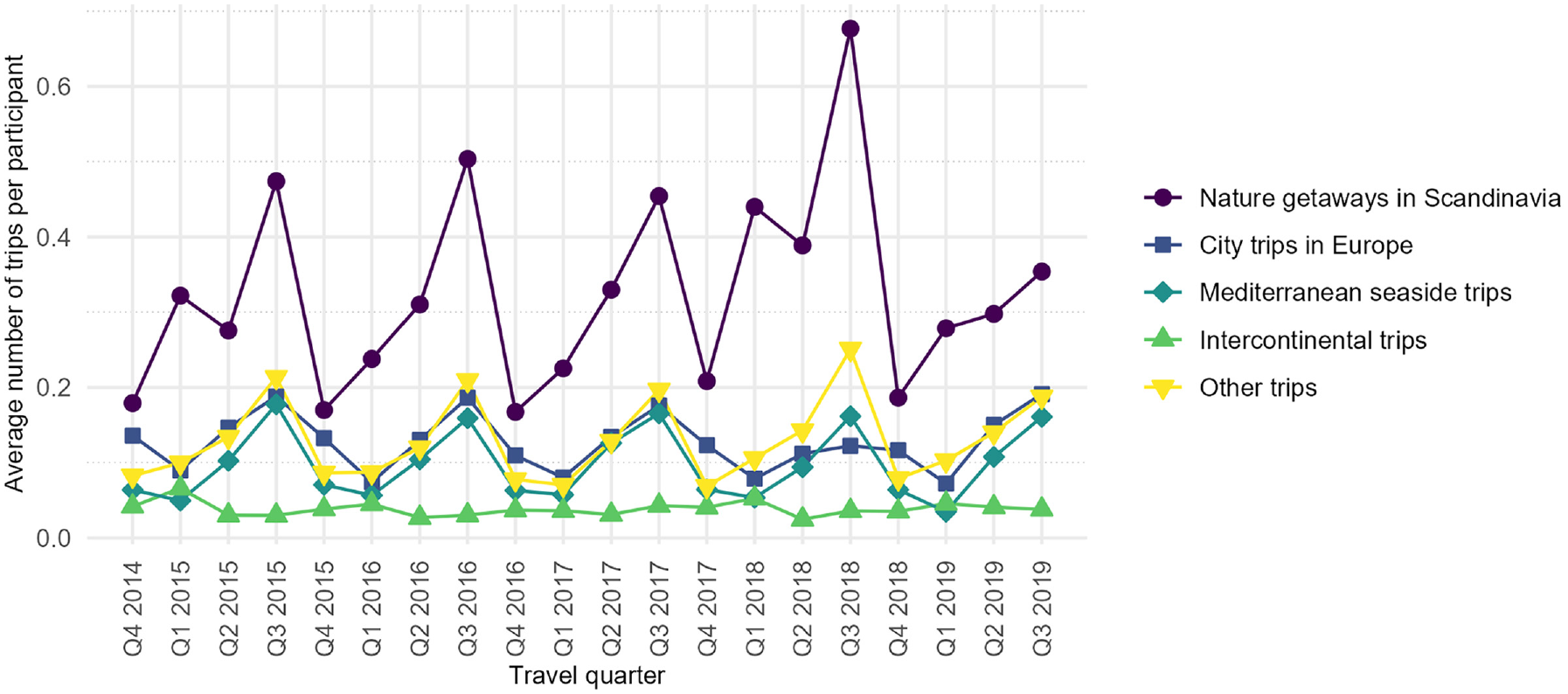
Average reported trip numbers per participant per quarter, October 2014–September 2019.
Summer 2018 showed unusual heat episodes in North-Eastern and Central Europe ( 35 ) that may have resulted in more local, nature-based holidays owing to pleasantly warm weather in Scandinavia and fewer trips to cities in central Europe where the heatwave resulted in uncomfortably high temperatures, especially in cities.
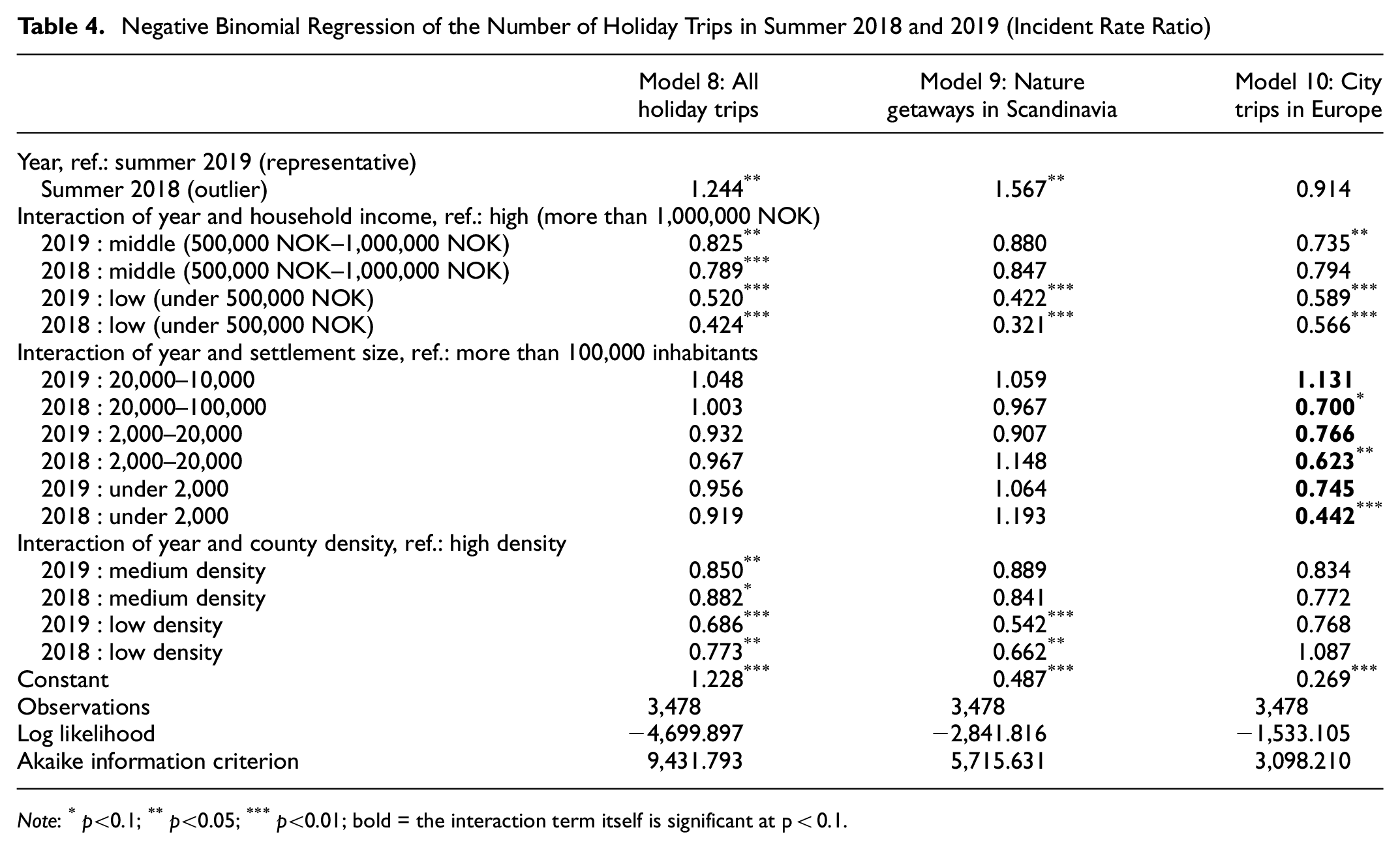
The negative binomial regression models show that the increase in trip numbers per person is statistically significant between the two years for “all trips” and nature getaways, while the observed decrease in city trips is not (Table 4). We further observe a stronger association of the incident rate ratio with income in 2018 than in 2019, suggesting that high income enables to go on more holiday trips when good weather motivates to do so. Settlement size is significantly positively associated with city trips in summer 2018, while it is not in 2019. Residents of settlements under 2,000 inhabitants have a 41% lower incidence rate of city trips in 2018 compared with 2019, while urban residents of settlements >100,000 inhabitants have only an 8% lower incidence rate. This shows that residents of larger settlements are less affected by the overall tendency of city trips being less attractive in the record summer. This is a strong indicator against our hypothesis that dense everyday surroundings may be detrimental to city trips in case of compensatory motivation for holiday type choice. Furthermore, county density has less effect on overall trip numbers and specifically nature getaways in Scandinavia in 2018 compared with 2019. This reflects that the high temperatures potentially made a holiday in Scandinavia more attractive for everybody in 2018, while in a regular year, residents of dense counties are likely to undertake more of those trips.
Negative Binomial Regression of the Number of Holiday Trips in Summer 2018 and 2019 (Incident Rate Ratio)
Note: *p<0.1; **p<0.05; ***p<0.01; bold = the interaction term itself is significant at p < 0.1.
An additional negative binomial regression model including the main effects of income, settlement size, and county density was run in the process to test whether the above-described effect differences are significant. It showed that only the increased association between settlement size and city trips in 2018 compared with 2019 is statistically significant (p < 0.1).
Discussion
The main objective of this paper was to explore the relationship between spatial characteristics and holiday travel of different trip types (nature getaways in Scandinavia, trips to the Mediterranean Sea, city trips in Europe, and intercontinental trips). We find that holiday travel is not significantly associated with settlement size but rather with the density of the county where the settlement is located. Both nature getaways in Scandinavia and intercontinental trips show a significant positive association with county density. City trips, on the other hand, are unaffected by spatial characteristics in 2019 but increase with settlement size during the summer of 2018. Mediterranean seaside holidays are not significantly associated with settlement size or county density.
The finding that holiday travel is not significantly associated with settlement size, but rather with the density of the county, suggests that, on a national level, spatial characteristics of the region matter more than settlement size when it comes to the amount of holiday travel undertaken. Furthermore, we observe a strong association between settlement size and county density (φ = 0.26, p < 0.001), as large settlements contribute to higher population density in the surrounding county. Thus, our findings suggest that residents of smaller settlements located close to large settlements exhibit similar holiday travel behavior to those residing in large settlements. Previous research, which was conducted at a national level and solely considered settlement size (e.g., 4, 33, 36), may have reached different conclusions had regional density been taken into account. It could be argued that Norway’s spatial characteristics—low population density and few large cities—may limit comparability to other countries. However, our findings align with a study on greenhouse gas emissions from long-distance travel in Germany, where for municipalities of <500,000 inhabitants, settlement size was also not significant, but rather the density grade of the region ( 6 ). Still, studies conducted within metropolitan areas find city residents going on significantly more holiday trips than small-town dwellers ( 18 , 23 ). This suggests that settlement size does indeed play a significant role within specific regions. Unfortunately, owing to lacking detailed information about the residence location in our sample, we could not test for differences on this scale in the study.
We find different associations of spatial and socioeconomic characteristics for different trip types, which shows that valuable insight can be gained by this approach, as different trips reflect different motivations and lifestyles. The findings provide evidence for both the compensation and the lifestyle hypothesis. Our first assumption, that compensation for dense everyday surroundings of cities causes a higher likelihood of trips to nature and a lower likelihood of city trips, is partly supported. There is a significant positive association between county density and the likelihood of nature getaways in Scandinavia. Those results are robust if excluding trips with accommodation at family and friends, which can have an additional social motivation. This indicates compensation on a regional level, as nature trips seem to be motivated by “escaping” from denser regions to more remote areas. However, contrary to our hypothesis, we observe city trips in Europe to be almost unaffected by spatial characteristics in 2019 and positively associated with settlement size in the outlier year 2018. We conclude that compensation manifests more in additional nature getaways rather than a substitution of city trips.
A second hypothesis was that if increased holiday trip numbers are simply an expression of urban lifestyle, all trip types would be affected by spatial characteristics similarly. This hypothesis is not supported by our findings, as only nature getaways and intercontinental trips are significantly affected by county density in 2019 and city trips by settlement size in summer 2018. Nevertheless, the significant increase in the likelihood of intercontinental trips with county density provides support for the lifestyle hypothesis. Previous research suggests that cosmopolitan attitudes motivate long-distance trips and coincide with a liking of living in or close to cities ( 15 , 16 , 18 ). This appears a more plausible explanation than a compensation for local surroundings in case of trips to far-away countries. However, the data lack direct measurements of travel motivators such as cosmopolitan attitudes or compensation for local shortcomings, limiting our ability to substantiate the indicative findings based on the choice of distinct holiday types.
Another limitation of the Norwegian holiday travel survey is the relatively short timespan of three months, which may not capture the full extent of holiday travel, particularly to international destinations. As a result, many respondents reported zero trips, which was accounted for by using negative binomial regression. However, a longer timespan would have improved the accuracy and reliability of the data. Additionally, when examining different trip types, the number of respondents reporting more than one trip was low leading us to use logistic regression to analyze the likelihood of at least one trip. With a longer timespan, we could have utilized negative binomial regression for holiday types, which would have increased the reliability of significant predictors.
Conclusion
Our research shows that an analysis of distinct holiday types can advance the research field concerned with the connection of spatial characteristics and long-distance or holiday travel. It exemplifies that identifying and comparing holiday types considered typical for the studied population can provide differentiated insight into holiday travel motivation. The increased likelihood of nature getaways among residents of densely populated counties suggests compensatory motivation, whereas the increased likelihood of intercontinental trips indicates stronger cosmopolitan attitudes. The partially observed increase in city trips among residents of larger settlements suggests that dense everyday surroundings do not hinder the desire to visit other densely populated areas for vacation purposes. A more plausible explanation is the desire for cultural enrichment. Trips to the Mediterranean seaside are common among both urban and rural folks. If escape mechanisms are present, then from harsh weather conditions in the home country.
The findings have implications for future research. We suggest repeating our approach in different geographic regions. Cross-cultural and cross-regional comparisons can help overcome limitations concerning generalizability of our findings from Norway. We also recommend future studies to examine spatial characteristics measured on different levels: neighborhood, settlement, and regional. This can nuance the understanding of which spatial level shortcomings going along with density may prompt escape trips. We further suggest integrating variables such as cosmopolitan attitudes in studies on different holiday types to deepen the understanding of underlying motivations and underline our indicative findings.
Concerning the mitigation of greenhouse gases related to holiday travel, there are several policy implications based on our findings. Nature getaways in Scandinavia are at least partly compensatory behavior of inhabitants of denser counties. Because nature destinations are often remote, those trips are mostly done by car, public transport alternatives are rare and obstacles of changing that are hard to overcome ( 37 ). Therefore, policies should focus on providing and promoting alternatives like local recreation areas, specifically in dense regions. In contrast, our findings suggest that city trips in Europe, Mediterranean seaside holidays, and intercontinental trips are influenced less by spatial characteristics and are primarily driven by lifestyle choices. Therefore, policies should focus on addressing individual preferences and promoting fewer trips to closer destinations. Especially for trips between European cities, promoting train travel as an alternative to flying is promising owing to the well-connected railway system and aligns with the growing demand for more sustainable travel options.
Footnotes
Acknowledgements
We gratefully acknowledge the support of the Research Council of Norway and several partners through the Research Centre on Zero Emission Neighbourhoods in Smart Cities (FME ZEN).
Author Contributions
The authors confirm contribution to the paper as follows: study conception and design: T. Scheffler, E. Heinen; analysis and interpretation of results: T. Scheffler; draft manuscript preparation: T. Scheffler, E. Heinen. All authors reviewed the results and approved the final version of the manuscript.
Declaration of Conflicting Interests
The authors declared no potential conflicts of interest with respect to the research, authorship, and/or publication of this article.
Funding
The authors disclosed receipt of the following financial support for the research, authorship, and/or publication of this article: Our research is funded by the Research Council of Norway (Project Number 257660) and several partners through the Research Centre on Zero Emission Neighbourhoods in Smart Cities (FME ZEN).
