




Abstract
The COVID-19 pandemic has significantly affected activity-travel behavior in cities across the world, and in particular, travel mode choices. Studies on the topic have attributed shifts in modal preferences to the changes in attitudes toward different modes of travel that resulted from the pandemic. A common theme is that attitudes toward so-called individual modes of travel, such as private vehicles and active modes, have become more positive. In contrast, attitudes toward shared modes have become more negative. Ride-sourcing represents a relatively unique middle ground, as it combines the attributes of individual and shared modes. Given the potential for the availability of these services to influence activity-travel behavior and the operations of transportation networks before the pandemic, the potential nature of post-pandemic ride-sourcing use has important implications for transportation planning. This study uses data from a web-based, two-cycle survey to examine anticipated post-pandemic ride-sourcing usage among pre-pandemic ride-sourcing users in the Greater Toronto Area. The results highlight how anticipated post-pandemic ride-sourcing usage has changed as the pandemic has progressed, including the extent to which the determinants of anticipated usage have shifted. Notably, it was observed that changes in perceptions of risk during the pandemic influence anticipated post-pandemic ride-sourcing use. Furthermore, changes in ride-sourcing use in response to the pandemic and the utilization of ride-sourcing during the pandemic were also found to influence anticipated post-pandemic usage. Overall, the results of this study underscore the potential for post-pandemic ride-sourcing usage to differ from that of pre-pandemic usage.
The COVID-19 pandemic has significantly affected activity and travel behavior in cities worldwide. In addition to the changes in out-of-home activity participation that have resulted from the implementation of mobility restrictions and the temporary closures of certain businesses, the pandemic has also affected modal preferences. Specifically, the pandemic has coincided with an increase in the use of private vehicles and active modes (i.e., “individual” modes) and a decrease in the use of public transit and ride-sourcing services ( 1 – 4 ). This change can partly be attributed to attitudes toward different modes of travel, which tend to be more negative for modes where an individual may encounter strangers during their trip ( 4 , 5 ). Amid the changes in modal preferences that resulted from the pandemic, ride-sourcing (and taxi) services are in a unique position. Given that these services share attributes of both individual and shared modes, ride-sourcing could serve as an alternative to public transit but may also be avoided in favor of private vehicles and active modes. Consequently, the impacts of the pandemic on ride-sourcing preferences and utilization may vary across different segments of the population.
Studies such as Loa et al. ( 6 ) and Brown and Williams ( 7 ) found evidence that certain individuals adjusted their utilization of ride-sourcing in response to the pandemic. Additionally, the shifts in modal preferences that resulted from the pandemic likely curtailed the growth in the use of ride-sourcing that was observed before the pandemic. However, it remains to be seen whether the nature of post-pandemic ride-sourcing usage will differ from that of pre-pandemic ride-sourcing usage. Post-pandemic ride-sourcing usage should be of interest to researchers and policymakers, as ride-sourcing services typically affect the utilization and operations of transportation systems when introduced into a market. Specifically, previous studies have found that the availability of ride-sourcing has the potential to induce travel demand, influence the utilization of existing modes of travel, and worsen congestion ( 8 – 11 ).
Additionally, the availability of these services has the potential to influence several aspects of out-of-home activity participation, including activity scheduling and activity location choice ( 12 ). The availability of ride-sourcing can also help improve the accessibility of individuals without access to a private vehicle ( 13 ). Consequently, increases in ride-sourcing usage could have important implications for sustainability because of its potential to increase vehicle-kilometers traveled (VKT) (and, by extension, emissions), worsen the performance of surface transit services, and attract demand away from more sustainable modes of travel. Given the growing prevalence of ride-sourcing services before the pandemic, and how these services can affect the transportation system, it is important to examine the nature of post-pandemic ride-sourcing usage.
This study uses a web-based survey to investigate anticipated post-pandemic ride-sourcing usage among pre-pandemic ride-sourcing users in the Greater Toronto Area (GTA). In this study, the post-pandemic period refers to the time when COVID-19 is no longer considered a public health threat. Two survey cycles were conducted, the first in July 2020 and the second in July 2021. As part of this study, two-stage ordered generalized extreme value (2SOGEV) models are developed to investigate the factors influencing anticipated post-pandemic ride-sourcing use at two different stages of the pandemic. The use of repeated cross-sectional data helps to facilitate an examination of changes in these factors over time ( 14 ). The goals of this study are: (i) to examine whether the determinants of anticipated post-pandemic ride-sourcing usage have shifted as the pandemic has progressed, (ii) to investigate whether the influence of said determinants has changed over time, and (iii) to explore whether anticipated usage varies across different segments of the population. The results of this study can provide insights into how anticipated post-pandemic ride-sourcing usage has progressed during the pandemic. These findings can help policymakers and practitioners plan for this period by shedding light on how ride-sourcing usage after the COVID-19 pandemic could differ from usage before the pandemic. Given the potential for the availability of ride-sourcing to have influenced aspects of activity-travel behavior before the pandemic, this information can also help determine whether this influence will persist after the pandemic. Moreover, this information can inform policies that aim to mitigate the negative externalities of ride-sourcing services while still capitalizing on their benefits.
The remainder of the paper is organized as follows. First, a brief review of pertinent literature is presented. Next, the design and conduct of the survey are described, and the formulation of the empirical model is outlined. Then, the results are presented, and their implications are discussed. Finally, the conclusions of the study are presented, and areas for future research are identified.
Literature Review
The scale and disruption caused by the COVID-19 pandemic have resulted in a large and growing body of research into its impacts on travel behavior. Among studies that examine the impacts of the pandemic on travel mode choices, a common finding is that preferences have shifted toward modes that do not involve sharing spaces with strangers. Specifically, the onset of the pandemic resulted in a greater preference for private vehicles and active modes and a reduced preference for public transit and ride-sourcing services ( 15 – 17 ). Additionally, it appears that this shift in preferences has lingered as the pandemic has progressed, as evidenced by the gradual return of the modal shares of private vehicles and active modes to pre-pandemic levels and the tendency for transit use to remain below pre-pandemic levels ( 18 – 20 ). Previous studies suggest that this shift stems from changes in attitudes toward travel modes and perceptions of risk, which is expected given the potential for attitudes and perceptions to influence modal preferences ( 21 , 22 ).
Broadly speaking, the onset of the pandemic resulted in attitudes toward public transit and ride-sourcing becoming more negative and attitudes toward private vehicles and active modes becoming more positive ( 2 , 4 , 23 ). This can primarily be attributed to the perceptions of risk and the fear of infection associated with using a given mode, which appears to be particularly relevant for public transit ( 5 , 24 ). For example, Anke et al. ( 25 ) found that the perceived risk of infection was a key driver of reductions in transit use in Germany during the early stages of the pandemic. Furthermore, there is evidence that perceptions of risk can differ based on socio-economic attributes and pre-pandemic travel behavior ( 26 ). In addition to the perceived risk of infection, the decision to use public transit also appears to be influenced by perceptions of safety. This is highlighted in both Aaditya and Rahul ( 27 ) and Kopsidas et al. ( 28 ), whose findings suggest that greater perceptions of safety increase the likelihood of a person using public transit during the pandemic.
Although there are similarities between ride-sourcing and public transit services, the impacts of the pandemic on ride-sourcing use differ slightly from its impacts on transit use. Overall, ride-sourcing use declined as a result of the pandemic, which is reflected in both trip counts (e.g., Brown and Williams [ 7 ]) and the frequency of using these services that survey respondents report (e.g., Loa et al. [ 6 ], Matson et al. [ 29 ]). Similar to public transit, this decline can be partly attributed to reduced travel demand and the perceived risk of infection associated with using ride-sourcing ( 4 , 30 ). In particular, factors such as the perceived health threat of COVID-19 and the perceived severity of the pandemic have been found to negatively influence the propensity to use ride-sourcing during the pandemic ( 31 , 32 ).
Additionally, the impacts of the pandemic on ride-sourcing use have been found to vary based on factors such as zonal attributes, pandemic-related policies, and the attributes of the transit network ( 7 , 33 , 34 ). Given the two-sided nature of ride-sourcing platforms ( 11 ), the decline in ride-sourcing trips could also be influenced by supply-side factors, including a reduced willingness to offer rides among drivers. Studies on the topic have found that drivers are typically concerned about the pandemic and the risk of infection ( 35 , 36 ). Moreover, there is evidence that the daily reported number of new COVID-19 cases has a negative impact on the decision of a driver to work on a given day, which can adversely affect service levels ( 33 , 37 , 38 ). Lower service levels could adversely affect the use of ride-sourcing through its influence on waiting times and pricing (particularly if there are spatial imbalances in supply and demand) ( 39 , 40 ).
However, there is also evidence that there is a subset of individuals who are using ride-sourcing more frequently during the pandemic. For example, Loa et al. ( 41 ) found that roughly 8% of respondents increased their ride-sourcing frequency during the pandemic. The most common reasons for doing so are their apprehension toward using public transit and a desire to avoid crowded areas. Similar results were reported by Costa et al. ( 42 ), who found that ride-sourcing use has increased among transit users and declined among car users. Aside from the desire to avoid public transit and shared spaces, Nguyen-Phuoc et al. ( 43 ) found that positive attitudes toward ride-sourcing services influenced the intention to use these services during the pandemic. Additionally, using regression analysis, Sevi and Shook ( 44 ) found that individuals living in more highly populated areas were more likely to report using ride-sourcing during the pandemic.
In addition to travel behavior during the pandemic, studies have also explored the potential nature of post-pandemic travel behavior. The findings of descriptive studies of this nature tend to suggest that there is a subset of pre-pandemic transit users that will abstain from using public transit in the post-pandemic period ( 25 , 45 ) and that post-pandemic bicycle usage may be greater than pre-pandemic usage ( 46 , 47 ). Studies that utilize statistical models often explore the influence of perceptions of risk and safety on anticipated post-pandemic behavior. For example, using a structural equation model, Mashrur et al. ( 48 ) found that those who were more inclined to adopt protective measures in response to the pandemic were more inclined to take transit cautiously and more likely to avoid using transit post-pandemic. Similarly, by applying the theory of planned behavior, Zhao and Gao ( 49 ) found that higher levels of perceived risk were negatively associated with the intention to use public transit during the post-lockdown period in Beijing.
This study contributes to the literature by examining the determinants of anticipated post-pandemic ride-sourcing use among pre-pandemic ride-sourcing users in the GTA. Specifically, this study applies a 2SOGEV framework to examine the decision to continue using ride-sourcing in the post-pandemic period and anticipated changes in ride-sourcing frequency compared with the pre-pandemic period. In doing so, this study addresses the dearth of studies that analyze anticipated post-pandemic ride-sourcing usage using statistical models. To the authors’ knowledge, the only similar study is the work of Awad-Núñez et al. ( 50 ), who estimated a Heckman model to examine the factors influencing the willingness to use ride-sourcing post-lockdown and the willingness to pay for sanitization measures in Spain. However, in that study, the authors defined the post-pandemic period as the period of time following the initial lockdowns in Spain.
Materials and Methods
Survey Design and Conduct
This study utilized data that were collected as part of the “Study into the use of Shared Travel Modes” (SiSTM). SiSTM aimed to understand the short- and long-term impacts of the COVID-19 pandemic on ride-sourcing in the GTA, to explore the impacts of attitudinal factors on ride-sourcing use, and to investigate how the use of ride-sourcing has changed as the pandemic has progressed. To help achieve these goals, two cycles of a web-based survey targeting GTA residents were conducted. The first cycle of the survey (referred to here as SiSTM-1) was conducted in July 2020, while the second cycle (referred to here as SiSTM-2) was conducted in July 2021. For SiSTM-1 and SiSTM-2, links to access the survey were sent to a market research company, which invited a random sample of its panel members who reside in the study area to complete the survey. A residential location quota was implemented in both survey cycles to help ensure that the distribution of the home locations of the respondents was consistent with that of the study area.
Consequently, the market research company employed stratified random sampling to select the panel members to whom invitations were sent. The use of a market research panel recruit survey participants is a relatively common practice among studies on the use of ride-sourcing services and the impacts of the pandemic on travel behavior; see Ozbilen et al. ( 30 ), Shamshiripour et al. ( 4 ), Moody et al. ( 51 ), and Alemi et al. ( 52 ) for examples. As part of the recruitment process for SiSTM-2, those who completed SiSTM-1 were invited by the market research company to complete the survey. Respondents were provided with non-monetary compensation by the market research company on completion of the survey. For more information about the conduct of SiSTM-1 and SiSTM-2, see Loa et al. ( 53 ) and Loa et al. ( 54 ), respectively.
Based on the goals of SiSTM, the study period in both survey cycles was divided into three mutually exclusive time periods: the pre-pandemic period (defined as the period before a state of emergency was declared by the Government of Ontario), the pandemic period (defined as the period when COVID-19 is considered a public health threat), and the post-pandemic period (defined as the time when COVID-19 is no longer considered to be a public health threat). Both SiSTM-1 and SiSTM-2 distinguished between exclusive (e.g., UberX, Lyft Classic) and shared (e.g., UberX Share, Lyft Shared) ride-sourcing services. The latter offer passengers a reduced fare in exchange for the potential to be matched with another customer who is traveling to a similar destination ( 55 ). In both SiSTM-1 and SiSTM-2, respondents were asked to provide information about their personal and household attributes, their use of ride-sourcing before and during the pandemic, and the impacts of the pandemic on their ride-sourcing use. Respondents with pre-pandemic ride-sourcing experience were also asked whether they would continue to use ride-sourcing in the post-pandemic period, and to anticipate how their post-pandemic ride-sourcing frequency would compare with their pre-pandemic frequency. Additionally, respondents were asked to complete a series of questions that aimed to capture the attitudes and perceptions of the respondents about the pandemic; SiSTM-2 respondents were also asked to indicate how their attitudes and perceptions have progressed throughout the pandemic.
Sample Description and Descriptive Statistics
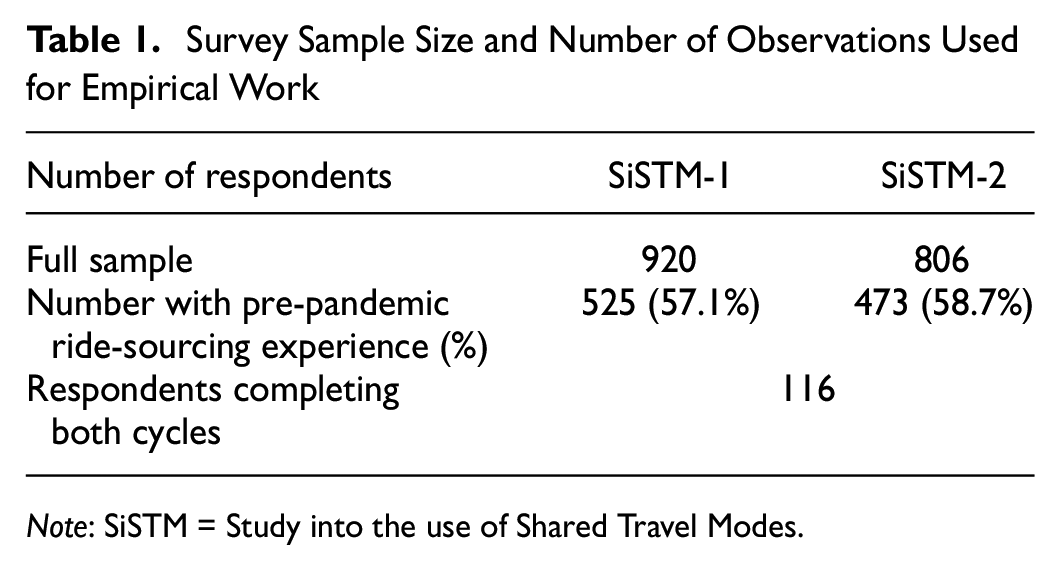
The sample sizes of the two survey cycles, and the number of observations used for the empirical work presented in this study, are presented in Table 1. The empirical work that was completed for this study utilized the information provided by respondents who indicated that they had pre-pandemic ride-sourcing experience.
Survey Sample Size and Number of Observations Used for Empirical Work
Note: SiSTM = Study into the use of Shared Travel Modes.
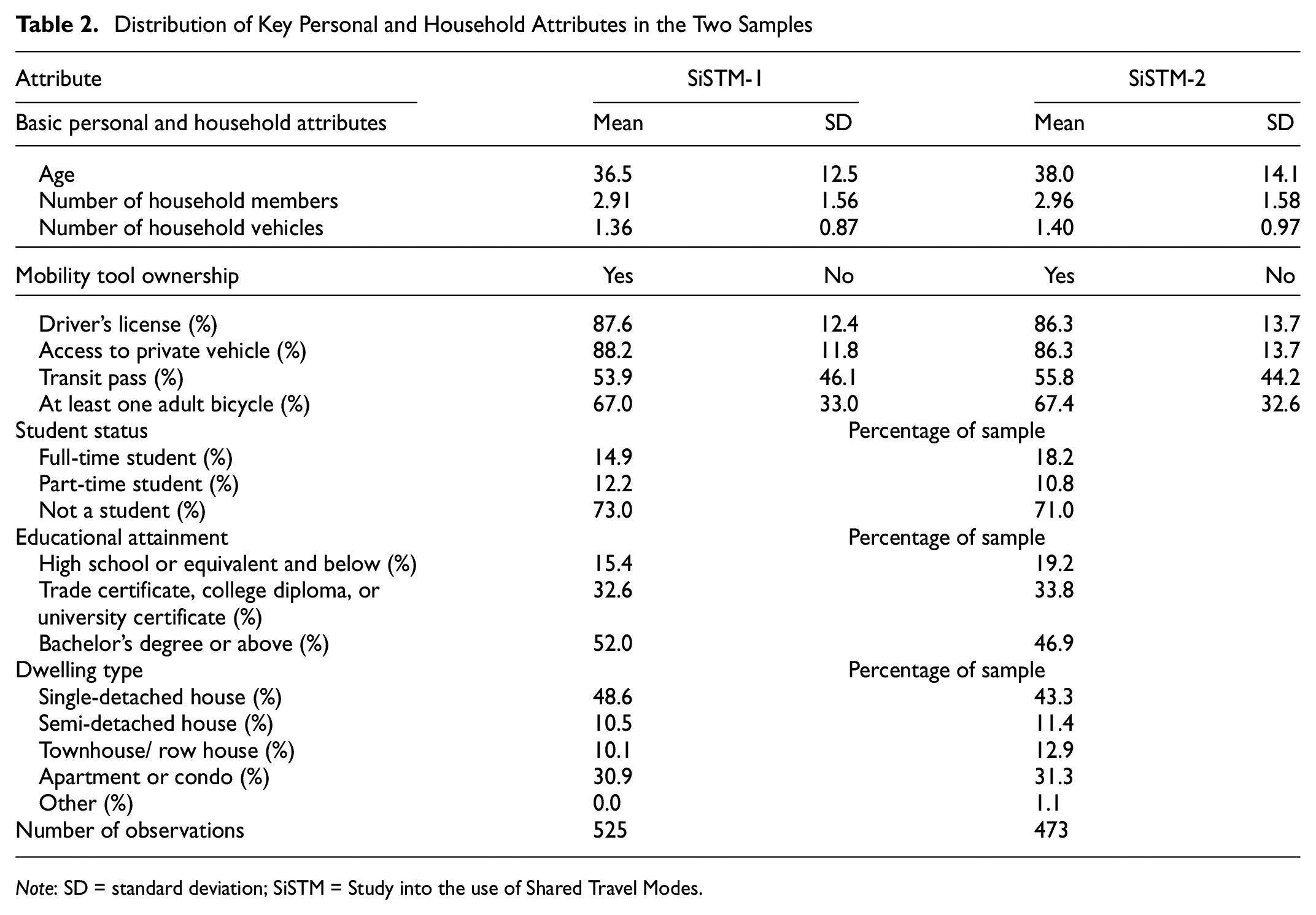
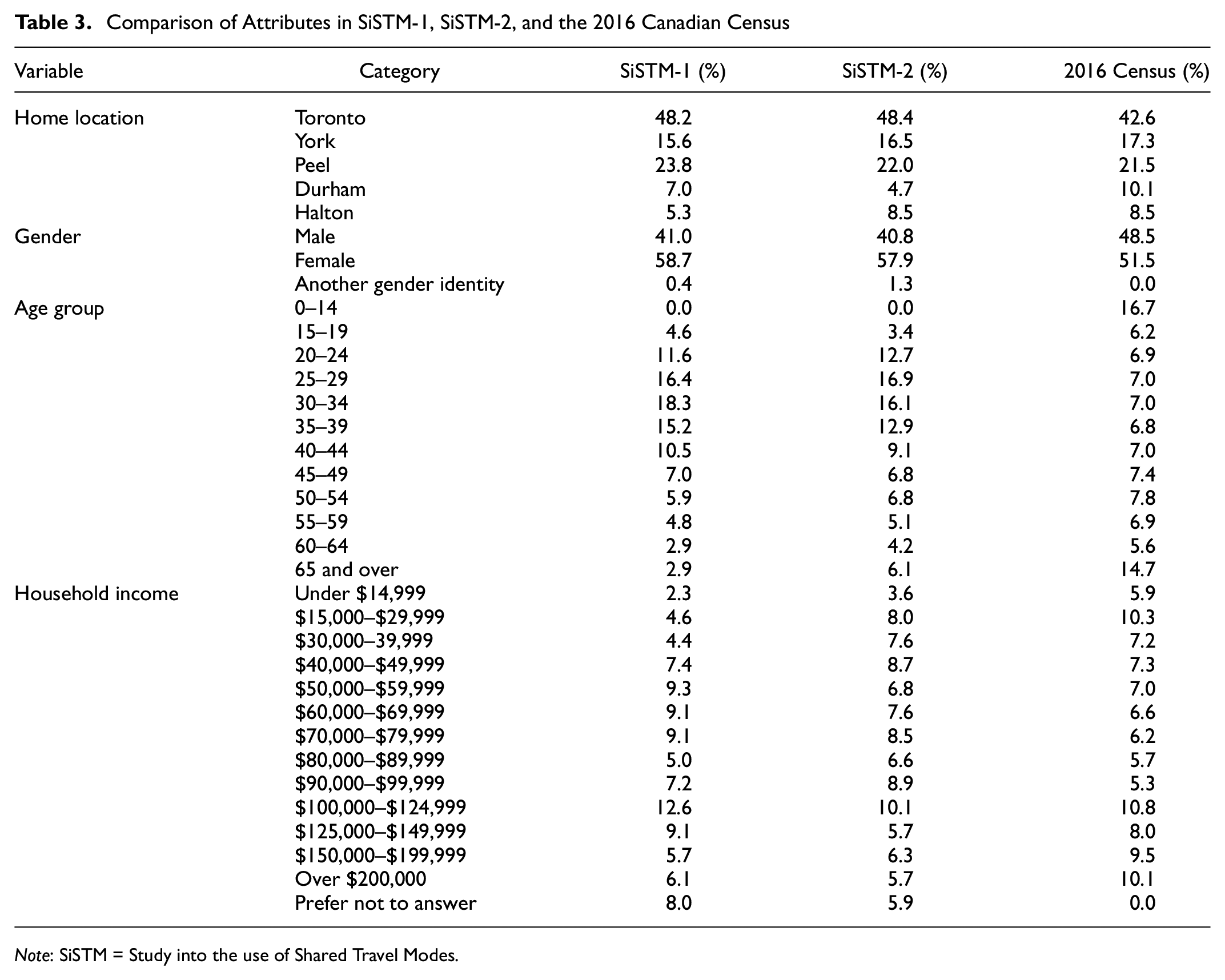
The distribution of key personal and household attributes of the SiSTM-1 and SiSTM-2 respondents with pre-pandemic ride-sourcing experience are summarized in Table 2. Furthermore, the distributions of home location, age, gender, and household income of the subset of SiSTM-1 and SiSTM-2 respondents are compared with those for the study area (based on data from the 2016 Canadian Census) in Table 3. The distribution of home locations is relatively consistent between the two survey cycles, with the samples over-representing Toronto residents and under-representing residents of York and Durham regions. Similarly, males were under-represented in both survey cycles. Individuals under the age of 45 are over-represented in the subset of SiSTM-1 and SiSTM-2 respondents, while those over 45 are under-represented. This is expected because ride-sourcing use tends to be more prevalent among younger individuals ( 12 ). The two survey cycles also appear to over-represent individuals from households that earn between $40,000 and $149,999 annually, while slightly under-representing individuals from other income groups. However, there are exceptions, including the under-representation of individuals from households earning between $80,000 and $89,999 in SiSTM-1 and the under-representation of households earning between $125,000 and $149,999 in SiSTM-2. The under-representation of older individuals and those from lower-income households tends to be observed in web-based surveys ( 56 ) and is likely exacerbated by the focus on those with pre-pandemic ride-sourcing experience in this study.
Distribution of Key Personal and Household Attributes in the Two Samples
Note: SD = standard deviation; SiSTM = Study into the use of Shared Travel Modes.
Comparison of Attributes in SiSTM-1, SiSTM-2, and the 2016 Canadian Census
Note: SiSTM = Study into the use of Shared Travel Modes.
As part of both SiSTM-1 and SiSTM-2, respondents with pre-pandemic ride-sourcing experience were asked two questions about their anticipated use of exclusive and shared ride-sourcing in the post-pandemic period; the structure of these questions is summarized in Figure 1. First, these respondents were asked whether they would continue using ride-sourcing post-pandemic. Respondents who indicated that they would continue to use ride-sourcing were then asked if they would change the frequency with which they use these services. The focus of this study is exclusive ride-sourcing, as this service tends to be used more often than shared ride-sourcing.
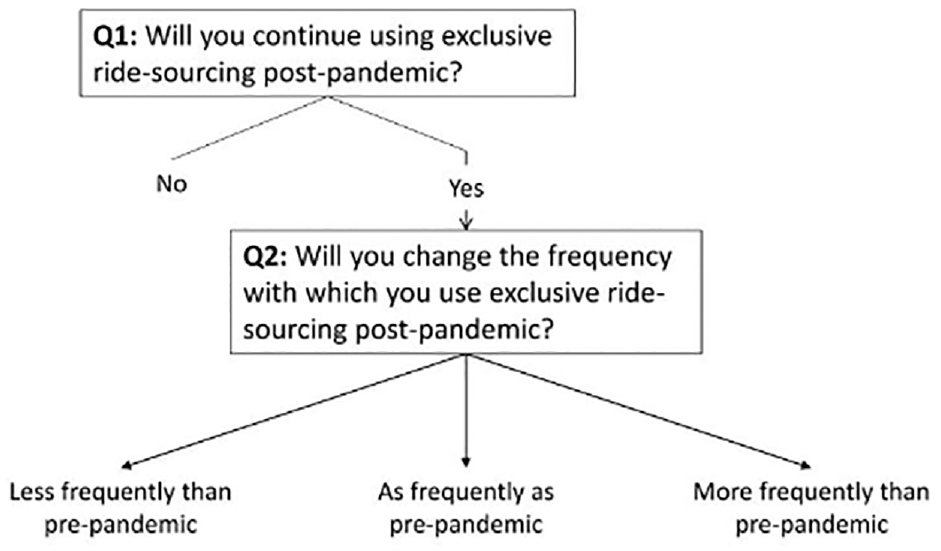
Structure of questions about anticipated post-pandemic ride-sourcing use.
As shown in Table 4, a subset of respondents in both survey cycles do not anticipate using exclusive ride-sourcing post-pandemic. This is consistent with the studies on anticipated post-pandemic transit use, such as Anke et al. (
25
) and Przybylowski et al. (
45
). The distribution of responses is relatively consistent across the two survey cycles, with a slight increase in the percentage of respondents who do not anticipate using exclusive ride-sourcing post-pandemic. Application of the Chi-squared test (
Summary of Anticipated Post-Pandemic Ride-Sourcing Use Among Respondents With Pre-Pandemic Ride-Sourcing Experience
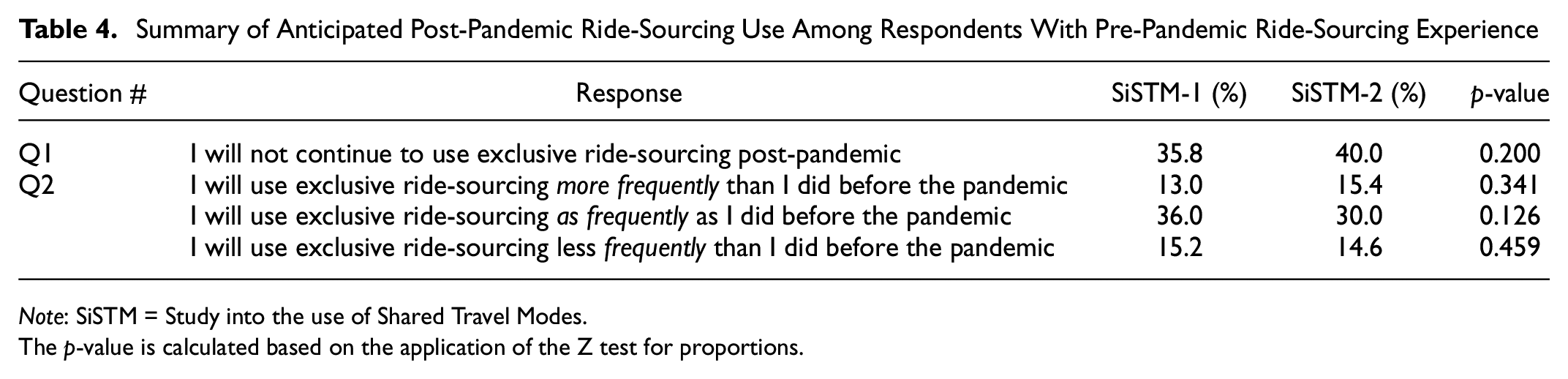
Note: SiSTM = Study into the use of Shared Travel Modes.
The p-value is calculated based on the application of the Z test for proportions.
Summary of Anticipated Post-Pandemic Ride-Sourcing Use, by Region
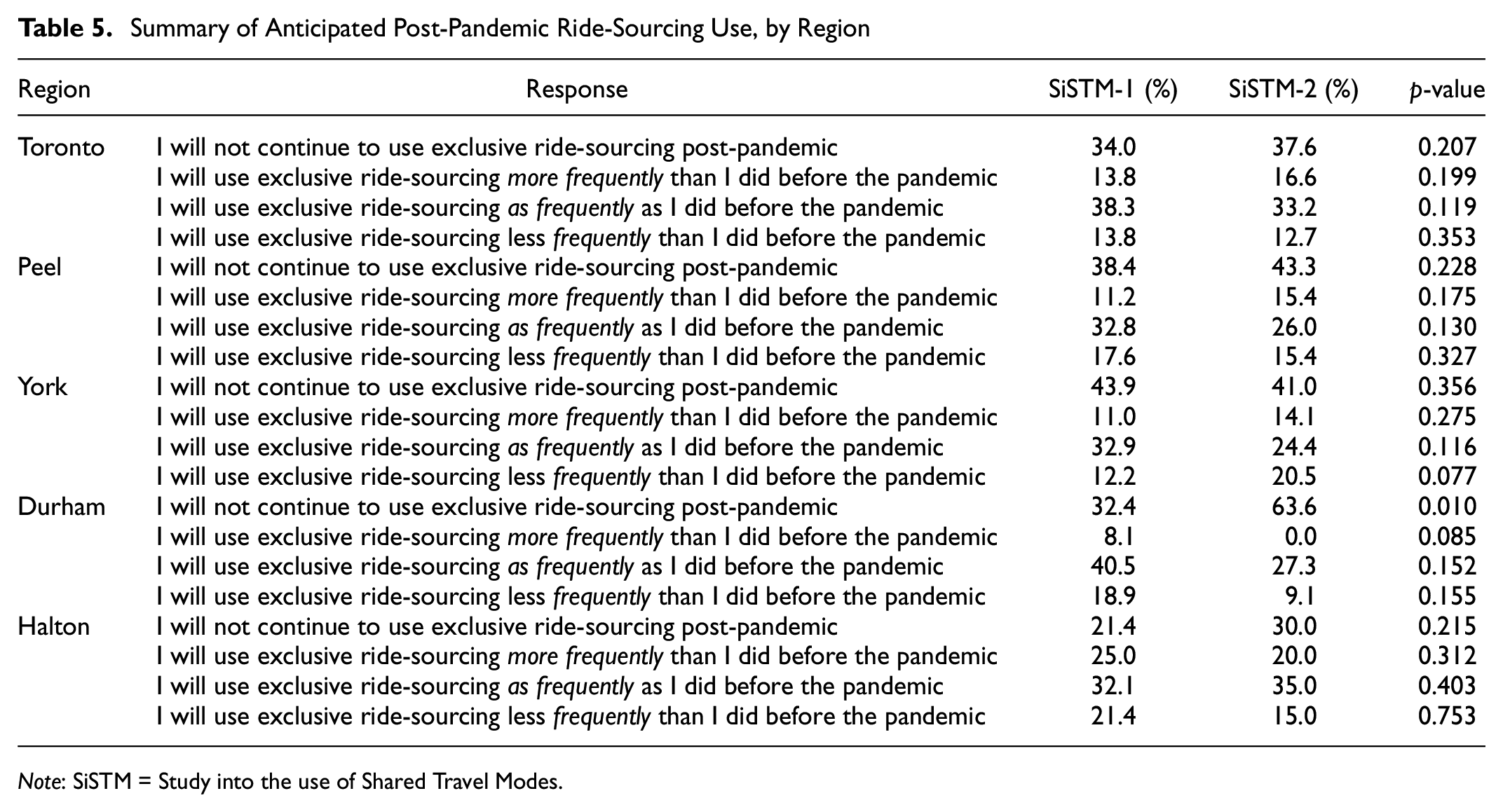
Note: SiSTM = Study into the use of Shared Travel Modes.
Empirical Model
To examine the factors influencing the responses to these two questions, 2SOGEV models are estimated using the SiSTM-1 and SiSTM-2 data. A two-stage model structure was applied in this study because of how the questions about anticipated post-pandemic ride-sourcing use were structured. As outlined in Figure 1, question 2 was only presented to respondents who answered yes to question 1. The 2SOGEV model combines a binary logit component and an ordered generalized extreme value (OGEV) component to account for the need for an individual to decide to continue using ride-sourcing post-pandemic first before they determine whether they will change the frequency with which they use these services. Let
The first stage of the model uses the binary logit formulation to examine the decision not to use exclusive ride-sourcing post-pandemic (question 1). Let the utility associated with person

In the binary logit formulation,

where


The second stage of the model examines the factors influencing the anticipated change in ride-sourcing frequency (question 2). Given the ordinal nature of the response options for this question (outlined in Figure 1), the second stage of the model utilized an ordered response framework. In this study, the formulation for the OGEV model outlined in Small (
58
) was used. Although the more traditional ordered logit and ordered probit models could also be used, the OGEV formulation was chosen because of its basis in utility maximization and the ability to specify a utility function for each outcome (
59
). The OGEV model is part of the GEV family of models first proposed by McFadden (
60
) and is applied to model discrete choices when the alternatives are ordinal in nature. This study utilizes the standard OGEV formulation, which assumes that correlations only exist between alternatives that are next to one another on the ordinal scale (i.e.,
Let

where
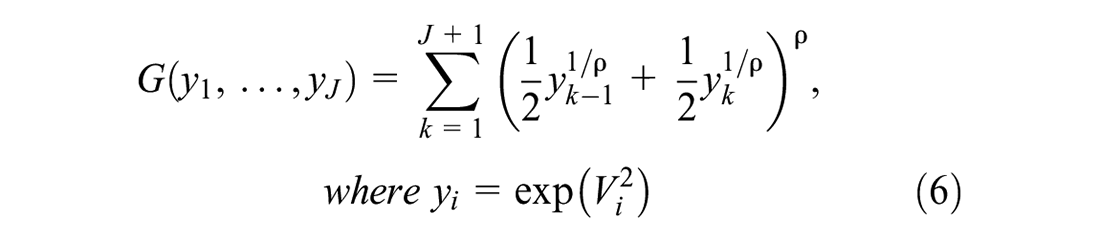
The probability of person

In this formulation,

The likelihood function of the 2SOGEV model is given by:

where
Results
To determine the final specification of the two 2SOGEV models, various variables pertaining to personal attributes, household characteristics, pandemic-related factors, and responses to attitudinal questions were tested. The decision to include a given variable in the model was made based on the sign and t-statistic of the corresponding parameter. Additionally, a few statistically insignificant parameters were retained in the model because of their insights into anticipated post-pandemic ride-sourcing usage. See Table A1 in Appendix A for the distributions of the explanatory variables included in the final specifications of the two models. The use of data from both cycles of the SiSTM survey was motivated by the desire to examine whether the determinants of anticipated post-pandemic ride-sourcing use have shifted between the conduct of the two cycles. The changes in the situation surrounding the pandemic between the conduct of SiSTM-1 and SiSTM-2, including the development of COVID-19 vaccines and the emergence of new variants, create the potential for such a shift to occur. However, it should be noted that SiSTM-1 and SiSTM-2 were not conducted as a panel survey, meaning the results reflect a snapshot of anticipated post-pandemic ride-sourcing use.
When testing variables to include in the model, the value of the
For this model, the variables originally excluded from the model were tested to determine whether they should be included in the model where
SiSTM-1 Model
As shown in Table 6, anticipated post-pandemic ride-sourcing usage among pre-pandemic ride-sourcing users in 2020 was influenced by socio-demographic attributes, pre-pandemic ride-sourcing usage, and pandemic-related factors. The binary logit component suggests that individuals who had refrained from participating in out-of-home activities were more likely to abstain from using exclusive ride-sourcing post-pandemic. Additionally, the belief that the risk associated with using these services post-pandemic will be greater than it was pre-pandemic also increased the likelihood of an individual abstaining from using exclusive ride-sourcing. This echoes the results of previous studies, which have found evidence that greater perceptions of risk were associated with a reduced willingness to use public transit in the post-pandemic period ( 28 , 45 ). Conversely, those who reported that they must be physically present at their workplace and those who indicated that they maintained their normal routine despite the pandemic were more likely to continue using exclusive ride-sourcing post-pandemic. This is consistent with the work of Mashrur et al. ( 48 ), who found that individuals who were working in-person displayed less of a tendency to adopt protective measures, and that the inclination to adopt such measures increased the likelihood of an individual abstaining from using transit in the post-pandemic period.
Final Specification of the SiSTM-1 Model
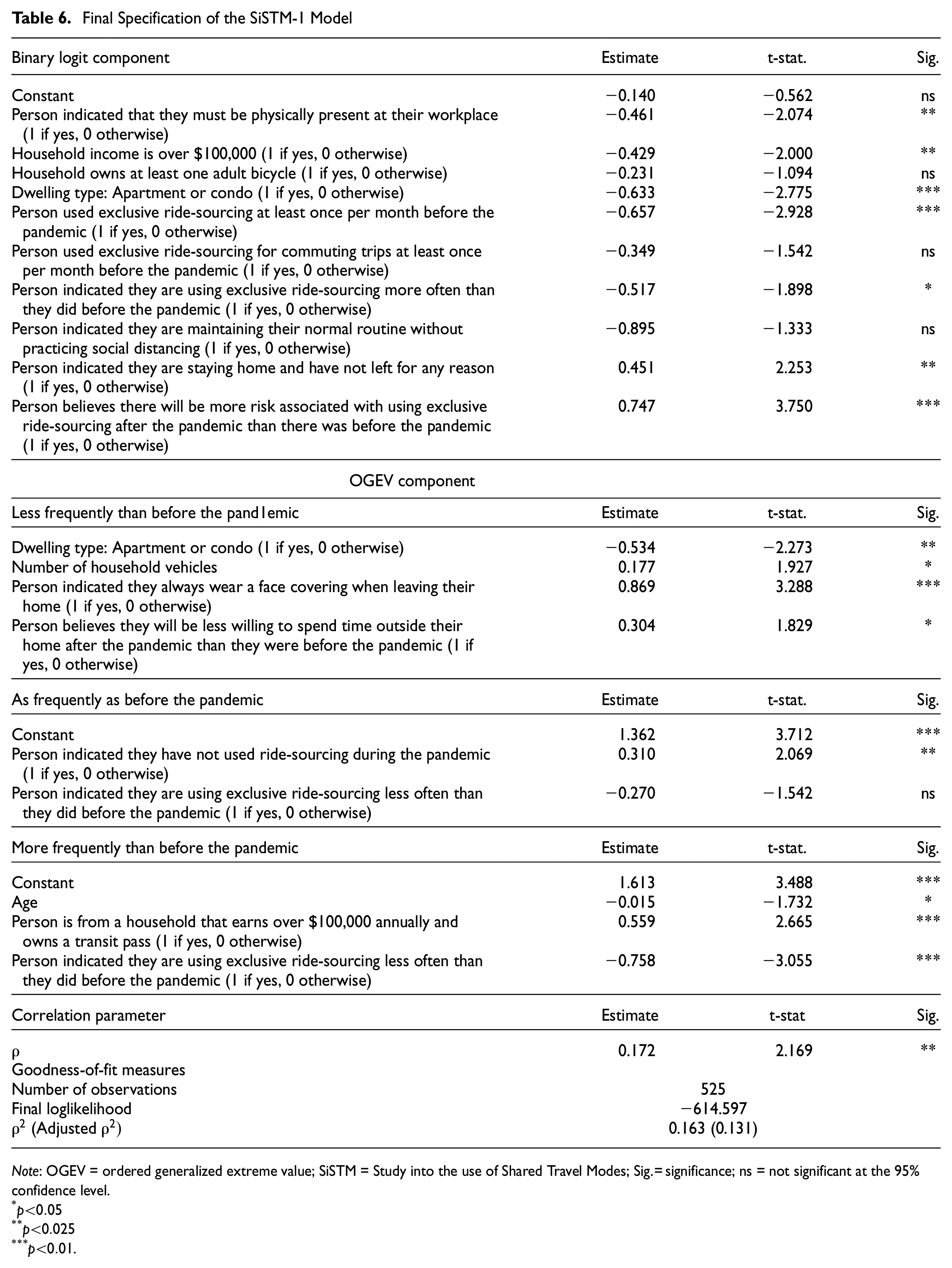
Note: OGEV = ordered generalized extreme value; SiSTM = Study into the use of Shared Travel Modes; Sig. = significance; ns = not significant at the 95% confidence level.
Similarly, individuals from households earning over $100,000 annually and those who live in apartments and condominiums were less likely to report that they would not use exclusive ride-sourcing in the post-pandemic period. The former was also reported by Awad-Núñez et al. ( 50 ), while the latter likely stems from the tendency for ride-sourcing adoption to be more prevalent among those living in areas with higher residential densities ( 66 ). Additionally, pre-pandemic ride-sourcing usage appears to influence anticipated post-pandemic usage. In particular, individuals who reported using ride-sourcing at least once a month pre-pandemic, both overall and specifically for commuting trips, were more likely to indicate that they would continue to use exclusive ride-sourcing post-pandemic. This suggests that frequent pre-pandemic ride-sourcing users are more likely to continue using ride-sourcing post-pandemic. Besides, those who increased their use of exclusive ride-sourcing during the pandemic were also more likely to indicate that they would continue to use this service post-pandemic.
The impacts of ride-sourcing usage during the pandemic on anticipated post-pandemic changes in ride-sourcing use are also observed in the OGEV component of the model. For example, individuals who reported reducing their use of exclusive ride-sourcing in response to the pandemic were more likely to indicate that they would use this service less often in the post-pandemic period. For these individuals, it appears that the changes that resulted from the pandemic will persist during the post-pandemic period. However, individuals who had not used ride-sourcing during the pandemic were more likely to return to their pre-pandemic usage frequency. This could stem from the tendency for ride-sourcing to be used for social, recreational, and occasional trips, which may not have been made during the pandemic because certain businesses were ordered to close temporarily ( 12 ).
Anticipated changes in ride-sourcing frequency also appear to be influenced by socio-demographic and household attributes. For example, greater household vehicle ownership was found to increase the likelihood of an individual indicating that they would use ride-sourcing less frequently post-pandemic. This is expected, as the on-demand access to a private vehicle provided to customers by ride-sourcing services is more impactful for those who do not have access to their own private vehicle. Older respondents were also found to be less likely to indicate they would use ride-sourcing more often than they did before the pandemic, which is consistent with the tendency for frequent ride-sourcing usage to be more common among younger individuals ( 67 ). Interestingly, individuals who owned a transit pass and belonged to a household that earned over $100,000 annually were more likely to report increasing their use of ride-sourcing post-pandemic. This would suggest that these individuals could replace transit with ride-sourcing for some of their trips, which would negatively affect transit ridership and sustainability.
SiSTM-2 Model
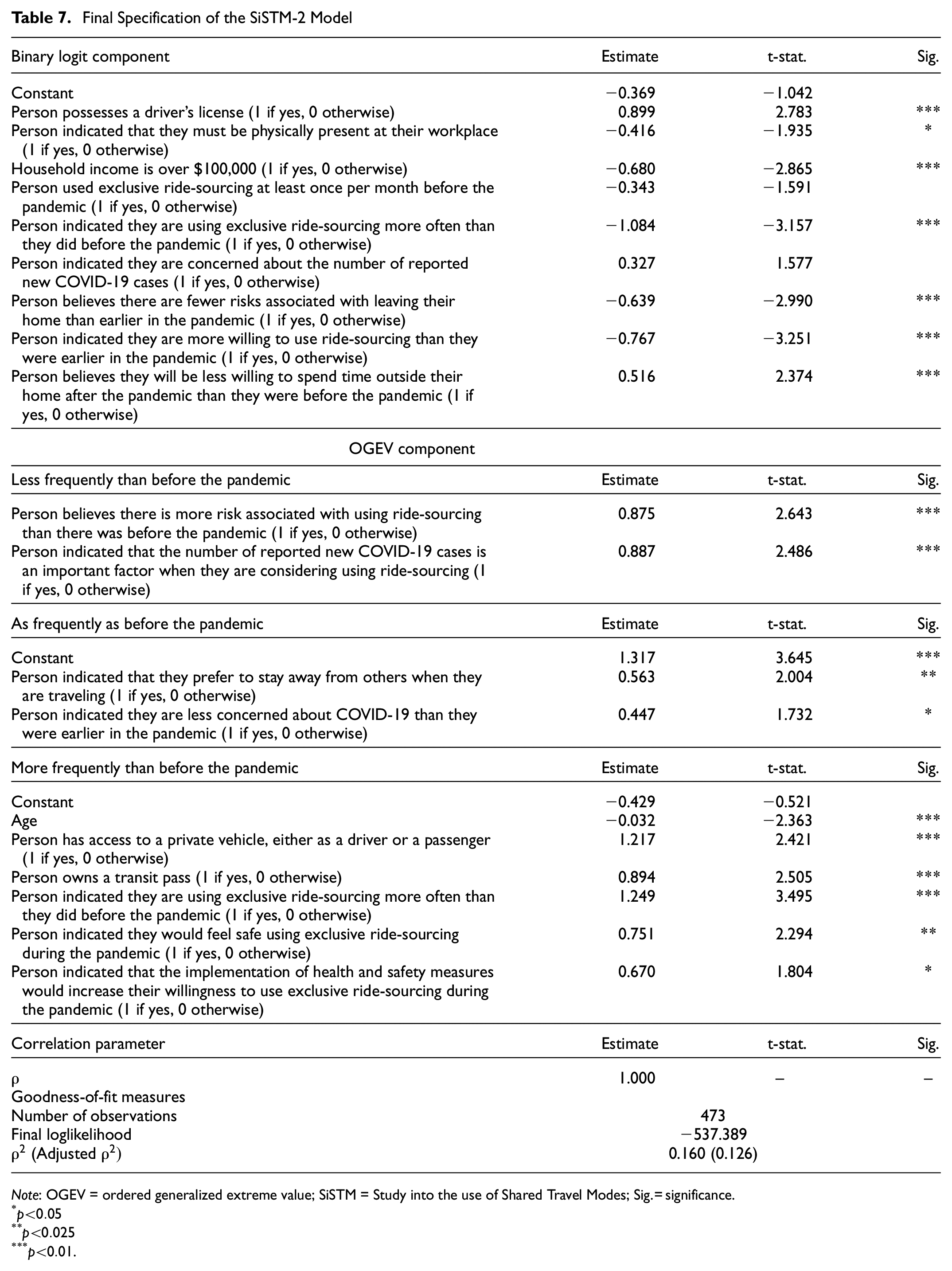
As summarized in Table 7, only four variables are present in both the SiSTM-1 and SiSTM-2 models, with the signs of the corresponding parameters being consistent in the two models. In contrast to the SiSTM-1 model, possession of a driver’s license increased the likelihood that an individual would abstain from using exclusive ride-sourcing post-pandemic. This could suggest that these individuals will substitute driving for ride-sourcing usage for some of their pre-pandemic ride-sourcing trips. Such a change would represent a continuation of the increased preference for individual modes that resulted from the pandemic. A similar result was observed for those who indicated that they are concerned about the number of new reported COVID-19 cases and who believe they will be less willing to spend time outside of their home post-pandemic than pre-pandemic. This echoes the findings of studies on the impacts of attitudes and perceptions of risk on mode choices during the pandemic ( 45 , 49 ). Notably, changes in attitudes during the pandemic were also found to affect the decision to use ride-sourcing post-pandemic. In particular, believing the risk associated with leaving their home had declined throughout the pandemic and being more willing to use ride-sourcing compared with earlier in the pandemic increased the likelihood of ride-sourcing use post-pandemic. This result highlights that changes in perceptions of risk throughout the pandemic also have implications for post-pandemic ride-sourcing usage.
Final Specification of the SiSTM-2 Model
Note: OGEV = ordered generalized extreme value; SiSTM = Study into the use of Shared Travel Modes; Sig. = significance.
The results of the OGEV component of the SiSTM-2 model also highlight the impacts of attitudes and perceptions of risk on anticipated post-pandemic changes in ride-sourcing use. For example, those who indicated that the number of reported new COVID-19 cases was an important factor when considering using ride-sourcing were more likely to state that they would reduce their use of ride-sourcing post-pandemic. A similar result was observed by Aaditya and Rahul ( 27 ), who found that greater awareness of COVID-19 was associated with an increased preference for private vehicles. Interestingly, those who prefer to stay away from others while traveling and who are less concerned about COVID-19 than earlier in the pandemic were more likely to maintain their ride-sourcing frequency. Similar to the results of the SiSTM-1 model, these individuals may be refraining from using ride-sourcing during the pandemic but will return to using these services in the post-pandemic period. Besides, transit pass ownership and having access to a private vehicle were associated with a greater likelihood of increasing ride-sourcing use post-pandemic. The former could stem from the tendency for private vehicle owners to substitute ride-sourcing for driving and taxi trips based on the desire to still travel by automobile ( 68 ). The latter could have a detrimental impact on transit ridership if ride-sourcing is used to replace public transit. However, the impacts could be lessened if these individuals use ride-sourcing as an access or egress mode, or if the additional ride-sourcing trips are made during times and at locations where transit service is poor ( 69 ).
Comparison of Direct Elasticities
As discussed in the previous section, the determinants of anticipated post-pandemic ride-sourcing usage have evolved as the pandemic has progressed. However, four variables appeared in the binary logit component of both 2SOGEV models: the need to be physically present at the workplace, household income, pre-pandemic frequency of ride-sourcing usage, and increasing ride-sourcing usage during the pandemic. To determine whether the influence of these variables has changed during the pandemic, the direct elasticity was calculated for each individual in the two samples, and a kernel density plot was created for each variable (see Figure 2). The elasticity values presented in this study represent the percentage change in the probability of a person abstaining from using exclusive ride-sourcing post-pandemic if the value of the binary variable is equal to one, compared with if the value was equal to zero. Additionally, the Kolmogorov–Smirnov (KS) test was applied to determine whether the differences in the distribution of direct elasticity across the two survey cycles was statistically significant (the
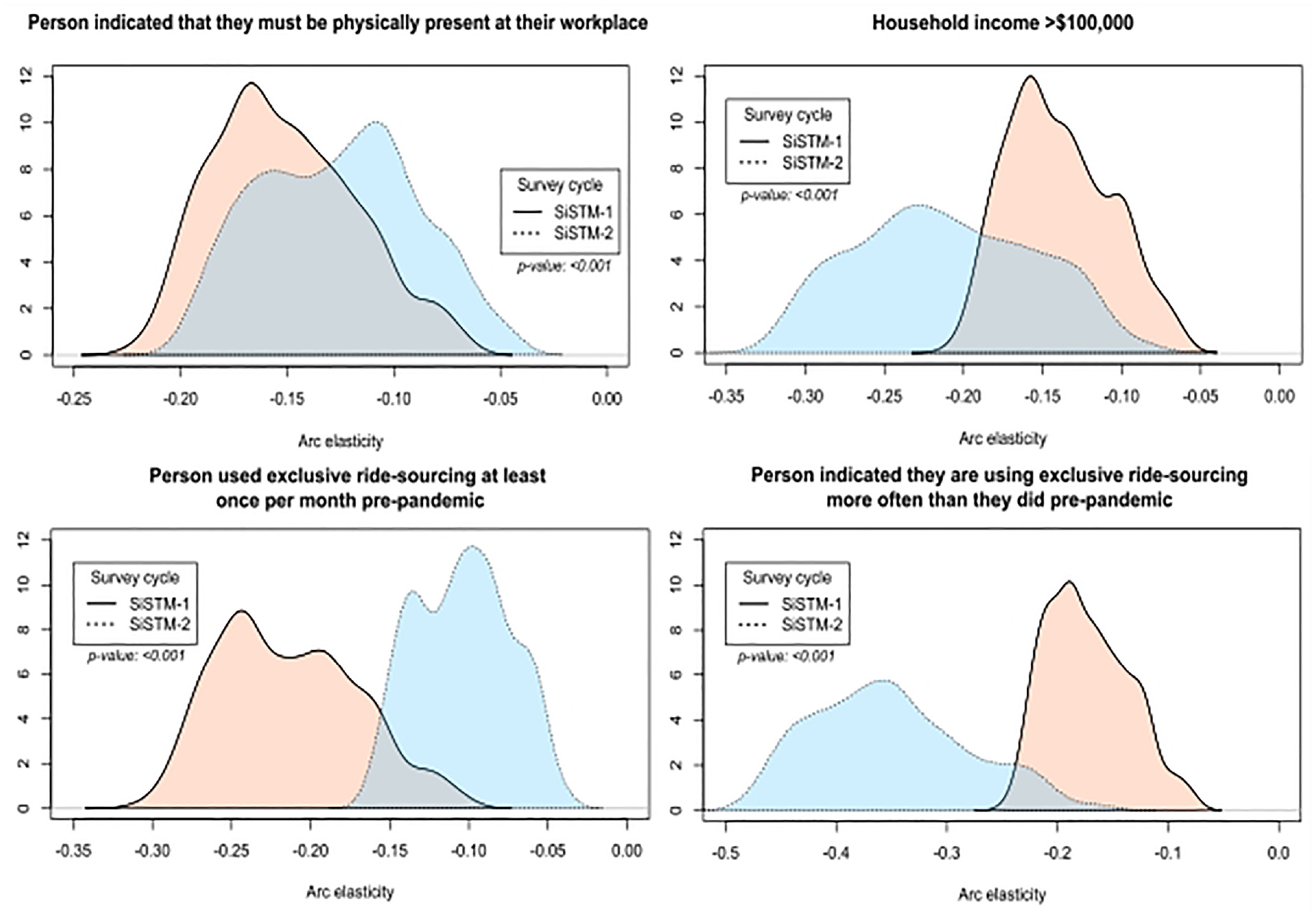
Distributions of the direct elasticity of the decision to abstain from using exclusive ride-sourcing post-pandemic in the SiSTM-1 (red) and SiSTM-2 (blue) models (variable names denoted in boldface).
As shown in Figure 1, the distributions of the arc elasticity values from the two survey cycles differ. This suggests that the influence of the four variables changed between the conduct of SiSTM-1 and SiSTM-2. This is supported by the results of the KS tests, which suggest that the distributions of the direct elasticities of these variables differ between the two survey cycles. Interestingly, the change in the influence of the common variables between the two cycles is mixed. In particular, the need to be physically at the workplace and pre-pandemic frequency of ride-sourcing usage, on average, had less of an impact on the decision to abstain from using exclusive ride-sourcing post-pandemic among SiSTM-2 respondents compared with SiSTM-1 respondents. The decline in the influence of the need to be physically present at the workplace could stem from changes in the level of comfort associated with spending time outside of one’s home between the conduct of the two cycles. By the time SiSTM-2 was conducted, COVID-19 vaccinations were available to the public, and the GTA had experienced two periods when public health measures were relaxed. Besides, the reduced influence of pre-pandemic ride-sourcing frequency could reflect the evolution of travel habits throughout the pandemic, which may have lessened the influence of pre-pandemic habits.
Moreover, the increase in ride-sourcing use during the pandemic is more influential for SiSTM-2 respondents than for SiSTM-1 respondents. This could stem from the administration of SiSTM-2 being closer to the post-pandemic period. Conversely, belonging to a household that earns over $100,000 annually and increasing ride-sourcing usage during the pandemic were more impactful for SiSTM-2 respondents. This shift could also reflect the influence of pandemic travel habits on anticipated post-pandemic travel behavior and the tendency for higher-income individuals to favor travel by private vehicle ( 7 , 15 ).
Discussion
The results of this study underscore the potential for post-pandemic ride-sourcing usage to differ from pre-pandemic ride-sourcing usage. The discrepancies between pre- and post-pandemic ride-sourcing use can be attributed to two key factors. First, certain pre-pandemic ride-sourcing users believe they will abstain from using these services post-pandemic. Second, certain pre-pandemic ride-sourcing users believe their post-pandemic ride-sourcing frequency will differ from their pre-pandemic frequency. The final specifications of the 2SOGEV models help shed light on the factors that influence the decision to refrain from using ride-sourcing in the post-pandemic period, and the factors influencing the decision to change the frequency with which ride-sourcing is used. As the results have shown, anticipated post-pandemic ride-sourcing usage can vary based on socio-demographic attributes, perceptions of risk, and the extent to which a person used ride-sourcing before and during the pandemic. The potential shifts in ride-sourcing usage that have resulted from the pandemic have important planning implications for the post-pandemic period, as changes in the use of these services affect the utilization of other modes.
When an individual uses ride-sourcing less often post-pandemic than pre-pandemic, some or all of these trips will be made using other modes. Although there is evidence that the availability of ride-sourcing services induces travel demand, studies on the topic typically find that so-called induced trips represent a relatively small percentage of ride-sourcing trips ( 9 ). The final specifications of the 2SOGEV models can also help shed light on the modes that could be used to replace ride-sourcing in the post-pandemic period. Given the impacts of household vehicle ownership on the likelihood of an individual reducing their use of ride-sourcing, it is likely that these individuals will replace some of their pre-pandemic ride-sourcing trips with trips made by private vehicles. The influence of the possession of a driver’s license on post-pandemic ride-sourcing use also suggests that a similar shift could occur among those who will abstain from using these services in the post-pandemic period. Perhaps counterintuitively, the replacement of ride-sourcing with driving could also reduce VKT if it results in a reduction in deadheading; previous studies have estimated that 40 to 50% of the distance covered by drivers is spent deadheading ( 70 ).
Moreover, the findings suggest that pandemic-era perceptions of risk appear to influence the decision to reduce ride-sourcing usage (or abandon it altogether). In particular, individuals who expressed concern about the daily reported number of COVID-19 cases and those who indicated that they had stayed home during the lockdown period were more likely to indicate that they would refrain from using ride-sourcing in the post-pandemic period. Based on the findings of studies on the impacts of perceptions of risk on mode choice decisions, this could suggest that risk averse individuals could use private vehicles or active modes to replace some of their ride-sourcing trips post-pandemic. Given that the trip length of a relatively large percentage of ride-sourcing trips tends to be less than 10 km ( 71 , 72 ), policies could be implemented to encourage ride-sourcing users to use more sustainable modes to make some of the trips for which, pre-pandemic, they used ride-sourcing services. In particular, pedestrian and cycling facilities could be improved in areas with relatively high volumes of ride-sourcing trip origins and destinations, which could be identified using trip records. Furthermore, these facilities could be improved in areas with higher population and employment densities, which also tend to generate more ride-sourcing trips ( 73 , 74 ).
The results also highlight the potential challenges associated with encouraging individuals to use public transit to replace some of their pre-pandemic ride-sourcing trips, given that transit use involves greater exposure to strangers while traveling. To address these challenges, measures such as increasing service frequency and providing real-time information on vehicle occupancies could help increase public confidence in transit—a key factor in the recovery of transit ridership ( 75 ). Besides, the results of the SiSTM-2 model suggest that transit pass ownership is associated with a greater likelihood of an individual anticipating that they would use ride-sourcing more often post-pandemic than they did pre-pandemic. This change can potentially increase VKT (and, by extension, congestion and emissions), particularly if the increase in ride-sourcing use results in a decline in transit use.
Another key finding of this study is that anticipated post-pandemic ride-sourcing usage is influenced by both pre-pandemic and pandemic usage. This influence could stem from the tendency for pre-change habits to affect post-change behaviors in situations where the context in which a choice is made changes ( 49 ). A potentially important implication of this finding is that, besides socio-demographic attributes and attitudinal factors, post-pandemic ride-sourcing usage could also be affected by the usage of these services before and during the pandemic. Consequently, studies that are conducted in the post-pandemic period should explore whether ride-sourcing usage during this period is influenced by the utilization of these services in earlier periods. Understanding the determinants of post-pandemic ride-sourcing use will be an important aspect of transportation planning, particularly as emerging modes are incorporated into large-scale travel demand models.
Additionally, given the potential for attitudes and perceptions to influence anticipated post-pandemic ride-sourcing use, anticipated post-pandemic ride-sourcing use may be also influenced by the public health measures that were in place at the time of the surveys. Given that both SiSTM-1 and SiSTM-2 were conducted during periods when the daily reported number of COVID-19 cases was relatively low and public health measures were fairly relaxed, respondents may have been more optimistic than if the surveys were conducted during lockdowns. Moreover, anticipated post-pandemic ride-sourcing use could also be affected by the changes in public health measures that preceded the survey. To help identify the potential impacts of these factors on post-pandemic ride-sourcing use, future surveys could be conducted during periods when the daily reported number of COVID-19 cases is relatively high or during periods when public health measures are relatively strict. This information can be used in conjunction with the findings of this study to develop a more holistic understand of anticipated post-pandemic ride-sourcing usage.
Ultimately, the extent to which post-pandemic changes in ride-sourcing usage affect the transportation network will be determined by the net increase (or decrease) in ride-sourcing trips and the rate of adoption among non-users moving forward. Consequently, governments should continue monitoring ride-sourcing trip patterns to help understand spatial and temporal patterns of ride-sourcing use as the situation surrounding the pandemic continues to evolve. This information would offer insights into how during- and post-pandemic ride-sourcing use differs from pre-pandemic use, which could affect the impacts of these services on the transportation network. Understanding the potential discrepancies between pre-pandemic and post-pandemic ride-sourcing use is essential, as it offers insights into whether the pre-pandemic impacts of these services on the transportation network will persist post-pandemic. These insights can help inform policies to regulate the operations of ride-sourcing companies and future efforts to monitor the use and impacts of ride-sourcing services.
Conclusions and Future Work
This study investigated the anticipated post-pandemic utilization of ride-sourcing among pre-pandemic ride-sourcing users in the GTA at two different stages of the pandemic. The primary goals of this study were to explore the determinants of anticipated post-pandemic ride-sourcing usage, investigate whether the determinants have changed as the pandemic has progressed, and examine whether the influence of said determinants has changed over time. To achieve these goals, survey data collected in July 2020 and July 2021 were used to estimate 2SOGEV models. This study aims to contribute to the literature by offering an evidence-based examination of anticipated post-pandemic ride-sourcing use in the GTA among those with pre-pandemic ride-sourcing experience. To the authors’ knowledge, there has yet to be a study that has utilized statistical models to examine the determinants of anticipated ride-sourcing usage during the period of time when COVID-19 is no longer a public health threat.
The results highlight how the determinants of anticipated post-pandemic ride-sourcing usage, and the influence of these determinants, have shifted as the pandemic has progressed. In addition to socio-demographic attributes and perceptions of risk, the utilization of ride-sourcing during the pre-pandemic and pandemic periods was found to affect the anticipated usage of these services in the post-pandemic period. Overall, the results underscore that post-pandemic ride-sourcing usage may differ from pre-pandemic usage; however, additional work will be needed to examine if this will be the case once COVID-19 is no longer considered to be a public health threat. Given the potential for the availability of ride-sourcing services to influence activity-travel behavior, differences between pre-pandemic and post-pandemic ride-sourcing use can influence post-pandemic travel patterns and the associated externalities. Moreover, understanding the determinants of post-pandemic ride-sourcing use is an important step in incorporating these services into large-scale travel demand models, which play an important role in evidence-based planning.
A key limitation of this study is that the analysis was based on stated intention information about the anticipated usage of ride-sourcing services in the post-pandemic period. The issue with using this type of data is that the hypothetical nature of the choice context can result in discrepancies between the expected behavior of the respondents and their actual behavior. To help address this issue, studies of this nature should continue to be conducted to understand the evolution of anticipated post-pandemic ride-sourcing usage as the pandemic continues to progress. Another limitation of this study is that it utilizes information from pre-pandemic ride-sourcing users collected through a web-based survey. This approach to data collection likely limits the generalizability of the results to the general population and given the lack of a comprehensive dataset on ride-sourcing users, it is difficult to say whether the sample is representative of this segment of the population.
Moreover, the findings of this study are inherently influenced by the attributes of the study area and its residents, including land-use patterns, the structure of the transportation network, and attitudes toward different modes of travel. Consequently, although the findings can shed light on the potential determinants of anticipated post-pandemic ride-sourcing use in other areas, differences in these contextual factors will influence the applicability of the results. There are several approaches that future studies could take to extend the work presented in this study. First, future studies could apply a Heckman-style model to allow for a correlation between the decision to use ride-sourcing in the post-pandemic period and the decision to change the frequency of ride-sourcing usage (through the correlation of
Supplemental Material
sj-docx-1-trr-10.1177_03611981231155434 – Supplemental material for How Has Anticipated Post-Pandemic Ride-Sourcing Use Changed During the COVID-19 Pandemic? Evidence from a Two-Cycle Survey of the Greater Toronto Area
Supplemental material, sj-docx-1-trr-10.1177_03611981231155434 for How Has Anticipated Post-Pandemic Ride-Sourcing Use Changed During the COVID-19 Pandemic? Evidence from a Two-Cycle Survey of the Greater Toronto Area by Patrick Loa, Felita Ong and Khandker Nurul Habib in Transportation Research Record
Footnotes
Author Contributions
The authors confirm contribution to the paper as follows: study conception and design: P. Loa, K.N. Habib; data collection: P. Loa, F. Ong; analysis and interpretation of results: P. Loa, F. Ong, K.N. Habib; draft manuscript preparation: P. Loa, F. Ong, K.N. Habib. All authors reviewed the results and approved the final version of the manuscript.
Declaration of Conflicting Interests
The author(s) declared no potential conflicts of interest with respect to the research, authorship, and/or publication of this article.
Funding
The author(s) received no financial support for the research, authorship, and/or publication of this article.

Supplemental Material
Supplemental material for this article is available online.
References
Supplementary Material
Please find the following supplemental material available below.
For Open Access articles published under a Creative Commons License, all supplemental material carries the same license as the article it is associated with.
For non-Open Access articles published, all supplemental material carries a non-exclusive license, and permission requests for re-use of supplemental material or any part of supplemental material shall be sent directly to the copyright owner as specified in the copyright notice associated with the article.
