



Abstract
Research related to parental norms on teen driver distractions is limited, although distracted driving is a serious concern for teens. This paper investigates whether teens’ perception of their parent’s engagement in and approval of distractions is different to what their parent reports, and whether any discrepancy relates to teens’ self-reported distraction engagement frequency. It also investigates whether there are discrepancies between the parents’ perception of their teen’s distraction engagement frequency and the teen’s self-report. A distinction is made between legal and illegal distractions as drivers may build stronger norms around illegal distractions. Analyses were conducted on data from 63 teen–parent dyads from Ontario, Canada, who completed an online survey, including self-reported engagement in 16 distractions and related descriptive (what parents/teens do) and injunctive (what parents approve/disapprove) norms. Dyads were divided into two groups: higher-engagers (n = 27) and lower-engagers (n = 36) based on teens’ self-reported engagement frequency. Higher-engagers reported engaging in both distraction types (legal and illegal) more often than their parent did; there was no difference between lower-engagers and their parent. Higher-engagers’ perception of their parent’s engagement in and approval of legal distractions was higher than their parent’s self-report, while these parents perceived their teen’s engagement in both distraction types to be lower compared with the teen’s self-report. The only discrepancy observed for lower-engagers was that teens’ perception of their parent’s approval of legal distractions was higher than parents’ self-reports. Our findings suggest that misperceptions may exist for teens who engage more frequently in distractions and for their parents, who may benefit from relevant interventions.
Keywords
Teen drivers have an elevated crash risk relative to adult drivers ( 1 ). In 2019, drivers who were 19 years old or younger constituted 4.5% of all licensed drivers in Canada; however, 15- to 19-year-old drivers accounted for 4.9% of driver fatalities and 6.3% of serious injuries ( 2 ). Similarly, in 2019, 15- to 20-year-old drivers constituted 5.2% of all licensed drivers in the U.S. ( 3 ); however, they disproportionately accounted for 7.8% of those involved in fatal crashes ( 4 ). One of the reasons for this elevated crash risk is driver engagement in distractions (i.e., tasks that are secondary to driving) (5, 6). In 2019, distractions contributed to 8% of 15- to 20-year-old U.S. drivers’ fatal crashes compared with 5.7% for those aged 20+ ( 7 ). These statistics are corroborated by research conducted in driving simulators and on the road: compared with adult drivers, teens have worse vehicle control skills, less effective visual search behaviors, less awareness of risky situations, and fewer attentional resources available for secondary tasks as they have not yet automatized many driving skills (8–10).
Social norms are among the many factors that guide driver distraction engagement ( 11 ), and have been shown to be more significant for younger drivers (30 and under) compared with older drivers (30+) ( 11 ). Teens are particularly sensitive to social norms (12, 13); however, research related to teen driver distraction engagement and social norms is limited. A better understanding of this topic is needed to inform the design of interventions targeting teen drivers. A relevant intervention based on parental norms ( 14 ) and peer norms ( 15 ) was proposed and evaluated in two simulator studies. Normative feedback consisting of a post-drive report was provided to teens on their distracted driving behavior, comparing their distraction engagement with their parent’s ( 14 ) or peers’ ( 15 ). Other types of feedback included real-time feedback in the form of auditory warnings based on eyes off-road time, and post-drive feedback that provided a report on teens’ distracted driving behavior. There was a dramatic decrease in distraction engagement behaviors for teens who received social norms feedback compared with real-time and post-drive feedback, suggesting that normative feedback can guide intervention designs.
In general, parents are important sources of influence on teens (12, 13). Through the analysis of approximately 160,000 teen–parent dyads, Ferguson et al. ( 16 ) found that poor parental crash and violation records were predictive of poor teen driving records. Similarly, Wilson et al. ( 17 ) and Bianchi and Summala ( 18 ) reported associations between parents’ and their teen’s at-fault collisions and self-reported driving behaviors, respectively. There is also research that has studied parental influences with regard to teen driving more explicitly. For example, Hartos et al. ( 19 ) reported a negative correlation between teens’ risky driving behaviors and parental control (e.g., parents’ rules for their teens), monitoring (e.g., parental knowledge of their teen’s driving activities), and driving restrictions (e.g., number of passengers allowed with teen drivers). Similarly, Shope et al. ( 20 ) found an association between low parental monitoring and higher risk of teen driving violations and serious crashes.
The Theory of Reasoned Action ( 21 ) considers subjective norms as one of the determinants of behavior. It suggests that people’s perception that important social referents expect them to exhibit or refrain from a behavior, what Cialdini et al. ( 22 ) refers to as injunctive norms, exerts influence on their decision to engage in the behavior. The Theory of Reasoned Action also considers people’s perception of what others typically do, what Cialdini et al. ( 22 ) refers to as descriptive norms. A phone survey of 403 teen–parent dyads found that parents’ descriptive norms (actual and perceived) were predictive of teens’ engagement in driver distractions ( 23 ), and that teens and their parents appear to overestimate each other’s distraction engagement (descriptive norms) as indicated by the discrepancies in their self-reports ( 24 ). Injunctive norms were measured by asking parents about their approval of their teen’s engagement in driving distractions (actual injunctive norms); however, the survey did not capture teens’ perceived injunctive norms. Arguably, perceptions may be more important than actual norms in shaping behavior. In fact, it was found that teens’ self-reported distraction engagement was better predicted by teens’ perceptions of their parent’s behavior than the parent’s self-report ( 24 ). Overall, little is known about whether teens misperceive their parent’s approval of distractions (i.e., injunctive norms) and how this relates to their engagement in distractions. Additionally, the legality of distractions as it relates to social norms has not yet been considered in the context of teen driver distractions. The relationship between norms and teen behaviors may be different across legal versus illegal distractions, as illegal distractions are generally riskier and have received more prevention efforts.
The present study examines if there are differences between perceived and self-reported norms (both descriptive and injunctive) between teens and their parents to investigate whether misperceptions may exist and whether these potential misperceptions relate to teens’ distraction engagement. It also considers the role that legality plays. Specifically, this study evaluates whether teen drivers’ perceptions of their parent’s norms (how much their parent engages in and approves of distractions) are different from what their parent reports. Additionally, it evaluates whether there are differences between parents’ perception of how much their teen engages in distractions, compared with what their teen reports. If discrepancies are identified, they may indicate potential misperceptions between teens and their parents with regard to driver distraction as was suggested by Bingham et al. ( 24 ), acknowledging the limitations of self-report data, such as informant discrepancy ( 25 ). We hypothesize that the misperception of parent norms (i.e., parents’ engagement in and approval of distractions) may be more prevalent among teens who report higher frequency of engagement in distractions (i.e., higher-engagers), and the parents of higher-engagers may misperceive their teen’s engagement in distractions to a greater extent than the parents of lower-engagers. We also hypothesize that these misperceptions may be more prevalent for legal distractions.
Methods
In this paper, we present an analysis conducted on data from a larger online survey, administered from summer 2015 to summer 2016, which studied driver distraction with teen–parent dyads. The survey included a variety of variables, such as demographic information, driving experience, technology familiarity, risk perception, attitudes, as well as perceived and self-reported norms of both teens and their parent. The current analysis focuses on norms.
Participants
Participants were recruited via various channels (e.g., online advertisements, flyers posted at local universities, coffee shops, and gas stations as well as through emails sent to pools of potential participants). Teens and parents filled out the survey separately, and most filled out the survey remotely. In total, 99 dyads filled out the survey, of which 56 were recruited solely for the purpose of this survey study and were invited to fill out the survey online. The remaining 43 dyads were recruited as part of a teen driving simulator study that was taking place at the same time as the survey study. Therefore, our responses are collected from a convenience sample. Among the 43 dyads who participated in the simulator study, 33 parents were not required to come to the laboratory and thus also filled out the survey online.
To be eligible for survey participation, teens (17 to 19 years of age) and their parent (or a primary caregiver) needed to have a Class G2 or G license in Ontario, Canada (or equivalent). Under the Ontario Graduated Licensing Program (currently and at the time this survey was administered), drivers with a Class G2 can drive alone, on any Ontario road, and at any time, day, or night. However, G2 drivers must follow these rules: (a) the driver must have a 0 blood-alcohol level, (b) there cannot be more passengers than seatbelts, (c) drivers under 19 years of age may not carry more than one passenger during the hours of midnight to 5 a.m., unless the passengers are family members or a fully licensed driver is in the passenger seat; this restriction is lifted after 6 months with the G2 license. Drivers with a G license can drive without these restrictions. However, if they are 21 years of age or younger, they must have a 0 blood-alcohol level.
In this paper, we report on the responses of 63 teen–parent dyads, excluding the teens who self-reported driving infrequently in the larger survey. Participants were asked to report their driving frequency (“How often do you drive a motor vehicle?”) with the response options of (1) I have not driven a motor vehicle in the past year, (2) a few times a year, (3) a few times a month, (4) a few times a week, and (5) almost every day. In our analysis, we included only those teens that self-reported driving at least a few times a week (36 were excluded from a total of 99 dyads who filled out the survey). Teens who drive infrequently were deemed to have less of an opportunity for distraction engagement and we aimed to focus on teens who we could identify as having past behavior of low- and high-frequency of distraction engagement. As shown in Table 1, the teens who were included in our analysis were mainly 18 or 19 years old and held a G2 driver’s license. About half of the teens and half of the parents were female, with most dyads being of same gender (female teen and parent: 23; male teen and parent: 17). Almost all parents held a G driver’s license. Monetary compensation was provided to all participants and the study was approved by the University of Toronto Research Ethics Board.
Percentage of Teens and Parents (n = 63 Dyads) by Age Group, Gender, License Type, and Driving Frequency, as well as Percentage of Group Demographics for Teens
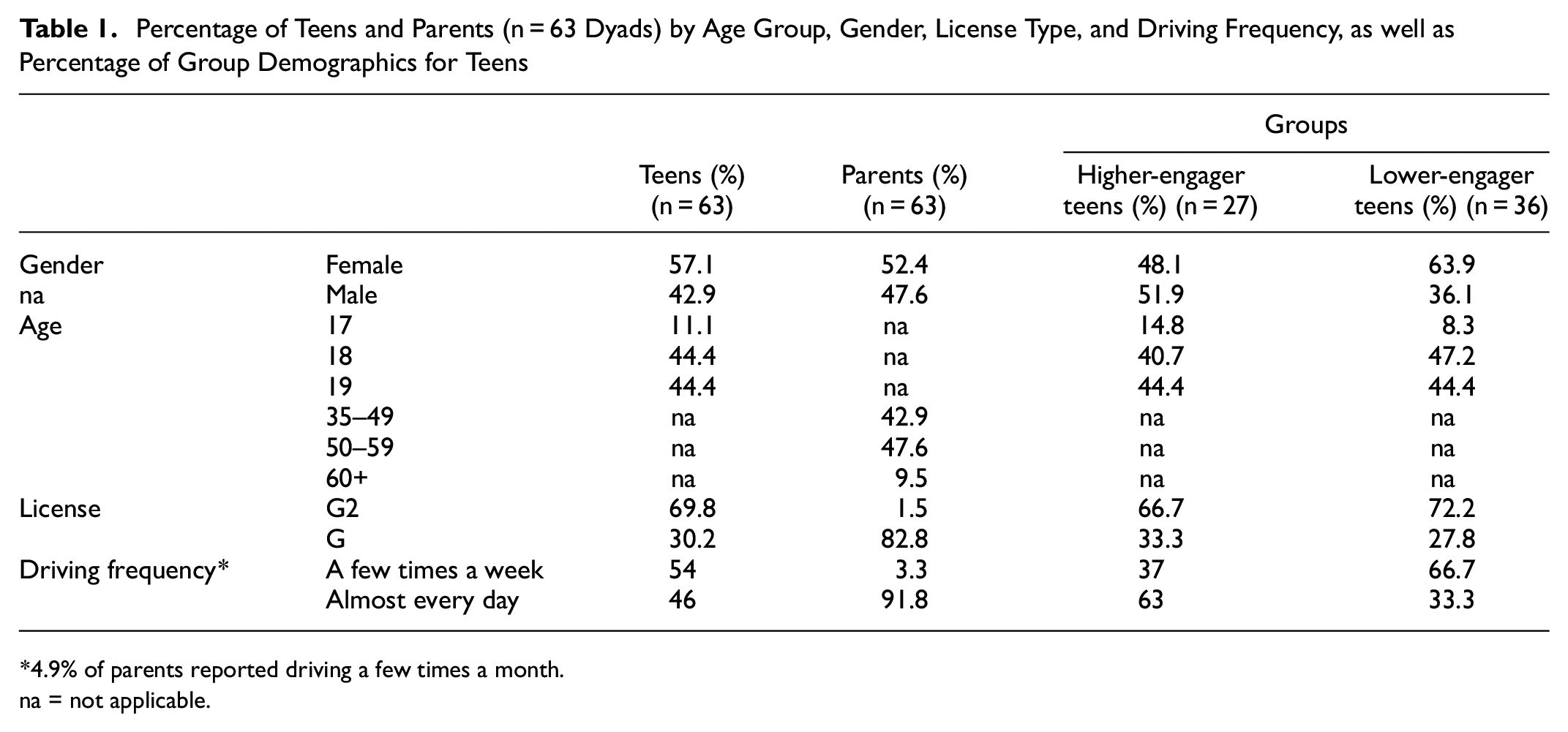
4.9% of parents reported driving a few times a month. na = not applicable.
Survey Items Analyzed
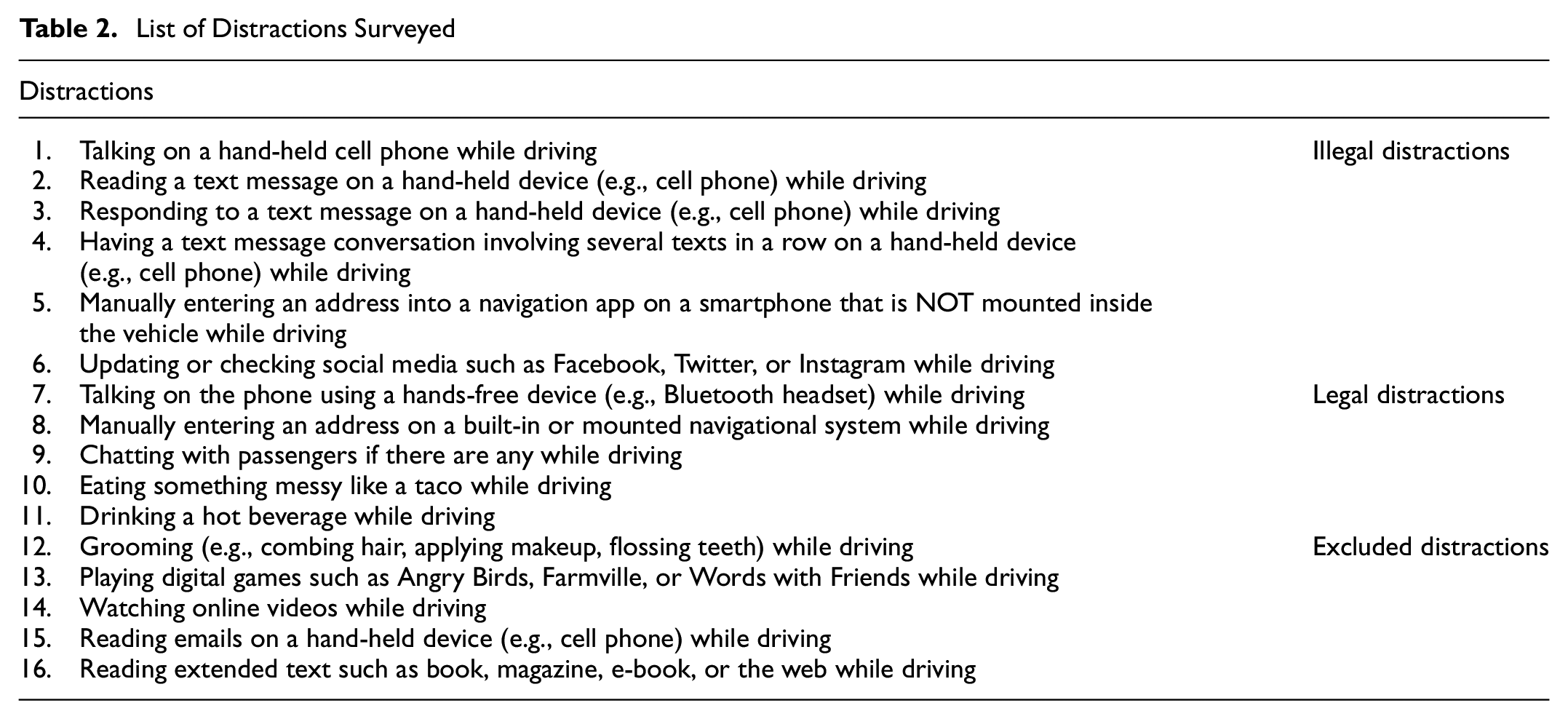
Based on previous studies (23, 24, 26), 16 distractions were included in the survey to provide a wide range of tasks that drivers may engage in while driving. For analysis, these distractions were narrowed to 11, excluding the ones that around 90% of the teens reported never or rarely engaging in while driving (see Table 2). The legality of distractions was identified using the traffic laws of Ontario at the time of data collection.
List of Distractions Surveyed
For response consistency, participants were instructed to answer survey questions in the context of the scenario depicted in an image provided to them (Figure 1). The following script accompanied the image: “We ask you to answer questions in the context of the scenario depicted below, a two-lane rural road where traffic conditions are low and there is good weather.” The image depicts a context in which driving demand is generally lower and, therefore, drivers may engage in distractions more freely. Further, respondents were asked to answer according to their actual experiences rather than what they thought their experience should be.
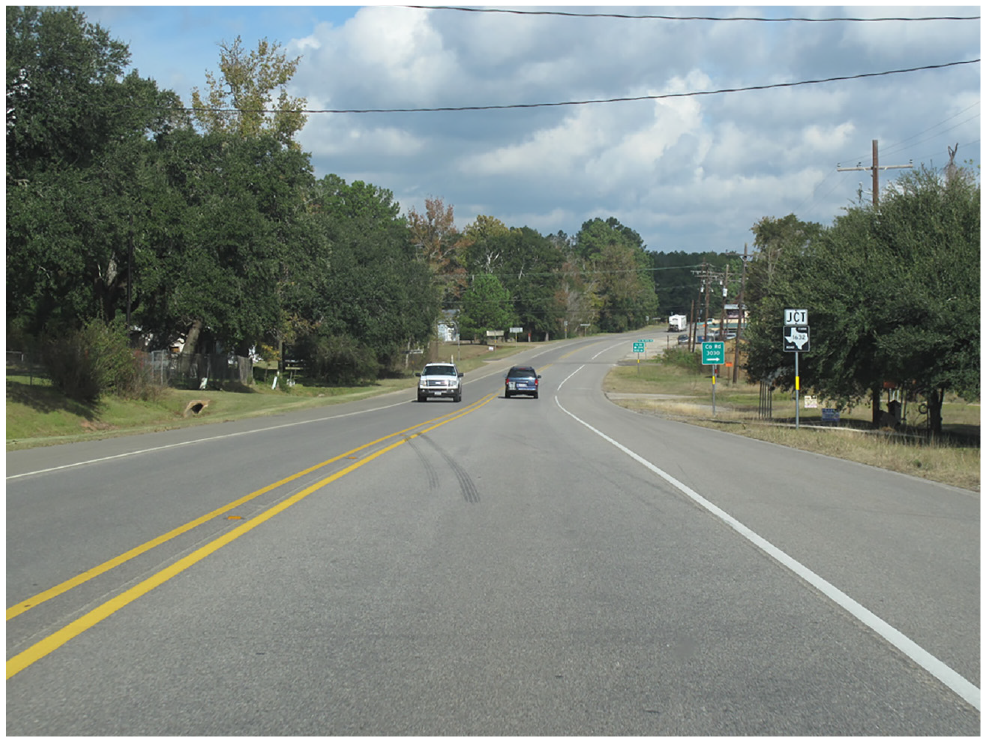
The image provided to the survey respondents, which shows a rural road with low traffic and good weather conditions.
Table 3 provides the list of the survey constructs, items, and response scales used in our analysis. The teens reported distraction engagement frequency for themselves, their mother (or primary female caregiver), and father (or primary male caregiver). Afterwards, they reported their perception of their parents’ approval. In our analyses, only responses about the participating parent were utilized. Parents reported distraction engagement frequency for themselves and their teen, followed by their approval/disapproval of their teen’s engagement in distractions.
Survey Items Used in our Analysis and Associated Response Scales
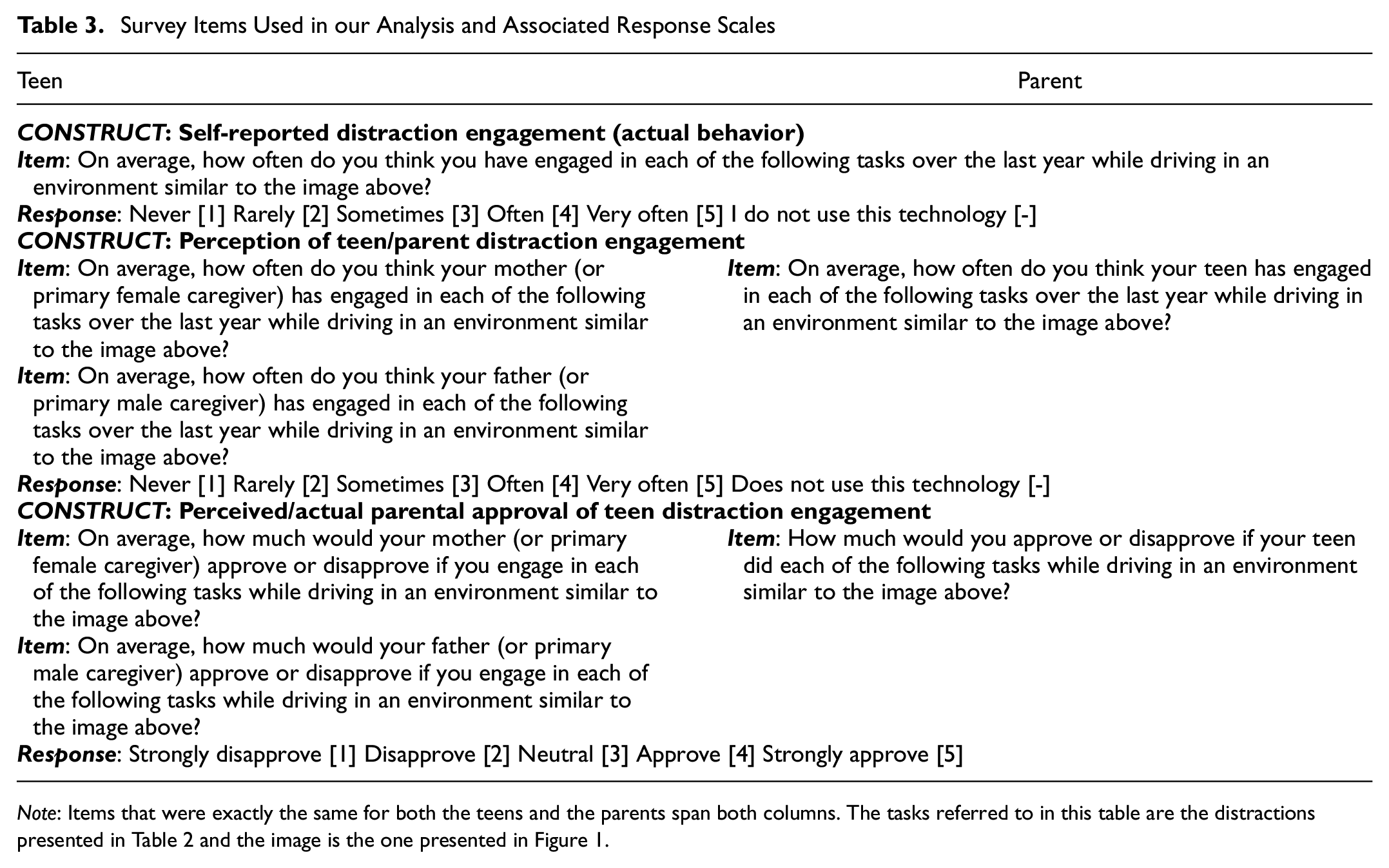
Responses were averaged for each teen and participating parent across the six illegal distractions as well as across the five legal distractions presented in Table 2. This resulted in two responses (one for legal and one for illegal distractions) per participant for each item they were probed on across the different distractions. The internal consistencies of responses that were averaged were checked using Cronbach’s alpha, and met the well-established threshold of 0.7, ranging between 0.72 and 0.92 ( 27 ).
Grouping of Dyads and Statistical Analysis
Before further statistical analysis, the 63 dyads were divided into two groups based on teens’ engagement in illegal and legal distractions given the high correlation (r = 0.65, p < .0001) between the two variables (see Figure 2 and Table 1). Teens with engagement frequency of 2 (equivalent to “rarely”) or higher for illegal distractions, and 3 (equivalent to “sometimes”) or higher for legal distractions were labeled as higher-engagers, others were labeled as lower-engagers. These thresholds were very close to the mean and median values: the mean and median of engagement frequency of all teens were equal to 1.92 and 2 for illegal distractions and 2.74 and 2.75 for legal distractions. There were 27 dyads in the higher-engager group and 36 dyads in the lower-engager group.
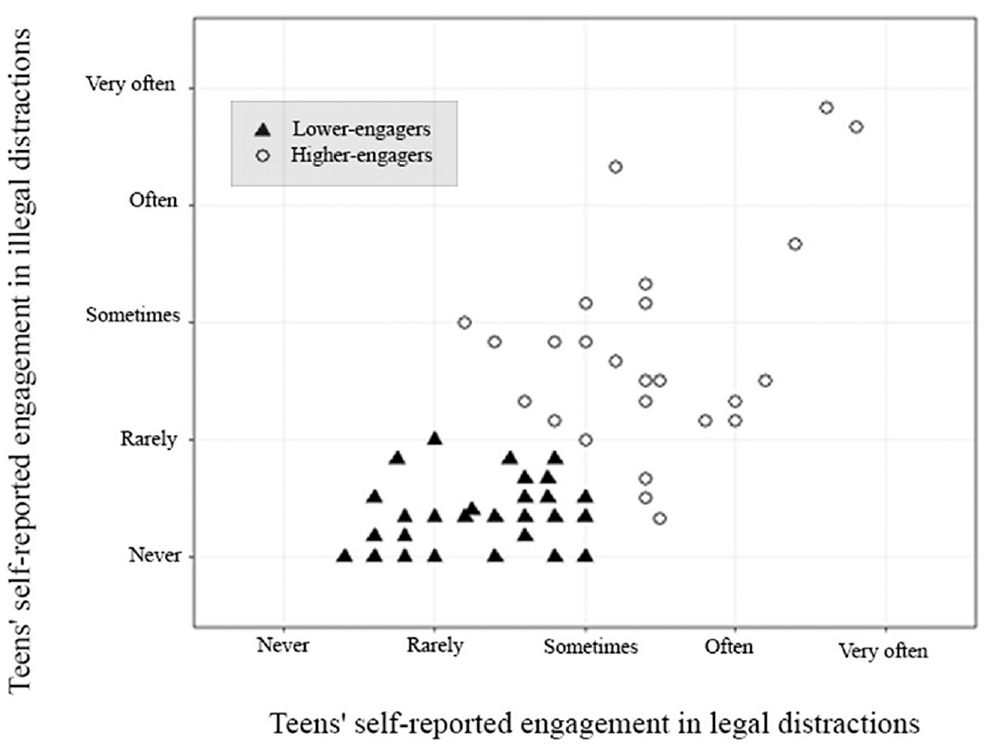
Group membership of teens in terms of their self-reported engagement frequency (averaged over multiple distractions) in illegal and legal distractions.
After the grouping, the following a priori comparisons were performed: (1) self-reported engagement in legal versus illegal distractions for teens and parents (four dependent comparisons), (2) teens versus parents in terms of their self-reported engagement in both distraction types (four dependent comparisons), (3) self-reported engagement in both distraction types compared across higher-engager and lower-engager groups (four independent comparisons), (4) actual self-reported engagement frequency versus perceptions for both parents and teens (eight dependent comparisons), (5) parent approval across illegal versus legal distractions for higher- and lower-engager groups (two dependent comparisons), (6) actual approval of the parent versus teen’s perceived approval (four dependent comparisons). As the normality assumption was not met for many of these comparisons, Wilcoxon rank sum (test statistic: W) and Wilcoxon signed rank (test statistic: V) tests were performed for independent and dependent comparisons, respectively. In total, 26 tests were performed. A Holm-Bonferroni correction ( 28 ) was applied to control for type I error, with sorted p-values compared against their respective significance cut-off. The effect sizes (r) (as per Tomczak and Tomczak [ 29 ]) for all the significant tests ranged from 0.56 to 0.84, with most of them being above 0.7.
Results
Self-Reported Distraction Engagement
Figure 3 presents self-reported engagement data along with the significant statistical comparisons. The mean values lie between “never” to “rarely” for illegal distractions and “rarely” to “sometimes” for legal distractions, except for higher-engager teens, whose averages lie between “rarely” to “sometimes” for illegal distractions and “sometimes” to “often” for legal distractions. As expected, higher-engager teens reported engaging in both distraction types more frequently than lower-engager teens.
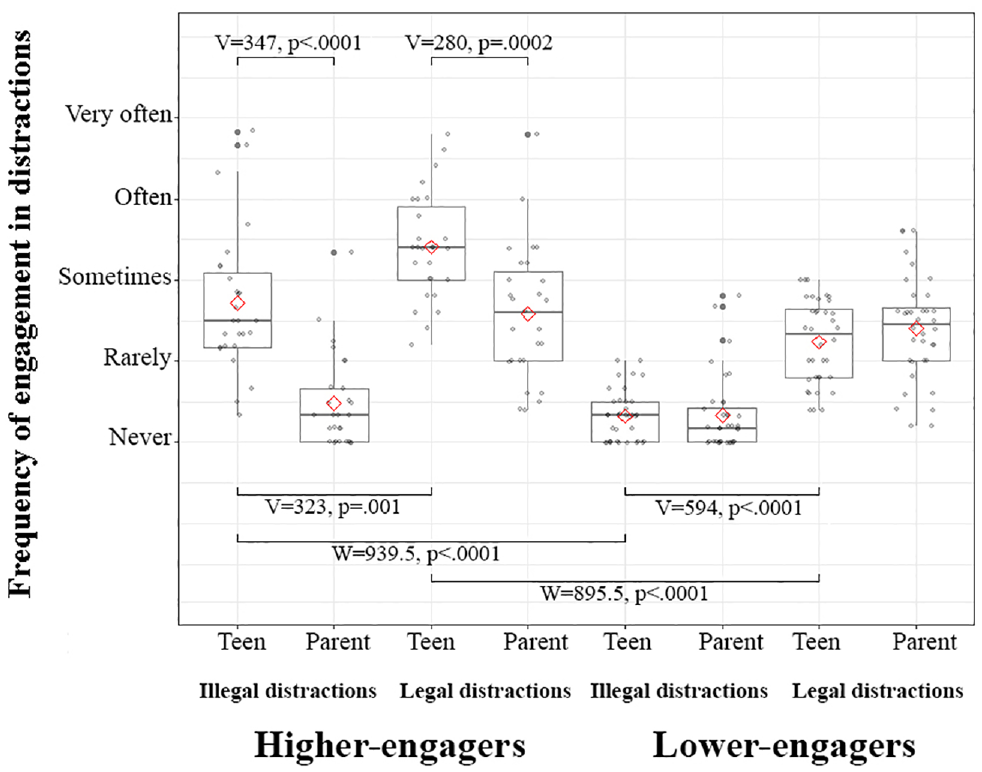
Self-reported distraction engagement frequency.
Further, both higher-engager and lower-engager teens reported engaging in legal distractions more frequently than in illegal distractions. No differences were found between the parents of higher-engagers and lower-engagers in frequency of engagement in illegal or legal distractions. Comparing teens and their parents, we found that higher-engager teens reported engaging more than their parents in both legal and illegal distractions. No such difference was found for lower-engager teens and their parents.
Teen Perceptions of Parental Norms
Figure 4 presents parents’ self-reported distraction engagement (top panel: actual descriptive norms) and approval (bottom panel: actual injunctive norms) along with teens’ corresponding perceptions; significant statistical comparisons are also included.
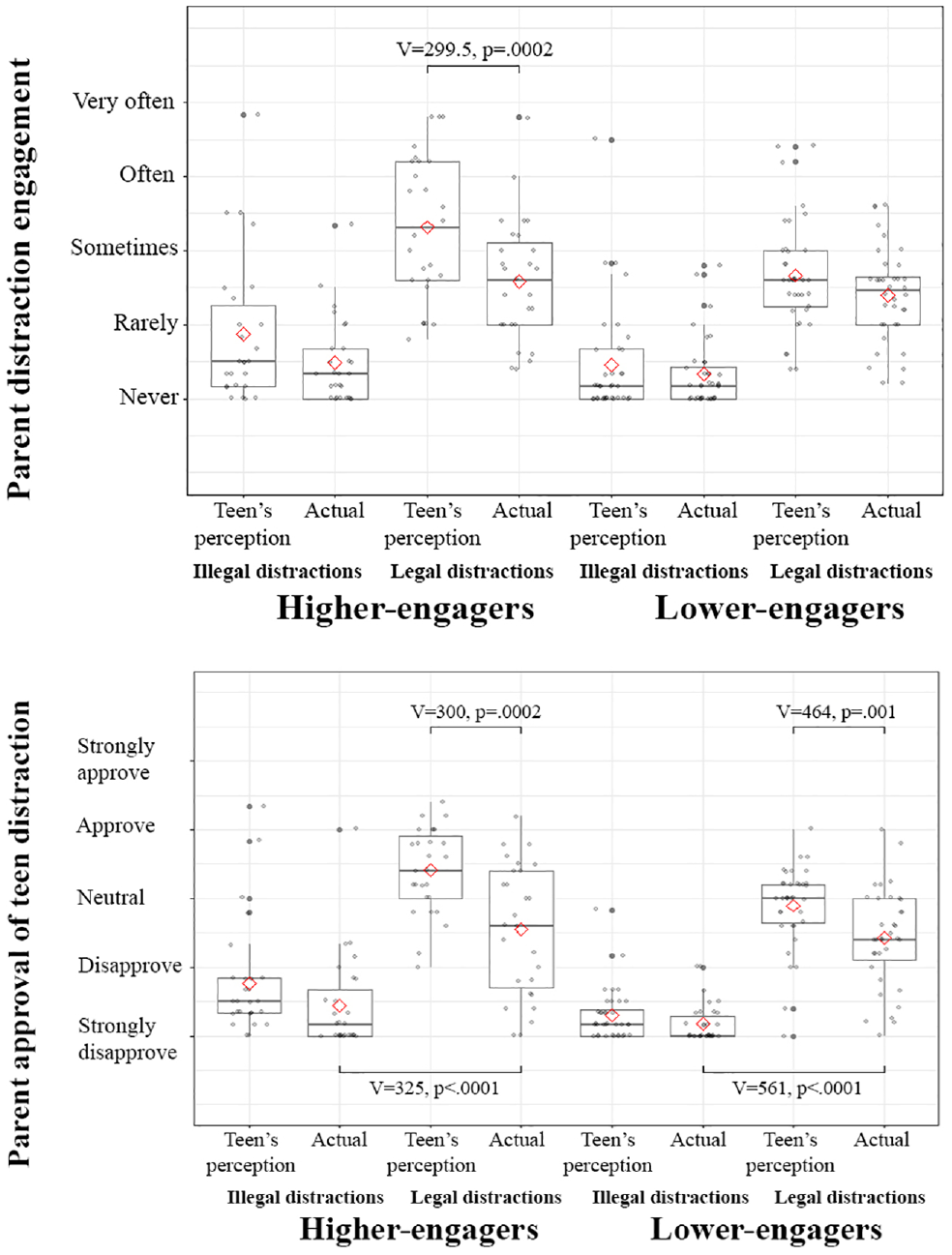
Parent self-reported norms versus teen perceptions. Frequency of engagement in the distractions (top) and approval of teen’s engagement (bottom).
Overall, parents’ approval of legal distractions was higher than their approval of illegal distractions: mean values for illegal distractions fell between “strongly disapprove” and “disapprove,” whereas mean values for legal distractions fell between “disapprove” and “neutral.” As was hypothesized, discrepancies between teen perceptions and parents’ self-reports were more prevalent for higher-engager teens and for legal distractions. Statistical comparisons showed that higher-engager teens may have overestimated their parent’s approval of and engagement in legal distractions, whereas lower-engagers may have only overestimated their parent’s approval of legal distractions.
Parent Perception of their Teen’s Distraction Engagement
Figure 5 presents parent perceptions of their teen’s distraction engagement in comparison with the teen’s actual report; significant statistical comparisons are also included. The higher-engager teens’ self-reported engagement in both distraction types was significantly higher than what their parents thought. These findings partially support our hypothesis that the parents of higher-engagers may misperceive their teen’s engagement in distractions to a greater extent. However, no effect was observed for lower-engager teens and their parents. Thus, our findings suggest that parents of higher-engagers, but not lower-engagers, may underestimate their teen’s distraction engagement.
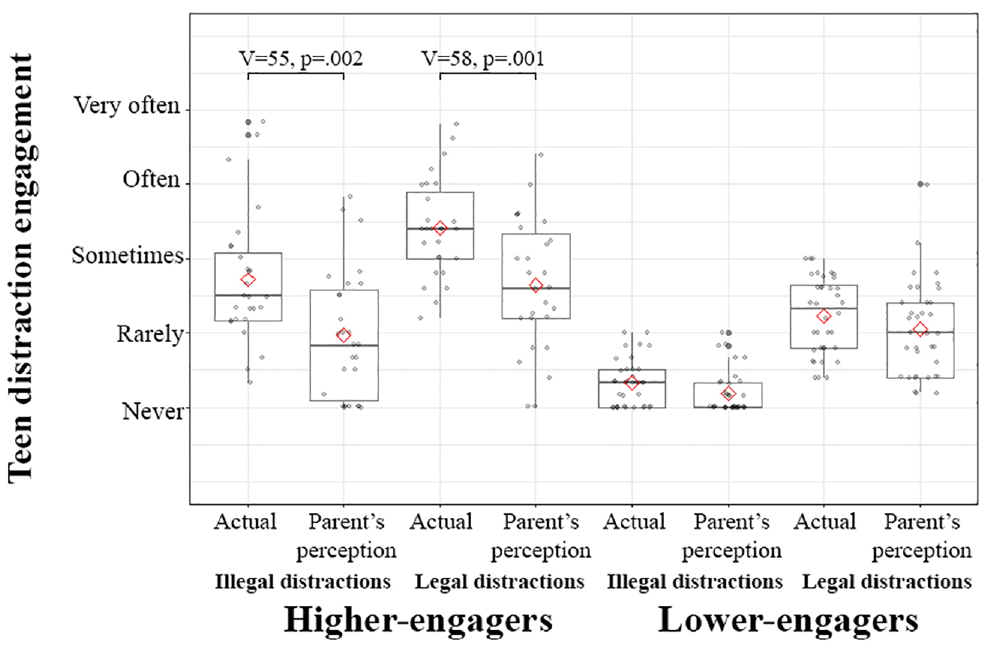
Teen self-report versus parent perceptions of teen distraction engagement.
Discussion
We investigated teen driver distraction engagement and its potential relation to parental normative misperceptions through survey data collected from 63 parent–teen dyads from Ontario, Canada. We divided the teens into two groups (higher-engagers and lower-engagers) based on their self-reported distraction engagement in situations with relatively low driving demands (e.g., rural road, in good weather, with low traffic). We hypothesized that misperceptions of parent norms (i.e., parents’ engagement in and approval of distractions) may be more prevalent among teens who report higher frequency of engagement in distractions (i.e., higher-engagers), and the parents of higher-engagers may underestimate their teen’s engagement in distractions to a greater extent than parents of lower-engagers. We also hypothesized that these misperceptions may be more prevalent for legal distractions. Overall, these hypotheses were supported in general, with the exception of parents of lower-engagers potentially misperceiving their teen’s distraction engagement. We used discrepancies between self-reported data of teens and their parents to provide supporting evidence for these hypotheses as was done by earlier research (23, 24), with the caveat that self-reported data is subject to many biases, including social desirability bias ( 30 ) and interpretation and recall biases ( 31 ). Therefore, our findings need to be confirmed with additional data that are objective in nature (e.g., observational studies assessing actual distraction engagement levels).
The two teen groups differed in their frequency of engagement in both illegal and legal distractions. Higher-engagers’ average engagement frequency was close to “sometimes” for illegal distractions and was between “sometimes” and “often” for legal distractions. Lower-engagers’ average engagement frequency fell between “never” and “rarely” for illegal distractions and was slightly above “rarely” for legal distractions. Both groups reported higher engagement frequency for legal distractions compared with illegal distractions. Although legislation and enforcement can help curb risky behaviors, drivers still engage in illegal distractions (32, 33). The higher-engager teens in our sample also reported engaging in illegal distractions frequently in driving situations like the context we presented to them, that is, a rural road, in good weather, and with low traffic.
Teens appeared to overestimate their parent’s engagement in and approval of distractions. Both the higher- and lower-engager teens perceived their parent to be more approving of their engagement in legal distractions than the parent’s actual report. Furthermore, higher-engagers also perceived their parent to engage in legal distractions more than the parent’s actual report. Bingham et al. ( 24 ) suggested that teens overestimate their parent’s frequency of engagement in distractions based on the discrepancy they found between their self-reports. Our results support this finding for higher-engager teens and only for legal distractions, but not for lower-engager teens. Further, we extend the findings of Bingham et al. ( 24 ) by showing that teens may be overestimating their parent’s approval of legal distractions but not illegal distractions. These findings lend support to our hypotheses that misperception of parent norms may be more prevalent among teens who report higher frequency of engagement in distractions, and that the misperceptions may be more prevalent for legal distractions.
Potential misperceptions were also supported with our results on the parents’ side as we had hypothesized; however, only among parents of higher-engager teens. These parents perceived their teen to engage in both illegal and legal distractions less frequently than the teen reported. Bingham et al. ( 24 ) found that parents overestimate their teen’s engagement in distractions, a result different from ours. The difference may be because of various reasons, including our categorization of teens into higher- and lower-engager groups and methods of sampling and data collection. Further research is warranted to clarify this conflicting result, which has important implications, as parents’ underestimation of their teen’s distraction engagement is arguably a more dangerous misperception than overestimation, leading to fewer parental actions to mitigate teen driver distraction.
Given the observed differences between perceptions and self-reported behavior/approval with regard to distractions among the higher-engager teens and their parents, teens who self-report engaging in distractions more frequently may be targeted along with their parents as one potential way of mitigating their distraction engagement. Although they did not target a specific teen group, Merrikhpour and Donmez ( 14 ) found that feedback based on parental norms, which provided teens with a post-drive report on their distracted driving behavior, comparing their distraction engagement with their parent’s, was more effective than other types of distraction-mitigation feedback. The teens in their study perceived their parent to engage in distracted driving more than the parent reported. When provided with feedback on their parent’s actual behavior compared with their own, the teens exhibited more attentive driving in their subsequent drives. The observed effect may in part be because of correcting the teens’ misperceptions about their parent’s driving behavior. Another potential strategy is to better inform the parents of higher-engagers about their teen’s engagement in distractions, as these parents may otherwise underestimate the importance of talking to their teen and expressing their disapproval.
The observed differences between higher-engager and lower-engager teens and their parents underline the importance of considering individual differences. Assuming that there is a universal pattern for all teens and parents (i.e., implementing no groupings) would suggest one-size-fits-all countermeasures, but programs that take individual differences into consideration and are tailored for different groups of teens may be more effective in mitigating teen driver distractions. Further, by taking legality into consideration, we found that teens and their parents may have fewer misperceptions about illegal distractions. While legal distractions are less risky, they can still increase crash risk ( 34 ), especially for teen drivers, who have not yet formed driving experience (8, 35–37). Thus, it is important that interventions are designed to correct parent and teen perceptions of each others’ norms surrounding legal distractions.
Higher-engagers reported driving more often than lower-engagers (see Table 1), a finding in line with Hill et al. ( 38 ), who found that driving frequency is positively associated with self-reported distraction engagement frequency among teens. Teens who drive more frequently may have more confidence in their own driving skills and ability to multitask, which has been shown to be a strong predictor of their self-reported driver distraction engagement ( 38 ). Moreover, as the Theory of Reasoned Action suggests ( 21 ), subjective norms are only one category of predictors of behavioral intention. Higher-engagers’ distraction engagement behaviors may also be because of other factors that are both captured (e.g., attitudes and perceived behavioral control) and not yet captured as part of this theory. Possible differences between normative perceptions and actual norms are one piece of the puzzle, and further research is needed to better understand the complex reasons as to why some teens engage in driver distractions more than others.
There are limitations for this study, including the limited sample size. A relatively small sample did not grant enough power for more sophisticated analyses and therefore limited our choice of statistical analyses. Future studies with larger sample sizes are required to corroborate our findings and conduct further analyses. For example, while we collected the age and sex of our participants, investigating the effect of these demographic characteristics of the dyads was not at the core of our analyses, and our limited sample calls for future studies to investigate possible roles age and sex may play in perceiving parental or teen norms, and how this corresponds to engagement in distractions while driving among young drivers. It should also be noted that our findings are observational and should not be interpreted from a causality angle. Additionally, as mentioned earlier, the reliability of self-reported data is a limitation, as participants may have under- or over-reported their distracted driving behaviors, and future studies should evaluate our findings through the collection of actual behavioral data. Further, although this study has several strengths in its use of matched teen–parent dyads, the sample was limited to teens and parents who were willing to participate in the study and thus our findings are subject to this bias. In reporting their behavior and beliefs, our participants were asked to consider situations similar to a specific driving scenario (i.e., driving on a rural road with low traffic and in good weather). As such, our findings do not apply to all road conditions and driving circumstances and are limited to situations where it might be easier for people to engage in distractions. Moreover, while parents are important social referents for teen behaviors, peers are too. Given the evidence on the influences of peers on teen driving behaviors (e.g., Donmez et al. [ 15 ], Shope et al. [ 39 ], and Simons-Morton et al. [ 40 ]), interventions for teen driver distractions can also be informed by peer norms, and further research is needed in this area.
Our work is an effort to extend a growing body of research that examines the relationship between teens’ and parents’ perceived and self-reported distracted driving behaviors and norms surrounding those behaviors. Our findings can provide insights into the complex role parents have in their teen’s driving safety as teens embark toward being safe, independent drivers, and can help identify opportunities for norm-based countermeasures to mitigate teens’ distracted driving. Overall, our results reveal discrepancies between perceptions and self-reported distraction engagement behaviors/approval among teen drivers and their parents while taking individual differences into account. Thus, our findings suggest that norm-based interventions show potential for mitigating teen driver distraction.
Footnotes
Acknowledgements
Many thanks to James Foley, Kazu Ebe, and Chuck Gulash from Toyota Collaborative Safety Research Center (CSRC) for their feedback on this research in general. We would also like to acknowledge Seifeldin Hassan and Tony Ye for their help with data collection and data cleaning. Preliminary findings reported in this paper were presented in the Proceedings of the 26th Canadian Association of Road Safety Professionals Conference, Halifax, Nova Scotia.
Author Contributions
The authors confirm contribution to the paper as follows: study conception and design: M. Merrikhpour, B. Donmez; data collection: M. Merrikhpour; analysis and interpretation of results: M. Hoseinzadeh Nooshabadi, H. Vasquez, and B. Donmez; draft manuscript preparation: M. Hoseinzadeh Nooshabadi, H. Vasquez, M. Merrikhpour, and B. Donmez. All authors reviewed the results and approved the final version of the manuscript.
Declaration of Conflicting Interests
The author(s) declared no potential conflicts of interest with respect to the research, authorship, and/or publication of this article.
Funding
The author(s) disclosed receipt of the following financial support for the research, authorship, and/or publication of this article: This work was supported by the Natural Sciences and Engineering Research Council of Canada [RGPIN-2016-05580] and the Toyota Collaborative Safety Research Center (CSRC).

Data Accessibility Statement
Data is not available because of Research Ethics Board limitations.