



Abstract
Spreading sodium chloride salt is one of the most effective operations to tackle ice formation on the surface of a road pavement during cold seasons, thus ensuring safer driving conditions. However, in addition to negative environmental impact, sodium chloride solution could influence the properties and durability of asphalt mixtures. Based on these premises, this laboratory study aims to characterize the mechanical properties of different asphalt mixtures exposed to sodium chloride solution. Four types of asphalt mixtures were immersed in 10 wt% sodium chloride solution for four cycles. The macroscopic surface, moisture absorption, Marshall stability, Marshall quotient, dynamic modulus, and resilient modulus were evaluated. The behavior of the asphalt mixtures was severely deteriorated by the exposure to sodium chloride solution and immersion cycles, resulting in damaged surface, loose structure, degraded stability, and stiffness. The mixture with polymer modified asphalt binder showed the best overall performance. Traditional asphalt mixtures with neat bitumen showed a better performance to resist sodium chloride solution compared with stone mastic asphalt mixtures with neat bitumen because of their dense structure, whereas traditional asphalt mixtures with polymer modified bitumen had a sensitivity to sodium chloride solution similar to that of stone mastic asphalt mixtures with polymer modified bitumen. Based on the findings of this study, using asphalt mixtures with polymer modified bitumen is recommended when road maintenance operations entailing the use of sodium chloride are envisaged.
Keywords
To ensure safe driving conditions on road infrastructures during cold seasons, proper maintenance is performed to remove snow and ice thus preventing their accumulation on the pavement surface. The two major measures employed comprise mechanical and chemical salts removal operations ( 1 ). Mechanical removal refers to a series of technologies apt to remove snow and ice, including snowplows, snow blowers, and scrapers. Regardless of the selected tool, the clear physical damage caused by mechanical removal is inevitable and leads to progressive deterioration of the road surface. Depending on the weather conditions, also, it can be difficult to obtain satisfactory pavement surface friction with mechanical removal alone. On the other hand, chemical salt is useful for deicing, anti-icing, and anti-compaction purposes ( 2 ). Because of its low cost and outstanding effectiveness, sodium chloride is the most used chemical salt, thus attracting the interest of road agencies, entrepreneurs, and researchers ( 3 ).
Numerous studies have found that salts have negative effects on asphalt pavement, and that sodium chloride has the most severe effect among several common deicing agents ( 4 , 5 ). Focusing on the effect of salt on the bituminous binder, experimental results have documented decreased fatigue and low-temperature resistance as well as increased brittleness of bitumen ( 6 , 7 ). As a consequence, the formation of both fatigue cracks ( 8 ) and low-temperature cracks ( 9 ) is eased. Other studies have also shown the degradation of the binder-aggregate interface because of the copresence of the corrosion generated by sodium chloride and moisture infiltration ( 10 , 11 ). Moreover, as demonstrated by conducting pull-off tensile strength tests, the salt compromises the adhesion between binder and aggregate by worsening the interfacial energy ( 12 ). Therefore, the deterioration of asphalt mixture performance caused by sodium chloride solution ( 13 , 14 ), including loose structure as well as decreased splitting strength, rutting resistance, and fatigue resistance, is the main contributor to the degraded bitumen properties and loss of adhesion of asphalt binder-aggregate. The brittle bitumen, damaged binder-aggregate interface, and deteriorated asphalt mixture result in insufficient durability and short service life of asphalt pavement, which is unsustainable and environmentally unfriendly.
Considering the surface and volumetric properties, stability, and stiffness of different types of asphalt mixtures, they differ in the extent and speed of deterioration when exposed to sodium chloride solutions. A smooth surface without wear and scaling indicates no obvious negative damage to asphalt mixtures and provides comfortable and safe drivability for drivers ( 15 ). In general, volumetric properties reflect the inner structure of asphalt mixtures ( 16 ), while stability indicates their homogeneity ( 17 , 18 ). The stiffness is related to the bearing capacity and durability ( 19 ) and is characterized by two moduli: dynamic modulus and resilient modulus ( 20 ). The dynamic modulus |E*| defines the viscoelastic behavior of asphalt mixtures for a spectrum of temperatures and loading frequencies ( 21 ); furthermore, it is a typical input for mechanistic–empirical pavement design ( 22 ). Compared with dynamic modulus, the resilient modulus is experimentally evaluated by applying a rest period in the testing procedure ( 23 ), as this is assumed to mimic real traffic loading better ( 24 ). The indirect tension (IDT) mode is a testing method for assessing both the dynamic modulus and the resilient modulus ( 25 ).
The previous studies focused more on the deteriorated performance of asphalt mixture caused by different sodium chloride immersion methods or immersion times ( 13 ). However, different asphalt mixture types are suspected of resisting sodium chloride solution to different degrees, which has been rarely investigated. To fill the gap, this study aims to evaluate the effect of sodium chloride solution on the mechanical properties of four different types of asphalt mixtures. All the samples were conditioned in 10 wt% sodium chloride solution for four cycles; their macroscopic surface, moisture absorption, Marshall stability/quotient, dynamic modulus, and resilient modulus were then analyzed. The findings of this research can give a better understanding to road engineers about the effects generated by sodium chloride solution and the importance of selecting the proper asphalt mixture type.
Methods
Raw Materials
The asphalt binders employed in this study were a traditional type of bitumen (Pen 70/100) and a polymer modified bitumen (PMB) since they are the two bitumen types most used in Norway. The traditional type of bitumen was obtained from Veidekke Industry, Trondheim, Norway. The PMB is styrene-butadiene-styrene modified bitumen provided by the Nynas company, Göteborg, Sweden. Their main properties are reported in Table 1. Crushed rock provided by Franzefoss Pukkverk avd. Vassfjell, Heimdal, Norway, was utilized as the aggregates used in the mixtures. This aggregate is a mixture of magmatic and metamorphic rocks, and its main components are greenschist and gabbro. The applied aggregate meets the requirements of a road with annual average daily traffic of 15,000 according to Handbook N200 of Norwegian Public Roads Administration ( 26 ).
Principal Properties of Used Asphalt Binder

Note: dmm = 0.1 mm; Pa•s = Pascal second; PMB = polymer modified bitumen.
Sample Preparation of Asphalt Mixtures
Two types of asphalt mixtures commonly used in Norway were analyzed, namely asphalt concrete (AC11) and stone mastic asphalt (SMA11) mixtures, which are usually applied as the surface layer. Their aggregate gradation is exhibited in Figure 1 ( 30 ).
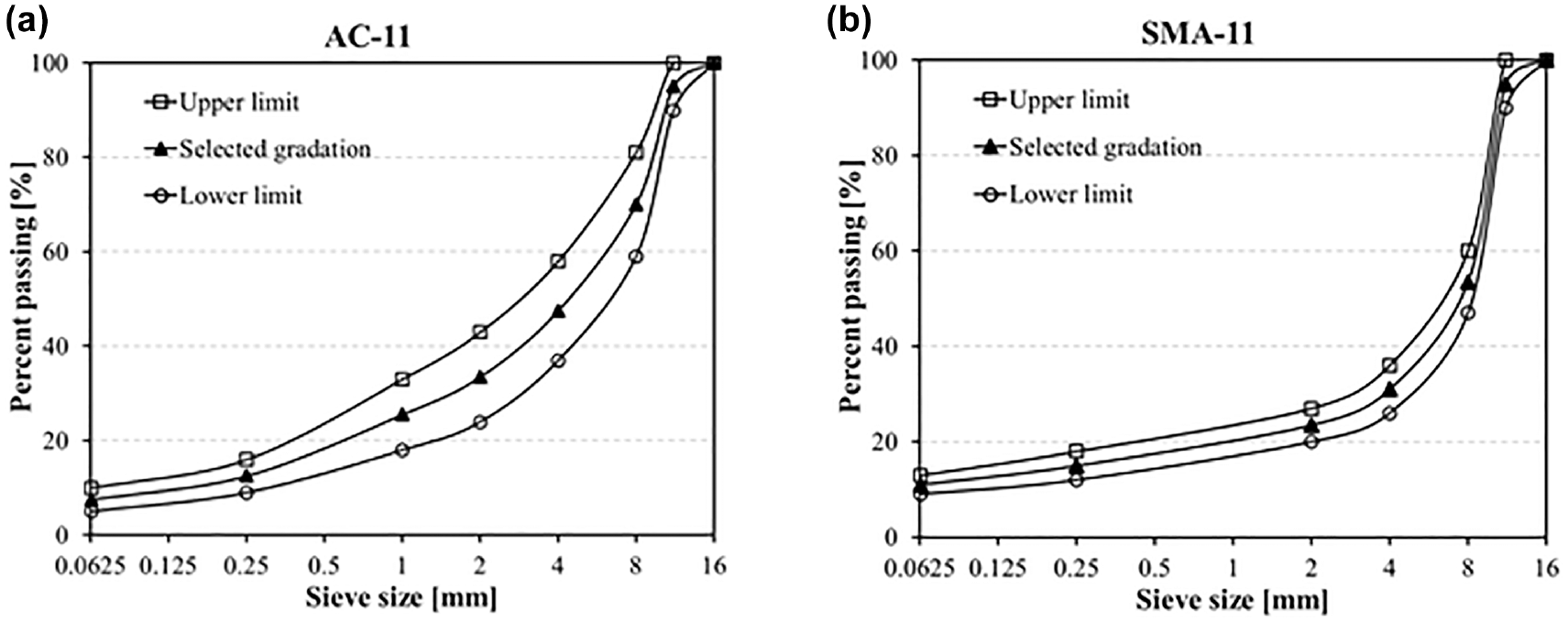
Aggregate gradation for mixtures: (a) AC11 and (b) SMA11.
In total, four kinds of asphalt mixtures were investigated in this research: AC11-70/100, SMA11-70/100, AC11-PMB, and SMA11-PMB. Their binder content and air void percentages are shown in Table 2. According to Figure 1 and Table 2, each mixture type was fabricated with four samples for subsequent testing ( 26 ).
Binder Content and Air Voids of Investigated Asphalt Mixtures
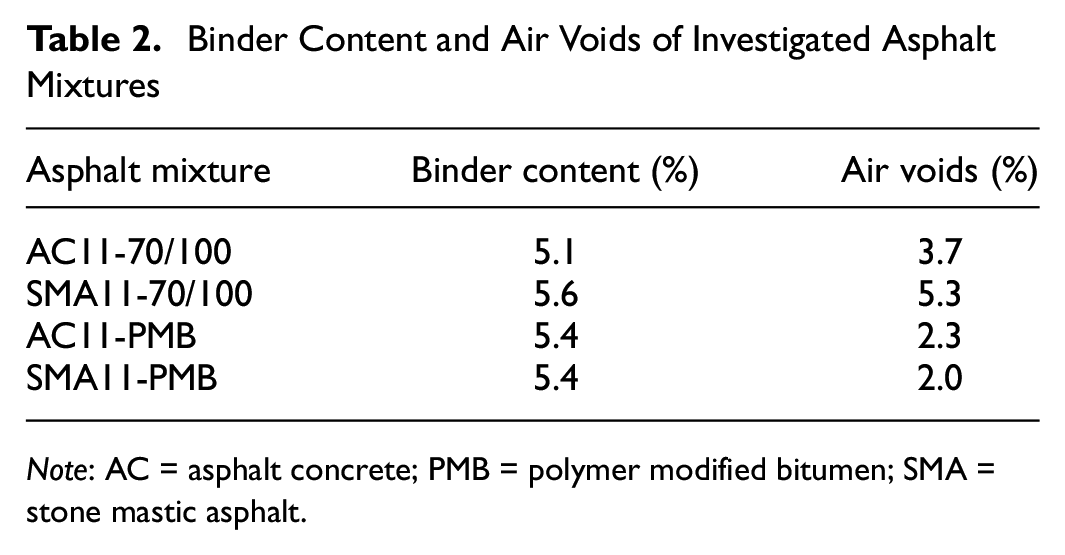
Note: AC = asphalt concrete; PMB = polymer modified bitumen; SMA = stone mastic asphalt.
Sodium Chloride Conditioning
Sodium chloride solution at 10 wt% is the concentration of salt that is commonly found on road pavements as a result of winter maintenance operations ( 31 , 32 ); the corresponding solution was created in the laboratory by mixing salt solid and distilled water with a ratio of 1:9. The testing samples were then submerged in water inside a plastic box filled with the prepared solution and were put in a thermostatically controlled cabinet at 0°C. An immersion cycle was defined as seven days of soaking in the solution and four repetitions were performed based on previous studies ( 11 , 33 ); the samples were dried and rested (without immersion) at room temperature (20°C) for 48 h between each cycle.
Performance Testing
The macroscopic surfaces of the asphalt mixtures without sodium chloride conditioning and then after four immersion cycles were characterized to analyze the degree of influence.
The investigation of moisture absorption probes the inner structure of asphalt mixtures after immersing the specimens in the sodium chloride solution. This parameter was calculated dividing the absorbed moisture by the dry weight of the sample using Equation 1 ( 14 ).

where mn is the surface-dried mass after n cycles in sodium chloride solution and moriginal is the original dried mass. A higher value of moisture absorption indicates the presence of more air voids.
The Marshall stability was assessed using a compression testing machine after totally submerging the samples in deionized water (60 ± 1°C) for 45 min ( 18 ). The specimens were loaded with a constant rate of deformation of 50 mm/min until the maximum load appeared. The maximum loading, denoted as Marshall stability, represents the stability of asphalt mixture in kN; flow is the magnitude of deformation of the asphalt mixture under the working load in millimeters; Marshall quotient is defined as the ratio of Marshall stability and flow in kiloNewtons per millimeter (kN/mm), which represents the ability of asphalt mixture to flow.
The dynamic modulus of bitumen was tested by the servo-pneumatic universal testing machine using a force controlled harmonic sinusoidal loading following the EN 12697-26:2018 specification ( 34 ). Three parallel specimens for each kind of asphalt mixture were analyzed at three testing temperatures (−5°C, 0°C, and 15°C) and six frequencies (10 Hz, 5 Hz, 3 Hz, 1 Hz, 0.3 Hz, and 0.1 Hz). The master curve of dynamic modulus over frequency was then assessed using the sigmoidal function presented in Equation 2 ( 35 ).

where |E*| is the dynamic modulus, α, β, γ, and δ are regression coefficients, and fr is the frequency at reference temperature (0°C in this research).
The resilient modulus test was conducted applying a repetitive haversine load of 0.2 s followed by 2.8 s rest with a loading frequency of 10 Hz ( 34 ). The resilient modulus of bitumen at 10°C and 25°C was analyzed. Before performing the dynamic modulus and resilient modulus tests, specimens were temperature conditioned for 4 h as indicated by the standards ( 34 ).
Results and Discussion
The surface appearance of asphalt samples without sodium chloride solution conditioning and after four immersion cycles is displayed in Figure 2. Figure 2a shows the original photographs of the specimens, and Figure 2b are the images processed by threshold segmentation method using MATLAB programming ( 36 ). The sodium chloride solution exerts a negative effect on a sample’s surface leading to the exfoliation of aggregates, thus documenting the worsened adhesion between asphalt binder and aggregates, which is in agreement with the findings of Anastasio et al. ( 37 ). In relation to 70/100 mixtures, severe damage was observed for both SMA11-70/100 and AC-70/100, including aggregate stripping visible in the original photograph and a wider black area in the processed image. On the other hand, there are no apparent differences between the original specimens and immersed specimens of AC11-PMB and SMA11-PMB, which indicates that only slight detrimental effects were observed for both. Therefore, asphalt mixtures with 70/100 are more susceptible to sodium chloride solution than PMB asphalt mixtures.
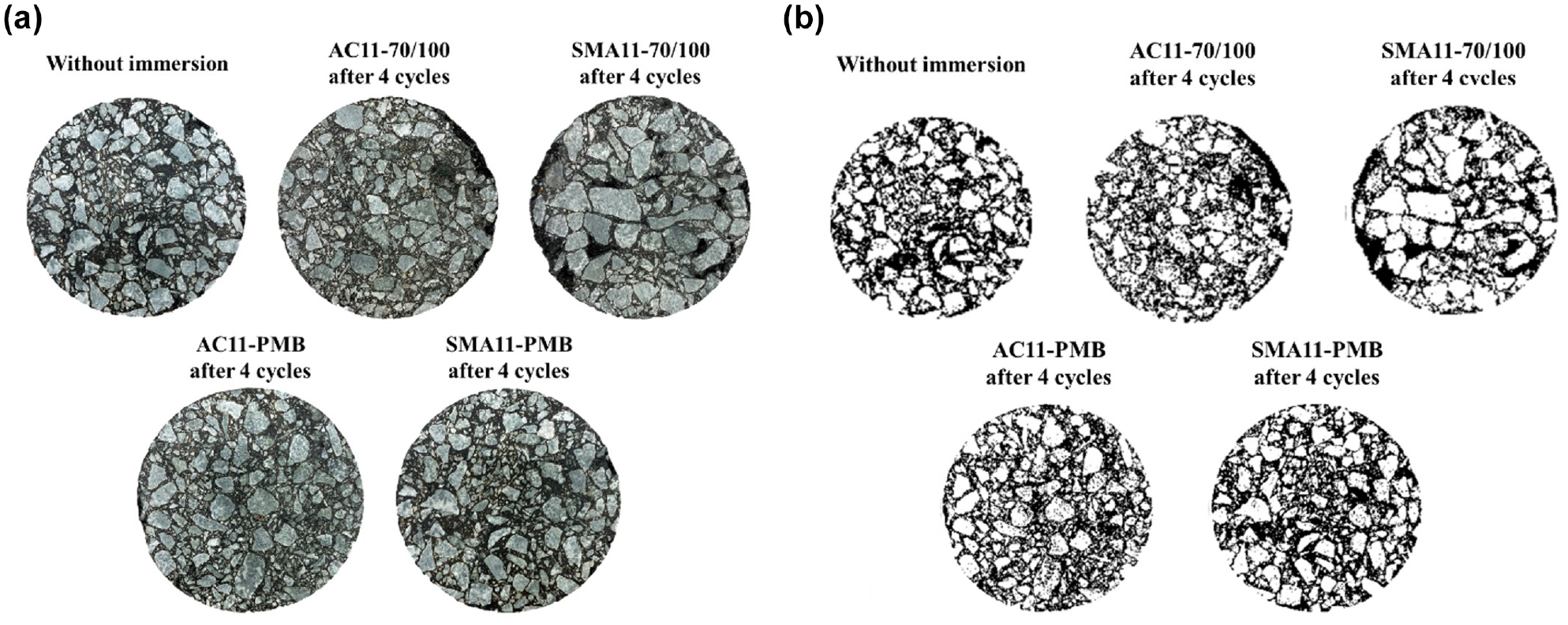
Surface appearance of tested asphalt specimens: (a) original photographs; (b) processed images.
As shown in Figure 3, the moisture absorbed by all types of asphalt mixture generally increased after performing a higher number of immersion cycles. This phenomenon indicates that a higher quantity of air voids is associated with a longer immersion time. It is important to highlight the different extents of damage for the considered asphalt mixtures. AC11-70/100 was significantly affected by sodium chloride solution as the moisture absorption value reached 0.29% after four cycles; on the other hand, AC11-PMB was the least affected mixture type as it increased by 0.065%. Similarly, SMA11-70/100 also suffered significant damage and reached the final value of 0.32%, whereas the final result for SMA11-PMB was 0.14% attained with a smaller rate of increase. These findings illustrate that PMB significantly improves the resistance of the mixture to sodium chloride solution. The development of damage in the 70/100 mixtures was much quicker than for the PMB mixtures; furthermore, PMB mixtures had an approximately stable trend after two cycles. These phenomena mean that the damage caused by sodium chloride solution to the inner structure of 70/100 mixtures reaches the dynamic equilibrium sooner than for PMB mixtures. It should be noted that the slight fluctuations after three or four cycles are related to two phenomena occurring at the same time, namely deterioration of inner structure and peeling of the mixtures. Besides, the moisture absorption of SMA11 mixtures after four cycles showed higher values when compared with AC11 mixtures under the same condition, thus demonstrating a more significant exfoliation of fine aggregates from the SMA11 mixture. This conclusion is illustrated in Figure 2.
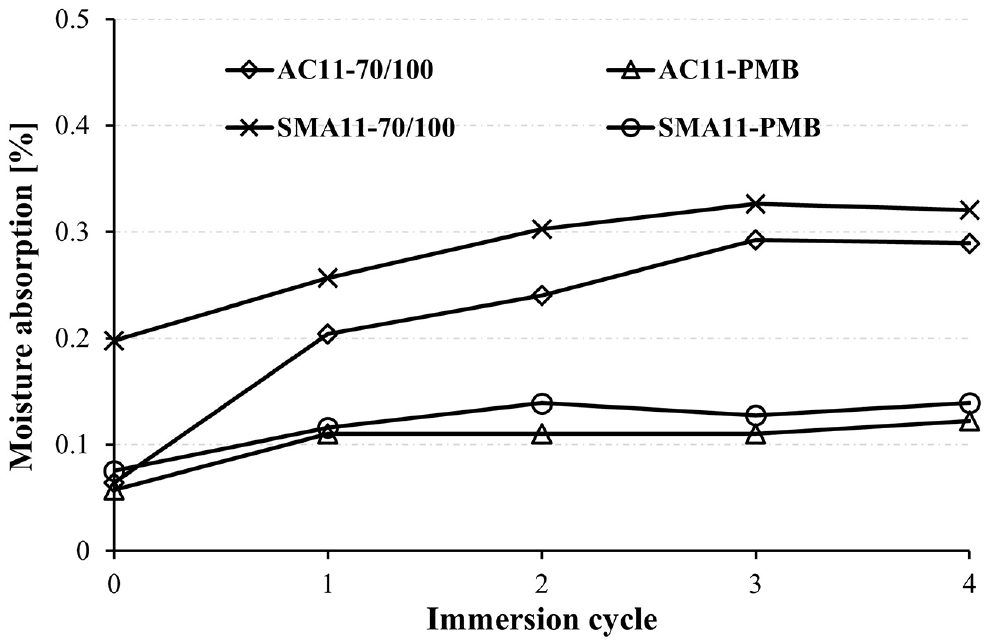
Moisture absorption of asphalt mixtures according to immersion cycles.
The Marshall stability and Marshall quotient of the asphalt mixtures with and without sodium chloride solution conditioning are compared in Figure 4. All the samples after four cycles showed apparent decreases in Marshall stability and Marshall quotient when compared with the original ones, and this result is consistent with Ozgan et al.’s findings ( 38 ). The stability and the resistance to flow of all types of asphalt mixture were deteriorated by the sodium chloride solution. The reduction in Marshall stability of the PMB specimens (∼3%) was smaller than that of the 70/100 specimens (∼12%), and the reduction in Marshall quotient of PMB specimens (∼5%) was also smaller than that of the 70/100 specimens (17%). These results document that neat bitumen is more prone to suffering more damage when exposed to sodium chloride solution. Furthermore, the SMA11-70/100 mixtures showed a more accentuated reduction (0.6% higher in Marshall stability and 0.9% higher in Marshall quotient) than the AC11-70/100 ones which originates from the higher air void content of SMA11-70/100. Besides, the change in Marshall stability was similar for AC11-PMB and SMA11-PMB, which shows that both have better stability and ability to resist flow.
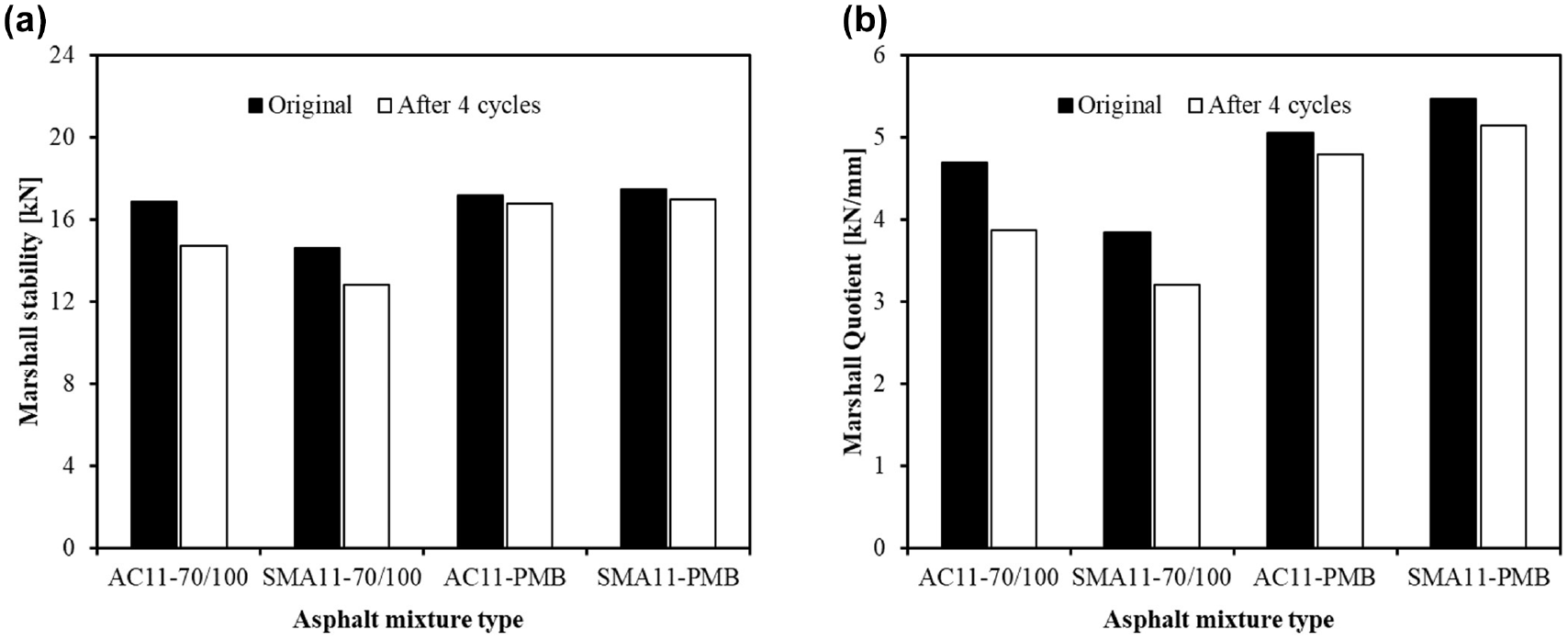
Marshall stability (a) and Marshall quotient (b) of mixture samples with and without sodium chloride solution conditioning.
The master curve of dynamic modulus is derived on the basis of the time–temperature superposition principle. The dynamic modulus |E*| reflects the temperature and frequency-dependent characteristics of the material and is used to assess the stiffness of asphalt mixtures ( 39 ). The master curves are shown in Figure 5. According to the results, sodium chloride solution affects the dynamic modulus of the four kinds of asphalt mixtures to different extents. Especially, the dynamic modulus at high frequency is significantly affected. These findings indicate that the exposure to the salt solution results in lower stiffness at high frequency. Considering the performances of all four mixture types, PMB carried the minor detrimental effects as its dynamic modulus suffered the smallest variations, which is attributed to the stable structure of PMB. Furthermore, SMA11-70/100 was more damaged than AC11-70/100 as after four cycles at 10 000 Hz the dynamic moduli of SMA11-70/100 and AC11-70/100 decreased by 30.1% and 22.7%, respectively. This result can be interpreted by the less dense structure and higher air void content of SMA11-70/100 compared with AC11-70/100. On the other hand, the changes related to AC11-PMB and SMA11-PMB followed a very similar trend, indicating their similar temperature and frequency-dependent characteristics and stiffness.
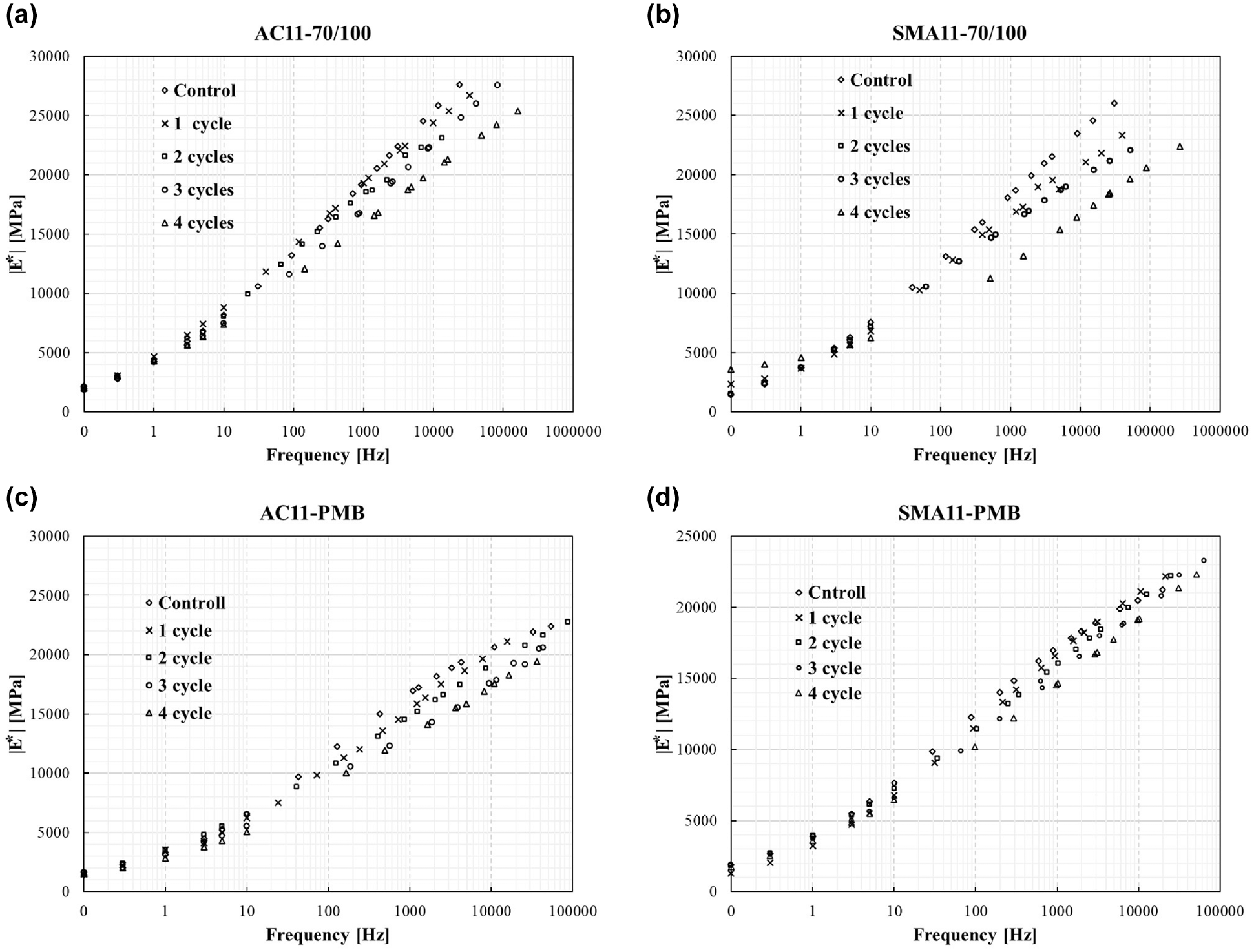
Master curves of dynamic modulus and phase angle of the investigated types of asphalt mixture: (a) AC11-70/100, (b) SMA11-70/100, (c) AC11-PMB, (d) SMA11-PMB.
The regression coefficients related to the calculation of the master curves and the goodness of fit (R2) between modeled and tested dynamic moduli are reported in Table 3. The exposure to sodium chloride exerted a severe influence on α and δ: the δ values of AC11-PMB specimens were decreased eventually after four cycles of sodium chloride immersion, while the δ values of AC11-70/100, SMA11-70/100, and SMA11-PMB were increased under sodium chloride condition; although the δ reduced, the sum of α and δ of all specimens remained unchanged. These results indicate that the minimum stiffness of specimens was affected by sodium chloride, while the maximum stiffness was hardly affected. Compared with α and δ, β and γ were slightly affected by the sodium chloride immersion. Besides, R2 between modeled and tested dynamic moduli exceeded 0.98 for all samples, verifying the good fit of measured dynamic modulus and simulated dynamic modulus.
Regression Coefficients of Dynamic Modulus Master Curves
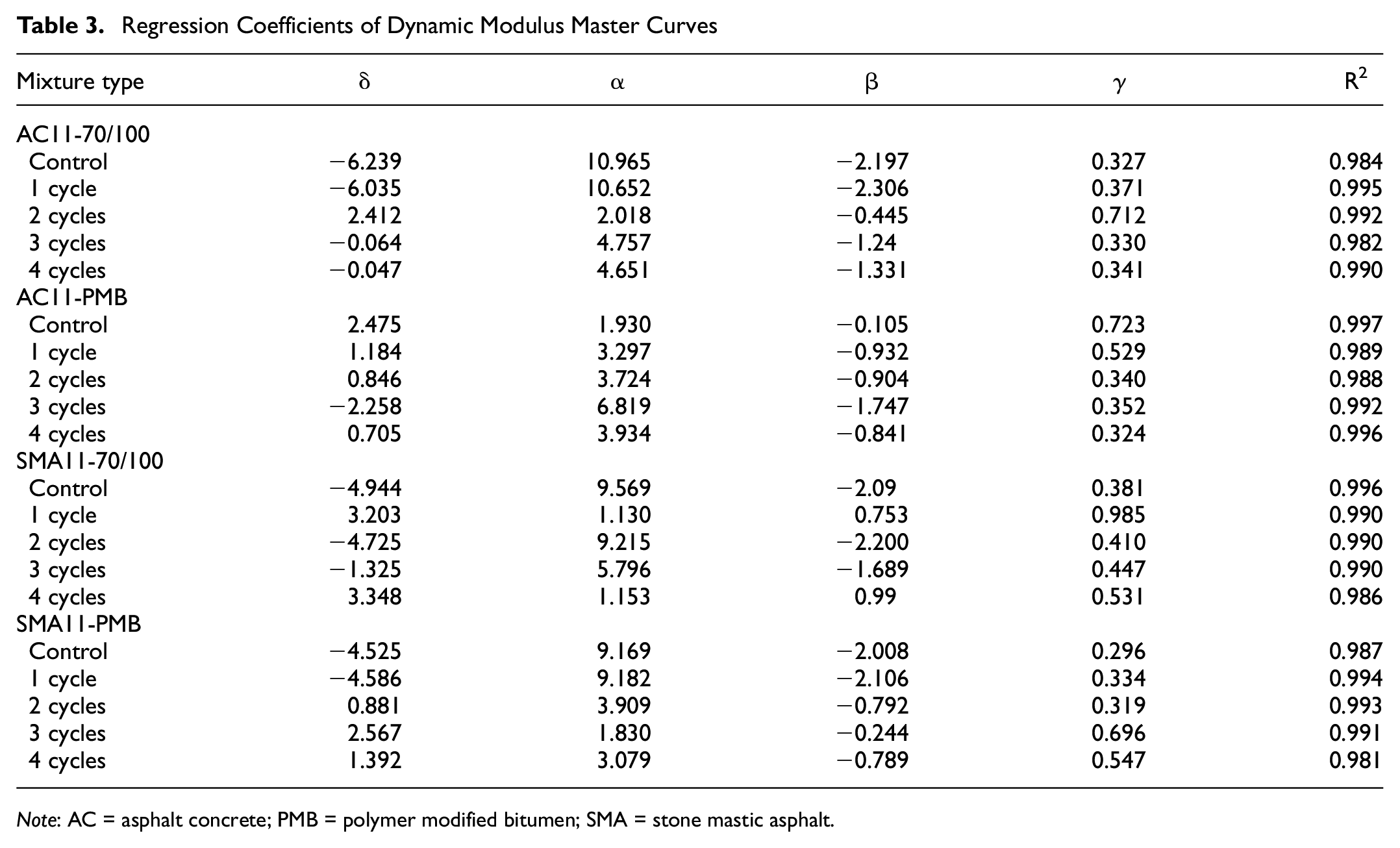
Note: AC = asphalt concrete; PMB = polymer modified bitumen; SMA = stone mastic asphalt.
The resilient moduli of the four types of asphalt mixtures were evaluated at 10°C and 25°C, as shown in Figure 6; as a general trend, the stiffness worsens with the increasing number of immersion cycles. In line with the other results displayed so far, the findings related to PMB are better than those for neat 70/100 bitumen. The resilient modulus of AC11-70/100 was 7,119 MPa (10°C) and 1,288 MPa (25°C) before exposure to sodium chloride and decreased to 6,192 MPa (10°C) and 1,152 MPa (25°C) after four immersion cycles. Also, the resilient modulus of SMA11-70/100 was initially equal to 6,378 MPa (10°C) and 1,044 MPa (25°C) while eventually decreasing to 5,254 MPa (10°C) and 923 MPa (25°C). Therefore, the greater reduction of SMA11-70/100 stiffness indicates its worse performance when compared with AC11-70/100; this result agrees well with the other findings related to the macroscopic surface, moisture absorption, Marshall stability, Marshall quotient, and dynamic modulus. On the other hand, the two mixtures with PMB showed similar trends in the reduction of their resilient moduli, presenting similar stiffness under different temperatures.
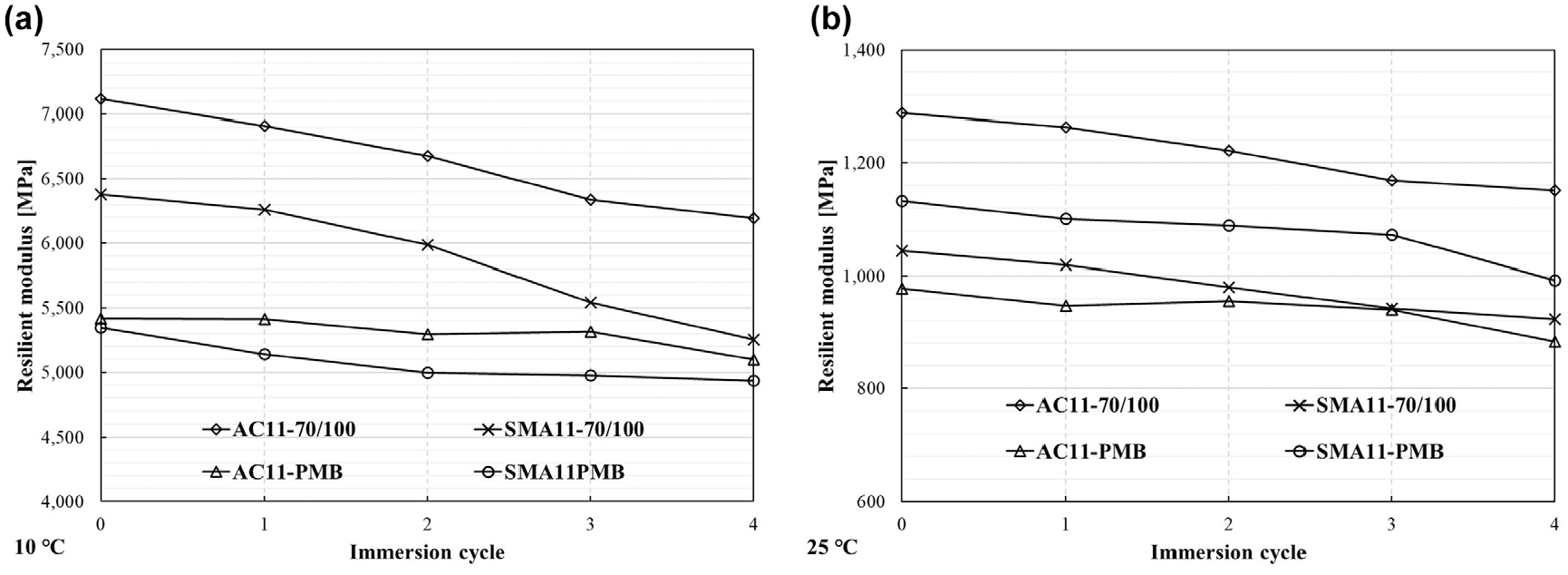
Resilient modulus of asphalt mixtures according to immersion cycles at (a) 10°C and (b) 25°C.
The deterioration trends of both dynamic and resilient moduli are consistent when the asphalt mixtures undergo immersion cycles. This result means that two moduli can closely reflect the development of stiffness of asphalt mixtures over immersion cycles, and their results can corroborate each other.
Conclusion
The application of sodium chloride is one of the most effective operations for winter road maintenance. However, the sodium chloride solution can deteriorate the properties of asphalt mixtures. Therefore, this research analyzed the response of four types of asphalt mixture to sodium chloride solution. The conclusions are summarized as follows.
According to the experimental results of this study, the sodium chloride solution deteriorated the adhesion between asphalt binder and aggregates as well as the inner structure of asphalt mixtures, resulting in a damaged surface and higher moisture absorption. The mechanical properties of asphalt mixtures were also compromised after exposure to the sodium chloride solution, as documented by Marshall stability, Marshall quotient, dynamic modulus, and resilient modulus results.
Among the four investigated types of asphalt mixtures, those containing PMB offered better resistance to sodium chloride than those with neat bitumen 70/100. In particular, the performance of AC11-70/100 mixtures was better than SMA11-70/100 mixtures because of their lower air void content, while AC11-PMB and SMA11-PMB were characterized by similar results.
The importance of the degradation process of asphalt mixtures exposed to sodium chloride solution should be given proper consideration during road design, in particular in those regions where sodium chloride is often employed during cold seasons as a regular maintenance operation. In this scenario, the use of PMB should be preferred to the application of neat bitumen to build the road surface layers, whereas PMB is limited because of its expensive cost and environmentally unfriendly properties. Furthermore, using sodium chloride during winter maintenance is irreplaceable in the short term. Thus, road agencies or departments need to take all factors into consideration and find the best solution from their individual perspectives. Besides, the conclusions of the study are based on laboratory evaluation, which provides a reference for the practical situation of asphalt pavement under sodium chloride condition. Further studies will be carried out to examine the in-field behavior of asphalt mixture exposed to sodium chloride.
Footnotes
Acknowledgements
The authors would like to thank Bent Lervik, Jan Erik Molde, and Xuesong Zhang for their immense help during this research work.
Author Contributions
The authors confirm contribution to the paper as follows: study conception and design: X. Zhang; data collection: X. Zhang; analysis and interpretation of results: X. Zhang, H. Chen, D. Barbieri, I. Hoff; draft manuscript preparation: X. Zhang, H. Chen, D. Barbieri, I. Hoff. All authors reviewed the results and approved the final version of the manuscript.
Declaration of Conflicting Interests
The author(s) declared no potential conflicts of interest with respect to the research, authorship, and/or publication of this article.
Funding
The author(s) received no financial support for the research, authorship, and/or publication of this article.
