




Abstract
Subject
There are many reports about the relationship between Stressors and Symptoms in the psychosomatic disease. But in the situation that a patient has no idea which stressor is more important for the symptoms, we have had difficulties in detection.
In this paper, we report that by using head imaging-map by Bi-Digital O-Ring Test (Omura Y., 1977-2000), we can detect the stressor which has a direct effect on the symptoms and that imaging-map can be changed the size in case patient suppose their stressor. That phenomenon can encourage a patient to realize his relationship between mind and body, and the patient can better understand the solution. We show two cases.
Cass 1
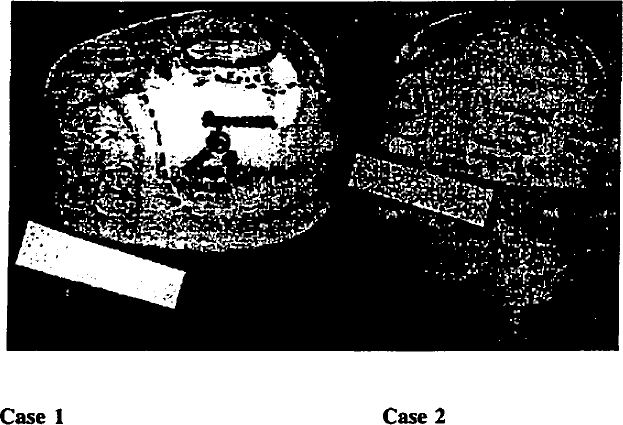
57 year-old female who had been taken more than 5 kinds of antidepressant and anti-anxiety drugs for 2 years as recommended by a nearby doctor. Chief complain was “I hate staying by myself; Palpitations attack me and my mind goes mad; I am always thinking about suicide.” Patient’s Beck Depression index was 42/63. In the first interview, we found areas where BDORT opened in the frontal and parietal lesion. We used subjects (family member, working circumstances, and friends), as a stressor to help support the patient. Her BDORT-open area was enlarged by her supposing friends.
This phenomenon encouraged the patient to realize the relationship between thinking about worsening symptoms and the actual symptoms. At first the patient did not believe that thinking about how bad the symptoms are can actually make the symptoms worse. We did not change any drugs intake levels, but we only observed using BDORT every other weeks. Now her complaint have decreased.
Case 2
32 year-old female who had history of admissions to a hospital for acute abdomen. She had negative study of FGS and CF in May-Jun ‘00. In 5th June, patient JCS had decreased to 1-2, and she was admitted again. But patient and her family had anxiety about admission to the hospital where doctor said “The reason is unclear, no abnormal finding was detected.”
Patient’s consciousness level was 1-1 in Japan coma scale, she closed her eyes and could only communicate by replying to the question. She also had anxiety about fired husband. We diagnosed her as having depression, and then we did head imaging-map by BDORT. There were BDORT-open areas in the frontal, parietal and around the hippocampus lesion. When she imagined being admitted to the hospital, BDORT-open areas were enlarged.
When she imagined that she was resting at home, that areas were shortened. The a antidepressant clomipramine vanished the area. That is was why we recommended that the patient be discharged from the hospital and rest at home and be given alomipramine. After that, patient had made good recovery and now she can do daily life by herself.
Discussion:
We report that by using head imaging-map by BDORT, we can detect their stressor which had directly effected to the symptoms, even patient him/herself do not know that. And that imaging-map can be changed the size in case patient suppose their each stressor. That phenomenon can encourage patient to realize their relationship between mind and body, then patient can smoothly understand their solution to the problems.
In a depressive patients, we can often detect BDORT-open areas in frontal, parietal and hippocampus lesion, and these two patients also had that phenomena.
These findings should be re-checked in other study. And we should certificate the relationship between these BDORT-open areas and physiological change in the brain.
Get full access to this article
View all access options for this article.