




Abstract
This study examines how trauma-informed librarianship can transform libraries into safe havens for mental wellness, particularly in Africa. It underscores libraries’ distinct challenges and opportunities in resource-limited African contexts, highlighting their crucial role in tackling trauma and enhancing community resilience. The study combines the author’s experiences, empirical data and scholarly research to show how libraries have transformed from traditional spaces to community hubs prioritising mental health. Emerging evidence suggests that the COVID-19 pandemic heightened public reliance on libraries as community anchors for mental health support. This is seen in increased engagement with information services, referrals, and programs such as bibliotherapy and mental health first aid. These developments underscore the growing need for trauma-informed approaches in library practice. This study examines trauma-informed librarianship through a literature review and case studies, summarising the advantages of such methods. It recommends incorporating mental health first aid into the ongoing education of librarians. It acknowledges libraries’ developing roles as critical community centres for mental well-being, urging further investment and investigation.
Keywords
Introduction
A scenario
Indila, a weekly library visitor, had experienced childhood abuse, the recent loss of a loved one and job instability, which was made worse by the COVID-19 pandemic. For her, the library was a sanctuary that offered safety, mental health resources and compassionate support. This highlights the broader role libraries play in addressing societal challenges. It is common because libraries worldwide provide crucial support in cases of trauma, social isolation and mental health challenges. Recent data underscores the necessity for libraries to implement trauma-informed methodologies. A 2023 literature survey showed that these practices have been integrated into some library services to address heightened emotional and psychological needs post-COVID-19 (Founds, 2024). However, many libraries still lack the resources, training and funding to implement these critical practices effectively. This gap hinders their ability to provide safe and supportive environments, and limits their potential to foster community resilience.
As the demand for trauma-sensitive services grows, policymakers and stakeholders often overlook libraries’ potential role in mental wellness, leaving them ill-equipped to address these challenges. Indila's story exemplifies the significant impact libraries can have as sanctuaries for solace and assistance, especially for those with complex psychological wounds. Her account reflects the growing recognition of libraries as communal spaces that foster healing and fortitude. Following the COVID-19 crisis, more people turned to libraries for solace, highlighting the urgent need for trauma-sensitive approaches. Libraries play a central role in communities and, by adopting trauma-informed practices, create supportive environments for individuals facing mental health challenges. This approach actively enhances the well-being of library users and strengthens the fabric of the community. This study advocates for the adoption of trauma-informed practices, increased funding and greater awareness of libraries’ transformative roles in addressing mental wellness.
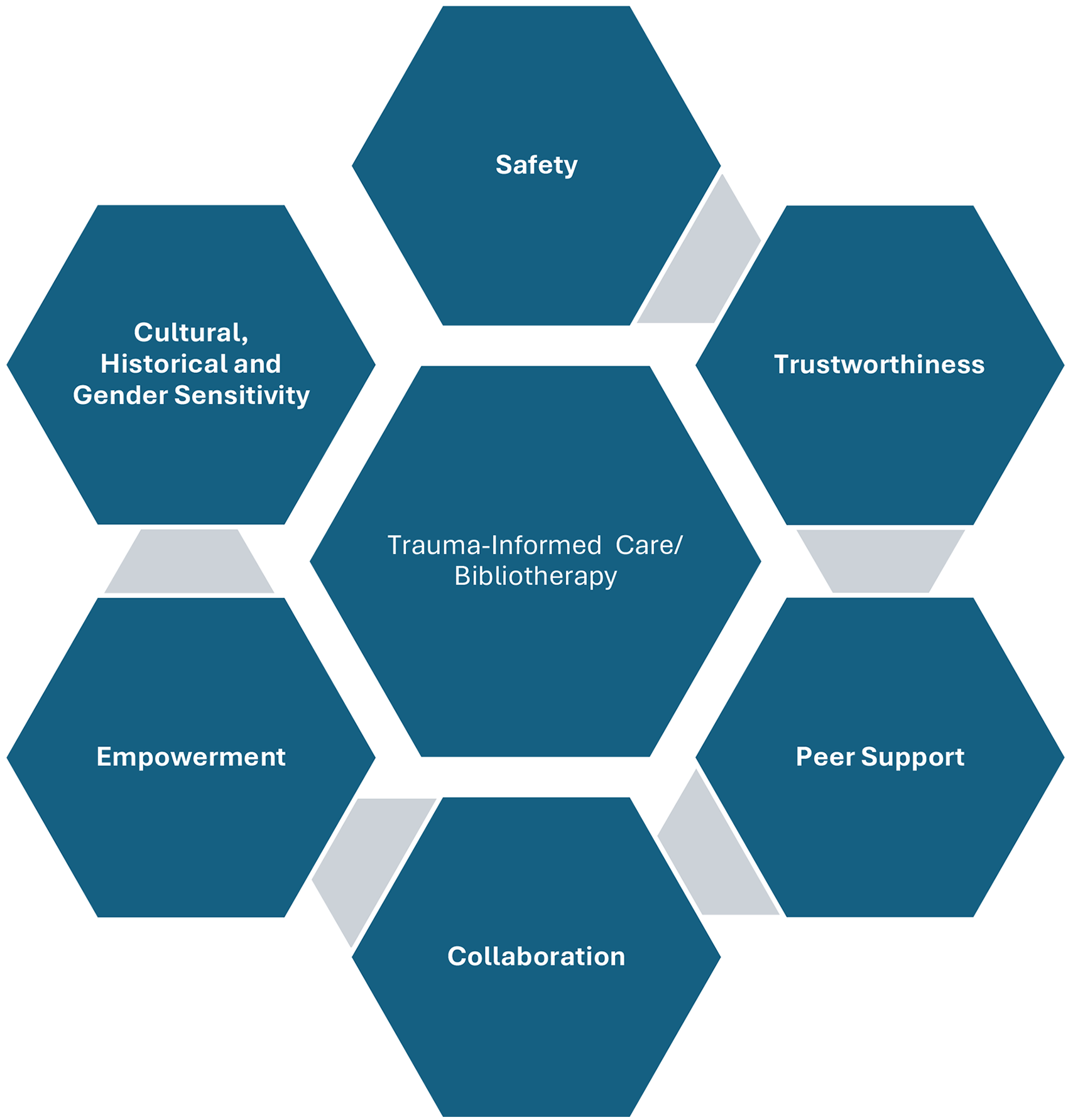
Substance Abuse and Mental Health Services Administration (SAMHSA) fundamental principles.
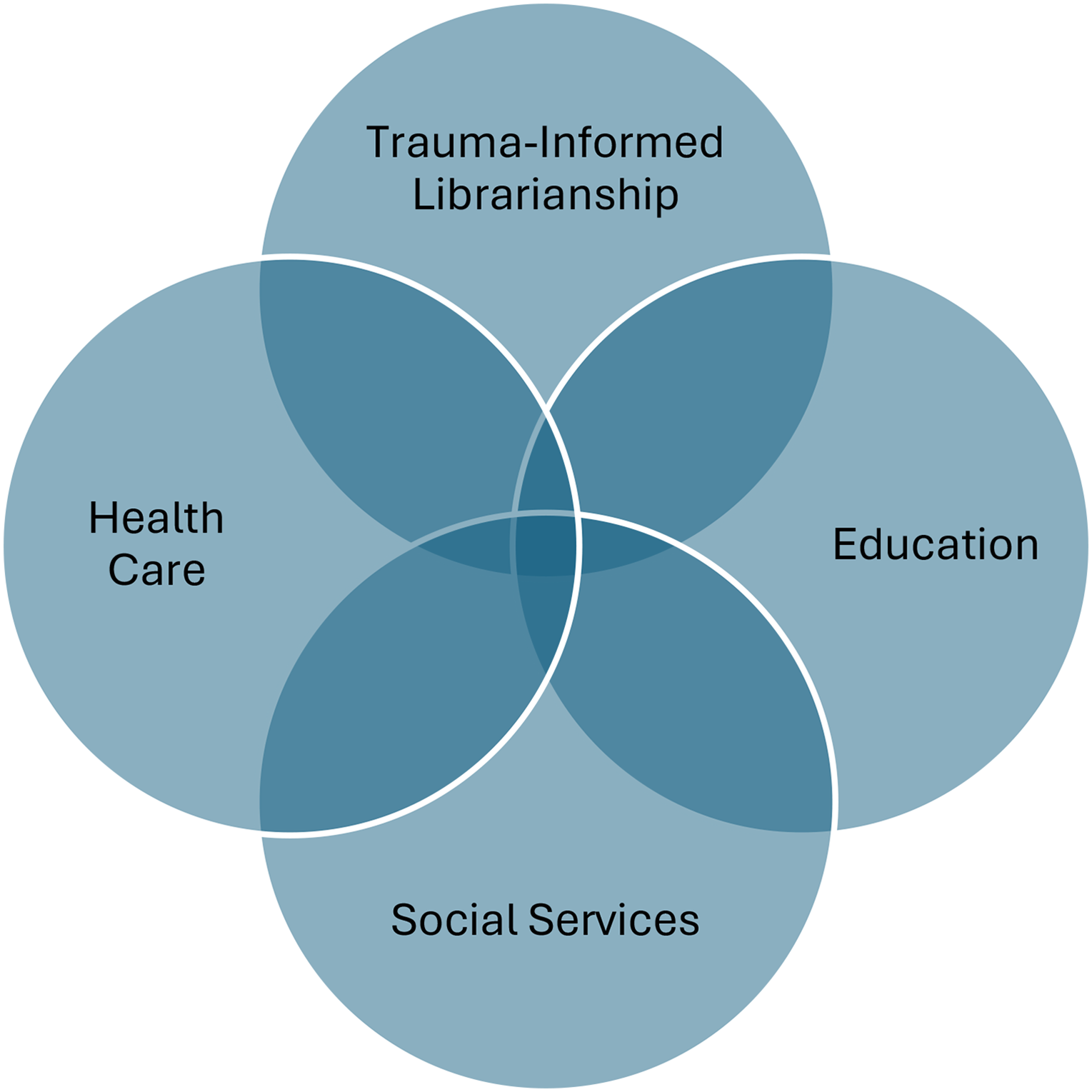
Partnerships and cross-sector collaboration.
Problem statement
Socio-economic disparities, cultural beliefs and limited access to mental health resources exacerbate the mental wellness challenges among library users in African countries. The COVID-19 pandemic further intensified these issues, particularly for disadvantaged and disabled young Africans, who often face lower mental health outcomes due to limited health literacy and systemic barriers (Sharpe et al., 2024). Many African libraries encounter patrons with complex psychosocial needs (Sebastiano, 2024). However, they lack the frameworks, training and resources to address these challenges effectively. Cultural stigmas surrounding mental health discourage individuals from seeking help, leaving libraries in a critical position to fill this gap.
Despite their potential as safe spaces, African libraries have yet to fully embrace trauma-sensitive approaches that acknowledge and address the impacts of trauma. Trauma-informed librarianship provides a framework for creating supportive environments by embedding care into library policies and equipping staff with skills to manage psychosocial crises (Founds, 2024; Wahler, 2023). Partnerships with community organisations and initiatives like mental health first aid can further enhance libraries’ capacity to support psychological well-being (Kehinde et al., 2024). However, the adoption of trauma-informed and culturally sensitive approaches in African libraries remains minimal. This study seeks to explore effective practices and propose tailored frameworks that will empower African libraries to support patrons’ mental wellness, particularly in contexts where access to mental health resources is scarce and cultural stigma persists.
Context and relevance
This study examines how libraries in African contexts, often operating under resource-constrained conditions, can adopt trauma-informed practices to support mental wellness. Libraries in Africa face unique challenges including limited resources; high rates of trauma resulting from social, economic and political instability; and inadequate mental health support systems. These factors underscore the urgent need for trauma-informed approaches tailored to African communities’ cultural and contextual realities. Traditionally focused on bibliotherapy, libraries are transitioning to a ‘whole-person librarianship’ model, incorporating social work principles to address patrons’ overall well-being by connecting them with mental health resources and social services (N Grimes et al., 2023; T Grimes et al., 2023). In Africa, integrating medical librarians into evidence-based medical practice (EBMP) has primarily centred on resource management and evidence dissemination. However, this evolving role highlights a broader potential for librarians to contribute meaningfully to mental health initiatives within library settings. By leveraging their specialised expertise, the role of librarians can be pivotal in facilitating mental health assistance,and thus address the psychological well-being needs of library users (Popoola et al., 2024).
This perspective aligns with the ‘whole community’ approach, which emphasises collaboration with stakeholders to address mental health needs, particularly in areas with limited care options (Baum, 2023; Erlank & Bopape, 2024). For example, some libraries offer mental health programmes that support emotional and social development for vulnerable groups, such as adolescents. In contrast, university libraries integrate wellness activities to enhance students’ mental health and academic performance (Baum, 2024; Knapp et al., 2023; Nance, 2022). Despite these promising developments, the adoption of trauma-informed practices in African libraries remains limited due to systemic barriers such as insufficient funding, inadequate staff training and low awareness. These challenges hinder libraries’ ability to fully address patrons’ emotional and psychological needs, widening the gap between their potential and impact. This essay advocates for implementing trauma-aware strategies in African libraries to address these challenges. It calls on stakeholders to prioritise funding, training and awareness initiatives to empower libraries as supportive, nurturing spaces for mental wellness.
Evolving roles of libraries: addressing community and mental health needs
Libraries have traditionally served as knowledge repositories that promote education and literacy through books, information and educational programmes. Their role has expanded to meet broader community needs, such as social assistance, public health and mental health support. Public libraries have become community centres that provide safe spaces and address issues such as digital literacy skills (Gillum, 2024; Sebastiano, 2024). The global health crisis resulting from COVID-19 has highlighted the critical importance of accessible resources for mental health support. This situation has prompted libraries to embrace a whole-person librarianship approach that fosters collaboration between librarians and social workers (Erlank & Bopape, 2024). Together, they effectively address the diverse needs of library patrons and enhance community support (N Grimes et al., 2023; T Grimes et al., 2023). Academic libraries have also adapted to focus on student welfare by providing art supplies, stress-relief packages and leisure activities, including video games (Nance, 2022). Public libraries promote public health, foster community engagement and reduce social isolation (Karki et al., 2024a, 2024b).
Overview of trauma-informed librarianship
Trauma-informed librarianship integrates trauma awareness into library services to effectively tackle the escalating psychosocial demands of patrons and the stress faced by staff. This approach is being increasingly adopted in libraries facing budget cuts, rising patron demands and staff burnout (Founds, 2024; Wahler, 2023). It is rooted in six principles of trauma-informed care (TIC): creating safe environments; building trust through transparent policies; fostering peer support; encouraging collaboration with staff and external partners; empowering patrons and staff; and ensuring cultural, historical and gender sensitivity in library practices (Wahler, 2023). However, many staff lack the training to handle complex situations, leading to burnout and compassion fatigue. Collaboration with social workers can enhance libraries’ capacity to support patrons by equipping staff with the necessary skills and expertise (Ogden and Williams, 2022). Library education programmes should integrate trauma-informed methodologies to improve preparedness. At the same time, global networks of practitioners can foster community involvement and knowledge-sharing (Laurent and Hart, 2021). By creating supportive and responsive environments, trauma-informed librarianship improves the quality, equity and inclusivity of library services (Founds, 2024; Sebastiano, 2024; Wahler, 2023).
Integrating trauma-informed principles
Principles of the Substance Abuse and Mental Health Services Administration (SAMHSA)
Figure 1 serves as an illustration of the SAMHSA TIC framework. It features a prominent library icon at the centre, symbolising the essential integration of this framework within the multifaceted services provided by libraries. Libraries implement these principles through policies, programmes and staff training. For example, they collaborate with social workers to equip staff with crisis management skills and integrate trauma-informed practices into training programmes. The advocates of trauma-informed librarianship propose a global community of practice to support emotional labour and community engagement in these efforts. By fostering supportive environments, trauma-informed librarianship enhances patron experiences and staff well-being, ultimately advancing the quality and equity of library services.
Building a trauma-informed culture
Establishing a trauma-informed library environment requires an ongoing commitment to comprehensive change that addresses the multifaceted needs and persistent stress of both library visitors and staff. The Sanctuary Model cultivates a caring, trauma-sensitive organisational culture (Esaki et al., 2022). This model is ideal for libraries serving diverse populations by emphasising cultural humility and inclusivity, and addressing historical inequalities. Library administrators can promote its adoption by organising staff training on its core principles, ensuring a consistent understanding across the library network (Ranjbar et al., 2020). Conducting a trauma assessment of a library’s physical and social spaces can identify areas for improvement, such as enhancing privacy, fostering welcoming environments and increasing resource accessibility. The Trauma-Informed Library Services Program at the San Francisco Public Library demonstrates the need to integrate trauma-sensitive policies into library services to mitigate this (Sharkey et al., 2023) This initiative includes specialised services for trauma-affected patrons, trained staff and partnerships with local mental health providers, offering comprehensive support tailored to those who have experienced trauma.
Gaps and challenges
Gaps in the existing literature
The current literature on TIC in librarianship highlights several critical gaps that hinder its effective implementation. One significant gap is the lack of conceptual clarity and definitional consistency, which complicates the development of cohesive policies and practices for TIC in library settings (Bargeman et al., 2022). Additionally, while library staff increasingly encounter patrons with complex psychosocial needs, insufficient training and support leave many ill-equipped to manage these challenges, leading to heightened stress and potential trauma for staff (Sebastiano, 2024). The literature also underscores the need for stronger collaborations between libraries and social work professionals, which can provide staff with essential skills and knowledge to effectively assist patrons facing a crisis (Ogden and Williams, 2022). Furthermore, there is a lack of empirical research and data-driven strategies to guide TIC implementation, as much of the existing knowledge relies on foundational principles rather than actionable frameworks (Yatchmenoff et al., 2017). Finally, the trauma experienced by library workers, exacerbated by material challenges and budget cuts, remains an overlooked area that requires attention (Dudak and Yeon, 2024). Addressing these gaps demands clear definitions, comprehensive training for staff, interprofessional partnerships and empirical research to advance TIC practices in libraries.
Challenges faced by African libraries in implementing TIC
African libraries face multiple challenges in adopting trauma-informed practices, primarily due to resource constraints, insufficient training, cultural barriers and systemic issues. These obstacles limit the effective implementation of TIC in library settings.
Resource constraints
Rural and resource-poor libraries often operate under severe budget limitations, preventing them from hiring specialists, such as social workers, who are critical for addressing trauma-related needs (Minnich et al., 2023; Wahler, 2023). Limited staffing and inadequate infrastructure further hinder the integration of trauma-informed practices. Strategic partnerships with social service agencies, mental health organisations and community groups can help libraries access additional resources, such as mental health professionals and volunteer social workers (Reid et al., 2023). For instance, a rural library in New Mexico successfully partnered with a local mental health organisation to provide on-site counselling and trauma-informed workshops, addressing resource gaps without additional full-time hires.
Lack of awareness and training
Many librarians lack formal training in TIC, leaving them unprepared to address the psychosocial needs of their patrons (Wahler, 2023). Traditional library education rarely incorporates trauma, mental health or social work principles, creating a significant knowledge gap. Tailored training programmes that emphasise safety, trustworthiness, peer support and cultural competence are essential (Founds, 2024). Online micro-credentialing programmes, such as those developed by the University of Minnesota during the COVID-19 pandemic, have demonstrated the effectiveness of flexible and accessible training modules (Nelsen et al., 2022).
Organisational resistance and cultural barriers
Libraries often face internal resistance to adopting trauma-informed practices due to entrenched traditional service models and a reluctance to change (Stephany, 2024). A lack of management support and overburdened staff focused on routine tasks leaves little time for professional development or implementing new programmes (Lewis et al., 2022). These barriers highlight the need for organisational buy-in and leadership commitment to foster a culture that embraces trauma-informed principles.
Addressing diverse user needs
Libraries serve a broad spectrum of patrons with varying backgrounds and needs. Adapting services to integrate trauma-informed principles while ensuring inclusivity and fairness presents a significant challenge, particularly in diverse communities (Heywood et al., 2024).
Staff burnout and compassion fatigue
Interacting with patrons who have undergone traumatic experiences may result in emotional disturbance, exhaustion, burnout and compassion fatigue among library staff. Without proper support systems and self-care practices, staff may struggle to maintain the empathy and resilience required for TIC (Maylea et al., 2023). Addressing these challenges requires a multifaceted approach, including increased funding, strategic partnerships, tailored training programmes and organisational reforms. By overcoming these barriers, libraries in African contexts can better support their patrons and foster inclusive, trauma-informed environments.
Strategies for effectively integrating trauma-informed approaches in library services
Integrating trauma-informed approaches in library services involves several strategies, prioritising safety, empathy, and empowerment for patrons and staff. A foundational step is to adopt the six fundamental tenets of TIC, which includes the establishment of safety, the cultivation of trust and transparency, the facilitation of peer support, the promotion of collaboration and mutual respect, the empowerment of individuals through voice and choice, and an acute awareness of cultural, historical, and gender-specific factors (Wahler, 2023). Libraries can implement these principles by creating policies and programmes that are sensitive to the needs of trauma-affected individuals, ensuring their environment is welcoming and non-threatening. Although not always feasible, collaboration with social workers can significantly enhance a library's capacity to address patrons’ psychosocial needs (Ogden and Williams, 2022; Wahler, 2023). Training library staff to recognise and respond to trauma is crucial, as it equips them with the skills to handle challenging situations effectively and reduces the risk of retraumatisation (Founds, 2024; Hunt et al., 2018).
Additionally, incorporating shame-sensitive practices can further enhance trauma-informed approaches by addressing the emotional aftermath of trauma, such as shame, which can hinder engagement with services (Dolezal and Gibson, 2022). Libraries should also consider community research initiatives to address broader public health domain and social disparities, extending the impact of trauma-informed practices beyond the library setting (Johnson-Lawrence et al., 2024). Furthermore, addressing workplace trauma among library staff is essential, as they often face stress and trauma from handling material challenges and interacting with patrons in crisis (Dudak et al., 2022; Dudak and Yeon, 2024). Workshops and training sessions co-designed by librarians and social workers have improved staff attitudes and knowledge, fostering a more supportive environment for staff and patrons (Ogden and Williams, 2022). Through the facilitation of panel discussions focused on mental health, libraries illuminate a subject that frequently remains obscured from societal awareness, thus advancing the causes of social justice and enhancing community welfare (Smith, 2021). By integrating these strategies, libraries possess the capacity to cultivate a nurturing and inclusive atmosphere that recognises and tackles the complex needs of trauma-affected individuals.
Methodology and guiding framework
This advocacy study employs an analytical framework encompassing conceptual and narrative methodologies to investigate the domain of trauma-informed librarianship. The enquiry amalgamates extant scholarly literature, policy and exemplary practices extracted from library science, public health and TIC. The study analyses libraries’ role in fostering mental wellness, delineating the avenues for incorporating trauma-informed principles into library services. To ensure a comprehensive analysis, the selection process for case studies prioritised initiatives that explicitly integrated trauma-informed practices in library settings. The criteria for data inclusion included literature relevant to mental wellness, evidence of impact on library users and geographical diversity to highlight contextual variations.
Furthermore, specific examples of libraries adopting innovative trauma-informed approaches were identified by reviewing grey literature and professional reports, ensuring practical applicability and contemporary relevance. The principal objective is to evaluate contemporary library initiatives that support mental health and provide pragmatic, implementable guidelines for adopting trauma-informed practices. By integrating these methodologies, the study seeks to bridge the gap between theoretical frameworks and actionable strategies, offering a detailed perspective that advocates for libraries as essential partners in addressing community mental wellness.
Criteria and selection of sources for analysis
Concentrating on recent literature, the literature review selected sources for rigorous and credible analysis from the last 10 years in Google Scholar on trauma-informed practices, mental health in libraries and safe spaces. The sources included peer-reviewed articles, case reports and policy documents from authoritative bodies, such as IFLA, highlighting their essential role in promoting library services and supporting collaboration among library professionals worldwide. This research presents a well-rounded and thorough examination incorporating both global perspectives and region-specific insights.
Mitigating potential biases in secondary data analysis
This study recognises potential biases from reliance on secondary data when examining trauma-informed librarianship in African contexts, which may overlook unique local and cultural factors. The identified knowledge gap often necessitates broader international case studies, which may not fully capture the nuances of African sociocultural settings (Founds, 2024). The inquiry mitigates potential biases by incorporating cross-referenced sources that corroborate the findings and integrating international best practices while considering African communities’ specific historical, socio-economic and cultural contexts. A critical literature review highlights the necessity for empirical investigation of trauma-informed services within African libraries, particularly in rural and lower socio-economic areas where disparities in access are prevalent (Alayande et al., 2022). This research endeavours to tackle these shortcomings, provide a deep understanding, identify future research areas and advocate for culturally relevant strategies for trauma-informed librarianship.
Guiding framework: empowering African libraries for mental wellness
The advocacy employs a guiding framework rooted in safe spaces and trauma-informed librarianship principles to examine how African libraries can promote mental wellness. The researcher conducted a narrative synthesis to review the selected literature, drawing on SAMHSA’s TIC framework and incorporating key elements of critical librarianship. SAMHSA’s TIC framework provides a comprehensive foundation, emphasising six core principles: creating a safe environment; fostering trust; encouraging peer support; promoting collaboration; empowering individuals; and demonstrating cultural awareness and sensitivity (Substance Abuse and Mental Health Services Administration, 2021). These guidelines create libraries that serve as secure and inclusive spaces, fostering healing and mental wellness. Additionally, the framework highlights the importance of recognising the cultural and individual factors that shape trauma experiences, and addressing these nuances to promote recovery and resilience.
Critical librarianship complements this approach by advocating for social justice and equity in library practices. By integrating TIC into the library setting, critical librarianship offers a pathway to address the unique challenges faced by marginalised communities. It emphasises the role of libraries in combating systemic inequities, promoting empathy and creating inclusive environments that prioritise mental wellness (Wahler, 2023). Libraries can also better support their staff by adopting TIC principles. Emotional labour, often unacknowledged in library settings, can significantly impact mental health. By recognising and addressing these challenges, libraries can cultivate a more empathetic and supportive workplace. Acknowledging the mental health needs of staff and fostering a culture of care and collaboration constitute critical measures in the establishment of a conducive occupational atmosphere (Barr-Walker and Sharifi, 2019). This essay advocates for African libraries to adopt trauma-informed librarianship to advance mental wellness in their communities. By adopting these principles, libraries can facilitate personal healing and become indispensable catalysts for policy reform while significantly enhancing trauma awareness. As libraries evolve to meet their users’ needs, they can transform into safe, inclusive spaces that empower marginalised communities and promote overall mental well-being (Founds, 2024).
Case studies and global perspectives
Global case studies and best practices
There are documented case studies that show how library professionals can effectively operationalise the tenets of trauma-informed librarianship. These instances reveal the incorporation of fundamental principles, including safety, empowerment and cultural sensitivity, underscoring their influence on fostering inclusive and supportive library settings. The increasing acknowledgement of trauma-informed approaches in libraries reflects a broader shift towards creating supportive settings for users and employees. Numerous case studies offer valuable perspectives on adopting and implementing these methods. However, the outcomes have varied, demonstrating both achievements and obstacles. Research by Wahler (2023) reveals that American libraries increasingly offer trauma-informed training to their personnel to enhance their support for patrons’ psychological and social requirements. Libraries have made considerable progress in integrating TIC into their offerings by focusing on training and resource development.
The Urban Libraries Trauma Study, for example, examined the trauma experienced by library staff in urban environments. It offers insights into how libraries can address workplace trauma and boost staff well-being through training, peer support and policy alterations (Dudak et al., 2022). Such approaches highlight the significance of organisational changes in establishing trauma-informed workplaces, moving beyond individual coping strategies to systemic transformations that foster mental well-being at all levels. A notable instance of Trauma Informed Care (TIC) successful implementation is the Trauma Ambassador Program in Philadelphia. This initiative has trained librarians to identify trauma symptoms and respond appropriately, fostering a safer and more supportive atmosphere for patients and staff (Felter et al., 2024). The programme’s success has been attributed to its emphasis on community partnerships, underscoring the necessity for collaborative efforts across organisations and services to address trauma effectively.
Case studies on the progress of African libraries
The exploration of trauma-informed librarianship in African libraries is limited, with most of the existing literature focusing on broader contexts or related fields. However, the concept of trauma-informed practices is gaining traction globally, including in Africa. The incorporation of trauma-informed frameworks serves as a paradigm of this transformation in educational methodologies in Angola, illustrating concerted initiatives to instil mental health consciousness while markedly enhancing the comprehension and perspectives of the participants (Capuia et al., 2024). The challenges faced by librarians in implementing trauma-informed practices are multifaceted. However, African libraries can apply the general principles of trauma-informed librarianship, as they face challenges similar to those in other regions. The African Library Project has played a crucial role in establishing community and educational libraries across 13 African nations, enhancing access to books and addressing patients’ psychosocial needs through collaborative efforts and volunteering (Nakitare et al., 2023). The increasing recognition and urgent need for trauma-informed approaches in African libraries signals a transformative and indispensable shift that has the power to redefine the function of libraries as supportive and healing spaces for their communities.
Recommendations
Educate policymakers and library administrators
Educating policymakers and library administrators is essential for embedding TIC principles into library practices and policies. Implementing TIC practices helps prevent retraumatisation and fosters an inclusive and supportive environment. Decision-makers must understand the value of TIC in promoting mental health, accessibility and trust. Evidence shows that training library personnel in TIC principles enhances their ability to respond empathetically to patrons’ needs (Thirkle et al., 2018). Additionally, TIC aligns with diversity, equity and inclusion goals, addressing systemic barriers and strengthening community resilience.
Integrate TIC into policies and practices
Collaboration between policymakers and administrators is critical to embed TIC principles in libraries. Library leaders should:
Formalise TIC principles in policies – that is, evaluate and adapt existing policies to incorporate trauma sensitivity in patron interactions and staff behaviour protocols. Establish communities of practice to exchange strategies, resources and best practices for TIC implementation. These communities can enhance collaboration among libraries, mental health professionals, community organisations and other stakeholders (Laurent and Hart, 2021). Regular workshops and meetings can address challenges, improve collaboration and explore funding opportunities. Prioritise the development of standardised definitions and frameworks for TIC in libraries to ensure consistency and role clarity (Lee et al., 2021).
Secure funding and resources
Policymakers and administrators must prioritise financial investments in TIC training and resources. Libraries can collaborate with organisations like the National Library of Medicine to create comprehensive training programmes and guidelines. Libraries should actively pursue public and private funding opportunities, drawing inspiration from successful initiatives supported by library and information associations, institutions and other agencies (Simpson et al., 2023).
Enhance cultural competence
A crucial aspect of TIC implementation is training staff in cultural competence. Cultural competence entails understanding the cultural framework of trauma and providing equitable support to all patrons (Ardino, 2014). Integrating cultural competence into professional development helps library staff respond to trauma in a culturally sensitive manner. By prioritising TIC in strategic planning, funding and professional development, library leaders and policymakers can create compassionate and inclusive environments that promote the well-being of all stakeholders.
Support mental health first aid in the library curriculum
Integrating mental health first aid training into library and information science programmes equips future librarians to manage mental health crises and create safer and more supportive environments. This approach aligns with the principles of critical librarianship, emphasising social equality and comprehensive care in library services. Including mental health first aid training in library and information science curricula is essential, as it provides students with the skills needed to identify mental health emergencies, offer initial help and refer individuals to appropriate resources. Academic library programmes can collaborate with mental health organisations, such as Strong Minds, to develop training modules for students with a library and information science background. Partnering with mental health experts can provide practical learning experiences, allowing students to practise crisis interventions in a supervised setting. The Faculty of Information at the University of Toronto, for example, collaborated with local mental health agencies to deliver mental health first aid training for library and information science students, educating them to respond effectively to mental health emergencies and thus preparing graduates to address library users’ psychological well-being requirements (Schlamb, 2019).
Training and professional development
While this study advocates for integrating mental health first aid training into librarians’ professional development, it does not critically assess the current availability, accessibility or quality of such training programmes. Acknowledging this as a limitation and suggesting research into the efficacy of training programmes for librarians would be a constructive addition. Moreover, exploring the barriers to implementing and sustaining these training programmes could offer valuable insights for policymakers and library administrators. The integration of trauma-informed methodologies within educational environments has been demonstrated to augment educators' proficiency in addressing the mental health requirements of their respective communities. For instance, a research investigation by Gherardi and Stoner (2024) evaluated teacher reactions to a comprehensive year-long professional development initiative focused on trauma-informed practices within an urban elementary institution. The results indicate that such professional development endeavours can significantly affect educators' attitudes and methodologies. This may prove advantageous for libraries adopting analogous strategies to promote mental wellness (Goulding & Campbell-Meier, 2024; Majebi et al., 2024).
Partnerships and cross-sector collaboration
Cross-sector partnerships to support trauma-informed librarianship
Figure 2 details the significant intersection between trauma-informed librarianship principles and the fields of health care, education and social services, providing a comprehensive overview of their overlap. It visually emphasises the shared foundational principles and collaborative potential across these fields, showcasing their interconnectivity. Trauma-informed librarianship forms a nexus with education, health care and social services, addressing community requirements and promoting inter-sectoral collaboration. Libraries embracing trauma-informed methodologies collaborate with educational institutions to create nurturing environments for students who have experienced trauma. They enhance academic outcomes by establishing a secure, inclusive learning atmosphere. Initiatives like mental health literacy programmes and resource-sharing partnerships with educators can strengthen young learners’ resilience, especially those facing adversity (Substance Abuse and Mental Health Services Administration, 2021). Trauma-informed libraries augment patient care by functioning as neutral venues for mental health education and support services in health care. Through partnerships with health-care professionals, libraries can facilitate stress management workshops or serve as hubs for mental health resources, addressing the needs of underserved populations. Collaboration with social services enables libraries to deliver comprehensive support, linking patrons to essential services such as counselling and substance abuse treatment programmes. This interdisciplinary cooperation optimises a library's capacity to confront societal issues, nurturing a holistic, community-centred model of care (Zbuchea et al., 2024).
Limitations and future research
This study predominantly draws on established research and conceptual frameworks, lacking original empirical findings. Such reliance could hinder the conclusive establishment of the efficacy of trauma-informed approaches within librarianship. Acknowledging this limitation more explicitly and suggesting that future research should include primary data collection to validate the proposed benefits of trauma-informed practices within library settings is beneficial. For example, conducting surveys or interviews with library staff and patrons could provide direct evidence of the impact of these practices. While this essay focuses on implementing trauma-informed librarianship in African libraries, it acknowledges the variability in library resources and societal norms, as well as the prevalence of trauma within and across African countries. The continent's diverse socio-economic and cultural contexts present unique challenges and opportunities for adopting trauma-informed practices. Recognising these complexities, future researchers could compare libraries in different African regions to provide valuable insights into effectively tailoring such practices. Such research would also inform strategies for adapting trauma-informed librarianship to similar resource-constrained environments globally.
Addressing the critiques and limitations
This study, by drawing on existing research and theoretical models, presents an essential and pertinent viewpoint on the necessity for trauma-informed practices in librarianship, with a particular emphasis on African libraries. It outlines a strategy for advancing librarians’ abilities to promote mental well-being by emphasising the importance of libraries as secure environments and advocating for incorporating mental health first aid training into professional development programmes. Its broad international and regional scope ensures its applicability across various settings, igniting essential discussions about resource disparities and societal norms. This work is a fundamental call to action, imploring stakeholders to prioritise trauma-informed approaches and mental health advocacy within library services. The author underscores the advantages of grounding the study in well-established frameworks and drawing on evidence from associated disciplines. The investigator employs this methodology to enhance the comprehensive quality of the manuscript and augment its academic influence by the following:
A grounding in established frameworks: this advocacy for trauma-informed practices builds on well-recognised care models, such as the comprehensive SAMHSA framework. Professionals across numerous disciplines have extensively and effectively applied this framework, demonstrating its relevance and applicability (Substance Abuse and Mental Health Services Administration, 2021). Evidence from related fields: although this study does not introduce new data, it strategically draws on a rich reservoir of existing case studies and literature from library science and mental health to illustrate the potential and significance of trauma-informed practices. Downey’s (2021) insightful work effectively emphasises the pivotal function of libraries in addressing and mitigating community trauma by implementing innovative programming designed to meet the needs of those affected.
Call for future research
The paper study underscores the urgent need for empirical research to evaluate the transformative impact of trauma-informed librarianship. Future studies should address critical questions, such as:
How do trauma-informed practices enhance library users’ mental well-being? What barriers and enablers influence the implementation of these practices across library contexts? How cost-effective and sustainable are trauma-informed training programmes for librarians? How do library users perceive libraries as trauma-informed spaces, and what are their specific needs?
Research should also explore organisational barriers – including institutional ethos, management support and regulatory challenges – to promoting the long-term adoption of trauma-informed approaches. Community collaboration with mental health professionals is necessary to address the complex psychosocial needs of both patrons and staff. Furthermore, integrating TIC into library and information science curricula is essential to prepare future librarians to effectively support trauma-affected populations, enhancing the role of libraries as inclusive and supportive environments.
Conclusion
Integrating TIC principles in libraries has demonstrated significant potential in supporting at-risk individuals and mitigating stress for library staff. However, limited resources, insufficient training and institutional resistance persist. Overcoming these obstacles is crucial for establishing libraries as centres for mental wellness and social support. Case studies and pilot programmes have highlighted the importance of systemic support, community collaboration and organisational commitment in successfully implementing TIC in libraries. Strategic partnerships, mindfulness workshops, peer support groups and bibliotherapy have emerged as effective strategies for addressing the mental health needs of both patrons and staff. These initiatives align with IFLA's vision of libraries as spaces for social sustainability and well-being, underscoring their transformative potential in addressing trauma and supporting mental health. The adoption of TIC in African libraries is slow and, to ensure the sustainability and widespread adoption of TIC, it is essential to address the existing resource limitations, skill gaps and systemic barriers.
Additionally, further research is necessary to thoroughly investigate the impact of trauma-informed practices in diverse cultural contexts and types of libraries, as well as their effects on different demographic groups. In conclusion, implementing trauma-informed methodologies in libraries represents a significant step towards creating more supportive and inclusive community spaces. Addressing these gaps can strengthen and enhance TIC in libraries and ensure its sustainability.
Footnotes
Declaration of conflicting interests
The author declared no potential conflicts of interest with respect to the research, authorship and/or publication of this essay.
Funding
The author received no financial support for the research, authorship and/or publication of this essay.
