




Abstract
Fostering students’ well-being is a priority in many contemporary schools, given the impact of well-being-related factors on other facets of students’ lives, such as academic attainment. While school libraries can make a notable contribution to student well-being, there is a lack of international research exploring how they may act as a safe space and provide access to current and credible health-information resources. The International School Library Workforce Survey captured quantitative and qualitative data on school libraries as well-being-supportive spaces from 971 respondents in 63 countries. The majority of the respondents believed that developing students’ well-being is typically a priority for schools in their country and, in the vast majority of cases, the school library is used as a safe space. The findings also highlighted a range of relevant themes that resonated across diverse contexts, including those explicitly identifying factors restricting the well-being-supportive capacity of the school library.
Introduction and literature review
Fostering young people's well-being has generated great interest among educators and policymakers in recent times, given the many challenges that students face in contemporary contexts, and the impact of well-being-related factors on other facets of their lives, such as academic attainment (Klapp et al., 2024). This may be in response to an increasing prevalence of health and well-being issues experienced by young people, such as depressive disorders (Zhao et al., 2024) and other mental health conditions (Zhong et al., 2024). It is contended that well-being should be a priority in all educational systems, given that ‘education and wellbeing are intertwined dimensions’, and students need to be healthy and have a sense of well-being to optimise their ability to learn (Pulimeno et al., 2020: 318). Given that students spend a substantial portion of their time in schools, the role of these institutions and the spaces within them in promoting student well-being warrants close consideration (Joing et al., 2020). In some contexts, there has been increased focus on the role of the school in fostering well-being, and this prioritisation can be reflected in the policies, practices, resource allocation and other activities within a school. For example, in Aotearoa New Zealand, ‘schools are increasingly asked to support their students’ wellbeing as well as academic performance through the Child and Youth Wellbeing Strategy and changes to the National Education and Learning Priorities’ (Boyask et al., 2021: 27).
One feature of a well-being-supportive school can be the presence of safe spaces. These can be viewed as welcoming, comfortable and accessible sanctuaries that promote a sense of security, where students can relax and recharge without fear or judgement (Merga, 2022; Wittmann and Fisher-Allison, 2020). Vulnerable students may particularly benefit from safe spaces, given that ‘the historical background to the concept is to protect marginalised groups from violations, threat and hatred’ (Flensner and Von der Lippe, 2019: 276). School libraries can be valued safe spaces within a school (Merga, 2020, 2021, 2022; Webber et al., 2024). Recent research from France found that the school library was associated with positive emotions by the majority of the respondents, regardless of gender, and they can function as a ‘refuge or even safe haven for students who are victims of ostracism and/or are unhappy at school’ (Joing, 2023: 786). Furthermore, reading for pleasure, a key activity undertaken within the school library, is also associated with promoting well-being (Merga, 2022; Sun et al., 2024). US research on rural school libraries fostering mental health literacy found that ‘providing a safe space’ and ‘providing a caring listener’ for students were some of the aspects of the role where school librarians reported greatest confidence (Adkins et al., 2019: 433). However, even if a library has outstanding well-being affordances and functions as a vital safe space, this is of limited value if students have highly restricted access. Little is known about how library access norms may vary across contexts, though some research has captured students’ desire for greater access to the school library facility (Joing, 2023).
Physical environments in schools have been linked to student well-being (e.g. Nukulkij et al., 2024), and the well-being-associated facets of the library environment can play a key role in fostering student well-being in that space. Students who used their library for ‘relaxing and recharging’ often related this possibility ‘to the ambient environment and furnishings of the library’ (Merga, 2021: 667). Both within and between contexts, these affordances can vary widely. For instance, even within the Scottish context, inequalities exist in terms of the way school library resources are distributed and managed between schools and across local authority areas. This means that different libraries/librarians can offer different levels of support to pupils, which may or may not meet their needs. In the current study, whilst practitioners reported numerous ways of supporting pupils in their community, they also spoke about the barriers to their practice which differed between individuals, schools, and local authority areas. (Webber et al., 2024: 10)
The lack of extant well-being-focused school library research means that little is known about the environmental factors that enable and constrain the library to act as a safe space and refuge, fostering well-being within a school, and how these may be strengthened or limited as appropriate to enhance measurable well-being outcomes.
Young people need access to current and credible health information, and effective strategies to locate it, to support them in making sound decisions about their health. The school is a valued source of health information and, in recent research, adolescents expressed ‘a desire for schools to provide them with more health related knowledge’ (Martinović et al., 2023: 84). While there is relatively limited knowledge about how school libraries fulfil this role across contexts, the limited extant research, primarily from the USA, suggests that school librarians may have confidence in their ability to provide health-related ‘informational and recreational resources to students’ (Adkins et al., 2019: 433), and also that they may be unevenly resourced to enact a health-information gatekeeper role (Lukenbill and Immroth, 2009). It has been observed that school library professionals (SLPs) ‘have a unique opportunity to improve the health literacy of children and teachers, but these libraries are underrepresented in the literature’ (Barr-Walker, 2016: 200).
In response to these research gaps and real-world needs, in 2024 the International School Library Workforce Survey collected SLPs’ views relating to the following research questions:
Is developing students’ well-being perceived to be a universal goal in schools? Are school libraries seen as accessible safe spaces in contemporary schools? Are school library environments conducive to promoting student well-being? Do school libraries support student access to current well-being-supportive information? What key insights are shared by the respondents in relation to their school library as a space for fostering student well-being?
Method
Tool design and data collection
A novel survey tool was the data collection tool for the project. To address a wide range of research questions, ‘the survey was sectioned into four separate and comprehensive blocks: reading engagement, workforce, wellbeing, and digital information literacy’ (Merga and Mat Roni, forthcoming a: 2). This article reports on the block of survey questions specifically focused on the respondents’ views on school libraries fostering student well-being, which has not been previously discussed elsewhere (e.g. in Merga and Mat Roni, 2025, forthcoming a, forthcoming b).
While the original research design was expected to be primarily quantitative, with most data collected on Likert-type scales, as a result of rigorous piloting with experienced SLPs from a range of nations, the survey was adjusted to allow for significantly greater qualitative data collection, transforming it into a concurrent-timing mixed-methods tool (Stentz et al., 2012). Despite the limitations involved in collecting qualitative data in survey tools, these open fields were added to have an optional explanatory function, allowing the respondents to delve deeper into the reasons for their responses, as well as their experiences and concerns. While in the original version of the Survey, these fields were kept to a minimum to keep duration within reasonable parameters, reducing related risk of attrition, pilot respondents indicated that without embedding multiple opportunities to capture rich additional qualitative data, the Survey would be viewed as a missed opportunity by respondents. That the final Survey was estimated to take over 18 min[utes] to complete, and yet it had a very strong completion rate with the new qualitative fields added, highlights that negative effects of greater survey length can be greatly mitigated when a survey is being administered to a highly motivated and generous demographic who demand voice. (Merga and Mat Roni, 2025: 3)
The piloting phase of this project was intentionally designed to support the creation of a tool that could be optimally accessible to (within resourcing constraints) and resonate with international respondents. The piloting phase involved the careful testing of terminology; ‘during the piloting process, certain key terms that held ambiguity were identified and then defined in the preamble to the Survey’ (3), as well as in the introductory material for each section: ‘as such, the Survey was carefully crafted to minimize variation in interpretation of key terms that could lead to issues with the data’ (3). For example, to ensure the consistent conceptualisation of key terms, the preamble for the block on school libraries fostering student well-being included the following definitions, which were devised from conceptual norms and checked for comprehension during the survey piloting: ‘For the purposes of this study,
The data was collected between 12 July and 29 August 2024, with the participants recruited via online promotion with a link distributed through LinkedIn. Many local, national and international professional associations serving or related to SLPs played an active role in distributing details of the survey, including posting the information on their websites and social media pages. In the recruitment materials, the participants were encouraged to share the link more broadly within their professional communities in order to reach those not affiliated with professional associations.
Sample size and data analysis
The link directed the respondents to Qualtrics, where the survey was hosted. As noted previously: There is no known figure for the total number of SLPs worldwide, though it is known that the international professional association (IASL) had around 250 members in August 2024 (J. Branch-Mueller, personal communication, August 22, 2024). Communicative competence in the English language and internet access were both limiting requisites for survey completion. In the absence of a definite population size of SLPs meeting these requisites, GPower (Faul et al., 2009) was employed to estimate a minimum sample size. Using Cohen's convention of a medium effect size threshold of .30 (Cohen, 2013), with a 95% confidence interval, the minimum sample size required was N = 138. While the final sample of N = 971 is unlikely to have captured the full potential pool of respondents, there is no similar study undertaken in recent times and with institutional ethics approval that has achieved a sample of this size from this professional group. (Merga and Mat Roni, forthcoming a: 4)
Meeting the sampling requirements for the qualitative component was also ensured. Saturation was both met and vastly exceeded during the analysis of the data from the qualitative field reported on in this article, across a total of 427 respondents’ responses. While there is limited methods research that establishes a typical number of responses for saturation to be attained in relation to open fields on surveys, for other qualitative methods such as interviews, it is common for saturation to be reached at fewer than 17 respondents (Hennink and Kaiser, 2022).
The quantitative data is presented as percentages, with category combinations made for ease of readability and generalisability in interpretation (see Tables 2 and 3). The findings in Table 4 were arrived at as a result of the analysis of the qualitative data using iterative thematic coding informed by the approaches of Clarke and Braun (2013) and Deterding and Waters (2021).
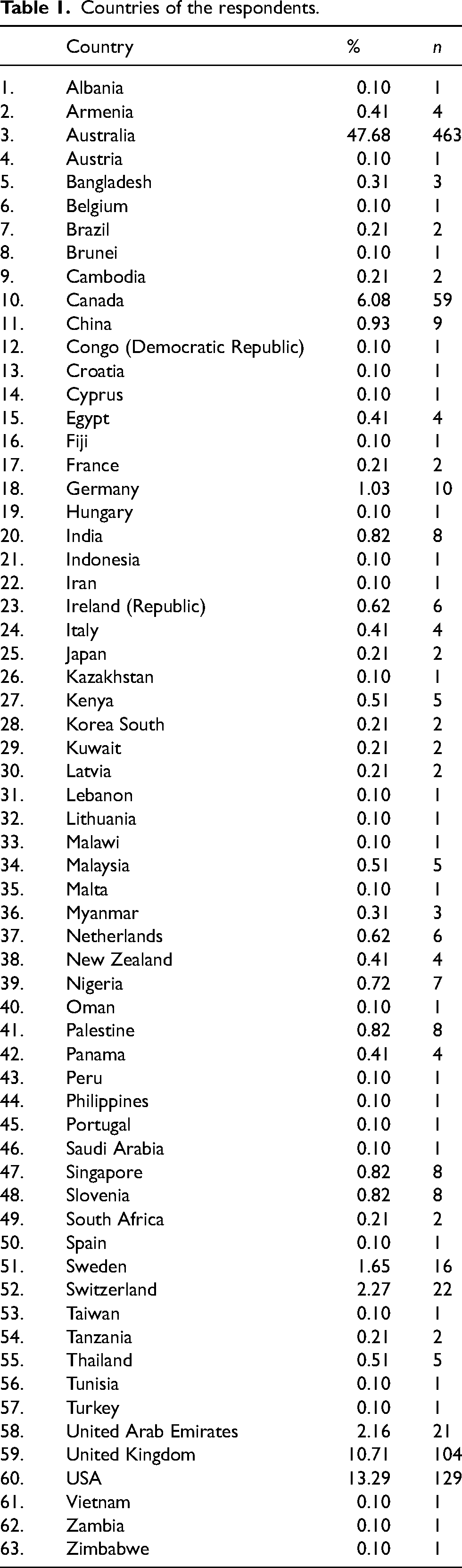
Countries of the respondents.
Perception of well-being promotion of school libraries.
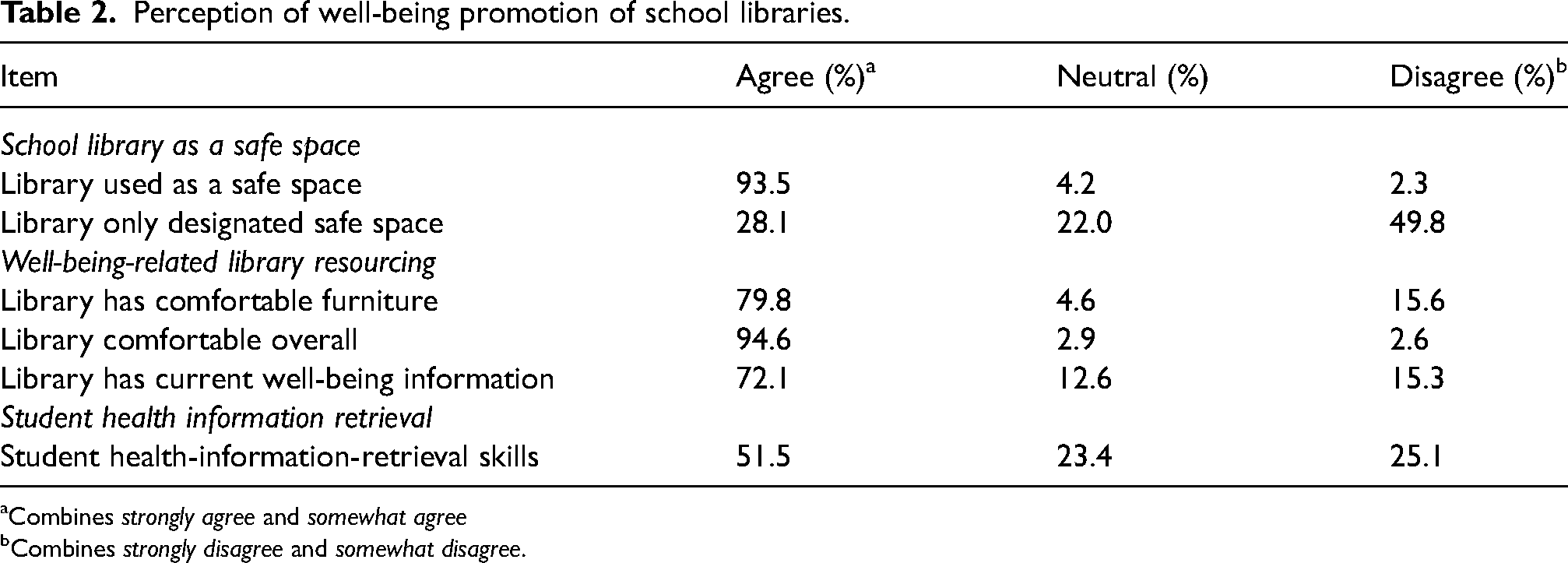
Combines strongly agree and somewhat agree
Combines strongly disagree and somewhat disagree.
School library access as opening frequency.
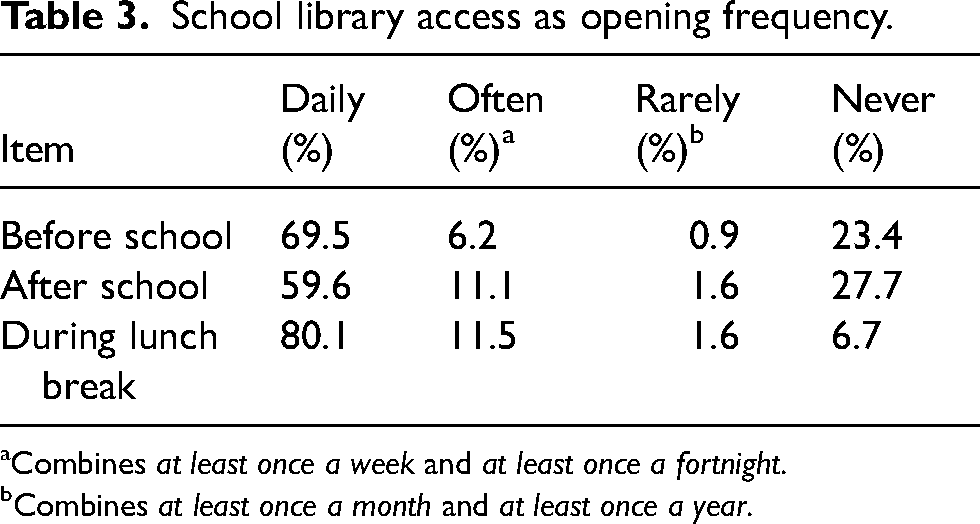
Combines at least once a week and at least once a fortnight.
Combines at least once a month and at least once a year.
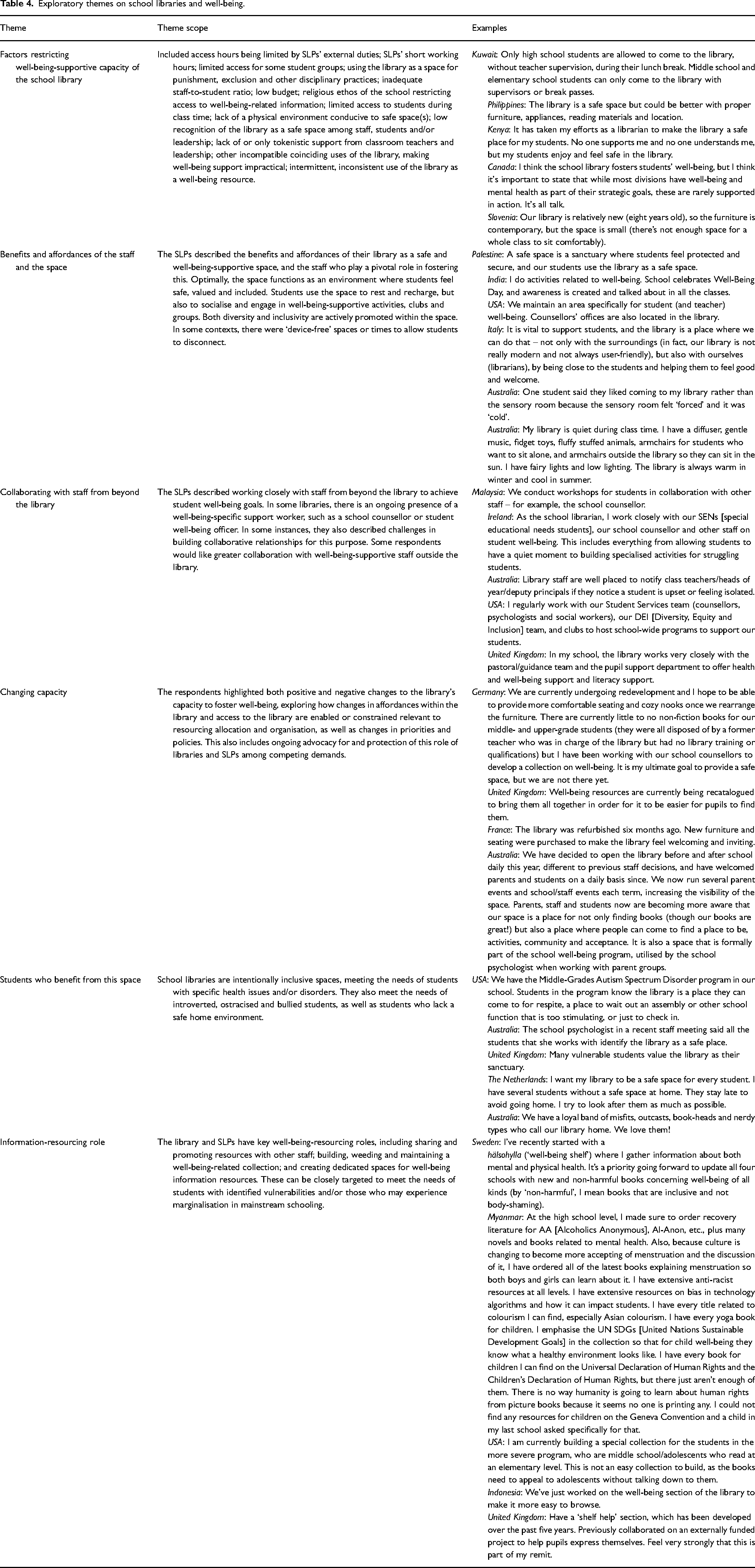
Exploratory themes on school libraries and well-being.
Respondents
As shown in Table 1, responses were collected from SLPs in 63 countries (Merga and Mat Roni, forthcoming a: 4).
The respondents were typically over 40 years of age (83.8%), with more than six years of school library workforce experience (71.2%). As shown in Table 1, the greatest concentration of responses came from Australia, the USA and the United Kingdom, meaning that the findings may be most applicable to these contexts.
Findings
Quantitative findings
Most of the respondents believed that developing students’ well-being is typically a priority for schools in their country, with 78.8% strongly or somewhat agreeing, 12.2% neutral, and only 9.1% strongly or somewhat disagreeing.
The responses relating to the perception of well-being promotion and related resourcing of school libraries are detailed in Table 2, with items focused on known elements of libraries previously associated with fostering well-being as identified in prior research (e.g. Merga, 2021).
Table 3 reports the findings on school library access captured as opening frequency.
Qualitative findings
Beyond these quantitative results, the respondents offered insights into their school library as a space for fostering student well-being, which were entered into an optional open field. A total of 427 respondents voluntarily added text in this field (44% of the respondent group). The key findings are summarised in Table 4. Themes were only included if they were articulated across at least three contexts, as the research focus is on commonalities rather than differences.
Discussion
While the literature on well-being in schools tends to characterise schools as consisting primarily of classrooms, student well-being may be supported differently across unique spaces within the school (Joing et al., 2020), and school libraries can play an important role in fostering student well-being, which should not be ignored. Due to the scale, spread and currency of this data, the findings offer unique insights into shared circumstances and challenges faced by school libraries as well-being-supportive facilities. The findings assert that, in the vast majority of cases, the school library is used as a safe space (93.5%), resonating with recent data from a Hong Kong school where 93% of students ‘affirmed that the library felt like a safe space to them, with quiet zones and supportive staff being key contributors’ (Slaby, 2024: 45). Furthermore, in more than a quarter of the schools (28.1%), school libraries were the only designated safe space. This means that a reduction in services, access and staffing, or even permanent closure, could potentially have a serious impact on vulnerable students. While there has been some research in this area (Loh and Binny, 2024; Merga, 2020, 2021, 2022), future research should also seek to build on the qualitative findings reported in this article to explore the kinds of vulnerable students who use the library as a safe space across contexts, and the aspects of the library that are associated with well-being as reported by students.
This is not a hypothetical risk, with libraries in some contexts more likely to experience budget cuts than gains (e.g. Softlink, 2024); budget limitations are one of the factors restricting the well-being-supportive capacity of the school library highlighted in the qualitative findings in this article. As shown in Table 3, a notable percentage of school libraries are never open after (27.5%) or before (23.4%) school, limiting access for students who have other occupations at lunchtime but who might use the library as a well-being resource if granted access at other times. It is likely that access limitations are due to resourcing and staffing constraints beyond the control of SLPs, and research needs to examine how these constraints impact the achievement of well-being goals such as the reliable and accessible provision of a safe space.
Insufficient staff and/or workload may have a particularly deleterious impact, given that the qualitative findings provide rich insights into the tangible well-being benefits of a school library across contexts, revealing the vital role that SLPs play as an integral part of this function. This reflects the aforementioned recent findings from Hong Kong, where supportive staff played a key role (Slaby, 2024), as well as other earlier research, where the students themselves made this connection: ‘students identified the library staff as a key factor in their enjoyment of, and safety in the library’ (Merga, 2021: 668). Given that collaborating with staff from beyond the library was a recurring theme, greater research attention should be given to the collaboration between SLPs and other key human resources within a school to achieve shared well-being goals. At present, the research on collaboration within libraries more typically focuses on collaboration in general terms (Merga et al., 2021) or collaboration for literacy learning purposes (Merga, 2019).
It is also essential that future research focuses on school libraries’ role in acting as a health and well-being information sources, and fostering student health-information-retrieval skills and digital health literacy, as only 51.5% of the respondents agreed that their students know how to find well-being information in the library. In some contexts, students have described using their school library as a valued source of well-being information, enabling them to access credible sources of health information (Merga, 2022), and given the growing challenge of source-credibility assessment in health information (Merga, 2023; Oddone and Merga, 2025), the value the library contributes in this space may be often underestimated. The findings in Table 2 also raise questions about the currency of this information, given the misinformation risk of providing dated, superseded health information. Currency in this aspect of the collection is vital, given that health and well-being knowledge is being constantly revised as it advances, and that, surprisingly, many young people may prefer to access this knowledge in traditional forms rather than online (Merga, 2022), despite being constantly inundated with well-being-related information through social media (Merga, 2024).
Finally, it is a limitation of this article that it focuses on the commonalities rather than the differences in the sample. Further analysis can be undertaken in subsequent work with a focus on the compelling differences.
Conclusions
The role of the school library and its staff as essential well-being resources within a school may be poorly understood, and this article offers robust cross-contextual insights into how policymakers may underestimate them at their peril, given the rising burden of health and well-being conditions that contemporary students may face during their schooling. Developing students’ well-being is perceived to be a goal in most schools, and these findings should be of broad international interest in schools seeking to enhance their progression towards this goal.
While school libraries are safe spaces, and in some cases the only designated safe space within the school, they are not always optimally accessible and well resourced. As students are bombarded with high volumes of misinformation and disinformation online (Merga, 2024), in connecting students with reliable and credible health information, the school library can help to reduce the related risks of such exposure (Merga, 2023). To do this effectively, school libraries need to be able to ensure the currency of well-being information through adequate resourcing: if only 72% of school libraries are providing current resourcing in this area, this means that more than a quarter of the students using these libraries may be exposed to insufficient and/or outdated well-being information. The exploratory themes on school libraries and well-being derived from the wealth of data shared by the respondents highlight that while school libraries can do much to meet the needs of all students, and perhaps particularly those who are vulnerable and marginalised; in some cases, school libraries are being used in ways that are contrary to well-being purposes, such as sites of punishment and exclusion. The SLPs were striving to create spaces where both rest and engagement could be fostered, collaborating with staff from beyond the library where possible. However, these spaces are highly vulnerable to change, shaped by decisions relating to resourcing allocation, organisation, priorities and policies. Perhaps the most valuable contribution of this article, given the paucity of extant research in this area and its aforementioned vital currency, is the insights derived from the qualitative data on the well-being-information-resourcing role of the library. This included sharing and promoting resources within and beyond the library, maintaining a well-being-related collection, and providing dedicated spaces for well-being information resources, often intentionally targeted to meet the needs of vulnerable students.
There is an urgent need for greater research investment in exploring how to optimise the functionality of school libraries as well-being-related resources, particularly where they are functioning as the only safe space within a school, as is the case in over a quarter of the schools reported on here. This is clearly not a marginal or insignificant role, so future research needs to capture the extent to which this aspect of school libraries is recognised and supported by school leaders and policymakers in order to ensure that the school library is established and maintained as a flourishing well-being-supportive facility within the school to optimise current and future students’ well-being outcomes. At a local school library level, the well-being affordances of the school library should, ideally, continue to be explored and audited to ensure that adequate funds are being invested in both the material and workforce resourcing. Nationwide mandates should be introduced to ensure that every child has access to a well-resourced and adequately staffed school library as a safe space within their school.
Footnotes
Declaration of conflicting interests
The author declared no potential conflicts of interest with respect to the research, authorship and/or publication of this article.
Funding
This work was supported by the University of Notre Dame Australia (Research Development Grant number 2024-076F).
