




Abstract
A survey was conducted among the public and school libraries in Scotland to gather data on the different kinds of activities being undertaken for achieving and promoting sustainability, and especially Sustainable Development Goal 13 (SDG13) (climate change). These activities were mapped onto the targets and indicators of SDG13 and some targets and indicators of other SDGs that contribute to SDG13. Based on this, two simple templates are proposed for recording and reporting the activities of the library and information science (LIS) sector towards SDG13. Some simple measures for recording the outcomes and impact of some such activities are also proposed.
Keywords
Introduction
Climate change is one of the most defining crises of our lifetime; it affects everyone, everywhere in the world, and that includes present as well as future generations. Libraries have long been playing a key role in the democratisation of knowledge, and thereby promoting literacy, education and lifelong learning skills; digital and information skills; health literacy; and so on. It is now widely recognised that environmental sustainability is a global challenge. The UN Secretary-General António Guterres points out ‘the climate emergency is a race we are losing, but it is a race we can win’ (United Nations, 2019). Libraries, as social institutions, can play a double role in winning the climate emergency race: first, by being environmentally sustainable as an institution; and second, by educating and empowering people through targeted collection management and services around the sustainability agenda, developing awareness and advocacy programmes, etc. Fortunately, as discussed in the following section, several library activities and initiatives have been introduced in recent years in relation to the climate change challenges. However, as of 2024, there are no agreed frameworks with metrics of targets and indicators that can be used by different types of libraries to assess their contributions towards the sustainability agenda (Chowdhury and Chowdhury, 2024). Research reported in this paper took a bottom-up approach to address this challenge.
Taking Scotland, and Scottish public and school libraries, as a case study, this research aimed to investigate:
What activities are currently being undertaken at the Scottish public and school libraries to address the climate change challenges? How these activities can be mapped onto to the targets and indicators of the Sustainable Development Goal on climate change (SDG13), and other associated SDGs; and How a preliminary set of indicators can be developed for various libraries to record and measure their achievements towards addressing the climate change challenges?
Background
Research on sustainable libraries began in the late 1990s, and much of the early research focused on library buildings and infrastructure. More recent research has focused on reducing the carbon footprints of library buildings and infrastructure as well as content and services. Several researchers have conducted scientometric analyses on this topic, showing the trends (see e.g. Balogun, 2020; Fedorowicz-Kruszewska, 2022; Kamínska et al., 2022; Khalid et al., 2021; Li and Yang, 2022; Meschede and Henkel, 2019). Li and Yang's (2022) study points out that the United States and China have published more papers than other countries, and Gobinda Chowdhury (the first author of this paper) has the most output, ranking high in both author and paper citations.
Some systematic reviews grouped the research works on green and sustainable libraries under different broad themes:
Li and Yang (2022) categorise green library research as (a) library construction, (b) library management, (c) green library awareness training and (d) related policies and regulations; Kamínska et al. (2022) categorise research on green libraries as (a) buildings, (b) information, (c) collections, (d) education, (e) culture and (f) others (research dealing with the overall picture of a library activity and practices); Fedorowicz-Kruszewska (2022) identifies eight thematic categories of research on green and sustainable libraries: (a) strategies, plans and management; (b) building and its management; (c) equipment and products; (d) collections; (e) programmes, services, projects; (f) conduct and qualifications of librarians; (g) cooperation with the external environment; and (h) the theory of green libraries; Kamínska et al. (2022) show the distribution of research on six thematic areas: (a) information and information and communication technology (ICT) (33%); (b) education (17%); (c) buildings (11%); (d) collections (7%); (e) culture (4%); and (f) others (28%).
Some recently published literature discusses why sustainability matters to libraries and their user communities (see e.g. Aldrich, 2018; Tanner et al., 2021). Some researchers have emphasised the need for promoting green information behaviour (Balog and Siber, 2016; Chowdhury, 2012a; Fourie, 2012) and green information literacy of users (Binks et al., 2014; Fedorowicz-Kruszewska, 2020a; Kurbanoğlu and Boustany, 2014; Repanovici et al., 2021). Some of the key trends and challenges identified by research on green and sustainable libraries can be summarised as follows:
The role of librarians, their knowledge and environmental awareness are the key requirements for building green and sustainable libraries (Binks et al., 2014; Connaway et al., 2023; Cyr and Connaway, 2020; Di Domenico, 2020; Hauke et al., 2018; Karioja and Niemitalo, 2013; Sahavirta, 2012); A green information system should reduce the emission of greenhouse gases (GHG) throughout its whole lifecycle – from content creation to distribution, access, use and disposal (Chowdhury, 2012a, 2012b, 2013, 2014a, 2014b, 2016); Debates and discussions around green library designs visibly intensified in 2007 (Kamínska et al., 2022), and consequently, researchers and professionals in the United States (US) started paying close attention to green library building standards, such as the Leadership in Energy and Environmental Design (LEED) (https://www.usgbc.org/leed) (Li and Yang, 2022); Some important areas of evaluation of green libraries have been identified, such as the indoor environment, energy and prevention of environmental pollution and materials and resource areas (Noh and Ahn, 2018); Some key topics that are widely considered as a part of research and development in sustainable library and information services are: access to information, information society, information and communication systems and information science in general (Chowdhury and Koya, 2017; Kamínska et al., 2022); The relationship between activities undertaken by libraries and the implementation of the SDGs has been discussed in some research (e.g. Cardoso, 2018; Di Domenico, 2020; Sahavirta, 2018); Reducing the carbon footprint of library collections has been identified as an important area of green and sustainable libraries (Beutelspacher and Meschede, 2020; Chowdhury, 2012b, 2016; Huang and Chen, 2018; Jones and Wong, 2016; Ni and Li, 2013); Generally speaking, sustainability and sustainable development concepts seem to interfuse each library and information science (LIS) topic (Kamínska et al., 2022); but there is a lack of research on the evaluation of green libraries (Fedorowicz-Kruszewska, 2020b, 2022; Sahavirta, 2017).
Some of the key challenges include:
There is a need for defining the standard terminology and indicators for green libraries (Cardoso and Machado, 2015; Fedorowicz-Kruszewska, 2020b; Sahavirta, 2017, 2018, 2019); Defining a theoretical framework of the issues of green libraries is an important requirement for building sustainable libraries (Fedorowicz-Kruszewska, 2020b; Ghorbani et al., 2016); The research productivity of LIS scholars does not reflect the topic's rising prominence in the general scientific community (Meschede and Henkel, 2019); Green library research is at a relatively nascent stage, the number of publications continues to be small and the research influence is not strong (Li and Yang, 2022); International cooperation amongst researchers on green and sustainable libraries is not common (Li and Yang, 2022); There is a lack of agreed terminologies, policies and guidelines (Cardoso and Machado, 2015; Chowdhury, 2012a, 2012b, 2014b; Fedorowicz-Kruszewska, 2020b; Sahavirta, 2017, 2018, 2019); and There is a lack of agreed tools and standards to estimate the carbon footprint of library collections, buildings and infrastructure (Chowdhury, 2010, 2014a, 2016; Chowdhury and Chowdhury, 2024; Sahavirta, 2018, 2019).
Increasing recognition of sustainability can be noted within professional bodies. For example, sustainability was adopted as one of the core values of librarianship by the American Library Association (ALA) Council in 2019 (ALA, 2023). The United Kingdom's (UK) Chartered Institute of Library and Information Professionals (CILIP) created the Green Libraries Manifesto to build a set of common values and commitments to drive changes for sustainable development (CILIP, 2022). Other, similar initiatives have also been implemented:
The ALA National Climate Action Strategy (ALA, n.d.); and the Australian Library and Information Association (ALIA) Sustainable Libraries (ALIA Green) (ALIA, 2023). The section on Environment, Sustainability and Libraries (ENSULIB) of the International Federation of Library Associations and Institutions (IFLA) recommends that a green and sustainable library should be characterised by:
[G]reen buildings and equipment, green office principles, sustainable economy, sustainable library services, social sustainability, environmental management, and commitment to general environmental goals and programmes that is guided by the SDGs, the Paris Climate Agreement and related environmental certificates and programmes (IFLA, 2023).
The CILIP Green Libraries Manifesto mandates that libraries should (CILIP, 2022):
Bring environmental sustainability to the heart of decision-making in libraries; Innovate and evolve environmental practices across core library functions and practices; Work with communities to learn and support local green initiatives; Use voice for more impact by using the library's unique reach and position of trust; Work in partnership with other organisations in the private, public and voluntary sectors; Grow and share knowledge by continually expanding environmental understanding, as individuals, teams and organisations; and Support young people to be leaders in a green and just transition, and to take action at home, at school, in communities and in the workplace.
The ALA Sustainability in Libraries (ALA, 2022) briefing guidelines argue that libraries should aim for:
Climate mitigation through energy efficient facilities; switching to renewable energy sources, electric vehicles, ethical carbon offsets; as well as Climate adaptation/climate justice by advancing food justice, advocating transportation equity, upholding civil and human rights in emergency management and facilitating participatory democracy.
Overall, there is a significant volume and diversity of research papers, manifestos and reports from a number of individual researchers and institutions. However, there is a clear gap in the literature regarding the agreed tools and standards for recording and measuring libraries’ roles in contributing to the SDG13 (climate change) and the associated SDGs.
Methods
A survey was conducted among public and school libraries in Scotland to gather data on the ongoing activities and initiatives around sustainability and climate change. The ongoing activities were then manually mapped on to the targets and indicators of SDG13 (climate change) and other associated SDGs.
Two surveys were created – one for public libraries and another for school libraries – although there were significant overlaps in content between the two. Two questionnaires were developed with reference to the Green Libraries Partnership Survey (CILIP, 2022) – a collaboration between CILIP, Arts Council England, the British Library, Libraries Connected and Julie's Bicycle – that looked at the state of play of green libraries in England. The OCLC Global Council Survey (Connaway et al., 2023) was also referred to for guidance on the language and phrasing of questions. A variety of question types were used (multiple choice, checkboxes, ranking and short and long answers) to allow a diverse range of data collection. The structure and length of the surveys were considered to ensure, as much as possible, that the questions would flow and be easy to answer for the target respondents. The surveys were built on Google Forms and were formatted to increase legibility and functionality, and to optimise user experience. Examples of some key questions are:
Does your library service have a sustainability/climate change strategy/policy/plan? What challenges do you face in implementing sustainable initiatives in your library service? What role do you think libraries and librarians have in working towards the Sustainable Development Goals?
The surveys were open for approximately six weeks, distributed initially to CILIPS's mailing list, and advertised on their website and social media channels. It was suggested that the library staff member with the most knowledge and understanding of their library service's sustainability initiatives should complete the survey to ensure the most reliable results. A reminder email was sent out after two weeks to encourage more respondents, regardless of where they were in their sustainability journey.
There were some open-ended questions and provisions in the surveys to give opportunities for librarians and library staff to tell us what their library service was already doing within the climate change and sustainability agenda, what they were planning to do and the opportunities and challenges they faced. It allowed them to share their experiences, thoughts and ideas on the topic, and, as a result, provided valuable and relevant data for the research project.
Findings of the questionnaire survey, more specifically the ongoing activities, were mapped on to the relevant targets and indicators of SDG13 (climate change), and those of the other SDGs that are associated with SDG13, as detailed in the United Nations Department of Economic and Social Affairs (UNDESA) list of targets and indicators (UNDESA, n.d.).
Key findings
Public libraries
Overall, 206 public libraries are included in the data received through the survey. The responses came from a range of roles within the library sector, including library team leaders, branch supervisors, engagement managers and programme development officers. The majority (59%) of the library services are run and managed by the local authority, and 35% are run by spin-out/at-arms-length services on behalf of the local authority.
Services offered in these libraries include book borrowing (including electronic books, magazines and audiobooks), Bookbug sessions, printing, computer and WiFi access, digital support, National Entitlement Card (NEC) applications, hearing-aid batteries, partnerships with Macmillian Cancer Support and Skills Development Scotland, author events and book festivals, community gardens, lend and mend hubs, study spaces, local history, chatty cafes, heritage events and resources, free period products and activities for both children and adults (such as book groups, craft clubs and games clubs). Fifty-three percent of the library services provide a mobile library service, and all of the library services surveyed provide a home library service. The data revealed that 41% of library services use electric vehicles for stock management, and mobile and home library services.
In terms of autonomy in decision-making, resource allocation and budget, 6% of library services have a lot, 29% have some, 47% have limited autonomy and 18% have none at all (Figure 1). With regard to autonomy over choosing greener products and services, 6% of library services have a lot, 47% have some, 41% are limited in their freedom and 6% have none at all.
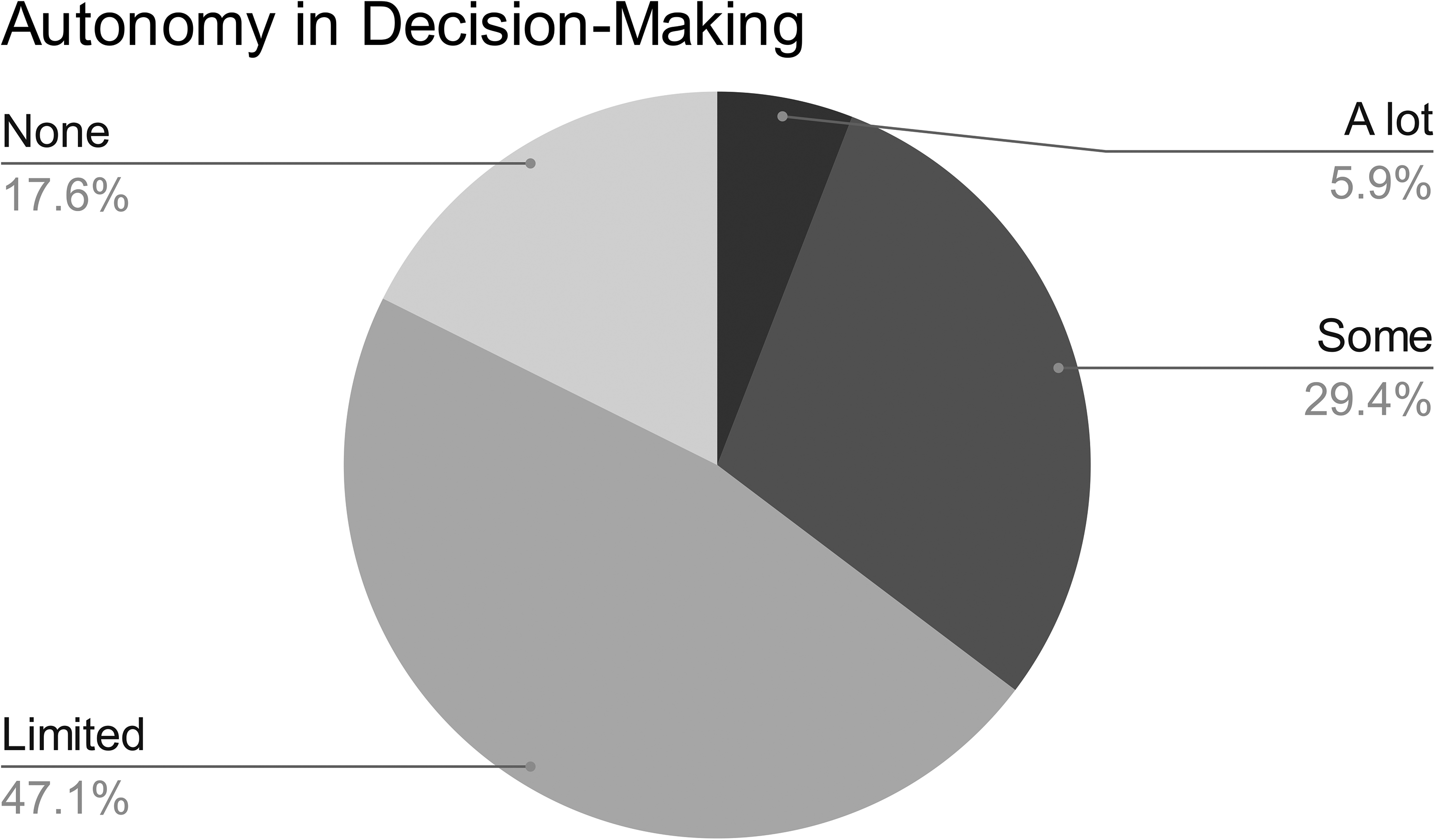
Autonomy in decision-making in public libraries.
To discover the state of play on sustainability and climate action within public libraries, time was used as an indicator. It was found that 12% had been working on this for years, 70% for several months and 18% had yet to start working on it but were planning to. Eighty-two percent of the respondents were aware that their local authority had a sustainability/climate change strategy/policy/plan. Thirty-five percent of the libraries had a sustainability plan, 41% were working on one and 18% did not have one (Figure 2).
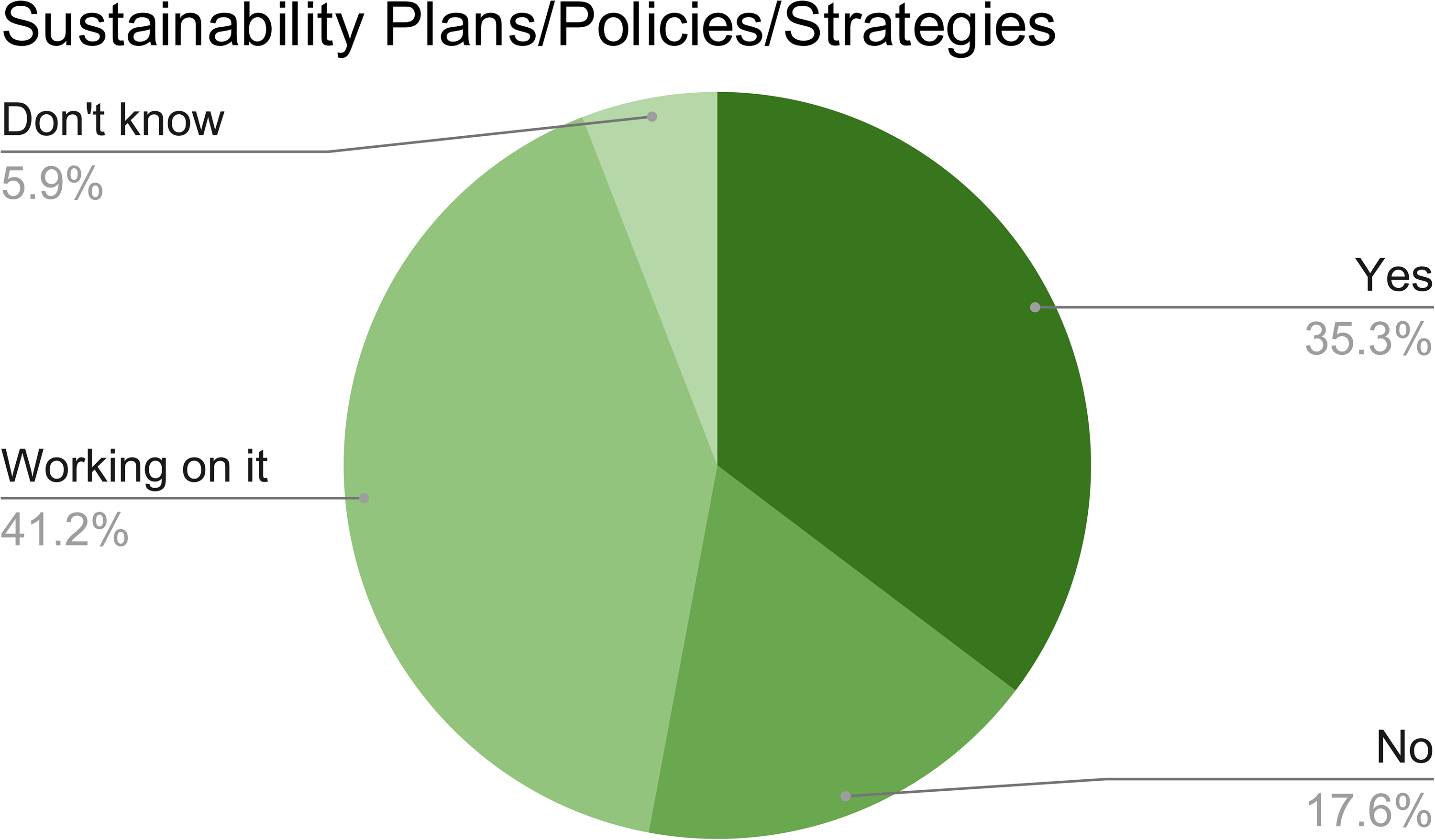
Sustainability plans/policies/strategies in public libraries.
Only one library service had a dedicated sustainability role, 29% had a green team, 18% had sustainability responsibilities integrated into existing roles, 18% had staff who took environmental/sustainability actions on their own initiative informally and 29% of library services surveyed had no structure in place.
Staff in public libraries across Scotland learn about sustainability and environmental issues in different ways, as revealed by the survey data. Newsletters, green team meetings, information sharing and individual reading and research are the most popular. Projects such as the Carbon Literacy Project, Climate Beacon work, Lend and Mend Hubs and the Framing Climate Justice Project help staff learn and develop understanding. Working with partners such as Keep Scotland Beautiful, Green Arts Initiative and Creative Carbon Scotland also benefits staff. Some local authorities offer training courses online, and one library service is developing library-specific in-house training on the topic. The survey asked about staff confidence levels in their understanding of climate and environmental issues: 59% were somewhat confident, 18% were fairly confident and 24% were only a little confident.
Looking at staff training in sustainability issues, about 30% of respondents reported being aware of opportunities, 35% stated that no training was offered in their local authority and a further 35% were unsure (Figure 3). The training that was available consisted of online awareness modules/sessions provided by councils.
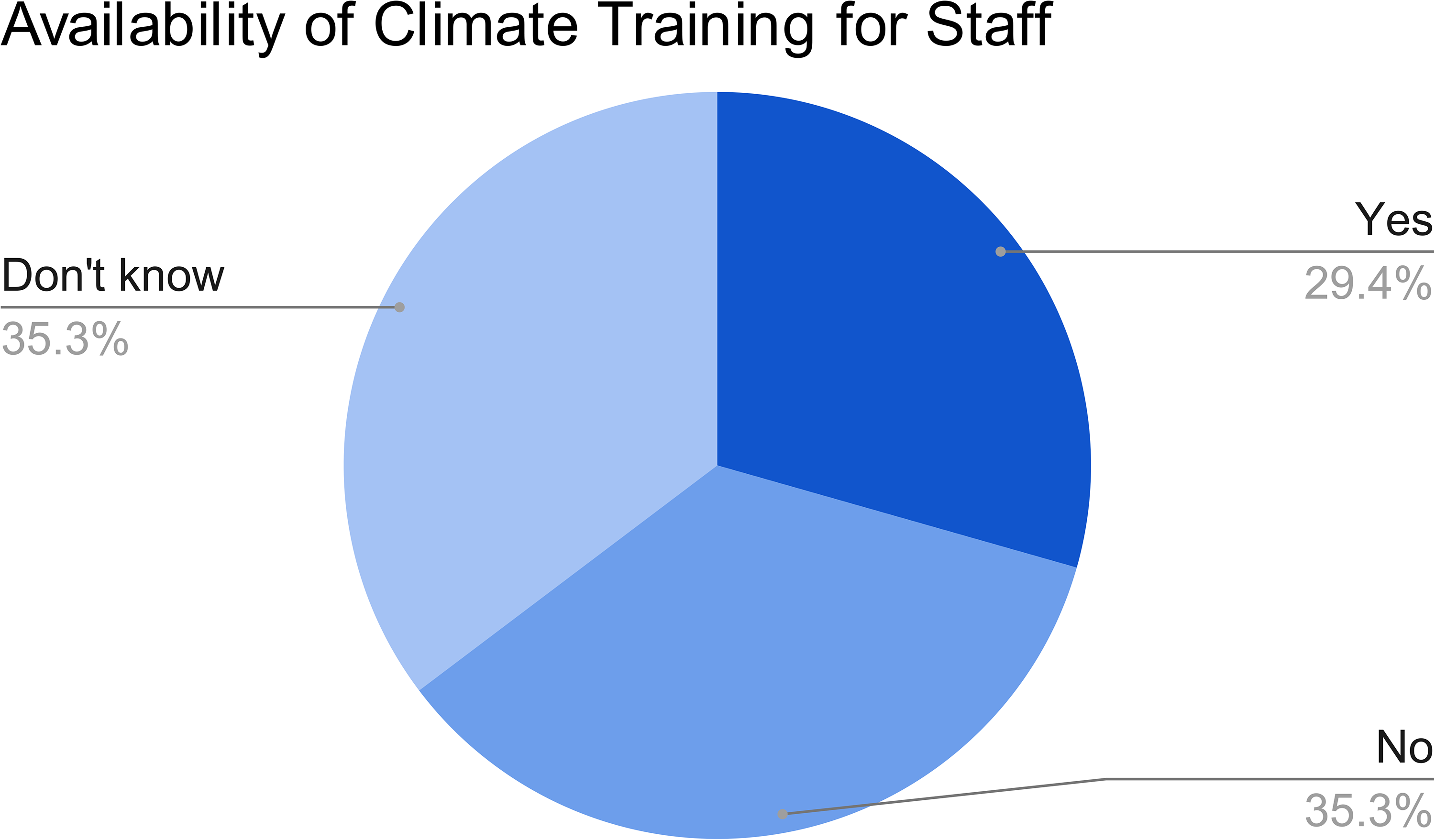
Availability of climate training for staff in public libraries.
The survey respondents were asked about their thoughts on the role of libraries and librarians in working towards the SDGs. Many agreed that libraries have an important duty to provide access to quality information and stand as a trusted source in communities. Several pointed out that libraries are ‘green by their very nature’ and have the potential to raise awareness by leading by example. Two respondents mentioned how this ability to impact people is often overlooked and a low priority for decision-makers. The following quotes from the survey responses illustrate this. The same role as we should have – we need to be taking it seriously and doing all we can to mitigate our environmental impact and support our communities to be greener where possible. Libraries are green by their very nature and we should continue this good work. Libraries are one of the originators of resource sharing and responsible consumption and are primed to embrace a role in sustainable living, sparking community conversations to [expand on] what can be borrowed to allow communities to share resources responsibly. Libraries can have a great impact if they act strategically and specifically design initiatives around the SDGs.
Data revealed the top areas of concern, such as energy use, materials and waste and technological impact. The most popular actions undertaken by library services were: reducing building energy use (88%), reducing the use of plastic (81%), reducing materials use and waste (81%), sourcing sustainable products and services (75%) and running learning activities addressing climate change and sustainability (75%) (Figure 4). Some examples of actions that have taken place in public libraries include: a seed library, lend and mend hubs, an upcycling programme, community garden projects, sustainability-themed author events and activities related to the 2021 United Nations Climate Change Conference (COP26).
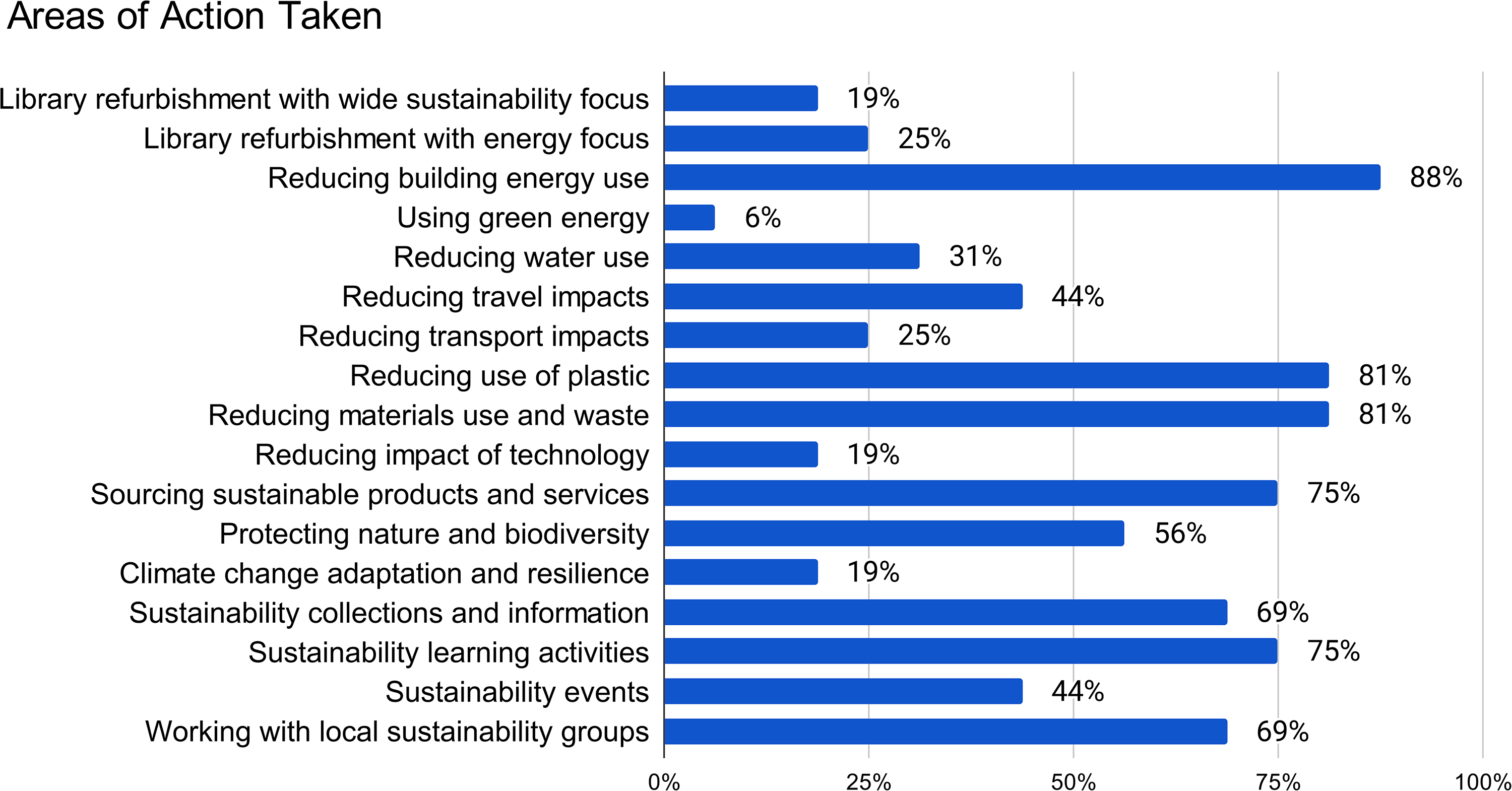
Areas of action taken in public libraries.
Attendance numbers, engagement statistics and user feedback (through feedback forms and verbally) were noted to be the common ways of evaluating impact. Many respondents highlighted the need for a more accurate evaluation system.
Looking at whether sustainability action has brought any benefits to libraries, 53% of the respondents said their action had benefitted the library, the users and the community. The main benefits identified were: providing new opportunities for engaging with local groups (69%), library user development (69%), staff motivation and morale (62%), improved health and well-being of library staff and users (46%) and raising sustainability awareness among library users and the community (46%).
Fifty-three percent of public library services surveyed reported having had support in their sustainability/climate action and engagement, while 29% had had no support. Twenty-two percent had had capital funding, 44% had had training or events and 33% had had peer-to-peer exchange. This support was provided by library sector organisations (56%), community groups (33%), local authority services (33%) and non-governmental agencies or bodies (22%). The best kinds of support that would help going forward were identified as follows: training and events (87%), additional funding for projects (80%), additional staff resources (73%) and practical guides and tools (73%).
As shown in Figure 5, the most significant challenges faced by libraries in implementing sustainable initiatives were: lack of human resources, lack of financial resources and funding and lack of time. The most significant drivers of climate action noted were: the desire to do the right thing, and local authority climate action policies.
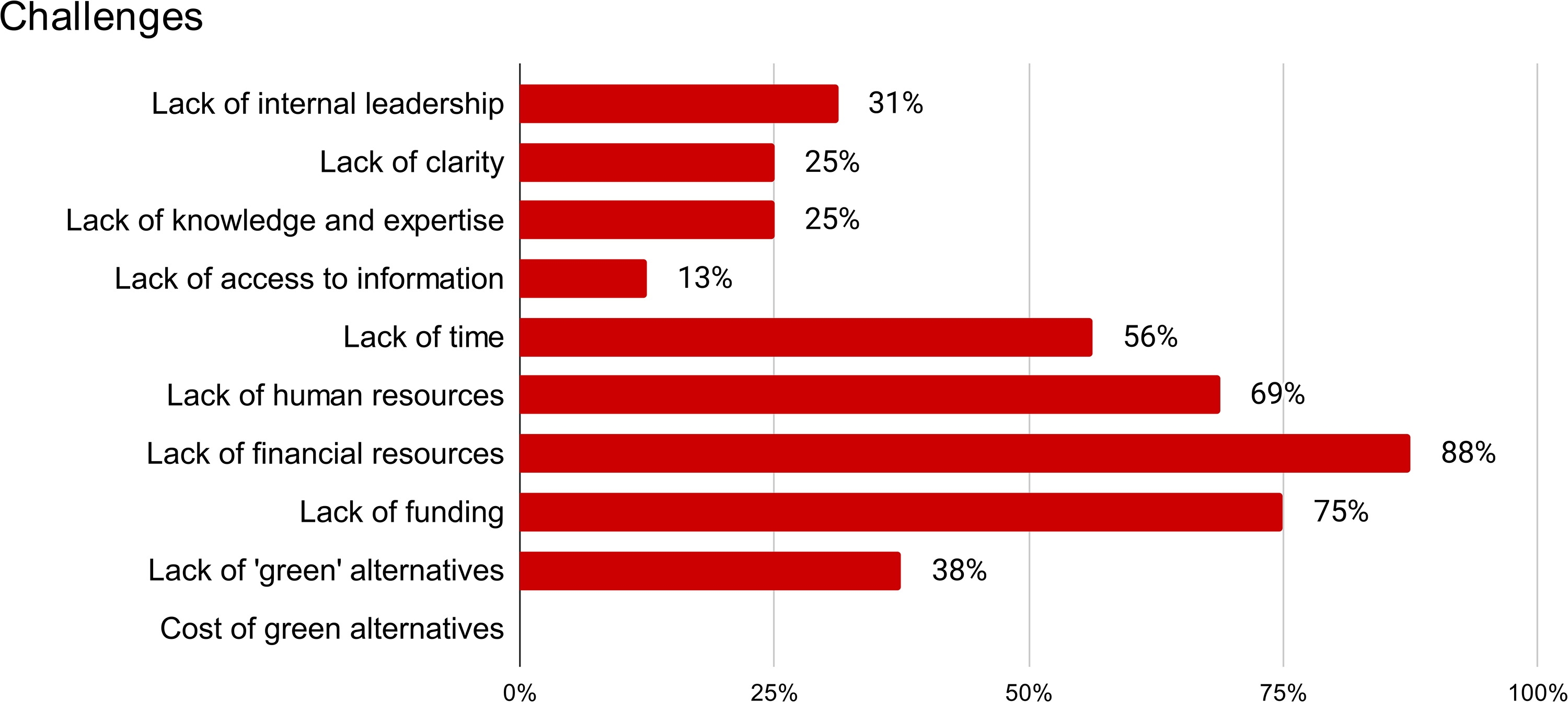
Climate action implementation challenges in public libraries.
School libraries
The school libraries survey received 17 responses from a range of schools across 14 local authority areas of Scotland. All of the survey responses came from staff in secondary schools: 12 of these were librarians, two were library assistants, one was a library resource coordinator, one was a principal librarian and one was a school library supervisor. Most school libraries in Scotland are staffed by trained librarians, with a few utilising pupil volunteers. On average, school libraries have less than one librarian per school. School libraries offer a wide range of services, including book borrowing (physical, ebook and audiobook), class visits, teaching lessons, support for pupils, IT services (computers, iPads, printers) and IT support (information skills, digital literacy), book clubs, games clubs, resources for teachers, competitions, engagement activities, a safe space and events.
The survey data revealed that almost a fifth of libraries have no autonomy to make decisions regarding assets, spaces, resources and budget; and only 40% have some autonomy. The data show that around a third of school libraries have some autonomy in choosing greener goods and services, but 53% have limited or no autonomy. At the time of data collection, 47% of school libraries were in the planning stages of their sustainability action and engagement, 29% had been working on it for several months and 6% for years, while 18% had no plans to implement any action (Figure 6).
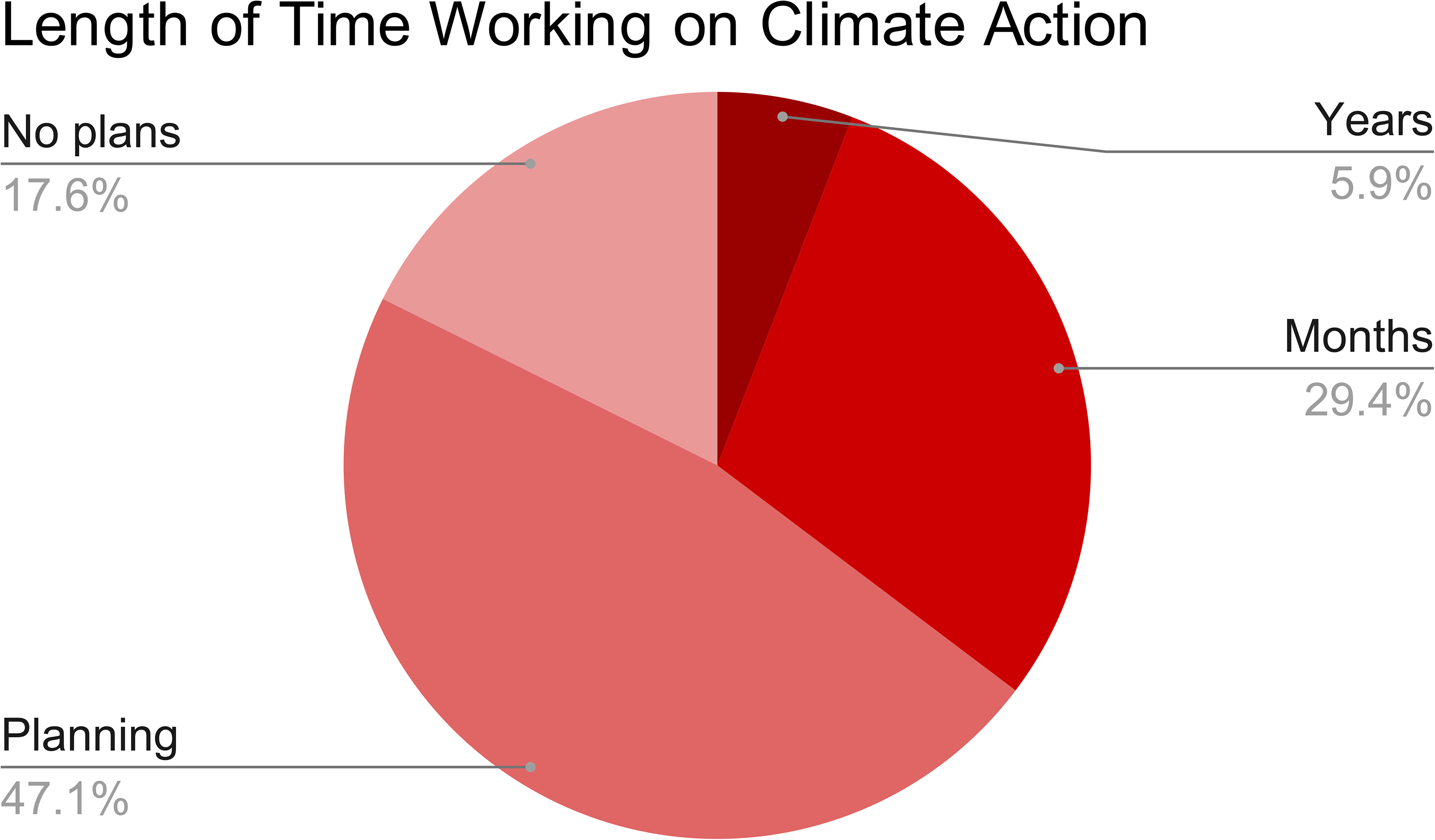
Length of time working on sustainability action in school libraries.
Twenty four percent of the respondents confirmed that their school had a sustainability/climate change strategy/policy/plan, and 35% did not have any plans. Of the schools with sustainability policies, 75% were thought to be somewhat relevant to libraries, and 25% only a little relevant. Only 5.9% of the school libraries surveyed had a sustainability policy, while 29% were working on it (Figure 7).
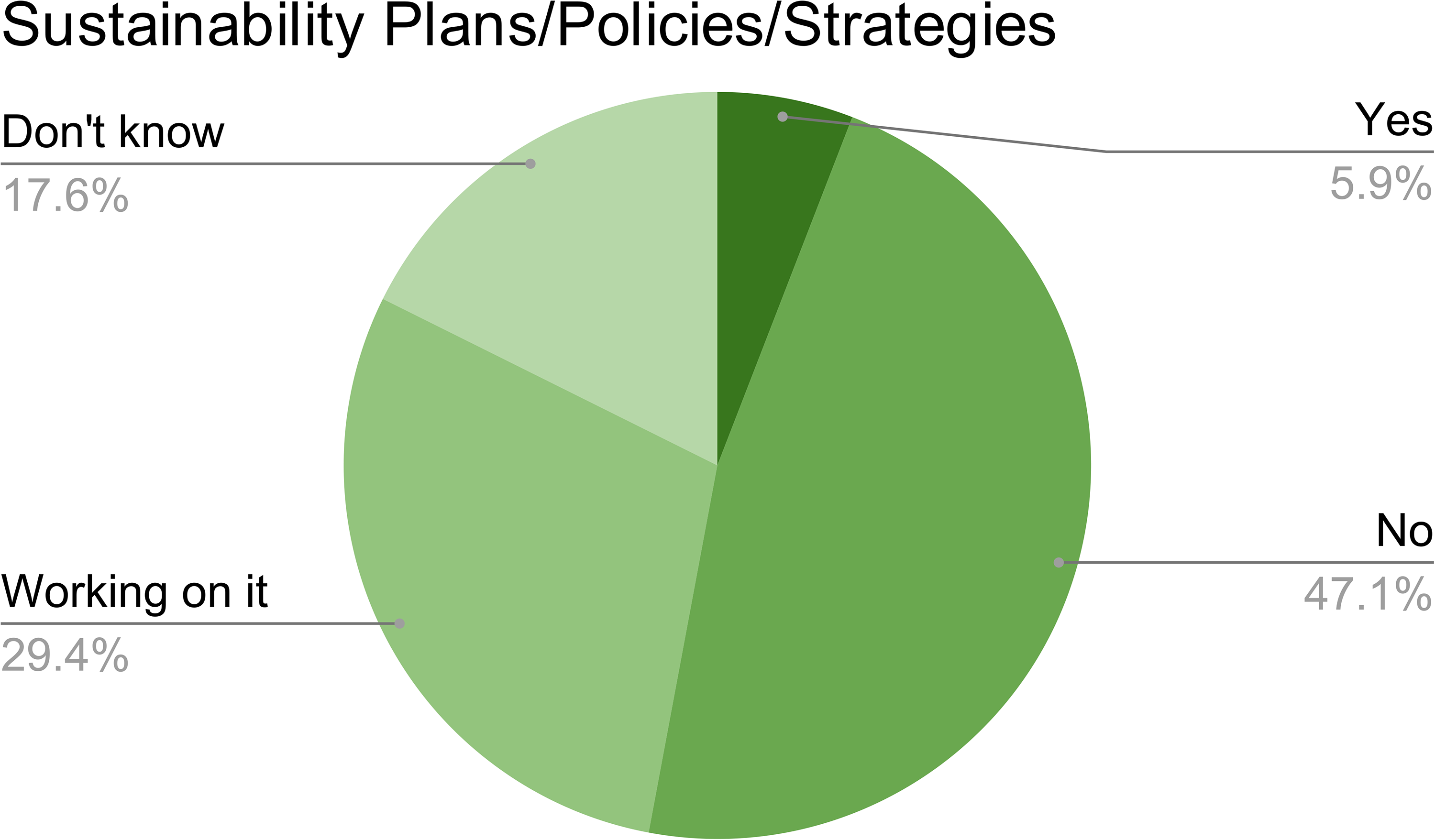
Sustainability plans/policies/strategies in school libraries.
Regarding the organisational structure of climate responsibilities within schools and school libraries, 12% had a green team, a further 12% had responsibilities integrated into existing roles, 29% had staff who took informal responsibility through their own initiative, and 47% had no arrangements.
The survey data revealed the ways in which school library staff learned about sustainability and climate change. The most popular methods include continuing professional development (CPD) and personal reading and research. Regarding the confidence of library staff in their understanding of climate change, sustainability and environmental issues, 19% were fairly confident, 31% somewhat, 38% a little and 12% were not at all confident.
Twelve percent of respondents said there were training opportunities for staff in sustainability and climate change, 41% said there were no such opportunities and the remaining 47% were unsure (Figure 8). This limited training included access to online courses and courses through the local authority.
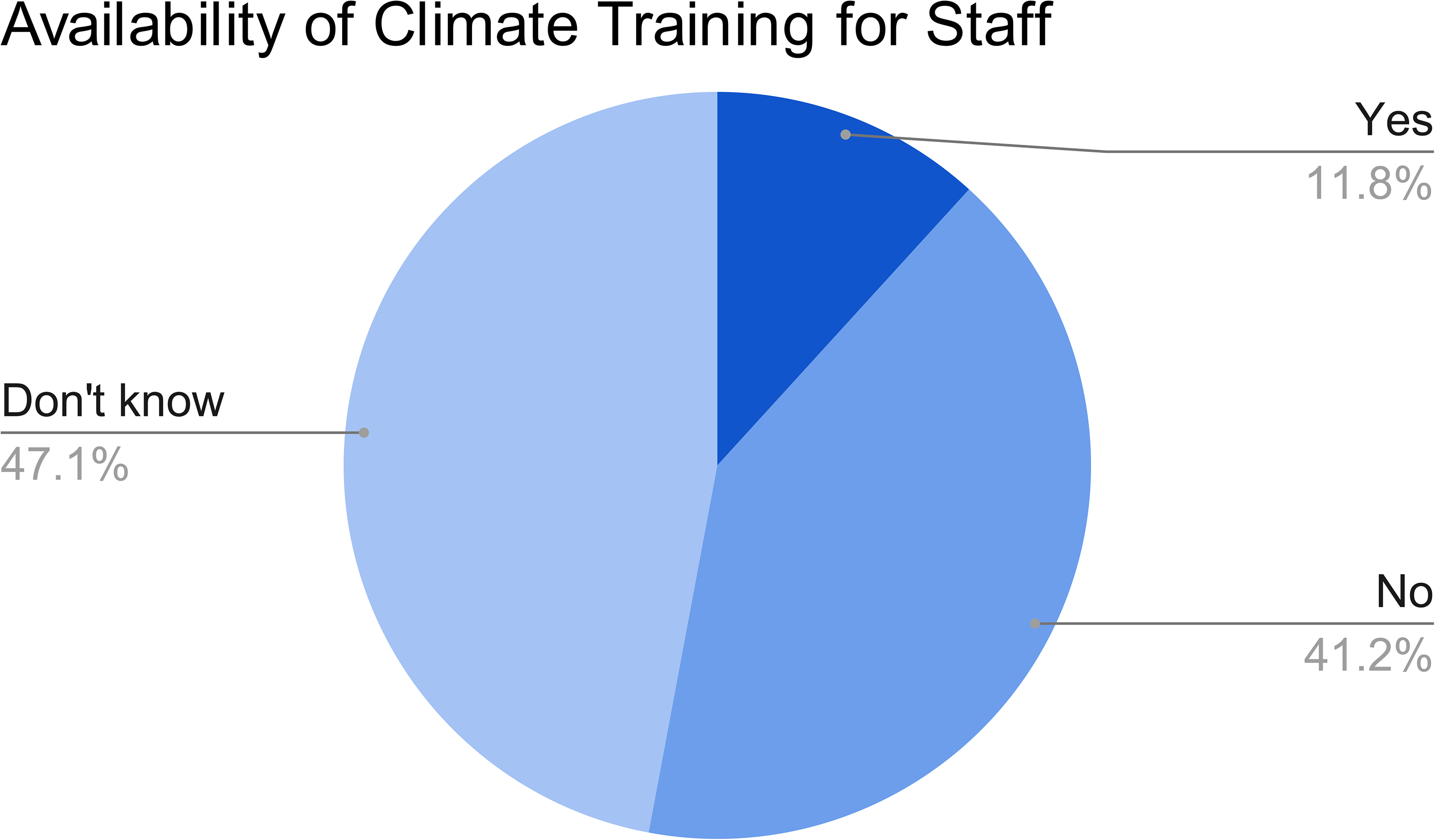
Availability of climate training for staff in school libraries.
Regarding the role school libraries can play in the climate agenda, a few respondents communicated an understanding of the potential of school libraries as information providers: ‘a huge role, given that we work with communities and our core goal is sharing stories’. Overall, however, there seemed to be a lack of understanding of the opportunity school libraries have in terms of educating users and raising awareness of climate issues. This is particularly strange given the school environment where they are situated. This quote illustrates this: I really struggle to see how we can make changes when we are restricted by the school and the local authority, and by the nature of what we do. I feel that libraries have minimal impact on the environment compared to the rest of the school.
Reducing energy use, reducing material use and waste, and technological impact were found to be of the most concern. Looking at sustainability actions that have been taken in school libraries, the most popular are providing sustainability book collections and information for users (76%), working with teachers to educate pupils in class (41%), reducing materials use and waste (35%) and reducing the use of plastic (35%) (Figure 9). With regard to areas in which libraries were planning to take action, the most popular were organising events on climate change issues for library users, the school and community (41%); working with the local community on sustainability projects (41%); running learning activities addressing climate change and sustainability (35%); and sourcing sustainable products and services (35%). Examples of successful initiatives were limited, but included a climate literacy workshop, an interdisciplinary learning event and school garden projects.
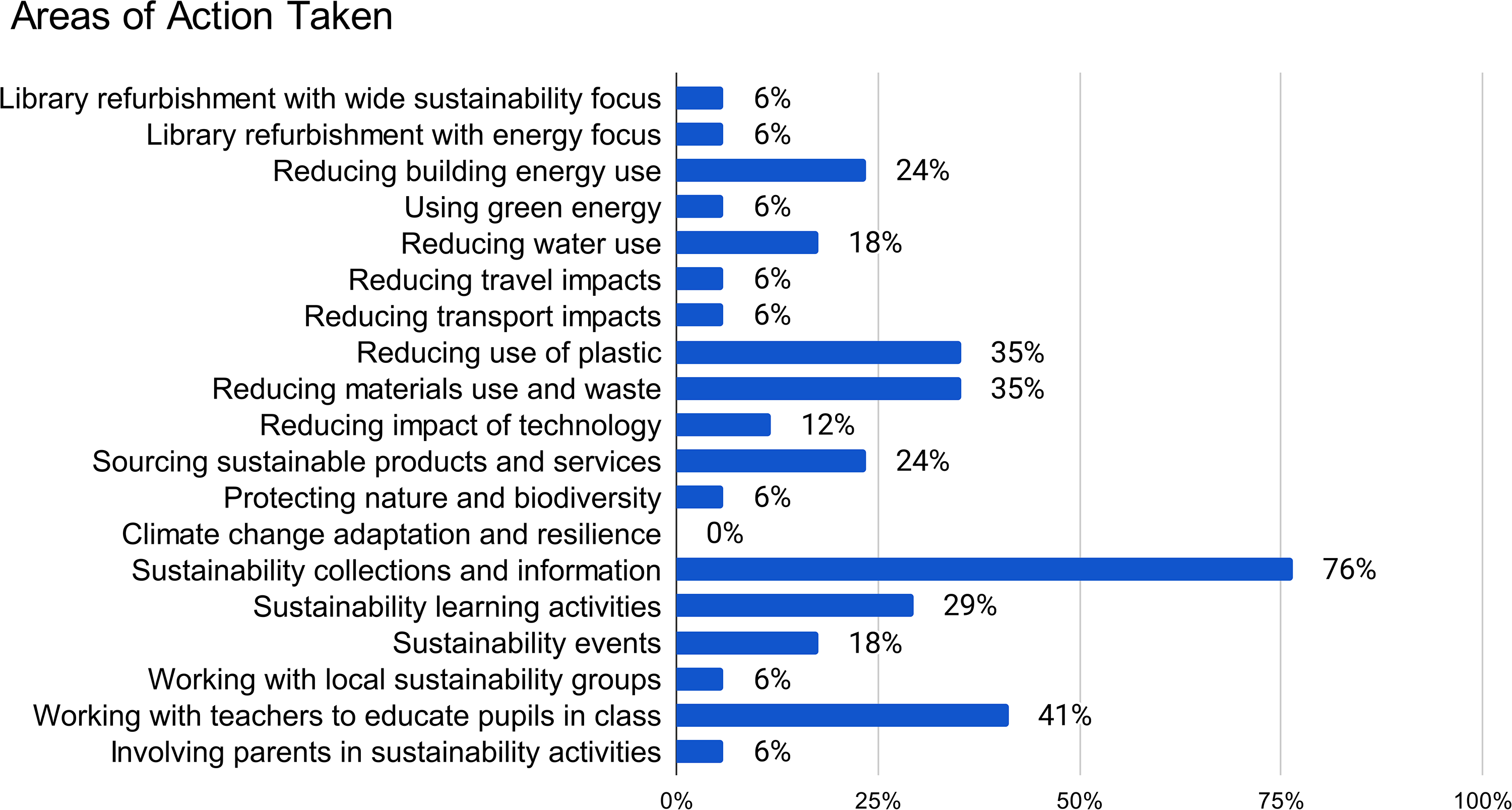
Areas of action taken in school libraries.
When asked about how the impact of any sustainability initiatives was measured, the response was limited. Some staff looked at feedback from school staff and pupils, and other schools and local authorities collected statistics on recycling, etc. Most respondents reported no impact evaluation taking place.
Most of the libraries surveyed (71%) had had no support in implementing climate or sustainability action. Of those who did receive support, funding for projects was the most common. This support was from library sector organisations and governmental bodies. When asked what type of support would be beneficial in the future, the most popular request was climate training, webinars or events (76%), followed by practical guides or tools (71%) and funding for projects (59%).
The data revealed the opportunities that respondents viewed as being the most significant. These were improved health and well-being for school and library staff and users, skills and professional development and new opportunities for engaging with the local community. The most significant challenges were revealed to be a lack of clarity on the right thing to do; a lack of knowledge and expertise; and a lack of green alternatives, services and products. The key drivers of climate and sustainability action were identified as the desire to do the right thing, and local authority climate action policies.
Discussion
The findings from the Scottish public and school libraries survey are in line with a similar survey undertaken in England (Green Libraries Partnership, 2022). One of the key learning points from these surveys is that although different libraries are at different points in their journey for addressing the climate action challenges (SDG13), a number of activities and initiatives are already in place (CILIP, 2023; CILIPS, 2024). However, it was also noted that libraries do not have a formal mechanism and tool for gathering data on how the various activities and initiatives are contributing to the different targets and indicators of SDG13 (climate action) and various other SDG targets that indirectly contribute to SDG13. In order to address this challenge, the ongoing activities of libraries reported in this survey and in other studies (see e.g. the reports on the carbon footprint of the National Library of Finland and the public libraries in Finland, Libraries.fi, 2021; National Library of Finland, 2023) were mapped on to the relevant SDG targets and indicators. This, for the first time, has given rise to a tool that can be used to measure the contributions of the LIS sector to achieving success in SDG13 and the associated SDG targets.
Table 1 provides a simple template for recording the contribution of libraries towards SDG13, by measuring the carbon footprints of existing library buildings and infrastructure. This will help libraries set targets and initiate strategies for reducing their carbon footprint through infrastructure and facilities.
Template for recording libraries’ contributions to SDG13 through physical infrastructure and operations.
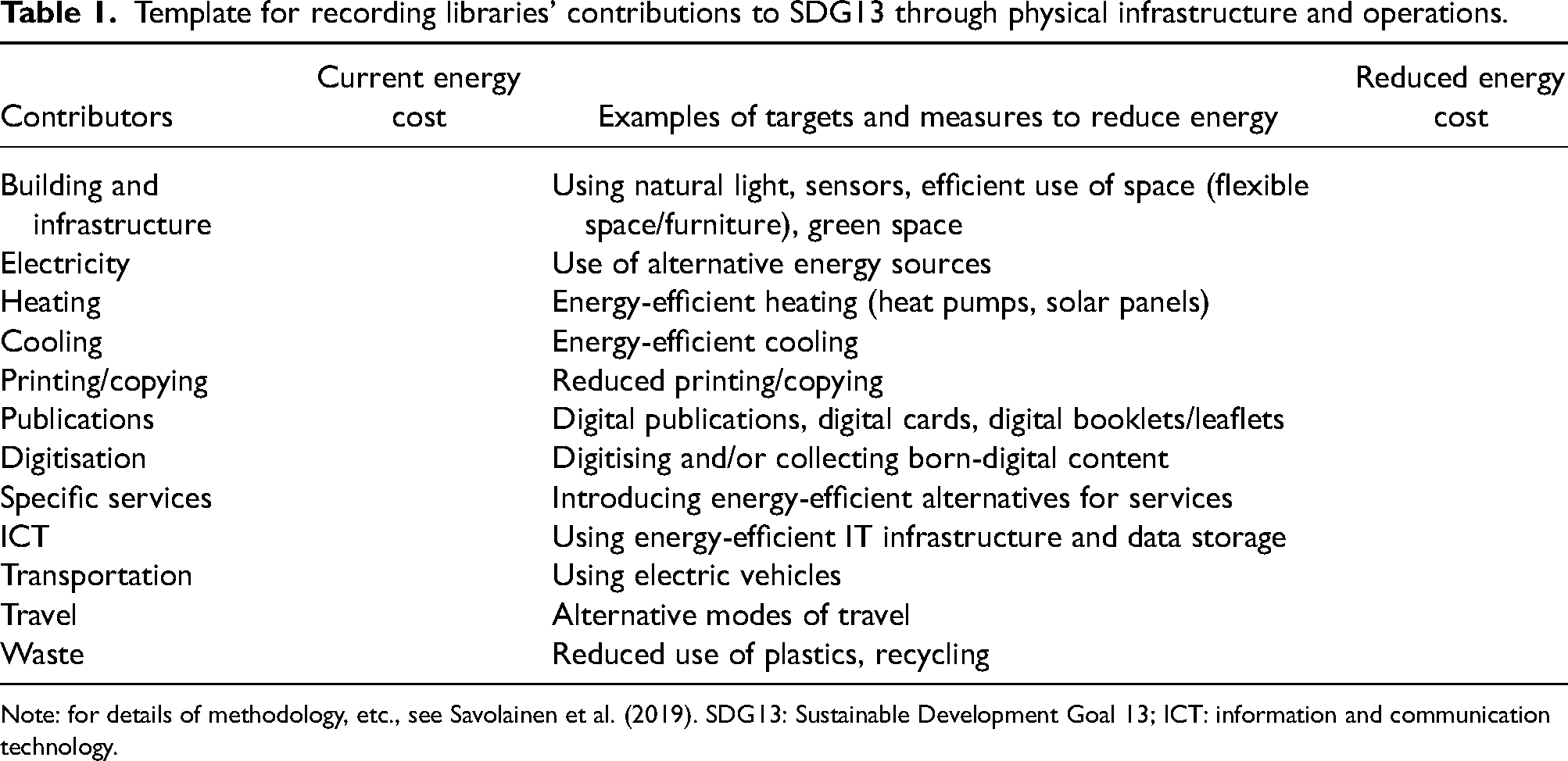
Note: for details of methodology, etc., see Savolainen et al. (2019). SDG13: Sustainable Development Goal 13; ICT: information and communication technology.
However, libraries can play a much bigger role in preparing people – the library users – to contributing to the climate action (SDG13) agenda through education and inculcating behavioural changes in everyone in society. Table 2 provides a template for mapping various activities of libraries onto different SDG targets and indicators that, one way or the other, contribute to the environment and sustainability goals.
Template for recording libraries’ contributions through collections and services.
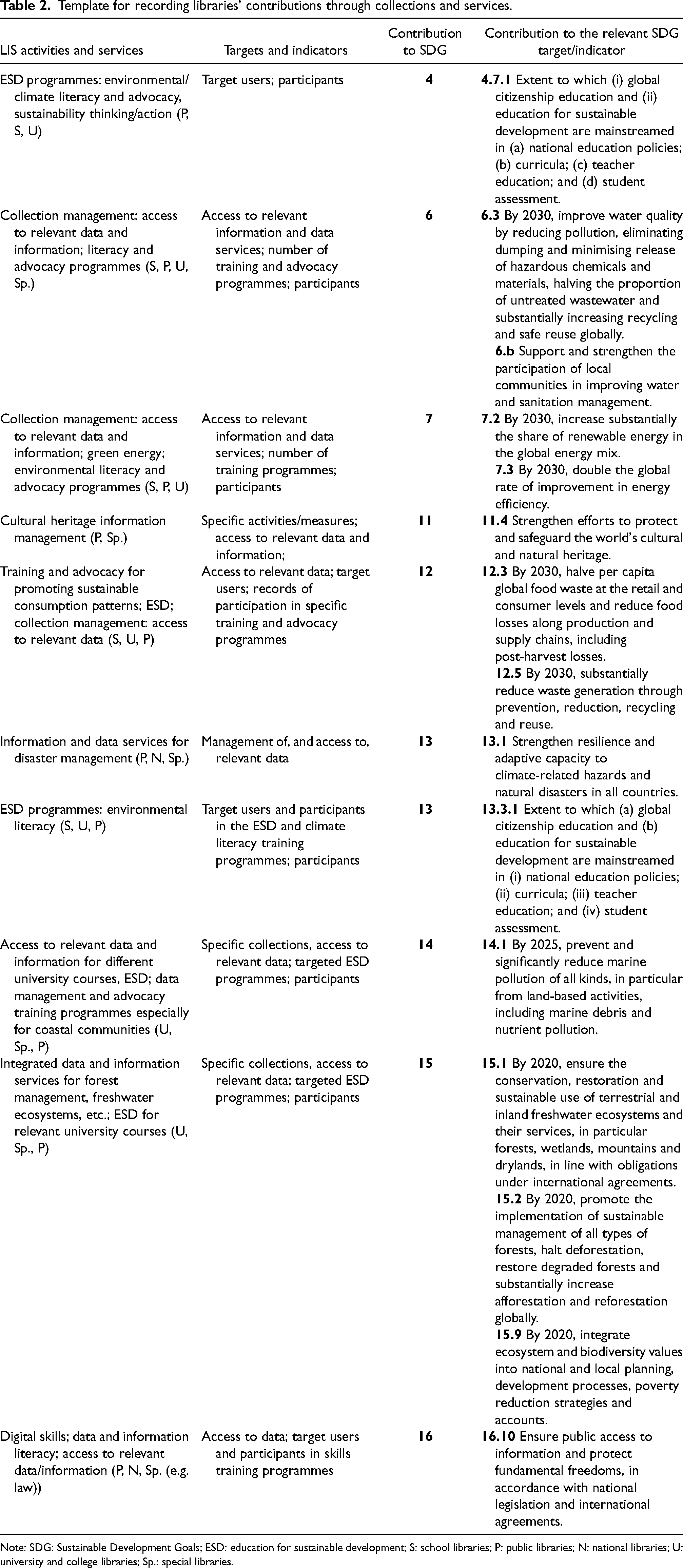
Note: SDG: Sustainable Development Goals; ESD: education for sustainable development; S: school libraries; P: public libraries; N: national libraries; U: university and college libraries; Sp.: special libraries.
These two tools and templates for the mapping and recording of various activities of libraries can lead to further discussions on how the contributions of different activities can be measured in terms of the linked SDG targets and indicators, especially those shown in Table 2. Table 3 provides an indicative list of measures and actions that can be developed and used across the LIS sector to record and measure their contributions.
Measuring the contributions of the LIS sector.
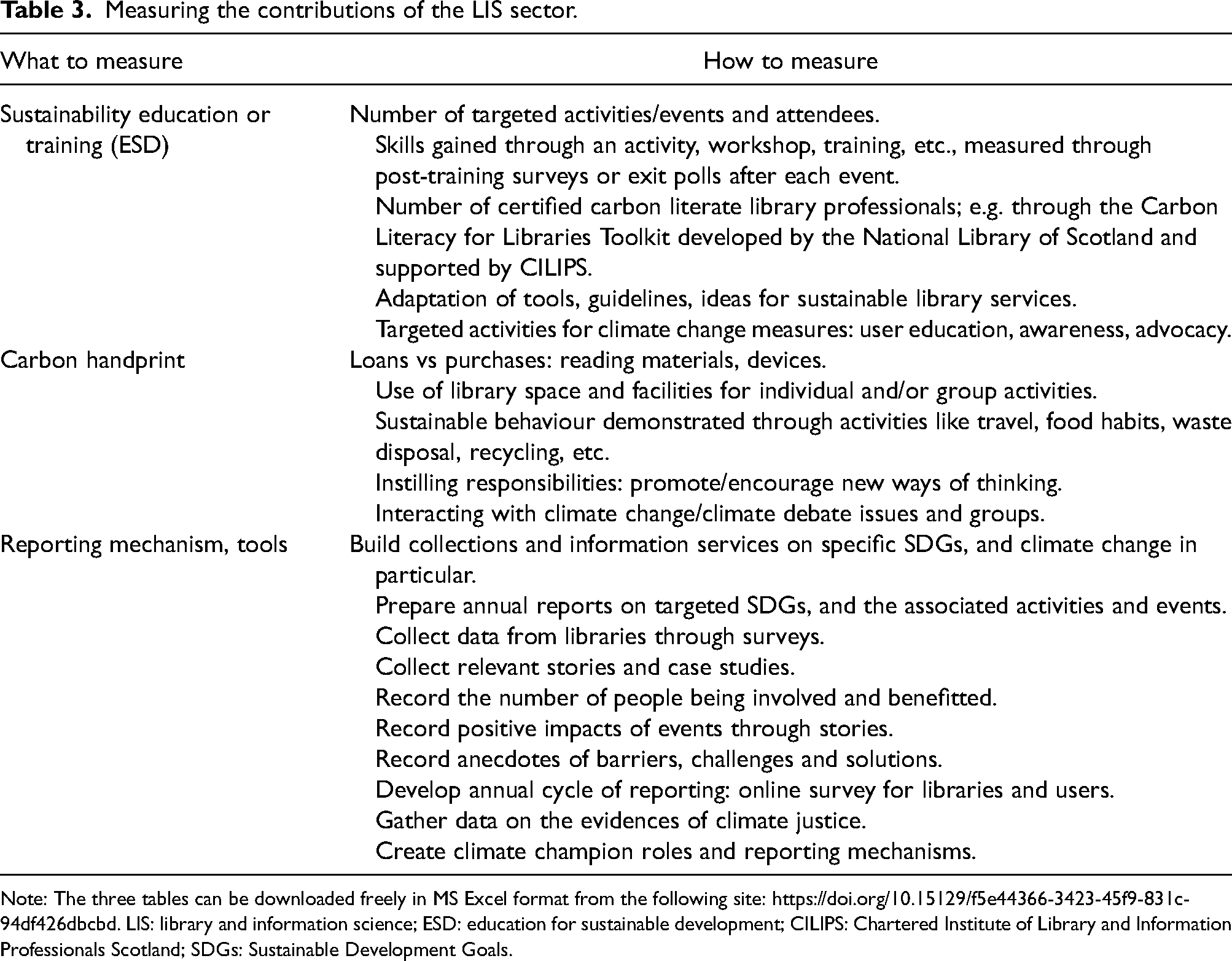
Note: The three tables can be downloaded freely in MS Excel format from the following site: https://doi.org/10.15129/f5e44366-3423-45f9-831c-94df426dbcbd. LIS: library and information science; ESD: education for sustainable development; CILIPS: Chartered Institute of Library and Information Professionals Scotland; SDGs: Sustainable Development Goals.
Conclusion
Findings of this study show that the library and information services sector has already been doing a number of things to promote sustainability and thus contribute to SDG13. However, these activities are not properly recorded or reported because of the lack of a recording and reporting mechanism and tool. This paper has proposed a template for recording and reporting such activities. It has also proposed a simple approach to measuring success and the impact of the activities undertaken by the LIS sector towards SDG13 (climate change). These tools are by no means exhaustive, and they need to be tested and expanded based on different types of libraries and their activities. It is expected that this paper will trigger further research and professional activities for recording, capturing and measuring the contributions of the LIS sector towards sustainability and climate change.
Footnotes
Data access statement

Declaration of conflicting interests
The authors declared no potential conflicts of interest with respect to the research, authorship, and/or publication of this article.
Funding
The authors disclosed receipt of the following financial support for the research, authorship, and/or publication of this article: This work was supported by the Scottish Library and Information Council (SLIC) Innovation and Development Fund, and the CILIPS Research Fund.