




Abstract
The United Nations Sustainable Development Goals have created an opportunity for the library sector to reconceptualise the services delivered to their communities. They provide the opportunity for libraries to be involved in national policy discussions and for their work to be translated into national programs for economic and social development. This article uses Australia as a case study of academic libraries in a broader policy context. The academic library community has built on many decades of work supporting social justice to set the scene to enable a significant contribution to be made to address the Sustainable Development Goals. The contribution that libraries have made has the potential to be reflected in university-wide reporting. The emergence of international university rankings on sustainability is assessed to review potential areas of impact. It is found that the most effective work to date has been collaborative. Further collaboration can contribute to strategic national planning and reporting.
Keywords
Introduction
Sustainable development has been at the core of the foundational concepts and operation of the United Nations (UN). The evolution of the proposal for the UN as a world organisation began during the Second World War and can be traced to the initial commitment in the Declaration of St James’s Palace signed on 12 June 1941 (National Museum of Australia, 2022). A formal proposal for its structure and operation was presented to the Dumbarton Oaks conference in Washington, DC in 1944. Australia took a leading role in shaping the proposal for the body, with Dr Herbert Evatt, Minister for External Affairs in the Australian Curtin and Chifley governments, advocating successfully for greater input from smaller countries. Australia’s pivotal role continued through the formation years, with Evatt taking on the role of president of the UN General Assembly from 1948 to 1949.
Understanding how the UN was established and Australia’s role in its creation sets an important context for analysis of the development of the Sustainable Development Goals (SDGs). Critically, the theory of change underpins the development of the UN Agenda. The many intersecting components of planning to address global problems drawn from complexity theory (e.g. Cairney, 2012; Geyer and Rihani, 2010; Mitchell, 2009), program theory (Bickman, 1987; Funnell and Rogers, 2011), program evaluation (Burch and Heinrich, 2016; Shackman, 2020) and psychology (organisational psychology and organisational change). These theoretical origins are significant as they assess the importance and challenges of linking ambitions for global change with national and local programs. The challenge for the SDGs has been aptly described as follows: Between good intentions and great results lies a program theory – not just a list of tasks but a vision of what needs to happen, and how…program theory provides a coherent picture of how change occurs and how to improve performance. (Funnell and Rogers, 2011: 5)
From these steps and theories an approach evolved that was distinguished by a commitment to the representation and engagement of all nations, be they small or large. This set the scene for comprehensive programs for which engagement with other organisations that represented a broad range of nations, such as IFLA was essential to implement the goals. Second, recognition of the need for governance that provided for complex government policies that would link economic and social goals was a core value. The importance of integrating the goals of the UN and government policies, to establish clear, implementable goals to ensure practical results, was vital (Kemp et al., 2005). The value of countries such as Australia in contributing to policy was evident (Byrne, 2018). The Australian contribution echoed the contribution made by the nation in establishing the UN (Lee and Cotton, 2012). The UN was created at a time when Australia was focused on post-war reconstruction, including building new national infrastructure such as libraries and universities. There was a focus on contribution to the region that aligns with the global vision of the UN and Australia's vision as a regional power. This set a context for Australian engagement in policies, including the SDGs.
Much has been written on the lack of success of the predecessor to the SDGs, the Millennium Development Goals. Launched in 2001, they represented a strong push for measurable change. IFLA was engaged in the consultation process. The goals were broad, with a view to a profound uplift across the globe. In many ways, the approach fits the vision articulated by John F Kennedy (1963) – ‘A rising tide lifts all boats’ – aligned to the concepts of development economics. The breadth of issues that led to a failure to meet the goals has been articulated (Briant, 2015) as including discourse, delivery and reporting issues. UNICEF was blunt in its report calling for a move from the Millennium Development Goals to the SDGs, stating that ‘despite significant achievements, unequal opportunities have left millions of children living in poverty, dying before they turn five, without schooling and suffering chronic malnutrition’ (UNICEF, 2015a, p 1, 2015b).
The development of the SDGs was a significant transformation in the approach of the UN. The work on the Millennium Development Goals led to a stronger understanding of the complexity of governance and delivery issues, together with the need for a robust commitment where nations could take agency (Littlejohn and Foss, 2009) for their part in data is contained in delivering improvements. The SDGs were agreed by the UN on 25 September 2015, taking a new framework with clear presentation (Figure 1).
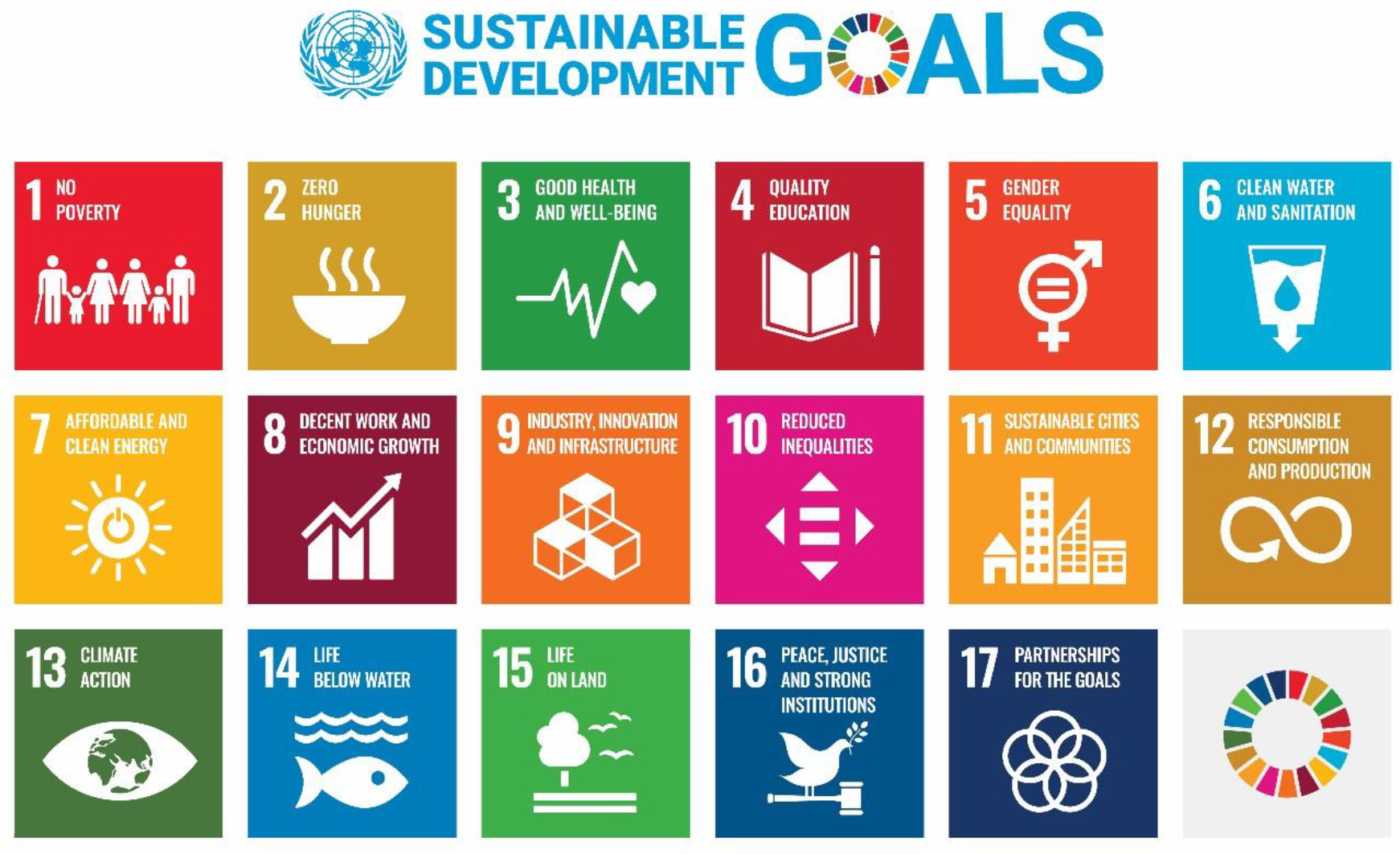
The UN SDGs.
Libraries were visible in the negotiations for the SDGs, primarily through the activities of IFLA. Formally joining the SDG advocacy program in 2016 (United Nations, 2016), the close relationship on these issues built on more than a decade of activity (Byrne, 2018; Gorman, 2003). Advocacy for the development of the SDGs had occurred under a range of banners for social inclusion and equity through library activities. Through the years, the IFLA SDG program has resulted in capacity-building and tools to support library engagement, particularly through national library associations to enhance the implementation of programs aligned to the aims of the SDGs (IFLA, 2017, 2019a, 2019b, 2020a, 2020b; IFLA and Technology and Social Change Group, 2019).
Now that the international and national work on the SDGs in libraries is well established, there is a sufficient body of activities to review. Analysing the particular impact and contribution, directly and indirectly, of academic libraries can be undertaken by building on the evidence of the first and second round of targets for the SDGs. The assessment can set the scene for the next iteration of targets to understand what can be achieved by the sector. Libraries have a particular role as they contribute to social, economic, educational and health activities within their communities, and thus have services that relate to the majority of the SDGs. Understanding the contribution that they deliver, and could increase impact against specific goals, builds the case for future plans. The role of the higher education sector, the national policy environment within which universities operate, and the nature of collaboration both within the academic library sector and within the national library sector are elements for analysis that can build a story of impact nationally and internationally.
This article reviews the higher education sector in Australia and the nature of academic libraries to set a context to explore the work that relates to the SGDs. It contextualises the work within the national policy on the SDGs and explores the role of academic libraries, their association and the national library association (Australian Library and Information Association, ALIA) in progressing policy debate and reporting nationally to bring the SDGs into practice. It recommends areas where the work of libraries could be related to the assessment of universities through the new sustainability ranking systems.
Methodology
To assess the role of libraries in implementing the SDGs, this article provides a context for the extent and impact of higher education in Australia. A context is then provided for the development of national government policy on the SDGs. These components of the article provide an environment in which to assess the priorities for a national agenda.
The actions of libraries and library associations, including participation in policy debate, provide a context to assess leadership across the whole library sector in Australia. The work of the national library association, ALIA, shines a light on the nature of cooperative policy and practice development across all library sectors.
An assessment of the distinctive contribution that academic libraries have made to the SDGs, both within the national library framework and within their institutions, provides a case study of national and local contributions of lasting impact by academic libraries. The article concludes with an assessment of successes and gaps, including lessons learned from the activities of Australian academic libraries and potential areas for future development.
Academic libraries in Australia
Australian universities are key elements of the education system funding at the national, state and territory government levels, with a small number of international and private universities. There are 39 public universities (members of Universities Australia) located across the country (Figure 2).
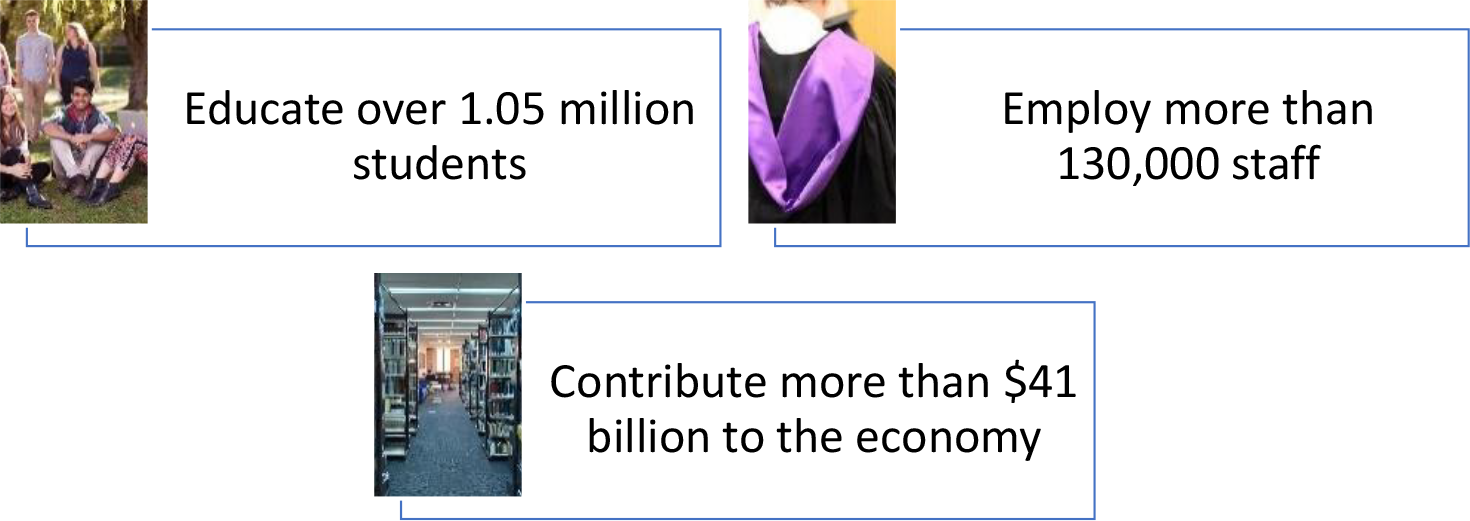
Key statistics: Australian public universities.
The total Australian Government outlay on higher education spending (including research) was $20.4 billion in 2020–2021. Of the 1,057,777 domestic students studying in 2020, 70% were studying for Bachelor degrees, 19% were studying for postgraduate coursework degrees, and a further 4% were studying for postgraduate research degrees (Universities Australia, 2022a). Australian universities are the fourth-largest export industry, with the potential to significantly increase their contribution to the economy (Ross, 2020).
Australian academic libraries are essential elements of the higher education system. The services they provide are comprehensive, with deep scholarly collections, well-developed activities to support student capabilities, and extensive activities to support research. According to the latest available statistics from the Council of Australian University Libraries (CAUL), the key statistics are:
188 library locations
48,908,737 book holdings
4,594,046 journal holdings
287,842,966 uses of all information resources
2963.22 library staff (full-time equivalents)
1,650,867 research outputs in institutional repositories. (Council of Australian University Libraries, 2020)
Academic libraries thus form an essential element in one of the largest industries in Australia through significant collections and services. The extent of government funding for universities from all levels of government establishes the opportunity for the national policy and reporting on the SDGs to include the sector, based on both its economic contribution and the size of the industry.
National government policy
The Australian Government signed up to the 2030 Agenda for Sustainable Development after a considerable contribution through the Department of Foreign Affairs and Trade to its development. ‘The department led Australia’s efforts to secure the most substantial advance in the international development agenda since the turn of the century – the Sustainable Development Goals’ (Department of Foreign Affairs and Trade, 2016: 21).
In leading Australia’s reporting and programs to achieve the SDGs, the national approach has been based on coordination with a wide range of government agencies, including 11 government departments. The first national report on the SDGs (Department of Foreign Affairs and Trade, 2018c) acknowledges that many programs delivered by non-government agencies are important to achieve the SGDs. The Department of Foreign Affairs and Trade (2018a: p 17) characterised this as ‘drawing on the activities, engagement and leadership of key civil society, academic and business organisations and their members’.
The contribution of ALIA and Australian libraries to the implementation of the SDGs is recorded in the first Australian report (Department of Foreign Affairs and Trade, 2018b: 9, 39). Acknowledgement of the value of activities in the national report is a significant step in recognising the leadership role taken by ALIA for the sector as well as the work of libraries.
Significant developments at a whole-of-government level in relation to the SDGs have included the development of a single integrated national data-reporting platform (Australian Government, 2022) and an inquiry undertaken by the Senate Foreign Affairs, Defence and Trade References Committee. The inquiry resulted in a report, which was published in February 2019 (Foreign Affairs, Defence and Trade References Committee, 2019). Both these activities demonstrate the significance given to policy and national responses to the SDGs.
ALIA made a submission to the Senate Committee enquiry. Other submissions, including those of Volunteering Australia and the United Nations Association of Australia, emphasised the value of libraries, particularly public libraries, in achieving the SDGs. The report from the inquiry mentions the concepts from the submissions, however it does not make any specific recommendations that relate to libraries.
Australia’s national approach has provided the opportunity for the library sector to engage in consultations and for their work to be reflected in national reporting. While more recent reports have not included specific mention of library activities, it has opened the door to future engagement. The approach has emphasised the complex economic and societal changes envisioned in the SDGs. The complex set of actors, including government and non-government, required to deliver these changes has led to the development of new relationships with stakeholders across the nation. In aggregating national planning into a broad policy landscape, the approach can be viewed as implementing the scenario-planning, strategic planning and community engagement programs that are significant conceptually and in practice (Chambers, 2022) (Figure 3).
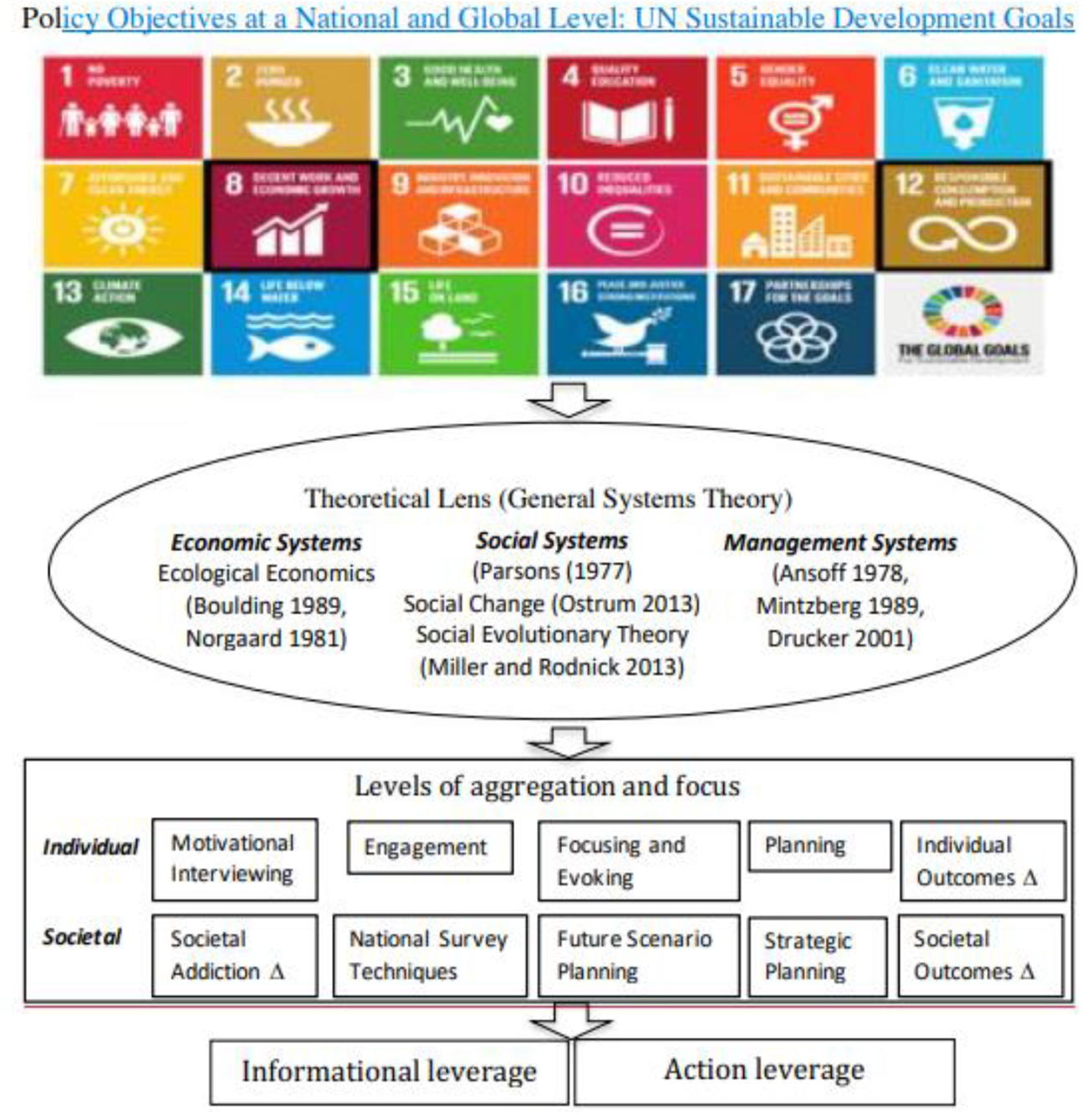
Leveraging the motivational interviewing and strategic planning models at a national level to develop a potential framework for transition to sustainable prosperity.
In considering the role of government as part of a process rather than as the agency responsible for the delivery or programs to implement the SDGs, a new series of concepts is essential. Broadening the relationship of government to the community through non-government organisations is at the heart of this change. The has enabled ALIA and libraries to take on new roles. Taking this multi-institutional approach has given ALIA and libraries the opportunity to both develop actions plans and be recognised with a national response.
Leading libraries’ response: ALIA’s role
ALIA took a lead role in discussions within Australia in the library sector on the SDGs. It coordinated actions for the whole sector. ALIA had been active through its membership of IFLA in the work leading up to the development of the SDGs, including via the contribution of individuals such as IFLA presidents and the participation of the ALIA president in IFLA activities.
As the lead association for discussions with the Australian Government and other stakeholders about the role that libraries play in implementing the SDGs, ALIA conducted extensive consultations with all parts of the library sector. ALIA’s role was closely aligned to its objectives, which include: To promote the free flow of information and ideas in the interest of all Australians and a thriving culture, economy, environment and democracy; To promote and improve the services provided by all kinds of library and information agencies; To represent the interests of members to governments, other organisations and the community; and To endorse the principles of the United Nations Universal Declaration of Human Rights-Article 19 and the 2030 Sustainable Development Goals in response to the many challenges faced by the world today and into the future. (Australian Library and Information Association, 2022) To encourage people to contribute to the improvement of library and information services through support and membership of the association.
The sixth objective – endorsing Article 19 of the UN Declaration of Human Rights and the SGDs – was endorsed in 2017.
ALIA’s first report on the contribution made by libraries in regard to the SDGs was published in 2018, promoting awareness of the value of the work of the sector (Australian Library and Information Association, 2018). The first formal multisectoral meeting held by ALIA on the SDGs was on 23 September 2019. Twenty library leaders, with other guests, debated stretch targets for the sector as part of the SDG framework. This round table formed a major milestone in the development of an integrated national approach for libraries to the SDGs in Australia and the Asia-Pacific region. A draft document on designated stretch targets was an outcome of the meeting. An extensive process of consultation on the draft was used to ensure that all sectors could agree to the document. It included a set of 10 stretch targets with activities and indicators covering all parts of the sector. A report on this set of targets has now been published (Australian Library and Information Association, 2022). Resources were produced by ALIA to assist libraries in developing their capacity to deliver programs aligned with the SDGs. ‘Think global, act local’ (Australian Library and Information Association, 2019) was a successful activity focused on public libraries.
During Global Goals Week (17–26 September 2021), ALIA, after consultation with sectoral representatives, launched the stretch targets (Australian Library and Information Association 2020). These 10 targets identified measurable activities and lead organisations, including all major sectoral groups (Australian Library and Information Association, 2021b). Oversight and monitoring remain the responsibility of the ALIA International Relations Advisory Committee.
A second meeting was held on 1 November 2021 with representatives from national, state and territory libraries, school libraries, special libraries, public libraries, university libraries, the Australian Department of Foreign Affairs and Trade and IFLA. The round table included a scene-setting presentation from the Australian Department of Foreign Affairs and Trade and presentations from all sectors on SDG activities. Recommendations were agreed on to progress work in this area, including 5 areas of focus and 13 action points (Australian Library and Information Association, 2021a).
ALIA has also signed an international advocacy agreement with IFLA, which commits the association to carry out advocacy work on how libraries are helping Australia, and the rest of the UN member states, to achieve the SDGs (Figure 4).
Cover of ALIA’s publication Sustainable Development Goals: Stretch targets for Australian libraries, 2020–2030 (Australian Library and Information Association, 2021b).
ALIA has successfully created the opportunity for recognition of the importance of libraries in implementing the SDGs and demonstrated significant strength in coordinating all library sectors to create a visible, implementable program of work. The importance of working as a national voice to government and parliament gave impetus to national and regional discussions. The work of ALIA in building the capability of library leaders in this area was also significant as a tool for change. Developing governmental relationships and a national agenda was distinctively different to the work of other national library associations, such as that of the American Library Association (2022).
Academic libraries: a distinct approach
Australian academic libraries have a particular role in supporting activities within the higher education and general library sectors. In Australia, the development of activities that relate to or support the SDGs has occurred at two levels – (1) through national coordination through CAUL and (2) at institutional levels through the work of individual libraries within their particular universities.
Overall, academic libraries have supported the SDGs through a wide range of activities, including:
Promoting literacy, including digital, media and information literacy, and skills with the support of dedicated staff;
Closing gaps in access to information and helping individuals to understand their information needs better in all aspects of their life;
Providing a network of delivery sites for government programs and services;
Communicating knowledge created in universities;
Serving as the heart of the research and academic community;
Building global partnerships and collaborations that provide greater access to digital collections and information capability programs;
Preserving and providing access to the world’s culture and heritage.
Academic library initiatives often demonstrate the power of collaboration with academics of nationally significant projects. An example of such an initiative is the building of a living archive of Indigenous language material (Godfrey et al., 2016), which brought together researchers and library staff at Charles Darwin University to develop a preservation archive that creates access to Indigenous language material. Some Queensland initiatives have focused on education-driven projects (Thorpe and Gunton, 2022).
CAUL is the national representative body for Australian university libraries. Formally established in 1965, its history commenced with the first meeting of Australian university librarians in 1928. The strategic planning for CAUL’s activities identified priorities for two-to-four-year periods. CAUL’s current strategic themes are:
Advancing Open Scholarship
Building Sustainable Leadership
Enabling a Modern Curriculum
Respecting Indigenous Knowledge. (Council of Australian University Libraries, 2022)
In terms of the relationship of these themes to the SDGs, all four are within SDG 4: Quality Education. Additionally, CAUL’s work, through the International Alliance of Research Library Associations, relates to SDG 17: Partnerships for the Goals.
An assessment of the work of CAUL and its members with regard to the relevant SDGs was published in 2019 (Figure 5). The report focused on four SDGs, which were the most highly relevant to the academic library sector and the strategic themes of CAUL: Quality Education (SDG 4); Gender Equality (SDG 5); Industry, Innovation and Infrastructure (SDG 9); and Sustainable Cities and Communities (SDG 11). These goals were chosen because they are directly linked to education and the equity of access to education. A rich array of case studies demonstrated the impact of libraries within their institutions in relation to the SDGs.
CAUL’s 2019 report on the SDGs (Missingham, 2019).
The report provided valuable input for the national round table held by ALIA; raised the profile of the contribution of academic libraries with the Department of Foreign Affairs and Trade and other stakeholders; and served as a means of raising awareness of the relevance of the SDGs to CAUL members. It facilitated discussions by individual university librarians with university leadership, supporting strategic discussions around the value of libraries, collections and services.
A working group was formed, which discussed the relevance of the SDGs and proposed a future paper. While CAUL was committed to activities that increased the open access of material for greater national benefit and a range of programs relevant to higher education, it decided not to endorse any further work on the SDGs. A proposal for discussion and further work was not successful, and the activities fell to the individual work of members within their institutions. CAUL did, however, continue to participate in further ALIA SDG round tables and endorsed the inclusion of a target that was specifically related to its work in ALIA’s Sustainable Development Goals: Stretch targets for Australian libraries 2020–2030 (Australian Library and Information Association, 2021b; Figure 6). That target was to increase open access to research undertaken within its institutions. It is reported through CAUL’s statistics (Council of Australian University Libraries, 2020).
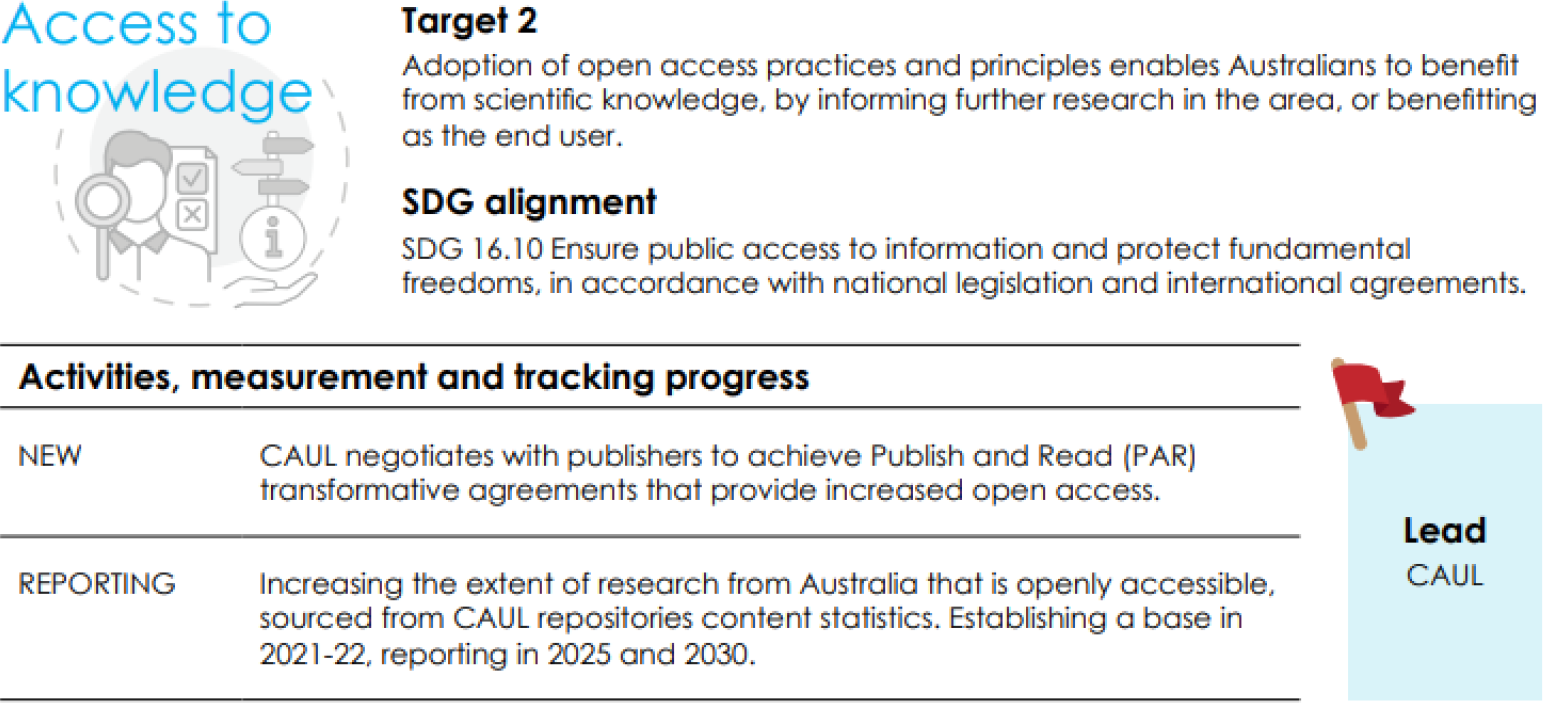
Access to knowledge: Target 2.
There is great opportunity to continue to develop engagement in the SDGs through ALIA’s leadership and programs that are already underway. Providing a national return on the investment in the sector that achieves value beyond that of individual libraries is of significant value to the nation. The national infrastructure that exists in universities provides academic and broader community benefits. There are rare opportunities to demonstrate an aggregated value, and the SDGs offer such an opportunity. As CAUL’s programs develop national engagement and participation in libraries, sector-wide activities can potentially bring the contribution of academic libraries into the public arena through reporting on the SDGs, a widely recognised framework.
Contributing to Australian universities: rankings
The ecosystem of universities is complex, with many developing systems that assess performance in a competitive environment. For libraries, their impact is measured in a small number of university-wide assessments, such as the Student Barometer. For the most part, the impact of libraries on the performance of universities is determined through local surveys and usage figures.
University rankings are of significance to universities worldwide, and are discussed broadly internally and in the media each time a new release of rankings occurs. International ranking systems have emerged over the past 20 years, with the first being the Shanghai Academic Ranking of World Universities in 2003, the Quacquarelli Symonds (QS) World University Rankings in 2009, and the Times Higher Education (THE) World University Rankings in 2009.
With the maturity of the SDGs as an assessment tool, two major university ranking services have now introduced specific assessment tools on sustainability. For academic libraries, it is timely to explore how their work on SDG-related activities might be of benefit in optimising the rankings of their universities through these tools. To do this, it is important to understand how the rankings are calculated and to explore the work of university libraries that is relevant to the metrics used in the assessments.
THE World University Rankings
The first impact ranking of the SDGs by THE was launched in 2019. The ranking system ( Times Higher Education, 2022a) is in its fourth year at the time of writing, with individual results published for each of the 17 SDGs. The data set now includes 1406 universities from 106 countries.
THE advises that there are three categories of metrics within each SDG:
The methodology for calculating the rankings includes metrics on research (derived from publications) as well as data from surveys. These measures include: the proportion of articles in the top 10% of journals as defined by CiteScore, a field-weighted citation index of papers produced by the university, and the number of publications. The elements that are highly relevant to academic libraries are together with their contribution to the overall ranking in percentage terms:
Quality education (SDG 4) methodology – access to educational resources for those not studying at the university (5%);
Sustainable cities and communities (SDG 11) methodology – public access to university libraries (3.75%).
The data is presented in aggregate form online (Figure 7).
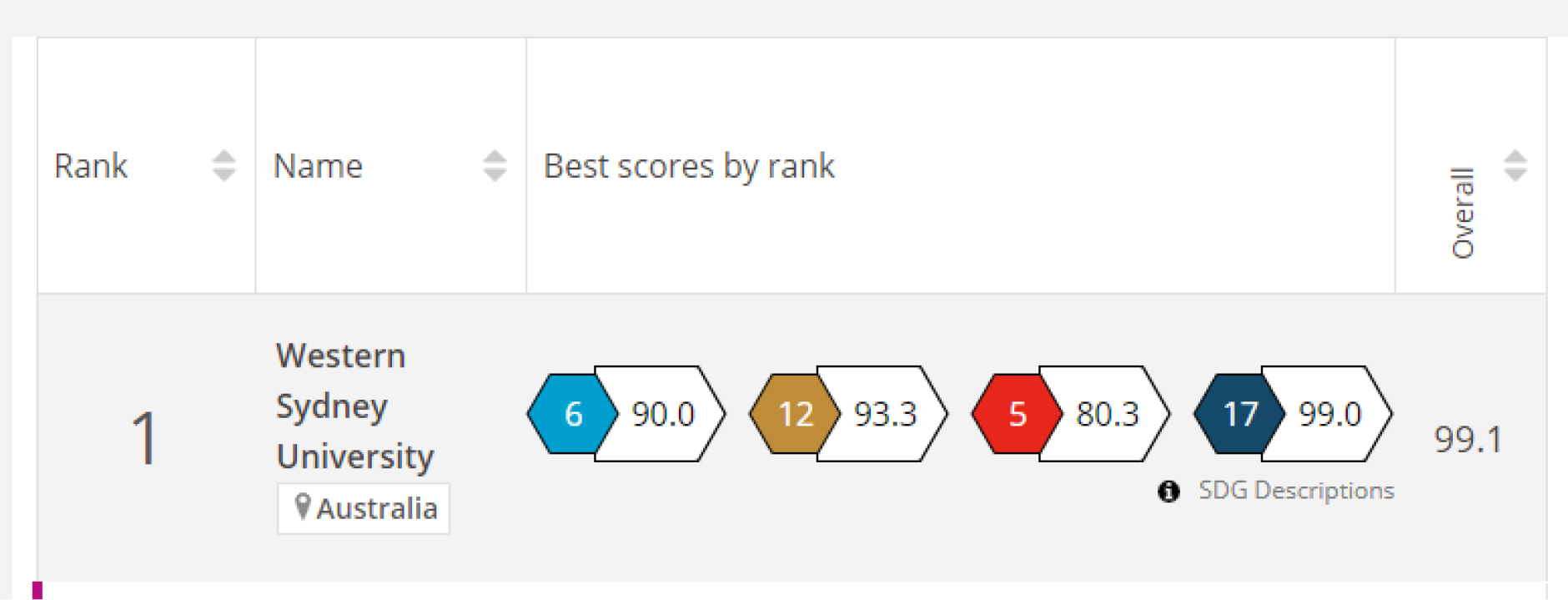
THE data presentation for the SDGs for Western Sydney University.
QS World University Rankings on sustainability
First released in 2022, the QS World University Rankings on sustainability (QS Quacquarelli Symonds, 2023) measure the impact of 700 universities focused on environmental, social and governance issues. The QS methodology includes eight indicators (Lightfinch, 2022; QS Quacquarelli Symonds, 2022). The Environmental Impact category comprises three performance indicators: sustainable institutions, sustainable education and sustainable research. The Social Impact category considers five indicators: equality, knowledge exchange, impact of education, employment and opportunities, and quality of life. At present, the University of California Berkeley is the most highly ranked university, with the general ranking list having more similarity to other QS rankings than that seen in the THE results.
The methodology for calculating the rankings includes metrics on research (derived from publications) as well as data from other sources. These measures include: QS data, data from universities, data from Elsevier, and UNESCO and World Bank data. The following is an example of the data for the knowledge exchange component of the Social Impact indicator: This lens assesses how institutions partner in research and with industry to share knowledge and spur educational growth. It has two research collaboration metrics and one research partnership with industry metric. These three metrics are aggregated to produce the score. (University of Saskatchewan, 2022)

QS data presentation for the SDGs for the University of California Berkeley.
Rankings and libraries: areas for potential impact
The development of rankings that address SDG and sustainability issues opens a new door to metrics that reveal the economic and social contribution of universities in a way not seen before. The THE and QS methodologies are distinctly different. Both use some metrics that have the potential for explicit library contribution.
In terms of the metrics for research and publications in both systems, libraries have a history of services that make a significant improvement to the impact of their universities. Institutional repositories provide open access to the research outputs of the university. They have increased access to publications and, increasingly, data over the past decade. Open access achieves a significant improvement in citations and the speed of citation (Piwowar et al., 2018), as well as having an impact on community knowledge and practice (Roche et al., 2021). The work of libraries in continuing to expand content available through open access, including through copies in repositories and Read and Publish agreements, will benefit university rankings in this area. The work of CAUL in negotiating Read and Publish agreements (Council of Australian University Librarians, 2023) is highly valuable in achieving a successful outcome that will arguably improve SDG rankings for Australian universities.
In the THE assessment, there are two specific measures relevant to academic libraries: (1) access to educational resources for those not studying at the university (5%) and (2) public access to university libraries (3.75%). The provision of openly accessible educational and research resources through repositories is relevant to the first measure, and the second measures public access to libraries. Australian academic libraries provide an open access infrastructure that improves the number of citations and access to research and educational materials, including through repositories, open publishing, Read and Publish agreements, open data and international collaboration, such as with the Hathi Trust. The extent of these activities is significant.
Australian academic libraries enable access to research through institutional repositories, which contain non traditional research outputs, conference papers, research reports, journal articles, theses and other forms of research. In 2022, there were more than 2.6 million research outputs with more than 46 million downloads (Figure 9).
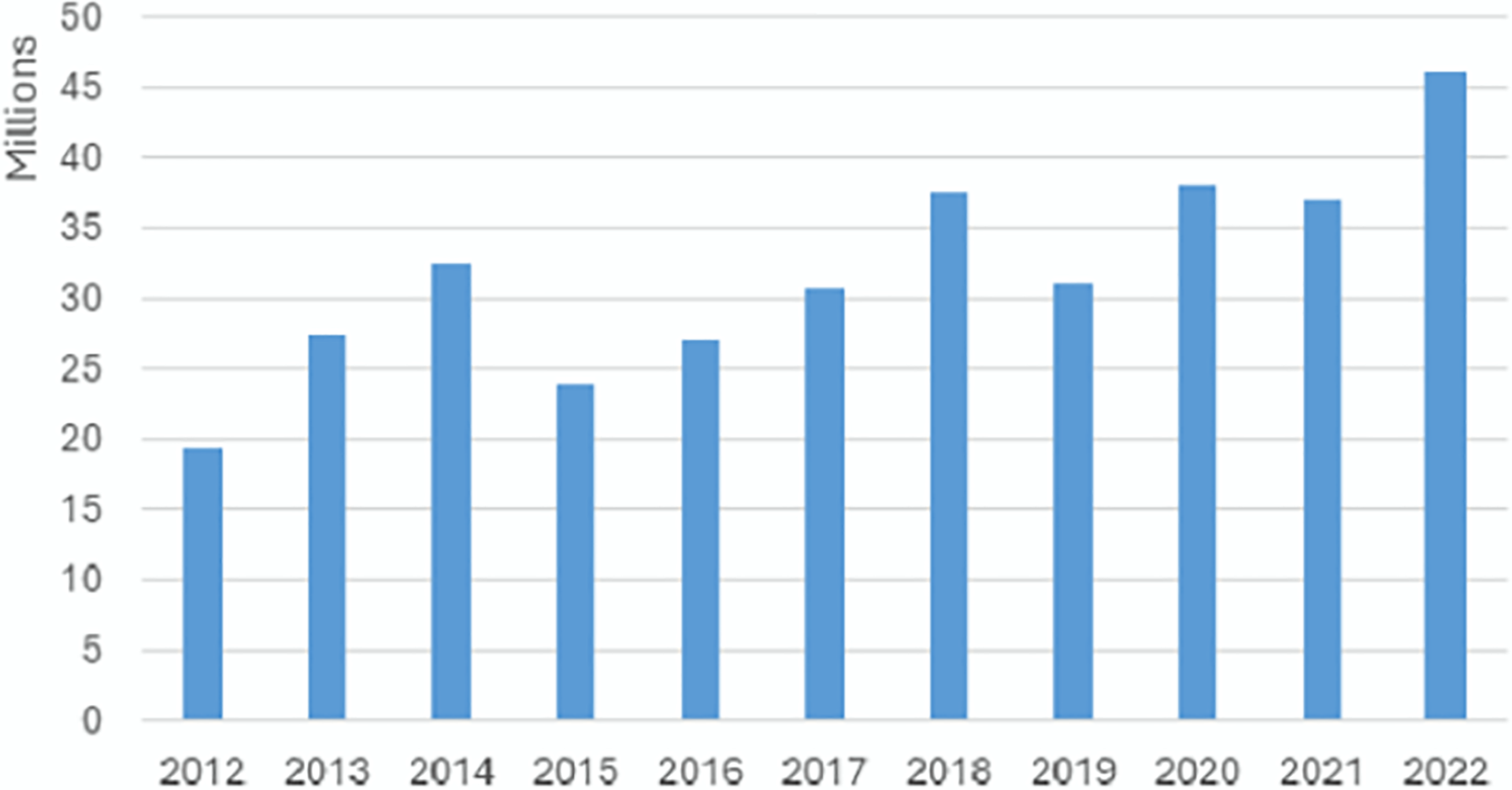
Use of research resources in Australian academic library repositories, 2012–2022.
University libraries with open access publishing programs include the operation of university presses, community publishing programs and publishing through the CAUL program. As an example, Australian National University Press has published more than 1200 titles in 20 years, with an impact of more than 50 million downloads. The combined downloads for the university through the press and the open repository in 2023 were more than 100 million (Australian National University, 2023).
Read and Publish agreements are ‘transformative’ agreements combining the cost of reading (access through subscriptions paid by a library) and publishing (article-processing charges). Academic libraries in Australia have adopted these agreements with many publishers, resulting in 2022–2023 in 20,570 articles being made openly accessible without payment of article-processing charges.
The examples of open access publishing, open access through repositories, and Read and Publish agreements demonstrate the significant impact that libraries can have in providing greater access to research. This leads to a greater number of citations, as noted above, and thus increased ranking scores. In addition, there is a demonstrated relationship between the use of libraries and the success of academics in grant applications (Tenopir et al., 2013). Combining the data on areas where libraries can assist their university in its ranking in this emerging area provides the opportunity to highlight well-established library services and promote newer services in open access to shine a light on the value of libraries.
Conclusion
Libraries made a notable contribution, primarily through IFLA, to the creation of the SDGs. Philosophically, the aims of libraries and library associations to achieve greater social and economic goals to support stronger communities are highly aligned to the SDGs.
In Australia, the SDGs created an avenue that enabled library activities to become highly visible to the government and stakeholders, in particular the leadership of ALIA. Developing a clear set of targets with measurable goals through consultation with all parts of the library sector has brought the library community together. The strong reporting mechanisms give impetus to delivering on the promises made in the stretch targets. The reconceptualisation of strategic activities through the SDGs has been based on reflecting systematically on the value of library services to the communities they serve. This has brought the library sector together and provided for stronger advocacy.
The model adopted in Australia is now extending to regional programs aligning to the SDGs, Australia’s regional role and a principle of soft power in an environment where there is great need for improved library services. Finally, connecting health, education and social services to shine a light on libraries as key components of the program delivery aligns with the government’s response. These broader goals closely echo the themes outlined in the introduction to this article. The initial work of Australia in contributing to the formation of the UN and early leadership characteristics are echoed in the work on the SDGs.
For academic libraries, there is evidence of strong participation in national developments through the work of ALIA. The CAUL report (Missingham, 2019) outlined individual library activities and CAUL work relevant to the SDGs without setting goals or targets. The new ALIA national framework (Australian Library and Information Association, 2021b) incorporates an activity that CAUL leads. This opens up recognition of the value of access to university research, as well as offering the potential for the further expansion of activities.
Two programs led by CAUL stand out as nationally significant in terms of contributing to the implementation of the SDGs. The first is the program on open access with its focus on delivering Read and Publish agreements to enable articles by academics in Australian universities to be made openly available without requiring payment of article-processing fees. This is in its first full year and will have a significant impact. Major publishers are participating in the scheme. It relates to SDG 4: Quality Education, SDG 9: Industry, Innovation and Infrastructure, and SDG 11: Sustainable Cities and Communities. The second program is focused on improving education through the Enabling a Modern Curriculum program. At the heart of this program is improving access to resources and services to better support students in their university experience. This relates to SDG 4: Quality Education. As the role of academic libraries within their institutions and CAUL evolves, there is room to develop greater maturity to relate activities to other SDGs.
Australian academic libraries are at a point where the early work on the SDGs has pointed to a new framework for reporting that requires a rethinking of activities. Balancing the needs of institutions with broader aspirations for national development requires an active commitment to engage with ALIA, IFLA and the government. There will inevitably be tensions with these competing needs.
The opportunity to strengthen the contribution of libraries to their communities and to demonstrate value sets the scene for a new stage of library collaboration. The Australian environment is not unique. The experiences of other countries reflect challenges that are seen in the academic library sector. The UK concern for greater strategic thinking and alignment with institutional goals found in the Society of College, National and University Libraries report (Pinfield et al., 2017) suggests that this is an issue internationally. The call to align with institutional strategies ‘as a means of strengthening the library’s position and of delivering the best services for its user communities’, in tandem with the concern that ‘any misalignment was seen…as being negative for both the library and the institution’ (Pinfield et al., 2017: 34), rings true in relation to the SDGs.
In summary, the SDGs have enabled Australian academic libraries and their association to take a new look at the needs of their communities. The opportunity to work together on key issues in the Australian academic library sector through CAUL is providing tangible results that implement the relevant SDGs. ALIA’s work on coordinating a whole-of-sector approach is vital to enable a meaningful contribution that is recognised across all sectors. It also provides an important outcome in terms of advocacy relating to government policies. This positions libraries well to better collaborate for national and regional benefit.
Most significantly, the value of academic libraries within their universities can be made more visible. In some cases, this has been through the incorporation of libraries within their institutions’ SDG plans (Gunton and O’Sullivan, 2021). In other cases, it has been through reporting as part of CAUL and ALIA’s stretch targets. The stretch targets and consultation process have so far followed a well-developed model of leadership, focused on traditionally established groupings of libraries within Australia. What has yet to be addressed are regional needs and analysis of how the infrastructure in Australia can be used for better engagement with its Pacific and other neighbours to benefit wider communities and align with emerging government policies. For universities, there are additional policy implications. Complex relationships with new stakeholders such as the Australian Chief Scientist to take CAUL initiatives to the next level will enable the academic library community to engage in new ways.
A major factor in the success of the Australian approach has been the highly collaborative environment. ALIA has fostered a new level of national strategic visioning through commitment to long-term leadership in this area. Current planning has been set to 2030 with the flexibility to continue to adapt as opportunities arise. The process of developing the approach has demonstrated that the whole of the library community can come together to focus on national and international impact while maintaining a focus on the needs of institutions and specific communities.
Footnotes
Acknowledgements
I sincerely acknowledge and express my admiration for Sue McKerracher, chief executive officer of ALIA from 2012 to 2022, and Vicki McDonald, chair of the ALIA International Relations Advisory Committee, for their sustained leadership on this issue in the Australian library sector.
Declaration of conflicting interests
The author declared no potential conflicts of interest with respect to the research, authorship and/or publication of this article.
Funding
The author received no financial support for the research, authorship and/or publication of this article.
