




Abstract
Libraries represent a key space in schools where students collaborate and learn themselves, outside scheduled classrooms. Despite their importance in supporting student learning, little empirical research has been done to understand the connection between library usage and student academic success. The authors collected library usage data after a library’s conversion into a learning commons to build a Rasch model of student library engagement. Using the model output, they conducted a multiple linear regression, which showed that increased library engagement significantly predicts fewer course failures, and that the engagement coefficient remained significant after controlling for past student performance. These results show that efforts to boost library usage can contribute to reducing course failures, suggesting that library programs may offer a policy lever for increasing graduation rates and reaching other core academic goals of schools.
Keywords
Introduction
Educators and schools are continually pursuing improvements in how they can contribute to student success; this push to increase student achievement has been particularly pronounced in response to the impacts of COVID-19 on students in the early 2020s (Darling-Aduana et al., 2022; König and Frey, 2022). As schools search for methods to address “learning loss”—a term some are using to describe differences in student test performance in 2022 compared to what had been deemed typical for students at the same grade level prior to 2020—some educational scholars are urging policymakers to avoid shortsighted decisions that neglect trade-offs, the limitations of proxy measures, and the unintended consequences of policy (Zhao, 2022). In this argument, we reiterate the importance of all educational outcomes—including the many positive impacts of education beyond academic outcomes. This extends to our assertion of the power of engaging learners as actors with agency in their own learning (Guay, 2022).
School library programs represent a valuable opportunity within a more comprehensive approach to school support for student learning that can offer a means of learner empowerment and agency support, especially within the evolving paradigms for what libraries can be within a school ecosystem. Recent scholarship has already outlined a variety of approaches to reimagining libraries as makerspaces, media centers, or learning commons to pursue new ways to connect library programming to student success (Craver, 1994; Erikson and Markuson, 2007; Subramaniam et al., 2012). Reimagining library spaces, which can include both changes to the physical space and new approaches to scheduling and operation, is an opportunity to support other school initiatives with complementary measures that improve student performance across a variety of educational outcomes.
New approaches to the built learning environment
A prominent trend in K–12 (Kindergarten to Grade 12) education has been work by educators and designers to find new approaches to creating learning spaces in and around schools (Freeman et al., 2017). In addition to the potential to approach classroom design differently, recent research has explored the role of design in student and educator experiences in other areas of the school. School libraries represent another opportunity for space design to improve learning experiences outside the classroom. However, a barrier to developing library programs and infrastructure has been the ability for policymakers to see the connection between library investment and the academic outcomes that are their top priority in budgeting (Hartzell, 2001; Hossain, 2019; Merga, 2019).
The currently available research shows that libraries, and the work of librarians, do have an impact on students (Lance and Kachel, 2018). Authors like Todd (2015) have presented arguments for the adoption of a more evidence-based practice by librarians that go back several decades (see also Todd, 2002). The evidence-based framework highlights the need for evidence connecting librarian practice to high-priority school and community outcomes. In large-scale studies examining many libraries, researchers have connected library function to impacts on student perceptions of support for their learning (Hay, 2005) and academic outcomes (Lance, 1992, 2002). Other work presents broad evidence across the literature for positive library impacts on student outcomes through literature reviews (Hughes et al., 2014; Lonsdale, 2003; Pasquini and Schultz-Jones, 2019). However, in the words of Pasquini and Schultz-Jones (2019: 411): “librarians must expand beyond the solid foundation of correlational studies.” We need more empirical work that examines the impact of library operations on learning outcomes measured directly. Recent work looking at librarians within the educator workforce has made connections to student success in metrics like reading and literacy (Merga, 2022). To further address the need for this kind of work, we have endeavored to apply a more robust quantitative method to describe the impact of a facility renovation, which fundamentally changed the position, design, and role of the library in a high-school setting.
Theoretical framework: a learning commons
In this article we use both “library” and “learning commons” to refer to our area of study for ease of reading and familiarity. However, the two spaces are distinct and bring with them different architectural, interior, and operational implications for how they fit within and influence the educational ecosystem. Our space of study was initially a library—an ancillary space positioned away from the center of the school facility in which the primary function is to house books, host readers, and loan books to students. The concept of a learning commons is a newer approach to space, which interweaves instructional intent, curricular connections, and collaboration opportunities among students and adults in a variety of settings and combinations (Kurttila-Matero, 2011). Loertscher and Koechlin (2015) position the learning commons as a method of more comprehensively integrating specialist staff, like librarians, in a school's portfolio of improvement practices. Koechlin et al. (2011) have argued that the same integrations of learning commons programs into school operations can impact, and have had an impact on, key academic outcome measures related to teaching and learning. This area of scholarship identifies recurring methods for connecting the learning commons to school operation in productive ways:
Promoting sociality and collaboration: the imagery of a “commons” is meant to evoke the sense of a communal forum, wherein students and adults in every combination can come together to collaborate on both academic and non-academic endeavors. Effective use of technology and media: the context of a learning commons with the programmatic functions of a library includes continued (and often communal) access to learning technology and multimedia. This access includes promoting discourse around appropriate and healthy use of those same technologies and media. Driving literacy in many forms: an implicit consequence of the learning commons format is that the use of what are typically library spaces for a wider range of activities will reduce the friction for engaging library functions, which ultimately increases fundamental components of literacy, readership, and news media consumption (bringing the benefits thereof).
Our study tested this theoretical framework for the potential impact of shifting from a conventional library to a learning commons model, and our data strategy allows us to test whether increases in usage indeed accompany increases in fundamental library programming. We were also able to test for theorized broad academic impacts, as predicted by prior scholarship on learning commons.
Our study includes a rare opportunity to study a major architectural intervention that fundamentally changed the design paradigm for a school library from a conventional view of library function to a learning commons. These kinds of major changes to space design occur regularly in the context of architectural work. Previous scholarship has shown that architectural interventions targeting the reconceptualization of “traditionally designed” libraries into more decentralized learning commons can improve student engagement (Maxwell and French, 2016). The architectural field has been studying and implementing strategies like those used in this study for learning commons in schools (see Simpson et al., 2019). Despite some consensus in the architectural industry regarding the approaches to creating more open, varied spaces for library programs, these studies do not evaluate the impact of architectural projects on core student outcomes for K–12 schools. McCunn (2023) studied the impact of a similar intervention to the present study, which created a learning commons from what was previously a library space. This kind of study is essential to understanding the impact of the learning commons paradigm for library spaces, and McCunn found significant positive movement in teacher attitudes toward the learning commons compared to their previous library. However, McCunn’s study focused on teacher perceptions rather than any student outcomes. Our study offers a more direct look at how learning commons operation affects student success.
Our study includes both a “library” in the space prior to the intervention and a “learning commons” after the intervention. In the remainder of this article, we will alternate between these two terms in an effort to improve readability in the context of each reference. Ultimately, this is a study that can inform whether the theoretical differences have empirical implications.
Theoretical framework: engagement as a construct
School administrators and education researchers have been devoting increasing attention to the construct of “student engagement” over recent years, driven to a significant degree by empirical evidence that engagement is connected to key outcomes. Wong and Liem (2022) reviewed the current body of research studying engagement, and highlight examples of studies that have shown these connections to academic outcomes:
Reyes et al. (2012) measured engagement as a mediator between classroom emotional climate and class grades for late-elementary students. Archambault et al. (2009) measured engagement in a three-dimensional structure to show that it predicted high-school dropout (or, reciprocally, completion). Importantly, they found that only the “behavioral” component of engagement contributed significantly to their prediction equations. Steele and Fullagar (2009) found that intense engagement—conceptualized as “flow”—mediated a relationship between academic work and psychological well-being for college students.
Wong and Liem's (2022) review also concluded that important limitations in the operationalization and theorization of the construct are undermining the credibility of some of the applications of this empirical work on engagement. To provide clear operationalization of “engagement” as Wong and Liem (2022) have recommended, we will next explicitly define and operationalize our use of the construct in the present study.
We have built upon previous scholarship conceptualizing engagement as a multidimensional construct with three components: behavioral, affective, and cognitive (Archambault and Dupéré, 2017; Ben-Eliyahu et al., 2018; Carter et al., 2012). Within this framework, we have focused on behavioral engagement as quantified by observable, discrete actions within which students participate in core library programs (i.e. book lending or space usage). Our operationalization of behavioral engagement is consistent with Finn's (1989) model of behavioral engagement, which used similar measures such as attendance and participation in school activities.
The study context for the present research has taken a limited view of engagement—focusing on behavioral engagement—to preserve the validity of our analysis and avoid the common problem of overgeneralization in recent research on engagement (Wong and Liem, 2022). By limiting our consideration to the key metrics relevant to our study purpose, we have sought to avoid ambiguity in the study design. However, we acknowledge that this limitation leaves the need to study other domains of engagement (affective and cognitive) within the context of libraries and learning commons in future research.
Accompanying the undertheorization of engagement identified by Wong and Liem (2022), Appleton et al. (2008) identified the measurement challenges facing researchers seeking to collect valid and reliable data on student engagement. Some of their concerns have been repeated or subsumed by Wong and Liem's (2022) review, but the persistent issue of reliable measures for engagement is important for studies on libraries or learning commons. Given the importance of behavioral engagement in studies of high-school-student dropout rates (Archambault et al., 2009), we have taken an approach to leverage operational and process data that already exists within school operation. Work by Anderson (2017) is one example of how operational data allows access to a larger data set to conduct analysis of engagement across large student groups. Similarly to Anderson (2017), we have applied a Rasch model to combine multiple behavioral indicators of engagement and generate a more comprehensive measure of learning commons engagement, progressing toward an example of the type of elusive, reliable measure that has largely evaded the field to date.
Research purpose
The current study examined the pattern of library usage before and after a major facility renovation as part of a redefinition of library function in a US high school. User experience suggested that library usage had increased since the changes to the library design, which was more remarkable given the coincidence of the COVID-19 pandemic, which impacted the school community shortly after the facility change was completed. In addition to examining student engagement with the library, we sought to explore whether library engagement had a significant connection to student course success. The school had a priority of helping students successfully pass classes during the study period; put another way, the school wanted to minimize the number of course failures assigned to students in their scheduled classes. We collected data to examine whether library usage was associated with fewer course failures, even if we were able to control for past student performance.
Method
Setting
This study took place at a high school that had recently completed a substantial renovation project, with updates and improvements affecting most parts of the school to some extent. One of the primary outcomes of the renovation was the relocation and philosophical redesign of the library into a learning commons situated in the middle of the school. The learning commons was completed during the fall of 2019. The timing of the completion meant that the school was only able to briefly occupy the new space prior to the societal disruptions of the COVID-19 pandemic. Those disruptions included the school shifting to emergency remote instruction (Hodges et al., 2020). This study was conducted during the fall of 2021, and the pandemic disruptions continued to be an issue at that time.
Our study was undertaken in a US high school that serves 9th–12th-grade students, typically between 14 and 18 years old. The school is located in the Midwest and is what the National Center for Education Statistics classifies as a regular school in a small city. The school is one of two high schools in the district (plus a virtual school serving K–12). It enrolls slightly less than 2000 students, with the greatest proportion being white, roughly 10–15% identifying as Black, and approximately 5–10% identifying as Hispanic. A little less than 30% of the students qualify for free or reduced-cost lunches.
Intervention: into a learning commons
The school renovation project originated from a bond issue passed in 2017, which funded improvements to both high schools in the school district. At the school in this study, the total renovation included 27,000 square feet of renovation and 13,000 square feet of addition. Those project areas included moving what was previously a conventionally designed library to a central corridor on the second floor in the middle of the school. Other changes included the addition of an adjoining monumental stair (Figure 1), which connected the learning commons to the first-floor common area nearby.
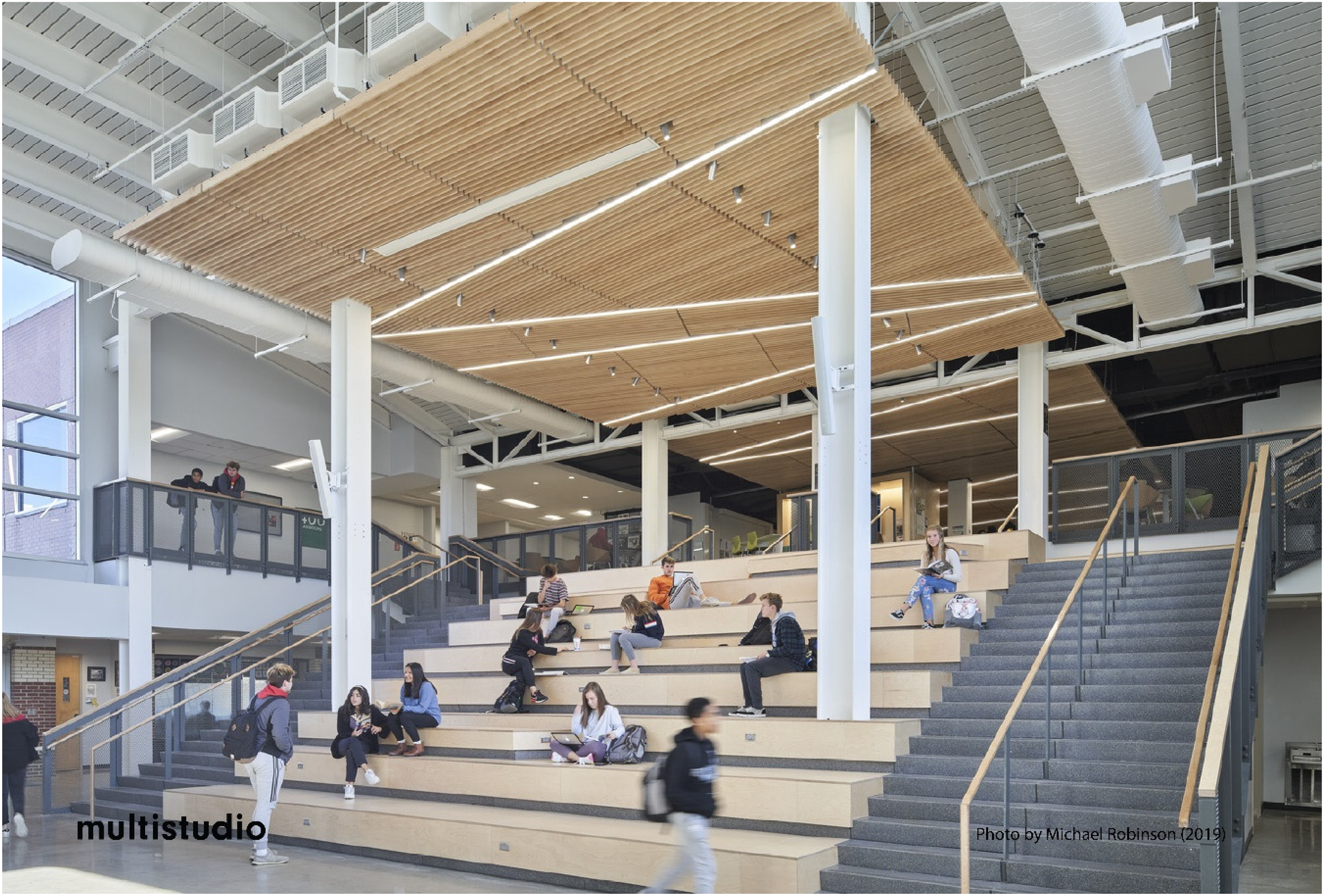
Photograph of the new monumental stair outside the learning commons. Source: The photo credit is to Michael Robinson (2019).
The renovation and addition project was completed in October 2019. The final learning commons design included a highly porous perimeter with many access points along the surrounding corridors, as well as a wide variety of furniture and work-surface options throughout the new commons space (Figure 2). An emphasis in the design of the new space was meaningful differentiation between zones throughout the learning commons, to afford users real options in what they could do in different parts of the commons. For example, students seeking a more active and social experience could find a place to work in the project center (Figure 2). Another student, seeking a quieter, more private workspace, could reserve one of the four study spaces available throughout the learning commons.
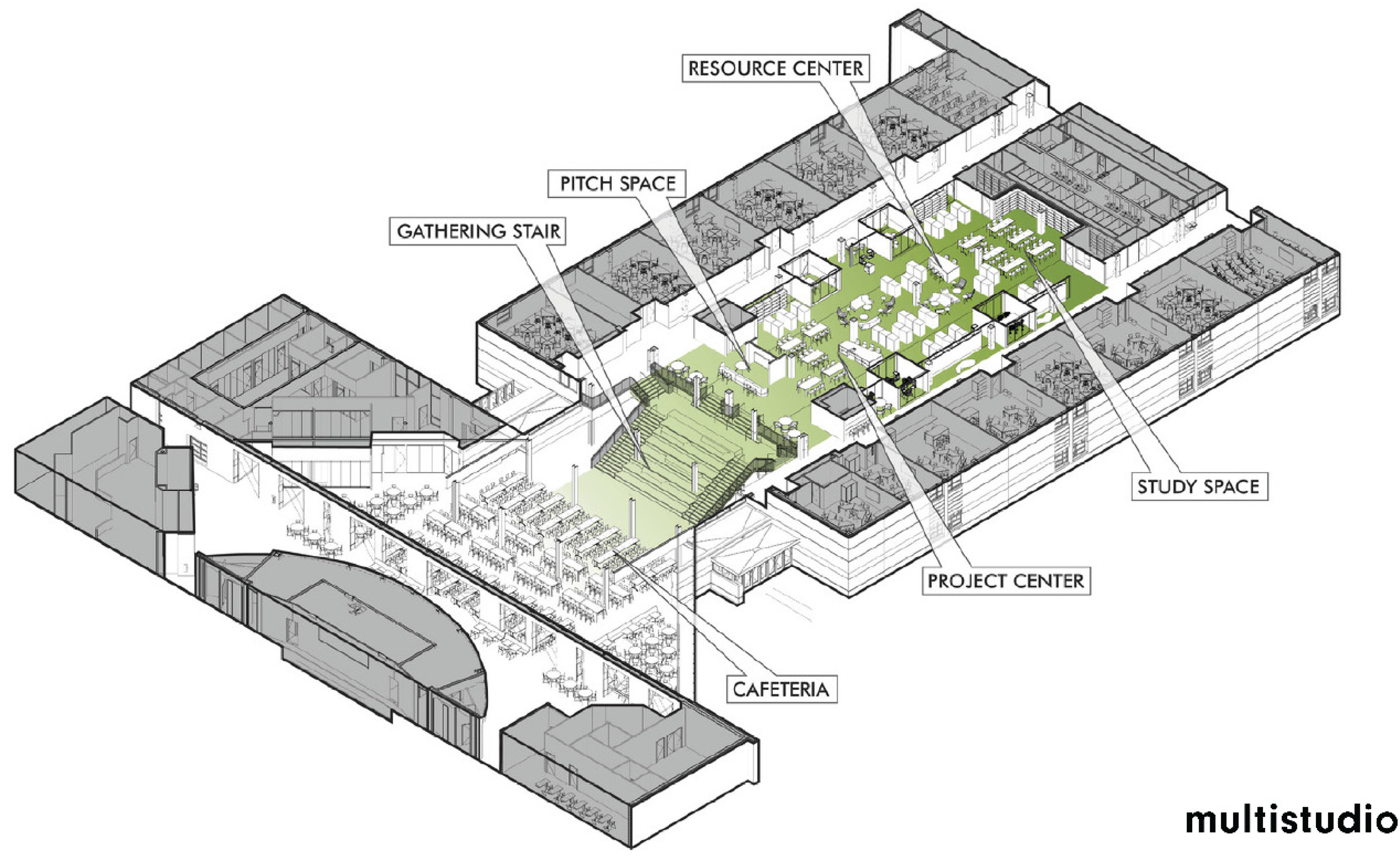
Diagram of the learning commons space (highlighted in green) within the surrounding school facility.
As a clarification, we are describing the architectural interventions associated with the library transition as necessary context to understand the operation of the library as a learning commons. However, the interventions were accompanied by other unrelated large-scale changes at the school, which also inform any explanation for patterns in engagement (e.g. the COVID-19 pandemic and the shift to the FlexMod schedule). We present the description above as context and not a definitive causal explanation for the changes in engagement or associated academic performance.
Data
The primary data set for the study included anonymized data provided by the existing school systems. The originally delivered data set included 1826 records representing the full enrolled student population with no selection criteria beyond being present in the system. We omitted students for whom identification information did not allow us to link all variables of interest, which represented a drop of 101 entries (5% of the original data set). Seventy entries were zeros in all categories (considered blank); one entry included library check-in data only; one entry included only fall 2021 data, which we could not link to other student information; and 30 entries included only fall 2019 data (presumed to have left the school prior to the study window). This left our final data set as 1725 student records. Each student record included the student’s grade level as the only piece of demographic data (9th–12th grade).
Our data also included the number of “student check-ins” during free circulation periods in the school day. The school used the FlexMod scheduling philosophy (Murray, 2008). The FlexMod model breaks the school day into small, schedulable time portions (approximately 15-minute windows). These time allocations are portioned in larger chunks to schedule classes, but they can also be used in smaller increments for other activities. As an example of an alternative use of time, most days at the study school included two windows of time in the day when most students had “independent learning time” or ILT. During ILT, students can move freely throughout the school campus to engage in self-directed activities as they chose. Each student could schedule ILT at many times during the day, but the flow of this particular school led to two windows of time during the day when a large percentage of the student population scheduled an instance of ILT simultaneously.
The librarian implemented a policy where students who chose to use the learning commons during these common ILT windows would be asked to use their school identification cards to register through the school attendance management system to account for their whereabouts during the ILT window. The attendance management system logged each registration with a precise time stamp, and we operationalized each of these records as a “check-in.” For this study, we leveraged this record of check-ins to compile a total number of check-ins in the learning commons during each month of the study period. This produced a total of four months’ worth of learning commons usage data.
Book circulation data was included as a single total number of books checked out during the fall of 2021. This figure added all outgoing records into one value. As a clarifying note, this value only considered the one-way transaction of outgoing books and disregarded if or when they were returned.
Finally, the data set included the total number of each letter grade earned in the fall of 2021. These were reported as whole-number totals, which disregarded plus or minus modifiers on those letter grades. The records for juniors and seniors also included the same format of grade totals for the fall of 2019, during which they would have been freshmen or sophomores. The freshmen and sophomores of 2021 did not have 2019 grades included in their records at all (omitted as “not applicable” or NA).
Analysis
We first created a Rasch rating scale model in R 4.3.2 (R Core Team, 2023), with an essential package being TAM (Robitzsch et al., 2024). We created individual indicators for the model by counting the total number of library check-ins in each calendar month within the research window, plus an additional indicator being the total number of books checked out through the library system. The result was a rating scale model with five construct indicators on a general library engagement variable. After we created the model, we extracted the mean of the expected a posteriori (EAP) distribution and the standard deviation of that distribution for each student. The mean EAP was a logit estimate (also known as a log odds ratio), which we relinked back to individual student responses for the next step—constructing a multiple regression.
We used the linear model functions available in base R (R Core Team, 2023) to model the number of 2021 courses failed (i.e. number of Fs earned). The model includes the number of courses failed in 2019 as a covariate, and then uses the logit EAP estimate of library engagement as a predictor variable. The equation for the model is:

After creating the regression model, we extracted the standardized coefficients (β) and the p-value associated with testing the significant contribution of that term to the model. We then visualized the model using the moonBook package in R (Moon, 2015).
Positionality and transparency
We acknowledge our positionality within this research as an author team—we are educators who come to this work with a belief that learning is a community endeavor and that the school library plays an important role in that work. Our professional roles sit within this study, as we are employed in the library of study and in the firm that designed the new space. We strove to provide a transparent analysis of the impact of this learning commons. In this study, we hoped to identify how the learning commons helps students and where its impact can be improved.
We have reported our sample size (n = 1725) and the criteria by which we created the sample from a full record of enrolled students (N = 1826). We have described the characteristics of the student records excluded from this study. Following the advice of Simmons et al. (2012), “[w]e report how we determined our sample size, all data exclusions (if any), all manipulations, and all measures in the study.” We have cited the key statistical software and packages used in the analysis, but the study data set is not publicly available to protect school personnel and students. This study was not preregistered.
We conducted this study using only existing operational data to which the members of the author team have regular and routine access. No interventions or non-standard activities were involved in this work. The data in this analysis was analyzed by the research team in a strongly de-identified format (evaluation data was limited to essential information for the reported analysis with minimal linked demographic or other data beyond the variables of interest). In consultation with researchers at a regional R1 university prior to beginning the project, we determined the work reported here to be a program evaluation that did not require a formal institutional review board review.
Results
Descriptive statistics of course failures
There was a small increase in the percentage of students receiving course failures across all levels from 2019 to 2021. For example, 50 students received an F in exactly one course in 2019 (6.32% of the students in our sample) when they were underclass students (9th and 10th grade), but 69 students earned exactly one F in 2021 (8.72% of the students) as upperclass students (11th and 12th grade).
Rasch model of engagement
To examine whether learning commons usage predicts student class performance (measured as number of courses failed), we constructed a Rasch rating scale model of learning commons engagement. Our model allows us to weight the importance of library engagement as it ebbs and flows throughout a school semester while combining multiple, distinct indicators of engagement (i.e. book checkouts and learning commons check-ins). The model weights shown in the Wright map in Figure 3 illustrate that library visits later in the semester are slightly more important compared to visits early in the semester (because they were less common in the later months). Using these relative weights, the model synthesizes a single overall estimate for library engagement that considers all these factors to calculate a logit estimate for each student. We used this logit estimate as a single predictor variable in our multiple regression, allowing us to use simpler analytic methods than attempting to incorporate all our indicators of library engagement in raw form. The model EAP reliability was .588, which we judged as acceptable, given the strong operational validity of the measures as physical connections to our engagement construct.
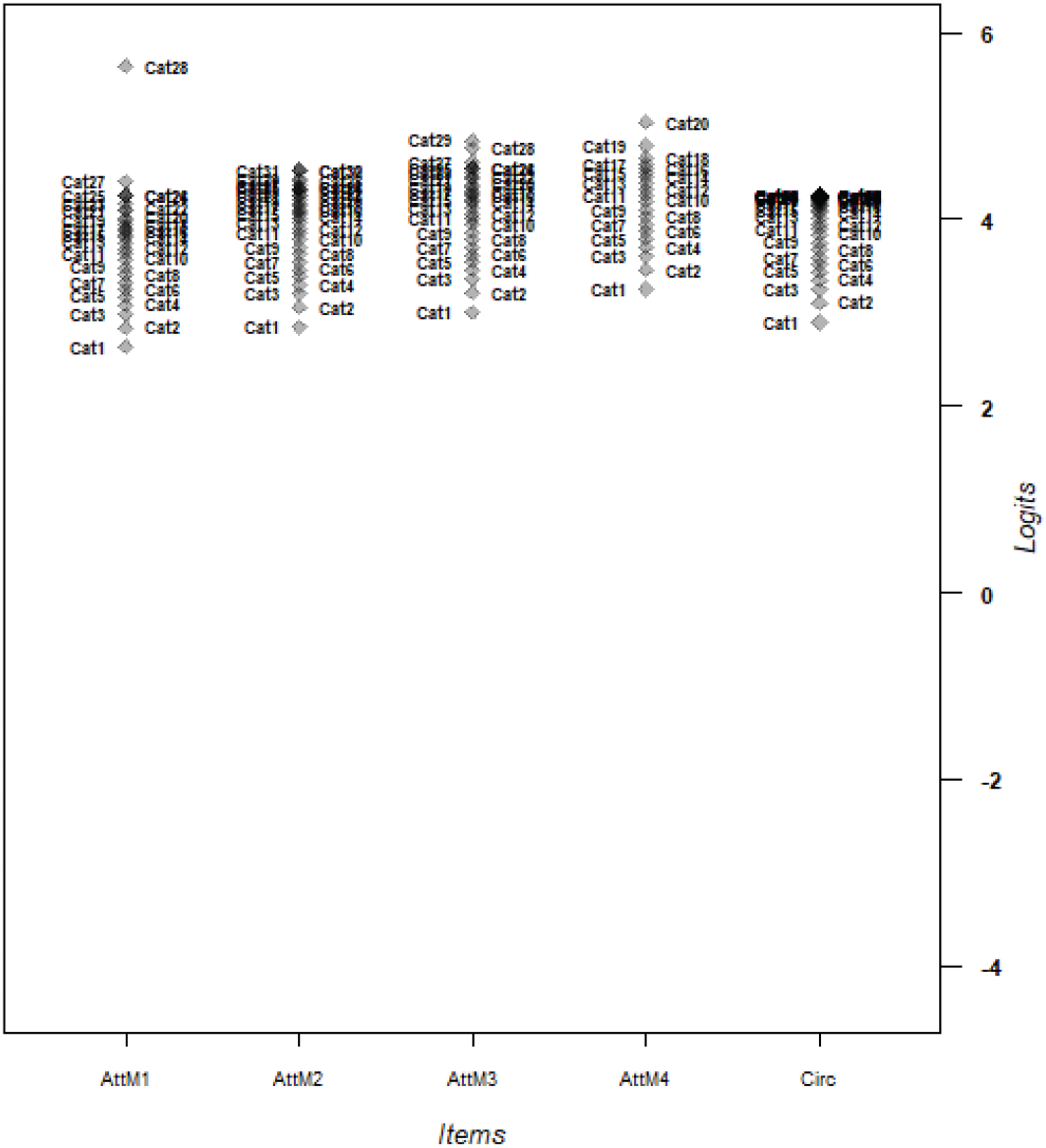
Wright map visualizing the indicator thresholds for the learning commons monthly total check-ins (AttM1–AttM4) and books checked out (Circ) on a common “library engagement” construct.
We next extracted the logit estimate for each student based on this model, which yielded the overall distribution of engagement estimates (see Figure 4). About 65% of the students did not have any learning commons engagement at all, in either book circulation or check-ins. The distribution appropriately shows two-thirds of students at a minimal logit estimate, and all students with positive engagement distributed in the positive logit values. These logit estimates were passed back to the original data set and linked to student course performance for regression analysis.
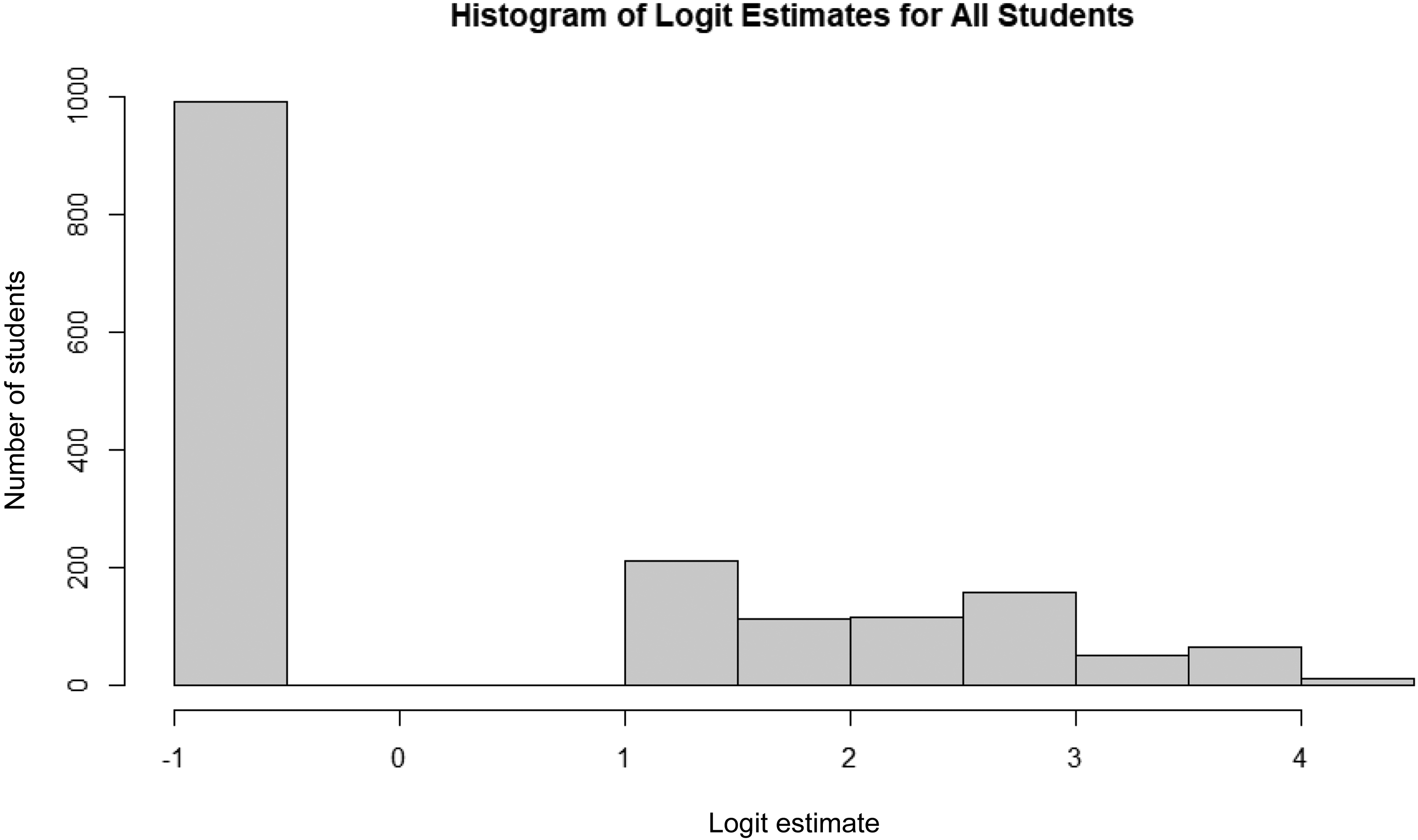
Histogram visualizing the distribution of logit values for learning commons engagement (n = 1725).
Multiple regression analysis
We first used the logit estimates for library engagement to construct a simple linear regression to examine the potential association of library engagement with semester course performance with no other variables considered. Figure 5 visualizes the relationship between library engagement (logit) and the number of fall 2021 course failures, with a standardized coefficient for engagement having a significant predictive value (β = −.126, p < .001).
Next, we sought to control for past student performance to allow a comparison of students with similar academic histories based on their engagement of the learning commons. Figure 6 shows the predictive power of past performance (fall 2019) for future performance (fall 2021). The standardized coefficient for past performance was significant and large (β = .663, p < .001). However, the shifting regression lines along increasing library engagement indicate an orthogonal effect of engagement beyond the predictive power of past performance, which was smaller than in the simple regression but retains a meaningful effect size that is statistically significant (β = −.115, p < .001).
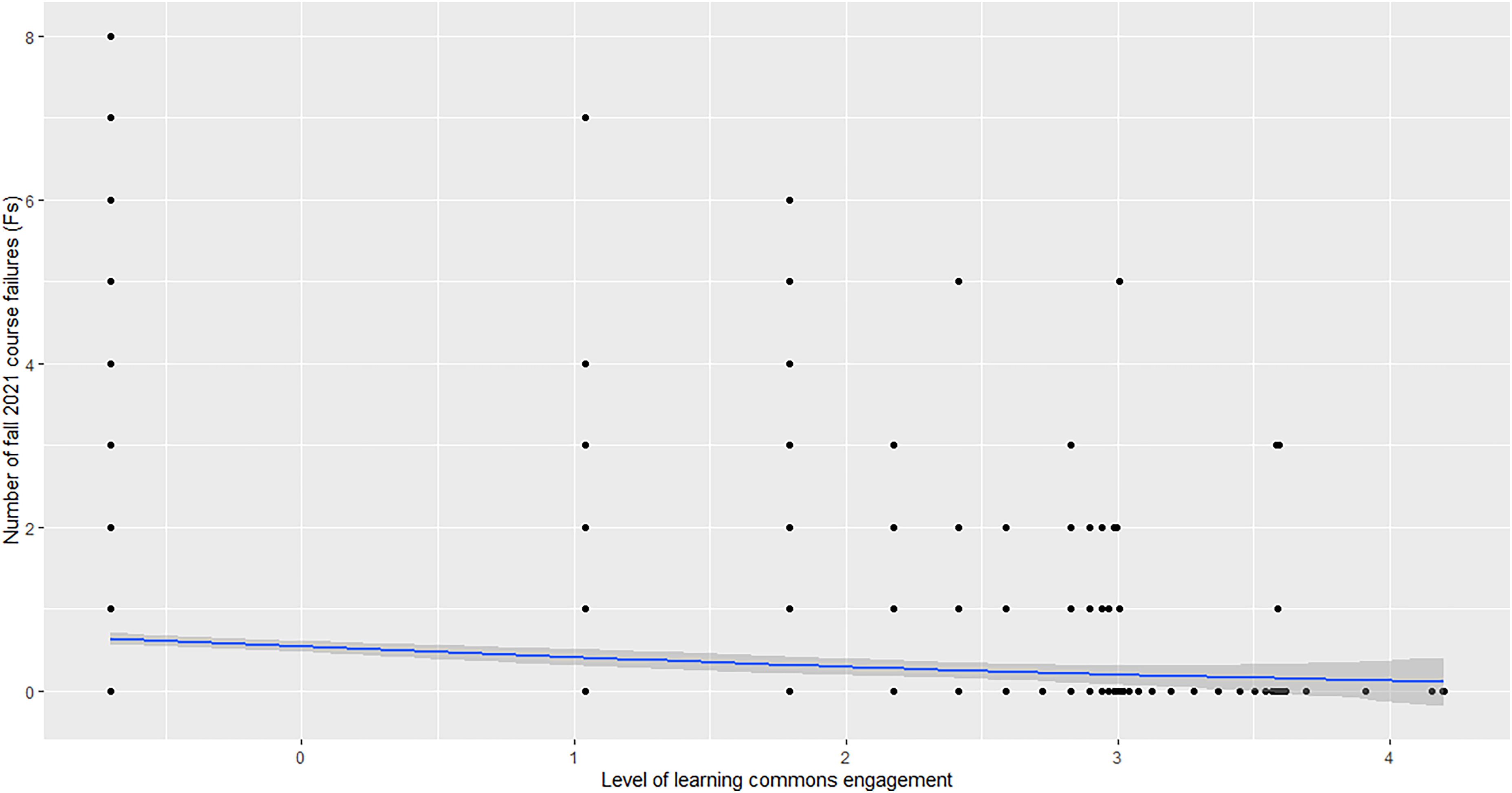
Simple linear regression showing course failure rate (y-axis) falling as learning commons engagement, measured as a logit estimate, increases (x-axis).
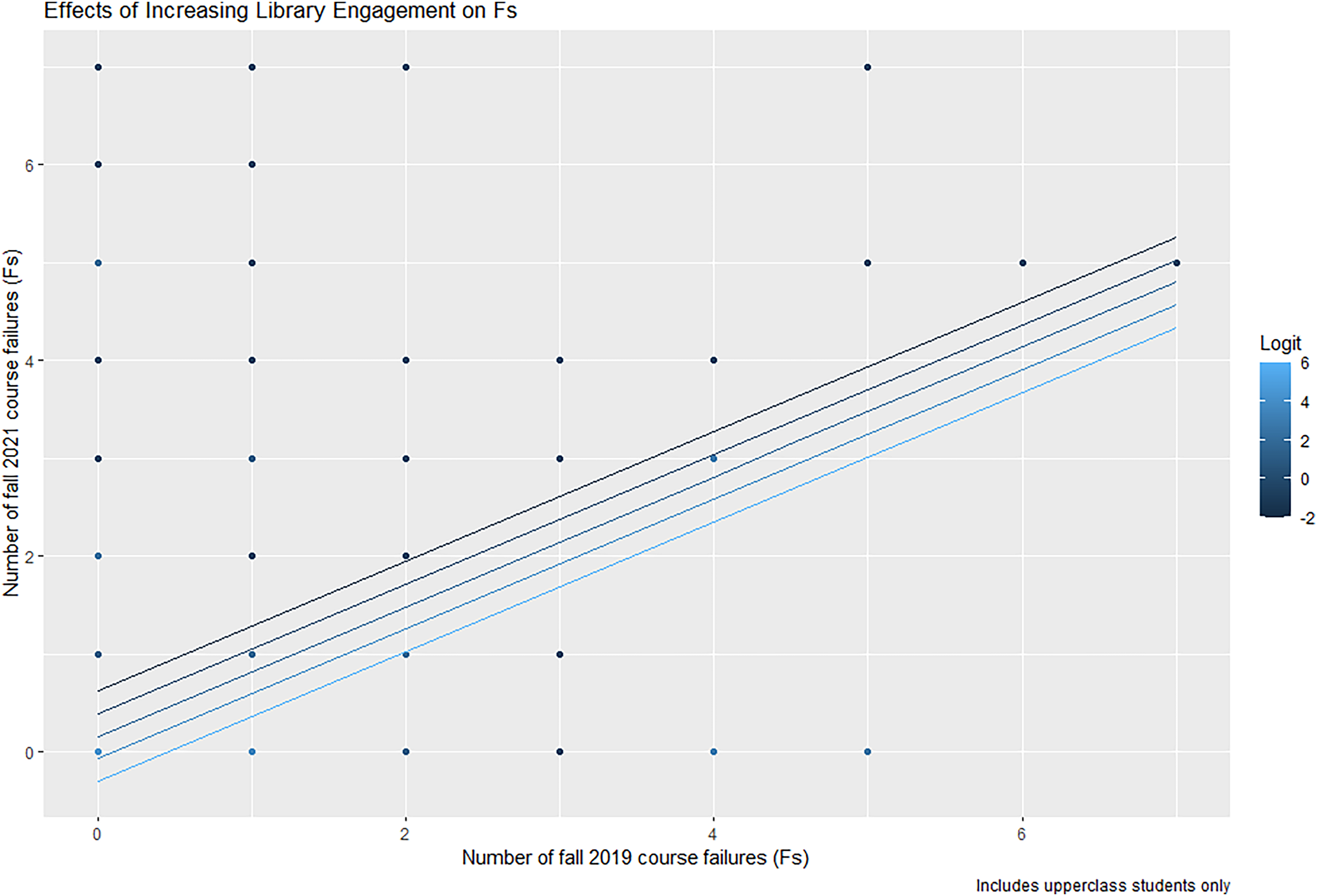
Multiple regression showing the number of course failures per student in fall 2021 (y-axis) falling with increasing library engagement (differentially shaded lines), while controlling for past course performance (x-axis). Note: Many visible dots include multiple overlapping data points.
Supplementary analyses: As, grade point average, and minimal engagement
We conducted several additional analyses to test the presence of library engagement effects beyond the primary relationship of interest. Each of the following results involved post hoc analyses, which we conducted to further illustrate the patterns in our findings.
First, we compared the performance of students in the largest group (no learning commons engagement, n = 991) with those in the nearest incremental increase in engagement (which we called “limited engagement,” n = 213). The “no engagement” subgroup all had a calculated value of −0.702, the lowest value assigned in our sample (as a reminder, we visualized our distribution of logit values in Figure 4). The “limited engagement” category represented all students with the lowest logit value above the value for exactly zero engagement (no books checked out and no check-ins). This logit value was 1.044 and represented combinations like “only a single book checked out with no check-ins” or “no books checked out and two check-ins.” This direct subgroup comparison allows us to see the impact of even small changes in the measurable increases in library access and engagement as a window into the impacts of policies that might have a modest impact on the variables of interest in this study.
Figure 7 shows that the benefit of learning commons engagement exists in the “limited engagement” group to a significant extent, with the 95% confidence intervals failing to overlap in the visualization. The difference in performance equates to about half the number of course failures per student compared to the larger group of students with no engagement at all.
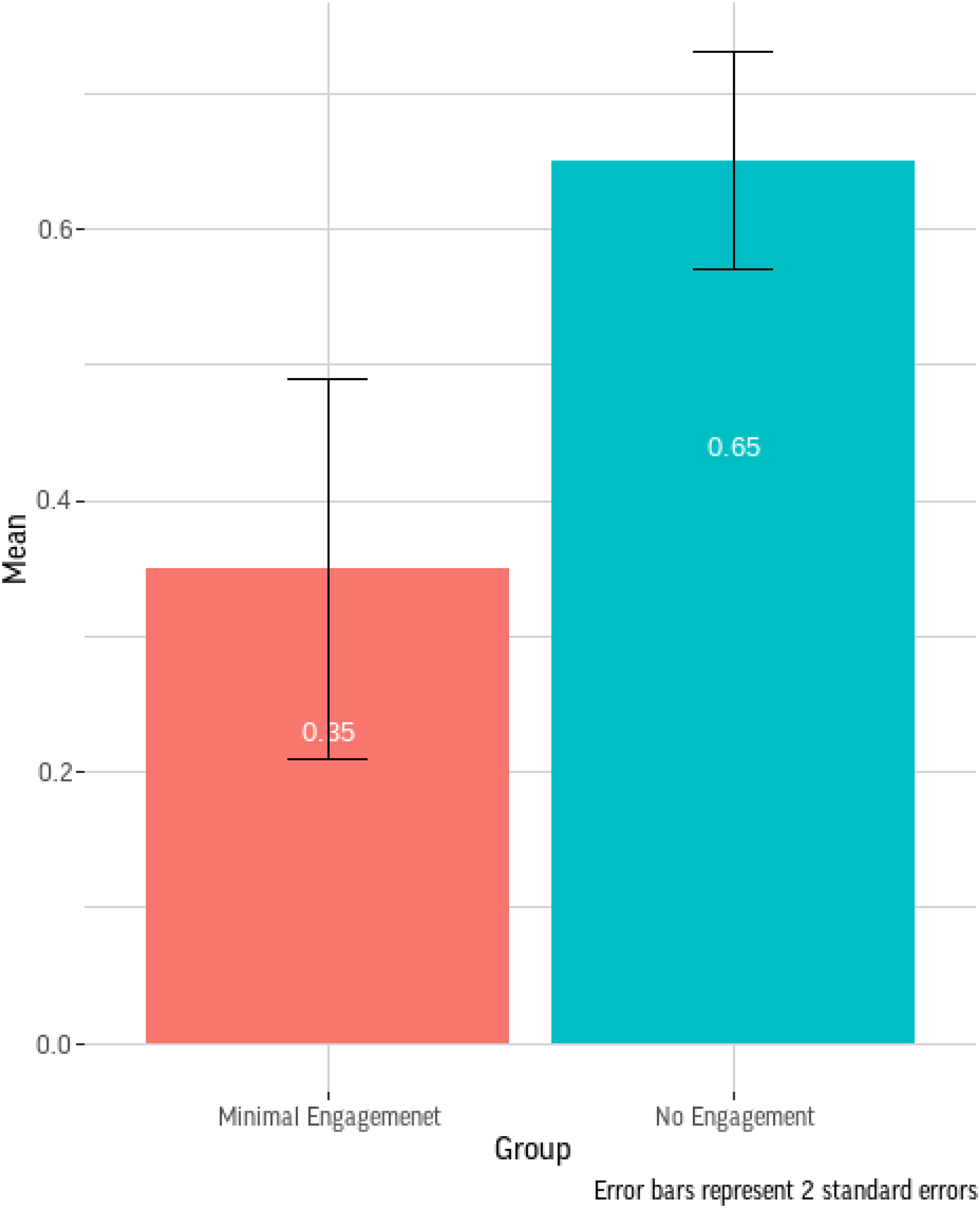
Average number of course failures (per student) with either very little or zero library engagement.
We next examined whether the positive impacts of library engagement were present at the opposite end of the performance spectrum – on course As. We reran the same simple regression and multiple regressions using the data for student As that we used in the primary analysis for course Fs and found very similar effects. In the simple regression, the predictive power of As was present and substantially stronger than in the simple regression for course Fs (β = .355, p < .001). Past performance was again a significant predictor for current performance (β = .569, p < .001), and the predictive power of learning commons engagement fell to a comparable level as that of Fs with the control (β = .164, p < .001).
Finally, we calculated the predictive power of student grade point average in full, this time using only the more robust model of accounting for past performance. This analysis of potential links between grade point average and library engagement has more precedents in the library impact literature (e.g. see Çetin and Kinay, 2011). In the multiple regression, we found the strongest predictive value of past performance of our analysis (β = .753, p < .001). The remaining predictive power of learning commons engagement for grade point average was small but still significant (β = .065, p < .001). This result indicates that the overall effect on student course performance is probably heteroscedastic, and models to describe engagement impact across the full grade point average will probably need to account for additional variables.
Discussion
Our results provide some of the most direct evidence to date for how library programs, services, and experiences directly contribute to the success of students in their core academic pursuits: class grades. Our finding in regard to the significant predictive strength of library engagement, after controlling for past performance in the analysis of a full school population with consideration of past student performance as a covariate, gives substantial evidence of ecological validity (Kihlstrom, 2021). This ecological validity confers confidence in our findings, but also raises the question of which elements in the study are contributing to the overall effect. The context of our work described in our methods identifies multiple major interventions overlapping: a major restructuring of the school schedule using FlexMod, the early occupation of a completely reimagined learning commons space replacing the library, and the disruptions continuing to affect students resulting from COVID-19's presence in the community all very likely played a role in producing the impacts measured in our findings.
Given the consistent positive predictive value of library engagement in both our primary analysis and our post hoc additional analyses, we find it likely that projects and policies intended to drive greater library use would probably continue to see positive impacts in measurable course outcomes. The significantly lower number of course failures assigned to students with even very low library engagement suggests that the benefits from direct library engagement, or follow-on benefits afterwards, may require only a very low dosage (or amount of intervention—in this case library engagement). One plausible mechanism for these impacts could be the lowering of the barrier to entry for students to return to the library and use the spaces for activities like peer collaboration or individual study at other times throughout the day (including before or after school). Our data source for library engagement only included student check-ins at librarian-specified moments in time, and does not include student usage throughout a substantial portion of the remainder of the school day. We find it plausible that students who have at least one measure of engagement within our data are substantially more likely to have additional points of engagement outside what our data captures (compared to students who do not have any engagement at all). This is only our prediction, and additional research would be needed to verify or contradict this.
Our findings present a mechanism for schools to invest time, money, and attention into supporting students in their academic development as schools continue to grapple with the impacts of COVID-19 disruptions throughout the rest of the decade. Extensive scholarly and media discussion has addressed the state and implications of “learning loss” and, while resolving that debate is beyond the scope of this article, we do acknowledge that recent research shows overall student learning trends place today's students at a less developed academic position relative to similar students prior to the pandemic (Betthäuser et al., 2023; Kuhfeld et al., 2022). Some policy advocates have pointed to promising academic outcomes from interventions like high-dosage tutoring (Nickow et al., 2020). Our research focused on grades as an academic outcome, which comes with a significant limitation when attempting to generalize outcomes between schools that may have very different grading policies and norms for how grades are assigned. However, programs like high-dosage tutoring may present a similar problem in overfocusing on standardized test scores as a proxy for learning, which similarly neglects other important school outcomes like socio-emotional development and less easy-to-operationalize academic competencies like skills development or intellectual perseverance. Recent scholarship has emphasized the need for schools to consider things like responsiveness in student support and supporting student mental health (Harmey and Moss, 2023), and in this context we propose that our findings show library programs that increase usage may offer a means to improve student academic performance through a mechanism that is likely to improve these additional elements of the school experience simultaneously.
The strength of the learning commons model of library design and function is its focus on communal participation, with support for a breadth of activities, group structures, and selection between meaningfully different environmental profiles. Motivational climate theory has been recently proposed as a framework for understanding classroom motivation (Robinson, 2023). We propose that motivational climate theory can be productively adapted to consider a learning commons, particularly as it relates to the motivational climate (the shared student perception of learning commons spaces) and the motivational microclimate (individual student perceptions of the learning commons, which are distinct and potentially divergent from the shared perception). Through this lens, it is possible to view efforts to increase learning commons usage as a positive feedback loop: as student usage increases and diversifies, the motivational climate in the space makes more salient and approachable the idea of further increasing usage in a greater diversity of approaches.
If the positive feedback loop is self-perpetuating, policy targets should prioritize jump-starting the process by initially lowering the energy of activation for new usage patterns. Library redesign projects offer an excellent opportunity for these kinds of jump-starts, as major changes to space and furniture design can provide physical cues that disrupt existing usage (or avoidance) patterns. The space for the present study emphasized the opportunity for many small student groups to convene across a variety of seating options (e.g. low chairs in a reclined position or high stools at a counter). The space also provided four new reservable meeting rooms, which were consistently used throughout each school day (an unsystematic estimate for usage being about 90% of the school day for each space). Further research is needed to formally study the impact of different affordances in learning commons design that can facilitate early usage by students to create the lively, communal feel that could be responsible for the positive impacts of usage. That future research must also include how space design interacts with policy decisions (e.g. moving to a FlexMod schedule) in producing measurable impacts.
Limitations
While our study fills an important gap in the library impact literature, it does have important limitations based on the contextual details of the study time and place, as well as the nature of the data used for the study.
Our study context included a number of unusual characteristics that require consideration for researchers or schools considering the potential for these findings to replicate. We conducted our study amid the major societal disruptions that occurred in 2020 and 2021 due to the COVID-19 pandemic. These disruptions had direct implications for the use of physical space, and we expect that the disruptions particularly affected the usage patterns of shared public spaces (like a learning commons). However, this concern is accompanied by the uncommon scheduling system at the study school—the use of FlexMod scheduling. This paradigm for allocating student time was essential to our measurement strategy (by providing the opportunity to leverage library usage data at all) and probably key to reducing friction for students seeking to use the library/learning commons during the school day. These considerations do not invalidate our findings directly, but they do raise important considerations for how policies and projects intended to promote library usage may interface with other community trends, policies, and procedures.
We also recognize the limits of the data that was available for this study. We chose student course performance, measured by the letter grades assigned. The decision to use course grades as a research measure has proven contentious in education research (Brookhart et al., 2016; Schwab et al., 2018). We argue that grades provided a valuable connection to the broader, multi-dimensional construct of school performance (which includes non-academic elements like community membership and engagement) that was the priority for our stated research purpose. However, researchers seeking to understand our study as it may connect to scholarship on academic achievement (e.g. performance on standardized tests) should consider the difference in purpose and concomitant reduction in alignment of our measures for that purpose.
Similarly, we consider the limitations of our library engagement measures. The library check-in data was generated by the librarian directly on a daily basis. The physical process of “checking in” at designated times only represents a subset of all visits to the library (e.g. visits outside the checked windows). Further, there were some days and times when data collection did not occur due to other issues requiring prioritization by the librarian, as well as some students not being checked in for idiosyncratic reasons (e.g. regular attendees foregoing check-in or students entering and leaving before being captured by check-ins). Yet another limit on our operationalization of “engagement” is its omission of additional mechanisms of library engagement beyond book circulation or check-in, like the use of online services and subscriptions offered through the library. All these limitations are reasons to expect our findings to be an underestimate of engagement. They could be addressed by a more systematic approach to engagement data collection, perhaps using technological tools that automate the logging of student engagement through more unified login systems that cover more of a library's suite of operations.
Finally, our analysis did not incorporate considerations of intersectionality in student experience (Cho et al., 2013). That decision was driven by our process of protecting the confidentiality of our data and minimizing the burden of data sharing with the partner school. The impact of library access is certainly influenced by the identities and lived experience of the students who are or are not using those spaces, and future research should establish a data strategy to investigate the experience of identifiable student subgroups with particular attention to dismantling potential barriers to access for students from historically marginalized groups.
Conclusion
Our study quantitatively measured the positive impact of library engagement for students on their course achievement, using the key outcome of course grades. We measured the greatest impact for students at the extreme ends of the grading scale, with marked reductions in course failures and increases in top class marks (As), and lesser (but significant) impacts on grade point average overall. Our findings offer useful guidance to education administrators and policymakers due to our use of a full-school data set to show the impact is present across the full student body and does not disappear after controlling for past student performance. Social and political discourse in education is often placing a high priority on addressing perceptions of developmental delay (i.e. “learning loss”) for K–12 schoolchildren, and our research shows that investments in library spaces and programming could provide a parallel means of impact in tandem with policy approaches targeting classrooms directly.
Footnotes

Funding
The authors received no financial support for the research, authorship, and/or publication of this article.
Declaration of conflicting interests
The authors declared no potential conflicts of interest with respect to the research, authorship, and/or publication of this article.