




Abstract
Information literacy skills are crucial for academic and everyday success. Using various pedagogical techniques, librarians reach out to their users and equip them with the skills necessary to utilize the available information effectively. The study aimed to determine the members’ perceptions of their information-seeking behaviour and how much the book club had contributed to improving their information-seeking abilities. The study population consisted of 49 book club members, from whom a survey and focus group interview gathered data. The study reveals that the book club improves information-seeking training initiatives, practices and librarian engagement. This study can be used to advocate for and enhance library book clubs as platforms for enhancing instruction of information-seeking processes. It can also motivate further research into this phenomenon.
Keywords
Introduction
Information literacy (IL) allows individuals to engage and effectively use the available information. Libraries are fundamental in ensuring users have the skills to search, organize, evaluate and use information effectively. In order to function effectively in an increasingly information-intensive environment, undergraduate students should acquire information-seeking skills while at university (Yebowaah, 2018). This can be accomplished by learning how to seek relevant information successfully, analyse it critically, apply it and reference it. Through library training, delivery and support, librarians working in academic libraries can aid in the development of this vital skill (Purnell et al., 2020). The Neville Alexander Library at the University of the Free State (UFS) established a book club to foster a reading culture among its users. During book discussions, members can interact with librarians less formally. Reading enhances critical thinking and is therefore intertwined with information searching in retrieving relevant information. This is corroborated by a study by Ulu (2019), which reported that reading attitude had a positive and substantial influence on reading habit attitude and metacognitive awareness of reading methods, and metacognitive awareness of reading strategies had a positive and significant influence on critical thinking tendency. However, librarians have noticed that book club members lack awareness of defining their information and seeking needs and have difficulty locating library materials in print and electronic formats. The library has created a WhatsApp group for the club to enhance engagement; it is also through this group that librarians noticed that students frequently asked whether certain books were available in the library without searching the library catalogue to ascertain availability. This behaviour gives the impression that students may lack the necessary skills to use the library’s resources to search for information. Therefore, the aim of the study was to determine the members’ perceptions of their information-seeking behaviour and how much the book club had contributed to improving their information-seeking abilities. In line with this, the following research questions have been answered: How are the book club members selecting and locating books to read? What are the members’ perceptions of the book club’s influence on their information-seeking behaviours? What aspects of information-seeking are learned by book club members/students?
There is scant literature on the influence of book clubs on information-seeking behaviours and members’ perceptions, particularly within the African region; therefore, this study adds value and contributes to closing this knowledge gap. It is anticipated that the findings will provide insight for academic librarians in higher education institutions to utilize book clubs as informal platforms for facilitating and enhancing information-seeking skills. This study will also significantly contribute to advocating for the establishment of book clubs to develop and inculcate critical thinking skills and comprehension of academic content in academic institutions. Lastly, the study can initiate further research related to this phenomenon and motivate the development of a framework for using book clubs to enhance the acquisition of information-seeking skills.
Background of the study
The University of the Free State was established in 1904 in Bloemfontein as Grey University College. The university is a multi-modal institution with three campuses, all of which are in the Free State province. The two Bloemfontein campuses are located approximately 12 kilometres from each other and the other campus is in Qwaqwa in the Eastern part of the Free State province (University of the Free State, 2022). The university can accommodate more than 40,000 students across seven different faculties. There are five libraries across the three campuses: Sasol, Medical, and Music libraries can be found on the Bloemfontein campus, while the Neville Alexander Library can be found on the South campus and the Qwaqwa campus, respectively (TK Mopeli Library). The South Campus provides an alternative route to higher education in three faculties (Humanities, Natural and Agricultural Sciences and Economics and Management Sciences) for students who did not achieve the necessary marks in their final school examinations. Students have access to various programmes that enable them to enrol in higher education. Through participation in these programmes, students who have completed the prerequisite courses will eventually be able to transition into mainstream academic programmes. IL is one of the primary strategic tasks that the UFS Library and Information System (LIS) is responsible for in order to ensure that users are provided with the skills necessary to make ethical use of a variety of information resources and that facilitation is carried out in both formal and informal settings. The Library Information Research Skills Training, which is incorporated into individual modules across several faculties, has incorporated an element of IL into the academic curriculum. The UFS LIS is working toward the goal of making IL a fully integrated and required component of the curriculum for all students. In accordance with one of the mission statements of the UFS LIS (University of the Free State, Library and Information Services Home/About Us, 2022), which is to “provide a stimulating platform for intellectual dialog and engagement in contributing to the life-long learner attribute”, the South Campus Neville Alexander Library established a book club in February 2022 in order to “inculcate and foster a culture of reading within the university community”. The book club currently has a total of 49, of whom the majority are females. This is no wonder as studies have reported females as the majority leisure readers rather than males (Logan and Johnston, 2009; Jabbar and Warraich, 2022)
Book discussions are held regularly, and a WhatsApp group has been created to increase participation in discussions regarding the books that have been read and give recommendations. The librarians realized they had an opportunity to engage students in discussions about information-seeking issues in addition to the leisure reading book discussions that the book club was having. In alignment with the theory anchoring this study, an opportunity was presented to develop an interactive IL-based crossword puzzle competition that imparted knowledge and skills to members searching the library catalogue and electronic databases for leisure books. Various authors endorse embedding IL teaching methods such as crossword puzzles, escape rooms, and scavenger hunts to enhance engagement and content comprehension (Aniroh et al., 2020; Koelling and Russo, 2020; Tchangalova, 2021). The puzzle also had questions on referencing. Members had difficulties completing some questions and engaged the librarians on the WhatsApp group; some visited the library for guidance. Figure 1 is an example of the crossword puzzle used.
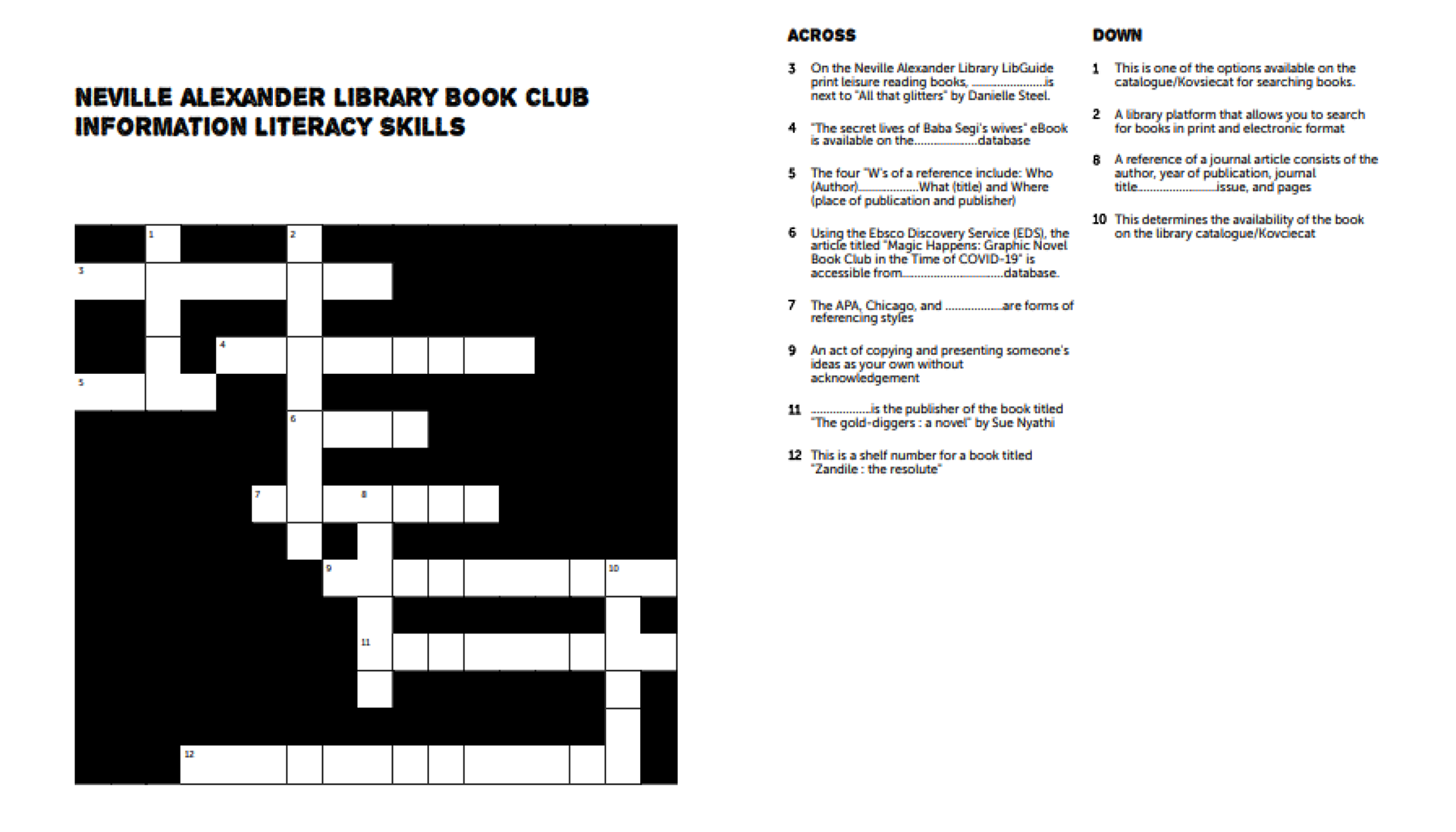
Information literacy crossword puzzle.
Literature review
The reviewed literature provides a reference in line with the study to better understand leisure reading and information-seeking behaviours. It also provides context on skills enhancement, particularly those in line with information-seeking.
Selecting and locating leisure reading materials
Several studies have been conducted focusing on the leisure reading finding and selecting behaviours of users of reading circles and book clubs, and general fiction readers at large (Wilson et al., 2012; Saarinen and Vakkari, 2013; Richardson, 2021). Ross (2021: 107) outlines five elements which contribute to the identification and selection of leisure reading books, which include “the reading experience wanted by the reader; alerting sources the reader uses; elements in a book that the reader takes into account in making book choices; clues on the book itself; and costs to the reader in getting access to a particular book”. These elements are supported by Majid (2018), noting that the selection of books to read was reportedly influenced by ‘interesting topic’ (59.1%), ‘attractive book title’ (41.9%), ‘easy to read’ (33.5%) and ‘colorful pictures’ (32.0%), according to research findings on young people’s leisure reading behaviour in Singapore. The language also plays a fundamental role; however, libraries might not always be able to have a balanced multilingual collection as books in some languages might be challenging to acquire (Bangani et al, 2018). In addition to this, various authors also identify the genre of a book as a contributing factor in book selection (Edmunds and Bauserman, 2006; Merisuo-Storm, 2006). Book club discussions have also been reported to enhance title recommendations and selections among members (Petrich, 2015; Jansen, 2019: 582).
Various authors also provide various methods of searching for leisure reading materials, and they recommend using book reviews, reader advisory programmes, library catalogues and social websites such as Goodreads, Flicker and LibraryThing (Ivey and Johnston, 2013; Huang and Nathan-Roberts, 2019). Library book displays have proven to be very effective in enticing users to identify and select books to read (Larkin-Lieffers, 2013; Calman, 2018). In addition, Mikkoven and Vakkari (2012) note browsing book shelves, displays and returned loans in libraries as ways to find interesting leisure reading books to read.
Reading and skills enhancement
The literature has also provided reference to the relationship between the usage of book clubs for developing and enhancing critical thinking, as these are critical in information-seeking endeavours. (Gorman, 1998; Switzer and Barclay, 2012; Jocius and Shealy, 2018: 692). In a recent study conducted by Alghamdi (2022: 7) among female teachers in Saudi Arabia, the participants reported positively regarding their perceived impact of a book club in enhancing their critical thinking and communication skills for professional development. This is supported by a study conducted to determine the reading culture of university students in Tanzania, which recommended book clubs as establishments for fostering and inculcating critical thinking skills (Wema, 2018: 16). Interestingly, Shenton (2018) states that if librarians accept the argument that reading is the most important information skill, they may reason that even within their IL remit, their priority should be to simply help the child read more effectively. Hughes-Hassell (2008) argue that leisure reading has been found to correlate with achievement in vocabulary, reading comprehension, verbal fluency and content knowledge. Erdem (2015: 3984) also believes that university students are expected to have a strong leisure reading habit, which is one of the criteria of social and individual development in today’s world where education and ‘lifelong learning’ have become essential for professional and career development after formal education and especially adapting to change. These skills are contributed to using and engaging with information effectively as far as IL is concerned. Various studies have also demonstrated the efficiency of book clubs in enhancing the teaching and learning of academic courses and modules (Hartman, 2005; Watson, 2015; Blanton et al., 2020; Landry et al., 2022). This is evident in a study by Wyant and Bowen (2018), where in-person and online book clubs have been used to teach sociological concepts. Scholars have also applied this practice to enhance comprehension of texts for sociology courses (Hartman, 2005: 317; Castellano et al., 2008: 240). Jansen (2019: 357) argues that it is pertinent for librarians to engage students in leisure reading as this can enhance the behaviour of reading for academic purposes. This assertion is supported by Manning (2010), stating that literature circles provide meaningful learning that ensures students can retell, relate, question what they have read and engage in cooperative learning.
Methodology
The study was anchored by a project-based learning (PjBL) model, which used a book club initiative to embed and promote IL. This pedagogical strategy allows students to acquire knowledge and skills through engaging in projects based on issues and challenges they encounter in the real world (Shin, 2018). This model has been utilized in studies concerning information-seeking with positive outcomes (Saliba et al., 2017; Tarasova et al., 2021). Wenger (2014: 142) argues that many of the information-seeking skills that students need to conduct successful research are difficult for librarians to teach due to student overreliance on search engines and the time constraints of one-shot instruction sessions; thus, PjBL is required. This is also supported by a study conducted among North-West University students evaluating librarians as teachers of IL, in which respondents expressed dissatisfaction with one-time instructions and the duration of training sessions (Bangani et al., 2020: 408). The findings of a study conducted by Syakur et al. (2020) reported that this model improved student learning outcomes of English in higher education. The book club members actively learn and engage in IL practices as they select, retrieve and evaluate leisure reading materials. Therefore, within the context of this study, the book club serves as a project for enhancing information-seeking skills through informal facilitation.
The model’s elements of ownership, collaboration, critical thinking and creativity are all aligned with the Neville Alexaner Library’s book club engagements because students could collaborate by sharing book reviews, outline their creativity by providing various perspectives on titles they have read and take ownership of their learning by seeking assistance and engaging with librarians in guiding them to search and locate leisure reading books. This is consistent with the findings of a study conducted by Mofana and Jacobs (2018: 9), who found that respondents (primarily millennials) learn more about IL when engaging and collaborating with their peers. Finally, they develop critical thinking skills essential for increasing vocabulary and constructing relevant search strategies.
In addressing the study’s objectives, a case study design has been used, which involved the analysis of students at the UFS. Focus group interviews and an online survey were used to collect data. An online survey was used to collect quantitative data using LibWizard, one of the library applications offered by SpringShare, and distributed via email and the book club WhatsApp group. The survey was completed by 31 of the 49 book club members, yielding a 63% response rate. The first section of the questionnaire focused on demographic data, such as age, gender, faculty and reading experience. The second section of the questionnaire included six questions relating to the information seeking-behaviours of book club members, with single and multi-point Likert scales used. Question 2.1 looked into the criteria or aspects considered by the members when selecting books to read. Question 2.2 ascertained the platforms and channels used to get title recommendations, followed by question 2.3, which looked into the methods used to locate leisure reading books. Question 2.4 focused on the support provided by librarians in enhancing the members’ leisure information-seeking process skills. Followed by question 2.5, the ascertaining skills enhanced through the book club; lastly, question 2.6 included the comments and suggestions of the book club members. Quantitative data from the survey have been analysed through the LibWizard application as it generates graphs and tables.
To complement the data collected from the survey, a semi-structured focus group interview was conducted with nine book club members, who also completed the survey to get a more in-depth analysis of the phenomenon of the study. This allowed an in-depth exploration of the phenomenon of the study. Data from the focus group interview have been transcribed and conceptualized using an inductive coding approach. Thematic analysis was used. Qualitative data have been represented in direct quotations. This study’s population comprised members of the Neville Alexander Library book club. The researcher received gatekeepers, ethical clearance from the university’s ethical committee and consent from the book club members before data were collected. Ethical norms such as anonymity, privacy, no harm, analysis and reporting were observed.
Findings and discussions
This section reports and discusses the survey findings and the focus group interview.
Demographics
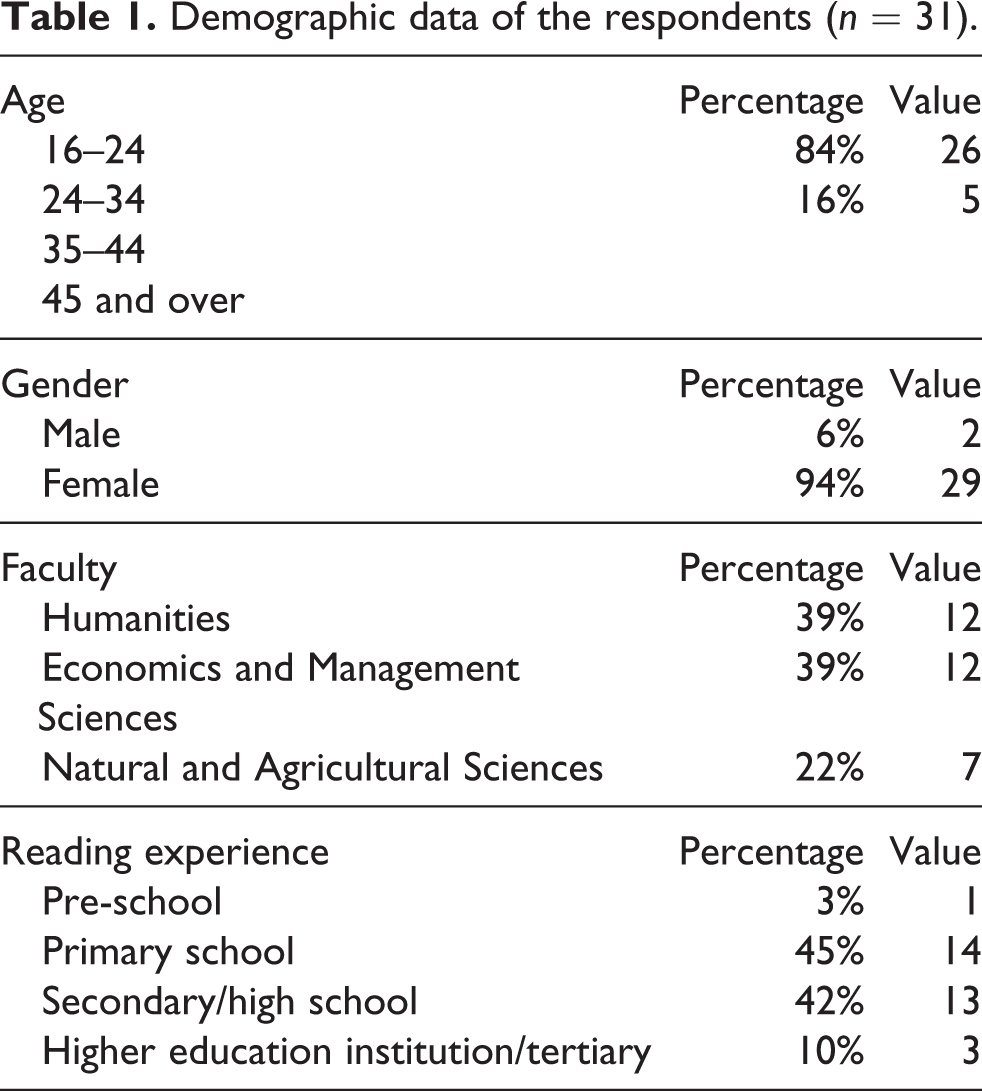
The survey was used to ascertain the perceptions of members regarding the value of embedding IL skills training in the book club. The first section focused on the participants’ demographics, which are depicted in Table 1. The findings show that most respondents are between 18 to 24 and 24 to 34 years old. There were no respondents over 34 years. Regarding gender, females comprised more of the participants (29) than males (2). This is consistent with the results of a study conducted by Erdem (2015: 3985) to determine the leisure reading habits of Ankara University and Erciyes University, in which it was found that most leisure readers were female (64%) and male (36%) in Ankara University and female (59%) and male (41%) in Erciyes University. This has also been reported in the literature, which found that female youth outnumbered males in leisure reading (Hughes-Hassell, 2008: 4). This was expected as the book club only has two male members. All three faculties offered on the campus are well represented in the book club, where the Humanities and Economic and Management Sciences both constituted 12 participants each and only seven participants were affiliated with the faculty of Natural and Agricultural Sciences. The book club has been experiencing challenges in reaching most students in the faculty of Natural and Agricultural Sciences as their academic schedules and practical assessment limits them from participating in extra-mural activities. Therefore, this has allowed librarians to consider embedding the book club in the campus residence halls after hours to ensure maximum reach. The reading experience revealed that most participants started reading for leisure in primary school (14), followed by secondary/high school (13) and higher education/tertiary (3) and finally, pre-school (1).
Demographic data of the respondents (n = 31).
Selection of leisure reading books
To answer the first research question, Figure 2 shows the questions asked of participants about the aspects considered when selecting leisure reading books.
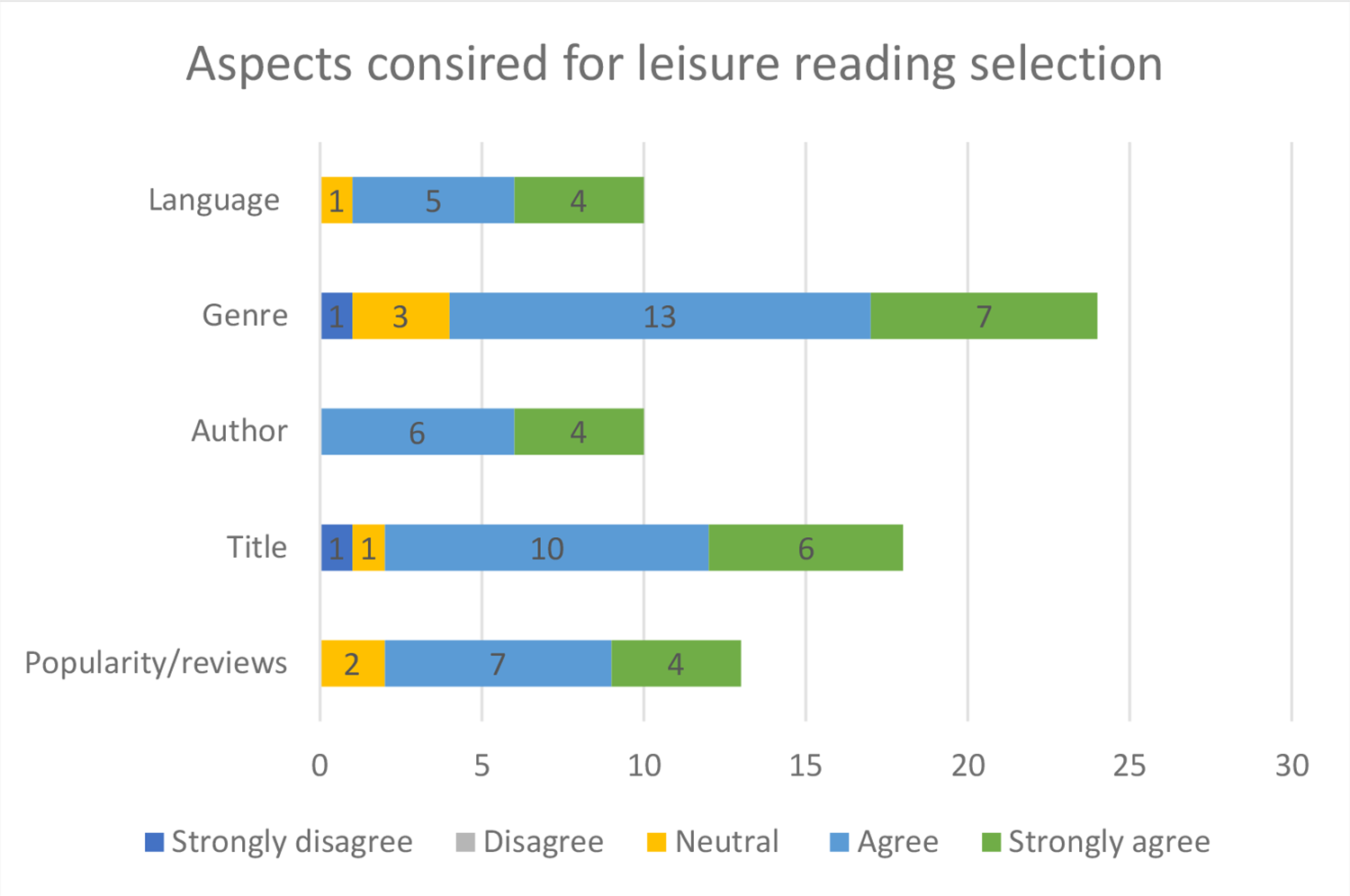
Aspects considered for leisure reading selection.
Based on the findings relating to aspects considered when selecting leisure reading books, a total of (5) participants ‘agreed’ that language is essential. This was followed by (4) participants who ‘strongly agreed’ and (1) selected ‘neutral’. These highlight the importance of languages and their comprehension as a determinant of a book choice. The UFS LIS, in line with its institutional language policy and multilingualism strategy, develops an inclusive collection of resources representing diverse languages approved by the university, including English, Afrikaans, Sesotho, isiZulu and Setswana. Compared to English and Afrikaans, acquiring leisure reading books in South African indigenous languages is challenging due to the library’s procurement bottlenecks and a limited number of authors writing in these languages. This assertion is also supported by the finding of a study conducted by Bangani et al. (2018: 14), which reported that the North-West University Libraries had limited books in African languages due to the institutional procurement policy which limits the purchase of materials from small and self-published authors.
Furthermore, 13 participants ‘agreed’ that the genre of the book helps them choose what to read, (7) ‘strongly agreed’, (4) selected ‘neutral’, and (1) ‘strongly disagreed’. This shows how genre guides readers in determining the type of reading experience they want. These findings are corroborated by the literature, which has demonstrated that adults and students have strong preferences for the books they like and do not like to read and they search according to certain types of books or genres rather than for a particular author (Edmunds and Bauserman, 2006; Merisuo-Storm, 2006). The authors of the books are also considered when selecting books as a total of (6) participants ‘agreed’, while (4) ‘strongly agreed’. 10 participants ‘agree’ that title motivates them in choosing their next read, while (6) ‘strongly agreed’, (1) selected ‘neutral’, and (1) participant ‘strongly disagreed’. This demonstrates how important a good title is in sparking readers’ interest and to intrigue them to learn more about the plot. Lastly, on popularity/reviews when choosing a book (7) participants ‘agree’, (4) participants ‘strongly agree’, and (2) participants were ‘neutral’. This demonstrates how book evaluations and their popularity aid in validating the worth of a book and choosing it. Ivey and Johnston (2013) found that reading engagement was evidenced by widespread talk about books, including spontaneous conversations between students who had selected and read the same book.
The focus group interview responses have corroborated the survey responses’ on how the members select books to read. Their views are quoted below:
I check the reviews; I check the back of the book. The first page and the last page of the book, and I also look at the author, if I have heard great reviews of the author, I can take that book”.
“ehhhh! I am not too sure about that, as I have said that I go and pick based on a title. If I see a title, sometimes a title draws me; as I have told you, I am on a journey on what women write, I just go maybe search for something that is basically painful; that is why I picked the black widow society as my first book because I thought that if there’s a word widow inside means that women lost their husbands, I wanted to know based on what and how did they lose their husbands…stuff like that”.
“sometimes I just look at the cover or the title if it attracts me and the second step is taking the book and reading the summary at the back”.
Book recommendation platforms
Figure 3 shows that an overwhelming majority of 26 participants noted that they get their book recommendations on what to read or what is currently trending on social media platforms such as Facebook, Instagram, Twitter, WhatsApp, TikTok and others, where members of the social media community share their reviews. 19 participants said that they get recommendations from their family and friends. Their close ones are the ones who help them to navigate to their next book or which book to put on their reading lists. A total of 17 participants stated that they got their book recommendations from the Neville Alexander Library LibGuide, where librarians have embedded both print and electronic covers of leisure books. There are links for eBooks, which easily direct the members to the database hosting platforms.
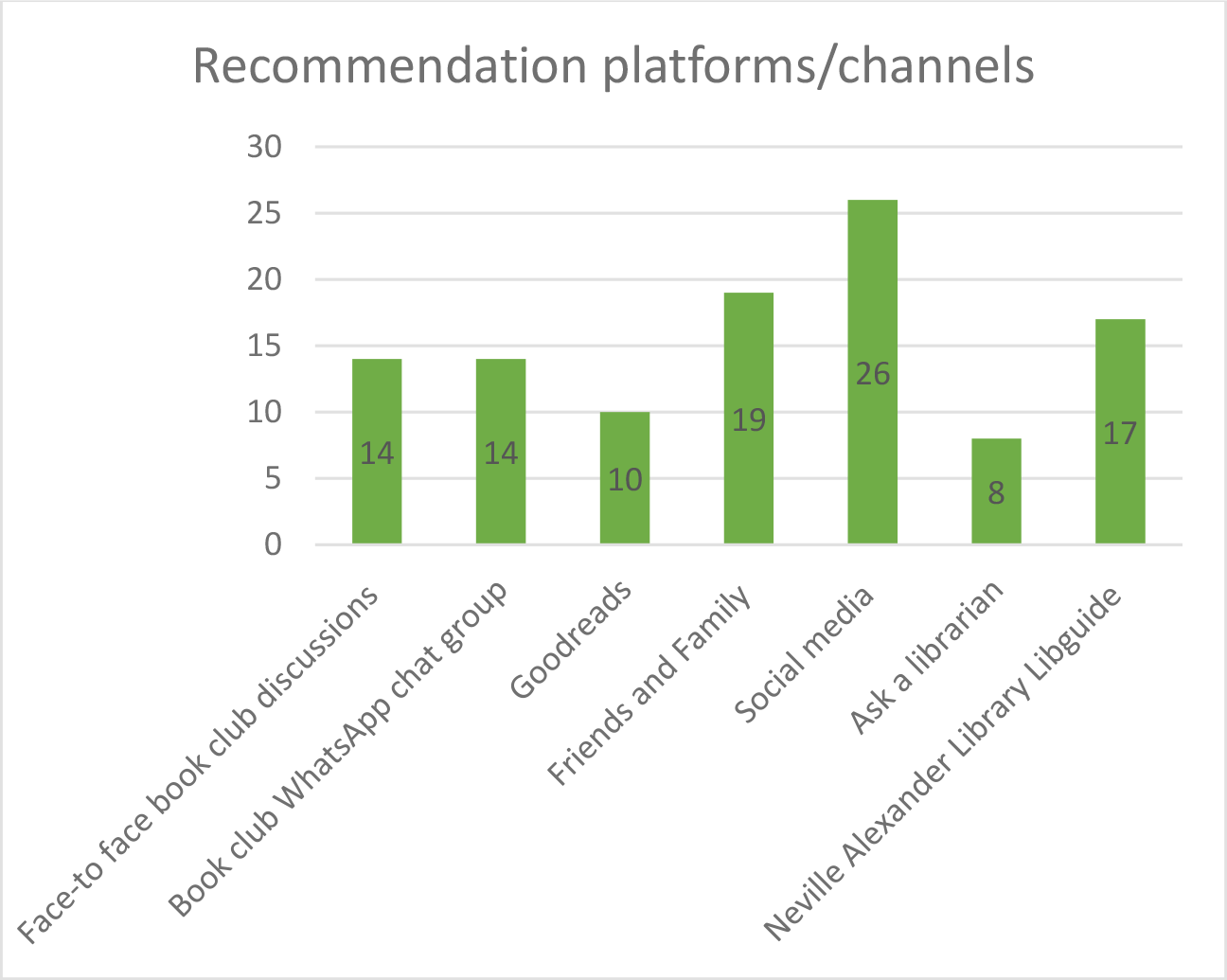
Leisure reading books recommendation platforms.
Furthermore, 14 participants highlighted that they get recommendations from the book club WhatsApp chat group, where fellow members share their reviews, their experiences in the group and their insights from the book storylines, which helps lure the attention and entice members to read the same books. This is followed by the same number of participants (14), that indicated that they get their leisure recommendations during face-to-face book club discussions where participants share reviews of books they have read. 10 participants agreed to using Goodreads as their recommendation platform, providing book reviews and trending, best-selling and award-winning titles. Lastly, the least number of participants (8) stated that they get leisure book recommendations from asking librarians what to read or what is new in the collections. These also coincide with the platforms mentioned in the literature for leisure reading recommendations (Larkin-Lieffers, 2013; Calman, 2018).
There seems to be a correlation between the survey and the focus group results regarding getting book recommendations, selections and searching. One of the interview questions asked how they select books to read and members indicated various aspects that influence their choice of leisure reading materials. The perceived preferred format is usually print as opposed to electronic leisure reading books. In addition, some noted the usage of various methods ranging from book displays, the library catalogue and book reviews to using social platforms such as Goodreads and recommendations from the book club discussions and WhatsApp group. These similar findings have also been reported in the literature (Mikkoven and Vakkari, 2012; Huang and Nathan-Roberts, 2019). Based on these, it is evident that the members are aware of their information needs and which measures they need to implement in accessing relevant leisure reading books. Their responses are as follows:
“There was this title one of the members was talking about…I don’t remember the title but it was…the one with the Zimbabwean woman, the way she was explaining it, it made me interested in reading the book, yah so it goes with the ways the book club member is explaining the book, so now you are there interested, like yoh this person is on their toes about this book, even the way she was explaining Hlomu, I just wanted to read it again”.
“The first one I did on campus, when the library was still operating, so there a lot of books, sitting there so I just went and picked it. I loved the title, so I just picked the book”
“Basically, by listening to other book club members on what books they have read and discussed”
“okay…on a monthly basis we meet up for book reviews and discussions, so if someone is reading a book and it is interesting, that is when I go and look for the book and umh read it. Also on WhatsApp, people…group members tell each other about the books they are reading and yah.”
Methods used for locating leisure reading books
Figure 4 depicts the course of actions that book club members use to locate leisure reading books. Most participants (18) located leisure books through the leisure book display in the library’s foyer. This method of locating leisure books seems the most popular option for book club members to locate books, as they can easily physically browse. This aligns with the literature, where it was reported that book displays entice and motivate users to read extensively and identify titles more likely hidden on library shelves (Larkin-Lieffers, 2013). In addition, a study conducted by Calman (2018: 279) on using bibliographies and displays to motivate extended reading among students reported that 78% of the respondents indicated the usage and reliance of displays to locate leisure reading materials. The use of displays by the book club members may be due to the ease of access as it saves time to search the library catalogue and retrieve them on the shelves. The study’s outcome further indicated that the second most popular course of action for locating leisure books is searching the catalogue/KovsieCat, which comprised (12) of the participants. This option indicates that book club members can navigate through the catalogue to locate their leisure reading material; hence, they can conduct a basic search strategy using the catalogue. 11 of the participants located leisure/fiction books by accessing the Neville Alexander LibGuide, where librarians have embedded print and electronic covers of leisure books that also serve as a virtual bookshelf display. Additionally, 10 of the participants selected the ‘Ask a librarian’ option, which means that they sought assistance locating leisure reading books. The options used by the book club members are also related to those reported in the literature (Mikkoven and Vakkari, 2012; Huang and Nathan-Roberts, 2019).
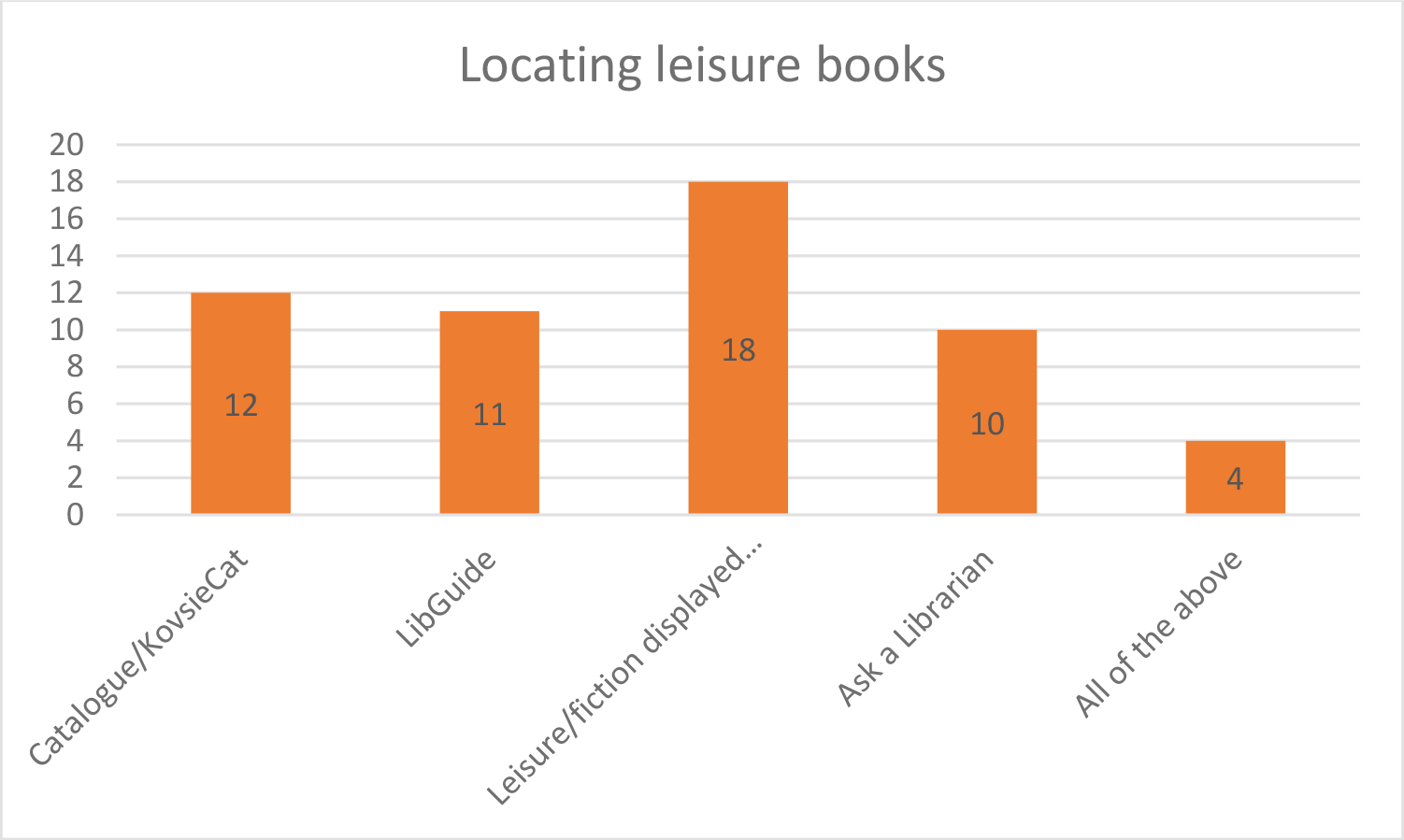
Locating leisure books.
The interview further asked the participants to elaborate on their experience of using the KovsieCat and below were some of their responses:
“I use my catalogue to search for that book if it is available. If it is…I usually do that with my phone in my room and I know that if I go to the library, I will find that book there and sometimes I’m not familiarly with the shelves in the library, I would ask the librarian to help me find that shelf that has the book. But I usually come with shelve numbers”.
“it is helpful, and straightforward, it is not complicated”.
“It is a bit challenging on the phone because you have to make it landscape but on the PC [personal computer] it is good but on the phone, you have to, eix”
Perceived helpfulness of librarians in locating leisure reading books
In alignment with the second research question, Figure 5 demonstrates members’ perceptions of the role of librarians in equipping them with the skills for locating leisure reading books. According to the responses, 27 of 31 participants stated that the librarian’s demonstrations on verifying book titles and checking availability were ‘extremely helpful’, whereas three of 31 participants stated that they were ‘somewhat helpful’, lastly one of 31 participants, unfortunately, stated that librarians were ‘not helpful’ in this regard. This creates an opportunity for the UFS Neville Alexander librarians to strategize on enhancing support to maximize the accessibility of displayed leisure books.
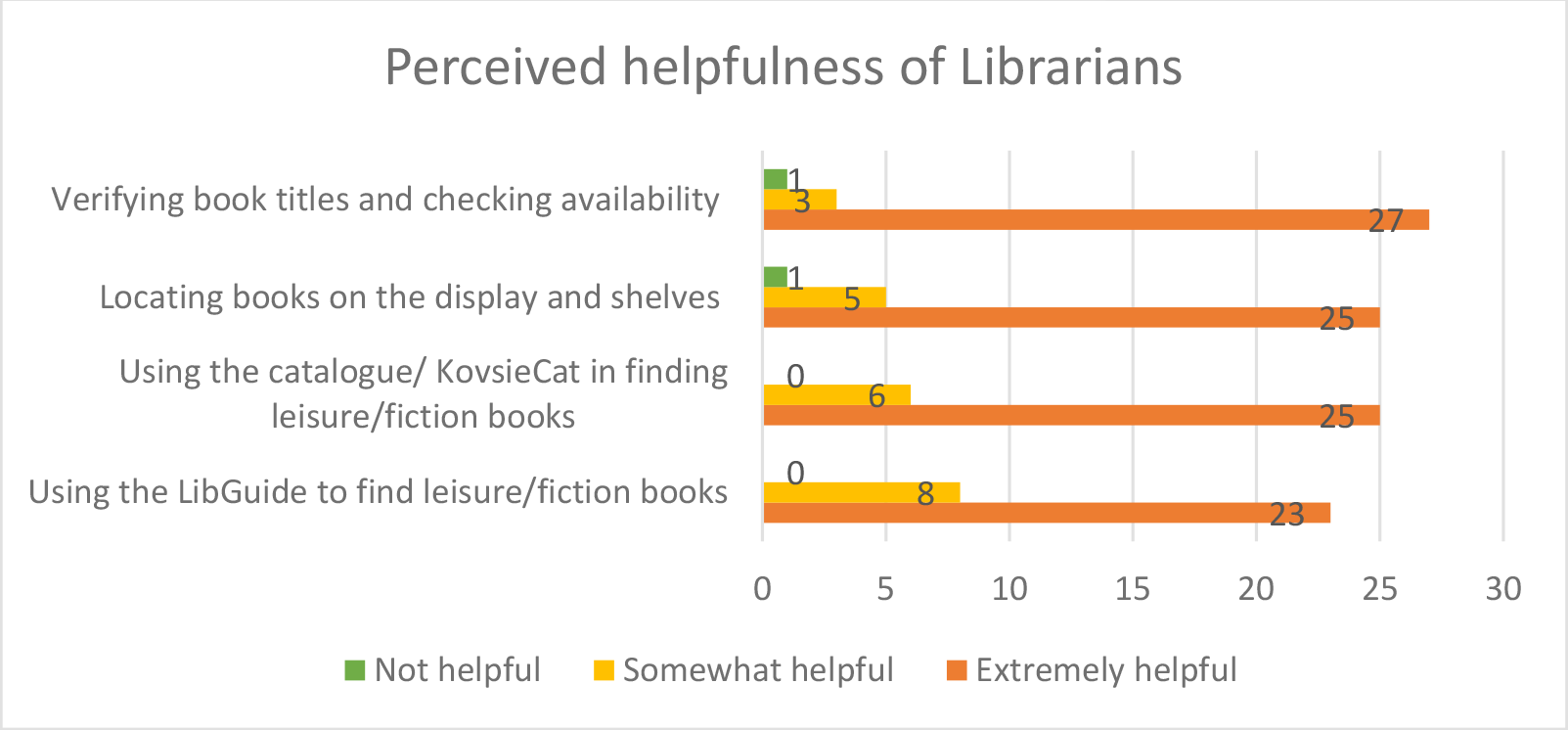
Perceived helpfulness of librarians.
Furthermore, findings revealed that 23 of 31 participants stated that the librarian’s demonstrations regarding using the LibGuide to find leisure/fiction books were ‘extremely helpful’. This is followed by eight of 31 participants who stated that they were ‘somewhat helpful’. This is followed by 25 of 31 participants who stated that librarians’ demonstration on locating books on the display and shelves was ‘extremely helpful’. Whereas five of 31 stated they were ‘somewhat helpful’, and one of 31 participants indicated ‘not helpful’. Further findings revealed that 25 of 31 participants supported that the demonstrations on using the catalogue/KovsieCat in finding fiction/leisure books were ‘extremely helpful’, whereas six of 31 participants indicated that they were ‘somewhat helpful’. These findings also motivate librarians to work harder to enhance the support needed for the members to effectively use the library catalogue for leisure and academic purposes. Lastly, 23 of 31 participants stated that the librarian’s demonstrations concerning using the LibGuide to find leisure/fiction books were ‘extremely helpful’. This is followed by eight of 31 participants who stated that they were ‘somewhat helpful’.
These findings indicate that the members appreciate the librarians’ efforts in equipping them with the skills needed to source and access leisure reading materials. Based on this, it is evident that the members are exposed to sources of information and librarians also raise awareness of the LibGuide, which is one of the resources used to embed informative content to support teaching, learning and research needs. These findings are consistent with the study by Bangani et al. (2020: 411), in which students reported that librarians were very helpful and encouraging during IL training sessions to equip them with the skills necessary to use various information sources and to cite them properly.
The responses from the focus group interview corroborate the findings above. The views about the librarians as helpers in guiding the members to search and cite sources are reflected below:
“I use my catalogue to search for that book if it is available. If it is…I usually do that with my phone in my room and I know that if I go to the library I will find that book there and sometimes I’m not familiarly with the shelves in the library, I would ask the librarian to help me find that shelf that has the book. But I usually come with shelve numbers”.
“most importantly is the borrowing of books, online and using that checking in and out system, yah that is important, citation…remember I asked you about citation on how to automatically do it…so yah that is what I have learnt because we are writing research papers in my course, yah”.
“I used the display and I also asked the librarians about books and then they tell me if it is available or not”.
“uhm there was a quiz that was appointed for us to do, uhm struggling with that quiz I had to come to the library and ask for help and then that’s when…the librarian didn’t tell me the answers but she told me to go through with myself on the website so that I can familiarise myself with it, So the book club, the quiz helped me because now I know how to go about searching for books on my own”.
“I also struggled until the last day and I was let me just go and ask for help”.
“So now im like…I think I texted mme Dina and I said ‘I don’t know if it is allowed but I need help with number 4’”.
Perceived enhanced skills and lessons learned
In alignment with the study’s second and third research questions, Figure 6 demonstrates the participants’ perceptions concerning the book club’s influence on their IL and associated skills. According to the findings, 27 participants indicated that the engagements had enhanced their communication skills. This correlates with the study by Alghamdi (2022: 7), indicating enhanced communication skills among school teachers participating in a book club. This is followed by 23 participants, who deliberated that their comprehension skills have been sharpened. This aligns with what has been alluded to by Hartman (2005: 317), Castellano et al. (2008: 240) and Hughes-Hassell (2008). A total of 22 participants agreed that their creative skills had been positively impacted. Students need to enhance their creative and critical thinking skills, which will sharpen their vocabulary to construct effective search strategies. This is supported by Gorman (1998), arguing that despite the modern emphasis on user-friendly electronic interfaces that involve ‘the minimum of words and typing’, the works to which the searcher is ultimately directed are texts, which make considerable demands on the individual’s reading ability.
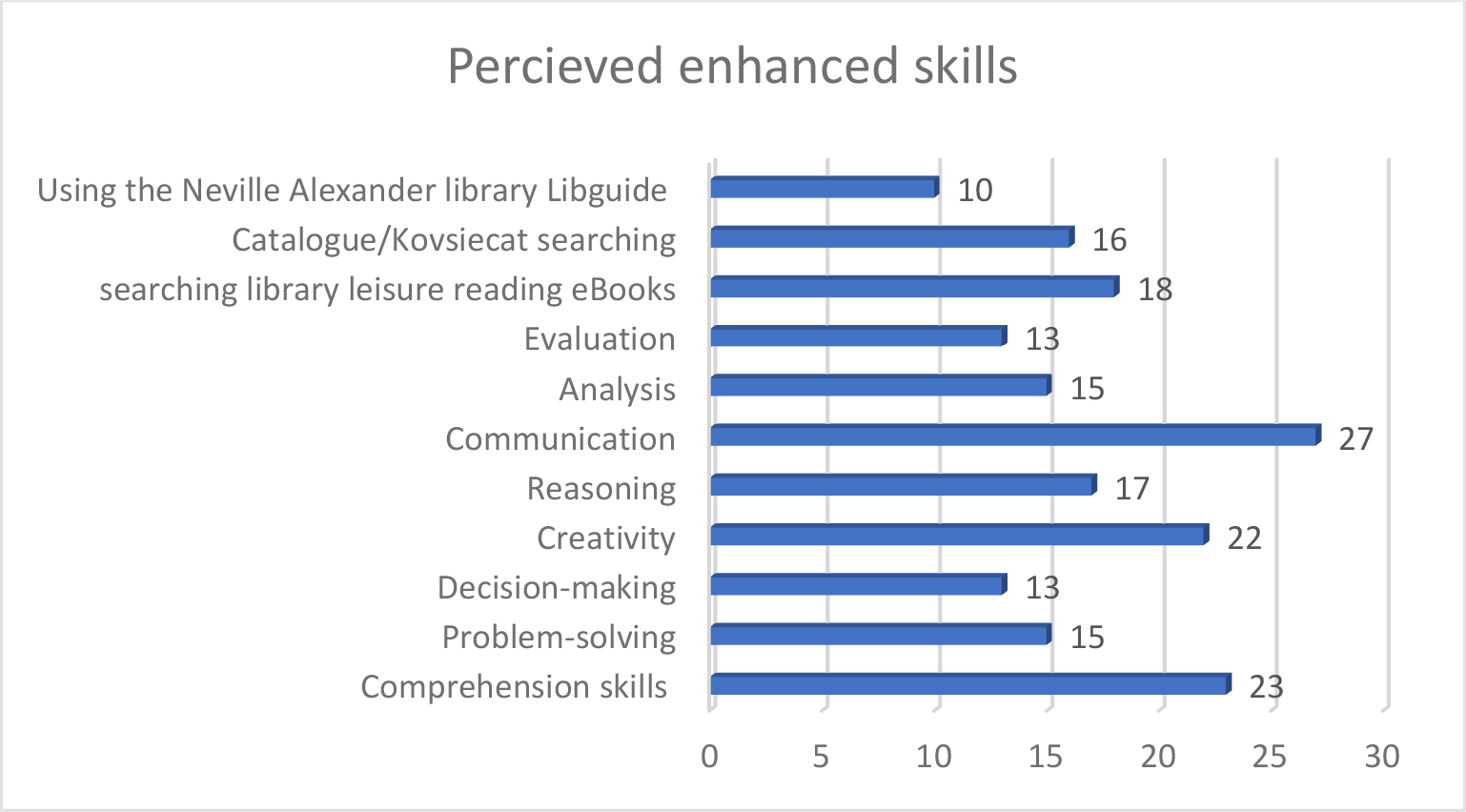
Enhanced skills.
Eighteen participants noted the book club’s contribution to their ability to search for library leisure reading eBooks. This is followed by the perceived enhancement of their reasoning capacity (17) participants. 16 participants confidently stated that their catalogue/KovsieCat searching skills have improved. This is impressive as this demonstrated self-efficiency instead of relying on library staff to assist and search for books on their behalf. 15 participants confidently noted enhancing their problem-solving and analysis skills. There is no doubt that being engaged and reading plays a fundamental role in improving these skills, as indicated by previous studies (Jocius and Shealy, 2017: 692; Wema, 2018: 16). In addition, this relates to Shenton’s (2018: 62) assertion that it may be appropriate to equate the placement of reading within IL with the placement of skills such as critical thinking and problem-solving. The same proportion of participants (13) agreed with the enhanced decision-making evaluation skills. Lastly, 10 participants noted that they had gained awareness and knowledge about using the library LibGuide as links and book covers of leisure print and eBooks have been embedded for easy access.
The responses of the focus group interview have also corroborated these. Some participants also referred to the structured crossword puzzle competition activity (Figure 1). Their responses indicate that they learnt to search for information on various platforms such as library databases, KovsieCat (catalogue), LibGuide, referencing, lending of books and self-checkout machine. Below are some of their responses:
“Database, I am like what is this? I know two questions out of the puzzle that were about databases, I am like what is a database? I don’t know what is going on. I remembered some time ago, I think it was a Wednesday, that is when I came to confirm the venue and then I spoke to Tebogo about what a database is and then she told me how to go about it, if you doing research on something or doing an assignment this is where you go and if you need this and that this where you go and I am like all this time”
“I have never used the catalogue. I have never used it because I remember last year when it was the Covid-19, for me personally nothing was happening so I was living in liberty and nothing really was happening .so we didn’t know about libraries because I remember the prime of liberty and I we are close friends so we also talking about if it wasn’t for Covid maybe we could go to the library and ask to be library assistants because we would literally sit around and do nothing besides academics, so yah I was really happy to see so much information and everything that you can get just from the library website”.
“It improved a lot; I did not even know there was EBSCOhost database, even KovsieCat”
“Most importantly is the borrowing of books, online and using that checking in and out system, yah that is important, citation…remember I asked you about citation on how to automatically do it, so yah that is what I have learnt because we are writing research papers in my course, yah.”
umh I have learnt to use the kovsiecat/catalogue to search for books and if I want to find information like…if I have an assignment and I need information, articles and stuff, I was taught by the librarians on how to go about it on the UFS library website and if I need information about the book publication, book publisher and all of those stuff…so yes.
Conclusion and recommendations
Leisure reading plays a fundamental role in acquiring various skills relevant to students in higher educational institutions in enhancing teaching, learning and research endeavours. One-shot IL sessions that the UFS Neville Alexander Library conducted are insufficient to engage students on crucial aspects needed to acquire skills to be effective information users to support teaching, learning and research needs. Undoubtedly, the students’ information-seeking and usage behaviours are indicators of gaps and skills in making use of the library’s information resources and facilities. Therefore, this study has ascertained, without a doubt, that the book club members have been made aware of strategies to implement when searching for resources from the library. We conclude that book clubs are an effective pedagogical tool because of their flexibility and ability to foster student engagement and higher-level thinking. The members have been able to enhance their information-seeking skills through collaboration with both the librarians and their peers while at the same time engaging on reading for leisure. This confirms the applicability of the PjBL model.
Regarding the findings, the study recommends the informal embeddedness of information-seeking skills in extra-mural activities and not only strategizing in formal university structures to enhance their facilitation practices. Librarians should step out of their comfort zones and reach out to students widely. The study can be used to motivate the development of book clubs to enhance library services beyond leisure reading. This platform can enhance creative writing, debates and innovative thinking aligned with the creative element of the PjBL model anchoring this study. The study further recommends reinvention of the library and information sciences curriculum to embed IL pedagogy to ensure that librarians are equipped with the knowledge to effectively apply various methodologies in facilitating this phenomenon.
Footnotes
Declaration of conflicting interests
The authors declared no potential conflicts of interest with respect to the research, authorship, and/or publication of this article.
Funding
The authors received no financial support for the research, authorship, and/or publication of this article.
