




Abstract
This study describes and compares the minimum educational requirements of library and information science programs offered in Croatia and the USA. The article adds to previous research in comparative education and comparative librarianship. The findings show notable differences and similarities between the two countries. The library and information science educational path in Croatia is more structured, requiring a Bachelor’s degree in addition to a Master’s, as well as postgraduate licensure. The USA typically only offers graduate degree programs in the field. Library and information science programs in both countries are generally flexible and highly customizable. Both countries require several foundational courses in librarianship, however, Croatian programs place greater emphasis on technology and collection management curricula. In contrast, library and information science programs in the USA require more managerial coursework and offer students increased flexibility in terms of course choice. This article may assist library school educators in evaluating their programs to address current and future professional needs.
Keywords
Introduction
Five librarians from the University of Split and Pennsylvania State University (Penn State) formed a research team, which started as part of the Penn State University Libraries Sister Library Program within Penn State’s Global Engagement Network. The program began in 2016 and continues to facilitate intercultural programs, collaborative research projects, and other initiatives on a global scale between member institutions. Facilitated by the Head of Global Engagement Initiatives at Penn State, the authors met to discuss shared research interests and the similarities and differences of the profession in each country. These discussions naturally led to topics related to librarian education. Noting common practices shared between us and acknowledging a few major differences, the group decided to conduct a formal comparative study of the education of librarians between the two countries. The Croatian library education system experienced significant change following its Yugoslav period and the country’s signing of the Bologna Declaration in 2001, which prompted its participation in the European Union’s Bologna Process. These changes not only affected higher education across the European Union generally, but also librarian education in Croatia specifically (for further reading, see Horvat, 2005).
Comparisons and contrasts between the US librarian education system, with over 100 years of established practices and evolution, and the much younger Croatian system could yield beneficial information for librarianship in both nations. The primary focus of this article is to compare the minimum educational requirements for library and information science (LIS) programs offered in Croatia and the USA. The authors believe that a comparative study such as this may highlight notable curriculum commonalities and differences that may be of particular interest and use for library hiring managers, potential students, and “library school” educators and administrators around the world.
Literature review
Why compare?
Lor (2019: 73–74) traces international comparative librarianship to the 1970s. Simsova and MacKee (1970: 11) trace it even further back to Chase Dane’s 1954 article “Comparative librarianship.” Foskett’s (1976) Reader in Comparative Librarianship demonstrates that there was a critical mass of literature on comparative librarianship (and demand) to produce that volume.
The roots of comparative librarianship come from many fields, but for the purposes of this article, comparative education is likely the most important. Comparative education is a well-established field, with journals in that subject existing since the 1950s and an international body, the World Council for Comparative Education Societies, founded in 1970 (Lor, 2019: 74). Simsova and MacKee (1970: 13) noted that comparative education “has existed for over a hundred years [now 150 years] and has a well developed methodology, which can be applied without difficulty to comparative librarianship.” In Dane’s seminal article mentioned above, he defines comparative librarianship in relation to other areas of comparative study: It is a study of library development in many countries to discover what developments have been successful and can be copied elsewhere. It is an examination of the philosophies and policies of librarianship on an international scale to determine long-range trends, to appraise shortcomings, and to uncover contradictions and inconsistencies between theory and practice. Above all it is the study of cause and effect of library development throughout the world. Like comparative anthropology and comparative religion, comparative librarianship seeks to broaden our tolerance and deepen our understanding. (Dane, 1976: 23)
The current article focuses specifically on LIS education in order to compare what students in Croatia and the USA are learning in their programs. Further, Lor (2019: 77) cautions that “comprehensive comparative” studies of all facets of librarianship across two nations or more are largely “too ambitious for successful realization.” LIS education is an ongoing and lively topic in comparative librarianship. Examples of recent comparative studies on LIS programs include “Challenges in LIS education in China and the United States” (Xue et al., 2019) and “A comparative study of LIS accreditation frameworks in Australia, New Zealand, United States, and Canada” (Gibbons and White, 2019). As to the importance of this work, once again Dane (1976: 25) has an optimistic but compelling answer: “[p]robably the greatest benefit of comparative librarianship concerns the exchange of ideas which would result from such a study. The vitality of any science depends to a large extent on the free flow of ideas between scientists.”
The review of the literature found no comparative studies of librarianship between Croatia and the USA.
Why the core curriculum?
With a vast number of elective courses offered by LIS programs, it is difficult to say with any certainty what a student might have learned in the course of their study. This is even without delving into the vagaries of what courses in the catalog were offered during the time a student was enrolled. However, researchers have examined the core curriculum (also known as “required courses”) as a way to understand what topics students are likely to have encountered during their LIS program, as well as providing a glimpse into what each program has determined to be central to the education of students. As Chu (2012: 8) writes: “Required courses, known as the curricular core, represent the essentials that must be taught in a degree program.” Hall (2009: 57) reasons that by “investigating the core curriculum in both structure and content, we can develop an idea of what fundamental knowledge, skills, and abilities the average LIS graduate can be expected to possess.” In addition to general and historical examinations of the core curriculum (see Burton, 2016; Irwin, 2002; Marco, 1994; Markey, 2004), researchers have used the core curriculum to examine specific aspects of LIS programs, such as diversity and social justice (Kumasi and Manlove, 2015).
Methods
Data collection
The researchers initially sought to complete a comparative mixed-methods study on all graduate-level accredited LIS academic programs offered by colleges and universities within Croatia (N = 3) and the USA (N = 53). The research team divided into two groups, by country of employment (Croatia and the USA), to collect respective data. Because most information about LIS programs within each country is reasonably up to date and made publicly available by the degree-granting institutions, the researchers used the colleges’ and universities’ websites as data sources. A list of institutions that offer American Library Association (ALA)-accredited Master’s programs in the USA was found on the ALA’s website. 1 Similarly, Croatian institutions were identified from the official register of accredited programs in the Republic of Croatia. 2
Askey (2010: 202) notes that comparing the educational systems of different nations, even in a particular discipline, is difficult as “one must generalize to avoid bogging down in endless details…Nevertheless, there are discernible patterns and trends worthy of commentary.” After a few meetings, the researchers confirmed this analysis through the identification of major differences, at the country level, in the path to professional librarianship that would impact data collection and analysis. Notably, students who become professional librarians through Croatian programs often study LIS at the undergraduate level as a prerequisite to Master’s programs (although this is not required), whereas, in the USA, a Master’s degree in LIS combined with any undergraduate degree is the standard for professional librarian employment. After identifying this difference, the research team focused only on the minimum curricular requirements of the professional librarianship programs in each country. This meant that the Croatian team gathered data on LIS programs at both the undergraduate and Master’s levels. Since no professional librarian programs at the graduate level in the USA require students also to have an undergraduate degree in LIS, the US team only collected data at the Master’s level. Professional librarian positions in the USA and Croatia rarely, if ever, require a doctoral degree from LIS programs, therefore they were not included in this study.
In order to compare minimum curricular requirements, the researchers gathered data primarily about the core or required courses at each institution. In addition to comparing the minimum curricular requirements between the two countries, the authors also include data about the institutions’ tracks, specializations, and areas of concentration as a way of describing the curriculum more completely. Program tracks, concentrations, and areas of study will be referred to as “concentrations” throughout the remainder of this article. The authors included data about concentrations that are officially recorded as well as ones that are not officially recorded on students’ records (transcripts). Data about certificate programs was not included, because they are optional for students, vary widely in focus, and often require additional credit hours.
The following data points about each individual LIS program were collected: Type of term (quarter or semester); Titles, abbreviations, and descriptions of each required course (labeled “core” or not); Count of required courses coded within each ALA (2009) Core Competency; Capstone or portfolio requirements (if any); Internship or practicum requirements (if any); Thesis requirements (if any); Minimum sum of required credits for graduation; Total sum of all course credits for graduation; Percentage of required course credits out of minimum sum of required credits for graduation; “Flexible” core status; List of tracks, concentrations, and/or areas of specialization (official or unofficial, not including certificate programs).
Data analysis
During the initial discussions regarding this investigation, the ALA’s (2009) Core Competences of Librarianship emerged as a strong contender for a comparative baseline between the two countries. After thoughtful consideration, the Croatian authors determined that not only was a comparison possible but the document also closely aligned with the LIS programs offered in Croatia. Therefore, the entire research team selected the ALA’s (2009) Core Competences of Librarianship as the ideal and primary frame of reference for this investigation. The course descriptions were used as data sources to code the required courses from all of the institutions included in this study. The required courses were coded into the following categories: 1. Foundations of the Profession 2. Information Resources 3. Organization of Recorded Knowledge and Information 4. Technological Knowledge and Skills 5. Reference and User Services 6. Research 7. Continuing Education and Lifelong Learning 8. Administration and Management. (American Library Association, 2009)
Due to the disparity in the number of institutions and the number of elective courses offered between the two countries, the US authors chose to analyze and compare elective courses on a much broader level than the Croatian authors. Since US students often choose elective courses based on their anticipated career path, the research team decided not to code electives at the course level. Instead, they decided to list and code the institutions’ concentrations as a proxy for analyzing elective courses. The Croatian authors were able to code elective courses based on the Core Competences due to their smaller number of institutions.
Data storage
The two research teams’ data and files were securely stored and shared among the researchers using the cloud-based storage service Google Drive, which was provided by Penn State University.
Ethical considerations
Since this research did not involve human subjects, the researchers concluded that a review by an institutional review board was not necessary. At the onset of this research project, the authors considered the possible bias in categorizing courses offered in Croatia using the ALA’s (2009) Core Competences of Librarianship. As mentioned above, because most of the courses offered in Croatia closely aligned with the ALA’s Core Competences, the authors from Croatia decided that this document was an appropriate and useful comparison tool to be used among the entire research team. This article is written in English to reach a wider audience. A reference list of Croatian-language articles is provided in Appendix 1 for interested readers.
Results: USA
The US authors analyzed 53 institutions offering ALA-accredited Master’s programs in the USA. The majority (49) of these institutions have a menu of selections for core courses. This will be referred to as “menu core” throughout the article. The institutions were coded as “menu core” only when students could select between several courses in one competency to meet a core requirement and the option of courses had the same number of credit hours. For example, the University of Iowa allows students to choose between the courses 6110 (Evidence-Based Practice) and 6170 (Organizational Management) to meet the Administration and Management requirement. The remaining four institutions (University of Hawai’i at Mānoa, University of Michigan, Rutgers, and University of Washington) were coded as “flexible core.” Flexible core occurs when there is no set path to a degree.
Term type and core credit hours
Of the 49 institutions coded as “menu core,” 46 (93.9%) had semester terms and 3 (6.1%) had quarter terms. The 4 flexible-core institutions followed a similar pattern, with 3 (75%) with semester terms and 1 (25%) with quarter terms.
The core credit hours were separated by term type to accurately compare the average number of hours required to complete a degree. Table 1 shows the average number of hours for core courses, total number of hours to complete a degree, and percentage of core credit hours to total credit hours.
US credit hours.
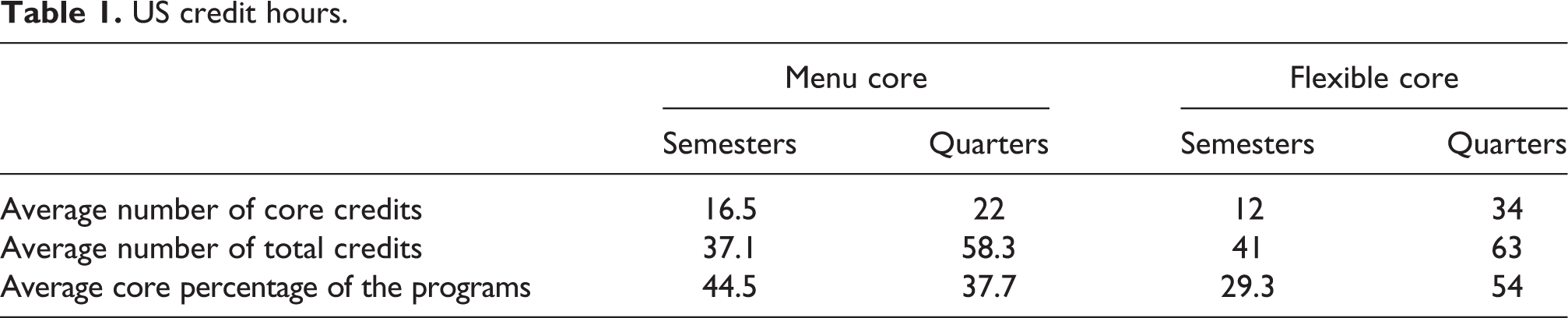
For menu-core institutions with semester terms, the number of core credit hours ranged from 6 (University of Illinois Urbana-Champaign and University of Texas at Austin) to 31 (University of Southern California). The total number of credit hours ranged from 36 (32 institutions) to 58 (University of North Carolina at Chapel Hill). Menu-core institutions with quarter terms ranged from 19 (University of Denver) to 27 (University of California, Los Angeles) core credit hours, and 45 (Drexel University) to 72 (University of California, Los Angeles) total credit hours. For flexible-core institutions with semesters, the number of core credit hours ranged from 6 (University of Michigan) to 21 (University of Hawai’i at Mānoa), and the total credit hours ranged from 36 (Rutgers) to 48 (University of Michigan). The University of Washington is the only flexible-core institution with quarter terms (see Table 1).
Competences
The competences of the required courses at the menu-core institutions can be seen in Figure 1. Since the authors deemed the number of courses that fell within each competency to be important, the data was not separated by term type.
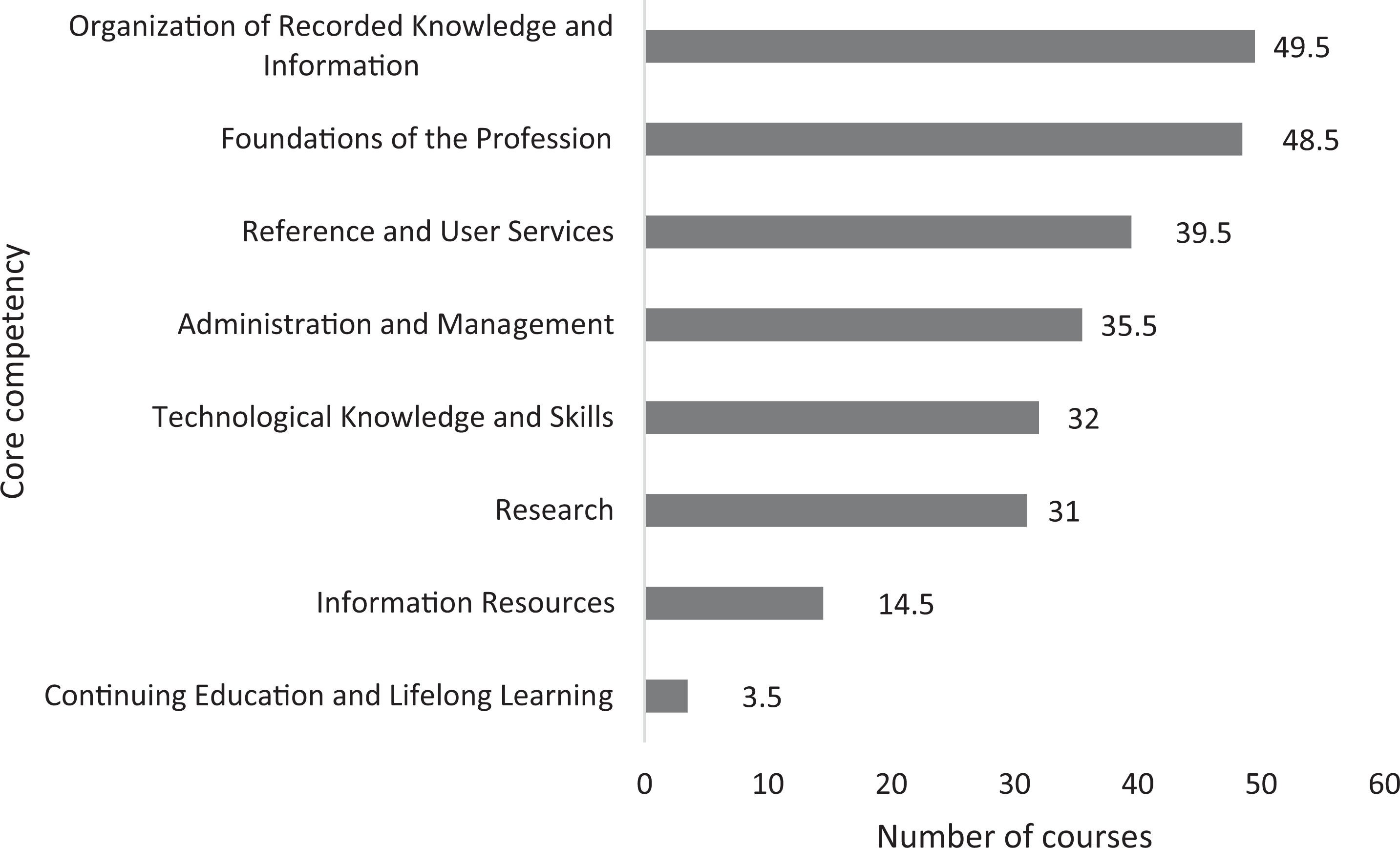
US menu-core competences.
The Organization of Recorded Knowledge and Information competency is reflected at all 49 institutions, with 49.5 courses (101%). Note that the percentage is over 100% due to some courses fitting into more than one competency. The Continuing Education and Lifelong Learning competency was the competency with the least number of courses, at 3.5 (7.1%), and the median competency was Administration and Management, with 35.5 courses (72.4%).
The composition of competences that an average librarian could obtain from a Master’s degree in LIS in the USA can be seen in Figure 2.
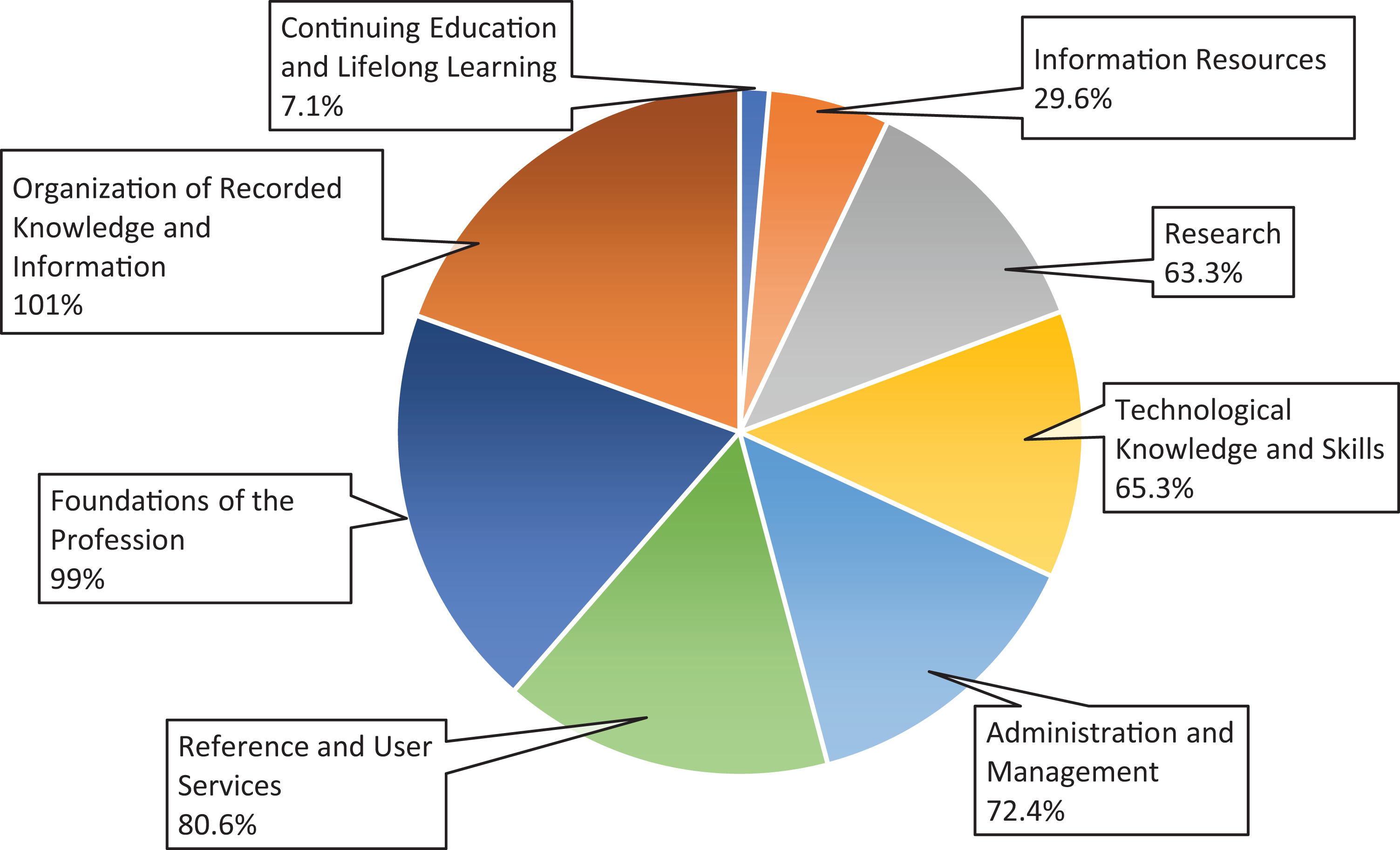
Composition of average US librarian competences.
Other degree requirements
While most US institutions only require the completion of a set number of credit hours to obtain a Master’s degree in LIS, several have additional requirements. The most common requirements are a capstone or portfolio that demonstrates the culmination of the student’s work throughout the degree program, an internship or practicum where students work in an operating library for credit, or a thesis consisting of long-term personal research. The number of institutions requiring these additional degree requirements can be seen in Figure 3. Of the menu-core institutions, 44.9% require a capstone or portfolio, 26.5% require an internship or practicum, and 14.3% require a thesis as additional requirements to complete a Master’s degree.
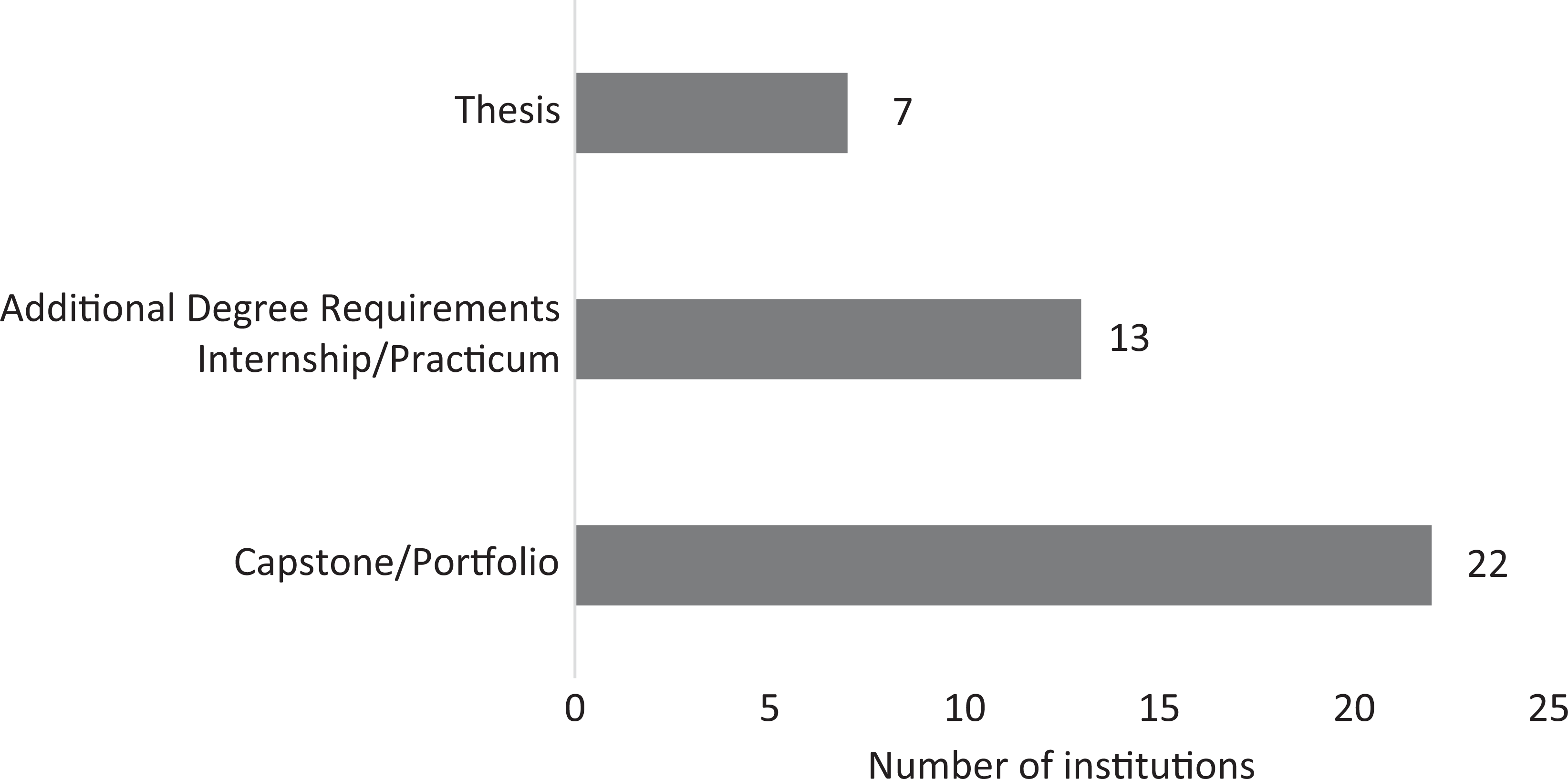
Other US degree requirements.
Concentrations
Due to the number of US institutions, the current study follows Chu’s (2012) method of examining “elective courses…through the lens of concentrations or specializations that are also known as tracks,” since it was infeasible to analyze and code the non-required courses for the ALA Core Competences. Additionally, while these courses are available to students at the institutions, without enrollment statistics for each course, it is difficult to determine if students were actually taking these courses. Despite this, the authors were interested in developing a picture of the average US librarian. All the institutions studied provide a grouping of elective courses based on a concentration of librarian study, and the authors used these as a proxy for describing the courses. While these concentrations exist and often provide a path for students to follow in obtaining their degree, it is rare for the completion of these concentrations to appear on a student’s transcript or diploma. In Figure 4, it can be seen that 92.5% of the institutions (49 out of 53) offer a Public Librarianship concentration, whereas, at the other end of the spectrum, only 7.5% (4 out of 53) offer a concentration devoted to Information Literacy. The median concentration is Academic Librarianship, with 45.3% of the institutions (24 out of 53) offering such courses.
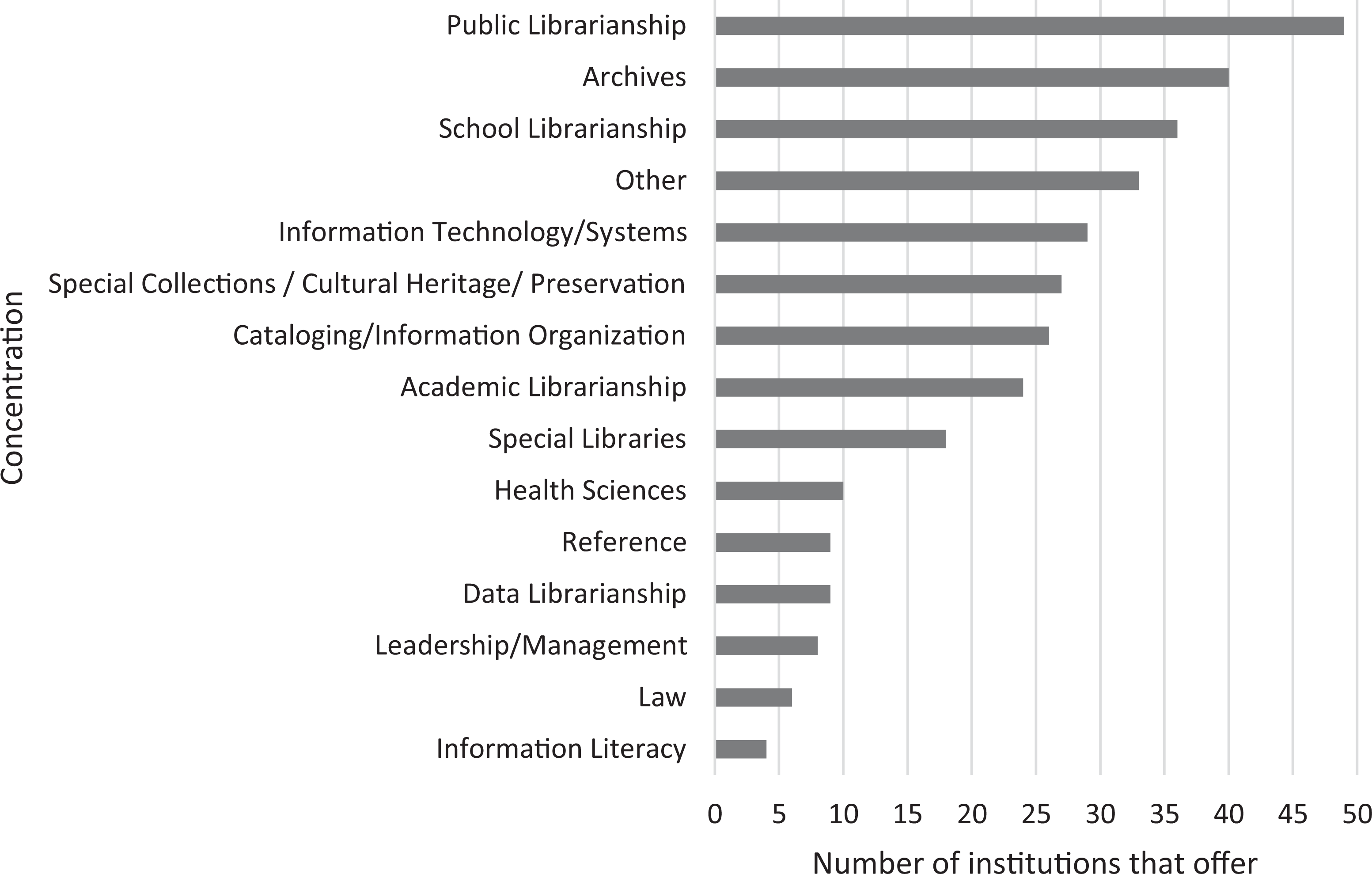
US academic concentrations.
Flexible core
The researchers found that the core curricula at four schools (University of Hawaii at Mānoa, University of Michigan, Rutgers, and University of Washington) emerged as outliers. The core courses at these schools were conspicuous in the data set either due to their flexibility or because multiple course options did not clearly align with the ALA’s Core Competences of Librarianship. Instead, some course options appeared to fall under more specialized categories. For example, at the University of Hawai’i at Mānoa, LIS 662: Asian Informatics was one of the core options that seemed more specialized in comparison to the core courses within the majority of LIS programs. At Rutgers, one of the required courses was titled “Colloquium in Library and Information Studies,” which could cover a variety of topics during a given semester. Also, at Rutgers, students were able to choose two out of four “foundational” courses among other requirements. The four aforementioned foundational courses at Rutgers were aligned with the ALA’s Core Competences. However, because of the program’s flexible nature, it appeared that students could essentially personalize a significant portion of their core requirements. For these reasons, the researchers could not make one-to-one comparisons between the core curricula at these four universities and the other LIS programs. Ultimately, using only course descriptions as data sources, the researchers were not able to determine which courses the average student completed after fulfilling the core requirements in these schools’ programs. In these outlier cases, the authors labeled the curricula as “flexible core” and their data was not included in the comparative data sets and graphs. It should be noted that these schools appeared to offer courses throughout their programs that did in fact seem to cover all of the ALA’s Core Competences, but not necessarily within the core curriculum.
Academic title
The academic title obtained on the completion of a degree program is typically Master of Science in Library and Information Science. US academic librarian status is usually not regulated by state or national bodies.
Results: Croatia
The Croatian authors analyzed three institutions—University of Osijek, University of Zadar, and University of Zagreb—where LIS degrees are offered. At the Bachelor’s and Master’s levels, Zagreb and Osijek have single and double major options, whereas Zadar has only a single major option.
The requirements to complete a degree are expressed as European Credit Transfer and Accumulation System (ECTS) credits, and the workload at the Bachelor’s level is similar at all three schools. Table 2 shows the minimum number of credits required at each Croatian institution and includes both mandatory and elective credits.
Croatian ECTS credit hours.
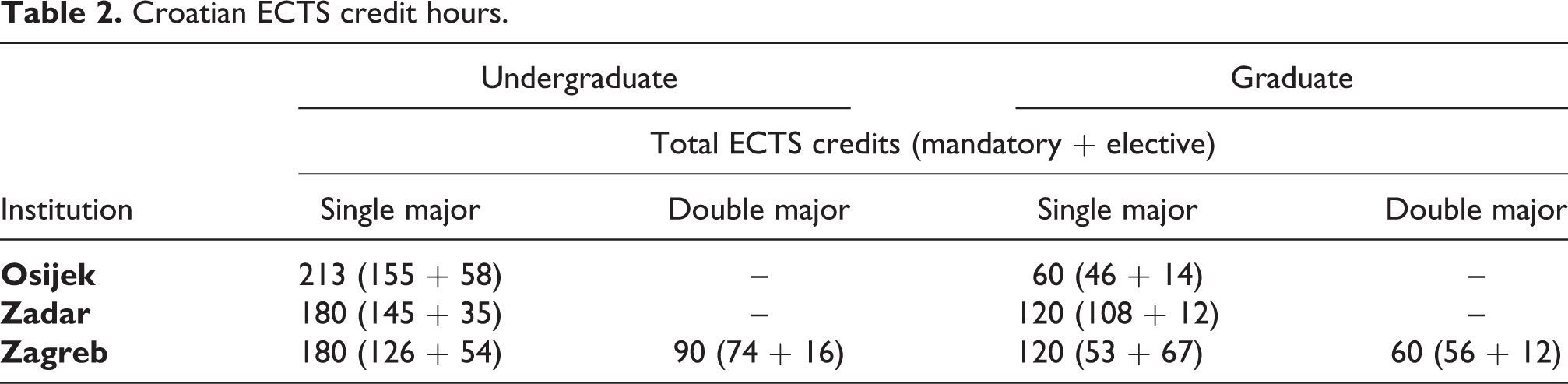
In addition to courses matching the ALA’s Core Competences of Librarianship, every program has a group of courses that are categorized in this research as “General Education” (foreign languages, physical education, logics, etc.), which are mandatory at the undergraduate level but electives at the graduate level. The required courses at the undergraduate level are predominantly focused on two ALA competences—Technological Knowledge and Skills and Foundations of the Profession—and on the above-mentioned non-ALA competency of General Education (see Figure 5).
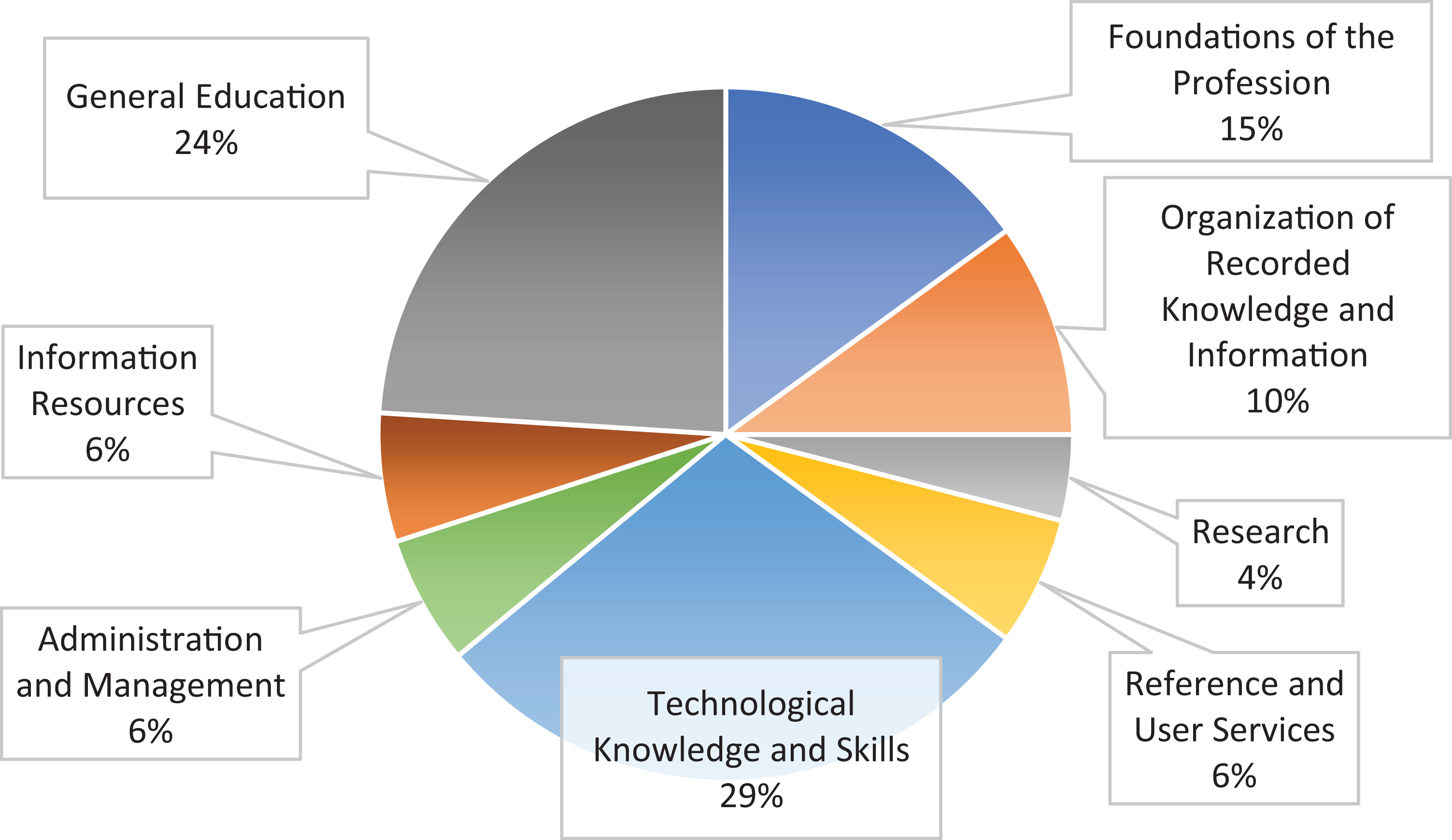
Croatian competences at the undergraduate level.
Although the percentages of credits obtained through the electives vary (17% to 30% of 180 courses in Zagreb, 19% in Zadar, and 27% in Osijek), these courses are mostly oriented to building the same set of competences as the required courses: Technological Knowledge and Skills (24%), Foundations of the Profession (19%), and General Education (15%).
Statistics (data for 2017–2018 and 2018–2019) regarding the continuation of LIS from the undergraduate to the graduate level show that 68% of students obtain only a Bachelor’s degree in this field and go on to pursue a different Master’s degree. The profile of students enrolled in graduate programs differs between the universities: in Osijek, 65% of students have a Bachelor’s degree in librarianship, in Zadar 36%, and in Zagreb only 14% (meaning 86% of students have a Bachelor’s degree in other disciplines).
At the graduate level, the minimum number of ECTS credits is 120 for single majors and 60 for double majors, and the percentages of required courses differ significantly. Required courses account for 90% in Zadar and 44% in Zagreb (for the single major option), and the remainder of the credits are obtained through elective courses. Competences related to Continuing Education and Lifelong Learning and General Education are completely excluded from the mandatory requirements. The required courses are exclusively oriented to the Information Resources and Reference and User Services competences. The distribution of the competences is shown in Figure 6.
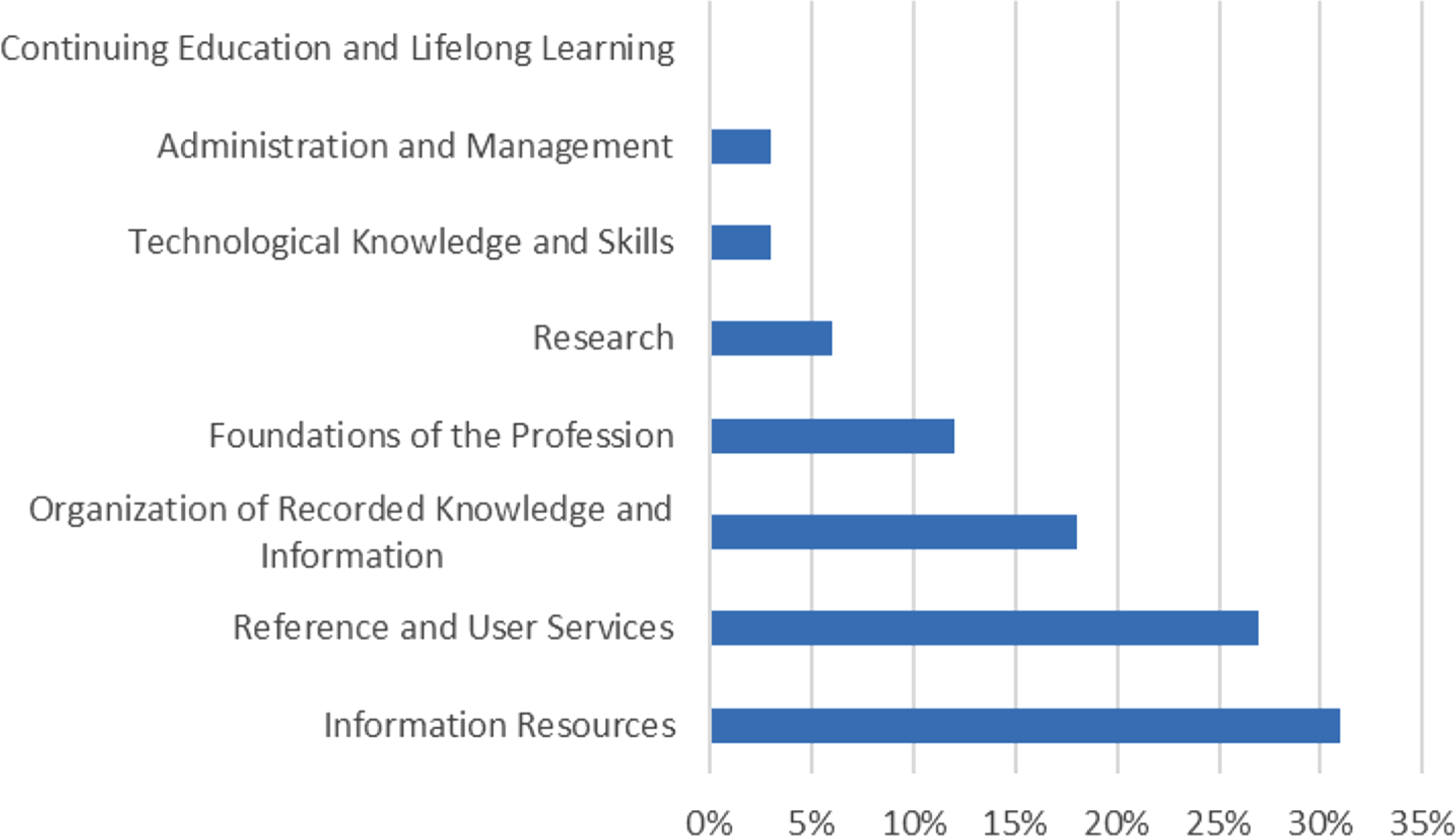
Croatian core competences at the graduate level.
Although it was not possible to gather statistics regarding the demand for each of the elective courses, it is still illustrative to mention the general orientation of these courses: they are focused on the categories of Foundations of the Profession (27%) and Technological Knowledge and Skills (22%).
Other degree requirements
All three institutions require an internship or practicum to complete the degree. At Zadar and Zagreb, a practicum is mandatory for students at both the undergraduate and graduate levels, but at Osijek it is only required at the undergraduate level. A thesis, on the other hand, is only required for those who have chosen a single major option since those who choose a double major may complete their thesis in the other subject area instead of LIS.
Academic titles
At both the universities of Zagreb and Osijek, Bachelor of Information Sciences and Master of Information Sciences programs are offered. The University of Zadar offers Bachelor of Librarianship and Master of Librarianship programs. Although this article does not include analysis of doctoral-level studies, a third title—PhD in Information and Communication Sciences—illustrates the extent of the Croatian library nomenclature.
After obtaining an undergraduate and graduate degree and completing a year of apprenticeship, a librarian must pass a state qualifying examination (a professional license examination regulated at the national level) to be employed in any library position. A licensing examination is common for many professions in the public sector in Croatia. For library professionals, the examination is organized by the Ministry of Culture and Media or by the Ministry of Science and Education, depending on the type of library a candidate is employed in. The credential does not need to be updated and is not determined by formal education courses.
Discussion
Similarities and differences in the educational path that Croatian and US students follow in becoming librarians were discovered in this research, and a comparison can be seen in Figure 7. Before delving into the specifics, some broad comparisons need to be discussed.
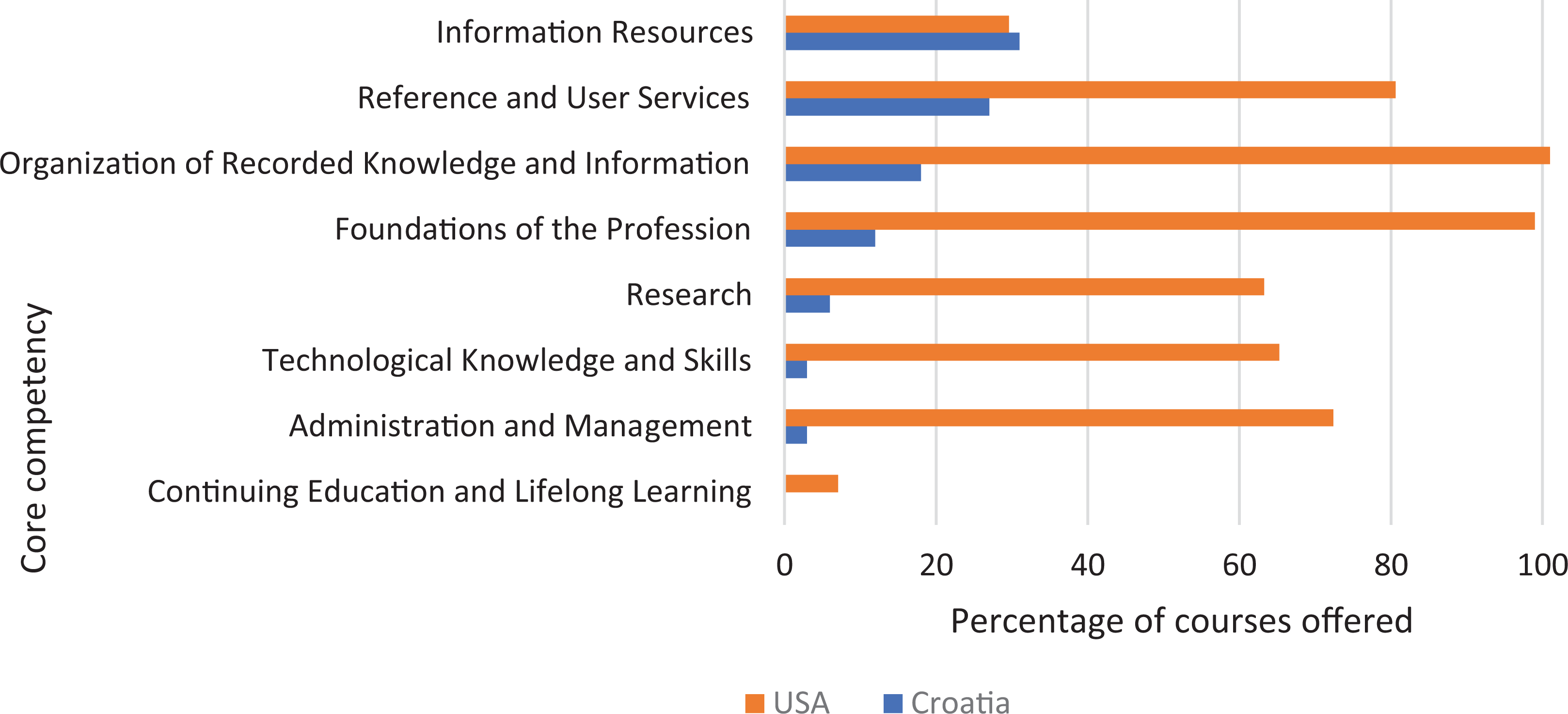
Comparison of core competences in Croatia and the USA.
Croatia’s three institutions (Osijek, Zadar, and Zagreb) all offer Bachelor’s degrees in LIS, whereas only 16 of the 53 US institutions offer Bachelor’s degrees. Neither of the countries requires a LIS Bachelor’s degree for acceptance into a graduate program. While the data for US Bachelor’s degrees was outside the scope of this study, in Croatia it was found that 68% of LIS students obtained a Bachelor’s degree only and then pursued a different Master’s degree. There is no equivalency for US students. Additionally, all three Croatian institutions and the majority of the US institutions (36 of 53) offer a PhD in LIS. Again, this data was not collected for the study because a Master’s degree is considered the highest degree for librarian status in both countries.
The data also demonstrates that graduate programs are customizable. The minimum required number of credit hours for US students is between 38% and 45% and, for Croatia, it is 23%. In Croatia, some of these required courses fall within a General Education category, which includes subjects such as foreign languages, physical education, and logistics. No such General Education courses exist in US graduate LIS programs, but the US programs offer a wide variety of other electives. As Mortezaie and Naghshineh (2002: 21) write, the “academic system demonstrates a surprising degree of flexibility” and “the number of elective courses outweighs the selective.” This customization of coursework in both countries can allow students to develop niche expertise in their areas of interest.
The Foundations of the Profession competency provides the basis and history of what it means to be a librarian. This competency makes up 12% of core courses in the Croatian graduate programs and 19% of core courses in the US programs. At the graduate level, the Foundations competency ranks fourth among the other core competences for Croatian students and second for US students. It is of note that, in Croatia, the LIS undergraduate programs have a range of 7% to 20% of core courses in this competency. Students in Croatia have the opportunity to pursue LIS degrees at the undergraduate level, and thus their first interaction with what it means to be a librarian occurs at the Bachelor’s level. In the USA, students enter a LIS program at the Master’s level. Extrapolating this data, it can be seen that students in both countries have similar exposure to Foundations courses when they first enter a LIS program.
The competency that shows the largest difference between the two countries is Information Resources. In Croatia, this competency is represented in 31% of the core courses, whereas it only represents 6% of core courses in the USA. In Croatian Master’s-level LIS programs, the mandatory courses are mostly oriented towards this competency. The small percentage of courses in the USA for this competency could indicate that US librarians are moving away moving away from these topics, or that this is a competency that requires more specialization. On a broader scale, this difference seems to indicate that Croatian librarians are more closely involved with the development and management of collections than US librarians.
The percentage of courses that falls within the Organization of Recorded Knowledge and Information competency is similar in Croatia (18%) and the USA (20%). This competency ranks third overall for Croatia and first for the USA. This indicates that indexing, classifying, cataloging, and organizing information is a necessary skill for librarians to develop in both Croatia and the USA.
At the graduate level, 3% of Croatian courses and 13% of US courses fall within the Technological Knowledge and Skills competency. Despite the difference in the percentage of courses, this competency ranks sixth for Croatia and fifth for the USA, indicating a similar importance in both countries. It is also necessary to note that, in Croatia, 29% of courses in the LIS Bachelor’s programs fall within the Technological Knowledge and Skills competency. Taking this into account, this competency is important to Croatian librarians. It may also suggest that the importance of this competency is growing over time. The change in courses offered within this competency could be an area of future study, especially in light of the 2020 global pandemic and shift to remote teaching and working.
The Continuing Education and Lifelong Learning competency is the lowest-ranking competency for both countries. This competency is non-existent in Croatian graduate LIS programs and represents only 1% of courses in the USA. This may indicate that this competency is emerging in the USA and is currently aspirational. It could also indicate that continuing education is not something that can be learned through a formal education process and that the competency is best met through on-the-job experience to keep skills up to date throughout a librarian’s career. This is an area where further research is needed.
The final competency to be discussed is Administration and Management. Croatian LIS students have 6% of their courses covering this competency at the Bachelor’s level and 3% at the Master’s level. LIS students in the USA have 14% of their program courses devoted to this competency. This could indicate that US librarians are expected to take on more management or administrative duties than their Croatian counterparts. Anecdotal evidence from the authors suggests that it is often typical for a librarian to be the only professional in a library. In the USA, this may indicate that librarians are thus thrust into management roles early in their careers, while in Croatia there may be a perception that the library as an institution does not require managerial skills. Further study is needed to determine if this is the case and/or if this competency adequately prepares students for this role.
Other requirements, outside of coursework, exist in both countries. These can be described as a method to cumulatively evaluate students’ work. In Croatia, all three institutions require a thesis from single major Master’s LIS students, whereas in the USA only 14.3% of the institutions (7 of 49) require a thesis. This indicates that, in the USA, personal research is not emphasized as much for librarians. An internship/practicum is required in 66% of the Croatian institutions (2 of 3) and 26.5% of the US institutions (13 of 49). This could indicate that more Croatian librarians gain hands-on experience in libraries prior to graduation than US librarians. The final requirement is the creation of a capstone/portfolio. No Croatian institutions demand this and 44.9% of US institutions (22 of 49) have this as mandatory. It is interesting to note that the majority of US students can obtain a Master’s in LIS by only completing coursework.
While this study has looked at the minimum educational requirements for students in Croatia and the USA to obtain a Master’s in LIS, it is beneficial to note some other factors of interest for students achieving professional librarian status. After finishing an undergraduate and/or graduate program and a one-year apprenticeship, Croatian librarians are required to pass a professional license examination that is regulated at the national level in order to remain in their position. No such national examination exists for US librarians. Additionally, in the USA, there has been a trend to hire candidates for academic librarian positions who do not have a Master’s degree in LIS. These candidates often have a combination of a non-LIS Master’s or doctoral degree and/or professional library experience. Candidates for librarian positions in Croatia can be hired with a conditional contract if they hold a Master’s degree in another field and complete a Master’s in LIS within a defined period of time. While conclusions cannot be drawn from this study, this is worthy of future research.
Conclusion
The primary objective of this study was to fill a gap in the comparative library literature by identifying the commonalities and notable differences between LIS programs offered in Croatia and the USA. A thorough examination of LIS program requirements revealed many similarities between the two countries. For example, both countries share a strong emphasis on foundational courses in librarianship and both offer their students a variety of curricular options, resulting in highly individualized paths to professional librarianship. However, through this analysis, the authors found that most Croatian librarians go through a more structured process than their US counterparts, starting with a Bachelor’s degree, continuing through a Master’s program, and finishing with a licensure examination. This investigation also revealed that the two countries currently place greater emphasis on certain skill sets. Croatian library schools seem to value skills related to managing collections as well as strengthening their students’ technological skills, whereas US library schools emphasize managerial skills and offer their students a great deal of flexibility—likely due to the wide variety of librarian positions available across the USA.
The results of this research could open other areas of inquiry. This research brings up questions regarding the political and historical influences on the centralization of higher education requirements generally, and in LIS fields more specifically. Further, state licensure is required for all librarians in Croatia, whereas, in the USA, licensure is required in certain states and only applies to school librarians. The findings may also assist library school administrators and educators in evaluating and updating their programs to address current and future professional needs. Considering the budget cuts in higher education worldwide and due to the COVID-19 pandemic, comparisons such as this might serve as a blueprint for library school administrators to respond to and plan for future crises more effectively.
Footnotes
Declaration of conflicting interests
The authors declared no potential conflicts of interest with respect to the research, authorship, and/or publication of this article.
Funding
The authors received no financial support for the research, authorship, and/or publication of this article.
