




Abstract
Objectives
The cluster headache is the most excruciatingly painful primary headache. In some patients, neither preventive treatment nor acute treatment is effective or treatment is poorly tolerated. The sphenopalatine ganglion (SPG) has an important role in the pathophysiology of cluster headache and, for this reason, SPG stimulation has been used to treat cluster headache.
Methods
We have reviewed the published literature on the role of the SPG in cluster headache and the use of different treatments targeting the SPG.
Results
Multiple procedures have been used over the SPG to treat pain and trigemino-autonomic symptoms in patients with refractory cluster headache. After obtaining good results in a small number of patients, a miniaturized stimulator was developed. Stimulation of the SPG with this device proved to be efficacious in acute and preventive treatment in a clinical trial involving patients with chronic refractory cluster headache. Implantation of the device is minimally invasive and the most frequent side-effects are mild, such as paraesthesia and pain over the maxillary area. In patients who have used the SPG device for longer than one year, the therapeutic effect remains effective and the side-effects decrease.
Conclusions
The reported studies have demonstrated that SPG stimulation is a safe and effective treatment for chronic cluster headache. Long-term studies have shown that the effect remains over time and this treatment could be a good choice in patients with chronic refractory headache. We need more data about its potential use in other forms of headache, such as other trigemino-autonomic headaches or migraine.
Introduction
Cluster headache is a severe debilitating disorder with pain that ranks among the most severe known to humans (1). It is well defined in the 3rd edition of the International Classification of Headache Disorders (ICHD-3 beta 2013) (2) and presents with accompanying autonomic symptoms ipsilateral to the pain. Cluster headaches can occur up to eight times a day and each attack typically lasts between 15 minutes and three hours. Episodic cluster headache occurs in periods lasting from one week to one year, separated by pain-free periods of one month or longer (2). Approximately 10–15% of patients have chronic cluster headache, with headaches occurring without remission or with remission lasting less than one month over a single year. Although cluster headache is a debilitating and clinically clear-cut disorder, it is still frequently unrecognized and/or mistaken for other disorders (3).
The socioeconomic burden of cluster headache on individual patients and society is high as a result of the direct costs of healthcare services and the indirect costs of lost work days and decreased work efficacy. A Danish report showed that 43.5% of patients with cluster headache had seen specialists, 30% had missed work and 78% reported restrictions in daily living (4). A recent German study showed that a typical patient with chronic cluster headache costs the healthcare system over €21,000 per year (5). The therapeutic options are limited in patients with cluster headaches and 10–20% of patients develop drug resistance (6). Subcutaneous triptan injections (7) and inhaled high-flow oxygen (8) provide a favourable response in the majority of patients with cluster headaches, although subsequent attacks are not prevented and many patients are severely affected and disabled. Sumatriptan is contraindicated in patients with ischaemic heart disease, stroke, uncontrolled hypertension and peripheral vascular disease. Furthermore, triptans are limited to a maximum of a twice-daily dose.
The often brief duration of cluster attacks makes abortive treatment a challenge. Transition treatments with steroids and preventive drugs (such as verapamil, lithium carbonate, divalproex sodium and topiramate) are almost always provided to patients and the side-effects of these drugs can be significant, although they may be better tolerated when used for cluster headache than other headache types (9); the adverse events are a limiting factor in treatment. Given the relentless nature of their disorder, patients with cluster headache desperately continue to search for new, effective treatments to treat their headaches (10).
The sphenopalatine ganglion (SPG) is a large extracranial parasympathetic ganglion with multiple neural roots, including autonomic, sensory and motor fibres (11). Humans have two SPGs, located on each side of the mid-face within the pterygopalatine fossa, which is a small inverted pyramidal space about 2 cm high and 1 cm wide. Parasympathetic and sympathetic fibres are carried to the SPG via the vidian nerve, which is formed by the greater and deep petrosal nerves, respectively. Parasympathetic fibres synapse within the SPG, whereas sympathetic nerve fibres pass through the SPG. The maxillary division of the trigeminal nerve also sends neural projections (pterygopalatine nerves or ganglionic nerves) that pass through the SPG and these nerves form the sensory component of the SPG (12). Post-ganglionic parasympathetic fibres that arise within the SPG are distributed to the ophthalmic and maxillary divisions of the trigeminal nerve to the lacrimal gland, nasal glands, palatine glands and pharyngeal glands. In addition, numerous post-ganglionic parasympathetic branches have been shown to course superior medially from the SPG into the orbital cavity, providing parasympathetic innervations to the meningeal and cerebral blood vessels (13–17).
The SPG is believed to play a part in the headache pain and cranial autonomic symptoms associated with cluster headache, which is a result of activation of the trigeminal-autonomic reflex. In cluster headache, post-ganglionic parasympathetic fibres from the SPG that innervate the cerebral and meningeal blood vessels (13–17) are activated and release neuropeptides that cause vessel dilation and/or activation of the trigeminal nociceptor fibres in the meninges, which is perceived as referred pain from the head by the sensory cortex (18–20). This neurogenic inflammation in the meninges has been observed during electrical stimulation of the trigeminal ganglion in rats (21), presenting further evidence of the involvement of the SPG in these processes. These inputs also trigger a reflex connection between neurons in the pons, in the superior salivary nucleus, which results in an increase in cranial parasympathetic activity mediated through the SPG (18,19,22–25). Neurogenic inflammation and the release of neuropeptides related to the activation of the trigeminovascular system and the cranial parasympathetic nervous system was first shown in humans in patients with cluster headaches (26).
The SPG has been a therapeutic target to treat primary headache disorders for over 100 years. Since Sluder (27) first described the application of cocaine or alcohol to the SPG for the treatment of headaches, the SPG has been a site for a variety of clinical interventions due to the involvement of the SPG in the trigeminal-autonomic pain reflex associated with cluster headache. Interventions include ganglionectomy (28), percutaneous alcohol injection (29), lidocaine or corticosteroid application (30–36), cryosurgery (37), stereotactic radiosurgery (38,39), radiofrequency lesioning (40–44) and, more recently, neurostimulation (45–48). Other alternatives used in the management of this debilitating headache include non-invasive vagal nerve stimulation, which has shown efficacy in one trial and could be an interesting alternative if the results of the first study are confirmed in subsequent trials (49).
During the cluster headache there is nociceptive activation and vasodilation in the meningeal arteries (50). Animal experiments have shown that low-frequency stimulation of the SPG at about 10 Hz produces plasma extravasation and changes in the blood–brain barrier (51) and intracerebral vasodilation (52,53). When low-frequency stimulation is used in humans, it has been shown to induce attacks in patients with cluster headache (53). It is therefore necessary to use high-frequency stimulation as a form of treatment (54).
Studies
There is a long history of SPG interventions positively affecting patients with cluster headache in a preventive manner, but some of the procedures are destructive and the benefits are often transient; long-term relief requires that patients undergo repeated procedures The use of neurostimulation provides one method of interfacing with the neural pathways without causing permanent damage to neural tissues and is considered both reversible and adjustable (55). The first report of SPG stimulation for the treatment of cluster headaches was a case report published by Ibarra in 2007 (46). An implantable device was used to provide continuous SPG stimulation in a preventive manner to a 30-year-old man experiencing severe cluster pain with associated tearing, conjunctival injection, facial sweating, oedema, ptosis, photophobia, phonophobia and osmophobia. Prior pulsed radiofrequency ablation of the right SPG had been successful, although repeated ablations were required. However, radiofrequency ablation of the left SPG was unable to control the patient’s left-sided pain. An electrode and pulse generator were implanted and programmed to deliver a constant electrical stimulation to the SPG at a frequency of 50 Hz and a pulse width of 247 µs. The patient became pain-free with these settings until an electrode failure occurred, which resulted in a worsening of the patient’s headaches. Following replacement of the electrode, chronic relief from the cluster attacks was again achieved. The unexpected hardware failure and temporally associated increase in headache symptoms provided an internal control that demonstrated the efficacy of chronic preventive SPG stimulation in this patient.
Ansarinia et al. (47) demonstrated the acute benefits of SPG stimulation in six patients with chronic cluster headache. The patients were treated for either spontaneous or triggered cluster attacks and SPG stimulation was applied via an electrode placed using a standard infrazygomatic transcoronoid approach. Each patient was stimulated between zero and two times. Complete pain resolution was achieved in 61% of attacks and partial (>50%) pain resolution in 22% of attacks within one to three minutes of the initiation of stimulation. The most common frequency that achieved pain resolution was 50 Hz. Poor responses appeared to be associated with the limitations of using an off-the-shelf stimulation system, including the inability to position the stimulating lead sufficiently close to the SPG.
Schoenen et al. (48) performed a randomized, sham-controlled study of 32 patients to evaluate the use of SPG stimulation for the acute treatment of chronic cluster headache. In this study, the Autonomic Technologies SPG neurostimulator was implanted through a minimally invasive gingival buccal incision. The neurostimulator contained an integral lead that was placed within the pterygopalatine fossa proximate to the SPG. The body of the neurostimulator (Figure 1), which contained no battery, was placed along the maxillary nerve and was powered on demand by the patients using an external hand-held remote controller (Figure 2). Patients were instructed to apply the stimulation to moderate or severe cluster pain for up to 15 minutes. The mean ± SD stimulation frequency applied was 120 ± 15 Hz and the mean ± SD pulse width was 390 ± 75 µs. Of the 32 patients in the study, 28 completed the randomized experimental period. Pain relief was achieved in 67.1% of full stimulation-treated attacks at 15 minutes after the start of stimulation, compared with 7.4% of sham-treated attacks (p < 0.0001). A reduction in the frequency of cluster attacks of at least 50% compared with the baseline without any increase in preventive drugs was observed in 43% of patients, with an average reduction in cluster attack frequency in these patients of 88%. Following the implant procedure, the attack frequency remained unchanged through the start of stimulation, indicating that the frequency reduction was probably associated with the start of SPG stimulation. Overall, 68% of patients experienced an acute response (pain relief achieved in at least 50% of treated attacks), a frequency response (reduction in cluster attack frequency of at least 50% compared with baseline), or both. Sixty-four per cent of patients experienced a clinically significant improvement in headache disability and 75% experienced clinically significant improvements in their quality of life (48).
Neurostimulator. Hand-held remote control held over the microstimulator.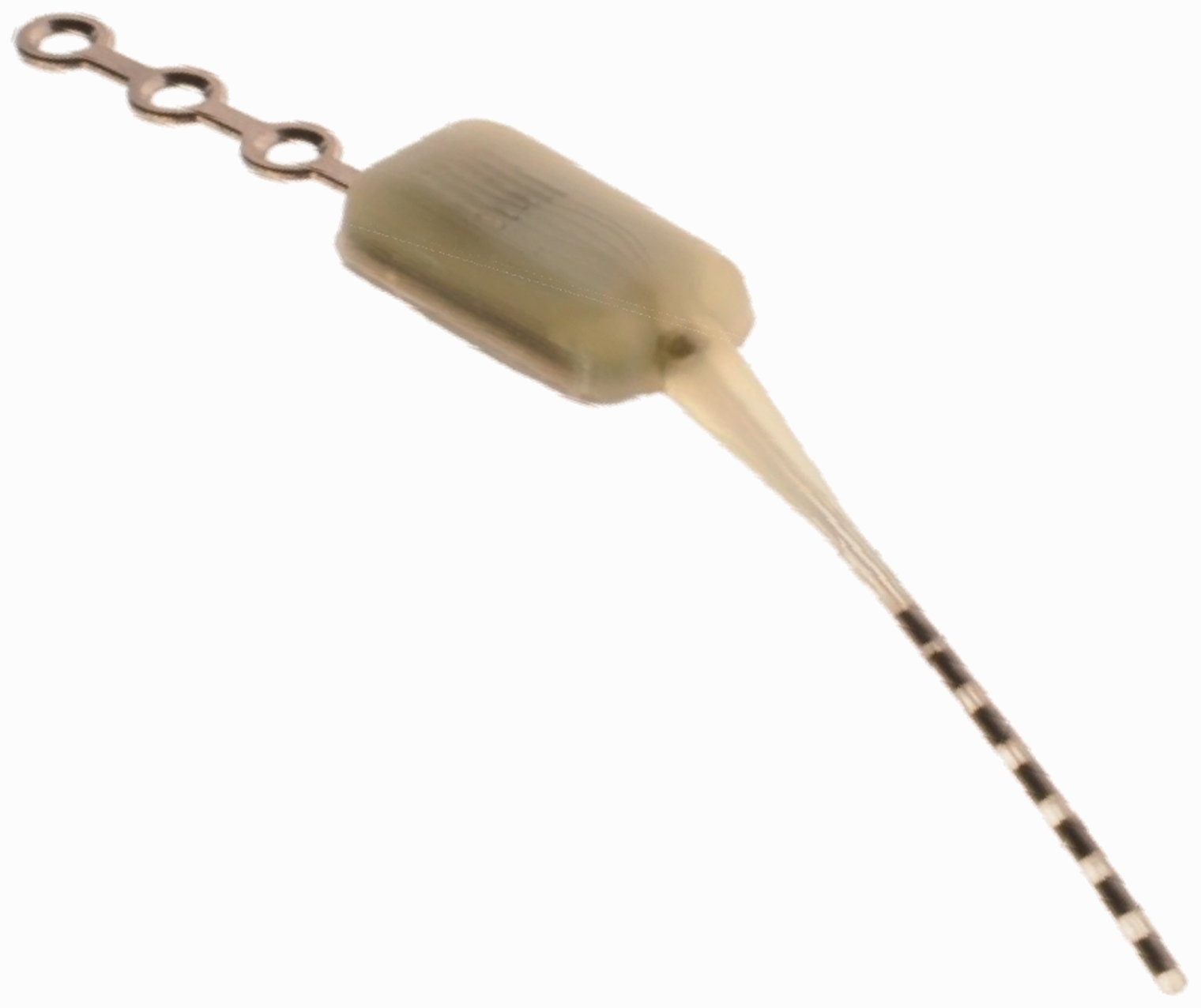

The incidence of adverse events related to the device has been low. The side-effects were most frequent immediately after implantation. The most common side-effects were sensory disturbances (81% of patients) and pain (38%) in the area of the maxillary nerve. However, after three months, the sensory disturbance remained in only 16% of patients because the damage to neural tissue was not reversible in all patients and pain continued in 19% of patients (48).
Long-term observations about the results of SPG show that the majority of patients experienced improvements in headache disability and found SPG stimulation useful for treating their headache. In a population of 33 patients with medically refractory chronic cluster headache followed for 24 months while receiving on-demand acute SPG stimulation, the treatment was effective for both pain relief during acute attacks and for reducing the attack frequency, resulting in clinically significant improvements. At 24 months, 45% of patients were acute responders, 33% were frequency responders and six patients experienced both types of response; a long-term overall responder rate of 61% was seen. In addition, 65% of SPG stimulation responders experienced a very strong ≥75% response to treatment at 24 months. A total of 60% reduced, stopped or remained free of all preventive drugs. Even among the frequency non-responders who had increases in attack frequency, a substantial benefit was seen with SPG stimulation. Specifically, 73% were acute responders at the 30% level or greater (56).
Recommendations for future studies
SPG stimulation is a reversible method of interrupting the trigeminal-autonomic reflex. The technique can relieve the pain and cranial autonomic symptoms associated with this disabling condition. SPG stimulation is both minimally invasive and reversible. It is a safe and effective treatment for cluster headache with a double action: acute and preventive treatment.
A trained surgical team with experience and a deep knowledge of the anatomical and physiological placement of the stimulation lead is important for the implantation. The position of the electrode is important because it needs to be close to the SPG for stimulation (Figures 3 and 4). The selection of suitable patients is important and this technique should be performed in only a limited number of centres at the present time.
Stimulator placed in a patient (lateral view). Stimulator placed in a patient (frontal view).

After implantation, there is a stabilization period that lasts for four weeks. The patient needs to be examined by a maxillofacial surgeon to ensure that the implantation procedure was successful. The patient also needs to be examined by a neurologist to adjust the stimulation parameters (titration period). These procedures should be only performed by medical staff with special training and who have expertise in medical engineering. The patient will normally schedule an appointment every two weeks until the parameters are successfully defined; this usually requires two to three appointments. After this, the patient is monitored as a regular patient with cluster headache. Good results have been obtained with SPG stimulation in long-term studies. Time will show in which patients the SPG stimulation is efficient as a preventive treatment for chronic or episodic cluster headache.
Other alternatives, such as non-invasive vagal nerve stimulation and monoclonal CGRP antibodies, are now being researched in patients with cluster headache and could be a treatment option in the near future. These new treatments should be used in the same way as current drugs – that is, they should be selected based on the patient’s profile. The general criterion to select the appropriate treatment is to start with the least invasive option. If this first choice does not yield successful results, more invasive treatments can be used.
The application of neurostimulation should only be considered once all medical treatments have failed or present relative or absolute contraindications to conventional acute and/or preventive treatment. In cluster headache that fulfils these criteria of intractability, SPG stimulation could play a part in the patient’s management. Disability should also be taken into account. SPG should be considered as an option in patients with cluster headache in whom the disease produces a significant disruption in their socio-professional life (55). In the future, SPG stimulation could be an alternative in patients with episodic forms of the disorder for which there is no response to preventive treatment and in patients with contraindications or poor tolerance to acute treatment.
There is no experience of treatment with SPG in other trigeminal-autonomic cephalalgias, including paroxysmal hemicranias, short-lasting unilateral neuralgiform headache attacks with conjunctival injection and tearing, and short-lasting unilateral headache with cranial autonomic symptoms. Given their pathophysiological similarities, this type of stimulation could be explored in patients with refractory cluster headache (54).
Migraine pathophysiology is also related to the trigemino-parasympathetic reflex and the SPG. In refractory migraine, Tepper et al. (57) showed that the SPG was effective in controlling pain and half of their patients showed an improvement in their headaches. Some studies are currently in progress to explore whether SPG stimulation could be useful in the acute and/or preventive treatment of migraine.
Article highlights
Cluster headaches cause debilitating pain and preventive treatment is important. However, in some patients preventive treatment does not help to control the frequency of the attacks, or the acute remedies are either not well tolerated or are contraindicated. Sphenopalatine ganglion stimulation is a minimally invasive technique that could be a good alternative in patients with chronic refractory cluster headache. It is effective both in acute attacks and as a preventive treatment. The most common adverse events are sensory disturbances and pain in the area of the maxillary nerve. The side-effects of the procedure are low in the long term and decrease with time, while the effectiveness remains over time.
Footnotes
Declaration of conflicting interests
The authors declared the following conflicts of interest with respect to the research, authorship, and/or publication of this article: Miguel JA Láinez has received grants or research support and/or has been an adviser or part of the speaker’s bureau of ATI, Allergan, Amgem, Boehringer Ingelheim, Electrocore, Lilly, Lupin, Medtronic, Novartis, Otsuka, Roche and Teva. Ana Suller has received research grants from Amgem, Electrocore and Lilly.
Funding
The authors received no financial support for the research, authorship, and/or publication of this article.