




Abstract
This study analyses the strategic plans of Australia’s 40 universities, assessing their tone, content and coherence. Using sentiment analysis and comparative content evaluation, we contrast these plans with those of leading US universities and major Australian government departments. We find that Australian university plans adopt a markedly more positive and aspirational tone, shaped by distinct institutional and cultural contexts. However, they often lack core strategic elements such as clear performance metrics, competitive positioning and engagement with institutional challenges. As a result, while these plans seek to convey legitimacy, excellence and high standards, they often lack the depth and specificity required to provide meaningful strategic direction. Drawing on signalling and legitimacy theories, we argue that such documents function primarily as instruments of reputational alignment and normative conformity, rather than actionable strategy documents.
1. Introduction
The historically stable environment of higher education is now increasingly seen to be transforming into a turbulent and competitive marketplace (Falkenberg and Cannon, 2020; Parker et al., 2023). Across the globe, a number of transformative shifts are changing the sector. After a golden period of increasing enrolments, universities in more developed economies in the Global North are witnessing stagnating enrolments. Uncertainty as to the future status of universities is growing with artificial intelligence and new technologies disrupting delivery (accelerated by the COVID-19 pandemic) and a retreat from public-sector funding resulting in a frenzied push for alternative funding sources in many countries. As stability and funding certainty have given way to competitive intensity and indeterminacy, the perceived importance of strategy in the sector has escalated (Davis, 2018).
Although universities are big business in Australia, relatively little is known about strategic planning within universities. Australia’s peak Group of Eight (Go8) universities all operate at a scale that dwarfs well-known international universities such as Harvard, Stanford, Oxford and Cambridge in terms of student numbers (Universities Australia, 2022). According to Universities Australia (2022), 335,277 students – domestic and international – completed their degrees at Australian universities in 2020, with the sector contributing more than $40 billion to the Australian economy and supporting over 250,000 full-time jobs. Several Australian universities earn annual revenue and control assets that would place them in the top 100 listed companies on the Australian Stock Exchange, and the sector is now Australia’s third largest export sector.
All universities in Australia publish formal strategy documents, typically pertaining to multiple-year time frames. Thousands of university-wide strategic plans, faculty plans, divisional plans, academic plans, research plans, learning and teaching plans, capital infrastructure plans and strategic discussion papers, together with a myriad of supporting financial, short and long-horizon strategy documents have been published by Australian universities since the first Australian university strategic plan was released by Melbourne University in 1988 titled ‘Looking to the Future: The Strategic Plan for the University of Melbourne 1988’. This has spawned an industry of strategy consultants recruited by large internal strategy portfolios inside large universities. All Australian universities now make their strategic plan available on their websites.
This article sets out to explore the formal strategy documents published by the 40 universities in Australia. Our article is limited to formal strategic plans that are publicly available, however, these documents serve as an important public statement and are typically the result of an extensive and time-consuming consultation process. We argue that these documents provide an important basis for communication for large internal and external stakeholders. We focus on both the tone and sentiment expressed within these documents as well as the content of the strategic plans. By employing sentiment analysis techniques, this study aims to compare the strategic plans of Australian universities not only with their counterparts in the United States but also with strategic plans from major Australian government departments to provide a within-country public-sector comparison. Furthermore, we examine the content of these strategic plans, assessing how closely they align with or diverge from established theories and prescriptions within the strategic planning literature (Lafley and Martin, 2013; Porter, 1996; Rumelt, 2011). Through this analysis, we aim to identify common themes, strategic priorities and the overall sentiment within the strategic planning landscape of higher education in Australia.
Our analysis reveals that the strategic plans of Australian universities adopt a markedly positive and aspirational tone, significantly more so than those of US universities and Australian government departments. However, this positivity often comes at the expense of critical strategic elements. Content analysis further shows considerable homogeneity across the 40 university plans with most plans exhibiting limited engagement with past performance, external challenges, competitive dynamics, distinctive positioning or measurable success metrics. Viewed through the lenses of signalling and legitimacy theory, these findings suggest that strategic plans function more as rhetorical instruments aimed at securing legitimacy and reassuring stakeholders than as operational blueprints for navigating a turbulent higher education environment.
We structure the article as follows. First, we outline recent developments in the Australian higher education sector, including performance regimes and regulatory shifts. We then introduce signalling and legitimacy theory as complementary lenses for understanding the role of strategic plans in managing stakeholder perceptions and institutional legitimacy. This is followed by a synthesis of the prescriptive strategy literature, from which we derive eight commonly cited design principles. We next review the limited empirical research on Australian university strategic plans and identify key gaps. After detailing our methodology, we present two sets of findings: a comparative sentiment analysis of strategic plans from Australian universities, US universities and Australian government departments; and an evaluation of how Australian plans align with or diverge from strategic planning principles. We conclude by discussing the implications for strategy work in higher education.
2. Challenging times in the Australian university sector
Australia has 40 universities: 37 government-funded public universities and 3 private Australian universities. 1 During the last three decades, in the period known as the post-Dawkins era, or ‘life after Dawkins’ (Macintyre et al., 2016; Howes, 2018), Australian universities have been structurally transformed through extensive Commonwealth Government policy reform and relentless imposition of review mechanisms and quantitative performance measures privileging a free market, competition, efficiency and rolling back of public funding (Martin-Sardesai et al., 2019; Parker et al., 2023), resulting in a significantly different funding and student mix. Shore and Wright (2017) outline seven key features that characterise these developments: (1) the gradual withdrawal of government support; (2) funding and assessment regimes aimed at boosting productivity and competition; (3) the rise of performance indicators promoting transparency and efficiency; (4) significant growth in university management roles; (5) power shifts and budget reallocations favouring administrative over academic salaries; (6) replacement of state funding with alternative income sources and (7) a redefinition of university education as a private, positional investment rather than a public good. As a result of these trajectories, all Australian university academics, professionals and executives have been compelled to develop new skills (Bourner et al., 2001) to work effectively within the new academic-managerial operational context. It is unclear if the acquisition of these new skills, especially at the executive level, has found the right balance between being an effective manager and being a leader in the scholarship context to advance research and education – arguably the core missions of each university.
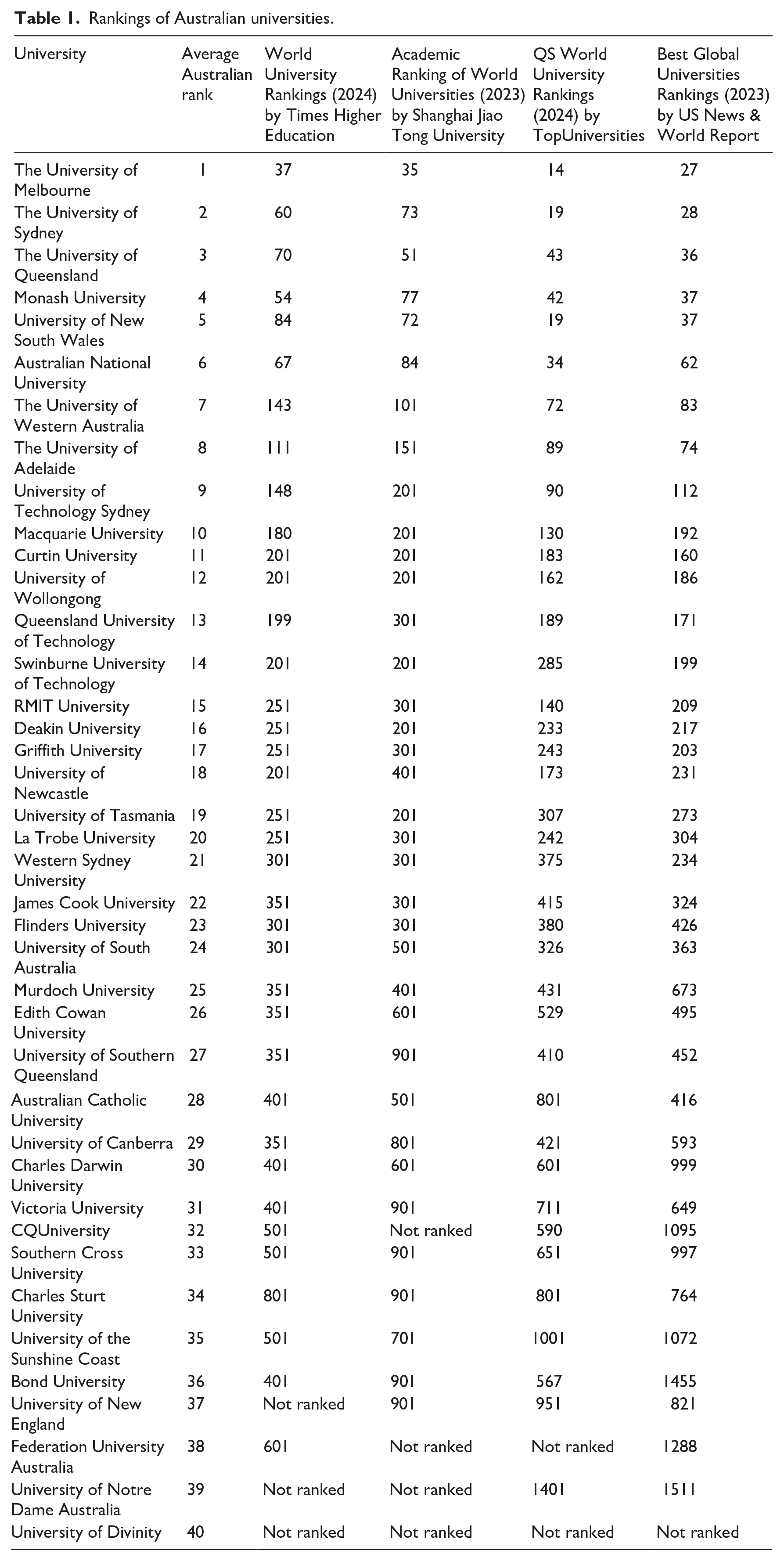
Table 1 reveals the high status of many Australian universities in major university rankings, with Australia’s so-called Group of 8 (Go8) institutions all well ensconced in the top 1% of ranked Universities globally. The table contains the ranking of all Australian universities in four recent influential international ranking schemes.
Rankings of Australian universities.
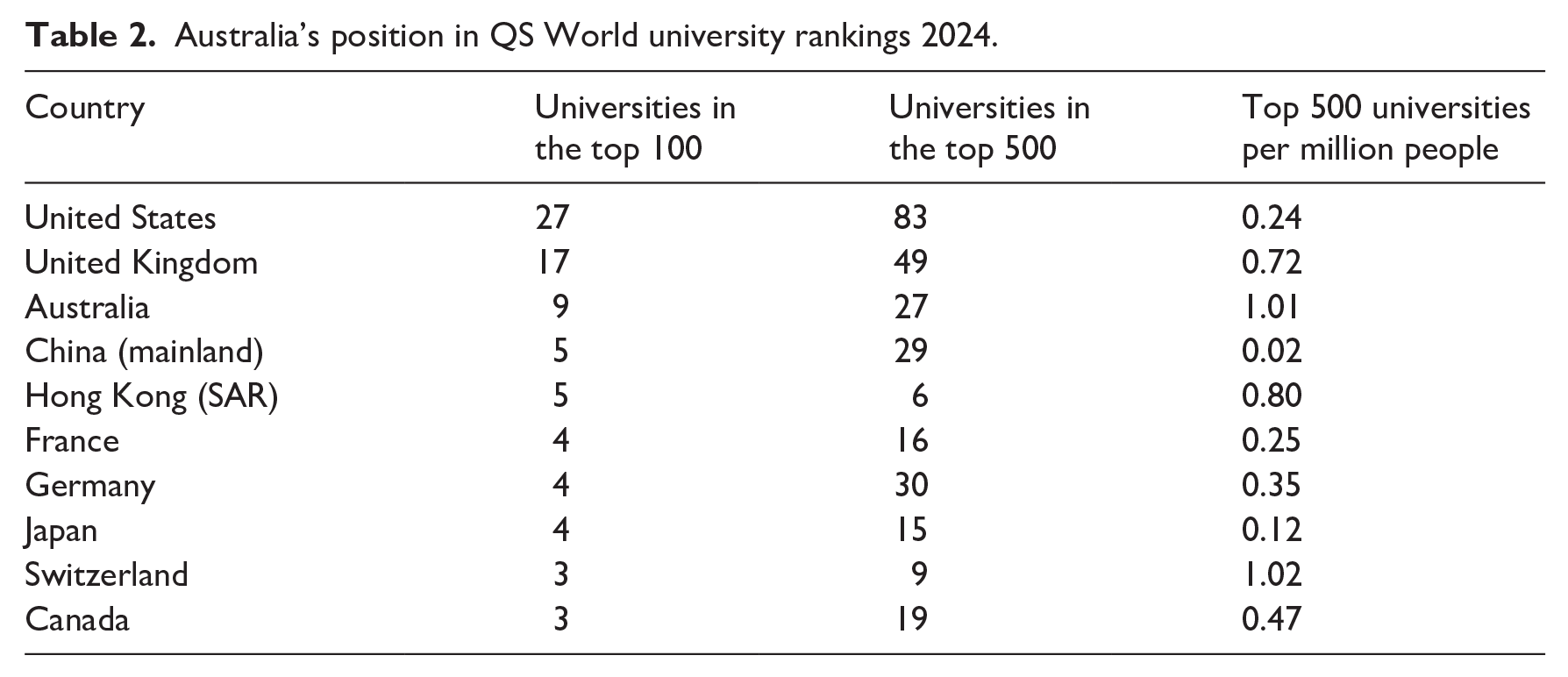
As Table 2 demonstrates, 23 of Australia’s 40 universities rank in the world’s top 500, and 7 are in the top 100. Only the United States and the United Kingdom had more universities in the top 100, respectively. This global reputation is valued by students, governments and industries as a marker for international quality and innovation (see Espeland et al., 2016) and has been shown to influence the strategy of Australian universities (Dowsett, 2020).
Australia’s position in QS World university rankings 2024.
Public investment in Australian tertiary education is among the lowest in the Organisation for Economic Co-operation and Development (OECD). Australia’s contribution to tertiary education institutions, in terms of public investment as a percentage of GDP, is among the lowest within the OECD. In 2018, this investment stood at 0.65% of Australia’s GDP, in stark contrast to the OECD average of 0.99% (Australia ranked 31st out of 37 countries) (Universities Australia, 2022). This makes the universities especially reliant on the revenue foreign students provide (see Figure 1 below). In place of direct government funding, international student revenue has increasingly underpinned research budgets and capital works. 2 Nearly 60% of international students originate from China or India, with Chinese students forming the largest segment at 37% (Parker et al., 2023). The cohort also includes students from Vietnam, Malaysia, Nepal, Brazil and Pakistan. International student enrolments, expressed as a percentage of all students, are reported for Australia’s 40 comprehensive public universities in Figure 1, which has been constructed using Department of Education data for 2022. At the top of the league of Australian universities enrolling international students are Torrens University, the University of Sydney, RMIT University and Monash University. The figures for some of these universities are inflated by their offshore programmes. Babones (2019) highlights that when evaluated on a per capita basis, Australia surpasses all other major nations in hosting international students, with international students in higher education remarkably making up 1.5% of the country’s population. Geopolitical tensions and competitive educational markets globally mean that attracting and retaining international students is becoming increasingly uncertain.
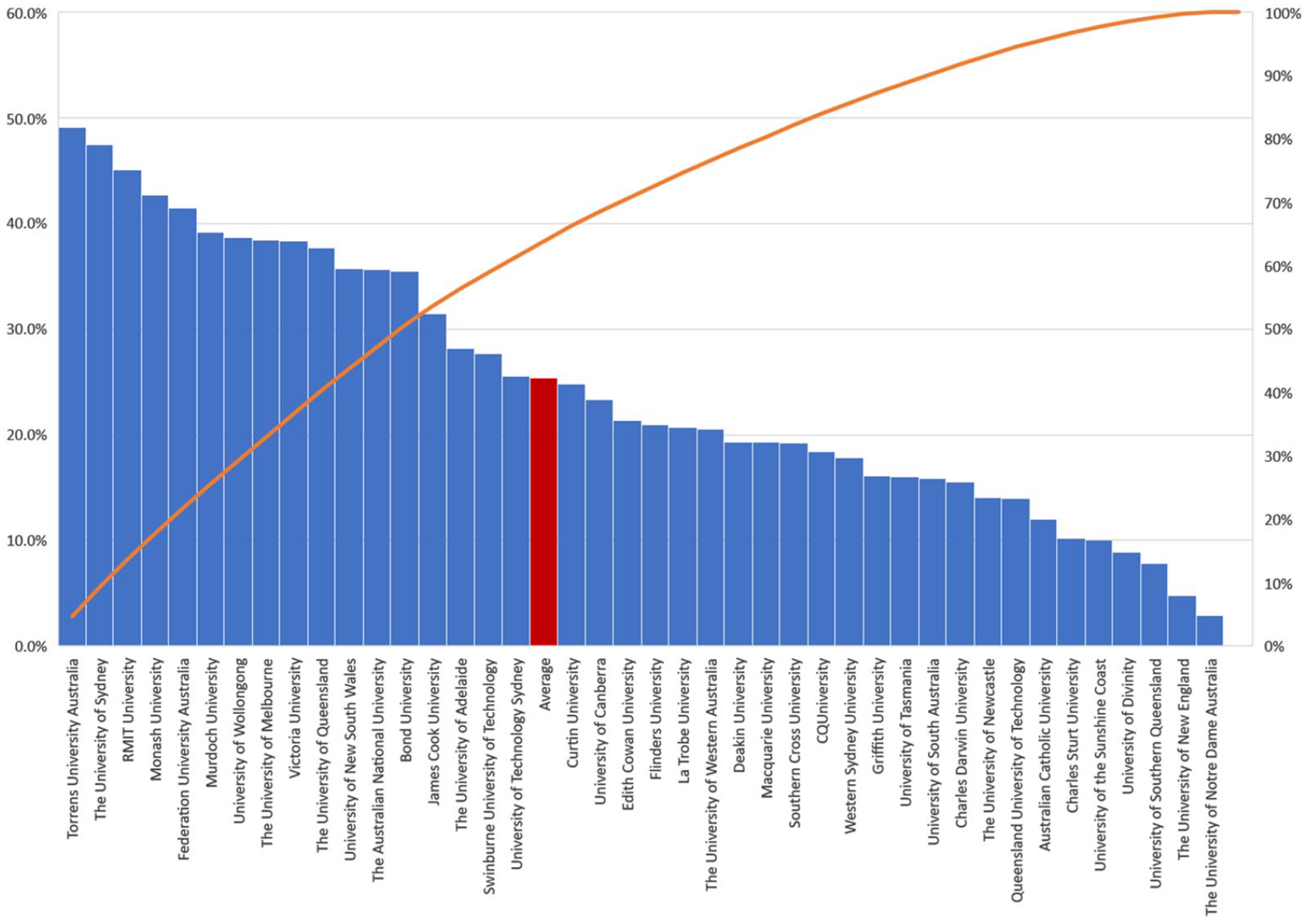
Overseas students as a percentage of total students by Australian universities 2022.
The Australian university sector is also currently experiencing increased turbulence from multiple disruptive technologies, particularly with respect to teaching, such as the challenges of AI posed to the academic integrity of assessments. The ongoing disruption of technology platforms was accelerated by the COVID-19 pandemic, with particular attention given to on-campus versus online teaching. This has further complicated tensions around the importance and priority of teaching within universities. Most Australian universities have mandates in three areas: teaching and learning (“teaching”), research and scholarship (“research”) and community engagement (“engagement”). An internal dynamic across the sector is the systemic tension between these pillars. In particular, teaching and research are consistently viewed as independent activities competing for financial resources, space and qualified faculty (Gary et al., 2023; Geschwind and Broström, 2015). This tension is heightened by global ranking systems that focus on research outcomes, with little consideration given to teaching effectiveness (Free et al., 2009).
In summary, Australian universities operate in complex and demanding environments, shaped by intense institutional pressures and heightened public scrutiny. Universities have been variously described as professional bureaucracies (Mintzberg, 1994), political arenas (Baldridge, 1971), organised anarchies (Cohen and March, 1974), collegiums (Millet, 1962), loosely coupled systems (Weick, 1976), pluralistic systems (Jarzabkowski and Fenton, 2006) and sarcastically, a loose confederation of highly educated independent contractors held together by a common complaint about parking. These characterisations reflect the sector’s inherent complexity and challenge the applicability of conventional managerialist approaches. Strategic planning in such pluralistic, high-accountability settings is thus a highly public and fraught exercise. To examine the strategic plans of Australian universities, this study draws on signalling theory and legitimacy theory. These complementary lenses illuminate how universities may use strategic plans to manage perceptions and signal alignment with stakeholder expectations, despite internal fragmentation and external turbulence. This framing guides our empirical analysis and supports our contribution to the wider discourse on strategy in higher education.
3. Legitimacy and signalling in the university sector
Legitimacy theory posits that organisations, including universities, continuously seek to align their operations, structures and outputs with the norms, values and expectations of their broader societal environment to maintain legitimacy (Deegan, 2002; Massey, 2001; Suchman, 1995). In the context of Australian universities, strategic planning can be viewed as a tool for securing legitimacy. Universities operate within a complex web of stakeholders, including government bodies, accreditation agencies, students, faculty and the public at large. To be perceived as legitimate institutions, universities must not only comply with regulatory requirements but must also project an image of being forward-thinking, socially responsible and aligned with national and global educational standards. In this way, universities are subject to isomorphic pressures that emanate from multiple sources – coercive (e.g. government regulations), normative (e.g. professional and accreditation bodies) or mimetic (e.g. other top-performing universities) – to safeguard their legitimacy and survival (Godonoga and Sporn, 2023).
Through a legitimacy lens, strategic plans may be developed as documents that showcase the university’s alignment with key societal expectations (Birnbaum, 2000). These plans often emphasise key areas such as resolute commitment to research impact and student experience, innovation, diversity, sustainability and community engagement – all topics that resonate with broader contemporary societal values. However, this raises the question of whether these plans are primarily designed to be implemented as actionable strategies or whether they serve more as symbolic gestures aimed at maintaining or enhancing the institution’s legitimacy.
Signalling theory suggests that organisations use strategic documents, such as strategic plans, to signal their intentions, capabilities and commitment to various stakeholders (Connelly et al., 2011). Under this view, strategic plans can serve as signals to potential students, faculty, investors and government bodies, conveying messages about the institution’s priorities, future direction and competitive positioning. In this context, the strategic plans of universities may be crafted to signal strength, stability and alignment with global educational trends (Fiset and Al Hajj, 2022). These signals are intended to attract resources, such as research funding, talented faculty and high-quality students, by portraying the university as a leader in the academic field. However, the effectiveness of these signals depends on whether they are backed by substantive actions or whether they merely serve to create a favourable public image without leading to meaningful strategic implementation.
While legitimacy theory suggests that universities use strategic plans to align with societal expectations and maintain their status as reputable institutions, signalling theory emphasises the role of these plans in communicating the institution’s strategic priorities and capabilities to stakeholders. In concert, these theories are helpful in explaining voluntary strategic plan disclosures and their impact on organisational reputation-building activities (Toms, 2002). Both theories highlight the potential for strategic plans to serve as public relations tools rather than actionable strategies. If strategic plans are primarily constructed to maintain legitimacy and signal desired attributes to stakeholders, there is a risk that these documents may prioritise positivity and form over function. This study seeks to explore whether the strategic plans of Australian universities are primarily designed to guide institutional actions or create a favourable public image without driving substantive strategic outcomes. This research question brings squarely into question the roles ordinarily assigned to strategic plans within the strategy literature.
4. What should be in strategic plans? A review of the literature on strategic plans
Strategy is a relatively young field that evolved from ‘business policy’ in 1979 (Schendel and Hofer, 1979), with subjects of interest encompassing other fields such as economics, sociology, marketing, finance and psychology (Hambrick, 2004; Rumelt et al., 1991). Within this field, strategic planning refers to a ‘deliberative, disciplined effort to produce fundamental decisions and actions that shape and guide what an organisation (or other entity) is, what it does, and why’ (Bryson, 2011: 7–9). The historic roots of public-sector strategic planning lie in the military and are tied to statecraft (Freedman, 2013). The prescriptive literature on strategic plans (e.g. Bryson, 2011; Bryson et al., 2018; Steiner, 2010) argues that effective strategic plans merge forward-looking perspectives, impartial analysis and clear-eyed assessments of objectives and priorities to establish pathways for future actions that safeguard the sustained health and efficiency of the organisation. Bryson and Edwards (2017: 320) thus describe strategic plans as ‘a collection of ideas, methods, instruments, and techniques designed to assist decision-makers and stakeholders in focusing on what is fundamentally significant for their organisations and/or locales’. Implicit in this view is the idea that strategic planning ensures a focus on outcomes and enhances performance. The reality is that strategic planning is often scary even for seasoned executives: predicting the future and making bold choices about resource allocation is not an easy task (Martin, 2014).
We conducted a synthesis of seminal works in the field of strategic planning to identify the major building blocks of strategic plans featured in the prescriptive literature. This included an inductive exploration by Nag et al. (2007) that distilled the essence of strategy from a broad survey of research, and further examination of what constitutes a ‘good’ strategy by Shimizu (2012), Lafley and Martin (2013) and Rumelt (2011). Based on this review, we have identified eight pivotal elements that are crucial to the development of a strategic plan. These elements, presented in Figure 2, bridge the gap between academic research and practical application, reflecting a consensus among experts on what makes a strategy successful.
Taken together, these blocks provide a thorough articulation of an existing strategy and the articulation of a modification of such a strategy as a result of new challenges, new views of the future world and/or new aspirations. Importantly, once these are well articulated, the strategy document will have also presented the trade-offs in activities (Bryson et al., 2018; Rumelt, 2011).
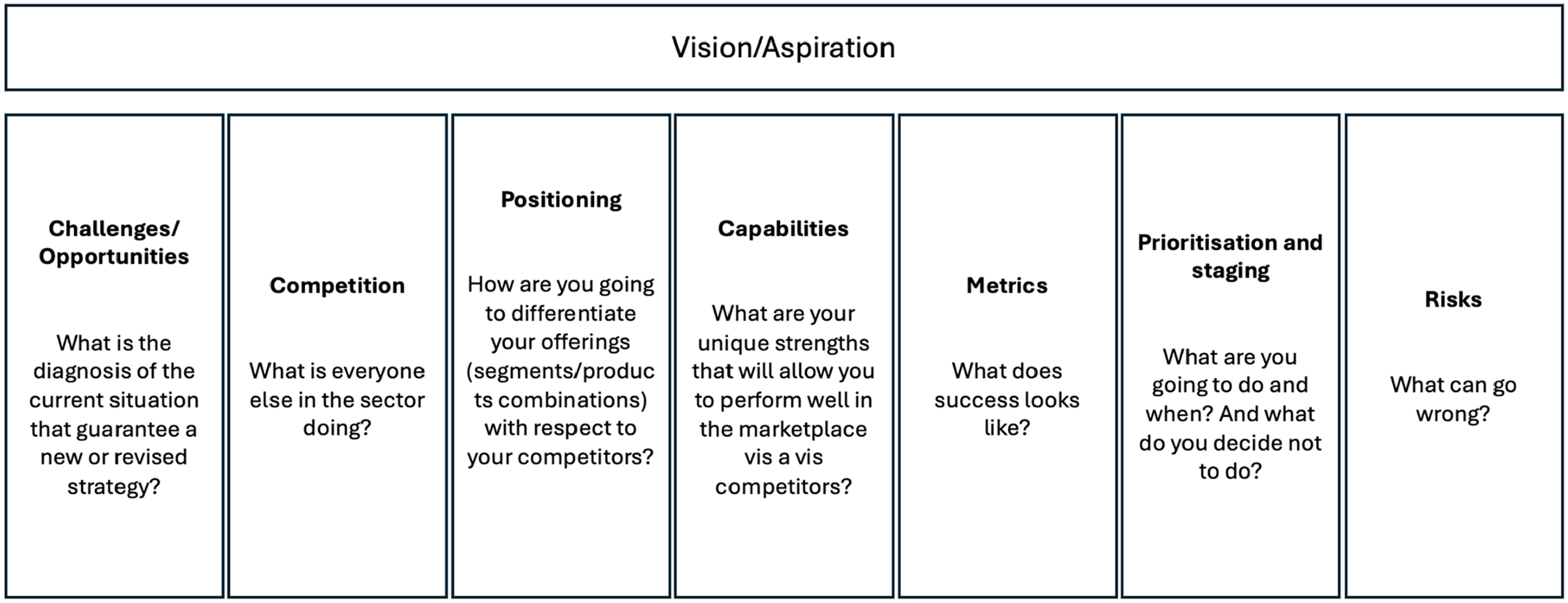
The eight building blocks of strategy plans derived from an examination of key strategy literature.
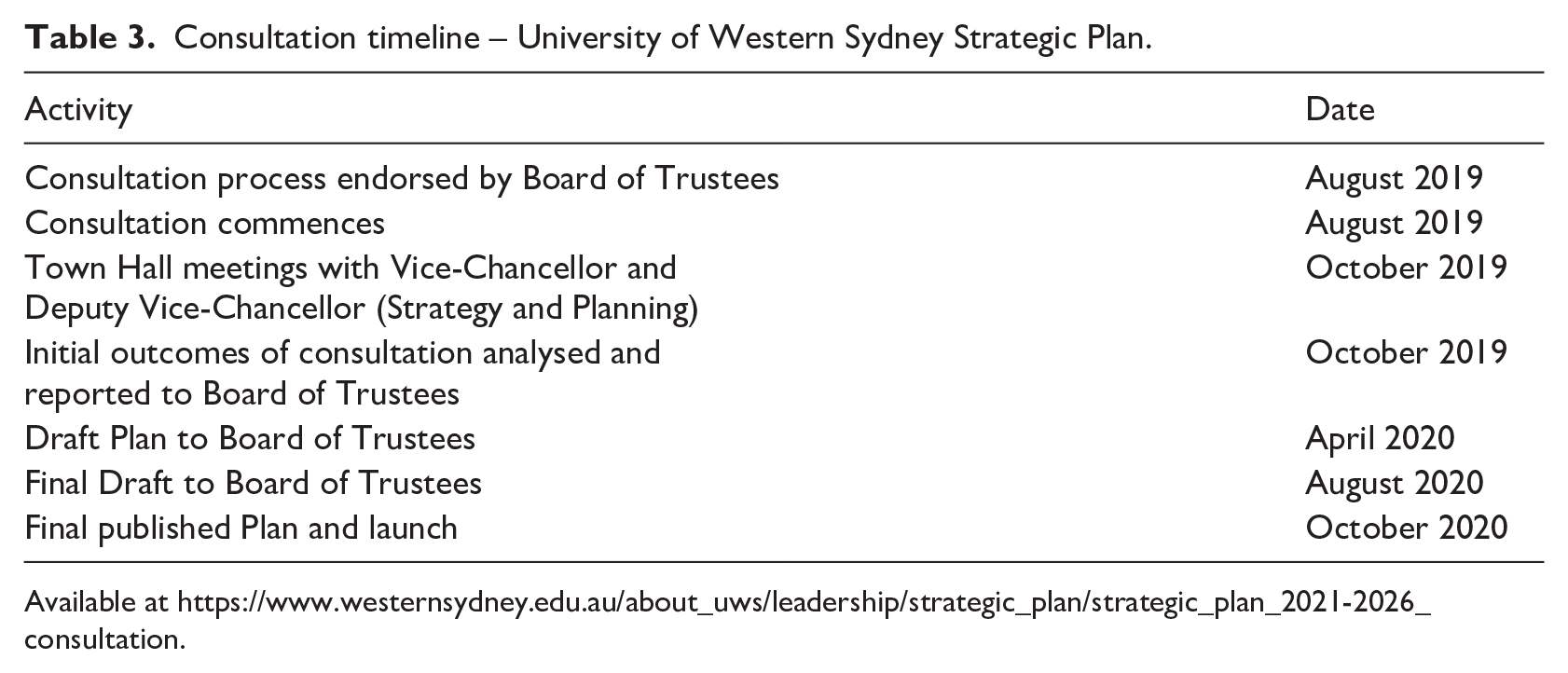
The body of research concerning strategic planning in universities has evolved significantly, often characterised by a critical perspective on its implementation, efficacy and impact. Early work in this domain emphasised the adoption of strategic planning processes as a response to financial pressures, competitive isomorphism and demands for accountability in higher education. Keller (1983), for example, strongly advocates for strategic planning in universities to navigate the complex, changing landscapes of higher education. Recognition of the need for strategic planning has seen the widespread diffusion of strategy plans across the tertiary sector in Australia. A time-consuming, inclusive and polymorphous consultation period is typically associated with these strategic plans, reflecting an omnifarious stakeholder environment. This process typically extends over a year in time and contact with several thousand individuals, often facilitated by external consultants. Table 3 presents the published consultation timeline at the University of Western Sydney ahead of the release of its 2021–2026 Strategic Plan. This process is typical in the sector.
Consultation timeline – University of Western Sydney Strategic Plan.
As strategic planning became more widespread in universities, research began to focus on its effectiveness and outcomes. Scholars have noted a gap between its theoretical benefits and practical results. Bryson (2010) and Mintzberg (1994) critique the rigid, top-down approaches often used, arguing they overlook the complexity of higher education, resulting in plans that are either too vague or too constrained to be strategic. Studies also reveal only partial alignment between university strategic plans and established frameworks (Luoma et al., 2016). Analysing plans from 2011, Shah (2013) identifies a range of shortcomings, including poor links between priorities and resources, weak alignment across planning levels, limited integration with risk management and a failure to set and monitor performance targets or de-prioritise activities (see also Howes, 2018).
Research also highlights a tendency towards homogeneity and lack of specificity (Devinney and Dowling, 2020; Morphew and Hartley, 2006; Zipparo, 2023), in line with the institutional theory notion that quasi-market frameworks have driven imitation. Visual analyses reveal repeated tropes – historic buildings, cheerful diverse students, active hands and executive portraits – widely used to convey investment and inclusion (Strike and Labbe, 2016). These findings suggest strategic plans often function more as ritualistic, promotional artefacts than as tools for guiding future decision-making. Gordon and Fischer (2011) conclude that strategic planning in higher education appears to be serving a purpose other than a management technique designed to guide administrators in directing their organisations to become more effective and efficient.
Although no research has investigated the tone of university strategic plans per se, a limited stream of research has examined the sentiment or tone of strategic plans. (Cornut et al., 2012) explore strategic plans from public and third-sector organisations, examining their distinctive features and communicative purposes. They find that strategic plans display a notably more optimistic and unifying tone compared to other business texts. These plans are characterised by language emphasising optimism, collaboration and achievement. This optimism is further highlighted by the relative absence of negative language and a stronger focus on inspirational and satisfaction-oriented words. The strategic plans also emphasise commonality and collective action, with frequent references to cooperation and group efforts, significantly more than in other types of texts analysed. This emphasis reflects an underlying intent to unify and generate commitment among diverse stakeholders, a key aspect of strategic planning in public and non-profit sectors.
In sum, the literature on university strategic planning offers a critical view of its practice, questioning its effectiveness, inclusivity and adaptability. Despite its long-standing role in Australian higher education, the content and function of strategic plans remain under-examined (Kinash and Judd, 2018). No prior study has systematically compared Australian university strategic plans to those in another major English-speaking jurisdiction such as the United States, nor those elsewhere in the public sector. Moreover, little research has analysed the contents of contemporary Australian plans, despite strategic planning having been in place for over four decades. This study addresses these gaps by, first, comparing the tone of strategic plans between Australia and the United States, and second, critically evaluating the plans of 40 Australian universities to assess their coherence with theoretical prescriptions and best practices in strategic planning. This analysis enhances our understanding of how strategic plans are constructed and used in Australian universities and provides comparative insights into their conceptualisation and enactment.
5. Methods
Textual analysis has been widely applied to a range of corporate communications, including annual reports and letters to shareholders (e.g. Kabanoff and Brown, 2008; Rhee et al., 2018; Loughran and McDonald, 2014). Strategic plans are intended for a wide array of stakeholders, often walking a fine line between presenting an appealing image of the company and withholding specific details to protect competitive advantages. Despite this challenge, strategic documents must strike a balance that not only reflects the organisation’s aspirations in a favourable light but also provides stakeholders with sufficient information to meaningfully contribute to the organisation’s vision. In addition, it appears hard to envision that leaders can travel on an effective path forward when the status quo, including real or perceived shortcomings and positioning relative to competitors, are not thoroughly analysed. This requires clarity in outlining actionable steps and defining boundaries for involvement. Building upon these insights, our methodological approach seeks to refine textual analysis techniques to better decode the strategic intentions embedded within public strategic plans, aiming to uncover the nuanced balance between transparency and strategic discretion.
5.1. Data collection
Strategy documents were captured directly from the institutions’ websites of the 40 universities and higher education institutions in Australia, over 2 months starting from March 2021 and converted into text files that are amenable to textual analysis. In our search, we investigated all universities that are included in Table A and Table B of the Higher Education Support Act 2003. Of these, we excluded the Batchelor Institute of Indigenous Tertiary Education (Table A) as it is not classified as a university and Torrens University which is internationally owned and not required to submit an annual financial statement to the Department of Education, Skills and Employment (DESE). 3
Table 4 summarises the institutions that are part of our sample, their size in terms of student population, the period covered by the strategy document, the number of words in the document and whether they contained a Table of Contents.
Summary of the institutions in our sample and key characteristics of the plans analysed.
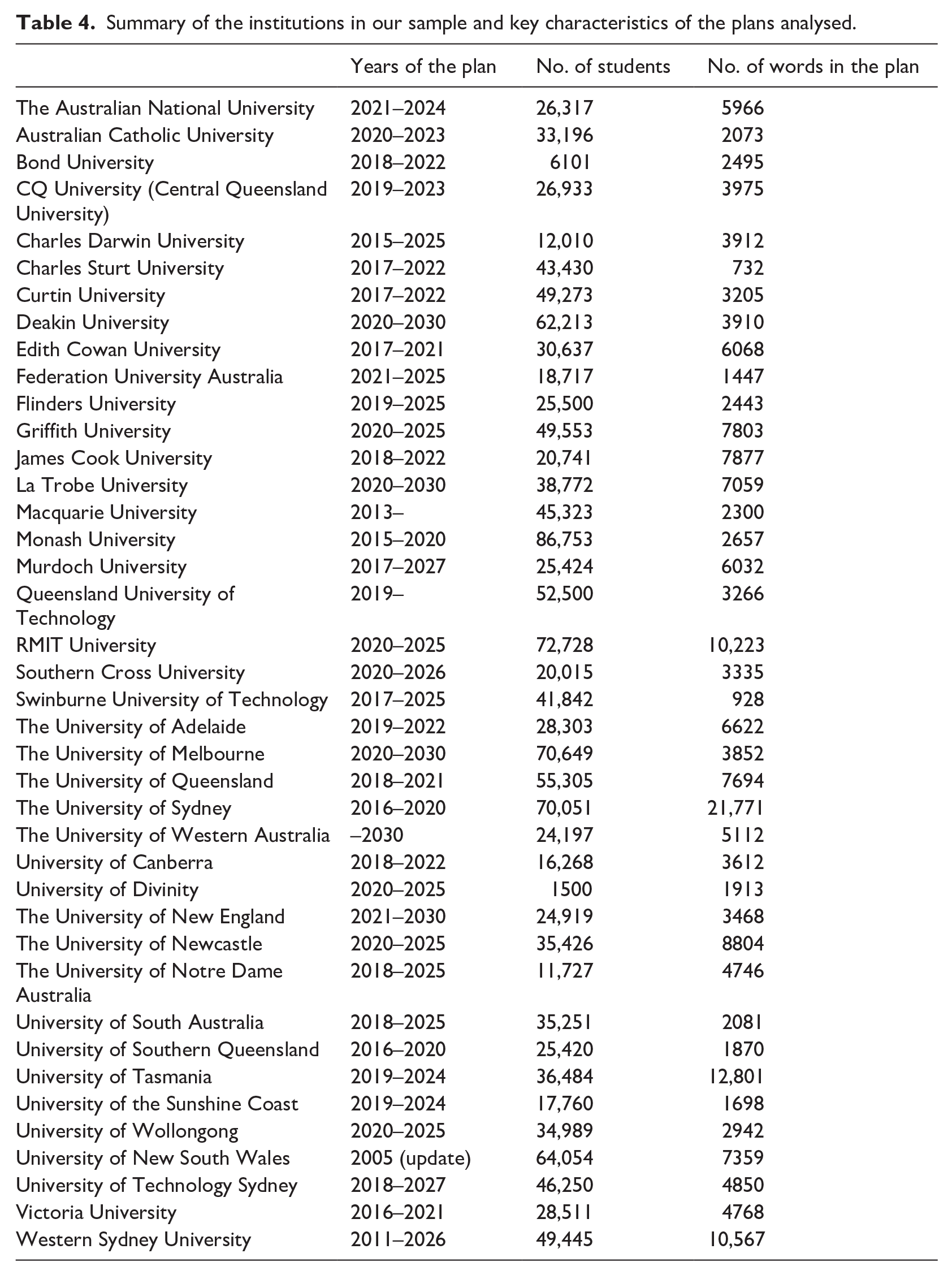
The plans pertain to the years from 2011 to 2030 covering periods from 4 years to 10. The longest plan in terms of words was from The University of Sydney (21,771 words, covering the period 2016–2020) and the shortest plan was from Charles Sturt University (732 words, covering the period 2017–2022). The average length of the plans was 5106 words.
Furthermore, to investigate how a set of universities in Australia compares to similar US entities as well as large Australian government departments, we performed data collection for these entities. Our goal here was only to establish a baseline: are Australian university plans as ‘rosy’ as similar institutions overseas or public-sector departments or is there something truly peculiar about Australian universities? Specifically, we have included the largest US universities in terms of student numbers in 2020 (the time of data collection for the Australian universities), and 10 of the largest Australian government departments with published strategic plans. Specifically, for the US, we included Arizona State University, University of Minnesota, Rutgers University, Florida International University, Georgia State University, University of Illinois, University of Central Florida, Texas A&M University, University of Florida and Ohio State University. For the Australian universities, we used the top 10 Australian universities in international rankings (see Table 1), which comprises the so-called Go8 plus UTS and Macquarie University. For the Australian departments, we included the Australian Taxation Office, Australian Department of Home Affairs, Services Australia, Treasury, Department of Communities and Justice, NSW Regional Health, NSW Department of Education, Victoria Department of Education and Training, Victoria Department of Health and Victoria Department of Jobs, Skills, Industry and Regions.
5.2. Data analysis
Our analysis is structured into two distinct but complementary phases. First, we conduct a sentiment analysis that spans three key groups: a selected group of Australian universities, a selected group of US universities and large Australian government departments. This component of our study is designed to harness statistical methods to uncover significant differences in sentiment scores among the strategic plans of these entities. By evaluating the tone and sentiment embedded within these documents, we aim to reveal underlying attitudes and emotional stances towards strategic objectives and institutional visions.
Following the sentiment analysis, our investigation delves deeper into the strategic content of the strategic plans of Australian universities. This analysis is aimed at discerning how these strategic elements align with or diverge from the theoretical frameworks and normative prescriptions found within the strategic planning literature outlined earlier. We seek to illuminate the extent to which contemporary strategic planning in higher education in Australia aligns with theoretical models, highlighting areas of convergence and divergence. This comprehensive approach allows us to not only assess the emotional valence of strategic planning documents but also to critically evaluate their substantive content in light of established strategic planning theories and practices.
5.2.1. Sentiment analysis
Sentiment analysis enables us to compare the overall sentiment tone between Australian universities, their US counterparts and Australian government departments. We aim to determine the emotional tone of a text, specifically whether the expressed sentiment is positive, negative or neutral. A more positive tone can be achieved by selectively focusing on positive content and by positively describing events and outcomes (Henry, 2008). A positive tone allows companies to focus on leaving an optimistic impression and to signal potential for improvement and progress. Sentiment analysis typically uses a scale from negative to positive, where values closer to −1 represent strong negative sentiment, values around 0 represent neutral sentiment and values closer to 1 represent strong positive sentiment.
We conducted sentiment analysis using VADER (Valence Aware Dictionary and sEntiment Reasoner) in Python (Hutto and Gilbert, 2014). VADER generates four key scores that reflect the emotional tone of a text:
These scores provide a nuanced picture of how sentiment is distributed across a document, with the compound score offering a summary measure of the text’s overall emotional valence.
5.2.2. Content analysis
We conducted text analysis using the Leximancer software on the 30 focal entities, that is, the 10 largest Australian universities, the 10 large USA universities and the 10 large Australian department as outlined earlier. Bibliometric analysis has gained business and management scholars’ attention with increasingly sophisticated analysis techniques (Devinney and Hohberger, 2017; Jayarathna et al., 2022). Leximancer is a text-mining software package that uses a Bayesian learning algorithm to analyse the most frequently used concepts within the text as well as the relationship between these concepts. A text-mining analysis using Leximancer is appropriate for this study because it provides us with an unbiased representation of the most relevant concepts – common text elements – and themes – groupings of uncovered concepts – from the textual data, which closely resembles the analysis conducted by a human coder. The results from Leximancer consist of (1) concepts which are represented as dots, and (2) themes which are the aggregation of closely related concepts and shown as circles in different colours.
6. Results
Table 5 synthesises the major themes from the strategic plans of the top 10 Australian universities, the top 10 Australian government departments and a matched set of 10 US universities. For Australian universities, prominent themes include ‘Students’, ‘Research’ and ‘University’, with a secondary emphasis on ‘Future’ and ‘Experience’. This focus reflects an overarching commitment to student engagement, partnerships with industry to advance applied research and reinforcing institutional identity. The inclusion of ‘Future’ and ‘Experience’ suggests a forward-looking ambition to address upcoming challenges while enhancing the overall student journey. However, these plans notably lack global and performance-related concepts reflecting an inward-facing strategy that prioritises the institution itself rather than external competitiveness or broader global trends.
Key content themes in the strategic plans of Australian universities, Australian government departments and US universities.
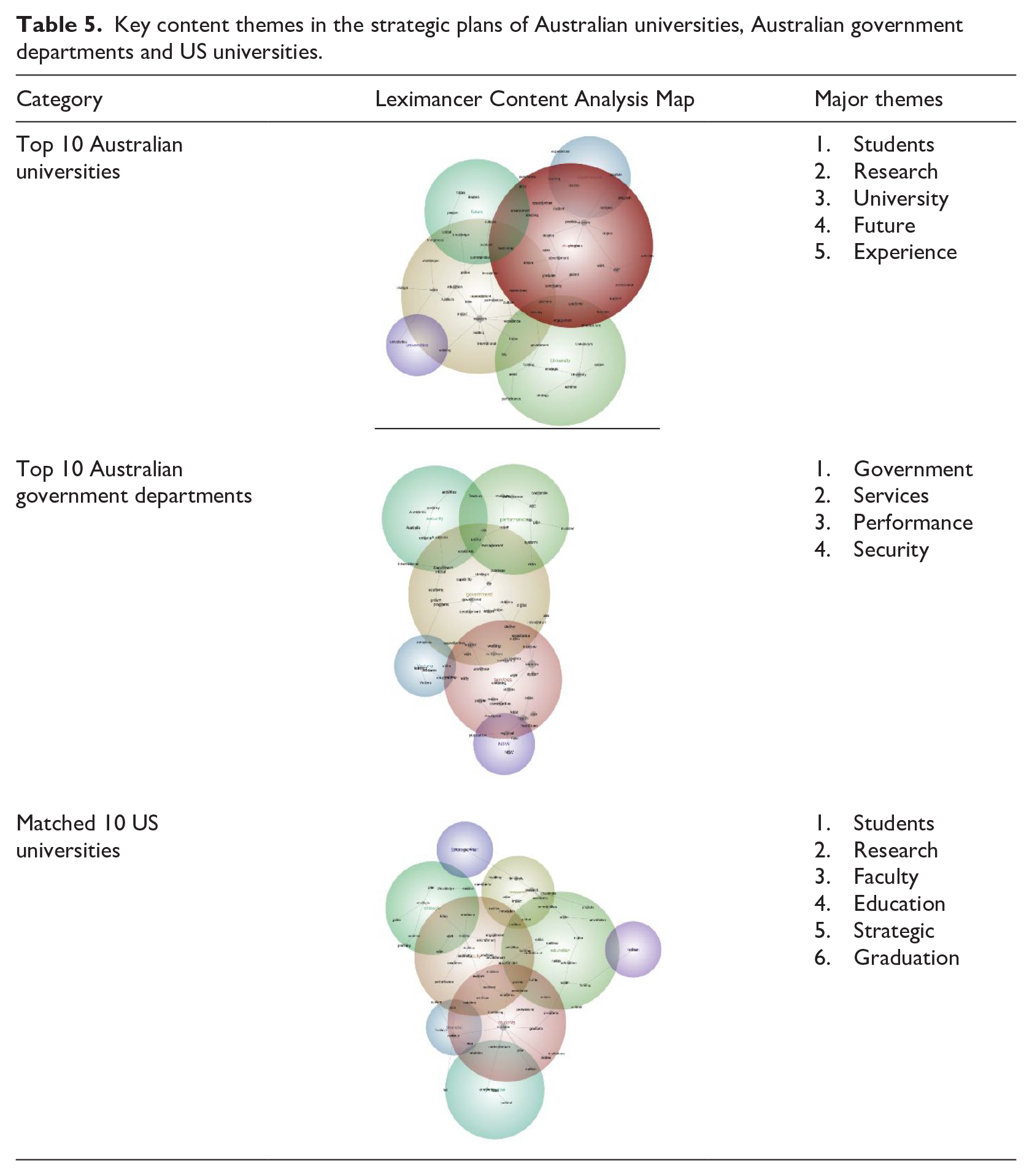
In contrast, Australian government departments prioritise themes like ‘Services’, ‘Government’, ‘Performance’ and ‘Security’, signalling a focus on delivering public services, executing policy and ensuring national or organisational safety. Meanwhile, US university plans emphasise ‘Students’, ‘Research’ and ‘Faculty’ as dominant themes, supplemented by ‘Education’, ‘Strategic’ and ‘Graduation’. These themes reflect a balanced focus on integrating faculty development, strategic planning and tangible outcomes such as graduation rates. Notably, US plans highlight innovation and public research impact, underpinned by transparency in funding and performance metrics. Compared to their Australian counterparts, US university plans adopt a more outcome-oriented approach, emphasising the interconnected roles of faculty and students in achieving institutional goals and placing greater weight on performance and accountability. This distinction reflects a more outward-facing, results-driven ethos in US university strategic planning.
6.1. Sentiment analysis
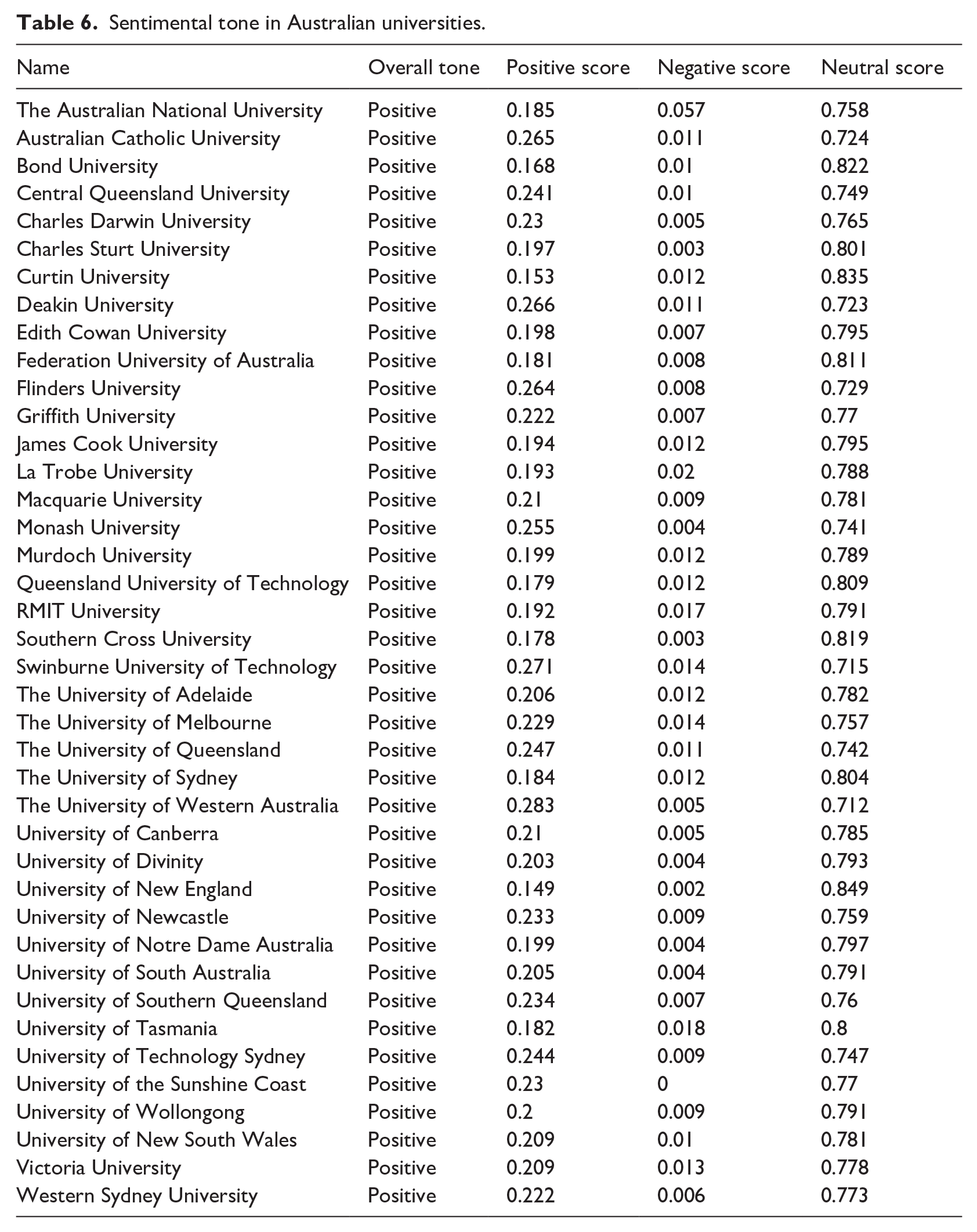
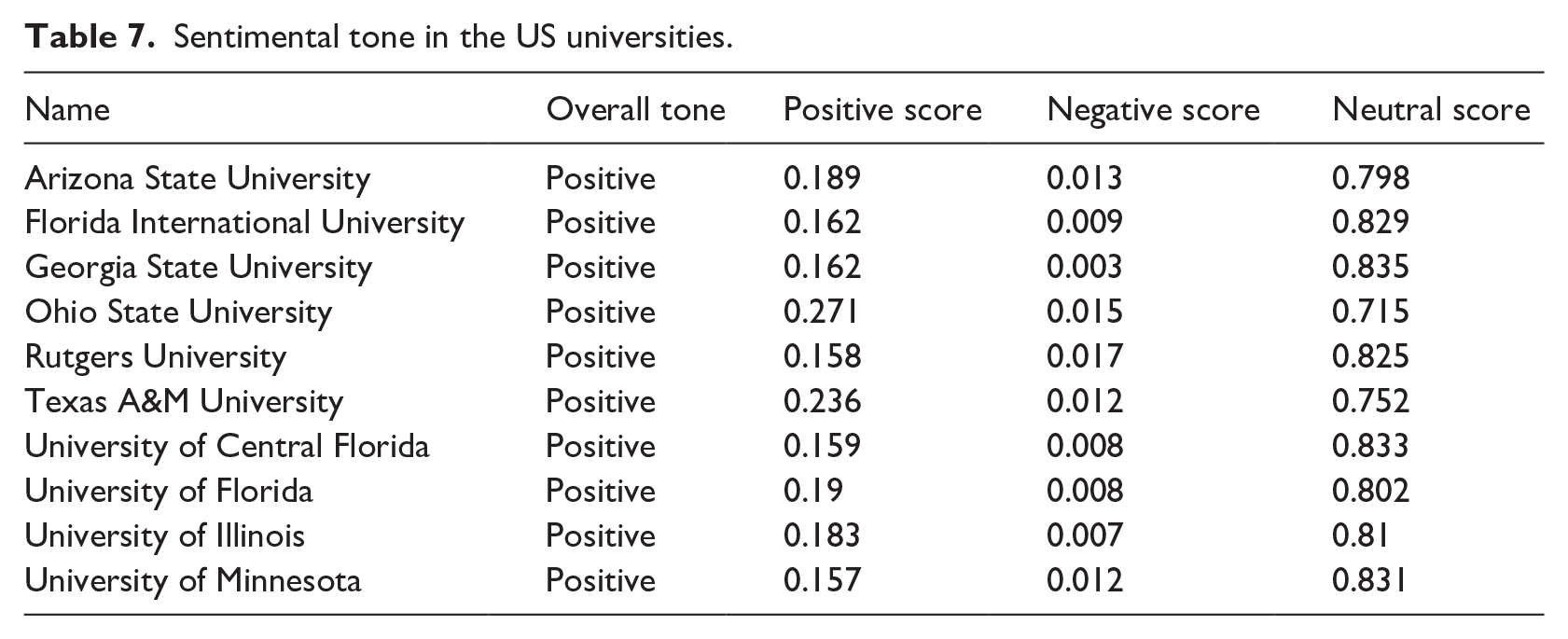
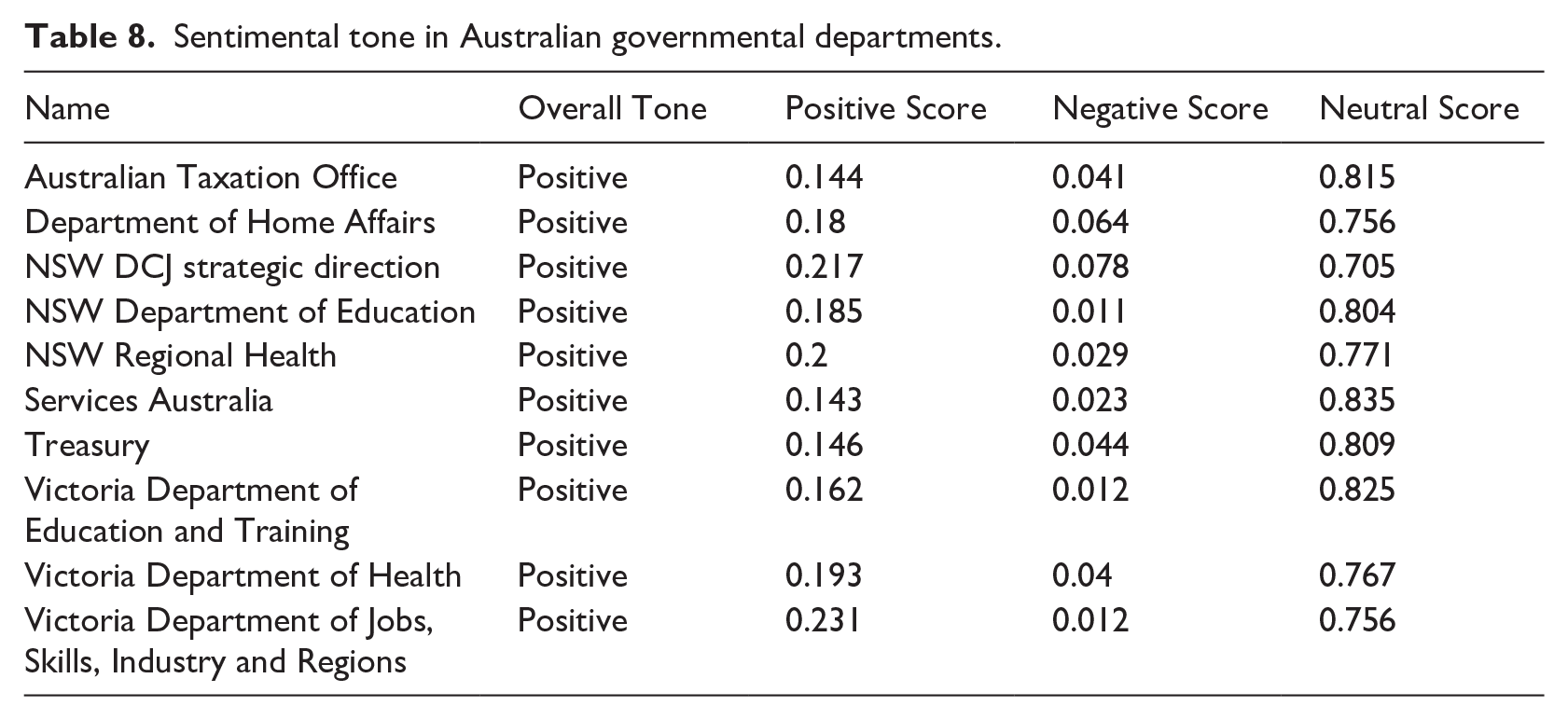
We identified four primary scores that were derived, providing a comprehensive overview of the sentiment conveyed in the provided text. The Compound Score, featured in the first column of Table 6–8, serves as a normalised and weighted composite metric, capturing the overarching sentiment of the reports. A Compound Score exceeding 0.5 indicated a predisposition towards positive sentiment, while a negative score falling below −0.5 signified a tendency towards negativity. Scores between −0.5 and 0.5 suggested a more neutral sentiment. Relative heatmaps for the other scores (positive, negative and neutral) are depicted in Tables 6–8. In addition, the Positive Score denoted the proportion of positive sentiment, the Negative Score represented the proportion of negative sentiment and the Neutral Score reflected the proportion of neutral sentiment within the text. This ensemble of scores collectively furnished valuable insights into the emotional tenor and distribution of sentiments within the analysed reports. The analysis was designed to deliver an impartial evaluation of sentiment, contributing to an enhanced comprehension of the emotional context encapsulated in the provided reports.
Sentimental tone in Australian universities.
Sentimental tone in the US universities.
Sentimental tone in Australian governmental departments.
6.1.1. Comparison with US university strategic plans
In order to test our intuition on the positivity of Australian plans in comparison to the US ones, we employed a statistical test commonly used in sentiment analysis: the Wilcoxon test, which provides insights into the location of the distribution. Our Wilcoxon test reveals significant material differences in positivity between Australian and US University Strategic Plans, with Australian universities significantly more positive than USA universities (p-value = 0.01054). The positivity score is a component of the compound score generated by VADER and specifically reflects the level of positive sentiment in the text. Because the primary goal is to analyse positivity, that is the most appropriate metric to focus on (‘positivity score’).
The differing tones between the strategic plans of Australian and US universities may reflect broader cultural, economic and regulatory differences between the two countries. Australian universities, perhaps buoyed by governmental support mechanisms and a strong international education market, may feel more confident in their forward-looking statements. On the other hand, US universities, facing intense competition both domestically and internationally, as well as fluctuating funding models, might find it necessary to adopt a tone that balances optimism with realism, explicitly addressing the strategies they will employ to navigate their challenges. The more positive tone of Australian universities’ strategic plans suggests a focus on leveraging strengths and opportunities, while the more cautious tone of US universities reflects a strategic acknowledgement of the challenges inherent in achieving their missions. Understanding these tonal differences is crucial for stakeholders, including students, faculty and policymakers, as they navigate the higher education landscape and contribute to shaping the future direction of these institutions.
6.1.2. Comparison with Australian government department strategic plans
The analysis of the sentiment tone within strategic plans of Australian universities in comparison to government departments reveals a notable variance, with universities displaying a significantly more positive tone. We performed the same type of analysis we did for the US universities to the set of government bodies in Australia. The Wilcoxon test reveals significant material differences in positivity between Australian and government departments, with Australian universities significantly more positive than the Australian government departments in question (p-value = 0.006289).
Australian universities often frame their strategic plans around themes of innovation, growth and global leadership. The language used tends to be forward-looking and aspirational, focusing on opportunities for expansion, research breakthroughs and contributions to global knowledge and society. This positive sentiment is reflective of the educational sector’s emphasis on creating futures, inspiring students and driving societal progress through knowledge and discovery.
In contrast, government departments’ strategic plans, while also focusing on improvement and development, tend to adopt a more pragmatic or neutral tone. The language used often reflects a commitment to policy objectives, efficiency, public service improvement and fiscal responsibility. There is a noticeable emphasis on addressing current challenges, managing risks and ensuring stability and security. The tone may also reflect the constraints and pressures of political accountability, public scrutiny and the need to balance diverse stakeholder interests.
6.2. An appraisal of the strategic plans of Australian universities
In appraising the strategic plans of Australian universities, this section delves into critical areas where these documents frequently fall short of providing comprehensive guidance for future direction and accountability. Despite the optimistic tone often found within these plans, a closer examination reveals significant gaps in three major areas: (1) the absence of clear definitions of challenges and risks, (2) the lack of explicit strategic positioning and (3) the absence of clear metrics and measures for future success. These omissions raise questions about the effectiveness of such strategic plans in navigating the increasingly complex landscape of higher education.
6.2.1. Failure to engage with strategic challenges and risks
Despite widespread forecasts of disruption in higher education – driven by marketisation, privatisation, technology, globalisation and funding shifts – the strategic plans of the universities examined show little evidence of the radical change anticipated. Although various commentators highlight impending structural shifts, university strategies appear focused on incremental improvements or what Christensen (2013) calls ‘sustaining innovation’, rather than the ‘disruptive innovation’ that would transform the educational model.
Australian university strategic plans reveal a consistent emphasis on aspirational narratives centred on growth, innovation and global leadership. While this reflects ambition and confidence, it is accompanied by a notable lack of engagement with the immediate challenges facing the sector. This raises concerns about how well-prepared institutions are for a future shaped by rapid global change, technological evolution and funding uncertainty.
A key under-addressed risk is the sector’s heavy reliance on international student fees (Coaldrake and Stedman, 2016). Despite this revenue source being highly vulnerable to geopolitical shifts, visa changes, health crises and global competition, strategic plans rarely engage with these dependencies or articulate mitigation strategies. This oversight suggests a critical gap in preparedness for volatility in the international student market. Similarly, technological disruption receives limited attention. Although digital transformation, online platforms and artificial intelligence could substantially reshape the traditional university model, most plans lack robust consideration of how these developments might affect pedagogy, engagement, outcomes or competitive dynamics. Funding sustainability is another largely overlooked issue. Shifting government support, rising infrastructure demands and investment in research and quality teaching present complex financial pressures. However, the strategic plans seldom outline how universities intend to ensure long-term financial resilience, leaving a disconnect between strategic ambition and economic reality.
While the positive tone of these documents highlights a commitment to excellence, the lack of strategic engagement with risk, particularly regarding international student dependency, technological disruption and funding fragility, represents a significant gap in strategic planning. In contrast, several US universities, such as the University of Washington, confront such issues directly. Its Sustainable Academic Business Plan addresses uncertainty in public funding, the need to diversify income streams, rising competition, affordability imperatives and the growing presence of non-traditional institutions. These challenges are not only addressed in strategy documents but also distilled into concise staff-facing summaries to reinforce awareness of external pressures. 4
6.2.2. A lack of strategic positioning
In the strategic plans of Australian universities, significant similarities prevail (Marginson, 1999). Most plans highly prioritise research and the educational experience, illustrating a universal valorisation within these domains. Interestingly, the discourse around research excellence appears decoupled from research rankings, indicating a broader conceptualisation of research value beyond just numerical standings. Similarly, discussions on enhancing student experiences seem not to be directly tied to Quality Indicators for Learning and Teaching (QILT) score surveys, which assess student satisfaction. This suggests a strategic emphasis on portraying university achievements and aspirations.
Despite the varied rankings and reputations of these institutions in research and teaching excellence, Figures 3 and 4 reveal little discernible differentiation in strategic positioning: institutions recognised for their research prowess show no distinct strategic emphasis in their strategic plans as against universities celebrated for their teaching quality. This finding underscores an absence of strategic differentiation based on core academic functions. An exception is the private Bond University which places a much stronger emphasis on its strategic positioning on education and teaching rather than research.
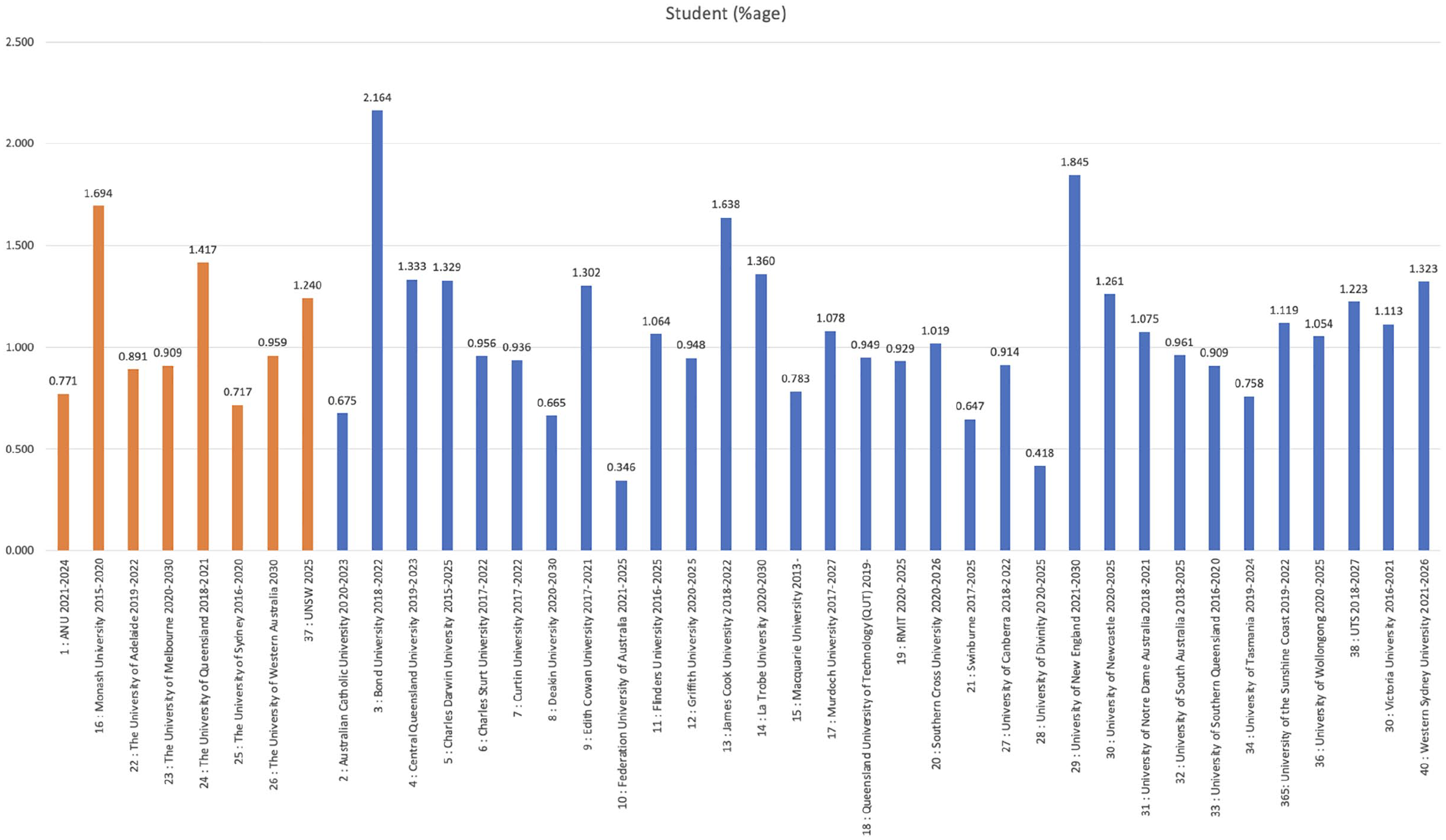
Inclusion of student-related text across Australian universities.
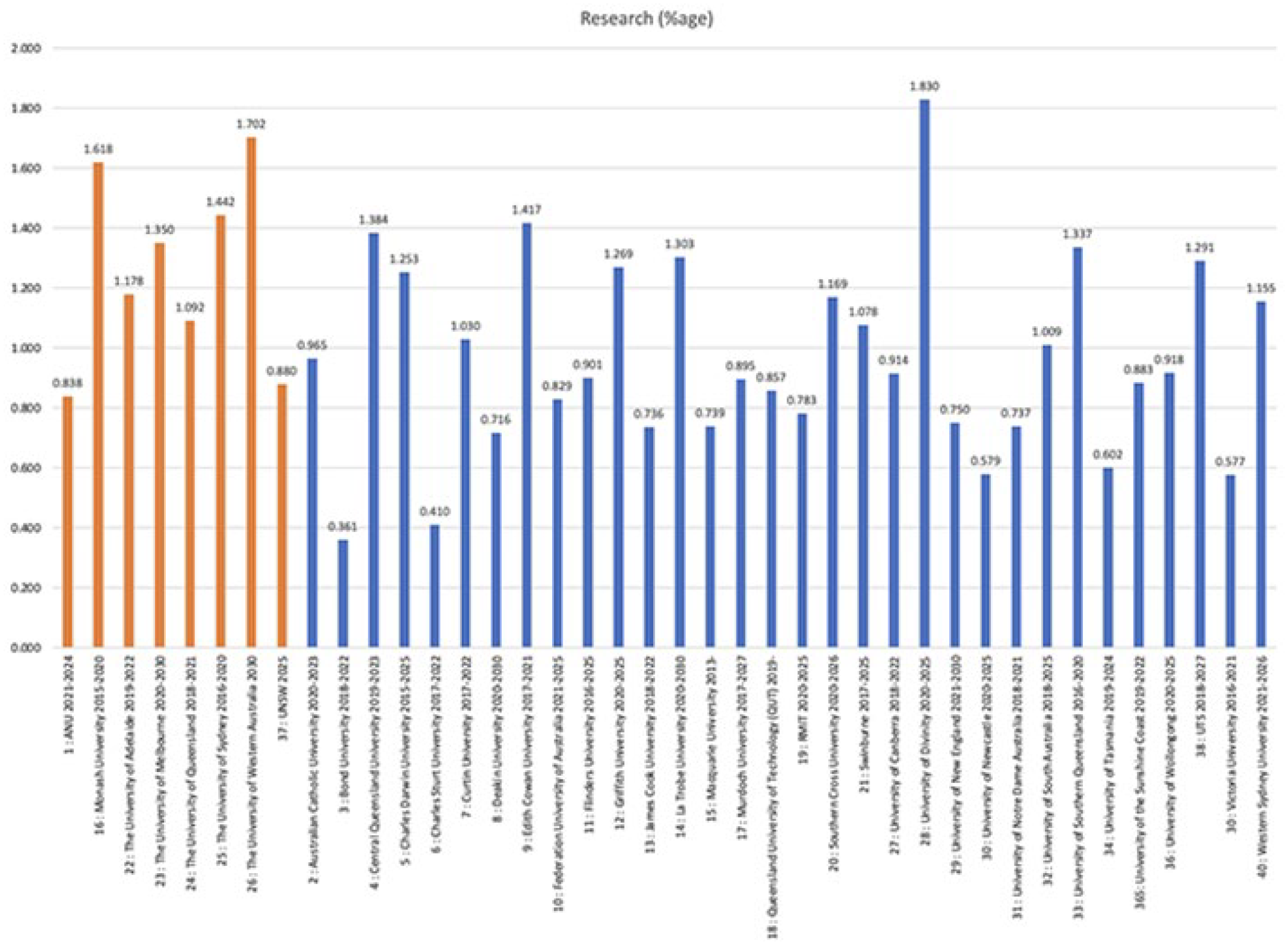
Inclusion of research related text across Australian universities.
In spite of its disruptive potential, there is relatively limited engagement with notions of digital, online and technology in the strategic plans of Australian universities. As reflected in Figure 5, Deakin, University of New England, ANU and Swinburne include more text relating to these themes, which partly reflect their former status as leaders in distance education which places them in a better position for a future where online and technology are an integral part of education. These topics are not widely discussed elsewhere.
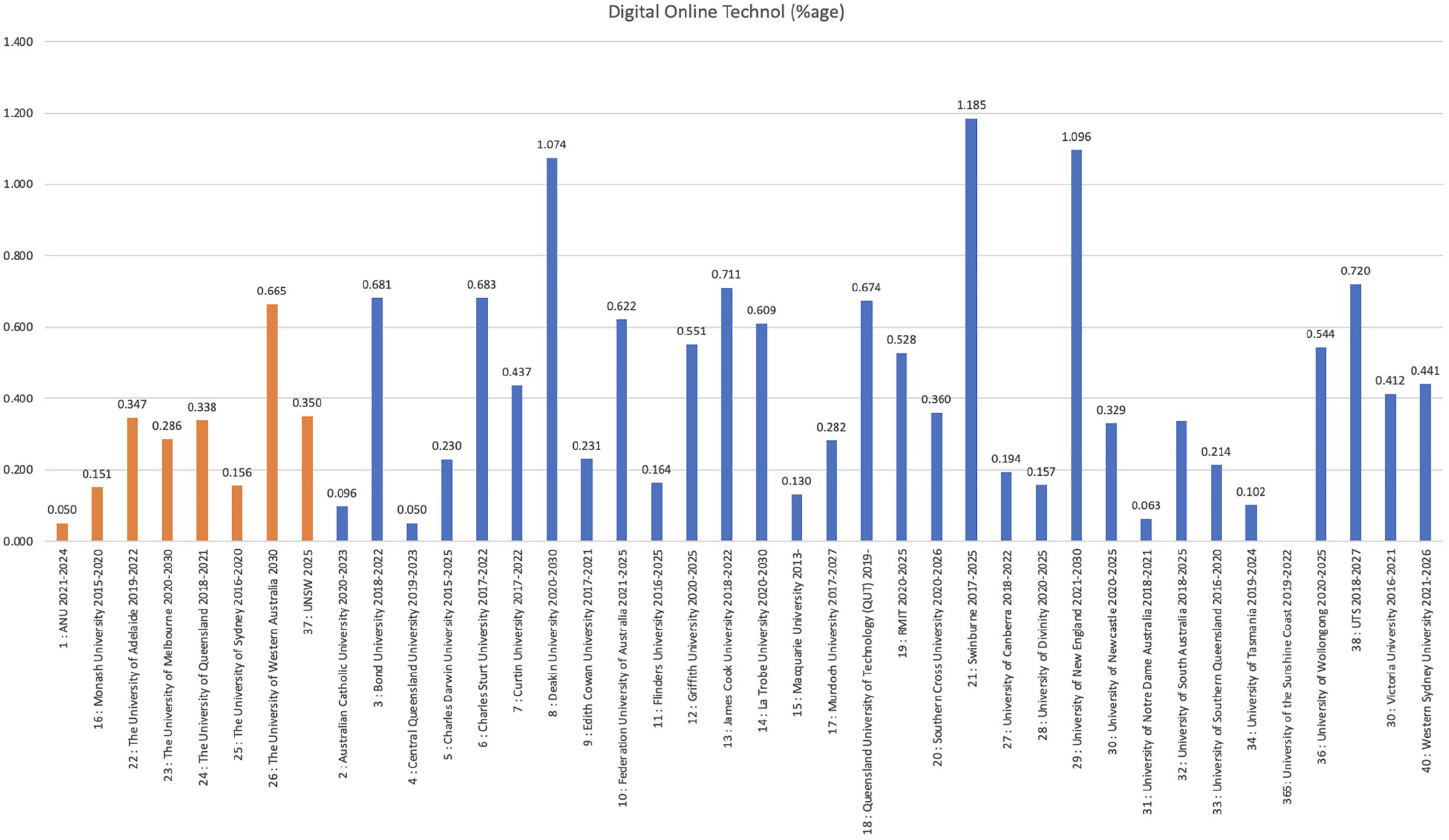
A histogram of coverage of online/digital/technology themes across Australian universities.
The strategic plans of Australian universities exhibit a noteworthy pattern of considerable homogeneity, with a few institutions demonstrating unique ‘fragments’ of strategic positioning. This commonality reflects a broader trend within the higher education sector, where universities often adopt similar goals and values in response to common challenges and opportunities. These include aims related to research excellence, teaching quality, student experience and community engagement. Such objectives are driven by shared pressures including compliance with regulatory frameworks.
6.2.3. The absence of clear metrics and measures of future success
The strategic plans varied in how they were structured and their content. While all plans included broad visions for the future, only some outlined specific objectives reflecting deliberate choices. Indicators or measures to assess progress towards these objectives were inconsistently included, and even fewer plans set clear targets or ambitions aimed at achieving high standards or benchmarks. This inconsistency suggests a range in the level of detail and clarity of goals across different university strategic plans.
In keeping with Strike and Labbe’s (2016) analysis of the strategic plans of UK universities, we found that the strategic plans featured some notable common textual elements. They often began with broad, future-oriented statements that outlined goals without specifying concrete steps, frequently employed the future tense to describe aspirations and used conditional language to suggest outcomes dependent on certain actions. There was a notable use of collective pronouns, blurring the specifics of responsibility and creating an impression of unified action and belief. In addition, the language was designed to persuade and evoke emotion, aiming to align the reader with the institution’s values and missions. Statements were assertively framed to convey confidence in the institution’s direction and outcomes.
A significant majority of Australian universities—32 out of 40—do not use the term ‘metrics’ in their strategic plans, and 10 also omit the word ‘measure’, highlighting a broader lack of clarity and specificity in defining how strategic success is to be assessed. Beyond the absence of these terms, most plans also fail to attach quantifiable targets to strategic goals. By way of contrast, institutions such as the University of North Carolina (UNC) in the US provide a more robust model. UNC’s 2017–2022 strategic plan links goals to concrete performance indicators, target outcomes and timelines, with specific focus areas such as enrolments from low-income or rural students. These indicators are not only precisely defined but also allow progress to be tracked over time, supporting greater accountability and ongoing improvement.
7. Discussion
A strategy document is a reflection of the collective efforts of individuals across the organisation and reflects their mindsets, preferences, beliefs and biases (Garbuio et al., 2011). Although subject to widespread criticism, (George et al., 2019) find that strategic planning significantly and positively impacts organisational performance through signalling strategic priorities, with a stronger effect observed when performance is measured as effectiveness and strategic planning is formalised. This positive influence persists across sectors (public and private) and geographical contexts (Arasa and K’obonyo, 2012). This underscores strategic planning’s role in achieving organisational goals, particularly in terms of effectiveness, rather than efficiency gains.
Within the framework of legitimacy theory, strategic plans serve as mechanisms for Australian universities to align themselves with societal expectations and institutional norms, particularly in a challenging and competitive environment. The aspirational tone and thematic uniformity observed in these documents reflect an overarching effort to project an image of compliance, innovation and social responsibility. However, this emphasis on legitimacy often comes at the expense of substantive engagement with critical challenges, risks and strategic differentiation.
Australian universities’ strategic plans are typically glossy and highly stylised documents, carefully designed to present the institution in a positive light to external readers, and with much borrowing in format and language from corporate plans (Salmon, 2024). Legitimacy can be understood as ‘a generalized perception or assumption that the actions of an entity are desirable, proper, or appropriate within some socially constructed system of norms, values, beliefs, and definitions’ (Suchman, 1995: 574). In the Australian university context, universities seek to legitimise through appropriate strategies to meet the desired norms perceived by the public (Mintzberg, 1994) resulting in a similar thematic coverage. We find a high degree of uniformity (Howes, 2018) reflecting an increased conformity in articulating the purpose and functions of higher education in Australia. We also find that few plans are fulsome about the key challenges in the sector. Moreover, even though some universities are more research or teaching-focused than others and vary significantly in size, there is a lack of clarity as to how any one university stands out and carves a strategy addressing some markets (and not others) nor measures performance. Instead, the strategic plans appear to serve not only as documents outlining generic future directions but also as tools for generating commitment, reflecting consensus and embodying the organisation’s aspirations in a distinctively positive and unifying manner.
Langley (1988) suggests that formal strategic planning can play a variety of important and useful roles peripheral to the strategy development and implementation process – roles which we label ‘public relations’, ‘information’, ‘group therapy’ and ‘direction and control’. Our review of strategic plans here, coupled with our experience as academics, underscores these peripheral roles. Langley (1988) argues that formal strategic planning’s effectiveness transcends the generation of strategic options or the direct formulation of strategies. Instead, its value lies in supporting organisational leadership by providing a structured process for engaging with and mobilising internal and external stakeholders around strategic initiatives. This perspective shifts the emphasis from planning as a purely analytical exercise to a more holistic view that recognises the social and communicative dimensions of strategic planning.
From a signalling theory perspective, the absence of explicit metrics, strategic positioning and detailed operational plans raises questions about the credibility and efficacy of the signals in the strategic plans of Australian universities. The lack of measurable outcomes and clear benchmarks diminishes the plans’ utility as a roadmap for internal and external stakeholders. The absence of defined measures in Australian strategic plans represents a significant deviation from the prescriptive strategy literature, which has demonstrated that performance measurement and metrics that are aligned with strategy enhance organisational performance (see Kadak and Laitinen, 2021). While we note the significant challenges of overall measurement and rankings of universities generally (see Johnes, 2018), the benefits of aligned metrics and strategy are manifold. A commitment to some form of measurement communicates priorities (Kaplan and Norton, 2001), aligns behaviours and attitudes (Micheli and Manzoni, 2010) and permits strategic zooming out and zooming in (Kanter, 2011). While this may be seen to be too commercially sensitive for public strategic plans, it is worth noting that several international universities incorporate clear metrics in their strategic plans, and the University of Washington goes further to hyperlink internal documents with even greater specificity.
7.1. Theoretical contribution
This study extends the theoretical literature on higher education strategic planning by demonstrating that formal strategic documents serve as instruments of signalling and legitimation. First, we extend signalling theory (Connelly et al., 2011) by showing how public universities – as non-market actors – engage in deliberate signalling through the discursive framing of aspirational goals and commitments. By framing visionary goals and emphasising excellence, institutions signal responsiveness to external performance pressures even in the absence of binding accountability mechanisms (Toms, 2002). These rhetorical signals, articulated in positive and unifying terms, are intended to appeal to diverse stakeholders and project an image of high standards and unity (Connelly et al., 2011; Cornut et al., 2012). Second, our findings refine legitimacy theory (Deegan, 2002; Massey, 2001; Suchman, 1995) by showing that strategic plans operate as tools of symbolic conformity. Universities align the language and themes of their plans with prevailing sectoral norms to affirm moral and cognitive legitimacy with key audiences (Massey, 2001; Suchman, 1995). In this way, strategic plans serve more as ceremonial endorsements of institutional values than as detailed strategic roadmaps (Cornut et al., 2012; Mintzberg, 1994). Collectively, our results position university strategic plans as rhetorical artefacts deployed within a contested institutional environment (Bryson, 2010; Cornut et al., 2012); primarily acts of institutional maintenance and performance rather than substantive strategy analysis.
7.2. Practical implications
Our study thus contributes to the broader understanding of strategic planning practices and highlights the genre’s unique characteristics within the institutional contexts of Australian universities (Cornut et al., 2012). We are left with a suite of strategic plans that take shape as generic, aspirational symbols of positivity; love sheets for stakeholders rather than attempts to grapple with a strategy to navigate an uncertain future. The remit of these documents is certainly problematized by the polysemic nature of universities, which embody civic, economic and sacred meanings simultaneously (Eaton and Stevens, 2020). Indeed, some argue that strategic plans are not about strategy but about managing complex stakeholders. However, given the extensive consultation processes (exemplified by Table 3) that underpin the strategic plans of Australian universities, this represents a dismal return on effort. Many strategic plans present stakeholders with high-level objectives and vague outlines for achieving them—fragments of a larger, often incomplete strategic puzzle. Our review revealed a recurring lack of clarity and depth, suggesting limited awareness or deliberate avoidance of core strategic components. Notably, the heavy reliance on international student revenue and potential for AI disruption, frequently underacknowledged, demands a more proactive stance. In addition, the absence of clear metrics and measurable goals impairs universities’ ability to track progress and adapt. Embedding rigorous, quantifiable objectives would strengthen priority signalling, accountability and strategic responsiveness (Hinton, 2012).
For policymakers, the study underscores the importance of fostering an environment where universities are encouraged to develop distinct strategic positions that align with their unique strengths and challenges. It is widely agreed in the higher education literature that institutional differentiation is beneficial (Meek et al., 1996). Diverse educational systems typically perform more effectively because they address a variety of student needs, support social mobility by offering multiple access points and progression pathways, align more closely with labour markets that demand a range of graduate skills and enable more efficient delivery of education and research through specialisation. The current trend towards homogeneity in strategic plans may dilute the competitive edge of institutions and hinder their ability to innovate or respond effectively to sectoral shifts. Encouraging universities to differentiate themselves through targeted strategies can lead to a more dynamic and resilient higher education sector.
8. Conclusion
Strategy can be a powerful tool to grow, shape or transform a university, while positively engaging and enabling key stakeholders in the process. University strategic plans are one of the few public documents to express how university leaders, students and academic and administrative staff are expected to contribute to meeting obligations. Research relating university plans has tended to emphasise a tendency towards homogeneity and the ritualistic nature of these plans, which often serve more as promotional tools than actionable strategies (Morphew and Hartley, 2006; Shah, 2013; Zipparo, 2023). Our analysis confirms that Australian universities tend to project a positive outlook in their strategic plans, particularly relative to US universities and Australian government departments. However, this tendency towards optimism frequently overlooks critical strategy components like detailed competitive analyses, strategic positioning and metrics for success. The absence of clear engagement with critical challenges, strategic positioning and measurable success metrics underscores significant gaps in strategic planning that could hinder universities’ preparedness to navigate an increasingly uncertain higher education landscape. We conclude that strategy in Australian universities is non-linear and the site of multiple contradictions, and that the work of strategy documents is accomplished through rhetorical forms in which aspiration and optimism are as important as rational planning.
8.1. Limitations
While this study offers valuable insights into the strategic planning practices of Australian universities, several limitations should be noted. First, it focuses solely on publicly available strategic plans, excluding internal documents, scenario planning and operational strategies that may provide more detailed and actionable insights. This limits understanding of how diverse stakeholders, including faculty, students, administrators and external partners, engage with and shape strategic planning. As a result, the findings may not fully reflect the breadth of strategic activity within institutions. In addition, the study’s comparative scope centres on Australian universities, with limited reference to US institutions and Australian government departments. Including universities from other regions, especially emerging markets or systems with different funding models, could enrich the analysis. Finally, the study’s temporal range (2000–2025) may not fully capture the evolving nature of strategic planning in response to rapid external changes such as technological shifts, policy reforms or global disruptions.
8.2. Future research opportunities
Building on this article’s findings and limitations, several avenues for future research emerge. One promising direction is to explore the impact of strategic plans on actual university performance over time. Longitudinal studies that track the implementation of strategic plans and their outcomes could provide valuable insights into the effectiveness of these documents as tools for guiding university operations and achieving institutional goals. Further inquiry could also explore stakeholder engagement in the planning process, examining how faculty, students and external partners are involved in both development and execution. Such work could clarify the inclusivity and responsiveness of these documents, while also exploring stakeholder perceptions of their relevance and utility.
Theoretical Contributions
• Demonstrates how strategic plans act as signals of aspirational alignment and external responsiveness, extending signalling theory to non-market public institutions.
• Refines legitimacy theory by showing how plans function as symbolic conformity tools, aligning with sectoral norms to secure moral and cognitive legitimacy.
• Positions university publicly available strategic plans as rhetorical artefacts within a contested institutional field, serving institutional maintenance rather than substantive guidance.
• Highlights the lack of actionable metrics and measurable targets in most Australian university plans, limiting their effectiveness for guiding strategic action.
• Reveals a disconnect between extensive stakeholder consultation and strategic depth, with many plans remaining vague, generic and overly aspirational.
• Underscores the need for greater institutional differentiation to avoid sectoral homogeneity and promote a more dynamic, resilient higher education system.
Footnotes
Acknowledgements
We gratefully acknowledge the research assistance provided by Gloria Gheno and Susanna Pang, whose support contributed meaningfully to this study. We are also grateful to the editor and anonymous reviewers of Australian Journal of Management for their constructive comments and suggestions.
Final transcript accepted 15 May 2025 by Miles Yang (Deputy Editor).
Funding
The author(s) received no financial support for the research, authorship, and/or publication of this article.
