



Abstract
Drawing on data collected for a comprehensive workforce survey of the audio-visual camera profession in Australia (n = 582), this article investigates discrimination and devaluation in screen industry workplaces. Employing a mixed method approach, we analyse the intersection of gender, sexuality and ethnicity to show that group differences play an important role in understanding workplace cultures defined by power imbalances. To address the problem of these toxic workplaces, we propose the importance of attending to job precarity and suggest the need for policymakers, guilds and trade unions to work collaboratively to set and enforce standards of workplace equality and respect.
JEL Classification:
Z13
Keywords
1. Introduction
Work culture shapes the ways in which individuals engage with and are constrained in their workplaces (Green, 2005; O’Brien, 2019). Factors such as gender, sexuality or even how someone looks or speaks take on importance and shape perceptions of how well a person ‘fits’ in their workplace. Such perceptions may negatively affect opportunities and outcomes for workers. The film sector presents an ideal opportunity to examine the effect of workplace culture on opportunity and experience. Despite persistent calls to achieve greater social equity in the industry, the issue of fixing toxic workplace cultures has largely been sidestepped by policymakers. Strategies for redressing the evident gender and sexual inequalities of the Australian screen industry typically rely on policies that propose personal skills development and confidence training for members of under-represented groups. One of the limitations of this approach is that it ignores the role that entrenched discriminatory practices and workplace norms play in creating inequality at work. Workplace norms and culture trigger actions and reactions that perpetuate a toxic system and reinforce social inequities. To address these entrenched practices, change is required at multiple levels, from the institutional (the agencies and guilds that endorse the industry), the organisational (the business and operational layer of the industry), the team (the assemblages of production personnel), as well as the individual level.
In this article, we develop a taxonomy of workplace power and devaluation and explore how both are expressed and experienced in the Australian screen industry. ‘Workplace power’ is defined as ‘the probability that one actor within a social relation will be in a position to carry out [her] own will despite resistance’ (Weber, 1968: 53), and we define ‘devaluation’ as the tendency for groups that are less socially and culturally valued to be attributed a lower status in the workplace (Magnusson, 2009). In cultural workforces such as film crews, where cis-heterosexual men are paid more and occupy higher status roles than women and other groups, we argue that rather than simply being the majority, they can be considered a dominant group. In describing them as such, we draw on the extensive international literature detailing the prevalence of gender inequality in cultural and creative industry workforces (Bielby and Bielby, 1996; Conor et al., 2015; Eikhof and Warhurst, 2013; Hennekam and Bennet, 2017).
We focus on understanding and interrogating an intersectional view of gender in both dominant and under-represented cohorts of camera crews. Intersectionality is a theoretical framework that connects multiple interlocking systems of privilege and oppression (e.g. racism, sexism, ableism, homophobia) to the individual experience of multiple social categories (e.g. race, ethnicity, gender, sexuality, age, ability, socioeconomic status) (Crenshaw, 1990). Although it originated in feminist legal studies, intersectionality is valuable for its insistence that equity, diversity and inclusion studies provide analysis of the multiple and multi-faceted structures of domination that result in exclusions and inclusions in the workplace (Harvey and Khorana, 2020). In other words, in using this theoretical framework, we do not equate analysis of gender inequality with the study of heterosexual cis-gender women only (Eikhof et al., 2019: 848). Instead, we explore differences both between different genders (including non-binary genders) as well as differences that emerge within the dominant gender, by examining intersecting factors such as sexuality and race/ethnicity.
Gender equity policy interventions which focus on improving self-advancement, such as those used within the Australian screen industry, have the pernicious effect of implying that individuals are somehow solely responsible for their own progress, and that their self-improvement will result in industry-wide change. Ryan (2022) has addressed the mistake of understanding equality in terms that merely ‘emphasises training for individuals instead of overhauling systems and cultures’ (p. 403). For Ryan, the far more serious challenge that will lead to lasting change lies in redressing entrenched discriminatory practices, which become workplace norms. This is consistent also with Morgenroth et al. (2022), who find that workplace gender inequality initiatives should tackle inequalities of consequences rather than simply encouraging women to ‘lean in’ (Sandberg, 2013).
It is in this theoretical and policy context that our investigation of workplace power and devaluation in Australian camera departments occurs. We base our study on a wide-ranging representative sample of members of Australian film and television camera crews (n = 582) that were surveyed with the support of the Australian Cinematographers Society (ACS). Using survey responses, we identify relevant variables associated with the expression of workplace power (such as network access, involvement in hiring decisions) and experience of devaluation (such as experiencing various forms of discrimination). We further operationalise variables designed to reflect workplace values and perceptions of workplace culture (such as attitudes towards diversity, discrimination awareness, work–life balance) to understand differences across the groups we identify. As part of our mixed methods approach, the variables we use in the quantitative analysis are complemented with the constructs and emergent themes that arise from the textual analysis of open-ended responses.
The aims of our article are twofold. First, we assess how career outcomes as well as reported levels of day-to-day discrimination in camera crews vary according to participants’ self-identified characteristics relating to gender, sexuality and race/ethnicity. Second, we examine the role that workplace culture plays in entrenching discrimination. Traditional employment anti-discrimination efforts have largely ignored the role that dominant values and culture play in perpetuating workplace discrimination (Green, 2005; Ryan, 2022); however, in this article, we present evidence that workplace culture plays an important role in shaping inequalities. In an industry that primarily relies on social relationships for employment opportunity and success (Ferriani et al., 2005; Grugulis and Stoyanova, 2012; Jones, 1996), understanding the ways in which workplace values and work culture can be a source of discrimination is critically important.
2. The Australian screen industry
2.1. Defining the screen camera department
While this study focuses on Australian screen camera departments, the content produced by the camera departments (included in our sample) circulates in a global audio-visual market. The range of film and video produced by those who participated in the survey is broad including series and features streamed through online distributors such as Netflix, feature films including co-productions shot both onshore and offshore, advertising commercials, live broadcast news and current affairs programming and so on.
Within the context of the screen production sector, the camera department is considered a distinct employment setting, and is made up of a variety of personnel roles headed by the cinematographer, also titled Director of Photography (DOP) in Australia. This role is typically not considered to be a key ‘creative’ role for the purpose of film industry analysis; however, it does occupy a critical professional and expressive role in the film and television industries (Wheeler, 2005). On a small project, the DOP may occupy a number of roles, whereas on a larger project such as a feature film, this work would be undertaken by different people assigned to specific roles as camera operators, camera assistants (first assistant, sometimes called the focus puller, and second assistant, sometimes called the clapper loader), gaffers, video split operators and grips. Many projects have multiple camera teams, often called ‘units’. The DOP may have hiring responsibility for the camera crew, although on very large productions, that responsibility might be delegated to the first assistant camera. Together, these various roles make up the screen camera department or crew which are organised in a clearly demarcated hierarchy from the DOP down.
2.2. International comparison and benchmarking
Although our study focuses on camera departments within Australia, the findings we draw concur with international evidence that points to deeply entrenched discrimination within the screen industry. In this respect, Australian camera crews, like many found in screen industries around the world, are characterised by a pronounced gender disparity. Without exception in the global screen industries, men take up the majority of camera crew positions – by a long shot. For instance, the percentage of women working as cinematographers in the top 250 Hollywood movies has increased only two percentage points from 4% in 1998 to 6% in 2021 (Lauzen, 2021). In broadcast and streaming TV programming, the result is very similar with 94% of broadcast programmes employing men in the role of DOP over 2020–2021. In 2016, Directors UK released their Cut Out of The Picture study, which found that less than 7% of all British feature films released between 2005 and 2014 were shot by women (Follows et al., 2016). A recent and comprehensive report analysing European feature films made between 2016 and 2020 states that only 10% of active cinematographers are women (Simone, 2021).
Beyond screen camera departments, the long-standing dominance of men in the film and cultural industries has been well documented over many decades and across many countries. Bielby and Bielby (1996) demonstrate pronounced gender bias in the wage earnings for Hollywood screenwriters, a finding that has been replicated for many different Hollywood occupations, including movie stars (De Pater et al., 2014), directors, cinematographers, editors and crew members (Lauzen, 2021). There is also a growing literature documenting bleak inequalities across many other dimensions of identity in cultural labour forces, particularly in terms of race/ethnicity, sexuality, socioeconomic class and ability (Banks, 2017; Brook et al., 2020; Darcy and Taylor, 2009; Eikhof et al., 2019; Hesmondhalgh and Baker, 2015; Stokes, 2017).
2.3. Policies to promote greater equity
Despite decades of advocacy and activism aimed at exposing inequity in the sector, there has been little improvement towards greater equality over time, particularly beyond a handful of ‘key creative’ roles (directors, producers, writers and protagonists). In Australia, the national screen industry policy initiative, Gender Matters, has focused almost exclusively on gender equality and interventions directed at ‘key creatives’, which up until very recently did not include members of the camera department.
While there was an increase in the overall number of Australian DOP positions, which rose from 211 in 1996 to 339 in 2016, it is evident that gender equity policy initiatives have not statistically improved employment outcomes for women. Data published by Screen Australia and derived from the Australian national census revealed that men consistently occupied between 94% and 96% of all DOP positions reported in the census years of 1996, 2001, 2006, 2011 and 2016. Even 5 years on since the introduction of Gender Matters, an industry snapshot in 2021 reported that only 4% of Australian films employed a woman as DOP (Screen Australia, 2021a). Beyond the role of DOP, reporting on other camera department positions receives scant attention.
Under Gender Matters, the policy focus has been to provide select women with additional training, mentoring and development. This is particularly apparent in the 2021 update to the Gender Matters policy suite, which finally extended its reach to include cinematographers (Screen Australia, 2021b). Examples of specific Gender Matters programmes that focus on fixing women, rather than fixing institutionalised systems of power, include Women in Film and TV (WIFT), Australia’s MentorHer and Excellence in Craft initiatives. As Eikhof et al. (2019) note, screen industry policy frameworks such as Gender Matters both rely on and reiterate reductionist understandings of gender that are binary, essentialist, not intersectional and typically synonymous with women only presenting women’s gender inequality as something that needs evidencing rather than solving. Cobb (2020) develops this observation to examine in detail the way White men’s dominance is discursively obscured by a focus on the deficit of women in screen industry research and reporting, which in turn has the effect of reinforcing White men’s predominance as the unremarked norm.
3. Method
3.1. Survey design
Data used in this study are derived from a detailed workforce survey of the audio-visual camera profession in Australia. The survey was developed by an interdisciplinary team of university researchers in association with the ACS. 1 Both current and former members of the ACS were invited to participate in the survey which was distributed by the ACS via their online communication channels to their membership. Camera crew workers who were not existing or previous members of the ACS were also informed of the survey through trade press and social media channels. The survey was opened by 1192 people with 640 completing it in full, providing a response rate of 53%. Of these complete responses, we use only those submitted by respondents who were active in the industry 12 months prior to the COVID-19 pandemic, which caused the widespread closure of many productions (n = 582).
The survey comprised a number of sections designed to provide insight into respondents’ work experiences within camera departments including details about roles undertaken, career outcomes, income, career satisfaction, access to networks, support and mentorship (both formal and informal), as well as probing questions about the experience of, and witnessing of, various kinds of discrimination, harassment and bullying within the workplace. These were measured quantitatively through responses provided to various statements and/or questions using a five-point Likert-type scale. The survey also collected respondents’ demographic information which we use to inform our assessment of the impact of intersectional discrimination. In addition to quantitative measures, the survey contained a number of optional open-ended questions regarding workplace experiences of discrimination, harassment and bullying that yielded text responses that we have qualitatively analysed to identify themes.
3.2. Mixed methods approach
In recognising the complex interplay of multiple factors, that impact how work-related power and devaluation are exercised and experienced respectively between different groups of workers, we adopt a mixed methods approach. Our study focuses upon differences in work-related outcomes across groups of workers defined in terms of gender, sexuality and race/ethnicity, allowing us to understand the dominance of White, heterosexual men compared to marginalised groups. It is from this position that we investigate the role of workplace culture in shaping the experience of status and discrimination.
As advocated by Steckler et al. (1992), the mixed methods approach we follow enables us to capitalise on the strengths of both quantitative and qualitative methods. The factual and reliable quantitative evidence we find (which will shortly be addressed) attests to the presence of targeted devaluation in the Australian screen industry. Articulating this is important to reveal the extent of this problem, yet articulation on its own does not help us understand the deeper reasoning that underlies questions of how and why this occurs in the first place. To delve deeper and understand the root causes of how power and devaluation are perpetuated in screen camera departments, the qualitative evidence presented affirms the centrality of workplace values and culture. In this respect, qualitative results play an important role in helping to interpret and explain the quantitative findings.
Specifically, our mixed methods approach encapsulates three inter-related phases. First, we conduct a descriptive analysis of the data to present evidence on the state of the screen camera department workforce. For this, we present summary statistics derived from the responses of the extensive screen camera department workforce survey. Importantly, the descriptive analysis of the data (see Section 4.1) informs the definition of the four groups used to classify survey respondents which subsequent quantitative and qualitative analysis assumes.
In the second phase, quantitative methods are employed to predict group membership. Using variables obtained from survey questions, binary logit regression (King, 2008) is able to provide insight into the likelihood of different variables in predicting group membership across each of the four groups. Our dependent variable, group membership, is binary, taking the value of one if a respondent is a member of the targeted group and zero if they are not. Each of the four models used to predict group membership includes 12 independent variables, (including three variables derived from principal component analysis) that can be grouped into three clusters of attributes related to (1) experience of discrimination (such as sexism, racism, etc.); (2) respondent characteristics (such as education and employment characteristics); and (3) workplace values (such as attitudes about diversity). The variables used in the study are described in Section 4.2, while Section 4.3 presents the modelling results.
To complement the quantitative analysis and gain insight into how and why power and devaluation are experienced in screen camera departments, we conduct a thematic analysis of text responses to two pertinent open-ended questions (see Bengtsson, 2016; Mayring, 2014; Schreier, 2019). These two questions asked respondents to comment on hiring practices in camera departments and to detail whether they had witnessed or experienced bullying, harassment or discrimination in film and television workplaces. Qualitative feedback was collated and carefully read for recurring themes. From each individual response, a range of relevant themes were identified, which in some instances resulted in some responses being assigned to a number of themes. From the coding, several emergent categories of responses were identified and then classified into categories using a coding scheme. Responses were then coded using these categories. Importantly, the themes that emerge are carefully considered and interpreted in light of the quantitative findings.
Using this approach that blends quantitative evidence with qualitative insight, we are able to examine how devaluation and power are operationalised to be both experienced and perpetuated in Australian screen camera departments.
4. Data and results
4.1. Summary of the camera department workforce and group definitions
Table 1 provides a summary of the demographic characteristics of survey respondents and further shows these characteristics broken down to a group levels. Given our interest in understanding how different cohorts within screen camera departments experience power and devaluation, we use characteristics associated with gender, sexuality and racial/ethnic identity to form the basis of the key groups we define within the sample. Each of the groups outlined below has been assigned an acronym given in brackets after the description. We refer to the acronyms for the various groups referenced throughout the article, including in tables from this point forward.
Descriptive summary of gender, sexuality, racial identity, age, (dis)ability, highest educational qualification and income of survey participants, including by subsample group.
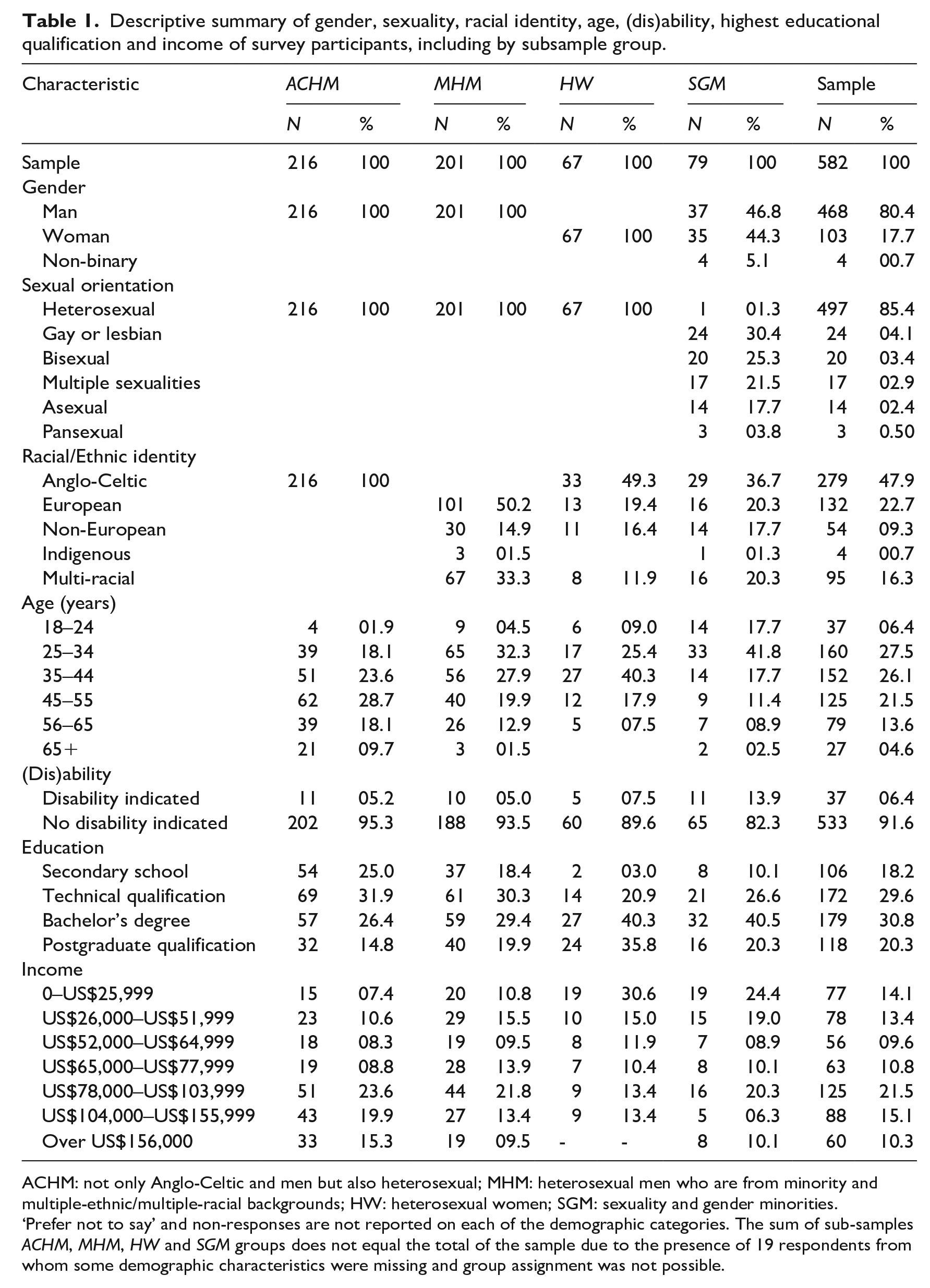
ACHM: not only Anglo-Celtic and men but also heterosexual; MHM: heterosexual men who are from minority and multiple-ethnic/multiple-racial backgrounds; HW: heterosexual women; SGM: sexuality and gender minorities.
‘Prefer not to say’ and non-responses are not reported on each of the demographic categories. The sum of sub-samples ACHM, MHM, HW and SGM groups does not equal the total of the sample due to the presence of 19 respondents from whom some demographic characteristics were missing and group assignment was not possible.
Following from the abundant research that has described (but not analysed) the dominance of White men in the creative industries (see Section 2.2), we find the dominant group to comprise Anglo-Celtic men. We add a further criterion for inclusion in this dominant group, related to sexuality, and as such define members of this group as being not only Anglo-Celtic and men but also heterosexual (ACHM). Next, we consider heterosexual men who are from minority and multiple-ethnic/multiple-racial backgrounds (MHM) which enables us to compare how race/ethnicity influences work-related outcomes for heterosexual men. Our third group is made up of heterosexual women (HW), while the fourth group is composed of individuals from sexuality and gender minorities (SGM) including members of the lesbian, gay, bisexual, transgender, intersex or queer (LGBTIQ+) community. As both the HW and SGM groups are relatively small compared to the dominance of heterosexual men in the sample, we do not break these groups down further to consider race/ethnicity as we do for heterosexual men, although this is not to suggest that race/ethnicity does not add further to the structural barriers for members of these two groups.
From Table 1, we can observe compelling evidence, with over 80% of the sample being men, that attests to a skewed workforce. In comparing the level of Anglo-Celtic representation within the HW group relative to all heterosexual men in the sample (i.e. the combination of the ACHM and MHM groups), we see that the level of Anglo-Celtic representation in HW (49.3%) and in particular across all heterosexual men (51.8%) closely reflects the level of Anglo-Celtic representation in the general population of Australia, which stands at 51.7% according to the 2021 Census (Australian Bureau of Statistics (ABS), 2021c). Of interest, we see that members of the SGM group tend to be more racially and ethnically diverse than heterosexuals represented in the sample, with only 36.7% of the SGM group identifying as being Anglo-Celtic.
In terms of age, members of the ACHM group tend to be older on average, with close to 28% of respondents from this group over the age of 56 years, while the SGM group tends to be much younger on average compared to the other groups with close to 60% of this group under 35 years. Turning to whether a survey respondent identified as having a disability, we observe some stark differences between groups. Slightly below the Australian population average of 5.8% (Australian Bureau of Statistics (ABS), 2021a), we find that 5.1% of individuals who identify as being heterosexual men reported having a disability. However, when compared to respondents from the HW and SGM groups, the figures jump. Within the HW group, the level of self-reported disability is 7.5%, while for the SGM group, this figure reaches to 13.9%. In looking at education, further differences emerge across groups drawn from the sample that with the marginalised groups being more highly educated. In general terms, the camera department workforce is more highly educated compared to the general Australian population, based on the 2021 census which reported that 26.3% of the population had a bachelor’s degree or higher (Australian Bureau of Statistics (ABS), 2021b).
With income, while 43% and 46% of those belonging to the SGM and HW groups, respectively, earn under US$52,000, the figure falls to under 20% when we consider the share of heterosexual men earning in this low-income range. While the levels of income reported do not account for the amount of time spent working, our analysis of other complementary survey questions about income shows that close to half of all survey respondents (49%) work only in the camera department with the other half working multiple jobs. Given the discrepancies in income between heterosexual men and the marginalised groups, it is unsurprising that HW and SGM group members are more likely to be working outside the screen industry to supplement their income.
4.2. Variables
We now turn to the variables of interest that will help shed light on understanding the characteristics that predict group membership. Recall from Section 3.2 that our 12 quantitative variables are grouped into three clusters.
The first cluster of variables relates to respondents’ experience of various forms of discrimination. Specifically, we consider five types of discrimination – sexism (Exp_sexism), homophobia (Exp_homophobia), racism (Exp_racism), ageism (Exp_ageism) and ableism (Exp_ablesim). Following the approach of Dolnicar et al. (2011), each of the five discrimination variables was coded as binary variables, taking the value of one if a respondent reported an answer of ‘Strongly Agree’ or ‘Agree’ for the various discrimination statements provided in the survey (e.g. I have experienced sexism and I have experienced racism). Neutral, disagree and strongly disagree responses were coded as zero to indicate the respondent did not report experiencing targeted discrimination. Where no response was provided, these were left as missing. In addition to these forms of discrimination outlined above that are personally experienced, we also created a further variable designed to reflect awareness of discrimination in the workplace – even if it is not personally experienced (Discrim_aware). This variable was again coded to take the value of either zero or one. To be considered aware of discrimination, a respondent had to satisfy the criteria of having experienced at least one type of discriminations (reflected in a strongly agree or agree response on any type of discrimination) and/or indicate a strongly agree or agree response that they had witnessed one or more forms of discrimination in the workplace. By including witnessing of discrimination in our measure of discrimination awareness, this variable enables us to include individuals who acknowledge the presence of discrimination in the workplace even if they do not personally experience it themselves. Among more privileged groups (ACHM and MHM) that tend to experience less discrimination, acknowledgement of the presence of discrimination can be viewed as a necessary precursor to becoming allies for diversity, including driving cultural change within the workplace (see Uluğ and Tropp, 2021 who address in the context of racial injustice).
The next cluster of variables relates to characteristics that describe features of screen camera department workers that are not specifically captured within the criteria used to define group identity. These include education (Education), as well as a variable related to income (High_income) and involvement in hiring decisions (Hiring). Education is coded as a dichotomous variable which equals one if the respondent has a bachelor’s degree or higher. High_income takes the value of one if a respondent earns income above the median income range in the sample, which is any income level above US$78,000. Hiring is a binary variable coded one to indicate the subject is involved in making decisions about hiring and zero if they are not. To avoid multicollinearity, demographic characteristics related to gender, sexuality, race/ethnicity, age and ability were excluded from the models.
The third cluster of variables are all derived from principal component analysis and seek to provide insight into respondents’ workplace values and attitudes. As mentioned, the survey included a number of questions that involved respondents reporting the extent to which they agreed or disagreed with a particular statement. Many of the statements presented in the survey aimed to provide insight into underlying constructs. As such, we conducted a principal component analysis and used this to identify factors specifically related to workplace traits that we examine across the groups. For this, we used an oblique oblimin rotation to ensure a small correlation between resulting factors. This yielded three factors that are used in our modelling and analysis. These factor variables include perceptions about work–life balance (Work_life_bal), perceptions about the value of diversity in workplaces (Diversity) and finally, the strength of respondents’ networks including network access (Networks). Before undertaking our factor analysis, we checked questions carefully and, where necessary, undertook reverse coding to ensure consistency in response measures linked to a particular underlying construct. With a Kaiser-Meyer-Olkin (KMO) score of 0.65, the sampling is considered adequate (Rummel, 1988).
The first factor Work_life_bal (Cronbach’s α = 0.78) reflects items related to how well (or not) respondents felt supported in being able to accommodate personal aspects of their life with work commitments and demands. Higher scores on this factor indicate that a respondent enjoys a higher degree of work–life balance compared to lower score. Questions included to form this factor are ‘At work I am able to raise personal and/or family responsibilities in relation to my work schedule and availability’; the extent to which ‘caregiver responsibilities have impacted my career’; and the extent to which ‘my work schedule provides opportunities to take care of my health needs’.
The second factor Diversity (Cronbach’s α = 0.69) reflects items that provide insight into how respondents value (or not) diversity, equity and inclusion in the workplace. Again, higher scores on this factor indicate higher appreciation for the importance of diversity in the workplace. Questions included in this factor are the extent to which ‘I believe the following – diversity is important for all parts of the Australian screen industry’; ‘more attention needs to be paid to diversity’; and ‘camera departments are generally diverse’.
The third factor Networks (Cronbach’s α = 0.93) is linked to items that indicate a respondent is part of a tight network that assists in helping to advance their career. For this factor, a high score indicates stronger and more advantageous networks and personal connections within the camera department. Questions included in forming the factor are the extent to which ‘the following describe me – I work with people I know’; ‘I have access to the professional networks I need to advance my career’; ‘I hire people using word of mouth and personal networks’; ‘my hiring decision is influenced by referral from a trusted source’; and ‘my hiring decision is influenced by existing direct personal connection’.
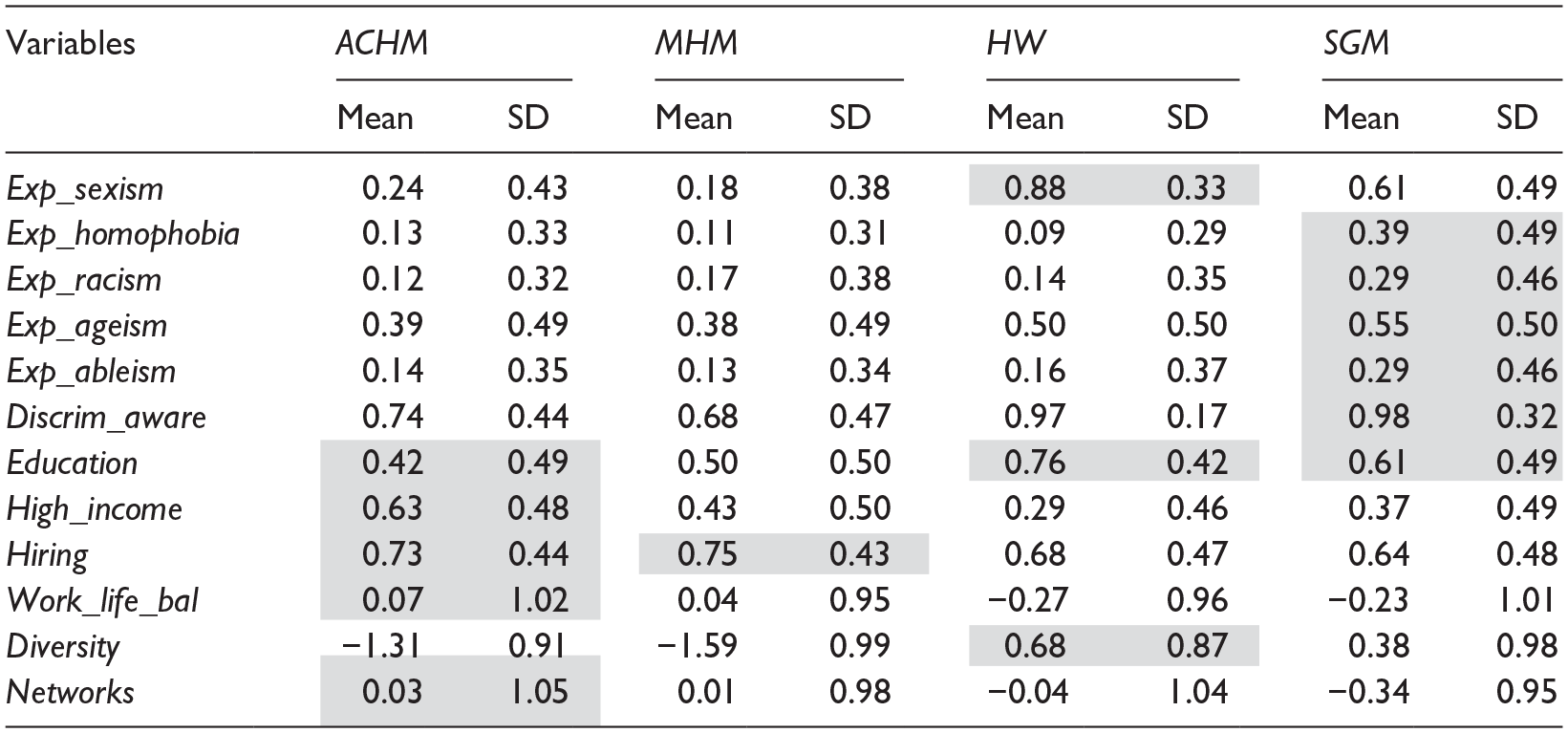
Having briefly described each of the variables used in the study, Table 2 presents a summary of mean participant scores by variables across each of the four groups. The table shows that, with the exception of sexism that is experienced mostly by the HW group, discrimination is most acutely experienced in the SGM group. Given the compounding impacts of discrimination across multiple categories targeted at members of the SGM group, it is hardly surprising that this group typically reported lower levels of work–life balance compared to all other groups. As Jamal and Lavie (2020) have argued, the performative effects associated with needing to work harder to gain the same recognition as other peers are exhausting and contribute to high levels of stress and poor mental health outcomes. Reflective of this, we see that in response to the survey statement ‘I have to work harder than some of my colleagues to be perceived as a capable and skilled camera professional’, the average response scores were considerably higher across members of the marginalised groups. For instance, the scores on this item for the SGM group were on average 80% higher than the typical responses from the ACHM group.
Mean average participant scores and standard deviations by variables across groups.
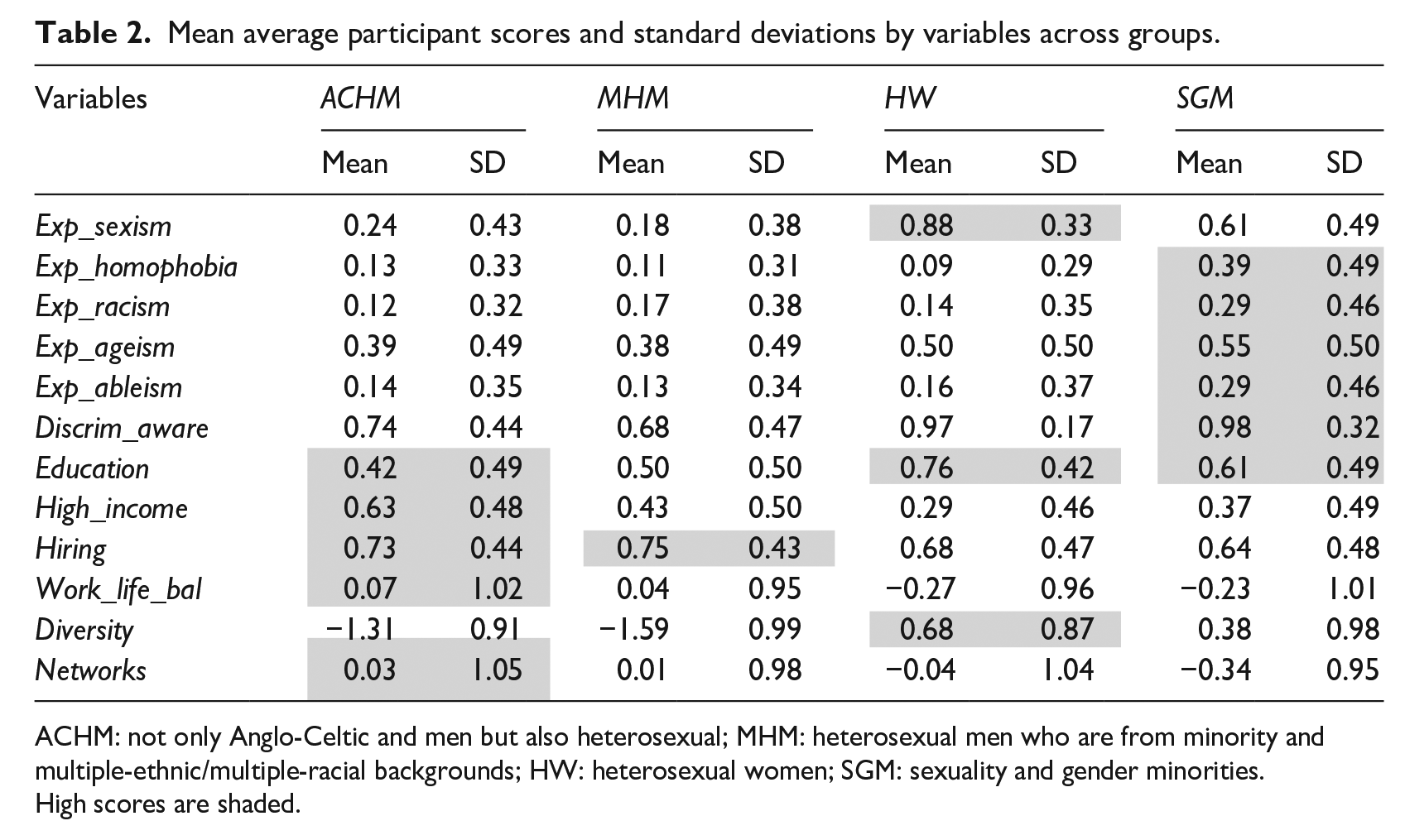
ACHM: not only Anglo-Celtic and men but also heterosexual; MHM: heterosexual men who are from minority and multiple-ethnic/multiple-racial backgrounds; HW: heterosexual women; SGM: sexuality and gender minorities.
High scores are shaded.
Also in Table 2, we observe that average participant scores on the variable designed to reflect discrimination awareness reveal a split between members of the ACHM and MHM groups who score considerably lower than members of the HW and SGM groups. In looking at the experience of racism, we might have also expected to see this highest among the group containing no mono-cultural Anglo-Celtic members, that is in the MHM group; yet we observe the SGM group experiences the highest level of racism. This points to the insidious ways in which the experience of discrimination can compound intersectionally for marginalised individuals.
4.3. Quantitative modelling
As the second phase of our mixed methods approach described in Section 3.2, we now turn to the results of our binary logit regression used to predict group membership. Using the same model specification, we present four models in Table 3 in which group membership (ACHM, MHM, HW and SGM) forms the dependent variable, and each of the independent variables (described in the previous sub-section) is examined for their ability to predict membership in each of the four groups. In this respect, significant results on the variables we model express an odds ratio associated with the probability of group membership, which is rigorous and appropriate for our data (King, 2008).
Binary logit regression results for group membership.
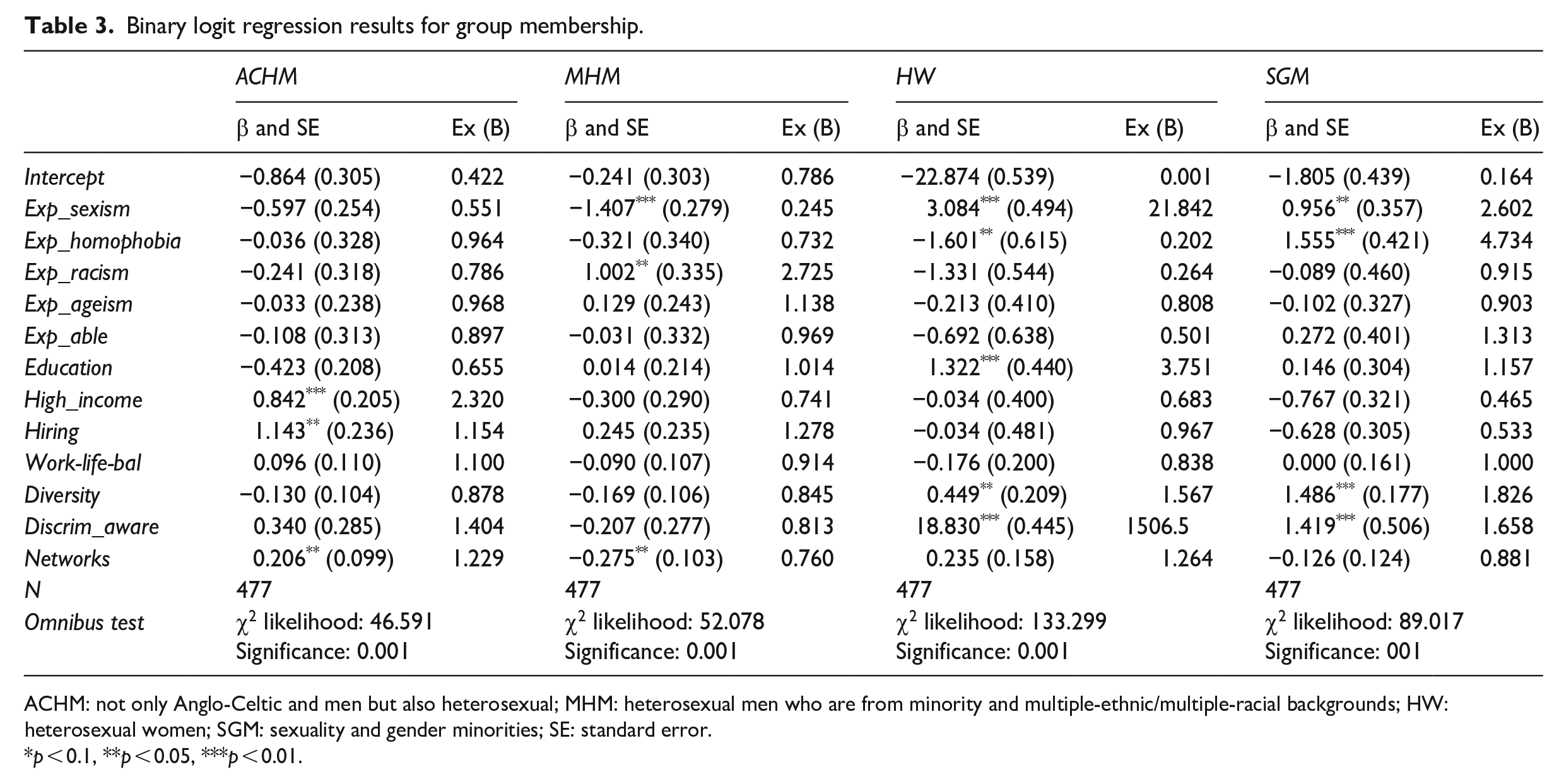
ACHM: not only Anglo-Celtic and men but also heterosexual; MHM: heterosexual men who are from minority and multiple-ethnic/multiple-racial backgrounds; HW: heterosexual women; SGM: sexuality and gender minorities; SE: standard error.
p < 0.1, **p < 0.05, ***p < 0.01.
From the modelling results, it is observed that the experiences of certain types of discrimination are clearly linked to belonging to certain groups (such as sexism for HW, racism for MHM and sexism and homophobia for SGM). Of interest, we find that our explanatory variables designed to indicate workplace values play a vital role in predicting group membership. This evidence appears consistent with the thematic analysis outlined in the next sub-section.
For the ACHM group, highly significant results are found that identify superior networks as a feature of this group. While the effect size is modest, it is important to remember in interpreting this result, the model is predicting group membership rather than showing how network strength impacts income or other career-related outcomes. We also observe a significant and more sizable effect on the likelihood of an ACHM group member earning high income above the median range across the sample. Further evidence that structural factors in the camera department workforce generate privilege can be observed in relation to hiring. The ACHM is the only group for which there is a positive and statistically significant association between being involved in hiring and group membership.
Looking at the features of other groups, the heterosexual men groups (ACHM and MHM groups) stand in contrast to both the HW and SGM groups in relation to discrimination awareness and attitudes towards seeing diversity as important. While being aware of discrimination is strongest among HW and SGM groups and can be used to predict membership with both, for the heterosexual men groups, this feature has no discernible impact. Similar results are found in relation to attitudes about diversity, and although pro-diversity attitudes can predict minority group membership, this is strongest for the SGM group.
4.4. Qualitative thematic analysis
In addition to the findings derived from analysis of quantitative variables, the qualitative themes yield valuable insight into the ways in which power and devaluation are both perpetuated and experienced in screen camera departments. As mentioned previously in Section 3.2, the survey included open-ended questions for which responses were analysed. Just over half of those responding to the survey provided qualitative responses to the optional open-ended questions, concerning hiring practices (n = 297), while just over a third (n = 198) responded to a question about workplace bullying and harassment. Table 4 describes the theme-coded responses given by respondents to each of these two questions.
Description and of thematic content categories in response to open-ended questions about hiring and workplace bullying and harassment.
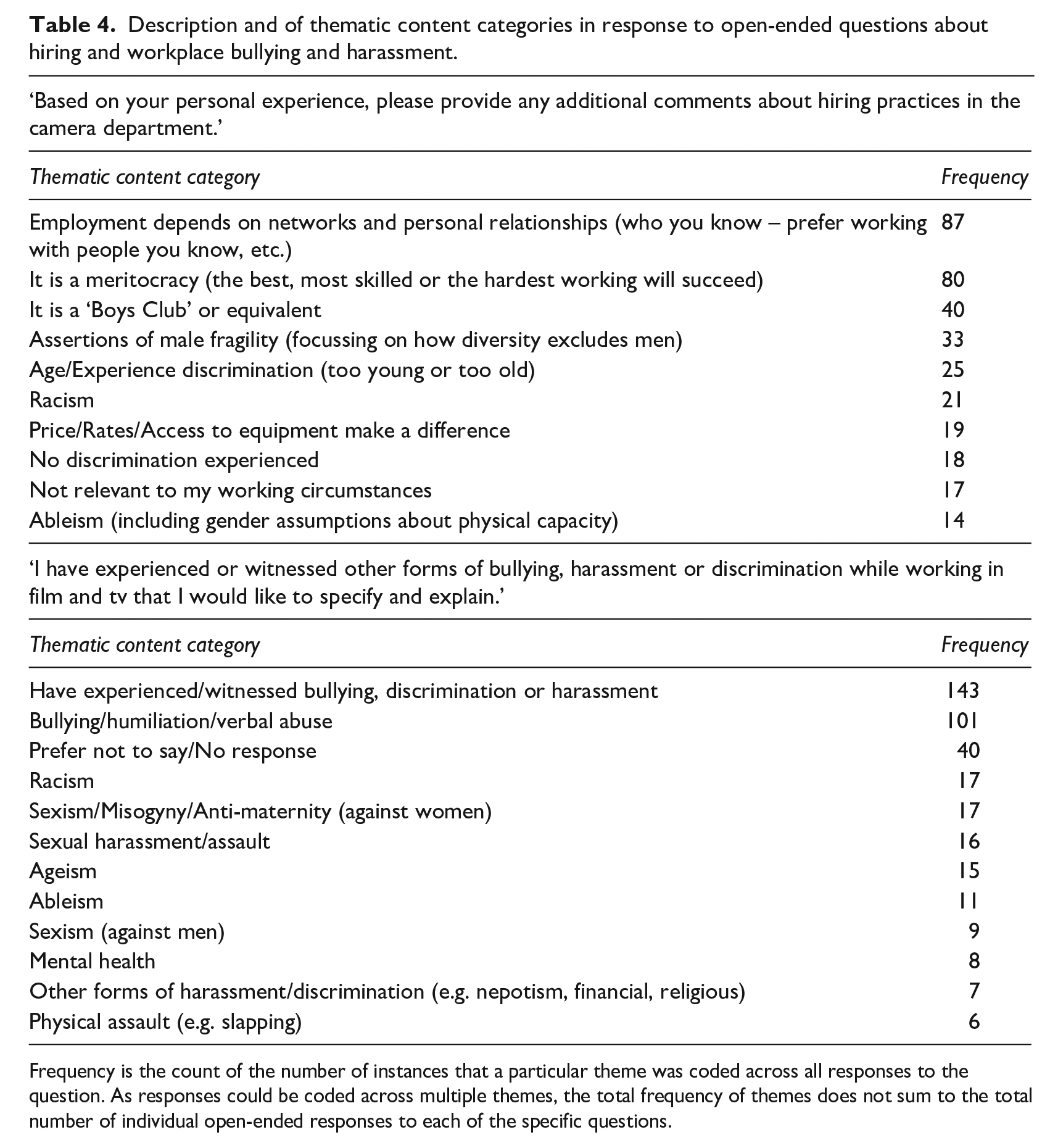
Frequency is the count of the number of instances that a particular theme was coded across all responses to the question. As responses could be coded across multiple themes, the total frequency of themes does not sum to the total number of individual open-ended responses to each of the specific questions.
Responses to the hiring question reveal the importance of cliques and networks, while responses to the workplace bullying and harassment question present disturbing evidence that attests to a widespread culture of bullying, harassment and discrimination. Taken together, responses to these questions provide clear evidence of a toxic workplace. In particular, for the workplace bullying and harassment, there were a small number of concerning responses that provided details of sexual harassment or assault and extreme physical violence.
The insights from the qualitative responses are of further interest when we compare the emergent themes across each of the different groups. Figures 1 and 2 present the coded responses by theme to each of the questions. In accounting for differences in group sizes, we represent the percentage share of group members who gave a response according to each of the themes for each question as identified in Table 3.
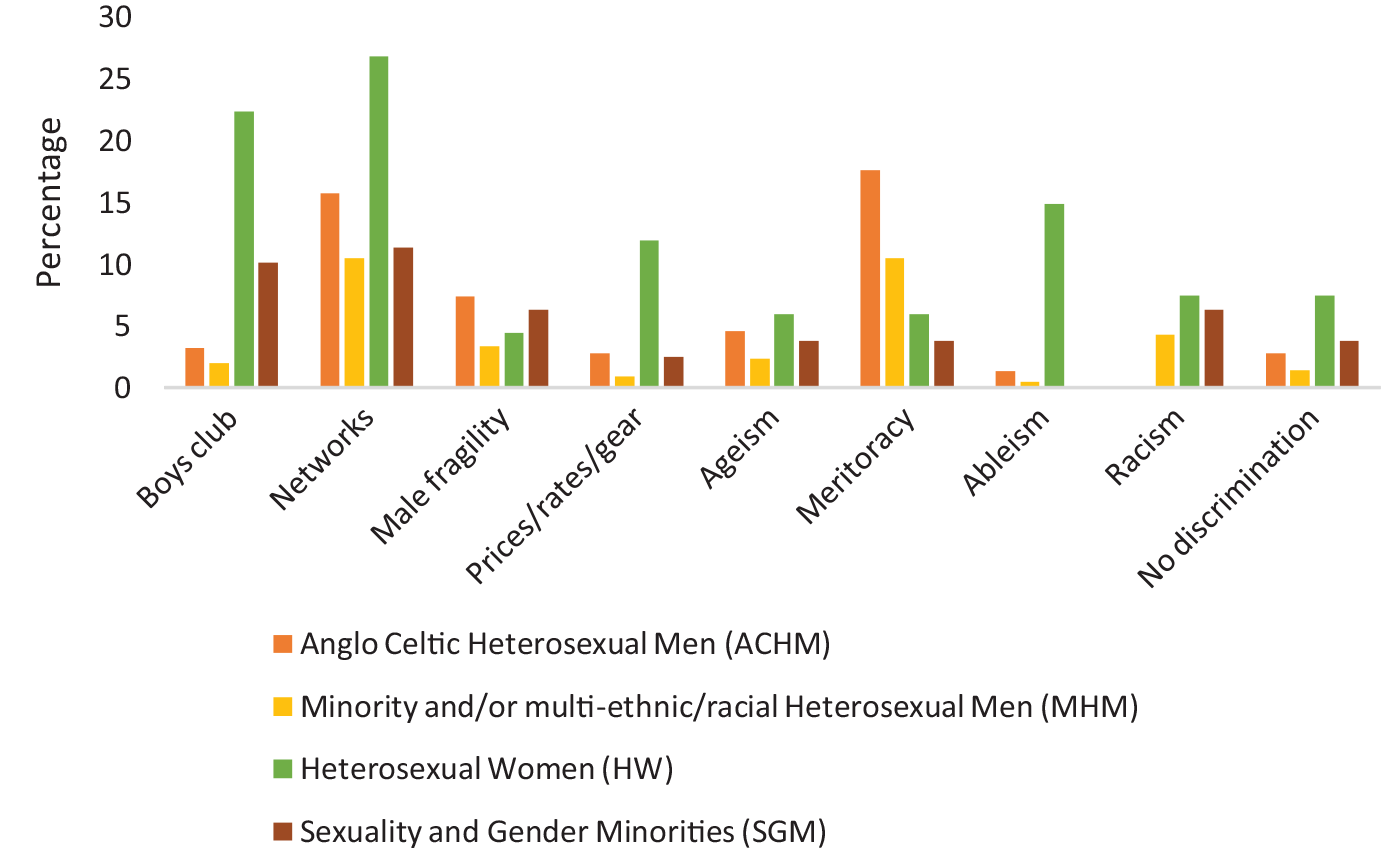
Percentage of coded responses by group across themes identified for open-ended question: ‘Based on your personal experience, please provide any additional comments about hiring practices in the camera department’.
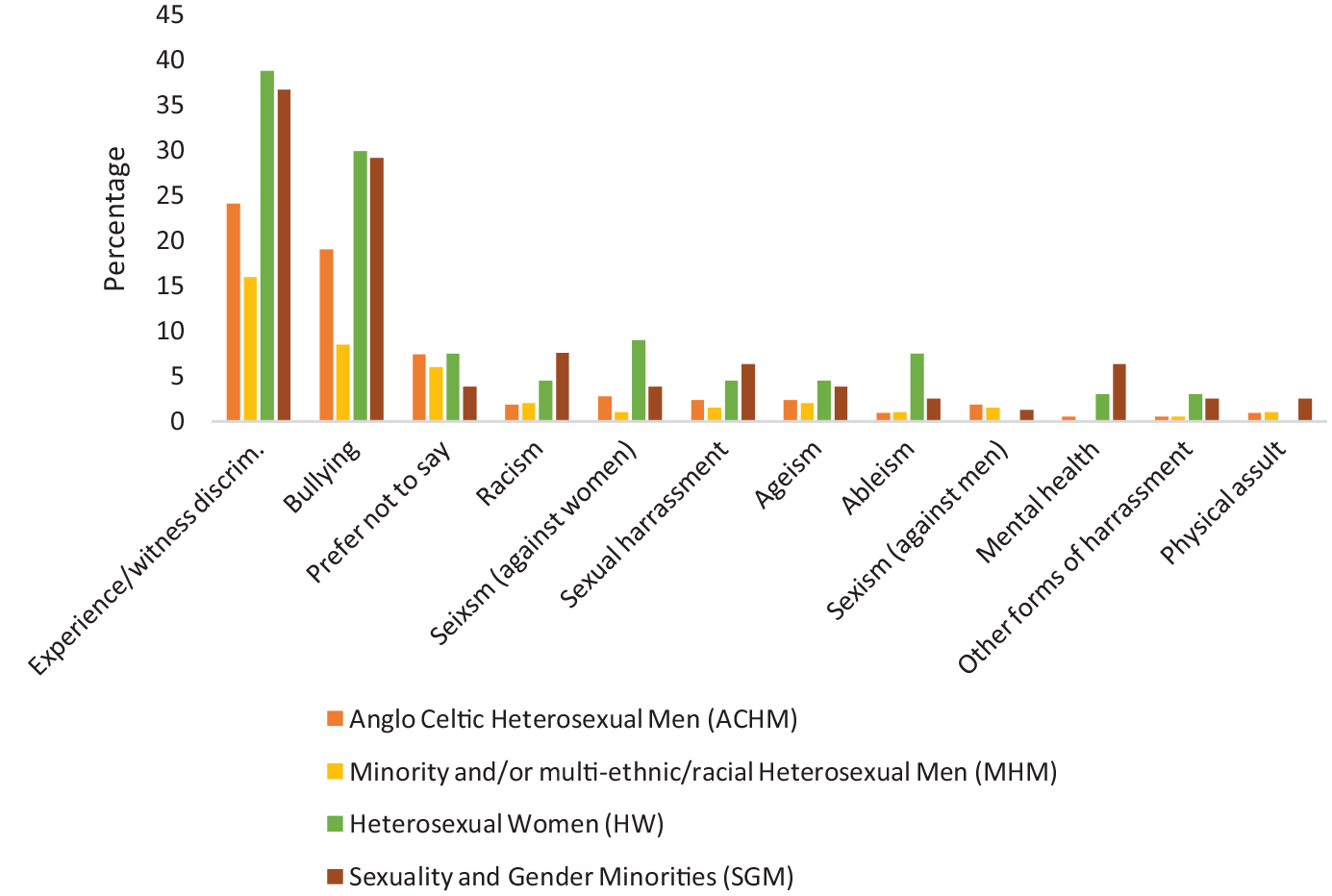
Percentage of coded responses by group across themes identified for open-ended question: ‘I have experienced or witnessed other forms of bullying, harassment or discrimination while working in film & tv that I would like to specify and explain’.
5. Discussion
The figures previously presented in Table 1 point to a statistical deficit of women and non-binary camera department members and suggest an Anglo-Celtic and heteronormative dominance in Australian camera departments. Yet taken on their own, evidence that attests to a lack of diversity does not explain the underlying reasons for why this exists. Triangulating results offers important insights into the forces that explain how power is exerted and devaluation is experienced.
As a starting point, we can consider the role of education. This is relevant especially given policy initiatives such as Gender Matters that promote training and skill development at their core. Given the emphasis on training in policy, it might be expected that marginalised groups are less well educated and trained upon entering the screen department. The results we find prove the opposite. Table 1 shows HW has higher levels of education furthermore, across all four groups. Table 3 shows that HW is the only group for which being university educated proves to be a statistically significant predictor of group membership. As such, we provide evidence to show stark differences in the perceived value of qualifications for entry into the screen camera department, with women in particular proving to be significantly more ‘credentialed’ than men working in this field, a finding that is reproduced in other sectors (see for example Gaddis, 2015). Interestingly, from our analysis of a survey question which asked those respondents who are involved in hiring decisions to rank the features that most influence their decision to hire a particular candidate, we found that ‘education and qualifications of the candidate’ ranked last out of 11 items that respondents had to choose from with ‘referral from a trusted source’ being the most important. Contrary to other studies (Aquilia, 2015; Cunningham and Bridgstock, 2012) that have emphasised the importance of film schools and shared education in driving clique associations, our findings are indicative of an anti-intellectual workplace ethos that prefers personal connections and hands-on experience over education and training.
We also find conclusive evidence that sexism is experienced by women and gender minorities in screen camera departments. This is perhaps not surprising, given that men account for around 80% of the screen camera department workforce that is part of a broader industry in which sexism, sexual harassment and sexual assault have been extensively documented in the wake of #metoo (Liddy, 2020). Table 3 shows that sexism is statistically highly significant with a large effect size in predicting membership to both the HW and SGM groups. Within the HW group, 88% of this group experienced sexism with high rates also reported in the SGM group at 61%. The high rates of sexism experienced by members of these groups are reflected in qualitative comments such as the following: I missed out on a job because of my gender [female] in the case of an away job where [there] was an assumption that the male DOP would be likely to want to hit on me. I have missed out on jobs because I was not seen as being physically strong enough to cope with the gear. I have often been treated as invisible on a job when there is a ‘cameraman’ in sight on set as an operator, even when I have been the DOP – when people arrive on set, they just assume the bloke was the lead, before checking. (HW respondent) In a career over 35 years most of which was as a staff cinematographer, I have seen female colleagues’ careers held back, when they should have gotten jobs but given to much more inexperienced male cameramen. Even when the producer and director request the female camera operator, management forces them to use the male camera op. (SGM respondent)
It is, however, interesting to note that in the dominant ACHM group, just under a quarter of respondents providing a response to Q53 indicated they also had experienced sexism. This belief in the operative existence of a reverse form of sexism targeting men is revealed in some of the qualitative comments such as the following: Because of the general consensus that the camera department needs more diversity, I feel I have missed an opportunity for employment based on my gender. (ACHM respondent) I am a white male, and I wasn’t hired because I was that. The production wanted more diversity and went with a female instead (lesser credits) as it looks better on paper for them to have a female name. (ACHM respondent)
Collaborating the quantitative evidence that has been presented, we also found significant qualitative evidence that many ACHM members were opposed to or dismissive of what one respondent called the ‘pursuit of diversity’ (33 comments specifically addressed this): With diversity hiring it is acceptable, even encouraged, to discriminate against older white males, of which I fall into the category of . . . My industry connections are not enough to sustain a career based solely on my age, gender, or race. I believe I have had the same struggles getting work as any other person regardless of race or gender. (ACHM respondent) Working in the camera department is tough. No one cares where you come from, you need to be good at the job first. And if you’ve been hired by virtue of being diverse, and you suck at your job, and the department can’t get rid if you because you pull a sexist/racist/etc. discrimination card with the production manager – consider your career over. (ACHM respondent)
These criticisms, made repeatedly by heterosexual, Anglo-Celtic men, were often discussed within a framework of merit, in which they believed ‘diversity hires’ were being given work despite lacking the skills and experience to do the job: My experience has been that the pursuit of diversity, over experience and ability, lowers the standard of the production, but the same pursuit is a requirement in order to access funding. This leads to a hollow commitment by production companies to diversity in order to appear politically correct and get their production off the ground. (ACHM respondent) As a straight white male . . . I have experienced very limited difficulty due to my gender or race, and I’m certainly mindful of my privilege in this regard. That said, I have experienced being passed over on several jobs, in favour of less experienced folks who were more culturally or sexually diverse than myself. (ACHM respondent)
In such a male-dominated sector, the assertion of sexism by men because of their maleness appears at odds with indicators of workplace power. For example, of all participants who reported an involvement in hiring decisions, 74% were men from the ACHM and MHM groups. Furthermore, men are significantly more likely to earn above the median range of income which further undermines the belief there is systemic sexism discriminating against men across the industry. Observations of discrimination or diversity hiring practices that negatively affected ACHM directly contradict the specific demographic findings of this survey, as well as the very strong statistical evidence base establishing White male dominance in the cultural industries. Of course, individual examples of discrimination against heterosexual men and particularly White ACHM group members are potentially consistent with an overall preponderance of dominant group power. Another possibility, which warrants further study, is that members of the dominant group are not experiencing employment discrimination; they are instead exhibiting symptoms of what is known as ‘white male fragility’ (Baines and Waugh, 2019; Connell, 2020).
The belief that discrimination against dominant cohorts is the result of efforts to create a more equitable industry extended to other variables beyond sexism. For example, despite higher levels of representation by sexuality minorities in screen camera departments (just over 13%) than the general Australian population, we find ample evidence that homophobia is prevalent across the industry. Aligning to the high scores on experiencing homophobia in Table 2, the results presented in Table 3 show that experiencing homophobia is positively associated with predicting membership of the SGM group. This is statistically significant with a considerable effect size. From observing the odds ratio, we find that members of the SGM are far more likely to experience discrimination due to sexuality compared to those associated with the heterosexual groups. However, as with the complaints of sexism against men, analysis of survey responses also revealed higher than expected levels of perceived discrimination associated with identifying with the dominant sexuality (i.e. being heterosexual).
In terms of the specific experiences of racism, ageism and ableism, the evidence we find shows that while these forms of discrimination are also prevalent across the screen camera department workforce, they tend to be more dispersed across each of the four primarily gendered groups, hence obscuring significant differences at the group level. As shown in Table 2, there is marginal variation in average participant scores for the ACHM and MCM groups. This is particularly the case in terms of ageism and ableism, although the MHM group reports a higher experience of racism than the ACHM group and also HW but less than the SGM group. Despite the prevalence of racism experienced by the SGM group, as shown in Table 3, the experience of racism is a significant predictor of group membership for the MHM group more than it is for the SGM group. The high levels of racism reported in the SGM group are noteworthy, given that 37% of the SGM group self-identify as being Anglo-Celtic. In this respect, discrimination experienced by members of the SGM group appears to come from many fronts and is amplified across demographic intersections. The following quote is indicative of this: From the second I have stepped foot onto a film set, I have witnessed and fallen victim to the disgusting sexism, racism, ageism, ableism, and homophobia that runs absolutely rampant through film crews. I can confidently say that every film set I have been on has an issue with discrimination and inaccessibility for minority groups. I have had to report sexual harassment, outright racism, verbal abuse and homophobic slurs used by ‘leaders’ in camera departments, in my comparatively short time as an AC (Assistant Camera) not once has a production company’s response been anything other than to sweep the issue under the rug. (SGM respondent)
We also find that ageism is widespread. Not only does ageism rank as the most prevalent form of discrimination experienced by members from the ACHM and MHM groups but for the HW and SGM groups, just over half of all members report experiencing ageism. We find that ageism impacts both those who are relatively young and those who are relatively older, as this comment testifies: I’ve seen a lot of young women, almost never any poc [people of colour] though, encouraged to be a Camera Attachment, but then never properly trained, and never ever moved up the ranks. Sooner or later they move on, and the next bright eyed fresh graduate from a film school comes by and the cycle continues. I graduated from a film school almost a decade ago and out of the 7 women in my class interested in working in the local film industry, 5 of them quit and 2 now work as thriving Camera Assistants in other international countries. (MHM respondent)
Discrimination against persons with disabilities as well as other forms of ableism is also prevalent across the screen camera department workforce and is reported at high levels by members of the SGM group (refer to Table 2). This is reflected in the following comments that describe various ways in which camera department workplaces enact a narrow set of criteria to define normative ability: We had a camera op who was a bit along the autism spectrum and also had a speech impediment that many found comical. He also had a tendency to voice some admittedly hilarious malapropisms. Some members of the camera department started up a book in which they would write down the funny things he said . . . (ACHM respondent) A female production manager did not want to hire me when I was pregnant as she said I was ‘a risk’. I only got job because a male DOP argued on behalf of me . . . Nobody discusses out of hours childcare support, sole parents are unsupported and discriminated against ‘as a burden’. (HW respondent) There is an underlying mentality that horrendous work conditions and underpay are standard within the film industry. In a weird way if you complain about such conditions at times, you may be seen as weaker or less resilient and therefore not equipped to work within the industry. (MHM respondent)
As the evidence presented attests, discrimination in the camera department workforce in Australia is rife. Furthermore, our analysis has shown that beyond aggregated statistical accounts of workforce participation, the core of the problem lies in workplace values and culture that perpetuate structural barriers. Camera departments operate so that ‘who you know’ and being able to ‘fit in’ matter, not only to achieve favourable career outcomes but also to simply avoid being devalued and discriminated against. It is telling that even among the privilege ACHM group, there is the perception that the workplace culture is harmful. The evidence presented and discussed shows that camera departments feature characteristics associated with ‘toxic’ workplaces (Chamberlain and Hodson, 2010; Parker and Griffin, 2002; Taylor, 2016). In this context, striving for equity targets alone to fix underlying problems is likely to fail in the absence of addressing underlying cultural problems.
What then can be done to address workplace toxicity and entrenched, targeted discrimination in this industry? There is an inherent challenge faced by regulators in the screen industry due to the significant ‘churn’ of personnel who move from project to project or simply exit the industry after one production (‘one and done’). A recent study of Australian camera department and key creative personnel found that between 2011 and 2019, around 70% of filmmakers and 50% of people working on TV projects left the industry after just one project (Jones et al., in press). This would strongly suggest that if change is to be delivered in a meaningful way, it will need to occur at a community level and not just through the mitigation of individuals. Furthermore, policymakers and industry organisations should also concede that they too are a contributing part of the structural power imbalances that characterise the industry, and that they do not exist ‘independently’ as autonomous agents outside it. In the case of the Australian film industry, the different guilds (such as the ACS, the Directors Guild and the Screen Producers Australia) and the trade union could work cooperatively to devise enforceable standards and expectations in film industry workplaces. Ensuring public funding is contingent on genuine progress is also vital. One suggested starting point might be to intervene in cultural labour markets, for instance, by prohibiting or discouraging all-White teams or single-gendered teams. We offer these suggestions fully mindful that previous research shows there is no one-size-fits-all solution to equity, diversity and inclusion problems in the film industry (Verhoeven et al., 2019).
6. Conclusion
We have provided evidence to show that the dominance exerted by heterosexual men, particularly Anglo-Celtic heterosexual men, serves to entrench discrimination against those of different gender, sexuality and racial/ethnic background in a cohort of Australian screen workers. To measure this, we compared outcomes and experiences across different groups within the screen camera department workforce. Specifically, we took an intersectional approach to show how structural power bears on individuals who are positioned at the intersection of different forms of discrimination (Crenshaw, 1989). We find, in keeping with this approach, that not all inequalities are experienced equally in screen industry workplaces.
In identifying groups based on intersecting structures of domination related to gender, sexuality and race/ethnicity, we contend that the resulting systems of privilege and oppression that persist within the screen industry are reproduced in the absence of appropriately targeted policy, which evidence presented in this article supports. Addressing workplace toxicity is urgently needed before meaningful progress towards equity is possible. Mounting evidence across the screen, as well as other industries, shows that reliance on quantity targets alone does not work to advance sustainable progress towards equity (Edmond, 2023; Ryan, 2022; Ryan and Haslam, 2007; Verhoeven et al., 2019, 2022). Not all workplace opportunities are distributed equally and as such, it is vital to understand how workplace positionality (which specific intersection of minority and majority membership) affects the quality (and not just the quantity) of available opportunity. Similarly, training and individually targeted interventions, such as some of the initiatives that feature in the Australian government’s Gender Matters programme, may provide a short-term fix for a select few, but may also serve to reinforce assumptions based on a deficit understanding that underlies inequality in the first place. Furthermore, trumpeting success towards advancing equity using flimsy performance measures linked to simplistic metrics may result in over-confidence and the belief that greater advancement has been made towards equity than is truly the case.
Notwithstanding the contribution our study makes in shining a light on how workplace values and culture shape the experiences of power and devaluation, we acknowledge limitations that future research exploring this topic might address. First, the small number of observations we have on certain characteristics restricts how far we can apply an intersectional lens to some of the quantitative data. Qualitative content analysis also suffers from potential limitations of smaller sample cohorts and ambiguity in the way in which survey responses are interpreted and coded for textual meaning. In this sense, the mixed methods approach that enables us to incorporate both quantitative evidence with qualitative insights proves most useful, given the constraint of sample size and low observation counts on certain characteristics that are of interest. While the group sizes would ideally have been closer, the imbalance we show is indicative of the daunting structural inequalities that male dominance produces. We also acknowledge limitations such as working with ethnicity/racial data that have been organised and collected in the manner of this survey where there were a small number of categories and a lack of specific questions querying racial identity.
Finally, it is important to point out that despite our finding that links workplace devaluation with workplace culture, these do not need to go hand-in-hand. As Allport (1954) has well demonstrated, and as others have replicated (Magnusson, 2009), in-group dominance does not require hostility and discrimination against out-group members. However, as this study has found, when workplace power is privileged by attributes such as maleness, Whiteness and heteronormativity – and further is accompanied by discrimination practices that are principally directed towards those who are not men, not White and not heteronormative – a toxic workplace can be detected.
Footnotes
Acknowledgements
The authors gratefully acknowledge the Australian Cinematographers Society (ACS) and the team led by Dr Amanda Coles without whom this research would not have been possible. They also acknowledge the helpful suggestions of peer reviewers and editors of this special issue in refining the article’s structure and presentation.
Final transcript accepted 13 May 2023 by Melissa Wheeler (AE Special Issue).
Funding
The author(s) received no financial support for the research, authorship and/or publication of this article.
