



Abstract
The study examined how employees’ experience of resource-draining coworker incivility might undermine their job performance, with a focus on how this harmful process might be explained by perceptions of organizational isolation and moderated by susceptibility to self-pity. Three-wave survey data, collected among employees and their supervisors in various industries, indicated that an important reason that employees’ exposure to rude coworker treatment escalated into diminished performance outcomes was a belief that the employing organization was the source of their sense of abandonment. As a mediator, perceived organizational isolation exerted an especially prominent effect among employees who had a general tendency to pity themselves in difficult circumstances. Organizations accordingly can contain the risk that disrespectful coworker relationships translate into tarnished performance by discouraging employees to feel bad for themselves in the face of work-related hardships.
Keywords
1. Introduction
The prominence of adverse work relationships is a significant source of concern for organizations, because negative relationships among coworkers undermine the motivation, quality and performance of their employees (Chung, 2017; Harrington et al., 2012; Yi et al., 2017). A notable example of dysfunctional relationship dynamics is coworker incivility, which reflects the extent to which employees believe that organizational colleagues treat them in rude and disrespectful ways (Park and Haun, 2018; Schilpzand et al., 2016; Vahle-Hinz et al., 2019). Coworker incivility can manifest in different ways, such as when coworkers put others down, are arrogant in their interactions, make unfounded negative remarks or use an unprofessional communication style (Cortina et al., 2001; Taylor et al., 2012). The detrimental effects of such discourteous coworker behaviour (Potipiroon and Ford, 2019; Sliter et al., 2012) and its potential to operate in subtle ways, such that it might go unnoticed by others (Porath and Pearson, 2010), means that it demands attention from organizations – especially if, as we assert, such a work situation may deplete employees’ self-esteem resources (Bai et al., 2016) and escalate into negative responses that undermine the well-being of both employees and their employer (Loh and Loi, 2018; Thompson et al., 2016).
Extant research pinpoints various negative outcomes of employees’ exposure to rude coworker treatment, including increased job insecurity (Hershcovis et al., 2017) and absenteeism (Sliter et al., 2012), as well as diminished creativity (Sharifirad, 2016) and organizational citizenship behaviours (Thompson et al., 2016). Such research also reveals a negative relationship between coworker incivility and job performance (Rahim and Cosby, 2016; Sliter et al., 2012), and this relationship in turn is mediated by factors such as emotional exhaustion (Rhee et al., 2017) and organizational deviance (Azeem et al., 2021). To expand this research stream, we focus on another factor that might explain how disrespectful coworker treatment leads to diminished performance outcomes: the extent to which employees feel isolated in the workplace (Orhan et al., 2016). These feelings refer to whether employees fault their employer for not doing more to help them connect with the rest of the organization (Marshall et al., 2007). We also propose how this mediating role of perceived organizational isolation might be triggered by employees’ susceptibility to self-pity, which captures their general tendency to feel sorry for themselves when challenged (Elson, 1997; Stöber, 2003). Therefore, the primary objectives of this study are to provide novel insights into why and when coworker incivility may lead employees to fail in their job duties.
We seek to make several contributions to extant research. First, we theorize and empirically demonstrate how the affront caused by disrespectful coworkers may turn employees away from performance-enhancing work behaviours, due to their conviction that their organization’s internal functioning isolates them at work (Welbourne et al., 2016). The investigation of this explanatory mechanism is theoretically insightful and valuable, in that it pinpoints a hitherto overlooked factor over which organizational leaders might have limited control but that constitutes a major source of frustration for employees, namely, their sense that they are abandoned or left out by others (Marshall et al., 2007). In so doing, we offer practical insight into the possibility of a counterproductive process for employees. Initially, they feel upset by the limited respect that they receive from organizational colleagues. Then, their beliefs about how their employing organization isolates them might worsen these employees’ precarious work situation, by causing them to receive less favourable performance evaluations from organizational leaders.
Second, we apply a contingency perspective to the detrimental outcomes of employees’ exposure to adverse coworker relationships, as suggested in prior research (Fida et al., 2018; Jiang et al., 2019). Employees’ susceptibility to self-pity may reinforce the hardships that they experience when their coworkers seemingly do not care for their personal well-being, which triggers their sense of organizational isolation and then a refusal to contribute to organizational success with diligent work activities (Itani et al., 2019). We thus complement prior research that shows how positive personal factors such as self-efficacy (Rhee et al., 2017), psychological capital (Al-Zyoud and Mert, 2019) or ingratiation skills (Azeem et al., 2021) mitigate the hardships for employees who are victims of disrespectful coworker treatment. Our study – with its underlying moderated mediation dynamic that combines a mediating effect of perceived organizational isolation with a moderating effect of susceptibility to self-pity – specifies how the aforementioned counterproductive process may intensify among employees who tend to pity themselves (Stöber, 2003). From a positive angle, we provide organizational practitioners with expanded understanding of how they can protect against the risk that rude treatments within their workforce undermine productive work activities, by discouraging incivility victims with strong tendencies for self-pity from withholding their work efforts.
2. Theoretical background and hypotheses
2.1. Conservation of resources theory
We draw from conservation of resources (COR) theory (Hobfoll et al., 2018) as the theoretical framework that grounds our arguments about the mediating role of perceived organizational isolation and moderating role of susceptibility to self-pity in the relationship between coworker incivility and job performance. According to this theory, employees’ work-related feelings and behaviours are largely influenced by their motivation to protect their resource reservoirs in the presence of resource-depleting work conditions (Hobfoll and Shirom, 2000), which in turn informs two core premises. The first is that the threat of resource drainage, caused by unfavourable treatments at work, tends to direct employees towards convictions and actions that allow them to cope with that drainage (Bentein et al., 2017; Gardner et al., 2019). The second premise is that personal characteristics that increase the probability that the experienced challenges inflict actual harm on the quality of employees’ professional functioning can trigger or catalyse this process (De Clercq et al., 2019; Hobfoll and Shirom, 2000).
The conceptualization of ‘resources’ in COR theory is somewhat broad and includes any ‘objects, personal characteristics, conditions, or energies that are valued in their own right, or that are valued because they act as conduits to the achievement or protection of valued resources’ (Hobfoll, 2001: 339). Yet one critical resource that employees highly value and vigorously seek to protect, according to Hobfoll’s (2001) foundational work, is their self-esteem, or the positive image they have of themselves. The experience of coworker incivility represents an important source of resource depletion for employees, because it fuels their self-deprecating thoughts about the quality of their daily work and generates a sense that their efforts on behalf of their organization are unappreciated (Bai et al., 2016; Sliter et al., 2012). The hypotheses developed hereafter explain the role of employees’ depleted self-esteem resources in their responses to the experience of coworker incivility.
Figure 1 summarizes the proposed theoretical framework. This framework explicates how employees’ frustration with an employing organization that makes them feel left out underpins the conversion of their experience of coworker incivility into tarnished job performance. Their susceptibility to self-pity helps trigger this conversion. The framework accordingly gives organizational leaders expanded insights into how they can contain the risk that negative relationship dynamics among employees escalate into underperformance. Leaders should make employees aware of the pitfalls of feeling sorry for themselves when work relationships are difficult and instead encourage them to find ways to cope.
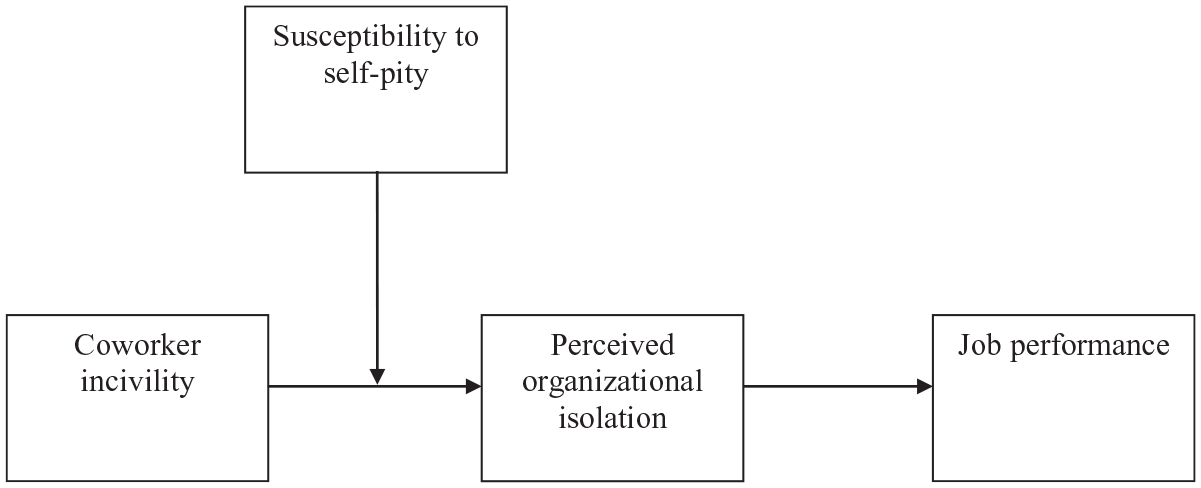
Conceptual model.
2.2. Mediating effect of perceived organizational isolation
We predict a positive relationship between employees’ experience of coworker incivility and their perceived organizational isolation. As mentioned, the logic of COR theory predicts that employees’ work-related beliefs in the presence of resource-depleting coworker mistreatment convey their desire to express themselves in ways that help them deal with the difficulties that arise with this treatment (Hobfoll and Shirom, 2000). When employees are exposed to demeaning behaviours, their self-esteem resources become depleted, because they feel personally attacked and threatened in their work functioning (Bai et al., 2016). To offset the resource depletion and shield themselves against the associated frustrations, employees may seek to reassign responsibility for their negative experiences, such as to their employing organization (Azeem et al., 2021; Thompson et al., 2016). In particular, exposure to negative coworker relationships might generate a belief that their employer fails to establish a collegial work environment, leaving them on their own (Hershcovis et al., 2017; Welbourne et al., 2016). Fundamentally, perceptions of organizational isolation arise because employees criticize their employer for the resource-draining treatment that they experience at work. This criticism reflects their attempt to cope with the situation and feel better about themselves (Ceylan and Sulu, 2010; Hobfoll, 2001). We accordingly hypothesize the following:
Hypothesis 1. Employees’ experience of coworker incivility relates positively to their perceived organizational isolation.
The tenets of COR theory also suggest that employees who feel abandoned by their employer may become reluctant to diligently complete their job tasks, as a justified behavioural response to release their irritation that their employer is seemingly not concerned about their alienation (Hobfoll et al., 2018; Itani et al., 2019). That is, employees’ perceived organizational isolation may increase the likelihood that they stay away from performance-enhancing work activities, because this reaction enables them to cope with the abandonment they experience at work (Mulki et al., 2008). Furthermore, COR theory postulates that employees’ work behaviours are influenced strongly by their goal to achieve resource gains when they experience negative feelings about the organization (Hobfoll and Shirom, 2000). If employees assign responsibility to their employer for causing them to feel isolated, they may seek to generate these personal resource gains in the form of a sense of deservedness, by allocating less of their time to productive work behaviours (Itani et al., 2019). Finally, employees who feel isolated may avoid performance-enhancing activities as a means to preserve their precious individual energy resources (Quinn et al., 2012). That is, a sense of organizational abandonment may undermine the stamina employees have to fulfil their job duties (Mulki and Jaramillo, 2011). Employees accordingly seek to save their personal energy resource reservoirs, rather than ‘waste’ energy on strict compliance with organization-set performance standards (Hobfoll et al., 2018).
Hypothesis 2. Employees’ perceived organizational isolation relates negatively to their job performance.
These arguments highlight the critical mediating role of perceived organizational isolation (Orhan et al., 2016). The experience of resource-depleting coworker incivility may escalate into a reluctance by employees to go out of their way to perform job duties, because they denounce their employing organization for the sense of isolation as a way to cope with the upsetting treatment (Hobfoll, 2001; Thompson et al., 2016; Welbourne et al., 2016). Previous studies identify similar mediating roles of employees’ sense of isolation or alienation, such as in connections between exposure to procedural injustice (Hershcovis et al., 2017) or managerial dishonesty (Zoghbi-Manrique-de-Lara and Viera-Armas, 2019) with negative work outcomes. As an additional insight, we hypothesize that employees’ perceptions of being by themselves at work can help explain how and why their experience of rude coworker treatments manifests in their poorer job performance.
Hypothesis 3. Employees’ perceived organizational isolation mediates the relationship between their experience of coworker incivility and their job performance.
2.3. Moderating effect of susceptibility to self-pity
We also predict a reinforcing role of employees’ susceptibility to self-pity. The logic of COR theory suggests that the strength of employees’ negative reactions to resource-depleting coworker relationships is contingent on the intensity of the resource depletion (Hobfoll and Shirom, 2000). When employees tend to feel sorry for themselves in difficult situations, they likely become greatly upset if rude organizational colleagues signal that they do not care about employees’ personal well-being (Elson, 1997; Porath and Pearson, 2013). As a personal characteristic, self-pity reflects the extent to which employees see themselves as victims who never have good luck, and coworkers who treat them with disrespect feed into this narrative (Charmaz, 1980; Stöber, 2003). These employees likely feel particularly upset with coworkers who prompt their self-deprecating thoughts, by treating the focal employees in disrespectful ways (Stöber, 2003). In response, employees may turn to organizational policies to find explanations for their sense of abandonment that also might help counter the depletion in their self-esteem resources (Bowling et al., 2010; Hershcovis et al., 2017). Conversely, employees with a less fatalistic or self-pitying mind-set, such that they do not hold the general belief that luck is never on their side, may be less likely to feel abandoned by their employer in the presence of rude coworker treatment (Kahn, 1965). These employees might be more forgiving of rude coworkers (Suchday et al., 2006), so that it becomes less likely that their exposure to coworker incivility translates into perceptions of organizational isolation, as a tactic to protect a sense of self-worth (Hobfoll, 2001).
Hypothesis 4. The positive relationship between employees’ experience of coworker incivility and their perceived organizational isolation is moderated by their susceptibility to self-pity, such that the positive relationship is stronger among employees who are more susceptible to feeling bad about themselves.
These arguments pinpoint a moderated mediation dynamic (Preacher et al., 2007). Employees’ susceptibility to self-pity serves as a critical personal contingency that triggers the indirect relationship between their experience of coworker incivility and diminished job performance, through perceived organizational isolation. At elevated levels of susceptibility to self-pity (Stöber, 2003), which functions as a catalyst, the belief that the employing organization is the reason that members feel isolated is triggered more readily as an explanatory factor that channels resource-depleting, discourteous coworker treatment into lower job performance (Hobfoll et al., 2018). A tendency to wallow in self-pity increases the probability that employees find the ordeal of enduring rude coworker treatment more upsetting. This individual factor accordingly spurs employees’ propensity to define the employer as the reason for their experienced loneliness (Welbourne et al., 2016), which prompts them to conserve personal energy resources and halt productive work activities that otherwise could increase organizational success (Hobfoll, 2001; Mulki and Jaramillo, 2011). In short, to the extent that employees who are exposed to rude coworker treatment feel sorry for themselves when things are difficult, their reluctance to engage in performance-enhancing work activities increases, due to their sense of workplace isolation.
Hypothesis 5. The indirect positive relationship between employees’ experience of coworker incivility and their job performance, through their perceived organizational isolation, is moderated by their susceptibility to self-pity, such that this indirect relationship is stronger among employees who are more susceptible to feeling bad about themselves.
3. Method
3.1. Sample and data collection
The hypotheses were tested with survey data collected among employees and their supervisors in various Pakistani-based organizations that operate in the banking, education and telecommunication sectors. By including multiple sectors, this study gains external validity for the results. One member of the research team leveraged professional contacts to identify relevant organizations. The targeted employees were randomly selected from employee lists, provided by the human resource departments of the respective organizations. The language of the surveys was English, because it is the official language of communication in organizations in Pakistan.
A three-round design was applied for the data collection, with time lags of 3 weeks between each round, which helped diminish concerns about common method bias. The first survey gauged employees’ opinions about their coworker relationships and their susceptibility to self-pity; the second survey measured their perceived organizational isolation; and the third survey, completed by supervisors, assessed employees’ job performance. The surveys included a personal code, so that we could match the responses across the three rounds. For transparency, we explained the reason for the personal codes to employees, but we did not indicate which topics the supervisors would assess, nor did we share with the supervisors which topics appeared in the employee surveys. We also confirmed that the matching procedure would not undermine their response confidentiality and that we would destroy the codes immediately after the matching step took place. The research design did not require any interaction between employees and supervisors; we sent the surveys directly to both parties through their organizations’ internal mailing systems, and they deposited the completed surveys in a secure box, to which only the research team had access.
With several additional steps, we also sought to protect participants’ rights and reduce the risk of social desirability bias (Spector, 2006). Specifically, the opening statement that accompanied the surveys noted that participation was completely voluntary, that the responses would be treated with complete confidentiality and that senior leaders of the respective organizations would have no knowledge about who participated or not. Moreover, we clarified in that opening statement that the goal of the research team was to identify general patterns in the aggregate data and that no individual data would ever be released in any research output. The statement also emphasized that there were no correct or incorrect answers, that it would be normal for different participants to give different answers to specific questions and that it was instrumental for the validity of the findings that the participants provide their honest responses. Of the 400 surveys distributed, we received 306 surveys in the first round, 254 in the second round and 210 in the third round. After we omitted incomplete surveys, the final sample consisted of matched responses from 203 employees, for a response rate of 51%. Among the participants, 45% were women, and their average organizational tenure was 6.65 years (standard deviation (SD) = 6.98 years).
3.2. Measures
3.2.1. Coworker incivility
To assess employees’ experience of rude coworker treatment, we used the seven-item Workplace Incivility Scale (WIS; Cortina et al., 2001). Participants were asked how often they had experienced certain coworker-related situations in the past 6 months (1 = ‘not at all’, 5 = ‘many times’). Two example items were as follows: ‘My coworkers made demeaning or derogatory remarks about me’ and ‘My coworkers put me down or were condescending to me’. The reliability of the adopted scale was excellent, as reflected in its Cronbach’s alpha value of .92.
3.2.2. Susceptibility to self-pity
We measured the extent to which employees had a general propensity to feel bad for themselves in difficult situations with the six-item Self-Pity Scale of the Stressverarbeitungsfragebogen (SVF; Janke et al., 1985; Stöber, 2003). Employees were asked to consider how often, when they encountered hardships, they responded in the ways described by the items (1 = ‘not at all’, 5 = ‘many times’), such as ‘I have a general tendency to think that bad things happen to me’ and ‘I have a general tendency to feel a little sorry for myself’. The Cronbach’s alpha of the adopted scale was good and equalled .87.
3.2.3. Perceived organizational isolation
To measure the extent to which employees felt alone and abandoned at work, we applied a 6-item scale of workplace isolation, drawn from Orhan (2016), who in turn selected the items from the original 65-item workplace isolation inventory developed by Marshall et al. (2007). In line with our theoretical focus on employees’ perceptions of the role of their employing organization, the items assessed employees’ agreement with descriptions of how they feel at work, due to their organization’s internal functioning (1 = ‘strongly disagree’, 6 = ‘strongly agree’). For example, we asked whether ‘I feel left out at my workplace because of how my organization operates’ and ‘I feel isolated from others at work because of how my organization operates’. The Cronbach’s alpha of the adopted scale was excellent and equalled .91.
3.2.4. Job performance
To measure the extent to which employees engaged in performance-enhancing work activities, we applied a seven-item scale of performance of in-role behaviour, as developed by Williams and Anderson (1991). This scale was rated by employees’ immediate supervisors, which helped diminish common method bias. Using an agreement scale (1 = ‘strongly disagree’, 6 = ‘strongly agree’), supervisors completed items, such as ‘This employee meets formal performance requirements of the job’ and ‘This employee adequately completes assigned duties’. The Cronbach’s alpha of the adopted scale was acceptable and equalled .77.
3.2.5. Control variables
Two control variables were included in the statistical analyses: gender (1 = female) and organizational tenure (in years).
3.3. Statistical technique
The research hypotheses were tested with the PROCESS macro (Hayes et al., 2017), which can estimate individual paths while also offering an encompassing evaluation of mediation and moderated mediation effects. Applications of this estimation method rely on bootstrapping procedures to avoid problems related to non-normal distributions of indirect and conditional indirect effects (MacKinnon et al., 2004). To evaluate the presence of mediation, we calculated the indirect relationship between coworker incivility and job performance through perceived organizational isolation, along with the associated confidence interval (CI), using PROCESS Model 4 (Hayes, 2018). In this first step, we also evaluated the signs and significance levels of the direct paths between coworker incivility and perceived organizational isolation, and between perceived organizational isolation and job performance. For the assessment of moderated mediation, we estimated the conditional indirect effects of coworker incivility, and the associated CIs, at different values of susceptibility to self-pity. As defined by PROCESS, these CIs captured three scenarios, whereby the moderator operated at 1 SD below its mean, at its mean and 1 SD above its mean. Mirroring the proposed conceptual model, the estimated model included the moderating effect of susceptibility to self-pity on the relationship between perceived coworker incivility and perceived organizational isolation but not between perceived organizational isolation and job performance (PROCESS Model 7; Hayes, 2018). 1
4. Results
The correlation coefficients and descriptive statistics for the study variables are presented in Table 1, and Table 2 reports the mediation results. Hypothesis 1 predicted that employees who experienced rude coworker treatment would be more likely to have a sense of organizational abandonment. We found support for this hypothesis in the positive relationship between coworker incivility and perceived organizational isolation (β = .636, p < .001). In turn, Hypothesis 2 postulated that employees who felt abandoned by their employer would be more likely to stay away from productive work activities that otherwise could increase organizational well-being. This hypothesis was supported by the negative relationship between perceived organizational isolation and job performance (β = –.114, p < .05). The mediation hypothesis (Hypothesis 3) explicated that employees’ negative beliefs about how their organization abandoned them would be a key explanatory mechanism that underpinned the translation of their exposure to rude coworker treatment into tarnished job performance. The mediation revealed an effect size of –.073 for the indirect relationship between coworker incivility and job performance through perceived organizational isolation; the CI did not include 0 [–.164, –.007], which provided evidence in support of Hypothesis 3.
Correlation table and descriptive statistics (n = 203).
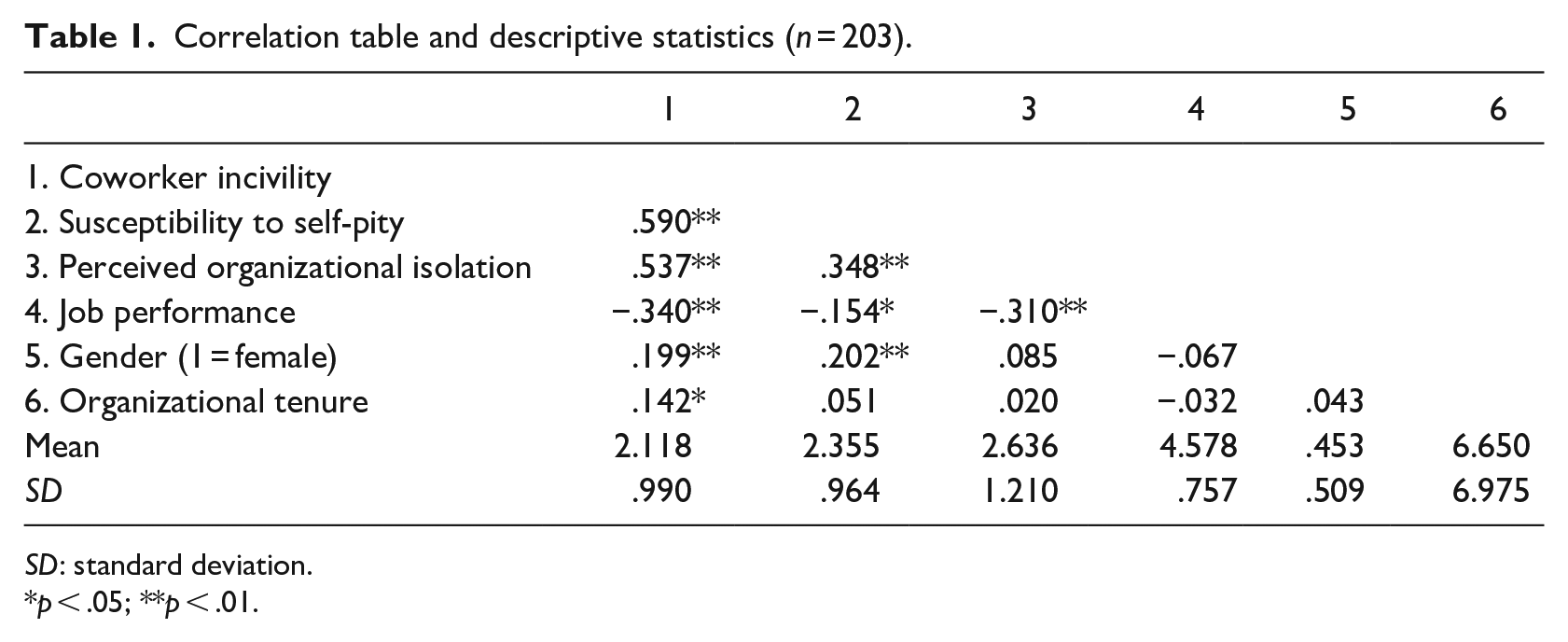
SD: standard deviation.
p < .05; **p < .01.
Mediating role of perceived organizational isolation in the relationship between coworker incivility and job performance (n = 203).
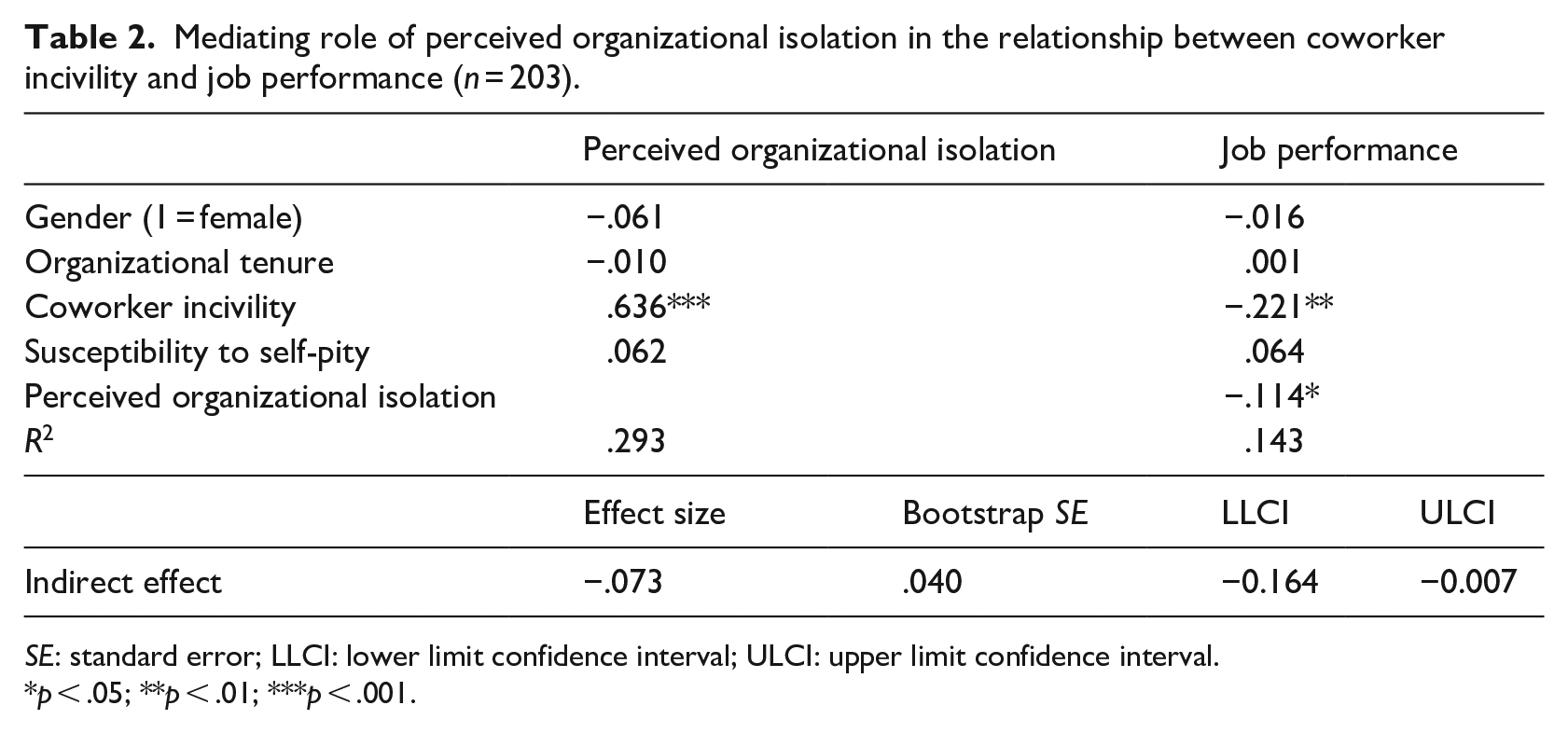
SE: standard error; LLCI: lower limit confidence interval; ULCI: upper limit confidence interval.
p < .05; **p < .01; ***p < .001.
The proposed conceptual framework also predicted that the likelihood that coworker incivility would lead to perceptions of organizational isolation would be higher among employees who felt sorry for themselves in difficult situations (Hypothesis 4). According to the results presented in Table 3, the coworker Incivility × Susceptibility to self-pity interaction term had a positive, significant effect (β = .253, p < .01) for predicting perceived organizational isolation, in support of Hypothesis 4. The results similarly showed that the relationship between coworker incivility and perceived organizational isolation was stronger at higher levels of susceptibility to self-pity (.313 at 1 SD below the mean, .524 at the mean and .819 at 1 SD above the mean). Finally, the moderated mediation dynamic that underpinned the conceptual framework, as formulated in Hypothesis 5, advanced the argument that employees’ susceptibility to self-pity would catalyse the role of perceived organizational isolation as an explanatory factor that connected coworker incivility with diminished job performance. The empirical test of this hypothesis included a comparison of the strength of the conditional indirect relationship between coworker incivility and job performance through perceived organizational isolation, at different levels of susceptibility to self-pity. The stronger effect sizes at increasing levels of the moderator (Table 3) moved from –.036 at 1 SD below the mean, to –.060 at the mean, to –.094 at 1 SD above the mean. The CIs included 0 at the lowest level ([–0.109, 0.001]), but they did not include 0 at the medium ([–0.141, –0.004]) and highest ([–0.201, –0.007]) levels. With a formal test of moderated mediation, we calculated the index of moderated mediation and its corresponding CI (Hayes, 2015). This index equalled –.029, and its CI did not span 0 ([–0.066, –0.002]). These findings confirmed that susceptibility to self-pity strengthened the negative indirect relationship between coworker incivility and job performance, through perceived organizational isolation, consistent with Hypothesis 5 and the study’s general theoretical framework.
Moderating role of susceptibility to self-pity in the mediated relationship between coworker incivility and job performance (n = 203).
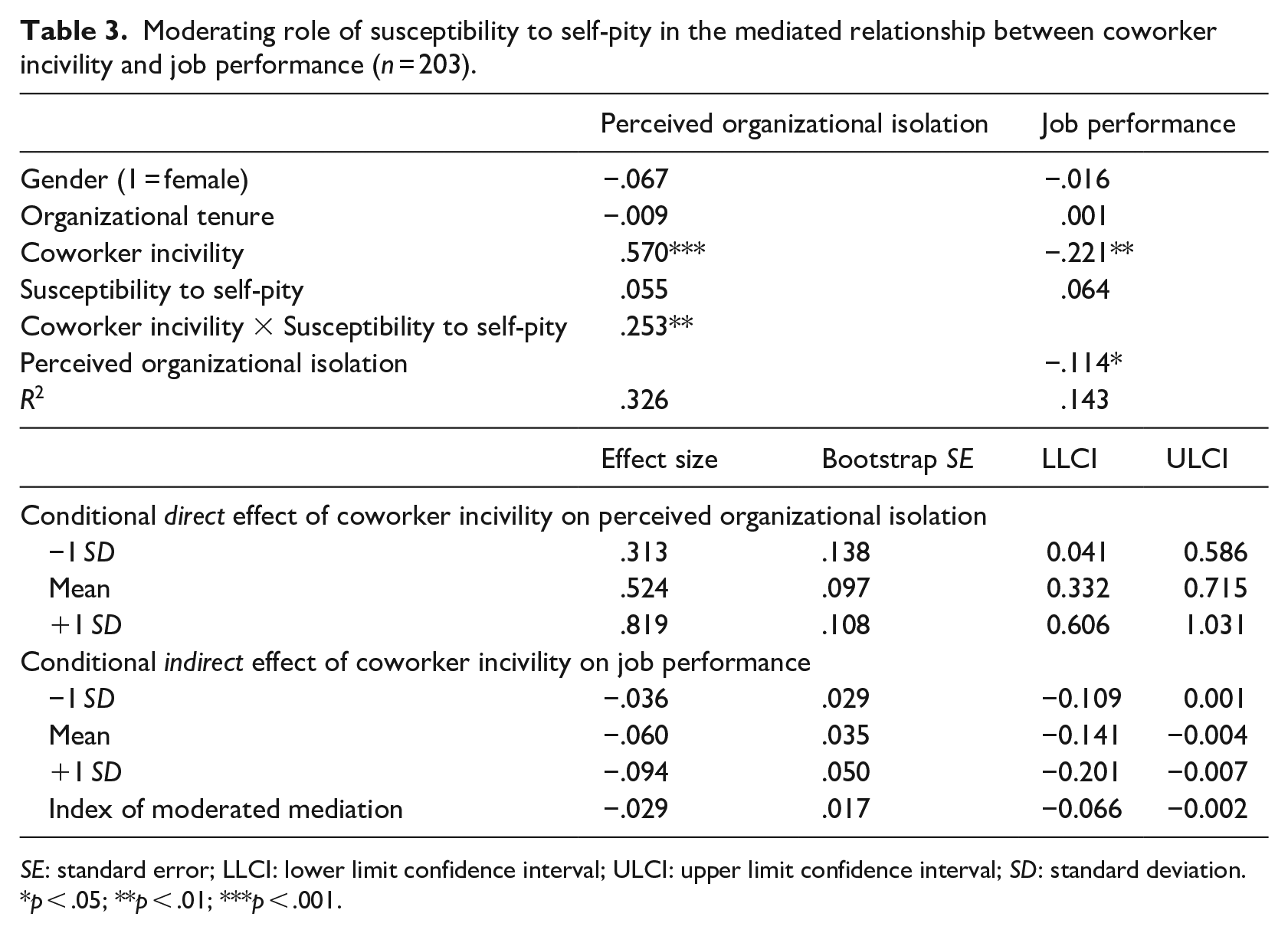
SE: standard error; LLCI: lower limit confidence interval; ULCI: upper limit confidence interval; SD: standard deviation.
p < .05; **p < .01; ***p < .001.
5. Discussion
We have added to the conversation about the harmful effects of adverse coworker relationships by investigating the relationship between employees’ beliefs that their colleagues treat them rudely and their job performance. The specific focus herein was on the roles of two pertinent yet overlooked factors that can affect this connection. That is, there is well-established evidence that dysfunctional relationship dynamics among employees undermine the quality of an organization’s internal functioning (Park and Haun, 2018; Sliter and Boyd, 2015); we have provided expanded insights into how and when these negative performance outcomes emerge. In particular, we leveraged COR theory (Hobfoll et al., 2018) to propose that (1) employees may underperform on their job duties in the presence of resource-depleting coworker incivility, because they feel upset about how their employing organization seemingly has abandoned them, and (2) their inherent tendencies to feel sorry for themselves may reinforce or strengthen this process. The results of this study provided empirical evidence for these theoretical predictions.
As a first critical theoretical insight, this study showed that the conversion of discourteous coworker behaviour into negative performance outcomes can be explained by employees’ tendencies to believe the employing organization is the source of their sense of isolation (Marshall et al., 2007; Orhan et al., 2016). This finding is interesting in light of a parallel argument that employees who feel threatened by coworker incivility might benefit from boosting or maintaining their organizational standing, such as by diligently performing their job duties (Bozionelos et al., 2016; Loi et al., 2015). But our findings indicated that employees instead responded in the opposite direction, due to their disappointment with an organization that made them feel excluded (Itani et al., 2019). Employees exposed to coworker incivility tend to experience a depletion in their self-esteem resource bases (Sliter et al., 2012), and they seek to undo this depletion by accusing their employer of operating in ways that isolate them from the rest of the organization (Welbourne et al., 2016). Notably, this mediating role of perceived organizational isolation implies that targets of rude coworker treatment may inadvertently inflict harm on themselves, through their negative reactions. The targets feel affronted by how their coworkers interact with them, and their resulting belief about being by themselves in the organization undermines the quality of their work functioning even more, prompting negative performance ratings by organizational leaders (Mulki et al., 2008; Williams and Anderson, 1991).
We also found that this counterproductive process could be exacerbated by employees’ tendencies to engage in self-pity. Perceived organizational isolation linked resource-depleting coworker incivility with diminished job performance more forcefully when employees already had an inclination to feel sorry for themselves in difficult situations (Stöber, 2003). We accordingly have explicated an indirect but still harmful role of this personal characteristic, unexplored in prior organizational research: Employees’ susceptibility to self-pity triggered their belief that their employing organization left them unprotected against work-related hardships. The combination of this catalytic role of susceptibility to self-pity with the harmful effect of perceived organizational isolation on job performance pinpointed how the risk that coworker incivility might escalate into diminished job performance became more likely among employees who tended to feel sorry about themselves (Vohra and Singh, 2005).
Taken together, the combined evidence provided by this research has highlighted a relevant danger: If employees persistently believe they never have any luck, they may experience resource-draining coworker treatments as so intrusive that their sense of isolation makes their work situation even worse (Mulki and Jaramillo, 2011). That is, the negative beliefs held by self-pitying employees about how their organization has abandoned them may exacerbate their professional well-being, because these beliefs prompt the employees to channel their frustrations about rude coworker treatment into diminished performance, which, in turn, may make it more difficult for them to complain to organizational decision makers about the experienced hardships. Organizational decision makers therefore should recognize how a general propensity among employees to feel sorry for themselves may undermine the firm’s competitive positioning, to the extent that the employees react in self-protective ways to demeaning coworker treatment and vent their frustration by making lower contributions to organizational effectiveness (Itani et al., 2019).
5.1. Limitations and future research
This study contains some shortcomings, which open the door for continued research. First, we pinpointed perceived organizational isolation as a critical explanatory factor for the conversion of coworker incivility into tarnished job performance. It would be useful to investigate additional mediators – other than perceived organizational isolation or mediators considered in previous studies – such as employees’ perceptions of psychological contract violation (Grimmer and Oddy, 2007) or limited organizational identification (Cho and Treadway, 2011). In a related sense, we did not directly assess the theorized mechanisms that underpinned the counterproductive process in which employees’ experience of coworker incivility escalated into lower performance evaluations through their sense of organizational isolation, such as their motivation to counter self-deprecating thoughts and associated desire to feel good about themselves again by taking out their frustrations on their employer. Continued research could explicitly measure these mechanisms. Another interesting extension would be to combine subjective performance assessments, the approach used in this study, with objective assessments drawn from human resources departmental records. Even though we took several steps to avoid biased survey responses (as detailed in Section 3.1), the average value of the job performance measure was relatively high (4.58 on a 1–6 scale). The average value of the coworker incivility measure also was relatively low (2.12 on a 1–6 scale), which is not uncommon in studies that rely on employee perceptions.
Second, our focus on susceptibility to self-pity as a novel, unexplored trigger of the indirect relationship between coworker incivility and job performance could be complemented by investigations of other relevant individual characteristics, such as employees’ need for affiliation (Kong et al., 2017) or negative affectivity (Chen et al., 2013a). It may also be insightful to examine how contextual factors catalyse the conversion of coworker incivility into a stronger sense of organizational isolation that then lowers job performance, such as perceptions of dysfunctional organizational politics (Johnson et al., 2017) or organizational climates predicated on internal rivalry (Spurk et al., 2019). Further research could compare the incremental role of each potential moderator, as well as triggering roles of employees’ susceptibility to self-pity, to determine whether they hold after controlling for the effects of other factors.
Third, the empirical setting of this research study was limited to one specific country, Pakistan. In a recent, comprehensive literature review of 93 peer-reviewed empirical articles on workplace incivility, published during 2000–2019, Vasconcelos (2020) reported that the majority (56%) of the articles relied on North American samples, whereas countries such as China, South Korea or Pakistan each accounted for only about 3% of the articles. Our focus on Pakistan accordingly had value. Furthermore, extant research has provided empirical support for our basic premise, noting how the presence of workplace incivility leads to detrimental performance consequences in a broad set of countries, including the United States (Cho et al., 2016; Rahim and Cosby, 2016), China (Chen et al., 2013b; Jiang et al., 2019), South Korea (Rhee et al., 2017; Shin and Hur, 2020) and Pakistan (Azeem et al., 2021; Sarwar and Muhammad, 2021). The arguments that underpinned the hypotheses also were not country-specific, so the nature of the theorized relationships should not vary among countries, but their strength might.
Two pertinent cultural features that make Pakistan particularly relevant in this regard are uncertainty avoidance and collectivism. Due to this country’s elevated levels of uncertainty avoidance (Hofstede et al., 2010), employees might feel very distressed by uncertainty-invoking coworker rudeness and react vigorously. In addition, the country’s collectivistic culture implies that employees may be particularly offended by coworkers who undermine group harmony by engaging in disrespectful behaviours (Azeem et al., 2021). It would be useful to undertake country-level studies that explicitly compare the roles of these and other cultural factors in determining the strength of the hypothesized relationships. Such comparisons would also have great value in light of the observation in the aforementioned literature review (Vasconcelos, 2020) that only two comparative international studies of workplace incivility were undertaken in the 2000–2019 period, and they only compared similar countries (the United States and Canada; Australia and New Zealand). Yet another path for exploration would involve the role of associated personal orientations, such as employees’ risk (Curtis and Taylor, 2018) or collective (Yang, 2019) orientations.
5.2. Practical implications
This study has great value for organizational practice. Deep-felt frustrations among employees about discourteous treatments by coworkers may fuel negative beliefs about the way that the organizations operate, which can have a detrimental impact on employees’ propensity to contribute to organizational success with diligent work efforts. A challenge herein is that some employees may be reluctant to be vocal in describing their coworkers’ behaviours, for fear of being judged, colloquially, as a snitch or weakling (Porath and Pearson, 2013). Organizations accordingly should not only seek to eradicate rude interpersonal behaviours but also stimulate employees to express their frustrations, so managers can gain a sense of the severity of the problem. Pertinent actions that might be useful in this regard include hosting open discussion forums in which employees can share their negative experiences with coworker incivility (Wang and Noe, 2010) or a reliance on dedicated human resources department representatives or formally appointed ombuds(wo)men who treat employee complaints with full confidentiality (Harrison et al., 2013).
In addition to this need to identify and mitigate the hardships that come with disrespectful coworker treatment, organizations should be cognizant of how a specific personal characteristic among employees, susceptibility to self-pity, threatens to reinforce the negative consequences of this treatment. Employees who tend to pity themselves feel particularly disheartened by being victimized by rude coworkers, so to protect themselves, these employees condemn their employing organization and refuse to facilitate its success with performance-enhancing work activities. To diminish the probability of this counterproductive response, the noted communication channels, which allow self-pitying employees to express their frustrations confidentially, again may be important. Moreover, organizations can benefit from making employees aware of their own self-pitying tendencies and the importance of avoiding counterproductive responses based on these tendencies. Managers might help employees focus on ways to develop and leverage their positive features, such as their proactive or creative skills (Ren and Chadee, 2017; Stojcic et al., 2018), to deal more productively with coworker incivility.
6. Conclusion
This research has added to previous scholarship by explicating how two pertinent factors inform the translation of resource-depleting coworker incivility into a rejection of performance-enhancing work activities. First, employees who perceive organizational isolation are at greater risk that disrespectful coworker treatments will lead them to underperform on job tasks. Second, this escalation is more salient among employees who tend to wallow in their misfortune instead of doing something productive in response to frustration. We hope these insights can function as a launch pad for further examinations of how organizations can deter the danger that dysfunctional coworker relationships get out of hand and steer employees away from productive work behaviours, which may cause harm to both the employees themselves and their employer.
Footnotes
Acknowledgements
The authors would like to thank Associate Editor Peter Jordan and the anonymous reviewers for their very helpful comments and suggestions.
Final transcript accepted 18 March 2022 by Peter Jordan (AE Organizational Behaviour).
Funding
The author(s) received no financial support for the research, authorship, and/or publication of this article.
