



Abstract
Although we know that individuals who tend to reveal their true selves to others at work are better performers, little is known about why this is the case or in which workplace environments this trait will be most helpful. In the present study, we leveraged self-verification theory to better understand the internal and interpersonal effects that self-verification striving has on employees. Specifically, we proposed and found that self-verification striving serves to increase both employee vigor and demand–ability fit, ultimately leading to better job performance. Results of a multilevel, two-wave study involving 222 employees and their supervisors further revealed that ethical climates also play a critical role in affecting the self-verification striving–employee outcome relationship. Specifically, self-verification striving leads to higher vigor and better demand–ability fit and subsequently higher job performance only in teams with high ethical climates. Our results contribute to the literature by describing how and when self-verification striving may augment performance.
Keywords
Self-verification (i.e. the confirmation of oneself) is important for people to retain certain levels of integrity and stability and to support more stable social interactions (Cable and Kay, 2012; Swann, 2011; Swann et al., 2009). Self-verification striving refers to the extent to which people consistently present themselves in a truthful manner so that others are made aware of who they really are (Cable and Kay, 2012). People high in self-verification striving try to reveal their true personality and working styles in personal and professional relationships. Although scientific inquiry into truthful self-expression has a long history (Lecky, 1945), investigation into how self-verification striving (i.e. the propensity to self-verify) at work leads to employee outcomes remains in its infancy. This is an important area of study, however, given that self-verification results in important interpersonal outcomes, including stabilized social relations (Swann, 2011), and a reinforced sense that things are as they should be (North and Swann, 2009) that lead to lower anxiety (North and Swann, 2009), improved health (Ayduk et al., 2013), and better job performance (Cable and Kay, 2012).
Though several scholars have theorized how self-verification striving might enhance performance at work and at least one study has empirically demonstrated this relationship (Cable and Kay, 2012), the mechanisms underlying this link remain poorly understood. Some have theoretically described how self-verification may result in vague interpersonal benefits in the workplace. For example, North and Swann (2009) emphasized that greater harmony results from better expectation management and a more effective division of labor. Others have suggested that internal mechanisms may underlie the workplace effects of self-verification. For example, Grant et al. (2014) speculated that being able to express one’s true identity can help deploy attention resources, heighten meaningfulness, and buffer against stressors. Cable and Kay (2012) also surmised that both internal benefits (e.g. conserving cognitive energy) and interpersonal benefits (e.g. being given or requesting job tasks that one can excel in; enhancing person–organizational goal consistency) associated with self-verification striving can enhance job performance. Although these descriptions have proven useful for bringing the trait of self-verification striving alive, no study (that we are aware of) has empirically tested these mediators.
Accordingly, examining the intervening mechanisms through which self-verification striving relates to job performance stands to enhance our understanding of this relationship. According to self-verification theory (Swann, 1990), people who reveal their true selves in the workplace stand to gain both (a) internal (i.e. epistemic) and (b) interpersonal (i.e. pragmatic) benefits. In this study, we propose that vigor (i.e. an affective state characterized by liveliness and energy; Shirom, 2011), as an epistemic benefit, and demand–ability (DA) fit (i.e. the match between an employee’s knowledge, skills, and abilities and job requirements; Edwards, 1991), as a pragmatic benefit, mediate the relationship between self-verification striving and job performance. Vigor and DA fit capture the internal and interpersonal benefits (conserving cognitive energy and being given or requesting job tasks that one can excel in, respectively) associated with self-verification striving proposed by Cable and Kay (2012). We expect that high self-verifying employees reduce their depletion of vigor because they do not engage in planning, worrying, and acting to maintain a carefully constructed false image. Indeed, scholars have noted that the majority of job applicants engage in “extensive image creation” during employment interviews (Levashina and Campion, 2007). In addition to pretending to be someone they are not, low self-verifying employees may choose alternate strategies to avoid revealing their true self to others, including making themselves unknowable and outright lying about who they are, which may deplete energy resources and lead to emotional exhaustion (cf. Uy et al., 2017).
Further, in revealing their true self, these employees are likely to manage other people’s expectations in a way that elicits awareness of their personality and expertise, resulting in task assignments that are well-suited for their skillset (London et al., 2005). In other words, by highlighting what makes them unique, peers and supervisors may recognize how this employee can best contribute to communal goals, and may call upon them to do so when needed (leading to a close alignment between one’s abilities and his or her role requirements). As such, high self-verifying employees build and conserve vigor and achieve better DA fit, which may, in turn, contribute to higher job performance (Kristof-Brown et al., 2005; Quinn and Dutton, 2005).
Although prior research has underscored the benefits of being perceived accurately by others, positive outcomes are not guaranteed (e.g. when norms are different; Cha et al., 2019). For instance, researchers have noted that people often try to hide the parts of the self that are negative, marginalized, or inconsistent with social norms to avoid social disapproval (Bargh et al., 2002). Negative outcomes for self-verification may be particularly likely in certain environments, particularly those where the risks of rejection (Kwang and Swann, 2010) or ostracism (Xu et al., 2017) are high. In light of these findings, it is also critical to examine the boundary conditions that determine when self-verification striving is most likely to yield positive outcomes.
In this study, we propose that ethical climates (i.e. shared perceptions among team members that they practice and reinforce clear moral standards; Mayer et al., 2013) moderate the relationships between self-verification striving and vigor/DA fit. Under high ethical climates, team members can count on each other to model and encourage rule-compliance, fairness, and transparency (Newman et al., 2017), and tend to experience positive social interactions rich in trust, cohesion, and mutual support (Lemmergaard, 2004). Thus, high self-verifiers may not need to exert extra effort in contexts where peers believe that their professed self-portrayal represents the truth, thereby not draining vigor. On the other hand, under unethical climates, people may try to exploit rather than accommodate the expressed true self, resulting in low DA fit. Accordingly, and in light of research that has demonstrated that the context can affect self-verification processes (e.g. Swann et al., 2009), we further expect that self-verification striving would be invigorating and produce high DA fit only in work teams with strong ethical norms.
Our study contributes to the literature in several ways. First, there are very few empirical studies on self-verification striving in the workplace, and we provide an initial attempt to empirically identify and test the mediating mechanisms between self-verification striving and job performance. In doing so, we expand on prior work studying the self-verification striving and job performance link (e.g. Cable and Kay, 2012) by examining the mediating mechanisms underlying this relationship based on self-verification theory (Swann, 1990). Specifically, we tested the notion that maintaining consistency between one’s own and peer perceptions of the self can result in internal and interpersonal resources (i.e. vigor and DA fit, respectively) that can be invested into workplace performance.
Second, the present study contributes to the literatures by investigating the understudied area of individual difference antecedents of vigor and DA fit. Despite the rich literature highlighting contextual factors that build and protect vigor (e.g. Carmeli et al., 2009; Shirom, 2011), there is a lack of studies that have examined how traits may affect this energy resource. In examining vigor as one of our intervening mechanisms, we aimed to answer Shirom’s (2011) call for more research investigating the antecedents and positive outcomes of vigor in the workplace while building on prior work demonstrating a link between vigor and job performance (Carmeli et al., 2009). Similarly, the fit literature has called for more investigation into individual differences that can potentially enhance the fit with one’s job role or the organization as a whole (e.g. Cable and DeRue, 2002). Thus, by examining the effects of self-verification striving on vigor and DA fit, we fill a gap in the literature.
In addition, we theorized and tested the interplay between self-verification striving and ethical climates, and thus provided a better understanding of the conditions under which self-verification striving leads to the internal and interpersonal benefits (i.e. increased vigor and DA fit, respectively). In light of evidence showing that self-verification may sometimes be harmful (Cameron et al., 2009; Human and Biesanz, 2013), we contribute to the literature on self-verification by showing how social environments (i.e. team ethical climates) can enhance or mitigate the effects of self-verification striving on employee outcomes.
Self-verification theory
Self-verification theory (Swann, 2011) proposes that people are generally motivated to act in alignment with their true selves in order to maintain both cognitive symmetry and stable interpersonal relationships. Specifically, people who reveal their true selves in the workplace stand to gain both (a) epistemic (i.e. cognitive dissonance reduction) and (b) pragmatic (i.e. expectation management with others) benefits (Swann, 1990; Swann et al., 1992). Cable and Kay (2012) were among the first to take an individual differences approach to self-verification, as it had previously been described as a universal human motive (albeit one tempered by contextual factors, e.g. Swann et al., 2009). High self-verification strivers value self-verification more than those who are low, and tend to consistently self-verify at higher levels (Cable and Kay, 2012).
Self-verification striving is related to but different from authenticity. Roberts et al. (2009: 151) defined authenticity as “the subjective experience of alignment between one’s internal experiences and external expressions.” Authenticity, therefore, involves intrapersonal processes, especially the congruence between one’s thoughts, feelings, and behavioral preferences. It is essentially about being true to one’s self (Vannini and Franzese, 2008). Alternatively, self-verification striving focuses on authentic self-expression, which entails revealing information about ourselves in social settings and allowing others to know who we are (Cable and Kay, 2012). It therefore involves aligning both intrapersonal and interpersonal processes associated with being who we truly are across a wide range of settings. In this study, we incorporate some of the findings related to authenticity into our hypothesizing because self-verification striving and authenticity are closely-related concepts. By using self-verification striving rather than authenticity, however, we are better able to explore both internal and interpersonal pathways through which the tendency to self-verify may exert its effects.
We propose that high self-verification striving allows employees to conserve and build vigor and to enhance DA fit, and that this process will unfold along the internal (i.e. epistemic) and interpersonal (i.e. pragmatic) pathways outlined by self-verification theory (Swann, 2011), respectively. We describe each of these pathways below.
The mediating effect of vigor
First, we suggest that individuals who are high in self-verification striving can avoid wasting precious epistemic resources by not using up vigor to engage in activities designed to maintain false appearances, ruminate about how to continue the façade of their false identities, or feel saddened on account of their deceit. As noted by Cable and Kay (2012), being honest about one’s work-related capabilities and working styles might help people focus more of their energy on core work tasks and less on trying to become the exaggerated version of themselves they have portrayed.
More specifically, high self-verification strivers likely waste fewer unnecessary resources than those who are constantly trying to either pretend to be someone they are not or make themselves unknowable (Swann, 2011). Conservation of resources theory (COR; Hobfoll, 1989: 516) defines resources as “those objects, personal characteristics, conditions, or energies that are valued by the individual.” In particular, energies are important internal resources that are used to acquire other, more valuable, resources. For instance, time and vigor are mostly prized because of what one can attain by using them. As such, vigor is a resource that can be used to accomplish one’s goals and acquire further resources, which can help employees perform better in their jobs. By creating a cognitive space that is stable over time, individuals high in self-verification striving are better able to reconcile past experiences and future expectations, conserving cognitive resources. When employees choose to display values, opinions, emotions, and traits that differ from their true selves, in contrast, they are likely to experience cognitive and emotional dissonance that can drain precious vigor resources (Hinojosa et al., 2017). As noted by the emotional labor literature (e.g. Grandey et al., 2005), constantly being “on” at work can be an exhausting endeavor that depletes vigor. Namely, low self-verification striving may involve behavioral acting to fake a more desirable personality or skillset, evaluating others’ reactions to see if they believe the ruse, avoiding talking to other people, or fearing the possibility of being found out, all of which may sap one’s vigor stores. Taken together, we posit that employees high in self-verification striving are more vigorous than those low in self-verification striving.
We also suggest that these heightened levels of vigor will allow high self-verification striving employees to perform their jobs well. First, vigor acts as a resource that influences one to be both more motivated and capable of action (Quinn and Dutton, 2005). It includes a positive affective state, which can boost work motivation and effort in work projects (Wright and Cropanzano, 1998). Individuals high in vigor may also persevere in their efforts longer (Shirom, 2011) and choose to invest excess resources back into their jobs by performing at a higher level so that they can achieve high status and monetary rewards associated with being a good performer (Hobfoll, 2011). That is, vigor can help employees perform at high levels because they can better invest these resources in different task behaviors (Halbesleben and Wheeler, 2015). Through these varied effects, we contend that vigor provides the fuel that helps people to perform at high levels. Consistent with this, Carmeli et al. (2009) demonstrated that high levels of vigor were significantly related to better job performance. Hence, we propose:
Hypothesis 1: Self-verification striving has a positive, indirect effect on job performance via increased vigor.
The mediating effect of DA fit
In addition, we expect that self-verification striving would garner pragmatic benefits that result in increased DA fit. As aptly noted by Swann (1990: 415), self-verification strivers
work to ensure that others do not form overly negative appraisals (which would cause others to patronize them or to accuse them of false modesty) or overly positive appraisals (which would cause others to expect too much of them, or to place extravagant demands upon them).
Increased DA fit, in turn, will result in greater job performance. Supporting this contention, prior meta-analytic studies also found that DA fit was significantly and positively linked to job performance (Kristof-Brown et al., 2005), especially among East Asian samples (Oh et al., 2014). This occurs because individuals have the requisite skills and abilities to efficiently meet task goals at a high-quality standard, leading directly to better performance (Cable and DeRue, 2002). In addition, enhanced fit stands to augment performance indirectly through factors such as lowered strain, increased self-efficacy, and greater occupational attraction (Cable and DeRue, 2002; Kristof-Brown et al., 2005). Accordingly, we propose an indirect effect model where people high in self-verification striving will have better job performance due to enhanced DA fit.
Hypothesis 2: Self-verification striving has a positive, indirect effect on job performance via increased DA fit.
The moderating role of team ethical climate
In the above sections, we argue that self-verification striving augments job performance through epistemic (i.e. increased vigor) and pragmatic (i.e. greater DA fit) pathways (Swann, 2011). We further contend, however, that these mediated relationships may not hold true under certain circumstances. For instance, in a work unit in which unethical culture prevails, peers fail to set an example of ethical business behavior, make unethical decisions, and do not support each other to act ethically (Mayer et al., 2013). As a result, one can never be sure whether information shared by others is true, leading peers not to accept or confirm self-verifying information and leading high self-verification strivers to exert additional effort as they repeatedly attempt to show their true selves. In addition, even when self-verifying information is accepted as true, peers working in an unethical environment may take advantage of professed weaknesses or be unwilling to accommodate their peers’ strengths by adjusting their work arrangements, leading to lower DA fit. Accordingly, we expect that high self-verification striving will fail to result in vigor and DA fit in low ethical climates.
Based on the above reasoning and in line with studies showing that the social environment plays an important role in verifying and confirming one’s self (Swann, 2011), we argue that ethical team culture alters the relationships between self-verification striving and vigor and between self-verification striving and DA fit such that self-verification striving only positively relates to these outcomes when working in teams with a high ethical climate. Supporting this idea, prior scholars have proposed that employees working in ethical climates consider morality when making decisions and set examples of fair behavior (Victor and Cullen, 1988), which can have a profound impact on workplace behavior, attitudes, social interactions, and peer perceptions (see Martin and Cullen, 2006 and Newman et al., 2017 for reviews). For example, Victor and Cullen (1988) posited that ethical climates reduce self-interest and increase trust, cooperation, and empathic concern among coworkers. Similarly, ethical climates have been shown to forge lower perceived ambiguity, greater trust, and more helping behavior (Martin and Cullen, 2006; Newman et al., 2017), further underscoring the idea that peers may more readily accept and act on self-verifying information in ethical climates. Thus, we expect that high self-verification striving individuals working in ethical climates will be able to conserve their vigor and boost DA fit because their peers are likely to verify and confirm the version of themselves that they present and will interact with them based on their espoused identity; under low ethical climates, however, high self-verifiers cannot enjoy the epistemic and pragmatic benefits related to self-verification striving. Accordingly, we propose:
Hypothesis 3: Team ethical climate moderates the positive associations between self-verification striving and (a) vigor and (b) DA fit such that these relationships are positive and significant when ethical climate is high (but not when it is low).
Moderated mediation
Together, the above predictions suggest a first-stage moderated mediation (Edwards and Lambert, 2007), such that the level of team ethical climate moderates the indirect effects of self-verification striving on job performance through vigor and DA fit (see the full model in Figure 1). Specifically, self-verification striving helps to enhance job performance because it frees up valuable vigor stores and enhances DA fit. This mediated relationship will be positive and significant, however, in teams with a high ethical climate (but not in teams with a low ethical climate). Thus, we propose:
Hypothesis 4: Team ethical climate moderates the indirect effect of self-verification striving, via (a) vigor and (b) DA fit, on job performance, such that these indirect effects are positive when ethical climate is high rather than low.
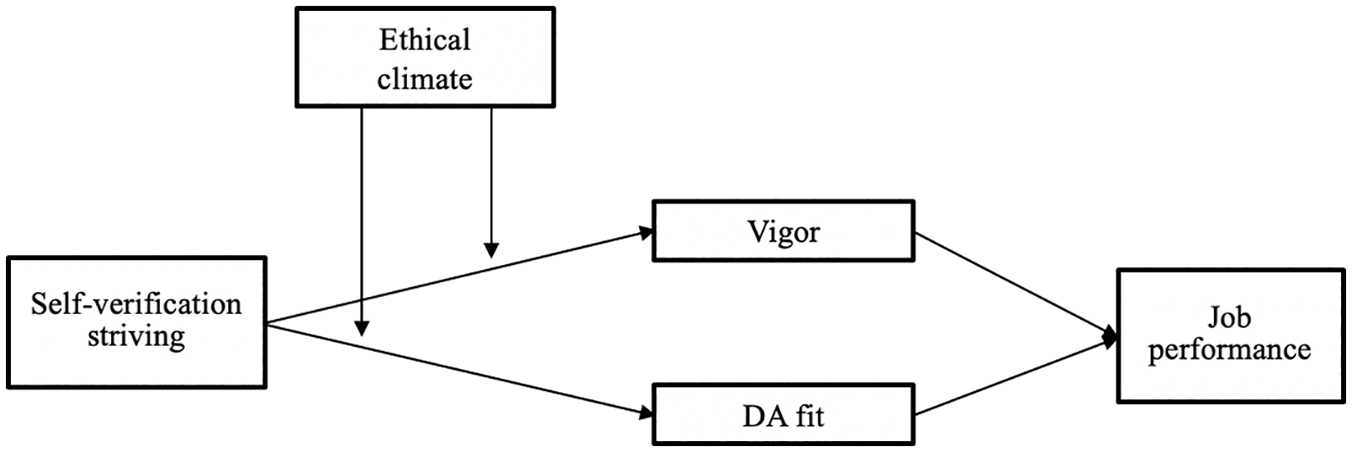
Hypothesized model linking self-verification striving to job performance through vigor and DA fit as moderated by ethical climate.
Method
Procedure and participants
We used a two-wave (two-month interval) and a multi-source (employees and their supervisors) design to collect the data to minimize issues related to common method variance (Podsakoff et al., 2011). Surveys were collected from 222 employees and their 35 supervisors working in two organizations located in a city in southern China. One company provides training and tutoring services, and most employees are trainers or salespeople. The other firm is a software development company, and the participants from this company are either designers or programmers. All subordinates were invited to participate in the survey. The questionnaires were distributed through the coordinators in the organizations (a vice president and an HR director). The participants were instructed that participation was voluntary, that their responses would remain confidential, and that the data would be used for research purposes only. Each participant submitted his/her completed questionnaire in a sealed envelope.
At time 1, we distributed questionnaires to 200 employees in each organization and asked the employees to assess their levels of self-verification striving, self-esteem, and demographic information as well as their work group’s ethical climate. In total, 119 completed questionnaires were returned in the first organization (response rate = 59.5%) and 141 participated in the second organization (response rate = 70.5%). Approximately 2 months later, we distributed time 2 surveys to the employees who responded to the first survey and their supervisors. Each employee was assigned one ID number, and the ID number was put on the questionnaire distributed to the corresponding employee. Thus, we could identify who participated in the first survey and matched the employee surveys to the supervisor survey later. All employees who participated in the time 1 survey also returned the second questionnaire. Employees were asked to assess vigor and DA fit, and supervisors were asked to report their own demographic information and rate the subordinates’ job performance. Although all employees returned the second questionnaire, 35 (out of 43) supervisors returned a complete questionnaire (response rate = 81.4%). All respondents received a small monetary reward for completing the questionnaires.
A total of 222 employee–supervisor pair surveys were returned. The average team size was 6 (ranging from 2 to 27) and was roughly representative of both the software (M = 6.85, SD = 1.92) and training companies (M = 10.83, SD = 8.15) as a whole. Fifty-six percent of the employees were female, the average age was 25.80 years old (SD = 3.60), and average organizational tenure was 1.43 years (SD = 1.00). Of the 35 supervisors, 46.8 % were female and they were 28.43 years of age (SD = 5.16) with an average tenure of 3.28 (SD = 1.69).
Measures
Scales (except for the job performance scale, which was already in Chinese) were initially written in English and translated into Chinese following Brislin’s (1986) translation and back-translation procedures. All of the variables in this study were assessed on a seven-point Likert-type scale (where 1 = Strongly disagree and 7 = Strongly agree).
Self-verification striving
To measure self-verification striving, we used Cable and Kay’s (2012) eight-item scale and asked people to assess the extent to which the items describe themselves in general. A sample item is “For me it’s better to be honest about myself when meeting new people, even if it makes me appear less than ideal.”
Ethical climates
We assessed ethical climates using Mayer et al.’s (2013)’s three-item scale: “My team members support me in following my company’s ethics standards”, “My team members carefully consider ethical issues when making work-related decisions”, and “Overall, my team members set a good example of ethical business behavior.” Neither firm emphasized ethical compliance at the organizational level, so ethical climates are likely to vary considerably across different groups. To assess team ethical climate, we calculated the inter-member reliability ICC (1) and ICC (2), and the within-group inter-rater agreement (rwg). The values for rwg, ICC (1), and ICC (2) were 0.88, 0.11 [F(36, 221) = 1.70, p < 0.05], and 0.43, respectively. ICC (2) is relatively low (LeBreton and Senter, 2008), but it may be adversely affected by the small number of team members per each group (Bliese, 1998). Also, the ICC (2) value is similar to or higher than those reported by other scholars (e.g. Chen et al., 2013; Gong et al., 2009; Lam et al., 2018), and is not low enough to prohibit aggregation (Fleiss, 1986), especially given the high rwg and significant ICC (1) values.
Vigor
We assessed employee vigor using the 14-item Shirom-Melamed Vigor Measure (Shirom, 2003). This scale includes items tapping physical vigor (sample item: “At work, I feel full of pep”), cognitive vigor (sample item: “At work, I feel that I can think rapidly”), and emotional vigor (sample item: “At work, I feel able to show warmth to others”).
Demand–ability (DA) fit
Following previous studies (e.g. Boon and Biron, 2016; Greguras and Diefendorff, 2009; Niessen et al., 2016), we operationalize demand–ability fit using subjective measures. We assessed DA fit using the three-item scale by Cable and DeRue (2002; sample item: “The match is very good between the demands of my job and my personal skills”).
Job performance
At time 2, we asked supervisors to assess their subordinates’ job performance using Farh and Cheng’s (1997) four-item scale, which was developed in a Chinese context and has been previously validated (e.g. Gong et al., 2009). An example item is, “This employee’s work performance always meets my expectations.”
Control variables
Although Swann (2011) noted that even people with negative self-views would like to seek self-verifying feedback, it is likely that people who feel better about themselves may find the act of self-verification more enjoyable. Further, when individuals with low self-esteem profess their skills to be lower than they actually are, supervisors may provide them with low-level work that leads to under-employment, draining their vigor resources and lowering DA fit in the process. As self-esteem has also been empirically linked to job performance (Judge and Bono, 2001), we assessed and controlled for self-esteem using five items of Eatough et al. (2016) that modified the items from the Rosenberg (1989) self-esteem scale. A sample item is, “On the whole, I am satisfied with myself at the moment.” We also controlled for age, sex, and tenure that may be related to work behaviors (Van Dyne and Pierce, 2004). Finally, we controlled for potential confounding effects of the organization by using a dummy variable.
Analytic procedure
Given that the data were nested within supervisors, we tested our research hypotheses using a multi-level analysis with Mplus 7.3 (Muthén and Muthén, 2012) and observed variables. Specifically, we used a two-level model (i.e. an intercept model at the supervisor level) to control for any possible confounding effects of supervisor-level factors on the relationships we examined. We tested the moderating effects of ethical climate on the relationship between self-verification striving and (a) vigor and (b) DA fit using mean-centering for self-verification striving and ethical climate. In addition, to test the indirect effects of self-verification striving on job performance via vigor and DA fit and the moderating effects of ethical climate on the indirect effects, we calculated the confidence intervals (CIs) with the Monte Carlo simulation (20,000 replications; Preacher et al., 2010).
Results
Table 1 shows the descriptive statistics, reliability estimates, and correlations. Self-verification striving was positively and significantly correlated with vigor (r = 0.19, p < 0.01) and DA fit (r = 0.17, p < 0.05). Additionally, vigor and DA fit were positively and significantly correlated with job performance (r = 0.19, p < 0.01, r = 0.16, p < 0.05, respectively), providing preliminary support for our hypotheses. Self-verification striving was not significantly correlated with job performance (r = −0.06, n.s.). Also, interestingly, ethical climate was negatively and significantly correlated with job performance (r = −0.16, p < 0.05). We speculate that people who work in highly unethical climates may disregard conventional ethical standards and focus on maximizing their job performance by any means necessary.
Means, standard deviations, and correlations for all variables.
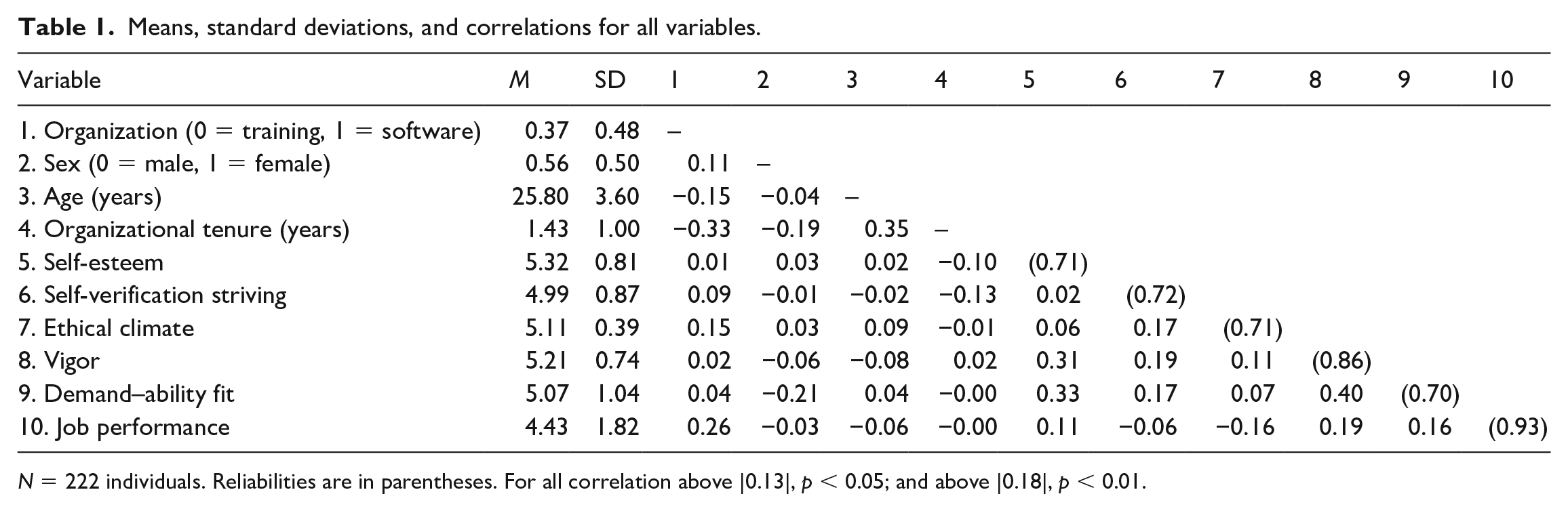
N = 222 individuals. Reliabilities are in parentheses. For all correlation above |0.13|, p < 0.05; and above |0.18|, p < 0.01.
Confirmatory factor analyses
To test the distinctiveness of the key variables (self-verification striving, vigor, DA fit, ethical climate, self-esteem, and job performance), we ran confirmatory factor analyses (CFAs). We specified vigor as a second-order factor, indicated by three first-order factors (physical, cognitive, and emotional vigor). The six-factor model shows an adequate fit based on the “two-index” strategy described by other authors (e.g. SRMR plus another index such as RMSEA; Ferris et al., 2016; Hu and Bentler, 1998; Klein et al., 2014): [χ2(341, N = 222) = 1121.81, comparative fit index (CFI) = 0.82, standardized root mean square residual (SRMR) = 0.07, and root mean square error of approximation (RMSEA) = 0.06]. Also, following Jackson et al. (2009), to account for wording artifacts in vigor items that begin with the stem “At work”, we correlated the error terms for the vigor items. The modified model yielded a similar result to the original model (χ2(550, N = 222) = 1021.29, CFI = 0.83, SRMR = 0.06, and RMSEA = 0.06). In addition, we ran a CFA for the employee-reported variables (self-verification striving, vigor, DA fit, ethical climate, and self-esteem). The five-factor model also fits to the data well [χ2(482, N = 222) = 837.78, CFI = 0.81, SRMR = 0.07, and RMSEA = 0.06]. In addition, given that CFI tends to slightly decline as the number of items increases (Kenny and McCoach, 2003), we used three-item parcels for the measures with more than three items to appropriately assess the model with a large parameter-to-sample-size ratio (Little et al., 2002). The six-factor model fits the data well [χ2(120, N = 222) = 201.20, CFI = 0.94, SRMR = 0.05, RMSEA = 0.05]; the five-factor model also fits the data well [χ2(80, N = 222) = 113.14, CFI = 0.96, SRMR = 0.05, RMSEA = 0.04]. These CFA results are summarized in Table 2, and support the distinctness of the key variables used in this study.
Results for confirmatory factor analyses.
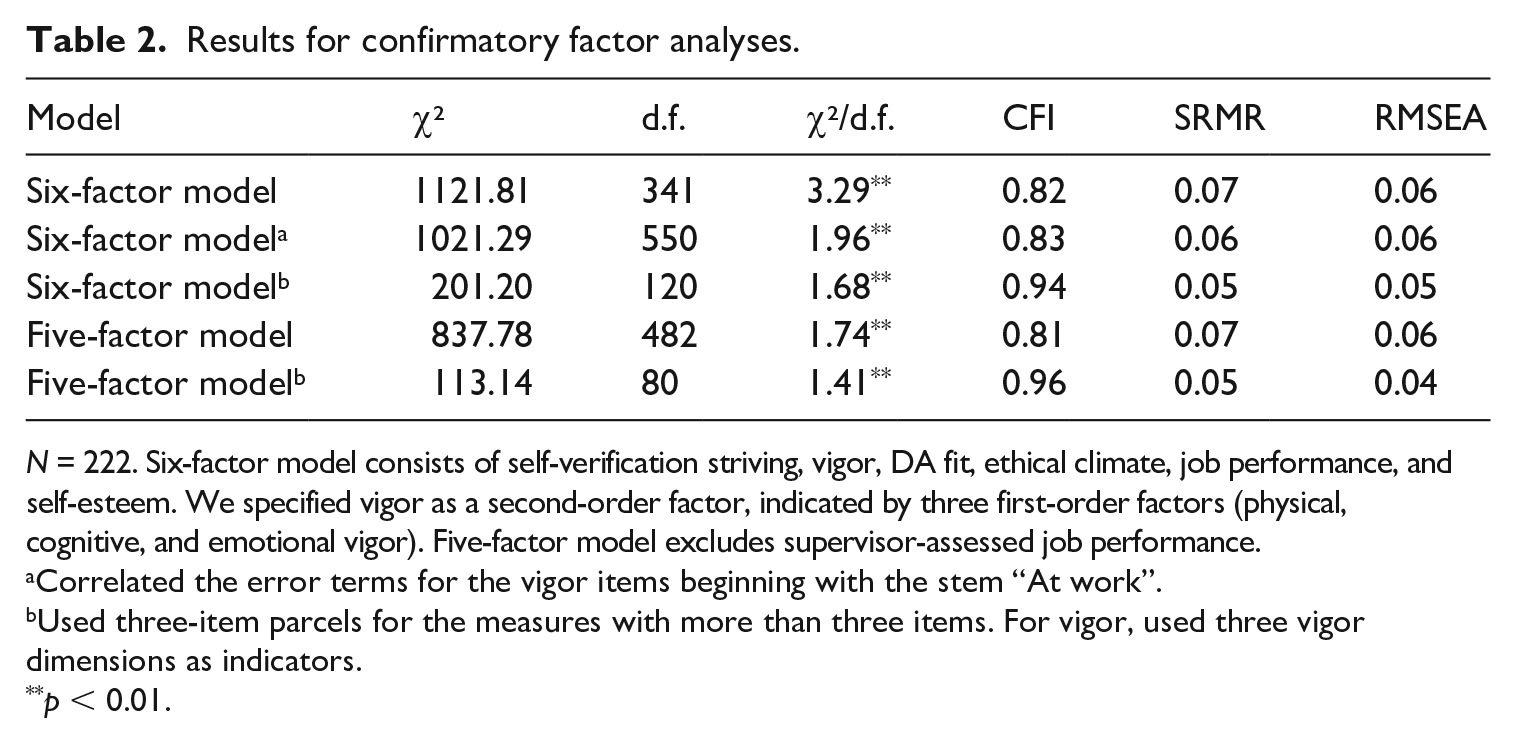
N = 222. Six-factor model consists of self-verification striving, vigor, DA fit, ethical climate, job performance, and self-esteem. We specified vigor as a second-order factor, indicated by three first-order factors (physical, cognitive, and emotional vigor). Five-factor model excludes supervisor-assessed job performance.
Correlated the error terms for the vigor items beginning with the stem “At work”.
Used three-item parcels for the measures with more than three items. For vigor, used three vigor dimensions as indicators.
p < 0.01.
Hypotheses 1 and 2 stated that self-verification striving would positively and indirectly relate to an employee’s job performance via increased vigor and DA fit. Consistent with Hypothesis 1, Models 2 and 7 (Table 3) show that self-verification striving positively and significantly related to vigor (γ = 0.16, p < 0.01), and vigor positively and significantly related to job performance (γ = 0.43, p < 0.05). The Monte Carlo simulation results show that the indirect effect of self-verification on job performance via vigor was significant (indirect effect = 0.08, 95% CI = [0.013, 0.173]). In addition, Models 4 and 8 (Table 3) show that self-verification striving positively and significantly related to DA fit (γ = 0.18, p < 0.01), and DA fits positively and significantly related to job performance (γ = 0.25, p < 0.05). The Monte Carlo simulation results show that the indirect effect of self-verification on job performance via DA fit was significant (indirect effect = 0.06, 95% CI = [0.009, 0.120]), supporting Hypothesis 2.
The effects of self-verification striving on vigor, DA fit, and job performance.
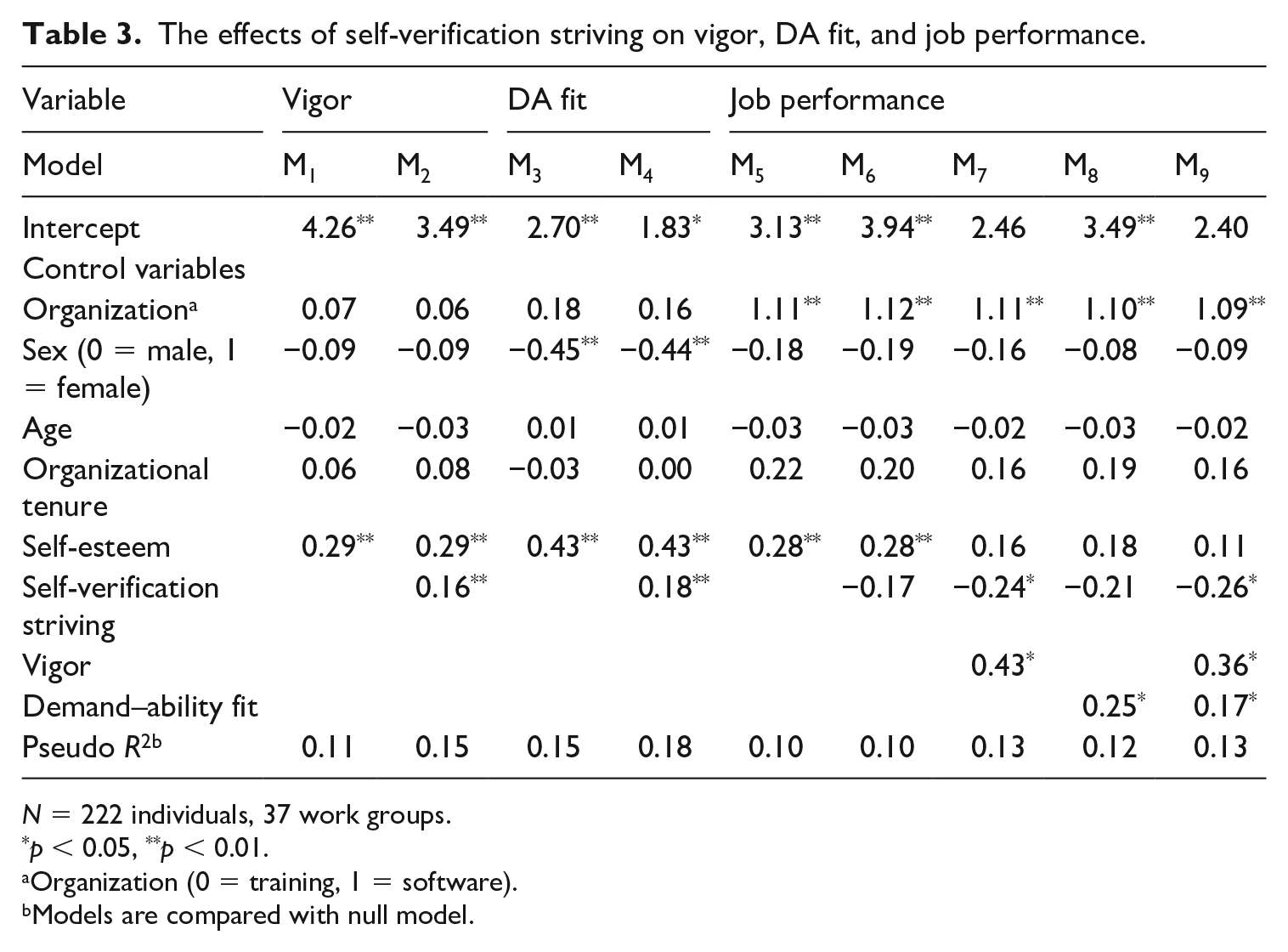
N = 222 individuals, 37 work groups.
p < 0.05, **p < 0.01.
Organization (0 = training, 1 = software).
Models are compared with null model.
Hypothesis 3 proposed that ethical climate would moderate the positive association between self-verification striving and employees’ (a) vigor and (b) DA fit such that these relationships become stronger when ethical climate is high rather than low. Models 3 and 6 (Table 4) show that the interaction between self-verification striving and ethical climate was significantly related to vigor (γ = 0.30, p < 0.05) and DA fit (γ = 0.26, p < 0.05). Specifically, the simple slope results shown in Figures 2 and 3 reveal that the relationship between self-verification striving and (a) vigor and (b) DA fit was significant when ethical climate was high (vigor simple slope = 0.31, p < 0.01; DA fit simple slope = 0.29, p < 0.01), but not when ethical climate was low (vigor simple slope = 0.07, n.s.; DA fit simple slope = 0.09, n.s.), supporting Hypothesis 3.
Moderating effects of ethical climate on the relationships between self-verification striving and vigor and DA fit.
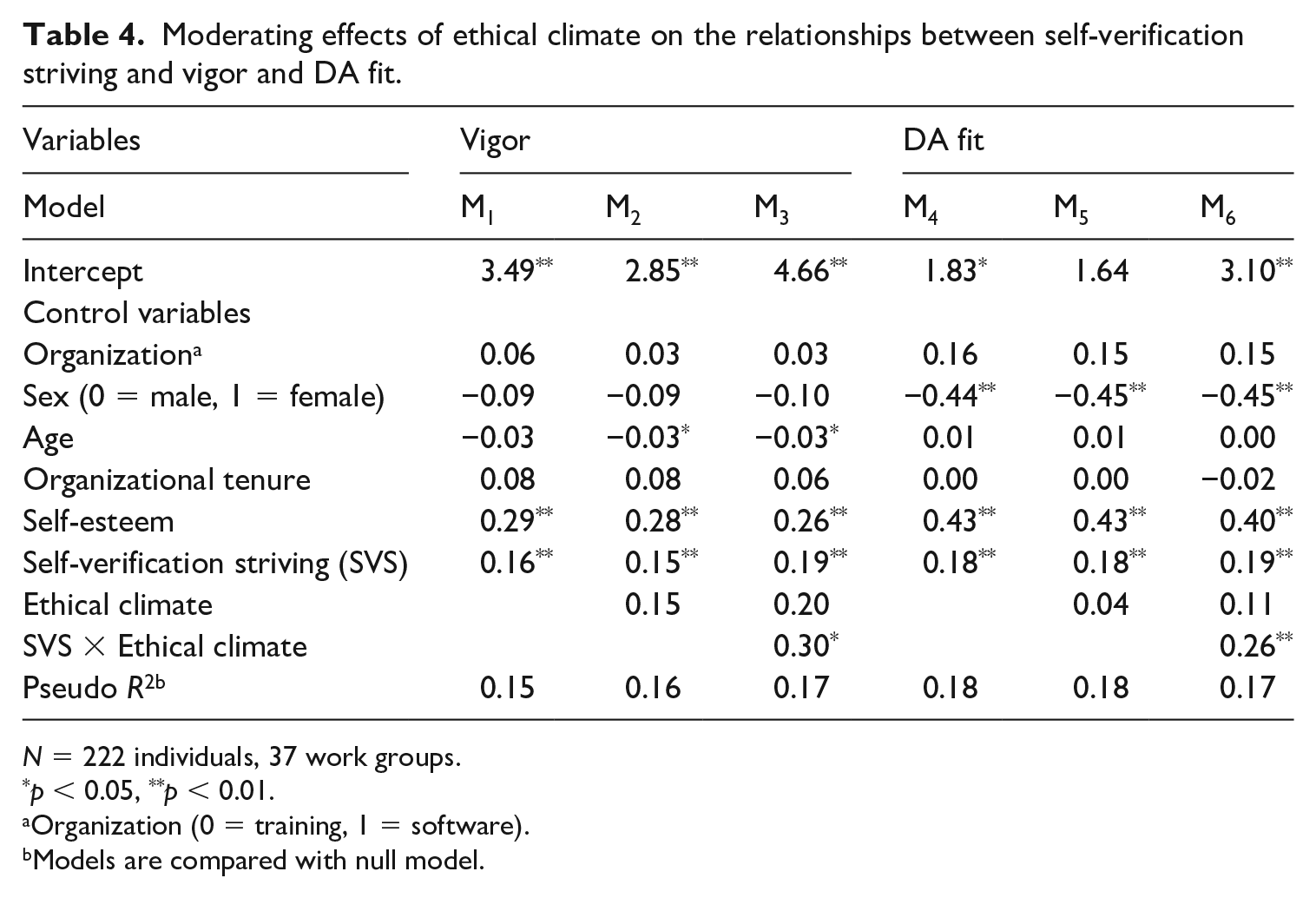
N = 222 individuals, 37 work groups.
p < 0.05, **p < 0.01.
Organization (0 = training, 1 = software).
Models are compared with null model.
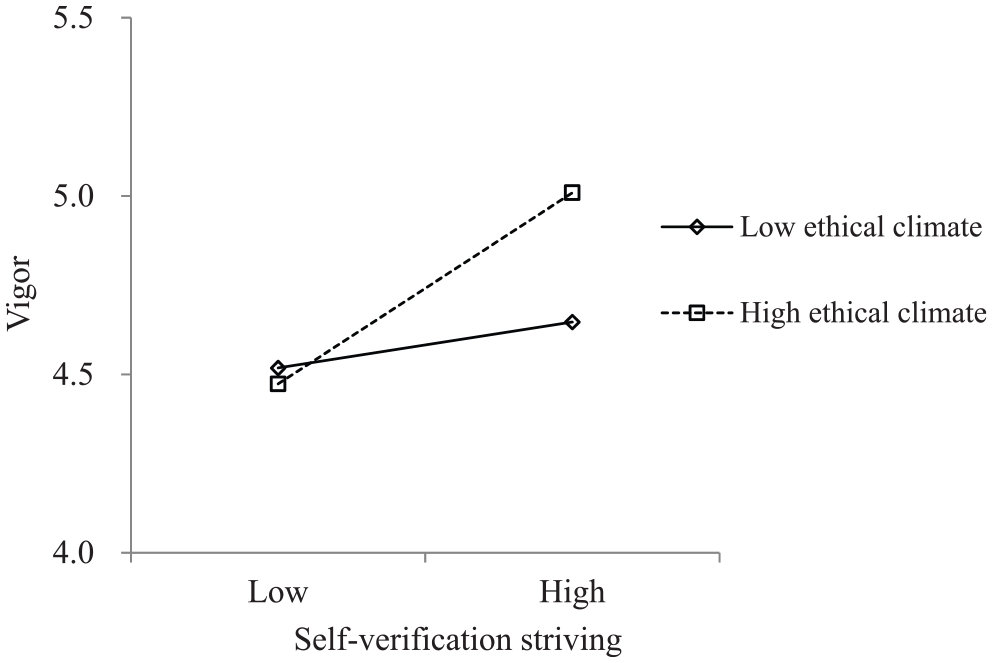
Simple slopes of self-verification striving on vigor at levels of ethical climate.
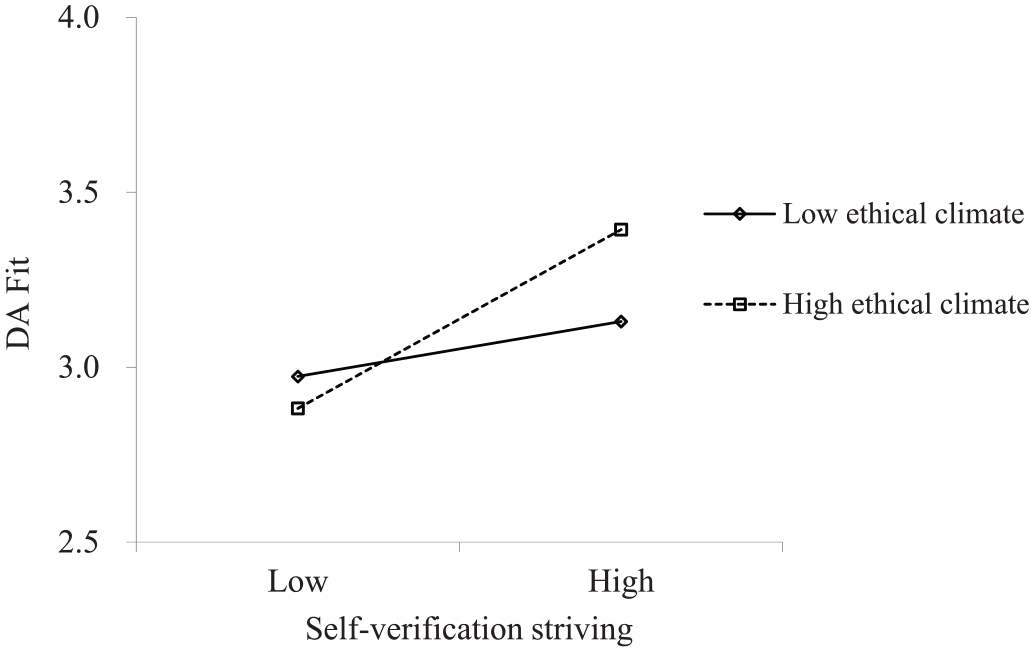
Simple slopes of self-verification striving on DA fit at levels of ethical climate.
Lastly, Hypothesis 4 stated that ethical climates moderate the indirect relationship between self-verification striving and job performance through the employee’s (a) vigor and (b) DA fit such that the indirect effects become stronger when the ethical climate is high rather than low. The Monte Carlo results show that the indirect effects through vigor and DA fit varied significantly as a function of ethical climate (i.e. vigor first-stage moderation = 0.12, 95% CI = [0.007, 0.272]; DA fit first-stage moderation = 0.08, 95% CI = [0.012, 0.173]). Consistent with Hypothesis 4, the indirect effect was significant when the ethical climate was high (vigor indirect effect = 0.12, 95% CI = [0.038, 0.208]; DA fit indirect effect = 0.09, 95% CI = [0.033, 0.150]), but not low (vigor indirect effect = 0.03, 95% CI = [−0.037, 0.086]; DA fit indirect effect = 0.03, 95% CI = [−0.001, 0.059]).
Supplemental analysis
As vigor can be divided into three subtypes (physical, cognitive, and emotional, Shirom, 2011), we conducted supplementary analyses to investigate whether the mediation and moderation effects held across all three vigor facets. The results showed that self-verification striving was positively and significantly related to physical vigor, cognitive vigor, and emotional vigor (γ = 0.13, p < 0.05; γ = 0.16, p < 0.05; γ = 0.20, p < 0.01, respectively). In addition, physical vigor and cognitive vigor were positively and significantly related to job performance (γ = 0.42, p < 0.01; γ = 0.28, p < 0.05, respectively), but emotional vigor was not (γ = 0.11, n.s.). In addition, the Monte Carlo results show that the indirect effects of self-verification striving on job performance via physical vigor and cognitive vigor were significant (i.e. physical vigor indirect effect = 0.06, 95% CI = [0.003, 0.156]; cognitive vigor indirect effect = 0.05, 95% CI = [0.0001, 0.128]), but not with emotional vigor (indirect effect = 0.03, 95% CI = [−0.019, 0.093]). Further, we found that the interaction between self-verification striving and ethical climate was significantly related to physical vigor (γ = 0.34, p < 0.01), but not to cognitive vigor or emotional vigor (γ = 0.31, n.s., γ = 0.22, n.s., respectively). The relationship between self-verification striving and physical vigor was significant when ethical climate was high (simple slope = 0.31, p < 0.01), but not when ethical climate was low (simple slope = 0.05, n.s.). In addition, when all three dimensions of vigor were included simultaneously in the analyses predicting job performance, physical vigor was positively and significantly related to job performance (γ = 0.39, p < 0.05), but cognitive vigor and emotional vigor were not (γ = 0.15, n.s.; γ = −0.14, n.s., respectively). The Monte Carlo results also show that the indirect effect of self-verification striving on job performance via physical vigor was significant (indirect effect = 0.06, 95% CI = [0.001, 0.157]), but not with cognitive vigor and emotional vigor (cognitive vigor indirect effect = 0.02, 95% CI = [−0.024, 0.080]; emotional vigor indirect effect = −0.02, 95% CI = [−0.100, 0.042]). Moreover, the moderated mediation effect by ethical climate was significant for physical vigor but not for the other two dimensions of vigor (for physical vigor = 0.17, 95% CI = [0.031, 0.357], for cognitive vigor = −0.05, 95% CI = [−0.162, 0.034], and for emotional vigor = 0.01, 95% CI = [−0.069, 0.098]). Thus, it appears that physical vigor had the strongest overall vigor effects.
Sensitivity analysis
Following established recommendations for statistical control (Becker et al., 2016; Hussain et al., 2019), we ran sensitivity analyses (i.e. running different types of regressions including and excluding certain variables; McEvoy and Cascio, 1987) to test the robustness of our results without the control variables. The results show that all the significant findings remained the same. Specifically, self-verification striving was positively related to vigor (γ = 0.50, p < 0.01) and DA fit (γ = 0.20, p < 0.05), and each was positively related to job performance (γ = 0.52, p < 0.01; γ = 0.31, p < 0.01, respectively). The interaction term of self-verification striving and ethical climate was also significantly related to both vigor (γ = 0.34, p < 0.05) and DA fit (γ = 0.35, p < 0.01). In addition, the moderated mediation effect was significant when all controls were dropped from the model (i.e. vigor first-stage moderation = 0.12, 95% CI = [0.006, 0.261]; DA fit first-stage moderation = 0.11, 95% CI = [0.014, 0.251]).
Discussion
In the present study, we found that people high in self-verification striving were likely to be better performers as a result of their heightened vigor and increased DA fit. By leveraging self-verification (Swann, 1990) and COR (Hobfoll, 1989) theories, we were able to identify both the internal resources (i.e. vigor) and interpersonal processes (i.e. DA fit) that help us to better understand why self-verification striving is beneficial for job performance. In addition, we found that ethical work climate significantly enhanced the relationship between self-verification striving and our intervening variables, as well as the indirect effects of self-verification striving on job performance via vigor and DA fit.
Theoretical implications
These findings have several important implications for the self-verification, vigor, and fit literatures. First, we are the first of which we are aware to examine the mediating mechanisms (i.e. vigor and DA fit) linking self-verification striving to job performance. In doing so, we extend Cable and Kay (2012)’s finding on the linkage between self-verification striving and job performance by unpacking why these effects occur. By demonstrating the intervening role of both vigor and DA fit, we also lend support to the epistemic (i.e. internal) and pragmatic (i.e. interpersonal) mechanisms proposed by self-verification theory (Swann, 1990). Namely, Swann (2011) proposed that self-verification can benefit individual outcomes through both enhanced internal consistency and preserved energy as well as greater interpersonal predictability and expectation management. Our results confirm that both pathways are viable links between self-verification striving and job performance. Our findings can also encourage further investigation into how self-verification striving may impact team-level processes and outcomes. As an example, revealing the respective strengths of each team member may be particularly useful when aligning expectations during the team chartering process. Here, each member can come to a shared understanding of where the individual expertise exists, allowing the team to more efficiently and effectively assign roles, and thereby augment collective efficiency and performance.
Second, the present study underscores the usefulness of integrating team climates into our understanding of the boundary conditions limiting self-verification striving’s impact on employee outcomes. Specifically, our results suggest that high ethical climates help self-verification strivers to perform better in their jobs by increasing their vigor and DA fit. In addition to extending the nomological net surrounding the self-verification striving–job performance relationship, these findings are important for developing self-verification striving theory about how social environments affect self-verification striving processes (e.g. Kwang and Swann, 2010; Swann, 1983; Xu et al., 2017). In addition, by studying aggregate ethical climate perceptions, we are better able to ascertain that environmental factors shape the extent to which self-verification striving results in positive outcomes (rather than individual perceptions of the climate that can also be shaped by personal characteristics and attitudes). These findings also augment the relatively few studies (e.g. Cheng and Wang, 2015) measuring ethical climate at the team level. Indeed, in their review of the ethical climate literature, Newman et al. (2017) pointed out this shortcoming by stating that more than 75% of quantitative studies examining ethical climate were measured at the individual level.
In addition, our results contribute to the relatively scarce vigor literature by showing that employees who rank higher than their peers in the tendency to reveal their true selves are more likely to build and conserve vigor resources. This surplus energy then translates into higher job performance. In COR terms (Hobfoll, 1989, 2011), self-verification striving is an individual difference that leads to greater vigor resources, which can later be reinvested into heightened success at work. This is important because, despite the established impact of vigor on employee outcomes (Armon et al., 2012; Carmeli et al., 2014), comparatively few studies have examined the antecedents of employee vigor. Of these, most have focused on aspects of the work environment rather than individual difference factors (e.g. Hoppe et al., 2017). For example, studies have noted that relational supervisor behaviors (Carmeli et al., 2009) and social interaction (Shirom, 2011) can significantly affect vigor. It is also interesting to note that the supplemental analyses revealed that the vigor effect was primarily driven by the physical dimension of vigor. This finding suggests that low (vs high) self-verification striving may result in physical drain (vs enhanced physical vigor), which then penalizes (vs increases) job performance.
To date, however, only two studies of which we are aware have examined individual difference antecedents of vigor (i.e. core self-evaluations; Moazami-Goodarzi et al., 2015; and attachment styles; Little et al., 2011). Our findings show that self-verification striving has both main and interactive effects on vigor, thereby answering the call of Little et al. (2011) to identify both more individual difference factors related to vigor and moderating aspects of the work environment. This provides meaningful insights into the self-verification and vigor literatures as it implies that self-verification can be included as an important factor for employee selection. Stated alternatively, identifying this individual antecedent of vigor gives organizations more options for increasing workplace energy aside from redesigning jobs and training managers.
It is also noteworthy that self-verification striving had no significant main effect on job performance. This finding is inconsistent with prior studies (Cable and Kay, 2012; Cable et al., 2013) reporting positive and significant main effects of this measure on job performance among Western and Indian employees. There are several possibilities that may underlie this inconsistency. First, we sampled slightly longer-tenured rather than new employees or applicants as Cable and Kay (2012) and Cable et al. (2013) did, which could account for the diminished effects on job performance as employees had a longer time to get to know one another. Alternatively, our use of a different performance measure that focused on meeting supervisor expectations, contributing to group goals, and outshining peers rather than fulfilling the requirements of one’s job description (Cable and Kay, 2012) may be to blame. Given that subjective performance ratings may be subject to biases associated with supervisor–subordinate similarity and impression management, among other factors (Wayne and Liden, 1995), future research may want to collect performance ratings from multiple sources (e.g. customer ratings, objective performance indices).
Limitations and future research
Our study has several limitations that must be considered when interpreting our findings that can be addressed by future research. First, our findings require replication given that our sample was drawn from two different organizations (i.e. a training company and a software development firm) in a single cultural context (i.e. China), limiting the generalizability of our findings. For example, it is likely that higher levels of vigor resulting from self-verification striving may have even stronger consequences on performance in occupations that have dire consequences associated with failure or miscommunication (e.g. physicians and pilots)—namely, the resources that are being diverted for the purposes of concealing one’s true self may be the same ones needed to scan the environment and troubleshoot problems. Similarly, self-verification striving may have differential effects on different levels and types of performance (e.g. adaptivity, proactivity, and proficiency; Griffin et al., 2007). Accordingly, we encourage future research to replicate our findings in high-stakes jobs and using different types of performance outcomes.
Second, although we identified two mediating mechanisms in the present study, we recognize that other potential variables may also play a role in linking self-verification striving to job performance. For example, self-verification striving may also help individuals feel more at ease working with others. Namely, if an employee’s peers are aware of his or her true self, they may feel more comfortable in the company of peers as they feel truly understood and accepted. In addition, we acknowledge that other environmental factors may play a decisive role in determining the strength of self-verification striving’s effects. For instance, political climates may be an intriguing moderator to examine. Unlike ethical climates, recent research has suggested that political climate perceptions reflect the use and acquisition of power resources (and, thus, do not result in universally negative effects; Landells and Albrecht, 2013). Indeed, functional outcomes of political climates include greater innovation (Hargrave and Van De Ven, 2006), more networking and coalition building (Zanzi and O’Neill, 2001), and easier organizational change (Buchanan and Badham, 2008), to name a few. Accordingly, we would expect that working in political climates may mute (but not completely erase) the positive impact of self-verification striving. It would be also interesting to examine the moderating effect of climate of authenticity, referring to “the perceived acceptance of, and respect for, unit members expressing felt emotions when interacting with coworkers” (Grandey et al., 2012: 4), on self-verification striving–employee outcome relationships. In sum, we encourage future researchers to test other mediators and moderators to better understand the varied impacts of self-verification striving on employee outcomes and in which contexts these are most likely to occur.
Third, when testing the mediation effects, we did not control for the baseline levels of vigor, DA fit, or job performance. This is potentially problematic given that estimates of the indirect effect from cross-sectional or time-lagged data can be biased compared with ones from a panel design (Maxwell and Cole, 2007). We also did not assess additional intervening variables that would more precisely explain our indirect effects. For example, we are unable to know whether the positive link between self-verification striving and DA fit occurred due to tailored supervisor or peer task assignments resulting from better expectation management about one’s skills. Relatedly, we relied on subjective rather than supervisor-rated or other more objective indices of DA fit. Finally, we mainly relied on impression management (or faking) to explain why low self-verifiers may experience reduced vigor, but we did not assess impression management. In light of these shortcomings, we encourage future research to validate and test our mediating effects more rigorously using a panel design with longer time intervals between different stages, by assessing the detailed intervening processes explicitly, and by measuring DA fit using more objective measures.
Fourth, a major impetus of the present study was to examine the effects of self-verification striving among seasoned job incumbents; participants in our sample, however, had a relatively short organizational tenure on average. We urge caution when interpreting our findings given that people may have a higher feeling of self-verification as time goes by at work (cf. Kim et al., 2019), and thus might exert less effort into self-verification striving when they have longer tenure. This is evidenced by the negative and significant correlation between organizational tenure and self-verification striving in our study (r = −0.13, p < 0.05). Related to this, the marginal benefits of self-verification striving on work outcomes might be diminished as organizational tenure increases. On the other hand, even longer-tenured employees may continuously engage in self-verification striving in order to ensure consistency between one’s own and peers’ perceptions with certain changes in the self (e.g. misaligned perceptions of stamina to work extended hours, acquiring significant new knowledge, skills, and experience, etc.). As a result, we suggest replication using even longer tenured employees.
Lastly, we failed to control for some key variables that have been shown to influence both vigor and DA fit, potentially undermining the internal validity of our findings. Future research that controls for variables such as job demands and resources (Schaufeli and Bakker, 2004) may provide a more rigorous test of our model. Also, we did not empirically examine the relationship between the related concepts of self-verification striving and authenticity, nor did we control for authenticity in our analyses. We suggest that future studies should examine their independent, unique, or interactive effects on employee outcomes.
Practical implications
Despite these limitations, our findings inform management practice in several ways. First, organizations that wish to enhance employees’ job performance and heighten employee vigor and DA fit levels may consider selecting for self-verification striving. Although prior work noted that this characteristic was important for newcomers (Cable and Kay, 2012; Moore et al., 2017), we add to these findings by showing that job incumbents also perform better when they are naturally inclined to self-verify at work. Encouragingly, prior scholars have determined that external raters can identify when applicants are high in this trait on the basis of their communication patterns (Moore et al., 2017), facilitating their selection. Applicants high in self-verification striving should also avoid presenting idealized versions of themselves or suppressing their propensity to self-verify out of a fear of making a bad first impression. Although giving selection weight to self-verification striving is likely to help boost the performance of new employees, the question of how managers can motivate existing employees who happen to be low in self-verification striving remains. One idea might be to employ organizational policies that link employee identities with work tasks (e.g. letting employees choose self-reflective job titles; Grant et al., 2014).
Moreover, we found that self-verification striving was positively related to vigor and DA fit only when employees worked in a high (rather than low) team ethical climate, indicating that managers should strive to foster these climate perceptions. Past research provides some guidance in this regard. Simply providing employees with a written copy of ethical codes can foster such perceptions, as can linking compliance with ethical policies to formal rewards (Murphy, 2004). Treviño et al. (2000) further noted that supervisors must go beyond setting an example of ethical behavior to actively promoting and rewarding ethical behavior. Thus, we suggest that in order to ensure that individuals high in self-verification striving are able to preserve their vigor, experience high DA fit, and reach their performance potential, top managers should take measures to foster strong ethical climates.
Footnotes
Acknowledgements
We would like to thank Sebastian Schuh for his helpful comments on an earlier draft of this manuscript as well as Ching-Yuan Meng for his assistance in this research effort. We also appreciate the valuable feedback provided by our editor, Kerrie Unsworth, and the three anonymous reviewers throughout the editorial process.
Funding
The authors disclosed receipt of the following financial support for the research, authorship, and/or publication of this article: This research was supported by grants from National Natural Science Foundation of China (NSFC, No. 71601168 and 71172113) and from China Europe International Business School (#19SVSA).
