



Abstract
A number of Charles Darwin’s biographies record the administration of chloroform by Darwin to his wife Emma, during her labour and delivery of her eighth child, Leonard. This occurred on 15 January 1850, a little over two years after James Young Simpson in Edinburgh described the analgesic action of inhaled chloroform. An online search of more than 9000 items of Darwin’s correspondence at Cambridge University and other sources revealed that he was an active proponent and user of chloroform in midwifery, for euthanising animals he studied, as well as in botanical studies of carnivorous plants. He also discovered that the concurrent inhalation of chloroform, during its administration to his wife, alleviated his distressing anxiety which he suffered when present at her earlier confinements.
Introduction
Charles Darwin (1809–1882) was a naturalist, geologist, biologist and most famously, evolutionist, renowned for his publication On the Origin of Species in 1859. He may have had an early subconscious inclining to the effects of anaesthesia. As a 15-year-old boy, Charles Darwin was given the nickname ‘Gas Darwin’ by his schoolmates due to his interest in his older brother’s chemistry experiments. 1 Erasmus Alvey Darwin (1804–1881) was five years older than Charles, and had their garden shed fitted out as a laboratory with Charles acting as his assistant.
Erasmus had written to Charles (he called him Bobby after Charles’ second name Robert) earlier on 8 December 1822, describing his witnessing the effects of nitrous oxide in London: What I shall buy in London will be principally stop cocks, & jars with stop cocks, for that is what we are principally deficient in, & we shall then be able to get over the ground rather quicker in our gas experiments. – The lab will look very insignificant after all the grand things I see here. – I hope you practise making gases, and have learnt to manage the argand Lamp, quite beautifully. – In lecture the other day, 3 or 4 men got perfectly tipsy with the nitrous oxide or laughing gas, (that one made from nitrate of ammonia) and made themselves utterly ridiculous. They all recovered in about a minute – one man said he felt just as if he could fly, & when he was drinking the gas, he began to jump, & twiddle his fingers, & make a kind of half laughing & screaming noise, & ye Professor gave a good tug, before he would let the bladder be taken out of his mouth. –.
2
Darwin, chloroform and obstetrics
Darwin suffered recurrent illness during his life including abdominal pain and nausea, which has more recently been identified as the condition known as cyclical vomiting. Research suggests that this is due to defects in mitochondrial RNA transmitted from mother to child. 3
Darwin married his first cousin Emma Wedgwood (1808–1896) in January 1839. His illness was aggravated during Emma’s first confinement in December 1839. In the last week of December 1839, Emma was ready to give birth to their first child, William Erasmus. A few days before that, Charles became sick with severe headaches and an upset stomach. He was terrified of the childbirth and terrified of seeing Emma in pain. In June the following year he wrote to his cousin, William Darwin Fox (1805–1880): ‘What an awful affair a confinement is: it knocked me up almost as much as Emma herself.’ 4
Darwin had also been a medical student for two years in Edinburgh and witnessed surgery without anaesthesia in 1828 which also distressed him significantly.
5
He relates how he: … attended on two occasions the operating theatre and saw two bad operations, one on a child, but I rushed away before they were completed. Nor did I ever attend again, for hardly any inducement could have been strong enough to make me do so. This being long before the blessed days of chloroform. The two cases fairly haunted me for many a long year.
6
Subsequent animal experiments suggested that increased adrenaline levels in an anxious patient may sensitise the heart to a potentially fatal arrhythmic effect of chloroform. In 1934, Hans Killian (1892–1982) a German surgeon with a strong interest in anaesthesia, examined all available reports of deaths under ether and chloroform. Killian came to the following frightening conclusions: the chances of suffering fatal complications under ether were between 1:14,000 and 1:28,000 cases, whereas under chloroform the chances of fatal complications were between 1:3000 and 1:6000. Death was five times more likely under chloroform anaesthesia than under ether anaesthesia. 10
By early 1848 chloroform was being used for pain relief for women in labour. Chloroform had a significant advantage over ether, which had been publicly demonstrated as a surgical anaesthetic in Boston previously in October 1846. Ether had a pungent smell, was slow to be effective and to wear off and frequently caused post-anaesthetic vomiting. On the other hand, chloroform had a pleasant aroma, was quickly effective and quick to wear off. 11
On 10 May 1848, Darwin had written to his friend Dr Joseph Dalton Hooker: I do not much think we shall have another (party) for my poor dear wife will be employed in July in bringing into the world, under the influence of Chloriform, (sic) a sixth little (d) as Henslow calls my children.
12
Joseph Hooker (1817–1911) was a famed British naturalist and explorer and Darwin’s closest friend. He was probably the most outstanding botanist of the 19th century. Hooker was the assistant surgeon on HMS Erebus with Ross’ expedition to Antarctica from 1839 to 1843. Hooker became director of the Royal Botanical Gardens at Kew and was married to Frances Henslow, daughter of John Henslow (1796–1861), Darwin’s mentor. 13 Darwin and Hooker corresponded regularly over many years.
We do not know which method was used to deliver the chloroform to Emma, but it is possible that the person who did it had heard of Simpson’s description of the administration, published in the Lancet of 13 November 1847. … I placed her under the influence of the chloroform, by moistening, with half a teaspoonful of the liquid, a pocket-handkerchief, rolled up in a funnel shape, and with the broad opening of the funnel placed over her mouth and nostrils.
11
It is clear from these items of correspondence that less than a year after Simpson’s discovery of the anaesthetic effects of chloroform, Charles Darwin was already prepared for the attending doctor to administer it to his wife during her seventh labour.
By January 1850 Emma was preparing to deliver her eighth child to be named Leonard. She came into labour on 15 January and Darwin wrote two days later to his cousin Fox: … The day before yesterday Emma was confined of a little Boy. Her pains came on so rapidly & severe, that I cd (sic) not withstand her entreaties for Chloroform & administered it myself which was nervous work not knowing from eye-sight anything about it or of midwifery. The Doctor got here only 10 minutes before the Birth. – I thought at the time I was only soothing the pains – but, it seems, she remembers nothing from the first pain till she heard that the child was born. – Is this not grand?
16
My said wife has been occupied these two days past in producing a fourth boy Darwin & seventh child! He is to be called Leonard – a name I hold in affection from Cambridge & other associations. I was so bold during my wife’s confinement which are always rapid, as to administer Chloroform, before the Dr. came & kept her in a state of insensibility of 1 & 1/2 hours & she knew nothing from first pain till she heard that the child was born – it is the grandest & most blessed of discoveries.
17
My dear Hooker. … My wife desires her kindest remembrances to you; she has lately produced our fourth Boy and seventh child! – a precious lot of young beggars we are rearing. – I was very bold & administered myself, before the Doctor came, Chloroform to my wife with admirable success.…
18
On 23 April 1851 Charles and Emma suffered a terrible bereavement. Their eldest daughter and second child, Annie, aged ten years, died after a long illness, which was probably tuberculosis. Emma, pregnant for the ninth time and expecting confinement in less than a month told Charles in a letter written on 22–23 April 1851: Eliz (her older sister Elizabeth) comes today dear soul. … I will ask her … to get up chloroform but I don’t expect to want it till the right time. God bless you. E.D. Wednesday, I forgot to put Malvern on this yesterday so it came back, but I hope you wd (sic) not be uneasy. – Eliz is come.
19
It appears that William Fox had attempted to follow his cousin Charles’ advice and administered chloroform to one of his family, presumably his wife, with an unsatisfactory outcome. Darwin commented: ‘… I am sorry to hear about Chloroform; from what Dr Simpson says I believe in such cases as you mention; the frightened & generally prejudiced doctors do not give enough.’ 20 It is reasonable to presume that the Dr Simpson referred to by Darwin was Dr James Young Simpson of Edinburgh as they had been contemporaries at medical school in Edinburgh.
But it is not known whether Darwin had spoken to him personally or read reports of his discoveries in the general or medical press. We could not find any evidence in Darwin’s enormous volume of correspondence that included James Young Simpson or vice versa.
In another letter to William Fox, Darwin commented on his personal experience, undergoing a potentially painful extraction of five molar teeth: My dear Fox … what a blessed discovery is Chloroform: when one thinks of one’s children, it makes quite a little difference in ones happiness. The other day I had 5 grinders (two by the Elevator) out at a sitting under this wonderful substance, & felt hardly anything.
21
On 24 June 1854, Hooker wrote to Darwin informing him that their second child, Harriet, had been born the day before.
22
Anxious to know whether Hooker had administered chloroform to his wife during her labour on 24 June 1854, three days later Darwin wrote to Hooker asking if he had administered chloroform to his wife during her recent confinement, and informing him of the composing effect of chloroform which he had experienced. Having been so successful with his use of chloroform in these cases Darwin had been promoting chloroform’s benefits to a number of his friends, particularly to Hooker. My dear Hooker (27 June 1854) I send you very sincere congratulations on your affair [that is his wife’s confinement] being over, in which my wife very truly joins. – You seem to have taken it very philosophically. In my opinion these affairs, like gales of wind, get less & less endurable. Did you administer the Chloroform? When I did, I was perfectly convinced that the Chloroform was very composing to oneself as well as to the patient.
23
My dear Darwin (29 June 1854) I did give the Chloroform as before & with the best effect, though the Doctor was horribly prejudiced against it: & he having delv’d. 3–4000 women without it that is perhaps not to be wondered at. I cannot say I was uneasy or alarmed about Frances. These things (unlike gales of wind) loose (sic) their effects on me.
24
In the nine years since he first used chloroform, Darwin appears to have been refining his technique as he described to his friend Hooker: My dear Hooker (1 August 1857) It is a horrid bore you cannot come soon, & I reproach myself that I did not write sooner, but I had fancied Mrs. Hooker’s confinement was later. N.B. I found that I could do with giving much less Chloroform last time, for I never gave it till she skriked (sic) out for it, & yet she never suffered at all.
26
However, they must have been accepting of these risks and acted as advocates for their wives for better analgesia during their confinements, often against the wishes of the attending doctors. Charles Dickens had taken a similar course in January 1849 when his wife Catherine was about to give birth to her eighth child. Her doctors were very reluctant to administer chloroform and it only occurred at Dickens’ insistence. The doctors were dead against it but I stood my ground. It spared her all pain … and saved the child all mutilation. … I am convinced that it is as safe in its administration as it is miraculous in its effects.
28
Chloroform use in animals
In 1855 Darwin reported to his cousin William Fox that he had been using chloroform and ether to euthanise a variety of animals before dissecting or preserving them: To W.D. Fox 22 (July 1855): My dear Fox Many thanks for the 7 days old White Dorking (chicken) & for the other promised ones. – I am getting quite ‘a chamber of horrors’. I appreciate your kindness even more than before; for I have done the black deed & murdered an angelic little Fan-tail & Pouter (pigeons) at 10 days old. – I tried Chloroform & Ether for the first & though evidently a perfectly easy death it was prolonged; & for the second I tried putting lumps of Cyanide of Potassium in a very large damp Bottle, half-an-hour before putting in the Pigeon, & the prussic acid gas thus generated was very quickly fatal. –
30
Chloroform use in plants
Darwin had also written to Hooker in 1862 on using ether and chloroform on plants such as mimosa and oxalis. He wrote to Hooker on 26 September 1862 discussing his use of anaesthesia agents on Drosera, a very large genus of carnivorous plants. Darwin pioneered a lot of the early research on these plants which are also known as sundews, and includes over 190 species. This work was the first to document carnivory in plants. He wrote: Vapours Small dose of Chloroform, causes rapid, even spasmodic movement; but if very small dose be given & the tentacles do not reach centre, they are paralysed & do not move with meat on gland under from 2 to 4 hours. Nitric Ether, sometimes causes a few tentacles to move; & thus all are paralysed for some hours. Sulphuric Ether, caused no movement, & tentacles were paralysed for one or two hours.
32
Please send me about 12 oz of Sulphuric Œther & about ½ oz of Nitric Œther, both as pure as possible, for experimental purposes, in bottles with corks, as I shall use them immediately C. Darwin Down Sept 7th. – Also about a drachm of Chloroform (I have some at Home but it has been kept long & I am afraid of its purity) Also about a drachm of Prussic Acid of Pharmacopœa (please mark proportion of Prussic acid to water on Label) Also 20 or 30 drops of pure, concentrated Prussic Acid. C.D.
33
Other observations on the use of chloroform
In 1872, Darwin published Expression: The expression of the emotions in man and animals. 34 In terms of the muscles of expression, he was particularly fascinated by the action of the platysma muscle in the neck as it was an easy muscle in which to see contraction, especially in a slim individual. He was especially interested in contraction if the subject was fearful as many would have been before surgery. Darwin remarked that the muscle contracted ‘often in a variable manner and degree, under many different conditions’, and he gave the example of its action ‘in a marked manner during the insensibility from chloroform’. 34 He corresponded directly and via William Darwin with William’s friend, surgeon Charles Langstaff, who disagreed based on his clinical observations during surgery 35 and that contraction could occur with the touch of the scalpel. 36
Conclusion
Charles Darwin’s diverse use of chloroform over 25 years is recorded in his vast correspondence and many biographies.37–39 This use was both part of his evolutionary research and his personal life. It was an interesting demonstration of the fact that in the face of steadily increasing evidence that chloroform was not a safe drug, gentlemen scientists like Darwin and many medical practitioners into the mid-20th century were more impressed by the ease of administration and efficacy of the drug than by the accumulating evidence of harm. Darwin’s realisation that the concurrent inhalation of low concentrations of chloroform relieved his anxiety was significant to him as he experienced great stress during his wife’s many deliveries. Charles Darwin was a man ahead of his time in many ways, and current research has shown the benefit of appropriate analgesia in labour for expectant fathers. 40
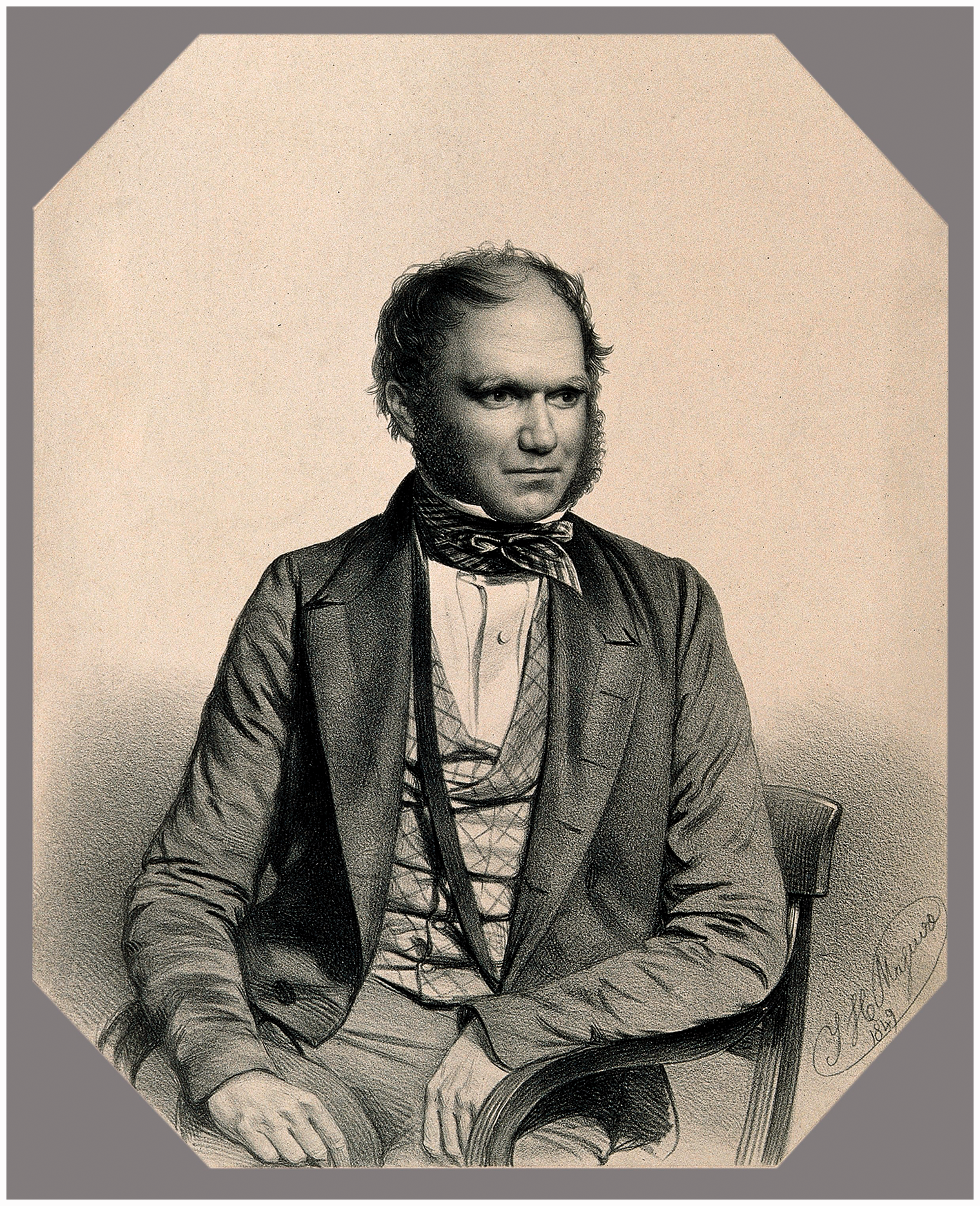
Charles Robert Darwin, aged 40 years. Lithograph by TH Maguire, 1849. Credit: Wellcome Collection. Attribution 4.0 International (CC BY 4.0) (https://wellcomecollection.org/works/uuqte5b4).
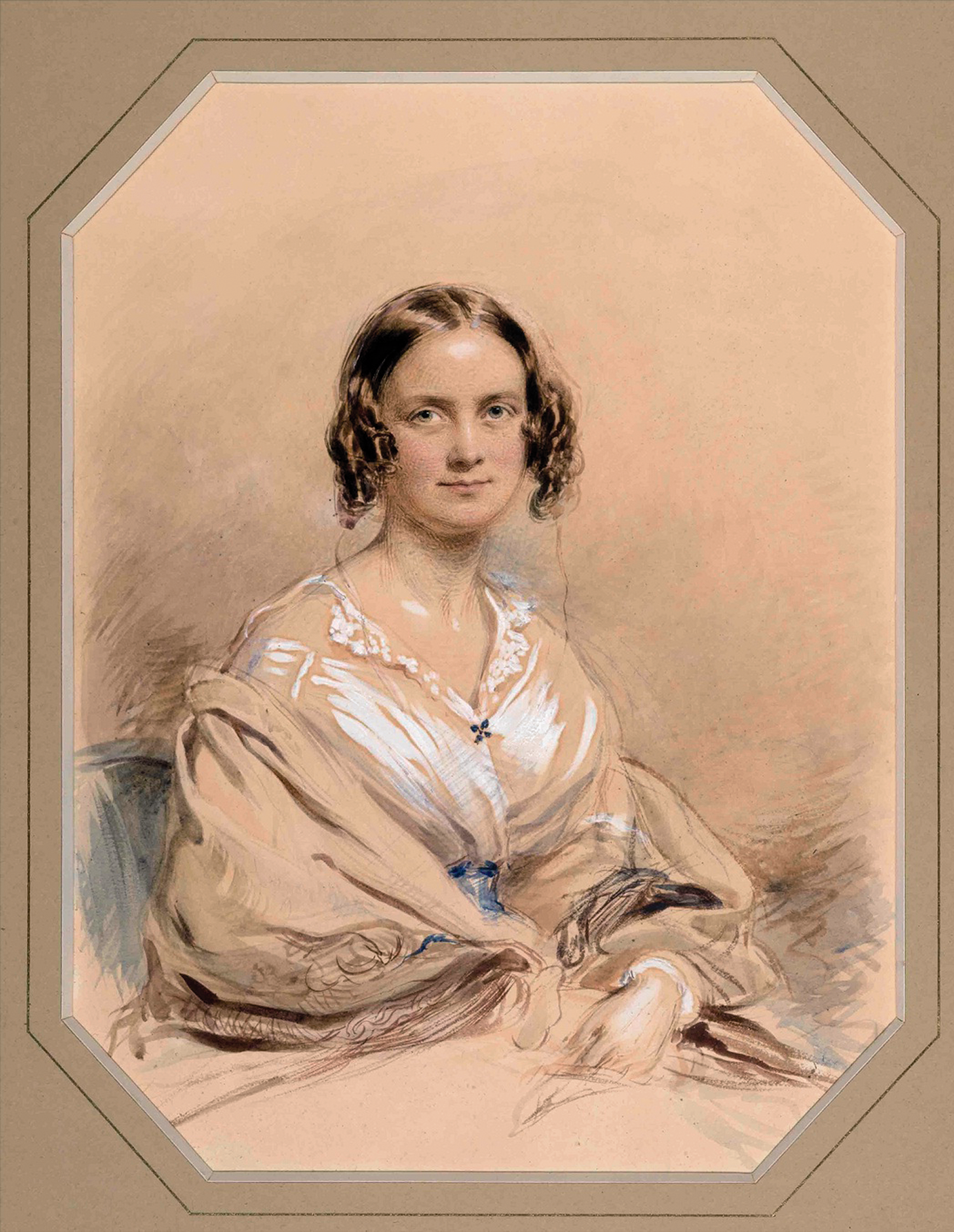
Emma Darwin 1840, aged 31 years. Portrait by George Richmond. Creative Commons CCO Licence. Source: https://commons.wikimedia.org/wiki/File: George_Richmond_-_Emma_Darwin_-_1840.jpg.
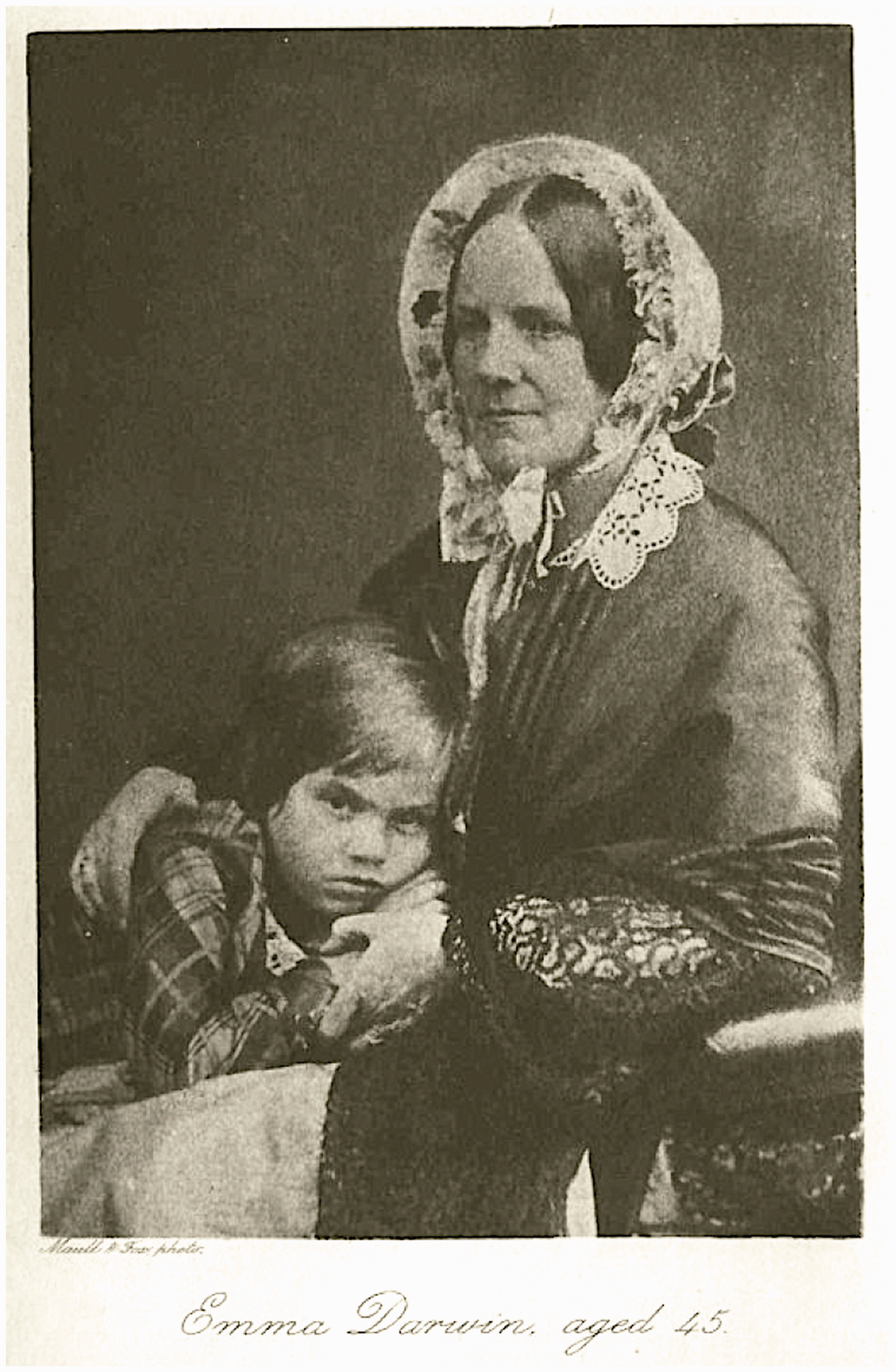
Emma Darwin (aged 45 years) with her eighth child Leonard (aged three years) c. 1853. Photograph by Maull and Fox. Source: Litchfield H. Emma Darwin. A Century of Family Letters 1792–1896. London: John Murray, 1915, vol II, facing p. 154.
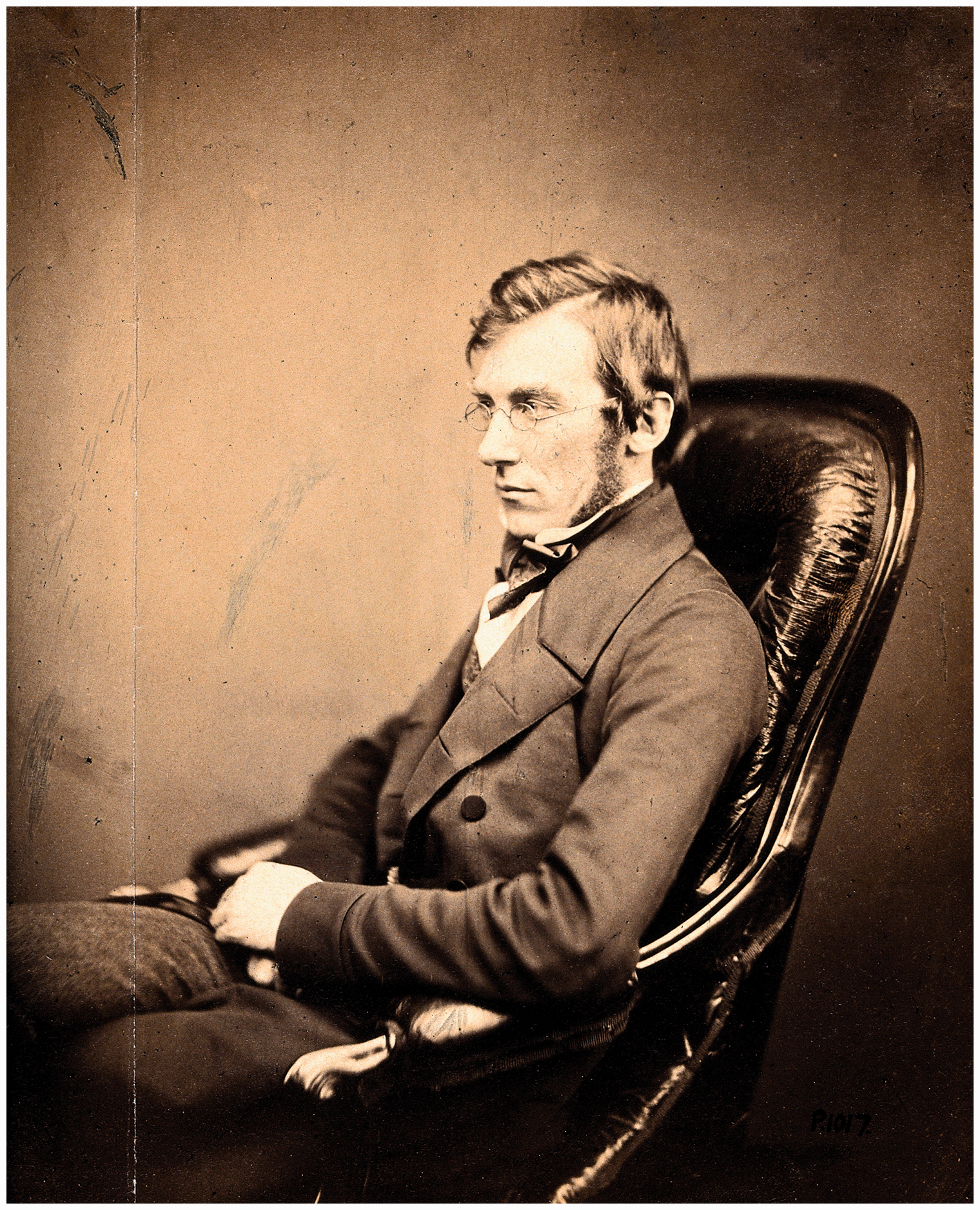
Sir Joseph Dalton Hooker. Photograph. Credit: Wellcome Collection. Attribution 4.0 International (CC BY 4.0) (https://wellcomecollection.org/works/pq7x6jjv).
Footnotes
Author Contribution(s)
Acknowledgements


Declaration of conflicting interests
The author(s) declared no potential conflicts of interest with respect to the research, authorship, and/or publication of this article.
Funding
The author(s) received no financial support for the research, authorship, and/or publication of this article.