




Abstract
Dr Ian Hamilton McDonald (1923–2019) was a pioneer of paediatric anaesthesia and intensive care at the Royal Children’s Hospital, Melbourne. He first started working at the hospital in the 1940s, later doing further training from 1953–1955 at the Nuffield Department of Anaesthesia in Oxford under Sir Robert Macintosh. McDonald returned to Melbourne as assistant director supporting Dr Margaret (Gretta) McClelland as the director of anaesthesia, together pioneering the development of a major paediatric anaesthesia department. McDonald, along with Dr John Stocks (1930–1974), was intimately involved in pioneering prolonged nasotracheal intubation in children, following on from earlier work by Dr Bernard Brandstater (an Australian working in Beirut), and Drs Tom Allen and Ian Steven in Adelaide. Ian McDonald was an influential, highly respected and greatly loved paediatric anaesthetist who had a profound influence on the early days of paediatric anaesthesia in Australia.
Keywords
Dr Ian Hamilton McDonald was a pioneering paediatric anaesthetist from the Royal Children’s Hospital, Melbourne (RCH). 1 Excerpts from his 1985 John Stocks Memorial Lecture recount the evolution of paediatric anaesthesia and intensive care throughout his career, which began in the late 1940s, soon after the end of the Second World War. This was a period of rapid change from Victorian era--style medicine to the modern scientific advances of the late 20th century. Amid this renaissance was the rapid progression of anaesthesia from a primitive and poorly understood task undertaken by surgical residents to its own specialty abundant with technical and pharmacological advances. However, the application of these techniques to paediatric patients was limited to a small group of clinicians across the various states of Australia. Their dedication and talent inspired the development of paediatric anaesthesia within Australia, which today is regarded as amongst the highest quality in the world. 2
The original manuscript of the John Stocks Memorial Lecture is available from the Royal Children’s Hospital Archives. McDonald writes with passion and poetic flair about his experiences in this exciting era, as well as his interactions with some of paediatric anaesthesia’s famous figures. Furthermore, it details his central role in the development of the paediatric intensive care and neonatal retrieval services in Melbourne. 2
McDonald’s enthusiasm for this progress is equally matched with a cynical curiosity about the cost of scientific and medical progression: Be history political, social or medical, every action has a reaction, every advance exacts a payment, measure for measure.
2
…with every day gone, another million human babies survive, and another three species become extinct.
2
…I wonder if progress equates with betterness and contentment?
2
Beginnings: Medical school (1941–1946) and internship at Royal Melbourne Hospital (1946–1947)
Ian Hamilton McDonald was born in Melbourne on 28 July 1923. McDonald’s early childhood coincided with an era of new beginnings after the end of the First World War, followed by the economic turmoil of the Great Depression (1929–1935). He undertook his final years of schooling at Scotch College (1936–1940) at the brink of the Second World War. 1 , 3
McDonald was accepted into Melbourne University in 1941 on a Senior Government Scholarship to study medicine. This was a compressed wartime medical course, in which the clinical years were condensed by reducing breaks between semesters. 3 , 4
Graduating with honours in surgery and obstetrics/gynaecology in 1946 and ‘Blues’ in hockey and cricket, McDonald completed his junior medical officer year at Royal Melbourne Hospital (Figure 1). The following year, he moved to the Children’s Hospital in Carlton, ‘not yet graced by the Royal accolade’.
2
This began McDonald’s career-long dedication to the Royal Children’s Hospital, which today remains one of the most recognised children’s hospitals in the world.
1
,
3
,
4
Ian McDonald – 1946 graduation.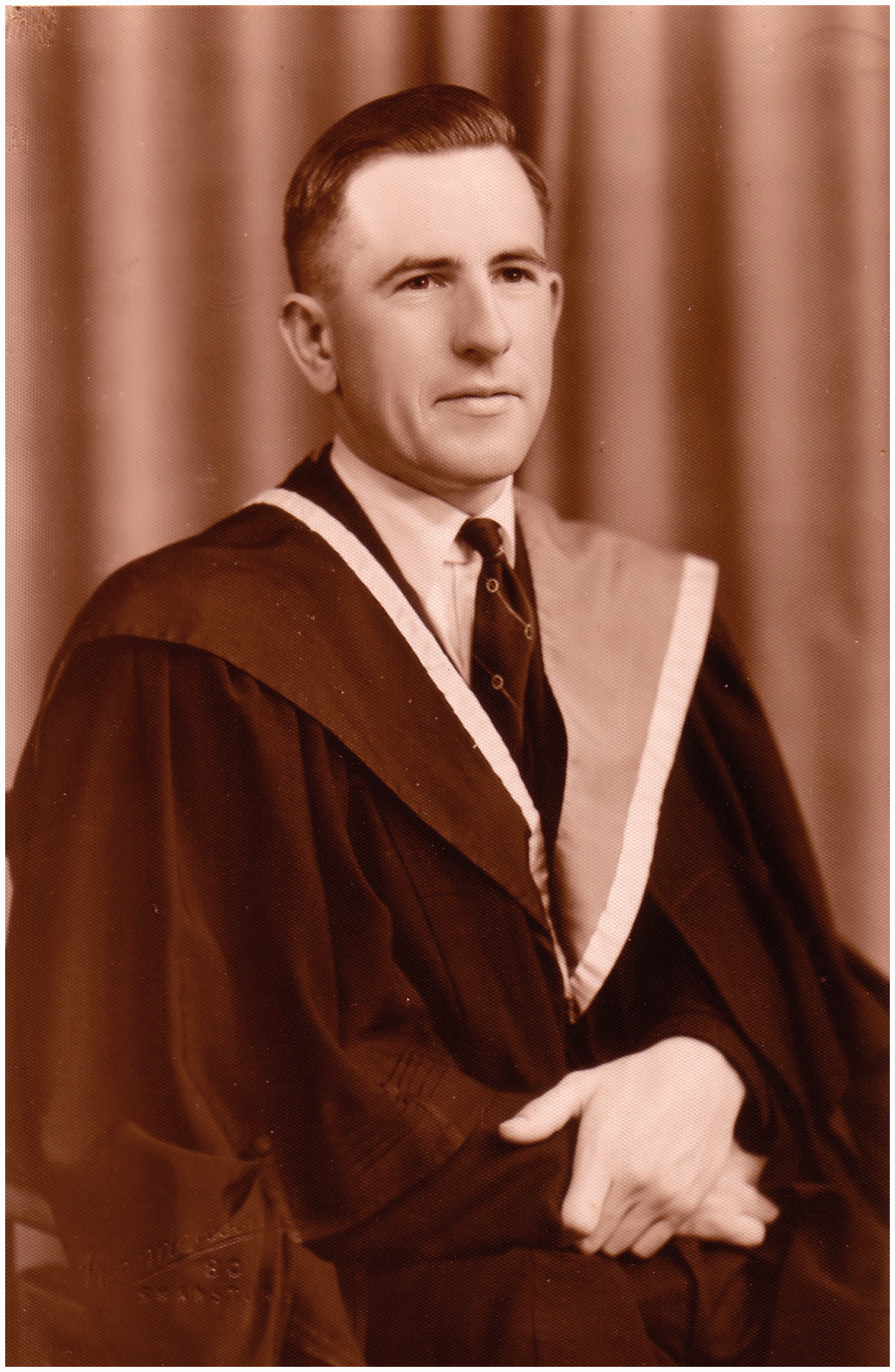
Resident Medical Officer, Royal Children’s Hospital, Melbourne (1947–1948)
In a hospital of about 250 beds … we had 12 RMOs, 3 Registrars, and a Medical Superintendent, together with a handful of visiting honorary consultants. 2
The term ‘Resident Medical Officer’ (RMO) aptly described the fact that junior doctors were in fact residents in the hospital quarters. As McDonald describes: On duty every second night and weekend, and in the residency by midnight every night, one was able to keep neither a wife, nor, except for a few specially wealthy fellows, a motor car…
2
…the spirit of the hospital was wonderful … Each breakfast, lunch and dinner we all sat at a large circular table, together with the secretary/manager.
2
Quite evidently there was a hospital camaraderie which was a source of joy to all…
2
[We] worked quite hard and long. Dehydrated babies with gastro filled Ward 12, and dripping them was a full time occupation given the primitive gear of the time. In Ward 14, lumbar punctures for meningitis became frequent as the new antibiotics appeared, but all was worthwhile as the salvage rate became miraculous.
2
Tuberculosis, syphilis, rheumatic fever, and acute glomerulonephritis were rife, and acute osteomyelitis abounded … in Ward 16, tracheostomies were frequent for staphylococcal obstruction. Done over a pillow, with procaine and many shackles, they were a bedlam of blood, shouting and blessed relief.
2
Pharmacologically they were exciting days. The family of sulphonamides spawned a dozen drugs dealing death to dysentery and pneumonia, but penicillin was the truly remarkable one. You who have never seen the speed of progression of meningococcal septicaemia will hardly appreciate the amazement to watch in a few hours, a child snatched from the jaws of imminent death; previously unsalvageable babies with meningitis being cured in a few days…
2
… and so was set in motion a revolution which largely shifted the physician from the hospital ward to the consulting room.
2
Junior on duty anaesthetic responsibilities
During McDonald’s RMO years, anaesthesia was ‘an incipient speciality, recognised in about 1947 by the establishment of the two part DA (Diploma of Anaesthesia) at Melbourne University’.
2
During this era, there were very few trained anaesthetists. At the Children’s Hospital, there was no formal anaesthetic service, with a small number of honorary visiting anaesthetists offering support. The bulk of the anaesthetic duties therefore fell upon the junior medical staff.
2
,
4
As a RMO at RCH [the Royal Children’s Hospital], if one were JOD [junior on duty], the work continued long long into the night, giving anaesthetics to emergencies.
2
…Charlie Cunningham who lived across the tram tracks in the then unfashionable North Melbourne, would at any time, day or night, slip over on request to hold our junior RMO hands so that we might complete our dozen supervised anaesthetics. After that we were fully qualified and on our own…
2
…at the end of the war, some of us who considered ourselves ‘dab-hands’ could, by trickling carbon dioxide under the ether mask at induction, and oxygen during maintenance, sometimes provide a reasonably quick induction and placid maintenance with quite small amounts of ether. But that wasn’t regarded as especially smart in the pecking order. I was much prouder to have done six appendicectomies, and four or five hysterectomies by the end of my RMO year.
2
The surgeon was boss, make no mistake. Discipline was strict. I would telephone my honorary (surgeon) the night before, he would decide what he would do, and what anaesthetics were to be given by the JOD. If we were lucky enough to have an honorary anaesthetist, I would ring him too, and tell him what to give. This one a general, that one a spinal, the other preoperative avertin … Ready or not, the patient had to be on the table for the knife at 9:00 am.
2
By the end of the day, clothes, hair and lungs saturated with ether, one would look forward to the occasional evening off. The tram ride home would be comfortable, the other passengers having shifted far away from one’s evil ether odour.
2
Margaret McClelland and the establishment of the Children’s Hospital, Melbourne, Department of Anaesthesia
At the completion of McDonald’s RMO training, he worked as an admitting officer and then as a surgical registrar (Figure 2).1–4 At this time, there was no prospect for formal anaesthetic training at the Children’s Hospital.
5
Ian McDonald – 1948 surgical registrar.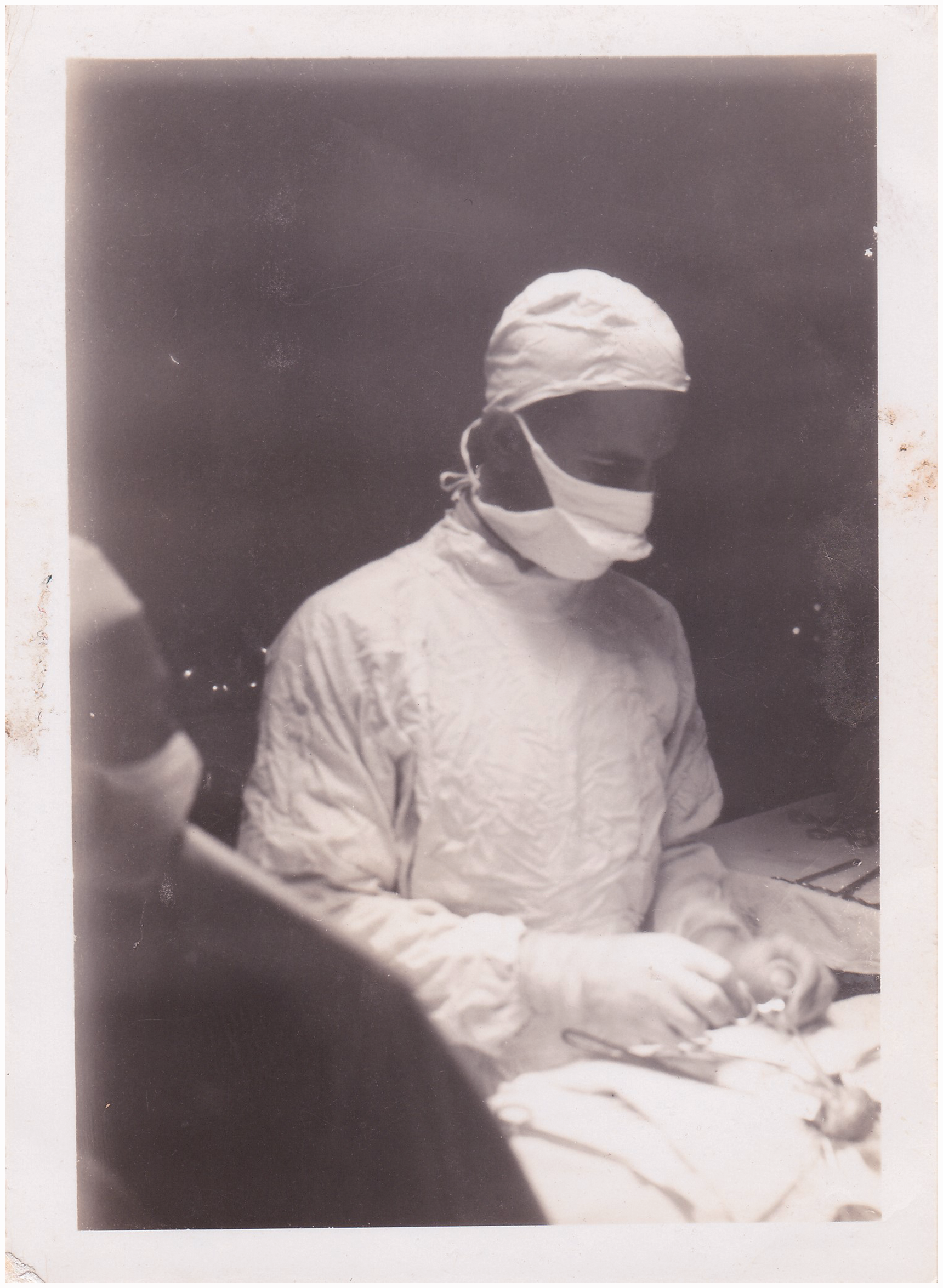
The turning point for the anaesthetic service at the Children’s Hospital was the appointment of Dr Margaret (Gretta) McClelland in 1948 as an honorary anaesthetist. McClelland completed medical school at Melbourne University and spent much of her early career in the UK where she gained training and extensive experience in anaesthesia. Consequently, upon her return to Melbourne, she was one of the few qualified and experienced anaesthetists in Australia immediately following the Second World War. 5 , 6
In 1950, McDonald was appointed as her assistant, initially as ‘surgical registrar with anaesthetic duties’, followed in 1951 as the ‘first purely anaesthetic registrar’.
2
Under the mentorship of McClelland, McDonald obtained his Diploma of Anaesthesia from Melbourne University. Thus, a basic training program had begun at the Children’s Hospital, and people from many centres throughout Australia and New Zealand travelled there to gain anaesthetic training and experience (Figure 3).
2
,
6
The next few years was a fruitful period of progress within the Children's Hospital Anaesthetic Department with McClelland and McDonald at the forefront.
Ian MCDonald 1958 at Royal Children’s Hospital, Melbourne.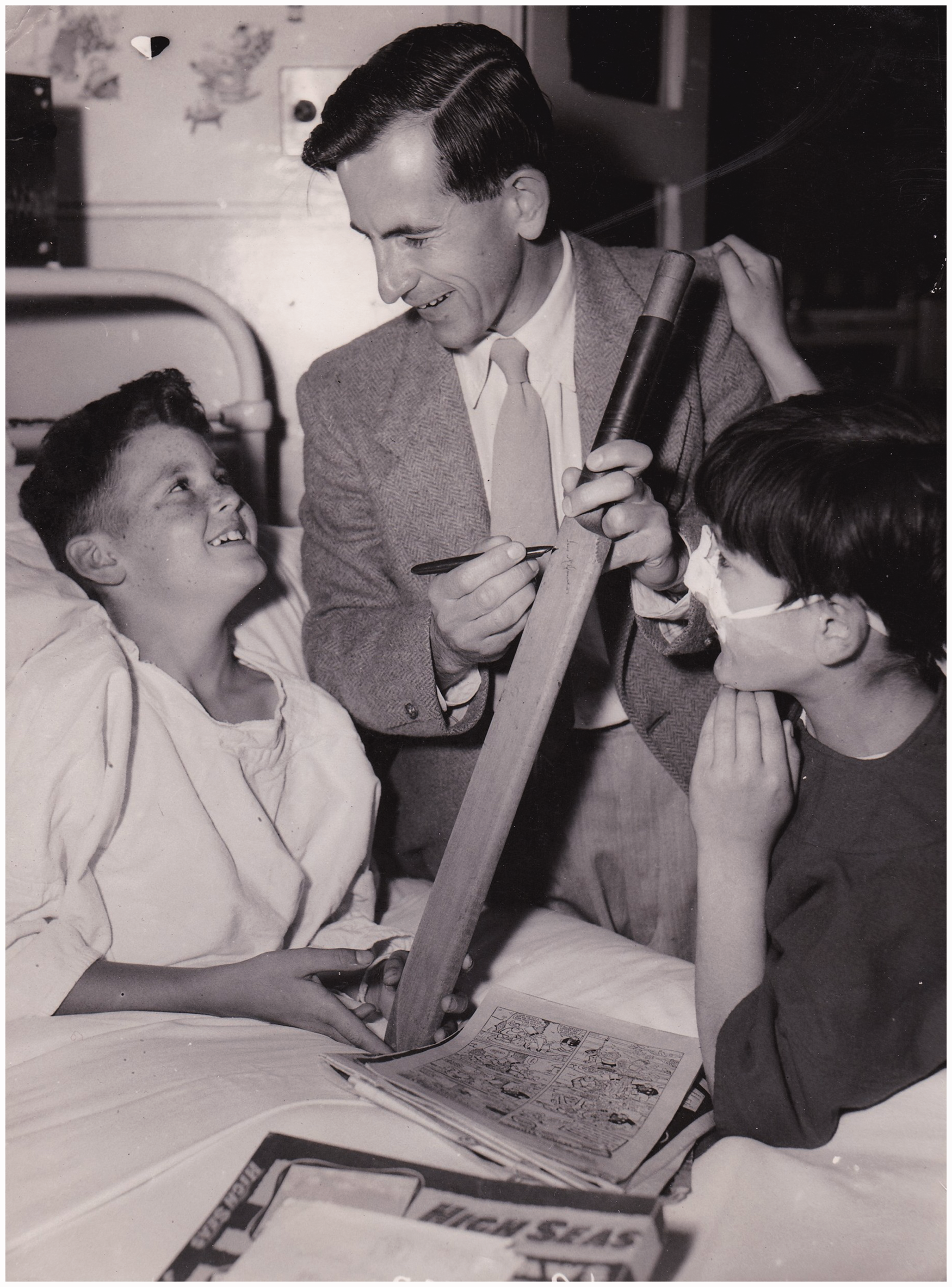
In the wider anaesthetic field, McClelland was an important figure in the development of formal examinations for anaesthesia after the Faculty of Anaesthetists of the Royal Australasian College of Surgeons was founded in 1952. 6
It wasn’t until 1956 that McClelland became the first full-time Director of Anaesthesia at the Children’s Hospital. She was appointed by the Medical Director Dr Vernon Collins, who insisted to hospital management that the only way to improve standards at the Children’s Hospital was to pay the medical staff. 2 , 5 , 6
Metamorphosis of anaesthesia into a modern specialty
McDonald describes the rapid evolution of medicine during the period following the Second World War: That time of cataclysmic destruction was associated with a surge of discoveries in medicine which were to save as many lives as the war had destroyed.
2
Within the space of six short years after the war, the Children’s Hospital had absorbed the technical revolution and was well on the way with the pharmacological one.
2
Pharmacology
McDonald began his anaesthetic career at the cusp of rapid advancements in pharmacological agents. When I came here, 90% of the anaesthetics were of open ether given by RMOs.
2
The hot summer sun beat down upon the great western windows of the old theatres, which free of any air-conditioning became unbearably hot. Atropinised and without IV drips, babies became hyperthermic and from time to time fitted in the state of ether convulsions.
2
Neonates were frequently chloroformed; they simply could not be made to breathe enough pungent ether to become insensible, and I still recall one baby died a fortnight later with acute yellow atrophy of the liver…
2
seemingly the unfortunate consequence of chloroform-induced hepatotoxicity. Pylorics were given a heavy dose of amytal (amobarbital), strapped to a cross, fed sugar and brandy, infiltrated with procaine, and operated upon with difficulty.
2
The chemical factories of central Europe were manufacturing the first of the barbiturates, to be followed by the Yankee pentothal, whilst Boyle’s anaesthetic machine, purporting to supply nitrous oxide, oxygen and ether in measurable quantities, stood ready to accept the yokes and regulators for cyclopropane, the new anaesthetic gas, unique and disturbingly exciting.
2
One had quickly to learn the art of marrying the dose of pentothal to the need for adequate ventilation if one were to carry the induction successfully.
2
In 1946, the pharmacological revolution began for me, when I saw what I believe to have been the first anaesthetic given in Melbourne with curare as an adjuvant. I say as an adjuvant for the patient was still breathing spontaneously…
2
Without a doubt it is the best anaesthetic agent I have ever used. Its virtues were catholic – quiet induction, easy respiratory compliance, deep relaxation, total control. Were it not explosive it would still be in use today, for nothing better has yet been produced for little babies and sick old men.
2
However, the surgical diathermy and the rediscovery of curare spelt its departure, just as the new methods had spelt the beginning of the end for di-ethyl-ether.
2
The anaesthetist has a definite part to play in helping to prevent the fear response in the child receiving medical attention, for there is no doubt that anaesthesia has been in the past, and still is to a large extent, a most fearful procedure, and can be blamed in no small manner for subsequent maladjustment between the child and his medical advisers. Perhaps it is a pity that all practitioners have not in their tender years suffered the asphyxia, nausea and pungency of an inexpertly administered induction with its associated distressing vertigo and terrifying visual and auditory disturbances.
7
The evolution of modern surgery and anaesthesia was taking place at rapid pace: …anaesthesia was making the transformation from rag and bottle ether, through cycloproprane, to the remarkable metamorphosis producing methods essentially those of today [2015], which together with advances in IV therapy, antibiotics and rapid evolution of diagnostic methods, was changing the face of surgery, enormously expanding it into the cardiac, pulmonary, oesophageal, neurosurgical, reconstructive and other neonatal fields.
3
Anaesthetists and surgeons were forging a bond where each recognised the needs and abilities of the other, to the mutual benefit of all.
2
Equipment and anaesthetic technique
At the beginning of McDonald’s career, intubation was an uncommon occurrence, and anaesthesia for shared airway procedures was via a pharyngeal catheter or a Boyle Davis gag.
2
,
5
In this 1940s era of ether masks and chloroform, anaesthetic machines were a rarity and novelty: Dr Pam McLeod had a back-gate man carry her gas machine to the theatre and gave anaesthetics for Eric Price. His little talipes, having repeated GAMP’s [General Anaesthesia Manipulation and Plaster] would so earnestly ask ‘Is it the lady with the wind who is coming today?’
2
Lorimer Morton, another early honorary anaesthetist in the Children’s Hospital, taught McDonald the technique of intubation. 2 Morton used an Oxford Vaporiser, 5 a device designed at the Nuffield Department of Anaesthesia in Oxford, UK, in 1941 in the middle of the Second World War. 8 Perhaps McDonald’s fascination with Morton’s ventilator inspired his later sabbatical to Oxford detailed below.
McDonald also recalls another of Morton’s valuable contributions – his timeless anaesthetic rule: You always have a cup of tea after the first case, otherwise you won’t get one at all.
2
In 1951, a pyloric deeply sedated with amytal, died after inhaling gastric contents, despite his being done under local anaesthesia. Soon after, for the first time, I intubated a pyloric under ether anaesthesia, later to be replaced by cycloproprane, and then the relaxants. It was the end of local anaesthesia as an established method in this hospital, until the turn of the wheel some ten years ago, when with the introduction of caudal analgesia for hypospadias, a whole new field of clinical and research methods became established…
2
The Nuffield Department of Anaesthesia, Oxford (1953–1955)
In 1953, at the age of 30, McDonald was fortunate to gain a Fellowship in the UK at the Nuffield Department of Anaesthesia in Oxford. He spent two years working under Professor Sir Robert Macintosh who was 26 years his senior. 2 , 3
Macintosh was a ‘Kiwi’ and fellow ‘colonial’ as McDonald puts it. 2 Born in New Zealand in 1897, he was the son of an All Blacks rugby player and was baptised under the Maori name Rewi Rawhiti. 8 , 10 With the outbreak of the First World War, Macintosh travelled to England and enlisted in the armed forces whilst still under-age. He became a successful fighter pilot, but eventually was shot down behind enemy lines and taken prisoner in Germany, escaping several times. 8
At the conclusion of the First World War, Macintosh decided to stay in the UK and enrolled in Guy’s Hospital Medical School, graduating in 1924. Similar to McDonald’s story, Macintosh initially pursued a career in surgery before being drawn to anaesthesia. 8
In an intriguing twist of events, Macintosh became one of the world’s first chairs in anaesthesia. He was appointed to this illustrious role by Lord Nuffield, formerly William Morris, the founder of Morris Motors, a man of great wealth and influence. Macintosh initially gained the Lord’s favour from their shared enthusiasm for golf. In the village of Nuffield in the county of Oxford, Lord Nuffield owned the Huntercombe Golf Club where the two played together.
8
,
11
Macintosh was an early advocate for intravenous barbiturates and described the smooth induction it created. This intrigued Nuffield who had extremely unpleasant experiences with previous anaesthetics; when he later required a procedure, he requested Macintosh’s services.
8
Macintosh had anaesthetised William Morris, later Viscount Nuffield, to have all his teeth out, by a technique which was infinitely more preferable to the anaesthetic given for a previous appendicectomy. It made a great impression.
2
He offered Oxford University the sponsorship of four chairs in Medicine including one in anaesthesia. When the University remonstrated against anaesthetics he had replied ‘All or nothing’. So was established in 1937, the first chair of anaesthesia!
2
Macintosh appreciated that other centres had other ideas to offer and allowed me free rein. On one occasion he drove me up to Great Ormond Street. We stopped for breakfast at a village called Nuffield, boasting a country club which in the old days William Morris had wished to join. He had been black-balled, so he had bought the joint, later naming himself after the village.
2
Good God, Bob, the Prof’s here with one of his colonials!
2
Colonials we may have been, but the Poms were very kind, especially to Kiwis and Aussies.
2
McDonald recounts: Robert Macintosh was no academic, but a charming, practical anaesthetist.
2
He put Dickie Salt [a former chauffer for one of the surgeons], in charge of a remarkable workshop, and imported Dr Epstein, a physicist escaped from Hitler, to supervise the scientific basis of the gear Dick turned out.
2
The results were legion, and for all to see – the best intubating laryngoscope, the best ether vapouriser ever made for field service, the most grotesque endotracheal tube ever conjured up, familiarly known as the elephant’s trunk, a multitude of bits and pieces under the names of Bryce-Smith, Mitchell, and many others, and a department of supreme technical excellence both in general and regional anaesthesia.
2
Macintosh appears to have reciprocated a professional respect of McDonald, particularly his paediatric expertise: Paediatric anaesthesia was not their forte however, and I became the paediatric tutor, writing with Roger Bryce-Smith a paper on intra muscular suxamethonium
14
at a time when needles for IV use were a joke. It was an early case of the teachings of Dr McClelland being carried overseas in the reverse of usual; similarly, during a locum spent in Liverpool, I introduced the RCH practice of intubation for tonsillectomies and prior to tracheostomies, right in the lion’s den – the home of the great Jackson Rees. I am not being boastful; I just wish to point out that by the mid 1950s, Margaret McClelland had set up a paediatric anaesthetic department, comparable with the world’s best.
2
Return to Australia and a new era of paediatric anaesthesia (1955)
McDonald returned to Melbourne in 1955, having been awarded the Fellowship of the Faculty of Anaesthesia of the Royal Australasian College of Surgeons.1–4 He rejoined McClelland as the assistant director at the Children’s Hospital, and together they developed a variety of unique equipment designs, including paediatric facemasks with the McDonald frame for support 5 as well as ‘prototypes of the mobile tilting beds of today, the split tonsil gags, the neurosurgical wheel of Hooper, and many pieces of anaesthetic gear which we now take for granted’. 2
Much of the equipment was produced in the hospital’s splint shop: The great polio epidemic of 1937 had spawned a large and excellent splint shop, staffed by old polio patients and later led by Alf Stenning.
2
…with a little bag and mask, laryngoscope and tubes, she produced a revolution which allowed not only an unprecedently quiet access to the abdomen with all that meant to neonates and Wilms’ tumours, but also to the thorax with the remarkable burgeoning of surgical repair of the common cardiac defects, congenital pulmonary problems, and particularly oesophageal anomalies…
2
No patient requires the paediatric anaesthetist’s skill and humility more than the baby who, in the first few days of life, presents because of a mortal or grossly deforming congenital anomaly.
15
The advent of the Victorian Neonatal Emergency Transfer Service
McDonald was regularly consulted on difficult cases at private hospitals,
1
one of which was a day-old neonate diagnosed with a diaphragmatic hernia. The patient unfortunately perished, like many cases before
2
: That, and other cases, made us ponder. When next a diaphragmatic hernia was diagnosed, Nate Myers called me across to the Mercy, armed with laryngoscope, tube, and bag. The baby safely intubated and ventilated, she and I made ourselves comfortable in the back seat of Nate’s execrable car, which had been used for many purposes, and set off for the Children’s. Three minutes later we ran out of petrol and free-wheeled into a service station. Goggle-eyed at the scene in the back seat, the pump jockey filled her up, and we arrived safely at RCH. It was the first journey of a series to become known as NETS [Neonatal Emergency Transfer Service].
2
The advent of paediatric intensive care and Dr John Stocks (1930–1974)
McDonald was intimately involved in the development of prolonged intubation in paediatrics—a move that ‘sped anaesthetist’s respiratory expertise into the recovery room and then the ICU’. 2
McDonald describes a case in 1960 where an infant was admitted with a large lung cyst requiring lobectomy: Postoperatively he was a poor breather, and so there being no alternative I left him intubated and inflated him by hand all night till he had adequate ventilation. Though I didn’t know it, a new chapter had begun.
2
By this time John Stocks had come and was a full-time assistant to Dr McClelland. Together we wrote a paper in 1965 describing our first 50 cases of prolonged intubation, but by that time it was John who was doing the work, I the journalism, and Sister Betty Jaffray the nitty gritty of nursing care.
2
Breath is life; as breathing fails, life slowly ebbs away. In few situations is this more apt than in the sickly newborn infant whose lungs may be ill developed, collapsed, or pneumonic, and who fights for his breath and his life through small respiratory passages so easily blocked by spasm and secretions. He needs respiratory aid.
16
Always the supportive kind doctor, John was now taking the step from anaesthesia to the demanding field of critical care. With Dr McClelland’s active support, he founded the ICU and in 1969, whilst still Deputy Director of Anaesthesia, he became the first Director of ICU, a position which only the most dedicated can wish or hope to handle. He was carrying the technological revolution in anaesthesia to its ultimate degree, that of its integration with the pharmacological revolution, and its monitoring with the biochemical and electronic devices of the age.
2
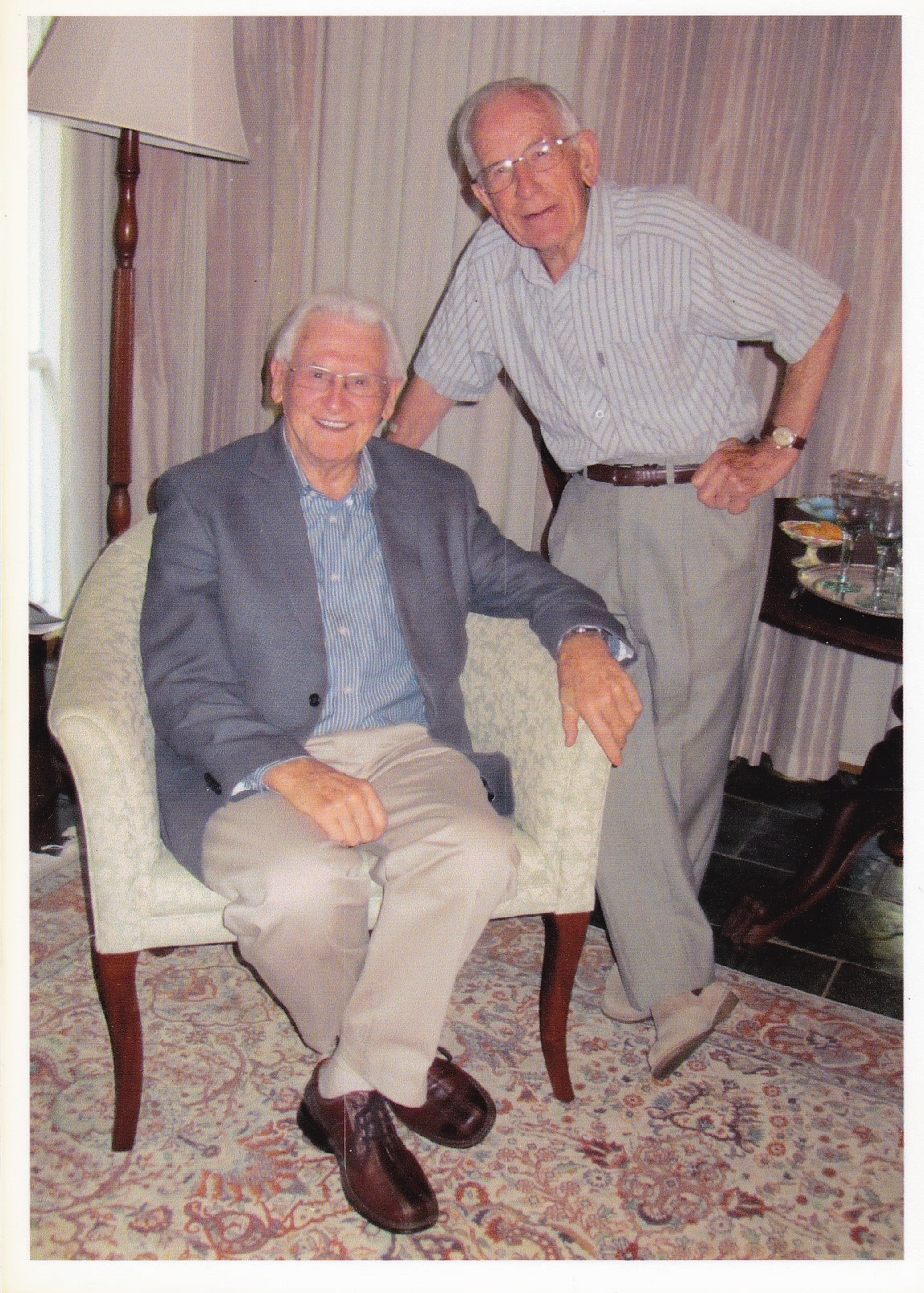
Dr Ian McDonald (right) with Dr Bernie Brandstater. By 1973, he was director of, and inspiration to, both departments, his papers to learned societies and local meetings alike demonstrating his depth of humanity, knowledge, expertise, and humility. His health was deteriorating. With great fortitude and the help of splendid assistants, Helene Wood, Mary Dwyer, Kester Brown, and others, he held both departments together till his tragic early death in 1974 from complications of cancer surgery.
19
Other achievements
McDonald was an influential and well-known anaesthetist throughout Melbourne, working at the Royal Children’s Hospital as well as several private hospitals, maintaining a modest adult case load.
1
He was the Victorian State Chairman of the Faculty of Anaesthetists (later to become the Australian and New Zealand College of Anaesthetists) between 1960 and 1962.
1
,
3
From the ranks of many such enthusiastic young anaesthetists came the initial members and fellows of the Australasian Faculty, and inevitably in time, its leaders.
2
McDonald was a keen sportsman who loved fly-fishing, skiing and, later, golf. 22 Most notably, he was a star cricketer and member of the Melbourne Cricket Club (MCC) for 79 years. Affectionately known as ‘Doc’, he kept wickets for the MCC first XI between 1946 and 1953, and the Victoria XI between 1948 and 1953. He once played on an Australian team in 1953 (Australia XI v South Africa at SCG) alongside his brother Colin McDonald, who opened batting for Australia from 1952 to 1961. In 1959–1960, McDonald toured Pakistan and India as the medical officer for the Australian Cricket Team. He was elected to the MCC general committee in 1957 where he served for ten years, and also founded the MCC XXIX Club (Twenty-Niners), which was devoted to friendly cricket. Furthermore, he founded the MCC Hockey Section which he chaired from 1961 to 1969. 1 , 3 , 4
Combining a first-class cricketing career with an early medical career was not easy. Fortunately, he had colleagues at the Children’s Hospital who were prepared to cover his various duties, although not without some banter about ‘The flippin’ Northern Tour'. 23
In 1986, McDonald was awarded one of the MCC’s most prestigious awards, the Hans Ebeling Award for services to the sporting section. In 2000, he was made an Honorary Life Member. 1 , 3 , 4
Conclusion
McDonald shared his achievements with his wife Dorothy and their three children. He retired from the Royal Children’s Hospital in 1988 and from all anaesthetic practice in 1991. 3
In 2013, the Society for Paediatric Anaesthesia in New Zealand and Australia (SPANZA) created a medal to present to their celebrated honorary members. In recognition of their outstanding contributions to paediatric anaesthesia, Ian McDonald, Margaret McClelland, John Stocks and Kester Brown feature on this medal alongside several other prominent paediatric anaesthetists (Figure 5).
19
SPANZA medal.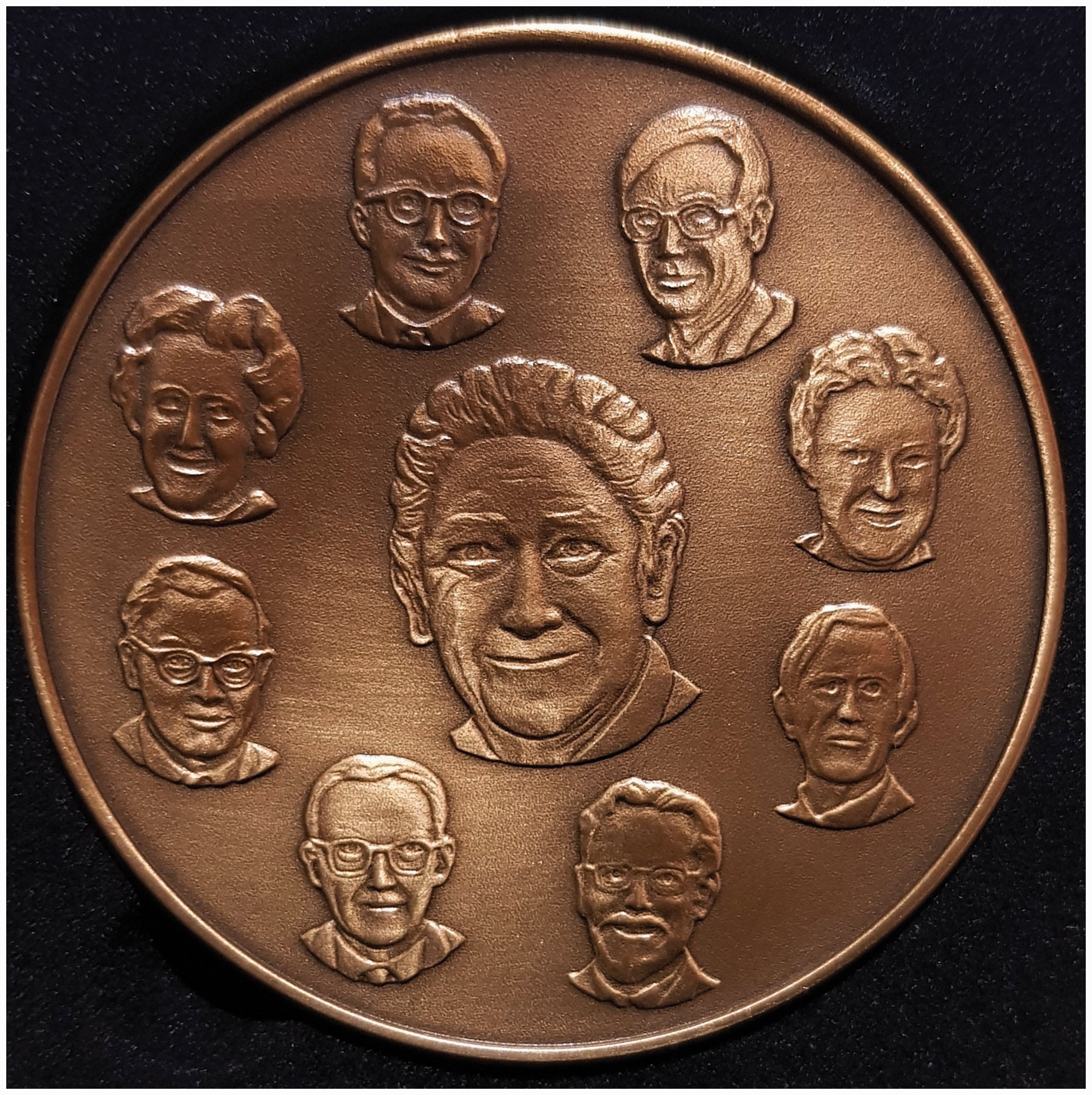
Dr Ian McDonald passed away in his family home in Kew on 5 February 2019. On 21 February, the MCC hosted a memorial to celebrate his legacy. 24
He kept his wit and charm until the very end, sharing these stories and many more with the author over tea at his family home where he once lived with Dorothy and their three children. His nostalgia for the spirit of the hospital in his early career was evident in each of our conversations, as well as in his John Stocks Memorial Lecture: My story may have seemed to you to have been of one of forty years continuous rise from a morass of medical and anaesthetic ignorance to sunlit uplands of excellent and knowledge. To some extent that is so. But once upon a time a manager asked us all to dinner each year.
2
Nevertheless, I know that the state of the art of medicine and nursing has measurably improved. May we always strive, in the face of increasing social and political pressures to keep the vision before us…
2
Strive and seek to act with care and compassion, and we will, each of us, be doing our part to remember John Stocks, in the words of his hospital friends, ‘a humble, diligent and quiet doctor, who led by example, and served sick children with unsurpassed devotion’.
2
Happily, then ‘measure for measure’ will not mean that every advance exacts a payment but that ‘Knowledge must be allied to love if we would give true measure for measure’.
2
Footnotes
Acknowledgements
I would to acknowledge and thank the following for their support and contributions to this article: Ian McDonald’s children, Sue, Jan and Andrew; RCH Department of Anaesthesia; RCH Archives; RCH Creative Studio; and SPANZA.
Declaration of conflicting interests
The author(s) declared no potential conflicts of interest with respect to the research, authorship and/or publication of this article.
Funding
The author(s) received no financial support for the research, authorship and or publication of this article.