




Abstract
Background:
Information access is essential for quality healthcare provision and education. Despite technological advances, access to prosthetics and orthotics information in low- and middle-income countries is not ubiquitous. The current state of information access, availability, and exchange among prosthetics and orthotics faculty is unknown.
Objectives:
Describe information exchange networks and access at two prosthetics and orthotics programs in Ghana and the United States.
Study design:
Cross-sectional survey, social network analysis.
Methods:
An online survey of faculty at two prosthetics and orthotics programs using REDCap. The survey included a social network analysis, demographics, and prosthetics and orthotics information resources and frequency of use. Descriptive statistics were calculated.
Results:
Twenty-one faculty members completed the survey (84% response). Ghanaian faculty were on average younger (median Ghana: 27 years, United States: 43 years), had less teaching experience, and had less education than US faculty. Textbooks were the most commonly used resource at both programs. The Ghanaian network had more internal connections with few outside sources. The US network had fewer internal connections, relied heavily upon four key players, and had numerous outside contacts.
Conclusion:
Ghana and US faculty have two distinct information exchange networks. These networks identify key players and barriers to dissemination among faculty to promote successful knowledge translation of current scientific literature and technology development. Social network analysis may be a useful method to explore information sharing among prosthetics and orthotics faculty, and identify areas for further study.
Background
Providing access to reliable health information for health workers in low- and middle-income countries (LMICs) has been suggested as the most achievable and cost-effective strategy to improve health outcomes. 1 A lack of access to information has been identified as a key barrier in medical education1,2 and health service provision 3 in these countries. Recent advancements in Internet availability, open-source education, and general connectivity have been theorized to improve access to health information in LMICs.4–6 In addition, humanitarian efforts to promote access to resources, such as Open Access for Africa, seek to reduce barriers to information. However, awareness and use of free-access initiatives among medical providers is limited 5 and has not yet been examined among prosthetist/orthotists working in LMICs.
Like many health professionals, prosthetist/orthotists require continuing education and professional development in addition to foundational knowledge. Prior research has highlighted deficiencies in information availability in LMICs, such as limited access to prosthetic books and journals,7–9 biomechanics information, 7 continuing education opportunities, 10 advanced technology information,8,9 and Internet connectivity. 8 However, prior research has not examined the current state or frequency of information access in prosthetics and orthotics (P&O) education. Because advancement of P&O education is dependent upon timely, relevant, and easily accessible information for both students and faculty, a thorough understanding of current information access is essential.
To fully understand information access in P&O education, we must examine both how faculty access reference materials and share information. Information exchange plays a role in research dissemination, expertise sharing, cooperative tasks and collaborative innovation. 11 Both formal (e.g. reference materials) and informal (e.g. peers, professional networks) sources of information influence and shape P&O education and curriculum. One approach to understand how information is exchanged is through social network analysis (SNA). SNA is a method used to study individual relationships and larger social structures. An information exchange network (EN) is a type of SNA that explores how people within a network share a specific type of information. 12 SNA has been used to examine ENs among healthcare providers, 13 research faculty, 14 and undergraduate students. 15 In addition, the potential to apply SNA in medical education has recently been described. 16 To our knowledge, SNA methodology has not been applied to P&O education or faculty.
To pilot the application of SNA in P&O education, we chose to examine information access and networks of information exchange at two education programs in two countries: Ghana and the United States. We chose these two distinct programs due to an existing and ongoing academic collaboration and faculty learning community. In addition, through pilot application of this data collection methodology at these two programs, we were able to explore feasibility in two diverse settings.
As exploratory research, our goal was to describe how information is obtained and shared among P&O faculty at these programs, and how network analyses may inform program development and evaluation. A more thorough understanding of information access and educational resources used by P&O faculty can inform interventions to improve access, mitigate information barriers and leverage technological advances to bolster P&O education and clinical practice globally.
Methods
Participants and recruitment
We conducted an online survey (December 2018–March 2019) to examine ENs among faculty at two P&O education programs in the United States and Ghana. The primary faculty member for each course taken by P&O students at the two programs was identified by the academic coordinator. All primary faculty members (25 total: 14 United States, 11 Ghana) were invited via email to participate. All study participants were informed of the study aims and design, optional participation, and confidentiality of study data.
Measures
All online surveys were administered and managed using REDCap (Research Electronic Data Capture) tools hosted at the University of Washington. 17 The survey had two components. The first included demographics such as age, years teaching, years at current institution, highest level of education, and questions about P&O information sources and frequency of use during the past 2 weeks of teaching. Ordinal response options for frequency included: never, 1 time, 2 times, 3 times, 4 times, 5 or more times. Additional questions asked about specific and desired information sources (Supplement A).
The second part of the survey was an SNA. Each survey was personalized and included all relevant faculty (e.g. a US participant was asked about all US faculty). Participants could also name up to 15 additional contacts. For each faculty member or additional contact, the participant was asked two questions about frequency of giving and receiving information related to P&O teaching, with eight ordinal response options: never, this is me = 0, never = 1, occasionally but less than once a month = 2, once or twice a month = 3, once or twice a week = 4, about once a day = 5, 2 or 3 times a day = 6, 4 or more times a day = 7. Never, this is me allowed participants to skip questions that asked about sharing information with themselves. Never indicated that the participant did not share information with the identified participant. Reciprocal data were collected for each interaction (e.g. participant A reported on giving participant B information; participant B reported on receiving information from participant A) to confirm frequency. Data analysis was conducted using both the lesser and greater reported categories for each pair with no substantial difference in network characteristics. Based on this lack of difference, we chose to use the lesser of the two categories for analysis to provide consistent yet conservative reporting.
Data analysis
Demographic characteristics, sources, and frequency of use of P&O information were compiled by participant group and analyzed with descriptive statistics. SNA data were used to develop an EN for each program (Table 1). In the networks, each person was a node (i.e. circle). The lines between nodes (i.e. edges) were based on directional, reciprocal data. Reported edges that lacked reciprocal data for confirmation were based on available data. The weight of the edges was representative of frequency of information exchange with thicker edges indicating greater frequency; however, weight was not directly proportional to frequency (i.e. an edge of twice the thickness does not equal exactly twice as frequent sharing).
Social network analysis terminology.
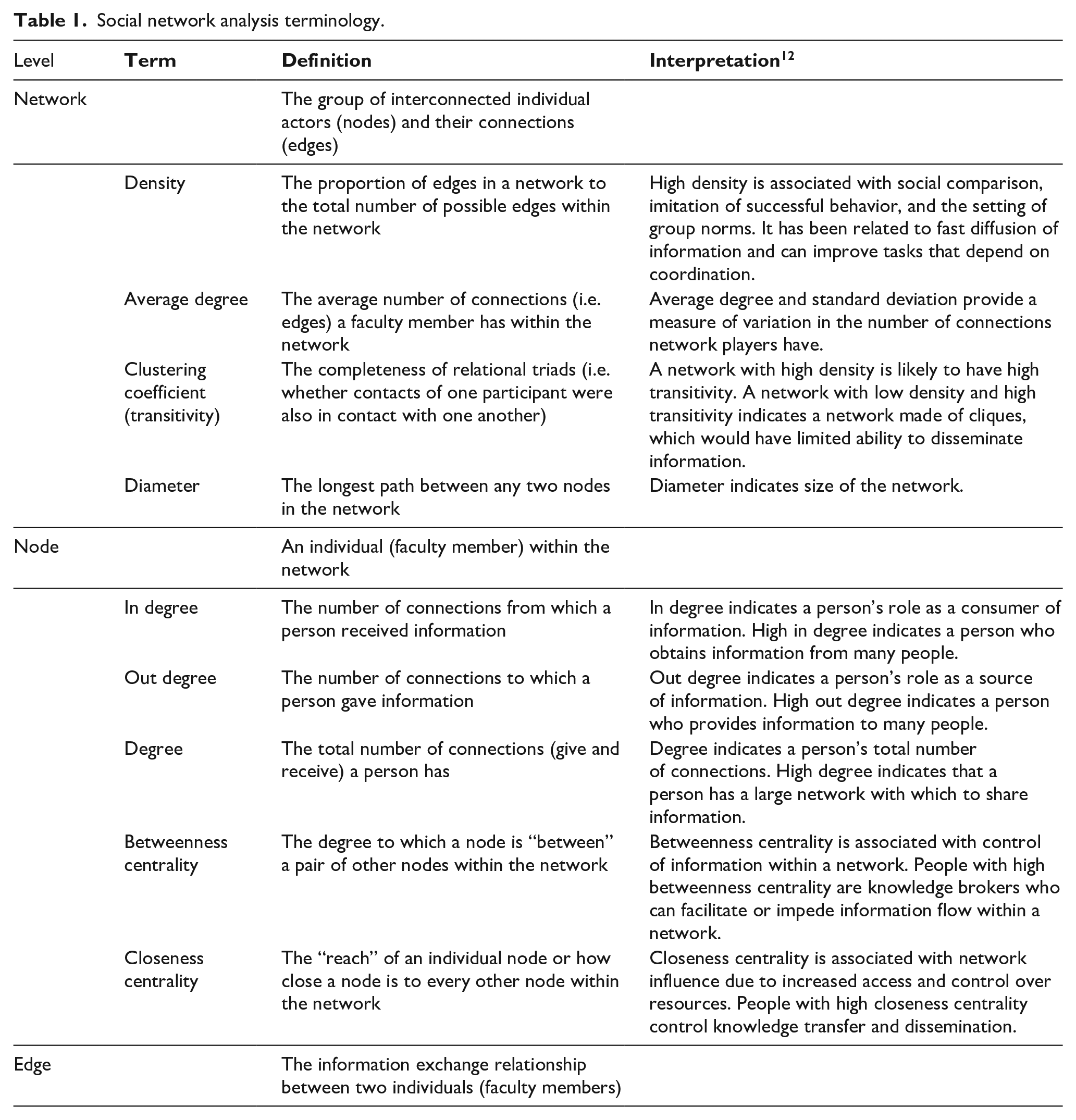
Both network- and node-level SNA descriptive characteristics were reported as defined and described in Table 1. All analyses were conducted using STATA (StataCorp, College Station, TX, USA) and Gephi software. Gephi is an open-source software for visualization and analysis of network data. 18
Results
Study participants included 11 Ghanaian and 10 US faculty for a total of 21 participants and an overall response rate of 84% (11/11 Ghana, 10/14 United States). Gha-naian participants were primarily young (median: 27.0, interquartile range (IQR): 7.0), male (n = 9), and had limited teaching experience (median: 3.0 years, IQR: 1.0). US participants were primarily middle-aged (median: 43.0, IQR: 9.5), female (n = 7), and had variable teaching experience (median: 9.5 years, IQR: 19.8) (Table 2).
Faculty demographics and characteristics.
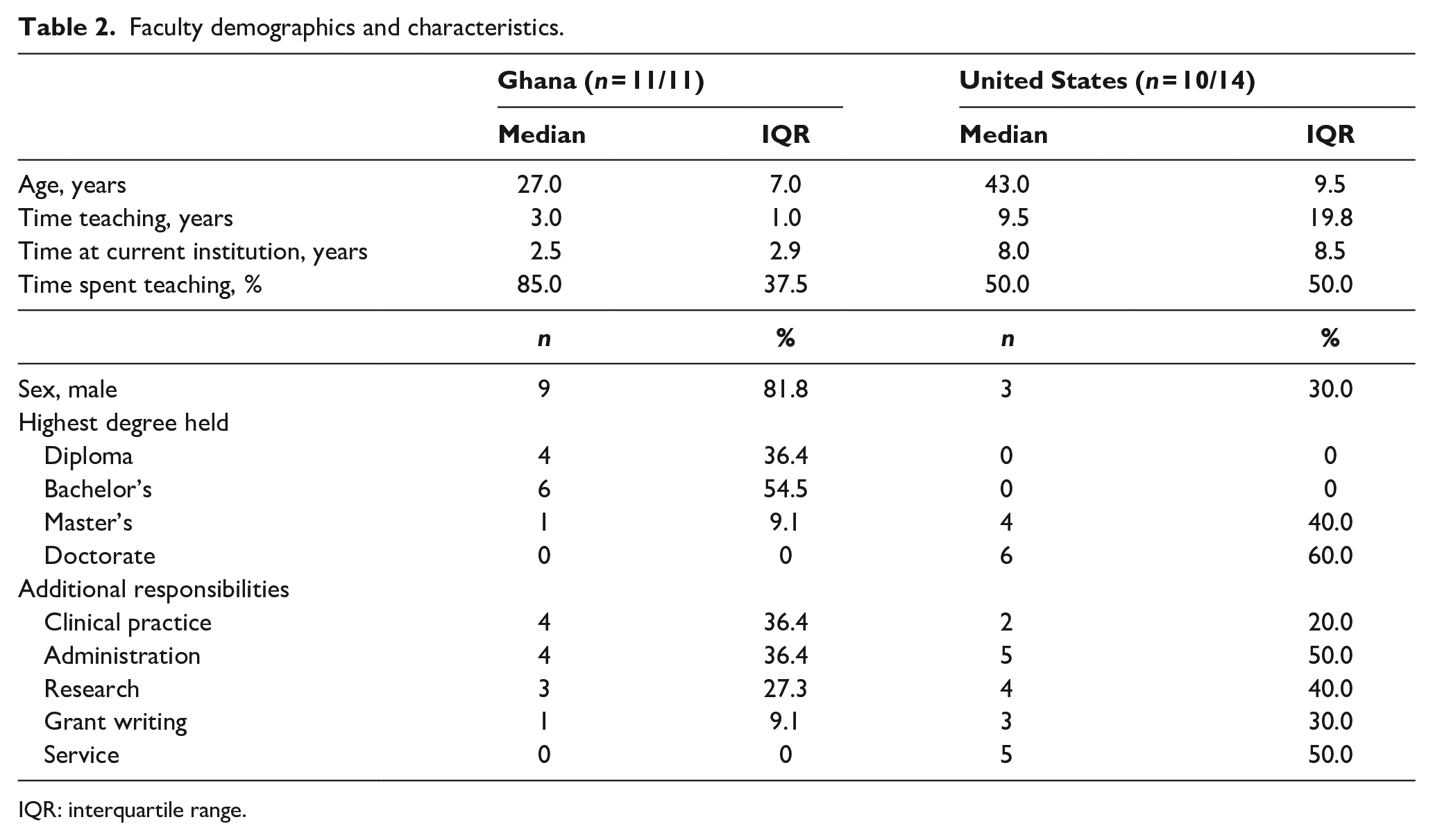
IQR: interquartile range.
Sources of information
Textbooks were the most common (n = 19) and most frequently used source of P&O information among both groups (Figure 1). The most commonly reported sources among Ghanaian faculty were textbooks, Google, YouTube, and Wikipedia. Among US faculty, textbooks were followed by other P&O faculty, Google, and peer-reviewed journals. Frequency of use for these sources varied among faculty at both programs (Figure 1). Ghanaian faculty most frequently used textbooks, followed by Google, YouTube, and Wikipedia. Among US faculty, frequency of use was highest for textbooks, followed by Google, peer-reviewed journals, and other websites. In general, Ghanaian faculty used more resources, more frequently than their US counterparts (Figure 1). Specific and desired resources for both groups are listed in Supplement B.
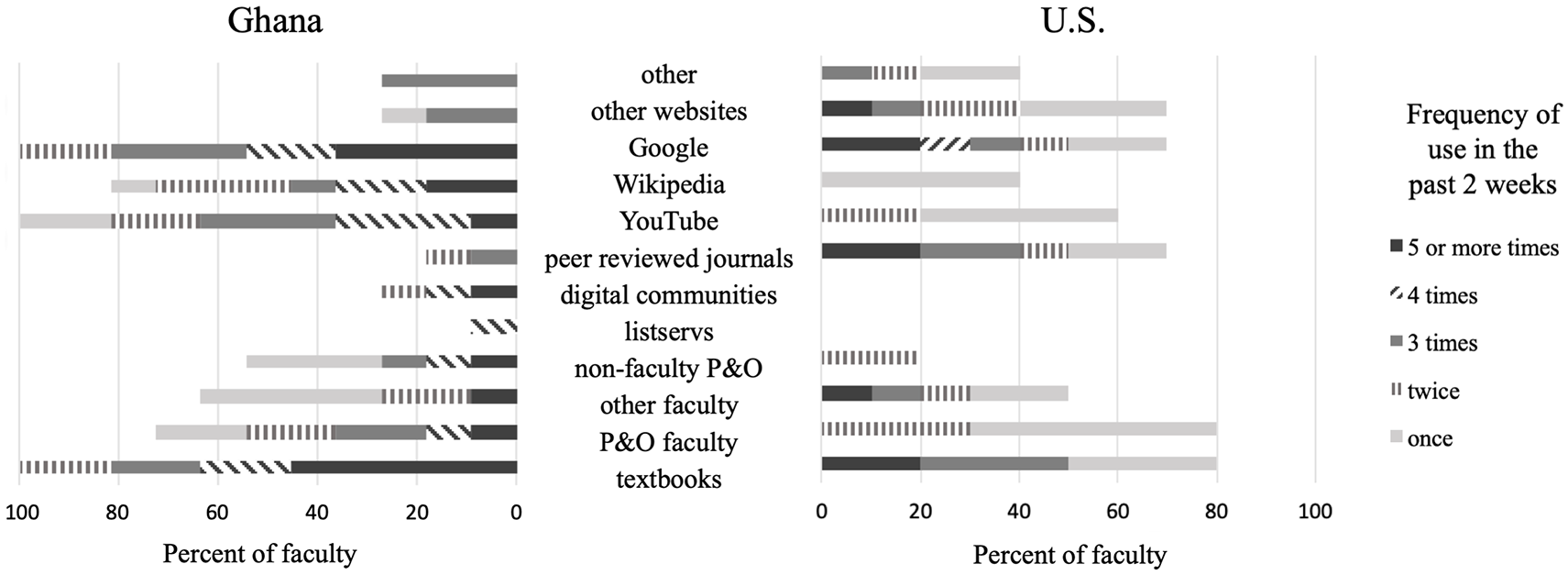
Frequency of faculty-reported sources of P&O information.
Information exchange networks
Sociograms were used to visualize ENs among faculty at each P&O program (Figure 2). Survey participants (i.e. faculty who taught P&O students) were denoted by gray nodes. Other contacts not surveyed, but who were reported as sharing information with participants, were denoted by black nodes. Edges between nodes denoted the direction and frequency of information exchange. The thicker the line, the greater the frequency of information exchange. Concurrence in reported information sharing relationships varied by program (Figure 3).
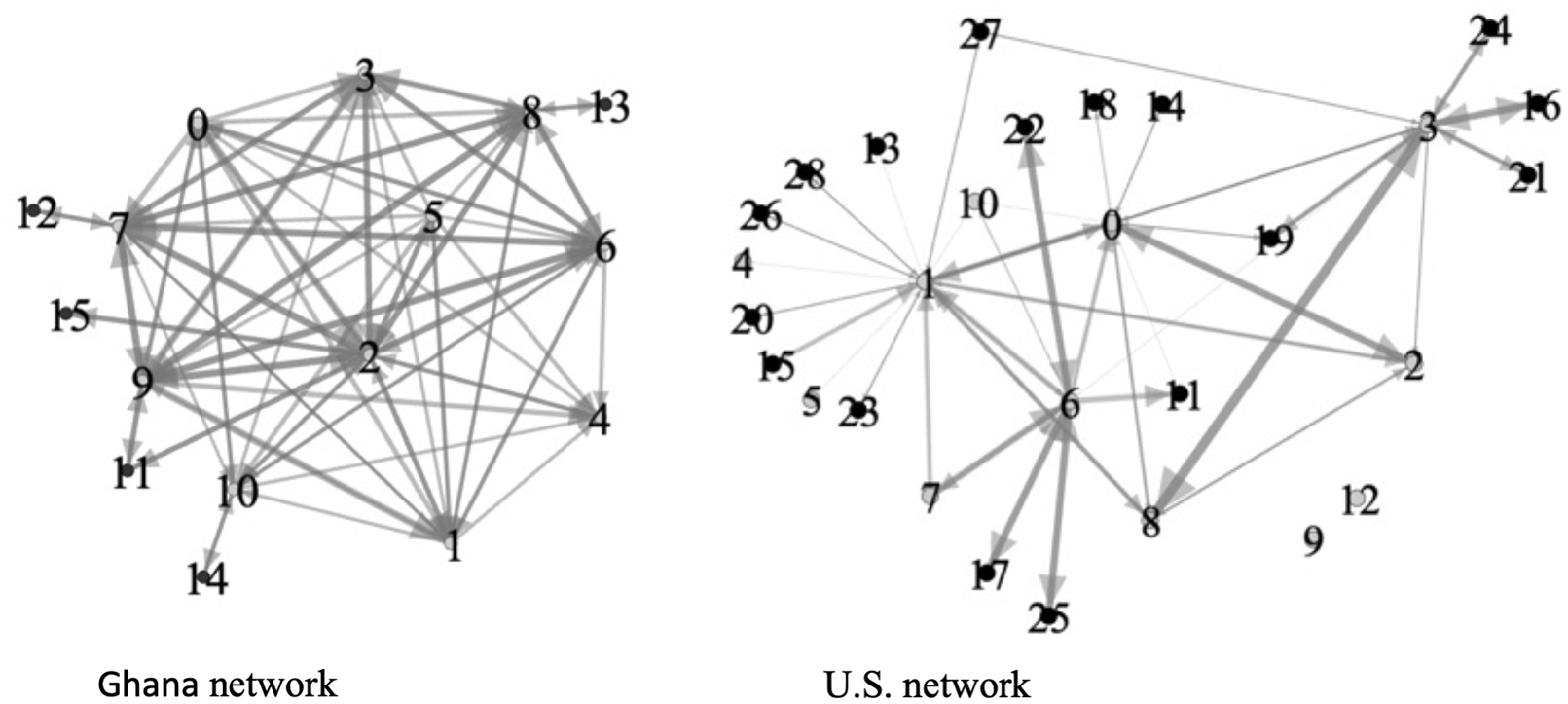
Ghanaian and US P&O faculty information exchange networks.
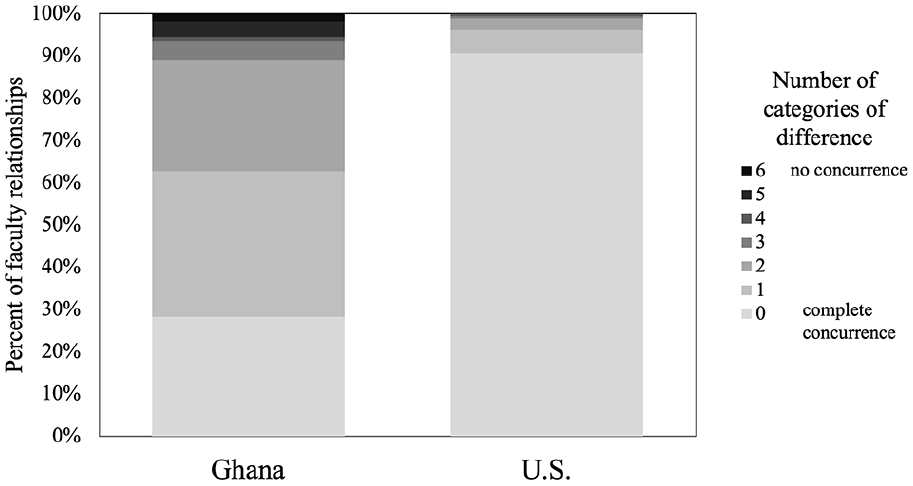
Concurrence in reported faculty information sharing relationships.
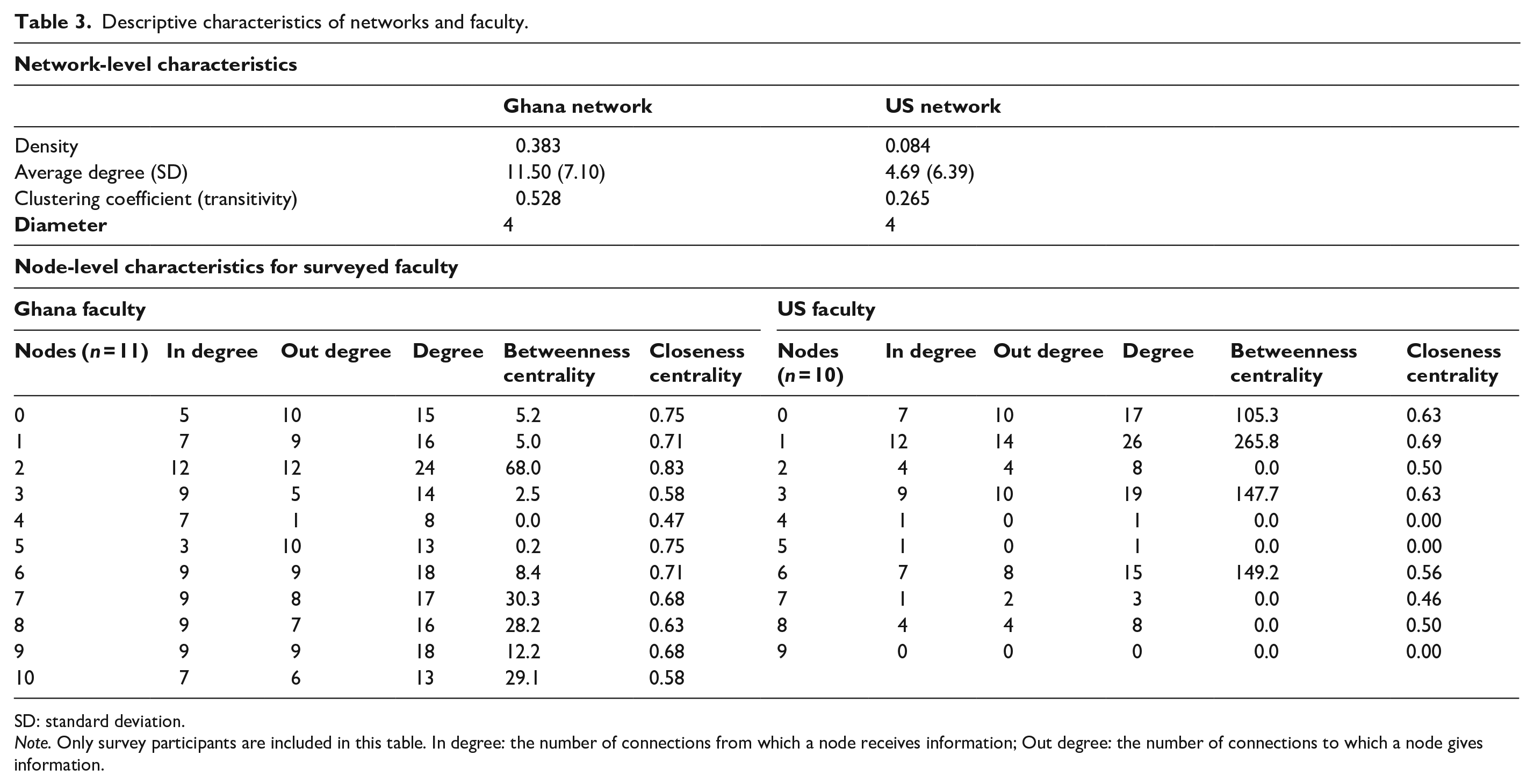
Overall, the structures of ENs at the two programs were quite different (Table 3). Both networks had a diameter of 4, which reflected the similar size of both networks. All other network-level measures differed. The Ghanaian network density was 0.383, indicating that 38% of the potential relationships actually existed. By contrast, the US network density of 0.084, indicated only 8% of potential relationships existed. Average degree, similarly, reflected a more densely connected Ghanaian network (11.5) compared to the US network (4.69); however, both had substantial variability by participant. The Ghanaian network had greater transitivity (0.528) than the US network (0.265), again indicating that the Ghanaian network was better connected with more groups of three that were interconnected.
Descriptive characteristics of networks and faculty.
SD: standard deviation.
Note. Only survey participants are included in this table. In degree: the number of connections from which a node receives information; Out degree: the number of connections to which a node gives information.
Node-level characteristics (definitions provided in Table 1) provided additional insight into ENs (Table 3). Nodes with high betweenness centrality are key to communication within a network. 12 These nodes are commonly referred to as brokers and serve as intermediaries between other actors within the network. 12 In the Ghanaian network, a few nodes had higher betweenness centrality (i.e. 2, 7, 10, and 8); however, due to the high network density, betweenness for all nodes was relatively low. Ghanaian network communication was not funneled through a few key players, but rather occurred through multiple avenues. In contrast, the US network had four key nodes with very high betweenness (i.e. 0, 1, 3, and 6) and six nodes with zero betweenness. This indicates a network that was heavily dependent upon four key players for successful communication. High closeness centrality helps identify nodes which are able to disseminate information quickly within a network. 12 Some variability in closeness centrality was seen in the Ghanaian network; however, most nodes were similarly able to disseminate information to their colleagues (range: 0.47–0.83). Closeness centrality among US faculty was lower (range: 0–0.69) and reflected a less efficient system for information dissemination (Table 3).
Through examination of the visual networks, and network- and node-level measures, two distinct networks were seen. The Ghanaian network had 16 nodes, 11 of which were P&O faculty. The core network of 11 faculty frequently exchanged information among themselves, but had few resources outside the faculty. The Ghanaian network had one key individual (node 2); however, most individuals within the network were well connected and shared information regularly. The US network had 29 nodes, 10 of which were faculty who taught P&O students. The remaining 19 nodes were external P&O contacts. In addition, this network was heavily dependent upon four key players (nodes 0, 1, 3, and 6) with one central individual (node 1). Faculty within this network shared information with variable frequency indicating variation in strength of collaborations.
Discussion
This study describes information access and ENs among faculty at two P&O education programs in different countries, cultures, and faculty profiles. As such, this research describes two distinct networks. The Ghanaian network is a densely connected yet insular network with few external connections. The Ghanaian network has one key player who is central to the network; however, concerns of fragmentation of the network if this key players were removed are mitigated by high network density. In contrast, the US network is less dense with four key players, one individual at the center of the network, and two isolates with no network connections. Many US network individuals maintain distinct networks of clinical experts who serve their specific P&O education content areas. As a more diffuse network, the US faculty are at higher risk of fragmentation and impaired communication if key players leave the network. 12 This exploratory research provides a proof of concept for the application of SNA in P&O education.
Network differences are likely attributable to organizational characteristics of the P&O programs. The US program is within an R1 institution (i.e. a doctoral university with very high research activity) and School of Medicine which also has occupational therapy, physical therapy, and research doctorate education programs. Many faculty who teach P&O students also teach physical and occupational therapy students. The US program is well established with nearly 50 years in existence. In addition, faculty at the US program are older (median: 43, IQR: 9.5), have more years of teaching experience (median: 9.5, IQR: 19.8) and have more time at their current institution (median: 8.0, IQR: 8.5). This higher level of experience and higher individual levels of education (six doctorate, four master’s) may reduce the need for frequent faculty information exchange and may explain the larger external networks. In addition, US faculty spend less time teaching (median: 50%, IQR: 50%) and more time conducting research, administrative tasks, or grant writing, which may explain less frequent exchange of information for teaching.
In contrast, Ghana’s program is a P&O certificate program that only educates P&O students. The Ghana program was established 6 years ago and faculty are quite young (median: 27, IQR: 7) with limited teaching experience (median: 3, IQR: 1) and less advanced education (four diploma, six bachelor’s, one master’s). These characteristics of the Ghanaian faculty may explain the limited contacts outside the core faculty network and may also explain the need for frequent faculty information exchange as they collaborate to develop teaching skills and curriculum.
Beyond programmatic differences, survey responses represent a cross-sectional perspective of information exchange, an activity likely to vary by quarter and individual workload. It is possible that faculty report of information exchange frequency was skewed due to teaching and non-teaching schedules (e.g. a non-teaching faculty member may experience greater recall bias). Furthermore, network connections not explicitly used for teaching were not examined in this study and may therefore provide an incomplete picture of faculty networks and interactions. In the United States, low teaching network density may reflect the proportion of time spent teaching versus conducting other professional responsibilities such as research and grant writing. In addition, cultural differences, both professional and personal, may influence information sharing practices.
Information sources used by faculty in both countries varied both in type and frequency of use. US faculty accessed information sources less frequently than Ghanaian peers; however, tended to focus on specific sources such as peer-reviewed journals, manufacturer, and clinical websites. US faculty may use clinical experts to cover specific content and thereby rely on people as sources rather than texts and websites. Ghanaians may lack networks of specialized clinicians and instead rely on faculty peers, texts, and websites. 19 Reliance upon text, rather than websites, may also occur due to unreliable Internet service. 6 A recent survey conducted in Ghana identified key challenges in P&O education to be a deficiency of professionals, teaching material in biomechanics and P&O, and access to prosthetic books and journals. 7
Peer-reviewed journal use in clinical education is part of a larger movement toward evidence-based practice. 20 This recent shift in P&O clinical practice and education is reflected in the reported use by US faculty. In Ghana, peer-reviewed journals were infrequently accessed, but identified as desirable yet inaccessible. A study of information-seeking behavior among health science faculty in Ghana found that while nearly all faculty members used the Internet to access information, they were largely unaware of the World Health Organization HINARI database 21 that provides free access in Ghana to full text articles. 22 In addition, computer literacy and inexperience in database searching were identified as barriers to information access among faculty in Ghana; 22 however, these challenges have also been noted among US Health Sciences faculty. 23 Given the potential impact of open access information sources to dramatically alter P&O education in LMICs, future research should explore availability, awareness, and utilization of open access resources in P&O education on a global scale. Specific to Ghana, further research should examine barriers to journal use among faculty to identify ways to improve access.
Strategies to improve information networks
The US network is vulnerable to faculty changes due to low network density and reliance upon a few key individuals. The network is likely to fragment if key players leave due to retirement, illness, or change of position. Interventions directed at influencing organizational culture, perceived management support, and organizational structure can improve knowledge sharing within an organization. 11 The insular nature of the Ghanaian network points to a need for network expansion beyond core P&O faculty. The Ghanaian network may benefit from connections with clinical experts to diversify their sources of information and provide additional clinical expertise for students. International collaboration could serve this role if Ghanaian clinical experts are not available, as indicated in prior research.7,19
Limitations
Results of this study are not generalizable to other education programs. However, the methods in this study can be implemented to assess other P&O ENs. In addition, this study was cross-sectional and provides only a single time point of the examined networks. Data collection at multiple time points would provide a more complete picture of faculty networks which likely shift throughout the academic year as teaching and research responsibilities vary.
The researcher-developed self-report survey used for data collection in this study, has not been examined for psychometric properties. However, similar surveys are consistently used in SNA research. 13 In addition, participants may have experienced social desirability response bias, responding in a way that makes them look favorable (e.g. using resources more frequently than they actually do). 24 Recall bias is also a concern as participants were asked to remember who they shared information with over the past month of teaching. 25 While not an unreasonable period of time, degradation of memory could have influenced the results.
Conclusion
Information access and ENs in P&O education vary by program. Ghana and US faculty networks reflect the structure, longevity, and resource availability of the two P&O programs. Ghanaian faculty may benefit from access to peer-reviewed journals and connections with external clinical experts to provide specialized clinical content and relieve faculty of providing all course content. The US network may benefit from redundancy to increase density of connections and ensure timely and efficient information transmission. SNA is a useful methodology to explore how information is shared among faculty teaching in P&O programs and may serve to identify areas for further examination and intervention.
Supplemental Material
10.1177_0309364620958828_Supplemental_Appendix_A – Supplemental material for Information access and sharing among prosthetics and orthotics faculty in Ghana and the United States
Supplemental material, 10.1177_0309364620958828_Supplemental_Appendix_A for Information access and sharing among prosthetics and orthotics faculty in Ghana and the United States by Cody L McDonald, Henry Larbi, Sarah Westcott McCoy and Deborah Kartin in Prosthetics and Orthotics International
Supplemental Material
10.1177_0309364620958828_Supplemental_Appendix_B – Supplemental material for Information access and sharing among prosthetics and orthotics faculty in Ghana and the United States
Supplemental material, 10.1177_0309364620958828_Supplemental_Appendix_B for Information access and sharing among prosthetics and orthotics faculty in Ghana and the United States by Cody L McDonald, Henry Larbi, Sarah Westcott McCoy and Deborah Kartin in Prosthetics and Orthotics International
Footnotes
Author Contributions
CLM (1,2,3,5,6,12,13)
HL (8,14)
SWM (14)
DK (10,14)
Declaration of Conflicting Interests
The author(s) disclosed no potential conflicts of interest with respect to the research, authorship, and/or publication of this article.
Ethics review and approval
This study was reviewed by the University of Washington Human Subjects Division, and was determined to qualify for exempt status. Therefore institutional review board approval was not required.
Funding
The author(s) disclosed that they received no financial support for the research, authorship, and/or publication of this article.

Supplemental Material
Supplemental material for this article is available online.
References
Supplementary Material
Please find the following supplemental material available below.
For Open Access articles published under a Creative Commons License, all supplemental material carries the same license as the article it is associated with.
For non-Open Access articles published, all supplemental material carries a non-exclusive license, and permission requests for re-use of supplemental material or any part of supplemental material shall be sent directly to the copyright owner as specified in the copyright notice associated with the article.
