




Abstract
Background:
Usual guidelines recommend symmetric load carriage over asymmetric load carriage. Whether this recommendation is valid for subjects with asymmetric body alignment, such as those with scoliosis, remains unclear. Scoliosis is both a subject-dependent and time-variant condition. Interventions are generally employed to prevent the abnormal spinal curvature from progressing.
Objectives:
To investigate the effects of an asymmetric load carriage on lateral spinal deformity in participant with scoliosis.
Study design:
Repeated measure and single-case experimental designs
Methods:
Photogrammetry was employed to measure the scoliotic curvature changes in thoracic and lumbar regions without a load (0%) and with a single-strap cross-chest bag loaded at 2.5%, 5%, 7.5%, 10% and 12.5% of body weight. Statistical tests and programming models were adopted to determine the loading conditions (placement and weight of the bag) with optimal and minimal corrections of the affected and unaffected scoliotic spinal regions, respectively.
Results:
Significant short-term postural correction of scoliosis was achieved through applying an asymmetric load on the ipsilateral shoulder relative to the apex location of the major scoliotic curve.
Conclusion:
A subject-specific optimal loading configuration was determined using a programming model. The results suggest that the application of a properly controlled asymmetric load carriage might be possible for reducing scoliotic spinal curvature. Further study of the long-term effects of subject-specific optimal asymmetric load carriage on scoliotic spinal curvatures is warranted.
Clinical relevance
Short-term reduction of scoliotic spinal curvatures under asymmetric load carriage was demonstrated. Thoracic curvatures could be reduced when asymmetric loading was applied on the ipsilateral shoulder relative to the scoliotic apex. Multiobjective programming was applied to determine the optimal weight of asymmetric load for participant with scoliosis.
Background
Scoliosis is a three-dimensional deformity of the spine. 1 It is classified as congenital, neuromuscular or idiopathic, and it progresses most rapidly during adolescence. 2 Approximately 2%–4% of adolescents are affected by idiopathic scoliosis.3–5 A school screening revealed that the prevalence of adolescent idiopathic scoliosis (AIS) in students aged less than 19 years was 2.5%. 6 Numerous long-term effects of spinal deformity have been identified, including poorer pulmonary function,7,8 higher prevalence of back pain, 9 motor control impairment,10–13 psychological conditions9,11,13 and scoliotic curve progression during the adolescent growth spurt. 14 The unknown aetiology and the complex mechanism of scoliotic spine growth render prognostic and preventive treatments difficult. 15
AIS is a subject-dependent and time-variant condition. Interventions are generally employed to prevent the abnormal spinal curvature from progressing. Asymmetric exercise has been proposed for scoliosis. Durmala et al. 16 investigated the effects of asymmetric mobilisation on the Cobb angle and angle of axial rotation in 136 patients. After a year of training, a 31%–39% reduction in the Cobb angle and a 16%–23% improvement in axial rotation were reported. Mooney and Brigham 17 and Mooney et al. 18 tested torso rotational strength, demonstrating that the muscle strength of the concave side was weaker than that of the convex side. According to the strength test results, they prescribed for the weaker muscles asymmetric rotational training, which alleviated the muscle imbalance of all patients after 4 months. Additionally, except in one case with increased curvature, all spinal curves were either reduced by an average of 20% or remained unchanged. Previous studies have investigated the effectiveness of side-shift and asymmetric exercises in reducing the scoliotic curve progression rate17–25 and have validated the application of bracing in improving mobility and balance. 19 Despite this positive evidence, compliance with the prescribed exercise protocol is crucial for achieving effective outcomes. Expecting patients with scoliosis to attend therapy sessions 2–3 times per week or to comply with self-administered exercises at home is impractical.
Usual guidelines recommend symmetric over asymmetric load carriage. Whether this guideline is valid for subjects with asymmetric body alignment, such as patients with scoliosis, remains unclear and relevant literature is limited. When patients with scoliosis carry regular symmetric load, such as a backpack, ‘asymmetric’ stresses are exerted on their vertebral end plates, which may generate further asymmetric spine growth and create a vicious cycle of scoliotic spinal progression. As spine growth was associated with applied stress,26,27 the application of properly controlled side-shift exercise might reduce, in accordance with previous longitudinal studies,21,22 the scoliotic curve progression of young adults and adolescents with scoliosis. Part (I) of this study investigated the postural correction in young adults with scoliosis. The objective was to investigate the loading conditions (loading side and weight) of asymmetric load carriage under the hypothesis that properly controlled asymmetric load carriage reduces the Cobb angle of the affected region of the scoliotic spine. Part (II) of this study was a single-case experimental design that could be used to investigate the effect of an intervention for a single subject. The target corrective measures of both affected and unaffected regions under asymmetric load carriage were considered as a multigoal problem. The biomechanical effects of asymmetric load carriage of different weights on spinal curvature were investigated experimentally in an adolescent with scoliosis. A programming model was developed for determining the optimal asymmetric load carriage configuration with optimal postural correction of the affected spinal region and a minimal effect on the unaffected spinal region. We hypothesised that an appropriate programming model could be identified and adopted to explain the curvature changes in both the affected and unaffected regions of the scoliotic spine under properly controlled asymmetric load carriage.
The purpose of this study was to offer recommendations to patients with scoliosis on using asymmetric loading as an intervention guideline for carrying a single-strap cross-chest schoolbag to replace bracing or therapeutic exercise for correcting scoliotic spinal curvature.
Methods
Subjects
Six young adults (four females and two males) and one female adolescent with mild scoliosis were recruited for this study (Table 1). All participants had a major thoracic curve and a minor lumbar curve. Four of them had a left major curve and the others had a right major curve; the mean Cobb angle was 17.4° (standard deviation (SD) = 3.6°). The mean age of the participants was 20.1 years (SD = 2.1 years). People who had received surgical, bracing or any other clinical treatments for scoliosis, as well as those with a history of other musculoskeletal problems, were excluded from the study. Prior to experimentation, the Human Research Ethics Committee of The Education University of Hong Kong granted ethical approval, and all subjects provided written informed consent.
Demographics of the seven subjects.
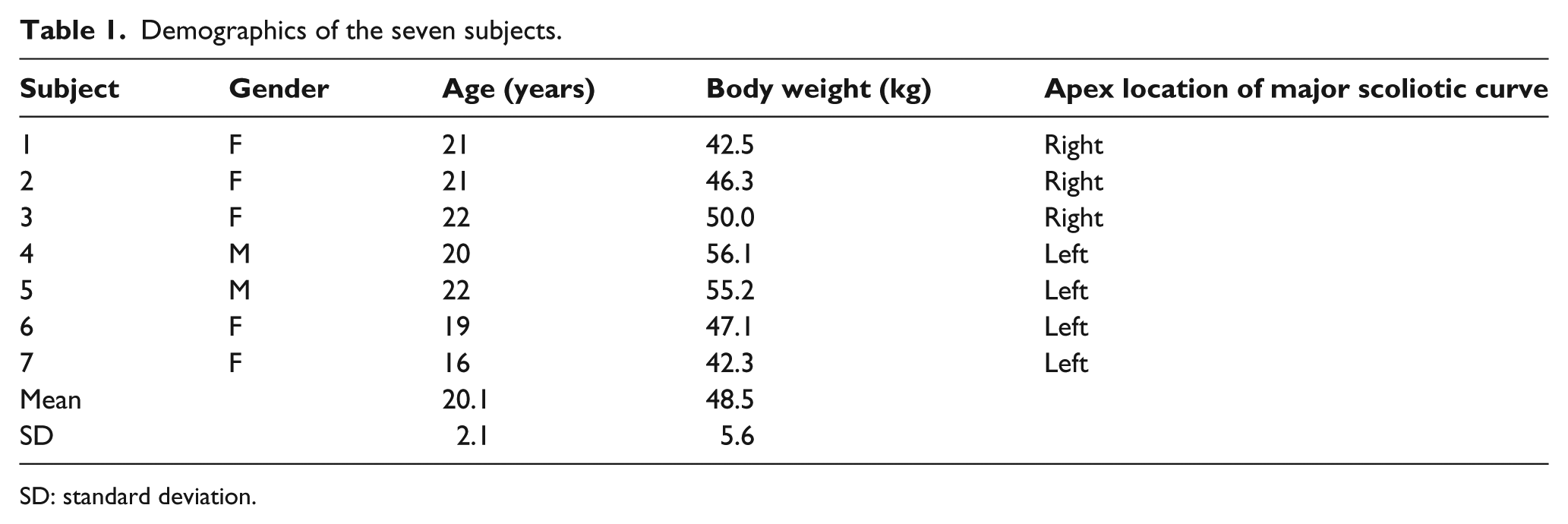
SD: standard deviation.
Procedures
The subjects were instructed to maintain a barefoot, erect and relaxed standing posture with (1) the arms hanging freely at both sides, (2) a gaze fixed on a target placed 2 m ahead at eye level and (3) the feet at a 30° angle between their long axes with the heels 14 cm apart.13,28,29 The subjects were asked to carry a single-strap cross-chest shoulder bag weighing 2.5%, 5%, 7.5%, 10% and 12.5% of their body weight (BW) on both the ipsilateral and contralateral shoulders relative to the apex of their major scoliotic curve. 30 The centre of gravity of the bag was positioned on the coronal plane, at the level of the anterior superior iliac spines. The spinous processes of the subjects were palpated from C7 to L5 and identified externally using circular markers along the entire spine. 31 For each experimental trial, digital posterior–anterior photos were taken to record the respective positions of the markers on the spinous processes (Figure 1).
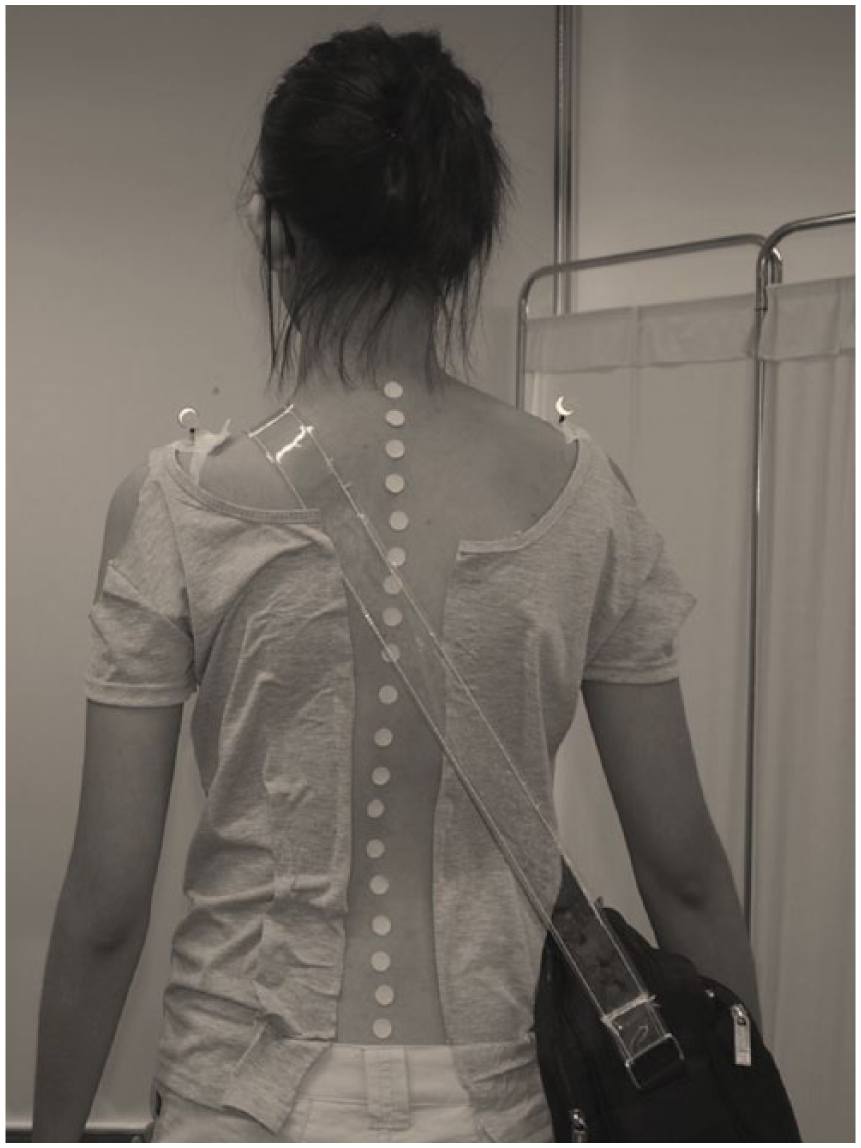
Digital posterior–anterior photos of a participant with the single-strap cross-chest bag placed on the contralateral side relative to the apex and loaded at 7.5% of BW. Circular markers were affixed to the spinous processes along the spine between C7 and L5.
The subjects were allowed to rest for 2–5 min between consecutive experimental trials. In Part (I), one trial for the unloaded condition and each loaded condition was performed by the first six subjects (subjects 1–6) for both the ipsilateral and contralateral shoulders relative to the apex. The sequence of the 11 experimental trials was randomised. The data obtained were used for determining the effective side of asymmetric loading for patients with mild scoliosis, which features optimal reduction in the major curve. In Part (II), three trials for the unloaded condition and each loaded condition were performed in subject 7 on the effective side determined in Part (I). The sequence of the 18 experimental trials was randomised. The data obtained were used for determining the optimal asymmetric loading condition for patients with scoliosis, featuring optimal reduction in the major thoracic curve and minimal negative effects on the minor lumbar curve.
Data analysis and lexicographic goal-programming model development
All digital photos taken in both Parts (I) and (II) were analysed using image processing techniques. First, the centroids of 18 circular markers (from C7 to L5) were identified as the spinous processes. A continuous spline curve was then fitted to the 18 points. Subsequently, the locations of the apexes and the respective upper and lower scoliotic end plates were identified. Finally, the major thoracic Cobb angle (TCA) and the minor lumbar Cobb angle (LCA) were determined.
Part (I) of the experiment
The major scoliotic curvatures measured on different sides and under various asymmetric loading conditions were analysed using statistical software (SPSS version 21, IBM Inc., Chicago, IL, USA). Friedman’s two-way analysis of variance (ANOVA) by Ranks, with asymmetric load on the ipsilateral and contralateral shoulders as a within-subjects factor, was used to analyse the distributions of the major Cobb angles. Statistical significance was set at p = 0.05. Post hoc comparisons of the medians were based on Wilcoxon signed-rank test.
Part (II) of the experiment
The mean major TCA and minor LCA measured under different asymmetric loading conditions were analysed statistically based on single-case experimental design.32,33 Such design could be used to investigate the effect of an intervention for a single subject. The experimental set of 18 data (group size of three for each of six loading conditions) collected from only one subject was event-related potentials and might probably violate the assumption of independence measures among groups of loading conditions. This study adopted a nonparametric analysis based on a permutation test, also known as randomisation test.
34
Randomisation tests were based on random permutations of experimental data so that an exact p-value was computed in accordance with the test statistic under consideration. The randomisation tests of the effect of multiple asymmetric loading conditions on the mean major TCA and minor LCA were based on the permutations of all 18 data.
35
Since the total number of permutations of 18-data set,
Various trend lines of the mean spinal curvatures were fitted to the data concerning the loading conditions. Regression models of the TCA and LCA under loading conditions (L, percentage of BW) were developed. The TCA and LCA were determined according to the equations
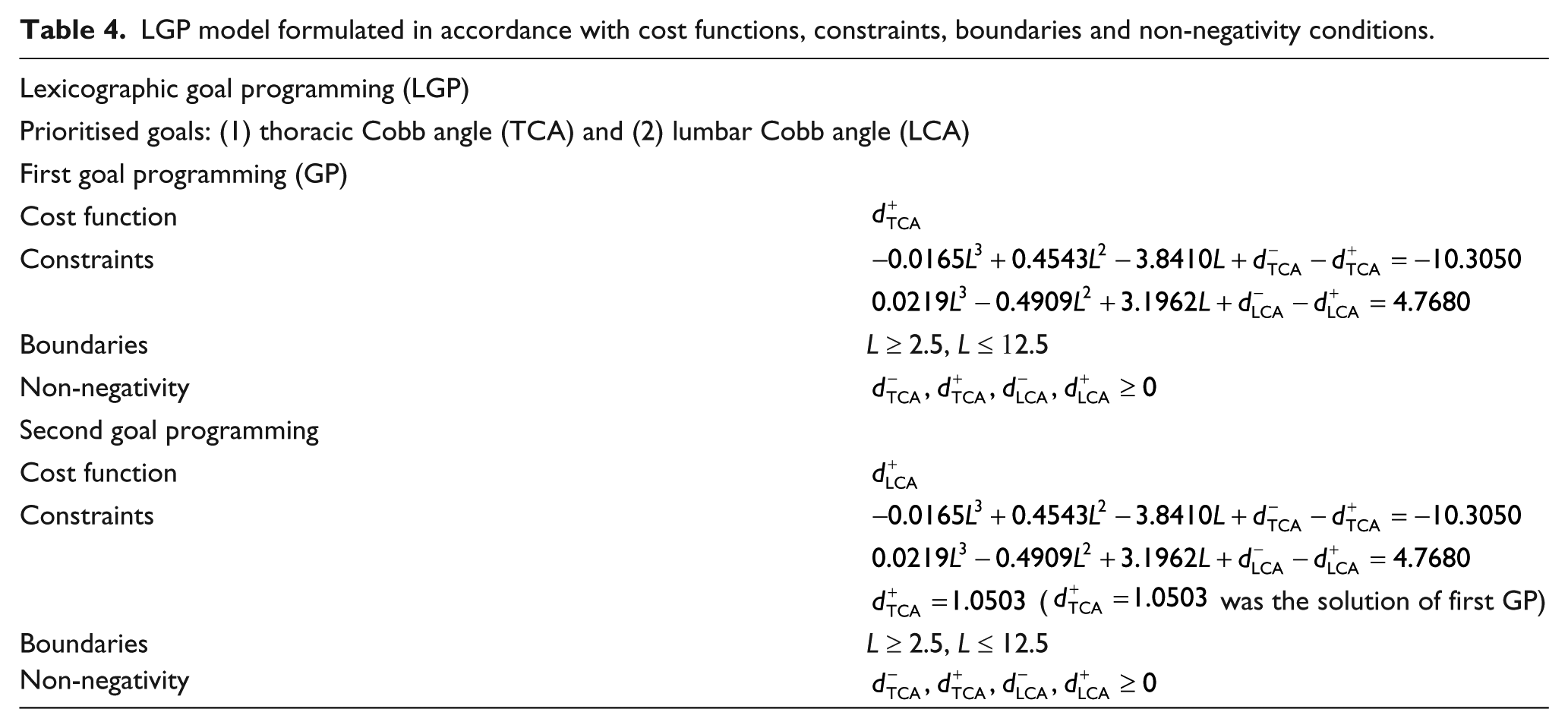
In the context of programming, a goal is defined as the desired level, target or criterion. A decision analysis which exhibits more than one goal is classified as a multicriterion decision analysis problem. Classical optimisation solves problems by finding an optimal solution for a unique goal. The lexicographic goal programming (LGP) model38,39 was used to find an optimal solution for several prioritised target levels. LGP formulates the target corrective measures of both major and minor curves according to the spinal curvatures of the individual curves. The spinal curvatures were prioritised and expressed as general linear regression functions of the configuration parameters of asymmetric physiotherapy exercises. In this study, the LGP model was adopted to achieve the prioritised goals individually. The output of the LGP model was the optimal prediction for the configuration parameter of the asymmetric physiotherapy exercise with maximal correction at the major curve and minimal effects on the minor curves of the entire scoliotic spine. The solution of the optimal load was identified through the following sequential optimisation processes.
Minimise
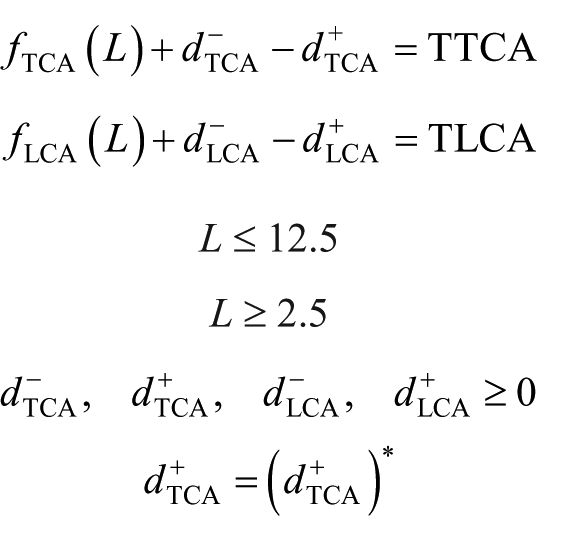
(for the second goal programming (GP) only,
TTCA represents the target (mean of loaded conditions) TCA,
and TLCA represents the target (mean of loaded conditions) LCA.
Image processing, permutation simulation and statistical testing were conducted through MATLAB 2013b (The MathWorks Inc., Natick, MA, USA) and SPSS 21.0 (IBM Inc., Chicago, IL, USA) software, and the LGP problems were solved using LINGO 10.0 (Lindo System Inc., Chicago, IL, USA) software. The significance level of all statistical tests was set at α = 0.05.
Results
Mean curvature change under asymmetric loading on the contralateral and ipsilateral shoulders relative to the apex (Part (I))
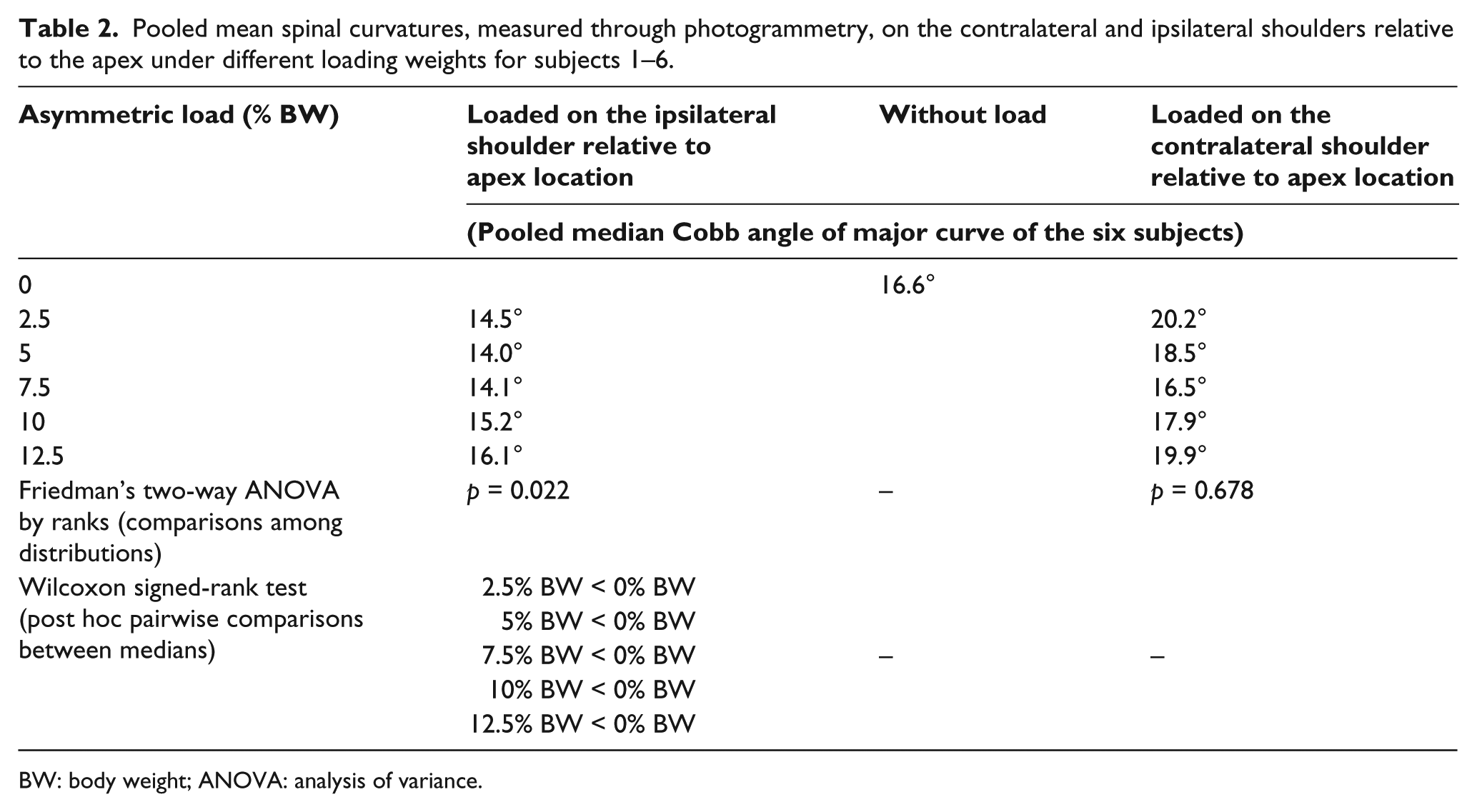
The spinal curvatures of the subjects were measured using photogrammetry with the bag loaded on the ipsilateral and contralateral shoulders relative to the apex location and analysed by Friedman’s two-way ANOVA by Ranks (Table 2). Placing the load on the contralateral shoulder relative to the apex location did not produce significant changes to the major TCAs. However, the major TCAs significantly decreased when the load was placed on the ipsilateral shoulder relative to the apex location.
Pooled mean spinal curvatures, measured through photogrammetry, on the contralateral and ipsilateral shoulders relative to the apex under different loading weights for subjects 1–6.
BW: body weight; ANOVA: analysis of variance.
The median major Cobb angle of the unloaded condition (0% of BW) was 16.6°. When the single-strap cross-chest bag was loaded on the ipsilateral shoulder, the median major Cobb angles were 14.5°, 14.0°, 14.1°, 15.2° and 16.1° for increasing weights. Moreover, the median major Cobb angle was significantly reduced under all loaded conditions.
Optimal asymmetric loading on the effective side (Part (II))
The spinal curvatures of subject 7, measured using photogrammetry with the single-strap cross-chest bag loaded on the effective side (ipsilateral shoulder relative to the apex location), and the results of randomisation tests were figured out by simulation processes (Table 3). The F-values of the experimental data sets of TCA and LCA were 26.32 and 1.06, respectively. The numbers of F-values of the 9999 random permutation data sets greater than 26.32 and 1.06 were 8 and 4276, respectively. The exact p-values of the randomisation tests were 8/10,000 = 0.0008 (for TCA) and 4276/10,000 = 0.4276 (for LCA). Under all loading conditions on the effective side, the minor LCA did not change significantly, but the major TCAs were significantly reduced. The mean Cobb angle of the unloaded condition (0% of BW) was 17.4°. When the single-strap cross-chest bag was loaded at 2.5%, 5%, 7.5%, 10% and 12.5% of BW on the ipsilateral shoulder, the mean major Cobb angles were 10.4°, 8.1°, 6.6°, 8.5° and 8.1°, respectively. The p-values of post hoc (pairwise comparisons) randomisation tests of the mean TCA differences between 0–2.5%, 0–5%, 0–7.5%, 0–10%, 0–12.5% and 2.5–7.5% BW were equal to 0.05. The mean major Cobb angle was significantly reduced under all loaded conditions on the ipsilateral shoulder.
Mean spinal curvatures under unloaded and loaded conditions on the ipsilateral shoulder relative to the apex for subject 7.
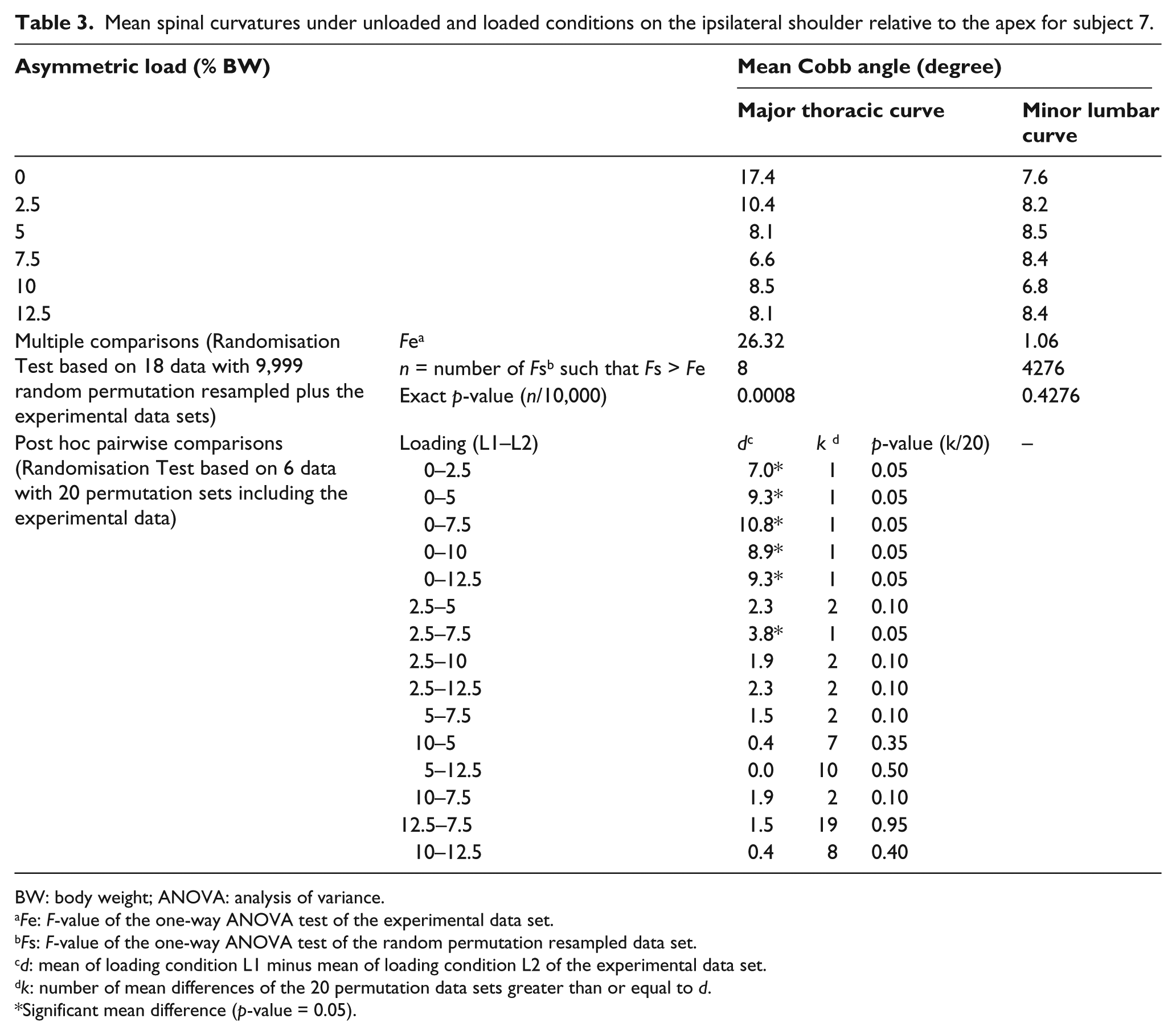
BW: body weight; ANOVA: analysis of variance.
Fe: F-value of the one-way ANOVA test of the experimental data set.
Fs: F-value of the one-way ANOVA test of the random permutation resampled data set.
d: mean of loading condition L1 minus mean of loading condition L2 of the experimental data set.
k: number of mean differences of the 20 permutation data sets greater than or equal to d.
Significant mean difference (p-value = 0.05).
A third-order polynomial model was used to analyse trend lines in the scatter plots of the major TCA and the minor LCA changes of subject 7 under all conditions, to identify the association between the spinal curvatures (TCA and LCA) and the loading conditions. The produced regression models are presented in Figure 2.
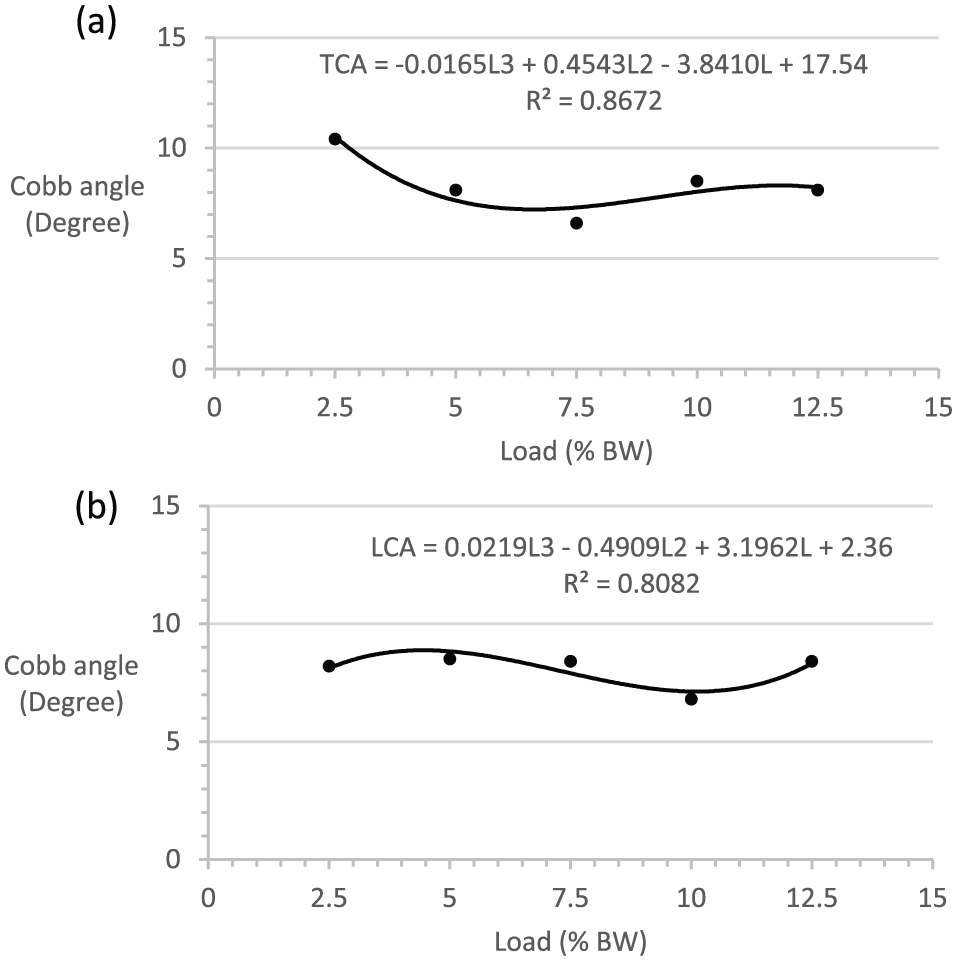
The third-order polynomial regressions of the mean angles in subject 7 under each bag load for the (a) major thoracic curvature and (b) minor lumbar curvature.
The LGP model for subject 7 was formulated in accordance with the respective cost functions (minimisation of the undesired deviational variables), constraints (formulations of the target levels), boundaries (range of the decision variables) and non-negativity conditions (Table 4). The determined optimal load was 4.1% of BW.
LGP model formulated in accordance with cost functions, constraints, boundaries and non-negativity conditions.
Discussion
This study aimed at investigating the loading conditions (loading side and weight) of asymmetric load carriage under the hypothesis that properly controlled asymmetric load carriage reduces the Cobb angle of the affected region of the scoliotic spine. Applying an asymmetric load by carrying a single-strap cross-chest bag on the ipsilateral shoulder relative to the apex location of scoliosis successfully provided short-term postural correction. Applying a controlled asymmetric load is a possible pragmatic method for correcting scoliotic spinal curvature.
Spinal curvatures measured through photogrammetry
The major TCAs of subjects 1–6 were retrieved from a recent posterior–anterior X-ray film or clinical records issued by their doctors. The mean deviation of the spinal curvatures of subjects 1–6, measured through photogrammetry of the X-ray films, was 1.6° (SD = 0.7°). In a previous study utilising similar photogrammetry techniques, the average deviation of the TCA was 2.9°. 31 Therefore, the photogrammetry method employed in this study measured the TCA with comparable accuracy.
Side effect of loading conditions
The median spinal curvatures of all three subjects with a left thoracic curve decreased when the load was on the left shoulder, whereas those of the three participants with a right thoracic curve decreased when the load was on the right shoulder. Moreover, the spinal curvatures of subjects 3 and 6 decreased when the load was on either side of the shoulder. However, the reductions in the spinal curvatures were smaller when the load was on the contralateral shoulder relative to the apex location. These differences may be due to biomechanical effects including individual variations in muscle strength activation in response to the application of external load, as well as nonbiomechanical impacts such as the fear of interference between the asymmetric load and the body. 40 When the six subjects are considered overall, carrying the bag on ipsilateral shoulder relative to the apex location of the scoliotic curvature was beneficial.
A previous study revealed that the elevation of a single-loaded shoulder under asymmetric carriage induced lateral deviation of the trunk shift. 23 This observation demonstrated that the postural change under an asymmetric load was quite similar to the observation under side-shift exercises. However, because no muscle activity was measured in this study, further study is required to demonstrate the effects of asymmetric loading on muscle activation.
Optimal loading on the effective side
Although maximal reduction in the affected scoliotic region might improve coronal balance, it may result in the compensation of sagittal alignment. 24 Moreover, the positive reduction in the affected region might negatively affect the unaffected regions of the spine. The R2, the proportion of the total variability of the experiment as explained by each regression model of the current data set, of the major TCA and minor LCA was 0.87 and 0.81, respectively. The two trend lines indicated moderately strong relationships between spinal curvature and the loading condition. As the load increased, the major TCA decreased from the baseline condition until it reached the first critical load at 6.6% of BW and then increased until it reached the second critical load at 11.8% of BW (Figure 2). By contrast, the minor LCA increased from the baseline condition until it reached the first critical load at 4.8% of BW and then decreased until it reached the second critical load at 10.2% of BW. Because the scoliotic spinal profile is subject-dependent, the current regression models may indicate continuous curvature changes under appropriate controlled asymmetric load carriage between 2.5% and 12.5% of BW.
Imbalance in trunk muscle activity during asymmetric load carriage may increase the shearing forces on the lumbar discs and thereby increase the risk of injury to these structures. Thus, appropriate loading should be prescribed carefully to induce sufficient muscle activation for long-term spine correction without injuring the spine. The 4.1% of BW optimal load determined in this study appears reasonable. The predicted reduction of the major thoracic curve was 9.1° with the associated increase in the minor lumbar curve being by only 1.1°.
This study investigated the optimal loading for reducing thoracic curves. Based on the findings, a prescription guideline for asymmetric loading in patients with scoliosis was recommended based on a single-case experimental design. A subject-specific dosage in terms of loading side and weight was statistically validated by the randomisation tests. Carrying a properly controlled single-strap cross-chest schoolbag might be a potential intervention treatment to replace bracing or therapeutic exercise with recommendations of duration in hours per day, months or years of treatment.
Limitations
Several limitations exist in this study. (1) The sample size of seven subjects was small. (2) Only the short-term effects of asymmetric load carriage were considered. Therefore, long-term effects should be investigated in future studies. (3) Young adults were the preferred participants in this feasibility study. Further study should be conducted in children with scoliosis. (4) All subjects possessed a major thoracic curve; thus, the effects on major scoliotic curves in other spinal regions may differ from the current findings. (5) Although radiographic images would have provided higher accuracy in determining spinal curvatures, digital photos were used to avoid radiation. (6) The second part of this study was a single-case experimental design that could only be used to investigate the effect of an intervention for a single subject.
Conclusion
Applying an asymmetric load on the ipsilateral shoulder relative to the apex location of scoliosis successfully provided short-term postural correction. A subject-specific optimal loading configuration was determined using a programming model. Applying controlled asymmetric loads is a possible pragmatic method for correcting scoliotic spinal curvature. Further study of the long-term effects and duration of intervention treatment of subject-specific optimal asymmetric load carriage on spinal curvature in patients with scoliosis is warranted. Moreover, the subject-specific intervention management validated by the single-case experimental design of this study may be generalised by extending the design to a multiple single-case study. The results of single-case experimental data from multiple studies can be combined and analysed by a Meta-analysis approach to determine the effectiveness of a specific intervention management and to record subject characteristics that may have a particular response to intervention treatment.41,42
Footnotes
Author contribution
All authors contributed equally in the preparation of this manuscript.
Declaration of conflicting interests
The author(s) declared no potential conflicts of interest with respect to the research, authorship and/or publication of this article.
Funding
The author(s) disclosed receipt of the following financial support for the research, authorship and/or publication of this article: Dean’s Research Fund, Faculty of Liberal Arts and Social Sciences, The Education University of Hong Kong (Grant/Award Number: ‘IRS-5’).
