




Abstract
Background:
Orthotic insoles that are made of foam material often have less breathability and thus cause discomfort to the wearer. Given that a sandwich structure offers better porosity and breathability that would improve comfort, the impact of custom-made insoles made with three-dimensional spacer fabric is studied.
Objectives:
To examine the biomechanical effects and subjective comfort of spacer-fabric insoles during walking.
Study design:
Repeated measures.
Methods:
Plantar pressure and lower limb muscle activity data are collected from 12 subjects. Subjective perceived comfort is measured after five successful walking trials for each of the three different insoles worn: traditional insoles made with ethylene vinyl acetate and two types of spacer-fabric insoles.
Results:
Compared to the use of traditional insoles, there is a statistically significant reduction in the peak pressure (>8%) and pressure-time integral (>16%) in the toes and metatarsal head 1 with the use of the spacer-fabric insoles as the top layer. Insoles with two layers of spacer fabrics have the highest perceived comfort (p < 0.01). However, there is no significant difference in the selected muscle activity for all three insoles.
Conclusion:
Insoles with different arrangements of spacer fabrics allow changes in pressure patterns across the plantar foot and perception of comfort while walking. The findings enhance current understanding on the use of textile-fabricated materials, which provide alternative solutions for modifying insoles.
Clinical relevance
The key features of spacer fabric offer a viable option for different orthotic insole applications. The results will greatly contribute toward insole prescription, potentially enhancing the efficacy of orthotic performance and increasing the range of insole materials.
Background
Insoles are an important interface between the foot and footwear; they are highly recommended for use during sports and to address a wide range of foot issues. Over the past decades, many studies have been conducted to examine the plantar pressure changes induced by custom-made insoles that are made of different types of foam materials for different foot problems.1–3 The materials used for insole fabrication have been proven to greatly improve plantar pressure, shock attenuation, compressibility, and perceived comfort.4–6 An insole with poor comfort not only causes pain and is detrimental to patients, but also affects the plantar pressure distribution and muscle activity of the lower limbs.4,7 Therefore, extensive studies have been carried out on the physical and mechanical properties of various insole materials, such as ethylene vinyl acetate (EVA), Plastazote®, or Poron®, as well as pressure measurements to determine subjective comfort.8–11 However, a comprehensive study that measures comfort by taking into consideration air permeability or thermal performance has not been documented. Hence, to enhance the assessment of the orthotic performance, objective tailored measurements together with subjectively perceived comfort are both essential.
Recently, spacer fabric, which has a three-dimensional (3D) structure with a multitude of monofilament yarns that connect two separated outer layers together, has been increasingly used in medical and health-care products, such as hospital mats, medical clothing and mattresses, medical absorbents, protective gloves, or sport shoes.12–14 Due to the structure of the monofilaments which are used in the spacer layer and elastic yarns in the outer layers, spacer fabrics have proven to have satisfactory transverse compressibility and porosity and excellent planar elasticity which is an asset for shock absorption, cushioning, and breathability.14–16 Some studies have also investigated the effects of their pressure relieving property on ulcer prevention and demonstrated the superior wicking ability of the fabric structure in improving fabric comfort.17,18 In addition, these fabrics can also be molded for optimal fit and create a long-term, compression-resistant, and climate-controlled zone inside the shoe. The key properties of spacer fabrics together with their lightweight construction have therefore supported their use in orthotic insoles. Despite the many advantages of spacer fabrics, and that much discussion has been carried out about their potential contributions to medical applications, the effects of spacer fabric insoles on plantar pressure distribution and the corresponding perceived comfort have not been examined. In considering the poor air permeability and breathability of traditional foam materials and composites which cause patients to perspire as heat builds up, spacer materials which have properties suitable for use in the construction of insoles are proposed for the first time here to improve the thermal comfort and plantar pressure during movement.
In order to increase understanding of the influence of foot orthoses and footwear on lower limb function, surface electromyography (sEMG) has been often used in various biomechanical studies. The sEMG amplitude of the lower limb muscles enables practitioners to detect changes in muscle activity patterns when patients are wearing insoles made of different combinations of materials.19–21 Shoes with or without insoles act as an interface between the body and a supporting surface and can influence the sensory feedback by increasing the contact area between the foot and the supporting surface. 22 Footwear and the associated sensory input from the foot may lead to changes in motor and mechanical output which could affect the muscle activation of the lower extremities. 23 Any unnecessary muscle activation or stimuli during orthotic treatment could increase loading and cause fatigue which is most likely associated with knee or even spinal cord problems. 24 While previous research that examined gait biomechanics for foot conditions or shoes,25–27 insoles with different materials and their effects on plantar pressure and muscle activity have been rarely examined. 28 Scientific evidence to confirm these observations is equivocal which means that the quality and efficacy of orthotic treatment are often ambiguous in clinical practice. Therefore, to provide more relevant information and increase understanding on the implication of insoles on biomechanics, this study uses EMG to characterize and quantify the impact of the different insoles on muscle activity which could provide additional insight on how positive clinical outcomes from the use of various insole materials can be achieved.
With increasing concerns to take into consideration mechanical, neurophysiological, and psychological factors in treatment with orthotics, the purpose of this study is to therefore investigate the effects of 3D spacer-fabric insoles on the changes in plantar pressure distribution, muscle activation, as well as perceived comfort during daily life activities. It is hypothesized that in comparison to traditional insoles, (1) spacer-fabric insoles reduce plantar pressure and muscle activity and (2) insoles made of textiles improve the overall perceived comfort during walking.
Methods
Study design
In this study which used a within-subject repeated-measures design, the participants wore three types of insoles made with different material combinations during the wear trials. The plantar pressure distribution and muscle activity were measured during walking. Subjective perceived comfort with regard to the insoles was measured after walking trials.
Participants
In all, 12 healthy subjects (6 men and 6 women) volunteered to participate in this study. They had no history of orthopedic or neurological conditions and were free of foot pain at the time of testing. They ranged from 18 to 29 years (mean: 23.0 years, standard deviation (SD): 4.3 years) in age, and their body mass index (BMI) ranged from 17.3 to 23.6 kg/m2 (mean: 20.3 kg/m2, SD: 2.6 kg/m2). Male and female foot sizes ranged from European 40 to 43 and 37 to 40, respectively. Prior to the data collection, all of the subjects signed a written consent in accordance with the ethics policy on human subjects as stipulated by the university. The experimental protocol was approved by the Human Subjects Ethics Sub-committee of the Research Committee.
Structure of custom-fabricated shoe insoles
The insole fabrication began with the use of an Amfit® system (PN 10DDIGISYS-2; Amfit Incorporated, Vancouver, WA, USA) with a contact digitizer to capture the foot contours in the subtalar neutral position, with the subject in an upright sitting position (half-weight bearing). The computer-aided design (CAD) and computer-aided manufacturing (CAM) mill that is connected to the digitizer receives the foot images and fabricates the 3D bottom layers of the insoles. Each participant was fitted with three pairs of custom-made multilayer insoles that were made with the same combination of materials as listed in Table 1 and shown in Figure 1, in which the top and middle layers were glued onto the surface of the bottom layer. The custom-made insoles, which were inserted under the foot in the shoes, were customized to the foot shape of the participant. The weft-knitted spacer fabrics that were used, X and Y, consisted of different structures in that more yarns are interlaced across two outer layers as shown in Figure 2. The same fabrication method was used to construct the three-layer insoles for each subject.
Summary of orthotic insole specifications.
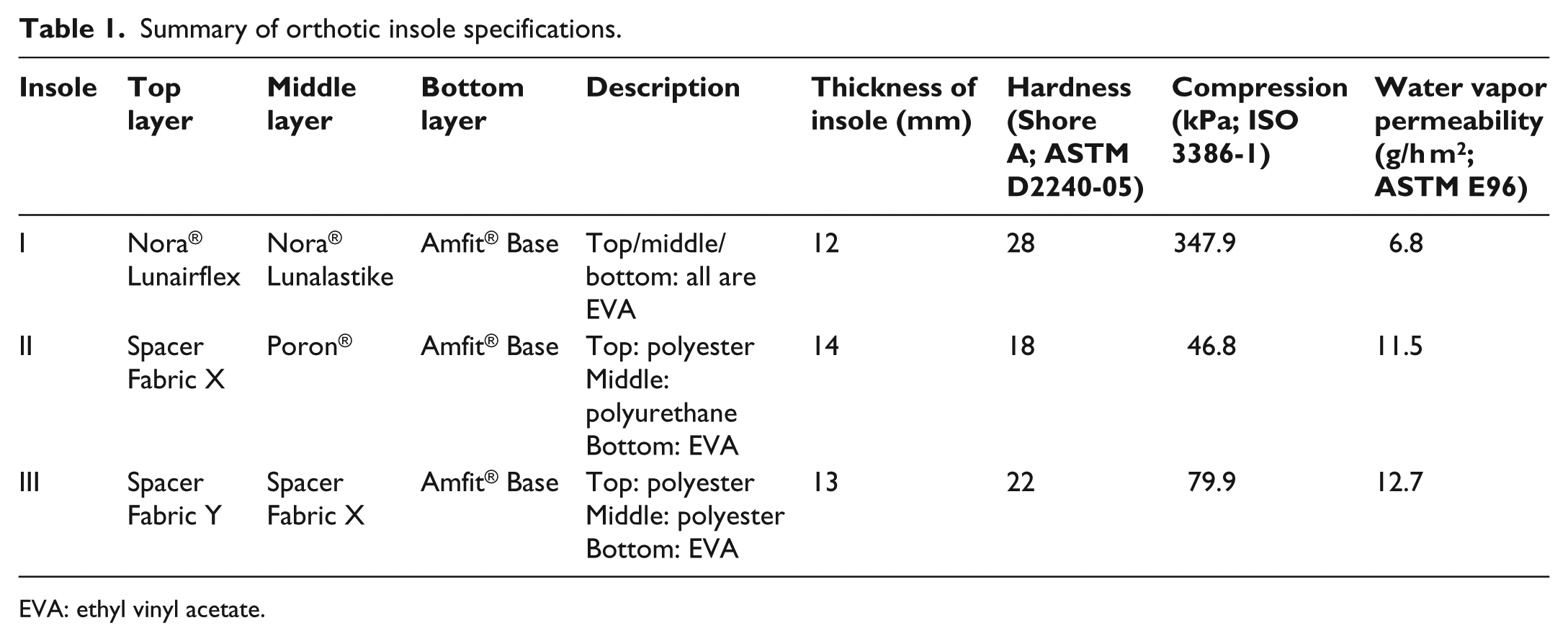
EVA: ethyl vinyl acetate.
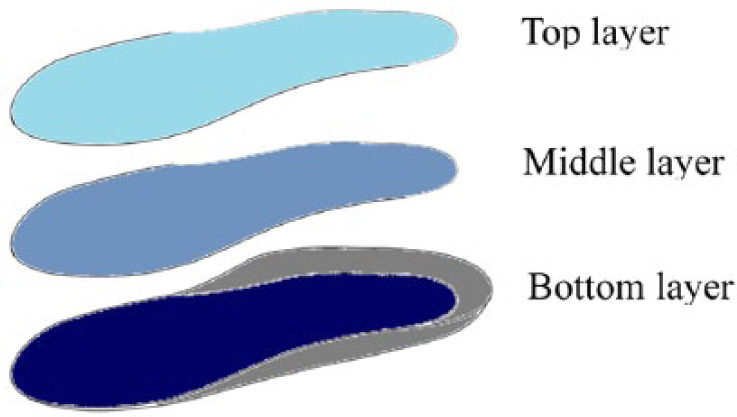
Insole construction.
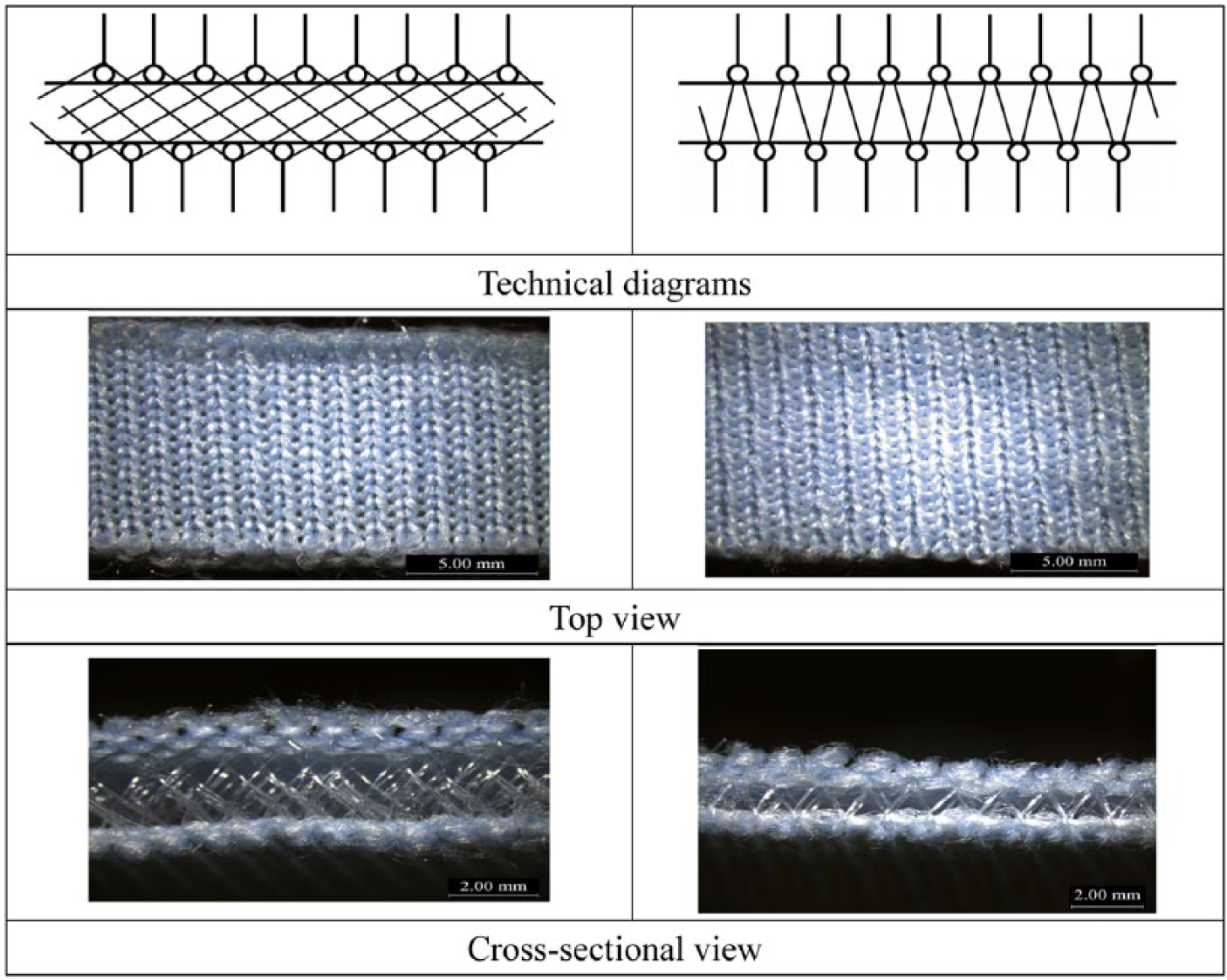
Spacer fabrics used in study: spacer X (left) and spacer Y (right).
Test protocol
The data of each subject were collected on the same day. Each subject performed walking trials for each insole for a distance of 8 m. The walking speed in all subsequent measurements was 3.49–3.96 km/h and monitored with an automatic infrared timing gate (Brower Timing Systems, Draper, UT, USA; with 0.01 s precision) since plantar pressure and perceived comfort are highly dependent on the speed of walking, that is, a higher speed of walking is associated with higher plantar pressure.29–31 Trials with a walking speed outside the stipulated range were rejected and five valid trials for each insole worn were recorded for analysis. All of the participants were given the following: (1) a 10-min rest with all equipment and shoes taken off in order to avoid the aggravation of pain during the testing which could be carried over to the next test, (2) a questionnaire on perceived comfort which used the visual-analogue scale (VAS) immediately after each insole was tested, and (3) sufficient practice walking trials to become accustomed to the next insole tested and all equipment at the stipulated range of walking speed before the data were collected.
Plantar pressure distribution measurement
The peak pressure (PP) and pressure-time integral (PTI) were collected from the dominant foot. They were measured by using the Pedar®-X in-shoe pressure measurement system (Novel GmbH, Munich, Germany), with an insole device that was placed on top of the spacer-fabric insoles. Each flexible pressure insole was 2 mm in thickness, and sampling was carried out with 99 sensors at 160 Hz which is the maximum number of sensors in this system. The participants wore standard sport shoes and socks which were provided to them and fitted with the Pedar® insole sensors in accordance with their feet size. The order of the three insoles (I, II, and III) was counterbalanced in the study. The collecting of the sEMG data was synchronized with video data recording by the sEMG system to monitor the whole trial, while on the top of the Pedar X-box, a blinking blue light emitting diode (LED) indicated an active Bluetooth connection between the Pedar-X box and the computer when the experiment commenced. The video camera of the sEMG system was then used to capture and record the flashing LED light of the Pedar X-box from the onset. The PP and PTI were calculated at the hallux, metatarsal head (MTH) 1, MTHs 2–3, MTHs 4–5, medial and lateral midfoot, medial and lateral heels, and toe area by using the novel multimask software (Novel GmbH; Figure 3). 32 Four steps during walking in a straight line were chosen and averaged for each trial. The initial and last few steps were excluded to ensure a steady gait speed for the analysis. The average of five successful trials was used for further analysis.
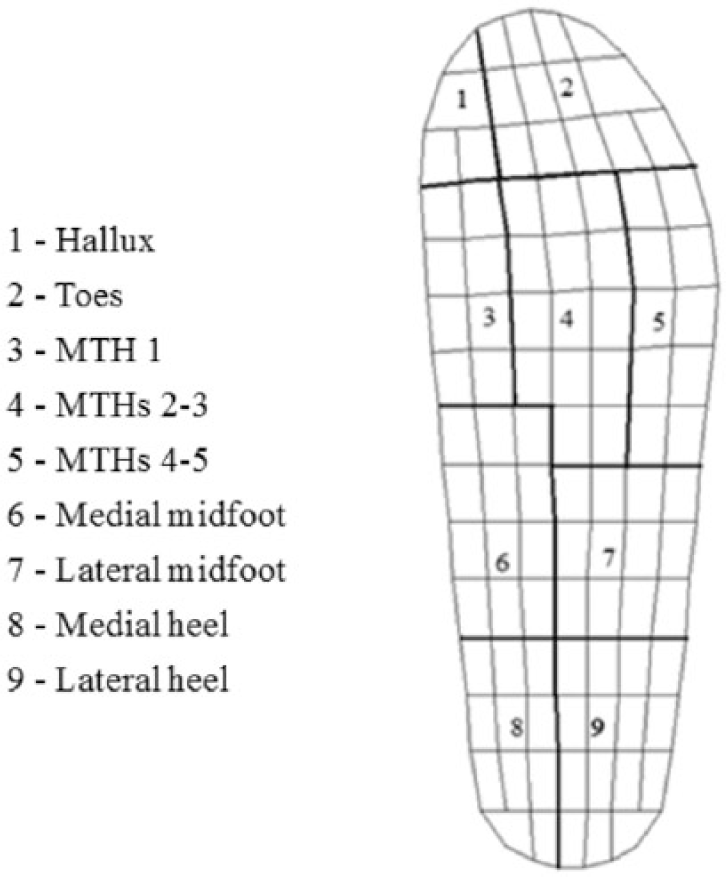
Nine subareas in each footprint.
Muscle activity measurement
The sEMG activity of the vastus lateralis, tibialis anterior, and lateral gastrocnemius muscles of the leg was simultaneously collected along with the plantar pressure distribution during the stance phase of the gait when the sport shoes were worn with the different insoles. These muscle groups are located in the thigh and fore and back parts of the leg, which are frequently and commonly selected for different lower limb studies in the literature.33–35 Bipolar silver/silver chloride (Ag/AgCl) surface electrode pairs with an electrode diameter of 10 mm and inter-electrode spacing of 22 mm were placed on the corresponding muscle belly of the muscle, which was cleaned with alcohol and shaved. Electrode placement was carried out by following the recommendations of the Surface ElectroMyoGraphy for the Non-Invasive Assessment of Muscles (SENIAM) project. 36 All of the sEMG signals were measured when the participants were wearing the shoes and socks provided. The maximum voluntary contraction (MVC) for each of the three muscle groups was acquired for 8 s by using manual resistance and repeated three times with 5 min of rest between each time. The largest contraction for each muscle was defined as the MVC of the corresponding muscle. sEMG activity was also simultaneously measured during the five trials of walking in a straight line for each insole by using an eight-channel DataLOG sEMG system at a sampling frequency of 2048 Hz (Thought Technology Ltd., 8205 Montreal / Toronto Boulevard, Canada). In each walking trial, the sEMG data of the four steps which corresponded to the same steps used in the plantar pressure analysis were taken and averaged to ensure more reliable and relevant results. 37 The sEMG signals were full-wave rectified and passed through a zero-lag fourth-order Butterworth low-pass filter with a cutoff frequency of 5 Hz, band-pass filtered at 10–500 Hz, and stored for offline analysis. 35 The sEMG data were smoothed by using root mean square (RMS) values, which were calculated for a 50-ms window. The resultant maximum amplitudes were averaged for each insole and normalized to the MVC of each subject which was expressed as a percentage. The average of five successful trials was then used for data analysis.
Perceived comfort measurement
The VAS scale comprised six questions, including convenience of walking (difficult vs easy), accommodation (good vs poor), dampness (wet vs dry), air permeability (bad (negative) vs good (positive)), softness (hard vs soft), and thermal feeling (warm vs cool), which were adopted to measure the perceived comfort for each insole. The subjects were asked to indicate a point along a continuous and horizontal line of a 100 mm in length between two end-points for each question with regard to their feelings about the insoles, with the left side (0 mm) of the scale labeled negative performance and right end (100 mm) labeled positive performance. A higher score for all of the responses indicated a greater degree of perceived comfort. The subjects were not permitted to view the completed scales from previous trials when they were rating the subsequent comfort. 30
Statistical analysis
All the data were reported as a mean (SD). They were coded and summarized by using IBM (New Orchard Road, 10504 Armonk, New York) SPSS statistical analysis software (version 16). One-factor repeated-measures analysis of variance (ANOVA) was performed to explore each measurement of the plantar pressure distribution, muscle activity, and perceived comfort of the three different insoles. Bonferroni post hoc testing was used for multiple pair-wise comparisons when there was a demonstrated significant difference in the ANOVA of the two insoles examined. A significance level of p < 0.01 was adopted for all of the analyses.
Results
Plantar pressure distribution
Table 2 shows the PP and PTI of all the plantar regions during walking in a straight line. It can be observed that the pressure over the entire plantar is noticeably different among the three insoles. The difference in the percentage of the PP and PTI of Insoles II and III (spacer-fabric insoles) in each subarea in comparison to that of the control insole (Insole I) is also presented.
Peak pressure (kPa) and pressure-time integral (kPa.s) in nine plantar subareas during walking in straight line.
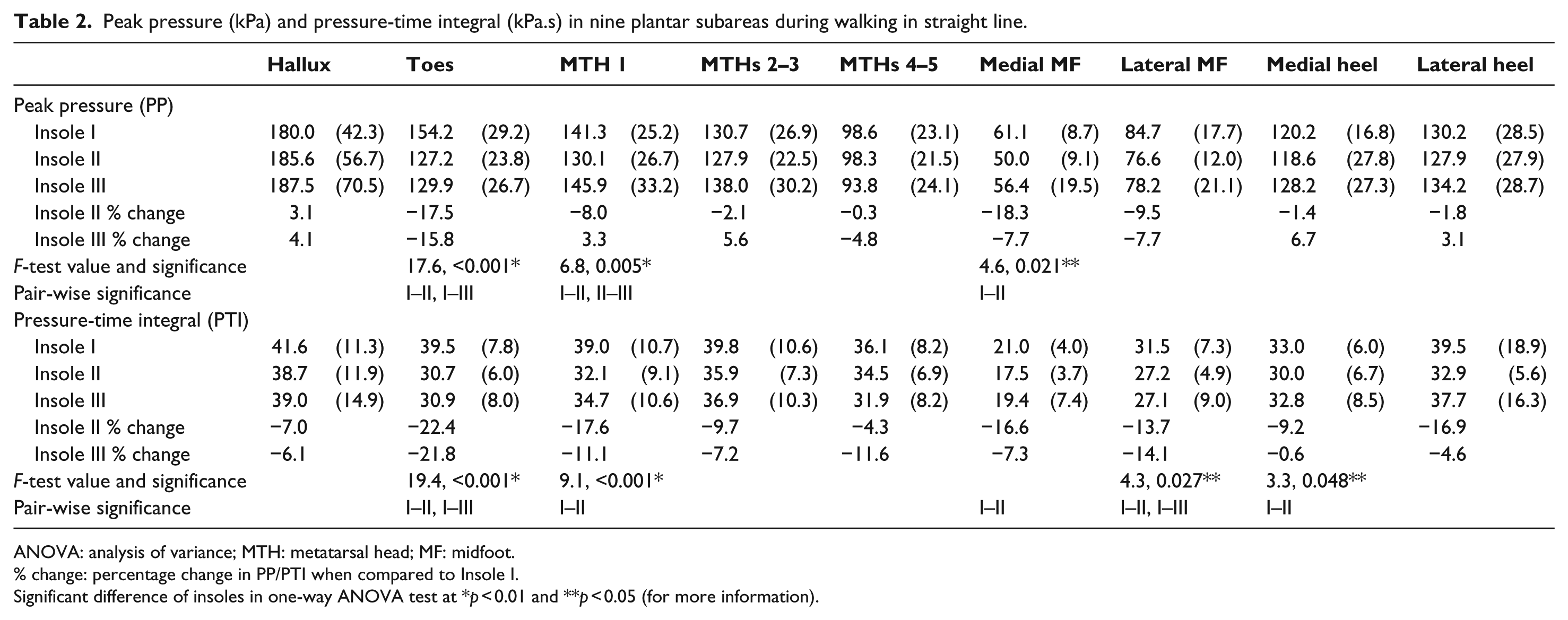
ANOVA: analysis of variance; MTH: metatarsal head; MF: midfoot.
% change: percentage change in PP/PTI when compared to Insole I.
Significant difference of insoles in one-way ANOVA test at *p < 0.01 and **p < 0.05 (for more information).
PP
The one-way repeated-measures ANOVA result indicates a statistically significant difference (p < 0.01) in the toes and MTH 1 between Insole I and Insoles II/III. The Bonferroni pair-wise comparison results indicate that the use of Insole II results in reduced PP in the toes (>17%), MTH 1 (>8%), and medial midfoot (>18%) when compared to Insole I. The use of Insole III showed a significantly lower PP at the toes (>15%) than the use of Insole I. There was no significant difference between Insoles I and II or Insoles I and III in the hallux, MTHs 2–5, and heel areas.
PTI
The results in Table 2 show a statistically significant difference (p < 0.01) of the PTI in the toes and MTH l. In the pair-wise comparison, the use of Insole II results in a lower PTI than the use of Insole I at the aforementioned subareas (>9%). The use of Insole III also results in a lower PTI than the use of Insole I at the toes and lateral midfoot. No statistically significant difference between Insoles I and II or Insoles I and III in the hallux, MTHs 2–5, and lateral heel was found.
Maximum muscle activity
Figure 4 shows the results of the normalized mean values of the maximum muscle activity for the different muscles with the use of the three insoles. Changes in the muscle activity between the three insoles in the experiments do not reach statistical significance.
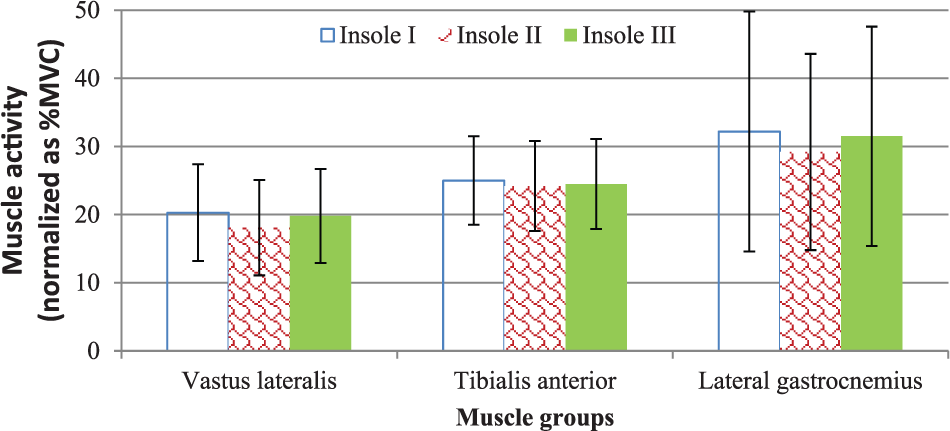
Maximum muscle activity of three groups of muscles with the use of three different insoles (N = 12, p > 0.05).
Perceived comfort
There is a significant difference (p < 0.01) perceived for convenience of walking, accommodation, dampness, and thermal feeling. Of these, the pair-wise comparisons showed that Insole I is perceived to be considerably (p < 0.01) less comfortable than Insole III (Figure 5).
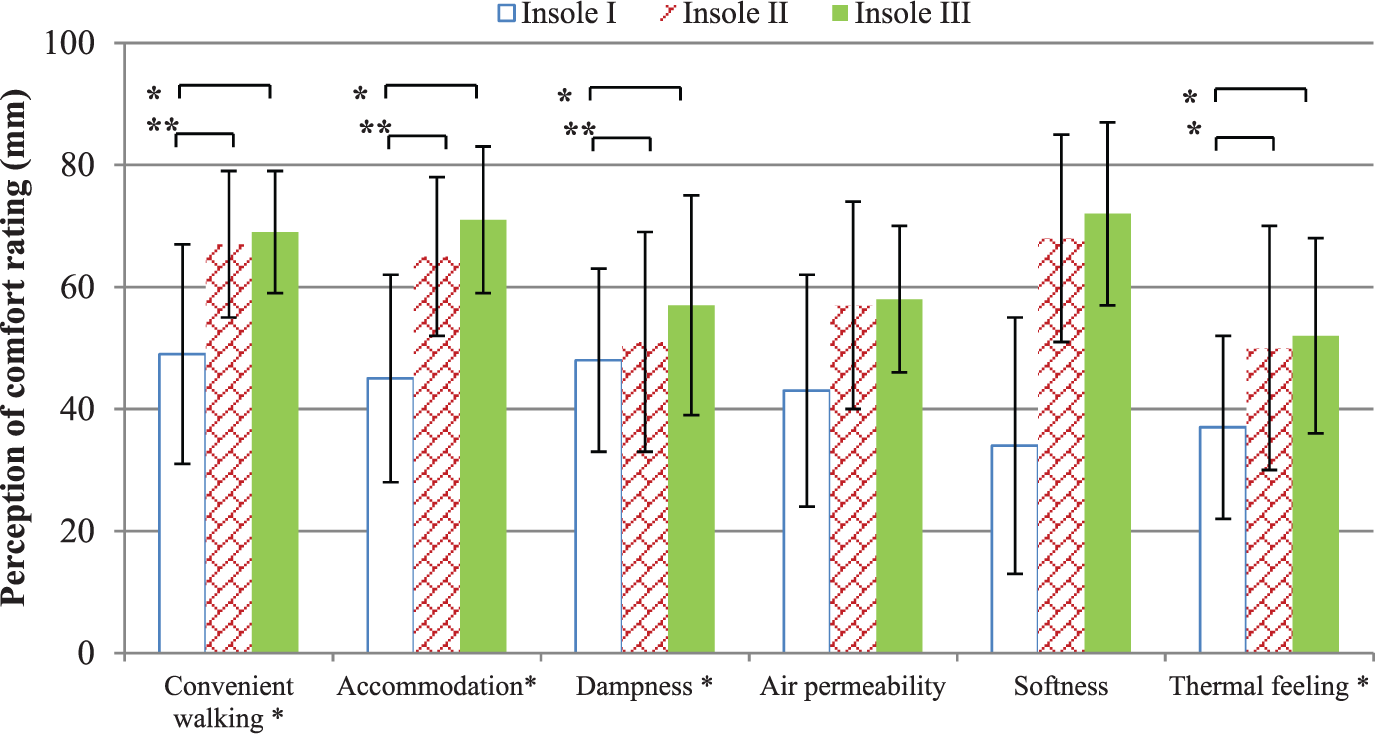
VAS ratings for perceived comfort of insoles after wear trial.
Discussion
The purpose of this study is to investigate the effect of spacer-fabric insoles on plantar pressure, lower limb muscle activity, and perceived comfort during a daily life activity: walking in a straight line. The findings support the hypothesis that the use of spacer-fabric insoles results in noticeably increased relief of plantar pressure. Overall, there is a higher perceived comfort with the use of the spacer-fabric insoles as opposed to the use of traditional EVA insoles. However, the reduction in lower limb muscle activity is somewhat insignificant.
It can be observed that in general, the profile of the perceived comfort measurements differs among the insoles. Insole III, which is made of two types of spacer fabrics, was perceived as the most comfortable, while Insole I, made of EVA foam, was uncomfortable. There are statistically significant differences between Insoles I and III. Previous studies have found that subjects with healthy foot conditions most likely tolerate less discomfort when they wear insoles with contoured arch support. 8 In this study, however, the wearers perceived a relatively higher degree of comfort with the use of Insoles II and III which have a contoured shape with arch support. This is attributed to the spacer fabrics which have a softer texture and sandwiched structure used as the top layer that has direct contact with the foot and provide better resilience and recovery performance,15,18 thus better accommodating the overall contact of the foot–insole interface. Additionally, the spacer fabrics considerably reduce the dampness (provide a more dry feeling), increase the air permeability, and reduce the thermal heat in comparison with the use of Insole I. Since the construction of 3D spacer fabrics comprises two surface textile layers held by yarns with a defined amount of spacing, the open structure provides space that would easily permit heat and moisture to be transferred through the fabric with air and enhance the overall breathability and thermal conductivity by allowing a moisture-free environment so as to maintain thermal comfort.15,17,18 This explains why Insole III has the highest scores for the three measures, closely followed by Insole II because the top layer of spacer fabric improves the thermal conditions.
In terms of the plantar pressure measurements, Insole II which has one layer of spacer fabric tends to reduce the PP across the entire plantar foot (except for the hallux) in comparison to the use of Insole I. In particular, the PP is significantly less in the toes and MTH 1. However, Insole III which has two layers of spacer fabrics on the top of the insole tends to slightly increase the PP in the MTHs 1–3 and heel areas. This is possibly because Insole II, which is fabricated with Spacer Fabric X as the top layer for accommodating the forefoot, and Poron as the middle cushioning layer effectively enhance pressure relief, whereas Insole III, which is fabricated with Spacer Fabric Y, has low resilience to compressibility because of its low pile height and interlaced and dense structure, and therefore, Insole III has a comparatively lower pressure reduction performance than Insole II. 17 Even though Insole III slightly increases the PP in certain areas of the plantar foot, it is interesting to note that both spacer-fabric insoles tend to reduce the cumulative effect of pressure over time (with lower PTI) more so than Insole I which is fabricated with EVA. This enhanced performance pressure in loading reduction implies that spacer fabrics may potentially be good materials for fabricating insoles as they could be engineered in terms of yarn type and structure, thus providing a wide variety of mechanical and thermal properties in accordance with the specific requirements of the wearers.
There are no statistically significant differences found in the EMG results with the three different insoles during walking. The reason may be related to the characteristics of the material of the insoles, which do not provide enough stimuli to induce changes in the muscle patterns. In previous studies, significantly higher EMG amplitudes were found for the biceps femoris, tibialis anterior, and medial gastrocnemius muscles with a soft heel cup as opposed to a hard heel cup.38,39 Footwear with very soft materials may activate muscles so that use of energy is increased in the course of the activation process. That is the reason why the studied insole has a soft layer to accommodate the forefoot but a hard bottom layer to create a balance between comfort and support. In addition, the limited changes in EMG activity may be due to the young healthy adult subjects, who might have better muscular adaptations to small changes or can modify their gait in response to the different material rigidity and compressibility. Although previous studies40,41 have reported that muscle activities significantly decrease with the use of custom-made insoles in comparison to the case where an insole is not used, it should be noted that they utilized a different control condition. Therefore, there is some evidence that extreme variation in footwear conditions may affect the amplitude of EMG activity in the lower limb muscles during walking. Besides, the variation in pathway designs for wear trials such as walking in a straight line versus walking around a curved line may induce different muscle activation patterns. Unlike walking in a straight line, the inner and outer limbs contribute in different ways to maintain stability during turning gait. Since the inner limbs have a crucial role on kinematic changes during the turning gait, there is a significant difference detected in the vastus lateralis muscle among the three types of insoles when the subject was turning in an earlier study carried out by Lo et al. 42 Clearly, there is a need for further research on the efficacy of insole material combinations to determine whether they could produce consistent changes in muscle activity.
To the best of the authors’ knowledge, there are no comparable data published for textile-fabricated orthotic insoles. The findings on the plantar pressure and subjective measures of comfort provide insight into the advantages of using spacer-fabric insoles over insoles made of traditional materials, such as EVA. Spacer fabric can be engineered to provide a variety of mechanical and thermal properties that suit various needs and purposes. With regard to the prolonged use of orthotic insoles under an in-shoe microclimate environment, the new measures for comfort, namely, air permeability and thermal comfort, have been included to better quantify the perception toward each insole more objectively. Studies on footwear comfort have been increasing in number because comfort is an important factor for movement performance and pattern assessment. Therefore, this study may provide health-care professional and practitioners with some new insights on the potential application of textile-fabricated materials in foot orthoses so as to optimize the insole design and development.
It should be noted that there are some limitations in this study. The sample size is relatively small and therefore might have limited the generalizability of the results. It is recognized that only the immediate effect of the insole has been tested. Further research is required to evaluate the long-term effects of the materials on pressure loading and investigate the durability of the materials when exposed to prolonged wear and tear. To improve the measures of comfort, the questionnaire design could also include foot zone divisions so as to provide a full picture of the orthosis performance.
Conclusion
Custom-made insoles made of foam materials have long been recommended in treatment with foot orthotics. However, the poor air permeability of insoles could cause heat and sweat to build up, which may affect the end use and efficacy of the orthotic treatment. This study has provided a novel approach on the use of spacer fabric as the material for insoles, which could improve the perceived comfort and reduce plantar pressure loading in various subareas when compared to the use of traditional insoles during walking in a straight line. Nevertheless, there is no difference in muscle activity among the use of the three insoles in the experiments. The findings therefore can enhance our understanding of the use of textile-fabricated materials, which provide alternative solutions in terms of insole material modifications. The wide availability, versatility, and cost-effectiveness of knitted spacer fabrics and/or advanced textile materials also allow practitioners to have more options in insole materials in designing and developing orthotics for foot treatment.
Footnotes
Author contribution
W.T.L. collected and processed the data, contributed to the data analysis and interpretation, and prepared the manuscript. D.P.W. and K.L.Y. contributed to the direction of the study and objectives of the recruitment, supervised the data acquisition, and reviewed and revised the manuscript. S.P.N. and J.Y. interpreted the outcomes and were part of the discussion and revision process. All of the authors read and approved the final manuscript.
Declaration of conflicting interests
The author(s) declared no potential conflicts of interest with respect to the research, authorship, and/or publication of this article.
Funding
The author(s) disclosed receipt of the following financial support for the research, authorship, and/or publication of this article: This work was supported by the Research Grants Council of the Hong Kong Special Administrative Region, China under Grant PolyU 5308/11E and a Departmental Grant from the Institute of Textiles and Clothing at the Hong Kong Polytechnic University under Grant PolyU RTD6.