




Abstract
Background:
One of the most common gait disorders in children is in-toeing. Few studies have examined the efficacy gait plate insole in in-toeing. we used more precise apparatus than previous studies.
Objectives:
The aim of this study was to investigate the immediate effect of gait plate insole on the angle of gait and center of pressure displacement in children with in-toeing gait.
Study design:
Quasi-experimental before -after study.
Methods:
The angle of gait and center of pressure displacement were measured in 17 children aged 4–10 years with in-toeing gait. The RS scan pressure platform was employed to perform walking tests in three conditions including barefoot, with shoes only, and gait plate insole with shoes.
Results:
The gait plate insole with shoes as well as shoes alone produced a significant 11.1° and 3.85° increase in the angle of gait in in-toeing children respectively (p < 0.05). The medial–lateral displacement of center of pressure showed a significant difference (3 mm) in shoes only condition when compared with barefoot condition. The shoes only and gait plate insole compared with barefoot condition increased the anterior–posterior displacement by 28 and 30 mm respectively.
Conclusion:
The gait plate insole with ordinary shoes and shoes only were able to increase angle of gait and the center of pressure displacement in the anterior–posterior direction in children with in-toeing gait due to excessive femoral anteversion.
Clinical relevance
The use of a gait plate insole inserted in ordinary shoes can improve gait appearance in children with in-toeing gait caused by Excessive femoral anteversion.
Introduction
Today, walking disorders have become a prevalent pediatric orthopedic problem, and one of the most common complaints for children is in-toeing gait walking. 1 In an in-toeing gait walking pattern, the feet are placed pointing toward each other instead of in a parallel position. 2 After flatfeet and genu valgum, in-toeing gait walking is the third most common reason for parental concern after children begin walking. 3 This walking pattern may be seen in 30% of children at age of 3–4 years and also in 4% of adults. 4 Three major reasons for the disorder are metatarsus adductus in the first year of life, internal tibia torsion in the second year of life, and excessive femoral anteversion after the age of 3.5–7 The normal degree of femoral anteversion is about 30°–40° at birth,8,9 which reduces as age increases, reaching 15° at age 16.10,11 The incidence of excessive femoral anteversion in girls is twice than that in boys, and it is usually bilateral and symmetric. 5 In severe cases, toe-in gait may be composed of three efficient factors. 11
The symptoms that are reported with this walking pattern include frequent tripping, awkward and coarse moves during physical activities, and fatigue like pains.12–16 Parents mainly complain about the problems that their child may encounter while walking.12,13,17–19 Left untreated this walking pattern may create biomechanical compensatory changes, such as excessive subtalar joint pronation, 20 which are difficult to correct in adulthood, 21 or may increase the risk of conditions like hip joint arthritis, 21 patellar instability, 22 and patellofemoral injuries. 21
Use of foot orthoses and shoes for adjustment of in-toeing gait is an ongoing debate. Some researchers assume it totally ineffective,23,24 while some others consider it to be effective.12,25,26 Gait plate insoles are types of foot orthosis that have been declared effective in addressing toe-in gait by some authors.2,12,21,27 It is a rigid plastic shell that covers the plantar area, with an extension beyond fourth and fifth metatarsal heads (Figure 1).
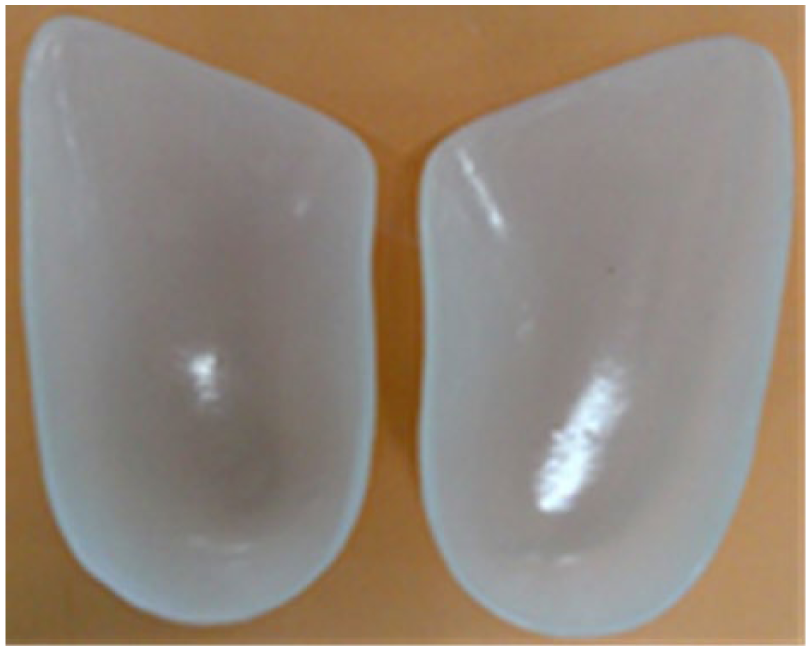
Gait plate insole.
All the studies conducted to investigate the effectiveness of gait plates have used foot track on ink paper to measure the angle of gait as a criterion. Low precision and measurement errors are common drawbacks of this method. Introduction of advanced and accurate equipment and methods made us investigate the effects of the gait plate using newer technologies and theories. No study has used the center of pressure (COP) pattern as a method to investigate the effectiveness of gait plate insoles. Analysis of the COP is common in studies on human gait. McPoil et al. 28 have quoted in their study that foot orthoses by improving the alignment of the foot may produce a more typical ground reaction force pattern and the COP can be an effective parameter for evaluating foot orthoses. Previous studies have investigated the effects of foot orthoses on COP displacements. 29 Alterations in COP position in toe-in gait have been shown in other studies.30,31 Thus, the aim of this study was to examine the immediate effect of gait plate insole on the foot progression angle and COP displacement in children with an in-toeing gait using a plantar pressure scanner.
Methodology of study
The current investigation is a quasi-empirical and the samples have been selected by simple non-stochastic sampling of children referred to the Department of Orthotics and Prosthetics at the Faculty of Rehabilitation Sciences (Iran University of Medical Sciences) during December 2013 to March 2014. The studied population included 12 girls and 5 boys aged 4–10 years, all walking with in-toeing gait pattern. This study was approved by the Ethics Committee of the Faculty of Rehabilitation Sciences at the Iran University of Medical Sciences (No. 92/D/320/1715). Inclusion criteria were bilateral in-toeing gait pattern, angle of gait less than −3°, 6 and in-toeing gait because of excessive femoral anteversion, that is, internal hip rotation greater than 70°; 5 the exclusion criteria were in-toeing gait due to internal tibia torsion and metatarsus adductus, excessive deformity that was a candidate for surgery, history of surgery, fracture in lower limbs, using medical shoes and orthoses, neurological and neuromuscular diseases and deformities in lower limbs affecting walking, for example, clubfoot, and congenital hip joint dislocation, and lack of children’s and/or parents’ consent to cooperate.
The immediate effect of a gait plate insole on the angle of gait and rate of COP displacement was examined among children with an in-toeing gait. Initially, the general goal and method of implementation was explained to the parents, and if they agreed to participate in this study the child’s parents were asked to sign a consent form. A personal information form was filled out and the needed examinations were conducted to determine the reason and the severity of the disorder by means of a torsional profile in transverse plane introduced by Staheli et al. 6
The main independent variable in this survey was testing states: barefoot, wearing normal shoes, and wearing normal shoes with gait plate insole (Figure 2).
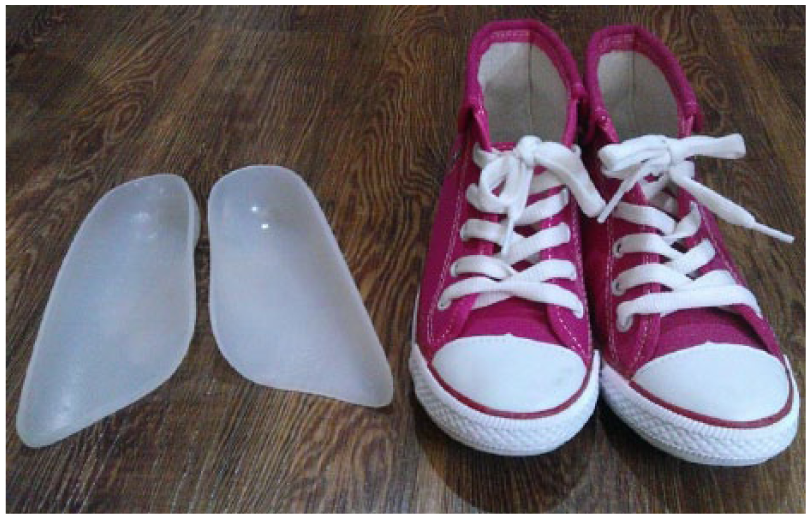
Gait plate insole and normal shoes.
In this study, the gait plates were made from a cast of the child’s feet in a subtalar neutral position and a polypropylene sheet (3-mm diameter). The child was in a prone position with feet hanging from the edge of a table, and casting was done without weight bearing. Distally the plate was extended behind the first metatarsal head medially, and beyond the fourth and fifth metatarsal heads laterally. All the tests were carried out in the biomechanics laboratory of the orthotics and prosthetics department at the Faculty of Rehabilitation Sciences. The children were given a 10-min adaptation time to walk with gait plate insole and normal shoes (All Star Model), prepared by the tester and proportional to the child’s foot size. The angle of gait and the COP parameters (Figure 3) were measured and recorded using a plantar pressure measurement plate (RS Scan International, Olen, Belgium) (Figure 4).
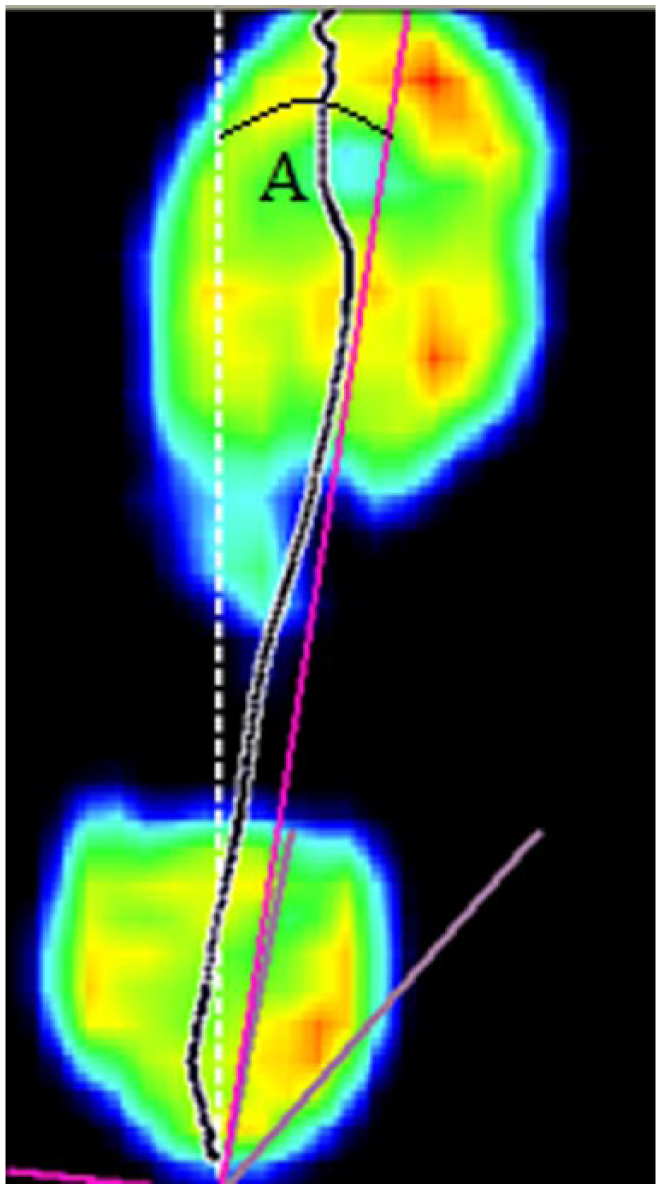
Angle of gait (A) and center of pressure distribution.
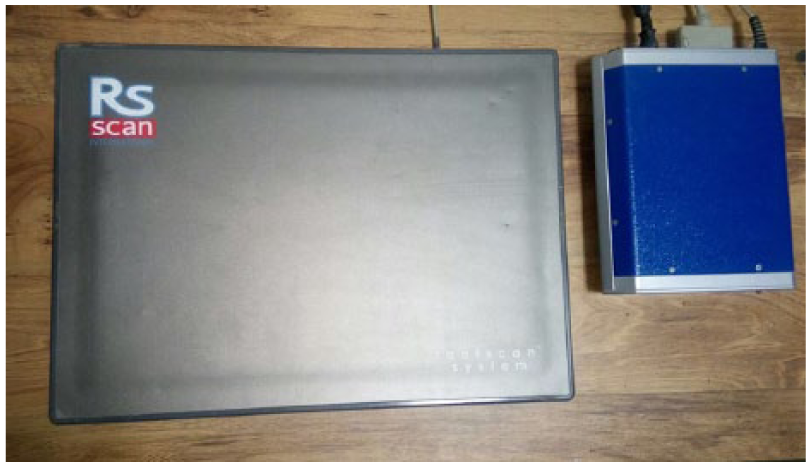
RS scan plantar pressure measuring plate.
This system comprises a printer, monitor, pressure indicator plate, feeding supply, and connections between monitor and pressure indicator. The pressure indicator has dimensions of 40 cm × 50 cm with sensor active area of 32 cm × 48 cm, 4096 sensors and sampling frequency of 500 Hz; sensors of measurement devices are Force-Sensing Resistors (FSRs). 32
The angle of gait was recorded in degrees as the angle between feet longitudinal axis and progress line by this apparatus. The positive angle showed external rotation and the negative angle indicated internal rotation; the displacement of COP was recorded and reported in anterior–posterior as well as medial–lateral directions. COP displacement is measured to evaluate the effect of gait plate insole on alteration of COP path in children with in-toeing gait. To acclimatize with the test before recording data, each child walked over the path as a trial several times; the main test was done by means of a mid-step technique after 3 min of rest time, so that the child was asked to walk with normal speed along the 9 m path, in which the plantar pressure scanner was placed at the midpoint. The information about the mid-step was then recorded. 33 Data relating to each foot were recorded separately and randomly in three states: (1) barefoot, (2) with normal shoes without gait plate insole, and (3) with normal shoes with gait plate insole. Three successful repetitions were recorded and their mean values were calculated. There was a 30-s rest between repetitions. 33 All evaluations, casting, and adjusting the orthoses were done by a single Orthotist in this study. To determine the reliability of the instrument, angle of gait and displacement of COP in 10 healthy adults with average age of 25 ± 1.21 years were measured and recorded in the barefoot status during two subsequent days, with three trials per day.
SPSS statistical software (version-22) was employed to analyze data and significance level was considered 0.05 in all tests. Kolmogorov–Smirnov test was utilized to examine whether quantitative variables followed normal distribution or not; to compare angle of gait and COP displacement in the three states (barefoot, with normal shoes, and normal shoes with gait plate insole), an analysis of variance (ANOVA) parametric test was done. As noted by gait plate producers, we expect to see the main effect of the orthosis in push-off phase so the COP displacement in this phase is of great importance for us. To examine the role of gender and foot direction in the effectiveness of gait plate insole, an independent t-test was used. Intraclass correlation coefficient (ICC) was utilized to determine the reliability between trials.
Results
A total of 17 children (7.2 ± 1.7 years of age) including 12 girls and 5 boys participated in this study. Further characteristics of the participants are shown in Table 1.
The characteristics of the subjects studied (n = 17).
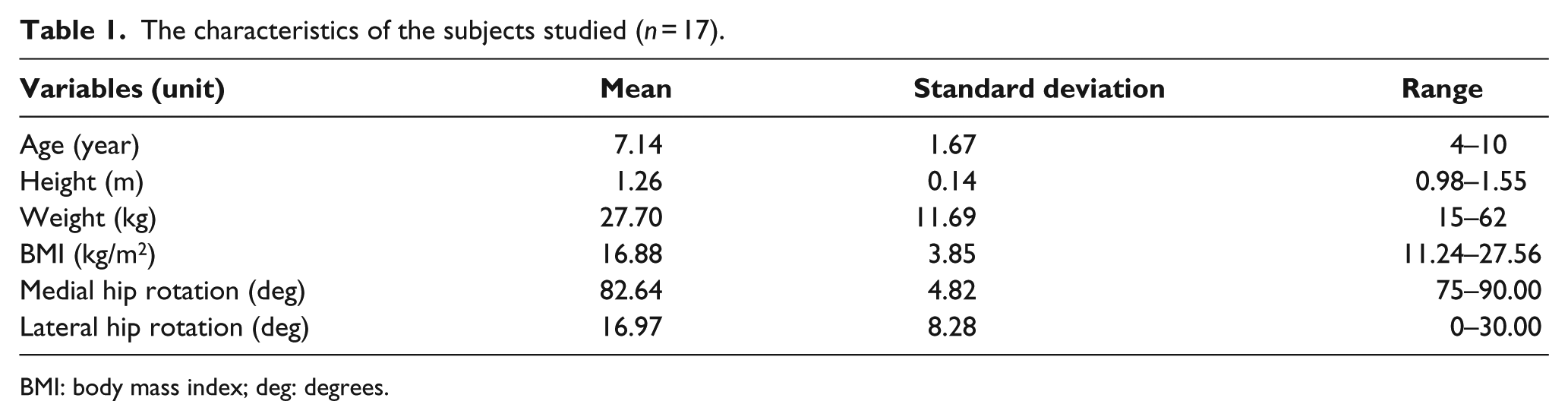
BMI: body mass index; deg: degrees.
The results of Kolmogorov–Smirnov test indicated that the distribution of all the data did not deviate significantly from a normal distribution (Table 2). The results of the ANOVA test to compare angle of gait and COP displacements are shown in Table 3. The maximum displacement of COP in the anterior–posterior direction was significantly different in the three states. In medial–lateral direction, a significant difference was observed only between the barefoot and normal-shoe states. Walking with normal shoes and walking with normal shoes with gait plate insole caused significant reduction in the COP displacement compared to the barefoot state. The gait plate insole with normal shoes caused 7.31° increase in the angle of gait compared to normal shoe alone and 11.16° increase compared to the barefoot state.
The Kolmogorov–Smirnov test for angle of walking.
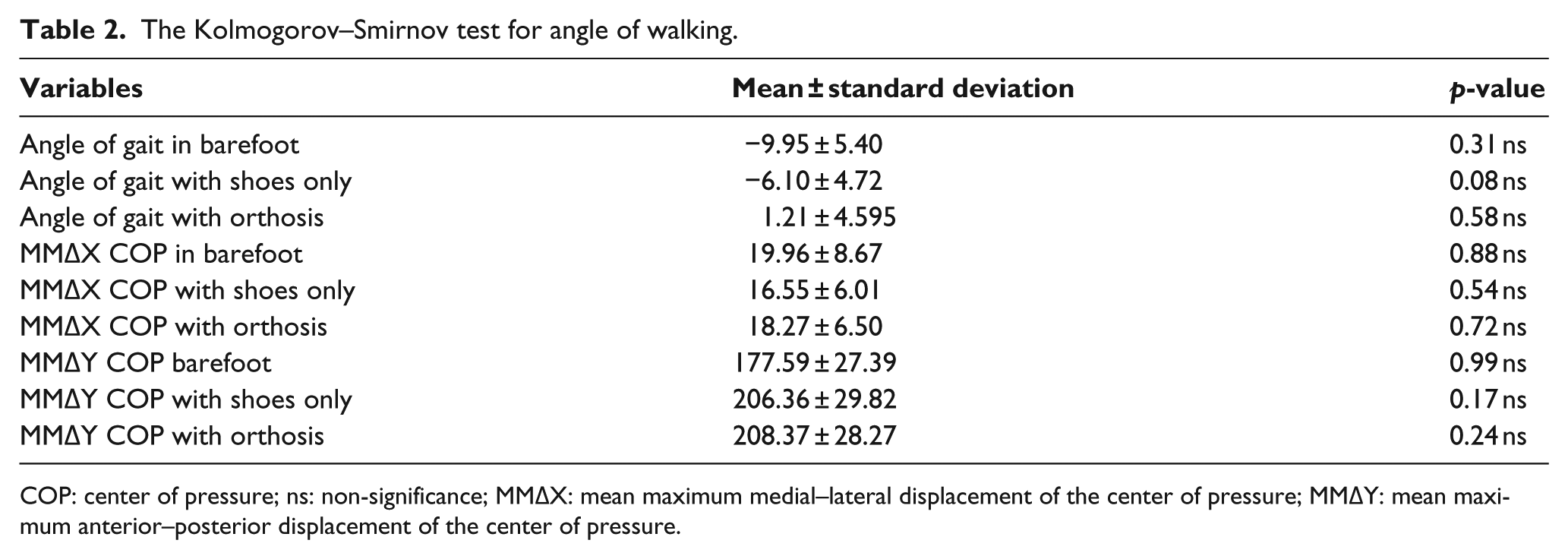
COP: center of pressure; ns: non-significance; MMΔX: mean maximum medial–lateral displacement of the center of pressure; MMΔY: mean maximum anterior–posterior displacement of the center of pressure.
The post hoc pair-wise comparisons with the Bonferroni adjustment for multiple comparisons.
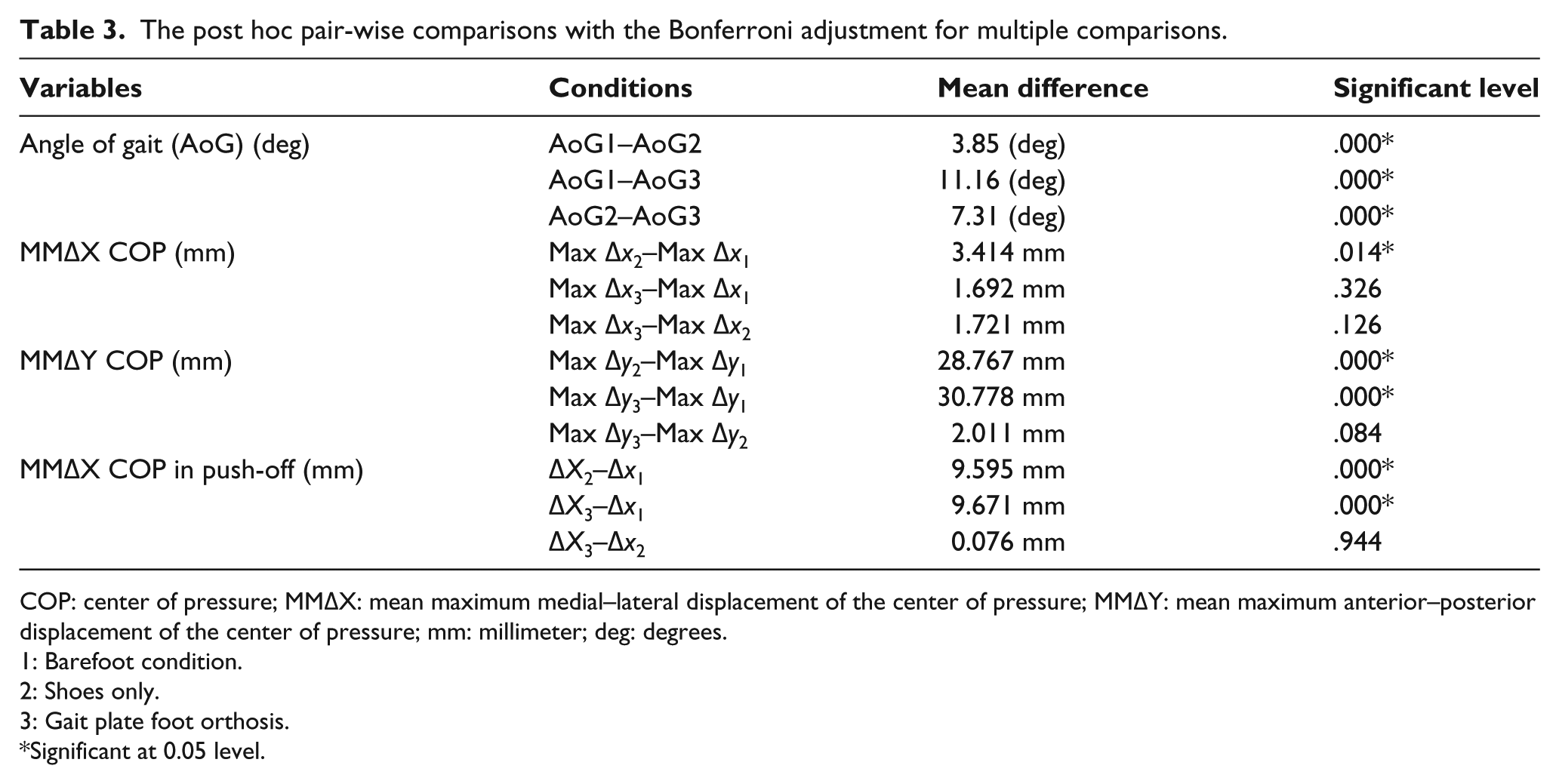
COP: center of pressure; MMΔX: mean maximum medial–lateral displacement of the center of pressure; MMΔY: mean maximum anterior–posterior displacement of the center of pressure; mm: millimeter; deg: degrees.
1: Barefoot condition.
2: Shoes only.
3: Gait plate foot orthosis.
Significant at 0.05 level.
The results of the independent t-test indicated that gender and feet direction did not change gait plate insole effect on angle of gait (Table 4). There was a significant difference between girls and boys in the maximum displacement of COP in the medial–lateral and anterior–posterior directions for the states of barefoot and normal shoes with gait plate insole, while no further significant differences were observed.
The result of the independent t-test for gender and foot side variables.
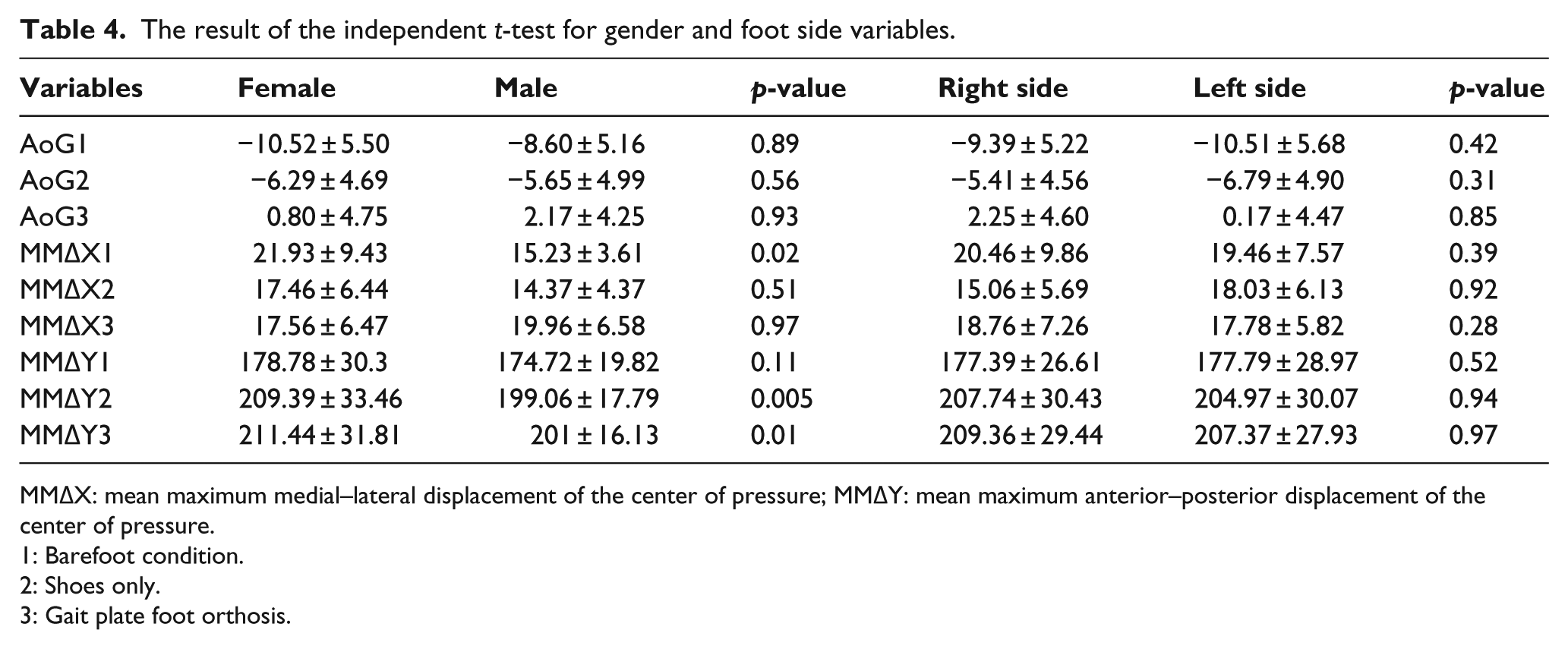
MMΔX: mean maximum medial–lateral displacement of the center of pressure; MMΔY: mean maximum anterior–posterior displacement of the center of pressure.
1: Barefoot condition.
2: Shoes only.
3: Gait plate foot orthosis.
The intraclass correlation coefficients (ICC) were 0.996 for angle of gait and 0.775 for COP displacement for three trials.
Discussion
This study aimed to explore the immediate effect of gait plate insole on angle of gait and COP displacement in both the anterior–posterior and medial–lateral directions for 17 children with in-toeing gait pattern.
A total of 17 children (34 feet) including 12 girls (70.59%) and 5 boys (29.41%) participated in this study, where the greater number of girls confirmed the results of previous studies, which have suggested this disorder is more prevalent in girls.13,33,34
Schuster 27 published the first study regarding the effect of gait plate insole on angle of gait in children with in-toeing gait, and the results of this investigation suggested a 15° improvement in angle of gait. Likewise, in a study by Redmond, 12 gait plate insole caused a 6° improvement in angle of gait, as well as reduced falling in 14 out of 18 children. The results from Munuera et al. 21 showed that orthosis along with shoes with appropriate fit might increase angle of gait significantly. The results of Uden and Kumar, 2 who aimed to identify the best existing non-surgical therapeutic method for children with in-toeing gait walking, indicated that gait plate insole, standard shoes, and orthosis with gait plate might improve walking pattern significantly, but shoe adjustments and leathery splints had no remarkable treatment effect.
According to the results, application of gait plate insole caused a significant lateral shift of 7.31° in angle of gait compared to the state of using normal shoes only, and a lateral shift (11.16°) in comparison to the barefoot state; shoes caused a 3.85° change in angle of gait compared to the barefoot state. This is consistent with the results of other studies. Schuster, 27 examining the effects of an added rigid element inside the shoes in putting the external metatarsophalangeal joints into a higher position, observed a 15° increase in angle of gait. Redmond 12 studied the effectiveness of a prefabricated orthosis on in-toeing gait pattern in 18 children, and saw the disorder successfully treated in 14 children. Munuera et al. 21 observed a 1.66° change in angle of gait com-paring barefoot and normal-shoe states, and a 5.30° improvement for orthosis compared to the barefoot state. Increased angle of gait by wearing gait plates may be the result of putting the fourth and fifth metatarsophalangeal joints in higher position, making them stable and change the sequence of exerting weight in the push-off phase.
Application of normal shoes with gait plate insole made a 3-cm increase in the pressure center toward anterior–posterior direction, but there was no significant difference among two states of normal shoes and gait plate insole.
For the push-off phase of walking, both shoes and gait plate insole caused a significant reduction of 9.6 and 9.7 mm in the COP displacement, respectively, compared to the barefoot state; however, no significant difference was seen in the comparison between the normal-shoe and gait-plate-orthosis states.
Angle of gait was measured in previous studies using the subject’s foot track on ink paper which has low precision and has measurement errors, but in this study the plantar pressure scanner device was utilized in order to record angle of gait. The plantar pressure plate is accurate and more reliable but is more difficult to work and requires skills.
The effect of this type of orthosis on the COP displacement has not been yet measured in any study. Lesser COP displacement in mediolateral direction (MMΔX) with gaitplate insole can be ascribed to better foot long axis location and less need for compensatory mechanisms in walking.
In Redmond’s 12 and Schuster’s 27 studies, the orthosis used was a prefabricated type, which differed from the orthosis used in this investigation. Munuera et al. 21 utilized a customized orthosis, similarly to the plate used in this study. The results of this study showed that there is no significant difference in the effect of adjusted gait plate insole in girls and boys or in the right and left feet; in this regard, the results differ from those of Munuera et al., 21 who showed more changes in angle of gait in boys compared to girls, and greater changes on the right than the left side. The results from Morton, 34 Murray et al.,35,36 and Seber et al. 37 indicated that the angle of gait is greater on the right side than the left and greater in boys in contrast to girls. The findings of the present study appear to support previous studies. However, the difference was not significant. The results of Munuera’s study were contradictory and showed greater angles on the left side and in girls.
The small sample size, and limited intervention time, can be mentioned as a part of the limitations of this study.
For future research, a long-term study is suggested with larger sample size on kinematic analysis simultaneously with plantar pressure distribution in children with in-toeing gait.
Conclusion
In general, the results of the present investigation indicated that application of gait plate insole can increase the angle of gait toward the lateral direction in children at age 4–10 with in-toeing gait due to femoral anteversion. Similarly, the results showed that using gait plate insole causes a significant increase in the COP displacement in the anterior–posterior direction and significant reduction in COP displacement in the medial–lateral direction in the push-off phase of walking, compared to the barefoot state.
Clinically, the results of this study indicate that gait plate insole can be used to improve gait appearance in children with in-toeing gait pattern due to excessive femoral anteversion.
Footnotes
Author contribution
All authors contributed equally in the preparation of this manuscript.
Declaration of conflicting interests
The author(s) declared no potential conflicts of interest with respect to the research, authorship, and/or publication of this article.
Funding
The author(s) received no financial support for the research, authorship, and/or publication of this article.