




Abstract
Functionally graded sandwich micro/nano-structures have attracted great attention due to the capability to resist high noise and thermal stress in a non-isothermal environment. Additionally, the design of high quality-factor micro/nano-resonators requires accurate estimation of their thermoelastic damping. However, the classical thermoelastic damping models fail at the micro/nano-scale due to the influences of the size-dependent effects related to heat transfer and elastic deformation. This work aims to investigate the influences of the size-dependent effects on the thermoelastic damping of functionally graded sandwich micro-beam resonators by combining the nonlocal dual-phase-lag heat conduction model and the nonlocal elasticity model. It is assumed that the functionally graded sandwich micro-beam resonators consist of a ceramic core and functionally graded surfaces. The energy equation and the transverse motion equation are derived. The analytical expression of thermoelastic damping is obtained by complex frequency method. Numerical results are analyzed for the effects of the thermal nonlocal parameter, the elastic nonlocal parameter, the power-law index, and the vibration modes on the thermoelastic damping of functionally graded sandwich micro-beam resonators. The results show that the thermoelastic damping of functionally graded sandwich micro-beam resonators can be adjusted by the suitably modified parameters, which strongly depends on the double nonlocal effects and the power-law index.
Keywords
Introduction
Nowadays, sandwich structures have been widely used in various engineering fields such as aerospace, civil engineering and automotive field due to their high strength and excellent vibration resistance. 1 However, the traditional sandwich structures typically exhibit delamination and stress concentration at the interfaces, which is caused by the material discontinuities. The above imperfections can be avoided by applying functionally graded (FG) sandwich structures. The Japanese scientist initially proposed the concept of functionally graded materials (FGMs) in 1984. FGMs are advanced composites with the properties varying gradually along certain direction to eliminate the sharp interface in multi-layer structures. 2 Thereafter, many investigations have been carried out to study the static and dynamic responses of the FG sandwich structures.3–12
With the rapid development of micro- and nano-technology, the concept of functionally graded sandwich has also been utilized in micro/nano-electro-mechanical systems (MEMS/NEMS) to improve their mechanical properties. For micro/nano-resonators as key components of MEMS/NEMS, experimental tests and theoretical analyses have verified that the thermoelastic damping (TED) is a crucial energy dissipation mechanism affecting their performance. 13 To achieve a high-quality factor, theoretical prediction of TED is essential for designing the micro/nano-resonators. Theoretically, Zener 14 originally developed the TED model for a thin beam, who used the classical Fourier law to derive an approximate inverse quality factor. Following Zener’s work, Lifshitz and Roukes 15 proposed an exact TED solution by complex frequency method. Subsequently, complex frequency method has been extensively applied to the TED analysis of microbeam or microplate. Prabhakar et al. 16 studied the TED model by considering two-dimensional heat conduction along the length and thickness directions of the microbeam. Nayfeh and Younis 17 analyzed the TED model for microplates of arbitrary shapes with different boundary conditions. Sun and Saka 18 solved the TED for a circular plate under arbitrary vibration modes.
It should be noticed that in the TED analyses mentioned above, most of them were considered in the classical thermoelasticity. For the classical thermoelasticity, there exists an inherent nature of the parabolic heat conduction model that the speed for heat transfer is infinite. 19 However, it is opposite to the experimental test. 20 To address this concern, non-Fourier heat conduction models were developed, such as the Cattaneo-Vernotte (C-V) thermal wave model,21,22 the Guyer-Krumhansl (G-K) model, 23 the dual-phase-lag (DPL) model,24–27 and the three-phase-lag(TPL) model. 28 Compared with other models, the DPL model includes two phase-lag parameters to capture the micro-structural effect of phonon-electron interactions. Meanwhile, it is noted that a high temperature gradient at microscale causes the size-dependent effect in heat transfer progress. 29 To capture the size-dependent effect in heat conduction, Guyer and Krumhansl 23 developed the G-K model based on the eigenvalue solution of the linearized phonon Boltzmann equation. Subsequently, inspired by DPL and G-K models, Zhou et al. 30 derived the nonlocal dual-phase-lag (NDPL) model and studied the analytical expression of thermoelastic damping in microbeam. Accordingly, with the aid of energy equation, the generalized thermoelastic theories such as Lord-Shulman (L-S) theory,31–33 Green-Lindsay (G-L) theory, 34 and Green-Naghdi theory 35 were also developed. Later on, Chandrasekharaiah 36 further proposed the DPL generalized thermoelasticity based on the DPL model to describe the micro-structural effect. In view of this, the generalized thermoelastic theories were extensively applied to studying dynamic response37,38 and the TED analysis of FG microstructures. Based on the classical beam theory and the coupled thermoelastic dynamics, Li et al. 39 studied the TED of free vibrating FGM microbeams with rectangular cross sections. Li and Ma 40 investigated the free vibration of FGM microplates with TED by considering the continuous variation of mechanical and thermal properties of FGM plates with thickness. Azizi et al. 41 proposed a novel functionally graded piezoelectric (FGP) MEMS to investigate the TED of transverse vibration in FGP microbeam resonators.
Experimental results indicated that when the characteristic geometrical size of the structures belongs to the micro/nanoscale, the observed stiffness and strength of the micro/nano structures increase, which is called as size-dependent effect.42,43 Nevertheless, the classical continuum theory fails in depicting such effect in the micro/nano-structures due to lacking of internal length scale parameters. 44 To capture the size-dependent effect, three main higher-order continuum theories including the nonlocal theory, 45 the modified strain gradient theory (MSGT), 46 and the modified couple stress theory (MCST) 47 were formulated. The MSGT includes three material length scale parameters. It is difficult to obtain all the material length scale parameters of microstructures through experiments. Subsequently, by ignoring the symmetric curvature tensor, the MCST with only one material length scale parameter was proposed by Yang et al. 47 Nevertheless, the constitutive equations of the MSGT and the MCST are relatively complex. 48 As one of the widely used theories, the nonlocal theory considers the long-range force between atoms. In this theory, the stress at a certain point depends on the strains of all points in the body instead of only the strain at this point. So far, several studies were performed to incorporate the nonlocal theory in TED analysis,49,50 dynamic response,51–54 and vibration55,56 of micro/nano-structures.
According to the above literatures, although there are quite a few works concerning the TED of microstructure,39–41,49,50 it can be concluded that the TED analysis of the FG sandwich microbeam considering both the size-dependent effects of the heat conduction and the stress-strain relation is barely reported. In fact, with the development of micro-scale devices, the size-dependent effect on elastic deformation can’t be ignored. 37 Meanwhile, the size-dependent effect and the micro-structural effect of heat conduction must be incorporated, because the micro-devices are inevitably encountered the non-uniform temperature environment or generated by themselves during operation.23–29 On the other hand, FG sandwich microstructures can effectively reduce the delamination phenomena compared to the traditional sandwich microstructures. Enlightened by these, the present work aims to investigate a DPL thermoelastic model based on the nonlocal elasticity theory and the nonlocal heat conduction theory. Then, this model is applied to studying the TED of a FG sandwich microbeam resonator. The corresponding governing equations are derived and the analytical solution for the TED by complex frequency method is obtained. In numerical evaluation, the influences of the modified parameters on the TED are examined and discussed in detail. It is hoped that the work may provide some guidelines to accurately predict the TED for FG sandwich microstructures in a thermal environment.
Theory and formulation
Nonlocal dual-phase-lag (NDPL) heat conduction model
With the aid of the linearized Boltzmann transport equation, a nonlocal heat conduction model was proposed by Guyer and Krumhansl 23 as follows.

where
Considering the effect of thermal phase lag of the temperature gradient, Zhou et al. 30 developed a NDPL heat conduction model which can be written as
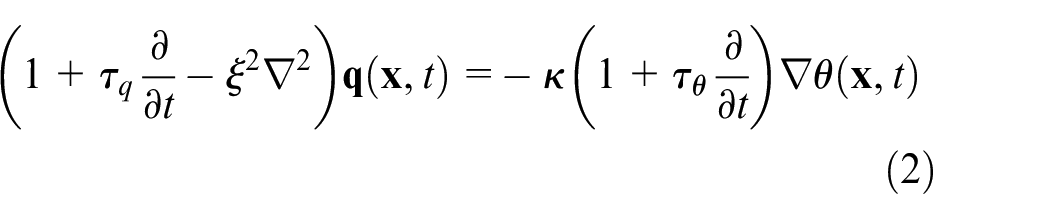
where
Nonlocal stress-strain relations
According to the nonlocal elasticity, 45 the constitutive relations are defined as follows



where
The integral form of equation (3) is difficult to solve. Eringen
45
proposed that when the kernel function was represented by a Green’s function of linear differential operator

Then, equation (3) can be simplified into differential form

Dual-phase-lag thermoelastic model with double nonlocal effects
To accurately describe the TED of microstructures, the nonlocal effects relating to both the heat conduction and the elastic deformation are further considered in generalized thermoelasticity. Inspired by the works,30,45 the basic equations are presented below.
The energy conservation equation can be expressed as 30

where

Combining equations (2) and (8) yields the energy equation
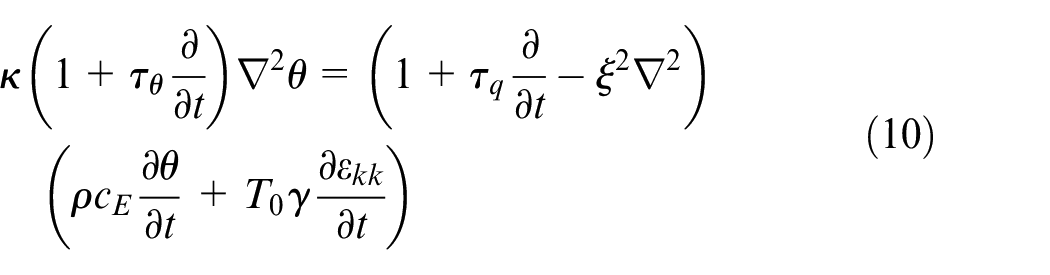
The constitutive equation with nonlocal effect 45

The displacement-strain relation 45

Substituting equation (9) into equation (11) leads to
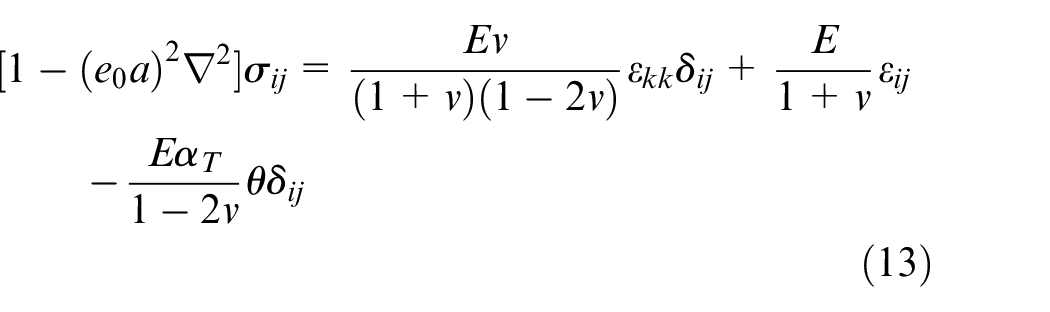
where E and
Formulation of the problem
Modeling of FG sandwich microbeam
As shown in Figure 1, the three-layer sandwich microbeam is made of two materials, that is, the FG-layer
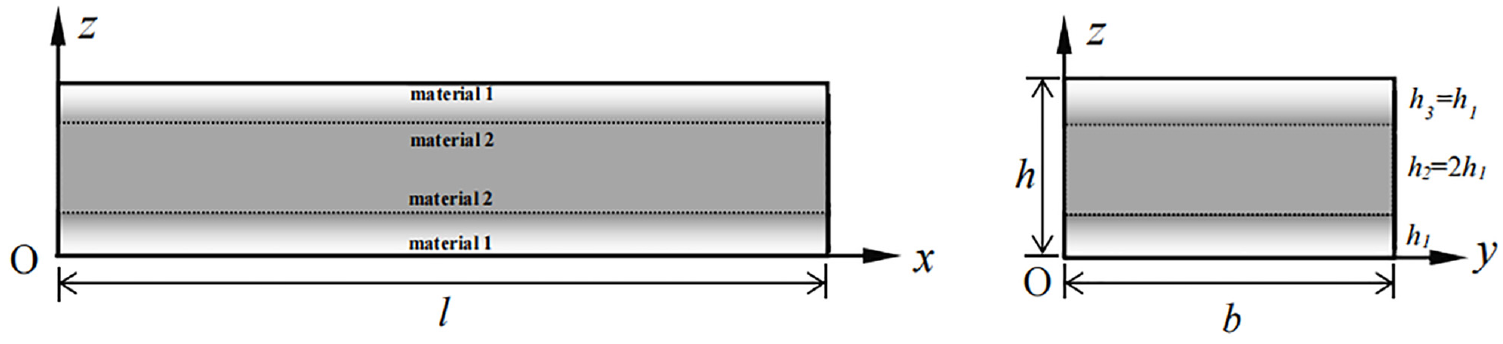
Schematic drawing of the FG-sandwich microbeam.
Material properties of FG sandwich microbeam
The mechanical properties of the sandwich microbeam are assumed that the two materials are distributed functionally graded in the top and bottom layer, respectively. So, the mechanical properties
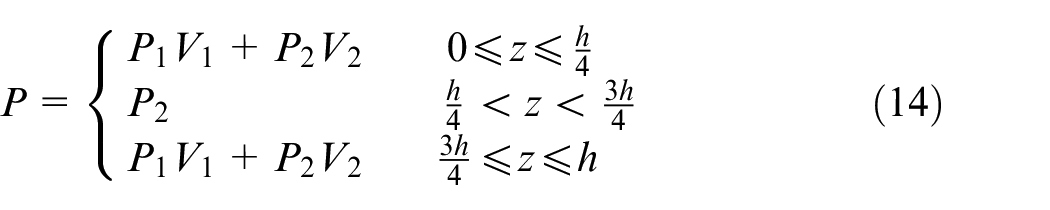
where
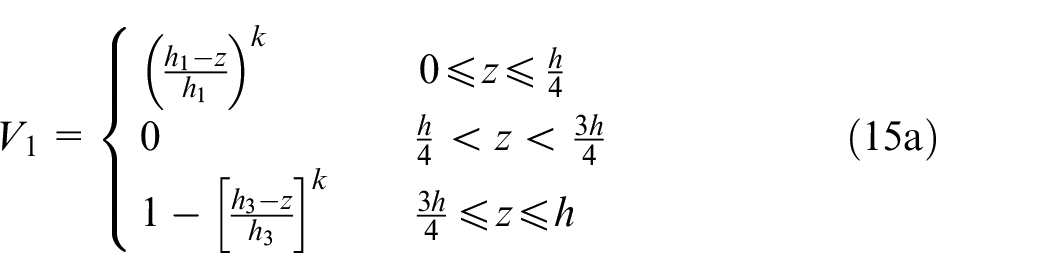

in which
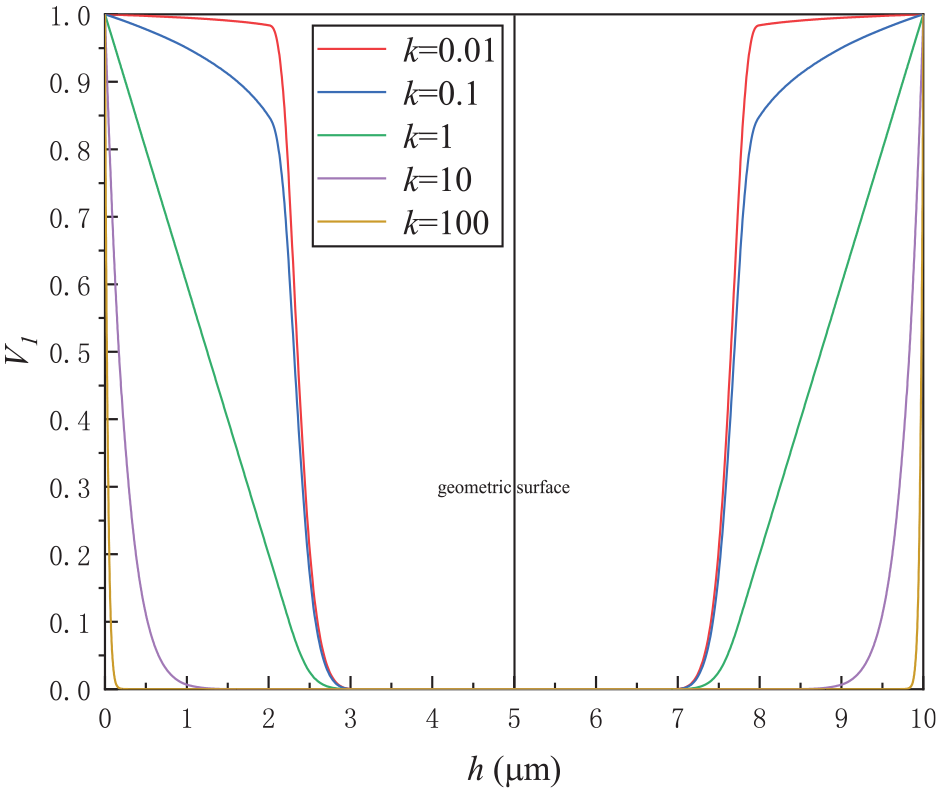
The fraction
Derivation of the basic governing equations
Based on the Euler-Bernoulli beam theory, the displacement components are taken as49,50

Referring to equation (12), the

The

Then, the volumetric strain

Substituting equation (17) into equation (13), then neglecting the Poisson’s effect arrives at
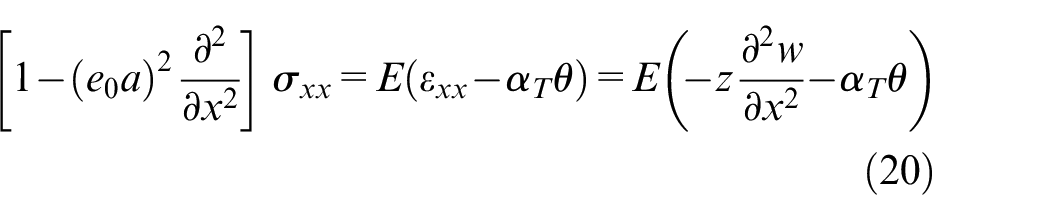
The motion equation is written as 52

where

Multiplying equation (20) by z and integrating over the cross-section area, the bending moment can be obtained as

where

Introducing equation (23) into equation (21) arrives at

Combining equations (21) and (25), the motion equation is obtained as
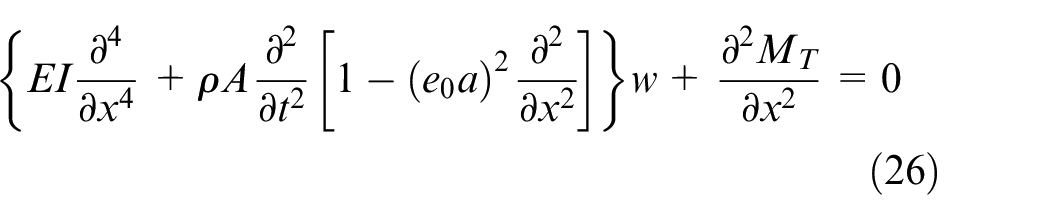
For thin beams, the gradient of temperature along x direction is negligible, 49 so equation (10) can be further expressed as
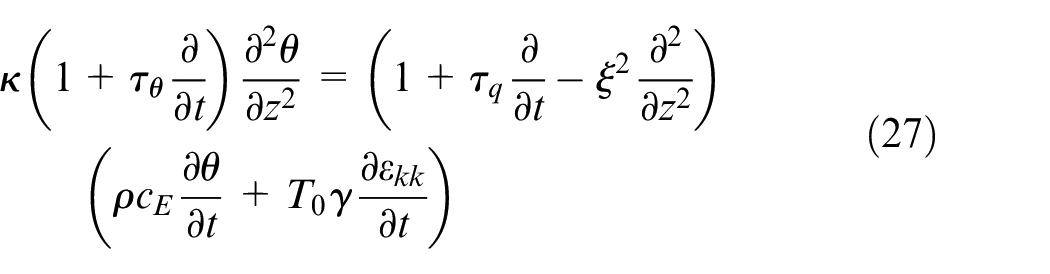
Substituting equation (19) into equation (27) yields
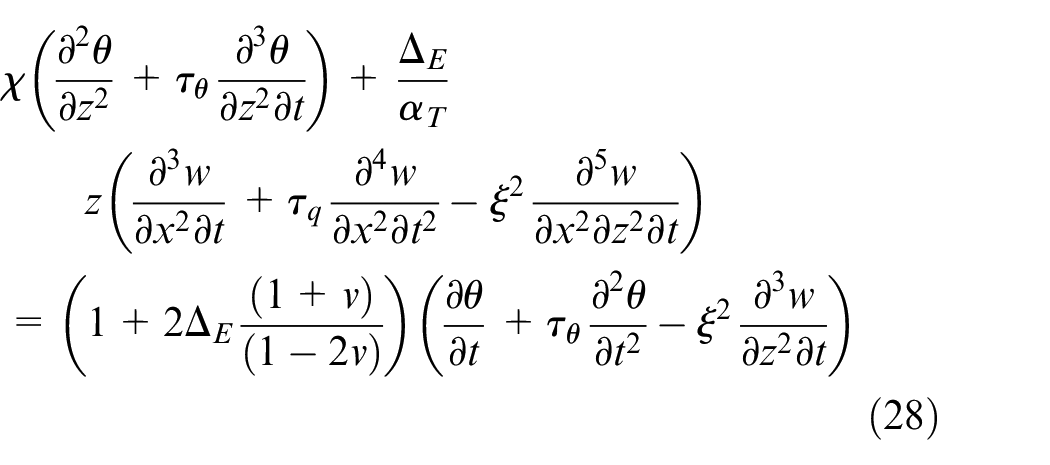
where
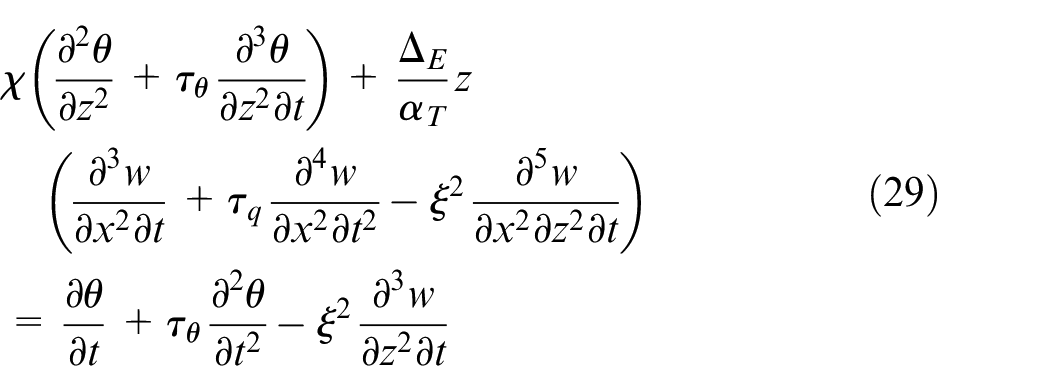
To predict the TED of microbeam resonators, the temperature increment and transverse deflection for harmonic vibration are assumed as 15

where
Inserting equation (30) into equation (29), one obtains

where
and
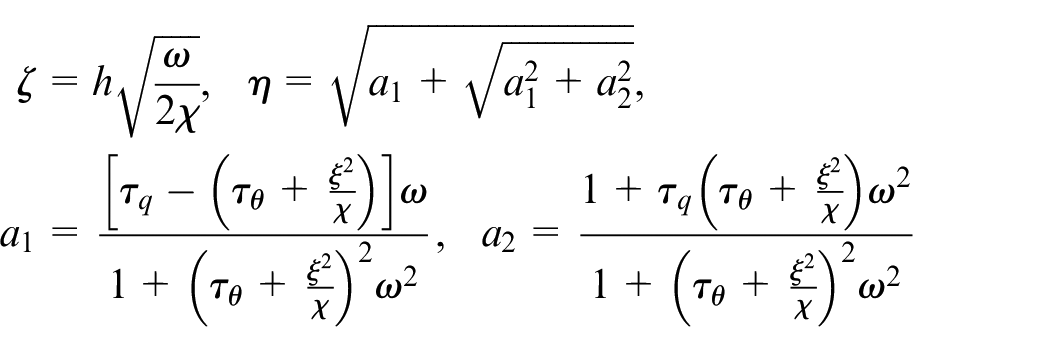
The general solution of equation (31) takes the following form 49
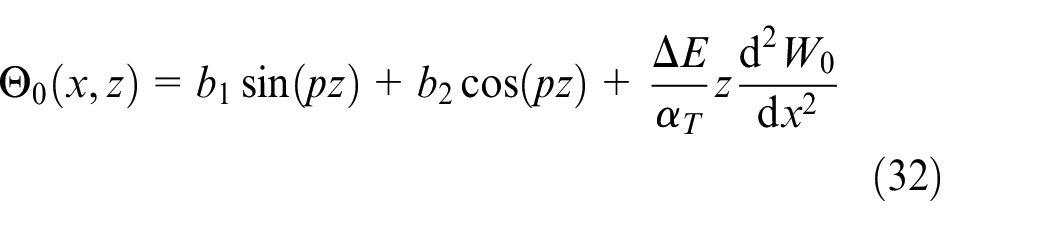
where

Combining equations (24) and (33), the thermal moment can be further expressed as

where
Substituting equation (34) into equation (26) gives
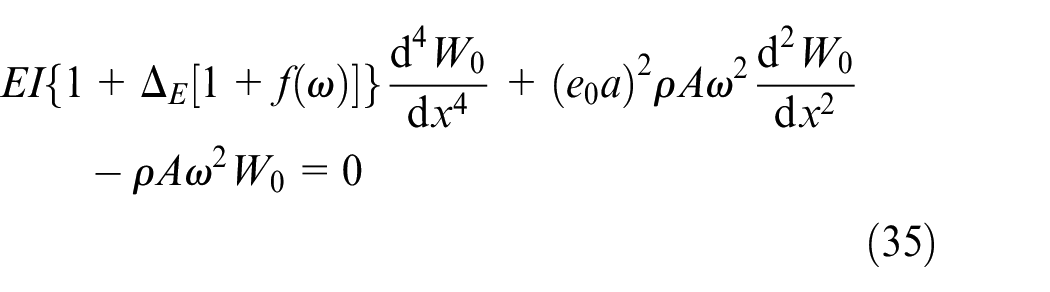
For the isothermal state of microbeam, equation (35) can be written as

where
The general solution of equation (36) is given by
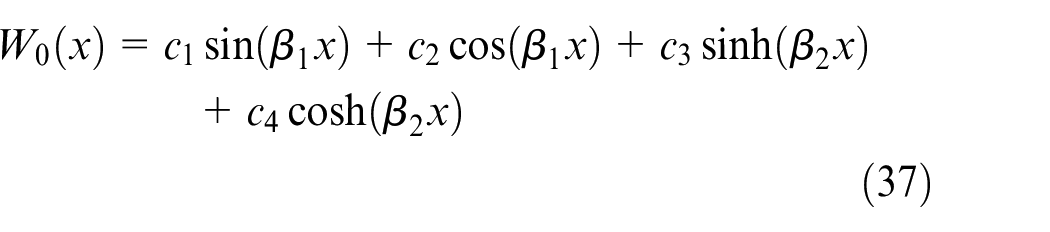
where
Introducing equation (37) into equation (36), one can obtain

Assume the microbeam is simply supported at both ends, then, the boundary condition can be given as follows

Substituting equation (37) into equation (39), one has

where
By comparing equation (35) with equation (36), the relation between

Due to

The real and imaginary parts of


The inverse of the quality factor can be given by the frequency method as 15

Substituting equations (43) and (44) into equation (45), the expression of the TED is finally expressed as

Furthermore, when the double nonlocal effects and the thermal phase lag of the temperature gradient

Results and discussion
The composite microbeam is made of Si (material 1) and ZrO2 (material 2). The parameters of the two materials at
The material parameters of Si and ZrO2. 52

The other constants are

The thermal relaxation time of the heat flux

where
Validation
The present theoretical model can be degenerated into the DPL TED model in Gu and He.
56
when
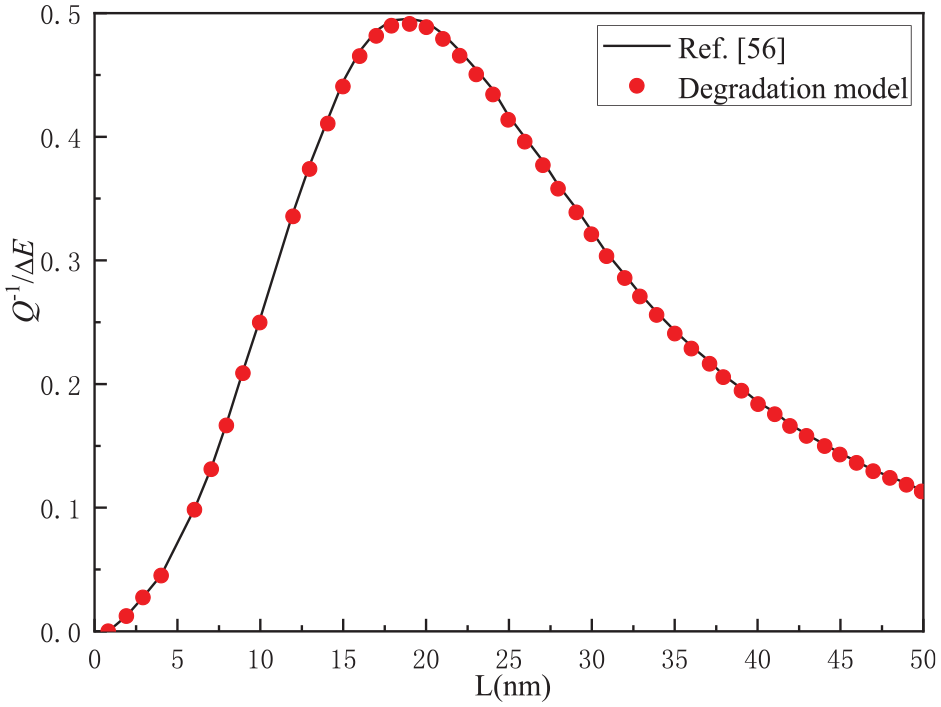
Comparison between the thermoelastic damping from the degraded model and Ref. 56
Parametric analysis
In this section, the influences of the double nonlocal effects on the TED of the FG sandwich microbeam resonator by combining the DPL heat conduction model and the nonlocal elasticity model are studied. Based on the TED model, the effects of different parameters, such as the power-law index, the elastic nonlocal parameter, the thermal nonlocal parameter, and the different modes are discussed in detail.
Figure 4(a)–(c) show the mechanical properties of the FG sandwich microbeam at the internal surfaces of
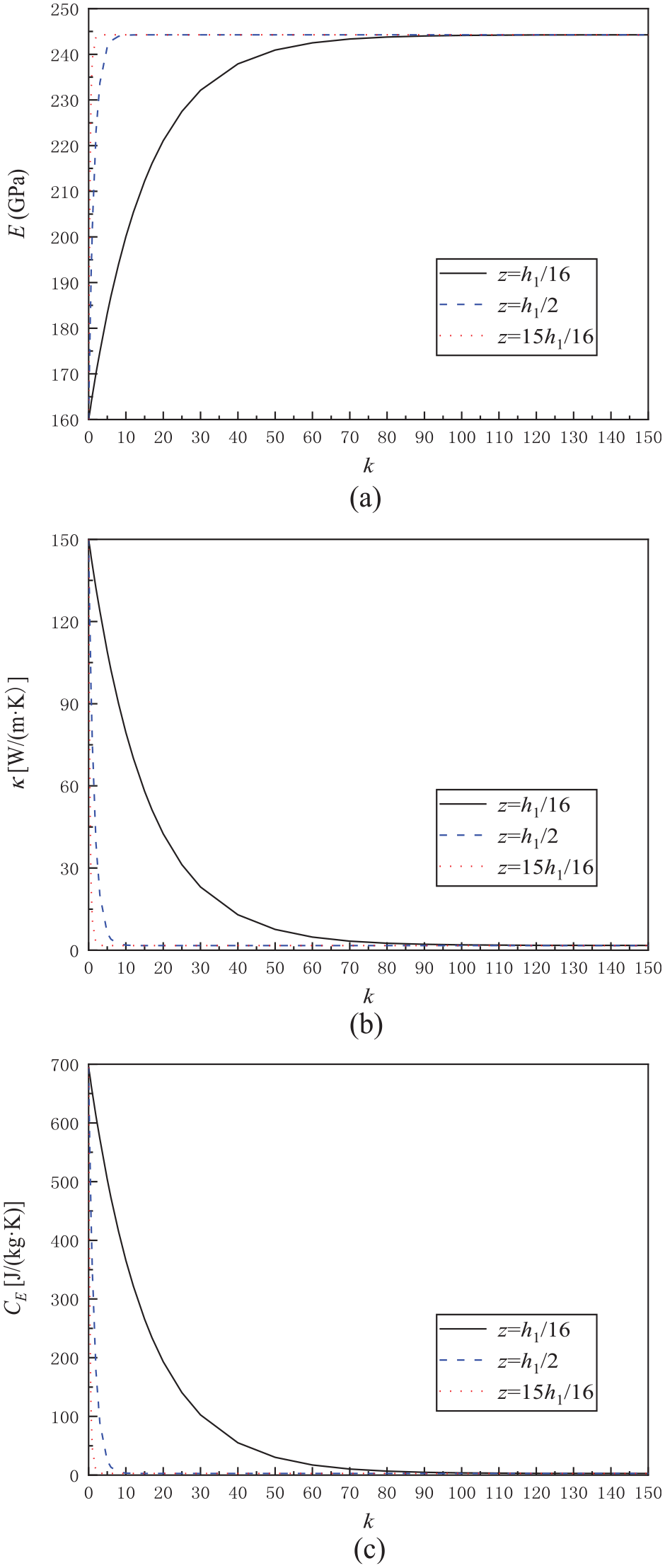
Influence of the mechanical properties versus power-law index
Figure 5(a) and (b) illustrate the influence of the elastic nonlocal parameter
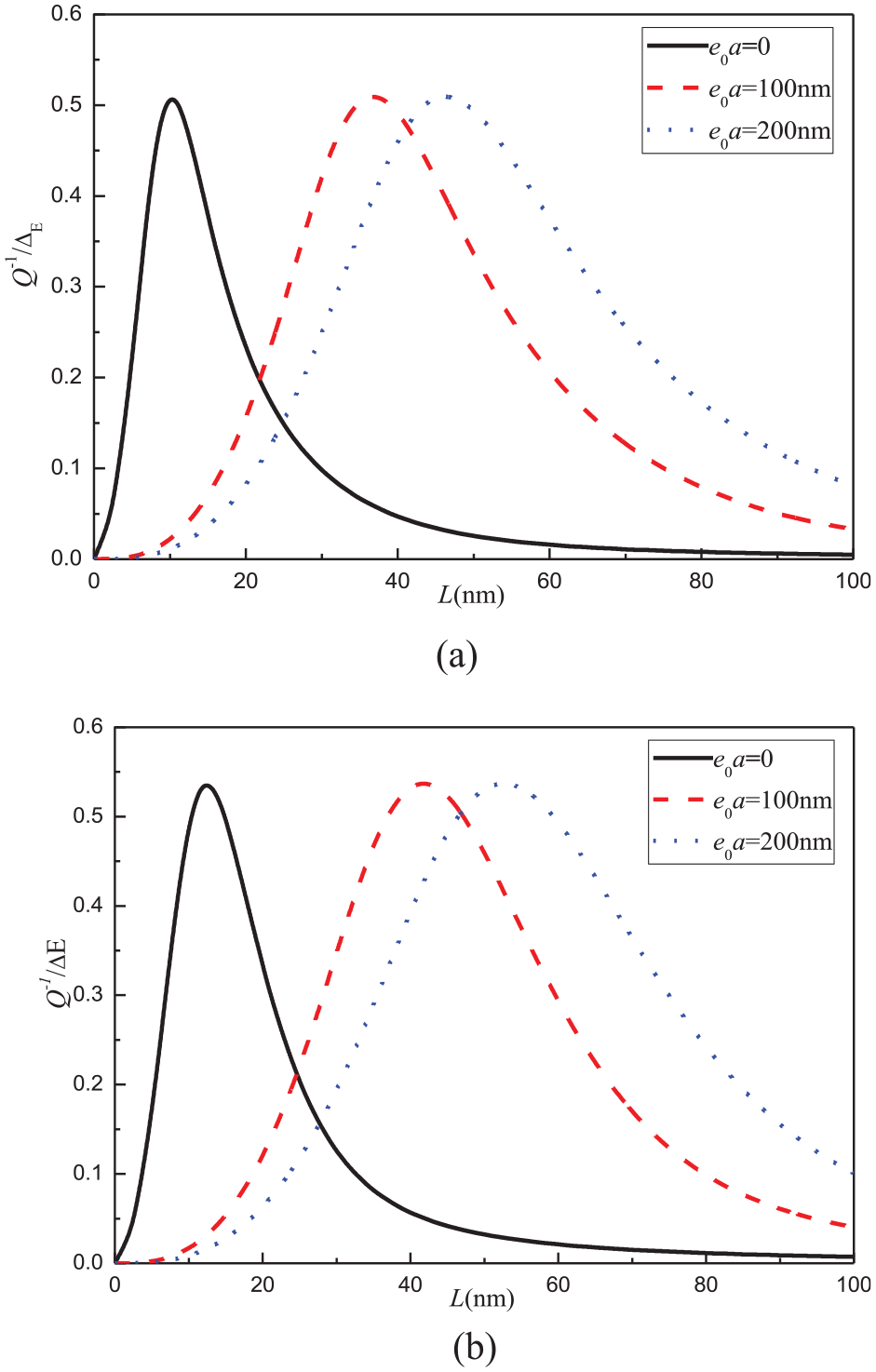
Influence of the elastic nonlocal parameter
The variation of TED (scaled by
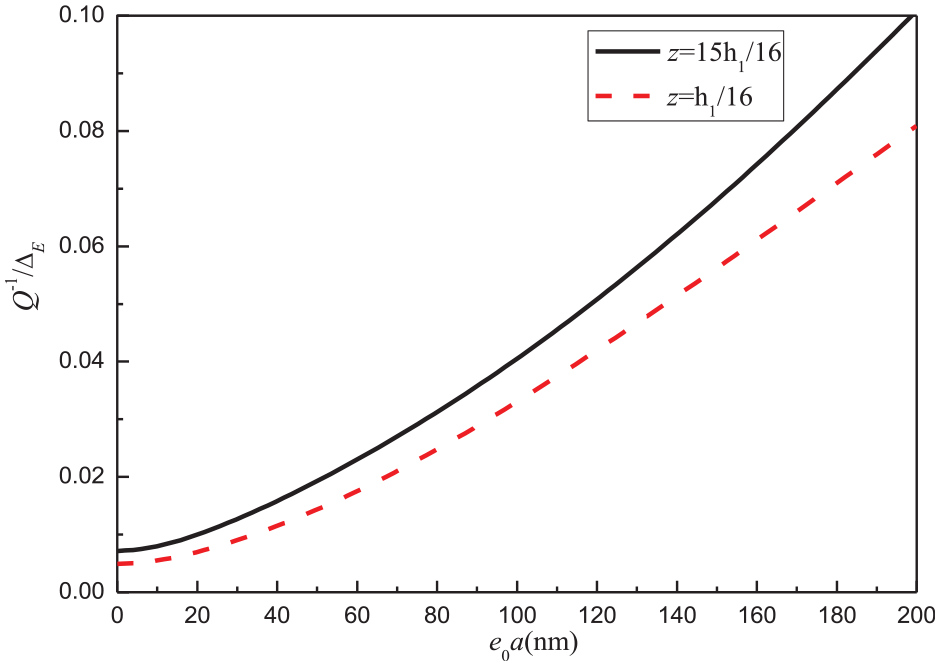
Influence of the internal surface z on
Thermal nonlocal parameter
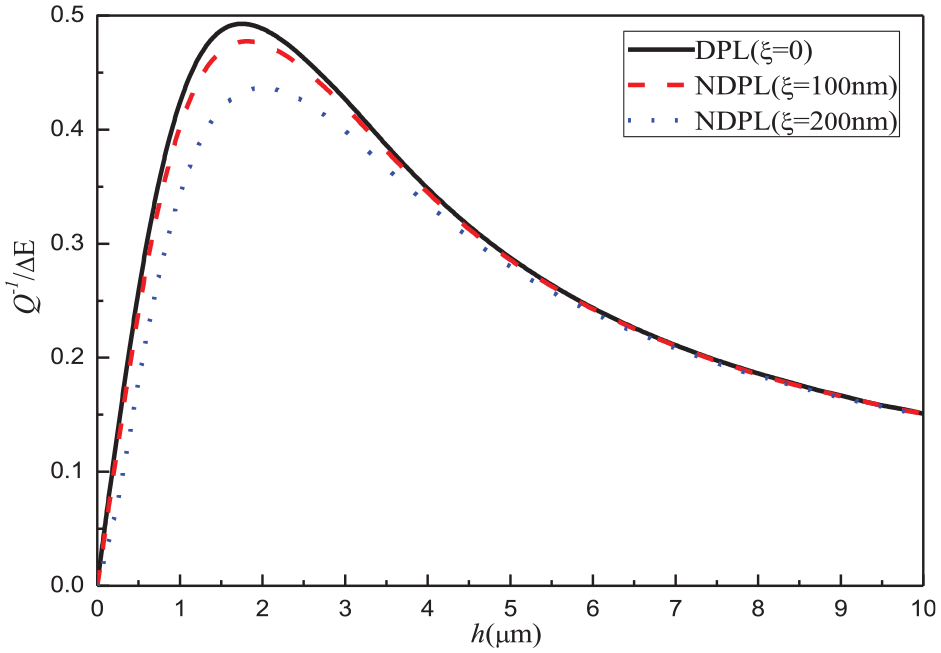
Influence of the thermal nonlocal parameter
Figure 8(a) and (b) demonstrate the influence of internal surface
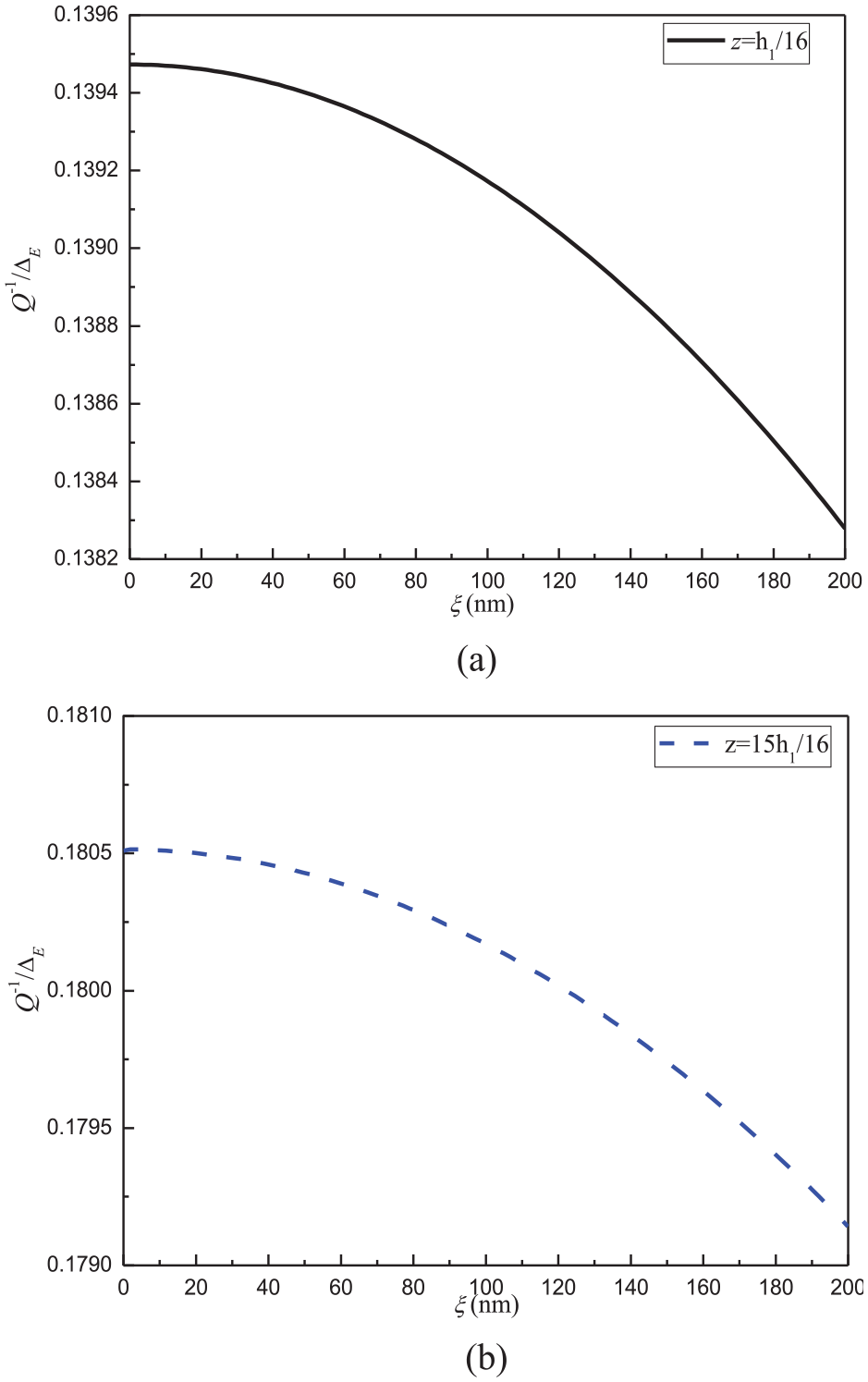
Influence of the internal surface z on
Figure 9 plots the influence of the power-law index
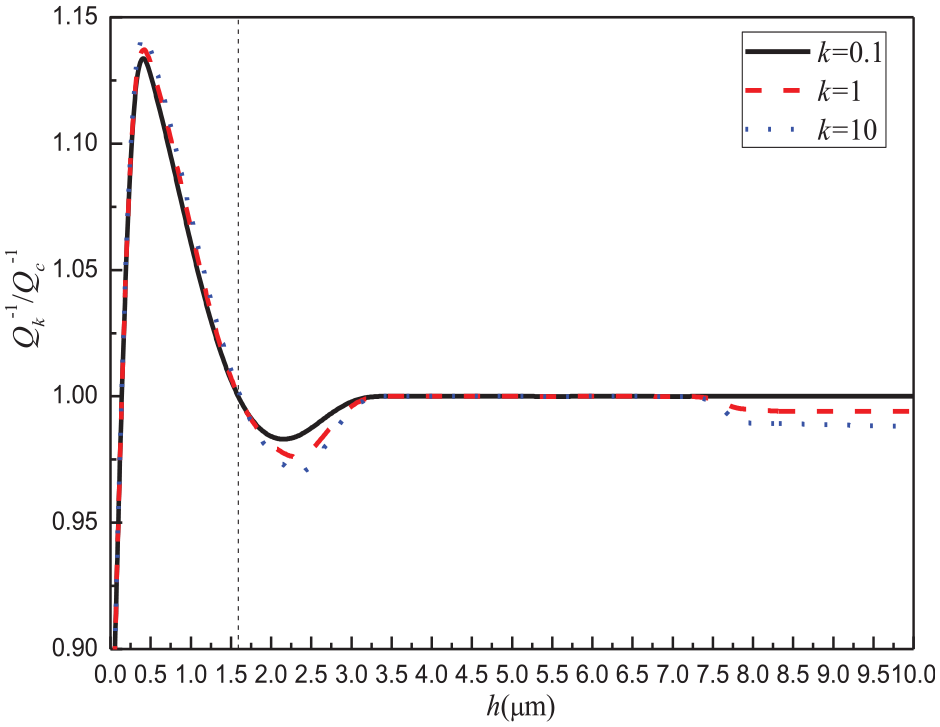
Influence of the power-law index
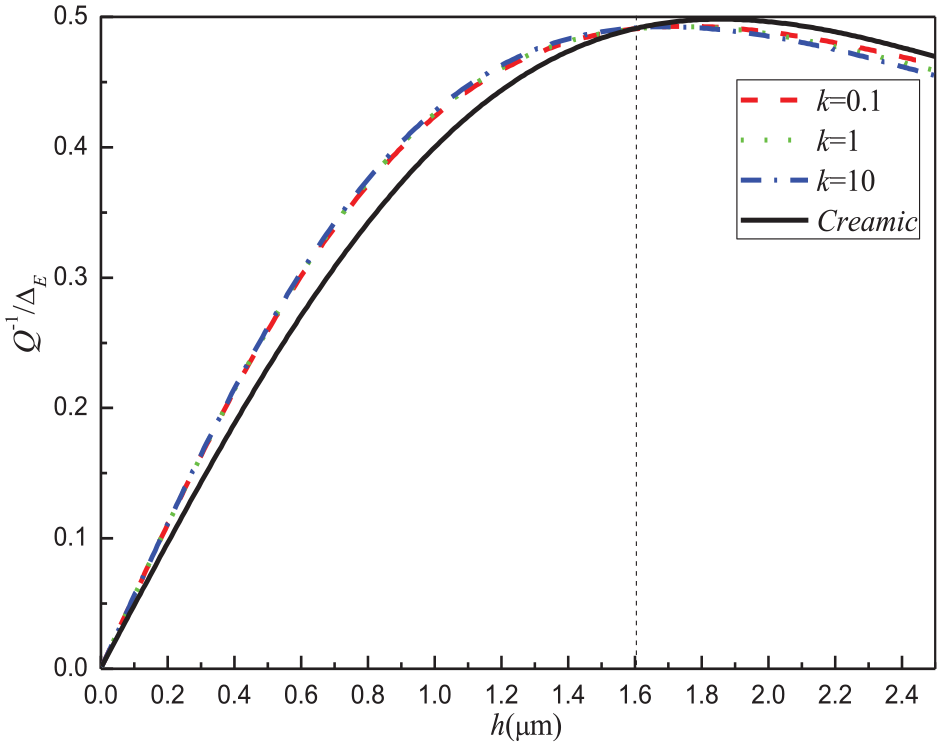
Influence of the power-law index
Figure 11 analyzes the impact of the mode on TED (scaled by
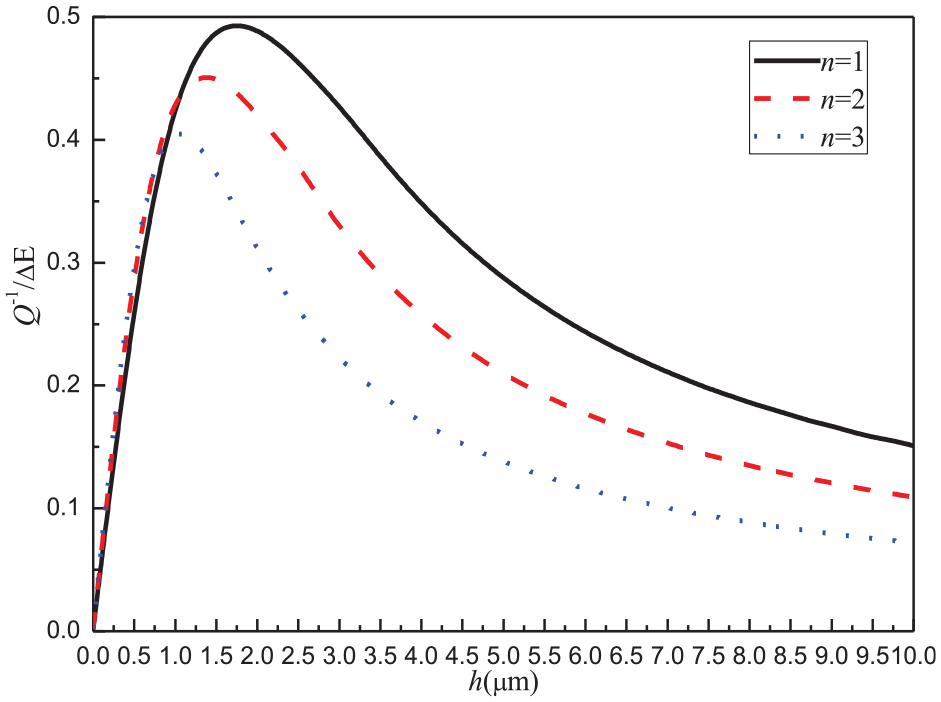
Influence of the different modes
Conclusions
In this work, a DPL generalized thermoelasticity with two fundamentally distinct size-dependent effect models which govern the nonlocal features of heat transport and elastic deformation is developed. Then, the model is applied to studying the TED of a FG sandwich microbeam. From the obtained results, it can be concluded
The nonlocal parameter in the FG sandwich microbeam shows remarkable effect on size-dependent TED, and it is also found that properly selected nonlocal parameter can adjust the vibration resistance range in the FG sandwich microbeam. This indicates that the nonlocal effect can make a certain impact on the strengthening or weakening of the FG sandwich microbeam stiffness.
The introduction of the thermal nonlocal parameter acts to decrease the peak value of the TED. It can be confirmed that the nonlocal heat conduction model can improve the quality factor in the FG sandwich microbeam by suitably tuning the thermal nonlocal parameter and reduce the energy dissipation of the FG sandwich microbeam.
As the power-law index
Footnotes
Acknowledgements
The authors are thankful to Professor He Tianhu, a Faculty member of Lanzhou University of Technology, China, for his unstinting help, constructive suggestions, and scientific advice.
Declaration of conflicting interests
The author(s) declared no potential conflicts of interest with respect to the research, authorship, and/or publication of this article.
Funding
The author(s) disclosed receipt of the following financial support for the research, authorship, and/or publication of this article: The authors gratefully acknowledge the National Natural Science Foundation of China (11972176, 12062011) for funding this research.
