




Abstract
This article highlights the significance of pets for five young women with care experience, examining the impact of disruptions to those relationships when moving into or between care settings. Findings show that pets support the transition to independent living and mental health. Participants’ reflections also reveal how pets are a source of comfort and stability for children growing up in families experiencing difficult circumstances. Loss is therefore traumatic because of the support pets provided and the context surrounding loss. Despite their significance, pets were largely absent from discussions and processes associated with managing care transitions. Adults and perceived constraints in residential care dictated what happened with respect to pets. Neither consulted nor supported, children were left to cope on their own. Attention to pets should be an integral part of the process of managing care transitions and it is imperative that the impact of pet loss (at any stage in children’s lives) is understood and supported. Otherwise, the system may inadvertently foster a perpetual loop of mistrust and relational losses. We consider how some local authorities are starting to manage this process (considering pets in the family or foster carers’ homes), and existing guidance on introducing animals in residential care.
Plain Language Summary
This article highlights the significance of pets for five young women with care experience, examining the impact of disruptions to those relationships when moving into or between care settings. Findings show that pets support the transition to independent living and mental health. Participants’ reflections also reveal how pets are a source of comfort and stability for children growing up in families experiencing difficult circumstances. Loss is therefore traumatic because of the support pets provided and the context surrounding loss. Despite their significance, pets were largely absent from discussions and processes associated with managing care transitions. Adults and perceived constraints in residential care dictated what happened with respect to pets. Neither consulted nor supported, children were left to cope on their own. Attention to pets should be an integral part of the process of managing care transitions and it is imperative that the impact of pet loss (at any stage in children’s lives) is understood and supported. Otherwise, the system may inadvertently foster a perpetual loop of mistrust and relational losses. We consider how some local authorities are starting to manage this process (considering pets in the family or foster carers’ homes), and existing guidance on introducing animals in residential care.
Keywords
Introduction
Pets have consistently featured in conversations with children about what is important in their everyday lives – the people and places that matter to them and the things that affect their mental health and wellbeing (Hicks et al., 2011; Morrow, 1998; Tipper, 2011). This is no different for care-experienced children (Coram Voice, 2020; Selwyn and Briheim-Crookall, 2022; Winter, 2010; Wood and Selwyn, 2017). Indeed, emotional bonds with a pet may be even stronger when human relationships have been compromised (Lass-Hennemann et al., 2022; Wanser et al., 2019; Wauthier, Scottish SPCA and Williams, 2022). There is growing recognition, for example, that pets may be particularly important, and relationships more profound, for isolated older people (Whipple, 2021). In the absence of other positive meaningful relationships, the pet is likely to have greater significance, especially if other difficulties are being experienced. Homeless young people (who are disproportionately care-experienced) are sometimes willing to forgo sheltered accommodation or services if they are not permitted to take their pet with them or services are not pet-friendly (Cleary et al., 2020; Schmitz, Carlisle and Tabler, 2021). Described as ‘lifechangers’ and ‘lifesavers’ within this community, Irvine (2013: 24) suggests that pets ‘represent an unacknowledged social tie’. The commitment involved in caring for an animal and the subsequent relationship that forms is likely to offset the isolation and loneliness that often characterise the lives of care-experienced young people when they transition to independence (Butterworth et al., 2016; Morgan-Trimmer, Spooner and Audrey, 2015).
While there is a growing body of evidence on child–animal relationships, it still seems necessary, as Tipper (2011: 162) suggested, to ‘reorient our thinking about children and animals’. Tipper argues that there has been a tendency to dismiss children’s accounts and view child–animal relationships in overly simplistic, idealised or dualistic terms (benefits versus cruelty). It is important that ‘these relationships are seen not as self-evident or irrelevant, but instead as complex, contextual and meaningfully and inextricably interwoven in the fabric of everyday social life’ (Tipper, 2011: 162). For children growing up in families facing significant challenges, pets may well be the main source of security and comfort (Carr and Rockett, 2017). However, this relationship is unlikely to be straightforward as the pet is inevitably caught up in the dynamics of family functioning. The animal may be treated similarly to the child, may be given greater love and attention, or may be treated unkindly. We now know that pets are used as a way of manipulating people in domestic abuse cases (Cleary et al., 2021). The child and the animal are unlikely to escape the impact of a family that is struggling to cope, and the child may step in to protect the animal. Viewed in this light, there is surprisingly little research on the role of pets in the lives of care-experienced children and young people, but there are some exceptions.
Care-Experienced Children’S Relationships With Pets
Research undertaken in England by Coram Voice and the University of Oxford reveals the significance of pets for children in care. In their ‘10,000 voices’ study ascertaining views about wellbeing (Selwyn and Briheim-Crookall, 2022), children and young people wrote about pets with whom they currently lived but also pets that they missed (from the family home or previous placements). Asked ‘What would make care better?’, many talked about wanting pets. The study found that far fewer children and young people in residential care had a pet compared with those in foster or kinship care: 25% of children (8–10 years) compared with 69% in kinship care and 74% in foster care, and 18% of young people (11–18 years) compared with 62% in kinship care and 66% in foster care. Similarly, in their report on care leavers’ views (n = 1,804) with respect to what makes life good (Briheim-Crookall et al., 2020) pets were considered an important relationship and source of non-judgemental emotional support. More than a quarter of the sample had a pet and ownership was more likely among those with a disability or long-term health condition. Having a pet may be particularly important to these young people, as care leavers were more likely than children in care or the wider population to report that they do not have a really good friend.
Children and young people who move into care tend to lack trust in others (Carr and Rockett, 2017; Rockett and Carr, 2014), often because they have been unable to develop secure attachments (relationships they could rely on) with caregivers in the family home. Their study of children in foster care demonstrated that pets can serve some of the same functions as a primary caregiver, namely they are a secure base (always there for you, you can rely on them), and a safe haven/source of comfort and emotional support (listen to you, understand you, make you feel better). This is not to suggest that a pet can or should replace a human who cares for the child, but it does highlight the significance of the relationship beyond being just a companion. They also found that pets in the foster home could facilitate the development of trust in the adults taking care of them. Often entering into foster care with suspicion and negative models or expectations of relationships, children appear to observe closely how the new adult in their lives interacts with the animal(s) in the household: Through observation of the ways in which a consistent, supportive human caregiver interacts with an animal, it has been suggested that children are often moved to trust new adults. This has been described as a ‘softening’ of the relational environment (Levinson, 1984) that reduces anxiety around direct human–human interaction for children with attachment-related resistance (Carr and Rockett, 2017: 263).
Transitions And Loss
Although many children experience changes in their relationships with pets and may not continue to live with them, those who are taken into care are a special case. They may have to leave pets behind and have no subsequent contact. Lewis, Briheim-Crookall and the Bright Spots team (2022) found that pets and extended family members are often not included in contact visits. Children may also become attached to pets in foster care (as Carr and Rockett have shown) but then subsequently experience loss and disruption if the placement breaks down. This takes place within the context of multiple simultaneous transitions (McMullin, 2018; Mitchell and Kuczynski, 2010) where the focus is undoubtedly on managing human relationships and pets may be forgotten. Although pets in the new environment may facilitate transition, forming a bridge to creating stronger human relationships, as capitalised upon in animal-assisted therapies (Holttum, 2018), it is important that the complexities involved in bringing children into a family with a pet are well understood. Adams (2015) and Millar, Levy and Stockman (2003) provide guidance on managing this process when there are animals in foster care placements. Children and young people’s experiences with pets pre-, during, and post-placements (both positive and negative), have not been fully captured in research, yet they may be of fundamental importance in understanding the trajectories of these young people and how they might be better supported.
One of the most pressing concerns is perhaps helping children to deal with loss and adapt to life without the comforting or familiar presence of those they know. While there is a lack of research on the impact of pet loss on children (Schmidt et al., 2020), the adult literature focuses only on bereavement as a result of the pet’s death. However, if the loss of contact (through other means) is permanent or uncertain, there is no reason to assume that the experience differs from grief associated with death. One of the problems here though is that the loss of a pet is often treated differently, and viewed as less consequential, than the loss of a person (McNicholas and Collis, 1995), even though research with adults suggests it is comparable with losing a spouse or family member and involves similar stages in the bereavement process (Clements, Benasutti and Carmone, 2003). Other major losses are, by contrast, marked by culturally defined and accepted rituals, and there is recognition of the health impact and need for support (Donohue, 2005).
Loss has to first be recognised before support can be put in place. Part of this process is understanding the impact on the individual and the role the animal has played in the person’s life. It has been suggested that loss can become ‘complicated’ and result in a stronger reaction if the person has a history of psychological difficulties, is simultaneously going through other stressful life events, was emotionally dependent on the animal, and/or the pet assumed centrality in their life (McNicholas and Collis, 1995). Loss is inevitably complicated for care-experienced children, given their often adverse backgrounds and the significant transitions they have to make (Skoog, Khoo and Nygren, 2015). Their relationships with pets are embedded within, and shaped by, families in crisis, therefore loss is also likely to be tied up with other relational difficulties or ambiguity (Mitchell and Kuczynski, 2010).
The Present Study
The study reported here was part of a broader project with a ‘pets and housing’ theme that also included a survey with care-experienced children and young people. It aimed to provide evidence on the role of pets in their lives in the context of changing homes, housing and relationships, and was situated against the backdrop of the recent Independent Care Review in Scotland (and shortly after in England, MacAlister, 2022a). The outcome of this review was The Promise Scotland (2020), the vision that all children should grow up loved, safe and respected so they realise their full potential. The 21–24 Plan (The Promise Scotland, 2021) to ensure this promise is kept emphasises the importance of:
hearing the views of children with care experience; family, relationships and the maintenance of positive ties; finding ways to support them (scaffolding of support). How and why have pets been important in their life? Have care experiences (home and housing changes) affected their relationships with pets? What has been their role in, and observations of, pet care/treatment? What are their current motivations for having pets, and what support do they need?
This paper focuses on the interview study that was carried out with five young women aged 21–25 who were living independently after being in care. Being able to look back and reflect on their whole experience of being in care, the changes they have been through and the pets that stood out as most important, we hoped to shed light on the nature and impact of (a) these relationships and (b) change and loss. We sought to answer the following questions:
Methods
Design
Individual semi-structured qualitative interviews were deemed most appropriate due to the personal and potentially sensitive nature of the topic in question. University ethical protocols developed during the pandemic required greater attention to the necessity to interview in person, and we felt participants might prefer online interviews. This way they could take part in the comfort of their own home at a time suitable to them.
Participants
Purposive sampling was used to recruit participants and the initial plan was to include care-experienced young people aged 16 to 20 years. However, in spite of working with our partners to recruit interviewees, providing them with a recruitment email, with a link to an online consent form and information sheet for them to distribute, this only resulted in one participant coming forward for interview. We also advertised our survey through our social media channels (see Figure 1), asking people to get in touch directly if they would prefer to have a short chat with the researcher. Receiving queries from people who were older than the target age group led us to alter our upper age limit to 25. One approached us directly having seen our Twitter post. However, the remaining three were reached through the research team’s own networks.
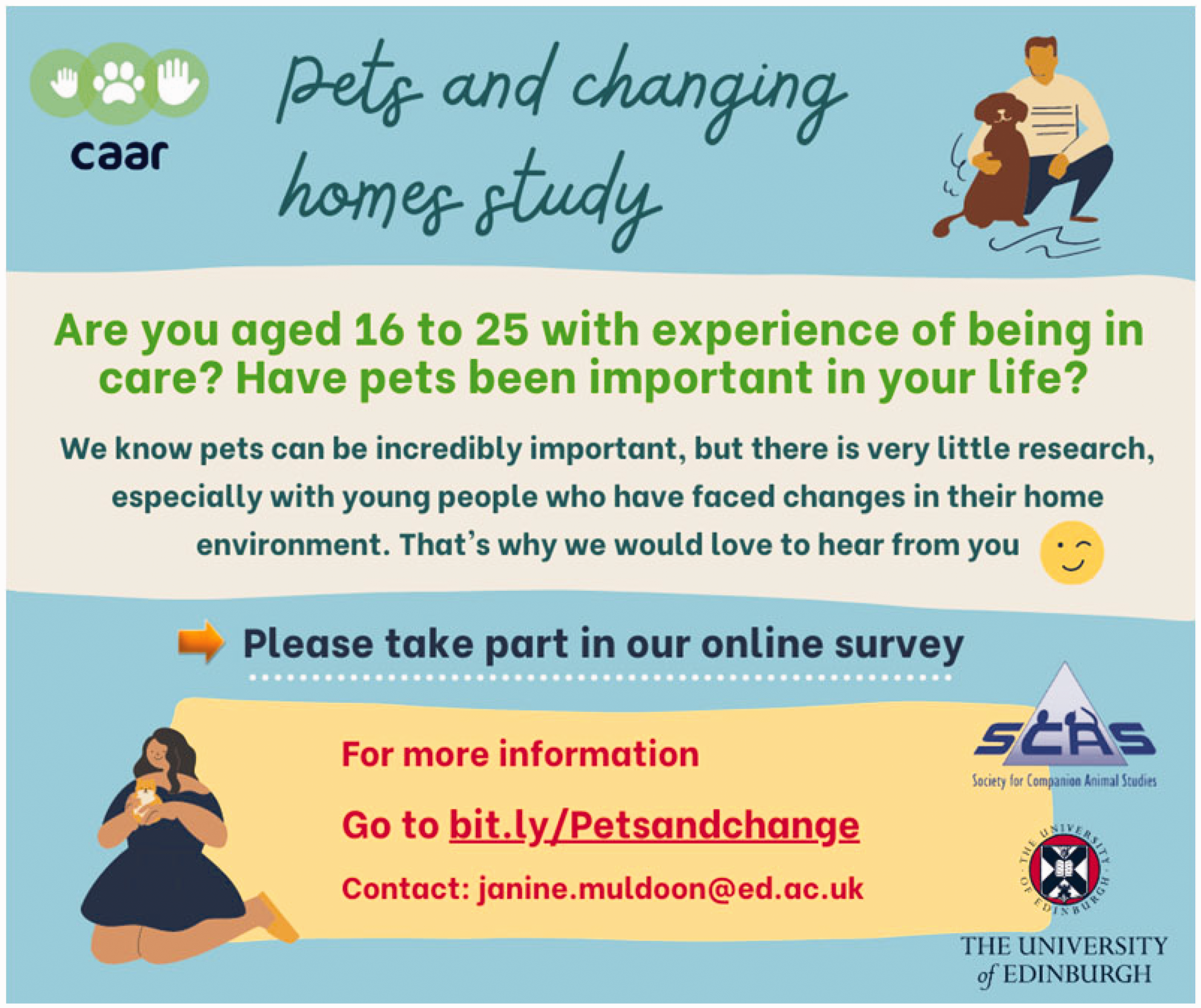
The advert for the survey.
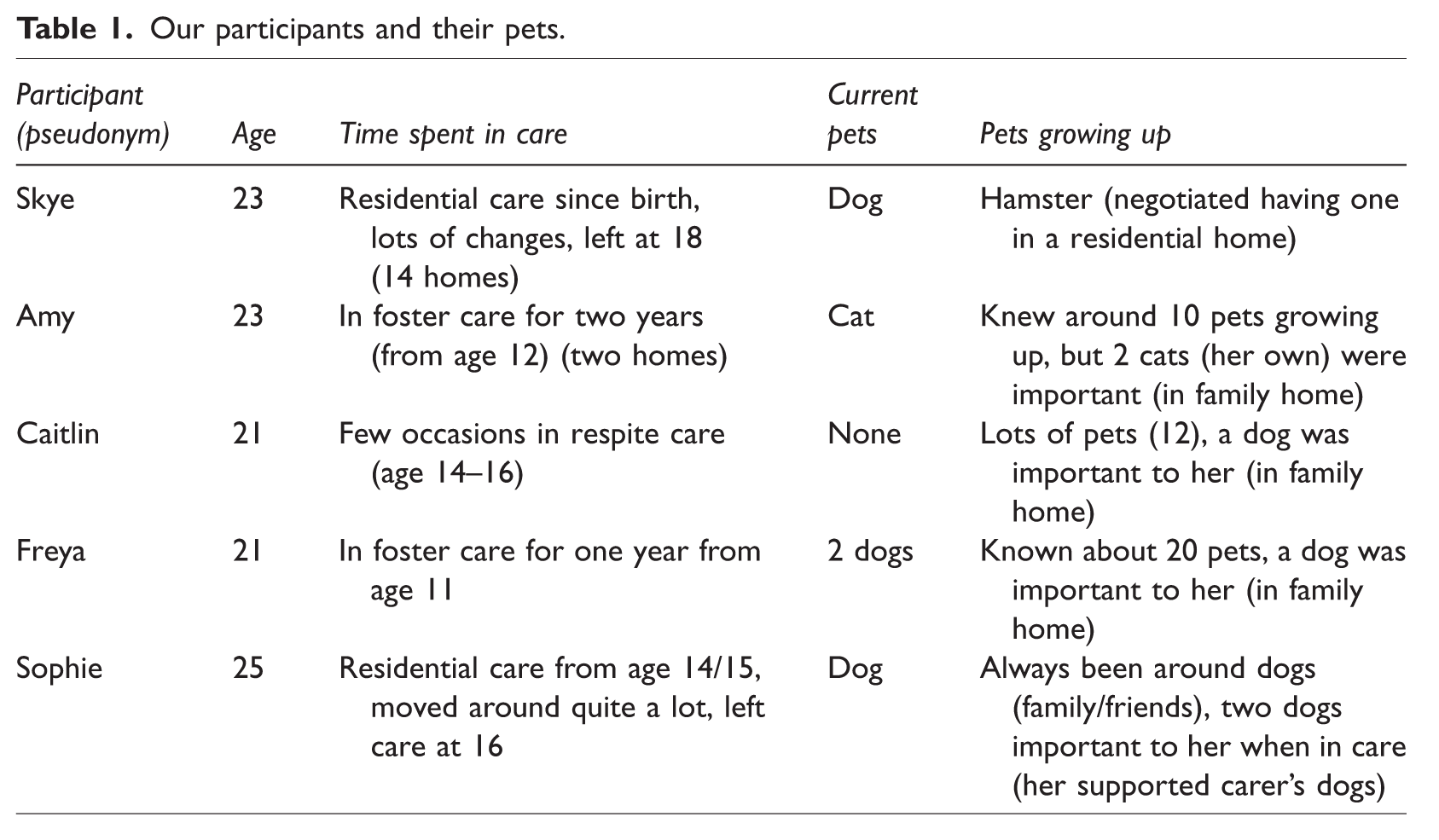
Table 1 provides details of the young women in our sample, the time they spent in care and their current and past pets. Four were living alone and one with a partner; three in a flat, one in student housing, and one in temporary accommodation. Since living independently, two participants had worked with care-experienced children and young people in residential care, and one had volunteered at the youth club she herself had attended. All participants were residing in Scotland at the time. Their current animals were among those they deemed ‘important’ in their lives, and as Table 1 shows, each participant had at least one pet that was also important to them growing up (four in their family home and two while in care). Only Skye was permitted to have a pet in a residential care home after much negotiation. Sophie had connected with the two dogs owned by her supported carer. (Supported carers help a young person transition from being in residential/foster care to independence, providing a place to live, guidance and support; see Supported Care – Glasgow City Council, www.glasgow.gov.uk/supportedcare). The remaining three young women did not have any interactions with pets/animals while in care.
Our participants and their pets.
Data Collection
Due to ethical concerns, Covid-19 requirements and time constraints, the interviews were carried out online using Microsoft Teams. Once participants had provided email addresses on the online consent form, the researcher contacted them with possible dates/times for the discussion. The lead author first tested the protocol with a volunteer as a pilot interview and refined the process as a result. Subsequently, she and a research assistant experienced in working with children and young people carried out the interviews, which were audio-recorded using Online Broadcasting Software (OBS). The files were stored on the secure server and were only accessible to the research team. Once interviews had been transcribed and checked, ensuring no names of people or pets were included, pseudonyms were created, passwords applied, and audio files removed.
Interview Schedule
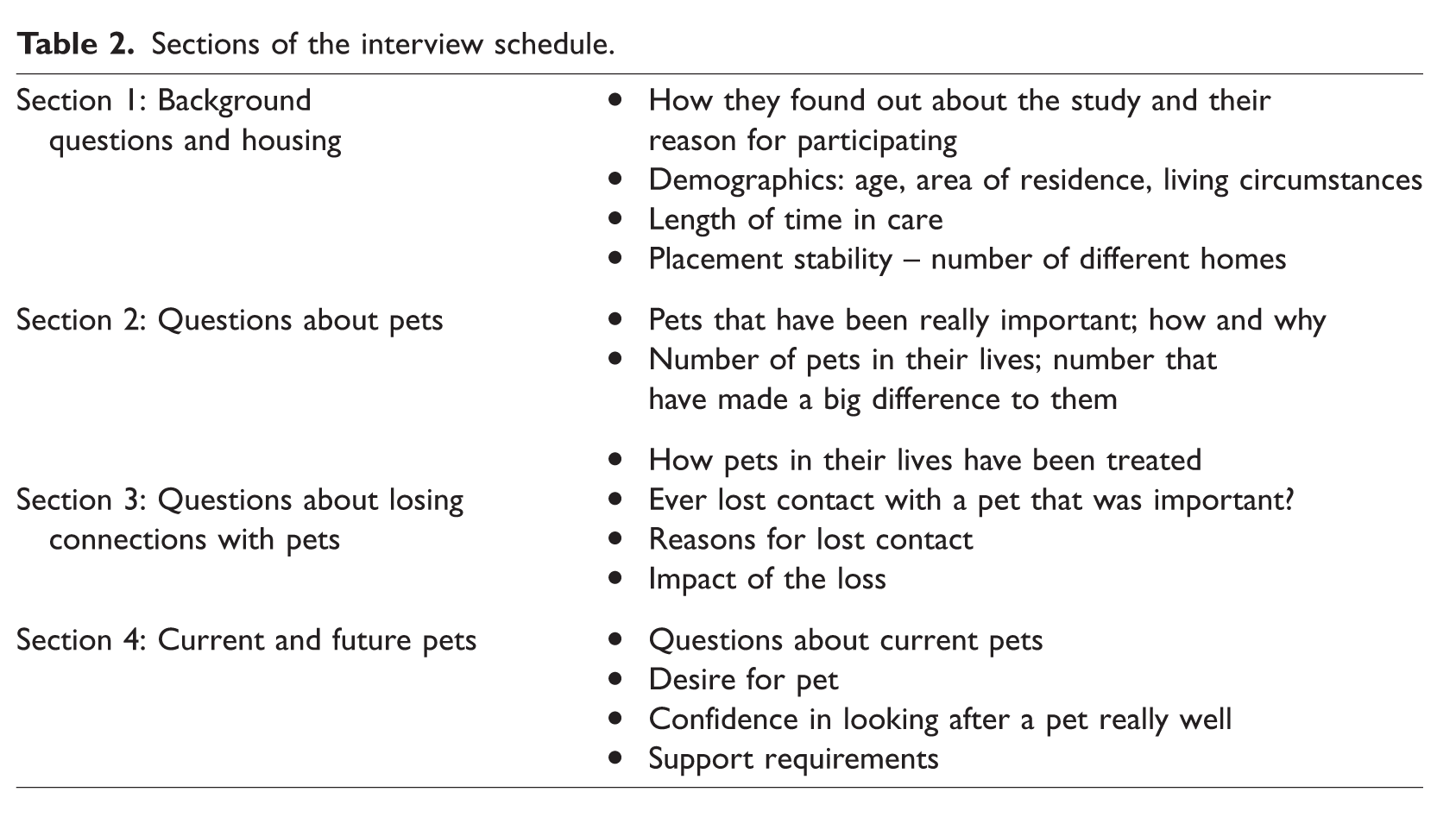
Table 2 outlines the sections/topics included in the semi-structured interview schedule. The interviews did not follow this structure rigidly or linearly. Space was left for participants to determine the direction of the discussion, particularly at the outset, and our questions were asked when it was an appropriate stage (i.e., when the participant had just talked about the area in question).
Sections of the interview schedule.
Data Analysis
The lead author adopted an in-depth case-driven inductive approach to analysing the data. She immersed herself in each case, reading through the transcript while listening to the audio file. A working document was created wherein key themes/topics and associated illustrative quotations were added. The researcher concentrated on the matters the young women emphasised/talked about most or those about which they were passionate or conveyed greater strength of feeling/emotion, indicating experiences that had affected them most. With each subsequent participant, quotations were added to existing themes, the codes/descriptors/headings were refined/extended, or additional ones generated. A table was created to enable clear comparison across cases (Braun and Clarke, 2006) and the identification of commonalities and differences in experiences and views. Both the working document and comparative table were reviewed by the second author to ensure the integrity of the analysis process. The final draft of the ensuing paper was emailed to participants to garner their views and ensure they were happy with the quotations drawn from their transcripts and the degree to which their anonymity was preserved.
Ethical Considerations
From the outset, we were concerned (based on advice from our advisory group) not to probe experiences of care, or moving into care per se, as well as their relationships with other members of their family, acknowledging that they might trigger negative memories unnecessarily. Accordingly, any information presented in this paper that relates to care settings (residential, foster, kinship, or supported care) and family relationships was the result of the young women sharing this with us of their own volition. Alongside our advisory group, a member of the Who Cares? Scotland team (a national voluntary organisation, working with, and advocating for, care-experienced young people and care leavers across Scotland) also reviewed our survey questions. A procedure was identified and agreed by the advisory group (see acknowledgments) in the case of disclosures of harm or illegal behaviours by young people in the interviews, following the National Guidance for Child Protection in Scotland 2021 (www.gov.scot). This was included in our ethics protocol that was approved by the Clinical and Health Psychology Ethics Committee at the University of Edinburgh. Our participants completed an online consent form that asked them to confirm they understood different aspects of the research. This was discussed again at the outset of the interviews.
Findings
We report on the findings in four parts. We concentrate first on the young women’s relationships with their current pets, and second on the role of pets when they were younger (either in the family home or when in care). Thirdly, we discuss how relationships with pets were disrupted/lost and the impact of those losses. These are the areas our participants talked about most or had clearly exerted significant impact. The fourth part focuses on the need identified by participants for animals to be integrated in residential/foster care settings and the perceived benefits. This includes the young women’s observations and reflections on the need for integration, as well as their recognition of the challenges. In each section we highlight the key themes in a summary box.
The Young Women’S Relationships With Their Current Pets
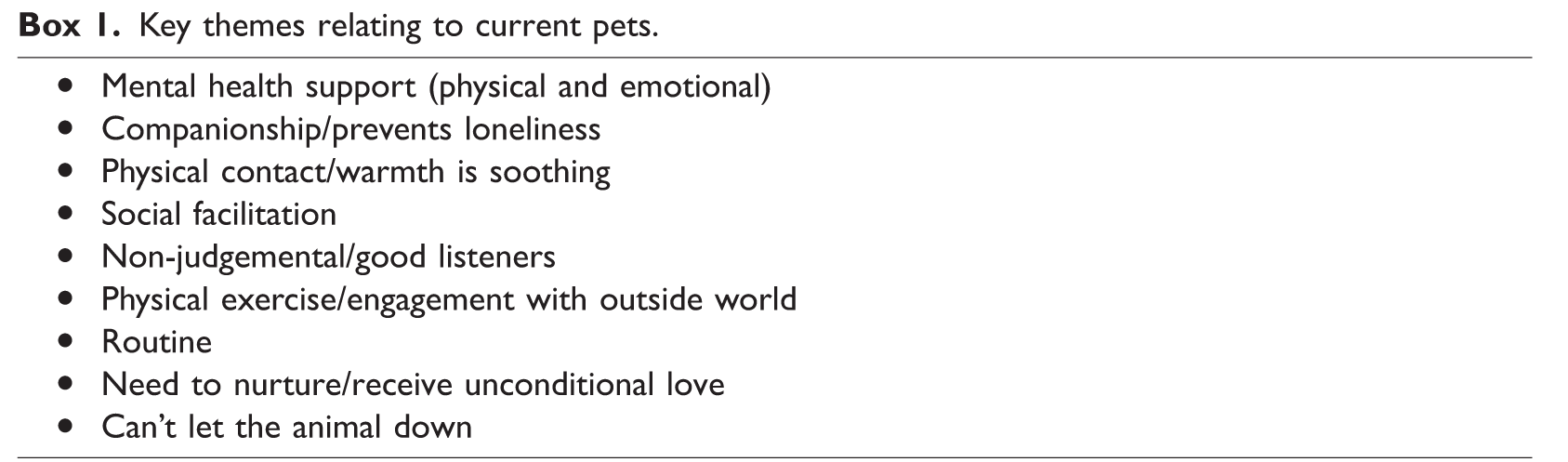
Four of the young women currently had a pet. Skye and Sophie each had a dog, Freya had two dogs, and Amy, a cat. Caitlin thought she would have a pet at some point but did not feel she was in a good place to take care of one at the time of the study. However, all five young women highlighted the comfort and companionship of having a pet (Box 1). They explained how important they were in ensuring they maintained a positive outlook on life. Three even described their dogs as having ‘saved’ them, albeit Caitlin was referring to the past: She has saved my life on many occasions actually … She gives me purpose in the mornings to get out of bed even when I don’t feel like getting up … and she taught me what unconditional love was. I had never experienced unconditional love growing up, and she gives me that every day in abundance and she taught me that. She also allows me to go out on adventures and she’s like a service dog as well. So, she’s registered as an emotional support dog …. She can come into places with me, so that I don’t get panic attacks and stuff like that. (Skye) I just think that [names of three dogs, two current pets], like, they actually like saved my life. Like my depression can get really bad and really, really dark, and one thing that keeps me going is the fact that I have … they’re like having children. And they rely on me as much as I rely on them. And that’s just something that keeps me going. (Freya) That dog [in family home] is the reason I’m probably still here. (Caitlin)
Key themes relating to current pets.
The Role Of Pets In Childhood (Either In The Family Home Or When In Care)
Even though four of the young women had known many pets during their childhood, only those they perceived to be their own personal animal, or someone else’s pet that they took responsibility for, held special significance. For three girls, the relationships with animals that were important to them were formed in the family home. Amy spoke of her two cats, and Freya and Caitlin focused on a strong relationship they had with a dog. Although Sophie said she had ‘always been around dogs’ (those of family and friends), she did not mention any of them being especially important to her. In her case, a bond developed with two dogs that belonged to a supported carer she lived with before her move to independence. Skye, on the other hand, had only known one pet growing up in residential care, a hamster that she negotiated long and hard to get.
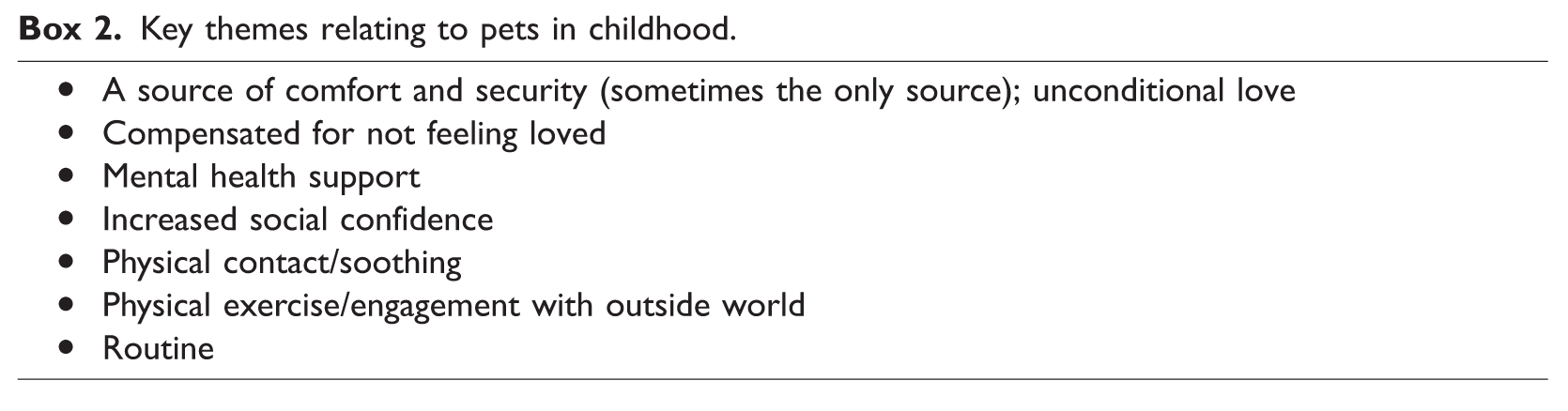
It became clear that for all of them, at least one pet (a dog, cat or hamster) had played a pivotal role during childhood when they were experiencing significant challenges (see Box 2). For those experiencing difficult relationships when living in the family home, a pet could be the only source of comfort and security, as Freya conveys below. Amy, Skye and Caitlin also highlighted the absence of ‘unconditional love’/feeling loved growing up. Those who had subsequently worked in residential care felt this was fairly common: When I was in the school and things like that, I suffered with my mental health really badly. And, you know, I got bullied and everything like that and every time, you know, ’cause, I had issues with my mum you know, and I would go home and there would be a dog … and it was kind of like, it was that thing of knowing that, because I didn’t really feel that loved as a child, so it’s kind of that thing that like even if it is a dog that comes running to meet the front door, when I walk in, like, I’m loved by a four-legged furry thing … dogs will love you no matter what. (Freya) … ’cause I remember, I used to be so shy and quiet, I wouldn’t talk to anyone. And when someone would look at me, I would try to run away or hide or something, because I just hated it … but that’s ’cause obviously my past wasn’t so pretty … but when we got that dog, it kind of changed everything …. I was bubbly, I was talking to everyone, like, when they said, ‘Oh, what’s your dog’s name?’ I told them. And we’d have a conversation, which before, I wouldn’t talk to people …. like, I didn’t have a voice until I had the dog …. He was amazing. (Caitlin) I was taken well out of where I normally stay, like completely out of the city and things like that, and erm, yeah it was, it was quite difficult … even to like go out and explore, there was like nothing really there … So, I’d say it kinda forced me to go out and explore the area a wee bit more with the dogs rather than by myself. And it gave me the opportunity to kinda connect with other people, because when you have a dog, people want to talk with you, and it’s like, I’m kinda one of the people if you talk to me, I’ll talk back to you and have conversations, you know what I mean? So, yeah, I guess like looking back and reflecting on it, there’s many different things that they [the dogs] benefitted … it helped me with my mental health, it helped with my routine … it helped me like getting out, like chatting to other people and like, even when there was no people, it helped me, like get out and kinda like realise where I am and kinda like know the area a wee bit more erm, yeah it did a lot on reflection. Yeah, I don’t think the place would’ve been the same if they weren’t there.
Key themes relating to pets in childhood.
How Relationships With Pets Were Disrupted/Lost, And The Impact Of Those Losses
The young women in our study described various ways in which they lost connection with a pet. This could happen through:
Moving into care, out of the family home where the pet is living; Moving from one residential care home to another where you cannot take your pet with you; Moving out of a care setting (residential or foster/supported care) where a relationship has developed with the pet that lived there; Pet death; Parent/carer rehoming the pet; Pet disappearance. When he passed, it literally destroyed me, like ’cause, almost like that person I became disappeared and I had to rebuild who I was … Yeah, he’d literally gotten me through so much, and then all of a sudden the next thing I know he was gone … He was my safety net that I didn’t have, and then when he went, it was just like … my world pretty much just crashed. And I think that hurt more than losing people, like, I’ve lost a lot of people over the years … that hurts, but that dog hurt more when it left [laughter]. But I think it’s because I connected more with the dog. Because like it never judged me, it just, it was almost like it just listened. And like it could tell if something wasn’t right. (Caitlin) So, it was like you know I lost that kind of emotional impact of her, but equally, you know, there was that kind of like physical touch of her. Because if I was like having a panic attack or something like that, then you know I would just hold her, and feel her fur, and everything, and she would just sit there, she was like ‘I’m getting cuddled!’ [laughs], ‘I’m happy!’ … so it really helped. She was like basically an untrained therapy dog … I relied on her heavily to kind of help me through daily life and to then … literally one minute she’d be there and then next, she wasn’t, that was really difficult. (Freya) So, me and my mum’s relationship was really, really rocky. And, I had went up to the youth café … and then had, like, left to go on the bus home. I then got home, and the first thing I would do was look for this dog [laugh]. Soon as I walked in, I would look for this dog. And I was like, ‘Where is she?’ and my mum had rehomed her. Didn’t tell me, didn’t, no nothing. And, literally at half eleven at night, I walked out of my mum’s house. Like, and I was like ‘That’s it.’ That was the icing on the cake. Amy: Erm, I actually had one animal that went missing and never came back. Researcher: Ohhh, gosh! Amy: … and er, er that was [sigh] [pause] I had a dog, her name was Lucy and er, my mum didn’t like dogs. My mum didn’t want dogs but we had had her for a couple of years and erm, my mum wanted to get rid of her and er, so that was something where it was like I didn’t really have a choice and I offered to take care of Lucy, I offered to be the sole caretaker for her and my mum was like, ‘No, I don’t want her anymore,’ like we don’t have any need for her! Researcher: Gosh! Amy: [Laughs] So, one day fireworks went off and Lucy had a habit of freaking out when there were fireworks and she jumped the fence … but, there’s always a little scepticism because I don’t really know if she jumped the fence or if my mum let her out. Researcher: Right, yeah. Amy: You know what I mean, like there’s always that like … Researcher: Oh, that’s hard isn’t it? Amy: So, I never saw her again, I went looking at every single rescue centre everywhere and I never saw her again. Researcher: Oh my goodness! Gosh, that’s really tough … so it must have had a big impact on you if you’d gone searching? Amy: Yeah, oh yeah like at that point I was, we got her when I was 13, probably, and she went missing when I was 18 … so I was moving off to college but I thought, uh like I don’t care, I’m gonna look for her, so I would have my grandpa and my dad – ’cause I couldn’t drive yet – I had my grandpa and my dad drive all around the neighbourhood and to the rescue centre. Researcher: So they helped? Amy: Yeah, and I went to the rescue centre, I would get the bus there, like I went to every single place and I just never found her, never found her. Moving house and moving into a new place again and having to get used to the new staff and new young people and the fact that you can’t have some of your comforts, like a hamster, obviously is a bit shit as well. Being in a placement and having the dogs was like the first time that like anywhere had had them, ’cause like in children’s units you don’t get them, like, hostels you don’t get them. And obviously now, like I worked in a care home for a bit, and sometimes they would have animals coming in, and it would be like somebody’s dog and all that. And there’s been programmes about how it benefits children in care and the elderly. So, like for all groups it can really lift them up. So, for me it was like that. Like it highly benefitted me. And when it was, like gone, I didn’t know like, are the dogs alright? Did the older one pass away or whatever? … Obviously, I never got the answers to the questions. And it’s still like, I wonder to this day, like are the two of them still alright?
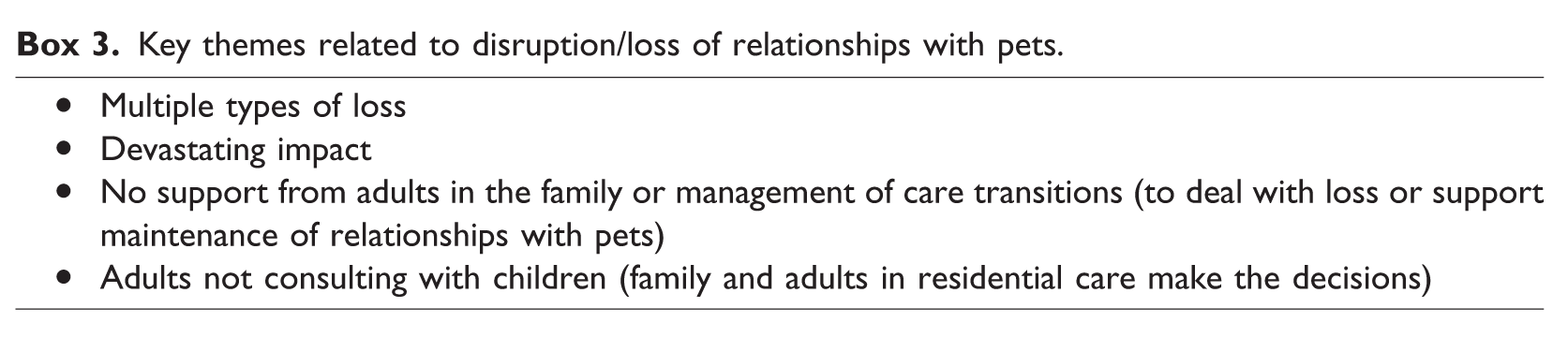
In all cases, they described how the loss of this relationship, even if it was temporary, was stressful (Box 3). They missed the emotional and physical presence of the animal, or in the case of severed relationships that were not rekindled, wondered what had happened to them. There was a strong sense of responsibility for their care when the pet was perceived to be their own (in the family home or in Skye’s case, in one of her residential care homes), or when they had played a big role in caring for them (Sophie, for example, took her supported carer’s dogs out for walks and spent a lot of time with them). They continued to worry about how the pet was doing when they could no longer see them. The young women described the devastating loss of pets from the family home (through death, disappearance, or parents rehoming):
Importantly, our participants conveyed the point that all the adults in their lives had paid little or no attention to their needs or views with respect to pets. Only Skye had been able to negotiate with adults to secure a hamster in one residential care home at the age of 14, due undoubtedly to her determination and persistence, but also her strongly expressed desire to have a baby and her tremendous success with a baby simulator. A pet was clearly seen as the more favourable option. For Skye, perhaps the long-term nature of her care experience brought her more confidence in being able to assert herself, or enabled a relationship to develop with the manager of the residential care home that afforded her these nurturance opportunities. For the rest of the girls, who had either been in care intermittently or short-term, pets did not appear to enter into the equation. In terms of moving into care and away from their family home, pets and the loss of them were wholly absent in any discussions or processes connected to the management of that transition: I’m thinking now, I’m thinking I don’t even remember that coming into the conversation with any social worker, with anybody. I don’t even remember anybody asking me … about that. (Amy) Researcher: When you went back and erm … when you were in care, if you don’t mind me asking, were you able to see your [dog] at all? Freya: Nope. Researcher: No? That must have been hard too. Freya: I wasn't even allowed to see my sister … but it’s one of those things. I worked in a residential foster care facility, erm and one of the things that we had happen a lot with our older kids is they’d mentioned how they missed their cat or their dog or their bunny rabbit, that was at home and, you know, there were certain plans in place so they could visit their birth parents, they could visit their siblings, their boyfriends, their girlfriends, their babies but there wasn’t any plans in place for them to visit their animals … and as someone who was in care myself and also who likes animals, I know how it feels to be like ‘I can’t see my dog’ and it’s my dog, you know. (Amy)
Key themes related to disruption/loss of relationships with pets.
The Need For Animals To Be Integrated In Residential/Foster Care And The Perceived Benefits
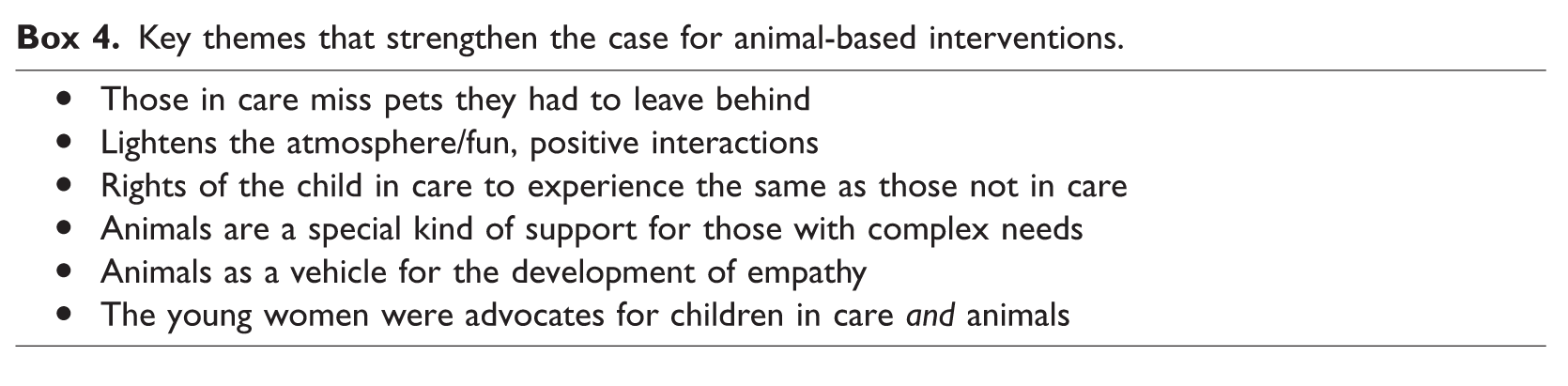
As a result of their own experiences, but also their observations of other young people with care experience, four of the five participants were adamant that the presence of animals would make a big difference in residential or foster care (Box 4). This would undoubtedly benefit those Amy referred to who had left pets at home, but there were two main points the young women made that strengthen the case for animal-based interventions:
The presence of animals in residential/foster care is highly beneficial in that it ‘lightens the vibe’, ‘lifts’ people up, and is particularly impactful for those with complex needs and mental health difficulties. Children/young people in care should have the same rights and privileges as others. I’d like them to be exposed to pets more. Because I think that’s kind of shut down that they can't have pets. I can take another example … the home that I used to live in, there’s one boy with learning difficulties and he is very loud, and he is very brash, and that’s just his personality. He just likes to shout to high heavens. But when [pet dog] is in, he’ll just sit and be quiet. I was never actually in a proper children’s home like a unit kind of thing, but I know there are lots of people that are and have been, and I’m sure that quite a few of them don’t allow pets, which I think actually needs to change, because they deserve pets just as much as someone that has a family or is living with their family does … just because one’s allergic does not mean that everyone else in that building is going to be as well … It would give them something to focus on, and probably keep them out of trouble as well. So, I think that kind of needs to change, and I know that that’s not going to happen anytime soon, but if enough people start talking about that, then eventually they might listen, and actually get an opportunity for something like that. That’s all I kind of have to say on that, because it’s those people that I think that mainly might not think of like, who deserves pets? Because I’m like the people that are in care homes ’cause they get treated differently and it’s not fair, like, they should be treated the same as – as if they were in their own families. I find that a lot of my fellow care-experienced peers … all have pets now …. And I think that’s because … obviously the lack, and not being able to be allowed one, at one point I remember that, and also that need for unconditional love. (Skye)
In the words of Skye:
Key themes that strengthen the case for animal-based interventions.
With respect to integrating animals in residential/foster care homes, four of the young women (two of whom had worked in residential care homes themselves) highlighted the need and associated benefits of children having interactions with animals. Recognising the significant challenges involved in allowing children to take pets into residential care with them (other children’s allergies, logistics, paperwork and liability issues were highlighted), they felt these constraints would not apply and would be easier to manage if animals were brought in for limited periods: I think nowadays they’re classed as like therapy dogs, like rescue dogs that come in whatever. But [then] it would be like, someone’s family member or whatever that would like, have the dog coming up to visit somebody. It was like once in a blue moon, but like, as a young person where there’s not a lot of support or, like, access to people where I’m from, I would always get like, really excited … I do think there’s a benefit and I think it needs to be done more. I think the care system’s like changing slowly with like the Scottish review, and obviously off the back of that there’s the English review. I think things are changing slowly, but there’s still a lot to be done. And I think it wouldn’t cause any harm. It’s all about budget. Like, see if they put aside like money, once every two months or something, rather than getting them a takeaway or whatever. They could put money towards like paying for somebody to bring in a therapy dog. (Sophie) Having worked and been in care I feel like … from a government, agency [perspective] a big logistical step is like, when you’re in care you have all that paperwork and things like that that kind of make it maybe hard to implement having animals in care, but I think something that I don’t think is talked about enough is like animal therapy, like maybe not having an animal that’s theirs but … you know having supplemental and like sort of incorporating animals in terms of like ‘Oh, today we have a bunch of puppies coming to visit the care centre,’ you know like things like that. I don’t think that’s talked about enough … and yet when you did have the kids see animals you could immediately see the impact. I remember bringing it up to my supervisors and saying, ‘Hey, we should work that out with like a shelter or something you know, have some sort of cool visit day or something’. Someone was always like, ‘Oh, it’s too much paperwork, too much logistics,’ things like that, but like you could instantly see the impact of that day. Those kids were like, ‘Oh I love dogs,’ ‘Oh I miss my cat,’ ‘Oh it’s great’ you know and it’s like it, it lightens the vibe a little bit. (Amy)
Discussion
There are five key findings from this piece of research that have strong implications for those working with children and young people who are taken into care or moving towards independent living:
Pets, especially dogs, appeared to be a significant support in the move to independent living. Pets are a source of comfort and stability for children growing up in families experiencing difficult circumstances. Pets were largely absent in discussions and processes associated with managing care transitions. They were neither supported through the emotional loss of pet connections nor helped to maintain some form of contact. Losing a pet, especially in the context of the family home when this appeared a deliberate attempt to hurt the child, was traumatic and unrecognised/unsupported, with potentially long-lasting effects. There was a strong plea for children and young people growing up in care (especially residential care homes) to have opportunities to interact with animals and the same as those not growing up in care.
We briefly reflect on these findings in terms of the benefits and potential downsides to a strong relationship with a pet, highlighting the experience of loss and the notion of ‘disenfranchised’ or unacknowledged grief. We then consider the implications for practice, focusing on: (a) understanding children and young people’s relationships with pets when they move into, between and out of care; (b) supporting children and young people to deal with loss; (c) helping care leavers get the support they need with pets; and (d) how to manage interactions with animals to best effect in residential/foster care.
The Benefits And Potential Downsides To A Strong Relationship With A Pet
Pets, dogs in particular, appeared to be a significant support in the move to independent living. Apart from companionship, they were described as having a positive influence on mental health, promoting a routine, responsibility, physical exercise/fresh air, going on ‘adventures’ and getting to know others with dogs/neighbours for support. They are also a welcome distraction from thinking about yourself. While the dogs facilitated social interaction with others, the young women focused on the emotional support that built their confidence and the dependency of the animal on their care. They emphasised this reliance on one another, the need to both love and be loved, and the benefits that ensue in the process of caring for another being who is dependent on you. Some of the young women used the language of being their pet’s ‘mum’ and thus the caregiver, but the interdependent nature of the relationship and their own reliance on their pets for support and security were strongly asserted. They emphasised the care, attention and love they received from their pet, echoing Carr and Rockett’s (2017) research with children in foster care who felt they did not have to ‘seek animals out’ when they were distressed because the animal already knew something was wrong and would ‘come to them’ first. Millar, Levy and Stockman (2003: 7) have even suggested that ‘children who have had early experiences of rejection, neglect or abuse, may be able to undertake much emotional repair work in their relationship with a dog’.
Lass-Hennemann and colleagues (2022) suggest, in line with our findings, that forming a strong emotional bond with a pet may reflect a compensatory strategy for people who were not able to establish secure relationships with other people during childhood. However, the downside of being heavily dependent on an animal at any point in life means you are susceptible to a greater impact of loss. The loss of a relationship with a pet for children and young people with care experience is clearly not a trivial one. Before entering care, children’s relationships with the most significant people in their lives are already complicated, and as we have seen, losing a connection with a pet is often tied up with a sense of bewilderment linked to a lack of trust, acknowledgment or understanding from adults surrounding them. The loss that is felt may mirror that experienced when a pet dies, but the bereavement literature suggests that anguish surrounding the loss of a pet is often not acknowledged or supported by others in the same way as grief surrounding human life: ‘Simply put, the death of a companion animal is not recognised as a genuine loss, evoking phrases such as “you can always get another one” or “she was just a dog”’ (Whipple, 2021: 520).
This results in a stifling of the grieving process that has come to be known as ‘disenfranchised grief’ (Marr, Kaufmann and Craig, 2022; Park, Royal and Gruen, 2023). Whipple (2021: 520) suggests that this ‘quiet suffering’ experienced when a loss is not openly acknowledged, mourned, or supported, is an area often overlooked by mental health professionals. Given the ways in which the young women described the impact of losing an animal, this is worthy of consideration.
Implications For Practice
… it is loving relationships that hold the solutions for children and families overcoming adversity. While relationships are rich and organic, children’s social care can be rigid and linear. Rather than drawing on and supporting family and community, the system too often tries to replace organic bonds and relationships with professionals and services. (MacAlister, 2022b:1)
Understanding Children And Young People’S Relationships With Pets When They Move Into, Between, Or Out Of Care
The lack of attention to supporting children to either maintain a relationship in some form or cope with the loss of a pet in their life is likely to have a detrimental impact on their mental health and, potentially, their trust in adults. This does not mean that every child who moves into care has a pet that has played a fundamental role in their life. As professionals’ views of what might be in the best interests of the child can differ from those of the child, it is important that assumptions are not made about their relationships, views, needs or wants (Nelson, Homer and Martin, 2020). Children may not always be forthcoming in saying what they think, need or want. Therefore, providing multiple opportunities to ensure all relationships can be explored is vital in the process of understanding children’s home environments and history. This resonates with findings from a recent synthesis of research exploring foster children’s perspectives on participation in child welfare processes (McTavish, McKee and MacMillan, 2022). Social connections and attachments (including people, pets, places and personal belongings) were a key concern for children, and they wanted relationships that centred on fairness, honesty and inclusivity.
Unfortunately, our findings highlight deficiencies in the care system at the time when these young people experienced it. There was recognition that much has changed in recent years to provide continual support through transitions for care-experienced people. However, the young women felt that much more could be done. While it is tempting to assume that the situation is now different, as a result of improvements to the care system, a query we received during the study suggests that pets continue to be disregarded. We were contacted by a parent of a six-year-old girl whom she had adopted at the age of four to ask if the views of younger children could be accommodated in the study. She was acutely aware of her daughter’s continued distress at having had to leave her pets, with no discussion, explanation, or opportunity to say goodbye. The confusion and grief associated with this manifested itself through questions such as:
‘Why wasn’t I allowed to keep my pets when they were mine? They belonged to me.’ ‘Why didn’t the grown-ups give me a chance to say goodbye to my pets?’ (‘I didn’t get to say goodbye’ is a constant re-trauma for her.) ‘Why are my birth family safe to look after pets but not safe to look after me?’ ‘How are my pets doing now? Who do they live with? Are they safe?’ ‘Does my pet miss me?’ In the turmoil that surrounds a child being removed from their birth family and taken into care, surely steps can be taken to ensure that this process is handled in a planned, sensitive and supportive way, which mitigates rather than perpetuates further relational trauma and distrust in adults.
This parent agreed to provide us with a supportive statement that we could include in publications or research proposals, which makes a powerful plea that is supported by recent research (e.g., McTavish, McKee and MacMillan, 2022; Skoog, Khoo and Nygren, 2015):
Supporting Children And Young People To Deal With Loss
Social workers use a range of tools and strategies that move beyond grief (Cleary et al., 2022) to help children deal with changes in their family environment and the loss of human relationships (e.g., life story work, gratitude, celebration of their life and time together, memories). It is vital that pets are considered in this process and this should be incorporated into training for social workers and the foster carers they support (Vasileva and Petermann, 2018). Forty-three percent of the foster carers in recent research by the animal welfare charity Blue Cross (2022) felt it would be useful to gain knowledge and skills on how to support children experiencing pet loss, including forced separation. There are many techniques used in therapeutic practice to support those experiencing loss (Clements, Benasutti and Carmone, 2003; Whipple, 2021) that might usefully be drawn upon. Clements and colleagues (2003) suggest that interventions should be geared toward acceptance of the loss, understanding the changes that have occurred, and exploring ways to help people thrive without their pet. However, Schmidt et al.’s (2020) work shows that children and young people use ‘continuing bonds’ as a way of dealing with the loss of a pet. In this case, the pet is held on to (albeit in a different way and with an acceptance of the loss), remembered and talked about, rather than trying not to think about them and seeing the end of the relationship as final – the ‘disengagement’ and ‘release’ model of grief (Schmidt et al., 2020: 278). Interestingly, one of the young women in our study described there being three animals that were important to her now, in spite of one having passed away a few years earlier. Established activities to support the grieving process (Clements, Benasutti and Carmone, 2003; Ross, 2005) and reorganisation of the way they see their relationship with the pet, may help children make sense of things when an animal is no longer in their life, no matter what the reason. However, in the case of pets that remain in the family or the homes of foster carers when children move away, it is also important to address children’s concerns for the animals’ welfare.
Helping Care Leavers Get The Support They Need With Pets
Given that many young people moving out of care are likely to get a pet (Briheim-Crookall et al., 2020; Staf, 2019) and may be struggling with their mental health and loneliness that the young women in our study referred to, it is vital that support is in place. This is required to help them identify the right pet and understand how to establish relationships which are positive for both parties. It highlights the importance of education and interaction with animals while they are in care (see next section), including the need to signpost relevant organisations and animal welfare charities that provide support if they experience challenges with their pets (including the availability of pet bereavement support). However, it is imperative that pets are not seen as a replacement for involvement with a significant adult through and beyond the transition (McMullin, 2018).
Given the challenges they have had to deal with early in their lives, it is vital that we understand what happens to care leavers when the pet they have come to depend on so much passes away or is seriously ill. If the pet is deemed essential for positive mental health, what happens when they are no longer there? Davis (2011) examined how we can best predict who is likely to suffer extreme grief at the loss of a pet and found greater risk for adolescents and older adults, females, those living alone or with no children, and those who lack social support. This is consistent with the theory that loss is more complicated and acutely felt when the pet has been centre stage in the person’s life (McNicholas and Collis, 1995). Undoubtedly the young women in our sample would say that having the pet in their lives far outweighed the negative experience of losing them. At the same time, support is vital to help prevent a downward spiral, but perhaps also to ensure that the care-experienced young person is not solely reliant on an animal to meet their needs. As alluded to by one of our participants, what if the animal falls short or demands too much when your mental health is compromised? What if you do not have support for the animal if you fall ill or are unable to cope?
Interactions With Animals In Residential/Foster Care And How To Manage These To Best Effect
While it important to be responsive to individuals’ particular cases, exploring ways in which those in care can be supported through positive interactions with animals seems vital on a number of levels. From ‘lightening the vibe’ (as Amy described), to education about the realities of pet ownership, and helping to build positive relationships with others, the role of animals in enhancing wellbeing is increasingly acknowledged (Hawkins, Hawkins and Tip, 2021; McConnell, Paige Lloyd and Humphrey, 2019). Although our study shows that there are perceived barriers to incorporating animal interactions within residential care, there are numerous examples of how this is being managed in a range of care settings (pre-school, foster homes, elderly care homes). The Care Inspectorate resource Animal Magic (2018), for example, was developed to support innovation and improvement across the care sector in Scotland. It advocates the inclusion of pets and animal care in all care establishments, including residential care facilities for children and young people, to enhance the quality of life and wellbeing of residents. The report and accompanying video footage provide examples of how this has been managed in a variety of settings. With respect to provision for care-experienced children and young people, this ranges from the inclusion of chickens or rabbits in back gardens to linking with foster carers or members of the wider community who have smallholdings, farms or other expertise with animals. Similarly, the Animals and People Together (APT) Project has been designed with the explicit aim of producing consistent guidance that will help people think about the types of animals which interact well with humans, and safeguarding measures that should be in place to support all involved. It will also provide clarity on how and when to seek support (Scottish SPCA, 2022).
The Bright Spots Programme, a partnership between Coram Voice and the University of Oxford which supports local authorities to systematically listen to care-experienced children and young people about things that are important to them, has also led to the creation of an ‘Ambassador for Animals’ (Coram Voice, 2021). This young person sits on the Children in Care Council and promotes children and young people’s access to animals. Changes in social work practice are taking part as a result (e.g., being mindful of the importance of pets for children and spending time with animals, and considering whether carers have pets when matching children and foster carers). It may be that the greatest value of interactions with animals for care-experienced children and young people resides in the possibility that they facilitate the development of trust in adults (Carr and Rockett, 2017).
Although the inclusion of animal interactions within the care sector is increasingly recognised as important, and pet ownership in foster families is high (Blue Cross, 2022; Briheim-Crookall et al., 2020), it is not without risk. High-profile cases in the media of children being attacked by dogs, for example, has led to adoption and fostering panel members becoming concerned about recommending the placement of children in dog-owning families (Millar, Levy and Stockman, 2003), subjecting such families to even greater scrutiny. Millar and colleagues (and Adams, 2015) recognise the benefits of dogs in foster homes but are careful to make detailed recommendations on everything that needs to be taken into account before placing a child in a dog-owning family. These include assessing the child’s feelings about and past history with animals, the dog’s history and temperament, and the possible impact of an incoming child on the individuals in the family unit, their daily life and routines, and the dog’s regime. As Adams (2015) points out, it is important to consider child and dog compatibility. Millar, Levy and Stockman (2003: 4) provide a detailed checklist of information to gather about a dog and possible scenarios to discuss with the family; for example: Explore how the family will cope if, after placement, the combination of dogs and children proves untenable. Having to rehome a loved family pet can be upsetting for everyone including the incoming child who may already have sustained significant losses.
There is a strong case for developing a unified approach to assessment, monitoring and support that all local authorities could follow given the disparities identified in recent research with 150 foster carers by the animal welfare charity Blue Cross (2022). Importantly, 96% reported that they did not receive any training to specifically prepare them for their pets and cared for children living together. While the majority felt their pets were beneficial for the children in their care, they recognised that children did not always empathise with the pet, respect boundaries, or understand dog body language. Foster carers reported that they would welcome training, with the top three topics being dog behaviours, supporting children through loss, and encouraging positive and safe interactions between children and pets. Although the situation in residential care homes is likely to differ (and pets other than dogs may not carry the same potential for risk to safety or disruption), it is perhaps no surprise that the young women detected reluctance to allow children pets or afford in-house opportunities to interact with animals. They may feel that knowledge, skills and time are required that they simply do not have.
Limitations
Our sample is very small and female-biased; therefore, at present we cannot generalise the findings to the wider population of care-experienced children and young people. All the young women were living in Scotland, so it is also possible that the care system differs in England and Wales. However, the query from a parent based in London is supported by findings from the Coram Voice research in England (Briheim-Crookall et al., 2020; Lewis, Briheim-Crookall and the Bright Spots team, 2022; Selwyn and Briheim-Crookall, 2022) and suggests that at least in some cases, and from the perspective of the child, pets are given no attention in the process of managing children’s transitions into care. Moreover, the findings from the survey carried out at the same time as the interviews (not reported here) provide support for the notion that pets play a pivotal role, and that loss has a detrimental impact, especially for those who are struggling with low self-esteem/poor mental health.
It is also possible, as we recruited willing volunteers, that our sample of young women was unusual. They were all articulate, passionate and in a sense, activists, as they were keen to ensure that the voices of care-experienced young people were heard and had acted as advocates for animal welfare. However, it is the very nature of this activism/advocacy that strengthens the research. They were not just thinking about and imparting knowledge concerning their own experiences but reflecting on the situation for others currently in the care system. Nonetheless, due to ethical concerns about triggering negative memories, we did not ask questions that would have provided more detailed biographical data.
Implications For Research
Much more work is required to understand the role that pets play in the lives of care-experienced children – how these relationships interact with others in the home environment and the impact of losing connections with them. There is also a strong case for identifying the range of techniques and materials that can be used to (a) explore children’s relational networks, explicitly including pets (both past and present), and (b) support children when they can no longer see a pet that was important to them. Research with social workers is necessary to examine the extent to which pets are considered in everyday practice and especially in relation to child protection issues, with a view to developing a framework for examining the role of pets within assessments of family dynamics. Working with animal welfare organisations should help practitioners to identify red flags that suggest potential neglect or animal harm that will have implications for any children in the family.
An area that is also under-researched concerns the perceptions of those managing and working in residential care on incorporating pets or interactions with animals. Although, as we pointed out earlier, there is guidance on how to ensure this process is managed safely and effectively, the young women highlighted a reluctance to bring animals in. This is likely linked to some level of awareness of the issues identified by Millar, Levy and Stockman (2003). For such an intervention to be beneficial, there needs to be both recognition of its importance and a commitment to make it work for everyone, including those who may have had negative experiences with animals in the past. We need to understand the views of those who would have prime responsibility for ensuring positive welfare and safety for children and animals.
In previous research, we have found differences in the way male and female adolescents describe their relationships with pets, females showing stronger attachment and emotional connection (Muldoon, Williams and Currie, 2019; Muldoon et al., 2019; see also Cassels et al., 2017). We have also highlighted the gendered nature of pet care (Muldoon, Williams and Lawrence, 2014). Accordingly, it is possible that we have captured a female perspective that does not resonate with males. It is important that future research is geared towards understanding the influence of sex and gender, so that measurement tools used in survey research can be tailored appropriately. Finally, the broader research on attachment/emotional connection to pets often presents an overly positive view of interactions with pets, when it is not yet clear whether a strong emotional link is always a good sign (Lass-Hennemann et al., 2022). There is a need to identify in more detail the degree to which relationships with pets are shaped by relationships with caregivers which are formed early in life, and with others which are developed subsequently. It is possible that a strong relationship with a pet is the result of deficient relationships in other areas, and while pets can be ‘social facilitators’, they may also inhibit the development of other beneficial connections if the animal takes centre stage.
Footnotes
Declaration of conflicting interests
The author(s) declared no potential conflicts of interest with respect to the research, authorship, and/or publication of this article.
Funding
The author(s) received no financial support for the research, authorship, and/or publication of this article.
