




Abstract
This study investigates whether existing children in a fostering household differ from young people in non-caregiving households in the timing of their transitions to key adult roles, which are known to affect later health and life chances. Using data from the ONS Longitudinal Study, we pooled records from census years 1971–2001 and linked them to follow-up records from 1981–2011. We identified 2,656 children living with a foster child and compared their profiles on the ‘big five’ transitions to roles of adulthood – finishing school, leaving home, finding work and becoming financially independent, getting married, and having children – with those of other children without a foster child in the household (N = 209,453). We fitted logistic and multinomial models that controlled for childhood socioeconomic and demographic confounders to estimate the proportion achieving the five roles in early adulthood. When compared to those without a foster child in the household, a modest but reliably higher proportion of caregivers’ children achieved the transition to adulthood. There was some evidence that caregivers’ children might cope better with the transition to adulthood if they were older than the foster child or were female. The findings suggest that supporting foster parents with delaying their children’s transition to adulthood could become part of the role of supervising social workers.
Plain Language Summary
This study investigated whether children of foster carers differ from young people in non-caregiving households in the timing of their transitions to key adult roles, which are known to affect later health and life chances. We used data from the ONS Longitudinal Study, which contains information from censuses for the years 1971–2011 for a 1% sample of the general population of England and Wales. We identified 2,656 children living with a foster child and compared their profiles on the ‘big five’ transitions to the roles of adulthood – finishing school, leaving home, finding work and becoming financially independent, getting married, and having children – with those of 209,453 other children without a foster child in their home. We took account of differences in children’s social, economic and demographic conditions in our statistical analyses. We found that a modest but reliably higher proportion of foster carers’ children achieved the transition to adulthood before the age of 30 than the other children who did not live with any foster children. There was some evidence that foster carers’ children might have a later transition to adulthood if they were older than the foster child or if they were female. Since it is early transitions to adulthood that are linked to poorer health and life chances later in life, the findings suggest that supervising social workers’ roles could include supporting foster parents with delaying their children’s transition to adulthood.
Introduction
On 31 March 2022 there were 82,170 children looked after in England (or 70 children per 10,000 of the population), a rise from 47,590 in 1994. Approximately three-quarters of these children were placed with 43,710 different foster families (National Statistics, 2022). Many of the caregivers have children of their own but statistics on how many foster families are in this situation are lacking. Nevertheless, there has been a growing body of evidence on the impact of caring on the children of caregivers. Most of the findings are based on small-scale unrepresentative qualitative research (Höjer et al., 2013; Thompson and McPherson, 2011; Twigg and Swan, 2007). Yet the evidence is remarkably consistent with reports of both positive and negative impacts on caregivers’ children in the foster home, depending on the outcomes examined.
Benefits for caregivers’ children include appreciating their families (Clare, Clare and Peatty, 2006; Noble-Carr, Farnham and Dean, 2014; Poland and Groze, 1993), feeling part of a team (Clare, Clare and Peatty, 2006; Sutton and Stack, 2013), making new friends (Clare, Clare and Peatty, 2006; Noble-Carr, Farnham and Dean, 2014; Sutton and Stack, 2013; Watson and Jones, 2002), becoming more caring and empathetic (Clare, Clare and Peatty, 2006; Heidburrt, 1995; Höjer, 2007; Martin, 1993; Moslehuddin, 1999; Sutton and Stack, 2013; Targowska et al., 2016; Watson and Jones, 2002; Younes and Harp, 2007), understanding others’ misfortunes (Clare, Clare and Peatty, 2006; Heidburrt, 1995), having fun and enjoying shared activities (Heidburrt, 1995; Noble-Carr, Farnham and Dean, 2014; Sutton and Stack, 2013; Targowska et al., 2016), learning parenting skills (Noble-Carr, Farnham and Dean, 2014; Targowska et al., 2016) and learning to take responsibility (Clare, Clare and Peatty, 2006; Poland and Groze, 1993; Moslehuddin, 1999; Younes and Harp, 2007).
Commonly cited challenges are having to share belongings, space and parents’ time (Clare, Clare and Peatty, 2006; Heidburrt, 1995; Höjer, 2007; Höjer et al., 2013; Martin, 1993; Moslehuddin, 1999; Noble-Carr, Farnham and Dean, 2014; Poland and Groze, 1993; Watson and Jones, 2002; Younes and Harp, 2007), dealing with negative behaviours, such as stealing and lying (Clare, Clare and Peatty, 2006; Höjer, 2007; Moslehuddin, 1999; Noble-Carr, Farnham and Dean, 2014; Targowska et al., 2016; Watson and Jones, 2002), loss of innocence (Clare, Clare and Peatty, 2006; Höjer, 2007), increased responsibility (Clare, Clare and Peatty, 2006; Höjer, 2007; Targowska et al., 2016), avoiding adding to parental burden (Clare, Clare and Peatty, 2006; Höjer et al., 2013), coping when placements end (Clare, Clare and Peatty, 2006; Höjer et al., 2013; Noble-Carr, Farnham and Dean, 2014; Poland and Groze, 1993; Sutton and Stack, 2013; Watson and Jones, 2002; Younes and Harp, 2007), meeting the expectations of parents (Clare, Clare and Peatty, 2006; Younes and Harp, 2007), family conflicts and tensions (Höjer, 2007; Noble-Carr, Farnham and Dean, 2014) and loss of privacy (Moslehuddin, 1999; Noble-Carr, Farnham and Dean, 2014; Targowska et al., 2016; Younes and Harp, 2007).
From the findings on childhood outcomes, it is possible that transitions to adulthood might also be affected by the experience of sharing their home with foster children. The transition to adulthood is the process of moving from adolescent dependency on parents to adult independence and was traditionally, until more recent years, a process completed during the late teens to late 20s. It involves the social and demographic passage from the educational system to the labour market and from the parental home to one’s own home; the transition to parenthood, with the birth of the first child, is ordinarily defined as the final stage of the transition to adulthood process (Billari, 2001). ‘Off-time’ transitions to adulthood, both early and late, can lead to later physical and mental health problems and lasting difficulties for success in later life (Furstenberg, 2005; Schoon, 2015). Earlier factors, such as cognition and schooling, parenting quality, behaviour and socioeconomic position, have been linked to the timing of the transition to adulthood (Masten et al., 2004; Roisman et al., 2004). Several researchers have noted that caregivers’ children learned responsibility and good parenting practices by observing a parent’s interactions with a foster child (Clare, Clare and Peatty, 2006; Moslehuddin, 1999; Poland and Groze, 1993; Younes and Harp, 2007), although there have been warnings that this might lead to premature growing up, potentially distorting their development into adults (Duffy, 2013; Martin, 1993). If their experiences lead to a premature adulthood, then one could hypothesise that caregivers’ children make the transitions to adulthood at an earlier age than other children. On the other hand, with greater maturity, caregivers’ children might make more responsible choices about education, work and family formation, potentially delaying the timing of transition to adulthood. In addition, the negative impacts on caregivers’ children, such as a loss of privacy and parental time and attention, might have a negative impact on their schooling with the consequence of lower academic qualifications.
Some reviews on caregivers’ children have commented on age and sex differences in the impact of sharing their home with a foster child. Generally, the research shows that older children cope best (Höjer et al., 2013; Moslehuddin, 1999). Placements were more likely to break down or cause more problems for the family when a caregiver’s child was younger than the child(ren) looked after (Höjer et al., 2013). Similarly, girls have been found to be more affected than boys, and fostering worked better when the caregiver’s child and the foster child were the same sex (Moslehuddin, 1999; Serbinski and Shlonsky, 2014). There have been calls for more research on age and sex (Heidburrt, 1995; Höjer et al., 2013; Sutton and Stack, 2013; Twigg and Swan, 2007) although specific details of the research needs are sketchy. It is an open question whether absolute or relative age and sex influence transitions to adulthood for caregivers’ children.
Several methodological themes also emerge about gaps in the literature. First, convenience samples are almost always used, and the extent that this may bias conclusions is unknown; second, even basic demographic data are scarce, as suggested by the lack of statistics on caregivers’ children mentioned above; third, there is a dearth of evidence on the longer-term impact on caregivers’ children, with the suggestion that longitudinal research on transitions to adulthood would be beneficial. Finally, this overview has drawn on international literature. Given international differences in the practice of foster care, including the national configurations of child protection, family services and community caring and the professionalisation, support and training of caregivers, a national focus could be particularly helpful for informing policy in the UK.
This analysis asks the fundamental research question, ‘Do more caregivers’ own children pass the key milestones indicative of a transition to adulthood by the age of 30?’ while addressing the methodological concerns raised above. The largest longitudinal data resource in England and Wales – the Office for National Statistics (ONS) Longitudinal Study (LS) – is broadly representative of the entire population and with approximately one million people included over the 40 years of the study, it allows for robust research into subgroups of the population such as caregivers’ children. The design of the LS makes it possible to provide trends in the basic social and demographic data that have been missing to date. With up to 40 years’ follow-up data on children in the LS, we could chart, among other factors, the ‘big five’ roles of a successful transition to adulthood: (1) completing education; (2) leaving home; (3) getting on in work and becoming financially independent; (4) getting married; and (5) starting a family of one’s own (Settersten, 2007).
In addition to addressing concerns about study design, the current study will address some of the gaps in the research evidence on caregivers’ children. It will first investigate whether markers of a transition to adulthood for caregivers’ children differ from those of children without a foster child in the family. Furthermore, it will explore whether there are any differences in outcome for caregivers’ children depending on their own age or their age relative to that of the foster children in the family. Finally, it asks if there are any differences in outcome for caregivers’ children depending on their own sex or their sex relative to that of any foster children in the family.
Methods
Data
The LS is a 1% representative sample of the population of England and Wales, drawn initially from respondents to the 1971 census who were born on one of four dates in the calendar year (Shelton et al., 2019). New members – newly born or immigrants – are added to the study if they have one of the same four birthdates. Similar 1% samples have also been drawn from the 1981, 1991, 2001 and 2011 censuses. The LS has linked records for each census after LS members are first sampled to create a longitudinal dataset (ONS, 2019). For further details see the research by Lynch and colleagues (2015). Census data are also collected on the LS members’ co-residents, but these are not linked and are cross-sectional only. LS members’ data from birth, death and cancer registers have been added to the LS since 1971.
Data Availability And Project Approval
The ONS Secure Research Service (SRS) gives accredited or approved researchers secure access to de-identified, unpublished data in order to work on research projects for the public good. The research project was approved by the ONS Research Accreditation Service (RAS).
Further information is available at: www.ons.gov.uk/aboutus/whatwedo/statistics/requestingstatistics/approvedresearcherscheme
Inclusion And Exclusion Criteria
We identified 351,970 observations from 237,174 dependent children in the LS in the 1971–2001 censuses (i.e., members aged less than 18 years, not living independently, of single marital status and not a visitor in the household) and with outcome data when they were in early adulthood (18–29 years old). To reduce confounding due to unobserved data about one-parent and multigenerational households, we dropped 50,362 observations from children in these situations, restricting the sample to nuclear two-parent households. Note that the dependent children could be adopted with the same surname as the parents. Missing data on background covariates further reduced the sample to 299,096 observations from 212,109 children. Of these, there were 3,529 observations where they were living with one or more foster children.
Outcomes
Outcomes are taken from the 1981 to 2011 censuses and cover the five key milestones in the transition to adulthood as follows.
Completing Education
Two variables measure successfully completing education – whether still in education and achieving higher than NVQ level 2 (e.g., GCSE) qualifications. From the census question on current employment status, we derived an indicator of still being in education (0 No; 1 Yes). Highest qualification level was harmonised across census years into the following categories: ≥18 years qualifications (at least A levels or NVQ level 3 equivalent) and <18 years qualifications.
Leaving Home
Using information on members of the household, we identified LS members who were not living with either their mother or father. This is used to derive a binary variable (0 Living with parent(s); 1 Left home).
Getting On In Work And Becoming Financially Independent
Three variables assessed how the LS member was faring in the job market: in full-time or part-time employment; occupational social class; and if long-term non-employed. A binary variable indicates whether they were working on the census day (0 No; 1 Yes). Social class is an indicator of both getting on in work and of financial independence, measured using the three-category version of the National Statistics Socioeconomic Classification (NS-SEC): Managerial/professional; Intermediate occupations; Routine occupations (Rose and Pevalin, 2003). For those who were not currently working, years since last worked or whether the individual has never worked is recorded at each census. From this information, a binary long-term non-employed variable was derived (i.e., 0: <10 years not in work; 1: ≥10 years not in work). A second indicator of financial independence used information on housing tenure and household membership (0 owner occupier, including those with a mortgaged property; 1 renting; 2 still with parent(s); 3 other arrangement, e.g., ‘sofa-surfing’, living in a caravan or a communal establishment).
Marriage
Marital status is defined as 0 currently legally married; 1 previously married (widowed, divorced) or 2 single.
Children
For women only, the LS is linked to Births Registration forms, from which the number of children and age at birth of first child can be derived. The number of children was recoded to create a categorical variable representing 0, 1–2, or 3+ children. Age at first child was used to derive a binary teenage mother variable (0 No; 1 Yes).
Covariates
Age And Sex
Age in years and sex (0 male; 1 female) were taken from the census in which the LS child was identified. Indicator variables identify the LS child’s ‘relative age’ (0 neither, 1 younger, 2 older, 3 both younger and older foster children in the household) and ‘relative sex’ (if foster children were 1 the same sex, 2 opposite sex, 3 both same and opposite sex to them).
Foreign background country of birth recorded whether LS children were born in the UK or elsewhere. Migration status indicated whether they were first generation, second generation or ≥ third generation migrants. Ethnicity was grouped into 0 White, 1 Black, 2 South Asian and 4 Other. Information on migration status and ethnicity is only available from 1991, so for LS children in the 1971 and 1981 censuses, these criteria were extrapolated from their responses in later censuses.
Family Social Class
Mothers’ and fathers’ social class were measured using the 3-category version of the NS-SEC described above.
Family Education
Mothers’ and fathers’ education level were binary variables indicating 18+ years qualifications or not.
Family Employment
Mothers’ and fathers’ employment status are binary variables indicating if they were working or not.
Overcrowding
A binary variable identifies if the home is overcrowded, defined as ≥1.5 persons per room in the household.
Children In Household
This variable is the total number of children less than 18 years old who were usually resident in the household.
Analysis
Childhood data from census years 1971 to 2001 were pooled and linked to follow-up records from 1981 to 2011. If LS members were less than eight years old at the first observation, they could be observed again in childhood at the next census 10 years later, resulting in each child having one to two records. The background characteristics of the analytical sample and those excluded due to loss of follow-up or item non-response are shown in online Supplemental Table S1. The distribution of the variables in the complete case sample are very similar to that in the full data sample. The incomplete sample distributions show that most data were missing on migration status and that those excluded were more likely to be socioeconomically disadvantaged or from larger families. The socioeconomic and demographic characteristics of caregivers’ and non-caregivers’ children were compared using independent sample t-tests or non-parametric equivalents, as appropriate. Logistic and multinomial models, as appropriate, were fitted to predict the transition to adulthood outcomes with cluster-robust standard errors estimated to allow for intra-child correlations. All models included the full set of socioeconomic and demographic covariates listed above. Interaction terms for care group with age and sex indicators were then estimated to test for modification by age, relative age, sex and relative sex. Marginal effects at the means are presented, representing the predicted probability of each outcome conditional on all other covariates being set to their mean value.
All analyses were estimated using Stata version 17 software (Stata Press, 2019).
Results
Table 1 shows the number of LS dependent children with outcome data at follow-up. In total there are 299,096 observations from the 212,109 children. Caregivers’ children comprised 2,656 (1.25%) of the sample of LS dependent children.
Maximum number 1 of observations for dependent children with data at follow-up, ONS Longitudinal Study.
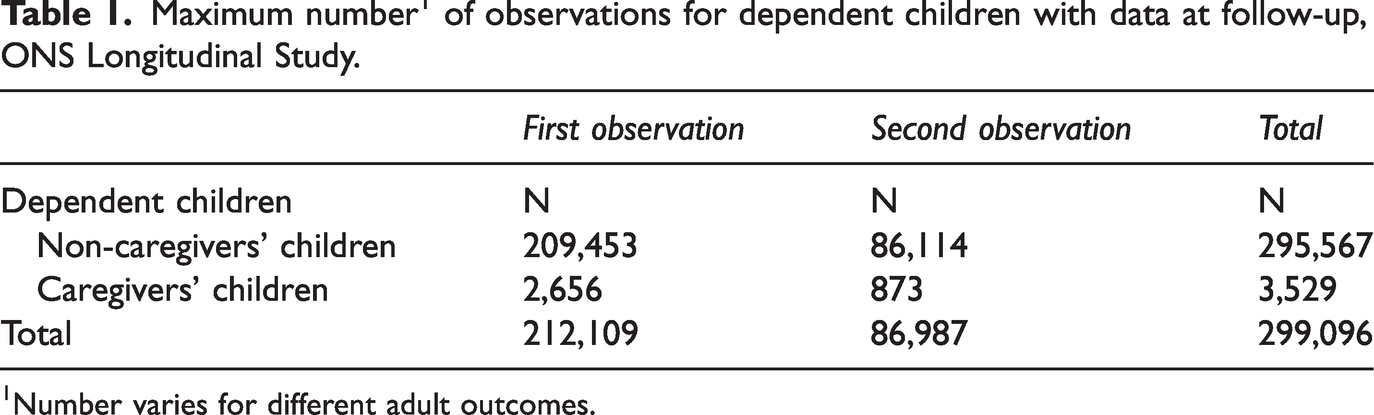
Number varies for different adult outcomes.
Compared with non-caregivers’ children, caregivers’ children were more likely to be a first- or second-generation migrant to the UK and to belong to either a Black or South Asian minority group (Table 2). They were slightly older on average and there were more children in the family, more commonly attributable to kinship care than having an unrelated foster child or natural siblings (data not shown). Their family was more often socioeconomically disadvantaged, with both parents being less well educated and less likely to be in work. On average, their fathers were in a less privileged social class while their mothers’ social class was more frequently unknown – probably because they had been out of the labour market long-term.
Sociodemographic characteristics of caregivers’ (N = 2,656) and non-caregivers’ (N = 209,453) children at first observation, ONS Longitudinal Study.
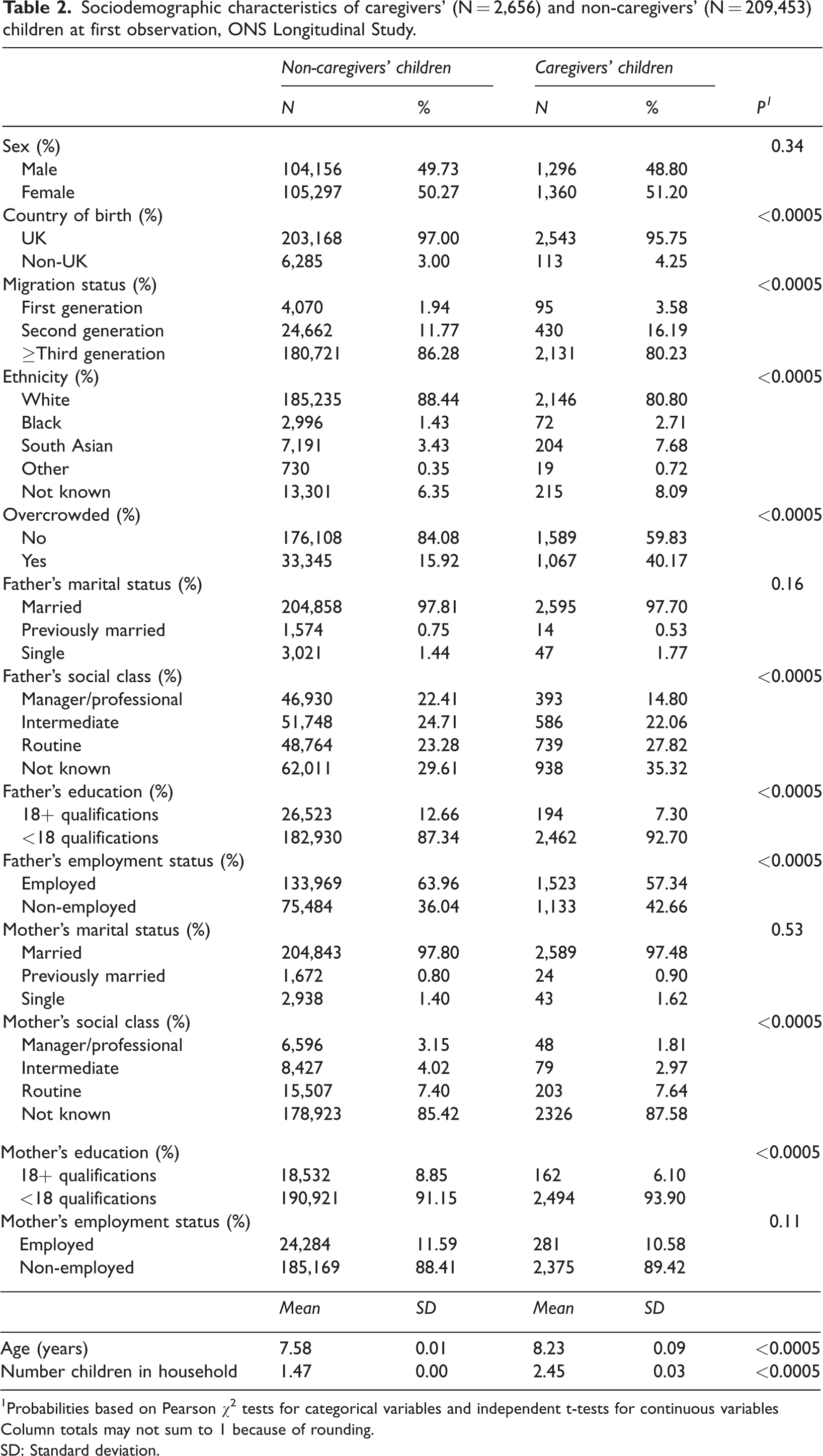
Probabilities based on Pearson χ2 tests for categorical variables and independent t-tests for continuous variables.
Column totals may not sum to 1 because of rounding.
SD: Standard deviation.
Based on the raw data, caregivers’ children in early adulthood were less commonly well educated and in work and more commonly married, in a less advantaged social class and living in rented accommodation. Women were more often teenage mothers with more children (Supplemental Table S2). However, this does not consider any possible intergenerational transmission of disadvantage since, as reported above, caregiver families were more frequently socioeconomically disadvantaged.
Are The Outcomes Of Caregivers’ Children Different From Those Of Non-Caregivers’ Children?
The short answer to this question is ‘Yes’, although differences are small. Predicted probabilities are presented in Table 3 (original model coefficients in Supplemental Table S3) and show that the direction of differences for nine out of the 11 outcomes indicate that caregivers’ children had an earlier transition than non-caregivers’ children. However, 95% confidence intervals around point estimates for three of the nine outcomes were too wide to give convincing evidence about differences in the prevalence of achieving transitions to adulthood between children of caregivers and children without a foster child in the family.
Predicted probabilities 1 for markers of the transition to adulthood of caregivers’ and non-caregivers’ children, ONS Longitudinal Study.
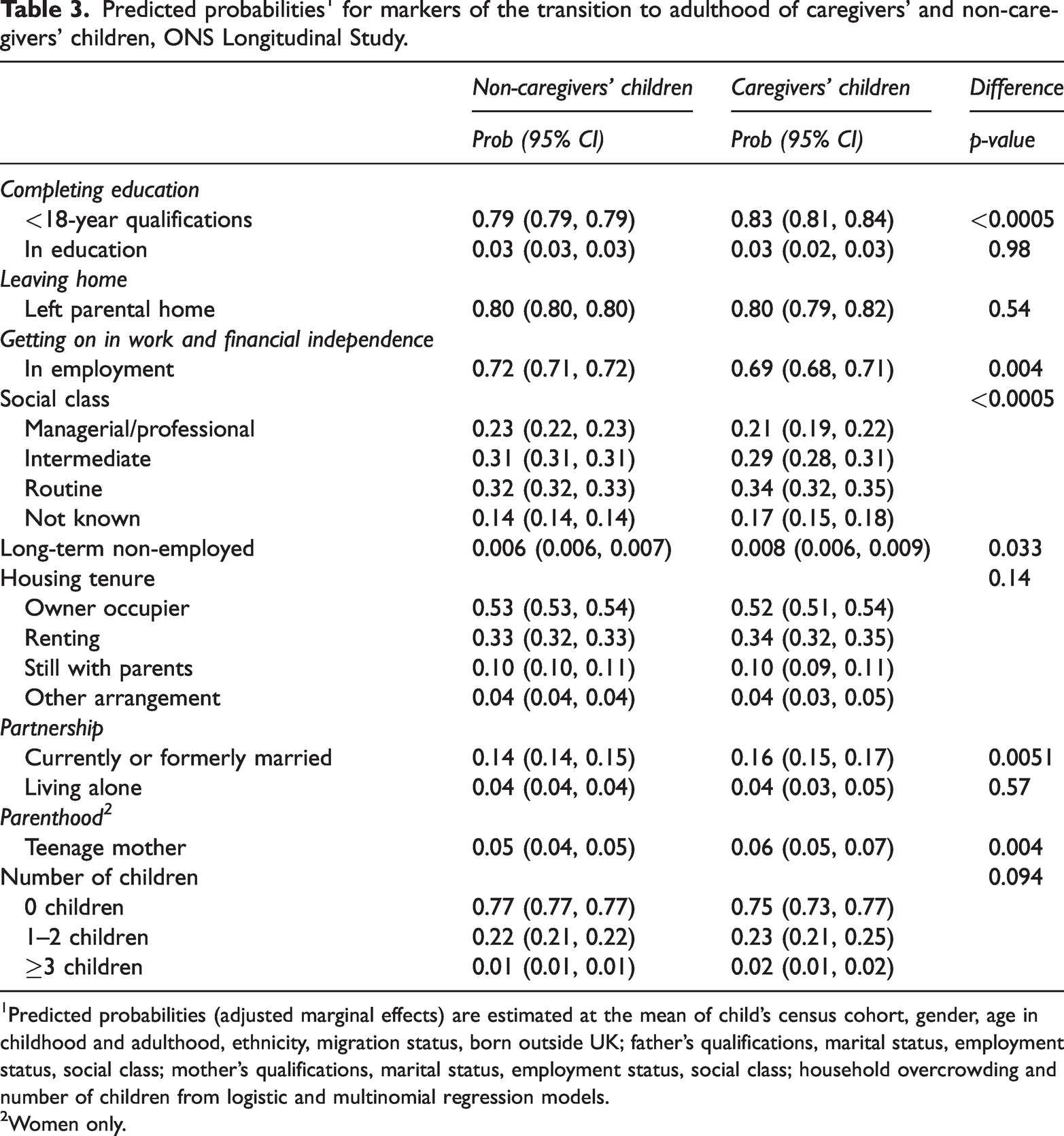
Predicted probabilities (adjusted marginal effects) are estimated at the mean of child’s census cohort, gender, age in childhood and adulthood, ethnicity, migration status, born outside UK; father’s qualifications, marital status, employment status, social class; mother’s qualifications, marital status, employment status, social class; household overcrowding and number of children from logistic and multinomial regression models.
Women only.
Eighty-three percent of caregivers’ children left school with few qualifications (95% CI: 81%, 84%), on average, compared with 79% of non-caregivers’ children (95% CI: 79%, 79%).
Three of the four markers of getting on in work and becoming financially independent showed differences between the two groups of children. The exception was that caregivers’ children were less likely to be in work in early adulthood (69% vs 72%) and more likely to be long-term non-employed, but see findings on sex differences below for more nuanced results. Given that caregivers’ children entered the workplace with fewer qualifications, they were also more likely to be from a less advantaged social class: 21% (95% CI: 19%, 22%) were in the managerial or professional class compared with 23% (95% CI: 22%, 23%) of children without a foster child in the family. The other marker of financial independence available in the dataset was housing tenure. There was a tendency for caregivers’ children to be less likely to be owner occupiers, instead being more likely to be renting or in some less secure ‘other’ situation if they had left their parents’ home.
Marriage is one marker of having a long-term partner, with caregivers’ children having a higher probability of being married before their 30s than non-caregivers’ children (16% married vs 14%).
Finally, the parenthood variables indicate that women who had grown up with a cared-for child in the family were having children younger, although with only a suggestion of having more children before age 30: 6% were teenage mothers compared with 5% of the non-caregiver group, and 1.6% of mothers had three or more children in early adulthood compared with 1.2% of the non-caregiver group.
Association Between Covariates And Children’S Educational Qualifications
We employed the same set of covariates throughout but their relationship with the different outcomes varies. We focused on qualifications since, chronologically, completing school education successfully is most commonly the first milestone in the transition to adulthood, and we have shown that the probability of 18-year qualifications or higher is reduced for caregivers’ children. Odds ratios for all the covariates are given in Supplemental Table S4.
Starting with cohort differences, the demographic change in educational levels is clear with the numbers of children leaving school with few qualifications decreasing every decade since 1971. Conditional on the census year that children were observed, children were incrementally less likely to have 18-year qualifications the older they were. Also conditional on census year, in adulthood they were incrementally more likely to have 18-year qualifications the older they were when observed. Gender differences are apparent with girls having a higher probability of achieving 18-year qualifications than boys. There was an educational gradient by migration status, with first-generation children predicted to gain better qualifications than those whose families had lived in the UK for longer. There was no difference between Black and White children’s qualification level, while all other ethnic groups were predicted to have higher levels than White children.
Both mothers’ and fathers’ socioeconomic and demographic covariates predicted educational levels. Fathers’ qualification levels, social class and employment status provided evidence of the intergenerational continuity in disadvantage. Fathers’ social class and employment status had a stronger relationship with their child’s qualifications than mothers’ social class and employment status, whereas mothers’ qualifications had a stronger relationship than those of fathers. Children living with a single parent were also less likely to gain 18-year qualifications compared with having married parents. Finally, household overcrowding and size were more weakly associated with a reduced likelihood of 18-year qualifications or higher.
Do Any Differences Depend On The Age Of Caregivers’ Children?
Overall, there were few differences by age of a caregiver’s child (Supplemental Table S5). Four interactions between age and being a caregiver’s child were found. These were for being in education, in employment, social class and housing tenure. Focusing on the effect of age on being in education, younger caregivers’ children were more likely to be in education in early adulthood than other young children, but older caregivers’ children were less likely to be in education in early adulthood than non-caregivers’ children of the same age (see Figure 1). Older caregivers’ children were also less likely to be employed or to be still living with their parents in early adulthood than non-caregivers’ children of the same age. By contrast, social class differences did vary with age in childhood: older children in fostering families were more likely to have an unknown social class in early adulthood than younger children. A social class could not be assigned if the individual was in education or out of work. This suggests that the social class interaction was a consequence of being out of work rather than being in education, since older caregivers’ children were less likely to be in education in early adulthood.
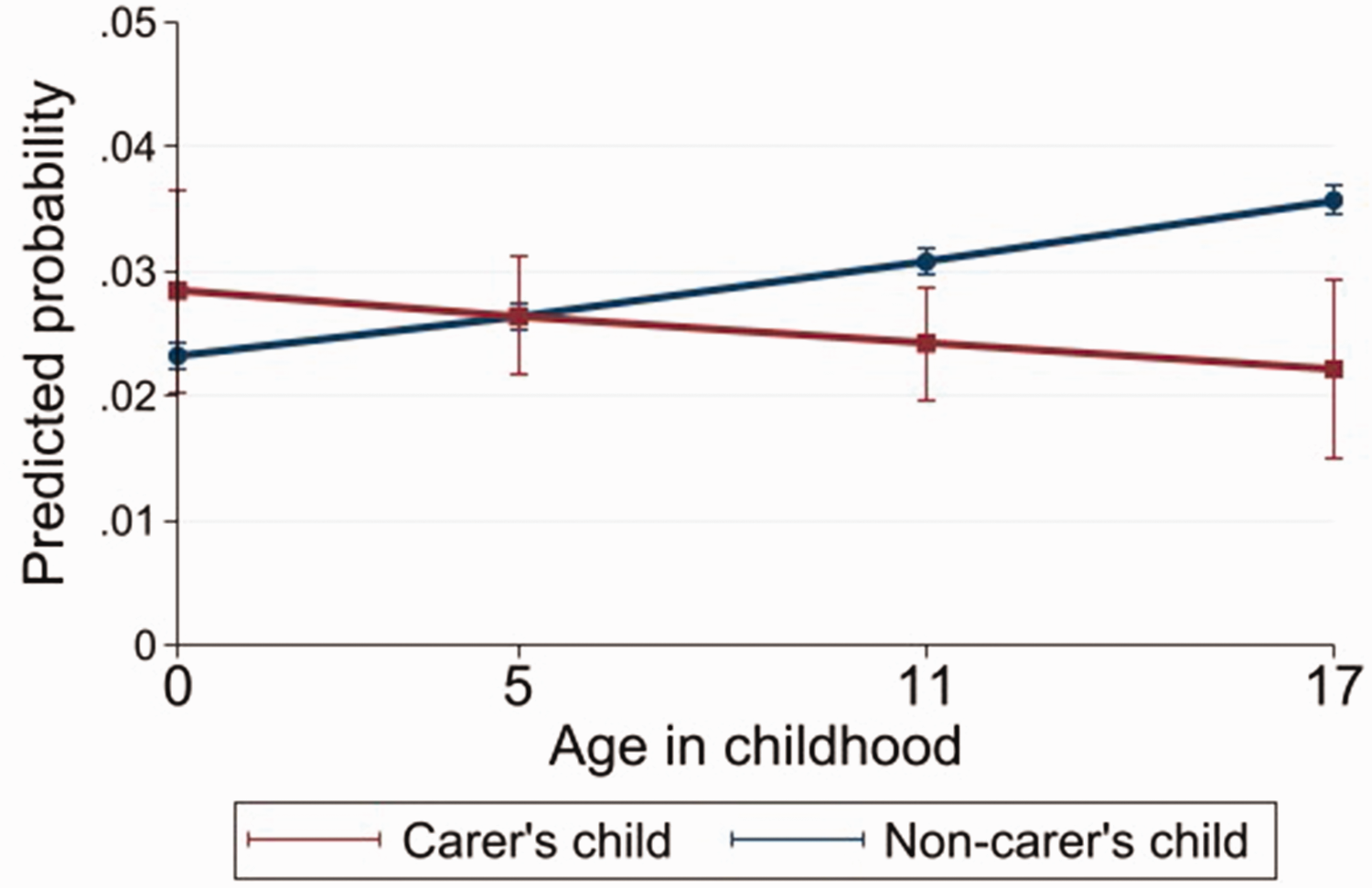
Probability of being in education in early adulthood by age in childhood for caregivers’ and non-caregivers’ children. Source: ONS Longitudinal Study. Predicted probabilities are estimated at the mean of all covariates (child’s census cohort, gender, age in childhood and adulthood, ethnicity, migration status, born outside UK; father’s qualifications, marital status, employment status, social class; mother’s qualifications, marital status, employment status, social class; household overcrowding; number of children) from a logistic regression model for being in education or not.
Are There Differences If Caregivers’ Own Children Are Older Or Younger Than Foster Child(Ren)?
There was support for the age of caregivers’ children relative to the age of foster children in the family influencing adult outcomes (Supplemental Table S6), not always consistent with an earlier transition to adulthood. Differences were found for markers of leaving home, getting on in work and financial independence, and partnership.
Eighty-three percent of those who had experience of living with younger foster children had left home by early adulthood compared with 80% of those without experience of foster care in the family. In line with this finding, children who were older than the fostered children were less likely to be living at home when their housing situation was further disaggregated.
All children whose parents fostered had lower qualifications by early adulthood than those without this experience. But only when foster children were younger were they less commonly in work or with a more disadvantaged social class when they were working.
Caregivers’ female children living with a younger foster child had a higher probability of later being a teenage mother compared with non-caregivers’ female children (7% teenage mothers vs 4.6%), which was not seen for those with older foster children in the family. Women who had had younger foster children only in the family were also more likely to have large families (1.9% with 3+ children vs 1.2%). However, women who were older than any foster children were equally as likely to have had large families on average, but with much larger variability rendering it unwise to draw any conclusions.
Do Any Differences Depend On The Sex Of Caregivers’ Children?
Supplemental Table S7 shows the full findings for the interactions between sex and caregiver status. Consistent with the higher probability of being a teenage mother and having more children reported above (Table 3), women who had been in a caregiver household had a lower probability of being in work and a higher probability of a ‘not known’ social class, suggesting they were more likely to be homemakers.
There was no suggestion that male caregivers’ children differ from other male children in the probability of becoming a homeowner or being in rented accommodation, but female caregivers’ children had a lower probability of home ownership in early adulthood than other female children (50% vs 53%) and a higher probability of renting (39% vs 36%).
Are There Differences If Caregivers’ Own Children Are The Same Or A Different Sex To Foster Child(Ren)?
There were some indications of the transition to adulthood differing depending on the sex of the caregiver’s child relative to that of any foster children in the household (Supplemental Table S8). When the caregiver’s child was the same sex as the foster children, they fared similarly in adulthood to non-caregivers’ children regarding educational qualifications and social class, whereas the presence of opposite-sex foster children was associated with poorer qualifications and less chance of achieving a more advantageous social class.
The results also implied differences for being in employment and parenthood, but the estimated probabilities do not present a consistent unambiguous picture. For example, women with experience of same-sex foster children had more children than women without such experience; being with same-sex foster children increased the chances of having one or two children in early adulthood, while being raised with foster children of the opposite sex increased the chances of having three or more children. By contrast, the chances of being a teenage mother were only increased for women with experience of same-sex foster children.
The experience of fostering also led to differences in being in work in early adulthood, although point estimates were only reliably lower than non-caregivers’ children when there were foster children of both sexes in the family. By contrast, long-term non-employment was only indicated for those who had lived with a foster child of the opposite sex, this finding being more consistent with the larger family size reported above for women in the same group.
Discussion
Summary Of Principal Findings
Our primary research question asked whether caregivers’ own children pass the transition to adulthood milestones earlier than non-caregivers’ children. Based on the big five roles of adult functioning, we found that the findings for four roles indicated an earlier transition to adulthood for caregivers’ children. The only role for which we did not find support in the data was that of leaving home. However, unlike the other roles, we only had one indicator for leaving home whereas we had multiple markers for the other roles. It is also worth noting that the strength of the evidence from markers of the same role often differed, although they were consistent in direction. In addition, even when evidence was stronger, for example in the case of employment, average differences in the probability of the outcomes between foster carers’ children and other children were modest, in the order of two to three percentage points.
Results In Relation To Other Studies
We are not aware of any other studies that have examined the transition to adulthood in relation to caregivers’ children. Nevertheless, some observations on the consistency of the findings with those observed during childhood are possible. First, researchers have found that carers’ children learn about responsibility and good parenting practices (Clare, Clare and Peaty, 2006; Moslehuddin, 1999; Poland and Groze, 1993; Younes and Harp, 2007), leading others to hypothesise that this could result in premature growing up (Duffy, 2013; Martin, 1993). By contrast, we hypothesised that these same childhood experiences could result in a delayed transition to adulthood. The evidence in this study is consistent with the former rather than the latter interpretation. However, it is possible that one of the negative experiences in childhood – that of loss of parental attention – was the mechanism leading to lower academic qualifications. Qualifications are the gateway to socioeconomic success and other life chances in adulthood, as we observed in the LS, with caregivers’ children being less likely to be in work and consequently less likely to achieve a managerial or professional social class. These findings are not consistent with a maturity hypothesis. Although we found no evidence of caregivers’ child by census year interactions (i.e., period effects, data not shown), economic conditions when starting work can affect those with fewer and those with more qualifications (von Wachter, 2020), so these findings may not pertain to more recent generations of caregivers’ children.
Previous research found age-related difficulties with sharing their home with a foster child with older children coping best (Höjer et al., 2013; Moslehuddin, 1999). Our research found older caregivers’ children were less likely to be in education in early adulthood (Figure 1), which would tend to contradict the childhood findings. However, previous research has also found that caregivers’ children cope better if older than the foster child (Höjer et al., 2013), which could confound any relationship found for the age of caregivers’ children and adult outcomes. Examining our results based on absolute age and age relative to the foster child showed no association with age in the unadjusted data, nor with relative age in models taking account of confounding. This suggests a cautious approach to the findings for absolute age is indicated with replication recommended.
We also hypothesised that because caregivers’ daughters were found to be more affected than sons and when the foster child was the opposite sex to their son or daughter (Moslehuddin, 1999; Serbinski and Shlonsky, 2014), we would see moderation by the child’s sex and their sex relative to the foster child. Consistent with Moslehuddin (1999), we found some limited moderation suggesting that daughters could be more affected later in life as well as during fostering in childhood. Unfortunately, we only had information on women’s fertility and cannot comment on parenthood for caregivers’ sons. By contrast, evidence supporting the hypothesis that caregivers’ sons and daughters are less affected when foster children are of the opposite sex was very limited, and the overall conclusion must be that it was equivocal at best.
Our choice of covariates was guided by the literature on predictors of being placed in social care and/or our adult outcomes. Some salient potential covariates, such as household income, were not available in the LS. Also, our estimates of relationships between the covariates and educational qualifications are conditional on all the other covariates. As such, it is difficult to compare the model estimates with those from other studies. Neither can we assume that the same findings will be identified for the relationships between the covariates and our other adult outcomes. Nevertheless, a general observation is that the covariates should have removed a significant proportion of demographic and socioeconomic confounding of differences in adult functioning between foster carers’ children and other children.
Strengths And Limitations
This longitudinal study had repeated prospective data on family arrangements in childhood, linked to demographic and socioeconomic indicators during the first 12 years of adult life. Coupled with the data being nationally representative, this allowed us to investigate evidence on whether caregivers’ own children have an earlier transition to adulthood than non-caregivers’ children. We could also investigate temporal changes in these indicators, in terms of both period and age. This would have been impossible using a dataset with shorter follow-up. The use of the LS also allowed us to model differences by their sex and the sex of the foster children, relative to their own, something impossible with smaller sample sizes. Using longitudinally linked census data reduced loss to follow-up, and the availability of covariate data improved the precision of, and reduced potential confounding in, our results. For example, without accounting for confounding, stronger conclusions might have been made, since nine of 11 markers differed for caregivers’ children (Supplemental Table S2) whereas modelling that included confounding covariates found that only six of the 11 markers differed (Table 3).
In common with most previous research, we could not differentiate between biological sex and self-identified gender. Questions about gender were first introduced into the census in 2021 for those aged 16 or over, precluding any exploration of gendered effects. Similarly, questions on civil partnerships, but not private cohabitation arrangements, were only introduced in the 2011 census, restricting the analysis to legal marital status.
Our findings are based on data from 1971 to 2011. A consequence of the 2008 Great Recession has been a tendency for the transition to adulthood milestones to be delayed. It is therefore possible that our findings will not be replicated using 2021 data. Another example of a period effect is how foster parents may have reported their employment status. While in earlier censuses a caregiving parent might have self-identified as non-employed, in more recent censuses there is more emphasis on fostering as a career, with caregivers registered as self-employed.
A disadvantage of census data is that they are only available every 10 years. Therefore, we were not able to identify the age at which children were placed in the family, nor for how long. Also, we were unable to separately identify adopted children whose experiences may differ from those of biological children (Sehmi et al., 2020). As in any longitudinal study, sample attrition occurred, albeit at lower levels than reported elsewhere (Cameron et al., 2018; Viner and Taylor, 2005). There were indications that loss to follow-up was greater in the group with foster children, suggesting that some bias may have been introduced into the estimates. Finally, as in any study using routine self-reported data, we cannot rule out measurement error or residual confounding due to socioeconomic circumstances.
Implications And Future Research
From our data (Supplemental Table S9), it appears that by mid-adulthood, any impact of an earlier transition disappears. By their 40s, no differences in social outcomes between carers’ children and non-carers’ children were seen. There was a suggestion of poorer self-rated health for foster carers’ children, which was not corroborated by the findings for limiting long-term illness. It is possible that health differences could be revealed in older age. Also, other measures of outcomes in mid-adulthood might reveal longer-term economic scarring from early achievement of transition milestones. We recommend that social work education and training could include knowledge and skills development relevant to foster carers’ own children, including the risk of an early transition to adulthood.
Supervising social workers provide both supervision and support to adult foster carers, and act as an intermediary between the fostering household and the foster child’s social worker. A notable omission in job specifications is to support the pre-existing children in a household when a child is placed with them. More explicitly, supporting foster parents to keep their children in education for longer could become part of the role of supervising social workers, who might explore with foster carers what barriers are preventing their own children from staying in school, and what is prompting them to want to leave school and go out to work. The role of a supervising social worker could also be extended to supporting children of foster parents, especially during their adolescence. Time to talk with and support adolescent children could be built into the social worker’s visits to the family. This would entail fostering services providing caseload management that ensures that supervising social workers have the time to work directly with foster carers’ children.
These findings also have relevance for the recruitment of foster carers. There could be a reluctance for parents with families to consider fostering, due to concerns about the potential impact on their own children. Our research can inform potential foster carers of the small risk of an earlier transition to adulthood and give them reassurance that current evidence of longer-term risk of adverse health and social consequences does not suggest any harm.
The current research suggests that a broader investigation of foster carers’ households is warranted. Several new areas of research are suggested by the findings, including investigating the processes leading to an earlier transition to adulthood. Does the benefit of maturity or the challenge of sharing their home drive the earlier transition? Is there support for the hypothesis that it is not the age of caregivers’ children that is important, but that caregivers’ children cope better if older than the foster child? Can future research corroborate our suggestion that daughters in fostering households are more affected than sons? Our focus was on the children of caregivers, and we did not address whether children needing foster care fare better or worse if placed with a foster parent who has children of their own. Finally, recent social changes have altered the process of the transition to adulthood, with young people staying in education for longer, less able to be financially independent of their parents and leave home, and with different attitudes to parenthood and marriage and recognition and acceptance of alternative lifestyles. These changes suggest replication with more up-to-date data might reveal new findings on the varying pathways taken by young adults with and without experience of growing up with foster children in the family home.
Conclusion
This study set out to discover whether foster caring is associated with variations in the process of achieving the transition to adulthood for caregivers’ own children. The results, although modest, support the hypothesis of an earlier transition. Social workers’ awareness of the impact of fostering on caregivers’ own children could mitigate these negative effects for the family. Based on the 2022 figures for fostering households and estimates of the number of own children within them (McDermid et al., 2012; National Statistics, 2022), the findings have implications for some 58,000 caregivers’ children.
Supplemental Material
sj-pdf-1-aaf-10.1177_03085759231216069 - Supplemental material for Is foster caring associated with an earlier transition to adulthood for caregivers’ own children? ONS Longitudinal Study
Supplemental material, sj-pdf-1-aaf-10.1177_03085759231216069 for Is foster caring associated with an earlier transition to adulthood for caregivers’ own children? ONS Longitudinal Study by Amanda Sacker, Rebecca Lacey, Barbara Maughan and Emily Murray in Adoption & Fostering
Footnotes
Acknowledgements
The permission of the ONS to use the LS is gratefully acknowledged, as is the help provided by staff of the Centre for Longitudinal Study Information & User Support (CeLSIUS), especially Rachel Stuchbury and Alison Sizer. CeLSIUS is supported by the ESRC Census of Population Programme (Award Ref: ES/V003488/1). The authors alone are responsible for the interpretation of the data.
This work contains statistical data from ONS which is Crown Copyright. The use of the ONS statistical data in this work does not imply the endorsement of the ONS in relation to the interpretation or analysis of the statistical data. This work uses research datasets which may not exactly reproduce National Statistics aggregates.
Declaration Of Conflicting Interests
The author(s) declared no potential conflicts of interest with respect to the research, authorship, and/or publication of this article.
Funding
The author(s) disclosed receipt of the following financial support for the research, authorship, and/or publication of this article: The derivation of 1971 and 1981 NSSEC & Goldthorpe classes is provided in Bukodi and Neuburger (2009) Data Note. Job and occupational histories for the NSHD 1946 Birth Cohort as part of the ESRC Gender Network Grant, Project 1 ‘Changing occupational careers of men and women’, Reference: RES-225-25-2001. The code was kindly provided by Erzsebet Bukodi and adapted for use in the LS by Buscha and Sturgis as part of the ESRC grant ‘Inter-cohort Trends in Intergenerational Mobility in England and Wales: Income, status, and class (InTIME)’, Reference: ES/K003259/1.

References
Supplementary Material
Please find the following supplemental material available below.
For Open Access articles published under a Creative Commons License, all supplemental material carries the same license as the article it is associated with.
For non-Open Access articles published, all supplemental material carries a non-exclusive license, and permission requests for re-use of supplemental material or any part of supplemental material shall be sent directly to the copyright owner as specified in the copyright notice associated with the article.
