




Abstract
This article investigates changing regimes of value in the salt flats on the southern Bulgarian Black Sea coast as a way of exploring how diverse economic practices reflect communities’ relations with their environment. Combining a feminist political economy (FPE) lens with postsocialist analysis of social change in Bulgaria, I trace the salt flats’ transformation from cooperatively managed local ecological livelihood to passive property rendered most valuable when sold for development into the now-dominant tourist industry. In contrast, I also outline contemporary diverse economic practices inspired by the salt flats, which seek alternative means of conceiving the economy. Drawing on these experiences, I argue that the postsocialist lens can offer a robust perspective on conceptualizations of the diverse economy.
From salt flats to flats for sale: A value transformation
“All of this [town] is built on salt flats, which have been filled in, destroyed. The last they destroyed and filled in was the little salt lake that was in front of the sanitorium, now it’s been turned into a neighborhood of for-sale flats, mainly for Russians.” Describing the southern Bulgarian coastal town of Pomorie, back in 2017, Andrei 1 dove immediately, unprompted, into the heart of its material transformation—and of its economic shift. Where salt production had once, in the early 20th century, functioned as a substantial economic driver for the southern Bulgarian coast (Skumov, 2019, 2022), in the contemporary context it has been almost entirely supplanted—physically, financially, and culturally—by tourism.
The local community had once viewed its salt flats as an inherent source of value: in recollections of the salt flats in the 1920s and 1930s, for example, an interlocutor of anthropologist Ana Luleva’s described the industry as a simple recipe: “You put in water, you take out money” (A., cited in Luleva, 2021: 64, my translation). But most contemporary heirs to salt flats, Andrei told me, saw no value in their property unless they could sell: “Over there you’ve got a puddle of water – which is nothing to you, brings you no income – and suddenly [if you sell] you’ve become, you have 100,000 [lev], you’re a big deal” (Andrei, 2017, my translation). Making profit from salt on the contemporary coastline, I was told in interviews, was difficult; hence from more than 400 individual owners in the industry during the early 1900s in Anchialo 2 alone (Skumov, 2019), by 2023 only one producer remained along the entire coastline (Interviews with author, 2023). Thus, the value that the community had once seen as inherent to the natural resource was now void. In the new coastal neoliberal context, to be rendered valuable, the former salt flats now have to be sold for development—made profitable within the speculative tourism development and construction industry.
This article traces these changing regimes of value in the interconnected economic and environmental transformations of the Bulgarian Black Sea coastline through the perspective of the salt flats in its southern region, around the Bay of Burgas. It investigates these transformations through a dual lens that combines feminist political economy (FPE)—especially thinking on diverse economies after Gibson-Graham’s work (1996, 2008)—with postsocialist analysis of social change. For this alignment, in this article I draw on FPE not to study gender relations per se but instead – like other FPE scholars have done before me (Collard and Dempsey, 2020) – as a robust way for widening the lens on economic relations and highlighting diverse economic practices (Gibson-Graham, 2008). As FPE scholarship has already noted, while geographers and political ecologists have increasingly been debating the conceptual dimensions of value in the relationship between nature and capitalism, discussions of value in these fields can often employ a surprisingly strict Marxist conceptualization of the term (Collard and Dempsey, 2017; Mies, 2014). Indeed, FPE literature itself recognizes the complexity embedded in the term “value” within these discussions: a concept that can equally signify capitalist exchange worth and simultaneously the wider set of meanings ascribed to environmental and social forces that are essential to the functioning of capitalism but frequently remain left outside of its conceptual language—like the work of social reproduction, care, or life-giving systems (Bauhardt and Harcourt, 2019; Collard and Dempsey, 2017; Gibson-Graham and Miller, 2015). Hence, FPE scholars have been equally concerned with charting the patterns through which these wider meanings of value lose worth (becoming devalued) under capitalism and in theorizing how they could be reinstated, either within the capitalist system (Kay and Kenney-Lazar, 2017) or by moving toward a postcapitalist future (Collard and Dempsey, 2017; Gibson-Graham, 2006; Roelvink et al., 2015; Zanoni et al., 2017). My own approach to investigating regimes of value in this article likewise takes on the complex meanings of “value.” By tracing the story of the salt flats’ own transformation, I seek to understand the processes that stripped broader meanings of value from them; but I also aim to theorize historical and contemporary diverse economic practices in this context that could reinstate these wider meanings of value in a (post)capitalist context. Since I am specifically interested in the gray spaces and transitions between these interpretations, this paper deliberately plays with the polysemy of the term “value” as both a monetary and a moral signifier. Nevertheless, I clearly demarcate throughout where I mean the term to speak to capitalist exchange worth and where to broader connotations. In the case studies in the semifinal section, I explore how these meanings can exist together or independently from one another.
Hence, in thinking about the salt flats’ material, societal, and economic transformations in this article, I follow the commitment of those FPE scholars who seek to reimagine the economy as a relationship not merely between capital and human actors, but also between human beings and their ecosystems (Collard and Dempsey, 2020; Gibson-Graham, 2008; Gibson-Graham and Miller, 2015). Gibson-Graham and Miller, in particular, argue for the need to analyze the economy “as a historical, discursive production rather than an objective ontological category” and thereby to re-ground it in its relationship with ecologic and societal relations (2015: 8). They therefore advance a notion of the economy as a type of ecosystem, highlighting the similar etymology of the word “economy”: “oikos-habitat; nomos-negotiation of order” (2015: 12). These ideas have been taken further by environmental economic geographers Collard and Dempsey in their search for generative theories of economic social relations that can attend to nonhuman as well as human dynamics (2020: 238). Following these scholars’ example, the titular regimes of value I explore in this article are not merely economic, in the sense of capitalist value, but rather more-than-economic: societal and environmental. I seek to understand the transformation in how local communities view their coastline and its economic landscape as an expression of socio-ecological relations. The regimes of value that this article comments on, therefore, relate not only to the different economic models that the Bulgarian coastline has experienced but also to the varying forms of environmental and societal meaning attached to them.
My focus on a postsocialist context further helps widen this analytical approach to studying value beyond the realm of capitalism or even capital. To do this, I also draw on postsocialist analysis and its long history of diagnosing the complexities of both societal transitions and economic diversity. The field has a powerful history of problematizing the role of land and economics in social life similar to that of FPE scholarship: as both Verdery (2003) and Hann (2007a) have argued, for example, the changing status of property in the postsocialist context carries with it the knotted complexities of social relations between humans and nonhuman objects. Yet the analytical potential of the postsocialist lens has often remained buried under the coloniality of knowledge production, which treats the East as a site capable at best of empirical but never theoretical contributions (Jehlička, 2021; Tlostanova, 2015). Indeed, despite its unique experience with varying economic regimes and the transitions between them, interest in the postsocialist context has waned over time, and arguments have even been heard for its diminishing relevance in the contemporary world (Gentile, 2018; Müller, 2019). Nevertheless, postsocialism continues to offer an especially strong focus on temporality and the conceptually generative tensions between ruptures and continuities (Hann, 2007b; Müller, 2019; Ringel, 2022). The postsocialist experience complicates binaries of socialism-capitalism by demonstrating, as the story of the Bulgarian Black Sea coast salt flats will do here, the continuities between these supposedly contrasting regimes.
Its healthy skepticism about binaries makes the postsocialist context particularly relevant for analyses of value in societal transformations, including and especially when it comes to tracing how these transformations produce diverse economies (Cima and Sovová, 2022; Pavlovskaya, 2004, 2013; Smith and Stenning, 2006). Much like FPE scholarship, postsocialist literature has long hosted discussions on the processes of revaluation and devaluation through which broader types of value are placed outside capitalist wealth generation (Alexander, 2004; Hann, 2007a; Verdery, 2003). Importantly, this literature has shown that these processes were not limited to the voiding of socialist values with the regime’s collapse; rather, work like Verdery’s has demonstrated how unevenly postsocialist capitalist revaluation processes interpreted what does count as capitalist value, ascribing different market worth to the same types of property, infrastructure, or services months or years apart (2003). There are direct parallels between these observations and FPE critiques on capitalist economic theory’s narrow definitions of value as “profit.” First, both can be situated against a wider context of the commons’ enclosure and extraction through the creation of bounded private property (Federici, 2004; Nightingale, 2019; Verdery, 2003). Second, both lines of scholarship contest the apparent universalism of capitalist “value” itself (Collard and Dempsey, 2017; Kay and Kenney-Lazar, 2017; Verdery, 2003). And finally, both the postsocialist experience and FPE scholarship shift attention to the diverse economic practices emerging from a wider focus on forms of value (Cima and Sovová, 2022; Gibson-Graham, 2008; Gibson-Graham and Miller, 2015; Johanisova et al., 2020; Pavlovskaya, 2004, 2013; Smith and Stenning, 2006). In combining the two lines of theoretical thought, I follow existing debates into the generative potential of the postsocialist context for alternative practices moving against the dominant logic of marketization (Cima and Sovová, 2022; Johanisova et al., 2020; Pavlovskaya, 2004, 2013; Smith and Stenning, 2006). By placing a focus on social and environmental relations, moreover, I seek to work against the “mutual ignorance of East Europeanists and environmental studies scholars” once defined by Gille (2007: 11) by furthering the overlaps between postsocialist analyses and FPE scholarship on diverse economies.
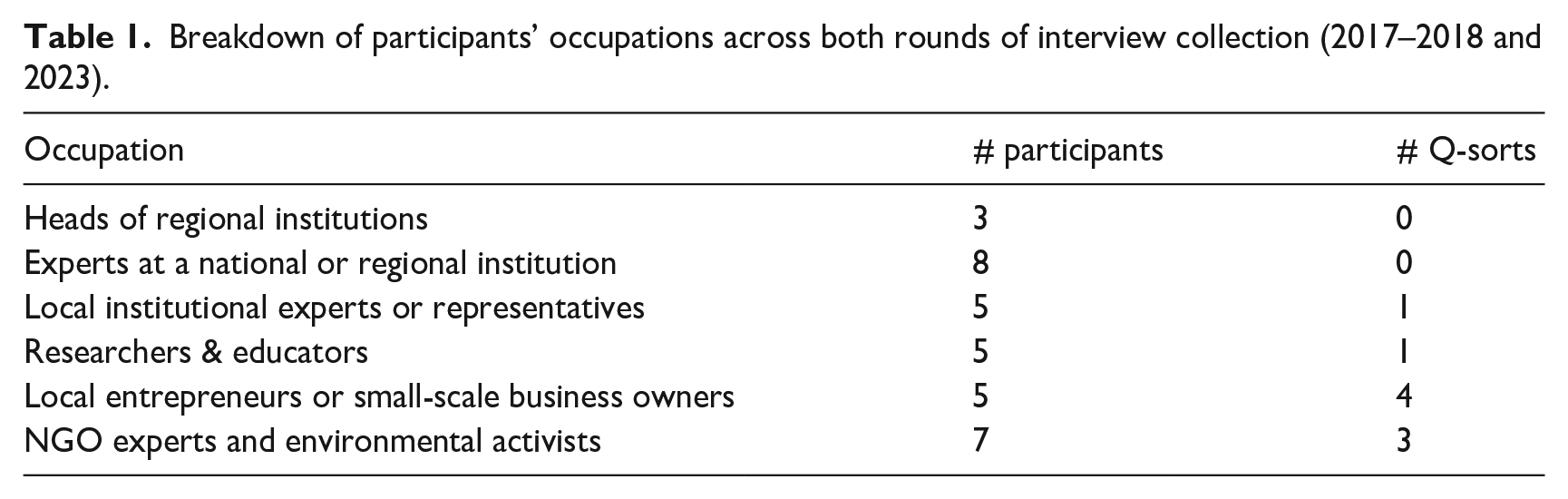
This article’s conclusions draw on a wide body of research. The materials I cite here include semi-structured interviews conducted in 2017–2018 (Bernard, 2006), semi-structured interviews and Q-sorts (Barry and Proops, 1999) conducted in the winter and spring of 2023, and archival documents obtained from the central (Sofia) and regional (Burgas) Bulgarian State Archives in 2018–2019 and in 2023. Both rounds of interviews solicited narratives on the coastline’s social and environmental transformation from a total of 33 participants selected through a purposeful approach (Palinkas et al., 2015) designed to represent a variety of voices and perspectives on the southern Bulgarian Black Sea coastline (see Table 1). However, the two selection procedures differed slightly from one another. Participants for the interviews in 2017–2018 were chosen through a modified snowball approach (Farquharson, 2005). Those in 2023 were selected through a purposeful stratified sampling procedure that first identified a diverse group of stakeholders representing varying agential and structural perspectives and then approached individual stakeholders from all of these groups, attempting to cover a broad overview from key perspectives. In this second group, half of the participants—that is, those who did not represent a governance institution—were also asked to participate in a Q-sort designed to inquire into coastal communities’ perceptions of blue justice designed after Bennett et al.’s framework (2021). The Q-sort survey was co-produced in the context of the wider Horizon Europe research consortium EmpowerUs, which also funded the second round of interviews; for this article, I draw on the Q-sort material only lightly to illustrate my points toward the end of the next section and instead reflect more deeply on insights gathered from the interviews themselves alongside archival materials, following an original narrative analysis approach (Antonova, 2021). The EmpowerUs research consortium also has a wider role in helping to establish a longer-term co-productive partnership between myself and the Burgas team of the Bulgarian Biodiversity Foundation on the Black Sea coast, with whom I collaborated to select participants to be interviewed in 2023. The same partnership has also informed the discussion of contemporary activities seeking to diversity the economic landscape toward the end of the article by bringing me in closer contact with them.
Breakdown of participants’ occupations across both rounds of interview collection (2017–2018 and 2023).
According to a time-honored academic custom, most critical scholarship investigating the revival of economic activities after the end of socialism has focused on charting the failures (Dorondel and Şerban, 2020; Rajković, 2023; Theesfeld and Boevsky, 2005). While not entirely immune to this shortcoming, in this article I also deliberately focus on positive developments, highlighting forms of creative and constructive economic activities on the Bulgarian Black Sea coast that have taken the salt flats as their inspiration or cause. Taking my lead again from FPE, which argues that economic knowledge and practices need to be understood within the shifting historic, political, and cultural contexts that produced them (McDowell, 2016; Mitchell, 2008) and calls for more representation of the economic diversity hidden in plain sight (Collard and Dempsey, 2020; Gibson-Graham, 1996, 2008, 2014), I place attention on the inventive means contemporary actors have employed to diversify the economic offerings for both tourism and local citizens by pursuing activities that align with nature conservation goals on the coastline. Leading up to these diverse economic practices, the article proceeds as follows. In the next section, I outline contemporary perceptions of the coastline’s economic landscape as being dominated by a single activity (tourism), which produces a type of value that rarely lands within local communities. I illustrate the perceptions several interlocutors shared with me that this iteration of the economy amounts to an unsustainable, heterogenous economy similar to an ecologically impoverished landscape.
Seeking to understand the contexts from which this sense of impoverishment arose, as well as to understand the landscape of economic thinking from which contemporary diverse practices emerge, I then place the salt flats’ changing value in its historical context. To do so, I draw on archival evidence and scholarship pertaining to the cooperatives that once accounted for the prevalent economic model on the southern Bulgarian coastline and visit ethnographies of the postsocialist transition to chart this economic model’s transformation. Thereafter, in the final section, I illustrate and comment on contemporary efforts by nongovernmental organizations and members of the local community to reinvigorate some of the salt flats’ inherent value through practices I analyze as contributing to a diverse economy (Gibson-Graham, 2008). In this way, I explore the debate on what kinds of value can be reinstated both within a diversified capitalist imaginary and looking beyond it at postcapitalist possibilities.
A monocrop economy: Tourism on the Bulgarian Black Sea coast
The subsumption of salt flats into the tourism development along the southern Bulgarian coastline is in some ways unsurprising given the industry’s dominance in this context. Indeed, there has long been a great deal of value to be extracted from the tourist industry. Recognized by the socialist government as its best return of investment nearly from its conception (Politburo of the Central Committee of the Bulgarian Communist Party (Politburo), 1960: 122-3), after 1989 the industry was identified as a main pillar for the transition to capitalism and thus as a priority for privatization and foreign investment (Holleran, 2020; Koulov, 1996). From the early 1990s onward, US and EU development funds, Spanish companies chasing the next bottom rung of the tourist market, and EU nationals looking for holiday homes and cheap property all invested heavily in the Bulgarian coastline’s development (Anderson et al., 2012; Holleran, 2017, 2020). By 2016, the tourist industry had grown to contribute well over 12% of the gross domestic product (Bulgarian Ministry of Tourism, 2017); meanwhile, over the years preceding Bulgaria’s 2007 accession to the EU, real estate sales—most of which occurred either in Sofia or in tourist districts, especially the coastline—increased a reported 56.6 times (Anderson et al., 2012). As a result of these dynamics, the Bulgarian Black Sea shoreline experienced a construction boom of massive proportions. From a reported 74,277 beds in coastal municipalities in 1999 (Stanchev et al., 2015), the hotel and lodging base had grown more than two and a half times to 203,085 beds by 2012 (National Statistical Institute, n.d.); in the five years between 2002 and 2007 alone, the lodging capacity in the coastal district of Burgas increased nearly ninefold (Anderson et al., 2012). Accordingly, the salt flats are far from the only landscape to be fundamentally reshaped by the tourist industry on the Bulgarian Black Sea coast over the last few decades: dunes, species, and urban landscapes have all overwhelmingly been reformed to conform to a tourist landscape (Antonova and van Dam, 2022).
When Andrei and I first met, in 2017, he spoke extensively about the salt flats in Pomorie that had been filled in to make way for new construction. Most of the resulting flats for sale constructed in their place, he told me, had been sold to foreign investors, often Russians, resulting in the formation of what locals have called “Little Russia” or “Little Moscow” within the town in one of the areas where salt flats had once been (2017). When Andrei and I met in Pomorie again, in 2023, the windows of the coffee shop in which we sat looked out on two separate property lenders, one of which advertising entirely in Russian (see Figure 1). The building housing the coffee shop, those in which the property lenders were located, and indeed the entire neighborhood in which we met had once been taken up by salt flats.
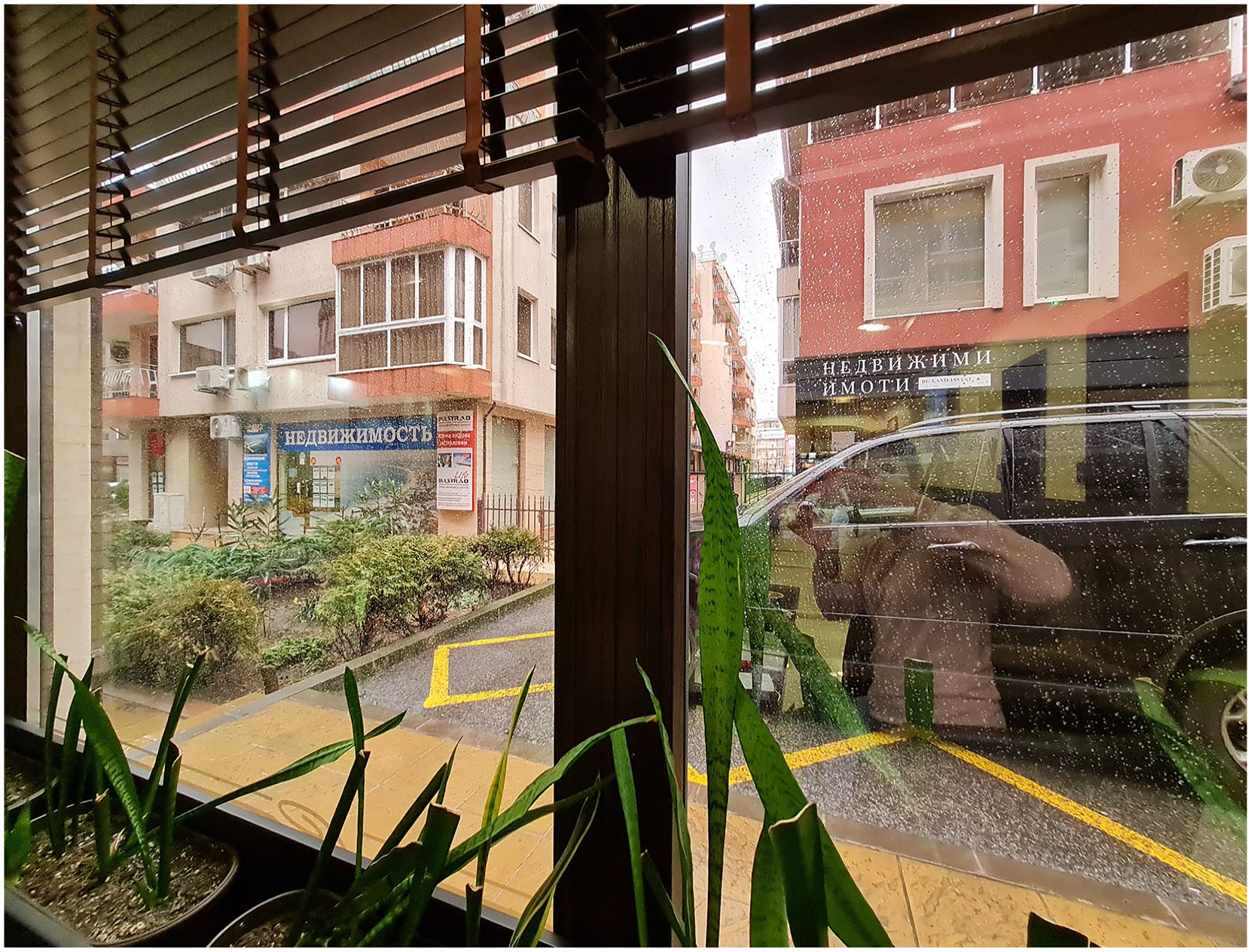
Property lenders in a neighborhood built on top of former salt flats. Photo by author, 2023.
The Russian-language property lenders raise—besides troubling geopolitical implications in the wake of Russia’s 2022 invasion of the Ukraine—pressing questions about the extent to which local communities have actually retained capital in the tourist industry: that is, financial, cultural, or altogether any capital. This very question has been debated. Among the more positive evaluations of the tourist industry from the early 1990s, Ghodsee’s (2005) book The Red Riviera claimed that it benefited the women it employed during the transition from postsocialism, allowing them to transfer the language skills and cultural capital they had acquired within it to the capitalist market at a time when many struggled (2005). This optimistic view has been contested, however, by Luleva’s more recent ethnographic work in the same industry (2021). In Luleva’s estimation, the women benefited by their work in tourism in the way that Ghodsee describes were relatively few, while most women employed by the industry either remained engaged in lower-paid “women’s work” like housekeeping or kitchen work (2021). In a broader sense, too, much of the profit from the tourist and flats-for-sale industries along the coastline has failed to land locally. Estimates based on official statistics have suggested that more than half of the foreign tourists visiting Bulgaria stayed in properties of their own or those owned by friends or relatives, resulting in no direct economic benefit for the local community (Yanev, 2019). Luleva has shown that local-based business owners often perceive themselves as “surviving” rather than “thriving” (2021). More grimly, Kaloyan shared with me that locals “had been clearly given to understand that what is on offer for them from the new opportunities was simply to sell their farmlands and give up the entrepreneurship to others” (2018, my translation). In other words, the new type of value to be extracted from coastal property—perceived, as Andrei’s account of the salt flats illustrates, to be the only type of value available—rarely reentered the community, having been literally extracted.
In interviews and Q-sorts I conducted in 2023, I also learned that members of the community who actively seek to engage with the contemporary coastal tourism industry as entrepreneurs—as opposed to simply entering the industry in the role of employees—often feel themselves to be facing strong headwind. Far from encouraging small initiatives, one local entrepreneur shared with me that regional and municipal institutions often appropriated potentially successful private ideas: “you propose a project to do something meaningful for society, give them all the information ready-made, they steal it from you, take your intellectual labor, copy it from you, and simply change the numbers to five times more” (Damian, 2023, my translation). Along with other participants, Damian thus expressed a commonly shared perception that the local municipality took over, monopolized, or outcompeted—rather than enabled—entrepreneurial initiatives (2023). Local municipalities themselves, however, have likewise expressed strong concern with the need to diversify the economic landscape and move away from what one official strategic document has termed as “a postsocialist and depressive” development model (Burgas Municipality, 2021: 253, my translation). Thus, there prevailed a sense that there were currently too few economic opportunities on the southern Bulgarian coastline for ordinary citizens. When asked if she thought that different economic activities were seen as equally important on the coastline, Darina replied, “Mm, I don’t know if that’s exactly true. . . What key economic activities do we have? As we mentioned there’s a lot of property trading. Small business is mostly lacking, even economic activities. . . Give me an example, what am I really missing?” (2023, my translation). Her hesitation spoke eloquently to the prevalence of property speculation and the accompanying lack of economic diversity that were both discernable on the Bulgarian shore.
Similarly, when asked if they felt that the benefits of economic development on the Bulgarian Black Sea coastline were fairly distributed as of 2023, most participants disagreed (Interviews with author, 2023). A common perception was that neither national nor regional policy prioritized the real needs of communities: “the type of policy currently implemented by the state together with the municipalities,” Damian told me, “is interest driven. It’s not based on a long-term vision. They [the politicians] are businessmen, businessmening” (2023, my translation). Relatedly, participants highlighted how this economic atmosphere encouraged unsustainable practices. Anelia, for instance, spoke of a reigning “appetite for overnight profit” in the entrepreneurial landscape that saw most investments result in a one-season initiative directly onto the beach: “you’ll just be working one season, you’ll be selling fried fish for 10 lev to random passers-by. You won’t even get rich, but you’ll sully up a place like that” (2023, my translation). Characteristically, the dominant economic attitude outlined by both Damian and Anelia resulted in neither financial nor environmental sustainability. Indeed, the unsustainability of the tourist industry has long been cited both by scholars—who have shown that despite the ballooning investments, revenues remain relatively low compared to competing destinations like Turkey or Greece (Stanchev et al., 2015; Yanev, 2019)—and by national and regional institutions, which consistently call for the need to diversify the industry (Bulgarian Ministry of Tourism, 2017; Burgas Municipality, 2021).
In short, the southern Bulgarian Black Sea coast could be described as an economic and ecological landscape dominated by a singular industry with a scant number of economic activities. This situation comes in direct contrast to the functional and healthy capitalism model which, as feminist political economists have pointed out, “functions, accumulates and reproduces itself through heterogeneity” (Collard and Dempsey, 2020). Along with both Gibson-Graham and Mies, Collard and Dempsey point out the necessity of recognizing the “contingent and localized,” unique inventive practices either displaced by, or present but overlooked within, the dominant capitalist imaginary (2020). An environmental imaginary can be useful for this task. If the Burgas Bay coastal economy were re-imagined as an ecosystem, as Gibson-Graham and Miller urge us to do (2015), it would be more akin to a monocrop culture or an overgrazed meadow. Much like these examples, however, the homogenic economy on the Bulgarian Black Sea coast is neither a predetermined conclusion nor an absolute truth; instead, it emerged from a particular set of cultural and societal values and its seeming dominance corresponds to a particular economic imaginary and narrative. Looking deeper into the emergence of this landscape helps place more attention on the possible alternatives or indeed on existing practices that have been thus far overlooked.
Cooperatives, postsocialist land restitutions, and broken models of economic-ecological relations
Understanding the salt flats’ value transformation and the potential for their restitution as a source for meaningful economic and ecological relations requires a short foray into history. As scholars of diverse economies in postsocialist contexts have previously noted (Cima and Sovová, 2022; Johanisova et al., 2020; Pavlovskaya, 2013), Central and East European cases present rich theoretical ground for diverse economic practices not only because of the turbulent aspects of their postsocialist transformations but also because of the long alternative economic traditions evident in their presocialist past. Bulgaria is no exception. In the early 1900s, cooperatives were a prevalent economic model in the management of natural resources across Bulgaria, including on the coastline. Governed under a special 1907 cooperative law, which ensured the financial supervision of the Bulgarian Agricultural Bank (later the Bulgarian Agricultural and Cooperative Bank) and the legal oversight of institutions like the Ministries of Justice, Finance, and Trade (Bulgarian Ministry of Finances, 1936-7; Bulgarian Salt Producing Cooperative Society “Pomoriiski solnitsi,” 1934-7; Law for the Cooperatives, 1907) cooperatives rose in prominence quickly: from 870 in 1921 to 3,502 in 1939 (Madrow, 1938; Theesfeld and Boevsky, 2005). The cooperative model was particularly well-suited to the pre-war Bulgarian economy given the prominence of small-scale agricultural holdings: as of 1926, 85% of agricultural cropland belonged to small (under 30 ha) farms (Madrow, 1938). It was, however, also a model based on a long history of cheap agricultural credit designed to support both the poorest families and collective undertakings (Madrow, 1938). Thus, the cooperative model emerged from societal needs and presupposed collective thinking.
Accordingly, these cooperatives also played an important societal and economic role, displaying what JK Gibson-Graham has termed the “commitment to valuing community sustainability over and above immediate personal consumption” (Gibson-Graham, 2003: 143). Cooperatives along the Bulgarian coastline tended to hold a societal role beyond that of community traders. Historical research shows examples of local cooperatives not only taking care of the collective management, transport, or price-setting of materials but also funding local schools, cultural centers, and libraries, issuing newspapers, and even performing community conflict dissolution on cases like boundary disagreements, “indecent acts in public places,” or “breaches of morality” (Raychevski, 2016: 60–61). The type of economic thought this represented could be illustrated through the papers of the Bulgarian Fishing Cooperatives’ Headquarters in Burgas, established in 1938. They reveal how the Headquarters worked to alleviate its members’ financial burden in the winter of 1941 through providing members interest-free loans for gear and supplies, secured against the season’s projected catch (Bulgarian Fishing Cooperative, 1941). Minutes from the management board’s meeting show that in taking the decision, “[t]he most pressing concern [was] that of finding a way to alleviate [fishermen’s] fishing inventory debts” (Ayanov, 1938: 90, my translation). In return, the cooperative risked the Bulgarian Agricultural and Cooperative Bank’s ire, which soon thereafter berated the management board as being “unable to show a sufficiently tradesman-like and organizational attitude” toward its finances and recommends stricter debt collection policies (Bulgarian Agricultural and Cooperative Bank, 1942, my translation). In short, the cooperative prioritized its members’ livelihood and future security over its profit. Vested in social reproduction, they treated value as a social good and managed their finances accordingly.
In the context of Pomorie/Anchialo, the salt flats had likewise been managed by salt cooperatives. As early as 1894, salt producers in Anchialo voluntarily gave up five per cent of their profit to pay for shore defense protecting the town (and the salt flats; Bulgarian Ministry of Finances, 1936). After a devastating flood in 1915 that caused substantial damages to the industry, an emergency fund was established to help fund urgent repairs; by 1922, this had grown into the establishment of a cooperative whose responsibilities encompassed every aspect of the maintenance and development of the local industry—including collective transport, water management, necessary infrastructure construction and maintenance, policy liaising, sales, and member loans (Bulgarian Ministry of Finances, 1936; Skumov, 2022). The cooperative also financed community projects, for example donating 250,000 lev for completing the construction of a new community center building in 1932 (Skumov, 2022: 167). Notably, the salt flats’ property remained in the hands of individual cooperative members: “The salt cooperative,” writes local historian Skumov, “did not own salt flats” (2022: 168, my translation). Instead, land remained private property predominantly owned by individuals.
State policy at the time supported the cooperatives’ prioritization of community over financial needs. Economic historian Rumen Avramov, for example, demonstrates the extent to which the dominant perception in the early 1900s was “the conviction that the state is obligated to compensate losses and act as a creditor [. . .] It was accepted as entirely natural for the state to cover entrepreneurial risk, that is, losses from poorly made calculations or unsuccessful activities” (Avramov, 2007: 165, my translation, emphasis his own). One of his key points pertains to the national credit policy (largely executed through the Bulgarian Agricultural and Cooperative Bank), which not only sought to encourage small-scale entrepreneurs by underwriting credits and offering various tax breaks, but also offered help in cases of natural catastrophes and other unexpected losses (Avramov, 2007; Madrow, 1938). Despite his scathingly critical tone of these practices, which he refers to as “touching arguments for capitalizing morality” (2007, 162, my translation, his emphasis), Avramov brings forth extensive evidence to support his observations that the Bulgarian state at the time consistently encouraged local entrepreneurship and care for communities over profit, even at the expense of the national budget (Avramov, 2007).
With the onset of socialism, however, both the cooperatives and national policy were fundamentally transformed by the land collectivization process. It largely overhauled the foundational structures on which this model rested: from mostly privately held land managed through collective decision-making, the “new” cooperatives were controlled through state structures and land within them gradually became collectivized as state property (Migev, 1995; Theesfeld and Boevsky, 2005). This was supposed to be a voluntary process, and indeed in some contexts was positively received; but most frequently it was actually executed forcefully—including in the region of Burgas (Migev, 1995; Theesfeld and Boevsky, 2005; Yancheva, 2015). The socialist state was often extremely coercive in its pursuit of nationalizing land and consolidating it under top-down management (Migev, 1995), resulting in what Theesfeld and Boevsky have called “an era of pseudo cooperatives” (2005: 178). Crucially, evidence of the original private land ownership was often deliberately eradicated by the new local political functionaries as a form of asserting what they saw as the irreversibility of collectivization processes (Giordano and Kostova, 2002: 78).
Along with the forceful aspects of the initial land collectivization process, these erasures have contributed to the highly disruptive nature of the subsequent postsocialist transition after 1989. Giordano and Kostova have described the land decollectivization process in Bulgaria in the early 1990s as a process of not only compensation for injustices but also nostalgic restoration of pre-socialist economic and land relations (2002). By restoring land based on pre-1946 boundaries, early 1990s legislation and the politicians behind it intended, as Giordano and Kostova put it, “to incorporate the past into the present by reversing history and reviving the Bulgarian peasant myth” (2002: 80). The expectations often were that the heirs to the property would return to the agricultural activities these lands had once supported, but now generations later, the heirs rarely had the specific knowledge or skills necessary to resume these original activities. In short, the land restitution process transposed property lines into a completely different societal context.
In the three decades since 1989, postsocialist ethnography has extensively charted and critically analyzed the fundamental transformations in societal and economic values in Central and Eastern Europe (Dorondel, 2016; Hann, 2007a; Luleva, 2021; Verdery, 2003). The early years of postsocialism saw a rapid, even radical economic decline prompted not only by the sudden exposure of obsolete socialist industries to the global market but also, often, by the “deliberately wreck[age]” of enterprises for private profit (Dorondel and Şerban, 2020: 3; Ganev, 2007). Decollectivization during these early years was unsuccessful in empowering individuals to act within the new market context (Meurs, 2001). As elsewhere in the postsocialist world, the rapid (re)privatization often created owners but not necessarily ownership—restituting property without any of the factors that might enable the new owners to effectively create value from it (Verdery, 2003). This pattern was exemplified by the salt flats, as Andrei shared with me: most of the heirs to whom salt flats had been restituted had not inherited the skills, know-how, or inclination to engage in salt production. These transformations resulted in a societal system of values entirely different from the heyday of the cooperatives in the early 1900s, when local entrepreneurship, profit, and even national policy prioritized the development of local communities.
In parallel to these dynamics, there are also striking continuities between socialism and postsocialism that have likewise contributed to the value transformation on the coastline. When it established large tourism resorts like Sunny Beach or Golden Sands during the 1950s, the socialist state itself introduced and promoted a new extractive logic of profit since it treated these as a “hidden export” and a source of foreign currency (Koulov, 1996). Contemporaries perceived the state-controlled tourism industry as one of surprisingly capitalist character for a supposedly socialist country: Bulgaria was described as the “Florida of communism,” a place animated by the “whir of roulette wheels” (Salisbury, 1957) and through tourism, the state was seen to be “bowing to His Majesty the Dollar” (Markov, 1980). Internal communications from the Politburo betrayed an obsession with profit returns: a 1960 report by the Deputy Chair of the Council of Minister observed that tourism brought in one currency equivalent of the lev for every 1.64 lev invested, where other exports required an investment of 2.85 lev to return the same and noted, “No other economic activity in the country recovers invested means as quickly as tourism” (Politburo of the Central Committee of the Bulgarian Communist Party (Politburo), 1960: 123, my translation). Hence, the socialist state had quickly revalued the coastline as a source of profit through tourism—a shift that, as the previous section illustrates, translated seamlessly into the postsocialist context.
Altogether, then, the historic transformation from socialism to postsocialism resulted in the radical altering of community links with their coastal environment. From a vibrant resource seen as the mainstay of local economics pre-socialism, from socialism onward coastal space gradually came to be seen as a space divested of meaning and value unless sold into the speculative development industry for profit—in some cases literally a “nothing,” as with Andrei’s pool of water. Quite in contrast to Gibson-Graham and Miller’s advocacy for economic models that literally and metaphorically proportion value to community and ecological relations rather than to income (2015), the salt flats had come to be revalued in narrower terms pertaining to the land’s monetization as potential tourist development. It could be tempting to understand this transformation simply as the form of capitalist appropriation described for example by Federici (2004). The earlier transitions I have described here, however, show that how origins of the value transformation go back further, with the altered economic logic transcending the transition from socialism to postsocialism. And in a similar complication, as the next section will show, the presence of diverse economic practices in the contemporary context cannot be described purely as a resistance to neoliberal capitalism.
Salt and symBiotic values: Reinvigorating livelihood economies?
In recent years, different actors on the Bulgarian Black Sea coast have tried to push against the simplified regime of value imposed onto the coastline by tourism and for-profit land development. Grounded in an understanding of the societal and environmental benefits enabled by the salt lakes, salt production, and its historical and cultural significance, the activities promoted by these actors align with FPE conceptualizations of value that comprise social and environmental relations (Collard and Dempsey, 2020; Gibson-Graham, 2008; Gibson-Graham and Miller, 2015). As I describe two concrete examples in this section, I seek to think alongside Gibson-Graham’s provocation to reflect on economic relations “using thick description and weak theory” (2014: S149), as well as to observe the extent to which these diverse practices exist either within or outside capitalist logic. One of the cases I describe here works with(in) the existing capitalist economic model to make (limited) profit but seeks to make any earnings work for wider meanings of value—similarly to the logic of the cooperatives. The other case I speak to, conversely, eludes capitalist exchange value entirely and instead foregrounds societal and ecological types of value.
The first of these examples is symBiotic (see Figure 2), an exhibition and gathering space created 7 years ago by the Bulgarian Biodiversity Foundation to support and popularize their ongoing conservation activities in the Atanasovsko Lake immediately to the north of Burgas. The exhibition was originally developed as a communication initiative designed to promote the conservation activities that the Bulgarian Biodiversity Foundation conducted together with the Black Sea Salinas, the only contemporary sea salt producer along the Bulgarian Black Sea coastline, to maintain the favorable biological and salt-producing status of the lake. The two entities had worked together on several projects that restored, for example, previously existing dykes and canals in the Atanasovsko lake, leading to both better salt production and a richer “mosaic of microhabitats” for nesting birds and other key species (Bulgarian Biodiversity Foundation, 2019). As a direct output from this collaboration, the symBiotic exhibition was developed in order to popularize and further support conservation activities in the lake.
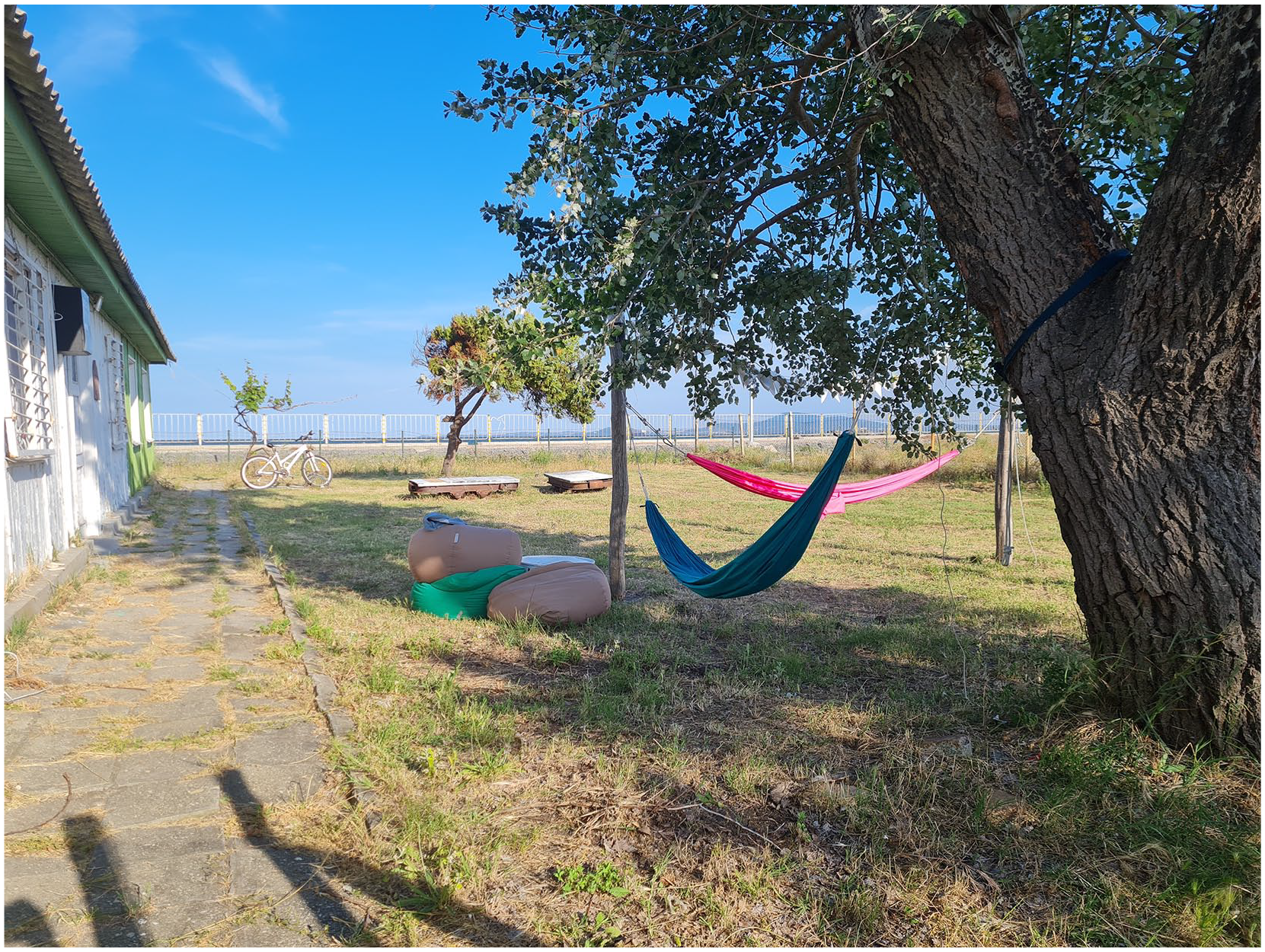
symBiotic as seen from the outside. Photo by author, 2023.
Hosted on a small plot at the offices of the Black Sea Salinas until a storm surge damaged the space in November 2023, symBiotic took its inspiration directly from the salt flats, presenting them, as its name aptly suggests, as a symbiosis between human society and the environment on the Bulgarian coastline. Akin to FPE considerations of the economic “iceberg” (Collard and Dempsey, 2020; Gibson-Graham, 1996; Mies, 2014), the exhibition elucidates the broader types of value that salt production enables in the local community, such as human health, biodiversity, and esthetic enjoyment as well as the ways in these serve as pillars for the market value of the tourist industry. For example, symBiotic explains how the original damming of the Atanasovsko Lake had been completed as a measure against malaria; how the salt industry’s byproduct of minerals-enriched lye is still widely used in balneology (including by the tourist industry); and how the dams and salt pools result in greater local biodiversity (enabling the presence of charismatic bird species, like flamingos, to be observed by tourists).
Since representation plays an important role in enacting alternative realities and economic imaginaries (Gibson-Graham, 2014), the exhibition could be seen to help (re)build awareness of the wider types of value embedded in the last functional salt flats. Indeed, its intention is to foreground these wider types of value. This societal engagement aspect of the exhibition is highlighted by the important roles it plays for education and community engagement. SymBiotic foregrounds experiential learning, particularly for children, allowing them to construct dam models with clay. Its garden, meanwhile, has hosted various social events during the summer season and offered a pleasant resting and hang-out space, complete with hammocks and poofs, for the benefit of both event visitors and casual passers-by on the promenade. Guests can purchase products featuring local sea salt and the sales go largely toward supporting conservation activities. This principle of reinvesting profits into efforts that support societal and ecological value, including community education initiatives and environmental replenishment, can be traced back directly to the local heritage of salt production and its cooperative practices.
Much like the cooperatives, moreover, symBiotic has had a dynamic relationship with the dominant (capitalist) economic model on the coastline, functioning within and not outside of it. This is reflected first of all in its origins as the result from a long-term collaboration between an industrial producer and a non-profit NGO. While this collaboration exists for reasons of maintaining biodiversity, the salt producer’s interest has of course been motivated by improving profit margins. In this case, however, the coastline’s exchange value coincides with the value of environmental replenishment since the same efforts that improve the salt producer’s margins also improve the lake’s ecosystemic health. Indeed, in a contemporary context, the environmental value realistically requires the support of the economic one, as a representative of the Black Sea Salinas observed: “[A]ll the expenditures for maintenance of the biodiversity are in practice covered by the [salt] production [. . .] If it stops, the lake would remain uncontrolled and for all that it’s a preserve and a protected area, in practice this would take a backseat” (Iskren, 2023, my translation). Indeed, as I was conducting my interviews in 2023, the salt producer, institutions, and environmental nonprofits alike were concerned with the danger of salt production declining due to narrowing margins as any alternative arrangements to maintaining the lake’s status would prove too expensive for the state (Interviews with author, 2023). Thus, in this case the seemingly narrow value economic profit works for wider values aligned with ecological replenishment. SymBiotic’s existence and name make that very point explicit.
Similarly, as an events space located along the beach and immediately near the mud baths within the salt-making complex, as well as a point-of-sale for products, symBiotic might also seem to the casual observer to function within the existing line of tourist traps and thus to uphold the tourist economy’s status quo. Making profit, however, has never been its purpose, nor is doing so generally considered possible by the space’s creators and stewards at the Bulgarian Biodiversity Foundation. Since the entrance to both the exhibition and to most events hosted in the garden has been free, the income generated from any purchased products cannot cover the salary for full-time staff. Instead of extracting any exchange value, the labor put into creating the exhibit or keeping the space open for visitors results in supporting and promoting societal and ecological values. Thus, while symBiotic has generated some capitalist exchange worth, this is utilized for meanings of value beyond itself, like societal and environmental meaning. In this way, the exhibition’s practice reflects Gibson-Graham and Miller’s calls for a more broadly conceived livelihood economy (2015).
The symBiotic exhibit has been followed up by other social activities seeking to engage the local community with the salt lagoon. In the spring of 2023, together with a group of volunteers organized once again by the Bulgarian Biodiversity Foundation, I took part in the construction of a human “Nest”: a circular meeting space, bench, and art installation all in one (see Figure 3), located at the Atanasovsko Lake bird watching hide—immediately to the north of Burgas but on the lake’s far side from the sea—in a strip of green space easily accessible from the city’s Sea Garden park. Conceptualized pro bono by a local architect, the Nest was constructed entirely through volunteer labor using wood donated by the local storage facility of a large construction company. The completion of this project hence brought together actors representing a variety of perspectives – members of nongovernmental organizations, small-scale entrepreneurs, and at least one academic – all gathered by the Bulgarian Biodiversity Foundation through mobilizing their social network and its “complex relationships of kin and commitments to care” (Gibson-Graham, 2014: S148). On the day of the construction, everyone worked together to cut and arrange pieces of wood, drill holes, screw in screws, and perform care work like providing nourishment or entertaining the young child who had come with their mother. In this way, the Nest in its very construction both activated and enabled ethics of care, reciprocity, cooperation, and environmental stewardship; unlike in the example with symBiotic, it did so without evident recourse to capitalist interpretations of exchange value.
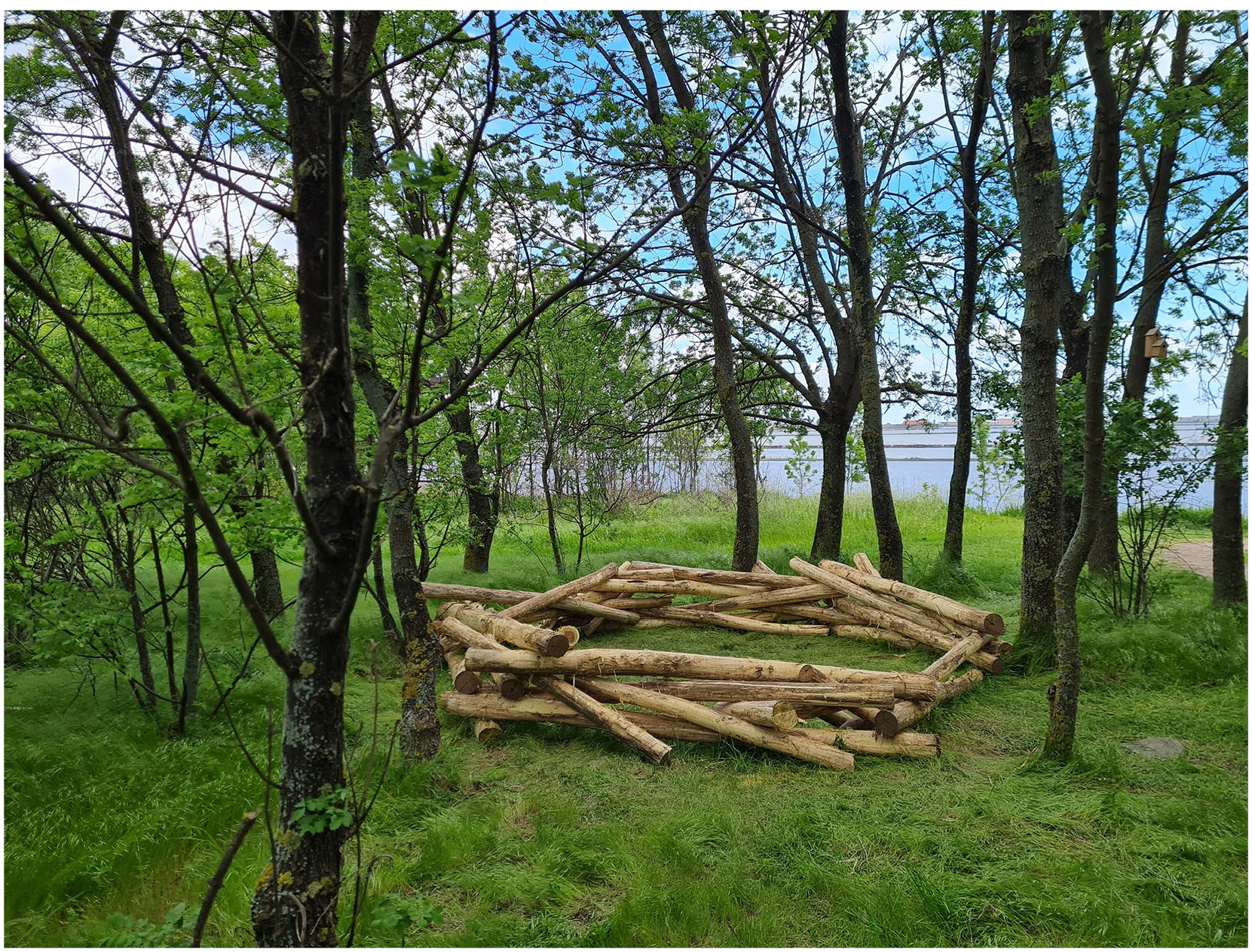
The Nest. Salt flats can be seen in the background. Photo by author, 2023.
Since its construction, the Nest has contributed to growing that network and its ethic engagements by offering a meeting space for classes with children, a resting spot for visitors to the bird hide, or a discussion circle for volunteers and community members. Located on municipal land managed by a regional institution, the Nest is publicly accessible at all times. Since there are no shops or restaurants immediately nearby, it does not further any commercial activities. Similarly to symBiotic, meanwhile, community education and inspiration has been an important part of its purpose. In May 2024, for example, the area around the Nest hosted public lectures about the Atanasovsko lake and yoga sessions open to anyone, while the Nest itself provided the starting point for a citizen science training tour on detecting, identifying, and recording nocturnal animals in the area as part of the Burgas 2024 Green Weekend. Neither of these activities, nor any of the others that the Nest has so far hosted, have been paid or otherwise monetized.
To its architect, the Nest is part of a series of personally motivated urban interventions, the completion of which has in her words helped her “to feel truly at home” in the city because of the passion, care, and social connection these initiatives have inspired and generated (Darina, 2023, my translation). The metaphor of feeling at home resonates with the Nest’s shape, which imitates a bird’s nest not only with its shape but also with its construction, which involved ad hoc placement of the wood elements in a manner similar to how birds build their nests with twigs. As a result, the Nest helps bring visitors closer to the more-than-human landscape, especially the bird species nesting in the area. Ecological cohabitation features centrally in the Nest’s design, turning “an inspiration taken from the birds [. . .] into a conversation about them, about the Atanasovsko lake, about preserving nature, working in a team, and experiencing the word Together” (Darina, 2024, my translation). Thus, the concept of a bird nest bench serves not only as an imaginative point of connection between human and nonhuman communities, but also as a metaphor for hatching new ideas based in that point of connection. In this way, the Nest aligns with FPE calls to notice and not overtheorize the robustness of community practices as futures in the making—particularly where these practices foreground ecological relations (Collard and Dempsey, 2020; Gibson-Graham, 2014; Roelvink et al., 2015; Zanoni et al., 2017).
While only symBiotic explicitly references the history of salt production, in a wider sense, both it and the Nest are recipients of the wider understandings of value once exhibited by the cooperatives on the coast. This implicit continuity—which has been observed before by scholars working in other postsocialist contexts (Cima and Sovová, 2022; Johanisova et al., 2020; Pavlovskaya, 2013)—is carried out in this case specifically through the ways in which each of the examples I have outlined foreground community cooperation, education, and care. Both symBiotic and the Nest pursue an explicitly environmental alternative economic logic, emphasizing, in Gibson-Graham and Miller’s terms, the oikos, or habitat, aspect of the economy (2015). Both, moreover, seek to reinvigorate the inherent value of the salt lakes specifically and coastal nature in general as source of more than just profit, thereby foregrounding community interdependence with the coastal environment. Finally, by bringing to the fore ecological and societal values regardless of whether they generate any profit or not, symBiotic and the Nest help at least offer imaginative alternatives to the coastline’s dominant neoliberal economic model. However, they relate differently to that model. Although not motivated by profit, symBiotic nevertheless utilizes profit through its product sales to generate funds for conservation activities—reinvesting capital from the tourism industry that it forms a small part of into the wider types of value that underpin the coastal economy “iceberg.” Conversely, the Nest has so far avoided making itself legible to a capitalist exchange worth interpretation of value. In a diverse economic imaginary, however, it can nevertheless be seen as the profitable, in the sense of constructive, for the eco-economic relations and values it both represents and supports: social capital (through the work of volunteers and the industry-donated materials) being mobilized to generate societal and ecological value (including through community knowledge-building events). Thus, emerging from a long history of transformation in which values have been perceived in varying ways, these two case studies reflect ideas of shared social economics in two different ways: as either diversifying the logic of capitalist economics or skirting it altogether.
Conclusion
Throughout this article, I have demonstrated how the narrowing of economic understanding as part of the long-term transformation of Bulgaria’s economic and land policy during socialism and the postsocialist transition also meant a fundamental reshaping of wider societal and environmental values. The physical metamorphosis of salt flats into flats for sale on the Bulgarian Black Sea coast reflects the change from perceiving “value” in the natural resource as being tied to long-term community well-being to a different type of value related more closely to profit and exchange. In this vein, the case I have explored here speaks directly to FPE and postsocialist scholarship calls to pay attention to the politics of devaluation in critical political analyses of the economy (Alexander, 2004; Kay and Kenney-Lazar, 2017; Verdery, 2003). As I have shown, the salt flats on the Bulgarian coastline have been both devalued—in the sense of losing their societal role as it existed when they were cooperatively managed—and revalued—in the sense of being seen as potentially profitable land for development in the neoliberal tourist market. Attempts to restore their role for the community, meanwhile, draw on reinstating a wider meanings than simply those tied with capitalocentric value. Definitions of value, therefore, matter a great deal. Envisioning diverse economic practices becomes impossible without evaluating the regimes of value embedded in the economic landscape.
Postsocialist and FPE lines of analysis together speak for the complexity of economic models and practices from which different modes of value emerge. Rather than focusing on either socialist or neoliberal capitalist economics as clean categories and polar absolutes, FPE scholars implore us to investigate the spaces in-between and the hidden dynamics within (Bauhardt and Harcourt, 2019; Gibson-Graham, 1996, 2006, 2014); and in a similar vein, critical observers of postsocialism have demonstrated in practice the many continuities between different economic regimes (Dorondel, 2016; Hann, 2007b; Luleva, 2021; Verdery, 2003). The salt flats’ value transformations I have described in this article speak to both points. Instead of being a straightforward result of the transition to neoliberalism, the shift in values has longer origins, related to patterns of social, economic, and land policy change that go back to the early years of socialism and even beyond. And similarly, although the diverse economic practices I have outlined aim to shift away from the prioritization of profit, they nevertheless also exist and operate within the logic of the capitalist market.
This tension reflects an important conceptual difficulty with theorizing value that exists also in FPE debates on the subject. Where Kay and Kenney-Lazar, for example, suggest that a wider focus on value can collapse distinctions between the inside and the outside of capitalist production (2017), Collard and Dempsey point out that attempting to center that which is devalued by capitalist interpretations still often involves utilizing capitalist understanding of economic practices; alongside others, they therefore call for an economic imaginary beyond capitalism (2017; Zanoni et al., 2017). Thus, FPE scholarship grapples with the question of whether diversity within capitalist thought or a dismantling of capitalist logic is necessary.
As this article has also shown, analysis of the shifting meanings of value in the postsocialist context can help with this difficulty by contesting a hegemonic conceptualization of capitalism in the first place. The salt flats’ transformation affirms observations that capitalist interpretations of value are by no means uniform that postsocialist scholarship has long been making (Alexander, 2004; Giordano and Kostova, 2002; Verdery, 2003). Bulgaria’s experience with postsocialist land restitution, particularly the wishful attempts of officials to restore a societal and economic reality within an entirely altered landscape, demonstrates the necessity of understanding the continuities and gray spaces, instead of just the rupture points, between different economic structures and the values that come with them. Perhaps more importantly, the story of the salt flats helps illustrate postsocialist scholars’ conclusions that the revaluation processes in the postsocialist context produced multiple and sometimes even conflicting meanings of value even within the strictest capitalist sense of exchange worth: a point made especially strongly by Pavlovskaya, who connects the diversity of economic practices she observes in Russia to the very uncertainty of capitalist value theorized by Verdery (Pavlovskaya, 2013; Verdery, 2003). In the contemporary context of the Bulgarian salt flats, this observation is reflected for example in how the Bulgarian Biodiversity Foundation have reinvest profits from the sale of lake-inspired products into conservation and education, utilizing the generation of capitalist exchange value in order to support wider meanings of value, especially those pertaining to environmental or societal worth. Similarly, the role that the salt production industry plays in maintaining the Atanasovsko Lake’s biodiversity status challenges the distinction between value in the narrowest capitalist terms and wider environmental or societal values. These examples complicate interpretations of value within and not simply outside the capitalist framework.
These insights are relevant beyond the specific experience of the Bulgarian Black Sea coast, and indeed beyond the postsocialist context. Indeed, the case I have explored above helps elucidate the wider relevance of the postsocialist analysis to FPE scholarship. Along with other diverse economy theorists working in this context (Cima and Sovová, 2022; Johanisova et al., 2020; Pavlovskaya, 2004, 2013; Smith and Stenning, 2006), I argue that the postsocialist experience opens up particularly fruitful opportunities to perceive diverse economic practices on the ground and how they function as part of societal and environmental transformations. Like these scholars, and also like many FPE scholars more widely (Collard and Dempsey, 2017; Gibson-Graham and Miller, 2015; Kay and Kenney-Lazar, 2017), I argue that reclaiming the vital role of non-capitalocentric values also requires shifting attention to ecological livelihoods and environmental perspectives. On the Bulgarian Black Sea coast, centering the salt flats and their non-monetary value to human and nonhuman communities has provided inspiration for the diverse economic practices described above. The focus on the salty landscape reshapes a story that could be simply about postsocialist economic pressures into one about the wider values that can be reinstated both within and possibly even beyond the existing neoliberal economic context. As plans for “green” and “blue” economies become more prevalent across the international political landscape—for example in the European Union (European Commission, 2020)—these conclusions also gain a political relevance. Diverse economic activities like symBiotic or the Nest would likely fall outside of the current scope of these agendas, yet they help anchor core desired values like sustainability and community wellbeing into the community. Thus, any “green” or “blue economy” would be most powerful if reimagined as a relational economy attentive to the multiplicities of socio-ecological relations and livelihoods. Doing so, however, requires regimes of value that attend not simply to profit but instead also to societal and environmental well-being.
Footnotes
Acknowledgements
I wish to thank the Burgas team of the Bulgarian Biodiversity Foundation – Radostina Tzenova, Diyana Kostovska, Gloriya Marinova, Spas Uzunov, and Diana Pavlova – for the wonderful collaboration we share, for their immense support in the field, and for their permission to report on their work to popularize the biodiversity benefits of salt production in this article. I am also grateful to Mariana Sarbova for her help understanding the Nest and its inspiration better.
Likewise, I would like to thank Ivanka Petrova for her generous invitation to specialize at the Bulgarian Academy of Sciences in 2023 and for her advice and help thereafter; as well as Christof Mauch for his continuing support of my research at the Rachel Carson Center.
Finally, I am grateful to the three anonymous reviewers and the editorial team of Environment and Planning A, especially Trevor Barnes, for their constructive feedback on this manuscript; as well as to Kristen Ounanian, who was the first to introduce me to feminist political economy scholarship.
Declaration of conflicting interests
The author declared no potential conflicts of interest with respect to the research, authorship, and/or publication of this article.
Funding
The author disclosed receipt of the following financial support for the research, authorship, and/or publication of this article: The research conducted in this article has received funding from the European Union under the Horizon 2020 Research and Innovation Program, Marie Sklodowska-Curie Grant № 642935 (ENHANCE ITN) and under the Horizon Europe Program, Grant № 101059957 (EmpowerUs). Research in the article has also received funding from the Bulgarian Ministry of Education’s National Scientific Programme “Development and Recognition of Bulgarian Studies Abroad” through a postdoctoral specialization at the Institute for Ethnography and Folklore with an Ethnographic Museum (IEFEM) at the Bulgarian Academy of Sciences in September 2023.
