




Abstract
Water buffaloes have a seasonal cycle of reproduction. Normally they tend to reproduce more when the daylight hours decrease. This seasonal reproduction also means that most of the buffalo calves would be born in autumn and winter in Italy where buffaloes are dairy animals, and milk production would be the highest in these seasons. However, consumer demand for the PDO (Protected designation of origin) mozzarella cheese is the highest in spring and summer. In order to deal with the imbalances between the seasonality of milk production and mozzarella consumption, and the strict regulations of the PDO cheese production, farmers and veterinarians resort to a temporal fix, and they regularly deseasonalise buffalo reproduction. However, there is an obvious discrepancy between the use of this and other fixes (cryotechnologies) generally associated with industrial agriculture, and the idea of traditional and sustainable food production. By engaging with relevant economic geography and political ecology literature, this paper investigates the temporal fixes in dairy farming and agri-food production through an in-depth empirical analysis of deseasonalisation, as a particular form of the real subsumption of nature, and cryopolitics in buffalo mozzarella cheese production in Southern Italy. The work presented in this article is based on multi-sited qualitative field research of buffalo farming and mozzarella cheese production in Campania region. This paper also has wider implications on how socio-ecological fixes shape ‘just-in-time’ animal agriculture and agri-food production.
Introduction
When the train replacement bus dropped me off in the centre of Cancello ed Arnone, the location of the annual Mozzarella Festival, just an hour north of Naples, I could immediately smell the odour of buffalo farms. After all, I was in ‘buffalo county’. In this town, the human to buffalo ratio is 1:8. More than 33,000 buffaloes are raised in 156 farms (ComunicaCity, 2019). The local economy here is based mainly on buffalo farming and mozzarella production. I found several mozzarella dairies (‘caseifici’ in Italian) in the town. During the Mozzarella Festival, a workshop on buffalo farming (led by veterinarians, researchers and representatives of the local economic and political institutions) was held in the local town hall, and the concept of deseasonalisation drew my attention specifically during the presentations. I understood that this technique is a way to manage the seasonal reproduction of buffaloes in intensive farming. A few months before this event, while I was researching in the archives of the Consorzio di Tutela della Mozzarella di Bufala Campana [PDO (Protected designation of origin) Mozzarella Consortium] in Caserta, a staff member of the Consortium spoke about the possibility of changing the production regulations of the mozzarella cheese, and extending the PDO label to frozen mozzarella cheese as well.
There was an obvious discrepancy between the idea of traditional and sustainable food production and the almost cult-like food culture in the ‘mozzarella landscape’ on the one hand, and the necessity to use socio-ecological fixes (generally associated with intensive agri-food production) in buffalo farming and mozzarella production on the other hand. Understanding this inconsistency between traditional PDO food products and intensive agri-food production was the main rationale for me to gain insight into deseasonalisation of buffalo reproduction and the politics of frozen mozzarella cheese.
Deseasonalisation is a crucial practice necessary to control and manage the seasonal reproductive process in buffalo farming in Southern Italy. Water buffaloes (Figure 1) are photoperiodic in subtropical areas and due to genetic and environmental factors they tend to reproduce more when the daylight hours decrease. This seasonal reproductive activity also means that most of the buffalo calves would be born in autumn and winter in Italy, and milk production would be the highest in these seasons. However, buffalo milk in Italy is used mainly to produce buffalo mozzarella cheese (Figure 2), and the consumption of this fresh cheese is the highest in spring and summer (Trabalzi, 2007). In the past, surplus milk in winter was frozen, and then it was used when the demand for mozzarella was higher. The current regulations of the PDO mozzarella cheese production do not allow the practice of freezing buffalo milk for mozzarella production anymore (Di Francesco, 2010). In order to deal with the imbalances between the seasonality of milk production and mozzarella consumption, farmers and veterinarians resort to a temporal fix, and they regularly deseasonalise buffalo reproduction (Trabalzi, 2007).
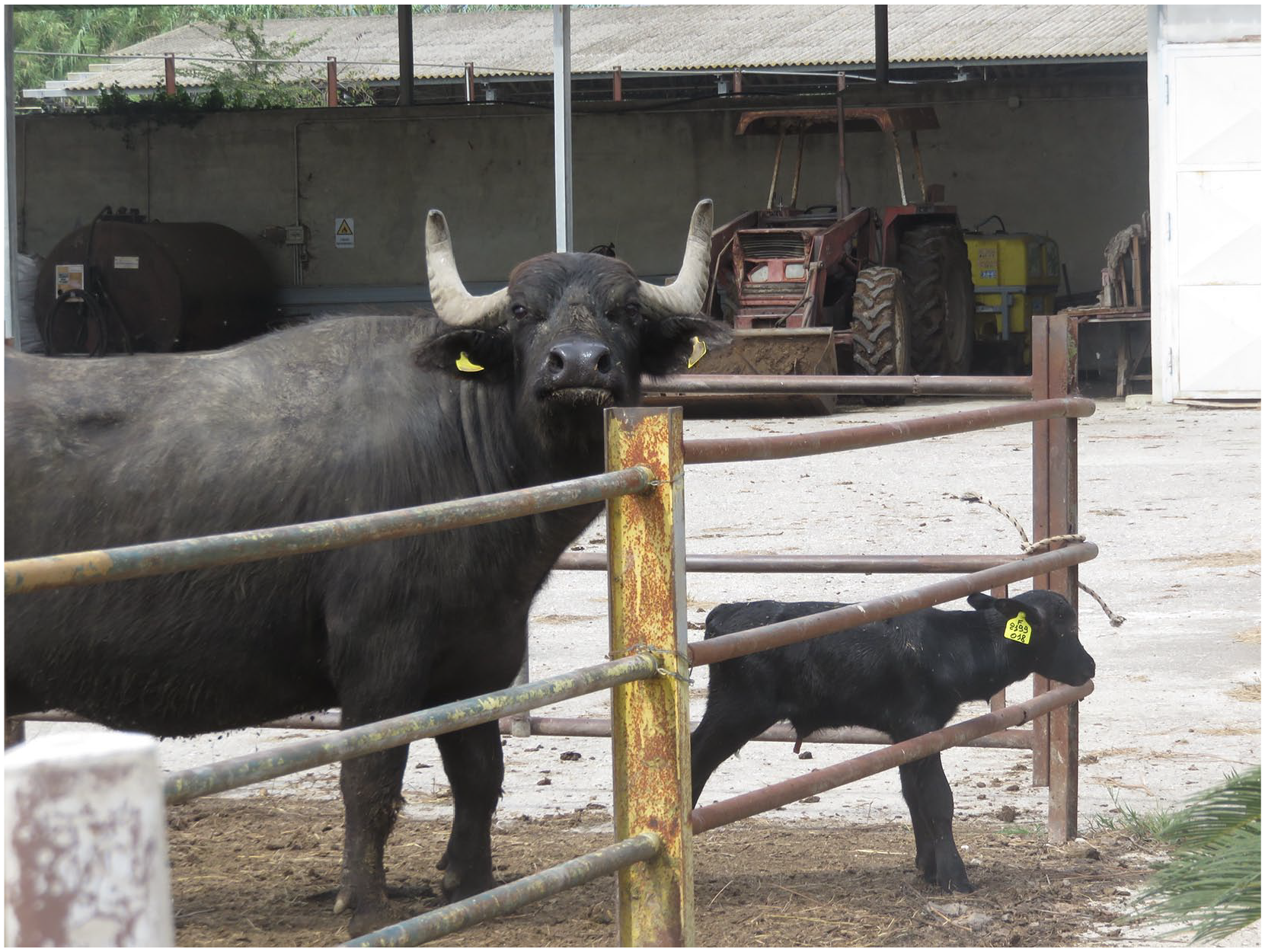
A female buffalo and her calf on a farm in Campania region, Italy. (photograph by the author).
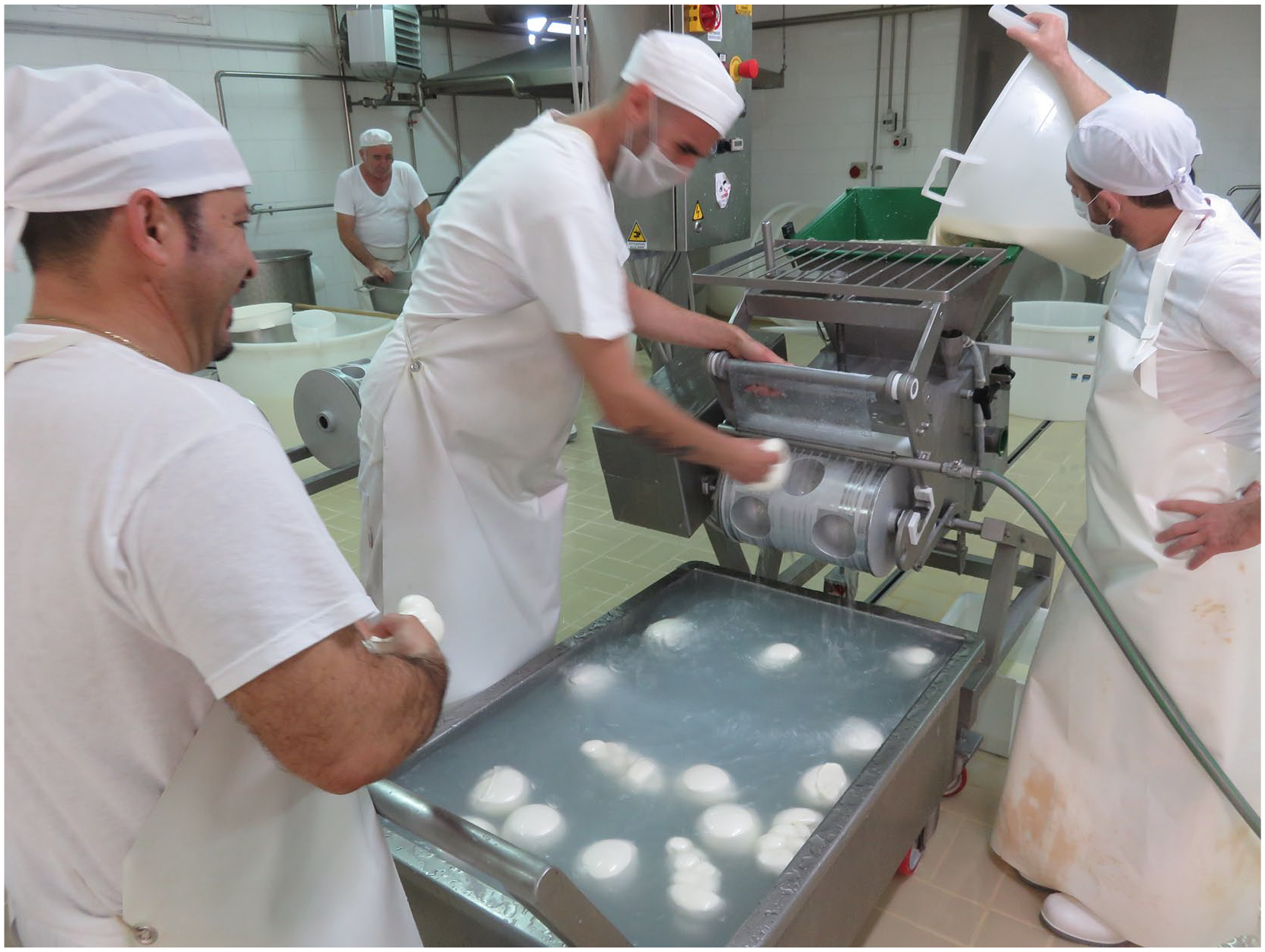
A mozzarella dairy near Naples, Italy. (photograph by the author).
Within factory farming conditions, where animal growth and biorhythms can be closely controlled and their speed can be increased through socio-ecological fixes, capital has managed to shorten considerably the turnover time of animals (Weis, 2007). These fixes have also been used for dealing with the environmental effects of intensive animal farming (Clay and Yurco, 2020). For example, reengineering ruminant digestion has served ‘sustainable intensification’ (Cooper, 2017) by reducing the effects of livestock farming while producing more meat and milk. However, the aim of some of these fixes is not necessarily productivity increase or sustainable intensification but they are linked to consumer expectations and regulatory requirements (e.g. PDO product regulations).
This paper investigates two temporal fixes in intensive animal agriculture through an in-depth empirical analysis of deseasonalisation of buffalo reproduction, as a particular form of the real subsumption of nature, and cryopolitics in buffalo mozzarella cheese production in Southern Italy. The concept of the real subsumption of nature, based on the Marxian theory of labour, provides a productive way to explain how nonhuman nature is tamed to produce more and faster, or according to market demand. The other key notion used in this article, cryopolitics, the mechanisms that mobilise science and technology to slow down or arrest metabolic processes with the use of artificially low temperature. This concept is particularly helpful in understanding the politics around traditional but strictly regulated fresh food products (in Europe) that depend on freezing technologies. This research engages with recent economic geography and political ecology literature on the temporality of socio-ecological fixes (Collard and Dempsey, 2022; Ekers and Prudham, 2015, 2017, 2018; Moore, 2010; Siamanta, 2019).
This paper is based on multi-sited qualitative research of buffalo farming and mozzarella cheese production in Southern Italy. During my fieldwork, I completed a seven-week-long internship on a buffalo farm which involved participant and direct observation. I conducted 32 semi-structured expert and open-ended interviews with 25 people, including buffalo farmers, mozzarella producers, farmworkers, veterinarians, researchers and other representatives of the mozzarella industry. Wherever possible, I took photos and I made videos in addition to my fieldnotes. Also, in order to triangulate my findings, I used a variety of secondary sources such as government and industry reports as well as newspaper and magazine articles.
This paper is organised as follows. First, I provide a review of the economic geography and political ecology literature on socio-ecological fixes in intensive animal agriculture and agri-food production, with a specific focus on the real subsumption of nature and cryopolitics. In the subsequent section, I present the main issues of reproductive seasonality and their constraining effects on capital accumulation. Next, I unfold the practice of deseasonalisation and the cryopolitics of mozzarella production, and I analyse how science and capital ‘fix’ nonhuman lives for more efficient and ‘just-in-time’ value production. In the concluding section, I suggest that we should move away from socio-ecological and ‘ethically sustainable’ fixes in animal agriculture to other, transformative forms of repair between productive landscapes and animals.
‘Fixing’ intensive animal agriculture
As Bok (2019) suggests, the term ‘fix’ has been used extensively in geographical political economy. The concept of spatial fix was coined by Harvey (1981) to explain how spatial expansion provides temporary solution for the impediments of capital accumulation. In 2015, a theme issue was published in Environment and Planning A on how the periodic crises of capitalism are ‘fixed’ ‘through intensive and extensive transformations of landscapes and processes’ (Ekers and Prudham, 2015: 2438, see also Dempsey, 2015; Guthman, 2015; McCarthy, 2015). Among other examples, socio-ecological fixes include the various ways in which human and nonhuman lives and socio-ecological relations are altered in order to deal with social and ecological crises of capitalism (Ekers and Prudham, 2015), and to find new ways for capital accumulation (Ghosh and Meer, 2021).
In intensive animal agriculture, socio-ecological fixes, such as improving animal reproduction and shortening the turnover time (Weis, 2007), are particularly significant for capital accumulation. Efforts to improve animal bodies and their productivity in intensive farming are not new. One of the most cited examples in economic geography and political ecology is the broiler chicken and the persistence of capital and science to ‘improve’ their production efficiency. Neo and Emel (2017: 52) note that ‘two-kilogram birds that used to be sent to slaughter at four months are now sent at five to six weeks’. The intensive confinement was the first step in the industrialisation of broiler chicken ‘production’ (Boyd, 2001). In addition, the veterinary bioeconomy (Cseke, 2023) has been searching for technological fixes to address the problem of surplus animals (Collard and Dempsey, 2017; e.g. sexed semen, new methods to check eggs and destroy the ones that contain male foetuses). These interventions have been considered solutions to the negative environmental effects of intensive production while maintaining the profitability of the sector through ‘sustainable intensification’ (Clay et al., 2020; Cooper, 2017). Socio-ecological fixes also include the alteration of biophysical properties (of animal bodies) to maintain and enhance capital accumulation (Castree, 2008). These processes, the intensification in biologically based sectors, are described by Boyd et al. (2001) as the real subsumption of nature. Building on Marxian labour theory, Boyd et al. (2001: 564) suggest that under the real subsumption of nature, nonhuman life ‘is (re)made to work harder, faster, and better’. This is in contrast with the formal subsumption of nature where nonhuman environment is considered as given raw material, and capital accumulation is sustained through continuous expansion (Boyd and Prudham, 2017; Ekers and Prudham, 2015).
Although several scholars focussed on examining the move from the formal to the real subsumption of nature by understanding how firms try to accelerate and manipulate biological processes for capital accumulation, in many cases a combination of the two, the formal and real subsumption of nature coexist in global capitalism (Boyd and Prudham, 2017; Hardt and Negri, 2009). Capital has successfully accelerated biological processes in animal farming and in the dairy industry. At the same time, it has also maintained an extensive logic of resource extraction, without a clear distinction between the real and formal subsumption of nature (Smith, 2007; e.g. dairy commercialisation in African countries; Clay, 2019).
Capital not only intensifies metabolic rhythms, yield and the turnover time of nature-based industries, but it also attempts to develop a production system that is able to deal with the regulatory and commercial ‘just-in-time’ pressures by altering the rhythms of intensive animal agriculture (Allen and Lavau, 2015; Boyd and Watts, 1997). This requires not only tackling the seasonal character of agricultural production (e.g. reproductive seasonality of animals) and strict regulatory context of the PDO food production in the European Union but also maximising the potential of farmed animals to produce value at the right time. ‘Just-in-time’ food production (FitzSimmons, 1986) in animal agriculture relies not only on the real subsumption of nature but on cryopolitical mechanisms, too.
Cryopolitics, slowing down or even halting metabolic processes with low temperature, ‘intensifies and intervenes in biopolitical processes’ (Radin and Kowal, 2017: 6.). As Radin and Kowal (2017) argue, the ‘politics’ in the term cryopolitics indicates the mechanisms that mobilise science and technology to use artificially low temperature to regulate living organisms. These mechanisms include not only regulations but consumer expectations and global food production networks (Werner, 2022) as well. Cryotechnologies (Lemke, 2019, 2023; Romero-Bachiller and Santoro, 2023), the technologies of cooling and freezing are key temporal socio-ecological fixes in agri-food production and food preservation. These technologies have made long-distance transportation of food products possible through a complex network of ‘cold chains’ (Bravo, 2017).
The seasonal reproduction of water buffaloes
Reproductive seasonality is a ‘strategy’ in many mammal species to ensure that their offspring are born during the most suitable period of the year (e.g. when sufficient food and water are available, and the temperature is mild enough; Wood et al., 2006). Although domestication, ‘in which people actively force changes in the seasonal subsistence cycles of animals to make them coincide with particular human needs’ (Alaimo, 2008: 177), has altered the seasonal reproduction of farmed animals compared to what can be observed among wild animals, seasonality is still present in the reproductive cycles of some extensively bred bovine species (Di Francesco, 2010). Without any intervention, seasonal cycles would be present in the conception, calving and milk production of the buffaloes (Di Francesco, 2010).
The buffalo has an ovarian cyclic activity throughout the year, and this activity increases when the daylight hours decrease. Zicarelli (2016) suggests that the tendency to seasonality increases proportionally with the distance from the Equator. Seasonality is part of the process of adaptation of the animal to the surrounding environment (e.g. giving birth and weaning when the temperature is milder, food sources are more accessible, and infectious agents are less present; Zicarelli, 2016). Even though in Italy buffaloes are fed a constant, balanced forage, the distinct seasonal reproductive pattern is still present (Perera, 2011; see also Borghese, 2005; Zicarelli, 1997). This type of seasonality in which reproductive activity is not synchronised with forage availability demonstrates that buffaloes are not autochthonous in Italy because they calve during the months when forage is scarcer and the temperature is lower (Zicarelli, 2016).
Due to the reproductive seasonality of the animals, milk supply is the lowest in spring and summer under natural conditions, when market demand for mozzarella is higher. On those buffalo farms, where the out-of-breeding season mating (OBSM; Table 1) technique is not used, the reproductive activity takes place mainly between September and January. However, buffaloes that are born outside of their ‘regular’ breeding period often have a higher rate of embryonic mortality (Baruselli et al., 1997; Campanile et al., 2005, 2010). In order to deal with this problem, hormonal treatments and specific breeding programmes have been used (Zicarelli, 1997).
The monthly calving distribution of a buffalo farm where out-of-breeding season mating (OSBM) technique has been progressively applied between 2003 and 2019.
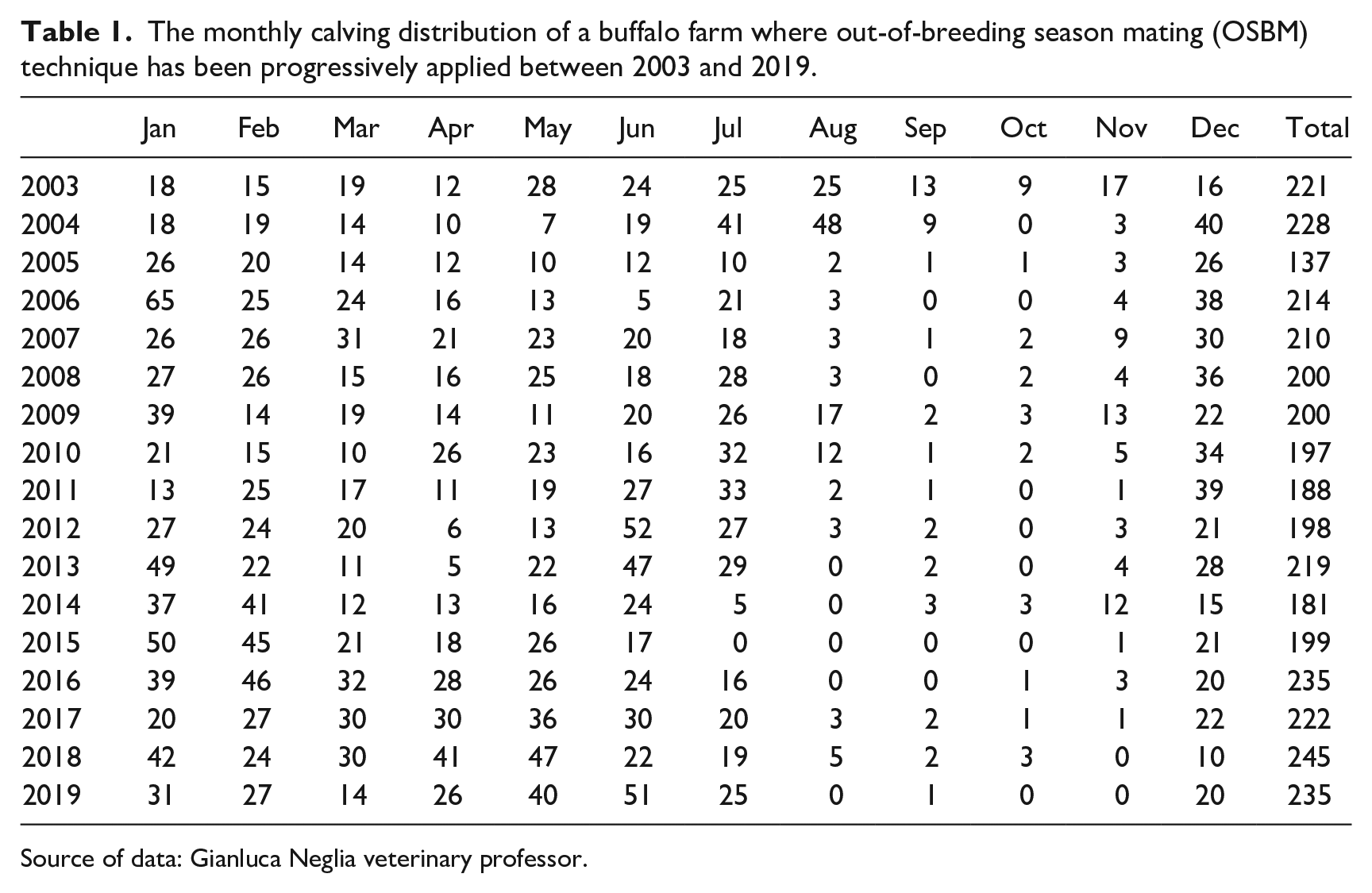
Source of data: Gianluca Neglia veterinary professor.
Deseasonalising buffalo reproduction and the seasonal demand for mozzarella
After World War II, the buffalo farming sector in Southern Italy has been transformed radically. Rural electrification projects (Dickinson, 1954) on reclaimed lands made possible the development of intensive production in buffalo farming in Campania and Southern Lazio regions. Intensive farming methods previously used in cattle farms have been utilised here (Napolitano et al., 2019). Capital and science have not only developed intensive farming conditions for dairy buffaloes (sometimes without any access to grazing areas or water for wallowing), but they have also modified the reproductive seasonality of the animals.
In other countries with significant dairy sector, such as New Zeeland (Stringer et al., 2008) and Ireland (Heinschink et al., 2016), the seasonal milk production has been a critical issue, too. The Irish dairy sector was similarly seasonal because it was a grass-based, spring calving system. Traditionally, Irish farmers were offered seasonal bonuses to encourage autumn and winter calving, which allowed a more stable off-peak milk supply. However, farmers that focussed on winter milk supply had higher production costs per litre compared to spring calving herds (Heinschink et al., 2016).
The reproductive cycle of water buffaloes in Southern Italy has not been deseasonalised for developing an aseasonal milk production system, and for making milk supply stable throughout the year for the Mozzarella di Bufala Campana PDO chain. Deseasonalisation as a socio-ecological fix was linked more to consumer expectations and PDO regulatory requirements, and less to productivity increase. Seasonality (the time of the year when the food is harvested or the quality of the food is at its peak) is one of the most important food product characteristics for Italian consumers (Mascarello et al., 2015). In this case, however, other attributes of the mozzarella cheese (the mozzarella is a fresh cheese and it does not require additional preparation) and the peak season in tourism have contributed to the higher level of mozzarella consumption during the spring and summer months in the Italian market (Leo, 2022). In the early years of industrial mozzarella production, farmers and mozzarella producers overcame the milk shortage in spring and summer by freezing surplus milk produced in autumn and winter. ‘Slowing down and arresting metabolic processes’ (Lemke, 2023: 7) through freezing milk was necessary during the early decades of industrial level production of the mozzarella. However, when the mozzarella cheese gained PDO status in 1996, the PDO Mozzarella Consortium 1 , which is recognised by the Ministry of Agriculture, Food and Forestry for overseeing the protection, including rigorously defining the organoleptic and product characteristics, of the Mozzarella di Bufala Campana PDO, modified the product regulations (Ministero delle politiche agricole alimentari e forestali [MIPAAF], 2008), and they prohibited the use of frozen buffalo milk for the production of the PDO mozzarella cheese (Di Francesco, 2010). Currently, only fresh milk (the time limit is 60 hours after milking) can be used in the PDO certified dairies because research has shown that mozzarella produced from frozen milk has got significantly lower organoleptic characteristics than the cheese made from fresh milk (Arena et al., 2016). The Consortium guarantees consumers that PDO dairies ‘are constantly monitored and analysed to ensure compliance with the specification and the high-quality standards of the product’ (PDO Mozzarella Consortium, n.d).
The updated product regulations limited the use of cryotechnologies in mozzarella production, and this step has accelerated the deseasonalisation of water buffaloes in Southern Italy. In order to adapt to the seasonal variations of market demand and stay in business, farmers had to adopt the OBSM technique in breeding. The OBSM technique means that mating is avoided when the industry and the market ‘do not require reproduction’. In practice, the OBSM technique implies that animals are forced to reproduce from the end of March until the end of August, so the calves would be ‘delivered’ from the beginning of February until the beginning of July, and milk production would be highest when the market demand for mozzarella is higher (interview with Gianluca Neglia veterinary professor, September 2018). However, even with proper management, some animals ‘lose’ a cycle from time to time, so they may not produce milk for more than a year (interview with Nicola Cecere buffalo farmer, October 2018). Managing the OBSM technique is a complex task, and considerable progress was necessary before this socio-ecological fix became practicable in buffalo farms. Deseasonalising buffaloes requires proper nutritional and post-partum management (e.g. hormonal treatments to reduce seasonal anoestrous; Neglia, 2017). In some cases, artificial insemination is used in order to adjust seasonal reproduction to market demand (Vecchio et al., 2018). Although the fertility failure rate is lower in farms that apply the OBSM technique for several years because they select the buffaloes less sensitive to photoperiodic effects, fertility loss is still recorded (Di Francesco, 2010; e.g. higher level of embryonic mortality in farms that use the OBSM technique; Vecchio et al., 2018). The introduction of this technique has created an opportunity to produce fresh buffalo milk ‘just-in-time’ and follow the seasonality of the market demand for mozzarella, but it has generated new risks by increasing the rate of fertility loss.
Overall, buffalo farmers in Campania have been successful in mitigating the mismatch between the seasonal reproduction of buffaloes and the seasonality of mozzarella consumption, and the whole buffalo farming industry has gravitated towards the real subsumption of nature (deseasonalisation) that allowed the sector to avoid the more problematic formal subsumption (milk freezing) that could have compromised the reputation of the mozzarella cheese as a fresh and traditional food product.
Deseasonalisation and frozen mozzarella
Over the past 20 years, most of the buffalo farmers have managed to ‘deseasonalise’ their animals in order to meet the seasonal variations of mozzarella demand (interview with Gianluca Neglia veterinary professor, 2018). Since the Protected Designation of Origin (PDO) system came into operation in 1996, frozen milk cannot be used for making the Mozzarella di Bufala Campana PDO (MIPAAF, 2008). The strict PDO regulations have made buffalo farming and mozzarella production strongly dependent on a ‘just-in-time’ production system. Therefore, animal bodies and animal reproduction have been forced to adapt to this economic model.
Although deseasonalisation was introduced in the sector in the 1980s in order to meet the fluctuating milk demand of the market, the traceability system and recent biosecurity measures (Cseke, 2023) and consequently, the increase of the milk price (especially during summer) have also made farmers more interested in managing animal reproduction activities over the past few years. In 2018, over 90% of the farms in Campania kept their livestock deseasonalised (interview with Gianluca Neglia veterinary professor, 2018). 2
The higher demand for buffalo milk and the higher milk prices incentivise the farmers to manage the reproduction of their buffaloes, so most of the buffalo calves are born between February and July (interview with Domenico Vecchio veterinary researcher, 2018). By managing the date of birth of the calves this way, farmers can make the buffalo cows produce the highest milk yield in spring and summer when the demand for mozzarella cheese is at the maximum. Controlling the reproduction of the buffaloes requires efficient management in the farms. Therefore, both the efforts and the economic loss of the farmers (potentially lower fertility rate of the animals and lower total annual milk yield; Di Francesco, 2010) have to be compensated. 3
Luigi Zicarelli, a renowned veterinary professor at the University of Naples Federico II, has pointed out that the average milk price [before the introduction of the traceability system in 2014] was not sufficient to cover the economic loss and the efforts of the farmers to deseasonalise their animals (Ruminantia, 2019). 4 A 2015 Parliamentary Commission Report on mozzarella production also confirmed that ‘the seasonal adjustment involves higher production costs, which are in no way repaid by the price of milk, even with different summer and winter milk prices’ (Parliamentary Commission, 2015). Nevertheless, over the past decade, especially after the introduction of the traceability system (Cseke, 2023), deseasonalisation has become a particularly useful tool for capital accumulation for buffalo farmers because of the increasing and stable milk prices and the strict regulations of the mozzarella production processes. The enforced product regulations (MIPAAF, 2008) and the higher milk prices, however, also increased the production costs for the dairies, in addition to the rather high cost of shipping the cheese to the international market. These issues have contributed to debates between the dairies and the farmers about the future of the PDO buffalo mozzarella cheese.
At the Assembly of the PDO Mozzarella Consortium in Caserta in May 2017, there was a proposition requesting changes in the Mozzarella di Bufala Campana PDO product regulations (Pelagalli, 2017; Nicola Cecere buffalo farmer, 2018, personal communication ). According to this proposal, the Mozzarella di Bufala Campana PDO could have multiple forms, the weight limit would be eliminated (at that time, the maximum allowed weight of the Mozzarella di Bufala Campana PDO is 3 kg), and the final product could also be frozen. The mozzarella that loses the characteristics of a fresh product could be used as an ingredient for other food products in the catering industry, and finally, not only boiling water (as tradition indicates; Figure 3) but steam could also be used to process the paste. The modified product regulations would identify five different types of Mozzarella di Bufala Campana PDO: 1. handmade, 2. smoked, 3. frozen, 4. exclusively for professional use, 5. lactose-free (Pignataro, 2017).
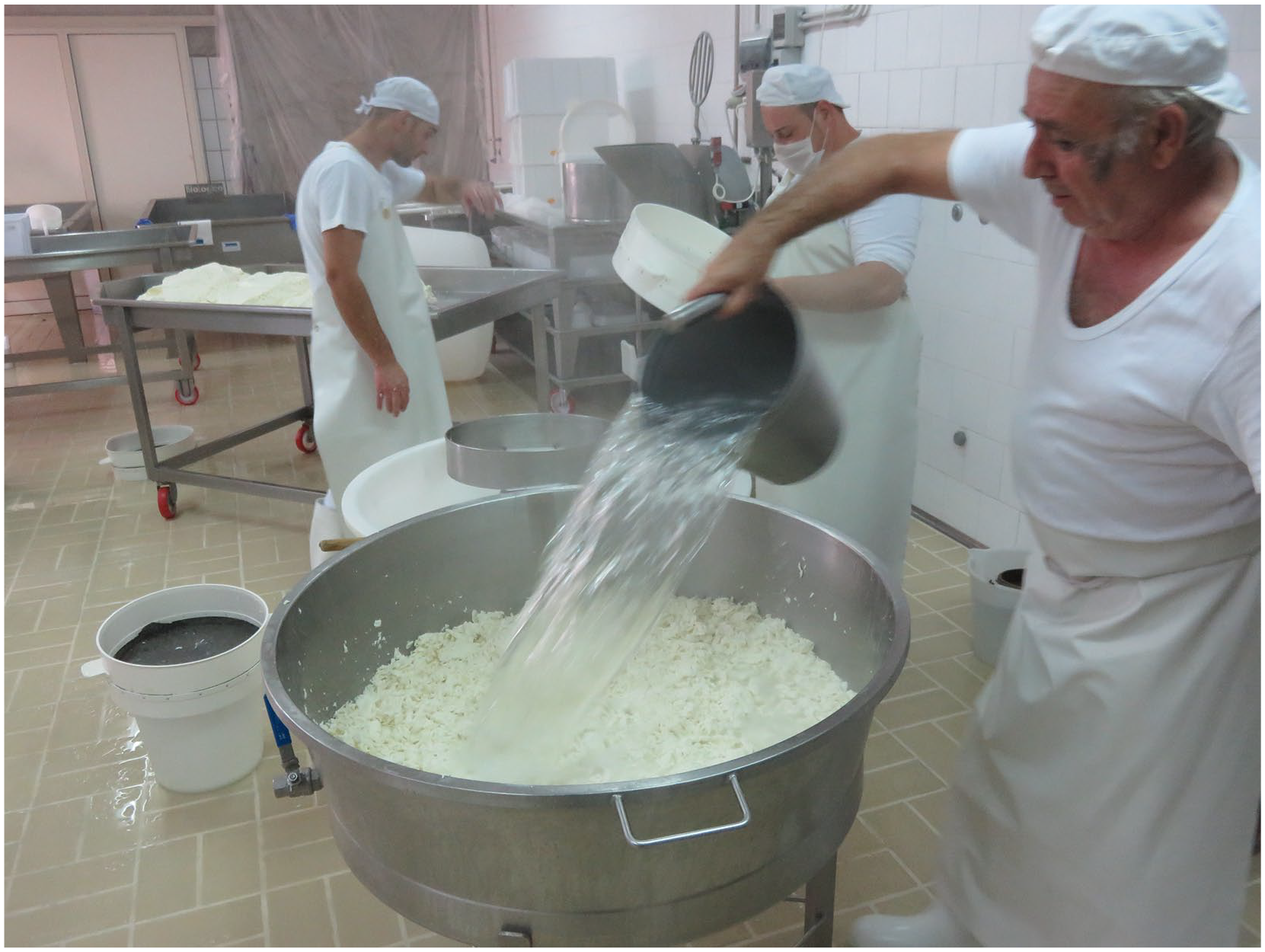
Using boiling water to process the paste in a mozzarella dairy near Naples. (photograph by the author).
More than any of the other proposed changes, the possibility of freezing mozzarella has sparked fierce debates. Domenico Raimondo, the President of the PDO Mozzarella Consortium, pointed out on the pages of Il Mattino (a national newspaper based in Naples) that ‘frozen mozzarella already exists outside the PDO system, and that market is in the hands of multinationals’ (Pignataro, 2017). According to the Consortium, the modification of the product regulations is necessary for the producers of the Mozzarella di Bufala Campana PDO to maintain their competitiveness at the global level. Also, the introduction of frozen mozzarella would open new possibilities to reach the international market (interview with Pier Maria Saccani, 2018). In 2019, 34% of the total Mozzarella di Bufala Campana PDO produced was exported, but the changes in the regulation would allow further expansion. PDO mozzarella cheese could be transported by ship and not only by plane, and the transportation costs would decrease from 10 euros/kg to 0.50 euros/kg. In 2018, the price of the product overseas was at around 35 euros/kg (interview with Pier Maria Saccani, 2018; Bonardi, 2017). The extremely high transportation costs make it difficult to significantly increase the export volume. According to the Consortium, freezing the finished product and therefore lowering transportation costs would allow the sector to cooperate with quality pizzerias abroad (De Luna, 2017). Pier Maria Saccani, the Director of the PDO Mozzarella Consortium, noted the ‘differences between consumers’ when talking about the possibility of introducing frozen mozzarella as a PDO product. He suggested that the market of the proposed frozen mozzarella would not be in Campania where ‘people eat a lot of mozzarella and they want it fresh’ (interview with Pier Maria Saccani, 2018). He argued that the main buyers of the frozen mozzarella would be the representatives of the catering industry: You can imagine a pizzeria in Utah in the middle of the US. You have to send [the mozzarella] from Naples to Rome, from Rome to the US – NY or Washington, . . . another flight to Utah, it takes about six/seven days. I have to manage, as a pizzeria, a shipment [of buffalo mozzarella] twice a week. It is a complicated job. Do you think that I would be interested in buying mozzarella from Italy? No. It is too expensive because of the cost of the mozzarella and the cost of management, and the flight. The transportation costs 4.20 euros per kg, and you spend double for the mozzarella because we send the mozzarella and the brine for the mozzarella. In the end, you spend 9 euros only for the shipping. You pay 7-8 euros for the mozzarella, and you spend more for the transportation than for the product (interview with Pier Maria Saccani, 2018).
Some of the buffalo farmer associates rejected the proposal of approving frozen mozzarella as a PDO product. Raffaele Puoti, the President of Confagricoltura Caserta (one of the leading farmers’ trade unions in Italy) argued that It is evident that with such modifications, the characteristics of the product protected by the PDO mark would be lost. PDO is a brand that preserves the tradition of a production process in the face of technological innovation that can be useful for other products. It seems absurd that a product like the mozzarella has to be protected by farmers, the milk producers, and not by those who produce mozzarella themselves and by the PDO Mozzarella Consortium with specific authorization from the Ministry [of Agriculture] (Pignataro, 2017).
Confagricoltura has been particularly critical of the proposed changes. They argued that selling frozen mozzarella would be like ‘freezing a bottle of Chianti Classico wine’ (and offering it to customers; De Luna, 2017). The Ministry of Agriculture has also expressed its opposition to the ‘industrialisation’ of this traditional food product. Senators from the Five Star Movement voiced their concern that in case frozen mozzarella would become a PDO product, farmers would have to accept lower prices for the milk they produce (Bernardelli, 2017). The Parliamentary Commission (2015) Report on the seasonal nature of the Mozzarella di Bufala Campana PDO noted that with the introduction of the frozen mozzarella as a PDO product ‘the 60-hour limit for processing buffalo milk would automatically disappear because the milk would be processed and become part of the frozen product’. A buffalo farmer also pointed out that the mozzarella producers argued that the production of frozen mozzarella would have made it possible for the dairies to solve the problem related to the surplus buffalo milk in winter. Buffalo farmers, on the other hand, opposed the requested changes, claiming that no data showed the actual production surplus during winter. [They argued] that before considering the idea of modifying the product regulations, a
The buffalo farmer’s comment and the excerpt from the Parliamentary Commission (2015) suggest that there is a link between the seasonal variations of milk production and the proposal to label the frozen Mozzarella di Bufala Campana as a PDO product. At the same time, some of the stakeholders have argued that it would be necessary to revise the 60-hour limitation as the maximum storage time of the milk if the sector would like to survive and grow in the face of global competition. It is too difficult to guarantee (in terms of food quality) for the mozzarella producers (Pignataro, 2015). However, farmers are concerned that if the 60-hour limitation is compromised in any way (even in the form of frozen mozzarella as the final product), the price of buffalo milk will decrease again, after a steady rise over the past few years since the introduction of the traceability system in 2014.
The 60-hour limitation as the maximum allowed storage time of the milk had never been officially suspended before March 2020, even though buffalo farmers and mozzarella producers had to face socio-ecological crises in the past. The COVID-19 health emergency, however, severely impacted the mozzarella producing sector by the end of March 2020. Initially, the sales of the Mozzarella di Bufala Campana PDO cheese decreased by 50%. According to Domenico Raimondo, the President of the Consortium, the main reason for the initial sales drop was the closures of restaurants and pizzerias both in Italy and abroad and the drastic reduction of export opportunities (i.e. the massive cutback of flights affected the export of mozzarella because this fresh cheese requires fast transportation; D’Antonio, 2020).
During the first wave of the COVID-19 health emergency, in order to provide compensation to farmers and mozzarella producers who were facing a radical and sudden drop in consumer demand, a temporary modification of the product regulations was adopted by a ministerial decree on 18 March 2020 (Pelagalli, 2020). The decree temporarily suspended the 60-hour limitation as the maximum storage time of the buffalo milk, and frozen milk could be used for the production of the Mozzarella di Bufala Campana PDO until 30 June 2021 (Confagricoltura, 2021). Currently, there are a number of dairies that sell frozen mozzarella cheese (as a non-PDO product) online, with a note that ‘[i]t is destined for foreign markets in particular’ (Fattorie Garofalo, n.d.).
The strict PDO regulations have made buffalo farming and mozzarella production strongly dependent on a ‘just-in-time’ production system. The 60-hour limitation as the maximum storage time of the milk, and consequently, the deseasonalisation of buffalo reproduction, has improved the reputation of the mozzarella cheese as a traditional and fresh product. However, the strict product specifications have also made it difficult for mozzarella producers to compete with the cheese industry abroad. With the introduction of the frozen PDO mozzarella cheese as an export product, the mozzarella industry in Campania would be able to sustain both the formal (frozen mozzarella for the export market) and the real subsumption of nature (deseasonalisation of buffaloes) at the same time.
Conclusions
Through an in-depth empirical analysis of the deseasonalisation in the buffalo farming sector and the cryopolitics related to the possible introduction of frozen mozzarella cheese in Southern Italy, and an engagement with relevant economic geography and political ecology literature (Boyd, 2001; Boyd et al., 2001; Clay, 2019; Cooper, 2017; Dempsey, 2015; Ekers and Prudham, 2015; Guthman, 2015; McCarthy, 2015; Palmer, 2021), this paper has investigated the temporal aspects of socio-ecological fixes in animal agriculture. This article has focussed on two specific temporal fixes in the ‘mozzarella landscape’ but it has wider implications on how socio-ecological fixes shape ‘just-in-time’ animal agriculture, including animal lives and bodies, and agri-food production under local/global pressures.
First, this paper has analysed why and how animal bodies and lives are subjected to various interventions in order to maximise their capacity to produce value ‘just-in-time’ (FitzSimmons, 1986) in a system in which food consumption patterns are ‘naturalised’. Earlier literature on the real subsumption of nature (e.g. Boyd, 2001; Boyd et al., 2001; Prudham, 2003) suggested that under the conditions of the real subsumption, the transformation of natural production is used ‘as source of productivity increase’ (Boyd et al., 2001: 557). My empirical findings on the deseasonalisation of buffalo reproduction suggest that the real subsumption of nature in buffalo farming and mozzarella production cannot be described simply as a technological initiative to increase the productivity of nonhuman nature. Also, in this case, the real subsumption of nature (deseasonalisation of buffalo reproduction) has helped avoid the seemingly more ‘industrial’ way of formal subsumption (freezing buffalo milk) that could compromise the reputation of the buffalo mozzarella cheese as a traditional and fresh product.
Second, this article has pointed out that even though traditional production methods, specific environmental conditions and strong connections to their productive landscapes are emphasised in the case of certified (e.g. PDO) European food products, local actors are forced to expand and compete with large-scale companies in a global market. Other temporal socio-ecological fixes, such as cryotechnologies are also used in these expansion processes in order to balance between local regulations and global market pressures. Deseasonalising the reproduction of buffaloes and ‘freezing time’ in export-oriented mozzarella production illustrate how the real and formal subsumption could coexist in the globalised agri-food sector.
Socio-ecological fixes as temporal solutions to crises of capital in agri-food production have led not only to the removal of various animal breeds from ‘their’ original landscapes, but the homogenisation of livestock breeds and productive landscapes [‘cattlescapes’ (Evans and Yarwood, 1995) or buffaloscapes]. Moving away from these and other modes of ‘ethically sustainable’ fixes (e.g. Rutt and Jakobsen, 2023) in intensive animal agriculture, and shifting towards a more pasture-based and smaller-scale farming while promoting agricultural biodiversity (as Slow Food does, e.g.; interview with Giuseppe Orefice, the former President of Slow Food Campania, October 2018) would be a way to deal with the current impasse in which mozzarella and other European certified terroir products are trying to maintain their traditional and sustainable food production systems, and at the same time, they are forced to compete with global players for the overseas markets. Rediscovering and facilitating a closer relationship between productive landscapes and farmed animals should not mean a one-size-fits-all solution (e.g. mainstream, Western-centric version of regenerative agriculture; Cusworth et al., 2022) but one that recognises and values diverse knowledge systems and socio-ecological contexts (Sands et al., 2023). Geographers and other environmental social scientists might want to contribute to this shift by investigating not only the subsumption of nonhuman nature by capital but also, the role of ‘ecological labour’ (Barua, 2019) in global food production.
Footnotes
Acknowledgements
I am very grateful to Laura Lieto, Ugo Rossi, Trevor Barnes, Jody Emel, Maan Barua and Annalisa Colombino for their feedback on a thesis chapter version of this article. My thanks to Capucine Tournilhac, Daniele Valisena, Adam Searle, Lisa Björkman, François Thoreau, Daniela De Michele and Judit Cseke for their comments on earlier drafts, and to Rosemary Collard for her theoretical suggestions during my visiting fellowship at Simon Fraser University in 2019. My thanks to the editor Trevor Barnes and the three reviewers for their thorough and thought-provoking comments. Last but not least, I would like to thank all those (humans and nonhuman animals) who participated in this research.
I also would like to acknowledge that the first version of this paper was written and submitted during my postdoctoral fellowship in the Department of Architecture at the University of Naples Federico II
Declaration of conflicting interests
The author declared no potential conflicts of interest with respect to the research, authorship, and/or publication of this article.
Funding
The author disclosed receipt of the following financial support for the research, authorship, and/or publication of this article: This research was funded by the Italian Ministry of Education and Research (MIUR), the Polytechnic University of Turin and the University of Turin.