




Abstract
This article analyses the role of conventions, compromises and even violence in the intricate bio-social construction process of cocoa cultivation in the province of Tocache in the Peruvian Amazonia. This article discusses the different phases of the settlement process and its social, institutional and environmental bases. Specifically, the analysis focuses on the dramatic abandonment of coca cultivation and its replacement by alternative crops such as cocoa. Emphasis is placed on the centrality of agents’ normative coherence and coordination. For over 50 years, the civic–market compromise has framed agents’ discourses and actions, although it has sometimes been ostensibly distorted. This framing effect has also occurred in circumstances with considerable recourse to violence and armed conflict. Thus, this article focuses not only on justification processes but also on what happens ‘after justification’ and on how violent situations can coexist with discursive constructions with a relevant normative element.
Introduction
One of the key features of the recent evolution of cocoa has been its spectacular expansion. Between 1998 and 2018, the surface area of cocoa crops in the world increased from 6.6 to 11.7 million hectares and production rose from 3.3 to 5.3 million tonnes. 1 In other words, in recent years, many new production areas have been created in lands previously covered by tropical forests (Kroeger et al., 2017; Ruf et al., 2015). These new production areas are often characterised by high levels of agency. Also, in many cases, agency is accompanied by high levels of conflict, even violence (Mitchell, 2011). Moreover, cocoa production must be framed in the context of a commodity chain with especially complex power features (Fold, 2002; Fold and Neilson, 2016; Purcell, 2018). This gives rise to several questions: how are local agents coordinated in the global agrifood system? That is, on the basis of what values and conventions? What are their real agency capabilities? What are the dominant power relations both at the local level and throughout the value chain? Under what conditions does violence occur and what are its effects?
The production of cocoa in Tocache province (San Martin department, Peru) can give some answers to some of these questions. Peru is a new cocoa producer. Its almost non-existent production in the early 1980s increased tenfold between 1986 and 2016, rising from just over 10,000 to more than 100,000 tonnes. 2 This rise was closely related to settlement processes in the Peruvian Amazonia, where the crop is concentrated (Scott et al., 2016). Thus, there has been a dramatic expansion of the cropping area associated with settlement and deforestation processes. None of this can be understood without the exercise of specific agency capabilities by specific actors. In this sense, the Peruvian State’s colonisation plans and the intense development of coca leaf cultivation and drug trafficking are all crucial for understanding the growth in Peruvian cocoa production (Belaunde, 1959; Durand, 2005; McClintock, 1984; Montero, 1995).
The analysis of Tocache is especially relevant for theory given its recency and the difficulties of settling there, which triggered strong dynamics of violence. Most academic analyses of local food production have focused on places with a long history and tradition in which conflict is governed by different criteria and discursive elements (Andersen, 2011; Bernzen and Braun, 2014; Ponte, 2009). However, this article will focus on how conventions and compromises operate in a boundary area where social accords are not exclusively based on tacit agreements and dialogue but also symbolic and physical violence (Boltanski, 2011; Jonck, 2015). In other words, this article focuses not only on justification processes but also on what happens ‘after justification’ and on how violent situations can coexist with discursive constructions with a relevant normative element (Thévenot, 2019; Wagner, 1999). In this sense, it aims to be an illustration of the statement that ‘experience is a mixture of violence and justification’ (Browne, 2014: 12, interview with Luc Boltanski). This study also has an empirical interest, as it allows settlement processes in different areas of Amazonia that have barely been explored to be analysed from the perspective of normative and moral economies (Arnold, 2001; Sayer, 2007).
Given the above, the motivation behind this article is to study the set of values, embedded rationalities and tacit agreements that, in the case of Tocache, enable cocoa farmers to coordinate. For this purpose, a theoretical framework built around Convention Theory (CT) will be used. In particular, CT allows us to address agents’ multiple and occasionally contradictory rationalities and coordination devices (Batifoulier and Larquier, 2001; Eymard-Duvernay et al., 2006). In this context, this article will focus on a concept with growing significance in the conventionalist academic literature: compromises between conventions supported by different normative criteria and justified by different repertoires (Andersen, 2011; Bernzen and Braun, 2014; Ponte, 2009). Compromise will be specifically understood not only as an agreement between autonomous agents but also as a fundamental feature of power structures (Faulconbridge, 2012; Gordon, 2002).
This article is organised as follows. The most relevant elements of its theoretical framework are introduced in the following section. Thus, key concepts of CT are introduced that allow an understanding of individual behaviours beyond an exclusively utilitarian approach. Also in this section, the relevance of normative issues in the shaping of agents’ subjectivities is stressed, even in situations of violence. The main elements of the research methodology are presented in the third section. Specifically, an integrated qualitative and quantitative approach methodologically influenced by grounded theories and ontologically underpinned by pragmatism and critical realism is presented (Bhaskar, 2009; Timonen et al., 2018).The fourth section analyses the historical context preceding the rise of cocoa cultivation characterised by relatively recent colonisation in addition to drug trafficking and coca leaf cultivation. This section will show the historical origins of both the situation of structural violence and the civic-market compromise which, as will be seen, will be hegemonic during the entire studied period. The fifth section analyses the main features of cocoa cropping, storage and marketing in Tocache and focuses on how agents’ coordination is normatively articulated in a post-violence situation. The conclusions are presented in the final section.
Normative frameworks, conflicts and coordination in localised food production
CT is a theoretical framework for approaching the plurality of agents’ rationalities and decision-making models (Boltanski and Thévenot, 2000, 2006). From the perspective of CT, agents’ rationalities have normative support in such a way that ethical and rational elements are interrelated. Thus, CT should be understood as a kind of moral economy in which individuals decide rationally but according to previous socially shared value and cognitive frameworks (Arnold, 2001; Sayer, 2007).
The normative element not only limits (and, in some cases, penalises) some specific behaviours but also generates a set of generally accepted cognitive frameworks that allow anticipation and coordination (Eymard-Duvernay et al., 2006). In this sense, it is possible to speak about moral expectations, situated judgement and embedded rationalities in a bridge between the social sciences and moral philosophy (Boltanski and Thévenot, 2000; Eymard-Duvernay et al., 2006). To address the values and forms of agents’ embedded rationalities, it is necessary to understand what the seminal work by Boltanski and Thévenot (2006) defines as ‘worlds’, conceived as general social constructions addressed to regulate a broad set of social relations that place a differential value on objects and individuals. Table 1 presents some of their most important features.
Main features of the different worlds.
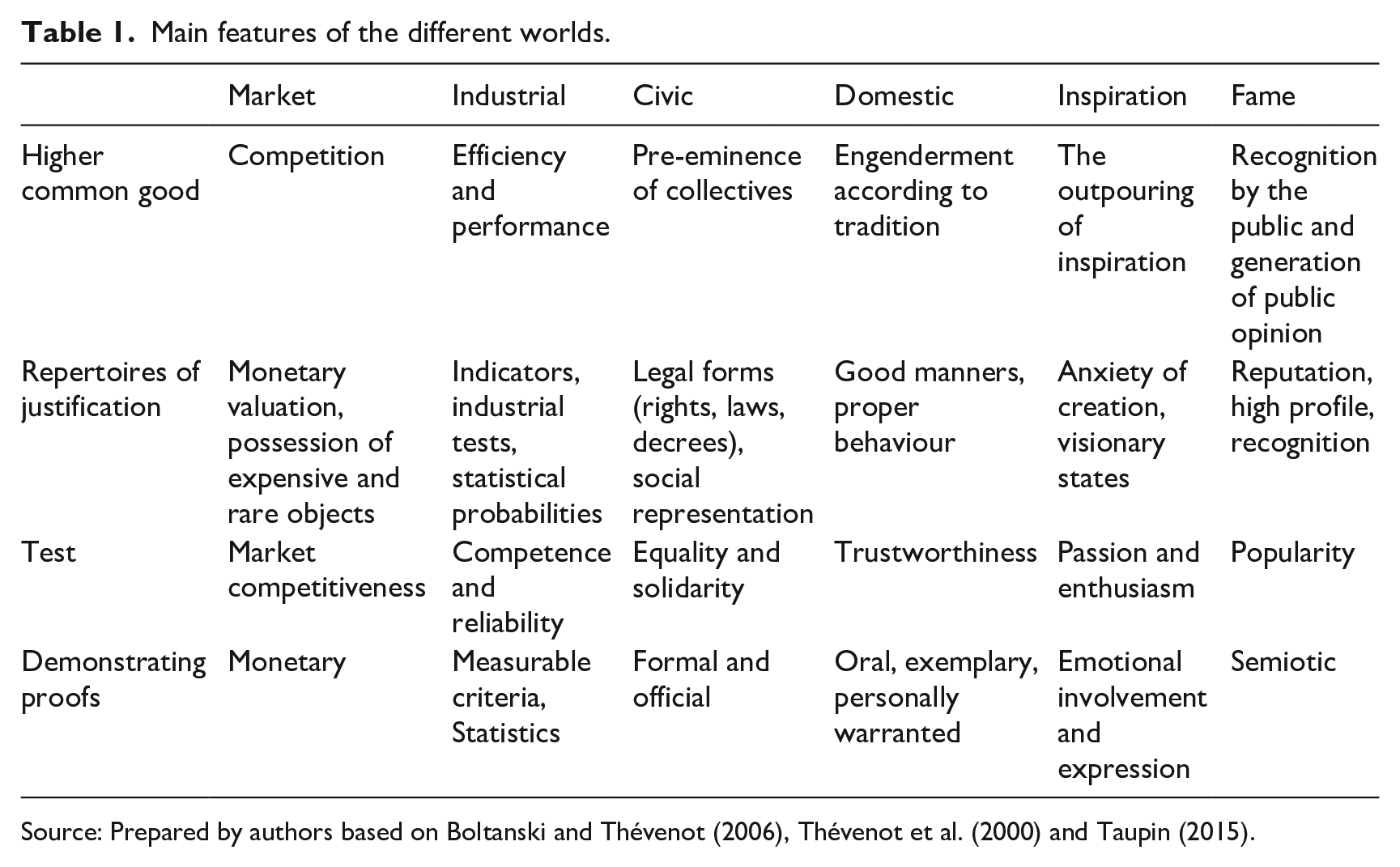
Source: Prepared by authors based on Boltanski and Thévenot (2006), Thévenot et al. (2000) and Taupin (2015).
The different worlds not only provide a range of possibilities and limitations to agents’ actions but also provide discursive frameworks and materialities associated with specific orderings of the objects’ value (Bénatouïl, 1999). Moreover, they generate mechanisms for framing and resolving disputes by establishing equivalence criteria (Boltanski and Thévenot, 1999). In this sense, CT emphasises the relevance of coordination but also recognises the existence of repeated struggles among agents to maintain and improve their relative positions. Thus, CT frames the context in which not only coordination, but also conflict and power relations unfold. All these elements are essential for the daily operation and governance of territorially-based production systems such as Tocache.
CT recognises that at any specific time and place, there could be multiple justifications for actions occurring simultaneously and generating plurarchies (Eymard-Duvernay et al., 2006). Plurarchies can appear in many domains. One of the best known is in the management of organisations (Cloutier and Langley, 2013; Oldenhof et al., 2014; Taupin, 2015). In this context, the governance of cooperatives often responds to complex logic based on multiple justifications (Denis et al., 2007). Accordingly, compatibility between the conventions of different worlds plays a core role and is necessary for the development of compromises. A compromise is understood as an agreement ‘to suspend a clash – a dispute involving more than one world – without settling it through recourse to a test in just one of the worlds’ (Boltanski and Thévenot 2006: 277). Thus, compromises are understood as the main way to reach legitimate agreements based on the distinct normative criteria of the different worlds, that is, on a modelling of the sense of justice (Boltanski and Thévenot, 1999). In the case of agrifood production, these compromises are especially relevant for the coordination of agents and, particularly, for explaining the role of farmers cooperatives (Andersen, 2011; Bernzen and Braun, 2014; Coq-Huelva et al., 2017).
One of the criticisms traditionally made of CT is its inadequate problematisation of power dynamics (Barros and Michaud, 2019). Some of the seminal CT texts stress moving away ‘from constructions that, in the final analysis, tend to reduce all social relations to relations of power’ (Boltanski and Thévenot, 2000: 209). However, the conventionalist academic literature also recognises that criticism depends on specific people ‘characterised by different positions and chances’ (Boltanski and Thévenot, 2000: 211). Moreover, CT also advises that there are institutions and social devices with a disproportionate capacity to exercise or reject critiques (Boltanski, 2011).
Critical sociology considers that coordination not only obscures social relations of domination but also acts in an essentially unconscious way according to prevalent forms of symbolic violence (Atkinson, 2019; Bénatouïl, 1999). This is reinforced in many analyses of post-colonial realities in which subalternity is often stressed (Chandra, 2015; Kothari, 2002). In these approaches, there are even doubts about some social groups being able to express their demands verbally (Spivak, 1988). In contrast, CT insists on the conscious element of these processes, on the importance of discursiveness under the forms of critiques and tests, and the centrality of the demands of justice (Boltanski and Thévenot, 1999). In other words, CT supports the principle that there is always a space to argue because agents need to make themselves heard (Thévenot, 2019). Simultaneously, it recognises that conflicts are not always resolved peacefully as a result of justice demands (Basaure, 2011). Thus, the dominant experience is a ‘mixture of violence and justification’ (Browne, 2014: 12, interview with Luc Boltanski).
In CT, compromises not only have an important discursive dimension but also respond to micro-power dynamics (Foucault, 2000, 2004). In this context, one of the functions of compromises is to provide agents with a certain ‘semantic security’ that makes it possible to frame discursivities and establish a set of legitimate testing systems (Boltanski, 2011). Compromises are always temporary, fragile and incomplete because they are supported by different higher common goods. However, their degree of temporariness and fragility is variable. In some cases, it is possible to speak of hegemonic compromises that promote shared and relatively stable representations of the common good for long periods (Gond et al., 2017).
The fact that compromises tend to be maintained does not mean that they do not undergo important internal transformations. Thus, compromises can be strongly distorted by action (Salais, 1989). Finally, to be considered successful, a compromise must allow legitimate agreements to be reached to avoid situations of violence. This implies the generation of adequate spaces for discursivity, testing and critique (Boltanski, 2011).
In contrast to the above, violence implies a break with the principles of equivalence. Actions are taken without having to be justified, that is, without having to respect historically generated and socially rooted agreements. Such actions are essentially sustained by strength tests (also called power struggles). The transition from a ‘regime of justification’ to a ‘regime of violence’ usually takes place without agents’ full awareness; it is possible to speak of a ‘slide’ (Boltanski, 2011, 2012). In any case, both regimes are intertwined (Basaure, 2011). A regime of justification can be based on the more or less latent threat of the exercise of violence. Thus, some types of communication can be promoted, others can be restricted and certain social groups could find it extremely difficult to express themselves (Boltanski, 2012). Similarly, to be maintained, a regime of violence depends on the mobilisation of discursive repertoires. The function of discursive constructions is not to make critiques aimed at triggering equivalence tests. On the contrary, they justify the exercise of violence, which is often considered a legitimate answer to situations considered outrageous (Jonck, 2015). In this sense, there is a degradation of the discursive repertoires, which become constructions with essentially propagandistic purposes.
Tocache is a particularly interesting case for two main reasons. Firstly, because it is a locality and a set of agri-food activities that have emerged from a recent settlement process where, unlike in other cases, relative stability can be observed in the applied repertoires of justification (Andersen, 2011; Bernzen and Braun, 2014; Ponte, 2009). In this sense, questions such as the following can be formulated: what were the reference value systems in the Tocache settlement processes? Did they generate any compromises? Why were they so stable? To what extent were the normative frameworks and justification repertoires eroded as a result of the vagaries of settlement and the subsequent development processes? Secondly, in terms of power dynamics, Tocache has historically been located in a frontier position between the dominant peacetime regime of justification and the wartime regime of violence. This leads to another set of questions: what happened when structural situations of violence emerged? Was violence justified? What were the effects of the justification of violence? Can the justification of violence be understood as a general norm in armed conflicts? When did violence lose its social support?
Methodology
This research was conducted in the Province of Tocache, Department of San Martín, Peru (see map 1). In 2019, Peru produced 110,160 tonnes of cocoa on 204,410 ha of land. San Martín was the highest cocoa producing Department in the country (35,530 tonnes) and had the largest cropped area (65,090 ha) (Ministerio de Desarrollo Agrario y Riego, 2020).
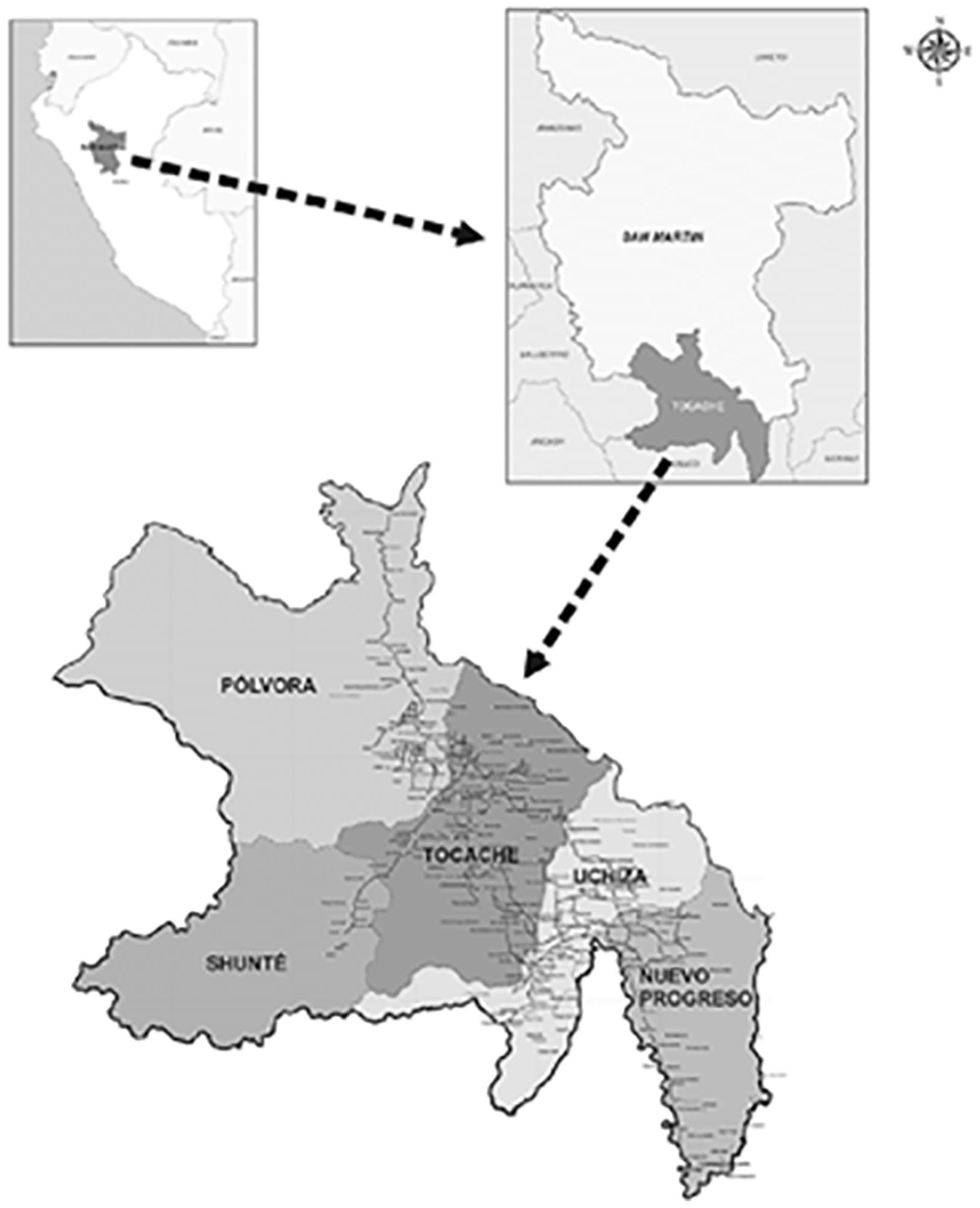
Department of San Martin and province of Tocache.
An integrated quantitative and qualitative methodology is used in this research. The first approach was made through the development, distribution and subsequent use of a questionnaire addressed to cocoa farmers. Primary data were gathered in five different districts of Tocache province (Polvora, Tocache, Uchiza, Shunte and Nuevo Progreso). A total of 469 farmers were surveyed. The produce of 194 of these was commercialised through intermediaries while 275 were cooperative members.
In most cases, farmers were interviewed at cocoa farms and at cooperative sites. Prodatu II-DEVIDA (one of the organisations with which we collaborated in this research) helped us to organise ‘cocoa routes’ throughout the five districts of Tocache. We randomly selected some of the many possible routes in an attempt to cover all the different parts of the province, and carried out face-to-face surveys at farm gates and inside farms. This included all the surveyed farmers that did not belong to any cooperative as well as a relevant share of cooperative farmers. Notwithstanding, to increase the sample size, additional cooperative farmers were approached and interviewed at cooperative meetings and during cocoa deliveries. Some specific delivery days and events were selected for this as they involved a large number of farmers. Thus, we randomly approached some of these farmers, although never more than one third of those attending. The total population of the cooperatives in the five districts included 630 associated cocoa farmers. As a sample of 275 members were interviewed, 43.6% of the total population was contacted. Also subsequent calculations were made to ensure that a certain proportion among members of the different cooperatives had been maintained.
The aim of the questionnaire was to quantify the set of objective features (economic, agricultural and socio-demographic) that influence the agents’ embedded rationalities. Within this set of elements, special attention was paid to the characterisation of the labour processes. The questionnaire also focused on farmers’ concrete decisions and on the way that these were influenced. We also asked farmers about their satisfaction and participation in the activities of cooperatives and other institutions (attendance at assemblies, participation in voting, interactions with management, etc.). As a result, an initial quantitative ‘snapshot’ was taken of the main elements of agricultural production and distribution. The questionnaire was reviewed by experts with experience in the study of local farmers and dealing with them.
The qualitative phase of the analysis was based on 28 in-depth interviews with farmers, some of whom simultaneously held management positions in the different cooperatives. The interviews were organised to cover five of the area’s six existing cooperatives. Due to the relevance of historical factors, the outline of the interviews had a certain life-story approach and asked, for example, about the farmers’ social backgrounds, their places of origin (or those of their families), the history of settlement in the area and education levels. Special emphasis was given to the crops farmers had grown throughout their lives, which allowed a series of questions to be asked about their relationships with coca leaf cultivation.
An ontologically pragmatic approach was used in the conception and development of this research, in the qualitative phase, in particular. This approach followed the guidelines of Critical Realism (Bhaskar, 2009). More precisely, we used ‘a perspective that adheres to the existence of one reality that is open, fluid, and shaped how people interpret (construct meaning) in it. . ..(it) has the potential to navigate between the positivist and radical constructivist perspectives’ (Timonen et al., 2018). This pragmatic element coincides with the theoretical framework used as CT is considered to be a part of pragmatic sociology (Bénatouïl, 1999; Blokker and Brighenti, 2011).
Specifically, in the case of the interviews, the critical realistic approach helped to establish the initial questions, which were formulated in a very general way and left a wide margin of response. The general idea was to deepen the understanding of how the agents’ subjectivities had been shaped historically by enquiring into the historical process that could explain the generation of discourses and dominant cognitive frameworks. In this framework, although there was a formal script, interviews had a slight level of structuring that gave priority to dialogue generation. Furthermore, although the research team had extensive experience in the analysis of agricultural production, an effort was made to conceal this knowledge. Nevertheless, the team’s theoretical background was relevant when it came to asking questions that were not initially foreseen. At no time were direct or indirect questions asked about the ‘worlds’ or other CT concepts but whenever any related aspects arose, these topics were further pursued.
Similarly, an attempt was made to understand what really happened. In this sense, following the principles of Grounded Theory (Qureshi and Ünlü, 2020), the interviews were coded in three stages: open and substantive (using the interviewees’ own expressions and concepts); focused or selective (where special emphasis is placed on the development of codes in the topics considered to be of greater theoretical importance) and theoretical (where the previously identified codes are related to the theoretical basis of the research). So, although the research design was not based on theory, theories were intensively used in the last phase of the research, when the data and codes were related to the key concepts of CT: worlds, justifications, compromises, critiques, tests, etc.
More precise information was also required about some particular aspects (especially about the historical evolution of the area). In some cases, these data were obtained from an analysis of statistical sources, specifically the Agricultural Censuses of 1994 and 2012 and the Statistical Yearbooks of Agricultural Production, 2005 to 2018. Various official documents were also used, especially those referring to the reality of drug trafficking and the activity of armed groups, for example, the various reports prepared by the Truth and Reconciliation Commission (Comisión para la Verdad y la Reconciliación, CVR).
It should be stressed that throughout the whole of the research, the intention was to deepen not only the analysis of the case study but also the existing theoretical insights (Timonen et al., 2018). This openness to theory-building based on agents’ experience has generated some unexpected results and theoretical developments (stability of hegemonic compromise or strong processes of justification of violence), which are particularly emphasised in this article.
The social construction of cocoa in the Peruvian Amazonia: The case of Tocache, San Martín Department
Settlement, drug trafficking and guerrillas
The settlement of Tocache began in the 1960s with the arrival of colonists from different parts of Peru, particularly from the highlands (Morel, 2014). Amazonia was socially and politically constructed as a homogeneous, empty region with ‘immense’ unexploited resources (Figallo and Vergara, 2014). 3 The settlement process not only had a strong spontaneous component but also responded to a political design that saw Amazonia as the solution to population growth and insufficient food production in Peru (Belaunde, 1959; Dourojeanni, 1976). Settlement was also favoured at the end of the 1960s by Agrarian Reform processes that steered part of the landless peasant population towards Amazonia. In terms of CT (see Table 1), this resulted in a settlement project where civic values (related to food sovereignty, land ownership distribution and the reversal of poverty and social precariousness) were particularly relevant (Belaunde, 1959; Morel, 2014).
However, leaving aside the State’s actions, settlement would not have been possible without individuals with specific objectives, interests and rationalities. The colonists’ desire to become rich was very important. Thus, considering CT, from the very beginning, the market world and its associated (monetary) repertoires of justification were acutely relevant. Also, market values and embedded rationalities were strengthened by continuous references to Amazonia’s immense unexploited resources. Nevertheless, turning them into economic value was not easy. Amazonia was an unknown environment in climate and natural terms, a place where the agronomic adaptation of crops and, in particular, the management of soil depletion problems were particularly difficult (Peña-Venegas and Cardona, 2010). The introduction of agricultural produce into foreign markets was also a challenge. Therefore, the settlement project was based on a foundational compromise between civic and market conventions. The problems with fulfilling the expectations of civic (successful colonisation process with effective recognition of social rights) and market worth (an increase in monetary rents and consumption levels) explain why approximately half the original settlers had given up and left Tocache by the 1970s (Dourojeanni, 1976: 6).
In summary, the Peruvian State was deeply involved in the settlement process in Amazonia, even though this process cannot be understood without the active participation of the settlers. In this context, in line with CT, shared cognitive frameworks and ‘common sense’ were generated that were associated with a set of embedded rationalities in the form of a civic-market compromise (Andersen, 2011; Bernzen and Braun, 2014; Boltanski and Thévenot, 1999; Ponte, 2009). This stabilised the settlement process and was able to shape emerging settler ‘subjectivities’ (Dean, 1999; Foucault, 2000, 2004).
However, from the mid-1970s onwards, changes in global food relations implied new demands and a downturn in agricultural prices, which substantially worsened the living conditions of the settlers (Durand, 2005; McClintock, 1984). Following CT, this is related to mounting critiques and, therefore, to problems of justification in both the civic and market worlds (Patriotta et al., 2011; Réberioux et al., 2001; Reinecke et al., 2017). Was the State capable of guaranteeing the collective interests of all the inhabitants in the newly-settled areas? Did it have sufficient instruments to successfully address structural poverty? Could the settlement process be sustained under these conditions? It should be noted that the settlers, a group with a strong tradition of subalternity due to their predominantly peasant origins, were to speak out and develop their own strong critiques (Spivak, 1988; Thévenot, 2019). However, the existing institutions did not care (symbolic violence) or were unable to answer them, thus generating a situation that was considered outrageous. This, in turn, generated problems of State legitimacy, as the State was considered to have abandoned the settlers (Allen, 2011; Barros and Michaud, 2019; Comisión de la Verdad y la Reconciliación [CVR], 2003; Jonck, 2015).
In this context, illegal actions such as coca leaf cropping began to spread. These actions can be regarded as forms of peasant defiance in order to make themselves heard (Thévenot, 2019). But they constituted weak forms of violence. Coca had been present in the area since the beginning of the settlement process and even before (Van Dun, 2016). At first, it was related to the habits of migrants who consumed coca leaves either by chewing them or as an infusion. However, from the beginning, part of the production was channelled into illegal trafficking. Also, the situation changed dramatically around the mid-1970s. In the context of falling agricultural prices, coca leaf prices boomed thanks to strong international demand and the appearance of Colombian and Mexican cartels (Montero, 1995). Thus, in terms of CT, the expansion of coca cultivation can be understood as the result, firstly, of the erosion of the original civic-market compromise and, secondly, of the first and still incipient descent from a regime of justification into a regime of violence.
In this context, coca created an illicit but simultaneously complex and highly profitable commodity chain that generated employment in the form of manufacturers of coca paste base, gatherers (acopiadores) and traffickers (traqueteros), for example (Van Dun, 2016). In this sense, considering CT, the expansion of coca leaf cultivation restored market worth. Also, some civic repertoires were developed around coca leaf cropping (Boltanski and Thévenot, 2006). Thus, settlers were deeply involved in the constitution of the first coca growers’ unions, which claimed to be indispensable interlocutors with the State. The emergence of these unions led to the organisation of mass demonstrations and even a successful general strike, among other things (CVR, 2003).
Given the confluence of domestic economic and political interests and the generation of discourse by the agents, there was a certain likelihood that the Peruvian State would yield or at least look the other way. Initially, its reaction was somewhat hesitant (CVR, 2003). However, the expansion of coca cultivation resulted in increasing international pressure. This led to an intensification of existing controls, which resulted in enormous amounts of coca being seized and crops burnt. In other words, the State stepped up its exercise of the monopoly of violence and this, given the above-mentioned critiques, was particularly delegitimised. In addition, the Peruvian State’s effective power in Amazonia was limited. All this hastened the descent into violence (Boltanski, 2011, 2012; Jonck, 2015).
Following CT, the problems were exacerbated by the development of repertoires of justification of coca leaf cropping following market (higher price for coca) and civic (the ability to maintain the community) criteria. These had important grammar problems due to the very nature of an illicit crop with serious health effects. Namely, the civic-market compromise was distorted practically beyond recognition (Salais, 1989). However, this distorted compromise acted fundamentally as a form of justification for non-compliance with the law and subsequent ‘protection’ from the State’s eradication actions. In other words, it acted as a repertoire that justified violence, which is to say, as a repertoire not of justification (since it was not capable of establishing any viable social equivalence) but of propaganda (Boltanski, 2011; Jonck, 2015; Wagner, 1999).
The Shining Path guerrilla group (Sendero Luminoso (SL)) emerged at the beginning of the 1980s after a long process of infiltrating the most relevant social movements (McClintock, 1984). At the beginning, collaboration with SL offered two great ‘benefits’ to coca growers: firstly, SL offered ‘protection’ from the State’s coca seizures and crop burning; secondly, SL also promised better safeguards against the interests of the drug traffickers. At the same time, SL also established close ties with drug dealing criminal organisations called firmas (Van Dun, 2012). However, when the SL initiated armed activities, with the consequent process of repression by the State, this represented a significant rise in the level of violence and, probably, the definitive disappearance of many of the social equivalences that still existed. Thus, it was possibly the most relevant step in the descent towards the total assertion of a ‘regime of violence’ (Boltanski, 2011). This period of high SL activity between the end of the 1980s and the beginning of the 1990s coincided with the peak in drug production and distribution in a situation of ‘easy’ money but uncontrolled violence and a lack of minimum social agreements. During this period, coca almost became a monoculture in Tocache. As a consequence, a ‘regime of violence’ was asserted, which meant continued non-compliance with the first axiom of the operation of the different worlds (‘common humanity’) (Boltanski and Thévenot, 2006).
. . .There was a time when here, as they say, the potatoes burned, right? Here, life was worthless, someone misbehaved, a bump on the chest and that was that.
4
So, social equivalences were suspended for an extensive period of time (Jonck, 2015).
Pacification and expansion of the agrarian frontier: The role of cocoa
From the beginning of the 1990s, a slow but steady reduction in coca production could be observed, particularly in Tocache. This process could be explained by several factors. The first was SL’s loss of legitimacy as a result of the failure of its promises of a fairer and safer society with a new State more sympathetic to people interests (CVR, 2003). Following CT, the persistence in time of a ‘regime of violence’ meant that the civic goods and repertoires of justification (legal forms, rule of the governed, civil rights, participation) practically disappeared. All these elements undermined the justification of violence and SL’s armed activities. As a consequence, the fight against SL was moved to a more strictly military domain and SL went into regression in the mid-1990s. At the same time, market repertoires were also affected, with a reduction in international coca demand and, as a result, a fall in coca leaf prices and a consequent decrease in their associated monetary incentives. Also, increased police effectiveness implied a progressive rise in risk.
Nevertheless, the return to a regime of justification based on a series of socially accepted equivalences would have been impossible if two things had not occurred at the same time. On the one hand, there was a reaction by local society, with people tired of violence and seeking the reintroduction of a set of stable and peaceful rules to govern social interactions, in other words, the reintroduction of a regime of justification (Boltanski, 2011, 2012; Jonck, 2015). On the other hand, the role of coca eradication and alternative crop programmes must also be highlighted (Van Dun, 2016). So, with the support of the United Nations and the Peruvian State, in the early 1990s, there was a gradual shift to alternative crops. This transformation helped small-scale farmers to increase and diversify their income. In terms of CT, the two critiques whose non-response had justified the descent into violence were finally answered: inaction of the State in the defence of collective interests (civic critique) and declining incomes and the growing spread of poverty (market critique). Thus, if violence implied moving to a new situation after justification, the reverse process implied the reestablishment of justification after violence, a particularly complicated issue as it implied recovering equivalences that had been broken for a long time (Wagner, 1999). Be that as it may, peace in the form of the reconstitution of a regime of justification enabled the pre-existing regime of violence to be subdued (Boltanski, 2011).
Coca cultivation did not disappear, but most of the cultivation was transferred to other areas (first Colombia and then to other parts of Peru) and the virtual monoculture that had existed in Tocache ceased to exist (Van Dun, 2012, 2016). At the same time, international organisations such as the United Nations Office on Drugs and Crime (UNODC) introduced projects to cultivate alternative crops such as cocoa, palm oil and coffee. Specifically, cocoa cropping surface and production have grown dramatically during the present century (Graph 1). Following CT, the above can only be understood as the result of the coordinated action of a large number of agents who share moral expectations, situated judgements and embedded rationalities (Boltanski and Thévenot, 2000; Eymard-Duvernay et al., 2006; Réberioux et al., 2001). Reinstating a model of social organisation based on justification on a foundation of values that have not been previously embedded is difficult. In this sense, this is genealogically related to the original settlement process, with its associated civic and market values (related to food sovereignty, land ownership distribution and the reversal of poverty situations and social precariousness). So, the traditionally dominant ‘common sense’ based on an updated version of the civic-market compromise returned (Belaunde, 1959; Boltanski and Thévenot, 1999; Ponte, 2009).
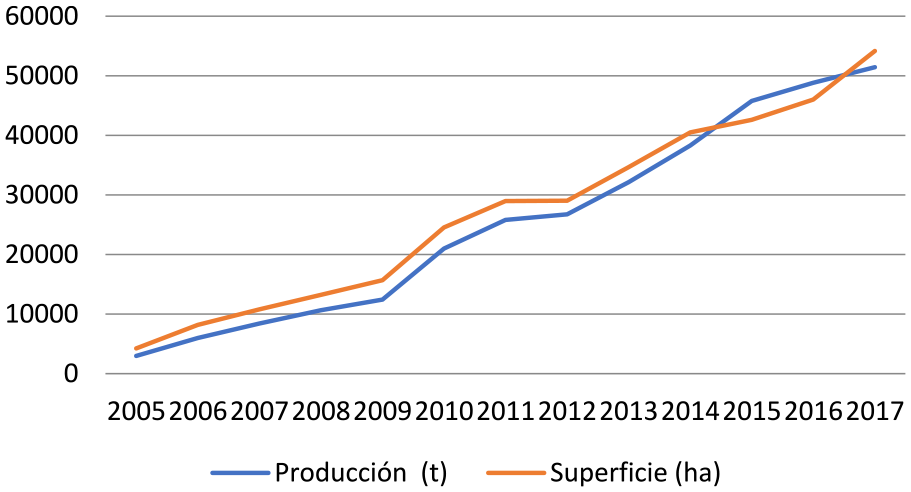
Cocoa production and surface area in the Department of San Martin.
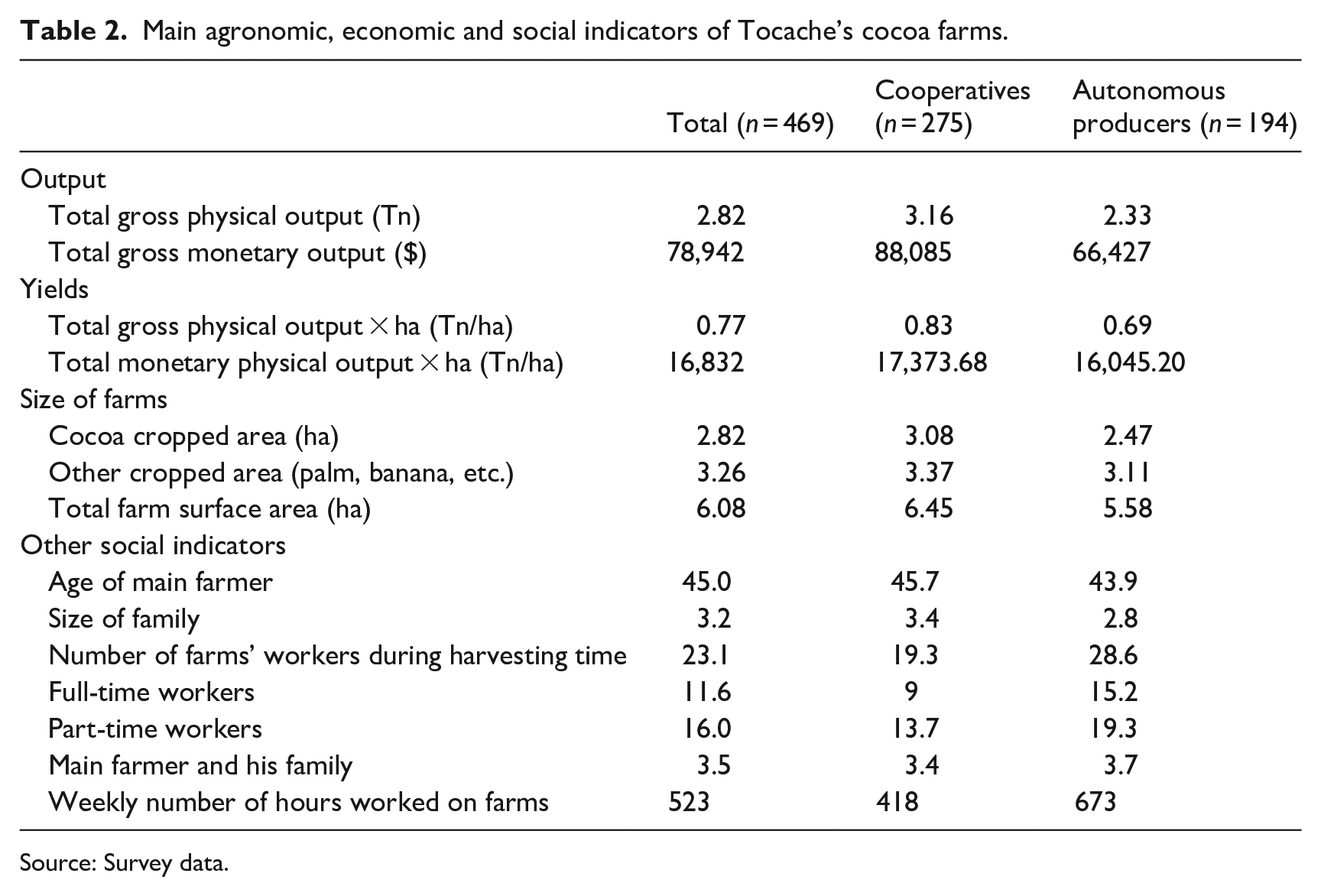
Collective learning and economic success were essential for the consolidation of the reinstated regime of justification. Focusing on the case of cocoa, the average yields obtained were relatively high at slightly under 1 tonne per hectare (Graph 2). These yields are higher than the world average (440.2 kilogrammes per hectare (kg/ha)), the Latin American average (415.4 kg/ha) and even the Peruvian average (792.5 kg/ha). 5 Thus, the crop has adapted well to the area and the problems caused by soil depletion have been successfully addressed. The level of income for farmers is also relatively high. According to our survey, the average gross income per cocoa hectare is $16,832 (Table 2), despite the farmers incurring high labour costs as 80% of the work is carried out by hired workers. The rise in both yields and monetary income indicates a situation in which the dominant institutional devices (in this case, farmer cooperatives, as analysed below) demonstrate a significant ability to change their everyday agricultural practices and promote the assimilation of transferred market and agronomic knowledge (Boltanski, 2011; Dean, 1999; Laforge et al., 2017).
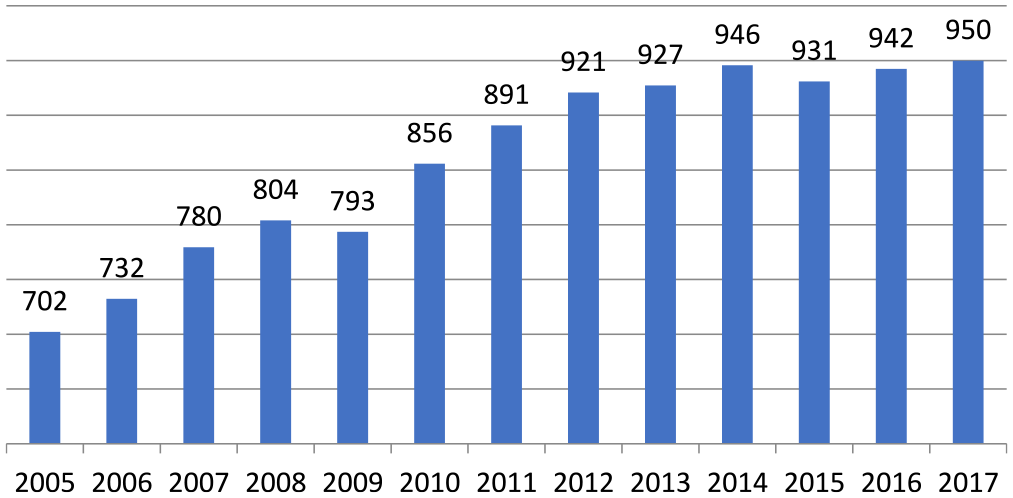
Average cocoa yields in the Department of San Martin (kg/ha).
Main agronomic, economic and social indicators of Tocache’s cocoa farms.
Source: Survey data.
The social construction of cocoa activities in the province of Tocache
The consolidation of a regime of justification, with the crop substitution that this entailed, was associated with obtaining sufficient income to guarantee agents’ civic-market worth. In the early 2000s, this was threatened by the low prices paid to local farmers (García-Yi, 2014). In this sense, cocoa marketing broadly depended on intermediaries with very high commercial margins who interpreted international prices downwards. In this context, from 2007 onwards, the primary function of farmer cooperatives has been to close the gap between international and local prices by as much as possible. Cooperatives, therefore, play a leading role in setting local prices while the role of intermediaries has been increasingly reduced.
We ignore them, we don’t fight (with the intermediaries). . .they barely affect us because we have the best price. . .(when) we didn’t have any money, for example, for two or three days, they went down (i.e., there was a fall in the price), . . . If money comes from us, they have to level off or take a little less.
6
Thus, there are various reasons that explain why members rate the activity of the cooperatives very positively in the survey (5.26 out of 7). The significance of the market world can be observed in the favourable assessment of improvements in cocoa marketing (5.45 out of 7). However, cooperative activities are also strongly justified by civic repertoires of justification associated with the ‘pre-eminence of the collective’. This relevance of the civic world can be seen in other aspects such as the high social value placed on their representatives and board members (5.27 out of 7) and high attendance (5.37 out of 7) and participation (5.08 out of 7) at assemblies. Thus, in line with CT, the cooperatives must be considered as the embodiment of Tocache’s hegemonic civic-market compromise, prevalent from the start of the settlement process and particularly strong after the reinstatement of the regime of justification in the second half of the 1990s. This is largely justified by the fact that cooperatives are organisations that are specially adapted to working with different orders of worth (Denis et al., 2007; Jagd, 2011). So, cooperatives are basic institutions to strengthen and secure the legitimacy of the prevalent repertoires of justification as well as to promote agent coordination and collaboration (Denis et al., 2007).
In addition to the above, as civically justified organisations, cooperatives also perform functions such as the development of training activities, especially in aspects related to agrarian management. All of this has noticeable results. The yields of cooperative members (830 kg/ha) are significantly higher than those of autonomous producers (690 kg/ha) (Table 2). Finally, the cooperatives are also essential for increasing involvement in differentiated quality segments as they are supported by conventions that also come from the civic world (Bernzen and Braun, 2014; Rénard, 2003). Organic and UTZ-certified cocoa has an established and consolidated market in the area. There is also a small Fair-Trade market. However, as market repertoires of justifications are also relevant, there is a pragmatic approach to the use of these labels, which depends to a great extent on the existence of markets willing to pay a premium price (Andersen, 2011; Coq-Huelva et al., 2017). Thus, when prices drop, the incentives for farmers to continue keeping standards up lose their attraction. Nevertheless, as civic conventions have a worth on their own, labels do not only operate with a strictly market approach and are simultaneously understood as a medium-term benefit for the community. In other words, civic repertoires of justification are also essential for their operation.
Certification with some of these labels (e.g. organics, UTZ, fair trade, etc.) is particularly complicated given the territory’s characteristics: extensive, wooded, with some forest areas and difficult to access. In this context, it is practically impossible for certifying agencies to ensure effective compliance with their protocols throughout the area. This can lead to fraud and infringements and is the reason why there has been a sharp increase in quality control in recent years. As a result, almost all deliveries are now subjected to composition, residual and trace analyses at their destination. In other words, what were originally civic repertoires of justification are nowadays increasingly reinforced by industrial tests. This use of different arguments, criteria and discursive constructions has recently been observed in other quality food production (Coq-Huelva et al., 2017; Ponte, 2009).
. . .Every consignment that is exported as organic is analysed when it gets to its destination; if it’s organic, fine, the load is accepted. But what happens if I collect beans from a member who is supposed to be organic but actually is not and I export those beans? They are going to come out with traces and those beans are no longer going to be accepted as organic. They are either going to be burnt or returned to us.
7
Any analysis that eventually confirms the presence of unauthorised substances is not only severely sanctioned but also affects the producers as a whole as it damages the perception of the local cocoa’s quality. Cooperatives have, therefore, become increasingly involved in monitoring their members’ activities to the point that they are becoming de facto quality control checkers. This means that participatory certification checks, performed essentially by the cooperatives and their members, are being increasingly used in practice (Cuéllar-Padilla and Calle-Collado, 2011). Given the growing relevance and pressure of industrial testing, this strengthens the civic verification and justification devices. This is consistent with the prevalence in the area of civic values observed since the beginning of settlement and, especially, after the pacification processes.
Thus, the cooperatives are institutions with great social importance in the operations in Tocache for several reasons. On the one hand, cooperatives are a privileged expression of the hegemonic civic-market compromise, reinstated after the acute distortion process that entailed the situation of violence due to the breakdown of social equivalences (Boltanski, 2011). On the other hand, cooperatives contribute to building semantic security by generating micro-power dynamics in the medium term that are able to slowly shape agents’ behaviour in the governmentality sense (Boltanski, 2011; Dean, 1999; Gibbon and Ponte, 2008; Laforge et al., 2017). For example, improvements to agrarian management systems and the introduction of different labels resulted in the transformation of a wide range of everyday practices that followed certain technical and, also, ethical criteria. Simultaneously, as the evolution in the process of label certification shows, cooperatives have also developed some disciplinary powers, partly as a consequence of pressure from global actors (manufacturers, branders, retailers) (Murphy and Sanderson, 2017; Spence and Rinaldi, 2014).
Conclusions
The analysis of the prevailing tacit agreements and coordination devices in Tocache has revealed some significant implications for theory. Firstly, it highlights the foundational character of the area’s civic–market compromise. Since the beginning of the 1960s, the principles that are ultimately used to coordinate the agents and to establish their worthiness and power of negotiation (higher common goods) have been the pursuit of competitive farms and the ‘pre-eminence of collective values’. In other words, the criteria that qualify the local worthiness of agents have been uninterruptedly maintained from the beginning of the colonisation process. Secondly, it is important to highlight the strength and stability of the civic–market compromise that has been upheld for over half a century as a hegemonic device that frames the form that the social construction of pragmatism takes in Tocache (Jagd, 2011). However, this compromise is far from static. On the contrary, some of its repertoires have been subjected to increasingly demanding dynamics from the mid-1970s onwards.
Thus, strong critiques from both the civil and market worlds historically contributed to the erosion of this compromise. The lack of capacity or willingness to respond to these critiques led to a slow but progressive descent from a ‘regime of justification’ into a ‘regime of violence’, that is, to a social scenario ‘after justification’ (Boltanski, 2011; Jonck, 2015; Reinecke et al., 2017; Wagner, 1999). Its clearest turning point was the appearance of the Sendero Luminoso (Shining Path) guerrilla organisation at the beginning of the 1980s. All this was related to the expansion of coca leaf cultivation, which was the predominant crop for almost 20 years.
However, surprisingly, there was an attempt to justify coca cropping with the same prevailing civic and market values. Obviously, there was a high degree of contradiction in applying these repertoires to support an illicit crop associated with high levels of violence and wide-ranging effects on public health. Therefore, the civic-market compromise was not only deeply distorted but, actually, is unable to define effective criteria for coordinating and qualifying agents. For example, although it was discursively argued that coca played a basic role in sustaining local economies and communities (‘pre-eminence of collective values’), it was impossible to justify the actions of drug traffickers and cartels, not to mention a particularly violent guerrilla group (Shining Path), civically. In this sense, although some attempts were made in this direction (constitution of a coca producers union), the limitations of these actions soon became evident. Neither the international context, the Peruvian State, nor any other economic agents could accept these arguments. Thus, peaceful coordination was impossible between local and non-local agents in line with this discursive framework. Neither was it possible to recognise the relevant levels of worthiness of coca growers and drug traffickers. For this reason, at its moment of maximum deformation, the civic-market compromise did not express any viable social equivalence. In other words, its main discourses were reduced to the status of repertoires of simple propaganda (Boltanski, 2012; Jonck, 2015). In this way, the regime of justification and the regime of violence are, on the one hand, absolutely different since justification is the predominant way of resolving conflicts in the former, and violence in the latter. However, on the other hand, they are also intertwined. In this sense, there was a need to develop discourses to ‘justify’ coca cultivation (and the violence associated with the crop). In other words, Tocache is a terrible and also tragic illustration that ‘experience [is] a mixture of violence and justification’ (Browne, 2014: 12, interviewing Luc Boltanski).
All the social groups involved had peasant origins and, historically, had been in positions of subalternity (Atkinson, 2019; McClintock, 1984; Spivak, 1988). It does not seem that the dominant historical forming of peasant subjectivities has acted as an insurmountable obstacle to the development of discursive repertoires. Nonetheless, two elements must be stressed. Firstly, these repertoires were highly questionable because of their own internal and external weaknesses and inconsistencies. Secondly, this raising of the voice was succeeded by the outbreak of violence. In any event, it is hard to argue that hypothetical processes of domination have operated on essentially unconscious bases in this case (Atkinson, 2019; Bénatouïl, 1999). In contrast, farmers did make their voices heard, in situations of peace and armed conflict, and also in the frequent cases of a ‘mixture of violence and justification’ (Browne, 2014: 12, interviewing Luc Boltanski) (Thévenot, 2019). The great ability of the civic–market compromise to not only resist but also to distort itself must be highlighted. This ability explains why, many years later, it has again been used to organise cocoa production. However, the endurance of the compromise neither prevented nor even mitigated a particularly intense and violent social conflict but, instead, justified it.
In any event, processes of pacification and social reconciliation associated with the rapid growth of cocoa (and other crops) cannot be understood without considering Tocache’s specific conditions. Governed by the hegemonic civic-market compromise, cooperatives acted as the most relevant institutions in the return to cocoa farming by demonstrating significant capabilities for developing new competencies (Coq-Huelva et al., 2017; Ponte, 2009). So, nowadays cooperatives are the key institutions in the setting of local prices and the growth of distinctive quality strands associated with different labels: organic, fair trade and UTZ. In addition, the relevance of cooperatives is currently growing because of their increasing involvement in the monitoring of their members’ activities. Thus cooperatives have actually become ‘de facto’ quality certifiers in a model that is akin to a participatory certification scheme (Cuéllar-Padilla and Calle-Collado, 2011). All this has generated local-level micro-power governmentality dynamics with a significant ability to shape agents’ behaviour, which, in turn, is also essential for ensuring commercial transactions for Tocache’s cocoa (Dean, 1999; Gibbon and Ponte, 2008; Murphy and Sanderson, 2017; Spence and Rinaldi, 2014).
Our analysis of the Tocache case also enables a better understanding of the power relations that exist in one relevant case of agrifood production (Atkinson, 2019; Barros and Michaud, 2019). Nevertheless, questions should be asked about how cocoa is justified in terms of deforestation, given that agricultural activities in general, and cocoa in particular, occupy territory previously covered by forests. There happens to be a type of justification that circumvents these questions: the environmental role of cocoa is justified by not being the direct cause of deforestation. Cocoa only puts land that had previously been deforested by coca leaf cultivation to new use, considerably reducing not only cropping costs in terms of violence and public health but also in terms of environmental degradation. From this perspective, the expansion of cocoa cultivation ultimately justifies past deforestation processes.
Footnotes
Acknowledgements
We thank the Faculty of Tourism and Finance of the University of Seville for their contribution to the translation and editing of this text. We want also to thank the public officials, cooperatives’ managers and local farmers for the support they provided to this research.
Declaration of conflicting interests
The author(s) declared no potential conflicts of interest with respect to the research, authorship, and/or publication of this article.
Funding
The author(s) disclosed receipt of the following financial support for the research, authorship, and/or publication of this article: This study was supported by the research project of the Universidad del Pacífico Supply Chain and Marketing of Peruvian and Ecuadorian Amazon Cocoa: Cooperatives vs. Intermediaries.
