




Abstract
Solitude is a rising phenomenon in the western world. The share of people affected by solitude has been rising for some time and the Covid-19 pandemic has further brought this trend to the fore. Yet, we know next to nothing about the aggregate subnational economic impact of the rise in solitude. In this paper, we analyse the consequences of solitude on regional economic performance across Europe, distinguishing between two of its key dimensions: alone living, proxied by the regional share of single-person households and loneliness, proxied by the aggregate share of social interactions. We find that solitude has important implications for economic development, but that these go in different directions. While alone living is a substantial driver of economic growth across European regions, high shares of lonely people undermine it. The connection of loneliness with economic growth is, however, dependent on the frequency of in-person meetings, with large shares of the population meeting others socially on a weekly basis, alongside a small percentage of people who never meet others, yielding the best economic returns.
Introduction
Covid-19 brought to the fore the salience of solitude in modern societies (Smith and Lim, 2020). But the presence of different forms of solitude is not a new phenomenon and has been growing – albeit somewhat under the radar – for some time (Hawkley et al., 2019; Stickley et al., 2013; Toyoshima and Sato, 2019).
Solitude is not univocal: being alone without other people can happen in very different forms. Solitude often takes place ‘when a person’s social relationships are perceived by the person to be less in quantity, and especially in quality, than desired’ (Encyclopaedia Britannica, 2021). In this case, solitude can be equated to ‘loneliness’ and is often considered a distressing experience, leading to irritability and depression and to increases in premature deaths (Cacioppo and Cacioppo, 2018). Loneliness is becoming a rising problem in industrialised countries (Snell, 2017) where ‘around a third of people are affected by this condition, with one person in 12 affected severely’ (Cacioppo and Cacioppo, 2018: 426). Western societies are experiencing an ‘epidemic of loneliness’ (Kar-Purkayastha, 2010).
Solitude may also refer to people living alone, without the company of family and friends. ‘Living alone’ or ‘alone living’ normally lacks the negative connotations associated with loneliness. Increasingly individuals choose to live alone, not because they are forced to, but out of choice (Wilkinson, 2014). And even though living alone has often been connected to economic hardship, people increasingly choose to live alone as a consequence of factors such as the greater participation of women in the labour force, increased life expectancy, and urbanisation (Klinenberg, 2012). The share of people living alone has been rising for some time (Sandström and Karlsson, 2019). In Europe, the trend towards living alone has been more pronounced among women than men and is far more common in large cities than in small towns and rural areas (OECD, 2013; Sandström & Karlsson, 2019; Snell, 2017).
Although loneliness and alone living are two different manifestations of solitude, living alone does not necessarily mean that individuals are lonely. Lonely individuals often feel isolated, but that is mostly not the case for those living alone, who frequently compensate for the lack of in-person interaction in the household with a wide network of interpersonal face-to-face and digital relationships outside it (Klinenberg, 2012). Conversely, living with others does not preclude loneliness. Many of those physically surrounded by family and friends may feel lonely.
Both dimensions of solitude are also bound to have different economic implications. Overall, more people living alone, and more lonely people, may imply less interactions, less knowledge diffusion and, consequently, less economic growth. The economic implications of the surge in alone living and loneliness may also differ. Lonely people generally suffer more from depression, are more likely to report health problems and, thus, participate less in the labour force. Loneliness can therefore trigger a decline in economic activity and income growth (Fulton and Jupp, 2015; Mihalopoulos et al., 2020). Alone living does not have the same negative connotations. Following the psychology literature (e.g., Long et al., 2003), the economic impact of alone living – which may be associated to positive phenomena, such an increase in self-understanding, inner peace, self-renewal, problem solving and creativity – may have a more positive influence on economic activity than loneliness, or the deprivation of interpersonal contacts. Although many people living alone suffer from economic hardship, especially in old age (e.g., Portacolone, 2013), the recent explosion in single-person households is fundamentally driven by young professionals and, especially, young professional women (Ogden and Hall, 2000). This suggests that alone living may be connected to more, not less economic dynamism. As argued by Klinenberg (2012), alone living implies a series of costs, such as rents afforded only by the economically active and dynamic. Hence, a growing share of the population living alone may be positive to the economy as a whole.
There is no shortage of research on loneliness and alone living, mainly in sociology and psychology (e.g., Coplan and Bowker, 2013; Gerstein and Tesser, 1987; Littman-Ovadia, 2019; Long and Averill, 2003). Yet, their economic implications have so far attracted limited attention. More research is still required in order to fill what remains an important gap in our knowledge (Mihalopoulos et al., 2020).
In this paper we aim to fill this gap by analysing the economic implications of the rises in these two dimensions of solitude in Europe. We analyse the extent to which loneliness and alone living affect economic growth across regions of Europe and what is the geographical dimension of these processes.
To do that, we build an original balanced panel database measuring different dimensions of loneliness and living alone for 139 European regions at NUTS2 level between 2010 and 2017. The peculiarity of this dataset is that it combines both time-invariant information for the 2011 census year and time-variant observations covering the entire period under investigation. We apply a Hausman-Taylor model, which allows to analyse both types of variables simultaneously (Baltagi et al., 2003; Hausman and Taylor, 1981).
The results highlight that different forms of solitude have notable implications for economic growth. First, the pervasiveness of lonely individuals in a society seems to be detrimental for growth. European regions with lower sociability grow less than those where local citizens engage more with others on a regular basis. But this connection is greatly dependent on the frequency of interactions. Regions with the highest share of lonely individuals do not grow less. Nor do places where, on average, daily meetings prevail growth more. In contrast, greater shares of single-person households in a region are connected with greater economic growth. Thus, the economic impact of rising solitude in Europe is not unidirectional. The benefits of more people living alone from an aggregate economic perspective are clear, but the potential effects of loneliness on economic growth, while generally negative, are highly dependent on the frequency of social interaction.
The rest of the paper is organised as follows: Section ‘Solitude, loneliness, and alone living’ explains the theories, both psychological and sociological, behind the different notions of solitude and explores the potential impact the rise in loneliness and alone living may have on economic growth; Section ‘Empirical analysis’ describes the data and the variables used in the analysis, for which the main findings are reported in Section ‘Results’. Finally, Section ‘Conclusions’ concludes and advances some preliminary policy implications.
Solitude, loneliness, and alone living
Solitude, loneliness, and aloneness in society
Many European Romance languages do not really distinguish between different forms of solitude. The idea of being solo in Spanish or Italian, seul in French or, só in Portuguese covers the two fundamental elements of the concept of solitude: that of being physically separated from others, or ‘alone’, and that of being emotionally detached or disconnected from others, or ‘lonely.’ Germanic languages, by contrast, separate between being alone – allein in German, alleen in Dutch – and lonely – einsam or eenzaam, respectively. Clearly, being lonely and living alone describe very different conditions and can represent different states of mind, leading to diverse economic outcomes. According to the psychological and sociological literature (Littman-Ovadia, 2019; Long et al., 2003), being or living alone has a positive connotation, as it allows more quality time to be spent on personal activities and well-being. Being lonely, in contrast, has more detrimental implications, as it points to an emotional detachment from others and society (Bosma et al., 2015; Tani et al., 2022).
Both alone living and loneliness can coincide during the life cycle of an individual, but can also be experienced at different stages. Alone living has traditionally been associated with old age, but in recent times it has been increasingly connected to adulthood (Vespa, 2017). It depends on personal characteristics, like marital/family status, occupation, and other social circumstances. Most analyses suggest that alone living can be positive from a personal perspective. Living alone, especially as a young adult, can lead to the activation of psychic functions that facilitate individual cognitive development. This, in turn, affects the future quality of relationships and the strength of interpersonal bonds (Detrixhe et al., 2014; Fromm, 1994).
Loneliness tends to happen more frequently among the elderly. It has been connected to disease, depression and early mortality (e.g., Tani et al., 2022). However, loneliness can also appear in earlier stages of life, affecting adults and adolescents, leading to severing contacts with family and friends and emotional distress (Mund et al., 2020a, 2020b; Nikitin & Freund, 2018). Women are also more prone to experience loneliness (Drescher & Schultheiss, 2016; Mund et al., 2020a, 2020b), as their expectations, especially on partner and family relationships, are higher than those of men. In sum, loneliness is a subjective and psychological condition that does not necessarily manifest itself when a person is physically alone (Larson, 1990; Wright & Silard, 2021).
Nevertheless, loneliness can also have some positive connotations. This is the case when it is related to the state of being alone (Detrixhe et al., 2014; Goossens et al., 2009) and the capacity to understand relationships with other people better (Wachtel, 2008). This is often referred to as ‘aloneness’. Once a person is aware about his or her inner sphere, he or she will be able to improve the quality of social contacts and experiences. Hence, one can still be lonely – or moderately alienated from others – but satisfied with her/his own life (Leontiev, 2019: 558). Therefore, certain forms of loneliness can adopt a positive connotation for the individual, leading to a satisfactory engagement with the rest of society.
Although being lonely and alone living are often associated, they do not necessarily happen simultaneously. There are four potential forms of solitude related to the intersection of alone living with loneliness, as per the matrix presented in Figure 1. First, and depending on the intensity of both dimensions of solitude, individuals can be lonely, and living alone may be party to this loneliness. Having said that, most adults in the US living alone are far from lonely (Klinenberg, 2012). They compensate for living alone through often rich networks of friends and work relations, with whom they engage frequently. These are sociable people living alone. Loneliness can also be felt by people who share their lives with family and friends. These people, despite being surrounded by others, feel emotionally detached and, as a consequence, lonely. They are lonely, but not alone. Finally, people may not experience any form of these two dimensions of solitude. In this case, they are sociable and in company.
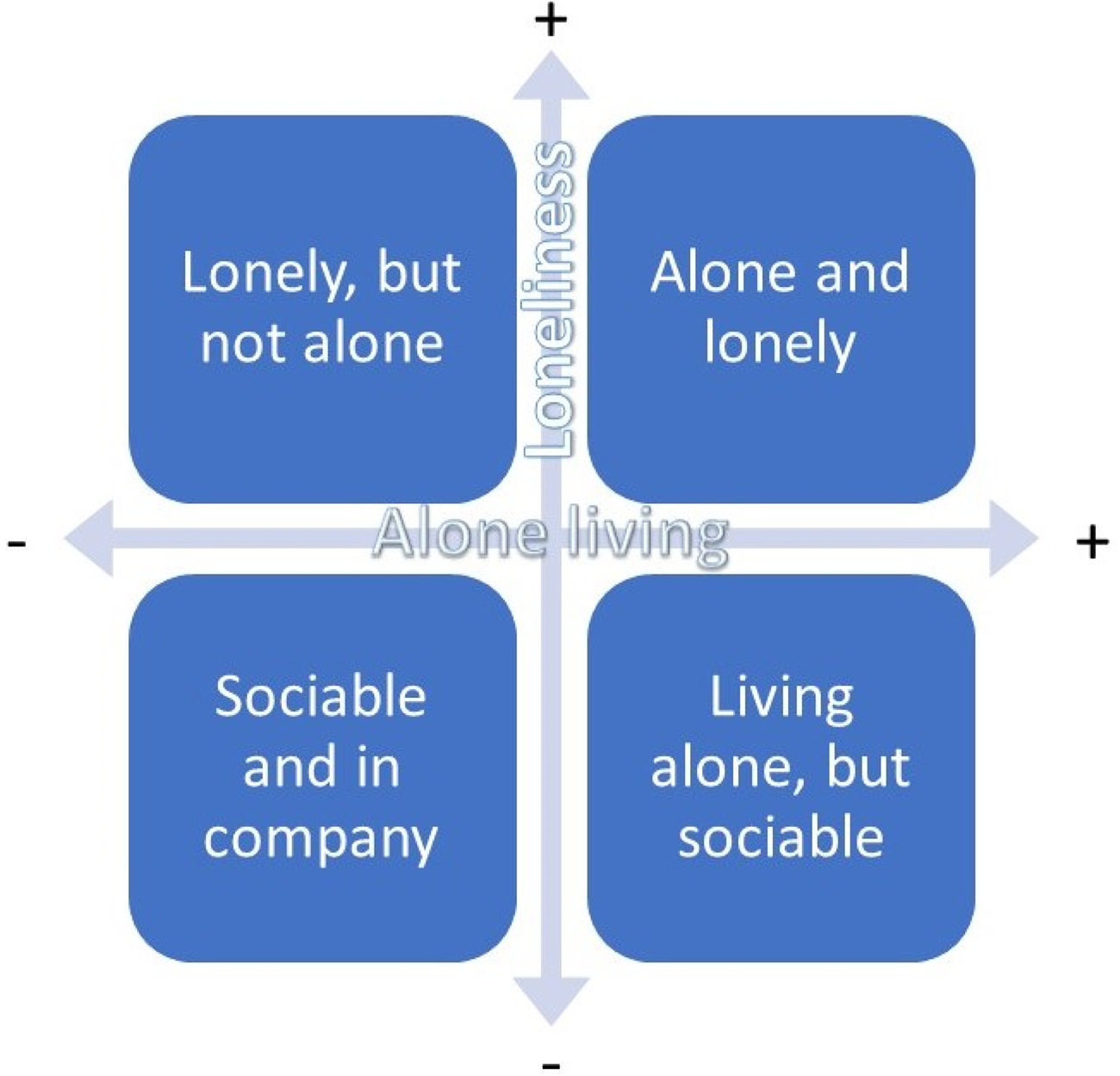
The alone and lonely matrix.
The economic impact of loneliness and alone living
How does the prevalence of these two forms of solitude – loneliness and alone living – shape economic activity and, thus, the potential for development? Whether people live alone or feel lonely has implications for their capacity and willingness to undertake work. This, in turn, affects their impact on the economy. Hence, the presence and/or prevalence of single-person households or feeling lonely in a particular territory can affect its development prospects.
In places where the share of lonely people is low, there will be more interpersonal exchanges and more interaction. More frequent social relations and face-to-face interaction are, according to the economic geography literature, fundamental factors for the exchange of ideas and the generation and diffusion of new knowledge (Gertler, 2003; Maskell and Malmberg, 1999; Storper and Venables, 2004). Moreover, the value connected to trust and inter-personal relationships leads to forms of bonding and bridging, creating social capital, essential for economic growth (Muringani et al., 2021; Putnam, 2000; Rodríguez-Pose & Storper, 2006). By contrast, lack of interactions and low social capital can lead to increased loneliness, which does not only affect individual mental health and well-being (Simons et al., 2020), but can also deflate the collective capacity of a society to grow. On the whole, loneliness may have a high cost for society, as it is at the root of both physical and psychological pathologies, burdening the health care system (Pretty et al., 2016). Being lonely also weakens the potential of individuals to work and to participate actively in the economy, leading to a loss of talent and a smaller workforce (Bosma et al., 2015; Mielck et al., 2009). Hence, a strong prevalence of loneliness – or, conversely, low levels of sociability – will be detrimental for economic growth. This leads to our first hypothesis: H1: Lower sociability in a region will result in lower economic activity and growth.
Although greater interaction and sociability are generally drivers of economic activity and growth, an excess of sociability can also detract from engaging in economic activities and dent the capacity and time of individuals and workers to become economically active. People who spend a very large amount of the time socialising will have less time to work than those who socialise less frequently. Hence, the relationship between the degree of sociability in a society and economic outcomes will be non-linear, with very high and very low sociability bound to weaken the overall economic activity in a territory. From this we derive our second hypothesis: H2: Too much or too little sociability will have negative implications for economic growth.
Alone living, by contrast, is devoid of the negative connotations linked to loneliness and other forms of solitude. Although traditionally many people did not live alone by choice, the archetypal profile of the elderly citizen living alone is increasingly being replaced by that of an adult professional, often women, with high levels of education and stable employment (Band-Winterstein & Manchik-Rimon, 2014). This is a trend which in Europe started in the 1970s, with the so-called ‘second demographic transition’ (Van de Kaa, 1987). It took hold earlier in Nordic countries, before spreading, first, to Central and, later, Southern Europe (De Jong & Van Tilburg, 1999). Highly educated professionals living alone make an important contribution to the economy (Band-Winterstein & Manchik-Rimon, 2014). In the US, for example, 41 percent of individuals between 25 and 34 living alone in 2015 had at least a bachelor's degree, while two thirds had a permanent full-time job (Vespa, 2017:15). The share of those living alone in the developed world has kept on rising. Factors such as the massive entry of women into the labour force, high levels of urbanisation, and greater longevity have facilitated this revolution (Klinenberg, 2012). The growing importance of careers, especially for women; a greater preference for broad social networks, often to the detriment of more traditional couple relationships; and the communications revolution, have contributed to make alone living more viable. Many of those living alone lead more vibrant social lives than those living in larger households (Klinenberg, 2012). The modern urban life-style, where the neighbourhood and social relationships are, at times, easier to establish than within the framework of more traditional, larger households is driving a single-person household boom (Bagheri et al., 2015; Howley et al., 2015).
Furthermore, alone living is expensive – or, at least more expensive on average than living with others – meaning that those living alone require considerable economic resources to finance the costs of properties and rents (Vespa, 2017:11).
Finally, alone living can provide the peace and quiet that facilitates concentration and thinking and leads to greater productivity, away from the distractions and chatter associated with large households (Klinenberg, 2012). But alone living does not only have positive economic implications. Long periods alone within four walls can also cause health, social, and physical problems (Sanders et al., 2004). The rates of self-harm and suicide are higher among those living alone (Shaw et al., 2021).
On balance, the benefits of living alone outweigh the potential drawbacks, meaning that our third hypothesis is: H3: High shares of the population living alone in a region will be connected to higher levels of economic growth.
Empirical analysis
Data and variables
To assess the extent to which these two different forms of solitude are connected to regional economic performance in Europe, we rely on a new dataset, including data on alone living and loneliness, plus several controls that affect economic performance. The sources of the data are EUROSTAT, the Statistic on Income and Living Conditions (SILC) Survey, the European Social Survey (ESS), the European Community Household Panel (ECHP) Survey and the Quality of Government Institute (Dahlberg et al., 2020). The data cover 139 regions in 13 European countries 1 for the period between 2011 and 2017.
The dependent variable is the annual growth rate of GDP per capita extracted from EUROSTAT, which is the most commonly used proxy for economic growth.
As in previous literature (e.g., Bagheri et al., 2015; Shaw et al., 2021), we use the regional share of single-person households as the proxy for alone living. We derive this measure from Eurostat's SILC survey. The survey provides information on the composition of private households. Unfortunately, data at the regional level are only reported as census data in 2011, making our living alone variable time-invariant.
Single-person households have increased significantly in Europe. The share of households with one or two persons was 3.6 percentage points higher in 2016 than in 2007 (EUROSTAT, 2017). The share of households with four members or more, by contrast, declined by 1.7 points. In 2016 single person households represented the largest group in the EU. 32.5% of households consisted of just one person, 31.2% of two persons, and only 14% of four persons (in 2007 the percentage exceeded 15%) (Figure 2).
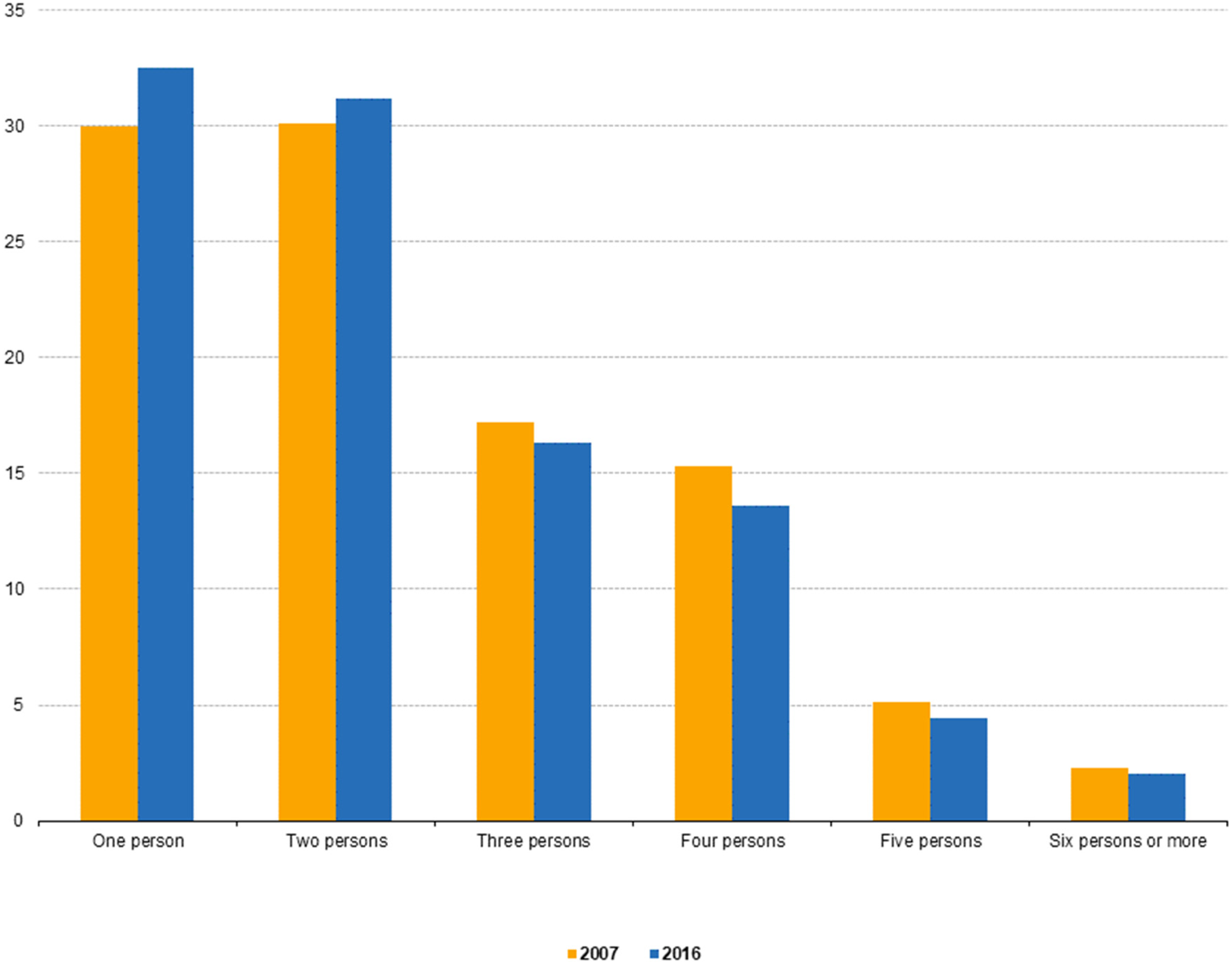
Households by number of occupants, EU-28, 2007 and 2016 (% share of all households) (source: Eurostat, 2018).
Figure 3 shows the share of single-person households across the 139 regions in the analysis. Alone living displays a clear national pattern. In 2011 it was far higher in the Nordic countries and in Central Europe than in Iberia and Poland. The contrast between shares above 30% in countries like Belgium, Finland, France, Germany, the Netherlands, or Sweden and far lower ones in Poland, Portugal or Spain was stark (Figure 3). Alone living also displayed a clear urban pattern. The highest percentage of single-person households in Europe was found in city regions, such as Berlin (49.43%), Brussels (49.22%), or Etelä-Suomi (Helsinki) (42.68%). Cities such as Amsterdam, Bremen, Copenhagen, Hamburg or London were not far behind. The lowest shares of single-person households were found in the North of Portugal (17.2%) and Murcia (Spain) (18.45%), far below the sample mean (32%).
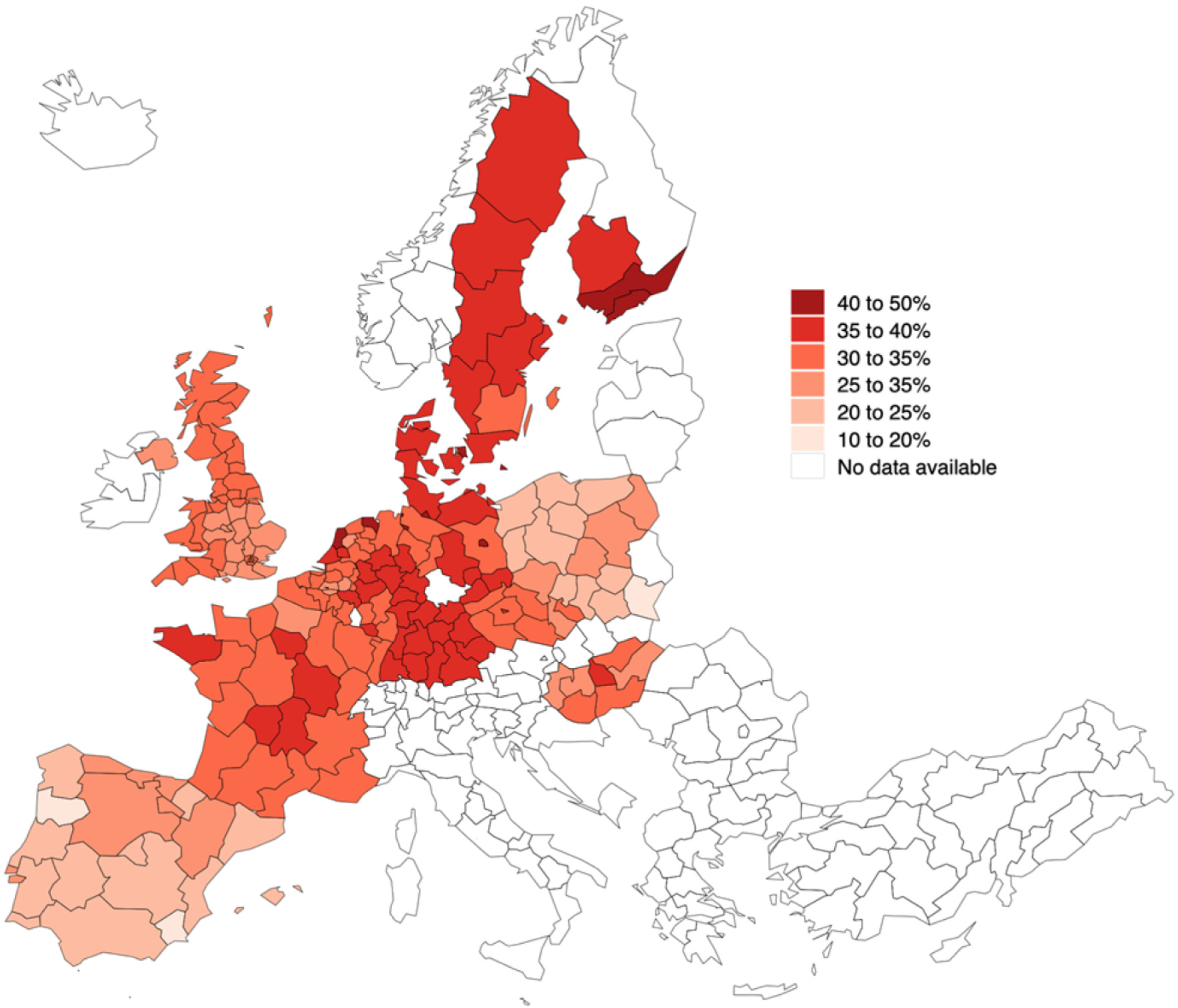
Percentage of people living alone in 2011 (% share of all households)
Measuring loneliness is far more complex. Previous studies have tended to rely on the UCLA Loneliness Scale (Russell et al., 1980) to measure loneliness. However, this source is not appropriate for our case, because we deal with loneliness at the aggregate territorial level and not at the individual micro-level. For this reason, we resort to an alternative measurement. We use the frequency of meeting others socially outside the household or workplace, taking into account different time horizons (Bosma et al., 2015; DeLeire & Kalil, 2010). We derive this information from the European Social Survey (ESS). This survey, directed by the University of London within the European Research Infrastructure Consortium Forum, collects information at the individual level on personal and social well-being, social capital and social trust, social exclusion, and education and occupations, among other themes. It is conducted every two years and targets individuals older than 15. For the purpose of the analysis, we select the question: ‘How often do you meet socially with friends, relatives or work colleagues?’ Seven possible responses are contemplated: (i) never; (ii) less than once a month; (iii) once a month; (iv) several times a month; (v) once a week; (vi) several times a week; (vii) every day. From these answers, we derive two different measures for social interactions. The first one is a sociability index, which expresses a standardized measure for the total number of in-person meetings, regardless of frequency. This measure is aggregated at the regional level and computed as follows:

Figure 4 reports the geographical distribution of the sociability index. As is the case in the USA (Klinenberg, 2012), alone living in Europe does not equate to being lonely. Many regions with a high concentration of single-person households, such as Brussels, most UK regions, Franche-Comté (France), or Schleswig-Holstein (Germany), have a high sociability index as well.
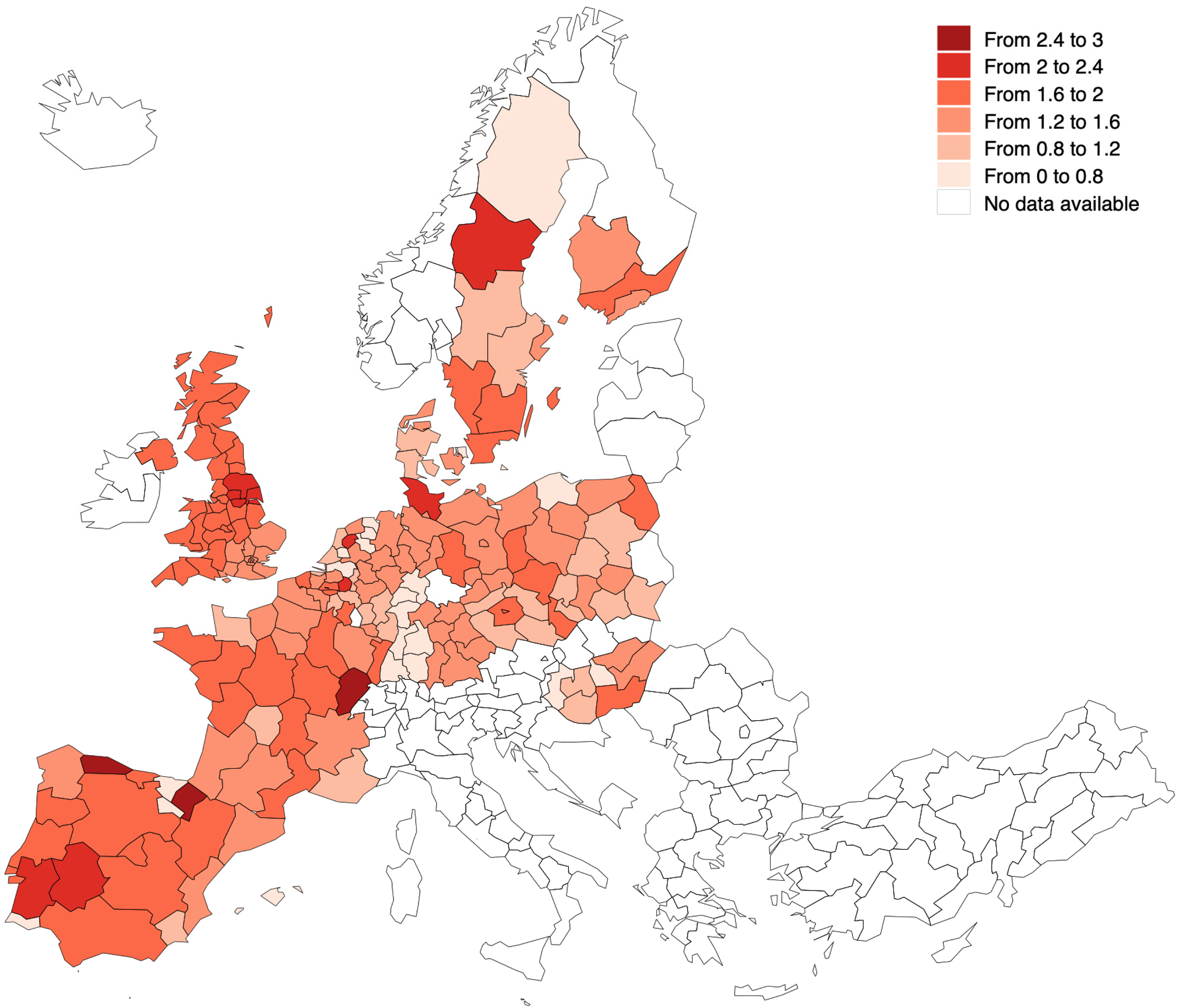
Distribution of the sociability index by NUTS2 region in 2017.
The second set of measures deals with each single level of personal interactions, grouped in the seven categories reported by the ESS: (1) never meet, if the respondents indicated that they never meet with friends, relatives, or work colleagues outside the home or work environment for social reasons; (2) less than once a month, if those meetings reportedly took place less than once per month; (3) once a month; (4) several times a month; (5) once a week; (6) several times a week; and, finally (7) daily, if they met socially every day. The value of each category is then divided by the total number of survey respondents in each region and year to obtain a weighted measure by population.
Figure 5 displays the regional share of the population by frequency of interpersonal contacts according to ESS categories in 2017. Much of the European population had social meetings with friends, relatives, or co-workers several times a week. Those reporting less than monthly meetings represented a very small share of the population. However, differences across regions and countries were stark. The Portuguese and the Spanish, but also the French and the Swedes, were far more likely to have daily meetings than Czechs, Hungarians, Poles, British or Germans (Figure 5). In France, the contrast between a more sociable South and the lonelier North was also strong. In most countries, there is also evidence of greater sociability in more sparsely populated, frequently rural, regions, and lower levels of daily interaction in cities. But there are exceptions, as daily meetings in London or in Stockholm, were higher than the average of their respective countries.
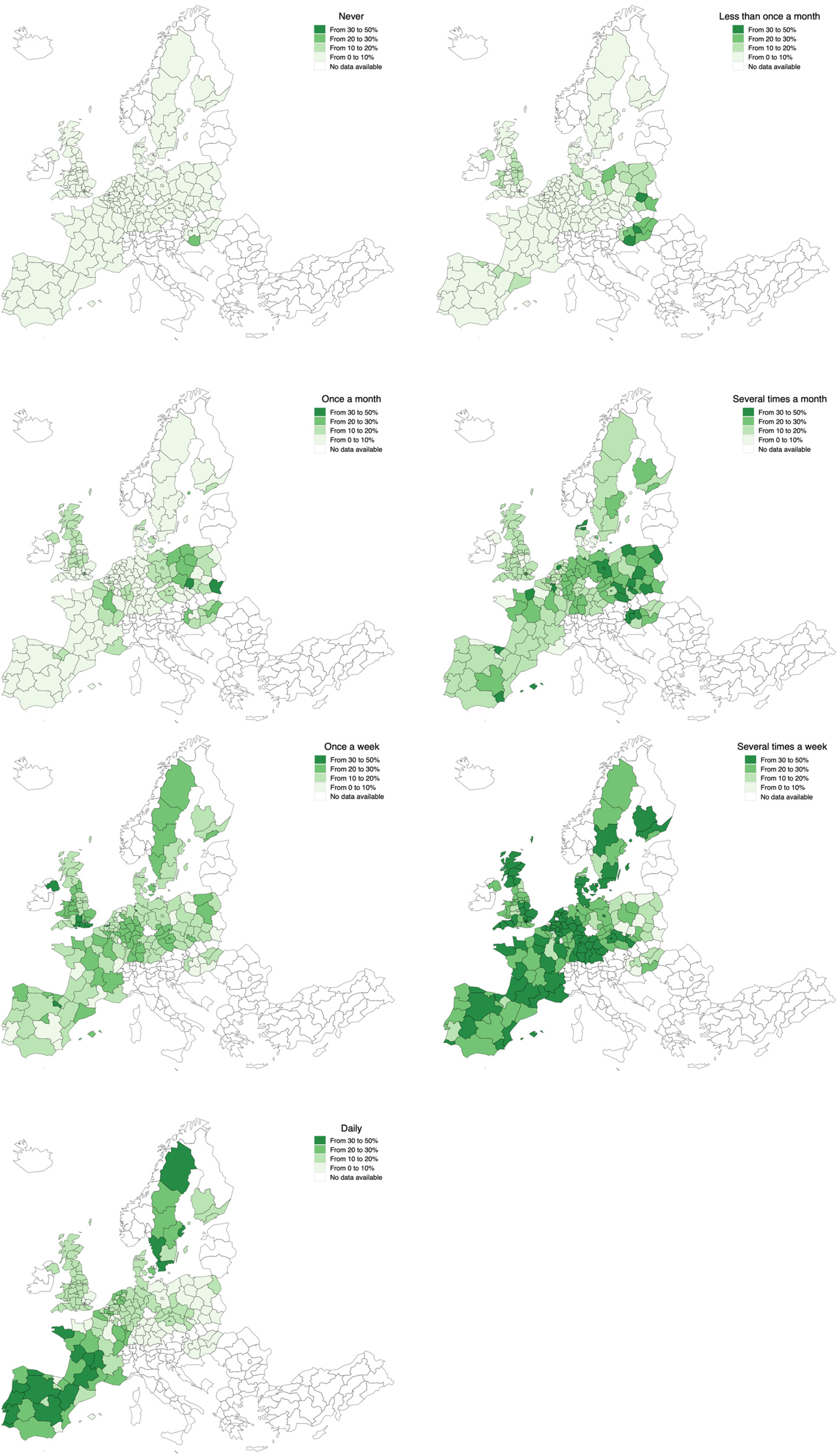
Share of the population by meetings in each of the ESS categories (2017)
The percentage of people reporting no social meetings was below 5% of the population across the majority of European regions, with the main exception of Hungary, where it exceeded 5% across the country and even went over 10% of the population in Southern Transdanubia.
The social index and the seven categories of personal interactions allow us to provide a possible explanation on how people living alone but with a different number of social contacts may affect regional economic growth.
To weigh for other possible factors that may influence economic performance, we introduce a set of controls. These are indicators that, according to the literature on economic growth, shape the economic performance of European regions. They include: population density, computed as the population per square kilometre; the share of people older than 65 in 2011, elderly population, to understand if economic growth is affected by the share of elderly people in society (Band-Winterstein & Manchik-Rimon, 2014); education, proxied by share of the adult population with higher education (ISCED 5 to 8); and, GDP, as a proxy for regional agglomeration (Combes et al., 2011).
As institutions shape the economic performance of regions (Rodríguez-Pose and Ketterer, 2020), we introduce government quality in the model as an additional control (Charron et al., 2019). Government quality is a composite indicator, taking into consideration not only the perception of the quality of public services, but also the level of corruption and the nonarbitrary forms of government, i.e., impartiality.
The description of variables and summary statistics are reported in Tables A1 and A2 in Appendix.
Empirical strategy
Due to the nature of some of our variables, like living alone and the share of elderly – available only for 2011 – we adopt a Hausman Taylor (HT) econometric approach.
The equation behind the model is as follows:

Why choose a HT model over potential alternatives? Apart from the time-variant and invariant nature of the variables, the HT approach deals with endogeneity issues in the model by decomposing
Alternative models, such as panel data analysis with fixed effects and pooled ordinary least squares (pooled OLS) cannot, by contrast, cope with the presence of time-invariant regressors or are incapable of encompassing endogeneity issues, respectively. Other methods, such as random effects, lack the sufficient robustness when the unobserved region-specific effects are correlated with other independent variables (Cameron and Trivedi, 2010; Hausman, 1978; Rodríguez-Pose and Ketterer, 2012), as in our analysis. The HT is then preferrable to pooled OLS, which is biased and inconsistent; to fixed effects, which cannot incorporate time-invariant variables; and to random effects, which do not consider endogeneity due to the presence of the error component. To ascertain that HT is the most appropriate method, we run a Hausman test comparing a random effects model and the HT. The test rejects the null hypothesis in favour of the consistency of the HT approach (p-value = 0.0942).
Defining potential endogenous and exogenous time-variant variables in the HT model, requires adopting Chatelain and Ralf's (2021) two-step procedure. This procedure identifies the nature of the variables in the model and avoids possible variable bias. In the first step, we run a random effects model, where all the regressors enter the equation together with the average over time of the time-variant regressors, following a variant of Mundlak's approach (1978). Only the mean regressors which are significant facilitate the identification of those time-variant variables to be treated as endogenous, becoming a sort of internal instrument in the model (Chatelain and Ralf 2021).
In the analysis we also introduce time and country fixed-effects to control for further omitted variables bias. We apply the Variance Inflation Factor (VIF) procedure to check for multicollinearity. It returns a maximum value of 1.84. Hence, no potential collinearity among our variables is detected. We also perform a Moran's I test and the results reject the null hypothesis of spatial correlation. Finally, as we include both NUTS1 and NUTS2 regions, we prefer to use robust standard errors, which cluster regions according to their level, rather than using clusters at country level, which are too few.
Correlation between growth and the different dimensions of solitude
When considering the correlations between alone living and loneliness, on the one hand, and economic growth on the other, we find that there is virtually no relationship between these two dimensions of solitude and regional economic performance in Europe. As seen in Figure 6, the fitted regression lines between growth and alone living (Figure 6a) and the sociability index (Figure 6b) are almost flat. In principle, these different forms of solitude seem not to matter for the economic trajectory of regions.
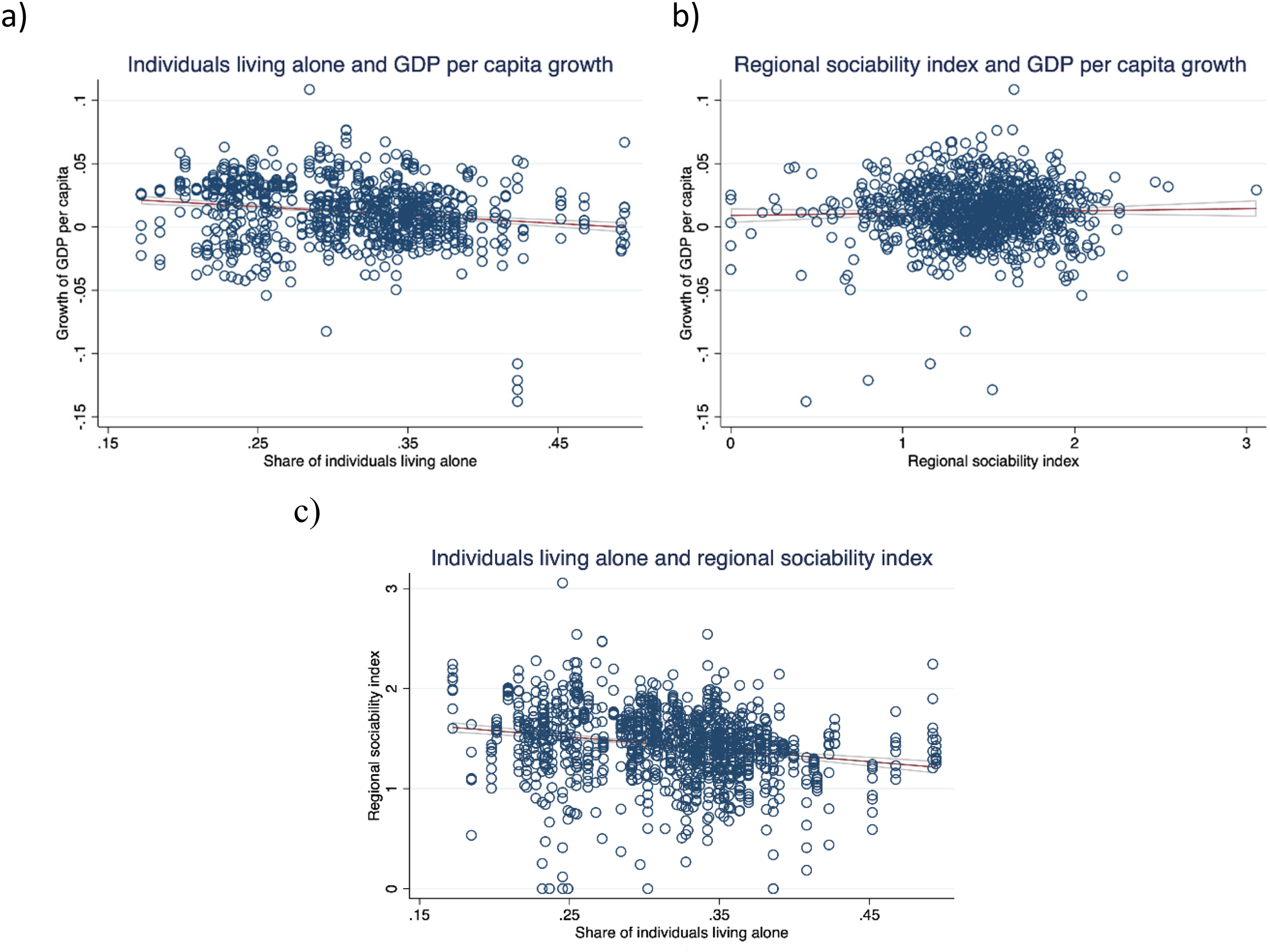
Correlation between growth and different dimensions of solitude and between alone living and the sociability index.
Results
Table A3 in the Appendix reports the results of the first step of the estimation procedure, following Chatelain and Ralf (2021). It identifies those time-variant variables that can be treated as endogenous in the HT model. This initial stage signals potential endogeneity involving population density and GDP, among the controls, and the sociability index, one of our two main variables of interest. Density and GDP can be connected to one another and to other controls, such as education. This is not the case with sociability, which is then considered – with the time-invariant alone living – an endogenous part of the model.
Moving forward to the HT estimates, Table 1 introduces the results of the baseline model where the sociability index (our indicator of loneliness) and the share of individuals living alone (our indicator of alone living) are considered for the 139 regions included in the analysis.
Degree of sociability and share of single-person's households and economic growth.
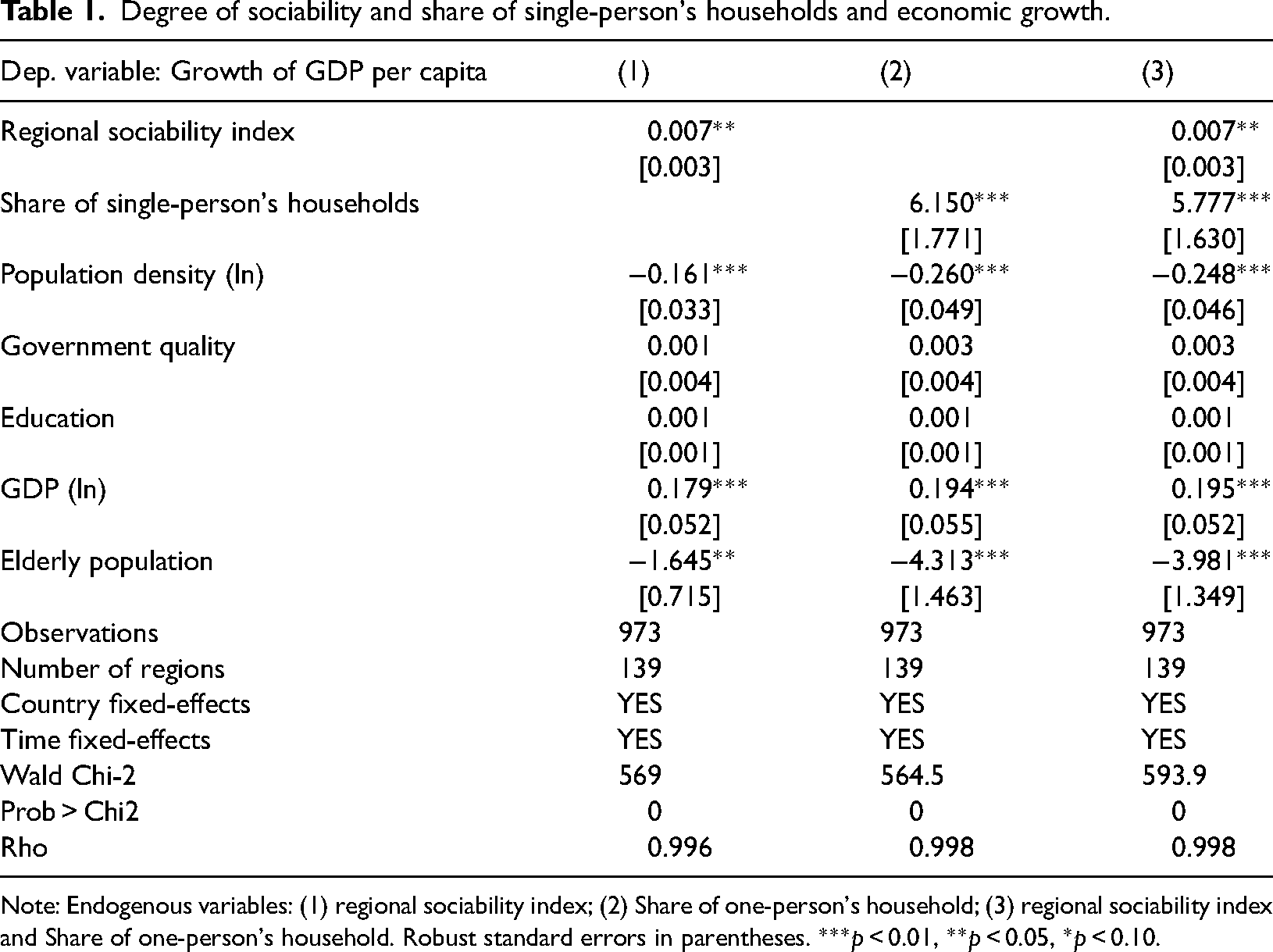
Note: Endogenous variables: (1) regional sociability index; (2) Share of one-person's household; (3) regional sociability index and Share of one-person's household. Robust standard errors in parentheses. ***p < 0.01, **p < 0.05, *p < 0.10.
In column 1 and 2 we introduce the sociability index and the share of individuals living alone separately respectively, while in column 3 we include them together.
The results go in line with hypotheses H1 and H3. First, regions with a more sociable population have, in accordance with H1, grown more in recent years than those where the regional sociability index is lower. More interaction within a society by a larger share of the population drives economic activity and growth. Similarly, and in agreement with H3, the share of individuals living alone is connected to a higher regional economic performance. In both cases the coefficients are positive and highly significant at the 1% level for alone living and 5% for the sociability index. These results suggest that more adults living alone and more sociable individuals in European regions propel economic growth – a situation similar to that described by Klinenberg (2012) for the case of the US.
Some of the control variables have shaped the economic performance of European regions in recent years. Ageing societies, for example, represent an important barrier for regional growth (Mund et al., 2020a, 2020b). Economic agglomeration is conducive to greater per capita economic growth, in alignment with the predictions of the new economic geography. Agglomeration also trumps density in terms of generating growth: the coefficient for density is negative and strongly significant (Table 1).
But do variations in the prevalence of loneliness across the population affect economic growth? This question is addressed in H2, where we posit that there may be a ‘sweet spot’ for economic growth between having a large share of the population isolated and rarely meeting others and, conversely, spending large chunks of time providing often needless chatter, while smoking a cigarette or sipping coffee. To do that, we resort to the analysis of the share of the regional population by frequency of social meetings for the seven categories of the ESS: never; less than once a month; once a month; several times a month; once a week; several times a week; daily. The aim is to understand better if changes in the prevalence of the frequency of social interactions among the regional population are linked to changes in GDP per capita.
The a priori expectations are, to a considerable extent, confirmed by the results in Table 2. Columns 1–7 report the coefficients for the seven categories of frequencies of social contacts, while column 8 uses the share of individuals with daily social meetings as the base category, for ease of comparison among categories.
Frequency of social meetings and economic growth.
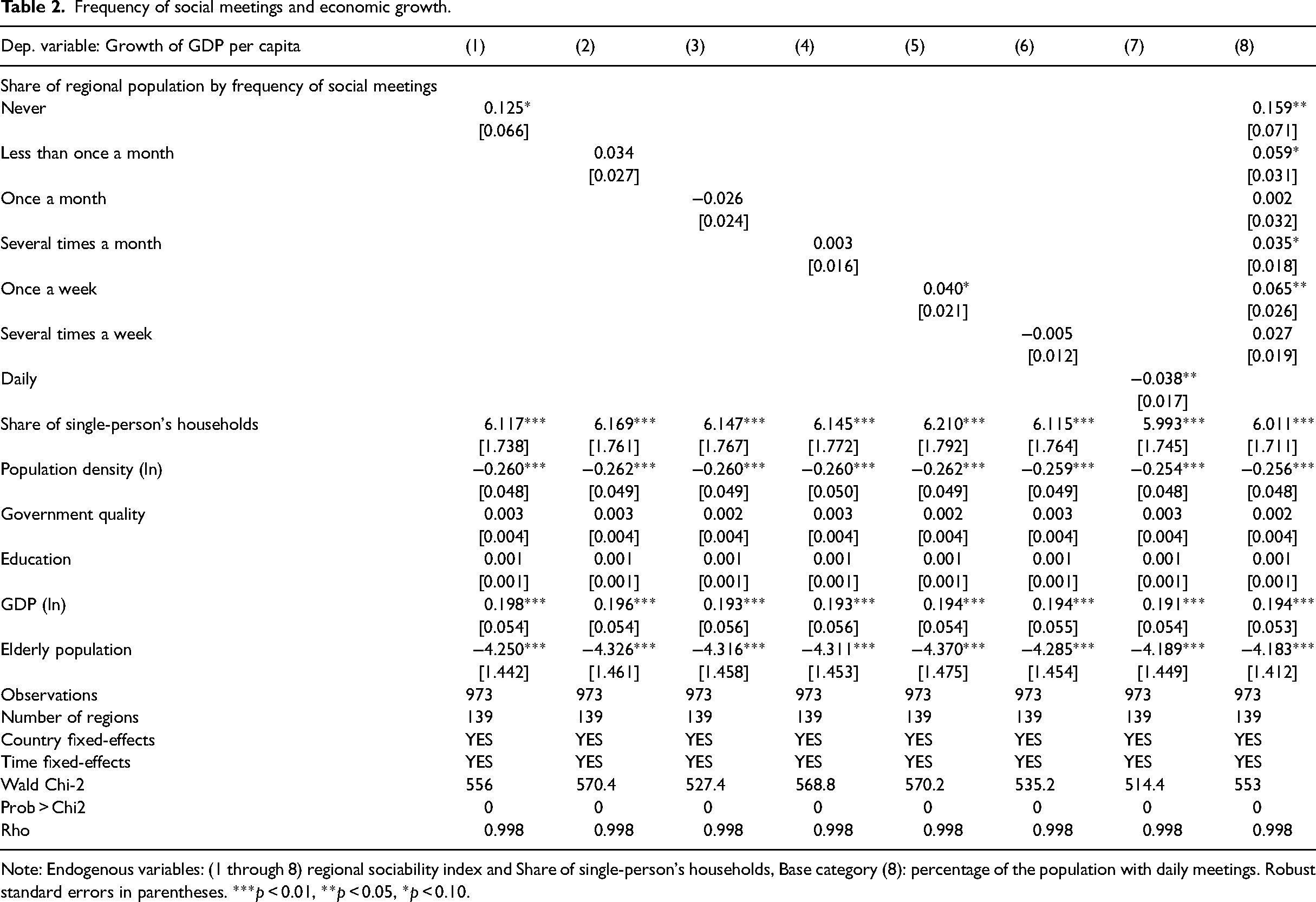
Note: Endogenous variables: (1 through 8) regional sociability index and Share of single-person's households, Base category (8): percentage of the population with daily meetings. Robust standard errors in parentheses. ***p < 0.01, **p < 0.05, *p < 0.10.
There seems to be more than one sociability ‘sweet spot’. Regions with a larger share of individuals who meet socially with friends, relatives, and co-workers on a weekly basis (Column 5) grow faster, as do those with a greater share of people who never meet for social purposes (Column 1). High shares of the population meeting others on a less than monthly or a monthly basis, or several times a month or per week have less influence over economic growth (Columns 2, 3, 4 and 6). By contrast, in places like most of Portugal, many parts of Spain and Sweden, or southern France, where daily social meetings are the norm, the levels of growth are lower once other factors are controlled for. When a larger share of the population has what can be considered as far too frequent social meetings, the economic benefits of greater interaction disappear, while simultaneously the negative effects are boosted. Relatively high shares of people that are too social and/or have a too intense social life can thus be detrimental for economic growth in some European regions.
The only result that goes against expectations is that of the positive and significant coefficient of the share of population claiming never to meet others. Having a non-negligible number of people that can be considered as anti-social – often so-called nerds or geeks that prefer, if at all, to meet others socially online rather than in person – may not only not be detrimental for growth, but can contribute to promote economic activity at an aggregate level. This result points to the economic outcome of ‘aloneness’, that is the presence of people who choose, but are not forced, to be alone (Leontiev, 2019). That is, people who decide not to be sociable but remain satisfied with their lives. Thus, the presence of a limited share of population with no in-person social interaction – many of whom live alone – may not be detrimental for growth.
When comparing all categories by frequency of social meetings, using the share of people with daily meetings as the base (Table 2, Column 8), the story emerging confirms the previous picture. Regions with a higher share of people meeting once a week or several times a month grow more than those where daily social meetings are more frequent. This represents the first ‘sweet spot’. Then the impact disappears as once a month frequencies become more common, just to re-emerge when considering shares of individuals meeting socially less than once per month or never. The two peaks are once a week and never, both with coefficients significant at the 5% level. It also seems that the effect is stronger for the never category than for the once a week one. Yet, it has to be borne in mind that those who claim never to meet others socially represent, on average, 1.6% of the population surveyed. This contrasts strongly with the share at the other ‘sweet spot’, weekly meetings, which includes 17.4% of Europeans (Table A1).
The living alone variable is always positive and highly significant, regardless of the percentage of people that report different frequencies of social interactions, confirming that high shares of single-person households are far from harmful for the economic growth of European regions. They, in fact, contribute to greater regional economic dynamism. The coefficients of the other control variables conform to those reported in Table 1.
Conclusions
In this paper, we have examined how different forms of solitude – loneliness and alone living – have affected the economic performance of European regions. It represents the first piece of research exploring the often mentioned, but seldom proved – especially at a comparative level involving many regions and countries – relationship between living alone and loneliness, on the one hand, and regional economic growth, on the other. This is a significant novelty, as it fills an important gap in existing knowledge of the psychological and sociological drivers for economic development from a geographical point of view and brings attention to a topic that is becoming more and more salient for our society. Moreover, it addresses an important gap in our knowledge, as the general research considering the economic implications of the wave of alone living and of the ‘epidemic of loneliness’ (Kar-Purkayastha, 2010) is virtually inexistent.
Given the pioneering and exploratory nature of this research, there are inevitable shortcomings. Data shortages are the main limiting factor. Gathering data on alone living and, especially, on loneliness at subnational level is a testing process. With currently available data, the feasibility of distinguishing different degrees of solitude by gender, age, and/or economic, social, or health status is nigh impossible. Nor is it possible to identify shares of population living alone or lonely as a result of choice or being driven into solitude by life events. The data limitations at subnational levels of surveys like the ESS and EU-SILC also play a part. We are forced to aggregate data on the basis of surveys with limited numbers of individuals per region, something that may have implications on how representative they are and, consequently, on the results. This type of analysis may also not be exempt from selection bias. However, we are examining a trend that is becoming so prevalent that cannot be simply waved away on the basis that the data are insufficient or imperfect.
The analysis, developed using a panel covering the period between 2011 and 2017, shows that the rise of solitude, while potentially having pernicious health, mental health, and social consequences, both at the individual level and for society as a whole, does not pose the same threat from an economic perspective. Greater shares of people living alone may, indeed, be a substantial driver of economic growth across European regions. The proliferation of single-person households is positively connected with economic growth in all the specifications tested. The increasing wave of people choosing to live alone – rather than being forced to by external circumstances – can boost economic growth, provided they remain active in the labour force and willing to network and interact with others.
The ‘loneliness epidemic,’ in contrast, can have damaging economic consequences. A society with a greater percentage of people feeling lonely maybe one were health and mental health problems abound and where depression and desperation are rife. Loneliness undermines the capacity of the workforce as a whole and generates additional health, psychological and social burdens that have important economic implications. More lonely people may imply less interactions that, according to many social science theories, represent the foundation for knowledge generation and diffusion. The result is less economic growth. The connection between loneliness and economic growth, however, depends on factors such as the frequency of meetings by the population. Too much interaction, such as the prevalence of daily meetings, can undermine the benefits of in-person exchanges. Societies were a large share of individuals meet on a less than weekly basis are also less likely to grow. The first ‘sweet spot’ seems to be related to large shares of the population meeting socially with friends, relatives and co-workers weekly. However, and in contrast to expectations, having a relatively high share of highly lonely people – those that declare never to meet others in person – is not only not detrimental for growth, but leads to a second ‘sweet spot’ of better regional economic performance. This is probably linked to the potential benefits of aloneness, or the presence of individuals choosing to live alone from society, but still satisfied with their lives (Leontiev, 2019).
So, clearly alone living and loneliness affect economic activity and performance. But what can be done in order to make sure that the potential benefits of solitude are maximised while its downsides kept at bay? As highlighted earlier, the exploratory nature of this study, aimed fundamentally at raising attention on a topic – that of the economic consequences of the rise in solitude at an aggregate, regional level – that has been unfolding under our noses but has attracted virtually no attention and the limitations in terms of data, makes moving from the scientific to the policy realm daring. Moreover, it is not always clear that governments and administrations should intervene in areas that belong in the sphere of the individual, fundamentally when any form of solitude can, at times, be the result of personal choices. Having said that, the economic consequences of rising solitude are, as we have shown, important and governments should start thinking about them not just at the individual, but also at the aggregate level. In terms of alone living, given its potential economic benefits, it may be the case that the possibility of encouraging choice may be put on the table. In many regions of Europe young professionals can live alone if they so choose. In other parts of Europe, high levels of youth and young adult unemployment, the prevalence of temporary and/or precarious employment, and rigid labour markets and education systems often prevent many young adults from living on their own. The phenomenon of the mammoni or vitelloni (young adults living with their parents well into their thirties) is not exclusive to Italy. It prevails across many regions in other European countries. This, as our study confirms, can have detrimental effects for economic dynamism, both at an individual and aggregate level. In these cases, considering facilitating choice for alone living is something that should be on the agenda of different governments.
Greater intervention may also be required to combat loneliness. This could be more effective when addressing its roots in order to prevent or minimise its negative collective health, well-being, social and economic consequences. Such intervention, however, needs to be done while respecting those that, for whatever reason, prefer to be alone.
On the whole, we have brought attention to a phenomenon that is becoming pervasive and can have significant economic consequences at a regional level across Europe and that should be higher up the research and political agenda. The rise in different forms of solitude across the whole of Europe and its economic consequences deserve far greater attention by than they have been afforded until now.
Supplemental Material
sj-docx-1-epn-10.1177_0308518X231169286 - Supplemental material for Alone and lonely. The economic cost of solitude for regions in Europe
Supplemental material, sj-docx-1-epn-10.1177_0308518X231169286 for Alone and lonely. The economic cost of solitude for regions in Europe by Chiara Burlina and Andrés Rodríguez-Pose in Environment and Planning A: Economy and Space
Footnotes
Acknowledgments
We acknowledge the support and advice of the editor handling the manuscript, Jessie Poon, and the feedback, suggestions, and multiple challenges of the three anonymous reviewers during the refereeing process. Participants at presentations of this work in Angra do Heroísmo, Birmingham, Bolzano, L’Aquila, Louvain-la-Neuve, Lund, Madrid, Padova, Stavanger, and Utrecht provided useful comments and recommendations.
Declaration of conflicting interests
The author(s) declared no potential conflicts of interest with respect to the research, authorship and/or publication of this article.
Funding
The author(s) received no financial support for the research, authorship and/or publication of this article.

Supplemental material
Supplemental material for this article is available online.
Notes
References
Supplementary Material
Please find the following supplemental material available below.
For Open Access articles published under a Creative Commons License, all supplemental material carries the same license as the article it is associated with.
For non-Open Access articles published, all supplemental material carries a non-exclusive license, and permission requests for re-use of supplemental material or any part of supplemental material shall be sent directly to the copyright owner as specified in the copyright notice associated with the article.
