




Abstract
How is space made to matter in contemporary access-based markets? Drawing on the geographies of marketization and constructivist market studies, we examine how space is framed as a relevant quality to take into account in market exchange and how that qualification process itself is spatially situated. We trace a failed attempt to create an access-based car market in Stockholm, involving parallel but poorly synchronized site-specific effects of marketization across public and private realms. Our findings show how DriveNow sought to render its envisioned market spatially homogenous and the spatial interdependencies between this envisioned market and other (market and nonmarket) uses of space. We highlight the performation struggles between such alternative but overlapping spatial demarcations in specific microgeographies and show how seemingly similar spatial imaginaries can be materialized in different ways in one spatial realm.
Introduction
How is space made to matter in contemporary access-based markets? While geographers stress the general importance of access in any market (Harvey, 1981), a specific type of “access-based markets” has developed in the past decade, not least for urban mobility (Stehlin et al., 2020), including markets for e-scooters, car sharing, and bike sharing. In these markets, access is not just a condition for successful market exchange but part of the very good that is being exchanged. There is thus a need to frame space as part of these processes of marketization, notably to incorporate it into the process through which products are qualified as goods. As argued by Callon et al. (2002), this process of qualification is central to market formation in that it renders products comparable and thus contributes to establish the boundaries of (product) markets. A given product can thus be sold in different markets, depending on how it is qualified. Subsequent empirical research has highlighted the role of various discursive and material devices in realizing such specific (product) markets (e.g. Hawkins, 2012; Muniesa, 2014). In this paper, we probe one attempt to form an access-based market for cars to further our understanding of the role of spatiality in marketization.
Our work follows recent calls to take spatiality into account in market making (e.g. Berndt and Boeckler, 2012; Ouma, 2015). Research taking a performative view has stressed that markets are firmly anchored in socio-material reality and subject to multiple efforts at space making (Kear, 2018). Markets and their boundaries are plastic, comprising “frontier regions” (Mitchell, 2007: 274) that invoke a range of moral and political questions. So far, however, inquiries into the microgeography of marketization remain scant (but see Berndt and Boeckler, 2012). While research on geographies of marketization has offered new perspectives on the spatial configuration of markets—including global commodity markets (Wilkinson, 2011), national markets for home mortgages (Ashton and Christophers, 2018), and transnational markets for digital information (Alvarez León, 2018)—it has paid little attention to how competing spatial qualifications interfere, a common situation in urban agglomerations. Hence, the multiplicity of devices geared toward economizing space and territorializing markets (Christophers, 2014, 2015) and the “overlapping spatial relationships between markets” (Cohen, 2017: 36) remain poorly understood.
Against this backdrop, our aim is to further our understanding of the spatial aspect of market formation by exploring how multiple (public and private) actors attempt to construct, maintain, and reproduce overlapping economized spaces. STS scholars recently suggested that “up-close studies are important for engaging with the details of market work because assembly is not a neutral practice” (Neyland et al., 2018: 12). Focusing on such details in situations where market and nonmarket ambitions converge allows us to explore potential struggles between different efforts at space making. Combining this approach with an interest in the relational and concrete accomplishments of marketization, this article empirically explores how distinct spatial qualification processes are employed in the microgeographical realm and how this creates interferences between overlapping spatial spheres.
We follow the efforts of car sharing platform DriveNow, initially owned by BMW and Sixt, to construct an access-based market for cars in Stockholm, Sweden. By tracing how an incumbent car manufacturer attempts to leverage the sharing economy, we offer a detailed account of what Stehlin et al. (2020) labeled the “life extension trajectory” of shared mobility in urban environments. Fueled by digitalization, the sharing economy (Sundararajan, 2016) has made significant inroads into the transportation sector (Stehlin et al., 2020). Specifically, access-based markets have emerged as one way of tapping into the idle capacity of cars (the estimated utilization rate in Sweden is about 5%). These markets—defined broadly as socio-material arrangements mediating short-term provision and use via digital platforms in urban contexts (Bardhi and Eckhardt, 2012)—provoke particular spatial challenges as they allow ad-hoc access to cars within a defined urban area, also known as free-floating car sharing. Notably, to afford repeated market exchanges involving the same car, its changing spatial location must be handled. In parallel, various public and private actors pursue space making efforts for entirely different purposes in the same urban geography. Given this, the DriveNow case is well suited to explore the micro-political struggles between public and private space making efforts linked to processes of marketization.
We develop three main points in the paper. First, we argue that space making is critical to contemporary platform-based marketization, especially for access-based markets. Second, we show how DriveNow sought to realize their envisaged access-based market by introducing arrangements that would render marketsites practically resistant to spatial variations. Third, we argue that qualifying space in access-based markets is inextricably linked to (often unknown) entanglements and interdependencies with parallel space making efforts. Specifically, the relational character of space lays bare competing geographic imaginations of public and private actors. If efforts to create space for different purposes converge, then market-making actors must take them into account irrespective of whether they are part of marketization or not. In line with the revival of Polanyi's legacy (Peck, 2012), we find that the operational separation of economic and political priorities results in weakly or inconsistently regulated economic spaces. Indeed, in our case, this separation and the related absence of active regulatory involvement in the attempted marketization of shared mobility led to the demise of the new mode of economic exchange.
Five sections follow this introduction. First, we introduce key conceptual starting points for studying the construction of market space. Second, we discuss our empirical method. Third, we present our findings concerning how DriveNow attempted to establish an access-based market for car sharing in Stockholm, Sweden, highlighting the performation struggle with other spatial demarcations that ultimately led to its demise. Fourth, we discuss how our findings contribute to further our understanding of the qualification of space in markets. Fifth, and finally, we offer three conclusions and give suggestions for future research.
Qualifying market space
Drawing on the performative turn in economic sociology (Callon, 1998, 2007; MacKenzie, 2004), we define markets as “on-going socio-material enactments that organize economized exchanges” (Nenonen et al., 2014: 271), highlighting that market formation is a continuous process (Callon, 1998; Callon et al., 2002). A market is not simply there but continues to emerge and re-emerge as market actors (re)frame economic exchange (how goods are evaluated, how buyers and sellers interact, etc.). The spatiality of this process is given specific attention in the “geographies of marketization” (Berndt and Boeckler, 2012; Christophers, 2014), challenging conceptions of markets as abstract, de-territorialized realities (Peck, 2012). Largely grounded in a topographical understanding of markets emphasizing borders, zones, and areas, this has stimulated interest in exploring how spatial qualities are built into everyday marketization practices (Langley, 2018).
A key facet of such practices is how objects are qualified for exchange, that is, how specific qualities are attributed to objects, turning them into economic goods that buyers and sellers can exchange on a market (Callon et al., 2002, see also Rainer, 2021). Such qualities are always both intrinsic and extrinsic; while the outcome of qualification is obviously contingent on the object being qualified, the devices employed to characterize it as an economic good also matter. Put differently, any quality is a joint outcome of the object and the qualification trial. 1 The qualities of goods may thus be altered by modifying the exchange objects or by changing the devices employed to characterize them (Callon et al., 2002). This process of qualification can be regarded as a sub-process of framing (Callon, 1998)—the establishment of boundaries within which market exchange can take place as if detached from the surrounding context—that determines which aspects are accounted for in a specific market exchange.
How, then, is space implicated in the process of qualification? First, spatial qualities are often attributed to goods in connection with their exchange. Indeed, in some markets, the spatial qualities of goods are a key aspect. Think for instance of location-specific offers, such as tourist destinations (Chang, 2001), or of products whose geographical origins are attributed importance, such as local produce (Berndt and Boeckler, 2011) or fine wines (Hennion, 2007; Rainer, 2021). The spatial conditions for exchange may also matter, for instance, the importance of a convenient supermarket location for store choice (Clarke et al., 2012) or the importance of safe delivery conditions for online food purchases in neighborhoods plagued by criminality (O’Neill, 2019). In all these cases, space is framed as a relevant quality of the offering.
Second, qualification is itself a situated process that hinges on site-specific arrangements (Reimer and Pinch, 2021). Products are qualified as goods in specific marketsites rather than generally across an abstract market devoid of spatial qualities. This happens in product development discussions within firms (Dubuisson-Quellier, 2010), in product reviews and competitions (Rainer, 2021), at supermarket shelves (Hagberg and Kjellberg, 2015), and in webshops (Murphy, 2003). Here, the notion of marketsite—the “heterogeneous elements that make up market assemblages” in a specific spatial realm (Kear, 2018: 302)—usefully highlights the site-specific socio-technical arrangements that must “hang together” in an organized way. The process of qualification is intimately connected to the presence in such marketsites of arrangements and devices that allow actors to take certain aspects of the offering into account (Callon et al., 2007). The unequal distribution of such arrangements across agents and sites creates asymmetries, so that relations of domination are inscribed in relations of calculation (Warren and Gibson, 2021). From this perspective, then, a spatially uniform market would be an achievement relying on the successful dissemination of qualification devices that make each marketsite the same (or similar enough). But if there are multiple devices available that can intervene in the material and discursive construction of markets, then different actors can take into account different spatial qualities, depending on which type of device they use. This would make different spatial enactments possible in the same space (Barnes, 2008), producing different “degrees of marketness” that are likely to overlap (Peck et al., 2020: 10).
Any attempt by an actor to modify how goods are qualified typically plays out in parallel with other such attempts, including those of competitors (Azimont and Araujo, 2007), intermediaries (Rainer, 2021), and regulators (Cochoy, 2017). Here, economic geographers have pointed to the significance of the territory–regulation nexus in the construction of markets. Informed by Polanyian thinking, Alvarez León (2018) explores the spatializing role of information policy regimes in organizing and regulating digital geographic information markets. By scrutinizing the multiple scales and territorial heterogeneity of legal regimes for digital information across the European Union, Alvarez León demonstrates how interactions between legal and commercial aspects of policy regimes define the spatial constitution of markets. Muellerleile (2015) similarly follows the regulatory governance systems for derivative markets. In his analysis of the movement of capital across financial markets, he concludes that “market mechanisms and market regulation are analytically inseparable, and ought to be studied as such” (Muellerleile, 2015: 1805).
The distinction between market-making and (market) regulation is partly the result of a long history of neoliberal ambitions to view law, politics, and economics as separate silos (Peck, 2012). For example, Ashton and Christophers (2018) show how the ongoing regulatory construction of a local market for home mortgages in the United States relied on legal definitions of mortgage products that allowed circulation across global financial markets but also entry into the political realm. While economic geographers thus have scrutinized “how micro-politics of markets feed back into the macro-structures of capitalism” (Cohen, 2017: 37), the formatting of calculative agencies in more local geographies has been largely overlooked (Braun, 2016). In this respect, Knorr Cetina and Bruegger’s (2002) study of “global microstructures” points to the importance of examining how macro trends (like the sharing economy, in our case) become materialized in concrete and spatially confined realms as well as how this local territorialization varies across sites. If markets are understood as socio-technical assemblages (Caliskan and Callon, 2010)—arrangements of devices and people that act according to their configuration—then different arrangements may overlap within the same spatial realm.
Such overlaps create situations where interfering ideas about an envisaged market space trigger performation struggles (Callon, 2007). For example, efforts to establish norms, standards, and codes of conduct could have reverberating effects on how markets are depicted and objects exchanged, generating multiple versions of markets (Kjellberg and Helgesson, 2006; Lawlor and Kavanagh, 2015). This points again to the site-specific implications of marketization and the surrounding micro politics. Given the multiplicity of actors engaged in marketization, actors are likely to encounter diverging qualification efforts that cannot be ignored (Hawkins, 2012). Further adding to this multiplicity are efforts to realize entirely different, yet spatially overlapping orders, for instance political or regulatory geographies. Berndt and Wirth (2019: 295) suggest that such “struggles between different economic and noneconomic logics” are the norm rather than the exception in marketization processes.
While the performative turn in economic sociology prompts us to interrogate the relational and processual aspects of markets, the geographies of marketization invites a renewed interest in their spatiality, focusing on the “politics of market making” (Muellerleile and Akers, 2015) based on political economy approaches. Our ambition is to draw these ideas together to study the enactment of market space in a specific micro-political geography. More specifically, we address two interlinked questions: First, given that products are qualified as goods in specific marketsites, how is this process itself spatially situated? Second, what interdependencies with other enactments of space arise during the process of creating a novel market? We explore these questions by following the efforts of DriveNow to create an access-based market for cars in the greater Stockholm area—efforts that ultimately fail.
Notes on method
Due to the reliance of free-floating car sharing on local geographies, we chose to focus on one specific attempt to create such a market, that of DriveNow in Stockholm, Sweden. The efforts of entrepreneurs, regulators, urban planners, and others to create (or counteract) access-based markets in Sweden had received considerable publicity, rendering visible facets that otherwise may go unnoticed (cf. Latour, 1984). The confluence of public and private initiatives within the same spatial realm made Stockholm attractive and provided an entry point into possible concerns and struggles during the process of marketization. In reviewing previous work on the formation of alternative markets, we had noted the lack of empirical studies and the cursory treatment of space making at micro level. To remedy this, we combined online and offline observations with archival data and semi-structured interviews across public and private actors.
We gathered documents from DriveNow and traced its marketing efforts through social media (Twitter and Facebook) to capture a longitudinal perspective from its launch in 2015 to its unexpected demise in 2018. Using SiteSucker, a web crawler, we retrieved data from the DriveNow website, which was the main source of information for customers given the absence of traditional brick and mortar stores. We complemented this with data from firm presentations, press releases, and video material issued by DriveNow for educational and promotional purposes. From the public sector, we located government reports and legal forms released by municipal, regional, national, and European authorities, revealing public planning objectives and budget priorities. Secondary data also included popular press and public op-eds reflecting the controversial and challenging sociopolitical circumstances for car sharing in Stockholm.
The secondary data collection was followed by semi-structured interviews with representatives of DriveNow, urban planners, and engineers, offering insights pertaining to planning and regulating infrastructures for access-based markets. We conducted 12 interviews, ranging from 45 min to 2 h in length, involving DriveNow's CEO and representatives from the local transport authority in Stockholm. All interviews were performed face to face with a small number of follow-up emails during analysis. Informants were chosen based on long tenure and/or direct involvement in projects. Lastly, in keeping with our interest in the practical implications of marketization, the first author downloaded the mobile application, registered as member and tried the services. Here, firsthand observations allowed us to scrutinize mundane practices that may otherwise go unnoticed, such as how to identify available cars or how to unlock them using digital keys.
By iterating between data and theory, we identified alignments and inconsistencies with existing literature, which guided us to position and highlight our contributions. Due to the richness of the data, we sketched a map of the city to visualize different efforts to spatialize and commercialize the area. Reflexive running notes were taken during the analysis to highlight emerging patterns of market making and possible obstacles, such as congestion taxes. Based on our conceptual starting points, the first draft narrated how DriveNow and other actors sought to frame boundaries and qualify space. Once we reached a thorough understanding of the actors’ involvements, the devices employed and the significance of space for car sharing, we subsequently presented early drafts at seminars and workshops for comments and refinements.
An access-based market for cars in Stockholm?
Car sharing in Sweden
Car sharing is regarded as a potential disruptor of urban mobility with an expected growth in the number of car sharers globally toward 36 million by 2025 (Frost and Sullivan, 2018). From the 1970s onward, Sweden assumed a leading role in piloting various car sharing schemes, including Bilpoolen (1976–1979), Vivalla bil (1983–1998), and Bilkooperativ (1985–1990) (for an overview, see Shaheen and Cohen, 2007). Despite these and more recent initiatives, Swedish car sharing is at an early stage while car ownership is growing steadily. Between 1990 and 2017, the number of registered passenger cars in Sweden grew by 34.5% to 4.8 million (Statistics Sweden).
Contemporary car sharing differs from earlier attempts in that it is not primarily organized through co-ownership and joint governance in local communities. Instead, car sharing is offered by (mostly for-profit) companies, including car manufacturers and tech start-ups, which provide branded car fleets on an as-needed basis. Commentators often remark on the confusing spectrum of new car sharing options with very different objectives and ideals. Some seek to exploit the low utilization of cars; others aim to provide quick and convenient access to mobility. This has led to conceptual conflicts between regulators and platform owners, since different modes carry different legal implications.
The solution that has gained most ground around the world in recent years is known as free-floating car sharing. The idea is to offer an alternative to private car ownership in urban environments to do errands, visit friends, or explore the city, without requiring reservation and planning. This form of car sharing is particularly dependent on active segmentation and qualification of market space to enable the meeting of supply and demand. As a result, free-floating car sharing is also affected by—and to some extent, affects—other, “competing” spatial qualifications that are not necessarily market-related.
Despite a number of attempts over almost a decade, however, free-floating car sharing remains a marginal phenomenon in Stockholm. Currently, in 2021, the only car sharing platform available in Stockholm is the recently launched all-electric Aimo. The first major effort was made in 2014 by Daimler's Car2Go, which ceased operations in 2016. In 2015, DriveNow launched a parallel attempt to create an access-based market in Stockholm. 2 As the first fully digital car sharing platform in Sweden, accessing, parking, and fueling the cars were mediated via an app, which also served as a critical device for distinguishing the offering from other mobility providers. As such, equipment, instruments, and infrastructure played a crucial role for DriveNow and space became a necessary item on the agenda.
An app-based space
DriveNow configured the market space for its access-based offering via a range of devices. Given its lack of physical stores, digital devices such as the firm website, digital locks, and the mobile app were crucial in making DriveNow comparable to existing means of transportation. Specifically, the app worked as a portable gateway into DriveNow's proposed market realm, offering users a kaleidoscopic range of (spatial) functions, such as reserving, booking, navigating, real-time localizing, and (un-)locking cars. An interactive map allowed users to identify an assortment of nearby cars, make a reservation, and locate the chosen car. The digital representation of the market in the app was location dependent. When driving, the app constantly updated the space available for parking and other services; when walking, the app adjusted the map to locate available cars nearby. Hence, without the app, users would miss crucial geographical (access granting) information about vehicles, parking, gas stations, and electric charging stations. This made the app indispensable to the spatialized market, rendering it visible to customers (see DriveNow Zone below). This illustrates the situated character of qualification despite the use of a generic and mobile qualification device allowing customers to identify market options. While DriveNow offered a selection of personified car models (e.g. all-electric Anna and family-sized Max), their availability was spatially variegated. These devices—website, app, and cars—made up a materially heterogeneous arrangement to situate qualities in a specific space. However, as noted above and elaborated on below, there were other parallel efforts to qualify the same space, some of which created inadvertent interdependencies that directly affected DriveNow.
Multiple competing spatial demarcations
Spatial devices played a key role in DriveNow's efforts to establish the access-based market. The company created a DriveNow Zone to demarcate the area within which cars could be accessed and dropped off, thereby rendering visible the spatial domain of action. The free-floating setup allowed users to pick up and leave cars anywhere within this Zone (Figure 1, right). The Zone covered 50 km2 and hosted 300 shared cars. It was initially one indiscriminate area but was later divided into a core zone (green), an outer zone (yellow), and no-parking zones (red). This spatial segmentation served as a disciplining device: customers starting a trip in the core zone but parking in the outer zone incurred a charge of SEK 25 (€ 2.50). Conversely, customers starting in the outer zone and parking in the core zone could earn up to 20 bonus minutes to use for subsequent rides. The spatial segmentation thus allowed the Zone to control the location of cars and to increase car density in the core area. In addition, staff members physically moved cars within the Zone to spatially match supply and demand across locations.
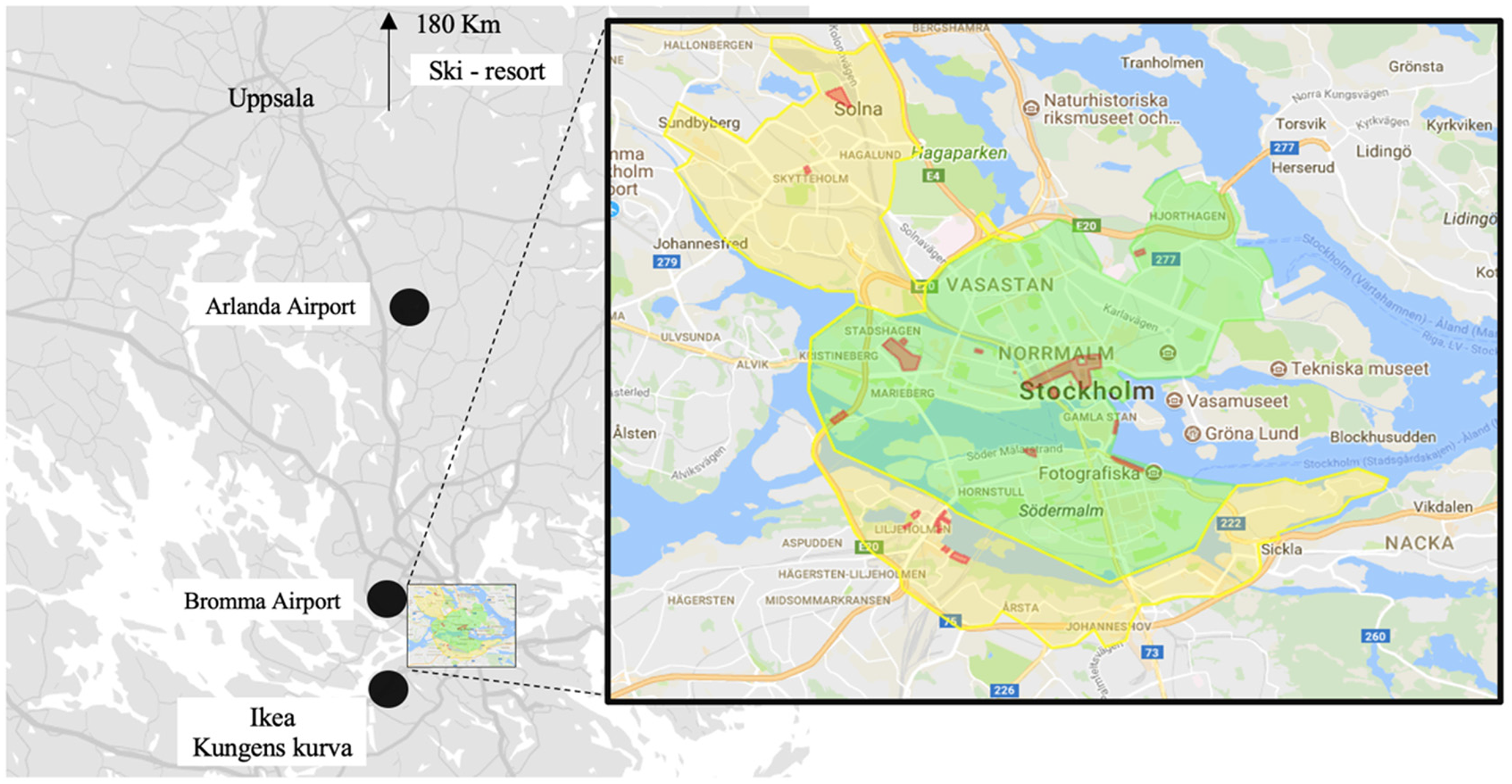
Main DriveNow zone in Stockholm (right). Dispersed DriveNow zones in the Stockholm region (left).
Despite initial appearances, the Zone did not represent a coherent physical space, but only cohered as a result of DriveNow's decisions concerning what the Zone ought to be. There was thus a certain degree of fluidity to the zone: its boundaries changed over time and some changes were temporary in character. For example, in October 2016, the Zone was extended to a suburban Ikea store; in January 2017, the Zone was temporarily extended to a ski resort; in early 2018, one of the two Stockholm Airports was excluded from the Zone and not available for pick-up or drop-off due to low demand. While different marketsites beyond the urban agglomeration “hung together” with the main Zone, they created a Zone archipelago with dispersed island geographies (Figure 1, left). This dispersion and fluidity of marketsites illustrates how space can be used to leverage fluctuations in customer demand.
In fact, through the app DriveNow connected marketsites across national borders in Europe, varying in size and number of vehicles. While cars were to be dropped off within the respective Zones in each country, the app allowed customers to tap into DriveNow's local car sharing schemes under local terms and conditions.
Space was thus an integral part of DriveNow's construction of the access-based market in Stockholm, the contours of which were framed “as needed.” But the spatial qualities also depended on other, often nonmarket-making activities. In fact, there were multiple parallel initiatives through which other actors engaged space in their efforts to economize the inner city. One of these was already in place when DriveNow launched their service: As part of its strategic goal to reduce urban pollution, the City Government introduced an inner-city congestion tax in 2007 to reduce the number of vehicles in central Stockholm (Figure 2). The tax was differentiated depending on the time of day cars entered or exited the taxed zone (SEK 0–35 (€3.50) per border crossing).
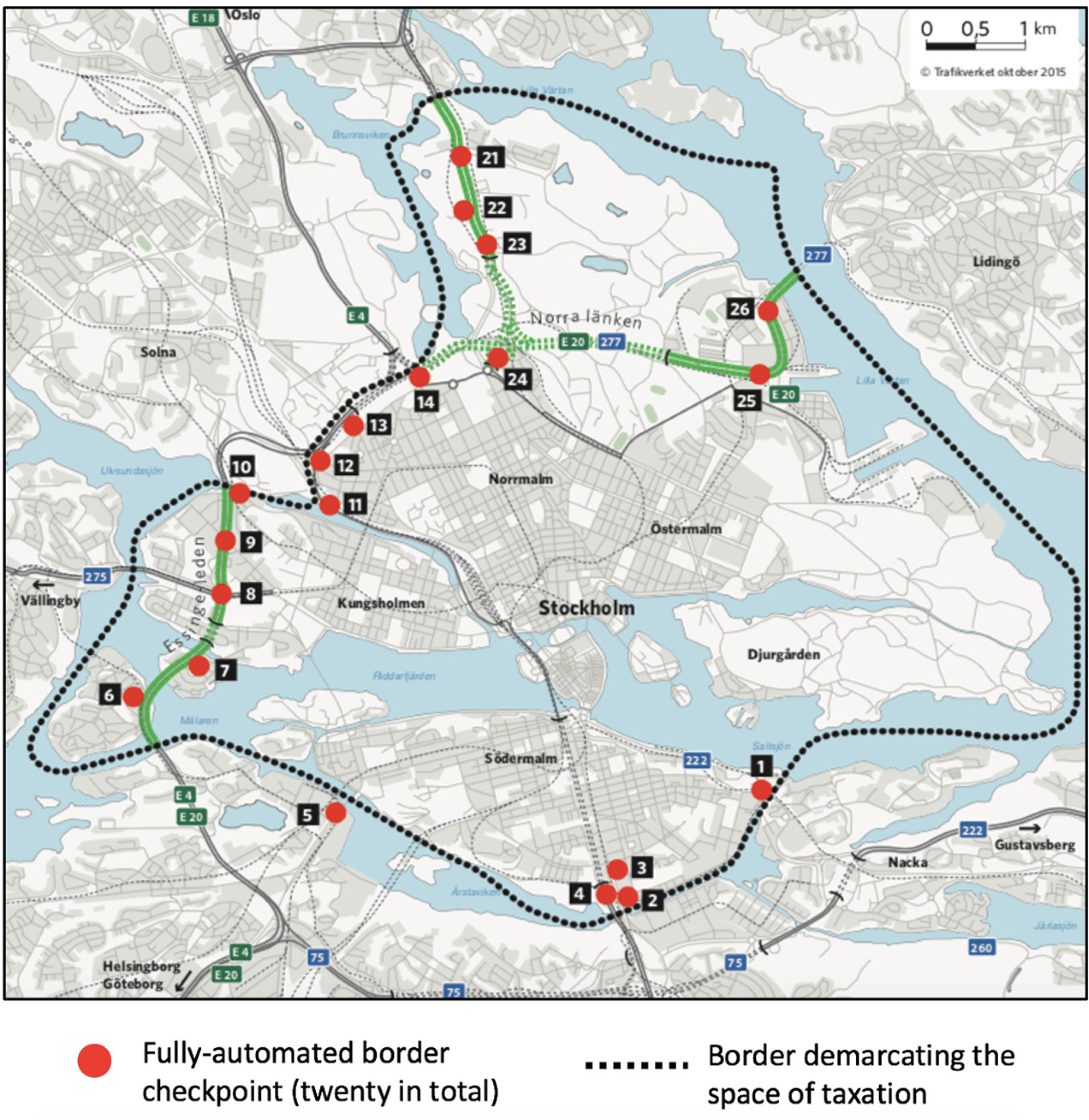
Congestion tax border in Stockholm.
The congestion tax was included in DriveNow's subscription plans and considered “part and parcel” of the access-based market. But since public transportation worked well in the inner city, car sharing became increasingly popular to reach more remote areas beyond the tax border. And that is where the crux of the issue laid: the multiple daily border crossings to reach remote destinations contributed to a growing amount of taxes. Moreover, the extension of the Zone by adding marketsites (above) further increased the border crossings.
To make matters worse, the Transport Agency increased the congestion tax rates in January 2016, a year after DriveNow launched. The agency found that the tax had not achieved the sought-after effect and that congestion had increased between 2006 and 2011. In addition, they needed to finance infrastructural projects in the region, including the Stockholm Bypass Project—a new EU-funded route for the major North–South thoroughfare. While this intervention catered to sustainability objectives linked to macro developments (Agenda 2030), it had direct negative effects on DriveNow. Despite repeated attempts, DriveNow failed to convince the Transport Agency to offer special conditions for shared mobility platforms. In a national newspaper interview, the current mayor of Stockholm (opposition leader at the time) voiced strong concerns about the national government: “They could have considered assigning special parking lots to shared cars or reduced the parking and congestion fees for car sharing. But the Government has been much too passive and has not proposed any legislation in this area.” (Jennervall, 2018). Despite both public and private opposition, the government did not waive the taxes, nor did it seem willing to accommodate any alternative long-term solution.
As noted above, the congestion tax was in place when DriveNow launched and could thus have been more carefully considered by DriveNow. This was not the case, however, for other spatial challenges that surfaced. In 2016, local traffic authorities made two major changes: First, the previously homogeneous parking zone in Stockholm was expanded and segmented. Second, the hours during which parking charges applied were extended (from 9:00 am–5:00 pm to 7:00 am–7:00 pm). These changes were implemented peu à peu between September 2016 and March 2018, precisely coinciding with the period in which DriveNow rolled out its envisioned Zones. They proved deeply problematic for DriveNow.
If we compare the city's parking plan (Figure 3) with the DriveNow Zone (Figure 1), we see that they largely overlap geographically. Interestingly, the city also sought to create an “access space,” but one of access to parking rather than to cars: The city wants to increase accessibility and offer more parking spots because in this area [pointing at the map], all the parking garages used to be empty while the on-street parking was always full. So, now when we introduced the parking fees people tend to move their cars from the street into the garages […] but we don't really know what exactly ‘accessibility’ means, we are kind of working on it. (Interview, Traffic Administration Office, April 2018)
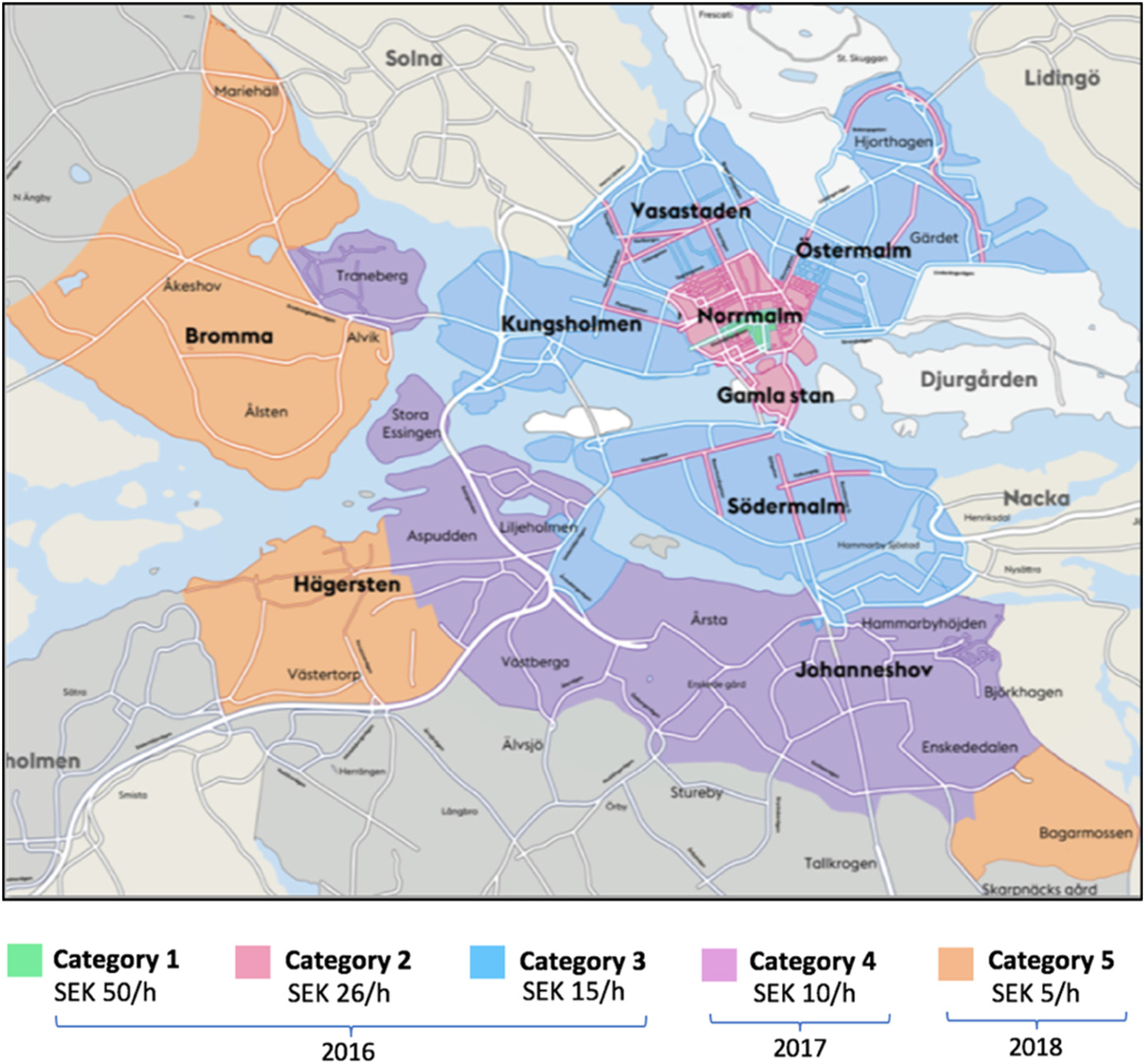
New successive parking plan for Stockholm.
Unlike DriveNow, the City did not seek to create a market per se. Yet, their spatial arrangements relied on market mechanisms (price) to govern behavior. In that sense, motives and devices for configuring the same space were based on different and clashing ideas about economization and about what constituted a sustainable inner city. While DriveNow sought to concentrate its fleet in the core zone to increase access, the parking zones made parking more costly for DriveNow when vehicles were moved from the outer zone to the core zone.
A closer look at the wider geographical context reveals yet another spatial challenge linked to the inherent ambiguity of boundary drawing. The city framed DriveNow as a substitute for public transport, whereas DriveNow positioned itself against taxi and (second) car ownership. A commissioned report by the City Council published in 2017 stated an ambition to evenly distribute access to car sharing across the entire municipality. Specifically, each individual resident was to reach a shared car within a radius of 400 m (equal to the estimated average walking distance to public transport, the main substitute). Since DriveNow delimited its Zone(s) to achieve a critical mass of vehicles in the inner city, this restricted car access in the wider municipal area. A series of Facebook comments by users revealed that both the segmentation of the Zone and its overall size was limiting and bothersome in their daily commutes. Many wanted to utilize DriveNow to reach their workplaces outside the Zone, which caused logistical inconveniences in terms of changing means of transportation at the boundaries; not to forget the “penalty fees” for moving cars from the core to the outer Zone. In a way, the spatial component became a double-edged sword for DriveNow: While the process of zoning had an instant impact on access to cars within the Zone, it did not recognize the recurring flows of people across its border (e.g. as part of their work commute). Moreover, the segmentation of zones led to practical confusion as the boundaries were not clear cut in the app, leading to a series of dysphemisms: “So damn unnecessary with different zones and lots of hidden fees! This was my last ride with you. Easier and cheaper to take a taxi to Solna from town.” (Facebook user, 3 September 2017). It seemed that the construction of a commercial space for car sharing needed careful integration of the Zone with the geographies of existing practices as much as it needed close alignment with the city's long-term plans for the wider municipality.
Parallel, nonmarket enactments of space
While transport policy reforms were deemed essential for the success of car sharing, and the shared mobility market writ large, the decentralization of responsibilities across transport authorities prevented quick improvements. Specifically, the distribution of relevant responsibilities in Stockholm includes the Transport Agency (national level), responsible for the congestion tax and the associated border, the Stockholm Region (county level), responsible for all public transportation (buses, trams, and commuter trains), and the Traffic Administration Office (city level) responsible for the parking plan zone and for monitoring local road safety. While all these agencies wanted a sustainable, congestion-free inner city, the distribution of responsibilities and the specific initiatives undertaken by them led to unexpected clashes and conflicts. An interview with the Traffic Administration Office confirmed this: If you look at the general, overarching strategic goal for Sweden, then you see things like ‘innovation’ or the ‘reduction of climate impacts’. You can see an alignment of goals across all the different levels, but when it comes to how to do things and to achieve the goals, then they diverge wildly. […] We have this separation of power which means that when we think about how we want the traffic flows in the city to be, we always have to think about these other actors. (Interview, April 2018)
In other words, when multiple spatial enactments converge in the same territory (wittingly or not), ideological tensions and practical conflicts are likely. In fact, the distribution of responsibilities has resulted in several overlapping spatiotemporal developments in Stockholm over the last decade sharing a common sustainability objective. In 2010, Stockholm was awarded the very first European Green Capital Award by the European Commission (http://ec.europa.eu). In 2012, as a continuation of prior efforts, the Stockholm Traffic Administration published an “Urban Mobility Strategy” (https://international.stockholm.se). In 2014, the Municipal Assembly of Stockholm approved the “Roadmap for a fossil fuel-free Stockholm 2050,” highlighting the importance of urban transport (http://ec.europa.eu). In 2016, driven by successful achievements and high sustainability ambitions, the City Executive Office issued the “Strategy for a fossil-fuel free Stockholm by 2040” (https://international.stockholm.se). Evidently, there were many overlapping representations of and ideas about how to make Stockholm more sustainable and maintain its position as a pioneering sustainable city.
As a result of this active, loosely affiliated strategizing about space and sustainability Stockholm's urban agglomeration became a political space, in which public and private actors mobilized spatial imaginaries and instrumentalized spatial devices. Space became the object of mobilization, rather than a resource or constraint, by challenging parallel developments in the “space of the other.” For example, the parking plan and congestion system discussed above were not car sharing friendly; they were products of sustainability agendas pursued by local and national authorities that linked to transnational environmental commitments. Unsurprisingly, this provoked discontent on the side of DriveNow, as evidenced in a local op-ed piece: Instead of simplifying urban transport for those that choose car sharing or e-mobility, the city raises inner-city parking costs for car owner […] If the city of Stockholm makes it easier for locals and visitors to share cars, then Stockholm's free parking space will increase. Why not copy the German model were car sharing vehicles enjoy free parking in Berlin and Munich? (Ellsäter, 2016)
From free floating to sinking
In November 2016, the Swedish Environmental Institute released a report suggesting that local authorities should have the right to make available dedicated car sharing spaces in urban environments, just as they can designate bus lanes, taxi stands, and handicap parking. Despite pressure from various camps, including car sharing organizations, little attention had been paid to the challenges caused by vestigial regulatory frameworks. Yet, it wasn't long before this issue and the need for retrofitting reached public discourse: The most important thing is to have car sharing defined. Current legislation covers private cars, taxis and rental cars but we [car sharing organizations] fall outside of its remit. This must be solved before we can, for example, come up with solutions concerning the parking issue in the cities. (Anderberg, 2018).
This statement by DriveNow's competitor Sunfleet concerned laws and bylaws passed decades ago, which still regulated digitalized mobility approaches, such as car sharing. In response to this, a national research institute published a position paper (Olsson and Schnurr, 2018) noting that current regulatory frameworks inhibit the success of car sharing and proposed to introduce new legal definitions and more transparent taxation (especially for peer-to-peer car sharing).
Around the same time, doubts about the profitability and the environmental benefit of free-floating car sharing surfaced in the public press across Europe. In 2018, the German Carsharing Association argued that while stationary car sharing may contribute to transform urban mobility, the free-floating approach does not necessarily reduce congestion as it may cannibalize on public transport. In parallel, BMW's annual report for 2017 revealed that the car sharing division lost about 17 million Euros globally.
As a combined result of these challenges, DriveNow decided to cease operations in Stockholm in 2018 after only 3 years. Since we had signed up for the service and asked to receive press releases and newsletters, we received the following email on 18 July 2018: Dear [Gianluca]
Heavy-heartedly we are forced to announce that we will close down operations in Stockholm on October 31, 2018. Due to an unexpected low demand in Stockholm compared to other DriveNow cities, as well as increased costs for congestion tax and parking, we unfortunately have not been able to achieve the goals required to keep DriveNow's operations in Stockholm.
As alluded to in the email, DriveNow recognized the unexpected interdependencies that emerged from qualifying space as part of its offering; while the physical boundedness of various marketsites allowed for the provision of alternative modes of transport, they were rife with socio-material challenges that proved hard to overcome.
The qualification of space in the marketization of car sharing
The literature on qualification and geographies of marketization helped us pose two interlinked questions about spatiality and markets: (1) how is the qualification process spatially situated? (2) what interdependencies with other calculative spaces are enacted during this process? Both questions concern the role of space in the construction of markets. While the spatial challenges of legal-regulatory structures have been documented (Muellerleile, 2015), the case of DriveNow highlighted alternative uses of space and how they are fundamentally constitutive of both markets and market failures. Below, we address each question in the light of our findings concerning how DriveNow sought to create an alternative, access-based car market by employing various qualification devices in specific microgeographies.
Situating qualification through market devices
DriveNow made space a critical quality in their attempted market for free-floating car sharing, particularly in terms of the spatial proximity and availability of cars. If the cars were difficult to find, DriveNow's services would not really be available. Most extant studies of qualification and the commercial production of space focus on the role of governments (e.g. Chang, 2001; Osborne and Rose, 1999) and civil society organizations (e.g. Wilkinson, 2011) rather than on marketers and commercial actors. Cronin’s (2008) work on the commercial production of space in marketing, and specifically the classification work by the UK outdoor advertising industry, is one of few attempts to fill this gap. It shows how classificatory devices such as consumer research can make space “calculable and hence governable” but does not address the actual qualification of space. Our study shows how DriveNow qualified its spatial domain of action by putting devices in place that framed the market for access-based transport. The overall spatial extension of the market was delimited by the DriveNow Zone, and its subsequent differentiation into three areas directly affected exchanges therein. Qualifying space in the new market involved both intrinsic and extrinsic facets, as stressed by Callon et al. (2002). DriveNow managed the extrinsic facet by equipping customers with a mobile app that allowed them to locate and reserve cars using the interactive map. The intrinsic facet of spatiality was dealt with primarily by designating the Zone and equipping the cars with GPS trackers and digital locks. The case thus supports the contention that market making involves and relies on the success of space making (cf. Hall, 2018) and suggests that focusing on qualification is one way of developing a fuller understanding of this process. In particular, it invites us to think about qualification as a situated process in itself.
Given that qualification is always local and site-specific (Callon et al., 2002), the actual geographical extension of a market hinges on the same (or similar enough) qualification taking place across sites. To expand a market spatially thus requires the successful dissemination of qualification devices performing similarly despite being differently located. To create the new market, DriveNow invested in devices that sought to render it resistant to differences in service availability, regulations, and technical conditions across sites. More specifically, DriveNow did three things.
First, the company constituted its market by joining up marketsites (see Kear, 2018) through a digital, mobile infrastructure that covered both supply and demand. The digital devices employed, including the firm website, the customer app, the GPS tracking, and the digital keys, were all part of the arrangement of devices that supported and structured the consummation of market exchanges in the same manner across these sites. As a further means toward this end, the qualification process was set up to operate at category rather than exemplar level to increase the chances of successful singularization, i.e. attachment of a specific car to a specific customer at a given time and place.
But this infrastructure proved unable to render the market spatially uniform; in particular, supply and demand was unevenly distributed across market space, which reduced the likelihood of exchanges happening. To remedy this, DriveNow employed a second method—that of improving on the market by incentivizing their customers. By granting customers additional credits when parking the cars in the inner zone, and additional costs if they parked outside, the company sought to enlist their customers in spatially rearranging market supply to fit future demand. As highlighted by Stehlin et al. (2020: 5), this mechanism reduces labor intensity for platforms and is not unusual for shared mobility providers. Many actors also adopt a gamified approach “to molding user behavior” by incentivizing parking in specific locations. Both this method and that of putting an infrastructure in place are scale dependent in the sense that they require enough supply, demand, and transactions in the market for the resulting flows to even out. Otherwise, the market will remain spatially variegated rather than spatially uniform.
Under such circumstances, spatiality must somehow be managed “off market” as an organizational problem. To this end, DriveNow employed a third method—that of using staff members to physically move cars between different areas within the Zone to achieve the sought-after spatial matching of supply and demand. While this method could resolve misalignments in the market, it also added significant operational costs, thus contributing to the eventual demise of DriveNow. But as we discuss further below, the failure of DriveNow was not entirely of its own making; several parallel initiatives caused spatial challenges for their access-based market.
These findings relate and add to established notions of “spatial fix” (Harvey, 1981), “territorial fix” (Christophers, 2014), and “mobility fix” (Spinney, 2016). At large, the efforts of DriveNow to marketize free-floating car sharing was an attempt to expand the geography for car sharing to the greater Stockholm area. This aligns it with the general idea of a spatiotemporal fix that enables the continued circulation of capital, as proposed by Harvey (1981) and Jessop (2006). Conversely, the efforts also illustrate the attempted production of an alternative way of moving, i.e. a “mobility fix” as defined by Spinney (2016). Most clearly, though, they reflect what Christophers (2014) calls the active territorialization of markets—how a market is being spatially constituted. Our findings outline one microgeographic strategy pursued by market makers to achieve such ends. However, as our case illustrates, such strategies are pursued and play out in a context of other, interfering spatial projects.
Managing spatial interdependencies: On spatial competition and experiments
The spatial constitution of markets partly depends on general legal regimes, e.g. information policies (Alvarez León, 2018) and antitrust laws (Christophers, 2015). Our case highlights that specific regulatory intervention at national, regional, and local levels also matter for the success of platform-based market-making efforts. Importantly, the spatial regulations affecting DriveNow were not put in place for the sake of enabling an access-based market. Instead, the spatial devices employed by public actors created a “space of the other” (De Certeau, 1986), furthering the political agendas of national and local governments. For example, both the congestion tax and the fee-based parking scheme were introduced to advance sustainable development by reducing the number of cars in the city.
Several alternative spatial qualifications interfered with the market-making efforts of DriveNow, like the congestion tax and parking zones, leading to complex interdependencies between market and nonmarket space. In relation to the “macropolitical economy approaches” that have dominated the geographies of marketization (Wilkinson, 2011: 2015), our study shows that similar agendas may have vastly different implications for the practical use of space at micro level. While previous research has shown that several factors influence the spatial quality of markets, including concerns related to market infrastructure (Muellerleile, 2018) and social conditions (O’Neill, 2019), our study illustrates the importance of taking seriously the spatial competition from nonmarket efforts at space making in the same geographical realm.
Such spatial competition results from multiple uses of the same space, which make for potential interferences. So, how can those interferences be managed? The primary method used in our case was to simply allow alternative uses of space to unfold in parallel. At least, there were few attempts to coordinate how space was made part of different initiatives. The success of this approach depends either on the absence of spatial interferences, or on the use of space being “either/or.” The former applies when a space is capable of durably accommodating multiple uses. The latter applies when spatial enactments compete and one emerges as victorious (e.g. the formation of diagonal paths across lawns in parks). In our case, however, the use of space was rather “both/and,” meaning that spatial interferences were not resolved but persisted and continued to generate negative consequences for the parallel initiatives. In such situations, an alternative approach to spatial competition would be to align different spatial uses through active coordination. This approach is predicated on knowledge of those parallel uses and how they interfere with each other. Since multiple novel uses of space were unfolding in parallel in our case, each with unclear consequences, such knowledge was not readily available and few efforts were made to actively align them.
This links to Callon’s (2009) consideration of markets as in vivo or in vitro experiments to understand how experimental forms contribute to the construction of “instituted spaces” (cf. Berndt et al. 2020). Local government in Stockholm developed elaborate and dedicated models of smart and sustainable cities (in vitro) as part of the work leading up to their (in vivo) congestion tax experiment. Similar to postmarketing surveillance of pharmaceuticals (cf. Muniesa and Callon, 2007), this experiment not only provided new opportunities to monitor traffic flows but also to shape driving behavior. For DriveNow, the business model (in vitro) was conceived and tested in vivo in Munich in 2011. This in vivo experiment was subsequently transported to new locations. These moves compounded the issue of parallel uses of space since local authorities make for highly idiosyncratic settings when it comes to use of space. In short, the relation between the lab and life varies across sites.
The transportation of the DriveNow model to Stockholm thus stands in contrast to Latour's (1986, 1987) notion of “immutable mobiles”—objects that are able to travel without changing and thus rendering specific aspects of reality mobile, presentable, and combinable. Through the circulation of such objects, it becomes possible not only to bring the Amazon Forest into a laboratory, or the European economy into the offices of the ECB in Frankfurt, but also for that lab and for the ECB to act on those entities at a distance. Our case suggests that the spatial extension of DriveNow's market for ridesharing hinged on making it possible for customers to successfully qualify goods both across cities and throughout each designated DriveNow Zone. This required the production and dissemination of one immutably mobile marketsite, which in turn necessitated support, or at least alignment, of local policy. As our case shows, DriveNow failed to establish their proposed marketsite across the designated Stockholm Zone and to integrate the territorial heterogeneity of regulatory and legal regimes, thus making their marketsite mutably mobile.
Concluding remarks
This article has explored how space is made to matter in markets based on DriveNow's attempted creation of an access-based car market in Stockholm. In relation to previous studies on geographies of marketization (Berndt and Boeckler, 2012), we offer two conclusions. First, the qualification of space in market exchange is site-specific; markets are not only “fixed” through geographic expansion (Harvey, 1981) but can be actively territorialized through arrangements that make marketsites “hang together” (Kear, 2018). Second, markets exhibit spatial interdependencies with other market and nonmarket uses of the same space, which require coordination. Such coordination is not necessarily achievable via spatial competition and may require new ways to “mobilize spatial imaginaries” (Boudreau, 2007). The DriveNow case sheds light on how seemingly similar macro goals (e.g. eco-friendly inner cities) are materialized in different ways in the same spatial realm (Knorr Cetina and Bruegger, 2002) and how this in turn triggers a spatial performation struggle (Callon, 2007). While economic geographers have tended to focus on nation states and international bodies as key sites of market regulation (Peck, 2019), our case provides a strong indication to attend to the territory–regulation nexus at multiple scales, notably including the microgeographical.
Reflecting on our findings, notwithstanding the bells and whistles of the digital, knows-no-boundaries sharing economy (Sundararajan, 2016), we note that the intuition of economic geographers concerning the importance of location and accessibility hold up also as digital platforms enter the picture. That said, the observed efforts to requalify economic space did rely heavily on digital devices. As such, our study echoes the recent “digital turn” (Ash et al., 2018) stressing that digital devices influence how markets are constructed. Here, our work complements recent studies of multisided platforms and their effects (Anwar and Graham, 2020; Barratt et al., 2020) by illustrating the heterogeneity of digital market platforms in contemporary society (Richardson, 2020). While Stehlin et al. (2020) suggest digital infrastructures are produced much faster than conventional ones, our study shows the formation of a digitally mediated infrastructure for shared mobility to be highly complex, requiring actors to consider interferences between different uses of space. Our findings support Cohen’s and Shaheen’s (2018) point that the involvement of local government can significantly affect the success or failure of shared mobility, suggesting that this is directly connected to the spatial complexity of access-based markets and the success or failure in configuring market space.
Access-based markets like the one we have studied are special cases where spatiality is a more pressing problem than in many other markets. The generalizability of our findings is thus limited. Still, the number of markets of this kind is growing (e.g. dockless bikes and e-scooter markets, markets for ride-hailing services). Moreover, traditional product markets also face similar spatial challenges albeit less intensely (Wrigley and Lowe, 1996). A case in point is the difficulty for online grocers to achieve the right fit between space and time in their choice of store-based or warehouse-based fulfillments (Murphy, 2003).
Future research should thus explore how social, political, and economic forces contribute to marketization processes in other types of markets to broaden our understanding. Specifically, there is a need to examine how the constitution of market space and spatial competition unfold to better understand how the configuration of space is negotiated when different interests clash, rather than unfold in parallel. In our case, we saw few explicit confrontations between actors; spatial competition was more subtle and sometimes surprising. Attending to how actors quarrel and compromise when public and commercial interests diverge could increase our understanding of marketization and perceived market failures (Geiger and Gross, 2018). Here, the current surge of markets for urban scooters and more complex Mobility-as-a-Service (MaaS) ecosystems seem worthwhile to explore. Such shared mobility platforms are “spatially embedded” (Stehlin et al., 2020) and likely to provoke controversies over how to best inscribe qualities into existing market architectures in spatially confined realms. This geographically sensitive treatment of qualification is central given the growth of access-based markets that hinge on a requalification of objects, such as urban apartments in the market for short-term accommodation (Rossi and Wang, 2020).
Lastly, since such overlapping confrontations are likely to become political (Boudreau, 2007: 2594), the plasticity of market space “necessitates constant relegitimation and reactualization that goes beyond the state.” This means that the distinction between public and private efforts to use and produce market space may hide more than reveal the nature of marketization. Thus, a more nuanced understanding of the (missing) interaction between government-led and market-led qualification processes is needed.
Footnotes
Acknowledgments
We express our gratitude to Örjan Sjöberg who has provided supportive and challenging comments on earlier drafts.
Declaration of conflicting interests
The author(s) declared no potential conflicts of interest with respect to the research, authorship, and/or publication of this article.
Funding
The author(s) disclosed receipt of the following financial support for the research, authorship, and/or publication of this article: This work was supported by the Torsten Söderbergs Stiftelse (grant number E45/15).
