



Abstract
Amid the Covid-19 pandemic, border restrictions intensified, profoundly impacting binational couples and leading to the emergence of the ‘Love is not tourism’ movement. This initiative of 2020–2021, mainly mobilized through digital platforms like the Twitter and Facebook, emphasized the universal human right to love and in several European countries succeeded in gaining the right for unmarried third-country nationals to reunite with their European partners. Drawing from academic frameworks on regimes of mobility, imaginaries, and Maurice Stierl’s ‘resistance as a method’ approach, the article argues that the ‘tourism’ label is a tool for exerting control over undefined categories of migrants, like unmarried partners. Initially developed within political sociology, the notion of resistance seems useful for anthropological research, aiding in the unravelling of cultural imaginaries behind border constraints and their navigation. The explored movement, while challenging traditional conceptions of family and relationships, underscored the evolving interplay of migration, personal ties, and state policy. With a combination of online narratives, interviews, and first-hand participation as primary data, the study also reveals how collective activism further brought transformations surrounding intimate mobility in Europe.
Keywords
Readers might recognize Roland Schmid’s ‘Cross-Border Love’ series, honoured by World Press Photo in 2021 (Photo 1; from Schmid, 2021). The photographer documented the frustration and perseverance of binational couples divided by Covid-19 border restrictions. His series captured the physical borders and the emotional resilience defining human connections. The behaviour of border guards discreetly allowing couples to meet, despite official bans, shows how cultural understandings of love and relationships can challenge strict border control regulations. This aligns with anthropological perspectives on (im)mobilities, highlighting the interplay between societal norms and mobility regimes (Glick Schiller and Salazar, 2013; Salazar and Smart, 2011). Even when immobilized by border controls, individuals find ways to engage in mobility through social interactions, emotions, imaginaries (Salazar, 2010; Salazar and Graburn, 2016: 3–5), and culturally embedded notions of love. A photo from the series ‘Cross-Border Love’ by Roland Schmid. Source: Roland Schmid.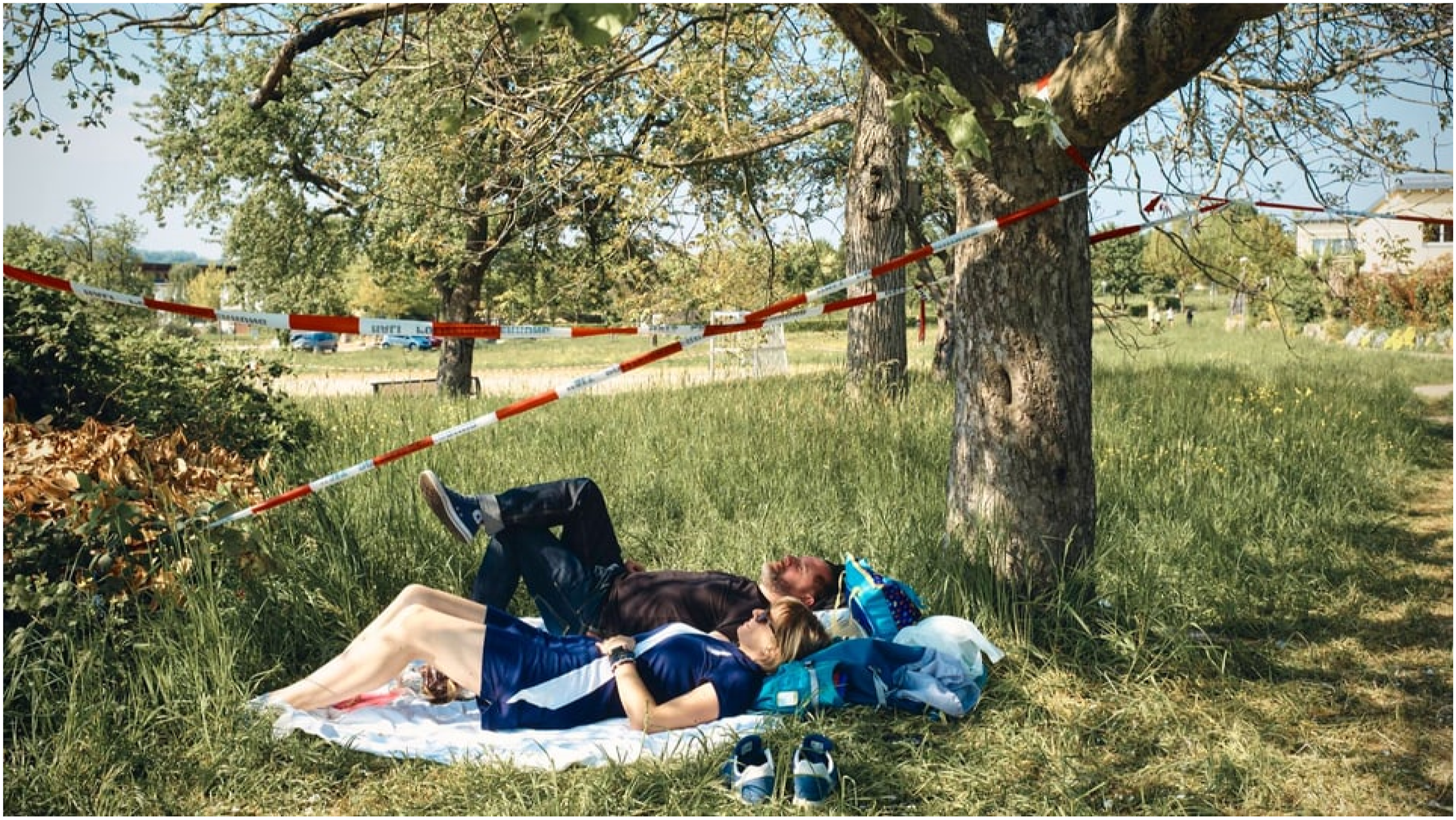
Recognizing that the concept of immobility is relational and does not unavoidably stand in opposition to mobility (Salazar, 2021), in this article I use this concept, which mirrors the notion of ‘involuntary immobility’ developed by Jørgen Carling, where migration aspirations are not matched by the ability to migrate (Carling, 2002). The pandemic added complexity to the migration landscape, with new stringent border policies imposing regimes of (im)mobility on a journey that was already an intricate one for marriage migrants. The intensified European border policies and sharply delineated physical boundaries underscored the stark contrast in mobility rights and privileges, and enforced periods of waiting and uncertainty, which were navigated differently by various groups of migrants. Unlike citizens of neighbouring nations, who sometimes enjoyed intermittent relaxations or exceptions, third-country nationals frequently faced stringent travel bans and prolonged separations, which resulted in fractured familial and romantic relationships. However, in response to these challenges, the ‘Love is not tourism’ social movement 1 (see next section) emerged, advocating for exceptions for binational couples and for the human right to love and to be with loved ones. This grassroots online campaign succeeded in changing policies and provided avenues for reunification of binational couples in several European countries, standing as a striking example of how to navigate immobility (Cangià, 2023) that, at first sight, seemed to be an unrealisable wish in terms of Carling’s aspiration model (Carling, 2002: 5–6). Binational couples recycled the imaginaries of national borders while successfully addressing universal human rights and romantic imaginary.
Applying the notions of ‘immobility’, ‘imaginaries’, and the idea of resistance as method (Stierl, 2019), this article investigates the ‘Love is not tourism’ movement as a visible organized act of resistance against immobility that produced changes beyond power structures concerning mobility and border controls. Central to this article is Maurice Stierl’s perspective on resistance, which, while being developed within political sociology, underscores the agency of people in mobile contexts, highlighting resistance as not just a reaction, but as a proactive engagement with the structures of mobility and immobility.
Resistance in anthropology has long been examined, initially shaped by works like Max Gluckman’s ‘rituals of rebellion’ and Victor Turner’s analysis of liminality, which viewed acts of resistance as temporary releases of social tensions that ultimately preserved social hierarchies (Wright, 2016: 2–3). In the light of anthropological approaches, Stierl’s notion of resistance aligns with contemporary focuses on media, technology, emotional motivations of activists, and the vocabularies of rights and citizenship. It also addresses questions of inequality and state power, echoing older arguments around resistance. In the late 1980s, scholars like Lila Abu-Lughod proposed that resistance should be seen as a diagnostic of power rather than merely oppositional (Abu-Lughod, 1990). Her work with Bedouin women illustrated how acts of resistance reveal the intricate workings of power. For Abu-Lughod, the everyday resistances of Bedouin women, such as secret acts of defiance and subversive poetry, illuminate the complex ways patriarchal power operates. This approach highlights that resistance and power are co-constitutive, each shaping the other. Maurice Stierl views resistance similarly, as embedded within broader socio-political and economic power structures. Inspired by Foucault’s vision of power as pervasive and productive, both Abu-Lughod and Stierl use resistance as a method to understand power relations. Foucault posited that ‘where there is power, there is resistance, and yet, or rather consequently, this resistance is never in a position of exteriority’ (Foucault, 1978: 95–6, cited in Abu-Lughod, 1990: 42).
Stierl introduces novel elements to the concept of resistance, particularly in migration and border struggles in contemporary Europe. He emphasizes migratory dissent, excess, and solidarity as interconnected facets of resistance, confronting evolving border practices within and beyond Europe. Stierl conceptualizes resistance not just as an analytical category but as a method of inquiry, using it to reveal power relations. Resistance is thus seen as navigating the immobility resulting from restrictive border policies. The methodological significance of studying migrant resistance lies in its ability to reveal contemporary forms of European border governance that perpetuate global segregation (Stierl, 2019: 31). Stierl’s approach is instrumental, suggesting that anthropology can enrich its methodologies by exploring how acts of resistance shape and are shaped by mobility regimes.
I argue that while being not a mere reaction, but a ‘catalyst’ and a transformative practice at the same time, ‘Love is not tourism’ illuminated how exclusions and controls are justified and operated in European border management, sparking other reverberations. For example, the movement highlighted how the ‘tourism’ label was strategically used to control and restrict the mobility of unmarried binational couples, treating them as ‘non-essential travellers’ despite their distinct personal motivations and commitments. This strategic labelling underscored the power dynamics inherent in categorizing and controlling different forms of mobility. While the European states’ definitions of marriage and family usually did not take into account the broader variety of relationships existing in human cultures (Moret et al., 2021), in 2020, during the Covid-19 pandemic, and, in an exception to the usual practice, and thanks to the resonance of the ‘Love is not tourism’ movement, marginalized unregistered couples were treated as ‘legitimate families’ and non-married partners from third countries stopped being categorized as ‘tourists’, or ‘non-essential travellers’. This shift marked a significant departure from long-standing practices of the border regime, challenging conventional boundaries and imaginaries of intimacy and tourism within European border policies. Thus, this article also captures how European politicians at the time of the Covid-19 pandemic used the imaginaries of tourism to the West, as the most secure and desirable destination, to constrain intimate mobility. In response, couples had to address the widely shared cognitive schemas of love and relationships to overcome isolation and immobility.
Last but not least is the final issue to be addressed: whether ‘Love is not tourism’ can be categorized as migrant resistance. Activists within the movement did not refer to themselves or their partners as migrants. This choice of terminology likely aimed to avoid the negative connotations associated with the migrant label, and to emphasize specific issues related to travel restrictions rather than broader migratory control. Instead, the movement highlighted the personal and emotional aspects of separation, seeking broader public sympathy and support, and sidestepping politicized debates surrounding migration. European citizens were the most active participants, advocating for their rights and those of their non-European partners to mobility. The movement linked the right to mobility for their partners to EU citizens’ rights to form families. Family migration is seen as a right of legal insiders – citizens or residents with certain rights by birth or residence, including living with one’s family (Bonjour and Kraler, 2015: 1412). This focus on reunification and family formation, rather than challenging broader migration policies, distinguishes it from typical migrant resistance movements.
Nonetheless, the Russian-speaking groups I studied comprised non-EU citizens struggling for their mobility rights and often for reunification through marriage. Although these individuals do not refer to themselves as marriage migrants, academic literature classifies them under this label. Many successful stories within the movement ended with official marriages and subsequent reunifications in Europe, implicitly defending the rights of binational couples and marriage migrants, and highlighting the legal and social recognition of their relationships. This aspect complicates categorizing the movement purely as non-migrant resistance. While not strictly migrant resistance, it includes elements of resistance against restrictive mobility controls and advocates for personal and relational freedoms, resonating with broader migrant struggles. Thus, I use ‘migrant’ in quote marks to reflect these nuances.
Data and methodology
The research for this article is drawn from a range of sources. Initially, the data comprised 18 semi-structured interviews with spouses from several post-Soviet states and/or their German partners, which were collected as part of my PhD project. 2 As the large portion of my research occurred during the Covid-19 pandemic, ‘Love is not tourism’ naturally attracted my scholarly attention. Within my sample was one couple in which the woman from Ukraine, named Liliya, utilized this opportunity to come to Germany, marry her partner there, and subsequently remain in the country. Other cases provided crucial insights into how border regimes operated for married and unmarried couples before the pandemic.
To gather data for this article, I targeted couples consisting of German citizens and citizens from those former Soviet Union countries whose citizens require visas to enter the EU, through various websites, Facebook groups, and Telegram chats dedicated to the movement. I explored narratives from loveisnottourism.org, loveisnottourism.weebly.com, thelovevisa.com, and protest-binational.de, and monitored social media content using search and analysis tools from within these networks, and services like Popsters. Most of the sources provided broader context, such as the website https://loveisnottourism.weebly.com, which featured 87 cases of German third-country couples, with only two involving partners from post-Soviet states (Russia and Kazakhstan).
In addition to analysing open-access stories focused on border control, I conducted 10 structured online interviews with unmarried partners from post-Soviet countries who intended to or managed to successfully reunite with their significant others in various European countries (Germany, Latvia, Sweden, Finland, France), and led numerous informal online conversations. I used Russian-speaking Facebook and Telegram groups such as ‘Love without Borders’ and ‘Germany Team’ for more specific insights. The private Facebook group ‘Love without Borders’ had over 3,000 members from Russian-speaking third countries, while the Telegram channel ‘Germany Team’, which focused on travel restrictions between Russia and Germany, peaked at 1,500 followers before declining once travel bans were lifted. These group discussions greatly informed this article.
On 31 July 2021, I participated in the ‘Love is not tourism’ demonstration in Frankfurt, Germany, complementing my study with participant observation. The small size of the demonstration minimized the chance of meeting partners from post-Soviet countries; instead, I conversed with partners of nationals from China, Brazil and Tanzania, and engaged with speakers who made speeches at the Frankfurt registry office, whom I cite in this article.
The global-scale social movement ‘Love is not tourism’
Within a year of the first case of coronavirus being reported in late 2019, 194 countries adopted sweeping measures at international borders, such as travel restrictions, enhanced visa requirements, digital health passports or mandatory quarantines. The European Union introduced a complete border closure, distinguishing between ‘essential’ and ‘non-essential’ travel, which meant a selective reopening for ‘essential’ entry and labour (Shiraef et al., 2021). While ‘essential’ travel was defined differently by national authorities and encompassed a broad range of instances, from diplomats to fruit and vegetable pickers, tourism 3 was unanimously deemed a ‘non-essential’ reason for entry into the EU during the Covid-19 pandemic. This distinction ‘normalized’ stuckedness for tourists (Salazar, 2021: 14), and it is in this context that the relative power of travellers to shape immobility practices came to the fore.
In particular, it turned out that the label ‘non-essential’ was being applied to unmarried partners of European citizens from third countries who needed visas, and to third-country nationals whose visa-free travel privileges were suspended during the pandemic (from the US, Australia, Japan, etc.). Despite their long-distance relationships, these couples typically met through regular travel in Europe, their home countries, or visa-free countries. These meetings varied in frequency and duration but were rarely purely virtual. The pandemic disrupted this arrangement, making it impossible for unmarried couples to see each other or to reunite. Married couples, who were separated by the long visa-processing times needed for reunification in Europe at the time of the pandemic, also found themselves deprioritized. For instance, the German state only allowed married couples to apply for temporary visas 4 again at the same time as unmarried couples, and after students, fruit and vegetable pickers 5 and other ‘essential’ travellers already had this opportunity.
Consequently, some couples faced prolonged separations and stagnation in terms of both their physical mobility and their social status. This led to significant hardships, such as impeding relationships, partners being unable to be present for the birth of their children, or missing significant life events, which indeed resulted in fractured familial and romantic relationships. These couples found themselves in a unique predicament. Despite their relationships, they were classified under the broad category of ‘non-essential’ travellers, making their visits to or reunification in Europe for the purpose of marriage impossible.
It was a grievance of global significance that led to the launch of two hashtags, #LoveIsNotTourism and #LoveIsEssential, in early June 2020. It is unknown who launched them first, but soon they went viral on Twitter and Facebook. On Twitter, there were around 140 community or personal/couple accounts containing the mentioned hashtags, with hundreds of posts using them (Twitter does not provide the exact count). On Facebook, there are over 34,000 posts with the hashtag #loveisnottourism, which was uniquely designed for this movement, providing a clear picture of the trend. Additionally, there are over 14,000 posts containing the hashtag #LoveIsEssential. The new hashtags acted as a space where the supporters documented personal cases of unjust separation of unregistered couples by the border regimes. Typical stories featured images of couples’ faces, or symbols associated with relationships such as a wedding dress or a calendar with crossed-out days representing the countdown to their next meeting, accompanied by a few sentences summarizing their struggles: 6 ‘Me and my daughter want to see my husband open the borders and the embassies. 7 months apart it’s so sad to see my daughter getting older without seeing her father’ (a tweet @AbulailaMays, 5 October 2020); ‘I counted days for nothing. It hurts so much that I’m not able to fly to my boyfriend this week. I’m in so much pain. This torture needs an end’ (a tweet @germangirlxoxo, 20 July 2020).
The photos of couples accompanying the posts and love stories gave an overview of the demographics, showing a diverse group of individuals. The couples were mostly heterosexual but also included homosexual relationships, were racially diverse, and were predominantly young – in their 20s and early 30s – and of similar ages. However, they were not limited to these characteristics, as the movement included people of various ages and backgrounds, reflecting a broad spectrum of relationships impacted by the travel restrictions.
The Facebook groups were diverse, both private and public. The largest one, ‘Love is not tourism’, administered by anonymous partners in separated binational relationships, had 44,300 members. This group initiated organized actions, including online protests, writing to politicians, creating unified stories, and launching trending campaigns. They provided instructions and attracted volunteers. The main demand, echoed in smaller groups, was to open borders for binational couples with health checks similar to those for other travellers. Posts emphasized the members’ commitment to fulfilling health checks and quarantine requirements.
Smaller communities ranged from several dozen members to 12,240 in ‘Love is not tourism Thailand’. These groups addressed travel bans in both European and third countries, struggling to ease entry requirements in both directions while following safety measures to allow couples to reunite. Among the third countries that were frequently called upon to lift bans for unmarried partners were the US, Japan, Thailand, the Philippines and Malaysia. Despite their efforts, these calls were largely unsuccessful until the overall restrictions were eased. It is important to note that, during the first four months of the pandemic, many European partners’ home countries imposed strict travel bans against leaving the countries. However, by the time the ‘Love is not tourism’ movement was launched in July 2020, many third countries, including Russia, Ukraine, Moldova, Kazakhstan, Armenia, Uzbekistan, the USA, UAE and the Philippines, allowed citizens to leave if they met the entry requirements of their destination country, such as presenting a negative PCR test or proof of vaccination.
Simultaneously, social media users tagged politicians in their countries and the EU, expressing anger and disappointment, and urging the lifting of travel bans for couples. German accounts related to ‘Love is not tourism’ demanded policy changes and criticized the government’s handling of restrictions. For example, the Twitter account ‘#LoveIsNotTourism separated by CDU/CSU+SPD’ criticized the coalition government. The website protest-binational.de advocated for easing travel restrictions, provided legal advice, and shared personal stories. In the Facebook group ‘Love is not tourism Germany’, the most engaging posts (between 6% and 12% ER [engagement rate]) were about protests, including a notable solo protest by then-deputy of the German Parliament Pascal Meiser. Moritz Körner, a German MEP, also addressed the European Commission, requesting the lifting of restrictions for binational couples. In Germany the ‘Love is not tourism’ campaign went beyond online activism and took people onto the streets on three occasions, in Hamburg, Berlin and Frankfurt (Photo 2). Demonstration ‘Love is not tourism’ in Frankfurt, July 2021. The banner says ‘Love knows no borders’. Source: Photo by the author.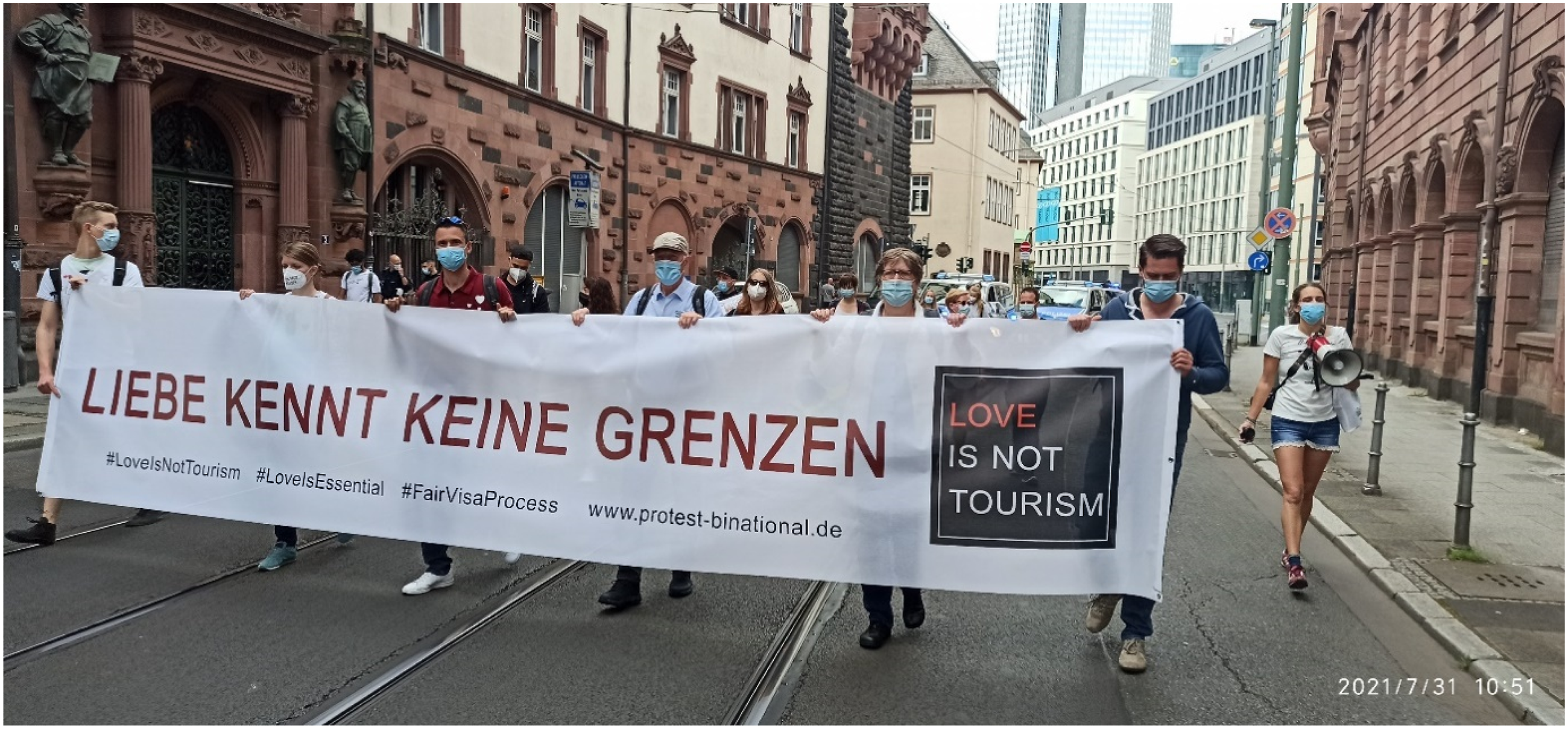
Petitions were initiated in various countries to appeal to their respective governments. Liliya, a Ukrainian woman who had utilized the ‘Love is not tourism’ movement to meet her partner in Germany, reflected about the beginning of the campaign as follows: There was a petition asking why students can cross borders during quarantine, but people in love cannot. In principle, students can find a new university if it’s really necessary. But finding a partner is harder than finding a university. (Interview with Liliya, 25 October 2020)
Liliya questions the values and priorities inherent in the border policies during the pandemic. The campaign’s activism was founded on the notion of inconsistency in European border policies and gradually challenged them, primarily through digital mobilization and creation of accounts and groups on social media. In July 2020, the website loveisnottourism.org was launched by the German IT-specialist Felix Urbasik, which operated as a wiki, where everyone could extend the website by adding useful information. It provided the latest updates from various countries and featured a forum where individuals could pose questions and seek advice and help from someone more experienced.
This public outcry finally prompted political elites in the European Union to reconsider and ease travel restrictions for binational couples. Moritz Körner’s official letter to the European Commission urged them to ‘give back the desperately needed comfort to all families in Europe’ (Körner, 2020). In response, Ylva Johansson, the European Commissioner for Home Affairs, stated that the EU should ‘apply as wide a definition of partnerships as possible’ (Johansson, 2020). The first country to ease coronavirus travel restrictions was Denmark. It was followed by Norway, the Netherlands, Austria, Belgium, Switzerland, France, Germany, Finland, Sweden, Iceland, Italy and Lithuania. The visa that the separated unmarried binational couples could apply for during the pandemic was nicknamed the ‘sweetheart visa’ or ‘love visa’. In fact, it was a regular Type C Schengen visa with a validity period of no more than 90 days in a half a year. The requirements for this visa were eliminated once borders reopened after the pandemic, with an easing of the regulations followed by a reversion to the usual procedures. Dedicated Facebook groups and Telegram channels continued to be filled with success and failure stories of reunification, as well as discussions about bureaucratic procedures and complications, until September 2021.
Diagnostics of the ‘tourism’ paradigm
Members of our group have been sick or hospitalised without their partner at their bedside, are pregnant and don’t know if the father will be able to hold their hands during labour or see their newborn, are struggling with their mental health and have lost their support system, are dealing with financial problems or poverty and are separated from the person they normally turn to. This is inhumane. This is unfair. (Facebook community ‘Love is not tourism’)
The quotation is from the Facebook group description and provides a detailed account of the tangible hardships and emotional challenges faced by individuals separated from their partners due to border restrictions. The effects of border restrictions are not static but deeply relational and vary depending on personal circumstances. For instance, a border might be an inconvenience for a tourist but can signify an insurmountable obstacle and source of emotional pain for a separated binational couple. The myriad challenges listed in the passage – hospitalizations without partners, the emotional strain of potential childbirth without the partner present, mental health struggles, and financial distress – showcase the urgencies and complexities that can exist within and because of borders.
Using ‘resistance as a method’, involves seeing migration struggles as ‘catalysts’, mechanisms that illuminate the underlying power dynamics in society (Stierl, 2019: 15–17). Stierl views resistances as ‘analytics of power’: When understood as such, enactments of migrant resistance help us trace the mechanics of the European border regime and its extensive repertoire of violence. Only when we know the regime can we work towards its undoing. (Stierl, 2019: 3)
The ‘Love is not tourism’ movement challenged power dynamics in mobility governance arising from pandemic-induced policies that created mobility inequalities. The description of the Facebook group further elucidates the sentiment: We feel abandoned by our governments. We are not tourists. We do not wish to travel and sightsee. We have one destination: the arms of our loved ones. We are willing to go into quarantine for however long it takes. We are willing to get tested as many times as it takes. (Facebook community ‘Love is not tourism’)
From this point of view, it is evident that while the activists are willing to comply with health protocols, their primary contention is over mobility restrictions. The movement served as a platform to challenge broader structural forces and forms of violence, such as the categorization of essential versus non-essential travel. The statements ‘We are not tourists’ and ‘We do not wish to travel and sightsee’ draw a clear line between binational couples and holidaymakers. By asserting their non-tourist status, these couples aimed to dispel any imaginaries that might have lumped them in with casual travellers. This distinction underscores the social and political dimensions of mobility, where the reasons behind it are as critical as the act of moving itself. By asserting their non-tourist status, binational couples were claiming their right to mobility based on personal connections and responsibilities, rather than leisure or discretion, thus highlighting the diverse contexts and justifications for mobility in a globalized world. This situation demonstrates that (im)mobilities are not merely about physical movement but are deeply intertwined with issues of rights, recognition, and resistance against restrictive and often arbitrary categorizations.
Regulatory exemptions to travel restrictions during the Covid-19 pandemic in Europe included categories such as those seeking medical care, healthcare professionals, researchers, seamen, diplomats, journalists, students, harvest gatherers, repatriates, and various other mobile groups. Excluded from these exemptions were tourists and – what is notable – married binational couples. One of my respondents Anna shared her experiences in this regard: Despite the fact that we got married in March [2020], the consulate refused to consider my documents under the pretext of ‘the coronavirus’. Then, starting from July, the first appointment slots to submit documents for visa began to appear. However, the slots were only for students and late expatriates; for married couples, the slots were only available starting from August. We literally felt like prisoners in some sort of concentration camp! Because we were simply prohibited from seeing each other…. We booked an appointment for July. Upon arriving at the consulate, I pleaded for them [consulate employees] to accept my documents. They reprimanded me for ‘taking someone else’s slot (a student one) and leaving someone without a visa’, but since I had already ‘occupied that slot’, they reluctantly accepted my documents. (Private message on Facebook, 27 October 2020)
After a long process of writing to the German consulate and collecting some additional documents, which were not in the original list of required documents, Anna received her visa in late September 2020. The deliberate under-prioritization is evident in the distinction made between appointment slots for students and late expatriates versus those for any couples. The delay until August 2020 for married couples suggests an implicit bureaucratic judgement about which categories of relationship or purposes of migration are more pressing or valid in relation to others. The consulate’s initial refusal to consider the individual’s documents, citing ‘the coronavirus’ as a pretext, highlights how border policies and decisions can significantly contribute to involuntary immobility. On the other hand, despite the intense scrutiny and stringent stipulations, the eventual acceptance of the documents after Anna ‘occupied that slot’ implies a degree of flexibility or arbitrariness in the implementation of the policies. This flexibility raises questions about the rigidity of the regulations and the necessity of such restrictive measures in the first place, especially when the emotional well-being of individuals is at stake. The encounter with consulate employees illustrates a direct negotiation of immobility, where Anna pleads for the acceptance of her documents despite the procedural breach. This interaction reveals power dynamics at play and the potential for individual agency to alter outcomes within the constraints of bureaucratic border regime.
Third-country nationals have long faced extraterritorial border control for EU countries through visa applications, particularly the broad, short-term Schengen visa (type C), which covers various travellers with differing purposes, validity periods, and conditions of entry. Most countries did not recognize visiting an unregistered partner as a valid purpose for travel. Furthermore, this purpose was often delegitimized by consulate employees who assessed it from the perspective of a ‘migratory risk’ (Infantino, 2019; Zampagni, 2016: 260). The vague concept of ‘migratory risk’ refers to the ambiguous idea that an applicant might use the guise of tourism, study, business, medical treatment, or family visit as a pretext to settle in the EU, either regularly or irregularly. Young, unmarried individuals were frequently subjected to these bordering practices and labelled as being ‘high migratory risk’ (Infantino, 2019: 189, 191, 200), often due to concerns over potential marriages with European citizens and subsequent strains on the welfare system.
Couples were well aware that consulate employees
7
harboured these securitization concerns. In response, within this limited scope of manoeuvrability, they adopted alternative navigation techniques. The following quote from Oksana, who met Alexander, a 35-year-old German national with a migration background from Russia, when she was 23, illustrates the asymmetrical power relations that exist between migrants from third countries, their European partners, and European states: Before marriage I came to him three times on a tourist visa. We were afraid that I would not obtain the visa, so his father wrote me the letters of commitment as if I was visiting his sister. […] Honestly, I had never met her. We did not even know each other. But when I was asked [at the consulate] who I was going to visit, I said I was going to see Sveta, she ‘was my friend’, and her father invited me. […] I was very nervous […] I had to tell the untruth wittingly in this situation. (Interview with Oksana, 10 September 2020)
This passage also highlights, how binational couples opt for the safest means to enter a country to reduce the risk of being separated, exemplifying micro-level resistance to power structures (Hess, 2017). However, when the new ‘pandemic’ border regulations came into force and the label ‘non-essential traveller’, that is, ‘tourist’, became a tool for the European border regime to regulate and, in certain instances, immobilize potential migrants, the unmarried couples’ habitual navigation became ineffective.
Despite recognizing unregistered binational couples, European states historically did not designate visits from third-country partners as ‘essential’, often categorizing them as tourism. For the public, ‘tourism’ evokes leisure and brief stays, perceived as ‘non-essential’. This classification was strategic, as tourists are seen as transient visitors, expected to leave after a short sojourn. By grouping individuals under the ‘tourist’ banner, authorities can wield considerable administrative control, thereby determining who gets to visit the EU, for what duration, and under what terms. The ‘Love is not tourism’ movement challenged this system, pushing back against its inherent inequities and, remarkably, achieved significant success in reshaping perceptions and policies. Unmarried partners from third countries, who could transparently declare their travel purpose and did not need to hide, discovered themselves as legal subjects. Unregistered relationships thus gained the potential to be legally formalized; third-country nationals came to be viewed with less suspicion in relation to the internal security and welfare considerations of the EU; and the application of the assessment criterion of ‘migratory risk’ became pointless.
Further implications of the resistance
The primary document most countries required to allow unregistered couples to reunite during the pandemic was a joint declaration attesting to their long-term intimate relationship. This requirement varied by country, especially in terms of the relationship’s duration, the number of in-person meetings before the application, and additional supporting documents. For instance, Italy and the Netherlands emphasized the ‘exclusivity’ of the relationship, thereby excluding polyamorous relationships (Government of the Netherlands, 2020, for the Netherlands; VFS Global, 2021, for Italy). Italy also mandated verification of the relationship by a third party, such as family or friends, suggesting that ‘genuine’ love should be publicly acknowledged. Belgium 8 placed importance on cohabitation or long-lasting (more than one year) ‘affectionate relationships’, which effectively excluded many new long-distance couples. In Germany, the primary criterion was that the relationship must be long-term and akin to a family bond. Initially, an in-person meeting in Germany was mandatory, but this stipulation was later adjusted to accommodate meetings that had occurred elsewhere (BMI, 2020b).
A deeper exploration of entry requirements and declaration forms across various countries would offer valuable insights into the diverse interpretations of ‘love’ and ‘family’ across European nations. It is pertinent to highlight that, by recognizing unregistered binational couples’ rights as equivalent to those of registered families, European authorities ventured into the nuanced realms of ‘marriage’, ‘family’, and ‘love’. Maïté Maskens (2021) refers to ‘true love’ as a bureaucratic utopia set against the dystopia of unrestricted movement. In other words, ‘true love’ acts as one of the filtering tools of (im)mobility regimes. The pandemic amplified this tension.
Moreover, the phenomenon of unregistered partners who are citizens of different countries is twofold and needs to be scrutinized in both aspects. It combines cohabitation, levels of which vary a great deal across European countries (Sánchez Gassen and Perelli-Harris, 2015), and long-distance relationship. By allowing unregistered partners to reunite, European states partially set aside ‘moral gatekeeping’, viewing marginalized unregistered couples as legitimate families, and equating their relationships with marriages. For people like Oksana and Alexander, it could mean that they would not have to conceal their partnership and act behind the back of the German state. The latest edition of the German Foreign Office’s Visumhandbuch (‘Visa Manual’) even included a new paragraph on how to process visa applications of the ‘loved ones’ (Nahestehende) of EU citizens who are third-country nationals, indicating that their applications should be prioritized (Visumhandbuch, 2023: 9–10). In contrast, this information was missing in the version of 2020 (Visumhandbuch, 2020). Nevertheless, this does not mean that all states admitted unregistered relationships without fuss and framed them positively. The Swiss government, for instance, labelled the rules of entry for unmarried couples as exemptions in ‘the category of personal hardship’ (Portal of the Swiss government, 2020). Furthermore, not all forms of long-distance relationship were tolerated. Denmark, Norway 9 and Germany, for example, requested the applicants to state that their ‘relationship is not based solely on oral, written or electronic communication’ (Embassy of Romania in Denmark, 2020 for Denmark; BMI, 2020b for Germany). This meant that partners in virtual relationships were excluded from the ‘love visa’ programme.
The small July 2021 demonstration in Frankfurt was supported by the Germany-wide non-profit ‘Union of Binational Families and Partnerships’ and representatives of Die Linke 10 and Volt. 11 Notably, speakers addressing marriage migration and border regimes were second-generation migrants from binational families. They extended the ‘Love is not tourism’ agenda, advocating for the dismantling of the nuclear family concept. Pearl Hahn (Die Linke) highlighted her mother’s inability to visit during the pandemic and called for policies allowing extended-family members to visit German residents or citizens under family-based admission provisions.
On the other hand, European border control strategies and techniques also underwent transformations by adjusting to the new realities. The softening of policies did not mean that the previous filtering strategies of extraterritorial control were abandoned. Married and unmarried binational couples continued to share their stories of how they navigated through the consular checks (see Zelenskaia and Götz, 2023). Border officers at the airports, who have always been important figures in border control, gained additional discretionary power over unmarried binational couples, while the regular marriage migrants I had interviewed were not subjected to this form of control. The new grammar of communication with the new border agents was created in social media groups, where the travelling partners shared information. Unmarried couples were advised to pre-emptively write detailed letters to airport police or frontier guards before flying to Germany to ‘test’ if entry would be permitted: The request should be logical and well-formulated: ‘Hello, we have been in a partnership for a certain duration, my partner is planning to fly through your airport, she has a specific visa, issued on this particular date. Could you please review the attached documents and let us know if we meet all the entry requirements?’ Attach to the email [all possible relevant documents, including joint photos in front of German landmarks] documents. When should you write the email? It doesn’t matter – everyone gets different responses. So once you’ve gathered your folder – write, wait for a response, and keep it on hand. (germanyteam.ru, about the program ‘Love is not tourism’)
This quotation underscores the growing responsibility of border officers in data collection and decision-making. They were directly tasked by binational couples with handling a substantial amount of personal information and rendering nuanced decisions. The variability in responses (‘everyone gets different responses’) implies that border officers had a degree of discretion in their decision-making. This could be viewed as an increase in their power, as they could make judgements based on a combination of hard evidence and subjective interpretation.
The travelling partners reported varying patterns of control on the part of airport border officers. At the airports of Munich, Berlin, Frankfurt, Cologne and some other German cities, they requested confirmation of the intimate relationships in the form of joint photos and online correspondence, checked the cash available, and even conducted mini-interviews trying to unveil the ‘real’ intentions of travelling: At the passport control in Munich [airport], I said that I came to my boyfriend. The border guard asked me: ‘What is your second purpose of travelling, aside from [what you told me]?’ (Entry in a Telegram chat, 18 June 2021)
An airport might be understood as a conventional border location, but during the pandemic there was a shift of functions regarding family migrants – normally carried out by extraterritorial border agents – towards to the border guards. To a certain extent, border guards became as influential as consular workers because they were authorized to refuse entry, deport and prevent third-country nationals entering the EU in the future.
In summary, navigating immobility during the pandemic highlights the relational nature of mobility, intertwined with socio-political constructs of legitimacy. It reveals the tension between individual agency and structural constraints, where the desire for intimate relationships challenges the immobility enforced by nation-states.
Conclusion
Taking resistance as an analytical starting point, this article contributes to development of the (im)mobilities concept. Amid the pandemic’s regulatory adjustments the stuckedness of partners separated by borders was not just a physical condition (immobility) but also a psychological and socio-political state, affecting marriage migrants’ and European citizens’ sense of agency and identity. Navigating involuntary immobility through (migrant) resistance is an active, imaginative process that involves addressing one’s conceptions of love and fairness.
While seeing (migrant) resistance as an important navigational effort in coping with involuntary immobility, I also sought to unfold the underlying power structures of the European border regime. Integrating Maurice Stierl’s approach from political sociology into anthropological research offered a more nuanced and dynamic understanding of resistance. It moves beyond viewing resistance as a temporary or purely oppositional act and instead recognizes it as a method that can reveal underlying power structures and contribute to social transformation. This approach addresses the critiques of traditional anthropology by providing tools to analyse and interpret the complexities of modern resistance movements, particularly those emerging in response to evolving migration policies and border regimes.
Declaring tourism a ‘non-essential’ reason for entry to the EU during the Covid-19 pandemic exposed how binational couples were often conveniently categorized under the ‘tourism’ label, despite their distinct motivations and circumstances, causing their involuntary immobility. The ‘Love is not tourism’ movement navigated the European mobility regime by tapping into an almost universally recognized sentiment – the intrinsic human yearning for connection and intimacy. One of the main hashtags of the campaign #LoveIsEssential foregrounded the innate human right to love and be loved, challenging the categorization of binational couples’ desire to be together as ‘non-essential’. Through touching personal stories, the campaign intertwined the deeply personal with the political and amplified the impact and relatability of the resistance.
The movement’s uniqueness lies in its intertwining of two usually disparate narratives: the rights of European citizens and, implicitly, the rights of foreigners. It could be argued that the movement strategically avoided the ‘migrant’ label while distancing itself from ‘tourism’ as well. This choice likely reflects a deliberate attempt to navigate the negative connotations and restrictive implications associated with the term ‘migrant’. By framing their demands around reunification rights, the movement sought to garner broader public sympathy and avoid the politicized and contentious debates often linked with migration issues. While migrants are often depicted as the ‘Other’ in public discourse, the ‘Love is not tourism’ movement blurred this imaginary, presenting a united front where European citizens actively voiced the struggles and rights of third-country nationals. However, in doing so, they were also asserting their own rights – their rights to love, to have a family, and to choose their partners without state interference. Many within the movement were driven by an immediate personal stake in challenging the border regime, aiming to reunite with their loved ones. This intertwining of personal motivations with broader solidarity encapsulates the movement’s intricate blend of self-interest and collective welfare.
The questioning of clear-cut categories is fundamental to understanding the resistance of binational couples. It spotlighted the implications of seemingly benign bureaucratic labels during the pandemic. Central to this was the problematic tag of ‘tourism’ in the context of border controls and entry permissions. The European states’ classification of tourism as ‘non-essential’ travel not only restricted leisure travellers but also inadvertently targeted those, like binational couples, who did not really fit into the traditional category of tourists. Unmarried couples were particularly affected by the new policies and excluded from mobility because their love relationships had been de facto framed as tourism and performed within the tourism space. The tourism label carried imaginaries of temporality and triviality, suggesting these visits lacked gravity or long-term dedication. This was a stark contrast to the lived realities of binational couples, for whom every visit was a cherished moment in an ongoing commitment. For binational couples, routinely categorized as ‘tourists’, the shadow of the ‘migratory risk’ loomed large. Border agents, armed with this imaginary, acted as gatekeepers, perpetually suspicious of potential deceit hidden beneath Schengen visa applications. Caught in this bind, many couples felt compelled to adopt a cloak-and-dagger approach, concealing their relationships under the more palatable and less suspicious guise of ‘tourism’. While a tourist, in the bureaucratic imagination, was someone transient and without long-term plans to stay, a partner in a binational relationship was seen through the lens of potential permanence, and thus as a threat. Consequently, couples often hid their true motivations, playing into the ‘tourist’ label, even as it belied the depth, seriousness, and commitment of their relationship. This subterfuge became their reluctantly adopted strategy, their means of sidestepping the watchfulness of a system that seemed determined to keep them apart. The small change of ‘the system’ towards a less strict practice of control during the Covid-19 pandemic can be regarded as a result of a collective resistance or navigational effort. Thus, actors’ engagement in practice seems to have transformed the agenda of border bureaucracy by fighting for a ‘loophole’, whether this exists only for the time of the Covid-19 crisis or turns out to be the start of a sustained opening of the externalised border for non-married couples as well.
It is important to acknowledge that this analysis may simplify the complexity of resistance by framing it mainly as a state-versus-individual dynamic. Future research should delve deeper into the multifaceted nature of resistance, including the broader politics of mobility control within Germany and the EU, and public opinion on travel restrictions for public health reasons. Investigating these societal attitudes could reveal additional layers of complexity in the ways resistance movements are perceived and contested.
Footnotes
Declaration of conflicting interests
The author(s) declared no potential conflicts of interest with respect to the research, authorship, and/or publication of this article.
Funding
The author(s) disclosed receipt of the following financial support for the research, authorship, and/or publication of this article: Deutsche Forschungsgemeinschaft, SFB 1369.
