



Abstract
This article addresses the complex ways in which poor urban women’s educational and training needs are embedded in official discourses of capacity creation and are constructed in opposition to their community and kinship networks, an aspect that is very often overlooked when such programmes are designed. It argues that this oversight is not a coincidence, as neoliberal policies and discourses of empowerment construct young women as ‘subjects of capacity’. Where they are addressed directly, young women are framed as the single, autonomous subjects of liberalism who, once enabled, overcome ‘traditional’ kin and community attachments. Based on the ethnographic study of vocational training for beauticians provided by an Indian NGO, the article argues that such interventions are geared towards ‘community development’ and therefore reference broader social landscapes, but that the participants in training see themselves and the process as part of, rather than as opposed to, kin and community obligations. While education and training are more often than not conceived as stand-alone projects offering young women a way into employment and the labour market, the article foregrounds the class-based limits of such workist approaches and the entanglements between body work, caste/class, and histories of feminized poverty. It demonstrates how young women from lower-caste and lower-class backgrounds see opportunities in the beauty industry mainly as supporting their roles as responsible daughters, future wives and daughters-in-law realized within the complex economies of marginal urban communities. They are also acutely aware that while the actual work of the beautician allows some access to the world of ‘professional’ modern and classed notions of femininity and, arguably, a more dignified workplace than in domestic service, the pitfalls of an industry built on gendered, racialized and classist inclusions and hierarchies are noted too. Critiquing the mainstream feminist focus on access to the labour market, the article argues that young women are fully aware of their own precarious relationship with ideals of neoliberal constructs of autonomous subjectivities promoted by the state and its agents.
Keywords
Introduction
In December 2019 I attended a Christmas party my friend Erika organized in the informal school and women’s centre she had founded in the 1990s.
1
The Centre, as I will refer to it, started out in her flat but today occupies a spacious three-storey house located in an affluent residential area of south Kolkata. Erika, a trained social worker from Germany, initially set up the Centre to ensure girls from the shantytowns lining the nearby railway track would be enabled to complete secondary schooling through remedial classes. These proved to be very popular and since then, the Centre’s programme has expanded massively, addressing a whole set of issues that affect the lives of women across the life course. Activities range from tutorials for children up to class 9 to a creche facility for their working mothers, mother and child nutrition training groups, extracurricular activities including computer skills, yoga, and dance as well as vocational training for young women. As Erika explained, first came the children, then their mothers, then the youths. In line with the priorities of donor agencies, the programmes focusing on young women’s skill development and empowerment followed on from tuition during secondary school and are directly associated with policy foci on young women. These programmes aim at enabling the participants to acquire additional skills beyond schooling to enter the labour market and at the Centre a new course for beauticians had been launched two years earlier with the objective to train young women for employment in salons. On the day of the Christmas party, I chatted with one of the teachers about a group of female students in their late teens, who performed a number of sketches. It turned out that most of them had been taking part in the course and Doris their teacher invited me to participate in the sessions in exchange for volunteering as a ‘model’ for their soon-to-be held final exam.
Neoliberal visions: Girls’ empowerment through education and training
The Centre’s focus on getting young urban women into employment and the transformative impact of jobs on individual as well as collective well-being feeds into two distinct, but not necessarily unrelated discourses. On the one hand the humanist idea, put forward in liberal feminism, that interventions should allow women access to education and employment in order to make them into fully rational agentive authors of their lives and, second, that ‘empowerment’ can be reduced to participation in the labour market. As Batliwala (2007) notes, Indian feminists understood ‘women’s empowerment’ earlier as a simultaneous critique of ideologies, social relations, political representation, and economics. However, as Ferguson (2015) and others have shown, current discourses promote employment as the road out of poverty and towards liberation from patriarchal domination, which is narrowly associated with kin and community. As part of this rewriting, programmes directed towards entry into the labour market have become linked to idioms of autonomy and freedom, and market relations in themselves are charged with agency, while the transactional differentials and therefore effects of waged work are downplayed. Consequently, Cornwall et al. (2007) have defined the ideological stance that female ‘empowerment’ relies on access to paid work and entrepreneurial selves as one of many feminist development fables. The latest reiteration of this approach has put young women in the global South into the spotlight, promoting a ‘can do’ attitude that fits well with what Gooptu (2013), among others, has argued represents appropriately modern femininity mobilized around ideas about individual responsibility as a precondition for collective social mobility.
The rhetoric that links paid work to freedom has a long-standing history in European thought about capitalism and, as Weeks (2011) has argued, feminists of different political persuasions have inherited this ‘workism’ mode of reasoning. Structural constraints are thereby limited to patriarchal relationships among kin, within the home and the community, and are to be overcome through the liberating effect of waged labour. In its neoliberal reiteration, this discourse focuses on waged work as enabling a femininity based on a celebration of youth and consumer citizenship, framed by economies of desire centred around the ideology of female agency, which have a global reach. As Gill and Scharff point out, ‘questions of agency have been of particular concern in postfeminist and neoliberal contexts in which women (particularly young women) are often presented as autonomous, agentic, and empowered subjects’ (Gill and Scharff, 2011: 9). Like them, McRobbie (2009) argues that such ‘girl power’ femininity links waged work to notions of ‘freedom’ and autonomy through consumerism as part of self-creation. Other sites of subjectivity, for example the family and education, are thereby subsumed into the larger project: If education remains the privileged space within the countries of the affluent West for promulgating female participation, the recent attempts on the part of government to create more direct links between education and employment by emphasizing work experience, internships, employability, and enterprise culture, have particular resonance for young women. Right across a range of recent studies of young women’s self identity it is apparent that occupational status has become an overriding factor in the presentation of self. (McRobbie, 2009: 77)
I have explored elsewhere the way notions of ‘professionalism’ are embedded in the reorganization of gender relations around middle-class femininity and consumer citizenship via the creation of a family home (Donner, 2020; see also Clark, 2016). Others, including Freeman (1993), have emphasized how the feminization of clerical work, especially at the lower end of the IT-revolution where back office and data-entry jobs are globally located, creates specific notions around grooming as an outward sign of an inner professional attitude as part of gendered workers’ identities. For poor women in the global South, critics of development have pointed out that this discourse depends on a very specific notion of gendered circulations of imagery, knowledge, and responsibilities (Wilson, 2013). In this context it is worth noting that the reduction of more critical and complex feminist concepts of agency and empowerment to a rhetoric of education, careers and self-fashioning has probably been most strongly felt in development discourses, which build on earlier programmes aimed at ‘mainstreaming women’, not least through the support of economic activities. 2 As Kar (2020), among others, has shown, poor women’s incorporation into financial markets via self-help groups and microcredit is seen as beneficial to the women concerned, their communities, and the nation, and combines the aim of ‘empowerment’ with the goal of ‘poverty alleviation’ (Hickel, 2014). 3 But critics, including Chalkin (2015), suggest such an emphasis on ‘smart economics’ has made young women from the global South subject to global publics in what has been labelled the ‘Girl Effect’ (Shain, 2013) – for example in Nike’s advertisements, featuring mostly female athletes of colour and launched to great fanfare, winning an Oscar later (see examples in Hengeveld 2016) – whereby they have become entangled in complex webs of interests and power relations (Chand, 2016).
The focus in this article is on young Indian working-class women, who are expected to enter the growing service sector and, within it, the beauty industry, which links poor young women’s training to the aspirational, groomed lifestyles of a global middle class. Body work, including beauty service work, nursing, prostitution, and care work, as authors like Ehrenreich and Hochschild (1993a) and Wolkowitz (2006) suggest, represents not only one of the most obvious forms of gendered labour in current consumer societies but also brings some fundamental questions about feminist theorizations of labour and neoliberal restructuring into sharp focus.
Much has been written about the highly gendered and racialized care sector in affluent global cities (e.g. Ehrenreich and Hochschild, 1993b), which relies heavily on female migrant workers, and ethnographies of the beauty industry (Clarke, 2016; Kang, 2010) use this template to situate ‘aesthetic’ labour at the intersection of gender, migration, and race in metropolitan contexts (Liebelt, 2016b). As Wolkowitz (2006: 146) shows, body work links disciplining discourses related to making respectable gendered selves to the disciplining of workers’ bodies. Body work, including beauty work, has been framed as care work, which is highly racialized, gendered and class-based, as ethnographies have shown (see Sharma and Black, 1999 on the UK and Kang, 2010 on the US; also Kikon and Karlsson, 2019). However, very little has been written on how such occupations and the associated politics of gendered labour play out beyond the global North and, with reference to India, much of the critical scholarship on contemporary urban female workers has focused on the IT sector and business process outsourcing industries (BPOs), with notable exceptions like Gooptu’s (2013) study of retail workers in Kolkata and recent work on migrant service sector labourers, for instance in the hospitality industry (Kikon and Karlsson, 2019).
Based on the ethnographic study of beautician training provided by an Indian NGO this article links such broader structural frameworks to the way young women, who are seen as beneficiaries of such interventions, make sense of vocational training and waged work in a highly feminized industry. In the following sections I will address how education, training and jobs are not conceived as stand-alone projects offering young women a way into employment and the labour market, but aspects of their life that constitute the class-based limits of such workism-based approaches (Weeks, 2011). The article will use the example of young women from lower-caste and lower-class backgrounds to discuss the way ‘opportunities’ offered by the market are appropriated in relation to, rather than instead of, kin roles as responsible daughters, future wives and daughters-in-law and are realized within the complex economies of marginal urban communities.
Vocational training for young women: History and government policy
Interventions aiming at the integration of young South Asian women into the labour market through vocational training date back to early colonial discourses on the liberating effect of female education promoted by reformers, first wave feminists, and the colonial state (Liddle and Joshi, 1995; Majumdar, 1987). The impact of such efforts on the subcontinent has nowhere been more influential than in the former province of Bengal, where female education became a major theme in reformers’ and nationalist circles (Engels, 1996). Up until the 1920s, such interventions focused exclusively on making middle-class women better mothers and have been well-documented (Southard, 1995; Walsh, 2004), with young women from respectable families being employed in the ‘women’s sphere’ of education and trained as doctors to treat female patients. The issue of education and training for working-class women was only embraced in the late colonial period and, Engels (1996: 182) suggests, such initiatives driven by nationalist organizations remained marginal. However, arguments favouring an integration of education and vocational training were put forward in the Abbott-Wood report (1936/7), the Wardha scheme (1937) and the Sargent report on education in India (1944), and simultaneously aimed at ameliorating unemployment among the ‘educated’ classes, while also addressing the lack of income among poorer communities. After independence, vocational training schemes were integrated into the five-year plans but remained marginal to the overall planning efforts directed towards literacy, secondary schooling, and college education. These priorities are reflected in the proliferation of secondary schooling and the rise of higher education, but were accompanied by the persistent problem of graduate unemployment throughout the 1970s, 1980s, and 1990s. Vocational training was largely left to NGOs as a matter of ‘supporting’ households in dire need of an income.
Very recently, the Twelfth Five Year Plan 2012–17 (Planning Commission, Government of India, 2013) and the New Education Policy for India published in 2020 (Ministry of Human Resource Development, 2020) explicitly mentioned vocational training as a need to be addressed. The lack of training was identified as a source of underemployment and a host of economic problems and the ministry concerned advocated for a concerted effort to enable skills development within the post-liberalization economic framework. Based on predicted demographic change, including lower birthrates, ageing baby boomers, and higher life expectancy, the plan focused on the ‘knowledge economy’ (Ghadially, 2007: 253–254). The resulting schemes envisaged two years of training integrated into twelve years of schooling, but recognized the need to provide specific programmes for ‘dropouts’, the role of private–public partnerships and a need for systematic certification. In its announcement, the Ministry of Human Resource Development (2020) provided more detail and advocated ‘non-traditional’ vocational training for women (Planning Commission, Government of India, 2013) and gender-specific programmes with a flexible approach to schooling and training focusing on services: The option of open schooling needs to be strengthened so that rural labour, artisans, and others in petty jobs in villages and urban slums achieve some learning equivalency in order to enable them to continue in community polytechnics, part-time community colleges, Jan Shikshan Sansthan (JSS) and accredited Skill Knowledge Providers (SKPs) to pursue secondary education and acquire upgraded vocational skills. Those who have dropped out before completing the elementary stage need opportunities for education and certification in a flexible manner. (Planning Commission, Government of India, 2013: 60)
In addition to these programmes, government agents suggested that vocational training should be institutionalized at secondary school level and be covered by the existing National Vocational Education Qualifications Framework (NVEQF): The revised scheme has been designed to address the weaknesses identified in the current system of vocational education. The salient components of the revised scheme include (i) strengthening of existing schools imparting vocational education; (ii) establishing new schools; (iii) in-service teacher training of seven days for existing teachers; (iv) 30-day induction course for new teachers and (v) support to private schools in PPP mode and support to NGOs for carrying out innovative practices. (Planning Commission, Government of India, 2013: 79)
In the last decade skills and training have received increased attention from policy makers, who focus on the one hand on the provision of incomes as a matter of national economic interest, while emphasizing the alleged levelling effect of skills that enable autonomy and social mobility (Gooptu, 2013). The current list of official training courses produced by regional centres and promoted by the related ministry includes ‘cosmetology’ as one option taken by trainees, and funds were distributed to encourage NGOs to run similar courses from the mid-2000s onwards (Ministry of Skills Development and Entrepreneurship, 2020). Aiming at the ‘upliftment’ of whole communities, such programmes seek to address poor women’s lack of income and control over household budgets, while acknowledging that working mothers are prepared to invest heavily in their children’s education. Agents like NGOs also noted that daughters supported their mother’s income-generating activities (Care, 2017) and, in a self-supporting circuit of gendered responsibilization, those funds would be redeployed to enable girls’ education. Consequently, NGOs often combine microcredit schemes for senior women with training for younger women. In this context, a focus on livelihoods through beauty work training is expected to generate income for the whole family, while raising gender equality in the home as Kolkata-based NGO Tiljala SHED, argues: One of our girls Madhu Shaw who belongs to a very conservative Hindu family from Bihar is now earning between Rs.10,000 to 12,000 a month. She dropped out of the school and was a member of the Gyan Azhar Library. Tiljala SHED staff motivated her to join the course. After much hesitation and fighting with her family, she joined and was the topper of the batch with 95% marks. She is now earning and contributing to the family. Her father sells Sattu on a roadside cart and now she earns much more than her father and she has now equal respect like her brother in the family. (Tiljala SHED, n.d.)
However, while schooling up to secondary level is widely available across India, and West Bengal has an extensive secondary education network, further training for the service sector beyond IT, and training in female professional occupations like nursing and hospitality is almost entirely absent from the state system. Thus, the ‘innovative practices’ of NGOs cited above remain desperately needed, given that, in spite of proclamations about rethinking official provision for vocational training, the courses certified by the Government of West Bengal State Council of Technical and Vocational Education and Skill Development 4 remain overtly academic and private training centres are financially inaccessible for students like Doris’s trainees, to whom we will turn now.
Disciplinary regimes: Training and education
Returning to the Centre after New Year I found my young interlocutors with Doris, a trained German hairdresser and expat, who conducted her sessions in fluent Bengali. While the trainees practised different techniques, she cultivated the air of a headmistress, and explained, for example, how to prep for a manicure or the application of foundation, using one of the students as a model. Though learning by doing was officially the core of what was taught, most of the three-hour session was spent correcting the young women’s general demeanour rather than focusing on their practical skills. Special attention was given to their appearance and movements, and she commented extensively when one of the students was stooping too low over a hand or slouching her back, or when they chatted among themselves while working on a ‘client’s’ (my) face. They were also told off when the equipment was not ready, and the student had to get up and rummage through boxes of make-up while the ‘client’ was waiting. Much emphasis was also put on the order of treatments, from the preparation of tools, warm water, and prepared chairs, to the minute detail of the right point to put the kettle on. The different steps of the procedures were framed in terms of hygiene and cleanliness, aspects of which Doris focused on and insisted lay at the heart of what the students had to be taught. Though Doris clearly had a good relationship with the ‘girls’, it was obvious that she found their outward appearance, language, and general behaviour needed altering in order to make them into suitably skilled potential ‘employees’ in a salon. And during the sessions Doris herself aimed at modelling the values she wanted to imbue through her perfectly groomed exterior: her salwar kameez indicated that she was a professional working woman, her careful make-up, coloured hair and the bangles of a Bengali Hindu wife indexed respectability and middle-class values. In contrast, the young women who had been selected for the course and had paid a very nominal enrolment fee, stemmed from the shantytown (squatted for decades but not officially regularized) along the nearby suburban railway tracks (see Figure 1). Squatter settlement along the suburban railway track, south Kolkata. Source: Author photo, 2017. Aged between 17 and 25, at least two of them had been part of tuition groups at the Centre from kindergarten onwards. All but two were Hindu Bengali speakers, three were married, and one had a son, while two others were visibly pregnant at the time. The lesson took place in an airy and meticulously clean room, the young women working in pairs, with some seated on chairs (‘customers’) and others on low stools (the ‘beauticians’). While they busied themselves with the task set before lunch, a manicure, and a pedicure, I had a chance to talk to them about the course and their families but also to listen to their light-hearted banter and gossip.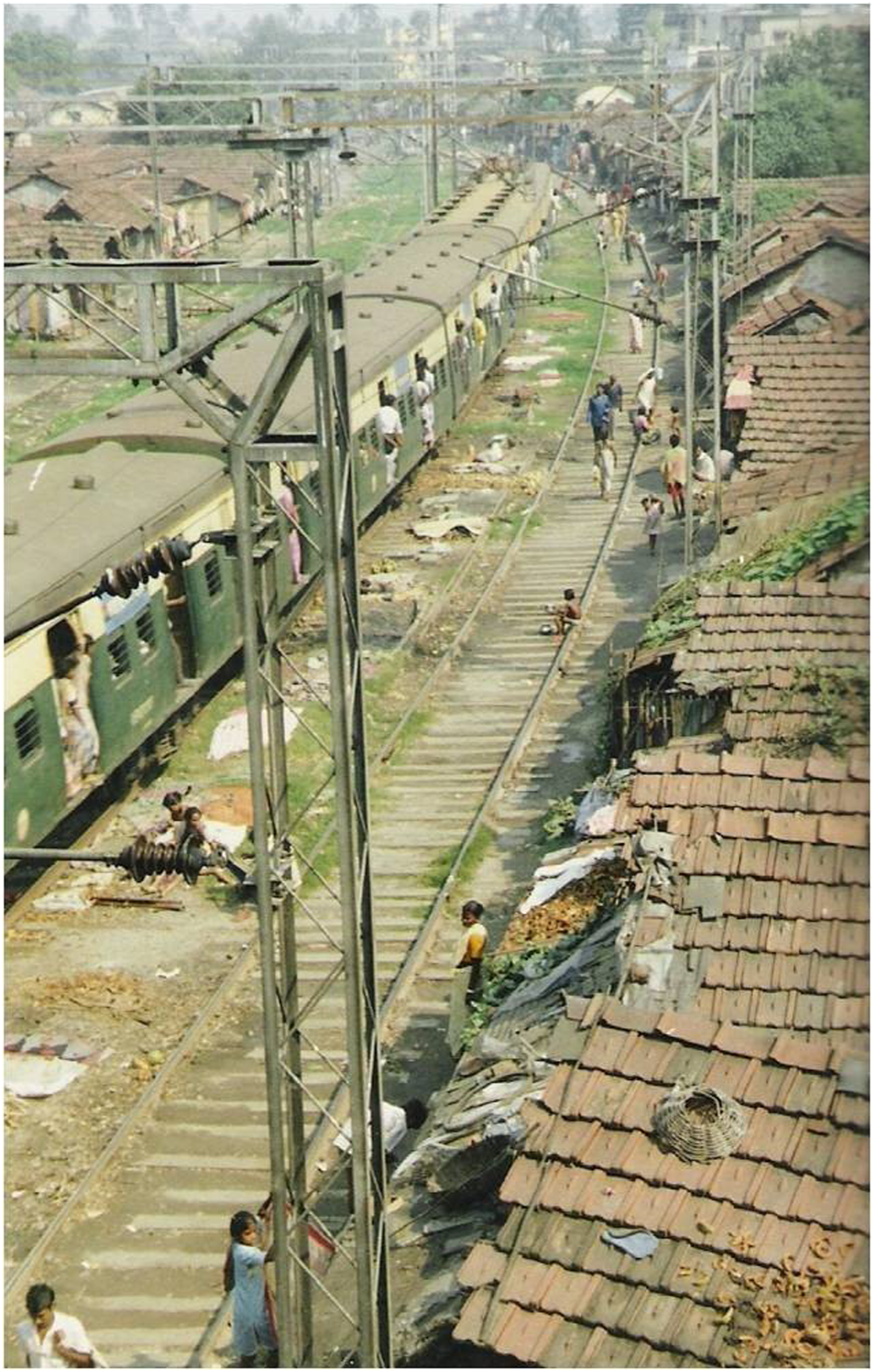
The course was very clearly structured, and these were the final revision sessions before the ‘exam’, during which the trainees would have to do a full bridal make-up unassisted and within a given timeframe. A manicure was part of this task, and most of the young women were aware of the desired result but struggled to maintain Doris’s high standards of hygiene and orderly proceedings, all neatly spelt out on lists they had copied into their exercise books. As Doris explained to me, morphing all of the above factors into a smooth ‘professional’ performance, and working within a given timeframe was as important as the final results. However, while some of her pupils were concentrating hard on the tasks set, silently working, others were less interested in good grades but enjoyed banter and played with the products for most of the time. As it turned out, these performances of ‘carelessness’ hid a real concern about passing the final exam as many of those taking the class had not been successful in the first round a couple of months earlier. Outwardly, it appeared that for these young women, gaining the skills required to work as a beautician was worth sacrificing time for and subjugating themselves to the rigid disciplinary regime presided over by their teacher.
In our conversations, as well as the wider discussions I have had with staff working in similar NGOs over the years, it was clear that training young women for the job market was a priority, and that poor, urban young women were seen as lacking ‘skills’ that made them employable. Like the teachers of hospitality trainees in north Bengal who figure in Kikon and Karlsson’s (2019) ethnography, staff employed by NGOs often portrayed the young trainees as rough and affected negatively by their social and spatial environment. They were conceived as in need of guidance in appropriate comportment, taste, and ‘professional’ behaviours, crucial for the service sector (see also Markiewicz, 2017). Earlier, training imparted at the Centre had largely focused on handicrafts sold through networks of middle-class patrons, but the beauticians’ course was understood to have different objectives and value by students as well as staff at the Centre. Seen in terms of viable and desirable livelihoods it had been – at least initially – oversubscribed in the two years it had been running and Doris could be selective in her intake. She chose those students she felt were most likely to ‘see it through to the end’. But while the staff expected the course would bring these young women into local salons, thereby empowering them through access to the labour market, those staying on for the duration of the course had multiple other reasons to attend. They agreed that women could benefit from an opportunity to earn, preferably in a female-only environment. Furthermore, to them, the work of a beautician was crucially marked as different from their mothers’ domestic service jobs, but they were also aware that joining the workforce would lead to new demands and responsibilities. When I asked about preferred jobs, young women held their lack of education responsible for the limited opportunities available to them and indicated that training as a beautician symbolized their connection to affluent middle-class lifestyles they saw all around them. And while they thought of their training as a valuable skill set, rather than work in a salon they felt it enabled short-term exchanges of services in the community. Such transactions included ‘helping with bridal make-up’ and were presented as an opportunity but, as we will see, they did not automatically promote aspirations towards a future radically different from their present.
As Wolkowitz (2006) suggests, body work is often considered to be of low status. In this specific context it is associated with long-standing histories of caste-based marginalization related to notions of pollution caused by bodily contact and the degrading regimes based on such occupational discrimination. However, specific kinds of labour that create and maintain bodies fit for ‘professional’ middle-class lifestyles are today proliferating globally, and may be associated with workers’ more positive status (see also Liebelt, 2016a, 2016b). In India, this has opened opportunities in the form of parlours, salons and gyms that have been added to older forms of almost exclusively female or feminized jobs broadly concerned with bodies and care, such as domestic service, midwifery and nursing, available to young Indian women from marginal urban backgrounds. My young interlocutors were excited about the association, if only theoretical, between work as a beautician, middle-class lifestyles and the glamour attributed to make-up artists in the film industry – all of which they cited as the imagery of professionalism (Donner, 2020). Body beautification in the form of cosmetics and ‘treatments’ was clearly marked as a form of capital (Liebelt, 2016b; Talukdar, 2013) indicating social and economic standing and urbane, metropolitan lifestyles, even in small-town Bengal. However, the immediate draw of the beautician course was the way it allowed them to disassociate themselves from their mothers’ experience as domestic workers in middle-class homes. These mothers had subsidized their daughters’ education until their late teens, allowing them to study, paying for school uniforms and tuition, and thereby enacting the widely agreed belief that children have a right to education, and that this would provide avenues for upward mobility (see also Alber 2023). Their mothers’ lived experience had taught their daughters to look down at domestic service as demeaning and undignified, in spite of the fact that it is generally reasonably well-paid. Regionally, other body work is assessed similarly, as the example of Ray’s interlocutors demonstrates, who preferred low-grade nursing jobs in hospitals to domestic work and nursing at home (Ray, 2019). Regarding the status of beauty work, Otis (2016) suggests, with reference to cosmetics sales personnel, that it is often only a variation on female proletarian labour, but it may still signify superior conditions and self-improvement. As one of the students put it, to work in someone else’s house cleaning dishes and doing the laundry was not the way she wanted to spend her life. The refusal to take on domestic work in a middle-class home was also a way to shun the responsibility that comes with providing a steady income for the wider family in the form of regular wages, which would ultimately be spent on necessary expenses for siblings, parents, and spouses, which was not what she had in mind for herself.
I first encountered the draw of beautician jobs in the 1990s, when I worked in a conservative Central Calcutta neighbourhood, with mostly Bengali Hindu middle-class families. In these homes, young women attended school up until class 12, and a ‘beautician’ course could be used to bridge the gap between matriculation and marriage, but based on strongly held values, these better-off affluent Hindu families would not consider paid employment for their daughters, which was commonly taken up by daughters from neighbouring Christian households. In the intervening years I have worked with two young women who were employed in salons, who both came from single-parent families, and their experience as beauty workers engaging in other kinds of body work, including escort services and prostitution, confirmed public discourses about the industry prevalent at the time and circulating still today. 5 Both referred to their single mother’s situation as an explanation for their own need to work in the industry and, while clearly aware that salon work was not a job suitable for an educated young middle-class woman, they were proud to be able to support their families in this way. As Ray points out with reference to similar moralizing stereotypes about nursing as a profession in Bengali middle-class discourse, working-class women, whose status would be associated with lower-caste backgrounds in middle-class discourses, are not easily able to transcend sexualized notions of their bodies and implications of allegedly ‘loose’ sexual practices by performing respectability through becoming ‘professional’ working women in the same way as their middle-class counterparts can (Ray, 2019: 189).
Concerns about the ambiguous status of beauticians were shared by Doris, who also arranged placements in neighbourhood salons (see Figure 2). While most arrangements were only short term, she was actively selecting unisex women-only parlours and did not include male grooming practices in her training. By not teaching her wards those basic techniques, and by arranging placements herself, she attempted to reframe the moral status of the job of a ‘beautician’ and its common, negative class- and caste-based associations, albeit along middle-class lines. Furthermore, she argued that her lessons did not only focus on techniques, but that she had to encourage the trainees to learn about the tastes of middle-class customers, and to behave like skilled service providers. In her view, a disciplined worker’s body would help young women to replicate a respectable professional persona. Neighbourhood parlour in south Kolkata. Source: Author photo, 2019.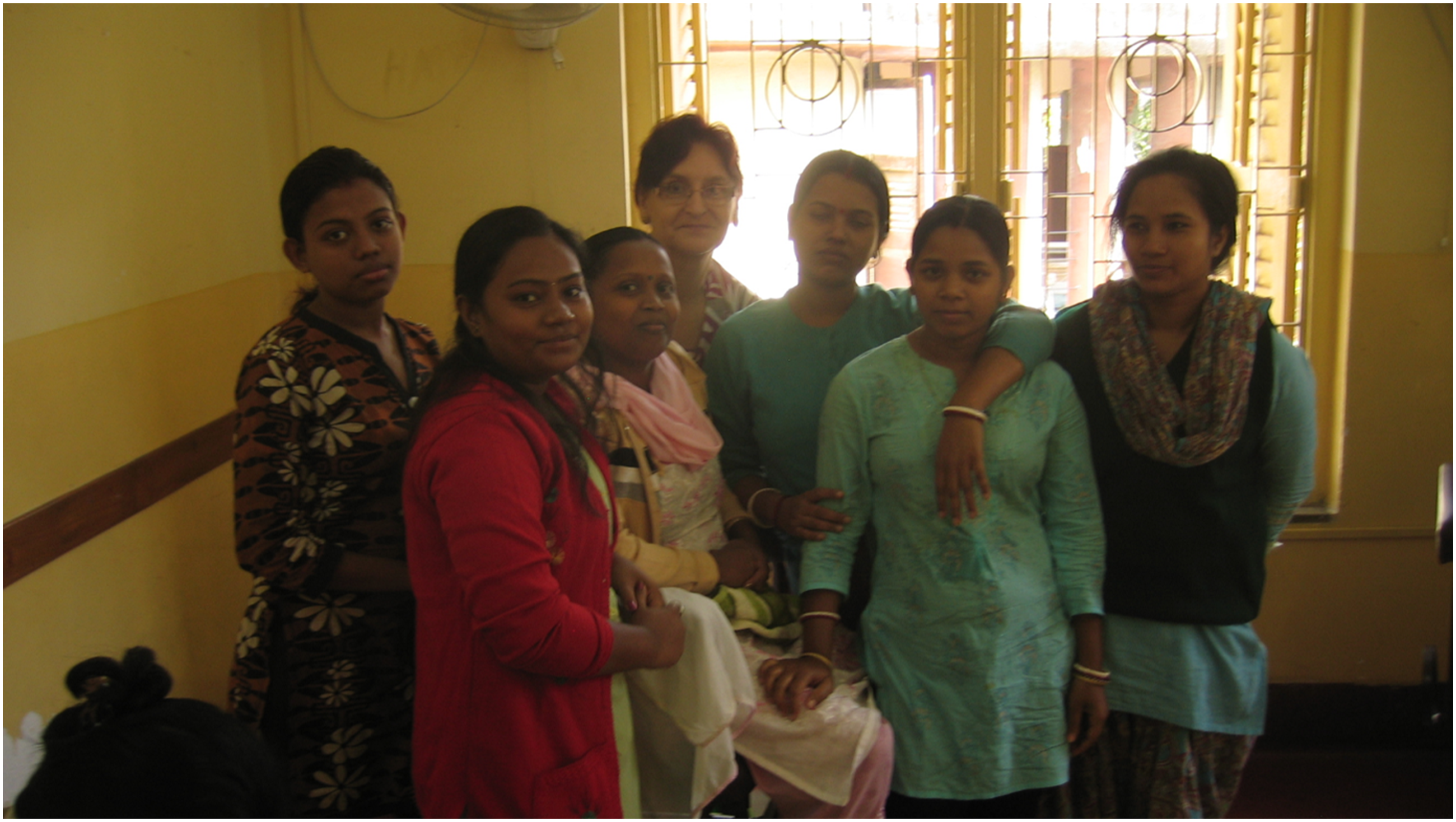
Unlike staff at the Centre, and beauticians I have interviewed since, the students themselves did not share such negative views of the potential employment opportunities that training as a beautician would provide, and similarly to Clarke’s South Asian interlocutors in Sheffield, saw working towards a refined, groomed body as a positive moral project. This assessment indicates the impact of middle-class ideals of respectability but also reflects their experience of growing up and living in a squatter settlement where maintaining even basic standards of cleanliness and hygiene represents a daily struggle.
Two of the trainees, both mothers, were vocal in demanding good placements, fully aware this would imply long hours, waiting around and backbreaking physical labour, all for a modest wage. But others were not keen on such opportunities, and cited the challenges of being presentable, the length of evening and weekend shifts, and their family responsibilities as reasons. During further discussions, it became clear that their refusal to be placed with a salon was partly based on the way trainees are bossed around by co-workers, often the owner of a salon, and partly because they did not see the need to contribute to household income. Pia, who was about to get married, was keen to let me know that she would consider opening a salon herself in her in-laws’ home once she moved there, but that she did not need an income as such, as it was her boyfriend who supplied her with whichever consumer goods she desired beyond what her parents provided. Others had working mothers and did not have to contribute to the household financially but would run the home in their absence.
As with many other workplaces in the Indian service sector, a main concern lay with the dignity of workers and the status of the work undertaken. Salons, whether they are large and part of a chain, or where they are neighbourhood salons with only very little room and two or so employees, are organized in a rigid hierarchy. In chains, young women from marginal communities are employed to do ‘dirty’ jobs like cleaning the floors, washing hair, and doing prep work as well as pedicures, while senior and more respectable ‘experts' do the actual styling and more sophisticated jobs, as well as taking charge of most of the communication with clients. These divisions of labour often reflect class, caste, and community boundaries in larger salons, although smaller ones may not be divided along those lines as a senior person may bring in young relatives and friends to help. While not doing away with the hierarchical organization of work – a young relative would, for example, be asked to do all pedicures, feet being deemed particularly problematic – this may be mediated by a discourse of being (like) kin. But, as mentioned in the introduction to this volume, the attached practices may use kinship terminologies and moralities to exploit those so included.
Thus, while the trainees saw beauty work as superior to domestic service, jobs in retail, childcare or nursing, they preferred to stay out of formal/regular employment to have control over their own time and movements, which made occasional work and servicing the local community their favourite option.
Empowerment, kin, and community
Governments and intermediate agents like NGOs cast occupational training in terms of ‘empowerment’ for young women, delivered via entry into the labour market. Much of the effort put into the beautician’s course at the Centre testified to the power of this discursive configuration. In the view of staff, and in tune with the ideas of many mainstream feminists, young girls are held back and exploited by their kin and community members, and the presence of pregnant trainees on the course was cited as evidence for this notion (see Figure 3). Second, and probably more importantly, young women from marginal backgrounds are seen as an underdeveloped resource vital to ensure the survival of families and communities, especially where education can be offered locally by middle-class intermediaries like the staff of the Centre. Koffman and Gill (2013) point out, that such clear biopolitical mobilizations of ‘girl power’ in development discourses and multinational media campaigns centres around the link between young women’s ‘empowerment’ and demography, fertility, and life courses across the global North–South divide. With the introduction of ‘girl power’ into development, global agencies linked to the World Bank, Indian central government departments, and national media, have come together to promote an image of young, urban Indian women as ideal neoliberal responsibility-bearing subjects and emblems of national progress. Not surprisingly, young women, including my trainee interlocutors, are exposed to these discourses, which are shared by middle-class teachers and government agents, across different sites in their everyday lives and articulate their trajectories in similar tropes as proof of ‘change’. The beauty industry plays a particularly prominent role in this discourse, as it is associated with class-based upwardly mobile consumer aspirations, celebrity culture and fashion as a site of self-making, while being potentially accessible to women from a wide range of backgrounds, albeit in hierarchically organized roles and nested sites. Trainees with their teacher. Source: Author photo, 2019.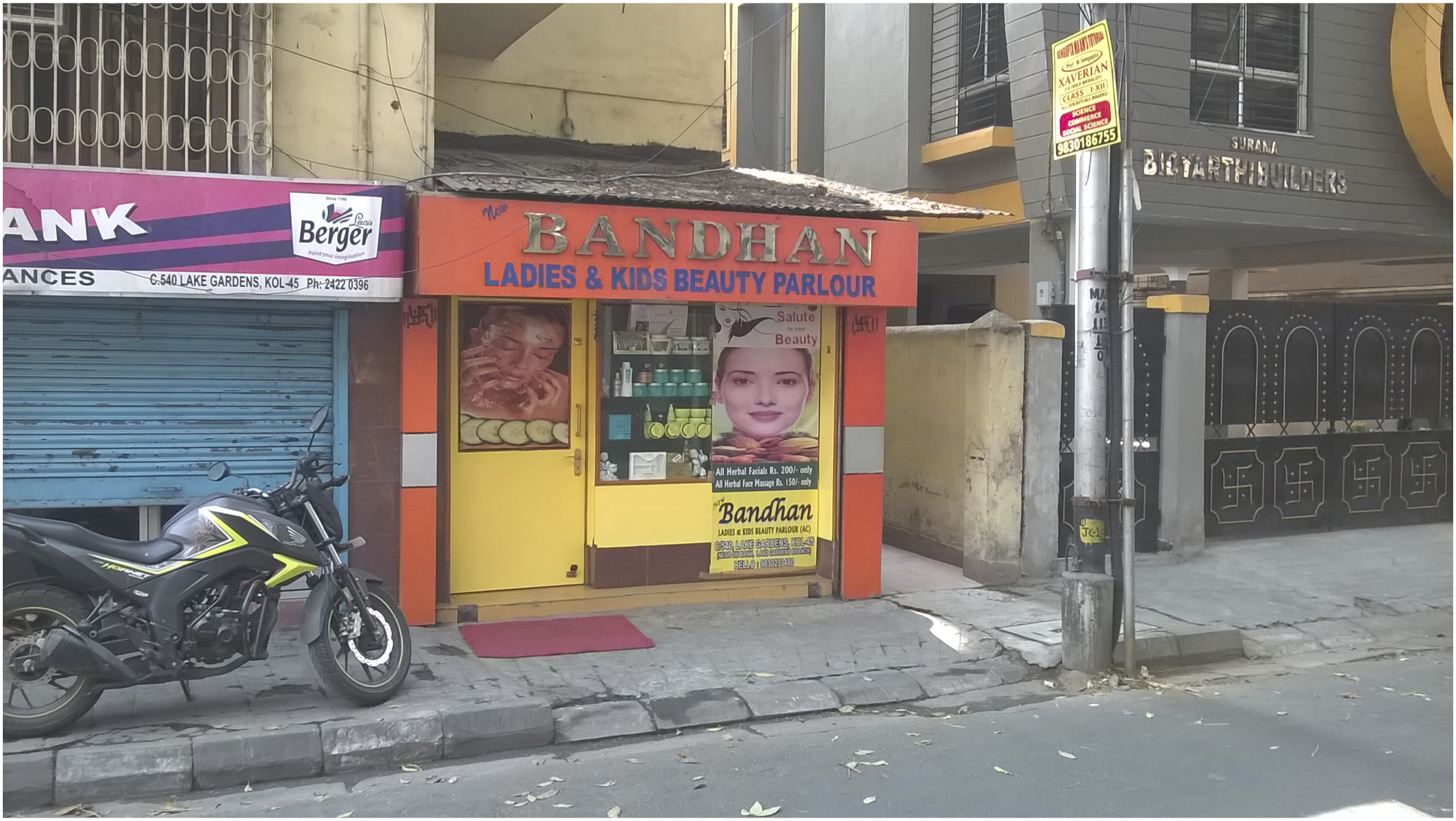
For teachers at the Centre, beautician training presented the last chance to ‘mainstream’ these young women by enabling them to earn a wage and take part in consumer society on their own terms. In conversations, the objective of ‘doing salon work’ figured as the overall aim, but earnings were meant to be spent on commodities that these young women would otherwise expect partners to provide. Doris was confident that her teaching would enable employment and through it autonomy, in line with her own experience of running a hairdressing business in her 30s. She saw passing down her knowledge about products, procedures, and techniques as a matter of empowering ‘poor’ women to fend for themselves. However, she was also aware that apprenticeships were based on discipline, attention to detail, and a subservient demeanour, which she felt her current group of trainees still lacked, and thereby accepted that young women would substitute one authority, that of kin and community with another, that of the employer.
For the trainees, community provided the rationale behind the beautician course, which was embedded in a much broader web of social relations, economies of desire, and practical considerations. When asked what she liked about the training imparted by Doris, Shompa emphasized how young women today needed to know about grooming, unlike their mothers, whose work as domestic servants did not warrant or allow such concerns. All the students were aware that living in their neighbourhood foreclosed many opportunities, and that education alone did not guarantee access to consumer culture’s urban sites – spending power and ‘style’ did. They also recognized that any aspiration towards lower middle-class status did not rest on their earning potential but on being able to access male incomes in the community, for example, through marriage to someone employed as a driver or electrician, or who owned a shop. In their view, working as a beautician would only allow fathers, brothers, and future husbands to take advantage. Thus, their refusal to seek employment can be read as a refusal to give in to patriarchal regimes constituted, as Roy (2002) has shown, by a politics of urban poverty that rests on gendered exploitation at the nexus of rural–urban migration and domestic service.
The relationship between education and schooling was also not as straightforward as development discourses suggest. All the trainees had attended school, but the course was not seen as a continuation of schooling. Shompa, like others, told me that while she had done well at school, she had no desire to go to college as she felt continuing education was getting in the way of her many chores. Contrary to college student Alpana, Shompa valued her time at the Centre because it was ‘peaceful’, unlike their neighbourhood, and she and other trainees contrasted the space with their homes, emphasizing that here they handled ‘beautiful’ materials (Figure 4) and at the same time could meet friends in a relaxed atmosphere. It was community surveillance, exercised by fathers, brothers, and mothers-in-law, who enforced patriarchal ideals of respectability and supervised chores, that drew them to the Centre as a space to escape to. This was an especially pressing matter for married trainees and mothers, who had to negotiate participation in the course with affines and arrange for childcare but were still very committed. Preeti, pregnant with her second child, was determined to finish the course to be able to take another one in the following year with permission from her mother-in-law, who looked after her son. Acknowledging the need for support by kin, Doris made a point of visiting the homes of potential trainees and seeking conversations with affines before enrolment to ensure that the whole household was committed to the training. Reception desk in a neighbourhood parlour, Kolkata. Source: Author photo, 2020.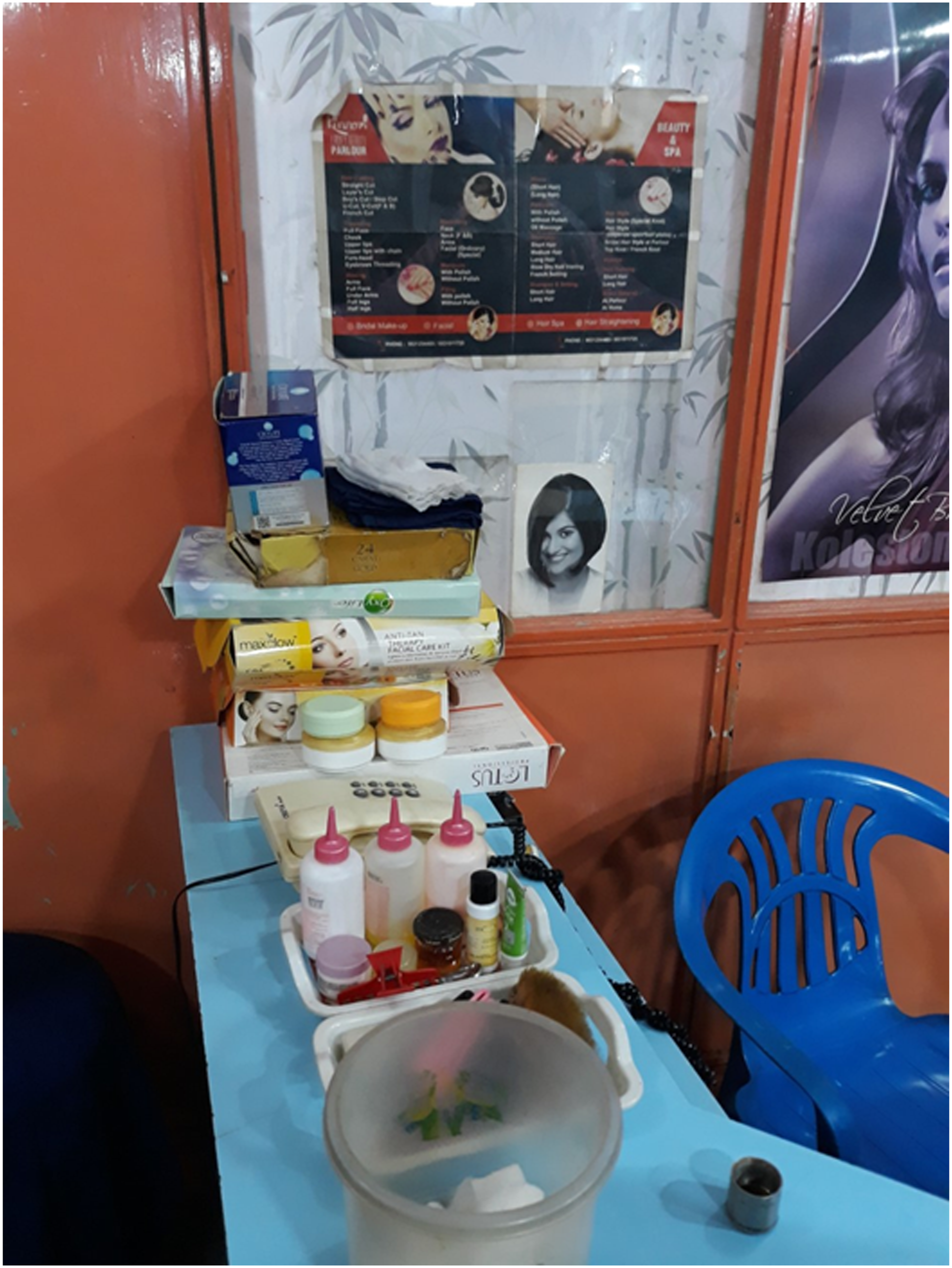
Our chats clearly pointed towards the limitations of education and training opportunities as means to challenge patriarchal gender relations in the family and the community. The most contested issue that the teachers at the Centre were aware of but could not address was that filial obligation and gender norms informed the division of labour in the home. While home here emerges as a site of conflict, between women and men, and between generations of women, collective imaginaries that linked make-up and grooming with social acceptance and consumer culture made beautician training away from home acceptable, accessible, and even desirable. However, those who needed an income most, young mothers like Preeti, whose household relied on her husband’s odd jobs as an electrician, were least equipped to enter the profession. As Doris pointed out, those in the group already married, pregnant or mothers were not only tied to the home by heavy workloads and the expectation they would act as ‘housewives’, their domestic commitments made them less likely to get a placement, because potential employers preferred young women without obligations who could work on-demand and at short notice.
Subjects of capacity
So far, this article has addressed the complex ways in which poor urban women’s educational and training needs are shaped by contradictory push-and-pull effects that are imposed by their own networks and the wider draw of consumer society. While neoliberal discourses of empowerment construct their subjects as individuals (Hickel, 2014), government agencies and NGOs are geared towards a community approach and therefore reference female empowerment in terms of its effect on broader social landscapes. In both contexts young women are seen as enabled by ‘raising aspirations’ towards an embrace of future orientation and individualized responsibility for the ‘greater good’ (Huijsmans et al., 2021). Thus reorganized, gendered and class-based regimes of education and training become stand-alone projects that configure young women as ‘bearers of potential qualifications, she is an active and aspirational subject of the education system, and embodies the success of the new meritocratic values’ (McRobbie, 2009: 73). Like middle-class female Indian IT workers, who make their own marital choices and insist on living separately from in-laws, thereby often challenging regimes of domestic work (Fuller and Narasimhan, 2008), daughters from working-class and lower middle-class households, in their majority from low-caste or minority backgrounds, are equally exposed to the ideology of making a difference to their own and their families’ lives through education and waged labour, but their negotiating space is limited. In fact, as Nisbett’s (2010) ethnography of young male aspirational migrants to Bangalore and Gooptu’s (2013) research on Kolkata’s retail workers show, young urbanites from working-class backgrounds enact the neoliberal ideology of making new selves through employment with unpredictable results. With reference to the beauty industry, a young person from a middle-class background may make a career that is both demanding and fulfilling, representing brands in high-end retail environments like shopping malls, or will be able to establish a neighbourhood salon, which, as Ossmann (2016) suggests, may be about creativity at the crossroads of modernity, locality, and gendered forms of status. After all, women have long founded businesses around body work, often limited and simultaneously supported by racial and ethnic identities and histories of migration (Clarke, 2016; Kang, 2010; Lidola, 2014; Liebelt, 2016a). Increasingly, such success in the industry is based on knowledge and access to different platforms (Raval and Pal, 2019), which promise to enable entrepreneurs and draw on global imageries of ‘professionalism’. An example of this are the ‘wellness consultants’ taking up direct marketing in urban India, which is globally one of the largest markets for cosmetics multinationals like Swedish company Oriflame. Such professional and entrepreneurial engagement does, however, require entirely different dispositions from those of my interlocutors, as service workers at a sales counter and or direct sales agents are likely to have marketing degrees and platform workers must be able to run their booking schedules and access complex digital systems.
For young working-class women from marginalized communities, the actual work of the beautician promises access to similar dreams, added by the materiality of beauty products surroundings them and the association of upward mobility with grooming is ever present. A make-over in the image of the clients one serves nurtures aspirations towards access to different sites of consumption. Shoba and Preeti understood this dynamic and referred to themselves as different from their mothers, whose work as domestic servants they said lacked ‘dignity’, and emphasized that their tangential association with the beauty sector through the course provided a glimpse of a materially rich fabric of life, of skills and self-worth that would benefit the family and community they stem from. This link was present in conversations that framed the practical part of the training during which the group discussed and exchanged images, for example, of specific nail craft designs and henna patterns found on the internet, which they shared as text messages. For brief moments, these exchanges allowed for the – temporary – appropriation of ‘style’ and an imagining of oneself in the position of a salon customer choosing from a range of easily identifiable services (Figure 5). But it was the example of soon-to-be-married college student Putul that provided me with an understanding of what beauty training really meant in the context of their lives. When half of us were sitting on chairs, nails drying, the other half seated on low stools after the manicure exam Doris had conducted with great seriousness, Putul was teased mercilessly by her classmates. ‘She is only here to bide time you know,’ one of them told me, another one chipping in ‘looks at her phone all the time, that’s why my nails are ruined – the phone her boyfriend gave her’. In the face of unemployment and marginalization, beauty work was one possibility, but entering and maintaining a sexual relationship was seen as the better option to carve out a place as an adult in the community that sustained them. Training session at the Centre. Source: Author photo, 2020.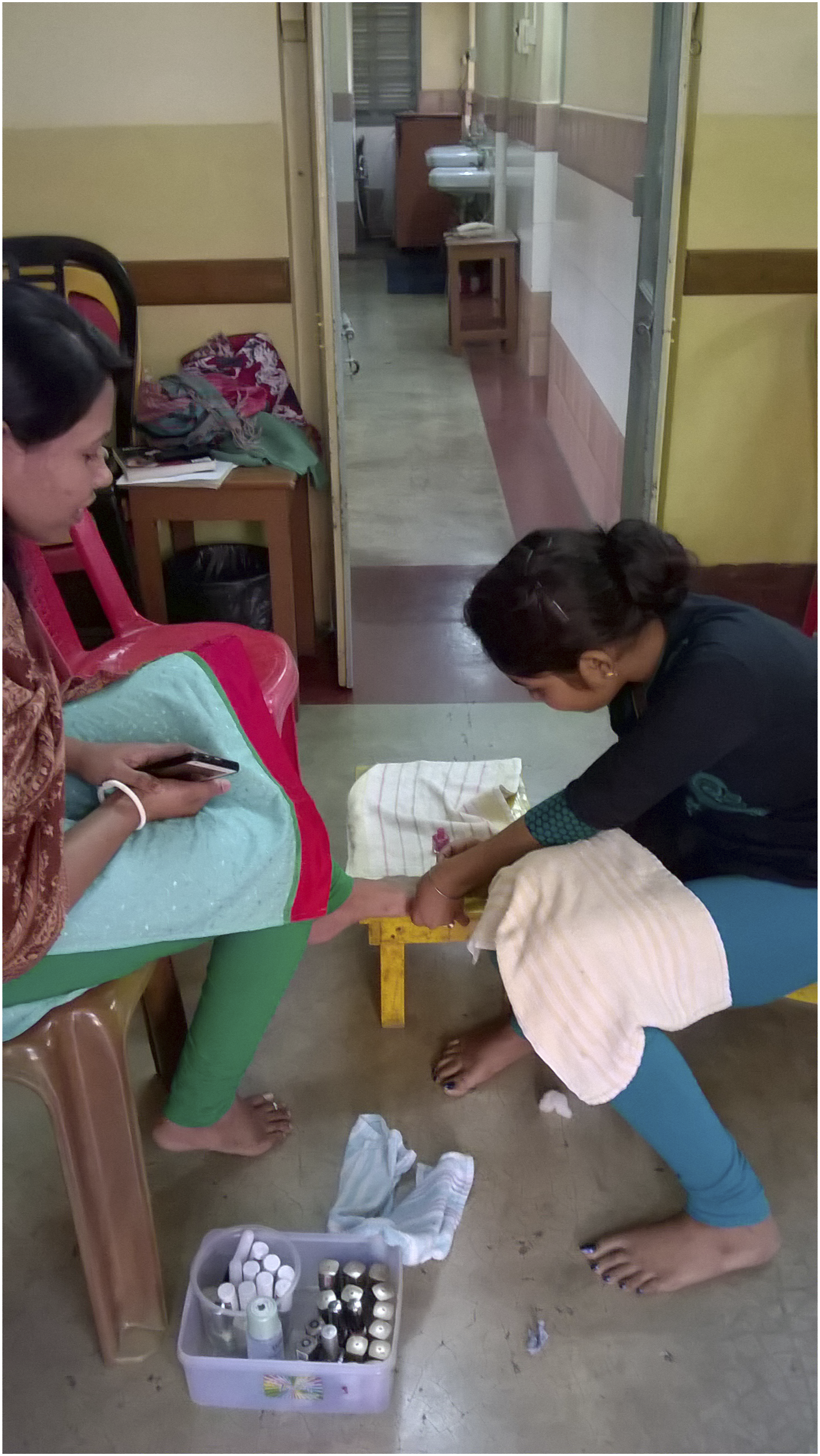
Conclusion: Workism revisited
Given that the training provided at the Centre focused on a very specific, and arguably highly gendered form of labour, one may be tempted to forget that the techniques employed and ideologies framing it are not, as authors on global beauty work sometimes suggest, simply the extension of ‘traditional’ practices. Amidst the complex circulation of desire, the creation of bodily capital, and the creative and aesthetic valorization of artistic outputs and skills, the centrality of grooming and appearance to imageries of modernity cannot be denied.
Like other feminists, I conceive the discourses on grooming as disciplinary discourses, which mainstream neoliberal and intersectionally hierarchical ideas of the self. These cannot be disentangled from the persistent gendered, racialized and classist (here also articulated in terms of caste and religious community) division of labour (Kang, 2010; Kikon and Karlsson, 2019). As my interlocutors were well aware, many workplaces in the beauty industry replicate the conditions that their mothers as domestic workers endured, with discrimination based on notions of caste/class inferiority an everyday experience. They embraced the playfulness associated with the aesthetics, materiality, and practices of beauty work by referring to it as kela (play), but the actual everyday regimes associated with work at a salon were not appealing. To them, learning how to do bridal make-up and to use expensive products was not, as Willis’s (1977) seminal ethnography of young male working-class subjects in 1970s London suggests, a matter of finding a place in the existing gender/class matrix by ‘learning to labour’; nor was it, as Mahmood (2005) pointed out for young Muslim women in Egypt, a way of engaging in alternative femininities by adopting a positive discourse around techniques of the self.
For young working-class women in urban India, male unemployment and young women’s engagement with secondary education create financial and social disadvantages. Where the feminization of poverty across West Bengal has driven their mothers from rural backgrounds into domestic work (Roy, 2002), daughters become educated but precarious members of the community with time to spend on chores for the family before marriage. The trainees embraced the possibility to acquire skills that allowed them to join the mainstream narrative of success through employability and entrepreneurial selves. However, they were also acutely aware of the limits their social environment imposed. These included family and community obligations, the (temporary) escape elopement and early marriage promised, and the status that motherhood would convey. For my interlocutors, family and community were clearly very troublesome realities that they tried to get a respite from by attending classes at the Centre, while they simultaneously represented a main source of support and liveable futures. Aware of the drudgery of household chores and a middle-class discourse disparaging of relationships and marriage as a way out of filial obligations, they clearly saw that their lives were circumscribed by either taking on low-paid employment or investing more heavily in community and kin relationships.
Is this then only a new version of earlier cul-de-sacs for poor women, who will end up in low skilled jobs without security? And what is the role of gender-sensitive programmes targeting these women more broadly within this context? Clearly, young women who trained as beauticians are simultaneously at the centre and at the margins of the girl story. While the ‘Girl effect’ does not come to bear on young women in a uniform way, it is, as Kofmann and Gill (2013: 83) argue, the result of an assemblage of transnational policy discourses, novel corporate investment priorities, biopolitical interventions, branding and marketing campaigns, charitable events designed to produce a social movement for change, and consumer practices that invite young women globally to express pride in ‘being a girl’. Where successful contemporary femininity depends on a meticulously planned life, ‘the absence of such styles of self-organisation’ is attributed to pathologies associated with family and community (McRobbie, 2009: 77). For young women in the global South, the notion that they are to be encouraged to shoulder responsibility for ‘progress’ and ‘development’, a discourse that draws them away from their families and communities, said to hold them back, exposes them to interventions that are patronizing at best and harmful at worst. The beauty industry, with its massive media presence, enormous advertising budgets and far-reaching impact on popular culture exemplifies these problems on a global scale rather than this being an Indian phenomenon. As Ossman (2016) shows in her study of salons across Casablanca, Cairo and Paris, the practices involved speak to a wide spectrum of social strata and can be mastered by many. They are in that way perceived of as very democratic – a fact that my interlocutors readily acknowledged. However, while such circuits allow women from more disadvantaged backgrounds to enter the labour market, often on a part-time basis, body work, including beauty work, is also often a perpetuation of social relations that cast poor and migrant women as unskilled labourers inserted into the market at the very lowest end of the service sector and entrepreneurial niches that rely on the exploitation of similarly precarious others (Kang, 2010; Otis, 2016).
Theorizing the subjection of lower-class Indian women under neoliberal and globally connected economic conditions, Sangari (2015) invites us to consider surrogacy, another form of gendered service sector labour, as part of transnational reproductive formations, which emerge at the intersection of familiar patriarchies, state-led neoliberal regimes of kin-based responsibilization, and the market. While the massive growth of global beauty work helps us to reformulate wider questions related to empowerment, theorizing across the sites of exposure, including those where bodies are put to work on forms of class-based aesthetic capital, invites us to rethink the politics of kinship and community as part of a wider critique of late capitalist reproductive formations of gender, race, and class.
Footnotes
Declaration of conflicting interests
The author(s) declared no potential conflicts of interest with respect to the research, authorship, and/or publication of this article.
Funding
The author(s) received no financial support for the research, authorship, and/or publication of this article.
