




Abstract
Introduction
Occupation-based interventions could help to address a growing mental health crisis among young people and adolescents. To develop new interventions and avoid research waste, a review of the academic literature is needed that systematically identifies and describes interventions designed to improve the mental health and wellbeing of 11–25 year-olds.
Aim
The scoping review aims to systematically review the academic, literature to identify and describe key characteristics of intervention studies using occupation to improve adolescents’ and young people’s mental health and wellbeing, exploring the range of interventions, reviewing reporting quality and illuminating gaps for further research.
Method
An iteratively developed scoping review protocol informs a systematic database search and review of the literature. Core characteristics are extracted and described, using the TIDIER guidelines and the CASP assessment tool.
Results
Five occupational therapy-based interventions, and 69 other occupation-based studies representing a wide breadth of approaches, outcomes and settings were identified.
Conclusions
Robust development, testing and reporting of occupation-based and occupation-focused intervention studies to promote and support mental health and wellbeing in adolescents and young people are needed. Interventions should be co-designed, developmentally appropriate and scaffold development. However, better agreement is needed about core outcomes measurement in this area.
Keywords
Introduction and background
Timely, age appropriate, targeted mental health interventions are needed to promote health, prevent emerging mental illness and treat clinical symptoms (Mei et al., 2020). This is especially important during the sensitive period of adolescence and early adulthood (Arango et al., 2018), described by Sawyer et al. (2018) as 10–25 years of age, when significant and rapid psychological and physiological change occurs (Arango et al., 2018) and experiences are thought to significantly shape the neurological structure of the developing adult brain (Larsen and Luna, 2018).
A relationship is thought to exist between an individual’s experiences and the development of mental illness. The accumulation of earlier life experiences, including exposure to specific influences, and a lack of protective factors – be they biological, psychological, environmental or social – can effect behaviour, lead to increased risk of mental illness, and affect personal development (Mei et al., 2020; Arango et al., 2018). Conversely, the onset of illness affects the typical adolescent experience of interacting and engaging in occupations or activities within their socio-cultural environments (Taylor, 2017), adversely impacting the development of skills and competencies necessary to support the transition from childhood roles and responsibilities to those of an adult (Mei et al., 2020), and leading to significant human and socio-economic consequences (Patel et al., 2018). Given the bi-directional relationship between an individual’s experiences and mental health or illness it is likely that appropriately designed ‘occupations’ or activity-based interventions could counteract the negative impact of mental illness on the development of adult competencies, and could even help to prevent the onset of mental illness.
Numerous intervention studies targeting adolescent mental health exist, focusing predominantly on psychological and physiological determinants (Enns et al., 2016). Yet, determinants or factors that influence adolescent mental health are wide ranging and complex in nature, meaning that the range of available interventions is insufficient and more are needed (Mei et al., 2020). An occupation approach can be used to tackle the determinants influencing adolescent mental health and illness. Occupational therapy concerns itself with fostering health through enabling engagement in everyday activities, known as occupations, and is one of a number of professions that intentionally and therapeutically use activity to improve health outcomes. Fisher (2013) proposed and defined three different ways that occupation is used in therapeutic interventions: occupation-based, occupation-focused and occupation-centred. Occupation-based describes the use of occupation as an agent of change, while occupation-focused concerns occupational performance and may use occupation-related outcomes. Occupation-centred interventions reflect the perspectives and science originating from the practice of occupational therapy and are either occupation-based or occupation-focused.
Five systematic reviews have been identified that investigated the effectiveness of occupation and activity based interventions studies targeting children and adolescents’ mental health (Cahill et al., 2020; Novak and Honan, 2019; Bendixen and Kreider, 2011; Arbesman et al., 2013; Brooks and Bannigan, 2021). All the reviews state that some evidence exists to support the use of interventions incorporating occupation with children and adolescents to improve health outcomes. One mental health focused review, states that quality of studies varies and they often have small sample sizes (Arbesman et al., 2013). Brooks and Bannigan’s (2021) study concludes there is insufficient evidence for the effectiveness of occupational therapy interventions designed to target common mental health conditions in those aged 0–16 year-old, but identifies two studies supporting the effectiveness for occupational therapy: one targeted attention deficit hyperactivity disorder and the other Asperger’s syndrome.
A number of issues emerge from examining the reviews, suggesting a review is needed that focuses on adolescents and young people, to assist those developing interventions or applying findings to this clinical population. Despite the difference in levels of development and occupation-related behaviours that might be expected between children and adolescents, only one review specifically focuses on children aged 0–16 years (Brooks and Bannigan, 2021) and none focused specifically on adolescents and young people. Similarly, a wide range of conditions, diagnoses, outcomes and populations are merged when presenting evidence, which may mask knowledge gaps, or possibly mislead novice readers not attuned to the potential impact that these variations can have on intervention effects.
Reviews that do focus on mental health (Brooks and Bannigan, 2021; Cahill et al., 2020; Arbesman et al., 2013) typically include neuro-developmental disorders, such as autism and ADHD, alongside mood and psychotic disorders, thus potentially ignoring differences in aetiology, symptomology and impact on occupations, which may be relevant at clinical or intervention development levels. Current definitions and classifications of neuro-development disorders and mental health have been questioned Granlund et al. (2021). The development of a broader range of mental health interventions can be helpfully informed by describing the content of identified interventions, exploring the range of interventions offered, assessing the quality of the study methodology and illuminating research gaps.
This study’s aim was to systematically review the academic, peer reviewed literature to identify intervention studies using occupation to improve adolescents’ and young people’s mental health and wellbeing. The intention was to describe the key characteristics of the studies, explore the range of interventions, assess their quality and illuminate gaps for further research. Such information is useful to inform intervention development and assist knowledge translation at a clinical level.
Methodology
The purpose of a systematic scoping review method is to map a body of literature. (Arskey and O’Malley, 2005). The intention is to illuminate key characteristics, terms, methods, findings and relevant research gaps, thus providing a comprehensive overview of the field to inform future research (Munn et al., 2018). A broader scoping approach is helpful in the case of adolescent mental health interventions where the term occupation is used multifariously and crosses multiple professional disciplines and areas of practice. For example, occupational therapists may use occupation and activity interchangeably, while a psychologist may avoid occupation and talk in terms of behavioural activation, activity or functioning. A further complication is that some studies may describe the specific occupation, such as yoga or dance, rather than use the more generic term of occupation.
Protocol and registration
The PRISMA extension for scoping reviews guidance (Tricco et al., 2018) was used to develop a full prospective study protocol, and is registered and available at https://osf.io/vr23h. A summary of the protocol and its development is reported below. The protocol was primarily informed by the Arskey and O’Malley (2005) iterative five-step scoping review framework, complemented using advice from the Joanna Briggs’ scoping review guidance (Peter et al., 2017). The initial steps of the scoping review process explore and pre-map processes to refine the research question and identify how it will be explored (Arskey and O'Malley, 2005).
The protocol development began with identifying keywords and exploring MESH Terms. The list of search terms was expanded in consultations with an occupational therapist, a teacher, researchers, and a subject librarian, and then organised into an initial search strategy based on the PICO acronym: Population, Intervention, Condition and Outcome (Schardt et al., 2007). The search strategy was then trialled using the PubMed database, and the results reviewed for relevance. Following the initial trial, the search was refined and reviewed a number of times, with the aim of increasing the number of relevant articles whilst maintaining the breadth of the scope. Practically, this meant that some search terms, such as the term ‘youth’ were removed as they were viewed to have been covered by the chosen search terms. In response to the low ratio of relevant articles to irrelevant ones, the search strategy was restructured using the Population, Concept and Context (PCC) format suggested by the Joanna Briggs institute for scoping reviews (Peter et al., 2017), improving the accuracy of results. Following discussion with the subject librarian, the final search strategy was then modified to best fit each database, using MESH terms or category headings.
The search strategy was run individually on the health databases, CINAHL, Psych Info, PubMed, Cochrane, Web of Science and OT Seeker, in 2018 and updated on April 2021 (an example of the PubMed search is included in the appendix 1) Supplemental Material. To reflect the important role of school in the study population, a search of the ‘Onestop’ education database was completed as well. The database includes the British Education Index, Child Development and Adolescent Studies, Education Abstracts, Educational Administration Abstracts and ERIC. The references of relevant papers and systematic reviews were also identified and included. The reference management software EndNote was used to record and manage results.
Inclusion criteria
Identified studies were reviewed against the following criteria. To ensure studies were relevant, they must report interventions, and include adolescent participants. In case the studies included a wider age scope, lower and upper limits were set at age 11 and 25 years, respectively. Where participant ages fell below 11 years or above 25 years, then participants’ mean age was used to inform inclusion. All studies were required to incorporate an occupation or activity related focus, and designed to treat or prevent mental health illness or wellbeing difficulties in adolescents. All studies were required to include a clear and central measurement of mental health related outcomes. Studies focused on mental health in the context of other health conditions such as HIV, obesity and cancer were excluded. Studies adopting mixed approaches were included provided the activity component of the intervention was clearly over 50%. Consequently, studies which were based predominantly on CBT or other psychological theory were excluded unless they also included a significant activity focus. Based on the DSM-5 classification of mental disorders and the differences in aetiology and clinical presentation, intervention studies targeting neurodevelopmental disorders such as autism, ADHD and learning difficulties were excluded (American Psychiatric Association (2013). Studies published before the year 2000 were excluded to limit the search size and ensure a focus on intervention studies targeting contemporary adolescent populations. Systematic reviews and protocols were excluded, but relevant studies identified from the reference lists were included. Papers not written in English, conference papers, theses, and other non-peer reviewed articles were excluded.
Reviewing studies
Selecting studies – screening and eligibility
The first author and a team of three occupational therapists with both a clinical and research background conducted a comprehensive review process to inform decisions on paper inclusions and exclusions. All of the team had knowledge or experience of working in mental health. Two of the reviewers are included as co-authors on this paper. The reviewers received a copy of the study protocol, and a study briefing including an opportunity to ask questions and seek clarification.
The review process involved four stages: (i) screening paper titles against the review criteria, (ii) reviewing the abstracts, (iii) reviewing the papers for eligibility and (iv) full review. Where any ambiguity or uncertainty was present, the paper was retained for further review in the next stage. Each paper included from the abstract stage onwards was reviewed by two people, the first author and one of the second reviewers. Initial agreement between reviewers was 91%, where disagreements emerged, the first and second reviewer would review the paper a second time and discuss to achieve a 100% agreement. Details of the inclusion and exclusion of papers are reported in the diagram of the screening process in Figure 1. Diagram of screening the process.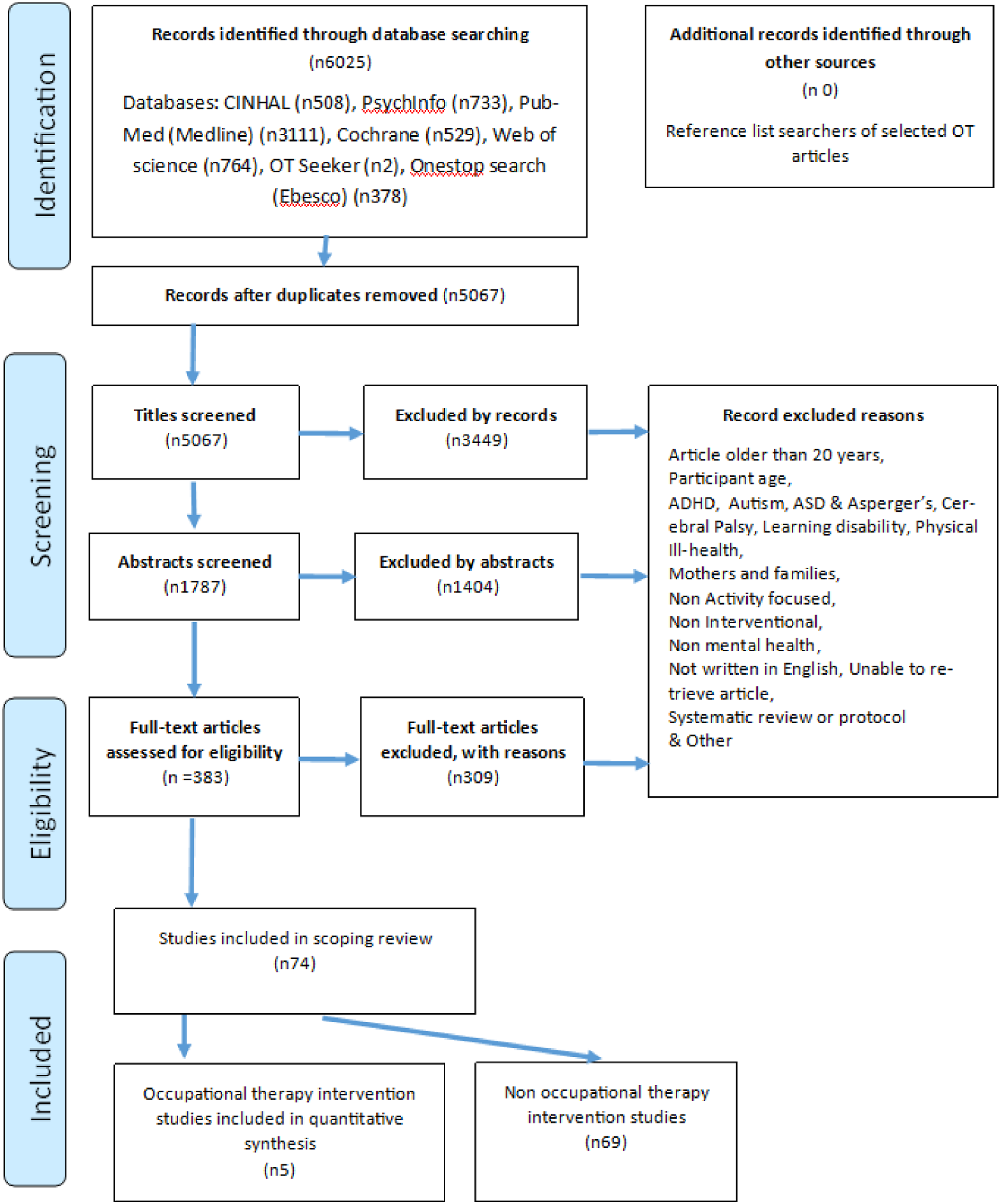
The fourth stage involved the full review and data extraction of included papers (n = 74) by the author and reviewers. The data abstraction process of a scoping review was iterative and shaped by the articles identified. A provisional abstraction form was developed by the author based on Joanna Briggs methodological guidance from for systematic reviews (Peter et al., 2017) and the TIDieR guidance for reporting interventions (Hoffmann et al., 2014), then discussed with senior authors HD and ME. In addition, items relevant to the study aim and based on earlier iterative stages of the review process were included, such as year of publication, country of origin, population, targeted stage in the illness course, acceptability of intervention and any approaches or theories used to inform the intervention. As study quality is important for clinical decision making, the CASP assessment tool was used (Critical Appraisal Skills Programme, 2019) to assess study quality.
Results
The Demographic overview of the papers
Of the final 74 papers reviewed in full, 16% (n = 12) were published before 2010, 31% (n = 23) between 2011 and 2015, with 52% (n = 39) between 2016 to April 2021. The distribution can be seen in Figure 2. Number of articles published each year.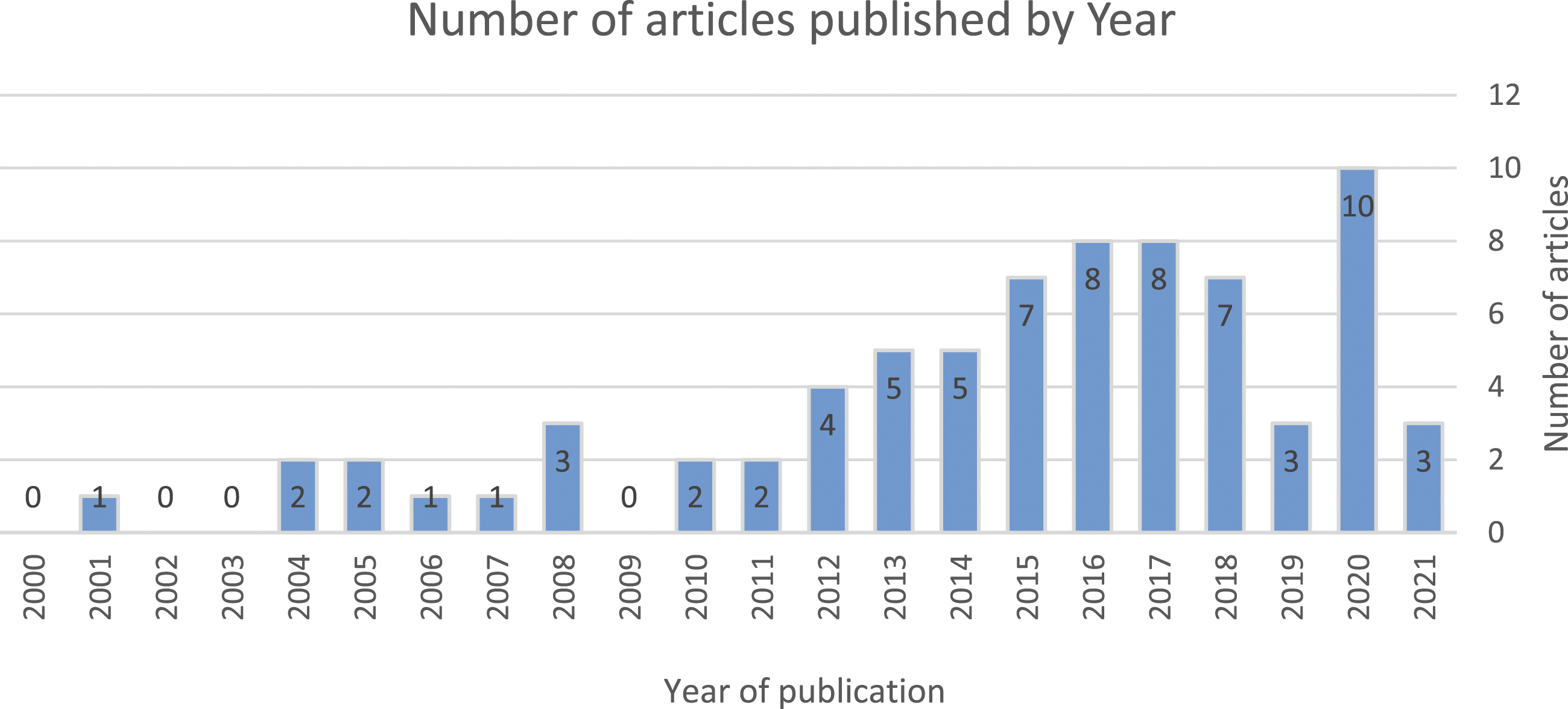
These papers reflect 29 different countries with one multi-national study. Studies conducted in USA (n = 13) were most common, followed by Australia (n = 12), Canada (n = 6), UK (n = 4), Germany (n=3) and Sweden (n = 3). Figure 3 details number of studies according to the countries they were conducted in. Number of articles published by country.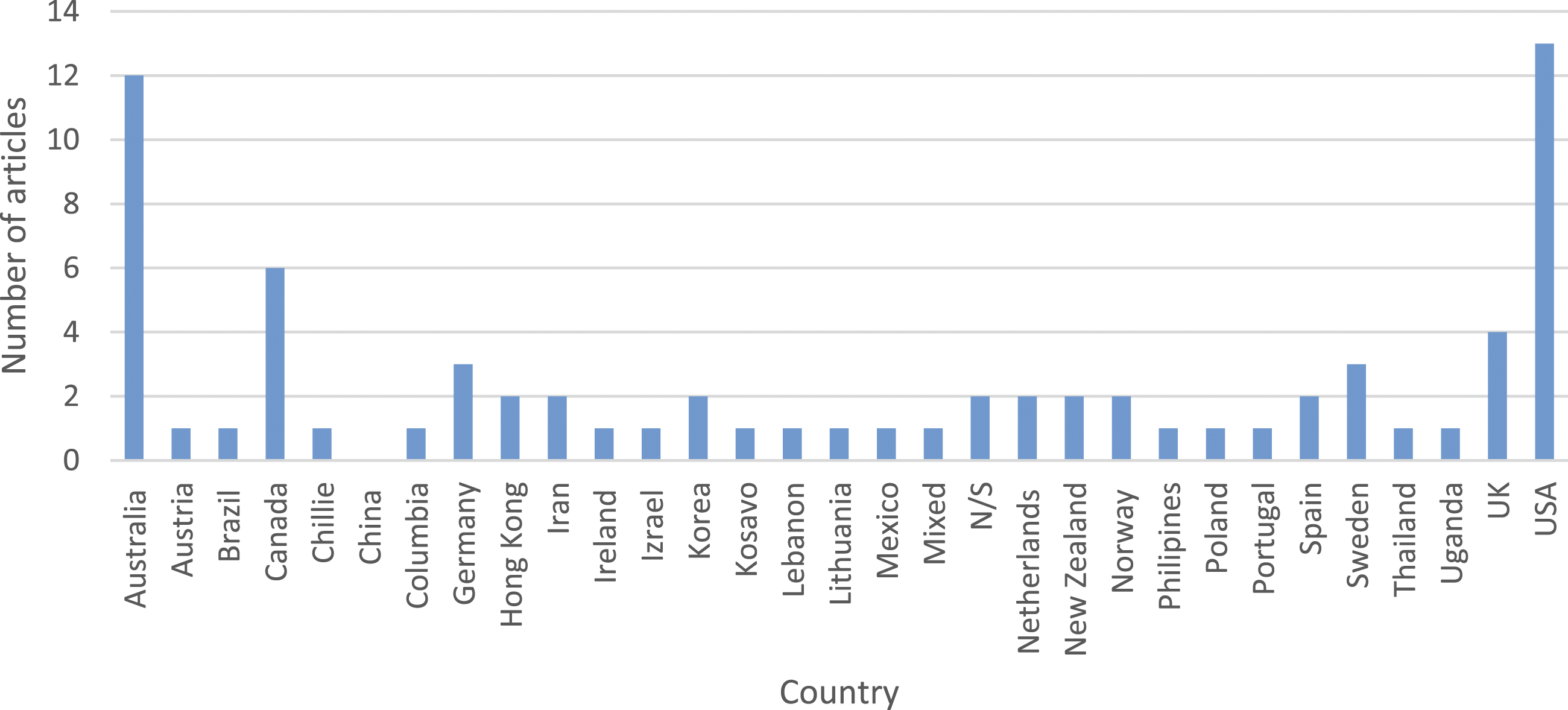
Summary.
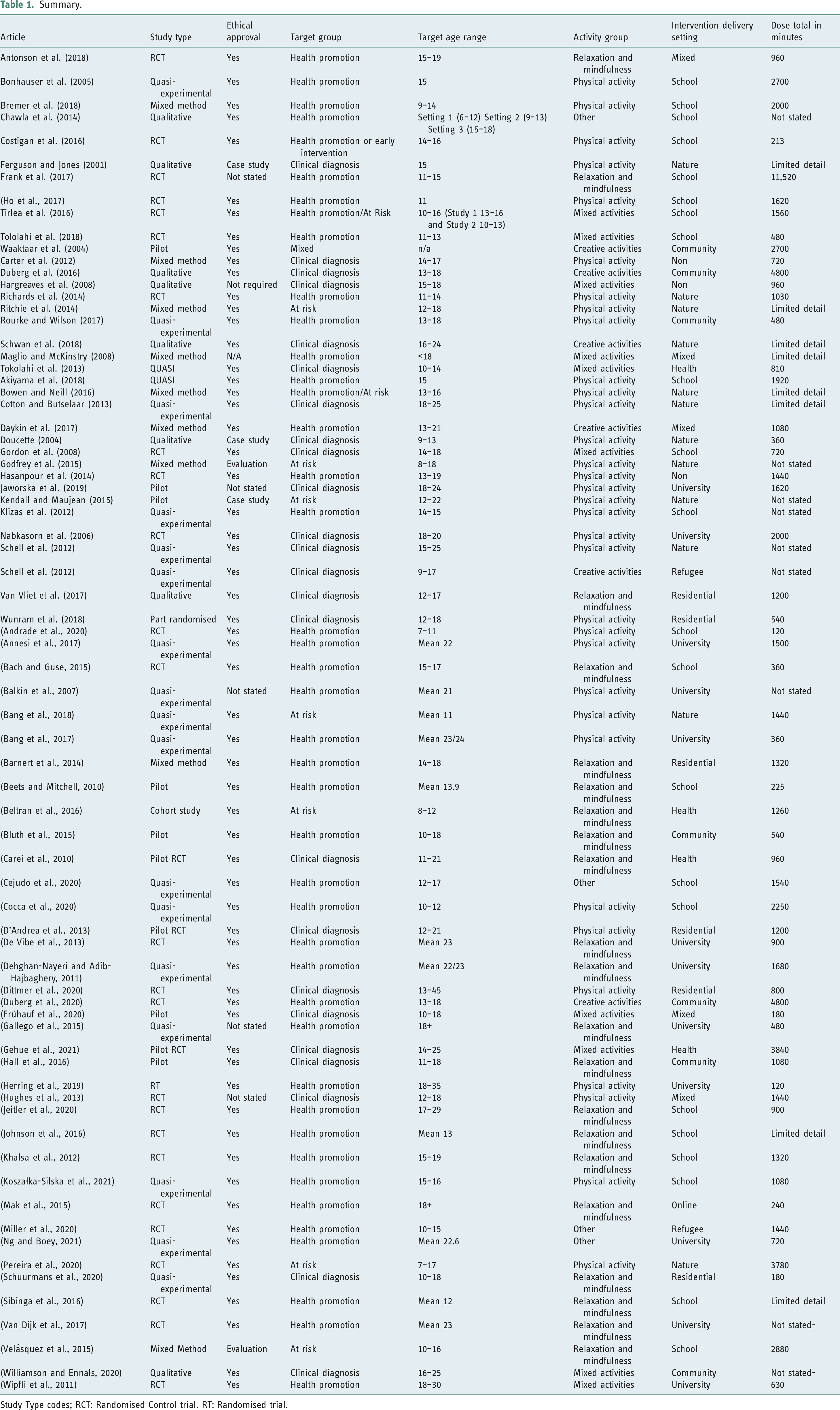
Study Type codes; RCT: Randomised Control trial. RT: Randomised trial.
A core criterion of the scoping review was that interventions should target adolescent mental health or mental wellbeing. In practice, this resulted in four ways that studies could meet the scoping review criteria: those aiming to promote good mental health among participants without clinically recognised mental health diagnosis (36%, n = 52); those that targeted participants at risk of mental health problems (9%, n = 7); those targeting participants with a mental health diagnosis (32%, n = 24), and finally, four studies were a mix of these three.
Sample recruitment in 59% (n = 44) of the studies was via schools or other educational establishment. The remaining 41% (n = 30) of studies recruited from mental health services (30%, n = 22) and other services (11%, n = 8), such as a homeless shelter, refugee camp or reservation. Schools remained the most frequent location for intervention delivery (30%, n = 22), but a diverse range of location were observed. Mental health related sites, including residential facilities, accounted for 5% (n = 4). Leisure related sites such as campsites, forests, stables or ski slopes accounted for 16% (n = 12), mixed locations 7% (n = 5), and leaving 8% (n = 6) other.
Types and quality of evidence
Study designs varied (See Table 1), n = 25 randomised control trials were identified, though not all were described as RCT’s. Other study designs included n9 described as pilots, n = 20 quasi experimental, n = 8 mixed methods, and n = 8 qualitative studies. Extraction of data based on the TIDieR intervention reporting guidelines and a quality assessment using CASP, highlighted that newer studies were typically more detailed, more comprehensive and of higher quality than older studies. Overall, the quantitative studies were generally low quality, often missing information about power calculations, confidence intervals, management of missing data and lacked analysis of similarities between groups at baseline. In regard to intervention benefits, most interventions were found to have some positive effect with few adverse consequences. No studies reported a cost-effectiveness analysis, and longer-term follow-up was limited. The often-limited generalisability of the studies, and the diversities of methodologies, intervention formats and outcome measures, suggests a meta-analysis would be inappropriate.
Independent ethical approval was clearly stated in n = 62 studies; in n = 36 cases this was from a university research ethics board, often including additional approval from other institutions. Studies typically provided minimal information of ethical considerations but most highlighted consent or age-related assent from participants and guardians. None appeared to mention the management of safeguarding. In n = 12 papers, a statement of ethical approval appeared to be absent. Two of the n = 12 studies described an intervention rather than an experiment and therefore did not require ethics (Hargreaves et al., 2008 and Maglio, 2008), n = 3 studies included anonymised case studies (Ferguson, 2001; Kendal, 2015 and Doucette, 2004) and n = 2 were described as evaluations (Godfrey et al., 2015 and Velásquez et al., 2015). It is less clear why the final n = 5 studies did not mention any ethical approval process.
Intervention content, theoretical base and scientific rationale
Rationales underpinning the use of occupation-based interventions to improve mental health varied widely, typically focusing on single occupation types (TIDieR item 2). Five studies adopted an occupation-centred perspective of how occupations interact to affect health (Maglio and McKinstry, 2008; Tokolahi et al., 2013, 2018; Frühauf et al., 2020; Williamson and Ennals, 2020).
The materials and procedures (TIDieR item 3 and 4) used in the interventions were frequently described but limited in detail, particularly in older papers. The physical exercise-based studies typically provided more detailed intervention descriptions, for example, Bremer et al. (2018), Costigan et al. (2016) or Nabkasorn et al. (2006). Most studies focused on engaging adolescents in a single prescribed designated task or occupation, such as, surfing, fitness program or leisure activities. In contrast, few studies incorporated or empowered choice in relation to occupation. Of note, one study used self-determination theory, which promotes competence, relatedness and autonomy (Duberg et al., 2016). Tokolahi et al. (2018) promoted an exploration of the relationship between engaging in occupations and feelings, with a focus on developing healthy routines. No studies, however, specifically targeted or aimed to empower, the individual adolescent to make healthy choices about what to do or how to balance different occupation-related constraints.
TIDeR Item 5, who provided the intervention varied across the studies. Typically, the descriptions of the facilitators, their skills and expertise, the role they took, their level of training and the approaches they adopted were diverse. Five interventions involved digital delivery (Andrade et al., 2020, & Cejudo et al., 2020), three of which focused on mindfulness or relaxation (Mak et al., 2015; Schuurmans et al., 2019; and Antonson et al., 2018).
Range of occupations
Based on the similarity between occupation types, it is possible to identify five main intervention groups (TIDieR item 3 and 4). Occupations related to physical activity were the most frequent type of occupation-based intervention, accounting for 43% (n = 32) of studies. A more detailed look at the physical activities showed four types: activities based around fitness and aerobics (n = 16), team sports (n = 5), outdoor non-team sports (n = 11) and two interventions that involved multiple types of physical activity. The next most frequent type of intervention was relaxation activities (n = 21), which included the subcategories of mindfulness (n = 7), yoga (n = 8), meditation (n = 2) and relaxation (n = 2). The remaining 28% (n = 21) of studies were creative activities (8%, n = 6), such as dance (n = 2), art (n = 2) and music (n = 1), mixed activities and other (n = 10). Finally, interventions specifically based on occupational therapy theory which could, but not always did, include a specific occupation (6%, n = 5). None of the interventions developed the ability to select and manage occupation.
Dose
TIDieR item eight refers to when and how much, which can also be referred to as the dose a participant receives. This was calculated using the total time a participant engaged in an intervention, which consisted of the number of times a day, number of sessions a week and duration of sessions. The intervention dose is important as it can affect outcomes and is important for conducting economic evaluations. Most papers reported on dose, but not always fully, and in some studies the dose fluctuated. To aid analysis of papers where dose fluctuated, the author calculated the average dose. Where papers reported a range, the maximum was used, and hours were converted into minutes in order to facilitate analysis. Few studies gave participants choice over when and how long to engage in the intervention. The typical number of intervention sessions a day was one. Number of sessions a week ranged between one and seven times a week with the mean average being 2.7 times a week.
The average duration of sessions was 70 min, with a range from 15 to 180 min. A total of n17 (59%) studies fell below the average. Wide variation was evident in the number of sessions offered, ranging from 3 to 100 with an average of 20. A total of n = 40 (54%) studies had fewer than 20 sessions and n9 studies did not report this information. The average total dose was 1307 min, ranging between 180 and 11,520 min. Regarding the total intervention duration, n = 32 (43%) studies fell below the average and n = 10 studies did not report any dose information. The presence of higher total durations is likely to be attributable to the camping out, outward bound based interventions that usually involve a residential stay away. Three residential interventions involving an overnight stay are excluded from the above calculations as they occurred over a number days rather than sessions over a period of weeks.
Types of measures used
The reported outcome measures were mainly self-reports. They varied widely with no consensus observed, including: standardised and non-standardised mental health related measures; parts of measures, self-designed measures, and physical health measures. Excluding assessment measures completed by parents or teachers, there were over a 100 different outcome measures or parts of measures used. Measures cover a wide variety of overlapping aspects linked to mental health and mental wellbeing, including self-esteem (n = 11 studies) and quality of life and wellbeing (n = 11 studies) as well as resilience, self-efficacy, diagnosis, affect, physical exercise, diet, substance misuse, behaviour, coping, grit, connectedness, stress and sleep. Only two occupational therapy-specific measures were identified, the Occupational Questionnaire (OQ) and the Canadian Occupational Performance Measure (COPM), suggesting that occupation-focused measures were not frequently used and that measurement of outcomes related to occupation-based studies targeting mental health needs seems varied.
Discussion and implications
The study strategy and subsequent criteria targeted interventions using occupation and was designed to improve mental health and mental wellbeing in adolescents. Seventy-four studies, including a varied sample of international studies covering a wider variety of occupational types, theoretical positions and intervention settings were identified. None of the intervention studies targeted the complexity of everyday occupations such as occupational choice or occupational balance. The reported interventions are largely prescriptive and do not appear to harness the typical developmental process towards autonomy in adolescent daily occupational choices. Despite the potential benefits, there is a paucity of research on interventions to develop occupational balance.
Types of Intervention
The studies themselves highlight considerable variation in the aspects of mental health targeted, the intervention delivery methods applied and the outcome measures used to evaluate interventions. Furthermore, the findings provide an overview of the scientific evidence utilising occupation to target mental health issues in adolescent populations, illuminating how interventions using occupation are delivered (i.e. frequency, duration and timing of sessions), the scope of the interventions offered to adolescents, and existing research gaps.
This study positions occupational therapy within the wider field of academic research literature, and highlights that the reported interventions do not appear to harness the typical developmental process towards autonomy in adolescent daily occupational choices. Principles such as enhancing engagement through meaningful occupation and supporting the development of skills to balance different occupational demands, are given high priority in adult occupation-based interventions for mental health (Kirsh et al., 2019), but were largely absent from the studies found during this review in adolescents. The current findings suggest that interventions to target specific aspects of occupational engagement in adolescent populations have either not been developed, have not been fully explored empirically, or have not been reported in the academic literature. This knowledge is of use to both clinicians in practice and researchers intending to develop or provide interventions for young people.
Of note in this review is the broad range of countries represented, particularly given the global nature of the current mental health crisis. Although countries such as Australia and Canada have a reputation for research excellence and shaping adolescent mental health care provision (Mei et al., 2020); economically and culturally, this may be out of the reach of many lower income countries (Patel et al., 2018). Interventions harnessing the value of every day occupation may, by their nature, present an alternative low cost and accessible intervention option to reduce the disease burden of mental health for countries with lower economic resources.
Theoretical underpinnings
More specifically, to the best of the researchers’ knowledge, no occupational therapy-informed intervention that specifically targets the early stages of mental illness and mental wellbeing seems to be reported in the reviewed literature. Furthermore, identified interventions primarily adopt a specific occupation type, with little choice or opportunity to choose personally meaningful activities or develop skills to do so. This is despite occupational therapy theories and other widely recognised theories, such as self-determination theory, that emphasise the importance of autonomy and choice in adolescent motivation. This is surprising in light of the importance of occupational experience in developing skills and competencies for the adult world (Sawyer et al., 2018). Thus, there is a need to develop interventions that target complexity and meaningfulness, such as occupational choice and occupational balance. The paucity of occupation-based interventions in the academic literature informed by occupational therapy theory and science is a cause for concern, considering the potential of this approach. The researcher’s prior clinical experience suggests that many interventions go unreported and there is a need for occupational therapists to evaluate adolescent-targeted mental health interventions currently used in practice.
In line with the study’s intentions, this paper presents a descriptive overview of occupation-focused and occupation-based intervention studies targeting mental health and mental wellbeing issues in adolescent populations. The application of the findings requires some caution due to the relatively low quality of some studies, including absence of ethical approval in some studies. The variable quality of reported adolescent mental health interventions has been stated in previous review studies such as Das et al. (2016), who similarly concluded that a meta-analysis was not possible due to the considerable variation that exists in terms of statistics, populations, interventions and outcomes across the studies (Das et al., 2016).
Recruitment sites
In terms of what we learn about the interventions themselves, those recruiting from and being conducted in the school setting are most common, followed by those conducted in mental health services. This echoes the findings of other review papers targeting adolescents (Das et al., 2016). Given the impact of the recent pandemic on adolescents, and the rise of online education delivery (Bhatia, 2020), the fact that the interventions reported here are primarily led by adult facilitators who are physically present during the intervention reveals a potential gap in the literature. Furthermore, the predominance of adult directed interventions in which occupation is prescribed does not reflect the importance of supporting the adolescent’s natural development of the skills competencies necessary to manage the complexities of their daily occupations in a real-world context. Interventions that can encourage or support adolescents to engage with the complexity of daily occupations in a healthy way, deliverable via online methods, may be important.
Dose
The intervention dose varied across setting but the average dose was once a day, two or three times a week, for a maximum of 70 min, although it is likely that this figure is increased by the number of residential, outward-bound interventions, and influenced by the nature of the occupation itself. Physical exercise-based activities, such as sport and yoga, were most common, a finding that is consistent with other reviews and maybe linked to a growing evidence base associating exercise with mental health (Cahill et al., 2020). Interestingly, art-based creative activities studies are limited, despite of the potential benefit to mental wellbeing (Cahill et al., 2020).
Measures
Practically, the findings provide relevant information, such as identifying outcome measures, types of intervention and typical intervention doses that can inform intervention development. The evident breadth of measures used reflects a largely unresolved issue in the study of child and adolescent mental health. Until recently, limited outcome sets existed for this population group and even in the most recent published outcome set for use in clinical practice, a lack of appropriate measures of daily occupational functioning was identified as problematic (Krause et al., 2021). The lack of appropriate validated occupation-based measures presents a challenge for those developing occupation-based interventions, but also presents an opportunity for researchers to develop robust occupation-focused outcomes. The current lack of clarity around outcome measures makes it difficult to compare, draw comparisons and build an evidence base for occupation-based or occupation-focused interventions. The multiple measures identified are problematic for meta-analysis and determining best approaches to inform guidelines and there is a need to determine core outcomes for this area.
Contrasts to other reviews
In contrast to the studies conducted by Cahill et al. (2020) Novak and Honan (2019), Bendixen and Kreider (2011), Arbesman et al. (2013), and Brooks and Bannigan (2021), this study maps and describes the key characteristics of interventions using occupation or activity to specifically address the mental health issues of adolescents and young people. Occupational therapy intervention studies are positioned within the breadth and variety of other interventions that include and use occupation or activity to specifically target mental health issues, while illuminating details about duration, types of activity and the outcomes measures used in this field. Furthermore, by excluding neuro-developmental disorders such as autism and ADHD, a clearer picture emerges of the limited number of intervention studies targeting mental illness in this population. This study informs the need for occupational therapy intervention research but can also be used to inform the development of interventions.
Limitations
Although this study potentially represents a comprehensive scoping review of this topic, terminology and search strategy are a challenge to those seeking occupation-focused or occupation-based literature. A reality, confirmed in this study, is that multiple iterative steps were required to refine an effective search strategy which included the addition of peer-reviewed articles found through other papers. Furthermore, the broad scoping search strategy required to identify relevant peer reviewed articles produced a high number of results, consequently a broader search of the ‘grey literature’ was not conducted. When compared with other recently published reviews, such as the newly published review by Cahill et al. (2020), the terminology and search strategy challenge is further emphasised by the variation in the papers identified. It is interesting to note that Cahill et al. (2020) do not clearly report their search strategy, but refer to a strategy reported in a previous paper that searched by intervention type and diagnosis. This approach is questionable, given the breadth of occupations potentially used by occupational therapists and the related risks of inadvertently omitting a relevant intervention from the search strategy.
Conclusion
Overall, the application of finding from these studies requires some caution. This study highlights a need to develop robust studies that are both occupation-based and occupation-focused for adolescents. Seventy-four studies were identified, but few were based on occupational therapy theory. More specifically, the review has highlighted the apparent lack of reported interventions designed in collaboration with young people, that are developmentally targeted at specific small age ranges such as 16–17 year-olds, and that evaluate choice or support healthy occupational balance. Similarly, the vast array of measures used in this field is problematic to building the evidence base through recognised synthesis or meta-analysis methods. This study highlights a need to design, develop and test developmentally appropriate interventions in collaboration with young people, which are informed by occupational therapy and occupational science. However, testing the effectiveness of interventions using occupation requires greater agreement and clarity about outcomes of concern and how they should be measured.
Supplemental Material
Supplemental Material - A scoping review of interventions using occupation to improve mental health or mental wellbeing in adolescent populations
Supplemental Material for A scoping review of interventions using occupation to improve mental health or mental wellbeing in adolescent populations by Jackie Parsonage-Harrison, Mary Birken, David Harley, Helen Dawes and Mona Eklund in British Journal of Occupational Therapy.
Key findings
Robust development, testing and reporting of interventions that promote or support the mental health and wellbeing of adolescents is needed. Interventions should be developmentally appropriate, scaffolding natural development process and designed in collaboration with adolescents.
What the study has added
Key characteristics of occupation-based interventions reported in the peer reviewed literature have been identified and described. Research gaps and a need for further research illuminated.
Footnotes
Acknowledgments
With special thanks to the Elizabeth Casson Trust for the sponsorship that enabled the study to be undertaken. The views expressed in this paper are those of the authors and do not necessarily represent those of the Elizabeth Casson Trust or other organisations they represent.
Research ethics
Ethical approval was not required for this study. Ethical issues in relation to the papers identified in the review are discussed in the paper.
Declaration of conflicting interests
The author(s) declared no potential conflicts of interest with respect to the research, authorship, and/or publication of this article.
Funding
The Elizabeth Casson Trust funded the PHD and subsequent research fellow role, through which this study was developed.
Patient and Public Involvement data
During the development, progress, and reporting of the submitted research, Patient and Public Involvement in the research was: Not included at any stage of the research.
Statement of contribution
JP-H coordinated and ran this project including: developing and writing the protocol, conducting the literature searches, coordinating the review of identified literature, conducted analysis and wrote first draft of manuscript. Senior collaborators HD and ME provided oversight through-out the development and execution of the project. MB and DH acted as second reviewers, contributing to the discussion about inclusion and exclusion of articles. All authors have reviewed and contributed to the editing of this manuscript and approved the final version.

Supplemental Material
Supplemental material for this article is available online.
References
Supplementary Material
Please find the following supplemental material available below.
For Open Access articles published under a Creative Commons License, all supplemental material carries the same license as the article it is associated with.
For non-Open Access articles published, all supplemental material carries a non-exclusive license, and permission requests for re-use of supplemental material or any part of supplemental material shall be sent directly to the copyright owner as specified in the copyright notice associated with the article.
