




Abstract
Self-regulation is the basic capacity to regulate one’s thoughts, emotions, and behaviors. The aim of the present study is to examine the psychometric properties of the Self-Regulation Scale (SRS) among male and female Portuguese youth participants (N = 559 youth, M = 16.51 years, SD = 1.07, range = 14–20 years). The three-factor model composed of the Emotional, Cognitive, and Behavioral regulation subscales obtained adequate fit, although the fit of the second-order model was also acceptable. Internal consistency as measured by the alpha and omega reliability estimators was good. Significant associations were found with psychometric measures of relevant constructs (e.g., self-control, psychopathic traits, criminogenic cognitions), and external criterion-related variables (e.g., engaging in activities against the law, alcohol and drug abuse). Cross-gender measurement invariance was supported, with females scoring significantly higher on the Cognitive regulation subscale, and males scoring significantly higher on the Emotional regulation subscale. The findings support the use of the SRS to validly and reliably measure self-regulation in Portuguese youth.
Plain Language Summary
The measurement of psychological constructs is a very important part of scientific research, including in forensic psychology/psychiatry and criminology. Self-regulation is conceptualized as the capacity to modulate emotions, attention and behavior, and has been linked to serious and violent juvenile delinquency. The Self-Regulation Scale (SRS) is an important measure of self-regulation. This study examined the psychometric properties of the SRS among male and female Portuguese youth participants (N = 559). Our findings support the use of the SRS measure to conduct empirical research among youth.
Introduction
Self-regulation—the overarching capacity to control one’s thoughts, emotions, and behaviors—is a fundamental component of human functioning. It enables adaptation to social and cultural norms, supports goal-directed behavior, and moderates emotional and behavioral impulses in everyday life. Unsurprisingly, self-regulation figures prominently across major psychological and criminological theories, including the general theory of crime (Gottfredson & Hirschi, 1990), developmental taxonomy (Moffitt, 1993), general strain theory (Agnew, 1992), temperament theory (DeLisi & Vaughn, 2014), and the p factor model of psychopathology (Caspi et al., 2014). Across these frameworks, self-regulation is conceptualized as a multidimensional construct encompassing emotional, cognitive, and behavioral control, each contributing to adaptive functioning and resilience.
Self-regulatory capacity has been consistently linked to a wide range of psychological, social, and behavioral outcomes, including physical health, depression, substance dependence, socioeconomic attainment, family and relationship functioning, and involvement in crime and violence (Billen et al., 2022; Caspi et al., 2016; DeLisi & Vaughn, 2011; Frías-Armenta et al., 2012; Moffitt et al., 2011; Nigg, 2017). In forensic and criminal justice contexts, self-regulation provides a foundation for rehabilitation and intervention programs that target behavioral control and adaptive coping. Yet, despite its centrality, the construct has been defined inconsistently, with boundaries that overlap with related domains such as impulsivity, executive functioning, and delay of gratification (de Ridder et al., 2012; Duckworth & Kern, 2011; Gottfredson & Hirschi, 1990). This conceptual overlap has contributed to measurement challenges and theoretical ambiguity, underscoring the need for standardized instruments that capture self-regulation as a multidimensional, developmentally sensitive construct (Novak & Clayton, 2001).
The Self-Regulation Scale (SRS; Novak & Clayton, 2001) was developed to meet this need and comprises three subscales—Emotional, Cognitive, and Behavioral Regulation—designed to capture distinct but interrelated components of self-regulatory functioning. Emotional regulation reflects the capacity to manage distress and frustration; cognitive regulation involves planning and goal setting; and behavioral regulation encompasses impulse control and attentional focus (Novak & Clayton, 2001). Originally created to examine how context influences patterns of progression in cigarette smoking behavior, the SRS has since been widely applied in normative, educational, clinical, and forensic settings, demonstrating strong psychometric properties and consistent associations with academic achievement, emotional well-being, prosocial behavior, and reduced internalizing and externalizing symptoms (Crandall et al., 2017; Hardy et al., 2020; Liu et al., 2018; Memmott-Elison & Moilanen, 2021; Rogers et al., 2019; Xiao et al., 2025).
Most validation studies have supported the original three-factor correlated structure of the SRS (e.g., Gajda et al., 2022; Zhou et al., 2016), consistent with the conceptualization of self-regulation as comprising interdependent but distinguishable domains. However, alternative structural representations have also been explored. Rodzeń and Gajda (2024) confirmed the three-factor structure using a higher-order model that incorporated two behavioral subdimensions—hyperactivity and attention—reflecting the multidimensional nature of behavioral regulation. Given these variations, it remains unclear whether self-regulation is best represented by interrelated first-order factors, a single higher-order construct, or a model that includes specific subdimensions. Establishing how well these structural models generalize across linguistic and cultural contexts is therefore critical.
Evidence from cross-cultural research suggests that the SRS performs robustly across diverse cultural contexts, including China, Poland, South Korea, Malaysia, Nigeria, and Croatia, with studies reporting strong internal consistency (α = .72–.96) and good model fit (CFI ≥ .90, RMSEA ≤ .06; Gajda et al., 2022; Kurtović et al., 2021; Lee et al., 2012; Ujunwa et al., 2020; Zulkefly et al., 2021; Zhou et al., 2016). Nonetheless, subtle cultural differences in how individuals interpret, and report, regulatory behaviors have been observed, likely reflecting variations in socialization, educational norms, and expectations surrounding emotional expression (Rodzeń & Gajda, 2024). To date, no studies have validated the SRS among Portuguese speakers. Establishing its validity in this population is particularly important because Portugal’s sociocultural context emphasizes interpersonal harmony, respect for social norms, and emotional moderation, consistent with broader Southern European collectivist tendencies (Hofstede et al., 2010; Inglehart, 2020). These cultural orientations may influence how adolescents perceive and report emotional and behavioral control. Moreover, Portuguese educational and family systems traditionally emphasize behavioral discipline, responsibility, and goal-directed planning as core developmental values (Simões & Calheiros, 2016), potentially accentuating cognitive aspects of regulation. Testing the SRS in Portuguese speakers therefore allows for a rigorous evaluation of the scale’s cross-cultural generalizability and structural validity.
Developmental stage may also influence the performance of the SRS. Although self-regulation develops across the life span, adolescence represents a critical period of neural, emotional, and social reorganization during which regulatory systems become increasingly integrated (Farley & Kim-Spoon, 2014; Jaramillo et al., 2017; Montroy et al., 2016). While early self-regulation predicts lifelong outcomes, evidence suggests that targeted interventions in adolescence and emerging adulthood can still yield substantial benefits (Richmond-Rakerd et al., 2021). Because self-regulatory capacities continue to consolidate during this stage, factor structures established in adult or mixed-age samples may not generalize directly to youth populations. Differences in emotional reactivity, planning ability, and impulse control across development (Casey et al., 2008; Nigg, 2017), further highlighting the importance of validating the SRS among adolescents to ensure developmental sensitivity and applicability for research and intervention.
In addition to cultural and developmental influences, potential sex differences warrant consideration. Research on sex differences in self-regulation has produced mixed results. Meta-analytic and longitudinal studies indicate that females often demonstrate higher levels of emotional and behavioral regulation, effortful control, and empathy (Else-Quest et al., 2006; Montroy et al., 2016; Nigg, 2017), whereas males typically exhibit greater impulsivity and externalizing behaviors (DeLisi & Vaughn, 2011; Krueger et al., 2007). Neurodevelopmental research suggests that brain regions supporting regulatory control (e.g., prefrontal and anterior cingulate cortices) mature earlier in females (Lenroot & Giedd, 2010), which may contribute to observed mean-level differences during adolescence. However, such differences may instead reflect variations in expression rather than true underlying differences. Prior cross-cultural work with the SRS and related constructs (e.g., Zhou et al., 2016) indicates that while males and females may differ in average scores, the latent dimensions of self-regulation remain consistent across groups. Determining whether the SRS measures self-regulation equivalently across males and females, that is, whether the same factor structure and item loadings apply to both groups, is essential for ensuring that any observed differences reflect true variations in self-regulatory ability rather than measurement bias. Together, these cultural, developmental, and gender considerations underscore the importance of evaluating the SRS’s psychometric properties among Portuguese adolescents and across biological sex.
The Current Study
Building on this prior evidence, the present study evaluated the psychometric properties of the SRS among Portuguese adolescents. Although we also test higher-order and bifactor representations, we expect that a correlated-factor model would best capture the construct’s latent structure in this sample due to the evidence that emotional, cognitive, and behavioral regulation represent interrelated but distinct processes (Moffitt, 1993; Nigg, 2017) and to align with frameworks emphasizing multidimensional, domain-specific processes that jointly promote adaptive functioning (de Ridder et al., 2012; Novak & Clayton, 2001).
In addition, we assessed measurement invariance across biological sex, as gendered socialization and cultural norms may influence the expression of regulatory behaviors without altering their underlying structure (Farley & Kim-Spoon, 2014; Jaramillo et al., 2017). Prior cross-cultural work suggests the presence of measurement invariance across gender in Chinese children (Zhou et al., 2016), supporting our expectation of configural and metric invariance across male and female adolescents. Consistent with prior research, we anticipated small mean-level differences across subscales, with females showing higher cognitive and behavioral regulation and males displaying higher emotional reactivity and impulsivity (Else-Quest et al., 2006; Montroy et al., 2016; Nigg, 2017).
To evaluate construct validity, we examined associations between the SRS and related psychological constructs that reflect both adaptive and maladaptive aspects of self-regulation. Self-regulation is conceptually intertwined with self-control and executive functioning (de Ridder et al., 2012), and prior research has shown positive correlations between SRS scores and measures of self-control and emotional regulation (Gajda et al., 2022; Liu et al., 2018), which we expected to replicate here. Conversely, deficits in self-regulation are theoretically linked to higher psychopathic traits, antisocial behavior, and delinquency (DeLisi & Vaughn, 2011), and we expected these relationships to emerge in the current sample as well. Examining these relationships provides evidence of convergent and discriminant validity.
To assess criterion-related validity, we examined associations between the SRS and real-world behavioral outcomes, specifically, engaging in illegal activities and alcohol, tobacco, and drug use, that are conceptually tied to self-regulatory control. Poor self-regulation is consistently implicated in the onset and persistence of externalizing behaviors (DeLisi & Vaughn, 2011; Moffitt et al., 2011; Rollins & Crandall, 2021), making these outcomes particularly relevant for testing the scale’s applied and predictive utility in both community and forensic youth contexts.
Finally, we evaluated known-groups validity, testing whether the SRS differentiates among theoretically relevant subgroups. Prior research indicates that individuals engaging in antisocial or substance-related behaviors typically exhibit poorer self-regulation (Crandall et al., 2018; DeLisi & Vaughn, 2011; Rollins & Crandall, 2021). Similarly, mean-level sex differences have been documented, with females generally demonstrating higher cognitive regulation and males demonstrating higher emotional reactivity (Else-Quest et al., 2006; Montroy et al., 2016; Nigg, 2017). Documenting such expected patterns would provide evidence of the scale’s discriminative power.
Accordingly, we made the following hypotheses: that the SRS would (a) demonstrate a correlated three-factor structure with adequate model fit relative to alternative one-factor, higher-order, and bifactor representations; (b) exhibit measurement invariance across biological sex, indicating structural equivalence of the factor solution for male and female adolescents; (c) show strong internal consistency and significant positive intercorrelations among the Emotional, Cognitive, and Behavioral Regulation subscales; (d) display expected patterns of construct validity, evidenced by positive associations with self-control and negative associations with psychopathic traits and antisociality; (e) demonstrate criterion-related validity through significant negative correlations with engagement in illegal activities and substance use behaviors; and (f) demonstrate known-groups validity, with females expected to show higher scores on Cognitive and Behavioral Regulation and males higher scores on Emotional Dysregulation, consistent with prior research.
Method
Participants
The current sample consisted of 559 youth (M = 16.51 years, SD = 1.07, range = 14–20 years) from Portugal, composed of female participants (n = 272, M = 16.42 years, SD = .98, range = 14–20 years) and male participants (n = 287, M = 16.61 years, SD = 1.13, range = 14–20 years). Most participants reported being Portuguese nationals (88.9%), white/Caucasian (87.7%), from a two-parent household (57.6%), from an urban/semi-urban background (91.2%), and having an average of 10 years of education (SD = .91, range 8–12 years). About 23% reported having engaged in illegal activities, about 8% reported having had problems with the law/police, and less than 1% reported having been sentenced to detention/incarceration.
The sample was a convenience sample collected using presential questionnaire collection (i.e., participants were asked to take the questionnaires listed in the materials in an appropriate individual or small group setting). The main exclusion criteria included being younger than 14 years old, being older than 20 years old, and not understanding the Portuguese language. The sample was collected from schools situated in southern Portugal (e.g., Setúbal, Seixal, Faro, Portimão). The response rate was about 93%. Anonymity was preserved (i.e., no form of identification was collected). Standard mandatory informed consent was obtained from all willing participants. No form of compensation, financial, monetary or otherwise, was provided for participating in this study. Questionnaires with missing values were excluded from the study.
The ethics committees (of the Directorate General of Education—Ministry of Education of Portugal, and of the University where the first author is affiliated) granted authorization to conduct the present study. Data collection was part of a larger study about criminal recidivism among juveniles and adults. The current investigation follows the ethical standards of the 1964 Declaration of Helsinki, and its amendments.
Measures
Demographics
A sociodemographic self-report questionnaire designed to measure the usual relevant variables (e.g., ethnicity, nationality, sex, education, family household) was created to provide sociodemographic information. This questionnaire also included some criminal questions regarding having been in trouble with the law as a defendant, having been arrested by the police, having been sentenced to detention/prison, and using alcohol/drugs.
Procedures
The recommended translation/back-translation method (American Educational Research Association—AERA et al., 2014) was followed to fulfill the cross-cultural translation and subsequent validation process of the SRS. The translation into Portuguese was conducted taking into consideration both conceptual and linguistic issues. The back-translation was then independently executed by a native English speaker translator fluent in Portuguese. After that, the original SRS and its back-translated version were compared in terms of equivalence. Then, a pilot study was subsequently conducted to make sure the participants could easily understand the items. This brought to a close the translation/back-translation procedure of the Portuguese version of the SRS (available from the main author upon request).
Data Analyses
SPSS Statistics v28 software (IBM SPSS, 2021) was used to conduct traditional psychometric analysis procedures. For example, descriptive statistics, ANOVAs (with power estimation and partial Eta squared effect size—η p 2), Pearson correlations (low if <.20, high if >.50, moderate if in between), and reliability. Internal consistency reliability was examined using ordinal Cronbach’s alpha (α), item-total correlations (ITC; adequate if >.20), and mean item intercorrelations (MII; adequate if in the range .15–.50), but also ordinal McDonald’s omega (ω; marginal if >.60, adequate if >.70, good if >.80; excellent if >.90 (Marôco, 2021; Simms & Watson, 2007). The use of omega is becoming increasingly recommended because it is a better estimator of reliability (Hayes, & Coutts, 2020).
EQS v6.4 software (Bentler & Wu, 2018) was used to conduct Confirmatory Factor Analysis (CFAs) procedures, employing the Maximum Likelihood Robust (MLR) estimator and covariance and correlation matrixes. The following usual indexes were taken into account: Comparative Fit Index (CFI), and Incremental Fit Index (IFI), Root Mean Square Error of Approximation (RMSEA90% CI), and lowest Akaike Information Criterion (AIC); for an adequate model fit: CFI and IFI>.90, RMSEA 90%CI<.08, and lowest AIC; for a good model fit: CFI and IFI>.95, RMSEA 90%CI<.06, and lowest AIC. We also considered the Satorra-Bentler scaling correction chi-square (SBχ2) and degrees of freedom (df) ratio. Sample size was mostly in accordance with the rule-of-thumb of at least a ratio of 10 participants per item when conducting, and the recommended cut-off for the exclusion of items was a <.40 standardized loading (Blunch, 2016).
First, different CFA models were examined using EQS: a 1-factor model where all the items loaded on one factor; a 3-factor model with intercorrelated factors where items loaded onto the three factors (Emotional, Cognitive, and Behavioral); a 3-factor second order model with first-order uncorrelated factors where items loaded onto the three factors (Emotional, Cognitive, and Behavioral); and a 3-factor bifactor model with first-order uncorrelated factors where items loaded onto their specific three factors (Emotional, Cognitive, and Behavioral) and onto a general higher factor. Modification indices (MI; that is, statistical procedures used to identify potential improvements to a model by indicating the expected decrease in chi-square goodness-of-fit if a specific parameter—path or constraint—is added or freed) were used to improve the fits of the models if necessary. Measurement invariance was then examined using EQS by conducting multigroup CFA using ΔSBχ2(df), CFI(ΔCFI), and RMSEA (90% C.I.) (Chen, 2007; Cheung & Rensvold, 2002; Putnick & Bornstein, 2016; van de Schoot et al., 2012), using the standard procedures described by Byrne (2006).
Results
We began by conducting CFA. Item 19 (“I spend money without thinking about it first.”) performed very poorly and was subsequently excluded due to low loadings below .30 among the total combined sample and the male and female subsamples. Table 1 shows the different goodness of fit indices obtained with regard to the CFA models examined. The three-factor intercorrelated model with MI (between item 10. “I develop a plan for all my important goals” and item 11. “I put my plans into action”), the three-factor 2nd order model with MI (also between item 10 and item 11), and the three-factor bifactor model obtained satisfactory fits. However, the three-factor bifactor model (Bornovalova et al., 2020; Brunner et al., 2012) demonstrated some loadings that were low or negative for specific factors and/or the general higher factor (e.g., item 3, item 14). The one-factor model obtained unsatisfactory fits.
Fits for the Different Models of the SRS.
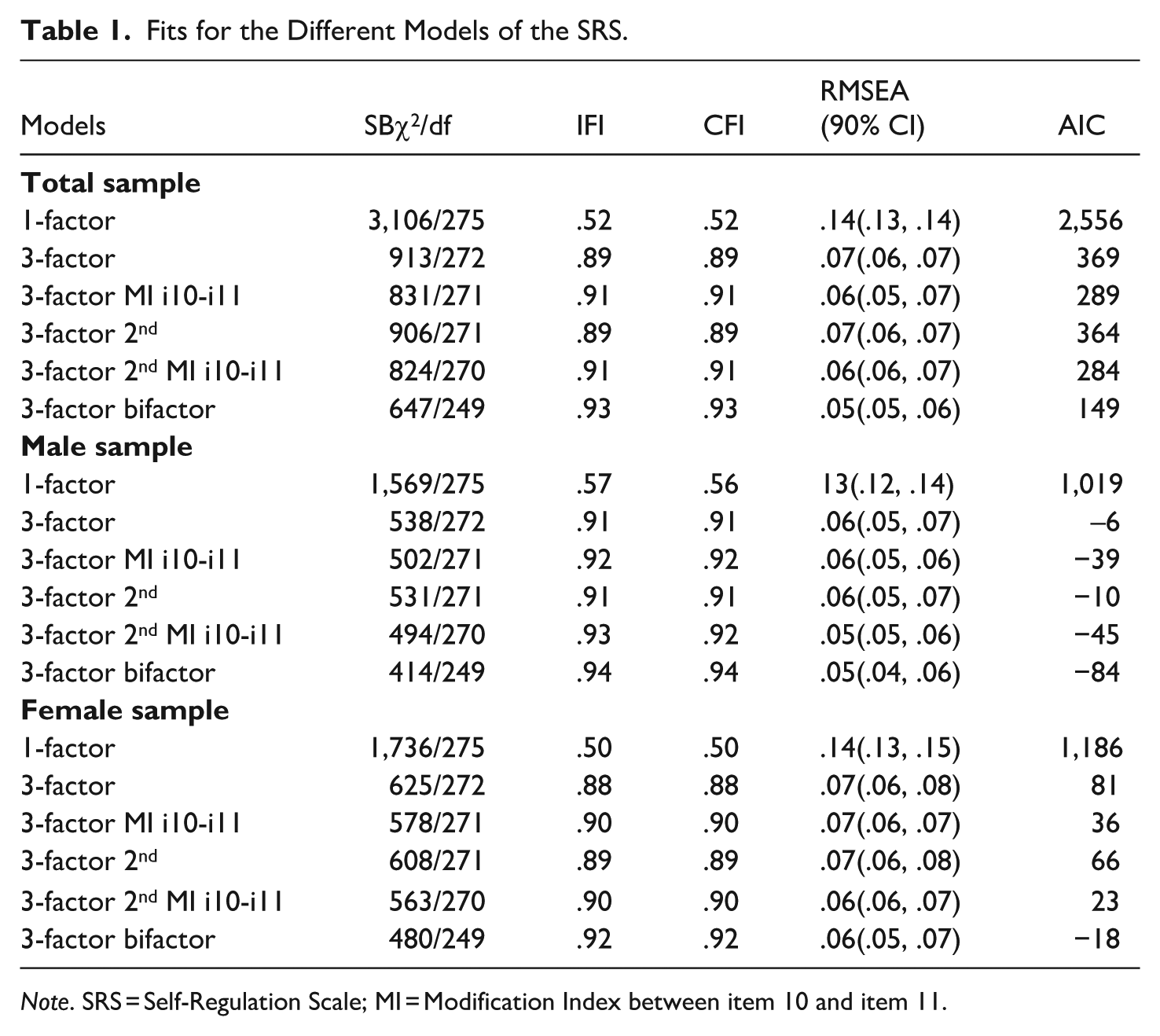
Note. SRS = Self-Regulation Scale; MI = Modification Index between item 10 and item 11.
Table 2 displays the CFA item loadings for the three-factor intercorrelated model with MI of the SRS among the total combined sample and the male and female subsamples, which, consistent with the previous literature, was our model of choice. All items loaded above the .40 recommended cutoff.
Standardized Loadings for the SRS.
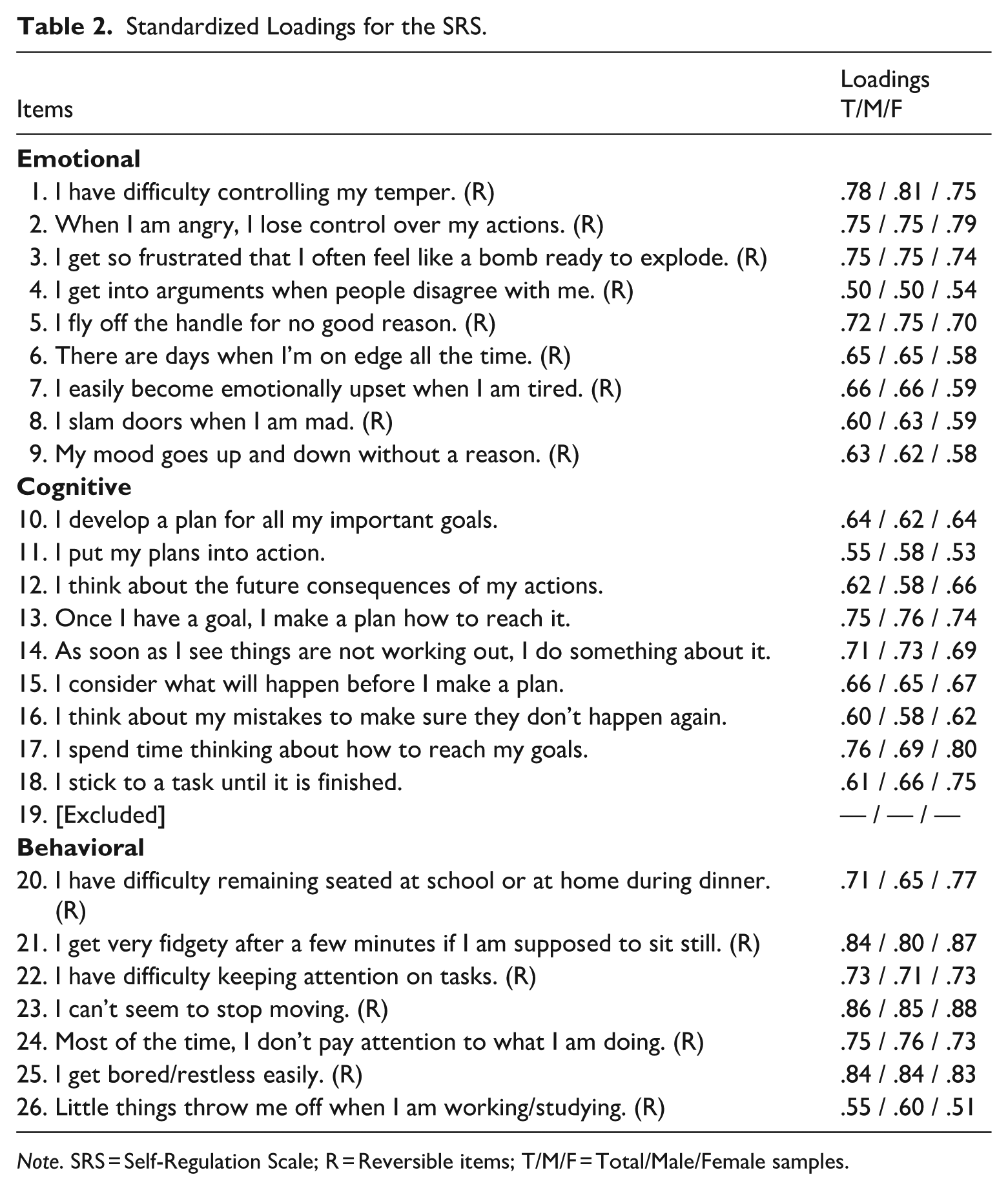
Note. SRS = Self-Regulation Scale; R = Reversible items; T/M/F = Total/Male/Female samples.
Table 3 shows the cross-gender invariance analysis of the SRS. The ΔSBχ2 (df) were non-significant, and the CFI and RMSEA (90%C.I.) results can be considered satisfactory. Additionally, the ΔCFI was less than .01 (Chen, 2007; Putnick & Bornstein, 2016). Such results strongly suggest the presence of both weak and strong measurement invariance.
Cross-Gender Invariance of the SRS.
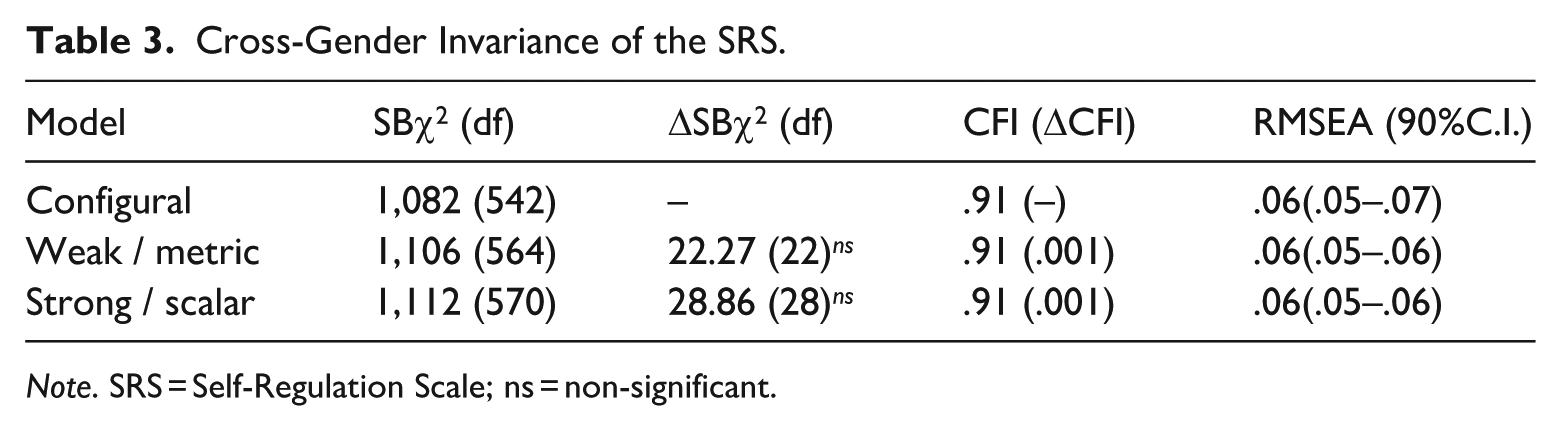
Note. SRS = Self-Regulation Scale; ns = non-significant.
Table 4 shows the correlation matrix of the SRS total and its subscales across the different subsamples. These were positive and statistically significant. It is important to mention that the associations between the Emotional and Cognitive factors were low, but still significant.
Correlation Matrix of the SRS Total and Its Subscales.
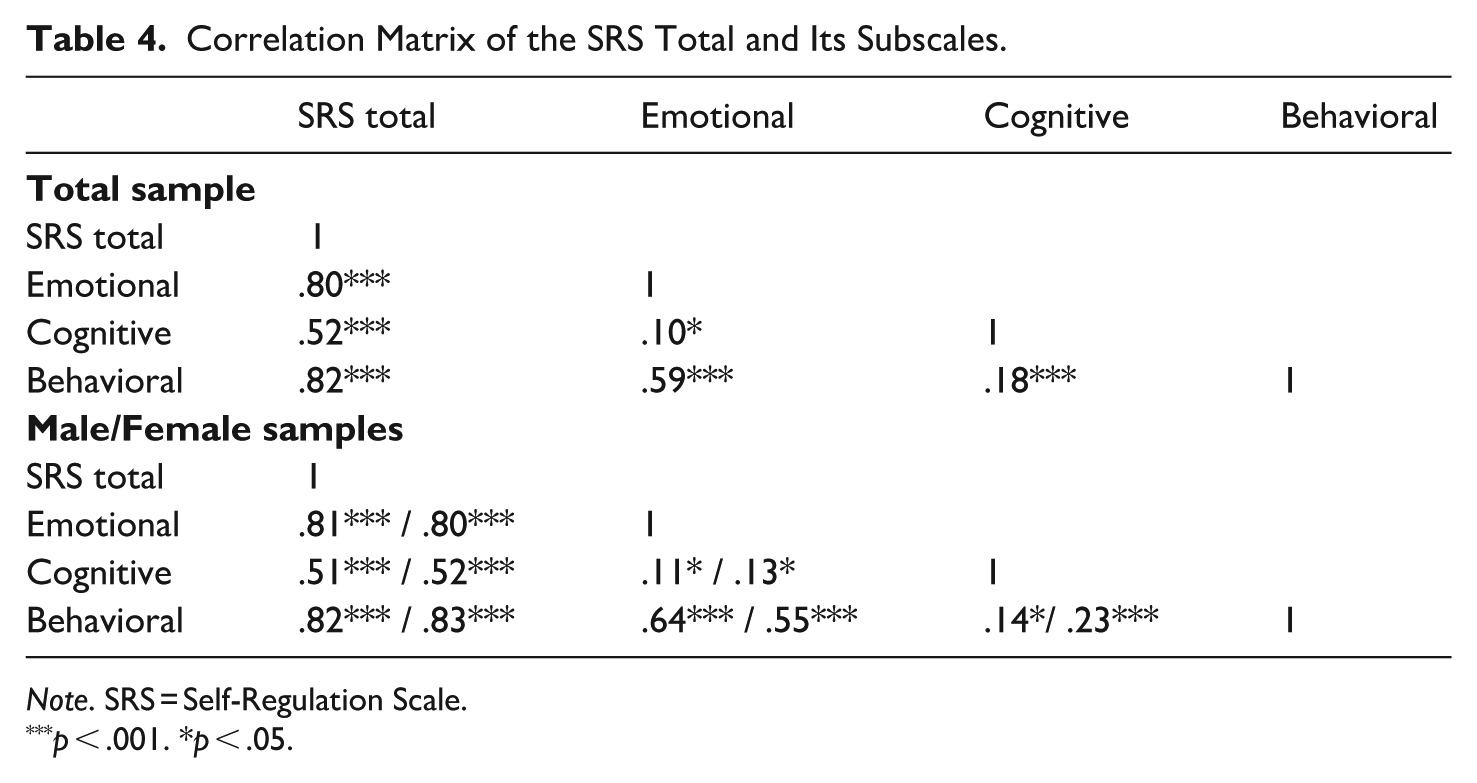
Note. SRS = Self-Regulation Scale.
p < .001. *p < .05.
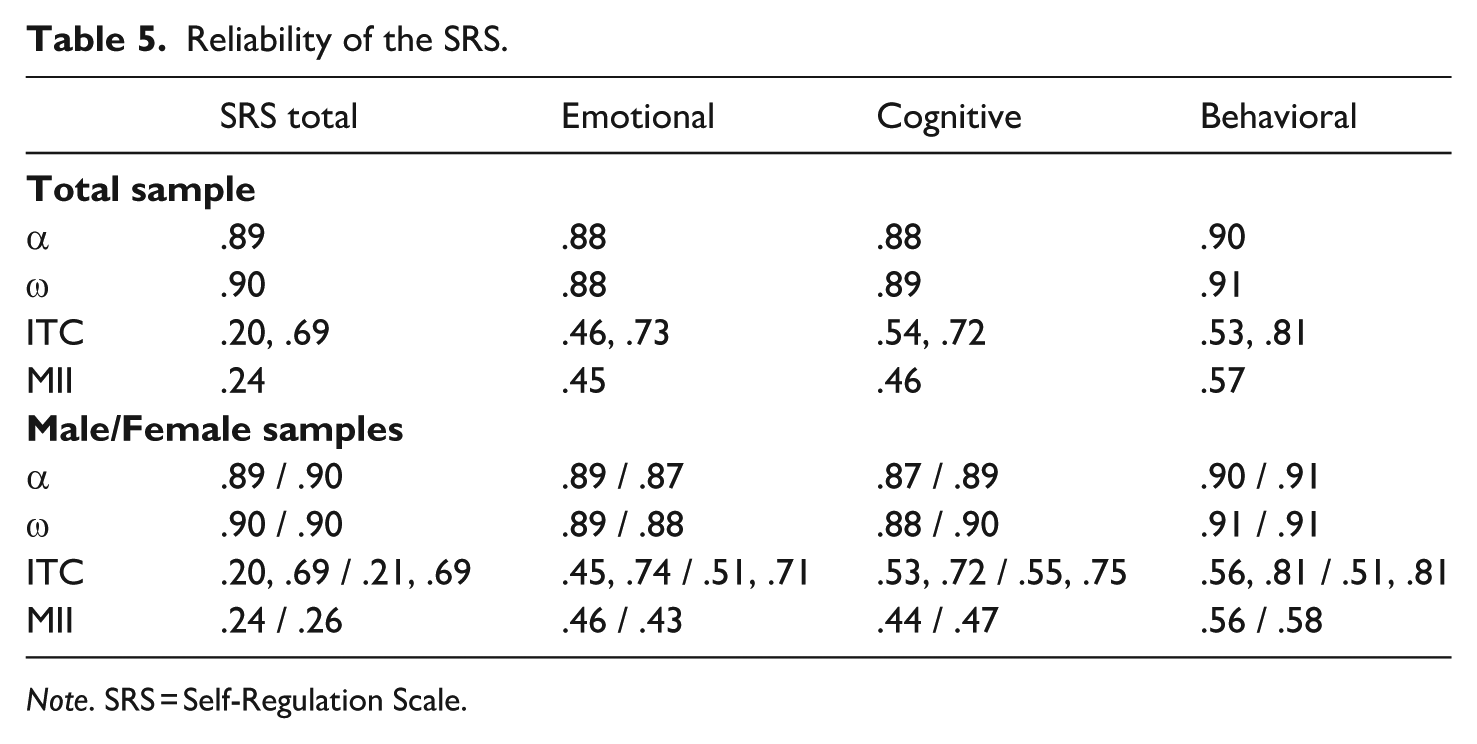
Table 5 shows the internal consistency/reliability values across the total sample and the male and female subsamples. The alpha and omega coefficients were above .80. These values can be considered mostly good.
Reliability of the SRS.
Note. SRS = Self-Regulation Scale.
Table 6 shows the correlations of SRS with other psychometric measures used to establish construct validity. The convergent validity patterns were examined with measures of constructs of self-control, psychopathic traits, and antisociality/criminality, among others. The expected associations were mostly obtained, with the exception of the Behavioral factor which presented some unexpected non-significant results with the prosocial and light traits of personality measures.
Associations of the SRS with Other Psychometric Measures.
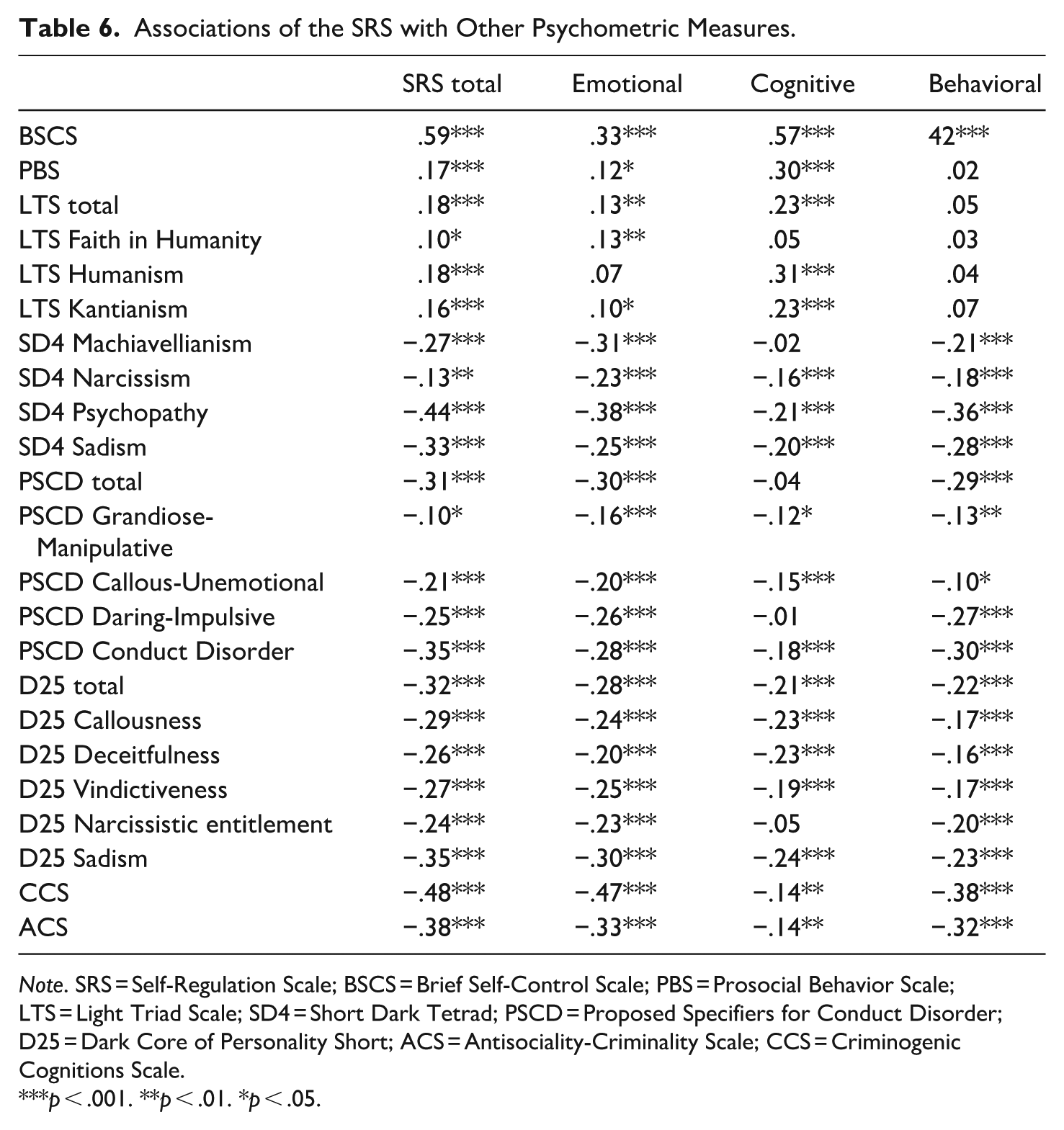
Note. SRS = Self-Regulation Scale; BSCS = Brief Self-Control Scale; PBS = Prosocial Behavior Scale; LTS = Light Triad Scale; SD4 = Short Dark Tetrad; PSCD = Proposed Specifiers for Conduct Disorder; D25 = Dark Core of Personality Short; ACS = Antisociality-Criminality Scale; CCS = Criminogenic Cognitions Scale.
p < .001. **p < .01. *p < .05.
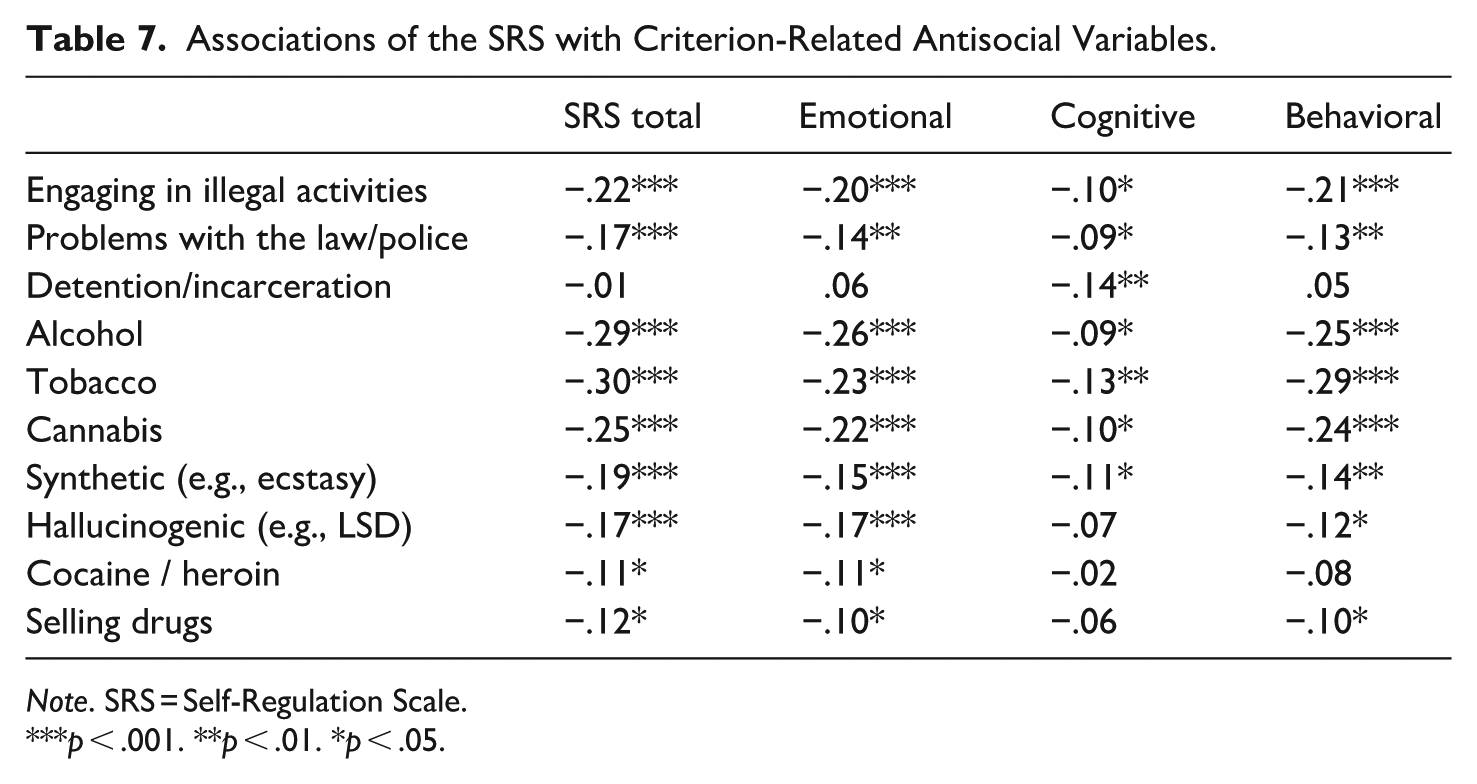
Table 7 displays the criterion related validity patterns with external antisocial variables of engaging in illegal activities (i.e., activities against the law), and alcohol and drug use, among others. The strongest negative association with the criminal variables was between the SRS total score and the Engaging in illegal activities variable, while strongest negative association with the substance use variables was between the SRS total score and the tobacco use variable.
Associations of the SRS with Criterion-Related Antisocial Variables.
Note. SRS = Self-Regulation Scale.
p < .001. **p < .01. *p < .05.
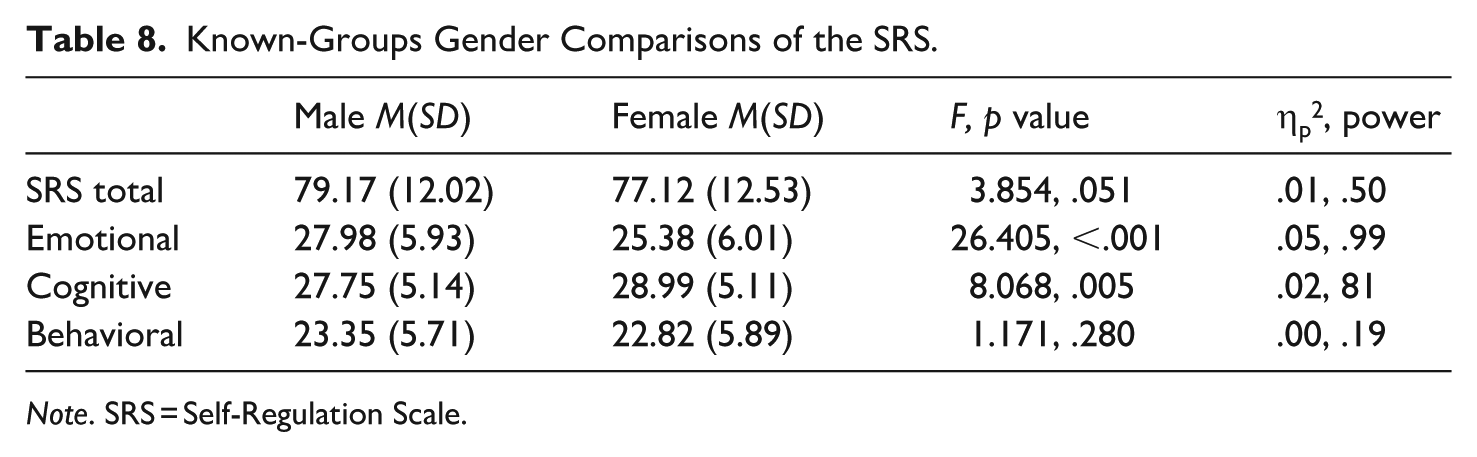
Finally, Table 8 displays SRS means and gender group comparisons. Differences emerged regarding the Emotional factor, with males obtaining significantly higher scores, and Cognitive factor, with females obtaining significantly higher scores. No significant differences were found in terms of the SRS total score and the Behavioral factor.
Known-Groups Gender Comparisons of the SRS.
Note. SRS = Self-Regulation Scale.
Discussion
The aim of the present study was to examine the psychometric properties of the SRS. First, taking into consideration the results of the CFAs, the three-factor intercorrelated model with MI (between item 10 and item 11 due to the semantic proximity between these items, that is, the stronger similarity in their semantic content) and the three-factor 2nd order model with MI (between item 10 and item 11) obtained adequate fits. The three-factor bifactor model also obtained adequate fits but demonstrated some low or negative loadings that strongly suggested that the model should be rejected (Bornovalova et al., 2020). Overall, such results are in line with previous psychometric investigations of the SRS that mostly confirmed the presence a three-factor model (see e.g., Gajda et al., 2022; Zhou et al., 2016). However, the adequate fit of the three-factor 2nd order model also legitimizes the use of an SRS total score. Such results lead us to conclude that the evidence is mixed regarding the presence of an overarching self-regulation factor that explains the relationship between the first-order factors. We are not aware of previous studies confirming the presence of a three-factor 2nd order model regarding the original SRS, although in the short 12-item Polish version of the SRS, Rodzeń and Gajda (2024) added two second-order factors to the behavioral dimension in order to keep the structure more consistent with the structure of the original measure (Gajda et al., 2022; Novak & Clayton, 2001). It is possible that there are specificities of the Portuguese translation/culture that facilitate the emergence of such a second-order latent structure. Item 19 (“I spend money without thinking about it first”) had to be excluded due to low loadings below .30 among the different subsamples. This item was also removed in Zhou et al. (2016) due to cross-loading on multiple factors, suggesting that this item may perform less well in some societies/cultures, in part due to limited financial independence among Chinese and Portuguese youth.
Our cross-gender measurement invariance examination of the SRS revealed the presence of weak and strong invariance. We are not aware of previous studies examining measurement invariance examination of the SRS among adolescents per se. However, such results are mostly compatible with the findings supporting cross-gender measurement invariance of the SRS among Chinese children (Zhou et al., 2016). Such findings suggest that gender comparisons are valid, and that measurement error doesn’t differ significantly across males/females. Our Pearson correlation matrix of the SRS and its factors using the total combined sample and the male and female subsamples revealed the expected positive significant associations. The associations between the Emotional and Cognitive factors were low, but still significant. This is consistent with previous studies (see e.g., Gajda et al., 2022).
Regarding our reliability findings, the alpha and omega coefficients’ values of the SRS and its three factors mostly revealed good results, clearly above .80 and even reaching .90. Such values are consistent, and even better, than the ones from previous validation studies of the SRS (see e.g., Lee et al., 2012; Ujunwa et al., 2020; Zhou et al., 2016; Zulkefly et al., 2021). The ITC values were always above the .20 cutoff and can thus also be considered good. The MII values were mostly good, with the exception of the Behavioral factor among the total combined sample and the male and female subsamples due to the fact the respective values were above the recommended .50 upper limit, suggesting some excessive item homogeneity. The overall findings support the notion that the SRS and its factors are providing reliable results (Clark & Watson, 1995, 2019).
Construct validity was examined with measures of different constructs. The expected positive associations were mostly obtained with measures of self-control, prosocial behaviors, and light traits of personality, consistent with previous literature (see e.g., Groß, 2021; McCrae & Löckenhoff, 2010; Ritgens, Bondü, & Warschburger, 2024; Simões & Calheiros, 2016). The exception was the Behavioral factor, which demonstrated predominantly non-significant associations. This may indicate that the Behavioral factor does not capture the intended construct among Portuguese adolescents as effectively as the other subscales. One possible explanation is related to how the SRS operationalizes behavioral traits or how adolescents interpret these items—potentially reflecting the absence of negative traits (e.g., antisociality) rather than the presence of positive traits (e.g., self-control or prosociality). On the other hand, the expected negative associations were also obtained with measures of dark traits of personality, psychopathic traits, criminogenic cognitions, and antisociality/ criminality, also in line with previous literature (see e.g., Andrews, & Bonta, 2010; Billen et al., 2022; Calkins & Keane, 2009; DeLisi, & Vaughn, 2014; Garofalo et al. 2020; Walker et al. 2022). Future research should explore whether the Behavioral subscale validly reflects behavioral self-regulation in Portuguese adolescents or whether certain items need to be revised or replaced to improve construct alignment. Other research has measured self-regulation using both adolescent and parent reports (Crandall et al., 2017, 2018; Rollins & Crandall, 2021), which may complement and strengthen construct measurement
For criterion-related validity, the expected negative associations mostly emerged, although some were lower than expected. The strongest negative association with the criminal variables was between the SRS total score and the Engaging in illegal activities (that is, engaging in activities against the law) variable. The Emotional and Behavioral factors of the SRS and the total score were negatively and significantly related to the use of several types of drugs, while the Cognitive factor revealed much weaker or null associations. This pattern aligns with a growing body of research suggesting that the SRS subscales assess functionally distinct components of self-regulation (Rollins & Crandall, 2021; Zhou et al., 2016). Emotional and Behavioral regulation are typically more sensitive to external influences (Liu et al., 2018; Rogers et al., 2019) and are often associated with behavioral dysregulation and risk-taking behaviors (Rollins & Crandall, 2021). In contrast, Cognitive regulation is generally linked to performance in structured, goal-directed contexts such as academics (Crandall et al., 2018) and may be less predictive of real-world risk behaviors like substance use. These results indicate that the Cognitive factor—similar to concerns raised about the Behavioral factor—may capture various self-regulatory processes, which could reflect limitations in how cognitive self-regulation is operationalized within the SRS and how Portuguese adolescents interpret and respond to these items. Overall, our findings mostly support the notion that self-regulation may be an important key for preventive substance use interventions during adolescence (see e.g., Bakhshani & Hosseinbor, 2013; Khantzian, 2013; Pokhrel et al., 2013). Future research should further examine whether the Cognitive subscale reflects decision-making and impulse control processes only, and whether incorporating more contextually grounded or situationally framed items might enhance its predictive validity.
In terms of the known-groups validity, gender differences were found on the Emotional factor, with males obtaining significantly higher scores, and the Cognitive factor, with females obtaining significantly higher scores. No significant differences were found on the SRS total score or the Behavioral factor. This is in part consistent with some literature on SRS validation (see e.g., Gajda et al., 2022), though it diverges from some previous empirical literature that suggests that females exhibit significantly higher levels of self-regulation than males (see e.g., Novak & Clayton, 2001; Shulman et al., 2015; Tetering et al., 2020). We suspect the somewhat counterintuitive findings may reflect both the nature of the community sample and broader contextual factors. Community samples are less likely to contain serious criminal offenders, among whom males tend to exhibit more severe behavioral self-regulation deficits than females (Caspi et al., 2016; Gottfredson & Hirschi, 1990; also see, Nolen-Hoeksema, 2012). In contrast, within community populations, females often engage in greater cognitive rumination as an emotional regulation strategy, which is associated with internalizing symptoms and maladaptive coping behaviors, including substance use (Nolen-Hoeksema, 2012). Additionally, cultural expectations regarding emotional expression and self-control may shape both the experience and reporting of dysregulation (e.g., McRae et al., 2008), potentially contributing to these differences. Finally, item wording or measurement characteristics may influence the extent to which stereotypical gender differences are reflected. Together, these sample and contextual factors may have contributed to differences between previous and current findings.
We must mention some limitations of our study. Our sample was a convenience sample from a school context that possibly is not entirely representative of the Portuguese national reality. Another limitation is that our study is a cross-sectional study that investigates self-regulation as a snapshot in time; a longitudinal methodology would provide information regarding the development of self-regulation over time. Also, our analyses are based solely on self-report data that can be influenced by common method bias and social desirability. Future studies on self-regulation should consider using more specific types of samples (e.g., forensic, clinical), additional psychometric procedures (e.g., temporal stability), longitudinal research methodology, and observer rating-scales measures.
Conclusion
Our study shows that the SRS presents evidence of reliably and validly measuring self-regulation across male and female adolescents. The use of the three factors, confirmed in the current Portuguese version of the SRS, and an SRS total score is recommended. Nonetheless, some subscales, particularly the Behavioral and Cognitive factors, showed signs of conceptual or functional limitations, such as item redundancy and weak associations with relevant constructs. These findings demonstrate the need for further refinement of these subscales to ensure they fully capture the multifaceted nature of adolescent self-regulation. Future research should continue to explore the developmental and contextual relevance of individual items and consider adapting them to better reflect adolescents’ lived experiences across diverse cultural settings.
Footnotes
Acknowledgements
We wish to thank the General Directorate of Education—Ministry of Education of Portugal.
Ethical Considerations
All procedures performed in studies involving human participants were in accordance with the ethical standards of the institutional and/or national research committee and with the 1964 Helsinki Declaration and its later amendments or comparable ethical standards. The study was approved by the Ethics Committee of the University of Coimbra, Portugal, and by the General Directorate of Education—Ministry of Education of Portugal.
Consent to Participate
Informed consent for participation was obtained from all individual participants included in the study and their legal guardians.
Consent for Publication
Informed consent for publication was obtained from all individual participants included in the study and their legal guardians.
Funding
The authors disclosed receipt of the following financial support for the research, authorship, and/or publication of this article: This study was partly conducted at CINEICC (UID/00730–Centro de Investigação em Neuropsicologia e Intervenção Cognitivo Comportamental), Faculdade de Psicologia e de Ciências da Educação, Universidade de Coimbra, and the first author was supported by the Portuguese Ministry of Science, Technology and Higher Education and the Portuguese Foundation for Science and Technology ( ).
).
Declaration of Conflicting Interests
The authors declared no potential conflicts of interest with respect to the research, authorship, and/or publication of this article.
Data Availability Statement
The dataset analyzed during the current study are available from the corresponding author on reasonable request.