




Abstract
Halfway houses operate as a form of community supervision, offering a unique opportunity for individuals who have offended to receive housing, support, and other resources to aid in navigating the challenges of re-entry from closed custody. Despite being controversial in the eyes of the public, they have long been viewed by stakeholders as a worthwhile intervention. However, existing literature presents mixed findings on their utility. The current study provides a systematic review and meta-analysis of nine studies providing 17 effect sizes on the effects of halfway houses on recidivism. Findings indicate that halfway houses do not result in any differences for treatment versus comparison group participants with respect to outcomes of arrest (k = 6), conviction (k = 5), or incarceration (k = 6). Additional research is needed to inform best practices for structure and services, and how best to respond to differing participant needs.
Introduction
As incarceration rates rise, an increasing number of individuals with custodial sentences are released back into the community where they continue to be monitored through some form of post-release supervision. As of 2022, the Bureau of Justice Statistics reports that in the United States there are nearly four million individuals being supervised in community-based settings, and almost two million serving their sentence in a correctional institution (Buehler & Kluckow, 2024). Since their emergence in the mid-1800s, halfway houses have become a staple in community supervision and intermediate sanctions (Hamilton & Campbell, 2014). However, much of the scholarship regarding the effectiveness of halfway houses at assisting the re-entry process is weak and/or outdated. This is concerning as one goal of the 2018 First Step Act is to reform the justice system by incentivizing incarcerated individuals to transfer to community supervision earlier on in their sentence (Samuels et al., 2019). This legislation is appealing as halfway houses are a type of re-entry program designed and equipped to address obstacles encountered by persons who are newly released from custody (e.g., employment, housing, pro-social networks, physical and mental health; Nagin et al., 2006; Wodahl et al., 2015). The use of halfway houses despite a lack of research on their effectiveness warrants further investigation. Through a systematic review and meta-analysis, the current study seeks to examine the effects of “back end” halfway houses on criminal recidivism. 1
Housing, Homelessness, and Crime
Housing, or a lack thereof, is a prominent and complex issue facing individuals upon release from custody. Diverse housing solutions are available for those who are transitioning from custody into the community, but differences in housing and parole eligibility requirements can complicate an individual’s ability to secure a stable living situation (Fontaine & Biess, 2012). Examples of housing options include private rentals, social housing, staying with family or friends, hostels, and other types of transitional and temporary housing services (Garland et al., 2011; Nelson et al., 1999). However, parole conditions can limit an individual from residing with friends or family if either holds a criminal record and, similarly, holding a criminal record may make it more difficult to get approved for housing (Fontaine & Biess, 2012; Roman & Travis, 2004). Release conditions also vary across the United States; in some states, individuals must secure housing before being eligible for release, while in others they may be released with no housing plan in place (Fontaine & Biess, 2012; Herbert et al., 2015; Visher & Travis, 2003). Due to limited availability and inadequate supports or resources, some individuals may find themselves in potentially criminogenic environments, such as shelters or homelessness (Garland et al., 2011; Nelson et al., 1999; Seiter & Kadela, 2003). This issue is illustrated by Jacobs and Gottlieb (2020) in a sample of 2,453 probationers, who found that one in four did not have a stable living situation when they began community supervision. Precarious housing is a primary concern in the discussion of re-offending, highlighting the need to ensure that individuals re-entering society after custody have access to suitable living arrangements if they are unable to secure one on their own.
Prior research finds that housing, reintegration, and recidivism are interconnected, highlighting the intersectional nature of homelessness and the criminal justice system (Baldry et al., 2003; Gojkovic et al., 2012). For example, Jacobs and Gottlieb (2020) found that homelessness, residential instability, and type of living situation were associated with recidivism. Francke et al. (2024) similarly found that, amongst recently released patients from forensic psychiatric facilities, instability in living arrangements significantly increased the likelihood of violent recidivism. Conversely, housing has also been recognized as a principal protective factor against re-offending, and as essential for individuals to be able to address their other basic needs (Augustine & Kushel, 2022; Gojkovic et al., 2012). Considering how housing (or lack thereof) can contribute to a criminogenic environment, community-based corrections that feature residential housing appear to be a logical strategy for supporting individuals in their successful return to the community upon release (Baldry et al., 2003; Gojkovic et al., 2012). The establishment of stable, safe, and secure housing is a key component of the halfway house.
Overview of the Halfway House as a Means to Assisting Re-Entry
Halfway houses are residential programs where individuals may live under community supervision while also receiving re-entry services and support to help them transition from closed custody. Generally, approaches vary from site to site in terms of services and programing that are offered, and populations being served. While there is no standard model for halfway houses, they typically include four characteristics: temporary housing in a community-based residential facility (as an alternative to closed custody), daily contact with staff and around the clock supervision, site rules to abide by (e.g., curfews, drug tests), and services to assist with the often challenging transition from incarceration to the community (Caputo, 2004; Seiter & Kadela, 2003). The halfway house acts as an extension of the correctional system’s authority over its residents (Hamilton & Campbell, 2014), providing essential services and basic living necessities in the hope that stabilizing the reintegration process will reduce the likelihood of recidivism (Caputo, 2004).
One of the similarities across halfway houses is the provision of services designed to promote reintegration and reduce recidivism. Halfway house participants are often provided with direct access or referrals to services that aid in the reintegration process. Common services include, for example, substance use treatment, counseling, specialized case management, and vocational training (Caputo, 2004; Orrick & Askew, 2024). Although most halfway houses provide services and programs, there is substantial heterogeneity in how they are delivered. Supportive programs act primarily as a gateway for individuals to access support and resources in the community, while intervention programs may provide direct services within the facility (Caputo, 2004).
The timing at which halfway houses are used in the criminal justice process can also vary. These characterizations are often referred to as “halfway in” (or “front end” interventions) when they are used as an alternative to incarceration, or “halfway out” (“back end” interventions), when they are used to aid the process of community reintegration (Caputo, 2004). Halfway out programs target individuals who have spent time in custody and are intended to support re-entry; research on their effectiveness is sparse (Hamilton & Campbell, 2014) and they are the focus of the current review.
Regardless of the timing of the intervention, halfway houses seek to prevent or reduce recidivism by improving participants’ prosocial behavior and positive social adjustment. Accordingly, halfway houses aim to offset criminogenic risk factors such as unemployment, homelessness, and illicit substance use by increasing protective factors such as networks of social support, education, employment, stable housing, and involvement in self-improvement and skills development programs (e.g., counseling; Latessa & Travis, 1991). As such, halfway houses aim to support successful reintegration into the community, while also fostering a sustainable network of support for individuals with prior offenses. These interventions have the potential to help reduce prison overcrowding and are a less costly option than traditional closed custody (White et al., 2011).
The empirical support for halfway houses is limited and they often face intense scrutiny from the general public. Some research suggests that halfway houses may have an iatrogenic effect (Ndrecka, 2014). Other results have been mixed, finding that halfway houses may result in similar, slightly higher, or slightly lower rates of recidivism compared to other conditions/requirements of parole (Clark, 2015; Latessa & Travis, 1991; Willison et al., 2010). Halfway houses are also frequently criticized as being “soft on crime” and “an easy way out” for those who have offended, and the “not in my backyard” sentiment often results in weak public and, subsequently, political support (Costanza et al., 2015; Doble & Lindsay, 2003). As community-based sanctions and transitional programing require strong relationships with community agencies in order to provide individuals with the necessary programing and resources (Miller, 2014), a community’s lack of confidence in such programs may impede their success. Given the conflicting findings on their effectiveness with respect to public safety, paired with public scrutiny, it is crucial to investigate the effects of halfway houses on recidivism.
Method
Search Strategy for Identification of Studies
A systematic search of the literature was conducted to identify all empirical studies on the impacts of halfway houses with respect to criminogenic outcomes; all searches were completed from July 4 to 6, 2024. Boolean operators and wildcard markers were used to broaden the search, and the final set of search terms for each of three constructs (n = 41) was developed over multiple trial and error iterations; see Appendix 1. The search strategy was applied to the abstract, title, and keyword fields in 27 electronic databases (e.g., Criminal Justice Abstracts, Web of Science; the full list of databases is available in Appendix 2). To minimize the risk of publication bias, additional web sources were searched to identify any relevant unpublished works not indexed in academic databases (e.g., technical reports, conference papers). Specifically, we searched the meeting archives of the American Society of Criminology, the British Society of Criminology, the European Society of Criminology, and the Conference Proceedings Citation Index. In addition, we searched the websites of nine relevant organizations, such as the Confederation of European Probation, Ministry of Justice UK/Youth Justice Board, and the US Bureau of Prisons. We also searched three open access search engines: the Directory of Open Access Journals, Bielefeld Academic Search Engine, and CrimRxiv. The search terms for online sources included a reduced set of the terms from the main database search strategy and were adjusted based on website search restrictions. If the site allowed for advanced search strategies, we used multiple combined terms; if the site allowed only basic search strategies, we attempted a series of searches such as “halfway house” or “residential re-entry center.” See Appendix 3 for a full list of gray literature sources.
Last, we hand searched the reference lists of existing review literature in the field, and the reference lists of all studies meeting inclusion criteria. We also reviewed the online research profiles (Google Scholar and/or ResearchGate) or curricula vitae of prominent authors in the field as well as authors of all studies categorized as “include” (n = 27, e.g., Christopher Campbell, Zachary Hamilton). The search also included the tables of contents of 19 journals (e.g., Criminology and Criminal Justice, Journal of Offender Rehabilitation, Probation Journal), backdated to 24 months prior to the date of implementation of the electronic database search and including all OnlineFirst articles. See Appendix 2 for a full list of hand-searched documents.
Selection Criteria
Selection of Studies
Two authors split the task of reading through the titles and abstracts of studies identified through the systematic searches and selecting those deemed potentially relevant for further review (JW and KN). Two authors independently screened all initially selected citations to determine which articles should be retrieved (JW and KN). Following article retrieval, two authors independently applied the eligibility criteria to determine the set of studies for exhaustive coding (JW and KN). Any discrepancies in the inclusion decisions were discussed between reviewers; a third author provided input on discrepancies and validated all final study inclusion decisions (CL).
Data Extraction
A coding scheme involving 37 variables was created in Microsoft Excel. Three authors completed initial data extraction for each study (JW, CL, and KG), and two authors reviewed all coding for accuracy (CL and KN). The coded variables fell into categories of general study characteristics (e.g., publication type, program delivery year, geographic location), intervention characteristics (e.g., type of treatment provided, resident risk level), information about the study sample (e.g., age, ethnic mix, gender mix, sample size), and study methodology (e.g., research design type, any baseline group differences noted, type of outcome measure, follow-up period).
Effect Size Calculation
As the majority of the recidivism measures reported in the set of included studies were dichotomous (e.g., percent of halfway house residents who were rearrested), we calculated effect sizes as odds ratios. The odds refer to the odds of recidivism compared to no recidivism for a halfway house participant relative to the odds of recidivism for an individual in the comparison group (Lipsey & Wilson, 2001). We log transformed the effects; log odds ratios (LORs) are centered around zero, with LOR = 0 indicating that recidivism is equally likely in both groups. The data were coded (or reverse-coded) so that an LOR below 0 indicates the comparison group was less likely to recidivate, and an LOR above 0 indicates a beneficial impact for the treatment group (i.e., halfway house participants were less likely to recidivate).
Two studies in the set (Costanza et al., 2015; Lee, 2023) presented adjusted regression results; each of these effect sizes was first calculated as a Cohen’s d using the Cox logit method, then transformed to an LOR for pooling with the other studies in the set (using the Cox logit method where LOR = d × 1.65).
Criteria for Determination of Independent Findings
Two studies in the set reported on multiple follow-up time points. Specifically, Hamilton and Campbell (2014) reported on 1-, 2-, and 3-year outcomes, while White et al. (2011) reported on 1-and 1.5-year outcomes. 3 To account for the multiple time periods the effect sizes were averaged across all time points; as neither study reported the correlations across time periods (r is necessary to compute the variance of the composite effect size; Borenstein et al., 2009), we calculated variance as the average variance of the effect estimates (Borenstein et al., 2009; Higgins et al., 2023; López-López et al., 2018).
Analytic Approach
In the current analysis we anticipated notable between-study differences; as such, restricted maximum likelihood (REML) random effects estimators with the Hartung-Knapp-Sidik-Jonkman (HKSJ) variance correction were used. All analyses were conducted in StataNow/SE 18.5, and results are presented in forest plots. Analyses were conducted separately for three groups of participant outcomes: arrest, conviction, and incarceration. 4 Heterogeneity was assessed using tau-squared, Cochran’s Q-statistics, and I2 statistics (Borenstein et al., 2017). Publication bias (J. Sterne & Harbord, 2004) and small study effects were assed using Egger’s test and through visual inspection of funnel plots (Egger et al., 2003; J. A. Sterne et al., 2000).
We explored the sensitivity of findings to strongly influential studies by conducting a remove-one-study influence analysis (Tobias, 1999). Using this approach, each study in each pooled analysis was omitted one at a time, and the pooled effect was recalculated to determine whether the study’s removal had a meaningful impact on the pooled findings of the meta-analysis. We also examined research design bias as a moderator of treatment effect by calculating the pooled effects with studies removed if they were coded as having a high risk of bias, and we calculated pooled effects for each outcome using a standard DerSimonian-Laird random effects estimator (as opposed to the REML estimator).
Results
A total of 3,474 hits were obtained through the systematic database search. Of these, 74 unique titles/abstracts were selected for preliminary review. The gray literature search produced an additional 9 articles that were chosen for review, totaling 83 articles. After application of inclusion criteria, 58 articles were selected to be retrieved in full. Of these, 4 documents (6.8%) were deemed unretrievable after use of an inter-library loans service and attempts to contact study authors. 5 After the application of inclusion criteria, the final set consists of nine studies contributing 17 independent effect sizes. Most articles were excluded for similar reasons, such as poor methodological rigor (e.g., poor baseline matching, no comparison group, missing methodological details), overly specific samples, or because the release condition was not a back-end halfway house. See Table 1 for a summary of each study; the 17 effect sizes assessed the outcomes of arrest (k = 6), conviction (k = 5), and incarceration (k = 6). Four studies contributed one effect size, and five studies contributed two or more effect sizes.
Key Study Features.

Overview of the Included Studies
Table 2 provides an overview of the characteristics of the nine included studies, separated by outcome type (arrest, conviction, and incarceration). The studies were published between 1996 and 2023, with four studies published before 2010 (44%) and five published since (56%). Five studies are presented in peer-reviewed journals (56%), and four are technical reports (44%). All studies were conducted in the United States; with data collected in New Jersey, Ohio, Iowa, and Washington state. 6 Four studies used a quasi-experimental design with a strongly matched comparison group (achieved using propensity score matching or an instrumental variable strategy), and five studies used a quasi-experimental design with a weakly matched comparison group (matching based on observed variables such as crime type, sex, and race). Based on the quality of treatment/comparison group match we rated four studies as low risk of bias (44%), three as medium risk (33%), and two as high risk (22%). The two “high risk” studies (Turner & Petersilia, 1996; WSIPP, 2007) documented remaining differences between the treatment and comparison group participants after matching on variables such as number of prior arrests, race, age, and occupational history. In addition, both studies examined work release halfway houses in Washington state, which are arguably different than halfway houses not specific to work release. However, all halfway houses in the set of nine included studies provided some form of treatment/services for residents, such as education/vocational training, life skills training, substance abuse treatment, employment services, and a requirement to maintain employment. As such, the work release halfway houses were retained in the set.
Study Characteristics.

The study sample sizes ranged from 112 to 6,599 in the treatment group and 106 to 6,599 in the comparison group; five studies used a treatment group of more than 1,000 (56%). The mean age of participants ranged from 30.4 to 34.9 years. Four studies involved mixed race samples (44%), while five studies used samples that were predominantly non-White (33%). Most participants were male, with 56% of the studies using “mostly” male samples (70%–89%), and 44% using “all” male samples (90% or more). The timing at which the recidivism outcome measure was collected ranged from a low of 10 months (Turner & Petersilia, 1996) to a high of 3.5 to 5.5 years (Ostermann, 2009).
Meta-Analyses of the Effects of Halfway Houses on Arrest (k = 6)
The meta-analysis for the set of six effect sizes examining the outcome of arrest resulted in a small, positive, non-statistically significant pooled log odds ratio of 0.022 (95% CI [−0.183, 0.228], t = 0.280, p = .790). The forest plot in Figure 1 presents each study’s log odds ratio for the comparison of halfway house participants and comparison group participants, the 95% confidence interval for the estimate, the relative weight of each study contributing to the overall pooled effect, and the overall pooled effect. The 95% prediction interval ranges from −0.39 to 0.43, and the pooled set of studies included 9,440 treatment group and 9,436 comparison group participants. In odds ratio metrics, the pooled effect is 1.022, with a prediction interval of 0.677 to 1.537. This finding suggests that halfway house programs do not have a meaningful impact on likelihood of rearrest for participants relative to comparison group subjects.
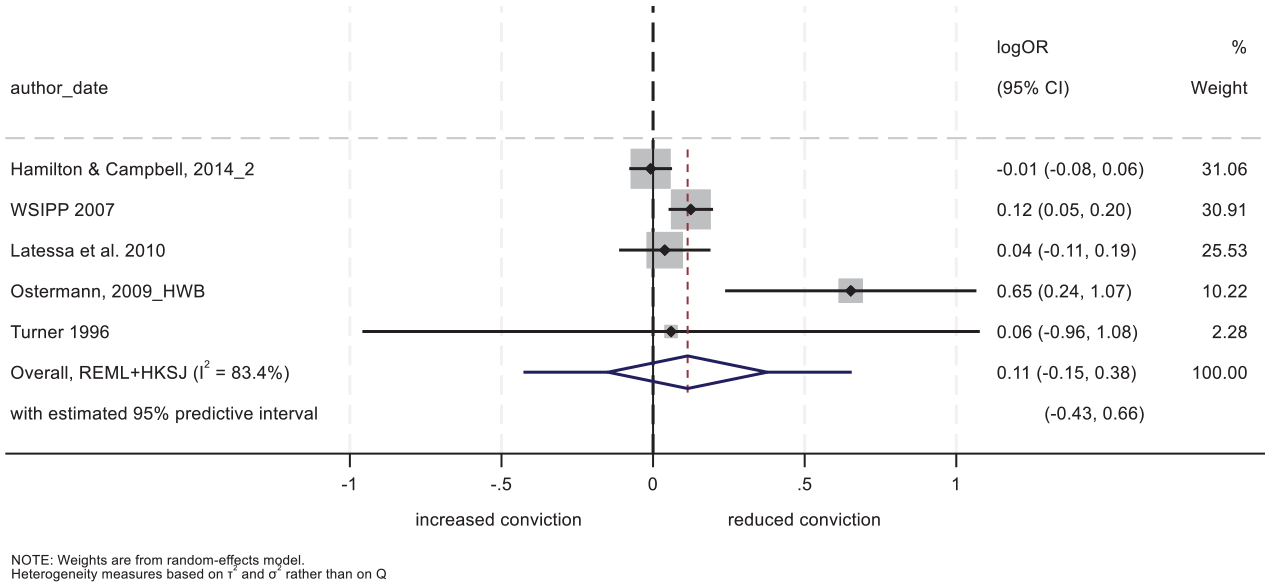
Forest plot for arrest outcome (k = 6).
The pooled effect showed a considerable amount of heterogeneity, with tau2 = 0.015 and a significant Q-statistic (Q = 11.14, p < .05). The I2 value indicates that approximately 55.1% of the variation between studies in terms of arrest is due to nonrandom factors.
The funnel plot for was reasonably symmetric, and Egger’s test for small-study effects was not significant (0.962, t = 1.06, p = .349). The non-significant aggregate treatment effect on arrest is robust; the removal of any of the six effect sizes does not change the overall substantive finding. Notably, the removal of both the Costanza et al. (2015) and Turner and Petersilia (1996) studies resulted in a negative pooled effect (though not statistically significant). Given potential differences in findings related to poorly matched samples, the analysis was also implemented after removing the Turner and Petersilia (1996) effect size; substantive findings were unchanged. Last, a pooled analysis was conducted using a DerSimonian and Laird random effects estimator; again, no notable differences in outcomes were found. Overall, none of the sensitivity analyses resulted in a substantive change to the original finding of no treatment impact on the outcome of arrest.
Meta-Analyses of the Effects of Halfway Houses on Conviction (k = 5)
Five effect sizes examined the outcome of conviction; as shown in Figure 2 the pooled log odds ratio was small, positive, and non-statistically significant (0.114, 95% CI [−0.149, 0.376], t = 1.204, p = .295). The 95% prediction interval ranges from −0.43 to 0.66, and the five studies included 19,727 treatment group and 12,238 comparison group participants. In odds ratio metrics, the pooled effect is 1.121, with a prediction interval of 0.651 to 1.934. This finding suggests no differences in the likelihood of conviction for halfway house participants relative to the comparison group. Considerable heterogeneity was found, with tau2 = 0.020, Q = 14.45 (p < .01), and I2 indicating that 72.3% of the variation between studies is due to nonrandom factors.
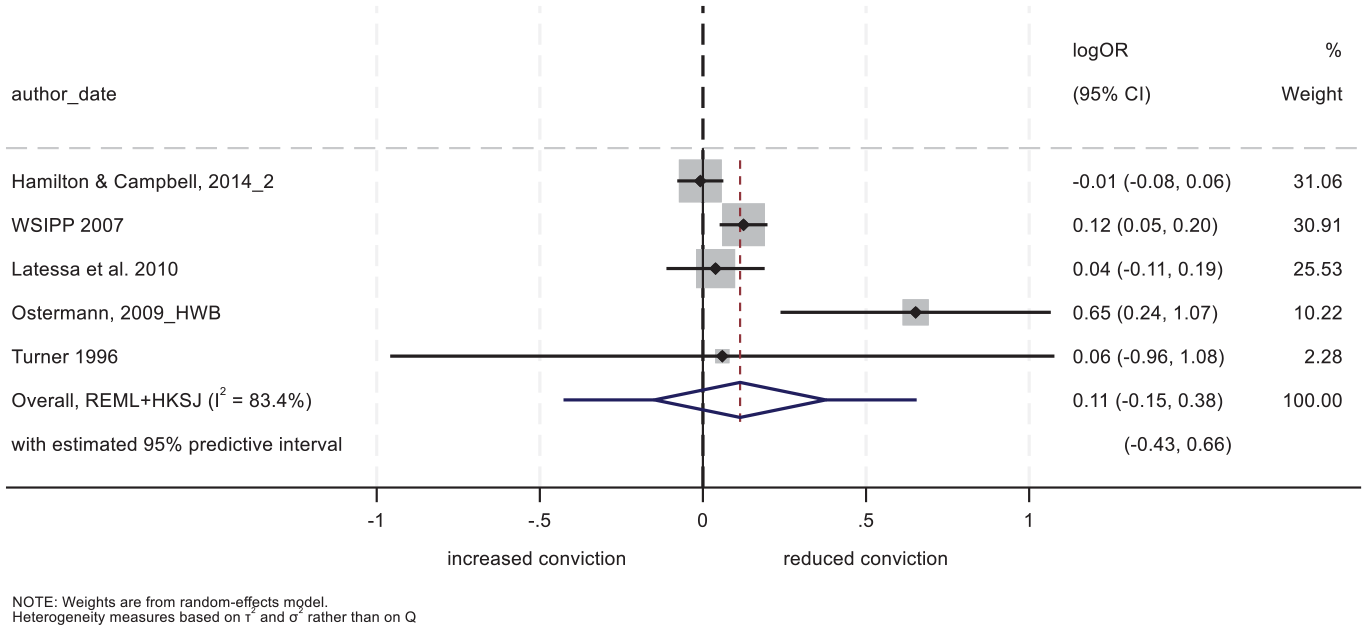
Forest plot for conviction outcome (k = 5).
The funnel plot for the set of studies examining conviction was mostly symmetric, and Egger’s test for small-study effects was not significant (1.281, t = 0.86, p = .455). The non-significant aggregate treatment effect was robust to the removal of any of the five effect sizes. Sensitivity testing was also approached through removal of both the Turner and Petersilia (1996) and WSIPP (2007) effect sizes (due to high risk of bias); substantive findings were unchanged. Further, the analysis using a DerSimonian and Laird random effects estimator resulted in no notable differences in outcomes.
Meta-Analyses of the Effects of Halfway Houses on Incarceration (k = 6)
The set of six studies examining incarceration included 12,811 treatment group and 15,022 comparison group participants. The pooled log odds ratio was positive, small, and non-significant (LOR = 0.114, 95% CI [−0.467, 0.695], t = 0.504, p = .636), with a 95% prediction interval ranging from −1.41 to 1.64. In odds ratio metrics, the pooled effect is 1.121, with a prediction interval of 0.244 to 5.156, indicating that halfway house programs do not have a meaningful impact on the likelihood of incarceration. Notable heterogeneity was found, with tau2 = 0.250, Q = 27.24 (p < .001), and I2 = 81.6%. See Figure 3.
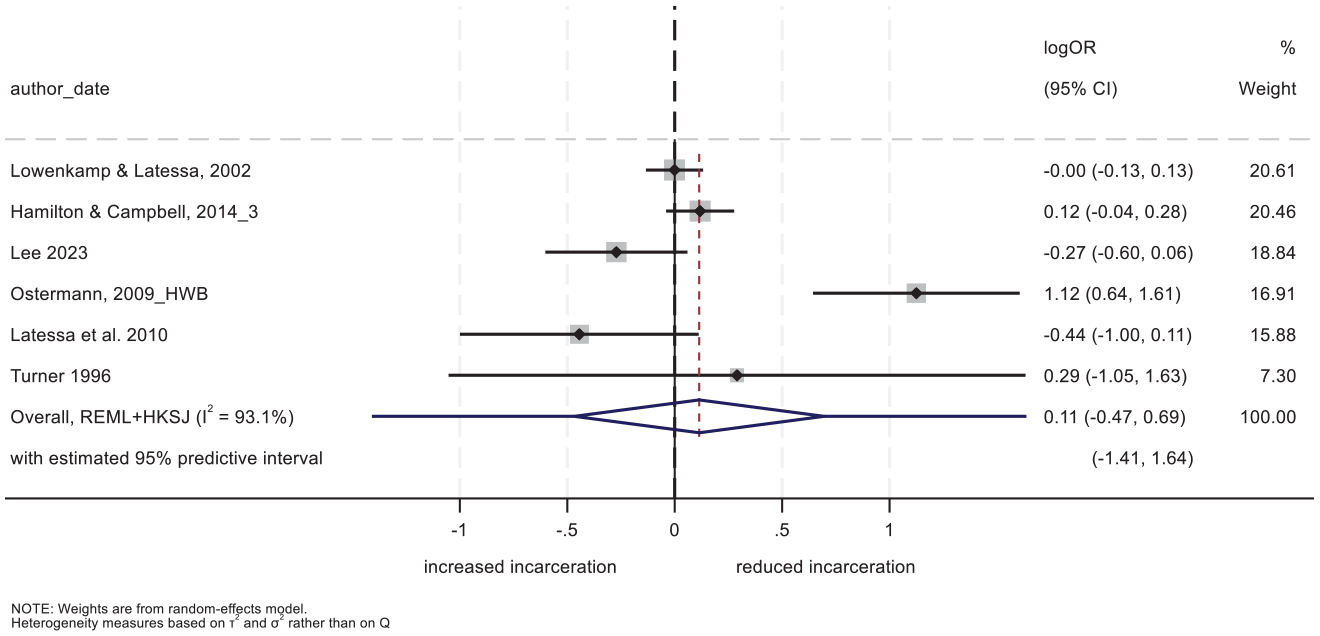
Forest plot for incarceration outcome (k = 6).
The funnel plot for the set of studies examining arrest was mostly symmetric, with one study falling outside the 95% confidence limits (Ostermann, 2009; LOR = 1.125). Egger’s test was not significant (0.590, t = 0.32, p = .766). Again, the non-significant aggregate treatment effect is robust to the removal of any of the six effect sizes, although removing Ostermann (2009) results in a negative pooled effect overall (−0.046, non-significant). Removing the effect size from Turner and Petersilia (1996) effect size did not change the substantive findings, nor did use of a DerSimonian and Laird random effects estimator in lieu of REML.
Discussion
Findings from the current analysis suggest that halfway houses implemented after release from incarceration (e.g., back-end halfway houses) have a null effect on criminal recidivism for adults on parole. Specifically, the mean pooled effects for the arrest, conviction, and incarceration recidivism analyses suggest that formerly incarcerated individuals who transition into the community via back-end halfway houses are no more or less likely to recidivate compared to those who are released on standard parole. The pooled effects were robust to the inclusion/exclusion of individual studies.
The observed null effect of halfway houses on recidivism could be attributed, in part, to the difficulties that arise in the comparison of treatment and comparison groups. Halfway house participants are inherently subjected to greater levels of supervision relative to their “parole as usual” comparison group counterparts. It is possible that halfway house participants engage in fewer behaviors that warrant new criminal charges than do individuals on parole who are not living in a halfway house, but due to their near constant supervision they are simply being caught and processed through the criminal justice system more frequently (see Lee, 2023 for a similar discussion). Conversely, Lee (2023) suggests that the processing of offense type may be a consideration, as halfway house participants may be “committing more new crimes and more technical violations but enough new crimes [are] being processed as technical violations to obscure the new crime effect” (pp. 136–137).
In addition to more intense supervision, it is possible that the ameliorative effect of halfway houses on recidivism is obfuscated by using “parole as usual” comparison groups. It is reasonable to assume that there is substantial heterogeneity across jurisdictions and institutions in terms of how they prepare, or in some cases fail to prepare individuals for release into the community. Some institutions will have community-based agencies that are responsible for setting up housing for individuals formerly in custody upon release, whereas others will have almost no post-release supports for housing. To isolate the effect of halfway houses on recidivism, a stronger research design would randomly assign “parole as usual” comparison groups that are not provided with housing supports upon release. Such an analysis would remain challenging, however, as we cannot assume that individuals released on parole without the requirement for halfway house participation necessarily have fewer supports; in fact, it is possible that some individuals may have access to increased supports if they are able to secure safe, reliable housing prior to release from custody. Access to a supportive living environment in the community, such as housing with prosocial family members, may lead to a reduced likelihood of recidivism (Herbert et al., 2015). That being said, we also cannot assume that individuals released on “parole as usual” are likely to secure appropriate housing; much research points to the enormous challenges individuals face post-custodial release with respect to securing stable living arrangements (e.g., Dong et al., 2018; Geller & Curtis, 2011; Herbert et al., 2015; Keene et al., 2018). Halfway houses represent a viable community alternative for many persons upon custodial release, and examining their impacts in relation to persons released to other circumstances is important.
Despite using similar methods to Ndrecka (2014), the current study arrives at different conclusions regarding the effectiveness of halfway houses. While Ndrecka (2014) found an iatrogenic effect (i.e., participating in a halfway house increases recidivism), the current study found null effects. This conflicting finding may be due to the larger sample of studies identified in the current study and/or differing selection criteria. Whether halfway houses increase the likelihood of recidivism has been raised by other authors, for example, a living environment in which one is surrounded by others who are also returning from custody may be considered a form of heightened exposure to antisocial peers (e.g., Lee, 2023; Lowenkamp & Latessa, 2005).
One of the criticisms in the literature on halfway houses is that there is little available evidence in terms of indicators of successful practice and/or evidence-based program components (Evans, 2005; Hamilton & Campbell, 2014). Consistent with existing evaluative efforts on halfway houses, the current analysis is limited in its ability to inform best practices due to the small number of studies overall and the lack of detailed reporting of program and participant characteristics. The ability to associate greater or lesser success with specific program approaches or types of participants would greatly benefit the field by enabling the development of a model for evidence-based halfway house practices, and subsequently inform correctional policies for reintegration initiatives. For example, it may be that individuals with certain characteristics could benefit more from halfway house participation than others, for example, older versus younger participants, those with longer versus shorter custodial sentences, individuals who are high versus low-risk, or those with specific offense histories such as drug-related offenses. If so, targeting halfway house participation to individuals with specific characteristics may be a resource-efficient approach and more strongly align with the Risk-Needs-Responsivity model (RNR; Andrews et al., 1981).
The utility of correctional programing adhering to the RNR model within correctional practices is well supported at this point. There are concerns, however, that halfway houses tend to veer away from this more responsive approach to correctional programing (see Hamilton & Campbell, 2014). It is possible that the lack of treatment effect observed in the current meta-analysis could be explained, in part, by a diminished focus on participant risk-level and their criminogenic needs. In line with the RNR model, simply providing access to stable housing could be necessary, but not sufficient, to reduce the risk for re-offending. For example, Butler et al. (2024) demonstrated that persons with co-occurring mental health and substance abuse problems were more likely to be reincarcerated compared to persons with one or no disorders. It is unlikely that these criminogenic needs can be ameliorated through access to stable housing alone. A more specialized approach that aligns with the RNR model may be needed. For example, Orrick and Askew (2024) found that individualized case management for persons with severe mental health needs resulted in a significantly reduced likelihood of return to prison.
Limitations
There are several limitations to the current study. First, while 17 independent effect sizes were included, the number of effect sizes in each outcome group was small. The lack of research on the impacts of halfway houses on recidivism is curious given the routine use of this approach to post-custodial re-entry. Second, the methodological rigor of some studies was a concern; 56% of the included studies were categorized as moderate or high risk of bias with respect to matching of the treatment and comparison groups. Relatedly, many of the included studies used samples from a large number of halfway houses. For example, Hamilton and Campbell (2014) included data from 18 halfway house facilities, while Lowenkamp and Latessa’s (2002) sample included data from 22 different halfway house programs. As results were not presented at the individual halfway house level, adjustments for clustering effects were not possible.
Third, the included studies represent a narrow focus with respect to geographic location and participant type. The included programs were exclusively implemented in the United States; the extent to which these findings are generalizable to other countries is unknown. Additionally, the included studies used predominantly male samples. Women may have different experiences and needs related to their participation in halfway houses. Last, given the overall lack of detail on the halfway houses included in each study’s treatment sample (with respect to facility characteristics, specific services provided, and residential requirements), generalizing these findings to all types of halfway house interventions should be approached with caution.
Conclusion
Current evidence suggests no notable effects of halfway houses on outcomes of recidivism. As halfway houses have the potential to reduce overcrowding in prisons and assist with barriers of reintegration, they have the potential for wide-ranging benefits to residents, the criminal justice system, and the general public. Additional research using rigorous research designs is sorely needed to further examine the effects of halfway houses and develop policy recommendations with respect to best practices and approaches. For example, future research could investigate the characteristics of individuals assigned to halfway houses post-custodial release who successfully complete and fail to complete their residential stay. Finally, reducing recidivism is but one indicator of successful reintegration. Future research should also consider the effectiveness of halfway houses on other outcomes, such as sustained employment, secure housing, self-esteem, identity, depression, and management of anger and other emotions.
Footnotes
Appendix 1: List of Search Terms
Appendix 2
List of Electronic Databases.
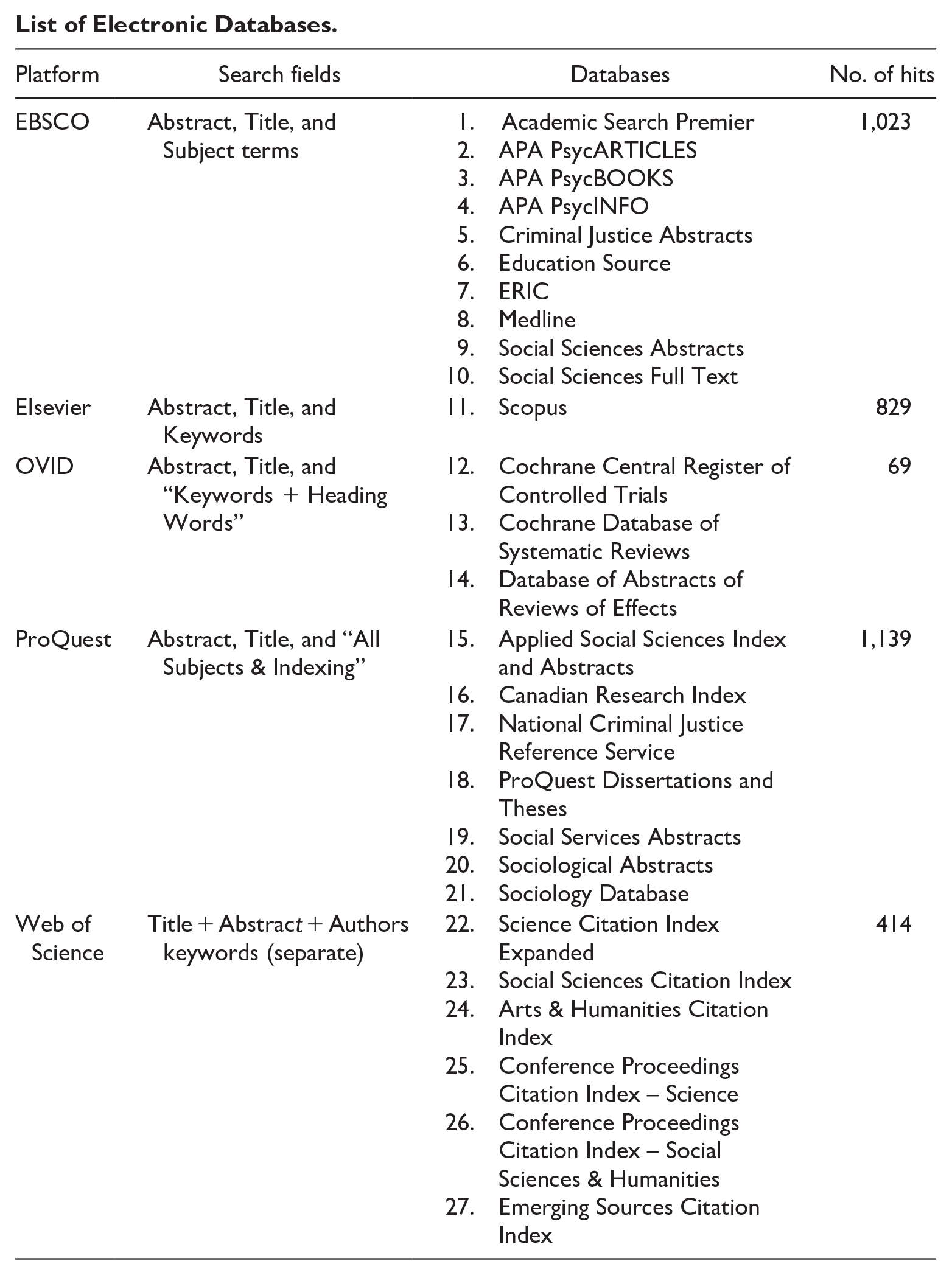
| Platform | Search fields | Databases | No. of hits |
|---|---|---|---|
| EBSCO | Abstract, Title, and Subject terms | 1. Academic Search Premier 2. APA PsycARTICLES 3. APA PsycBOOKS 4. APA PsycINFO 5. Criminal Justice Abstracts 6. Education Source 7. ERIC 8. Medline 9. Social Sciences Abstracts 10. Social Sciences Full Text |
1,023 |
| Elsevier | Abstract, Title, and Keywords | 11. Scopus | 829 |
| OVID | Abstract, Title, and “Keywords + Heading Words” | 12. Cochrane Central Register of Controlled Trials 13. Cochrane Database of Systematic Reviews 14. Database of Abstracts of Reviews of Effects |
69 |
| ProQuest | Abstract, Title, and “All Subjects & Indexing” | 15. Applied Social Sciences Index and Abstracts 16. Canadian Research Index 17. National Criminal Justice Reference Service 18. ProQuest Dissertations and Theses 19. Social Services Abstracts 20. Sociological Abstracts 21. Sociology Database |
1,139 |
| Web of Science | Title + Abstract + Authors keywords (separate) | 22. Science Citation Index Expanded 23. Social Sciences Citation Index 24. Arts & Humanities Citation Index 25. Conference Proceedings Citation Index – Science 26. Conference Proceedings Citation Index – Social Sciences & Humanities 27. Emerging Sources Citation Index |
414 |
Appendix 3
List of Grey Literature Sources.
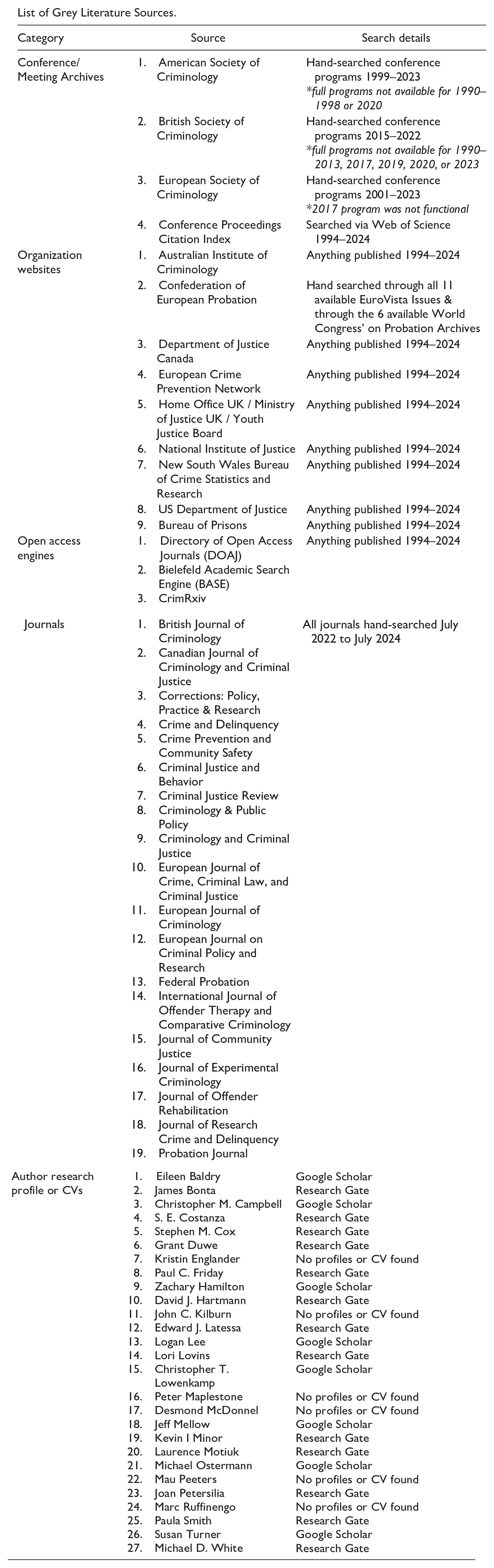
| Category | Source | Search details |
|---|---|---|
| Conference/Meeting Archives | 1. American Society of Criminology | Hand-searched conference programs 1999–2023 *full programs not available for 1990–1998 or 2020 |
| 2. British Society of Criminology | Hand-searched conference programs 2015–2022 *full programs not available for 1990–2013, 2017, 2019, 2020, or 2023 |
|
| 3. European Society of Criminology | Hand-searched conference programs 2001–2023 *2017 program was not functional |
|
| 4. Conference Proceedings Citation Index | Searched via Web of Science 1994–2024 | |
| Organization websites | 1. Australian Institute of Criminology | Anything published 1994–2024 |
| 2. Confederation of European Probation | Hand searched through all 11 available EuroVista Issues & through the 6 available World Congress’ on Probation Archives | |
| 3. Department of Justice Canada | Anything published 1994–2024 | |
| 4. European Crime Prevention Network | Anything published 1994–2024 | |
| 5. Home Office UK / Ministry of Justice UK / Youth Justice Board | Anything published 1994–2024 | |
| 6. National Institute of Justice | Anything published 1994–2024 | |
| 7. New South Wales Bureau of Crime Statistics and Research | Anything published 1994–2024 | |
| 8. US Department of Justice | Anything published 1994–2024 | |
| 9. Bureau of Prisons | Anything published 1994–2024 | |
| Open access engines | 1. Directory of Open Access Journals (DOAJ) 2. Bielefeld Academic Search Engine (BASE) 3. CrimRxiv |
Anything published 1994–2024 |
| Journals | 1. British Journal of Criminology 2. Canadian Journal of Criminology and Criminal Justice 3. Corrections: Policy, Practice & Research 4. Crime and Delinquency 5. Crime Prevention and Community Safety 6. Criminal Justice and Behavior 7. Criminal Justice Review 8. Criminology & Public Policy 9. Criminology and Criminal Justice 10. European Journal of Crime, Criminal Law, and Criminal Justice 11. European Journal of Criminology 12. European Journal on Criminal Policy and Research 13. Federal Probation 14. International Journal of Offender Therapy and Comparative Criminology 15. Journal of Community Justice 16. Journal of Experimental Criminology 17. Journal of Offender Rehabilitation 18. Journal of Research Crime and Delinquency 19. Probation Journal |
All journals hand-searched July 2022 to July 2024 |
| Author research profile or CVs | 1. Eileen Baldry 2. James Bonta 3. Christopher M. Campbell 4. S. E. Costanza 5. Stephen M. Cox 6. Grant Duwe 7. Kristin Englander 8. Paul C. Friday 9. Zachary Hamilton 10. David J. Hartmann 11. John C. Kilburn 12. Edward J. Latessa 13. Logan Lee 14. Lori Lovins 15. Christopher T. Lowenkamp 16. Peter Maplestone 17. Desmond McDonnel 18. Jeff Mellow 19. Kevin I Minor 20. Laurence Motiuk 21. Michael Ostermann 22. Mau Peeters 23. Joan Petersilia 24. Marc Ruffinengo 25. Paula Smith 26. Susan Turner 27. Michael D. White |
Google Scholar Research Gate Google Scholar Research Gate Research Gate Research Gate No profiles or CV found Research Gate Google Scholar Research Gate No profiles or CV found Research Gate Google Scholar Research Gate Google Scholar No profiles or CV found No profiles or CV found Google Scholar Research Gate Research Gate Google Scholar No profiles or CV found Research Gate No profiles or CV found Research Gate Google Scholar Research Gate |
Acknowledgements
N/A
Data Availability
This paper uses secondary data from previously published manuscripts that are publicly available.
Declaration of Conflicting Interests
The author(s) declared no potential conflicts of interest with respect to the research, authorship, and/or publication of this article.
Funding
The author(s) disclosed receipt of the following financial support for the research, authorship, and/or publication of this article: This manuscript was supported by a grant from the Social Sciences and Humanities Research Council of Canada.
Ethical Approval and Informed Consent
Not applicable (secondary data).
