




Abstract
Although the Dark Tetrad has been linked to deviant behaviors, more research is needed about its expression in workplaces and continuity outside of work. The current study investigated the role of the antagonistic traits on perception of workplace harassment and bullying. Men were found to score higher on antagonistic traits and have a more lenient perception of harassment and bullying. Personality traits at work and outside were highly correlated. Regression analyses revealed that sadism predicted a more lenient perception of bullying, while a more lenient perception of harassment was predicted by sadism and industry type, and partially by psychopathy and gender. In summary, personality traits enduring across environments, but sadism was the most important predictor of a more lenient perception of harassment and bullying at work. The current study suggests a disparity between personality traits and expressed behaviors. Findings can be used to prevent workplace deviance and aid recruitment processes.
Personality
Personality structure and its impact on human functioning have been studied widely in the literature (Krstic et al., 2018). Recently, increasing attention has been given to three dark traits: Psychopathy, Machiavellianism, and narcissism. While psychopathy and narcissism are clinical disorders treatable under clinical or forensic supervision (Salekin, 2002; Weinberg & Ronningstam, 2022), all three traits can be studied in the general population in their milder forms, as sub-clinical disorders (Longpré et al., 2018; Paulhus & Williams, 2002). Sub-clinical dark traits are linked to morally, ethically, and socially questionable behaviors, but may not impede day-to-day functioning (Paulhus, 2014). Some even argue that these lower-level traits can be advantageous (Paulhus & Williams, 2002). Sub-clinical psychopathy, Machiavellianism, and sub-clinical narcissism have together been coined as the Dark Triad due to their commonality of manipulation, callousness, and lack of empathy (Paulhus & Williams, 2002). With the addition of everyday sadism, this concept has become the Dark Tetrad (Paulhus, 2014; Saravia et al., 2023). The sadistic pleasure in harming others adds a new dimension while maintaining its common core (Longpré et al., 2022; Plouffe et al., 2017). In this study, “antagonistic traits” (Miller & Lyman, 2019) will be used to refer to the Dark Tetrad traits (i.e., psychopathy, Machiavellianism, narcissism, and sadism).
Clinical psychopaths show grandiosity, impulsivity, and disregard for social norms (Krstic et al., 2018). They often engage in unhelpful, even destructive, workplace behaviors, increase general workplace hostility, and take part in abusive supervision (Babiak et al., 2010; Babiak & Hare, 2006; Boddy, 2011; Mathieu & Babiak, 2016). The disinhibition and meanness dimension of the triarchic model of psychopathy were associated with counterproductive work behaviors (CWB; Kranefeld & Blickle, 2022). Machiavellians use manipulation and deception for personal gain and show a cynical disregard for morality (Jones & de Roos, 2016). Clinical narcissists desire attention and superiority and are exploitative in nature (Morf & Rhodewalt, 2001). Clinical narcissism is linked to behaviors such as delinquency, white-collar crime, and courtship violence and aggression (Amos et al., 2024; Jones, 2014). At a sub-clinical level, individuals with these traits may be poor team players and hypersensitive to criticism, causing outbursts of anger or aggression (Krstic et al., 2018). Sadism and everyday sadism are defined by the infliction of humiliation, cruelty, and aggression on others for subjugation or pleasure (Longpré et al., 2018; Plouffe et al., 2017). It has also been linked to sexual and non-sexual offending (Longpré et al., 2020). Everyday sadists can function as part of society whilst gaining pleasure directly or indirectly (e.g., vicariously) from others’ sufferings without violating the law (Paulhus & Dutton, 2016; Plouffe et al., 2017; Saravia et al., 2023). In summary, the impact of the Dark Tetrad and its antagonistic traits are far-reaching due to the ability to function in society, while acting in a deviant or antisocial manner (Paulhus & Williams, 2002). Individuals presenting higher level of antagonistic traits are more inclined to commit bullying (Geel et al., 2017) and stalking (Tachmetzidi Papoutsi & Longpré, 2022), as well as having a more lenient perception of sexual harassment and sexual coercion (Saravia et al., 2023), and holding more Rape Myths (Longpré et al., 2022). As such, this has become a worthy topic of research. One of the lines of research is the effect of these antagonistic traits on workplaces’ behaviors and perceived severity.
Workplace Deviance
Workplace deviance is defined as “voluntary behavior that violates significant organizational norms and in so doing, threatens the well-being of an organization, its members, or both” (LeBreton et al., 2018). Counterproductive work behavior (CWB) is another term used interchangeably; however, this concept omits a violation of the organizational norms (O’Boyle et al., 2010). Research on workplace deviance has increased due to the negative consequences on organizations and employees (LeBreton et al., 2018). Workplace deviance can be linked to changes in productivity, job satisfaction, staff turnover, mental health issues, and suicide (Mathieu & Babiak, 2016; Pearson & Porath, 2005). Workplace deviance has been studied regarding the influence of situational and environmental factors such as job security, satisfaction, and injustice. Individual differences have focused on aspects such as cognition, stress, and self-esteem (Ferris et al., 2010). One of the most well-documented areas of discussion is the influence of personality traits on general job performance as well as deviant workplace behaviors and perceived severity (Mathieu & Babiak, 2016; Tett et al., 2006), which is, in part, the focus of the current research.
Harassment and Bullying at Work
Bullying and harassment are mistakenly used interchangeably, with bullying often regarded as a sub-type of harassment. However, there are notable differences between both constructs (ACAS, 2023). Bullying is defined as “unwanted conduct that violates people’s dignity or creates an intimidating hostile, degrading, humiliating or offensive environment” (ACAS, 2023). It can be physical, verbal, or psychological (Baughman et al., 2012). General harassment is defined as any non-sexual, interpersonal, negative workplace behaviors which violate organizational norms, such as those within the concept of “workplace deviance” (Baughman et al., 2012). Finally, sexual harassment is defined as “unwelcome sexual advances, requests for sexual favors, and other verbal or physical conduct of a sexual nature” (Sims-Knight & White, 2018). Harassment and sexual harassment are covered under the Equality Act 2010 (UK), but not bullying (ACAS, 2023). Bullying and harassment are considered as sub-categories of workplace deviance (Zappalà et al., 2022).
The literature suggests a persistent and underreported workplace harassment across organizations (Amos et al., 2024; Sims-Knight & White, 2018). A need for increased awareness has been raised along with the importance of prevention and response strategies. When it comes to sexual harassment in the workplace, the negative outcomes are similar to those of general workplace deviance (Sims-Knight & White, 2018). Experiencing harassment can increase rates of illness, injury and assault and the effects are enduring over time creating emotional and physical costs for organizations and employees (Stoica, 2021).
Dark Triad at Work
Bullying, CWB, and general workplace deviance are likely the most studied constructs within antagonistic traits at work (Jonason et al., 2012). One meta-analysis found a significant positive association between antagonistic traits and CWB (O’Boyle et al., 2010). Sub-clinical narcissism was the strongest predictor of CWB, followed by Machiavellianism, while sub-clinical psychopathy reduced CWB. These findings have been replicated (i.e., Stoica, 2021). In contrast, research conducted in Pakistan, Turkey, and China found sub-clinical narcissism to be the only trait with no relationship to CWB (Cohen & Liu, 2021; Koçoğlu, 2020; Rizvi & Siddiqui, 2023). It is hypothesized that this relationship may be more prominent in individualistic Western cultures. Finally, sub-clinical psychopathy was found to be the only predictor of CWB in another study (George & Lavinia, 2021).
Previous studies have revealed that psychopaths are more prevalent in high-level manager positions (i.e., 4%) than found in the general population (i.e., 1%) and that psychopathic traits have been associated to dysfunctional leadership, causing significant psychological distress to their employees (Babiak et al., 2010; Babiak & Hare, 2006) and higher employee turnover (Mathieu & Babiak, 2016). Jonason et al. (2012) found that Machiavellians and sub-clinical psychopaths use more manipulation at work than those scoring high on sub-clinical narcissism and those scoring low on all constructs. However, those scoring high on all three antagonistic traits used more hard manipulation tactics (i.e., forceful, aggressive, and to the point) than soft manipulation tactics.
When assessing bullying behaviors, Baughman et al. (2012) found sub-clinical psychopathy to be the best predictor, followed by sub-clinical narcissism and Machiavellianism. This supports previous research on corporate psychopaths and bullying in the workplace (i.e., Boddy, 2011). Boddy (2011) also found that sub-clinical narcissists engaged significantly more in indirect forms of bullying, possibly attributed to a need to uphold social standing. Associations between workplace bullying, sub-clinical narcissism, and Machiavellianism have been found in further research (Linton & Power, 2013).
It has been shown that the antagonistic traits are related to higher endorsement of Rape Myths (Longpré et al., 2022) and to a more lenient perception of sexual harassment and sexual coercion (e.g., Saravia et al., 2023), with harassment being part of a continuum of sexual violence, ranging from sexual harassment, to coercion, to rape, and to sexual homicide (Longpré et al., 2020). This would suggest a link between these traits and a lenient perception harassment in the workplace. Sub-clinical psychopathy predicted a more lenient perception of harassment (Longpré et al., 2022), but further research is needed to properly ascertain this association in a workplace setting. Outside of the workplace, Zeigler-Hill et al. (2016) found an association between all antagonistic traits and sexual harassment proclivity.
Dark Tetrad at Work
Fernández-del-Río et al. (2020) found positive correlations between all four antagonistic traits and workplace bullying, with sub-clinical sadism showing the strongest correlation. Furthermore, with the addition of sub-clinical sadism into a predictive model, sub-clinical psychopathy was no longer a significant predictor. Sub-clinical psychopathy, Machiavellianism, and sub-clinical sadism also predicted traditional bullying behaviors, but sub-clinical narcissism did not. These findings were replicated in the context of CWB (Fernández-del-Río et al., 2020). In contrast, another study found a positive association between sub-clinical psychopathy and Machiavellianism but not with sub-clinical sadism or narcissism (Mushtaq, 2021). The authors suggested this may be due to vicarious sadists preferring to observe cruel behavior rather than engage in it. All four antagonistic traits have also shown to positively correlate with workplace deviance, with sub-clinical sadism being a unique predictor of interpersonal CWB and bullying (Thibault & Kelloway, 2020). The authors have suggested that the focus of this behavior may stem from a desire to hurt others. Min et al. (2019) also found sub-clinical sadism to predict workplace deviance and bullying over and above the Dark Triad.
The literature on sexual harassment and the Dark Tetrad is generally limited to non-organizational contexts. Smith et al. (2018) found that Machiavellians had selfish reasons and sub-clinical psychopaths were not motivated by consistent partnership. Findings that the Dark Triad correlated with revenge porn proclivity, a type of sexual harassment, is consistent with previous research. A recent study found that higher sadistic traits were associated with more lenient perceptions of harassment (Saravia et al., 2023). While the current study focuses on perception of harassment and bullying, similar to the high concordance between fantasy and behavior (de Roos et al., 2024), studies have shown that perception and behavior are highly intertwined (Chartrand et al., 2006). Results from previous studies indicate that even in small dose, antagonistic traits have an influence on perception (e.g., Longpré et al., 2022), attitudes (e.g., Szabó et al., 2023), and behaviors (e.g., Tachmetzidi Papoutsi & Longpré, 2022), which in turn can influence each other.
Gender Differences
Overall, previous studies have shown that antagonistic traits are present across genders, but at different levels (Amos et al., 2024; Longpré et al., 2022). However, men are usually endorsing more antagonistic traits than women (Paulhus & Williams, 2002), with psychopathy and sadism presenting the biggest effect size (Amos et al., 2024). While men report more CWB (Fernández-del-Río et al., 2020), to our knowledge, no study has assessed gender differences for Dark Tetrad and bullying at work. Finally, studies have revealed that men have a more lenient perception of harassment (Beckett & Longpré, 2022; Saravia et al., 2023).
Pitfalls Within the Research and Aims
Inconsistencies in the research make it difficult to compare findings meaningfully across contexts (Thrasher et al., 2019). For example, single behavioral constructs such as employee theft, harassment, lying, violence, aggression, and sabotage have been studied in isolation (e.g., Amos et al., 2024). Umbrella terms such as “workplace aggression” miss the subtle differences between behaviors such as bullying and sexual harassment. Finally, there is limited research looking into the influence of antagonistic traits and perception of severity in the organizational context. It would be beneficial for organizations to enhance understanding the link between the Dark Tetrad and perception of harassment and bullying to improve detection and prevention.
The overall aim of the present study is to expand our understanding of the antagonistic traits in organizational context. The first aim will explore whether there is an association between the antagonistic traits and gender. The second aim is to explore potential correlations between all study measures, and importantly between the two measures (Dark Tetrad at Work Scale; The Short Dark Tetrad [SD4]) of the Dark Tetrad). Finally, the third aim is to understand the main predictors for perception of bullying at work and perception of harassment. A set of open-ended questions gathering qualitative insight will be used to support findings and add context.
Based on previous studies, it is hypothesized that:
H1: Men will present more antagonistic traits than women.
H2: The antagonistic traits will correlate positively with a lenient perception of bullying and harassment, and that the two measures of the Dark Tetrad will correlate with each other.
H3: Sub-clinical sadism, in general and at work, will be the best predictors of a lenient perception of harassment and bullying.
Methods
Participants
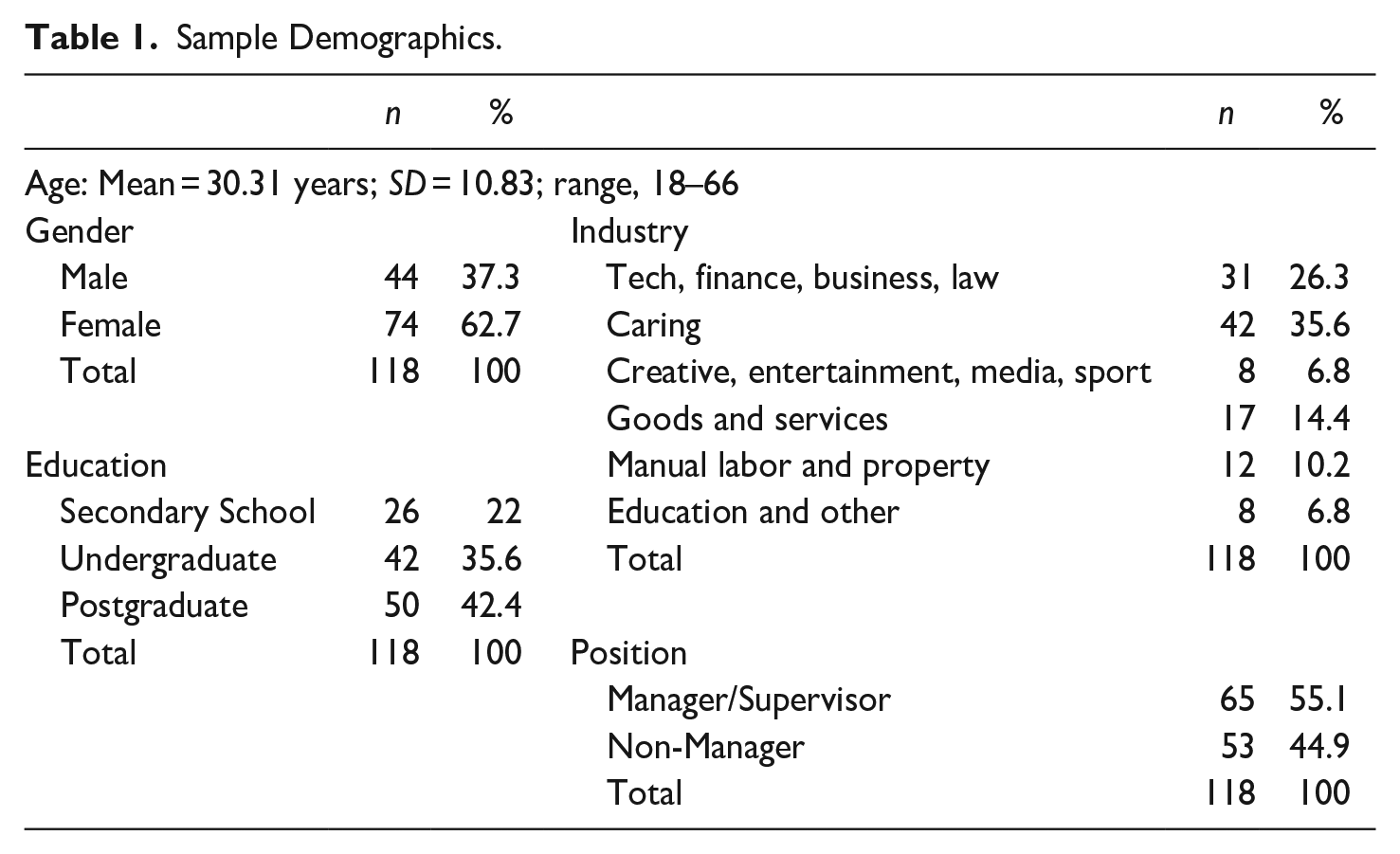
The participants for the current study (N = 138) were recruited from the general population. Due to missing data (i.e., one scale or more), some participants (n = 20) were removed. No other participants were removed because of high social desirability score, outlier score, or appearance of response inconsistency. In the final sample (N = 118), a majority of participants were women (n = 74; 62.7%) and ranged between 18 and 66 years old, with a mean age of 30.31 years old (SD = 10.83). The majority of the sample had a postgraduate degree (n = 50; 42.4%), worked in non-caring roles (n = 76, 64.4%) and in manager positions (n = 65; 55.1%). All participants were recruited in England and Wales and were employed. No other demographics were collected. For more details, see Table 1.
Sample Demographics.
Procedures and Ethics
This project received ethical approval from a university in England. All responses were gathered through Qualtrics, an online survey tool. The Qualtrics link was sent to the mailing list of several businesses spanning a range of occupations and industries. Participation did not receive any financial compensation. The consent form warned of sensitive topics, right to withdraw, anonymity as well as confidentiality of the survey. At the end, participants were given mental health and victim support information.
Measures
Industry
Participants were asked to specify in which industry they were employed, and answers were merged under one of the six categories: (1) Tech, Finance, Business, and Law, (2) Caring, (3) Creative, Entertainment, Media, and Sport, (4) Good and Services, (5) Manual Labor and Property, and (6) Education and Other.
Dark Tetrad at Work Scale (Thibault & Kelloway, 2020). This scale composed of 22 items measuring the Dark Tetrad (i.e., psychopathy, Machiavellianism, narcissism, and sadism) within workplace settings. The scale is scored on a 5-point Likert-style scale (1—Strongly Disagree; 2—Disagree; 3—Neither Agree nor Disagree; 4—Agree; and 5—Strongly Agree). A higher score is indicating a higher level of individual traits. An example of an item is “I am much more valuable than my co-workers.” In the original study, the authors reported an overlap between items from the sadism subscale and from the psychopathy subscale. Therefore, to ensure that this cross-loading was not an inherent issue with the scale, exploratory factor analyses (EFA) with Promax rotation were conducted. Overall, EFA are showing that items from each subscale are falling under different factors, with some minor overlap, supporting the idea that the original cross-loading findings might be sample-related (see Supplemental Table 1).
Further studies using this scale (i.e., Barry, 2020; Fernández-del-Río et al., 2020) have reported good internal consistency, good predictive validity, and unique contribution of each antagonistic trait. In the original study, the authors have reported Cronbach’s alpha of .78 for narcissism, .81 for Machiavellianism, .88 for psychopathy, and .94 for sadism. In the current study, the Cronbach’s alphas were .73, .79, .73, and .78, respectively.
The Short Dark Tetrad (SD4; Paulhus et al., 2021). This scale is composed of 28 items that measure the 4 antagonistic traits: psychopathy, Machiavellianism, narcissism, and sadism. The scale is scored on a 5-point Likert-style scale (1—Strongly Disagree; 2—Disagree; 3—Neutral; 4—Agree; and 5—Strongly Agree). A higher score is indicating a higher level of individual traits. An example of an item is “watching a fistfight excites me.” The authors reported Cronbach’s alpha of .83 for narcissism, .78 for Machiavellianism, .82 for psychopathy, and .82 for sadism. In the current study, the Cronbach’s alphas were .75, .70, .67, and .76, respectively.
Perception of Harassment Scale (MIDSA, 2011). This 24-item scale is an amended version of the MIDSA Harassment Scale and measures perception of harassment. The amended version of the scale was used in previous studies (i.e., Longpré et al., 2022; Saravia et al., 2023) and provided stable and consistent results. The scale is scored on a 4-point Likert-style scale (1—Strongly Agree; 2—Agree; 3—Neutral; 4—Disagree; and 5—Strongly disagree). A higher score on this scale indicates perceptions of harassment as more unacceptable. An example of an item is “I think it’s acceptable to circulate sexual or embarrassing pictures or videos electronically.” The original study reported a Cronbach’s alpha of .94. The Cronbach’s alpha was .87 in the current study, consistent with prior studies.
Perception of Bullying at Work Scale (Escartín Solanelles et al., 2009). This scale is composed of 35 items measuring perceptions of bullying in the workplace. The scale is scored on a 0 to 10 rating scale (0 being “no bullying” to 10 being “most severe bullying”). A higher score on this scale indicates perceptions of bullying as more unacceptable. An example of an item is “Insult or laugh at someone without provocation.” The original study reported a Cronbach’s alpha of .77. The current study yielded a Cronbach’s alpha of .88.
Marlowe Crowne Social Desirability Scale Short Form (Reynolds, 1982). This scale is composed of 13 items measuring the likelihood that participants will respond to questions in a socially desirable way. Each question is scored either “true” or “false.” A higher score indicates a more socially desirable response tendency. An example item is “I am always courteous, even to people who are disagreeable.” Previous studies have reported Cronbach’s alpha ranging between .70 and .80. The current study yielded a Cronbach’s alpha of .64.
Open-ended questions
Participants were asked five open-ended questions, specifically designed for this study, to assess participants’ views on committing deviant behaviors at work. An example item is “What kind of tactics or behaviours have you used in the workplace to gain status, power, or success that you would not use in your day-to-day life?” These questions were used to support the interpretation of results.
Analyses
An a priori power analysis was conducted using G*Power (version 3.1.9.7) to determine the minimum sample size required to test the hypotheses. Results indicated the required sample size to achieve 80% power, at a significance criterion of α = .05, was N = 82 for detecting a medium effect for Pearson’s moment correlations with effect size p value sets at .30; N = 115 for detecting a medium effect for Student’s t-tests with effect size d value sets at .50; and N = 116 for multiple linear regressions with 9 predictors and effect size F2 value sets at .15. Thus, the sample size of N = 118 is adequate to test the study hypotheses across analyses. Skewness and kurtosis values are ranging between −2 and +2, indicating normal distribution of data.
At a bivariate level, first, Student’s t-tests were conducted to assess gender difference on the score of each scale. Furthermore, Cohens’ d scores were provided to assess the specific effect size of each group difference. Second, Pearson’s moment correlations were conducted to assess the relationship between each scale. Finally, multiple linear regressions were performed to assess which variables predicted: (1) Perception of harassment and (2) Perception of Bullying. Analyses were conducted with Statistical Package for Social Sciences (SPSS) Version 29 (IBM, New York, USA).
Results
Independent Samples t-tests: Gender Differences
Independent samples t-tests revealed a significant difference between men and women on their scores of general Machiavellianism t(111) = 2.40, p = .02, general narcissism t(111) = 3.20, p = .002, general sadism t(111) = 4.63, p < .001 and general psychopathy t(111) = 3.62, p < .001, with men reporting more antagonistic traits than women. Furthermore, independent samples t-tests revealed a significant difference between men and women on their scores of Machiavellianism at work t(114) = 1.88, p = .03 (one-tailed; non-significant at two-tailed), narcissism at work t(114) = 2.43, p = .02, sadism at work t(114) = 1.90, p = .03, and psychopathy at work t(114) = 3.22, p = .002, with men reporting more antagonistic traits at work than women. Independent samples t-tests also revealed a significant difference between gender on their perception of harassment t(110) = −3.00, p = .003, and perception of bullying at work t(110) = −2.55, p = .01, indicating that women have a greater perception of harassment and bullying at work than men. Cohen’s d revealed effects ranging from small (Machiavellianism at work, Cohen’s d = .362; Sadism at work, Cohen’s d = .365) to moderate (Psychopathy at work, Cohen’s d = .629; General psychopathy; Cohen’s d = .704) to large (General sadism, Cohen’s d = .900). For more details, see Table 2.
Results of Independent Sample t-Tests and Descriptive Statistics for Main Scales by Gender.
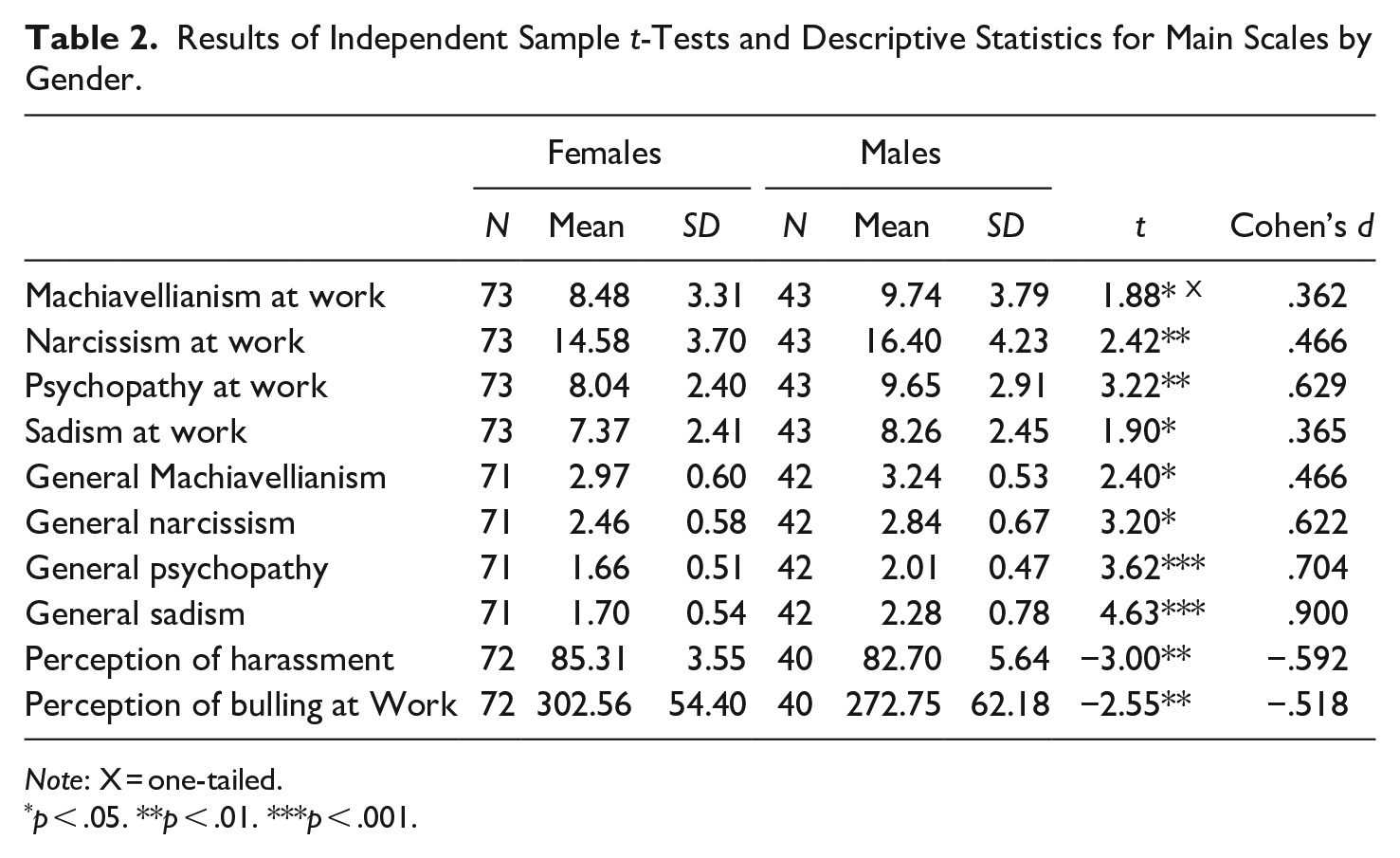
Note: X = one-tailed.
p < .05. **p < .01. ***p < .001.
Pearson’s r Correlation
Pearson’s r correlation showed that most scales significantly correlated with each other. As expected, the Dark Tetrad at Work scale was highly correlated with the Short Dark Tetrad, suggesting that antagonistic traits are stable across a work and non-work environment. Furthermore, antagonistic traits at work negatively correlated with perception of harassment and perception bullying at work, with higher antagonistic traits indicating a lower perception. Correlations ranged from r = −28 and r = −.59 for perception of harassment and from r = −.21 and r = −.40 for perception of bullying at work. More details are presented in Table 3.
Correlations Across Scales (Total Score).
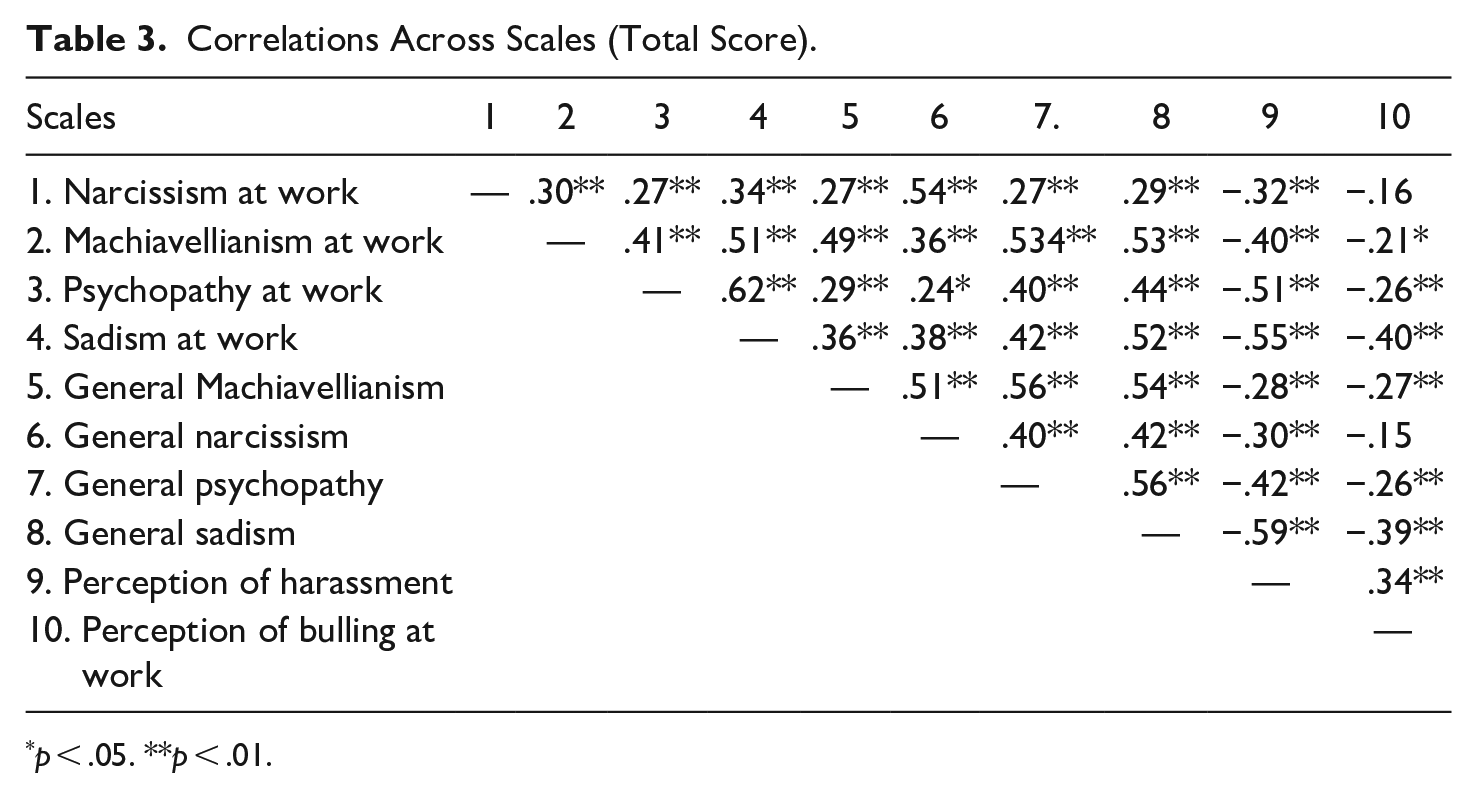
p < .05. **p < .01.
Multiple Linear Regressions
Multiple linear regressions were conducted to assess which variables predicted a more lenient perception of harassment and perception of bullying at work. Predictors used in the analysis were age, gender (men = 1; women = 2), type of industry (non-care role = 1; care role = 2), leadership position (manager = 1; non-manager = 2), and social desirability. For both perception of harassment and perception of bullying at work, one regression was conducted with the Dark Tetrad at work and one with the SD4. Before interpreting the results, variance inflation factor (VIF) scores were examined. For the Dark Tetrad at work models, VIF scores were ranging between 1.001 and 1.667, and for the SD4, VIF scores were ranging between 1.004 and 1.467, indicating no issues with multicollinearity.
Perception of harassment
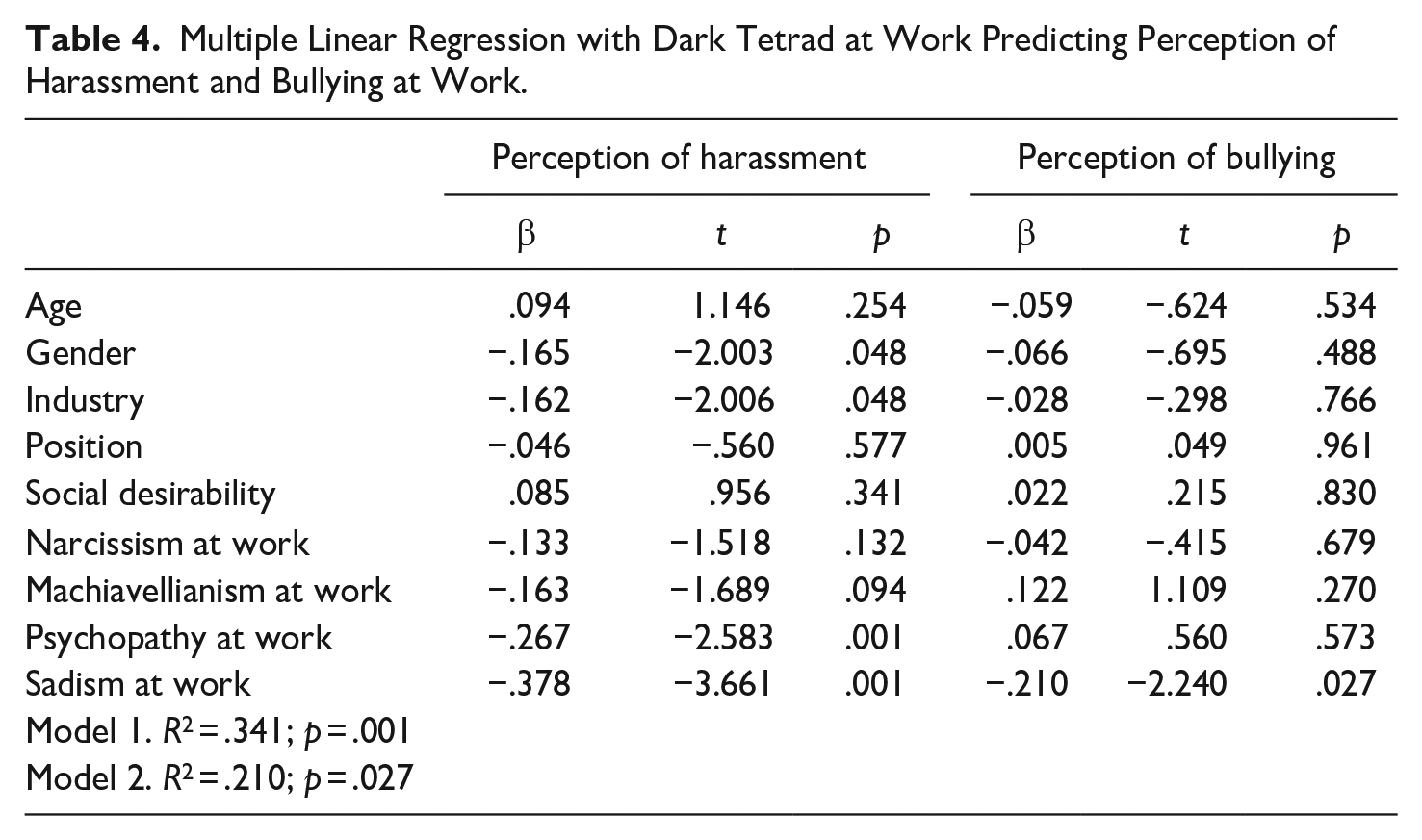
The first regression, using the Dark Tetrad at work, indicated that the model explained 34.1% of the variance and the model was a significant predictor of perception of harassment (F = 26.70, p < .001, R2 = .341, R2Adjusted = .329). Gender (β = −.165, t(90) = −2.003, p = .048) significantly predicted a more lenient perception of harassment, as did industry (β = −.162, t(90) = −2.006, p = .048), psychopathy at work (β = −.267, t(90) = −2.583, p = .001), and sadism at work (β = −.378, t(90) = −3.661, p = .001). No other variables were significant predictor of a more lenient perception of harassment. For more details, see Table 4.
Multiple Linear Regression with Dark Tetrad at Work Predicting Perception of Harassment and Bullying at Work.
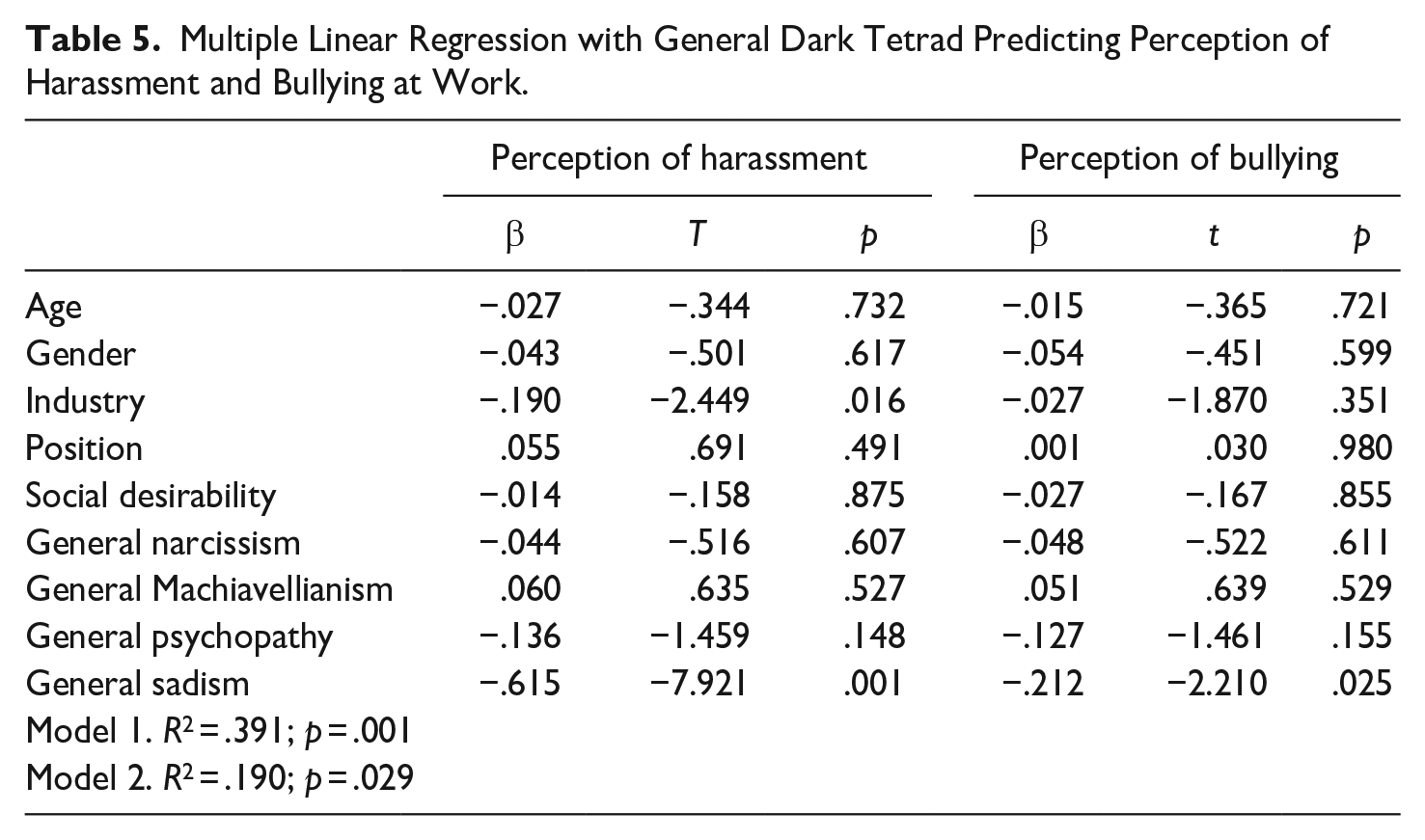
The second regression, using the General Dark Tetrad, indicated that the model explained 39.1% of the variance and the model was a significant predictor of a more lenient perception of harassment (F = 32.77, p < .001, R2 = .391, R2Adjusted = .379). Industry (β = −.190, t(90) = −2.449, p = .016) and general sadism (β = −.615, t(90) = −7.921, p = .001) significantly predicted a more lenient perception of harassment. No other variables were significant predictor of a more lenient perception of harassment (see Table 5).
Multiple Linear Regression with General Dark Tetrad Predicting Perception of Harassment and Bullying at Work.
Perception of bullying at Work
The third regression, using the Dark Tetrad at work, indicated that the model explained 21% of the variance and the model was a significant predictor of a more lenient perception of bullying at work (F = 5.19, p = .027, R2 = .21, R2Adjusted = .17). Sadism at work was the only significant predictor of a more lenient perception of bullying at work (β = −.21, t(80) = −2.24, p = .027). No other variables were significant predictors of a more lenient perception of bullying. For more information, see Table 4.
The fourth regression, using the General Dark Tetrad, indicated that the model explained 19% of the variance and the model was a significant predictor of perception of a more lenient bullying at work (F = 4.27, p = .029, R2 = .19, R2Adjusted = .16). Sadism at work was the only significant predictor of a more lenient perception of bullying at work (β = −.212, t(80) = −2.210, p = .025). No other variables were significant predictors of a more lenient perception of bullying. For more information, see Table 5.
Discussion
The present study aimed to explore the influence of the Dark Tetrad on the perception of bullying and harassment in the workplace. Furthermore, this study aimed to explore the impact of gender on the level of antagonistic traits as well as exploring the correlations between the Dark Tetrad at Work scale and the Short Dark Tetrad. As hypothesized, analysis revealed that men scored higher on both Dark Tetrad scales and were more likely to have more lenient perceptions of bullying and harassment. The two measures of the Dark Tetrad correlated with each other, suggesting that personality traits are stable across environments. As hypothesized, the antagonistic traits correlated with a more lenient perception of bullying and harassment. Finally, regression analyses revealed that industry, gender, general sadism, sadism at work, and psychopathy at work were predictors of a more lenient perception of harassment, but sadism and sadism at work were the only significant predictors of a more lenient perception of bullying at work. This partially supported the third hypothesis.
The implications will be discussed along with the impact of the antagonistic traits on the perception of harassment and bullying at work. Open-ended questions assessing participants’ views on committing deviant behaviors at work will be used to support the discussion. These findings have several implications, ranging from exploring which personality traits can predict potential predispositions toward harassment and bullying at work, to offering a much-needed empirical foundation in the development of effective prevention strategies.
Implications
Personality across environments
The results of the current study show that antagonistic traits are relatively stable between workplace and personal life. This is consistent with previous studies which revealed that personality traits are relatively stable across situations and that workplace personality traits highly correlate with general personality traits (Thibault & Kelloway, 2020). Therefore, we would expect similar expressions of the antagonistic traits across environments. Although a measure of the Dark Triad has been found to correlate with the Dark Tetrad at Work Scale (Thibault & Kelloway, 2020), to our knowledge, this is the first study to compare the Dark Tetrad at Work scale with the SD4. As a result, this finding makes a unique contribution to the existing literature.
When asked about this in an open-ended question, most said they felt they behaved differently at work and in their day-to-day life. This finding suggests that although personality traits may be stable, the associated perception behaviors may not. Hyde and Grieve (2018) found subtle differences in emotional manipulation in the workplace and day-to-day life, with individuals using more emotional manipulation in the workplace; however, the authors mentioned that further research was needed. There could be different reasons for these variations. First, people may not be conscious of similar behaviors outside of a work setting, or do not realize which behaviors negatively impact others. Second, it could be the case that in a sub-clinical population, behaviors can be controlled in such a way that they are only employed as part of employment progression, otherwise unneeded in day-to-day life. Holland (1997) suggests in the Career Choice Theory that individuals make career choices based on what they feel will fulfill their needs. It could be said that those scoring higher on the antagonistic traits have their associated needs met through their role at work and therefore do not need to employ manipulative, sadistic, or general deviant behavior outside of the workplace. The question of why some individuals may choose to engage in this specific behavior outside of work but not in the workplace remains opened.
Analyses revealed discrepancies between correlations and regressions on the contribution of each antagonistic trait. At a bivariate level, all antagonistic traits at work, and general antagonistic traits were predicting a more lenient perception of harassment, while only narcissism at work and general narcissism were not predicting a more lenient perception of bullying, indicating a similar expression of the antagonistic traits across environments. However, at a multivariate level, slightly different patterns were revealed, with Machiavellianism (both general and at work) losing its predicting power for perception of harassment and bullying, and narcissism (both general and at work) losing its predicting power for perception of harassment. These inconsistencies might be explained by overlapping features of antagonistic traits. Lynam et al. (2016) showed than when studying highly correlated predictors, such as the antagonistic traits, regression analyses can obscure what is left of a predictor once the common variance with the other independent variables is removed. As such, focusing on the interaction of antagonistic traits, underlying perception, and resulting behaviors, as separate factors, would increase our understanding of personality traits, the unique contribution of each trait, and its impact across environments. Furthermore, it would help to clarify the unique versus shared variance of antagonistic traits, which could increase the effectiveness of prevention programs by targeting specific traits linked to specific antisocial or unethical behaviors, with a focus on the underlying mechanisms and cognitions.
The implications for this within clinical practice relate to the possibility that people are less likely to adhere to socially acceptable behaviors in the workplace in order to progress. Perceived severity and behaviors are expressions of personality traits and can be used strategically (Mathieu, 2013). Organizations should consider employees’ personal traits as well as the organizational culture when implementing strategies that aim to reduce unethical workplace behavior.
Sadism and workplace
The results are in line with previous findings which indicates that sub-clinical sadism is an important predictor of a lenient perception of inappropriate behaviors, often over and above the other traits (e.g., Saravia et al., 2023; Thibault & Kelloway, 2020). Furthermore, results indicate that individuals holding a more lenient perception of bullying and harassment in the workplace are more likely to score higher on general sadism and sadism at work than any other traits. Interestingly, only general sadism and sadism at work predicted a more lenient perception of bullying at work. In contrast, psychopathy at work, industry, and gender were predictor of a more lenient perception of harassment at work. As such, it can be hypothesized that sadistic traits and psychopathic traits can lead to different perception of inappropriate workplace behaviors.
Sadism is motivated by the enjoyment of harming others or seeing others suffer (Plouffe et al., 2017), while psychopathy is defined by higher levels of impulsivity and callousness (Paulhus & Williams, 2002). This could explain the discrepancies between the perception of inappropriate workplace behaviors and support why sadists rely more on bullying than psychopath, which includes elements of cruelty. Furthermore, sadists have more widespread sadistic tendencies and also find that harassment meets their needs and motivations. Open-ended questions suggest that people are aware and knowingly use certain behaviors related to the antagonistic traits to achieve work-related goals and these are generally behaviors which aim to make themselves look favorable in comparison to others.
These findings are useful in preventing inappropriate workplace behaviors which are detrimental to organizations. Research on workplace deviance has focused on victim traits, victim support and prevention from a victim point of view. However, it has been shown that understanding the motives of the perpetrator is just as valuable, and personality testing as part of recruitment has been cited as useful on numerous occasions (e.g., Amos et al., 2024). Personality assessments within organizations have, however, focused mainly on the Big Five personality traits of extraversion, agreeableness, openness, conscientiousness, and neuroticism (Wiggins, 1996). Alongside this, Boddy (2011) asserts that an increase in “shallow” recruitment processes are influencing the increasing number of destructive leaders taking up roles in corporate and public organizations. Based on the current field of research, assessing for the antagonistic traits may be a way of helping organizations reduce harmful behaviors committed by their employees, thereby increasing staff wellbeing, and improving organizational output.
Narcissism, Machiavellianism, and bullying
Narcissism, with Machiavellianism, was the only personality traits that were not correlated with a more lenient perception of harassment at work, in contradiction to the second hypothesis. Research has previously shown sub-clinical narcissism to correlate with negative workplace behaviors (Fernández-del-Río et al., 2020). This result is surprising given the characteristics of sub-clinical narcissism. Their sense of entitlement and superiority often leads to bragging, aggressiveness when preserving their ego and a tendency to exploit other in order to achieve their desired goals (Paulhus & Williams, 2002). This, in turn, would suggest a propensity toward more lenient views on bullying. One disparity could lie between the scales used. The bullying scale used in the current study was designed to measure the perception of specific workplace behaviors, while the harassment scale is a measure of general perception. This could suggest a stronger link between sub-clinical narcissism and general bullying rather than bullying at work (i.e., if the scale was not work specific, a significant correlation may have been found). It is important to note that the overlapping features of the antagonistic traits might have impacted our findings. As such, the lack of significant relationship between narcissism, Machiavellianism, and a more lenient perception of harassment at work and a more lenient perception of bullying at work might be explained, in part, by the overlapping features with psychopathy and sadism, and results should be interpreted with this in mind.
Findings suggest that workplace bullying is not the chosen tactic when aiming to progress or achieve work-related goals. However, it suggests that narcissistic and Machiavellian traits are associated with workplace deviant behaviors. For example, narcissists may find that subtle and repeated harassment over time is more likely to further their career and outright bullying may cause disputes, which may negatively impact their inflated sense of self and reputation. This was partially supported by open-ended answers. Baughman et al. (2012) suggest sub-clinical narcissists engage more in indirect bullying and therefore it could be the case that the present bullying scale was not able to capture these subtle behavioral differences. This theory is in line with some of the supporting quotes such as participants highlighting colleagues’ errors and taking work matters above a direct line manager to support career goals. This suggests more indirect and work oriented behaviors rather than direct bullying such as behaviors of a physical nature or commenting on colleagues’ personal characteristics. Therefore, antagonistic traits, with the influence of situation or “state” personality, may lead the individual to consciously choose certain behaviors favorable to them.
The overall results suggest that dependent on an individual’s unique score on the Dark Tetrad, this may influence their perception of harassment and bullying, and their potential choice of deviant behavior in the workplace. An increased understanding of the motivations behind deviant workplace behaviors committed will support organizational intervention and treatment planning (Babiak et al., 2010; Mathieu, 2013). If prevention programs can be better tailored to personality type, motives, and potentially associated behaviors, the previously mentioned negative consequences on the organization and its employees could potentially be reduced. This could improve personality assessment of candidates in recruitment processes.
Limitations
This study is not without limitation. First, the study relied on self-report measures, which can be problematic, due to increased social desirability, inaccurate self-perception, or an increased propensity to lie (Smith & Lilienfeld, 2013). Furthermore, shared method variance (i.e., self-report) may have influenced the associations between the variables. A social desirability scale was used in the present study. Although this had no impact in the regressions, participants’ responses may not have been completely objective. Research has shown that individuals do sometimes under or over rate themselves on personality questionnaires and this is usually a consistent pattern across all self-report personality ratings (Nilsen & Campbell, 1993). Also, due to individual differences, interpretations of questions could have differed between and within participants answers. This might explain, in part, why we have found Cronbach alphas (i.e., Marlowe Crowne Social Desirability Scale Short Form; SD4 psychopathy subscale) that are slightly lower than in the original studies. Further research should aim to use a mixture of data collection methods including case notes, practitioners’ assessments, and workplace observations.
Second, even though the type of industry was a significant predictor of a more lenient perception of harassment, the overall non-significance of industry and position is surprising. This could perhaps be linked to a lower power (i.e., smaller sample size). Data was gathered about the type of industry people worked in, however, within each industry there could be many types of roles. For example, within the National Health Service, which was classed as a caring industry, participants could be working face to face such as doctor, or they could hold a managerial position without contact such as administrator. It would be beneficial to classify industry by day-to-day tasks within a job role, rather than a broader industry allocation. This study was, however, unique in comparing the Dart Tetrad scale in a work and non-work context as well as looking at two specific behaviors (bullying and harassment). The sample was gathered from the general population, in contrast to many other studies of the antagonistic traits which generally rely on student samples and therefore the results are more generalizable to the general population.
Finally, the sample was in majority composed of women (62.7%). While women and girls represent 50.1% of the population in the UK, they made up for more than 57% of higher education. Considering that an important proportion of our sample have at least a postgraduate degree, this discrepancy between gender is not surprising. However, it might have impacted, in part, our findings. Before comparing gender differences, it is important to assess whether an instrument is interpreted in the same way across different groups (Holden et al., 2020). While the Dark Tetrad at Work lack establishing prior measurement invariance across gender, prior research has showed that differences on the traits between genders seem to be reflecting true differences on the latent traits for the SD4. However, because of the sample size, and research design, this was not analyzed in the current manuscript and results on gender differences should be interpreted accordingly.
Conclusion
In summary, analysis revealed a relationship between gender, antagonistic traits, perception of harassment, and perception of bullying at work. Industry and position were inconsistent predictors of a more lenient perception of harassment and perception of bullying at work. Finally, sadism was the main predictor of a more lenient perception of harassment and bullying, but psychopathy only predicted a more lenient perception of harassment. Identifying the motivators behind these behaviors at work, including lenient perception, should help to develop effective prevention programs as well as targeted interventions to reduce these negative behaviors and manage it effectively.
As recommended, future studies should aim to replicate these results on different samples, as well as focusing on non-self-report measures and focus on behaviors over perception. The current study provides a basis for tailoring prevention and intervention programs based on personality traits and future direction for assessing lenient perception and concordant negative workplace behaviors linked to the antagonistic traits in differing industries. Organizations could include the Dark Tetrad as part of selection procedures via personality assessments in order to highlight those who may negatively impact the workplace and their colleagues. Additionally, these traits should also be seen in the context of the workplace and the impact that work-related progression has on the behavior of its employees.
Supplemental Material
sj-docx-1-ijo-10.1177_0306624X241236715 – Supplemental material for Dark Tetrad at Work: Perceived Severity of Bullying, Harassment, and Workplace Deviance
Supplemental material, sj-docx-1-ijo-10.1177_0306624X241236715 for Dark Tetrad at Work: Perceived Severity of Bullying, Harassment, and Workplace Deviance by Nicholas Longpré and Sophie Turner in International Journal of Offender Therapy and Comparative Criminology
Footnotes
Declaration of Conflicting Interests
The author(s) declared no potential conflicts of interest with respect to the research, authorship, and/or publication of this article.
Funding
The author(s) received no financial support for the research, authorship, and/or publication of this article.
Ethical Approval
All procedures performed in studies involving human participants were in accordance with the ethical standards of the institutional and/or national research committee and with the 1964 Declaration of Helsinki and its later amendments or comparable ethical standards.
Informed Consent
Informed consent was obtained from all individual participants included in the study.

Supplemental Material
Supplemental material for this article is available online.
References
Supplementary Material
Please find the following supplemental material available below.
For Open Access articles published under a Creative Commons License, all supplemental material carries the same license as the article it is associated with.
For non-Open Access articles published, all supplemental material carries a non-exclusive license, and permission requests for re-use of supplemental material or any part of supplemental material shall be sent directly to the copyright owner as specified in the copyright notice associated with the article.
