




Abstract
This research examines how participation in the Israeli Prisoner Rehabilitation Authority supervised therapy program for paroled prisoners can reinforce Jewish and Arab prisoners’ locus of control given their cultural diversity. Research participants included 108 paroled prisoners who had taken part in the program during 2019 to 2020. The program appears to have made a positive contribution to participants’ locus of control, particularly among Jewish parolees. For Arab parolees, the program’s strongest contribution was alleviating their apprehensions about returning to prison. Possible Theoretical explanations are offered for this finding, by referring to the concept of “culture-sensitive care” and the potential contribution of a change in perspective regarding the process of ending delinquency.
Introduction: Prisoner Rehabilitation in Israel
Every year, about 10,000 criminal prisoners in Israel are released from prison and returned to their communities. Some of them, released on parole following a reduction of one-third of their sentences, are under the supervision of the Prisoner Rehabilitation Authority (PRA). In this framework, the parolees are required to participate in a supervised rehabilitation program that aims to assist their reintegration into society by offering support and employment supervision. The program includes supervision, rehabilitation, and therapy in the framework of the community, with an emphasis on support and placement in employment during the parole period (Peled-Laskov et al., 2018). The support component of the program includes psychotherapy, which comprises individual and group meetings designed to engender behavioral, emotional, personality, and perceptional changes in the prisoner that will eventually lead to his desistance from criminal activity (Ward & Maruna, 2007).
Prisoner therapy poses multiple challenges, including offering culturally sensitive care, given the mixed population of Jews and Arabs (Lee, 2017; Nadan & Ben-Ari, 2013). This research examines how participation in the PRA supervised therapy program can reinforce positive feelings regarding the locus of control while considering the Jewish and Arab prisoners’ cultural diversity.
Desistance From Crime Among Ex-Prisoners
According to rehabilitative approaches focused on desistance from crime, true rehabilitation involves a complete change in the lawbreaker’s way of life and self-perception. Desistance from crime is a process of change that the individual undertakes by himself, albeit at times with the assistance of specialists acting in the framework of enforcement and corrections systems (Bersani & Doherty, 2018; Broidy & Cauffman, 2017; Ward & Maruna, 2007). The research literature points to several factors that help the delinquent to abandon his criminal way of life, among them, psychotherapy, boosting of motivation, acquisition of maturity, stoppage of drug use, affiliation with a normative social group, and integration into regular employment (e.g., Bersani & Doherty, 2018; Duwe & Clark, 2013; Maruna, 2010; Peled-Laskov et al., 2019; Rodermond et al., 2016).
The theory of desistance from crime is based upon a gradual process that culminates in the relinquishment of criminal activity (Bersani & Doherty, 2018; Broidy & Cauffman, 2017; Farrall & Calverley, 2006; Farrall et al., 2014; LeBel et al., 2008; Maruna, 2001; Nugent & Schinkel, 2016; Segev, 2018).
The theory presents a distinction between “initial” desistance, which is in effect a temporary hiatus in criminal pursuits, and “secondary” desistance, involving abandonment of the criminal lifestyle and criminal identity (Maruna & Farrall, 2004). One of the key elements in secondary desistance from crime is integration into intervention programs that prepare the individual for normative life. The theory assumes that it is not enough to ascertain whether the individual is involved in delinquent activity but rather to examine his overall lifestyle as a consequence of the intervention program, including the adaption of normative perceptions (Petersilia, 2003; Rhine et al., 2017). McNeill (2016) adds societal recognition (tertiary desistance) as a crucial step in achieving long-term change, with acceptance of employment being viewed as part of this recognition (Galnander, 2020; Nugent & Schinkel, 2016).
A key question posed by professionals engaged in prisoner rehabilitation is whether a therapeutic framework can indeed bring about a change in thought processes and behavior (E. Shoham & Timor, 2014). This question is highly relevant in all aspects of psychotherapy for lawbreakers (Ward & Maruna, 2007). The aim of the PRA-supervised therapy programs in this case is to reinstate prisoners in society as employed individuals and law-abiding citizens who have adopted accepted normative perspectives (Yates et al., 2010). One aim of therapy in general, and group therapy in particular, is to identify mistaken perceptions and beliefs (e.g., those related to an external locus of control) and try to correct them (Efodi, 2014; E. Shoham et al., 2019).
Reintegration and Locus of Control Among Ex-Prisoners
The concept of locus of control, developed by Rotter (1966), refers to the extent of people’s belief in their own level of responsibility regarding events in their lives. Individuals with an internal locus of control believe they are responsible for their destiny; those with an external locus of control believe that life events are determined by luck, chance, and other external factors (Rotter, 1966). A condition for proper adaptation is an individual’s willingness to change his way of life to be in sync with changing circumstances. People with an external locus of control find it challenging to adapt to changing reality and acclimatize less easily, to the extent of seeing no point in doing so since they see no connection between their actions and real results (Adorjan & Chui, 2014). Thus, they do not confront challenges and are unable to assume adaptive behavior. If this is so, it is understandable that one of the goals of cognitive behavioral therapy is to strengthen the internal locus of control (Tevelev & Wolf, 2019).
Prisoners with an internal locus of control have a higher likelihood of successful rehabilitation, and accordingly, efforts are directed toward helping prisoners develop these feelings (Van Tongeren & Anson, 2007). For example, prisoners with an internal locus of control are typically more optimistic and determined regarding their ability to succeed outside prison (Adorjan & Chui, 2014). However, if a negative life experience is encountered, the locus of control becomes increasingly external, and the level of optimism drops (Hand, 2004). Recidivistic prisoners (Ouma et al., 2012) and prisoners serving long sentences typically have an external locus of control, unlike prisoners working outside the prison, whose internal causal reference point is higher (Blatier, 2000). Research has found that an external locus of control tempers emotional responses and behavior, having negative results (Maier & Seligman, 2016), while individuals with an internal locus of control are less sensitive to failure and have a lower proclivity towards receiving rewards (Mancinelli et al., 2020). Locus of control is also associated with differences in learning and decision-making patterns.
Culture-Sensitive Rehabilitation
Arabs in Israel comprise a religious-national-ethnic minority group constituting about one-fifth of the country’s population (Hadad-Haj-Yahi & Assaf, 2017; Zussman et al., 2016). Generally, this society is characterized by feelings of alienation from Israeli society as a whole, which is largely Jewish, based on problems of acceptance (Ronen, 2010).
Relatively few research studies have addressed the issue of culture-sensitive care and rehabilitation among released prisoners (e.g., Haj-Yahia, 2000; Jarisi, 2012). Difficulties and missteps in basic areas, including language, employment, family, and society, affect the self-esteem of released prisoners, causing them to seek social and financial alternatives, frequently in the company of other released prisoners, often culminating in the perpetration of offenses as part of a self-fulfilling prophecy (Maguire & Raynor, 2006). The difficulty in integrating into society following release intensifies when the prisoner is from an ethnic minority group that is disadvantaged relative to the general population, with the result that it constitutes a high-risk group in terms of recidivism (Hartney & Vuong, 2009; Listwan et al., 2003; Toys, 2019).
Ethnic and cultural differences relative to the dominant ethnic and cultural background in society raise multiple questions regarding the type of care and intervention methods in these specific populations in general, and in the rehabilitation of lawbreakers in particular. Some maintain that ethnic groups have different needs and respond differently to care services and methods, thereby necessitating the construction of programs geared to their uniqueness (Al-Issa, 1995; Alkrinawi, 2002; Ayalon, 2018).
A study that examined care administered in prison, as perceived by Arab prisoners, found that a difficulty exists in requesting care due to the clash with the gender and patriarchal attitudes held by the prisoners (Gueta et al., 2019). Jamal-Aboud and Balit-Cohen (2019) claim that a request for care on the part of an Arab male is perceived by Arab society as a violation of key values and norms, possibly inhibiting the willingness to request help and share personal issues.
A large percentage of released Arab prisoners return to life in villages that suffer from unemployment. Due to the nature of Arab society and the reliance on extended family, even the requirement for an employer who is not a family member, as stipulated by the Parole Committee, is difficult to meet (Shoham et al., 2022).
In therapeutic sessions with an individual from a traditional patriarchal, collective, and authoritarian culture, such as Arab culture, therapists educated in Israeli or Western institutions could face conflict on both personal and interpersonal levels, with Arab clients. Such encounters can cause misunderstandings and misinterpretations, representing a fundamental obstacle in therapeutic relations and the therapeutic process. A therapist who maintains emotional distance (by observing silence), for example, could be perceived as indifferent, uninterested, and unhelpful.
According to Al-krenawi (2002), patients from Arab society typically attribute their problems to external factors (external locus of control) and accordingly use language that therapists could construe as a refusal to accept responsibility. Faced with a Western communication style characterized by directness and extraversion, Arab patients find it difficult to share their problems openly lest they injure their reputation or their family’s standing. The Arabic language is highly metaphoric, allowing patients to resort to indirect means to describe their reality. Thus, knowledge, or lack thereof, of the language plays an important role in this extremely important context, since it is a medium with a function, meaning, and boundaries, and contains myriad ideological content, reflecting those it serves (E. Shoham, 2012). For Arab patients, participation in therapy with large groups of people could arouse apprehensions and tension. As a result, Arab patients tend to downplay their emotions and personal attitudes within the group, only to release them outside the group with a loss of control that could injure others and themselves (Cohen et al., 2018).
This research examines, pursuant to the guidelines of the desistance from crime approach, whether participation by released prisoners in the PRA-supervised therapy program also helps them to bolster feelings relating to locus of control vis-à-vis released prisoners who have not participated in the program.
The research hypothesis is that paroled prisoners who have taken part in the rehabilitation program (for at least 6 months) have a higher locus of control compared to paroled prisoners who have just started the program. An additional hypothesis is that owing to the cultural diversity between Jews and Arabs regarding therapy and employment, the Arab population will benefit less from program participation compared to the Jewish population.
Methods
Participants
The participants comprised 108 paroled prisoners who had been in the PRA-supervised therapy program during the period 2019 to 2020. Participants’ ages ranged from 21 to 65 years (average 36.90, standard deviation 10.29). A 51 (47%) of participants were in the first month of the program (the “novice group”) and 57 (53%) had spent at least six months in the program (the “veteran group”).
Questionnaires were distributed to all 108 participants: new parolees who had just started the program and veteran parolees who had been in the program for at least six months (average of 11.6 months, SD = 7.85). Tables 1 and 2 present the socio-demographic characteristics of participants from the two groups: the veteran group, with program participation of over 6 months (n = 57), and the group that was just starting the program (n = 51).
Socio-Demographic Characteristics of Participants (Means and Standard Deviations).
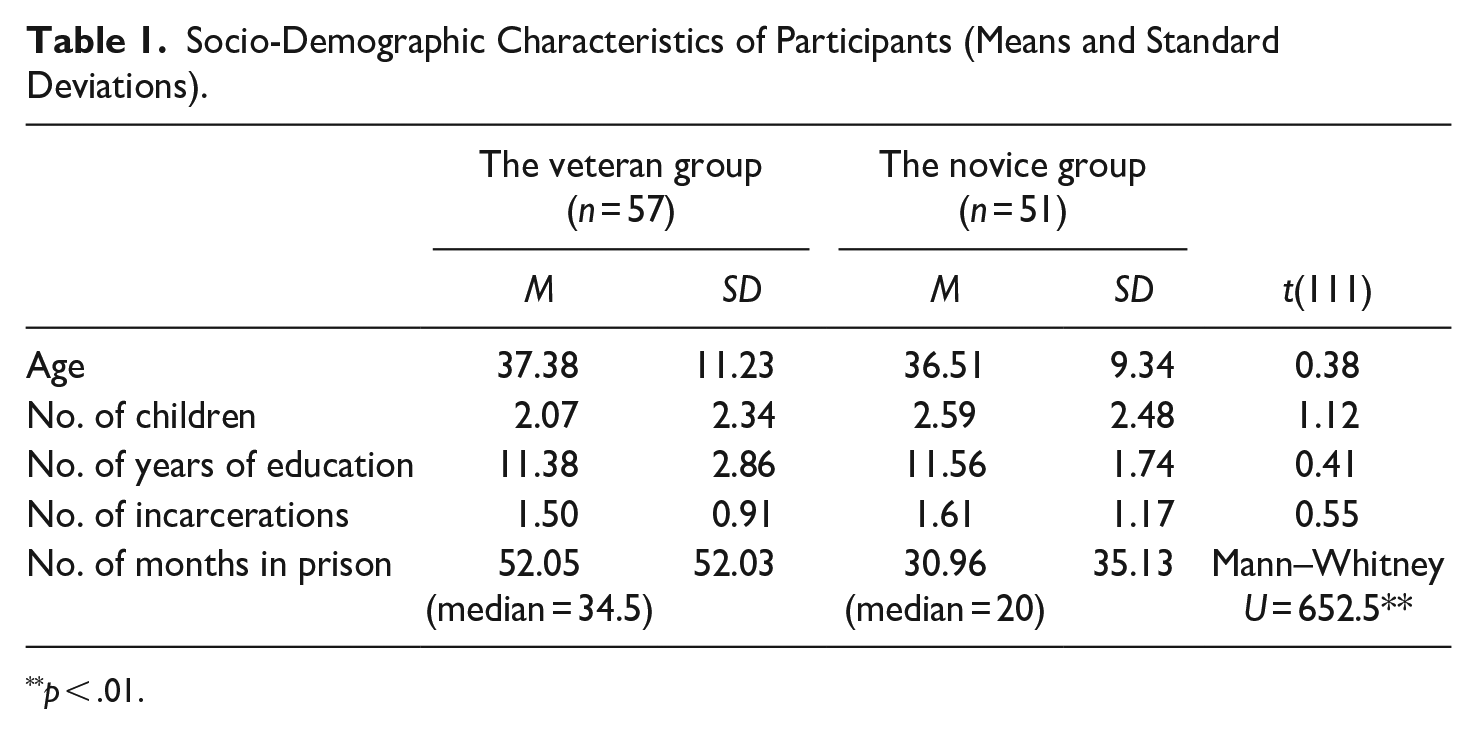
p < .01.
Distribution of Socio-demographic Variables (Categorical Variables).
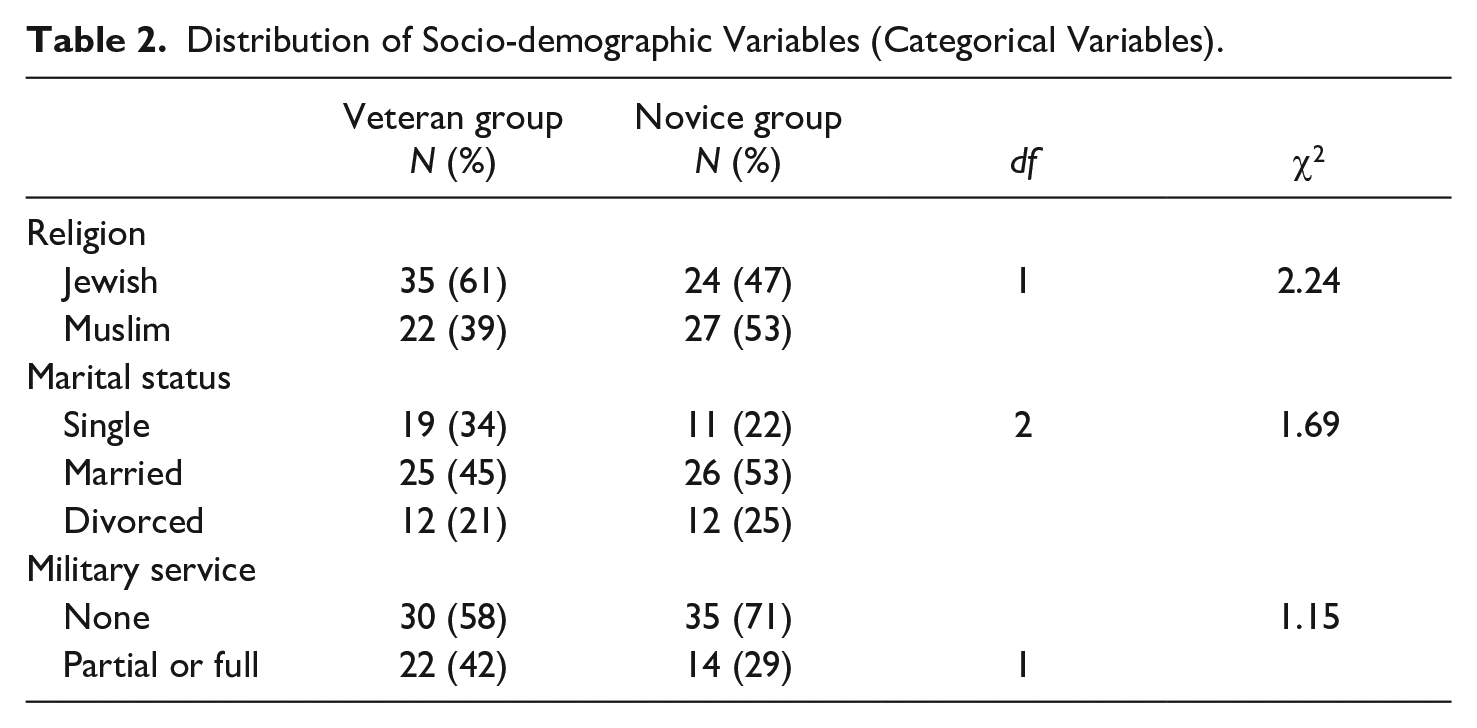
Table 1 shows that no significant differences exist regarding most of the parameters between the veteran group and the novice group, with the exception of the number of months in prison. Released prisoners from the veteran group had spent a significantly longer time in prison than the comparison group.
Table 2 shows that no significant differences exist in terms of socio-demographic variables between the veteran group and the group that had just started the program.
Tools and Procedure
To verify the hypotheses, two self-reporting questionnaires were distributed to the released prisoners.
Locus of Control Questionnaire
The Locus of Control questionnaire (Levenson, 1981) was checked and validated by a population of addicts in Israel (Amram, 1996). This questionnaire emphasizes three common indices for locus of control: internality—the degree to which a person believes he has control over his life (e.g., “I can greatly determine what will happen in my life”); “powerful others”—the degree to which a person believes that others control events in his life (e.g., “I feel like what happens in my life is mostly determined by powerful people”); and “Belief in chance”—the degree to which a person believes that chance influences his experiences and their results (e.g., “To a great extent my life is controlled by accidental happening”). The questionnaire includes 24 items, and each of the three indices contains eight items. The locus of control score is calculated as the average of the answers to the questionnaire. The reliability of the questionnaire as checked on the current sample was α = .838. Cronbach’s alpha was .88 for Internality, .81 for Powerful Others, and .71 for chance.
Socio-demographic Questionnaire
A second questionnaire was distributed to the prisoners, with socio-demographic questions about their personal, family, and criminal background, including the period and duration of supervision. In order to address paroled prisoners’ apprehension about re-incarceration, a question about their fear of returning to prison was added. All questionnaires were translated into Arabic using the double-translation method to render them suitable for the Arab population.
The researchers coordinated their visit to the PRA with the group moderators. The research assistant approached potential participants and requested their consent to take part in the research. They were told that cooperation was voluntary and that non-cooperation would not in any way jeopardize their chances of succeeding in the program. After they signed a form of conscious consent and were assured of complete anonymity, the research assistant distributed the questionnaires and sat with each participant for about half an hour until he completed his task.
Results
As stated, this study examines whether participation in the PRA-supervised therapy program contributes to improving internal locus of control. It also examines whether program participation reveals differential results regarding Jewish and Arab prisoners.
To examine the relationship between program participation and ethnic affiliation on the one hand, and locus of control on the other, two-way ANOVA tests were carried out for each of the three subscales of locus of control, separately.
It should be noted that for the “internality” subscale, a high value expresses a high internal locus of control. In the subscales “powerful others” and “belief in chance,” a high value expresses a high external locus of control.
The duration of imprisonment was introduced as a control variable in the first analysis. When this was not found to influence the dependent variables, it was eliminated from the analysis.
Program Participation, Ethnic Affiliation, and Locus of Control
Internal Locus of Control: Internality
The results of the analysis indicate that the duration of participation in the program had a significant main effect on the index “internality”:
In addition, a significant ordinal interaction was found between the duration of participation in the program with the ethnicity of the paroled prisoner and the level of “internality”:
It should be noted that among the Jewish groups, the difference between the veteran and novice participants is greater than the difference between these two groups among the Arab sample. Additionally, we note that no difference was found between the means for the “internality” index for the Jewish and Arab paroled prisoners who were program novices, p = .57. Among the group of Jewish veteran participants, the mean for “internality” was found to be higher than among the group of Arab veteran participants (p = .02; Figure 1).
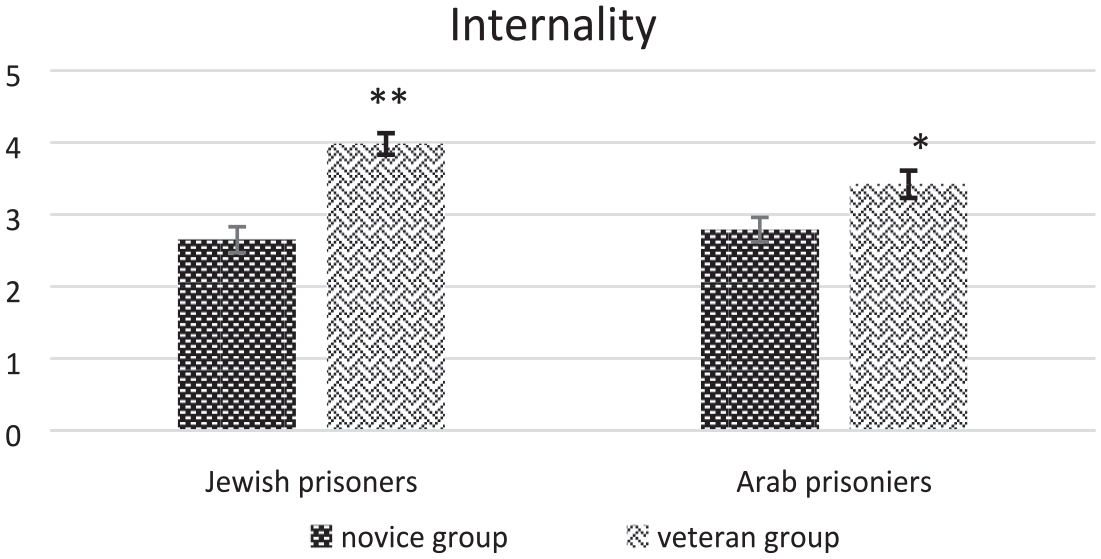
Mean for the “internality,” index among Jewish and Arab paroled prisoners from the novice and veteran groups.
External Locus of Control: Powerful Others
The data analysis found a disordinal interaction between the duration of participation in the program and paroled prisoners’ ethnic affiliation for the “powerful others” index:
The decrease in the “powerful others” index found among the group of Jewish program veterans and the corresponding increase found among the group of Arab program veterans is not statistically significant. However, it can be seen that while no significant difference was found between the Jewish and Arab program novices, p = .66 nevertheless a significantly lower external locus of control was found among the group of Jewish program veterans as compared to the group of Arab program veterans, p < .001 (Figure 2).
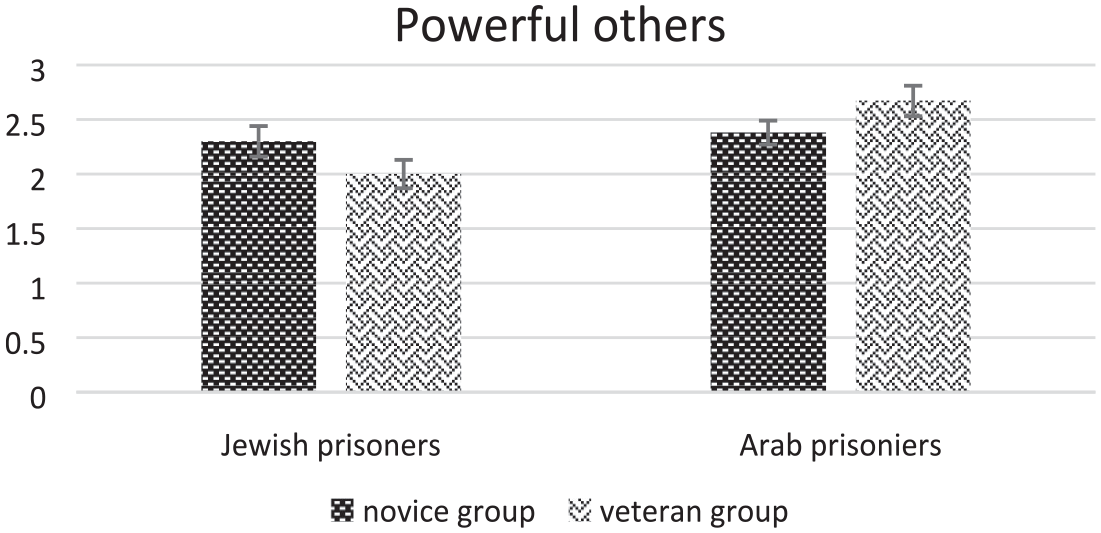
Mean for the external locus of control index “powerful other,” among Jewish and Arab paroled prisoners from the novice and veteran groups.
External Locus of Control: Belief in Chance
A main effect was found for national affiliation for the “belief in chance” index:
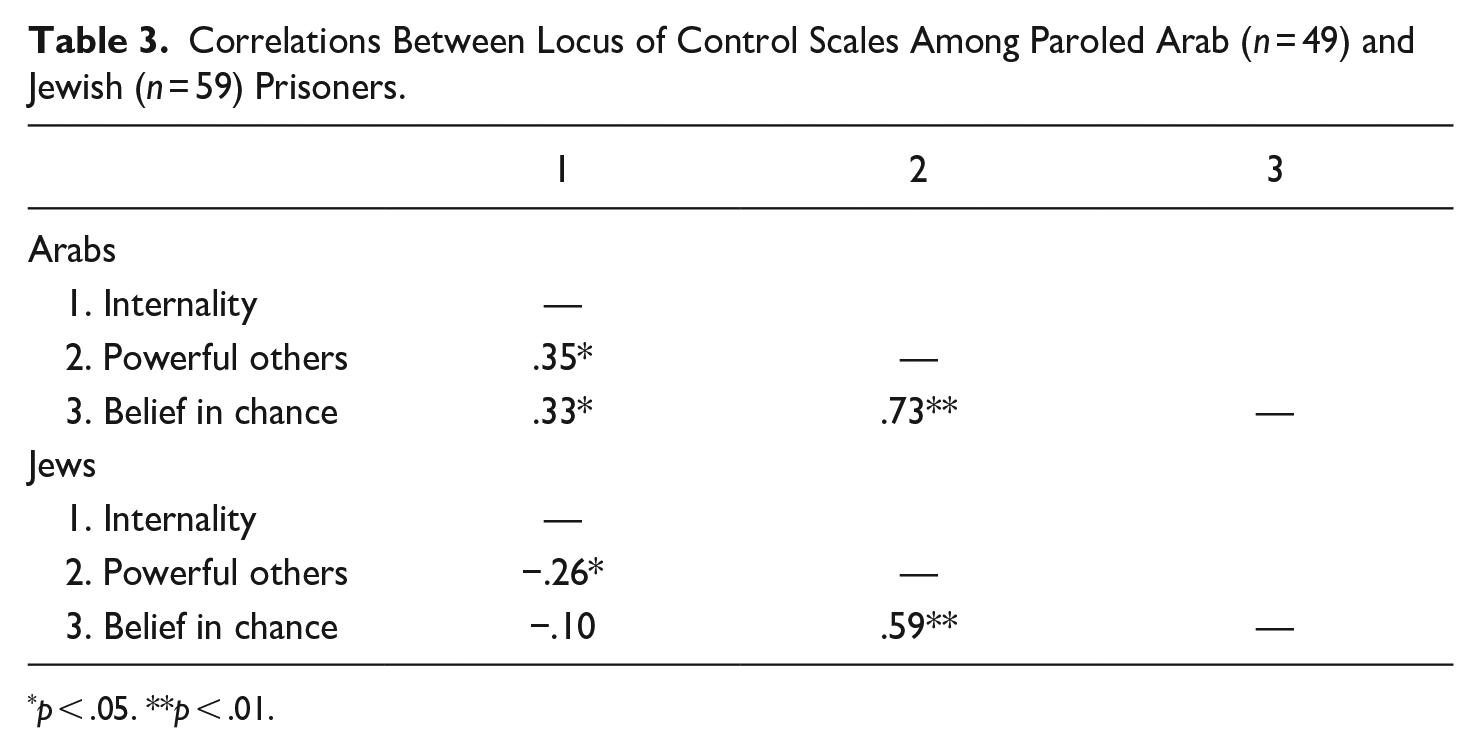
Table 3 presents the correlations between the three common indices for locus of control (internality, “powerful others,” and “belief in chance”) separately for Jewish and Arab groups.
Correlations Between Locus of Control Scales Among Paroled Arab (n = 49) and Jewish (n = 59) Prisoners.
p < .05. **p < .01.
As expected, a significant positive correlation was also found between the feeling of others being in charge (“powerful others”) and “belief in chance” (r = .59 in the case of the Jewish group and r = .73 in the case of the Arab group).
Among Jews, a significant negative correlation was found between “internality” and “powerful others” (r = −.26).
Among the Arab group an unexpected, significant, positive correlation was found between “internality” and “powerful others” (r = .35) or “belief in chance” (r = .33).
Fear Over Re-Incarceration
The research also sought to address the apprehension felt by paroled prisoners over re-incarceration. The analysis showed that 37% of the Arab prisoners from the veteran group expressed concern about returning to prison, compared to 76% of the Arab prisoners who had just started the program
Discussion
This research examines whether participation in the PRA-supervised therapy program brings about a change in personality indices such as locus of control among released prisoners from different ethnic backgrounds; here, Jewish and Arab prisoners.
The program appears to contribute positively to locus of control, particularly among the population of released Jewish prisoners. The supervised therapy program managed by the Israeli PRA is intended, among other things, to impart to the prisoners’ locus of control (Chandler et al., 2009) based on the belief that it will contribute to their rehabilitation (Adorjan & Chui, 2014; Davis et al., 2013; Hasisi et al., 2015; Van Tongeren & Anson, 2007). The impression gained from the findings of this preliminary research is that the program does indeed achieve its aims, even if only partially.
The most notable finding is the positive result achieved in locus of control with the veteran group. This finding is in line with Tønseth et al. (2019), who reported a correlation between an educational program in prison and preparation for release on the one hand, and improvement in the sense of control on the other. Similarly, Stander (2014) found a positive correlation between improved levels of education and locus of control in individuals, and correspondence between this index and race and social status.
Apart from the possible contribution of the therapeutic part of the program to strengthening internal locus of control, the occupational component of the program could also constitute a contribution to molding and bolstering positive feelings. The literature shows that employment of prisoners plays an important role in enhancing a sense of control and outlook regarding the future (e.g., Davis et al., 2013; Tønseth et al., 2019).
The present research found interrelationships between internal locus of control and ethnic affiliation, with a significantly positive correlation between internal locus of control and Jewish prisoners participating in the program, but not Arab prisoners.
Apparently, the difference between the populations can be attributed not only to differences in culture and status (Alkrinawi, 2002; Stander, 2014) but also, and more so, to the different contributions made by the program to the different populations. This explanation aligns with the assumption that different ethnic groups react differently to caregiving services and methods (Al-Issa, 1995; Al-krenawi, 2002) and that different cultural needs are not always met in the framework of care (Ben-David & Rabin, 1999; Gueta et al., 2019; Jamal-Aboud & Balit-Cohen, 2019; Mirsky, 2012).
Regarding findings on the three sub-scales comprising the locus of control questionnaire, as expected, a significant positive correlation was found among both the Jewish and Arab populations between a sense of “powerful others” and “belief in chance” and a significant negative correlation was found between “internality” and “powerful others” among the Jews. Contrary to expectations, however, among the Arab population a positive correlation was found between “internality” and two other items: “powerful others” and “belief in chance” (Mancinelli et al., 2020).
When this finding was first noted, there was concern that it was due to an error in the statistical processing. However, further consideration revealed that it indicates cultural differences. It seems that in Arab culture, in contrast to Jewish culture, there is not necessarily a contradiction between the concept of inner control and a mystical belief in chance or a higher power, which is an important component of Arab culture (Shahar-Efodi & Kaden, 2022).
Furthermore, these findings can possibly be explained by the fact that the prisoners are in a state of crisis, which is typical for the period of release from imprisonment. It is well-known that the return to society is accompanied by myriad difficulties and challenges, especially when the population involved belongs to a disadvantaged minority group (Hartney & Vuong, 2009; Listwan et al., 2003) and experiences apprehensions regarding law enforcement, at a time when trust in the system is low (Ronen, 2010). Thus, despite the sense of internality, greater weight is assigned to powerful others controlling events in their lives. Evidently, during times of crisis, even people with self-confidence and a perception of internality seek an outlet in the form of powerful figures who can give them feelings of strength.
The finding is important regarding the issue of desistance from criminal activity (Bersani & Doherty, 2018; Broidy & Cauffman, 2017; Farrall & Calverley, 2006; Farrall et al., 2014; LeBel et al., 2008; Maruna, 2001; Segev, 2018). The desistance from the crime model, associated with positive criminology (Ronel & Elisha, 2011), describes a gradual process of distancing from the world of crime and the eventual relinquishing of criminal activity altogether (Bersani & Doherty, 2018; Broidy & Cauffman, 2017; Farrall et al., 2014; Ward & Maruna, 2007). The process includes progress on three parallel fronts: cessation of criminal activity (initial desistence); changes in thinking patterns (secondary desistence); and social recognition of change (tertiary desistence; Maruna & Farrall, 2004; McNeill, 2016).
The results of this study indicate that the PRA-supervised therapy program has the potential to contribute to “secondary” desistance from delinquency. This may be a result of the support component of the program (psychotherapy, individual and group meetings) designed to change the prisoners’ perceptions and encourage them to desist from further criminal activity (Ward & Maruna, 2007).
Thus, the significant difference found in internal locus of control between the newcomers to the program and the veterans could suggest that a positive process is taking place as a consequence of the care being administered. The process could be of future assistance in advanced stages of desistance from criminality.
Regarding concerns over returning to prison, the program is specifically adapted to the Arab population by reassuring them in the face of these concerns, which are already uppermost in mind (Weitzer, 2017). The fears in this connection are perhaps based on the existing gap between Arab and Jewish prisoners/detainees, with the Arabs having a greater likelihood of returning to prison than the Jews (Hartney & Vuong, 2009) and having a representation in prison that is disproportional vis-à-vis their population as a whole (Toys, 2019).
Conclusions
Despite the limitations of the research, due principally to the relatively small number of released prisoners and the focus on short-term indices, it appears that the PRA-supervised therapy program, which has been found in previous quantitative research to contribute to integration in employment and lessen the likelihood of returning to prison, can potentially effect a change in perceptional characteristics, which are necessary factors for integrating into society. These findings could also make a significant contribution to culture-sensitive care, an issue that has not received extensive academic documentation.
In light of the present research findings, there is room for additional studies based on quasi-experimental design. It is also proposed that a future study incorporate personality elements such as self-esteem, a willingness to ask for help, or sharing personal problems among various ethnic groups, which is viewed as very relevant by the caregivers.
Footnotes
Declaration of Conflicting Interests
The author(s) declared no potential conflicts of interest with respect to the research, authorship, and/or publication of this article.
Funding
The author(s) received no financial support for the research, authorship, and/or publication of this article.
